The recent HYBE convertible bond conversion has sent ripples through the investment community, raising critical questions about the future of HYBE stock. As a global entertainment powerhouse, any financial maneuver by HYBE (352820) warrants close inspection. For investors, this event presents both potential risks and significant opportunities. Will the influx of new shares dilute value, or will the capital infusion fuel the next wave of growth for the company behind global sensations like BTS and SEVENTEEN?
This comprehensive analysis will dissect the event, explore the company’s robust fundamentals, evaluate the short-term pressures and long-term potential, and provide a clear HYBE investment strategy to navigate this pivotal moment. We’ll delve into everything you need to know to make an informed decision.
Understanding the HYBE Convertible Bond Conversion
At its core, a convertible bond (CB) is a hybrid security that starts as a loan to a company but can be converted into a predetermined number of common stock shares. HYBE recently saw bondholders exercise this option for its 4th series of convertible bonds. For a detailed primer, you can learn more about how convertible bonds work on Investopedia.
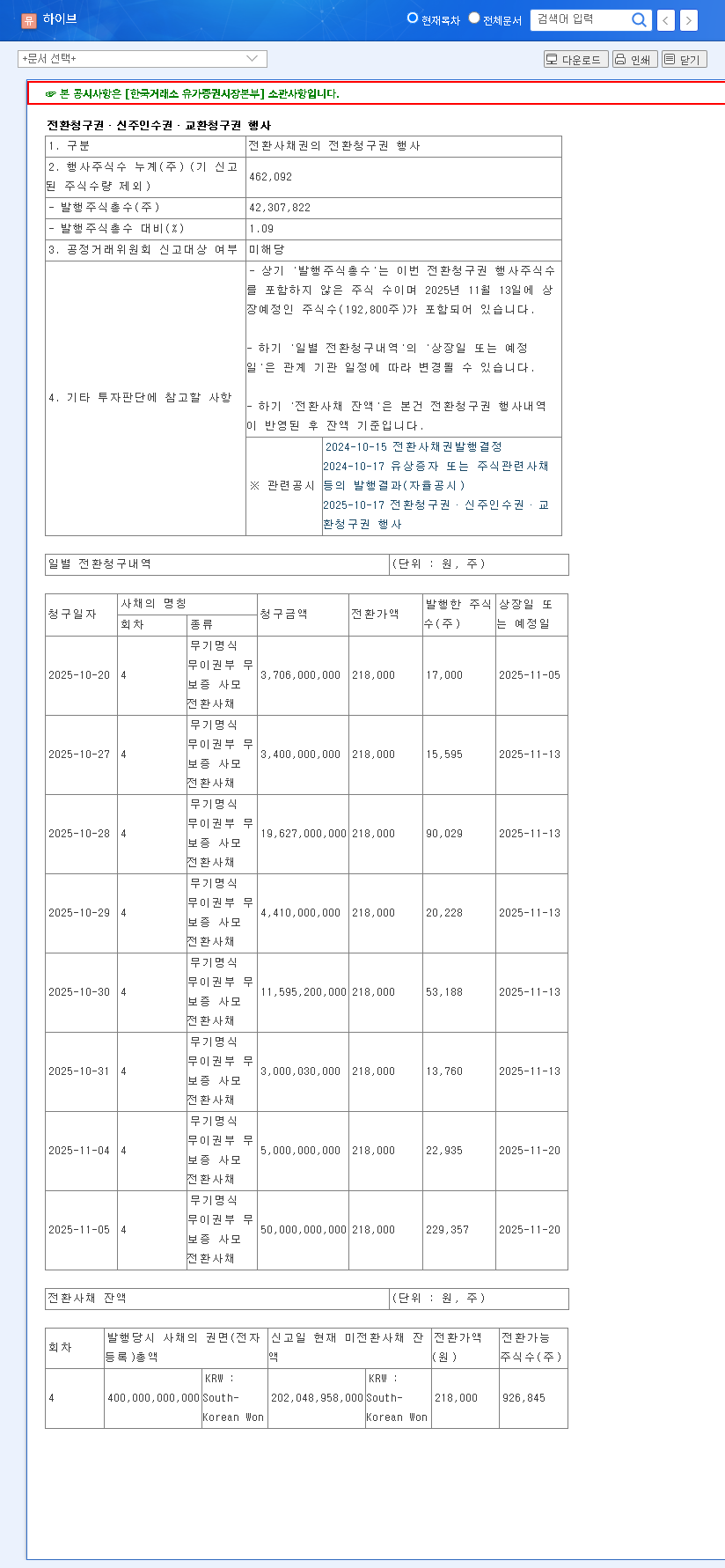
Here are the essential details of this specific event, based on the company’s official filing. (Source: DART Report)
- •Event: Conversion claim for HYBE’s 4th series CBs into common stock.
- •New Shares Issued: 462,092 shares, representing about 1.1% of the total outstanding shares.
- •Conversion Price: 218,000 KRW per share.
- •Remaining Bonds: A significant 926,845 shares from this series could still be converted in the future.
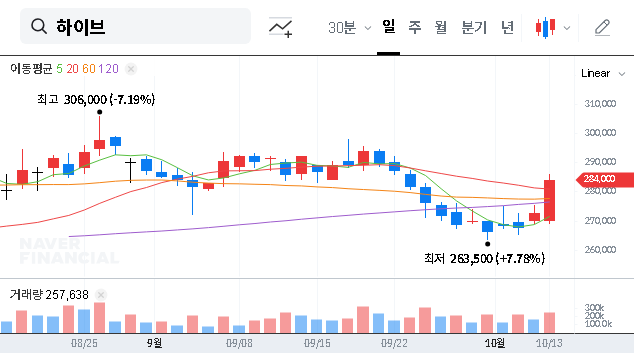
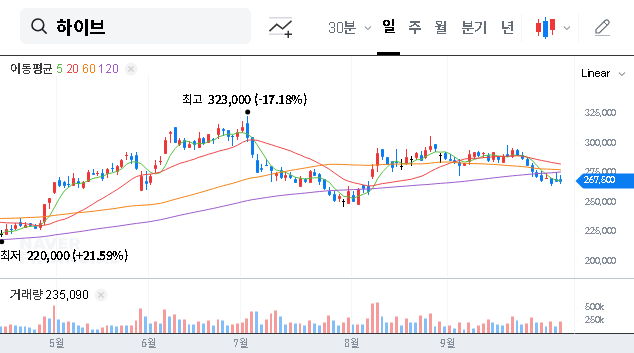
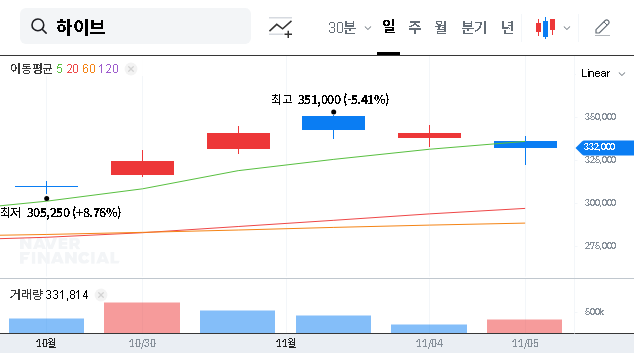
The key takeaway is that new shares are entering the market. Because the conversion price (218,000 KRW) is substantially lower than the recent trading price (around 332,000 KRW), bondholders have a strong incentive to convert, locking in immediate profits. This dynamic is what investors must now analyze.
Why It Matters: HYBE’s Strong Fundamentals
Before assessing the impact, it’s vital to understand the strength of the underlying company. HYBE’s fundamentals remain a cornerstone of its investment thesis. The company has evolved far beyond a traditional music label into a multi-faceted global entertainment platform.
A Diversified Business Model
HYBE’s revenue streams are diverse, leveraging its powerful artist intellectual property (IP) across music, concerts, merchandise, and its fan communication platform, ‘Weverse’. Despite a revenue dip in H1 2025, the company showcased impressive operational efficiency, with operating profit surging 33.9%. This demonstrates a resilient and profitable core business, capable of weathering fluctuations in release schedules.
Strategic Global Expansion
The acquisition of QC Media Holdings is a clear signal of HYBE’s ambition to solidify its presence in the North American market, the largest music market in the world. This move, along with successful debuts of new artists under its multi-label system, is expected to be a significant long-term growth driver for HYBE stock.
Analyzing the Impact on HYBE Stock
Short-Term Risk: Share Dilution and Overhang
The most immediate effect of a convertible bond conversion is share dilution. With more shares in circulation, each existing share represents a smaller percentage of ownership. This can put downward pressure on the stock price as the market absorbs the new supply. Furthermore, the 926,845 shares that remain convertible create a ‘stock overhang’—the market knows more shares could be issued, which can temper investor enthusiasm and cap near-term price appreciation.
Long-Term Opportunity: A Healthier Balance Sheet
On the other side of the coin, this conversion is a positive long-term signal. When bonds are converted to equity, the company’s debt liability is extinguished. This deleveraging improves the balance sheet, reduces interest expense, and strengthens key financial health indicators. The capital originally raised is now permanently part of the company’s equity base, ready to be deployed for strategic initiatives like M&A, platform development, and new artist launches—all of which can create substantial long-term value.
A Prudent HYBE Investment Strategy
Navigating this period requires a balanced approach. While the short-term volatility is real, the long-term picture is shaped by HYBE’s execution and growth prospects. A sound HYBE investment strategy should focus on the underlying business performance rather than reactionary trades.
For long-term investors, periods of stock price weakness due to technical factors like share dilution can present attractive entry points, provided the company’s fundamental growth story remains intact.
Investors should monitor key metrics to validate the thesis. Keep an eye on the timing and volume of the remaining convertible bonds. Analyze HYBE’s quarterly earnings for updates on how the capital is being used to generate returns. For more analysis, you can review our deep-dive into HYBE’s Q3 earnings report. Ultimately, investment decisions should align with your risk tolerance and be based on HYBE’s ability to continue its global growth trajectory.
In conclusion, the HYBE convertible bond conversion is a classic example of a short-term headwind masking a potential long-term tailwind. While the market digests the new supply of shares, the company is simultaneously strengthening its financial foundation and securing capital for future growth. A patient, fundamentally-driven investment approach is the most sensible path forward.