Tag: US Market

  • (112610) CS Wind Investment Analysis: ₩290.2B Vestas Deal Cements US Market Dominance

    (112610) CS Wind Investment Analysis: ₩290.2B Vestas Deal Cements US Market Dominance

    In a significant move that underscores its dominance in the global wind power market, CS Wind Corporation has announced a monumental supply contract with Vestas American Wind Technology. This deal, valued at ₩290.2 billion (approximately $210 million USD), is not just a major revenue driver but a strategic reinforcement of its critical position in the burgeoning US renewable energy sector. For investors, this development signals a pivotal moment, validating the company’s growth trajectory and solidifying its long-term potential.

    This comprehensive analysis will delve into the specifics of the Vestas wind tower deal, evaluate CS Wind‘s robust fundamentals, and provide a clear outlook for a potential CS Wind investment. We will explore the company’s record-breaking 2024 performance, its strategic expansions, and the potential risks on the horizon, offering a 360-degree view for informed decision-making.

    The Landmark Vestas Wind Tower Deal Explained

    CS Wind has secured a contract to supply wind towers to Vestas for the US market. The agreement, valued at a substantial ₩290.2 billion, is set to run for approximately 13 months, from November 2025 to December 2026. This single contract represents a significant 9.4% of the company’s recent annual revenue, highlighting its immediate and impactful contribution to the bottom line. The full details of this agreement were confirmed in an Official Disclosure (Source: DART). Partnering with Vestas, a global leader in turbine manufacturing, not only provides a stable revenue base but also enhances CS Wind’s reputation and deepens its integration into the North American supply chain.

    Why This Deal is a Game-Changer for CS Wind Investment

    This contract is more than just a large order; it’s a powerful catalyst that reinforces CS Wind‘s core strengths and growth narrative.

    1. Cementing Leadership in the US Market

    The US is a critical battleground for renewable energy, driven by ambitious climate goals and supportive legislation like the Inflation Reduction Act (IRA). This deal positions CS Wind as a primary beneficiary of this transition. By supplying a key player like Vestas, the company solidifies its market share and becomes an indispensable part of America’s green energy infrastructure. This deepens its competitive moat and increases the likelihood of follow-on orders.

    2. Building on Record-Breaking Financial Performance

    The Vestas contract lands on the heels of a stellar year for CS Wind. In 2024, the company achieved record-high performance with revenues hitting ₩3.07 trillion and an operating profit of ₩255.5 billion. A significant portion of this growth came from the newly acquired offshore wind substructure business, which impressively generated ₩1.13 trillion in its first year. This demonstrates the company’s ability to successfully integrate major acquisitions and capitalize on the high-growth offshore sector, a key area in the global renewable energy market.

    3. Strategic Global Expansion

    CS Wind is not just focused on the US. The company is actively expanding its global production capacity with significant facility upgrades at its subsidiaries in Vietnam and Portugal. This global footprint allows for optimized logistics, diversified manufacturing, and enhanced competitiveness, enabling it to serve both North American and European markets effectively. This strategy mitigates regional risks and positions the company to capture growth wherever it occurs.

    Financial Health and Potential Risk Factors

    While the outlook is overwhelmingly positive, a prudent CS Wind investment thesis requires a balanced view of its financial health and potential headwinds.

    Financial Health Check

    The company’s net debt-to-equity ratio rose to 70.48% at the end of 2024, primarily due to investments in expansion and acquisitions. While this figure requires monitoring, it appears manageable within the context of soaring revenues and profits. Furthermore, a recent decline in steel plate prices—a key raw material—provides a welcome cost tailwind. The company’s effective management of its foreign exchange positions also reduces sensitivity to currency volatility, a crucial capability for a global exporter.

    Key Risks to Monitor

    • Raw Material Volatility: Sudden spikes in the price of steel plates could compress profit margins if not managed effectively through hedging or contractual pass-through clauses.
    • Exchange Rate Fluctuations: As the Vestas contract is denominated in USD, significant shifts in the KRW/USD exchange rate could impact the final converted revenue and profitability.
    • Macroeconomic Headwinds: Changes in US energy policy, global interest rate movements, or geopolitical instability could affect project timelines and overall demand in the wind power market. Explore our guide to investing in renewable energy stocks for more on this topic.

    Investor Outlook & Final Verdict

    The large-scale contract with Vestas is a powerful reaffirmation of CS Wind‘s premier status in the global wind tower industry. This, combined with its record financial performance and the successful pivot into the high-margin offshore substructure market, paints a compelling picture of a company firing on all cylinders.

    Given the structural, long-term growth of the global wind power market, CS Wind is exceptionally well-positioned to deliver sustained growth. We maintain a positive long-term investment opinion, viewing any short-term market volatility as a potential buying opportunity for this best-in-class renewable energy stock.

    Investors should continue to monitor new contract signings, the ongoing impact of the US IRA, and trends in raw material costs to stay ahead of the curve.
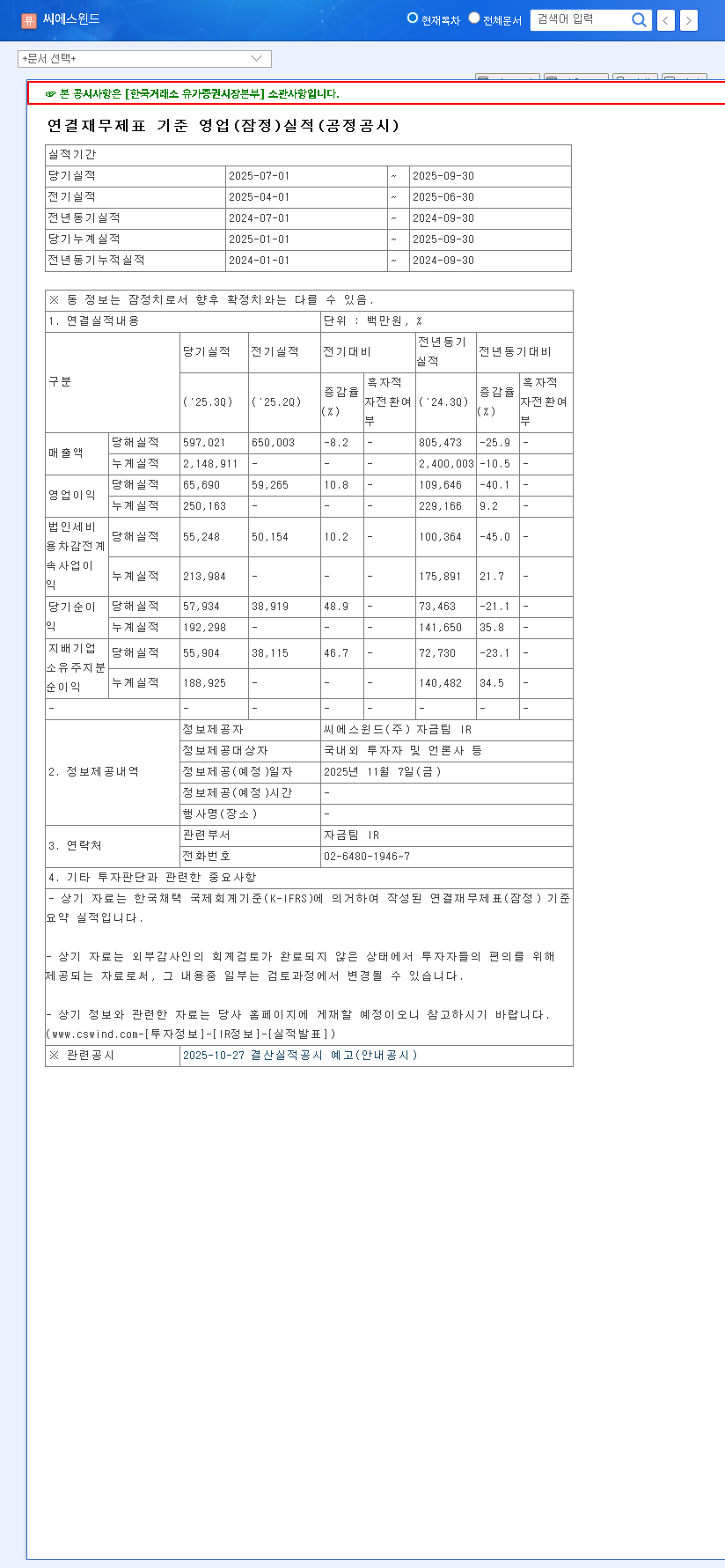
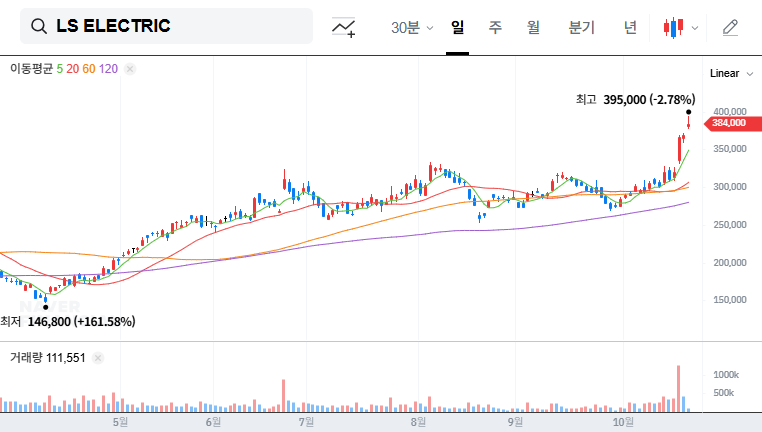
    (112610) CS Wind Investment Analysis: ₩290.2B Vestas Deal Cements US Market Dominance 관련 이미지
  • (010120) LS ELECTRIC Data Center Contract: A Deep Dive into the $100M+ Big Tech Deal & Future Growth

    (010120) LS ELECTRIC Data Center Contract: A Deep Dive into the $100M+ Big Tech Deal & Future Growth

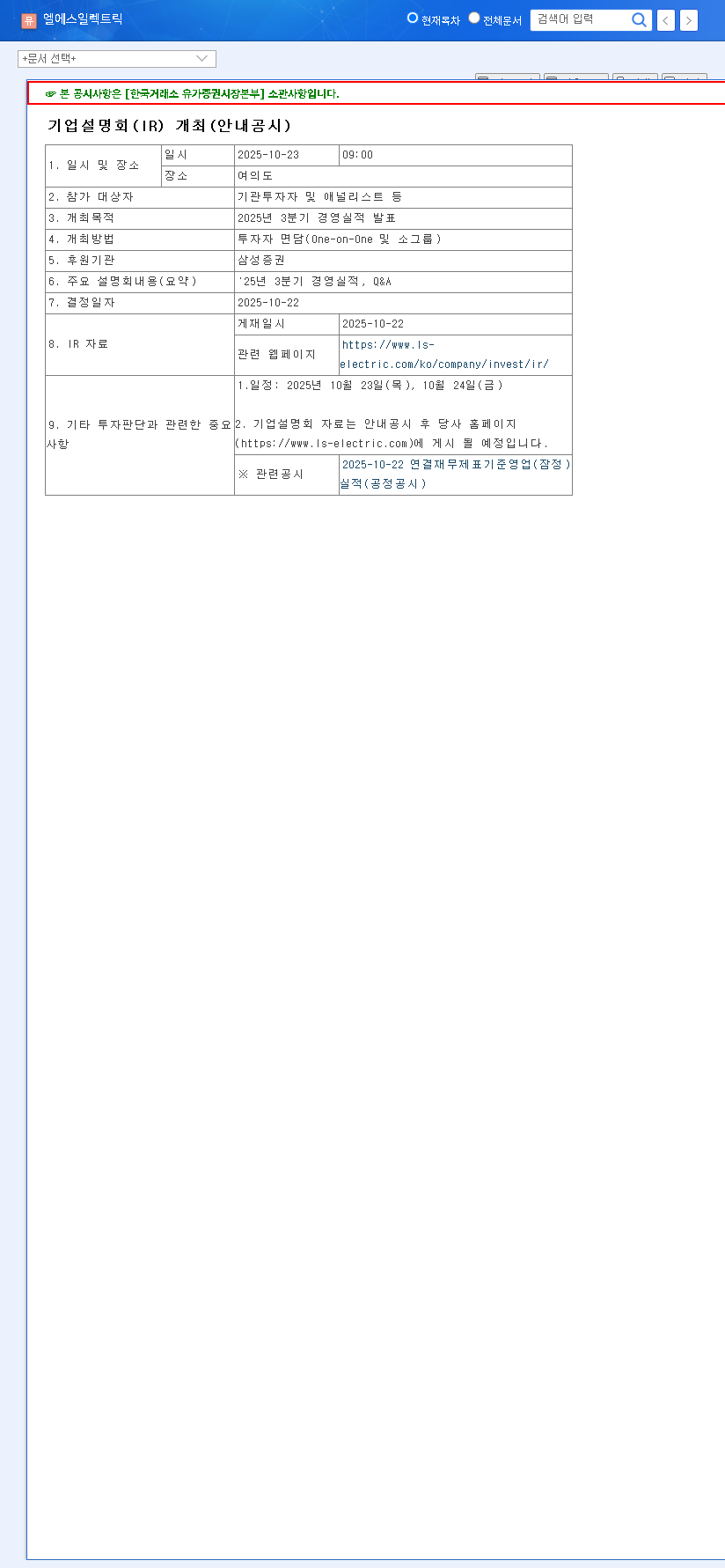
    The recent announcement of the LS ELECTRIC data center contract has sent ripples through the industry, signaling a major strategic victory for the South Korean power solutions giant. By securing a monumental KRW 132.9 billion (approximately $100 million USD) deal to supply a U.S. Big Tech data center, LS ELECTRIC is not just boosting its revenue; it’s solidifying its position as a key player in one of the world’s most rapidly expanding and demanding sectors. This article provides an in-depth analysis of this landmark agreement, its far-reaching implications, and what it signals for LS ELECTRIC’s growth trajectory.

    This contract is more than a financial transaction; it’s a powerful validation of LS ELECTRIC’s technological prowess and its ability to meet the rigorous standards of the world’s leading technology companies. It serves as a critical stepping stone for future expansion in the North American market.

    Decoding the KRW 132.9 Billion LS ELECTRIC Data Center Contract

    LS ELECTRIC, operating through its U.S. subsidiary, LS ELECTRIC AMERICA Inc., has formally secured a single sales and supply contract for Phase 2 of a major Big Tech data center project. The contract, valued at precisely KRW 132,900,000,000, is slated for a delivery period from November 7, 2025, to April 1, 2026. While this figure represents 2.92% of the company’s recent annual revenue, its strategic value far exceeds the immediate financial impact. The specifics of this deal were confirmed in the Official Disclosure filed with DART, Korea’s financial supervisory service.

    The Strategic Significance: Beyond the Bottom Line

    Winning a contract of this magnitude in the highly competitive U.S. market is a testament to LS ELECTRIC’s capabilities. The implications for the company’s future are profound and multi-faceted.

    Cementing a Foothold in the U.S. Data Center Market

    The global data center market is experiencing explosive growth, fueled by the relentless expansion of cloud computing, AI, and big data analytics. The United States, in particular, is the epicenter of this boom. This contract provides LS ELECTRIC with a critical, high-profile reference project. Successfully delivering on this project will open doors to subsequent phases and other contracts with different Big Tech players, creating a powerful ripple effect. This move aligns perfectly with their broader North American expansion strategy.

    Validation of World-Class Technology and Reliability

    Data center power solutions are the lifeblood of the digital world, demanding unparalleled levels of stability, efficiency, and reliability. Downtime is measured in millions of dollars per minute. By being selected by a Big Tech client, LS ELECTRIC has effectively received a seal of approval for its technology, including its switchgear, busduct systems, and other critical power infrastructure components. This validation strengthens their brand reputation globally and enhances their negotiating power in future deals.

    Financial Impact and Potential Risks

    From an investor’s perspective, it’s crucial to analyze both the opportunities and the potential hurdles associated with this LS ELECTRIC data center contract. The long-term outlook appears highly positive, but there are short-term variables to consider.

    Long-Term Growth vs. Short-Term Impact

    While the KRW 132.9 billion will be a welcome addition to the 2025-2026 revenue streams, its immediate impact on the company’s vast consolidated revenue is moderate. The real value lies in the potential for recurring business and entry into a high-margin sector. According to leading market research firms, the data center power market is projected to grow at a significant CAGR over the next decade. LS ELECTRIC is now perfectly positioned to capture a larger share of this lucrative pie.

    Key Risk Factors to Monitor

    • Exchange Rate Volatility: As a USD-denominated contract, fluctuations in the KRW/USD exchange rate can impact the final revenue and profit margins when converted back to Korean Won. Strategic currency hedging will be essential.
    • Supply Chain and Material Costs: The price of raw materials like copper and steel can be volatile. Securing the supply chain and managing costs effectively will be critical to maintaining projected profitability.
    • Project Execution: Large-scale infrastructure projects carry inherent execution risks, including potential delays. Meeting the stringent timelines of a Big Tech client is paramount to building a long-term partnership.

    Conclusion: A New Engine for LS ELECTRIC’s Growth

    The successful bid for the U.S. Big Tech data center project is a watershed moment for LS ELECTRIC. It represents a strategic pivot into a high-growth, high-value industry and significantly elevates the company’s international standing. For investors, this should be viewed not as a catalyst for short-term stock gains, but as a strong confirmation of the company’s long-term fundamental strength and growth potential. By proving its mettle in the world’s most competitive market, LS ELECTRIC has ignited a powerful new growth engine that will likely propel the company forward for years to come.

    (010120) LS ELECTRIC Data Center Contract: A Deep Dive into the $100M+ Big Tech Deal & Future Growth 관련 이미지
  • (074600) WONIK QnC Acquisition: A KRW 64.2B Strategy for the US Semiconductor Market

    (074600) WONIK QnC Acquisition: A KRW 64.2B Strategy for the US Semiconductor Market

    In the high-stakes, competitive global semiconductor industry, strategic moves define market leaders. The recent WONIK QnC acquisition of a US-based firm marks a pivotal moment for the company, signaling a bold and calculated expansion into North America. This article provides a comprehensive analysis of this significant investment, exploring the opportunities, risks, and the future landscape for WONIK QnC in the crucial US market.

    The Deal: A KRW 64.2 Billion Strategic Move

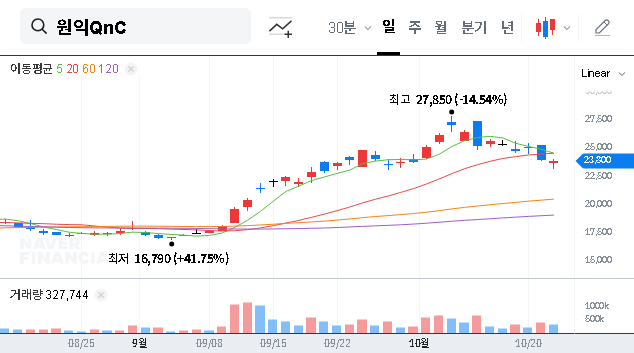
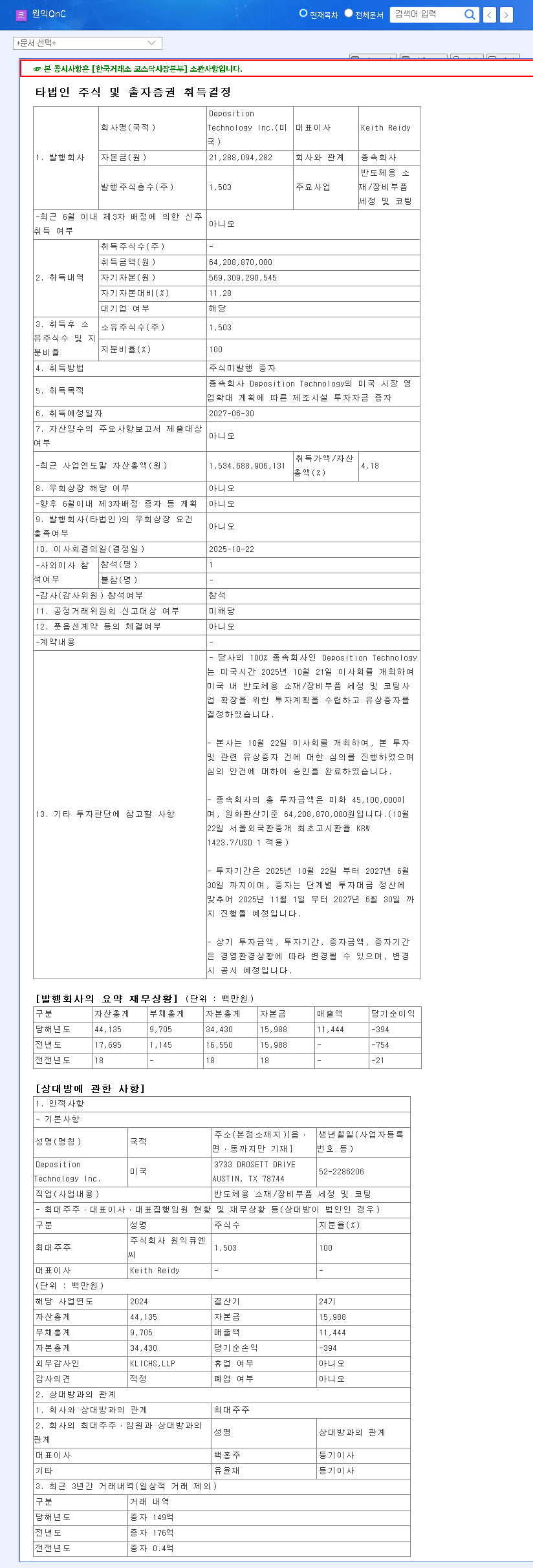
    On October 22, 2025, WONIK QnC officially announced its decision to acquire 100% of the shares and equity securities of Deposition Technology Inc., a US-based company. The total investment amounts to KRW 64.2 billion, which represents a significant 11.28% of WONIK QnC’s capital. The details of this transaction were confirmed in an Official Disclosure (Source), outlining a clear path for Deposition Technology Inc. to become a wholly-owned subsidiary.

    • Target Company: Deposition Technology Inc. (USA)
    • Acquisition Amount: KRW 64.2 billion (11.28% of WONIK QnC’s capital)
    • Post-Acquisition Stake: 100% (wholly-owned subsidiary)
    • Expected Completion: June 30, 2027

    Why This Acquisition? Targeting the US Semiconductor Market

    The primary driver behind the WONIK QnC acquisition is to secure a strong foothold and accelerate growth within the lucrative WONIK QnC US market. With geopolitical shifts and initiatives like the CHIPS Act, domestic semiconductor manufacturing in the United States is experiencing a renaissance, creating immense demand for high-quality materials, parts, and services. This strategic investment is designed to fund a significant expansion of Deposition Technology Inc.’s manufacturing facilities and operational capabilities.

    By acquiring a local specialist in semiconductor parts cleaning and coating, WONIK QnC is not just buying a company; it’s buying market access, local expertise, and a launchpad for aggressive semiconductor market expansion in North America.

    Analyzing the Strategic Upsides

    A successful integration promises substantial benefits, positioning WONIK QnC for its next phase of global growth. The potential upsides of this strategic investment are multifaceted.

    Key Potential Benefits

    • Accelerated US Market Penetration: Establishes an immediate, robust presence in the US, allowing WONIK QnC to serve major American chipmakers more effectively and capture a larger share of the market.
    • Technology and Portfolio Diversification: Integrates Deposition Technology Inc.‘s specialized coating and cleaning technologies, enhancing WONIK QnC’s own product and service portfolio.
    • Powerful Synergy Effects: Creates opportunities for vertical integration. WONIK QnC’s expertise in quartz and ceramics can be combined with Deposition’s services, offering a comprehensive solution to clients and improving the global semiconductor supply chain.

    Navigating the Potential Risks and Challenges

    While the WONIK QnC acquisition holds immense promise, it is not without significant risks that require careful management. Investors and stakeholders must consider the potential hurdles ahead.

    Considerations for a Successful Outcome

    • Financial Burden: A KRW 64.2 billion investment is substantial and could strain financial resources. The company’s ability to manage this expenditure without compromising its financial health is paramount.
    • M&A Integration Risk: Merging corporate cultures, retaining key talent at Deposition Technology Inc., and aligning operational processes are complex challenges. A smooth integration is critical for realizing projected synergies.
    • Market Volatility: The semiconductor industry is cyclical and subject to macroeconomic headwinds and geopolitical tensions. As noted in recent industry reports, these external factors could impact the investment’s performance.

    Investor’s Playbook: What to Monitor Next

    For investors, this strategic move requires careful monitoring. The success of the WONIK QnC acquisition will hinge on execution. Key areas to watch include:

    • Financial Health Metrics: Keep a close eye on WONIK QnC’s cash flow, debt-to-equity ratio, and overall balance sheet strength post-acquisition.
    • Integration Milestones: Look for company announcements regarding the progress of integrating Deposition Technology Inc.’s operations, technology, and personnel.
    • Realization of Synergies: Monitor quarterly reports for evidence of increased revenue from the US market, improved profit margins, and new client acquisitions attributable to the merger.

    Ultimately, this acquisition is a bold, forward-looking strategy to solidify WONIK QnC’s standing as a global semiconductor player. While fraught with challenges, the potential to unlock significant value in the expanding US market makes this a pivotal chapter in the company’s history. Success will depend on diligent execution and proactive risk management.

    (074600) WONIK QnC Acquisition: A KRW 64.2B Strategy for the US Semiconductor Market 관련 이미지
  • (112610) CS Wind Vestas Deal: Analyzing the $27.5M Wind Tower Supply Contract

    (112610) CS Wind Vestas Deal: Analyzing the $27.5M Wind Tower Supply Contract

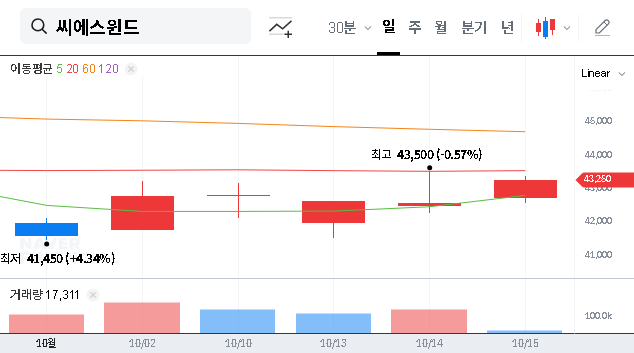
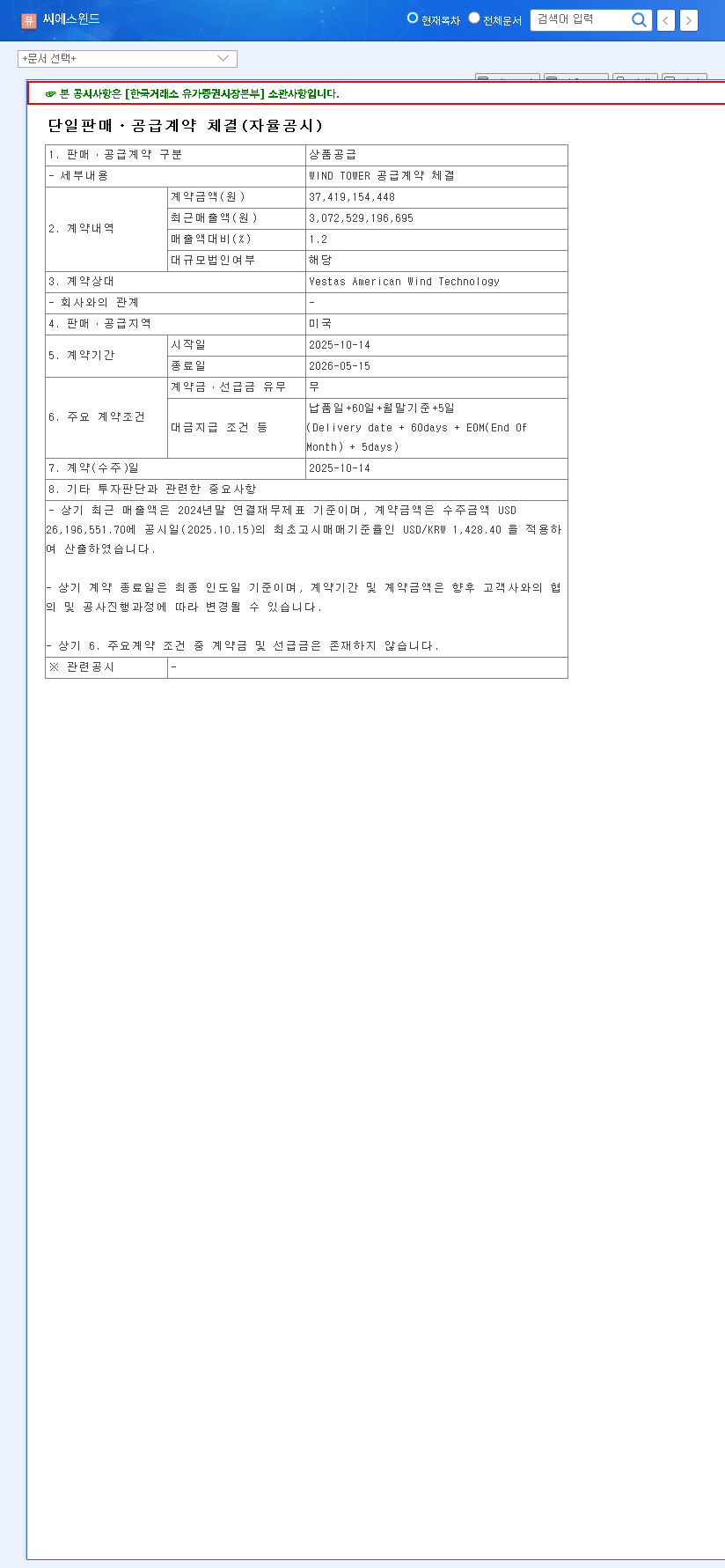
    The recent CS Wind Vestas deal marks a pivotal moment for the global renewable energy sector. CS Wind Corporation, a premier South Korean manufacturer of wind towers, has announced a significant supply agreement with Vestas American Wind Technology, the US arm of the global turbine giant. This contract, valued at KRW 37.4 billion (approx. $27.5 million USD), is more than just a figure on a balance sheet; it’s a strategic move that deepens CS Wind’s footprint in the rapidly expanding US wind market and solidifies its partnership with a key industry leader.

    This in-depth analysis will explore the core details of the agreement, dissect its short-term and long-term implications, and provide a strategic outlook for investors monitoring renewable energy stocks. We will delve into why this partnership is a critical indicator of future growth and market confidence.

    The Contract at a Glance: Key Details

    On October 15, 2025, CS Wind formally disclosed the agreement to supply its high-quality WIND TOWER products to Vestas. Here are the essential terms of the deal:

    • Counterparty: Vestas American Wind Technology
    • Product: WIND TOWER
    • Supply Region: United States
    • Contract Value: KRW 37.4 billion (~$27.5 million USD)
    • Contract Period: October 14, 2025 – May 15, 2026
    • Revenue Impact: Represents 1.2% of recent annual revenue
    • Source: Official Disclosure (DART Report)

    Why the CS Wind Vestas Deal is a Game-Changer

    While the contract’s 1.2% revenue contribution may seem modest, its strategic importance cannot be overstated. This wind tower supply agreement is a powerful signal of CS Wind’s strengthening position in the highly competitive global market.

    This deal isn’t just about a single order; it’s a validation of CS Wind’s technology and a crucial foothold in the burgeoning US wind market, supercharged by favorable government policies.

    Cementing a Partnership with a Global Leader

    Vestas is not just any client; they are a world-renowned pioneer and leader in wind turbine manufacturing. Securing a repeat contract with them serves as an international seal of approval for CS Wind’s production quality, technological capabilities, and supply chain reliability. This strong relationship can pave the way for larger, long-term Master Supply Agreements (MSAs) in the future.

    Capitalizing on the US Wind Market Boom

    The United States is experiencing unprecedented investment in renewable energy, largely driven by policies like the Inflation Reduction Act (IRA). This legislation provides significant tax credits and incentives for domestic manufacturing and clean energy projects. The CS Wind Vestas deal places CS Wind directly in the flow of this capital, positioning it as a key supplier for American wind farm development. For more information on renewable trends, consult authoritative sources like the U.S. Energy Information Administration (EIA).

    Impact Analysis: From Short-Term Gains to Long-Term Growth

    Short-Term Outlook

    • Revenue Recognition: The ~$27.5 million will be recognized over just seven months, providing a direct and immediate boost to quarterly earnings reports.
    • Market Confidence: A high-profile contract win enhances investor confidence and provides positive momentum for CS Wind’s stock price.
    • Improved Order Visibility: This deal reinforces a healthy order pipeline, signaling stability and predictability in a project-based industry.

    Mid- to Long-Term Perspective

    • Strengthened Global Position: A sustained presence in the US market is critical for any global player. This deal solidifies CS Wind’s role as an essential part of the American renewable energy supply chain.
    • Brand Value Enhancement: Consistently meeting the high standards of a client like Vestas elevates CS Wind’s brand reputation globally, attracting new potential partners.
    • Foundation for Future Growth: Each successful project builds a foundation for larger, more integrated partnerships, potentially leading to joint ventures or expanded supply agreements.

    Strategic Outlook & Investor Considerations

    For investors, the CS Wind Vestas deal is a strong positive signal. However, a comprehensive investment thesis requires looking beyond this single announcement. It’s crucial to analyze how this fits into the company’s broader strategy and the macroeconomic environment. Key areas to monitor include CS Wind’s plans for production capacity expansion and its ability to maintain margins amidst fluctuating steel prices and logistical costs. To learn more about industry-wide factors, you can read our guide on The Impact of the IRA on Renewable Energy Stocks.

    Potential Risk Factors

    Despite the positive outlook, investors should remain aware of potential risks:

    • Execution Risk: Any delays in production or supply chain disruptions could impact contract fulfillment and profitability.
    • Currency Fluctuations: As a US-based contract, shifts in the KRW/USD exchange rate could affect the final value and margins.
    • Market Competition: The wind tower market is intensely competitive. Aggressive pricing or new technology from rivals remains a constant threat.

    Conclusion: A Major Step Forward

    In summary, the CS Wind Vestas deal is a strategically vital achievement. It provides a near-term revenue boost, enhances the company’s reputation, and most importantly, deepens its penetration into the high-growth US wind market. This partnership is a clear indicator of CS Wind’s strong competitive position and its ability to capitalize on the global transition to renewable energy. For stakeholders and investors, this contract is a promising sign of sustainable growth and a testament to the company’s role as a critical partner in building the future of wind power.

    (112610) CS Wind Vestas Deal: Analyzing the $27.5M Wind Tower Supply Contract 관련 이미지
  • Nexen Tire Investor Relations (IR) Analysis: What’s the Outlook for H2 2025?


    Nexen Tire Investor Relations (IR) Analysis: What's the Outlook for H2 2025? 대표 차트 이미지


    1. What’s Happening with Nexen Tire?

    Nexen Tire achieved consolidated revenue of KRW 1.5759 trillion in the first half of 2025, a 9.3% increase year-on-year. Strengthened global sales networks and expanded premium OE supply have contributed to continued sales growth, with operating profit also improving to KRW 83.3 billion. However, the operating profit margin remains low at 5.29%.

    2. Why is Nexen Tire Important?

    The global tire market is expected to grow steadily due to emerging market growth and the expansion of the electric vehicle market, but competition is also intensifying. Uncertainties in the external environment, such as rising raw material prices, increasing logistics costs, exchange rate fluctuations, and US market risks, could continue to weigh on Nexen Tire’s profitability. In this context, Nexen Tire is focusing on securing future growth engines, such as electric vehicle tires, through expanded R&D investment while maintaining a solid financial structure.

    3. Key Takeaways from the September 11th IR

    This IR will provide insights into Nexen Tire’s growth strategies and future vision. Key areas of interest include profitability improvement strategies, electric vehicle tire development status, global market strategies, exchange rate and interest rate volatility response strategies, and US market risk mitigation strategies. The information presented at the IR can significantly impact investor sentiment and stock prices.

    4. What Should Investors Do?

    • Carefully analyze the IR content: Evaluate management’s vision and risk management capabilities through the presentation and Q&A session.
    • Maintain a long-term perspective: Consider Nexen Tire’s long-term growth potential without being swayed by short-term stock price fluctuations.
    • Consult expert opinions: Refer to expert analysis and advice before making investment decisions.


    FAQ

    When is the Nexen Tire IR meeting?

    It is scheduled for September 11, 2025, at 2:20 PM.

    What will be presented at the IR?

    The first half of 2025 business performance, future growth strategies, and key risk management plans will be presented.

    How can I participate in the IR?

    You can find participation details on the Nexen Tire IR website or through public disclosures.


    Nexen Tire Investor Relations (IR) Analysis: What's the Outlook for H2 2025? 관련 이미지
    Nexen Tire Investor Relations (IR) Analysis: What's the Outlook for H2 2025? 관련 이미지


  • ZINUS (013890) IR: Profitability Returns, But Can They Conquer US Market Challenges?

    ZINUS IR: Key Analysis and Investor Takeaways

    ZINUS will host an IR session at the Hyundai Department Store Group Corporate Day on August 28, 2025. The company will share its current business status, future strategies, and address investor questions.

    1. Back to Profit, But US Market Decline Continues

    ZINUS recently announced its return to profitability in its semi-annual report. However, the persistent decline in US market sales remains a significant challenge that needs to be addressed.

    2. Key Investor Concerns

    • What are the specific strategies for overcoming the US market slump?
    • What are the plans for increasing R&D investment and securing future growth engines?
    • How will ZINUS manage risks related to exchange rate fluctuations and raw material price volatility?

    3. Investor Action Plan

    Investors should pay close attention to management’s responses regarding:

    • Clear strategies and concrete action plans to address the declining US market
    • A roadmap for increased R&D investment and new technology development to secure future growth engines
    • Effective risk management strategies to mitigate exchange rate and raw material price volatility

    This information will be crucial for reassessing ZINUS’ investment value and formulating informed investment strategies.

    Frequently Asked Questions

    What is ZINUS’s main business?

    ZINUS is a global furniture company specializing in mattresses. They also offer bed frames, sofas, tables, and other furniture products.

    How has ZINUS been performing recently?

    ZINUS recently returned to profitability according to their semi-annual report, but they are experiencing a continued decline in US sales.

    What are the key things to watch for in this IR?

    Key points of interest include strategies for addressing the US market decline, plans for increasing R&D investment, and strategies for managing exchange rate and raw material price volatility.

  • ILJI Tech (019540) Q2 2025 Earnings Analysis: US Market Growth and Profitability Challenges

    1. Q2 2025 Performance: A Mixed Bag

    ILJI Tech reported revenue of KRW 421.9 billion in Q2 2025, an 11.5% increase year-over-year. Notably, US market sales surged by an impressive 54.6%, driving overall growth. However, operating profit declined by 25% to KRW 18.4 billion, with operating margin also slightly down at 4.36%. This is attributed to increased SG&A and financial expenses.

    2. US Market Growth: Drivers and Sustainability

    The remarkable growth in the US market validates ILJI Tech’s international expansion strategy. However, the sustainability of this growth needs careful consideration. Factors like the strengthening Korean Won could negatively impact US market revenue.

    3. Profitability: Key to Future Growth

    ILJI Tech is investing heavily in R&D to secure future growth engines. The development of technologies utilizing diverse materials like steel, aluminum, magnesium, and carbon fiber, along with dissimilar material joining technology, demonstrates proactive adaptation to future automotive market trends. However, the high debt-to-equity ratio (274.38%) and low operating margin highlight the need for continuous improvement in profitability.

    4. Investor Action Plan

    Investing in ILJI Tech requires careful consideration of both the opportunities presented by US market growth and technological competitiveness, as well as the challenge of improving profitability. Before making an investment decision, closely monitor the performance of the international expansion strategy, tangible results from technology development, and the implementation of profitability improvement plans.

    What was ILJI Tech’s revenue in Q2 2025?

    KRW 421.9 billion.

    What was the growth rate of ILJI Tech’s US market sales?

    54.6% year-over-year.

    What are the key risk factors for ILJI Tech?
    • Exchange rate fluctuations
    • Automotive industry downturn
    • Increased competition
  • Hankook & Company Q2 2025 Earnings: Unveiling Growth Drivers and Investment Strategies

    1. Q2 Earnings: A Mix of Growth and Profitability Decline

    Hankook & Company reported a 2.89% year-on-year increase in consolidated revenue, reaching 732.438 billion KRW in Q2 2025. The battery business, particularly automotive batteries, drove this growth. However, operating profit decreased by 19.8% to 200.76 billion KRW, impacted by rising raw material prices and investments in the US plant.

    2. Decoding the Operating Profit Decline

    Rising raw material prices and investments in the US plant contributed to the short-term decline in profitability. However, from a long-term perspective, entering the US market is a strategic investment aligned with the expanding electric vehicle market.

    3. Future Growth Drivers: Battery Business and US Market

    Hankook & Company’s future hinges on the success of its battery business, especially in the US market. The rapid growth of the EV market fuels the demand for automotive batteries, and the US market is at the heart of this growth. Hankook & Company’s investment in the US plant aims to capture a larger market share.

    4. Action Plan for Investors

    Instead of focusing on the short-term profitability decline, investors should consider the long-term growth potential. Given the growth prospects of the battery business and its competitiveness in the US market, Hankook & Company remains an attractive investment. However, it’s crucial to monitor risk factors such as raw material price and exchange rate volatility, as well as increasing competition, and make informed investment decisions.

    Why did Hankook & Company’s Q2 operating profit decrease?

    Operating profit decreased due to factors such as rising raw material prices and investments in the US plant.

    What is Hankook & Company’s core business?

    Hankook & Company’s core business is the battery business, specifically automotive batteries.

    What is Hankook & Company’s investment strategy?

    Hankook & Company is responding to the expansion of the electric vehicle market by entering the US market.

  • STraffic’s 2025 Half-Year Report Analysis: US Market Growth and SOC Investment Benefits

    1. STraffic’s First Half of 2025: What Happened?

    STraffic recorded explosive growth in the first half of 2025, with sales of KRW 75.5 billion (up 29% year-on-year), operating profit of KRW 6.3 billion (up 854.1%), and net income of KRW 1.5 billion (up 624%). Successful project wins in the US market and increased government investment in SOC were the main drivers of this growth.

    2. Unveiling the Secrets of Growth: Why Did It Happen?

    Successful entry into the US market is a significant achievement demonstrating STraffic’s global competitiveness. Furthermore, increased government investment in SOC and C-ITS implementation plans are directly related to STraffic’s core business, and are expected to support long-term growth. The company’s efforts in developing next-generation railway communication networks and localizing technology also raise expectations for future benefits from increased railway infrastructure investment. The recovering transportation card business after the pandemic is another positive factor.

    3. Hidden Risk Factors: Essential Checks Before Investing

    • Uncertainty in construction contract progress estimation
    • Financial risks from exchange rate and interest rate volatility
    • Changes in capital structure due to convertible bond redemption
    • Fluctuations in raw material prices

    It is crucial to carefully review these risk factors and assess STraffic’s risk management strategies.

    4. Action Plan for Investors

    While STraffic has secured positive growth momentum, potential risks also exist. Therefore, before making investment decisions, it is essential to thoroughly analyze the company’s risk management capabilities and the stability of its business portfolio, and continuously monitor changes in the macroeconomic environment.

    Frequently Asked Questions

    What are STraffic’s main businesses?

    STraffic develops and builds railway signaling systems, traffic systems, and smart transportation systems. They are particularly focused on next-generation railway communication network technology and C-ITS related businesses.

    Why were STraffic’s results so positive in the first half of 2025?

    Sales and profits increased significantly thanks to successful project wins in the US market and the South Korean government’s policy of increased investment in SOC.

    What should I be aware of when investing in STraffic?

    You should consider the risk factors such as uncertainty regarding construction contracts, exchange rate and interest rate volatility, potential changes in the capital structure, and fluctuations in raw material prices.

  • JEOLYEONG ELECTRIC (033100) H1 2025 Earnings Report Analysis: A Surprise Performance or Hidden Risks?

    1. What Happened? : Jeolyeong Electric’s H1 2025 Earnings Analysis

    Jeolyeong Electric recorded sales of KRW 60.3 billion and operating profit of KRW 20.4 billion in the first half of 2025. These figures represent a decrease of 57.7% and 65.1%, respectively, compared to the same period last year.

    2. Why These Results? : Analysis of the Sluggish Performance

    Intensified competition and tariff policies in the U.S. market are analyzed as the main causes. The domestic construction market downturn also had a negative impact.

    • Intensified U.S. Market Competition: Increased inventory and competition from local companies led to a decrease in large-scale orders.
    • Tariff Policies: U.S. tariff policies directly impacted performance starting from the second quarter.
    • Domestic Market Downturn: Sluggish construction market conditions and SOC budget cuts also created difficulties in the domestic market.

    3. What’s Next? : Future Outlook and Investment Strategy

    A difficult market environment is expected to continue in the short term, but positive factors exist in the mid-to-long term.

    • Positive Factors:
      • Stable financial structure
      • Efforts to develop eco-friendly/high-efficiency products
      • Secured order backlog
    • Negative Factors:
      • Possibility of continued intensified competition in the U.S. market
      • Raw material prices and high-interest rate environment

    4. What Should Investors Do? : Action Plan

    Investors should closely monitor the following:

    • Whether competition in the U.S. market eases and changes in tariff policies
    • Securing new orders and volatility in the order backlog
    • Trends in raw material prices and global interest rates

    Despite the sluggish short-term performance, careful investment decisions should be made considering the potential for mid-to-long-term growth.

    Q: What were Jeolyeong Electric’s H1 2025 earnings results?

    A: Sales were KRW 60.3 billion and operating profit was KRW 20.4 billion, representing a decrease of 57.7% and 65.1% year-over-year, respectively.

    Q: What are the main reasons for the sluggish performance?

    A: The main factors are analyzed to be intensified competition in the U.S. market, tariff policies, and the domestic construction market downturn.

    Q: What is the outlook for Jeolyeong Electric?

    A: A challenging market environment is expected in the short term, but positive factors like the development of eco-friendly/high-efficiency products and a secured order backlog also exist. Investors should carefully monitor the U.S. market situation, raw material prices, and interest rate trends.