Tag: TreasuryStockDisposal

  • (069410) nTels Treasury Stock Disposal: A Deep-Dive Financial Analysis of Q3 Performance & Investor Impact

    (069410) nTels Treasury Stock Disposal: A Deep-Dive Financial Analysis of Q3 Performance & Investor Impact

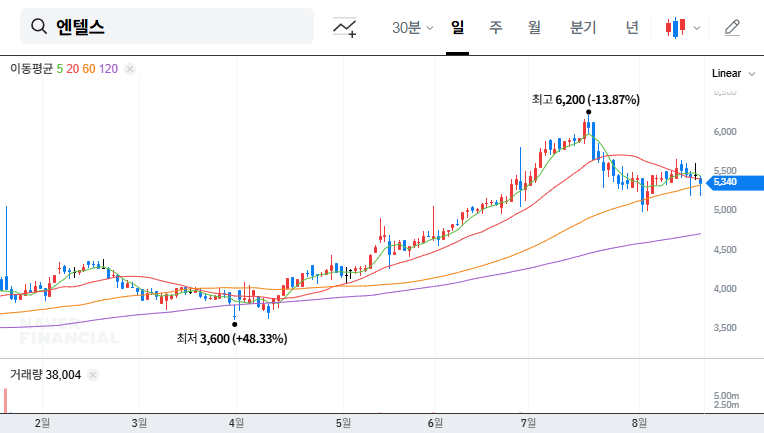
    The recent announcement of an nTels treasury stock disposal has captured the attention of the market. On November 14, 2023, nTelsCo.,Ltd. (엔텔스) disclosed its plan to dispose of treasury shares specifically for employee bonuses. This move, while a common corporate action, arrives at a pivotal moment, following a quarter of significant financial improvement. For investors, the key question is whether this is a routine financial maneuver or a strategic signal of confidence in the company’s future growth trajectory. This comprehensive financial analysis will unpack the implications of this decision, examine the robust Q3 2023 performance, and outline what investors need to know to make informed decisions.

    Is the nTels treasury stock disposal a simple compensation plan or a bullish indicator? By combining this event with a detailed look at the company’s fundamentals, we can uncover the true narrative for nTels stock.

    Disposal Details and Company Context

    nTelsCo.,Ltd., a key player in providing telecommunications software and solutions like Business/Operations Support Systems (B/OSS), is navigating the dynamic landscape of 5G and IoT integration. The company’s decision, as per the Official Disclosure (DART Report), involves the disposal of 140,000 common shares. This represents approximately 1.37% of the total outstanding shares, valued at around KRW 700 million.

    The stated purpose is explicit: to grant bonuses to executives and employees. This is a crucial detail. Unlike disposals aimed at raising capital, which can lead to share dilution, this action is designed to incentivize and retain key talent—a move often interpreted by the market as a sign of management’s confidence in sustained future performance.

    Deep Dive: nTels Financial Analysis for Q3 2023

    The treasury stock disposal does not happen in a vacuum. It is framed by an exceptionally strong third quarter in 2023, which suggests a fundamental turnaround. Let’s examine the key performance indicators:

    • Surging Revenue & Profitability: Revenue skyrocketed by 59.2% year-over-year to KRW 46.647 billion. Even more impressively, operating profit shifted from a loss to a surplus of KRW 1.44 billion, signaling a significant operational turnaround fueled by its core B/OSS solution business.
    • Explosive Global Growth: International sales were a standout performer, surging 119.8% to KRW 8.088 billion. This indicates that nTels is successfully expanding its footprint beyond domestic markets, a critical driver for long-term growth.
    • Robust Order Backlog: The total order backlog swelled by 93.5% from the end of the previous year to KRW 72.254 billion. This provides strong revenue visibility and a stable foundation for the upcoming quarters.

    Areas for Continued Scrutiny

    Despite the stellar top-line growth, a complete nTels financial analysis requires a balanced view. Key profitability metrics like Return on Equity (ROE) at 0.13% and Earnings Per Share (EPS) at 4 KRW remain low. Furthermore, operating cash flow is still negative. This suggests that while the company is growing rapidly, it must now focus on converting that growth into efficient, sustainable profit and positive cash flow.

    Impact of the nTels Treasury Stock Disposal

    Short-Term Market Implications

    In the short term, the impact on the nTels stock price is expected to be minimal. The volume (1.37%) is too small to create significant selling pressure. More importantly, the market often views disposals for employee compensation positively, as it aligns employee interests with shareholder value and signals a commitment to retaining talent. When combined with the strong Q3 results, the immediate market reaction is likely to be neutral to positive.

    Mid-to-Long-Term Strategic Value

    The long-term effect is more strategic than financial. By rewarding performance, nTels aims to boost morale and productivity, which can serve as an indirect catalyst for innovation and operational excellence. This internal strengthening aligns perfectly with the company’s external growth story, driven by its expanding order backlog and international success. It’s a move to ensure the internal engine is just as robust as the external opportunities.

    Actionable Investor Checklist

    For those considering an investment in nTels, the focus should be on the underlying fundamentals rather than the disposal event itself. Here are key points to monitor:

    • Sustainability of Growth: Is the Q3 performance a one-time event or the start of a new, sustainable growth phase? Look for continued strength in international sales and new contracts in the 5G and IoT sectors in subsequent earnings reports.
    • Path to Profitability: Keep a close eye on ROE, EPS, and operating cash flow. The next step in nTels’ evolution is to translate its impressive revenue growth into bottom-line profit and positive cash generation.
    • Competitive Landscape: How is nTels positioned against its competitors in the B/OSS and telecom software space? Understanding their competitive advantage is key to assessing long-term viability. Consider reading our broader report on Investing in the Korean Tech Sector for more context.

    Conclusion: A Bullish Signal Backed by Fundamentals

    The nTels treasury stock disposal should be viewed not as an isolated event, but as a confident internal maneuver that complements a powerful external growth story. The action itself is a healthy sign of a company investing in its people. However, the true investment thesis rests on the impressive fundamental improvements seen in Q3 2023. Investors should focus on the company’s ability to maintain its growth momentum, particularly in international markets, and its strategic efforts to enhance profitability. If nTels can continue this trajectory, this period may be remembered as a significant inflection point for the company.
    (069410) nTels Treasury Stock Disposal: A Deep-Dive Financial Analysis of Q3 Performance & Investor Impact 관련 이미지
  • (111380) DONG IN ENTECH Treasury Stock Disposal (111380): An In-Depth Investor Analysis

    (111380) DONG IN ENTECH Treasury Stock Disposal (111380): An In-Depth Investor Analysis

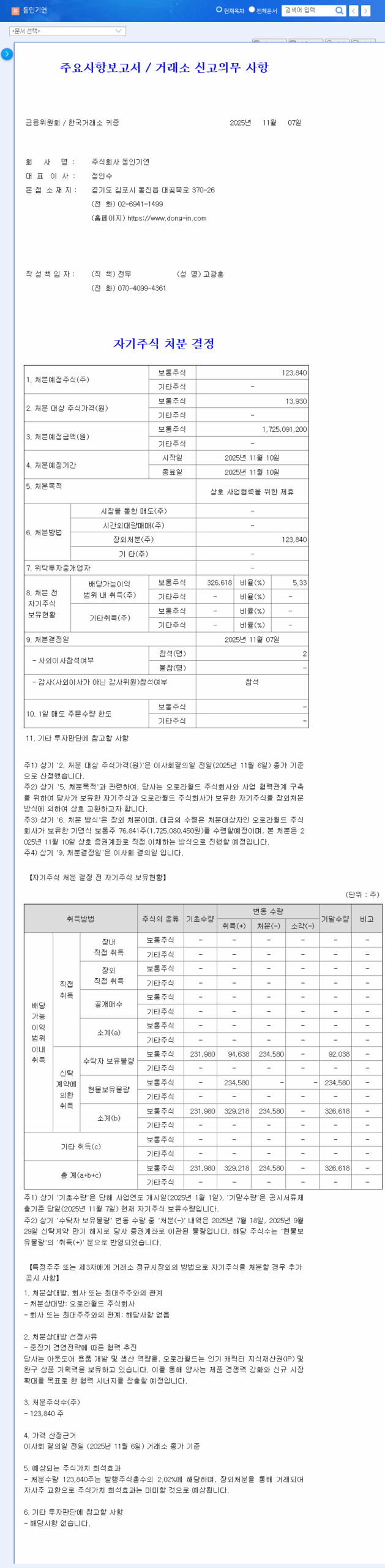
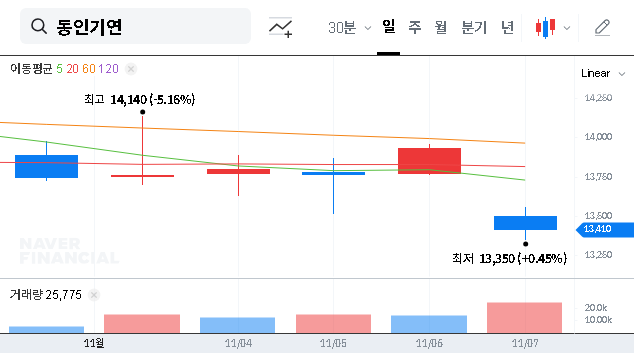
    The recent DONG IN ENTECH treasury stock disposal announcement has sent ripples through the investment community, raising critical questions about the company’s strategic direction. On November 7, 2025, DONG IN ENTECH Co., Ltd. (111380), a major player in the outdoor backpack Original Development Manufacturing (ODM) sector, revealed its plan to sell a significant block of treasury shares. While framed as a move for ‘mutual business collaboration,’ this action comes at a time when the company faces considerable fundamental challenges, including a sharp decline in sales. For investors, this creates a complex picture of potential opportunity mixed with tangible risk. This in-depth analysis will dissect the transaction, evaluate the company’s financial health, and provide a clear guide on what to expect next.

    The Core Announcement: A KRW 1.7 Billion Strategic Move

    According to the official disclosure, DONG IN ENTECH will dispose of 123,840 of its common treasury shares, valued at approximately KRW 1.7 billion. This represents 2.02% of the total shares issued, a notable amount that suggests this is more than a simple cash-raising exercise. The stated purpose—’mutual business collaboration’—points towards a strategic alliance. The infusion of capital is intended to bolster the company’s financial structure and fuel investment in new business ventures. You can view the complete filing here: Official Disclosure (DART).

    Understanding DONG IN ENTECH’s Fundamentals Amidst Challenges

    To understand the impact of the DONG IN ENTECH treasury stock disposal, we must first assess the company’s current operational and financial state. The picture is one of contrast, with signs of cost control efficiency set against a backdrop of shrinking revenue.

    A Strained Core Business Model

    DONG IN ENTECH’s primary business is outdoor backpack ODM, which constituted roughly 70% of sales in the first half of 2025. This model, while historically stable, has shown recent vulnerability:

    • Significant Revenue Contraction: H1 2025 sales plummeted to KRW 119.73 billion, a startling 47% decrease year-over-year. This signals a serious contraction in external growth and market demand.
    • Improved Operating Margin: In a positive counterpoint, the operating profit margin improved to 7.55%. This suggests successful cost management initiatives or a shift in product mix towards higher-margin items, even as overall sales fell.
    • Net Income Collapse: Net income was just KRW 0.33 billion, a drastic drop from the previous year, largely due to rising financial costs and foreign exchange losses.

    The company is attempting to pivot by transitioning to an Original Brand Manufacturing (OBM) model and diversifying into tents and luggage. However, building a successful brand from the ground up is a capital-intensive, long-term endeavor with no guarantee of success. For more on this business model, see our guide on how to analyze ODM companies.

    Analyzing the Impact of the Treasury Stock Disposal

    This corporate action presents both a compelling bull case based on strategic potential and a bearish case rooted in execution risk and dilution.

    The Positive Angle: Synergy and Financial Fortification

    • Strengthened Business Collaboration: A successful partnership could open new markets, provide access to new technologies, or create powerful distribution channels, leading to significant long-term synergies.
    • Improved Financial Structure: The KRW 1.7 billion cash infusion directly improves liquidity, providing crucial capital for the OBM transition or other strategic investments.
    • Increased Market Interest: Such a significant event often attracts market attention, leading to higher short-term trading volumes and potential stock price volatility that active traders may exploit.

    The Negative Angle: Dilution and Lingering Uncertainty

    • Inevitable Share Dilution: Releasing treasury shares into the market increases the total number of outstanding shares. This action will dilute existing shareholders’ equity by 2.02%, potentially putting downward pressure on earnings per share (EPS). For more details, see this explanation of share dilution from Investopedia.
    • Uncertainty on Terms: The disclosure lacks specifics on the collaboration partner, the terms of the deal, and the appropriateness of the disposal price. A weak partner or unfavorable terms could nullify any potential benefits.
    • Not a Fundamental Fix: A cash injection doesn’t solve the core problem of declining sales. The success of this move hinges entirely on whether the subsequent collaboration can reverse the company’s negative growth trajectory.

    Investor’s Guide: Why a ‘Neutral’ Stance is Prudent

    Given the balance of potential and risk, a neutral investment thesis is the most reasonable approach at this juncture. The DONG IN ENTECH treasury stock disposal is a significant event, but it is a means to an end, not the end itself. The outcome is entirely dependent on the yet-unseen details of the business partnership.

    While this event may create short-term volatility, it is premature to view it as a signal of fundamental improvement. Long-term value will be dictated by the tangible results of the forthcoming business collaboration, not the transaction itself.

    Key Due Diligence Checklist for Investors

    Investors should shift from reacting to the news to monitoring for concrete evidence of progress. Keep a close watch on the following points:

    • Partner and Strategy Reveal: The most crucial upcoming data point is the identity of the partner and the specifics of the collaboration. Is it a technology partner, a distributor, or a raw material supplier?
    • Price Justification: Scrutinize whether the disposal price was fair value compared to the market price at the time of the agreement.
    • Tangible Business Outcomes: Over the next several quarters, look for measurable results like new product line sales, entry into new geographic markets, or improved cost efficiencies directly linked to the partnership.
    • Reversal of Fundamental Decline: Ultimately, the only thing that matters is a turnaround in the core financials. Monitor future earnings reports for a stabilization and subsequent reversal of the revenue decline.

    In conclusion, investors should view the DONG IN ENTECH 111380 treasury stock disposal not as a definitive buy or sell signal, but as the beginning of a new chapter. Prudence and diligent monitoring of subsequent disclosures will be key to making an informed and profitable investment decision.

    (111380) DONG IN ENTECH Treasury Stock Disposal (111380): An In-Depth Investor Analysis 관련 이미지
  • (204270) JNTC Treasury Stock Disposal: A Deep-Dive Stock Analysis for Investors

    (204270) JNTC Treasury Stock Disposal: A Deep-Dive Stock Analysis for Investors

    JNTC CO.,LTD. (KOSDAQ: 204270) has captured significant market attention with its recent announcement of a major JNTC treasury stock disposal. The company plans to raise approximately 12.4 billion KRW, a move that comes at a critical juncture, given its struggling first-half 2025 performance. For investors, this raises a crucial question: is this a desperate measure to shore up failing finances, or a strategic masterstroke to fund next-generation growth? This comprehensive JNTC investor guide will dissect the company’s fundamentals, analyze the implications of the disposal, and provide a clear roadmap for your investment decisions.

    The Catalyst: A 12.4 Billion KRW Treasury Stock Disposal

    On November 3, 2025, JNTC officially announced its decision to dispose of 381,000 of its own treasury shares. According to the Official Disclosure on DART, the purpose is not a simple market sale but to raise capital by issuing JNTC exchangeable bonds (EB) with these shares as the underlying asset. This method was chosen to secure vital liquidity for company operations and to finance future investment initiatives.

    Why Now? An Urgent Need Fueled by Challenging Fundamentals

    The timing of this JNTC treasury stock disposal is directly linked to the company’s deteriorating financial health and a tough market environment. A closer look at the JNTC fundamentals reveals a company under pressure:

    • Severe Sales Decline: First-half 2025 sales plummeted to 104.1 billion KRW, a staggering 45.9% drop year-over-year. The core reinforced glass business was hit hard by reduced orders from the Greater China region amid a global smartphone market slowdown.
    • Plummeting Profitability: The company fell deep into the red, posting an operating loss of 38 billion KRW and a net loss of 57.6 billion KRW, a significant expansion of its deficit.
    • Rising Financial Burden: The debt-to-equity ratio climbed to 103.90%, signaling increased financial risk and pressure on the balance sheet.

    This isn’t just about plugging a hole. Management’s use of exchangeable bonds signals a calculated move to secure capital while attempting to manage shareholder dilution, betting that future growth will outweigh the immediate risks.

    JNTC’s Strategic Pivot: The Growth Engines of Tomorrow

    Despite the grim financials, JNTC is not standing still. The capital raised is earmarked for ventures that could redefine the company’s future. This is a critical part of any JNTC stock analysis.

    1. The TGV Glass Substrate Business

    JNTC is making a significant push into the high-tech semiconductor space with its TGV (Through-Glass Via) glass substrate business. As demand for advanced semiconductor packaging soars, driven by AI and high-performance computing, glass substrates offer superior performance over traditional materials. Success in this area could transform JNTC into a key player in the semiconductor supply chain.

    2. The Automotive Display Cover Glass Market

    The automotive industry’s shift towards electric vehicles (EVs) and sophisticated in-car infotainment systems has created a booming market for large, durable, and complex cover glass. JNTC is aggressively pursuing this segment, aiming to leverage its glass processing expertise to secure long-term contracts with major automakers. Increased orders here could provide a stable, high-growth revenue stream to offset the volatile smartphone market.

    Investor Outlook: Risks and Opportunities

    The JNTC treasury stock disposal creates a clear split between short-term risks and long-term potential.

    Short-Term Risk: Market Overhang and Dilution

    The market generally views treasury stock sales as a negative short-term signal. The issuance of JNTC exchangeable bonds introduces a potential ‘overhang’—a large block of shares that could enter the market when the bonds are converted. This potential for future selling pressure and share dilution can weigh on the stock price in the near term.

    Long-Term Opportunity: A Successful Transformation

    The long-term bull case rests entirely on execution. If the 12.4 billion KRW is successfully deployed to scale the TGV substrate and automotive glass businesses, leading to visible revenue and profit growth, the company’s valuation could be completely re-rated. Investors with a longer time horizon may see the current price weakness as a compelling entry point for a potential turnaround story.

    Key Monitoring Points for Investors

    For those considering an investment in JNTC, close monitoring of the following is essential:

    • New Business Traction: Watch for announcements of mass production, new client acquisitions, and revenue contribution from the TGV and automotive segments.
    • Core Business Recovery: Any signs of stabilization or recovery in the legacy reinforced glass business would be a significant positive.
    • Financial Health: Track quarterly reports for improvements in profitability, debt levels, and cash flow.
    • Bond Conversion Status: Monitor the status of the exchangeable bonds and any potential conversions to shares.

    (204270) JNTC Treasury Stock Disposal: A Deep-Dive Stock Analysis for Investors 관련 이미지
  • (033920) Muhak Treasury Stock Disposal: A Deep Dive into their ₩10B Exchangeable Bond Strategy

    (033920) Muhak Treasury Stock Disposal: A Deep Dive into their ₩10B Exchangeable Bond Strategy

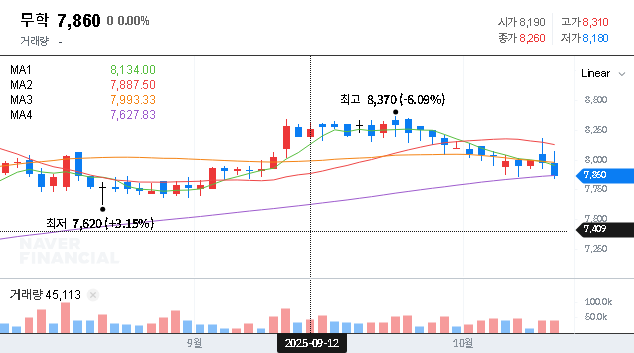
    In a significant move capturing market attention, prominent liquor company Muhak has announced a major financial restructuring. The core of this news is the Muhak treasury stock disposal, a strategic decision to raise ₩10 billion through the issuance of Exchangeable Bonds (EBs). This action presents a classic dilemma for investors: is it a precursor to shareholder value dilution, or a savvy maneuver to fuel future growth? This comprehensive analysis will break down the mechanics of the deal, explore the potential impacts, and provide a clear framework for making an informed investment decision.

    The Announcement: Unpacking the ₩10 Billion Deal

    On October 27, 2023, Muhak officially disclosed its plan to dispose of 1,073,076 of its own common shares, which represents approximately 3.77% of its total outstanding shares. The total value of this disposal is estimated at ₩10 billion. The stated purpose is not a simple market sell-off, but rather to use these shares as the underlying asset for a new issuance of Exchangeable Bonds (EBs). For complete transparency, you can view the Official Disclosure on the DART system.

    What Are Exchangeable Bonds (EBs)?

    Before diving into the impact, it’s crucial to understand the financial instrument at play. Exchangeable Bonds are a form of hybrid debt security. Investors who purchase these bonds receive regular interest payments, much like a traditional bond. However, they also hold the option to exchange their bonds for a predetermined number of the company’s shares (in this case, the treasury stock being set aside) at a specified price. This offers investors the safety of a bond with the potential upside of stock appreciation. To learn more about complex financial instruments, you can consult authoritative sources like Investopedia for detailed explanations.

    Analyzing the Investment Impact: A Two-Sided Coin

    The Muhak treasury stock disposal carries both potential risks and significant rewards. A prudent investor must weigh both sides carefully.

    The Bear Case: Understanding the Risk of Share Dilution

    The primary concern for existing shareholders is the potential for dilution. This can occur in two stages:

    • Immediate Supply Increase: The disposal of nearly 4% of treasury stock effectively increases the number of shares available for trading, which can put short-term downward pressure on the stock price.
    • Future Conversion Overhang: If the company’s stock price rises above the EB conversion price, bondholders will be incentivized to convert their bonds into shares. This future influx of new shares would further dilute the ownership stake and earnings per share (EPS) for existing investors.

    The Bull Case: Fueling Strategic Long-Term Growth

    Conversely, this capital injection could be precisely what Muhak needs to accelerate its growth. The ₩10 billion secured can be a powerful catalyst if used effectively:

    • Financial Fortification: The funds can be used to pay down existing debt, improving the company’s balance sheet and reducing interest expenses.
    • Investment in Innovation: The capital could fund R&D for new products, helping Muhak compete in the dynamic and competitive liquor industry.
    • Market Expansion: These funds could be allocated to marketing campaigns or expansion into new geographic markets, driving top-line revenue growth.

    The success of this strategy hinges entirely on execution. If the ₩10 billion generates a return greater than the cost of dilution, long-term shareholders will be handsomely rewarded. If not, it will have been a costly fundraising exercise.

    Investor Checklist: What to Monitor Moving Forward

    To make an informed decision regarding your Muhak investment, it is critical to move beyond the initial announcement and monitor key subsequent details. Keep a close watch on the following:

    • Detailed EB Terms: Once published, scrutinize the final terms of the Exchangeable Bonds. The interest rate, maturity date, and especially the conversion price will determine the company’s financial burden and the likelihood of future dilution.
    • Clarity on Fund Usage: Look for specific company communications detailing how the ₩10 billion will be allocated. A clear, strategic plan for growth is a much stronger signal than a vague statement about ‘general corporate purposes’.
    • Market and Industry Trends: Context is key. Monitor Muhak’s performance relative to its competitors and overall trends in the liquor market. For more on this, you might read our guide on How to Analyze a Company’s Financial Health.

    Frequently Asked Questions (FAQ)

    What is the core of Muhak’s treasury stock disposal decision?

    Muhak is selling 1,073,076 of its own shares, worth about ₩10 billion, to serve as the underlying asset for an issuance of Exchangeable Bonds (EBs). This is a method of raising capital.

    How will this affect Muhak’s stock price?

    In the short-term, the risk of share dilution could create downward pressure on the stock. In the long-term, if the raised capital is invested successfully to grow the business, it could have a very positive impact on the company’s value and stock price.

    Is this a good or bad sign for investors?

    It is neither inherently good nor bad; it is a strategic trade-off. The outcome depends entirely on how effectively Muhak’s management team utilizes the newly acquired ₩10 billion to create future value that outweighs the cost of shareholder dilution.

    (033920) Muhak Treasury Stock Disposal: A Deep Dive into their ₩10B Exchangeable Bond Strategy 관련 이미지
  • (008870) Geumbi Treasury Stock Disposal: A 2025 Deep Dive for Investors

    (008870) Geumbi Treasury Stock Disposal: A 2025 Deep Dive for Investors 대표 차트 이미지

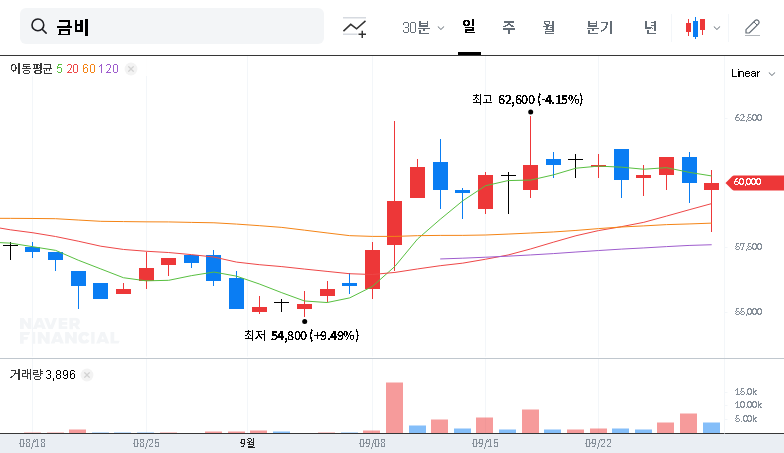
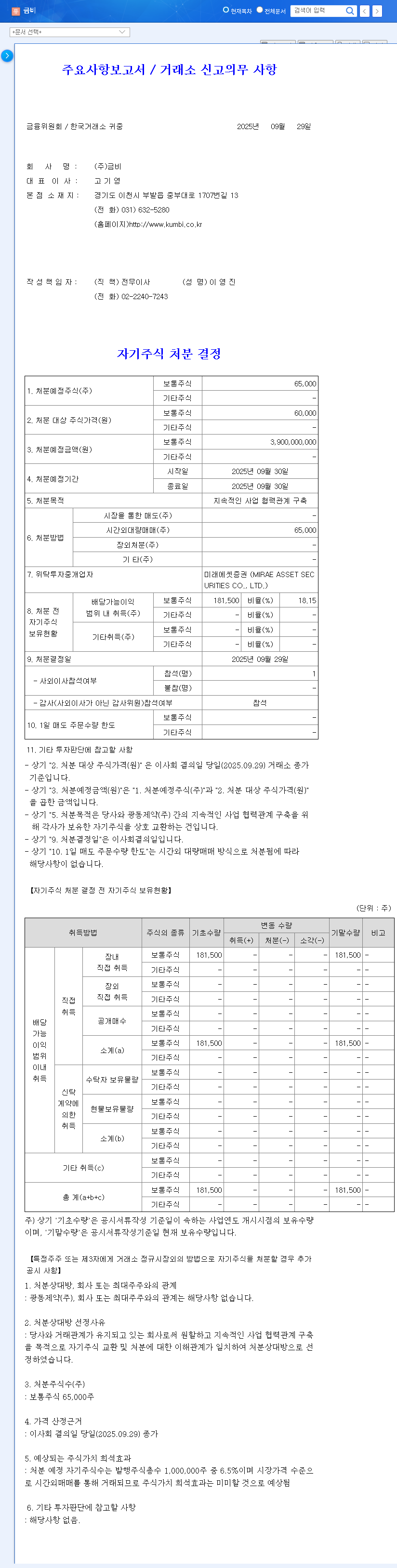
    The recent announcement of the Geumbi treasury stock disposal has sent ripples through the investment community. On September 29, 2025, Geumbi Co., Ltd. detailed its plan to sell 65,000 treasury shares. While on the surface this appears to be a financial maneuver, the company’s stated purpose—to establish ‘continuous business cooperation’—points towards a much deeper strategic realignment. This move could be a pivotal moment for the company’s future growth and shareholder value. In this comprehensive analysis, we will dissect the transaction, evaluate Geumbi’s current financial health, and provide a clear action plan for current and prospective investors.

    Is Geumbi’s disposal of treasury stock a simple fundraising effort or the foundation for a transformative strategic partnership? Understanding the nuances is critical for making an informed investment decision.

    Deconstructing the Geumbi Treasury Stock Disposal

    The core of the announcement involves the disposal of 65,000 common shares, representing 6.5% of the total outstanding shares, for a sum of 3.9 billion KRW. The transaction, managed by Mirae Asset Securities, sets an estimated price of 60,000 KRW per share. The full details can be reviewed in the company’s official filing. Source: Official DART Disclosure.

    Typically, treasury stock sales are used to fund operations, pay down debt, or for capital expenditures. However, Geumbi’s explicit mention of fostering business cooperation elevates this event from a standard financial transaction to a strategic one. This suggests Geumbi is likely preparing to form an alliance with a key partner, using the shares as a tool to cement the relationship and align interests for long-term synergy.

    A Deep Dive into Geumbi’s Financial Health

    To understand the impact of this move, a thorough fundamental analysis of Geumbi’s current state is essential. The company operates across several distinct segments:

    • Glass Business: A foundational segment supplying bottles for beverages. It faces headwinds from raw material costs and currency fluctuations, posting a recent operating loss of -378 million KRW.
    • Cap Business: The company’s cash cow. This division, operating via Samhwa Wangwan, is highly profitable with an operating profit of 2.736 billion KRW, providing a stable revenue base.
    • Plastic Container Business: A growth driver, this segment is capitalizing on the booming K-Beauty industry and posted a healthy operating profit of 1.86 billion KRW.
    • Cosmetics Business: Currently a minor segment running at an operating loss, its impact on the company’s bottom line is limited for now.

    Consolidated operating profit has seen a significant year-on-year drop, primarily due to struggles in the glass segment. Furthermore, a debt-to-equity ratio of 126.67% is a point of concern that highlights the need for prudent financial management and strategic initiatives to improve the balance sheet.

    Potential Impacts: Opportunities and Risks

    The Bull Case: Strategic Growth

    The most significant upside is the potential for a powerful strategic partnership. This could unlock new markets, provide access to new technology, or create cost-saving synergies that fundamentally enhance Geumbi’s competitive position. The 3.9 billion KRW in proceeds will also provide a welcome injection of liquidity, bolstering the balance sheet.

    The Bear Case: Dilution and Uncertainty

    The immediate risk is share dilution. Releasing 6.5% of treasury stock into the market increases the total number of shares, which can put downward pressure on the stock price in the short term. For more on this concept, see this excellent resource from a high-authority financial education site. Moreover, the success of the business cooperation is not guaranteed. If the partnership fails to deliver the expected results, investor sentiment could turn negative.

    Investor Action Plan & FAQ

    Given the dual nature of this event, a measured and long-term approach is advised. Focus on the following:

    • Monitor Disclosures: Pay close attention to future announcements revealing the identity of the partner(s) and the specific terms of the cooperation.
    • Track Segment Performance: Keep an eye on the profitability of the core Cap business and any signs of a turnaround in the Glass segment.
    • Assess Financial Health: Look for improvements in the debt-to-equity ratio and overall financial stability in subsequent quarterly reports.

    What is the core purpose of the Geumbi treasury stock disposal?

    The officially stated purpose is to “establish continuous business cooperation.” This suggests Geumbi is using its shares to form a strategic alliance with a partner to drive future growth, rather than just raising capital.

    How might this affect Geumbi’s stock price?

    In the short-term, the increase in outstanding shares could cause some price weakness due to dilution. However, if the business partnership is successful and enhances Geumbi’s long-term value, the stock price could see significant positive momentum.

    Which of Geumbi’s business segments are most important?

    Currently, the Cap business is the primary profit engine, providing financial stability. The Plastic Container segment is the key growth driver, benefiting from the K-Beauty trend. The performance of these two segments is crucial for the company’s overall success.

    In conclusion, the Geumbi treasury stock disposal is far more than a line item on a balance sheet; it is a strategic signal. While short-term volatility is possible, the long-term outlook will be defined by the quality of the ensuing partnership and management’s ability to execute on its vision. Cautious optimism and diligent monitoring are the best strategies for investors moving forward.

    (008870) Geumbi Treasury Stock Disposal: A 2025 Deep Dive for Investors 관련 이미지
    (008870) Geumbi Treasury Stock Disposal: A 2025 Deep Dive for Investors 관련 이미지
  • Daegyo Announces ₩5 Billion Treasury Stock Disposal: Investment Analysis & Outlook


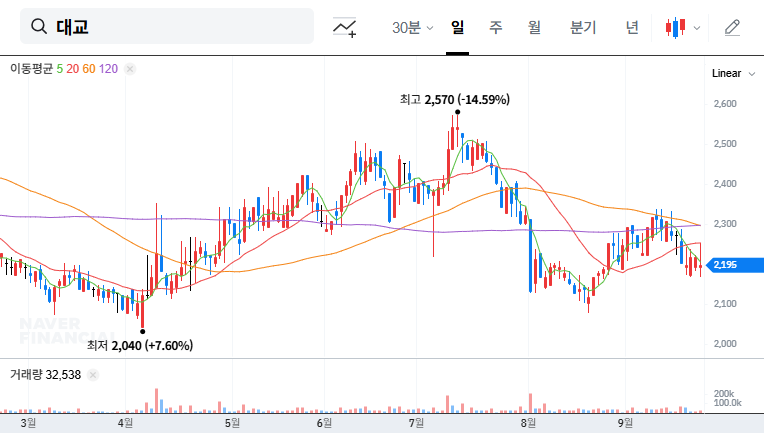
    Daegyo Announces ₩5 Billion Treasury Stock Disposal: Investment Analysis & Outlook 대표 차트 이미지


    Daegyo’s Treasury Stock Disposal: What Happened?

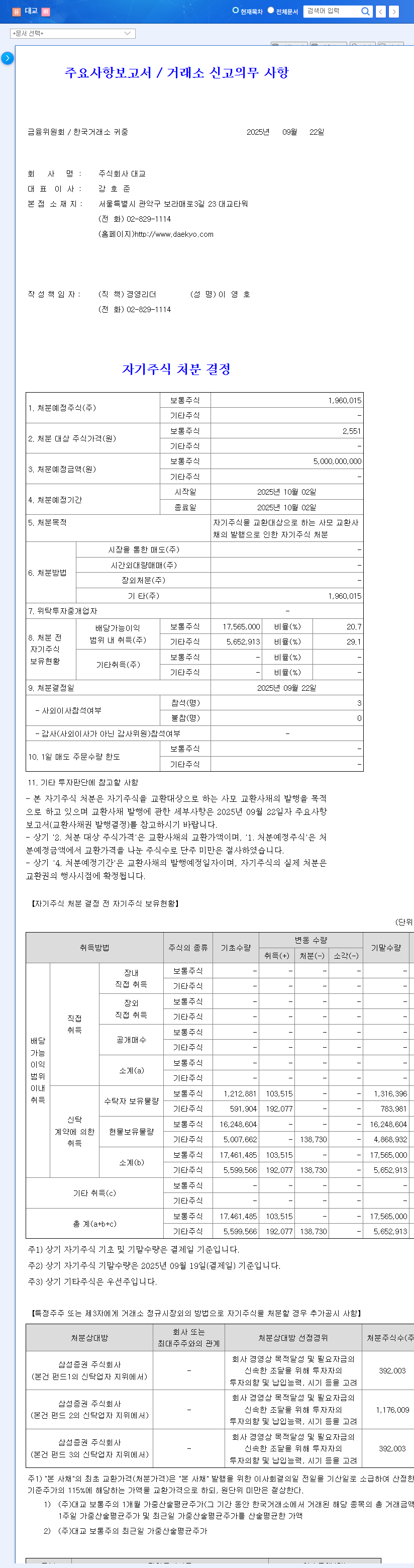
    On September 22, 2025, Daegyo announced its decision to dispose of 1,960,015 treasury shares (2.31% of total shares), amounting to ₩5 billion. This disposal aims to raise funds for the issuance of privately placed exchangeable bonds.

    Reasons and Objectives Behind the Disposal

    Unlike the previous plan for treasury stock cancellation, this disposal is part of a financial strategy. The ₩5 billion raised will be used for improving Daegyo’s financial structure or for new investments. Recently, Daegyo has shown positive fundamental improvement trends, including increased sales and a return to profitability. This funding is expected to further bolster this growth momentum.

    Impact on Investors

    • Positive Impacts: Capital increase and improved financial structure, potential for business expansion.
    • Negative Impacts: Potential stock dilution upon conversion of exchangeable bonds, short-term market volatility.

    Investors should monitor the terms and timing of the potential conversion of the exchangeable bonds due to the risk of stock dilution.

    Investment Strategy and Future Outlook

    This treasury stock disposal is expected to have a neutral impact in the short term and a positive impact in the long term. Focusing on the improving fundamentals and the growth potential through the raised capital, we recommend a buy or hold strategy from a mid- to long-term perspective.

    It is important to monitor future fund utilization plans, the conversion status of the exchangeable bonds, changes in the competitive landscape of the education market, and earnings announcements when making investment decisions.

    Disclaimer: This report is based on the provided information, and the final responsibility for investment decisions rests with the investor.


    Frequently Asked Questions

    What is treasury stock disposal?

    It refers to a company selling its own treasury stock on the market. This is utilized for various purposes such as raising capital and improving financial structure.

    What is the purpose of this treasury stock disposal?

    The purpose is to raise funds for the issuance of privately placed exchangeable bonds. The raised funds will be used to improve the financial structure or for new investments.

    What should investors be aware of?

    Investors should be aware of the potential stock dilution due to the possibility of converting exchangeable bonds into shares and short-term market volatility. It’s also crucial to continuously monitor the fund utilization plans and earnings improvement trends.


    Daegyo Announces ₩5 Billion Treasury Stock Disposal: Investment Analysis & Outlook 관련 이미지
    Daegyo Announces ₩5 Billion Treasury Stock Disposal: Investment Analysis & Outlook 관련 이미지


  • Unicem’s Treasury Stock Disposal: Impact on Stock Price and K-Content Venture

    1. What Happened? : Treasury Stock Disposal Decision

    On August 14, 2025, Unicem announced its decision to dispose of 1,700,000 common shares (approximately KRW 2.9 billion), representing 1.83% of the total outstanding shares. The purpose of this disposal is to increase trading activity by boosting the number of outstanding shares and to secure operating funds.

    2. Why This Decision? : Background and Objectives

    Unicem has recently been pursuing business diversification by venturing into the K-Content market, including entertainment, content development and distribution. The funds secured through this treasury stock disposal are expected to be utilized for new business investments and operating funds. The company also aims to stimulate trading activity by increasing the number of outstanding shares.

    3. What’s the Impact? : Expected Effects and Risks

    • Positive Effects:
      • Increased Liquidity and Trading Activity
      • Securing Investment Funds for New Business
      • Improved Financial Structure
    • Potential Risks:
      • Short-term Stock Price Decline Pressure
      • Possibility of Profit-Taking by Existing Shareholders
      • Uncertainty of New Business Ventures

    4. What Should Investors Do? : Action Plan

    Investors should make investment decisions by comprehensively considering the treasury stock disposal price and progress, Unicem’s core business competitiveness, new business performance, and macroeconomic changes. It’s crucial to assess the company’s long-term growth potential objectively without being swayed by short-term stock price fluctuations.

    FAQ

    What is treasury stock disposal?

    Treasury stock disposal is when a company sells its own repurchased shares back into the market.

    How does treasury stock disposal affect stock prices?

    Treasury stock disposal can increase trading activity by boosting the number of outstanding shares, but it can also put downward pressure on stock prices in the short term.

    What is Unicem’s new business venture?

    Unicem is pursuing business diversification by venturing into the K-Content market, which includes entertainment, content development and distribution, advertising, and entertainment management.

  • Nanosinsojae’s Treasury Stock Disposal: Growth Signal or Financial Risk?

    1. What Happened?: Nanosinsojae Disposes of 2,000 Treasury Shares

    On July 28, 2025, Nanosinsojae announced plans to dispose of 2,000 treasury shares (approximately ₩100 million) to fund special bonuses for its employees.

    2. Why This Decision?: Q1 2025 Earnings Analysis and the Background of Treasury Stock Disposal

    Nanosinsojae’s Q1 2025 earnings showed increased operating profit despite a decrease in sales. This is attributed to higher selling prices and improved cost efficiency. However, high inventory assets (₩42.4 billion) and debt-to-equity ratio (82.6%) still raise concerns about financial soundness. While the special bonus through treasury stock disposal can be interpreted as boosting employee morale, the possibility of financial health deterioration cannot be ruled out.

    3. What’s Next?: Impact of Treasury Stock Disposal and Investment Perspective

    The disposal amount itself is minimal and has a limited direct impact on fundamentals. However, this decision necessitates further analysis of the company’s financial status and management strategy. The appropriateness of the special bonus, plans for inventory reduction and debt-to-equity ratio improvement should be carefully reviewed. In particular, the performance of new businesses is expected to significantly influence the future stock price.

    4. What Should Investors Do?: Key Investment Points and Action Plan

    • Short-term perspective: While the direct impact of the treasury stock disposal is limited, be aware of the possibility of increased stock price volatility.
    • Mid- to long-term perspective: After the Q2 earnings announcement, review inventory reduction, debt-to-equity ratio improvement, and new business performance to adjust your investment strategy.
    • Key checkpoints: Inventory management status, debt-to-equity ratio trends, new business performance, and changes in external environmental factors (exchange rates, interest rates, raw material prices).
    How does treasury stock disposal affect the stock price?

    The impact of this treasury stock disposal is minimal due to its small scale. However, analysis of the company’s financial status and management strategy is necessary.

    What is the financial status of Nanosinsojae?

    While Q1 operating profit increased, high inventory assets and debt-to-equity ratio require attention.

    What precautions should investors take?

    Carefully review future inventory reduction, debt-to-equity ratio improvement, and new business performance.