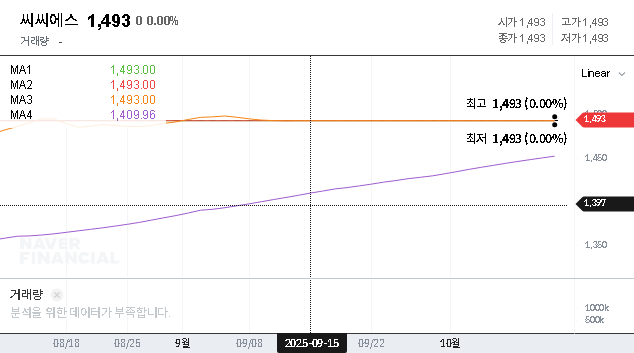
Tag: Trading Resumption

  • (066790) CCS Management Dispute: Your Guide to the EGM & Trading Resumption Potential

    (066790) CCS Management Dispute: Your Guide to the EGM & Trading Resumption Potential

    The ongoing CCS management dispute has reached a critical flashpoint. A recent court decision has greenlit an Extraordinary General Meeting (EGM) for KOREA CABLE T.V CHUNG-BUK SYSTEM CO., LTD. (CCS), thrusting the company into a period of significant uncertainty and opportunity. For investors, this isn’t just corporate drama; it’s a pivotal event that could unlock the path to trading resumption or deepen existing challenges. This comprehensive guide will analyze the situation, break down the EGM agenda, and provide a strategic outlook for shareholders.

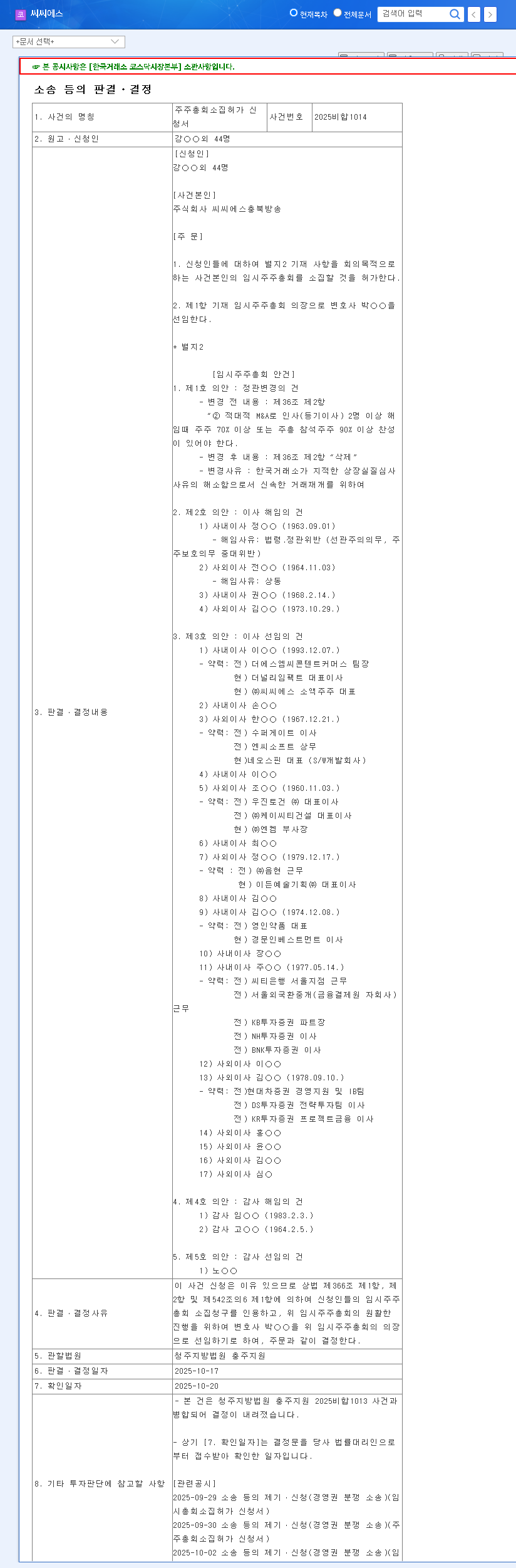
    On May 16, 2024, the Cheongju District Court sided with a group of 45 shareholders, authorizing their request to convene the EGM. This legal victory provides a formal platform for shareholders to challenge the current leadership and directly influence the company’s future. The decision underscores the growing dissatisfaction with the current board’s performance and strategy, particularly concerning the delisting review issues raised by the Korea Exchange. You can view the Official Disclosure (DART) for complete details.

    Deconstructing the EGM Agenda: What’s at Stake?

    The upcoming CCS EGM is centered around a few crucial proposals that will dictate the company’s trajectory. Understanding each item is key to grasping the potential outcomes.

    1. Amending the Articles of Association

    This is arguably the most critical agenda item. The proposal seeks to remove a ‘poison pill’ clause that requires a supermajority vote to dismiss multiple directors. The current management is protected by this clause, making a leadership change difficult. By removing it, shareholders aim to clear a major hurdle identified by the Korea Exchange, which is a vital step toward achieving CCS trading resumption.

    2. A Complete Leadership Overhaul

    The shareholder group is proposing a clean slate. The agenda calls for the dismissal of several current internal and external directors, as well as auditors, citing alleged violations of laws and negligence of their duties to protect shareholder value. This move signals a profound lack of confidence in the current board’s ability to navigate the company out of its difficulties.

    3. Appointment of a New Board

    In place of the outgoing members, a slate of 17 new directors (10 internal, 7 external) and a new auditor is proposed. Notably, these candidates include representatives from minority shareholders and individuals with expertise in content and software development. This suggests a strategic pivot towards new business ventures and a more inclusive governance model, moving beyond the traditional cable TV business.

    The core of the CCS management dispute is a battle for control, with shareholders pushing for a new vision focused on resolving exchange compliance issues and unlocking future growth.

    Market Impact and Investor Strategy

    The EGM introduces both significant risks and potential rewards. Navigating this period requires a clear understanding of the short-term and long-term implications.

    Short-Term Outlook: Volatility and Speculation

    In the short term, investors should brace for heightened stock price volatility. As seen in similar corporate battles covered by outlets like The Wall Street Journal, news flow and speculation surrounding the EGM’s outcome will likely drive sharp price movements. Key factors to watch include:

    • Increased Trading Volume: Speculative interest will likely fuel higher-than-average trading activity.
    • Uncertainty: The unpredictability of the shareholder vote creates a high-risk environment until the results are finalized.

    Mid-to-Long-Term Potential: A Path to Recovery?

    The long-term picture depends entirely on the EGM’s success and the new leadership’s execution. A positive outcome could lead to:

    • Improved Governance: A new, transparent management team could restore investor confidence.
    • Trading Resumption: Successfully addressing the delisting concerns is the primary goal and would be a major positive catalyst.
    • New Business Initiatives: The expertise of the proposed new directors could open doors to growth in new sectors.

    Investor Action Plan & Key Risks

    Investors should adopt a cautious yet informed approach. The risks are real: the EGM agenda could fail, the management dispute could become more protracted, or a new board may fail to improve fundamentals. For more on the mechanics of such situations, you can read our Guide to Shareholder Activism.

    Your focus should be on the following points:

    • Monitor EGM Results: The outcome of the vote is the most immediate and critical piece of information.
    • Evaluate New Leadership: If appointed, assess the new board’s strategic plan and their initial actions.
    • Track Exchange Communications: Keep a close eye on any updates from the Korea Exchange regarding the delisting review and trading status.
    • Focus on Fundamentals: Ultimately, long-term value will be driven by improvements in revenue, profitability, and balance sheet health, not just changes in management.

    Disclaimer: This analysis is for informational purposes only and is based on publicly available information. Investment decisions carry risk and should be made based on your own judgment and due diligence.
    (066790) CCS Management Dispute: Your Guide to the EGM & Trading Resumption Potential 관련 이미지
  • Exion Group Trading Resumes: Rebound or Risk? Investment Strategy Analysis


    Exion Group Trading Resumes: Rebound or Risk? Investment Strategy Analysis 대표 차트 이미지


    What Happened?

    Exion Group’s trading was halted on August 14, 2025, due to reasons related to delisting review. However, with the submission of amended reports on August 29, these reasons were resolved, and trading will resume on September 2.

    Why Did This Happen?

    This was due to the discovery of errors in revenue recognition in the 2025 semi-annual report, necessitating amended disclosures. This process led to revisions in the financial statements, notably a decrease of 66 million won in consolidated net income.

    What Are the Implications?

    • Short-Term Impact: Trading resumption is positive for investor sentiment and liquidity. However, there is a possibility of increased stock price volatility in the initial stages.
    • Long-Term Impact: Enhanced transparency of financial information is positive. However, high debt-to-equity ratio and uncertainties surrounding new businesses remain risk factors.
    • Market Impact: Provides a positive example for similar companies. However, there’s a possibility of increased competition due to business diversification.

    Investor Action Plan

    While the resumption of trading is positive, uncertainties persist regarding Exion Group’s fundamentals. Investors should consider the following:

    • Check the plan to strengthen financial soundness
    • Evaluate the performance and growth potential of new businesses
    • Confirm improvements in internal control systems
    • Review strategies to respond to macroeconomic variables and market volatility

    Investors should make prudent investment decisions by closely monitoring the company’s earnings announcements, progress of new businesses, etc.


    FAQ

    When will Exion Group’s trading resume?

    Trading will resume on September 2, 2025.

    What is the outlook for the stock price after trading resumes?

    High volatility is expected in the short term, and the long-term stock price will depend on improvements in financial soundness and the performance of new businesses.

    What are the key considerations for investors?

    Investments should be made prudently, considering the high debt-to-equity ratio and uncertainties surrounding new businesses. It is crucial to carefully analyze the company’s disclosed information and market conditions.


    Exion Group Trading Resumes: Rebound or Risk? Investment Strategy Analysis 관련 이미지


  • Iljin Power: Delisting Crisis Averted? Investment Strategies After Avoiding Delisting Review

    1. What Happened? Delisting Review Exemption

    On July 22, 2025, Iljin Power announced the positive news of its exemption from the delisting review. This means the worst-case scenario of delisting has been avoided, and trading is expected to resume on July 23rd.

    2. Why Does It Matter? Reduced Uncertainty, Improved Investor Sentiment

    This decision removes the uncertainty surrounding Iljin Power’s listing status, which has been weighing down the stock price. It’s expected to improve investor sentiment and potentially create upward momentum for the stock.

    3. What’s the Company’s Situation? Q1 Earnings Slump and New Business Ventures

    Despite the positive news, the Q1 earnings were disappointing. The decline in sales and profitability raises concerns for investors. However, the active investment in renewable energy could offer long-term growth potential.

    • Strengths: Diversification into renewable energy, healthy short-term liquidity
    • Weaknesses: Weak Q1 earnings, pending lawsuits
    • Opportunities: Government support for renewable energy policies
    • Threats: Volatility of raw material prices, increased competition

    4. What’s the Outlook? Short-Term Gains, Long-Term Uncertainty

    In the short term, the stock price is expected to rise following the delisting exemption. However, the long-term trend will depend heavily on the success of the renewable energy business and macroeconomic conditions.

    5. What Should Investors Do? Proceed with Caution

    Investors should not be swayed by short-term price fluctuations and should carefully analyze the progress of the renewable energy business and future earnings prospects. It’s also crucial to monitor the outcome of the pending lawsuits and macroeconomic variables.

    Frequently Asked Questions

    Is Iljin Power completely safe from delisting?

    Yes, with the exemption from the delisting review, the possibility of delisting is currently very low. However, future management issues or legal problems could trigger another review, so ongoing monitoring is necessary.

    What is the outlook for the renewable energy business?

    While there is long-term growth potential, the business has yet to achieve profitability. Success will depend on various factors such as government policies, technological advancements, and market competition.

    What should investors be cautious about?

    Be mindful of short-term price volatility and carefully analyze the reasons for the weak Q1 earnings and the potential for improvement. It’s important to monitor the progress of the renewable energy business and the outcome of pending lawsuits.