Tag: Tender Offer

  • (335890) VIOL Co., Ltd. Delisting (2025): The Ultimate Shareholder Guide

    (335890) VIOL Co., Ltd. Delisting (2025): The Ultimate Shareholder Guide

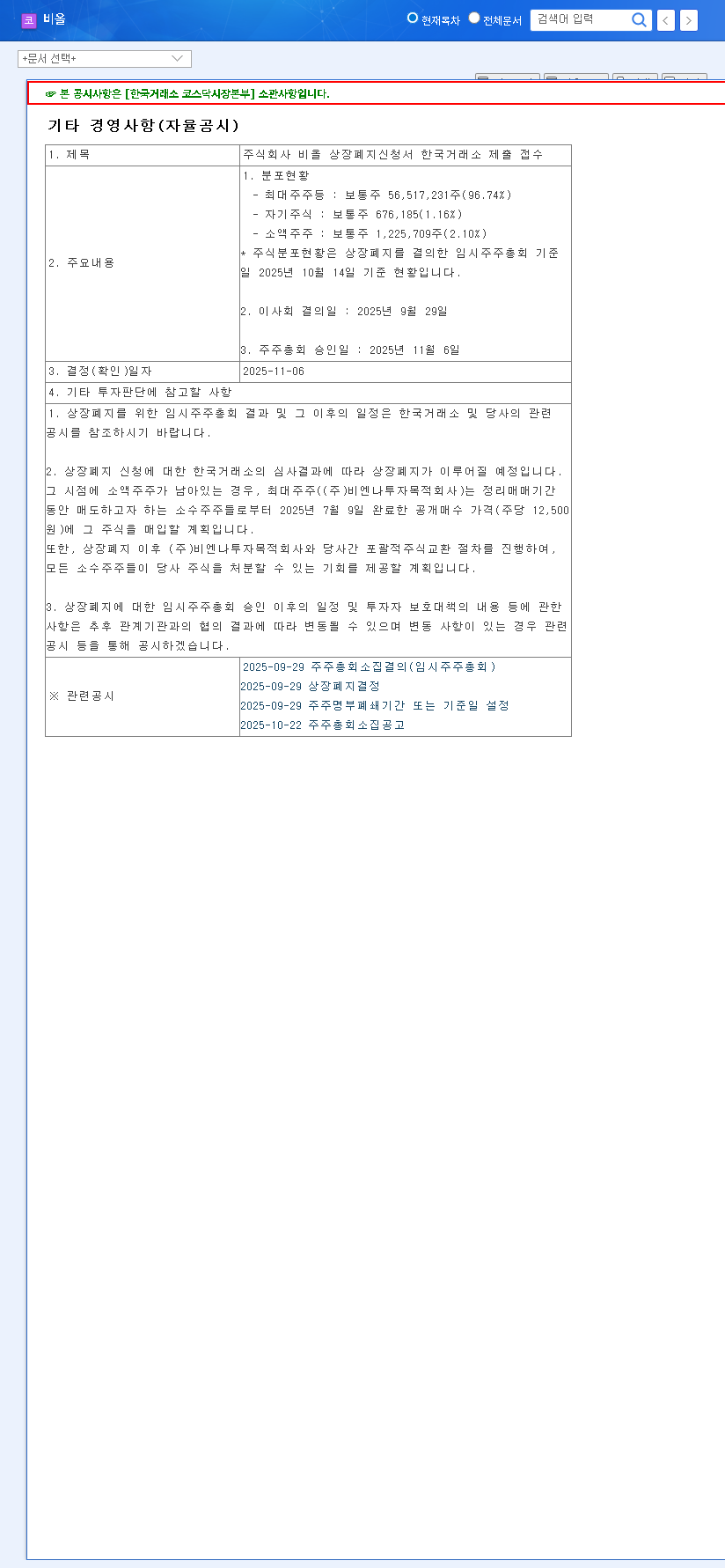
    The recent announcement regarding the VIOL Co., Ltd. delisting application from the Korea Exchange has sent ripples through the investment community. As a leader in the aesthetic medical device market, VIOL’s move to go private marks a pivotal moment for the company and, most importantly, its minority shareholders. This decision, initiated on November 6, 2025, requires careful consideration and an informed strategy from investors holding its stock.

    This comprehensive guide will break down every aspect of the VIOL Co., Ltd. delisting process. We will explore the timeline, the reasons behind the move, the specific protection measures for shareholders, and a step-by-step action plan to help you navigate this transition and protect your investment.

    Understanding the VIOL Co., Ltd. Delisting Timeline

    To fully grasp the situation, it’s essential to understand the sequence of events that led to this point. The process has been methodical, reflecting a clear strategic objective by the new majority ownership.

    • September 29, 2025: The Board of Directors officially approves the resolution to delist the company.
    • November 6, 2025: An extraordinary general meeting of shareholders is held, where the delisting plan receives the necessary approval.
    • November 6, 2025: Immediately following shareholder approval, VIOL Co., Ltd. formally submits its delisting application to the Korea Exchange. This move was documented in an Official Disclosure on the DART system.

    Why is VIOL Going Private?

    The primary driver behind the delisting is a strategic shift following a change in majority ownership. VIG Partners, a leading private equity firm, established Vienna Investment Purpose Company to acquire a controlling stake from the previous largest shareholder, DMS Co., Ltd. Their goal is to take VIOL private and incorporate it as a wholly-owned subsidiary.

    By going private, VIOL can achieve several strategic advantages:

    • Long-Term Focus: Freed from the pressure of quarterly earnings reports and public market scrutiny, management can concentrate on long-term growth strategies, research, and development.
    • Management Efficiency: Delisting reduces significant administrative and compliance costs associated with being a publicly traded company.
    • Strategic Flexibility: Private ownership allows for quicker, more decisive actions and investments without the need for extensive public shareholder consensus.

    With a minority shareholder ratio of just 2.10%, the path to privatization is significantly streamlined, allowing the new ownership to execute its vision for the company more effectively.

    A Detailed VIOL Shareholder Guide: Protection & Options

    The company has outlined a clear two-phase plan to protect the interests of its remaining minority shareholders. Understanding these options is critical to making an informed decision.

    Phase 1: Public Tender Offer

    During the grace period for trading (정리매매 기간) before the final delisting, VIOL will conduct a public tender offer. This is an official offer to purchase shares from minority shareholders at a fixed price.

    • Offer Price: 12,500 KRW per common share.
    • Purpose: To provide a clear and immediate liquidity event for shareholders who wish to exit their position at a predetermined price before the stock becomes illiquid.

    Phase 2: Comprehensive Share Exchange

    For any shareholders who do not participate in the tender offer or sell on the open market during the grace period, a second mechanism will be available after the company is officially delisted.

    The comprehensive share exchange is a legal procedure that will convert all remaining minority shares into cash or shares of the parent company, effectively completing the process of making VIOL a wholly-owned subsidiary. The terms will be based on a fair valuation as prescribed by law, but it’s crucial to review the specifics when announced. For more details on these financial instruments, resources like Investopedia offer excellent explanations.

    Your Action Plan: What Should Shareholders Do?

    The VIOL Co., Ltd. delisting presents a critical juncture. Here is a recommended course of action:

    1. 1. Stay Informed: Actively monitor all official announcements from VIOL and the Korea Exchange. Pay close attention to the exact dates of the grace period for trading and the tender offer period. Missing these windows can complicate your exit strategy.
    2. 2. Evaluate the Offer: Assess whether the 12,500 KRW per share price is fair value for your investment. Consider the company’s financial performance (stable revenue growth but decreased operating profit), its position in the aesthetic medical device market, and its future potential as a private entity.
    3. 3. Decide Your Strategy: Based on your evaluation, choose one of three paths: sell during the grace period, accept the public tender offer, or hold your shares and participate in the post-delisting comprehensive share exchange. Each has different implications for timing and liquidity.
    4. 4. Seek Professional Advice: If you are uncertain, consulting with a financial advisor is highly recommended. They can provide personalized advice based on your portfolio and financial goals, ensuring you make the optimal decision for your circumstances.

    Ultimately, the decision to delist is a strategic one aimed at fostering long-term, sustainable growth for VIOL Co., Ltd. For minority shareholders, the key is to remain proactive, well-informed, and to make a deliberate choice that aligns with their investment objectives.
    (335890) VIOL Co., Ltd. Delisting (2025): The Ultimate Shareholder Guide 관련 이미지
  • (011200) HMM Stock Buyback: In-Depth Analysis of the KRW 2.1T Shareholder Value Strategy

    (011200) HMM Stock Buyback: In-Depth Analysis of the KRW 2.1T Shareholder Value Strategy

    The global shipping giant HMM CO., LTD has sent ripples through the market with a landmark announcement: a massive HMM stock buyback program valued at over KRW 2.1 trillion. This strategic decision to repurchase and cancel a significant portion of its shares is a clear move to enhance shareholder value. But for current and potential investors, this raises critical questions. Beyond a potential short-term price bump, what are the fundamental implications for HMM’s financial health, and how should you position your portfolio in response? This comprehensive analysis provides the crucial insights you need.

    We will dissect the mechanics of the stock tender offer, evaluate the profound benefits, uncover the potential risks, and provide a clear action plan for navigating this pivotal moment in HMM’s corporate journey.

    Breaking Down the HMM Stock Buyback Announcement

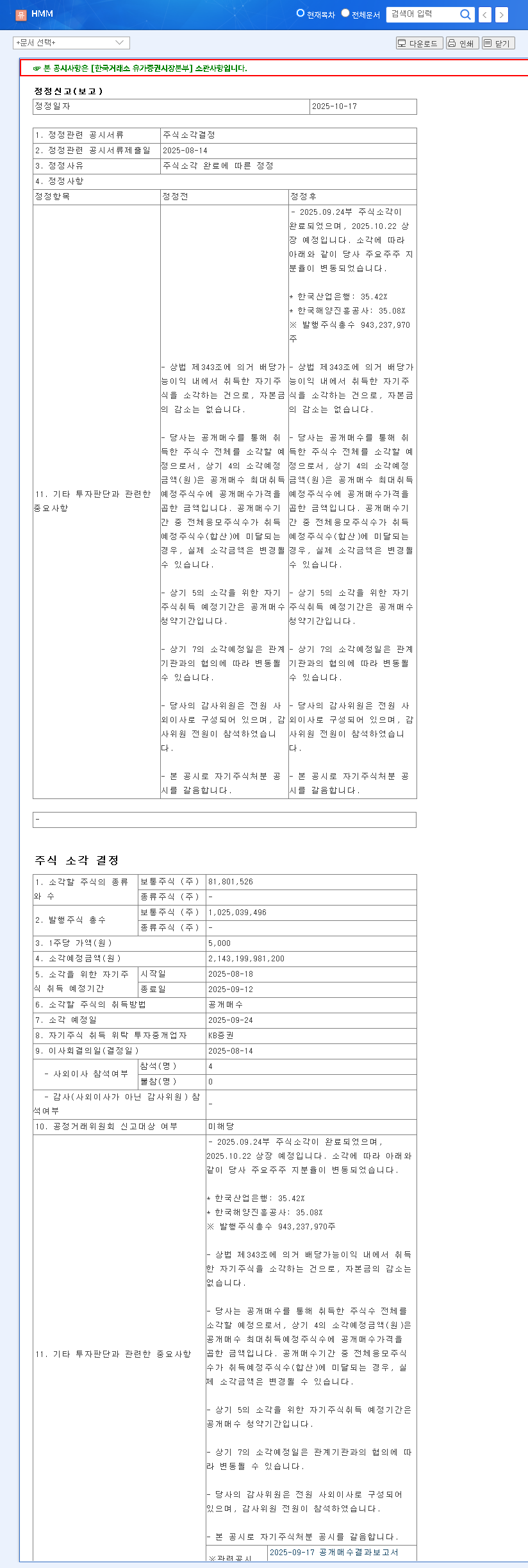
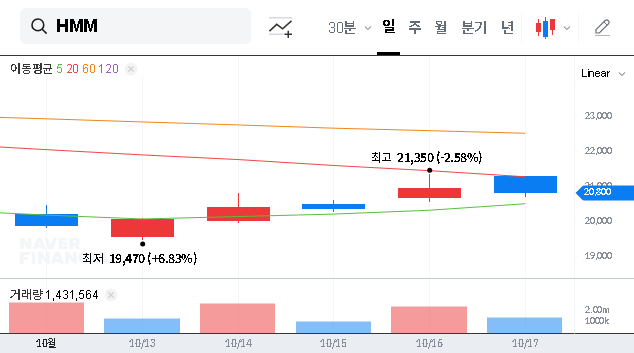
    On May 15, 2024, HMM CO., LTD formally announced its intention to cancel 81,801,526 of its common shares. This move, scheduled for completion by October 17, 2025, represents nearly 10% of the company’s current market capitalization. The acquisition of these shares will be conducted via a public tender offer, a method that invites shareholders to sell their shares back to the company at a specified price. For complete transparency, investors can review the Official Disclosure on the DART system (Source).

    A stock buyback of this magnitude is more than a financial transaction; it’s a powerful statement from management about their confidence in the company’s future value and a direct commitment to increasing shareholder returns.

    The Strategic Upside: Why This Is a Positive Signal

    This HMM stock buyback is a multi-faceted strategy aimed at optimizing the company’s financial structure and rewarding its investors. Here are the primary benefits:

    • Immediate Boost to Per-Share Metrics: By reducing the total number of shares outstanding, key financial metrics like Earnings Per Share (EPS) and Book Value Per Share (BPS) automatically increase. This makes the stock appear more valuable and attractive on a fundamental basis without diluting existing shareholders’ equity.
    • Support for Stock Price: The public tender offer creates a large, guaranteed buyer in the market (HMM itself). This can generate significant short-term buying pressure, supporting or even boosting the stock price. Furthermore, the signal of enhanced capital efficiency often improves overall investor sentiment.
    • Enhanced Shareholder Returns: While not a cash dividend, a buyback is a potent, tax-efficient form of returning capital to shareholders. It increases each remaining shareholder’s proportional ownership stake in the company, concentrating future earnings and dividends among fewer shares.
    • Optimized Capital Structure: Deploying excess cash for a buyback can improve a company’s return on equity (ROE) and signal that management is disciplined about its capital allocation, choosing to invest in its own stock when it believes it is undervalued.

    Navigating the Risks: An Investor’s Due Diligence Checklist

    Despite the clear positives, a prudent investment strategy demands a thorough examination of the potential risks and unanswered questions. The success of this shipping stock investment hinges on several factors.

    The Critical Question of Funding

    The source of the KRW 2.1 trillion is paramount. Will HMM fund this from its substantial cash reserves, or will it take on new debt? If it’s the latter, the increased leverage could introduce new financial risks and interest expenses, potentially offsetting some of the benefits. Investors must scrutinize upcoming financial reports for clarity on the funding mechanism.

    Market Expectations vs. Reality

    It’s crucial to gauge whether this move aligns with or falls short of market expectations. Did analysts and institutional investors anticipate a larger buyback, a special dividend, or a major strategic acquisition instead? Any significant disparity could lead to a muted or even negative market reaction. Keeping an eye on expert market analysis from sources like Bloomberg will be key.

    External Headwinds and Industry Cycles

    The global shipping industry is notoriously cyclical. A buyback’s effectiveness can be influenced by broader market trends, freight rates, and geopolitical events. A deep understanding of HMM’s core business value is essential, which is why we recommend reviewing our internal guide on how to evaluate shipping company fundamentals.

    Frequently Asked Questions (FAQ)

    What is the HMM CO.,LTD stock buyback decision?

    HMM CO.,LTD plans to buy back and cancel 81.8 million common shares (9.98% of its market cap) by October 2025 using a public tender offer. This is a strategy to improve its capital structure and increase shareholder value.

    How will this stock buyback affect HMM’s stock price?

    The reduction in outstanding shares is expected to increase per-share value (EPS/BPS). The tender offer could also create short-term buying pressure, potentially having a positive impact. However, the long-term effect depends on funding details and broader market conditions.

    What is the biggest risk for investors to consider?

    The primary risk is the funding source for the KRW 2.1 trillion. If HMM takes on significant new debt, it could increase financial risk and interest burdens, which investors need to monitor closely in future financial disclosures.

    In conclusion, HMM’s decision to execute a large-scale stock buyback is a significant and largely positive development for shareholders. It signals confidence and a commitment to capital discipline. However, this is not a signal for passive investment. Proactive investors must continue to perform their due diligence, monitor company disclosures, and stay informed on industry trends to truly capitalize on this strategic move.

    (011200) HMM Stock Buyback: In-Depth Analysis of the KRW 2.1T Shareholder Value Strategy 관련 이미지
  • Kolon Mobility Group Stock Outlook: Majority Shareholder Increases Stake to 93% – Opportunity or Threat?

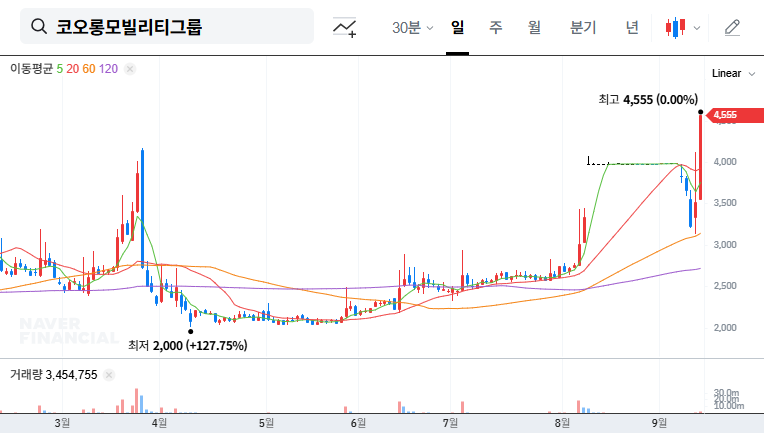
    Kolon Mobility Group Stock Outlook: Majority Shareholder Increases Stake to 93% - Opportunity or Threat? 대표 차트 이미지

    1. What Happened?

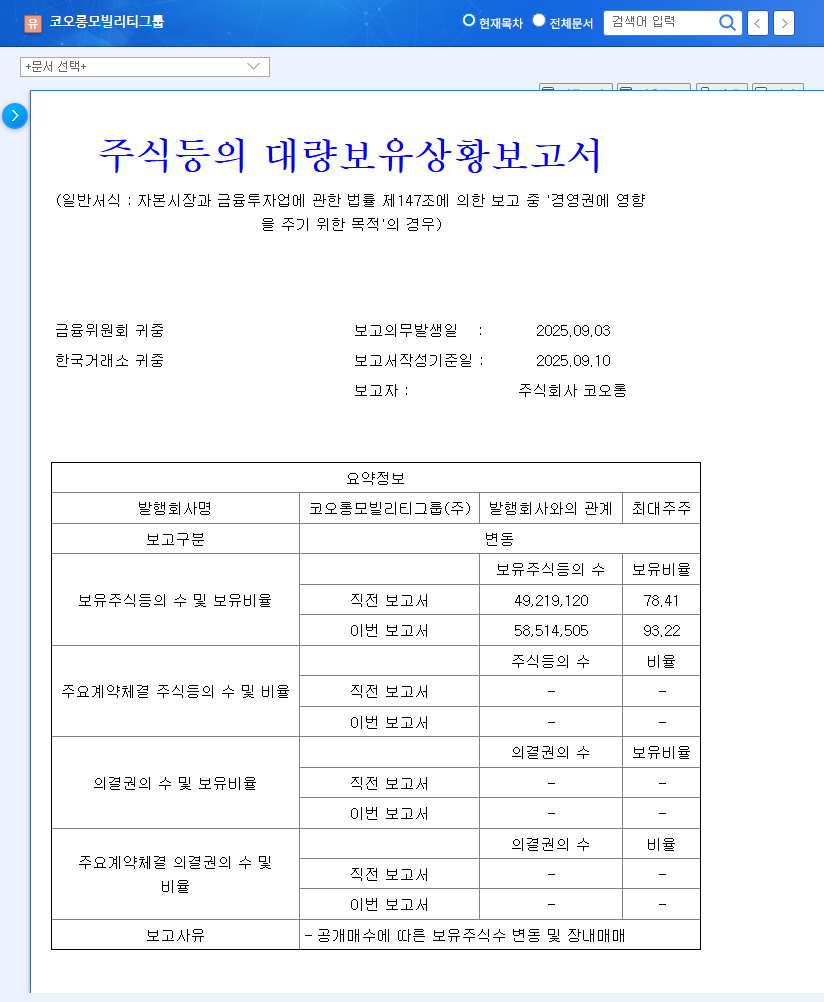
    Kolon increased its stake in Kolon Mobility Group from 78.41% to 93.22% through a tender offer and on-market purchases. The stated purpose of this acquisition is to influence management.

    2. Why This Decision?

    This move solidifies Kolon’s control over Kolon Mobility Group. It signals their intent to strengthen management control, enabling them to pursue long-term business strategies and efficiently implement shareholder value enhancement policies like treasury stock cancellation and share swaps with Kolon Corp.

    3. What’s Next?

    • Positive Impacts:
      • Management stabilization and faster decision-making
      • Expected implementation of shareholder value enhancement policies
      • Increased market confidence
    • Negative Impacts/Potential Risks:
      • Potential weakening of minority shareholder rights
      • Concerns about short-term liquidity decrease
      • Fundamental risks like high debt ratio and intensified market competition

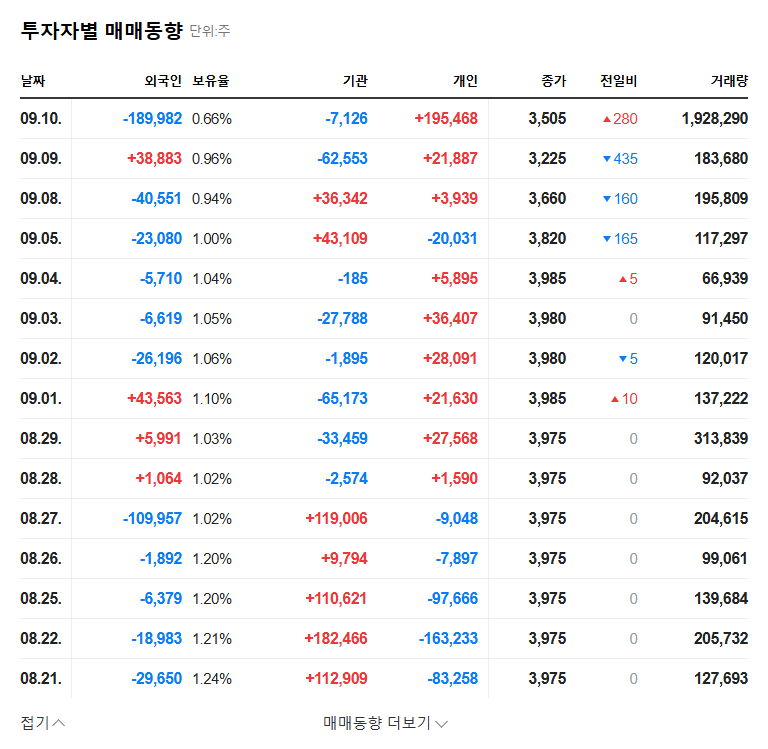
    While a short-term price increase is anticipated due to this ‘management defense’ event, long-term stock performance hinges on fundamental improvements.

    4. What Should Investors Do?

    Instead of reacting to short-term price fluctuations, investors should carefully analyze Kolon Mobility Group’s fundamentals, financial health, and market competitiveness, making investment decisions with a long-term perspective. Continuous monitoring of macroeconomic conditions and trends in the import car market is crucial.

    Does an increase in majority shareholder stake always positively impact the stock price?

    Not necessarily. While short-term price increases can occur due to expectations of management stability, sustained price growth requires underlying improvements in the company’s performance.

    What are the key investment points for Kolon Mobility Group?

    Consider factors like market share in the import car market, improvements in financial structure, new business ventures and their performance.

    What are the key risks to consider before investing?

    Be aware of risks like high debt-to-equity ratio, increasing competition in the import car market, and macroeconomic uncertainties.

    Kolon Mobility Group Stock Outlook: Majority Shareholder Increases Stake to 93% - Opportunity or Threat? 관련 이미지
    Kolon Mobility Group Stock Outlook: Majority Shareholder Increases Stake to 93% - Opportunity or Threat? 관련 이미지
  • Shinseong Tongsang Delisting: Urgent Action Plan for Investors

    Shinseong Tongsang Delisting: Urgent Action Plan for Investors 대표 차트 이미지

    What Happened? Delisting Application Explained

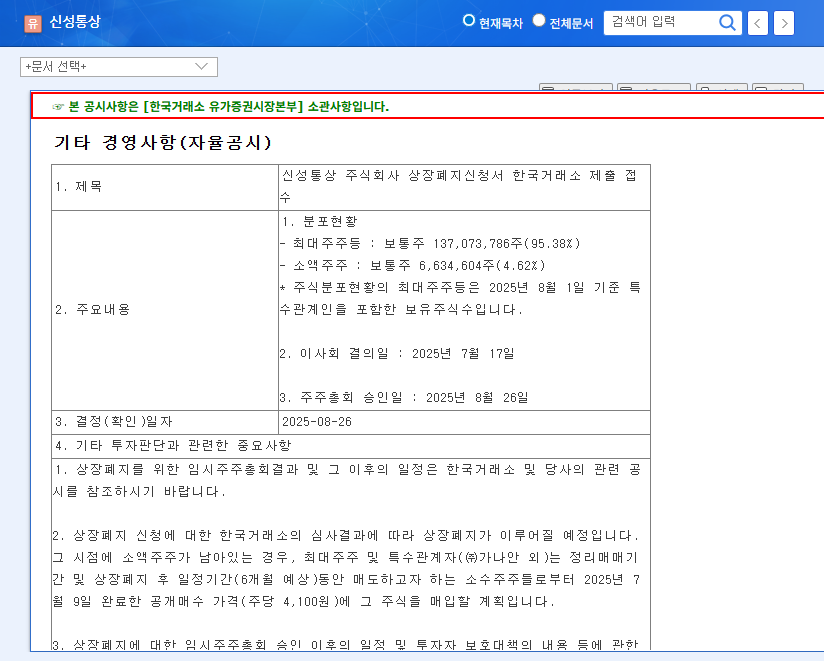
    Shinseong Tongsang submitted a delisting application via a voluntary disclosure. The application has been approved by the board of directors and a temporary shareholders’ meeting. The final decision rests with the Korea Exchange.

    Why the Delisting? Analyzing the Reasons

    While official reasons are yet to be disclosed, the company’s poor performance in Q1 2025 likely played a significant role. Despite a slight increase in revenue, operating profit and net income declined substantially due to increased SG&A and financial expenses. Cost savings from delisting and consolidating management control are also speculated motives.

    What’s Next? Investor Impact and Outlook

    Delisting will halt trading, significantly reduce liquidity, and inevitably lead to a decline in investment value. The tender offer price of 4,100 won per share may result in losses for minority shareholders. Concerns regarding management transparency and further decline in corporate value also exist. Current macroeconomic conditions, such as the weakening Korean Won, high interest rates, and fluctuating raw material prices, further exacerbate the negative outlook.

    What Should Investors Do? Action Plan

    Current shareholders should consider selling their shares immediately to mitigate potential losses. Closely monitor announcements from the Korea Exchange regarding the review process and minority shareholder protection measures. New investments in Shinseong Tongsang are strongly discouraged.

    When will the delisting be finalized?

    The Korea Exchange will review the application. The exact date will be announced through official disclosures.

    Is the tender offer price of 4,100 won fair?

    Compared to historical stock prices, the offer price seems low and may result in losses for minority shareholders.

    What happens to my shares after delisting?

    Trading will halt, making selling on the exchange impossible. Shareholders can participate in the tender offer or seek over-the-counter transactions.

    Shinseong Tongsang Delisting: Urgent Action Plan for Investors 관련 이미지
    Shinseong Tongsang Delisting: Urgent Action Plan for Investors 관련 이미지