Tag: TDDS

  • (175250) Icure Pharmaceutical Improvement Period: A Deep Dive into Delisting Risk & Investor Strategy

    (175250) Icure Pharmaceutical Improvement Period: A Deep Dive into Delisting Risk & Investor Strategy

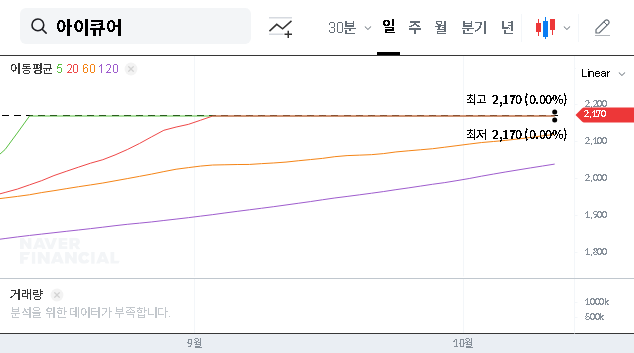
    The future of Icure Pharmaceutical Incorporation hangs in the balance following a critical decision by the Corporate Review Committee. On November 12, 2025, the company announced it had been granted an 8-month Icure Pharmaceutical improvement period, a formal warning that places its continued stock market listing in serious jeopardy. This development signals profound operational and financial distress, forcing investors to confront the very real possibility of a delisting event.

    This in-depth analysis unpacks the severe challenges facing Icure Pharmaceutical, explores the stringent requirements of the improvement period, and outlines what this means for the company, its stock, and its stakeholders. For investors, this is a crucial time for diligence and understanding the high-stakes road ahead.

    Understanding the Corporate Review Committee’s Mandate

    The decision, officially announced on November 12, 2025, grants Icure until July 12, 2026, to demonstrate significant and sustainable improvements. According to the Official Disclosure (DART Report), Icure must submit a comprehensive implementation report and an expert verification within 15 days of this deadline. Following submission, the committee will make a final ruling on whether to delist the company within 20 business days. This tight timeline places immense pressure on management to execute a dramatic turnaround.

    An improvement period is not a lifeline; it is a final warning. The risk of delisting is now the primary factor that should govern any investment decision related to Icure Pharmaceutical stock.

    In-Depth Analysis: The Roots of Icure’s Crisis

    The committee’s decision was not made in a vacuum. It is the culmination of prolonged financial deterioration and a failure to achieve commercial viability despite promising technology. Here’s a closer look at the core issues.

    1. Alarming Financial Deterioration

    The company’s financial statements paint a grim picture. As of December 2024, Icure reported revenues of only KRW 33.4 billion against a staggering operating loss of KRW -59.4 billion. This massive deficit, coupled with a net loss of KRW -55.5 billion, highlights a business model that is hemorrhaging cash. Further red flags include:

    • Capital Erosion: An extremely low equity ratio of 17.18% indicates that the company’s asset base is heavily financed by debt, and its shareholder equity has been severely depleted by persistent losses.
    • Negative Shareholder Value: The Earnings Per Share (EPS) of -1,094 KRW for 2024 confirms that the company is destroying value for its shareholders, not creating it.
    • Unsustainable Operations: Negative operating and net profit margins show that the core business is fundamentally unprofitable at its current scale and cost structure.

    2. The Promise vs. Reality of its Business

    Icure operates in the promising pharmaceutical and cosmetics sectors, built upon its proprietary Transdermal Drug Delivery System (TDDS) technology. This technology, which allows drugs to be administered through the skin via patches, has shown potential, particularly with its overseas licensing agreements for a Donepezil patch for Alzheimer’s treatment. However, the high costs of R&D, intense market competition, and regulatory hurdles have prevented this potential from translating into profitability. For more on market dynamics, expert analysis from sources like Bloomberg can provide wider industry context. The current financial crisis now overshadows any technological promise the company holds.

    What’s Next? Investor Strategy During the Improvement Period

    The Icure Pharmaceutical improvement period triggers extreme uncertainty. The stock price will likely experience severe volatility, driven by panic selling and speculative buying. For current and prospective investors, a cautious and informed approach is paramount.

    Key Actions Icure Must Take

    To survive, Icure’s management must implement a drastic and convincing turnaround plan. This will likely involve a combination of painful but necessary measures:

    • Capital Injection: Securing significant new funding through strategic investors or rights offerings is non-negotiable.
    • Aggressive Restructuring: This could include selling non-core assets, streamlining operations, and significant cost-cutting initiatives.
    • Enhanced Governance: Restoring market trust requires absolute transparency in communication and corporate governance.

    How Investors Should Respond

    Given the heightened Icure Pharmaceutical delisting risk, investors should exercise extreme caution. This situation is not suitable for those with a low risk tolerance. It is essential to monitor the company’s announcements and progress against its improvement plan. For a broader perspective on managing high-risk assets, consider reading articles on diversification strategies for volatile portfolios. The feasibility and execution of the company’s turnaround plan will be the sole determinant of its future. Until a clear, credible, and funded path to profitability is demonstrated, the investment case for Icure remains exceptionally speculative and high-risk.
    (175250) Icure Pharmaceutical Improvement Period: A Deep Dive into Delisting Risk & Investor Strategy 관련 이미지
  • TDS Pharm Stock Forecast: Major Shareholder Increases Stake, A Sign of Rebound?

    TDS Pharm Stock Forecast: Major Shareholder Increases Stake, A Sign of Rebound? 대표 차트 이미지

    1. What Happened?

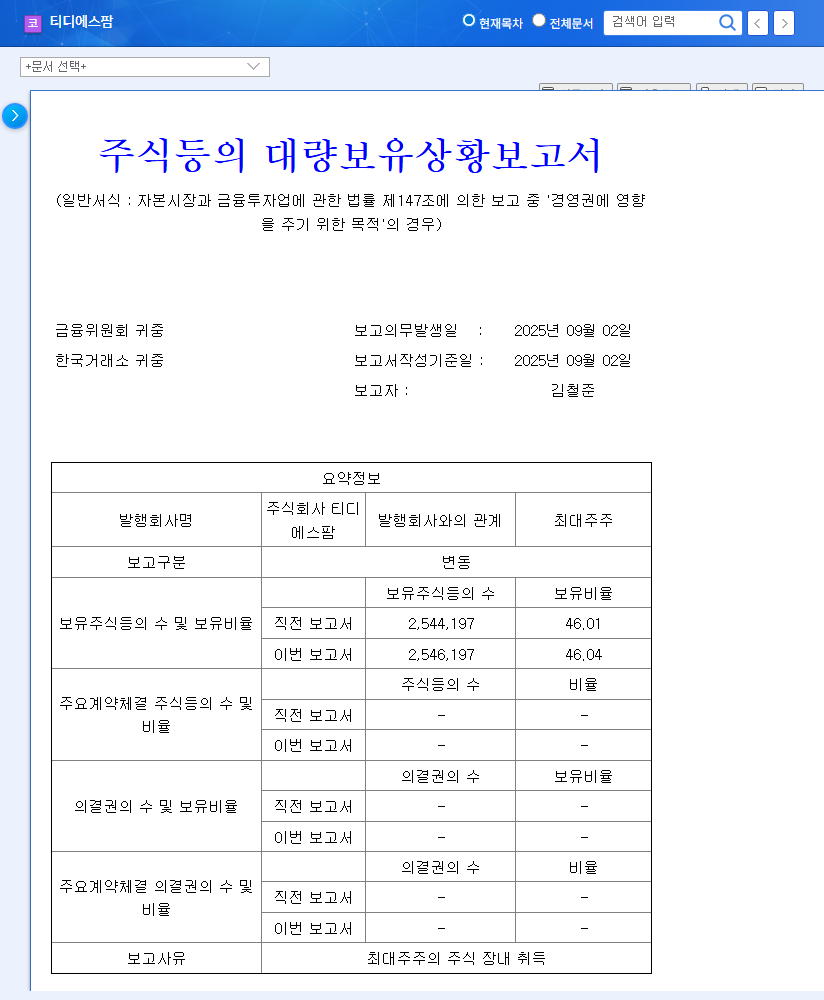
    On September 2, 2025, TDS Pharm’s largest shareholder, Kim Chul-jun, acquired an additional 2,000 shares, increasing his stake to 46.04%. This is interpreted as a response to the recent sharp decline in stock price and could send a positive signal to the market.

    2. Why Does It Matter?

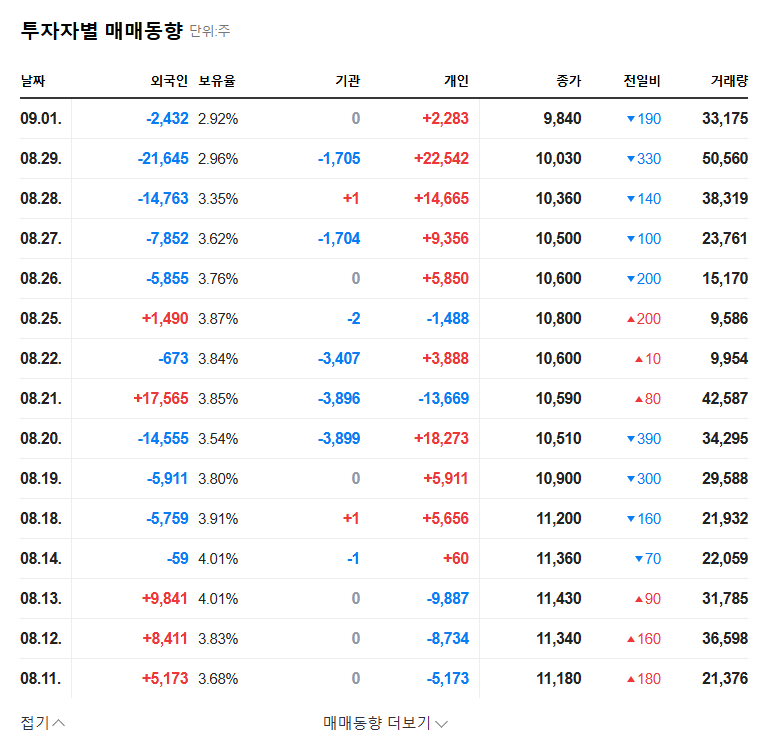
    The increase in stake by the largest shareholder suggests stabilization of management rights and confidence in the company. This is particularly noteworthy given the significant drop in TDS Pharm’s stock price following poor half-year results in 2025 (29.6% decrease in sales, 80.3% decrease in operating profit). However, sustainable stock price increase is unlikely without fundamental improvement.

    3. What’s Next?

    • Short-term Impact: Improved investor sentiment and potential for a short-term rebound. However, concerns about poor performance remain, which could limit significant gains.
    • Mid- to Long-term Impact: Enhanced management stability and increased confidence. However, actual stock price appreciation depends on fundamental improvement, new pipeline development, and market conditions.

    4. What Should Investors Do?

    While this stake increase is a positive sign, investment decisions should be made cautiously. Rather than being swayed by short-term price fluctuations, it’s crucial to closely monitor future earnings announcements, new product development progress, and management’s efforts to enhance shareholder value, focusing on fundamental improvements. Pay close attention to the performance recovery of the cataplasma segment and the success of the new transdermal patch business.

    Does an increase in stake by the largest shareholder always have a positive impact on the stock price?

    Not always. While it can be interpreted as a positive sign, it doesn’t guarantee long-term stock price appreciation without underlying fundamental improvement.

    What is the outlook for TDS Pharm’s stock price?

    There is a possibility of a short-term rebound due to the stake increase. However, the mid- to long-term outlook depends on whether the company’s fundamentals improve, especially in the cataplasma segment and new businesses.

    What should investors consider when investing in TDS Pharm?

    Investors should consider the company’s fundamentals, future earnings prospects, new product development, and management’s commitment to enhancing shareholder value, rather than focusing solely on short-term price movements.

    TDS Pharm Stock Forecast: Major Shareholder Increases Stake, A Sign of Rebound? 관련 이미지
    TDS Pharm Stock Forecast: Major Shareholder Increases Stake, A Sign of Rebound? 관련 이미지
  • iCure’s H1 2025 Earnings Shock: Investor Alert! 📉

    1. What Happened at iCure?

    iCure achieved sales of 25.2 billion KRW in H1 2025 but reported an operating loss of 4.4 billion KRW and a net loss of 9.8 billion KRW, failing to escape the red. Although sales exceeded market expectations of 0 KRW, the deteriorating profitability is a serious concern.

    2. Why These Results?

    iCure’s poor performance is primarily attributed to increased costs due to R&D investment in the pharmaceutical business and intensified competition in the cosmetics market. The high-interest rate environment is also adding to the financial burden. Despite a temporary return to profitability in Q3 2024, the company has consistently recorded losses, highlighting the urgent need for profitability improvement.

    3. What’s Next for iCure?

    iCure’s future stock price hinges on its ability to improve profitability. The company must enhance R&D investment efficiency, achieve success with new pipelines, and strengthen its competitiveness in the cosmetics business to restore its profit-generating capacity. Improving financial structure and regaining investor trust are also crucial tasks.

    4. What Should Investors Do?

    Investors should closely monitor iCure’s future IR activities and earnings announcements, carefully assessing the possibility of a real turnaround. Currently, the investment risk is very high, requiring a cautious approach.

    What were iCure’s sales in H1 2025?

    25.2 billion KRW.

    What was iCure’s operating income in H1 2025?

    -4.4 billion KRW.

    What are iCure’s main businesses?

    Pharmaceuticals and cosmetics based on TDDS (Transdermal Drug Delivery System) technology.

    What are the reasons for iCure’s poor performance?

    Increased costs due to R&D investment and intensified competition in the cosmetics market, as well as the high-interest rate environment.

  • TDS Pharm Beats Q2 Earnings Estimates! But Is It Time to Invest?

    1. What Happened? : TDS Pharm’s Q2 2025 Earnings

    TDS Pharm announced its Q2 2025 earnings on August 14th. With KRW 5.5 billion in revenue, KRW 300 million in operating profit, and KRW 800 million in net profit, the company significantly exceeded market expectations of KRW 0, delivering a positive earnings surprise. However, compared to the same period last year, revenue decreased by 29.6%, operating profit by 80.2%, and net profit by 46.2%.

    2. Why These Results? : Analyzing the Performance Drivers

    The primary reason for the decline in sales is the sluggish performance of Cataplasma and Plaster product lines, particularly the integrated Cataplasma products. The decrease in operating and net profits can be attributed to both the sales decline and increased expenses, including sales, general, and administrative expenses, as well as R&D investment.

    3. What’s Next? : Future Outlook and Investment Opportunities

    In the short term, both positive (beating market expectations) and negative (year-over-year decline) factors are at play. In the mid-to-long term, TDS Pharm’s competitive edge in TDDS technology and the development of new pipelines in areas like Alzheimer’s, asthma, and smoking cessation are expected to drive growth. However, rising interest rates, exchange rate fluctuations, and intensifying competition pose risks.

    4. What Should Investors Do? : Action Plan

    • Monitor Sales Recovery: Pay close attention to sales recovery trends in Cataplasma and Plaster segments, as well as market response to new products.
    • Track R&D Progress: The progress of clinical trials and regulatory approvals for new pipelines will significantly impact stock prices.
    • Manage Macroeconomic Variables: Continuously monitor the effects of interest rate and exchange rate fluctuations on the company.
    • Observe Global Market Expansion: Expanding into overseas markets and export performance will be key growth drivers.

    How did TDS Pharm perform in Q2 2025?

    TDS Pharm reported revenue of KRW 5.5 billion, operating profit of KRW 300 million, and net profit of KRW 800 million in Q2 2025. While exceeding market expectations, these figures represent a decline compared to the same period last year.

    What is TDS Pharm’s main business?

    TDS Pharm is a pharmaceutical company that develops and sells patch products like Cataplasma and Plaster based on TDDS (Transdermal Drug Delivery System) technology.

    What is the future outlook for TDS Pharm?

    While TDS Pharm’s competitive edge in TDDS and its new pipeline development are positive factors, rising interest rates, exchange rate fluctuations, and intensifying competition pose potential risks.