The recent announcement regarding the TAEKWANG INDUSTRIAL K-Shipbuilding acquisition bid has sent ripples through the financial markets. For a company historically rooted in petrochemicals and textiles, this bold venture into the capital-intensive shipbuilding industry represents a pivotal moment. Investors are now faced with a critical question: is this a strategic masterstroke for business diversification and long-term growth, or a high-stakes gamble that could introduce significant financial strain? This comprehensive analysis will dissect the deal, explore the underlying motivations, and provide a clear framework for investors to evaluate the opportunities and risks involved.
We will delve into the company’s fundamentals, the role of their consortium partner Texas Pacific Group (TPG), and the volatile nature of the global shipbuilding market to offer a clear-eyed perspective on what this acquisition could mean for Taekwang Industrial’s future.
The Bid: Taekwang Officially Enters the K-Shipbuilding Race
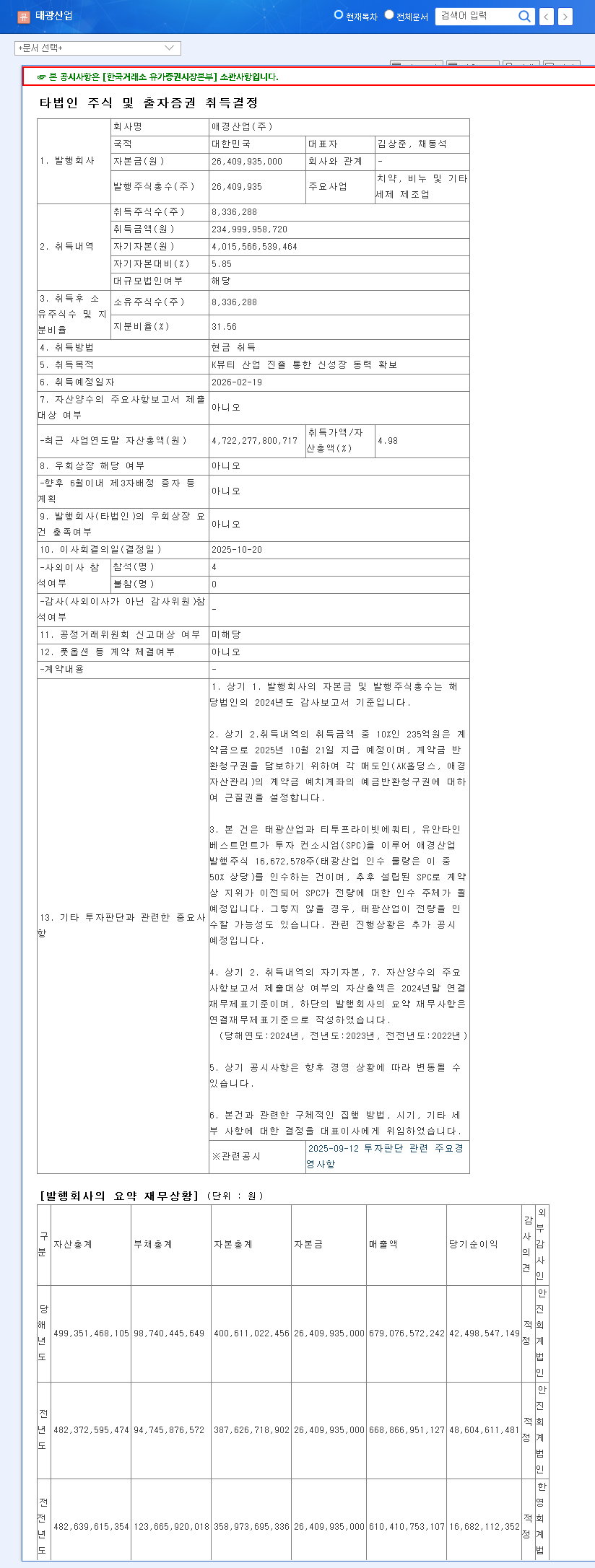
On November 14, 2025, Taekwang Industrial formally signaled its intent by submitting a preliminary Letter of Intent (LOI) for the acquisition of K-Shipbuilding. This move was not made in isolation; the company has strategically formed a consortium with the global private equity giant, Texas Pacific Group (TPG). According to the company’s public filing, the exact investment scale is still under evaluation. You can view the Official Disclosure on the DART system for confirmation. This partnership with TPG is a crucial element, suggesting a strategy to mitigate financial risk and leverage external expertise in large-scale corporate turnarounds.
Why Shipbuilding? Unpacking the Strategy Behind Diversification
Taekwang Industrial’s decision to pivot towards such a different industry stems from a combination of internal financial positioning and external market pressures. Understanding this context is key to any Taekwang financial analysis.
Challenging Core Markets and the Search for Growth
The company’s primary petrochemical and textile divisions have been navigating turbulent waters. Deteriorating market conditions, driven by falling prices for PTA (Purified Terephthalic Acid) and AN (Acrylonitrile) and fierce competition in spandex, have squeezed profit margins. While there are bright spots, such as demand for hydrogen peroxide and aramid fibers, the overall outlook is clouded by macroeconomic uncertainty from US-China trade tensions and global monetary tightening. This environment has created a powerful incentive for Taekwang to seek out new, uncorrelated revenue streams through aggressive business diversification.
A Fortified Balance Sheet
Despite market headwinds, Taekwang has improved its financial stability. The company’s debt ratio saw a significant improvement, falling from 133.43% in 2022 to a healthier 102.67% in 2024. The strategic sale of SK Broadband shares further bolstered its cash position. This stronger balance sheet provides the company with the foundational capacity to consider a large-scale transaction like the TAEKWANG INDUSTRIAL K-Shipbuilding acquisition.
While the pursuit of new growth is logical, the shipbuilding industry is notoriously cyclical and capital-intensive. Success will hinge on flawless execution and a favorable market cycle, neither of which is guaranteed.
Weighing the Potential Outcomes: Opportunity vs. Risk
This acquisition presents a classic high-risk, high-reward scenario. Investors must carefully evaluate both the potential upsides and the considerable downsides.
Potential Positive Impacts (The Bull Case)
- •New Growth Engine: A successful acquisition would immediately diversify Taekwang’s portfolio away from the volatile petrochemical sector and establish a major foothold in the global maritime industry.
- •Group-Wide Synergy: Potential synergies exist with other Taekwang Group affiliates. For example, Hungkuk Life Insurance could potentially engage in ship financing, creating an internal value chain.
- •Financial & Strategic Partnership: The TPG consortium provides a critical financial backstop, distributing the immense cost of the acquisition. TPG’s experience in corporate restructuring could also be invaluable in optimizing K-Shipbuilding’s operations post-merger.
Potential Negative Impacts (The Bear Case)
- •Massive Financial Burden: Shipbuilding is a cash-intensive business. The acquisition price, coupled with the necessary working capital and future investments in technology and facilities, could severely strain Taekwang’s finances, even with TPG’s involvement.
- •Market Volatility: The shipbuilding industry is highly susceptible to global economic health, trade volumes, and commodity prices like steel. A global recession could lead to a sharp drop in new orders. For more on market trends, see the latest global shipbuilding outlook from industry analysts.
- •Post-Merger Integration (PMI) Risks: Merging two vastly different corporate cultures—a traditional Korean manufacturer and a shipyard—is a monumental task. Failure to integrate effectively can erase any potential synergies. For more information, read about common Post-Merger Integration challenges.
Investor Action Plan & Key Considerations
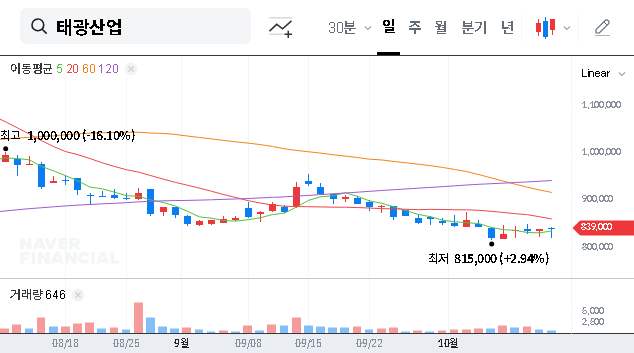
For investors, the K-Shipbuilding bid introduces significant uncertainty. A cautious, data-driven approach is essential. In the short term, expect stock price volatility as the market digests the news. In the long term, success hinges on the execution. Before making any investment decisions, consider the following key questions:
- •What is the final acquisition price and, more importantly, the detailed funding plan? How much debt will Taekwang take on?
- •What is K-Shipbuilding’s current order book and competitive positioning in specialized vessels versus commodity carriers?
- •What is the specific, actionable synergy plan with TPG and other Taekwang affiliates? Is there a clear roadmap for post-merger integration?
- •How will the company’s ongoing legal disputes regarding treasury shares affect its ability to raise capital or execute this large-scale transaction?
In conclusion, Taekwang Industrial’s move is a company-defining bet on the future. While the logic of diversification is sound, the chosen industry presents a formidable challenge. Cautious and diligent monitoring of the deal’s specifics will be the only prudent path forward for investors.