Tag: Synthetic Leather

  • (004830) DCKSUNG Indonesia Expansion: A ₩13.8B Deep-Dive for Investors

    (004830) DCKSUNG Indonesia Expansion: A ₩13.8B Deep-Dive for Investors

    The recent DCKSUNG Indonesia expansion represents a pivotal moment for the South Korean synthetic leather giant. As DCKSUNG CO.,LTD confronts weakening domestic fundamentals, its ₩13.8 billion acquisition of an Indonesian subsidiary is a bold move to secure a new growth engine. But is this a strategic masterstroke or a risky bet that could further strain its finances? This comprehensive analysis explores every facet of the deal to provide investors with a clear, data-driven perspective.

    We will dissect the acquisition’s background, evaluate the potential rewards against the inherent risks, analyze the macroeconomic landscape, and offer a conclusive investment recommendation for DCKSUNG CO.,LTD.

    The Landmark Announcement: A New Chapter in Indonesia

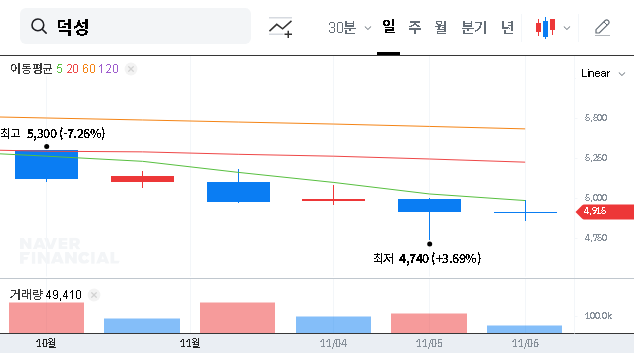
    On November 6, 2025, DCKSUNG CO.,LTD officially disclosed its decision to acquire a 99.9% stake in the newly formed PT. DUKSUNG ECOTECH INDONESIA. The ₩13.8 billion (approx. 15% of total capital) cash investment, detailed in the Official Disclosure (DART), is a strategic play to penetrate the burgeoning Southeast Asian synthetic leather market. The final acquisition is slated for completion by December 31, 2026.

    This isn’t just an acquisition; it’s a calculated pivot towards global markets, designed to offset domestic challenges and unlock new revenue streams in one of the world’s most dynamic economic regions.

    Why Now? The Rationale Behind the Expansion

    The timing of the DCKSUNG Indonesia expansion is driven by a combination of internal pressures and external opportunities. Understanding both is key to evaluating the strategy.

    Internal Pressures: Weakening Financial Health

    DCKSUNG’s financial performance in the first half of 2025 painted a concerning picture, necessitating a strategic breakthrough:

    • Declining Revenue: H1 2025 revenue fell to ₩73.9 billion, a sharp 41% decrease year-over-year.
    • Shrinking Profitability: Operating profit dropped by 43.4% to ₩5.04 billion, with the profit margin contracting from 6.8% to 5.1%.
    • Rising Debt Concerns: A staggering 282.6% increase in short-term borrowings has raised red flags regarding financial soundness, despite a manageable debt-to-equity ratio.

    External Opportunity: The Indonesian Market Potential

    Indonesia presents a compelling case. As a major manufacturing hub for global footwear and apparel brands, it offers a large, growing domestic market for synthetic leather. By establishing a local presence, DCKSUNG aims to gain a competitive edge through reduced logistics costs, local sourcing, and proximity to major clients. This move aligns with broader trends in our analysis of the synthetic leather market, which points to significant growth in Southeast Asia.

    A Balanced Scorecard: Risks vs. Rewards

    Any major international venture carries a mix of potential upsides and significant risks. The DCKSUNG Indonesia expansion is no exception.

    Potential Positives (The Rewards)

    • New Growth Engine: Tapping into the ASEAN market can offset declining domestic sales and create a vital new revenue stream.
    • Enhanced Competitiveness: Local production reduces shipping costs and tariffs, allowing for more competitive pricing for global brands manufacturing in the region.
    • Risk Diversification: Geographic expansion reduces dependence on the South Korean market and mitigates regional economic risks.

    Potential Negatives (The Risks)

    • Financial Strain: The ₩13.8 billion cash outlay could exacerbate existing financial weaknesses and increase liquidity risk in the short term.
    • Execution & Integration: Navigating cultural differences, local regulations, and integrating a new workforce presents significant operational challenges.
    • Currency Volatility: Fluctuations between the Indonesian Rupiah (IDR) and the Korean Won (KRW) could adversely affect profitability and the value of repatriated earnings.

    Investor Action Plan & Final Recommendation

    Given the high stakes, a cautious and informed approach is essential. While the long-term strategic vision is sound, the short-term execution risks are substantial. The market, as noted by sources like Reuters, remains skeptical pending tangible results.

    Investment Opinion: Conservative Approach Recommended. The potential for future growth is clear, but it is overshadowed by the immediate financial burden and operational uncertainties. Investors should wait for concrete signs of successful integration and profitability from the Indonesian subsidiary before considering a position.

    Key monitoring points for the future include:

    • Quarterly performance reports from PT. DUKSUNG ECOTECH INDONESIA.
    • Management’s progress on improving the core business’s profitability.
    • Updates on financial structure and debt management.

    Ultimately, the success of the DCKSUNG Indonesia expansion will depend on meticulous execution, transparent communication with shareholders, and a swift return to financial stability. Until then, caution is the wisest course of action.

    (004830) DCKSUNG Indonesia Expansion: A ₩13.8B Deep-Dive for Investors 관련 이미지
  • Baeksan Corp. Announces Interim Dividend: Investment Strategies?


    Baeksan Corp. Announces Interim Dividend: Investment Strategies? 대표 차트 이미지


    1. What Happened? Baeksan Corp.’s Interim Dividend Announcement

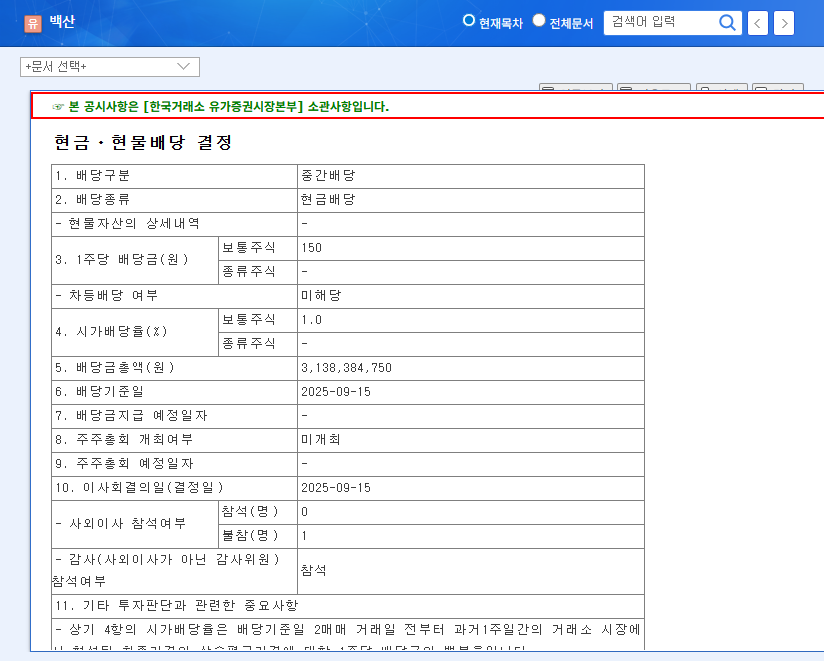
    On September 15, 2025, Baeksan Corp. announced an interim cash dividend of KRW 150 per share. This translates to a dividend yield of approximately 1.0% based on the current share price of KRW 9,836. The record date for the dividend is September 15, 2025.

    2. Why the Dividend? Analyzing the Fundamentals and Market Conditions

    Baeksan Corp. is pursuing business diversification through its core business, synthetic leather, and its new venture into the art business. Details are as follows:

    • 2.1 Corporate Fundamentals
    • Core Business (Synthetic Leather): Growth in the synthetic leather market is expected due to the spread of the animal rights movement and rising prices of natural leather. Strong partnerships with global sports brands and cost competitiveness through overseas production bases are also strengths.
    • New Business (Art Business): The company has invested KRW 7 billion in the art business, including art gallery operations and art sales/rentals, for business diversification. However, profitability remains uncertain.
    • Financial Soundness: While consolidated revenue has declined for three consecutive quarters, the company’s financial soundness has been strengthened by improved performance in its core business on a separate basis.
    • Investment Activities: Increases in investment assets and treasury stock repurchases are interpreted as efforts to enhance shareholder value.
    • 2.2 Market Conditions
    • – Market conditions such as rising exchange rates, stabilizing interest rates, and increased volatility in raw material and logistics costs could affect Baeksan Corp.

    3. Impact on Stock Price: What to Expect

    • 3.1 Positive Impacts: Enhanced shareholder return and improved investor sentiment are expected. The high dividend payout ratio demonstrates a shareholder-friendly management approach.
    • 3.2 Potential Considerations: While the company has sufficient capacity to pay dividends, investors should consider the potential for future earnings volatility and the possibility of a stock price decline after the ex-dividend date.

    4. Investor Action Plan: What to Do Next

    While Baeksan Corp.’s interim dividend decision is a positive sign, investors should continuously monitor the company’s mid- to long-term growth strategies and its ability to respond to changes in the market environment. It’s crucial to make investment decisions with caution, paying attention to the slowdown in consolidated earnings and the uncertainty surrounding the new business.


    Frequently Asked Questions (FAQ)

    What is Baeksan Corp.’s interim dividend amount?

    KRW 150 per share.

    When is the record date for the dividend?

    September 15, 2025.

    How will this dividend decision affect the stock price?

    It may have a positive impact in the short term, but there is also the possibility of a stock price decline after the ex-dividend date. The long-term stock price trend will depend on the company’s earnings and market conditions.

    What is Baeksan Corp.’s core business?

    Manufacturing and selling synthetic leather.

    What is Baeksan Corp.’s new business?

    The art business (art gallery operation, art sales/rental).


    Baeksan Corp. Announces Interim Dividend: Investment Strategies? 관련 이미지
    Baeksan Corp. Announces Interim Dividend: Investment Strategies? 관련 이미지


  • Baeksan Corp. Announces KRW 6.6B Share Buyback: A Bullish Signal?

    Baeksan Corp.’s Share Buyback – What Happened?

    On August 22, 2025, Baeksan Corp. announced its decision to repurchase 500,000 shares (approximately KRW 6.6 billion) for the purpose of cancellation.

    Why the Buyback? – Background and Implications

    This share buyback is a proactive measure to enhance shareholder value. By reducing the number of outstanding shares through cancellation, the company aims to increase earnings per share (EPS) and book value per share (BPS), ultimately driving stock price appreciation. It can also be interpreted as a signal of improved financial efficiency and a strengthened commitment to shareholder returns.

    Impact on Investment – Analyzing the Effects

    Positive Aspects

    • Expected Stock Price Increase: Anticipated EPS and BPS growth could create upward momentum for the stock price.
    • Shareholder-Friendly Policy: Reinforces commitment to shareholder returns, potentially improving investor sentiment.
    • Strong Fundamentals: The company’s stable business foundation and high profit margins enhance the credibility of the buyback.

    Neutral/Cautionary Aspects

    • Burden of New Business Investments: Potential for slowed earnings growth; monitor future performance closely.
    • Macroeconomic Variables: Consider the impact of external factors such as exchange rates and oil prices.

    Investor Action Plan

    Overall, Baeksan Corp.’s share buyback is viewed as a positive signal. We maintain a ‘Buy’ rating and recommend continuous monitoring of future earnings and the stabilization of new business ventures. However, remember that investment decisions should always be made based on your own judgment and responsibility.

    What is a share buyback?

    A share buyback is when a company repurchases its own shares. This can be done for various reasons, including increasing shareholder value and defending against hostile takeovers.

    What does share cancellation mean?

    Share cancellation is the process of retiring repurchased shares, permanently reducing the number of outstanding shares. This increases the value of each remaining share.

    What is Baeksan Corp.’s main business?

    Baeksan Corp. specializes in the synthetic leather business, supplying products to various industries. They maintain stable supply relationships with major sports brands and have a global production network.

  • Deoksung (004830) H1 2025 Earnings Report Analysis: Can it Seize Opportunities Amidst Crisis?

    1. What Happened? Deoksung’s H1 2025 Earnings Analysis

    Deoksung’s H1 2025 sales decreased by 41% year-on-year to KRW 73.9 billion, and operating profit fell by 43% to KRW 5.04 billion. Intensified competition in the main synthetic leather business and the external economic slowdown are analyzed as the main causes of the sluggish performance. In particular, the low operating rate of the synthetic resin division (42.28%) shows the urgent need for strategies to improve profitability.

    2. Why Did This Happen? Background of Sluggish Performance and External Environment Analysis

    Deoksung’s poor performance was influenced not only by internal factors but also by the external environment. The unstable macroeconomic environment, including volatility in international oil prices, rising KRW/USD and KRW/EUR exchange rates, and global supply chain bottlenecks, weighed on Deoksung’s profitability. Also, high interest rates added to the financial burden by increasing borrowing costs.

    3. What’s Next? Deoksung’s Future Prospects and Growth Potential

    Deoksung is actively investing in the development of eco-friendly synthetic leather and resins, striving to secure future growth engines. This R&D investment is expected to provide long-term growth momentum. However, whether earnings will recover, the success of new businesses, and cost efficiency will be important variables determining Deoksung’s future.

    4. What Should Investors Do? Investment Implications and Action Plan

    Investors considering investing in Deoksung should consider the current sluggish performance and external uncertainties. Preparation for short-term stock price volatility is necessary, and a thorough evaluation of the company’s mid- to long-term growth strategy and execution capabilities is essential. A cautious investment approach is necessary until visible signs of an earnings rebound appear.

    What are Deoksung’s main businesses?

    Deoksung’s main businesses are the manufacturing and sale of synthetic leather and synthetic resins.

    How was Deoksung’s performance in the first half of 2025?

    Deoksung’s sales in H1 2025 decreased 41% year-on-year to KRW 73.9 billion, and operating profit fell 43% to KRW 5.04 billion.

    What are Deoksung’s future growth drivers?

    Deoksung is focusing its investments on developing eco-friendly synthetic leather and resins to secure future growth engines.

    What should investors be aware of when investing in Deoksung?

    Investors should consider the current sluggish performance and external uncertainties and carefully evaluate the company’s mid- to long-term growth strategy and execution capabilities.

  • DK&D (263020) H1 2025 Earnings Analysis: Strong Fundamentals, Investment Opportunity?

    1. What is DK&D?

    DK&D operates in synthetic leather and non-woven fabrics, hats, and product distribution. The synthetic leather and non-woven fabrics business, in particular, is showing strong growth, driven by the recovery of the footwear market and increasing demand for eco-friendly materials. The expansion of distribution networks through overseas subsidiaries is another positive factor.

    2. Key Highlights of H1 2025 Earnings

    DK&D recorded sales of KRW 34 billion, operating profit of KRW 3.3 billion, and net income of KRW 2 billion in the first half of 2025, marking significant growth year-over-year. Improvements in Q2 performance were particularly notable.

    • Synthetic Leather & Non-Woven Fabrics: Strong growth driven by demand for eco-friendly materials.
    • Hats: Sales growth, but profitability management is necessary.
    • Product Distribution: High growth through overseas distribution network expansion.

    3. Key Checklist for Investors

    If you are considering investing in DK&D, be sure to check the following:

    • Financial Health: Stable financial structure maintained with a low debt ratio.
    • Shareholder Value Enhancement: Strengthening shareholder returns through treasury stock cancellation and dividend policy.
    • Future Growth Drivers: Pursuing sustainable growth through R&D investment in eco-friendly materials.
    • Risk Management: Pay attention to exchange rate volatility and raw material price fluctuations.

    4. Investment Strategy

    DK&D is an attractive investment from a medium- to long-term perspective. Considering the positive earnings trend and solid fundamentals, there is ample potential for future stock price appreciation. However, continuous monitoring of external factors such as exchange rate fluctuations is necessary.

    What are DK&D’s main businesses?

    DK&D operates in synthetic leather and non-woven fabrics, hats, and product distribution.

    How was DK&D’s performance in the first half of 2025?

    They recorded sales of KRW 34 billion, operating profit of KRW 3.3 billion, and net income of KRW 2 billion.

    What should investors be aware of when investing in DK&D?

    Investors should be mindful of external factors such as exchange rate volatility and raw material price fluctuations.

  • JinYang Chemical’s Bio-Based PVC Patent: A Green Turnaround Strategy?

    1. What Happened?

    JinYang Chemical obtained a patent for bio-based PVC synthetic leather manufacturing on July 23, 2025. This strategic move aims to enhance competitiveness amidst tightening environmental regulations.

    2. Why Does It Matter?

    JinYang Chemical reported operating losses and a high debt-to-equity ratio in Q1 2025. This patent offers a chance to secure new growth engines. It’s expected to address the rising demand for vegan leather in the automotive market and diversify their customer base, reducing reliance on Kolon Industries.

    3. What’s the Outlook?

    Successful commercialization of the patented technology could lead to enhanced competitiveness, improved profitability, and increased investment appeal. However, risks remain, including persistent financial difficulties, uncertain market competitiveness of the technology, and potential cessation of R&D investment. Raw material prices, exchange rates (EUR/KRW, USD/KRW), and interest rate hikes require ongoing monitoring.

    4. Investor Action Plan

    If you have a positive long-term outlook for JinYang Chemical, consider a medium to long-term investment strategy while being mindful of price volatility. However, proceed with caution, considering the short-term financial risks and potential market competition. Continuous monitoring of financial reports and market conditions is crucial.

    Q: What is JinYang Chemical’s patent about?

    A: It’s for a bio-based PVC synthetic leather manufacturing technology using bio-plasticizers. This eco-friendly technology addresses increasing environmental regulations and offers a greener alternative to traditional PVC leather.

    Q: How will this patent benefit JinYang Chemical?

    A: It’s expected to strengthen their competitiveness in the eco-friendly materials market, attract new customers, and improve profitability. It could also enhance their investment appeal from an ESG perspective.

    Q: What are the investment risks?

    A: Investors should consider the company’s short-term financial difficulties, the market competitiveness of the patented technology, and the company’s commitment to ongoing R&D. External factors such as raw material prices, exchange rates, and interest rate changes should also be monitored.