Tag: StockInvestment

  • 3billion Targets US Market: Will a ₩4.2B Acquisition Fuel Growth?


    3billion Targets US Market: Will a ₩4.2B Acquisition Fuel Growth? 대표 차트 이미지


    3billion Sets Sights on US Expansion with ₩4.2B Investment

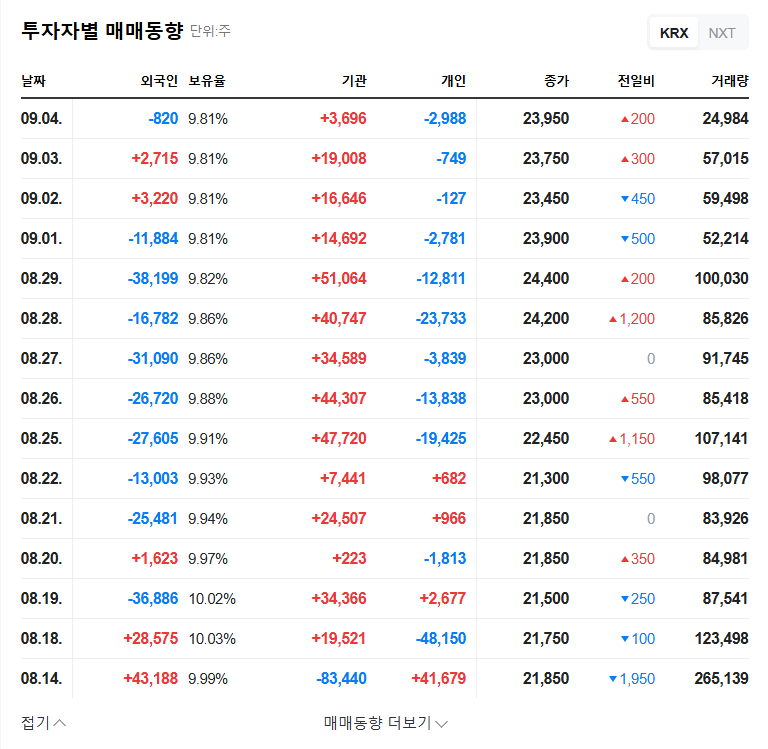
    On September 9, 2025, 3billion announced the acquisition of 3billion US, Inc. for ₩4.2 billion. This investment, representing 14.75% of 3billion’s capital, is a strategic move to penetrate the US market. 3billion US, Inc. specializes in WES/WGS-based rare disease genetic testing, creating potential synergy with 3billion’s existing business.

    Implications of US Market Entry for 3billion

    • Positive Impacts:
      • Direct access to the US market, enhancing customer reach and potential market share growth.
      • Potential for increased revenue and profitability, with synergy through the SaaS model.
      • Strengthened global competitiveness and momentum for further international expansion.
      • Enhanced core business capabilities and portfolio diversification.
    • Negative Impacts and Risks:
      • Short-term liquidity constraints due to the ₩4.2 billion cash outflow.
      • Uncertainties and risks associated with US market entry and the post-merger integration (PMI) process.
      • Potential profit fluctuations due to USD/KRW exchange rate volatility.
      • Uncertainty regarding the profitability of the US subsidiary.

    Key Checkpoints for Investors

    While this acquisition is viewed as a positive event that enhances 3billion’s growth potential, investors should closely monitor the following:

    • The company’s cash flow management.
    • The progress and performance of the US subsidiary’s PMI.
    • Future trends in earnings improvement.

    This analysis is not investment advice, and investment decisions are the sole responsibility of the investor.


    Frequently Asked Questions (FAQ)

    What is 3billion’s main business?

    3billion provides rare genetic disease diagnostic services using AI-driven genomic analysis technology.

    Will this acquisition positively impact 3billion’s stock price?

    While market entry can boost growth potential, there are risk factors, so careful consideration is necessary before investing.

    What should investors pay attention to?

    Investors should monitor the company’s financial status, the integration process of the US subsidiary, and exchange rate fluctuations.




    3billion Targets US Market: Will a ₩4.2B Acquisition Fuel Growth? 관련 이미지
    3billion Targets US Market: Will a ₩4.2B Acquisition Fuel Growth? 관련 이미지


  • Mobase Announces KRW 3 Billion Share Buyback: A Sign of Recovery?


    Mobase Announces KRW 3 Billion Share Buyback: A Sign of Recovery? 대표 차트 이미지


    1. What’s happening with the share buyback?

    Mobase has signed a treasury stock acquisition agreement with Shinhan Investment Corp. for KRW 3 billion. The contract period runs from September 5, 2025, to March 4, 2026. This represents 4.21% of the market capitalization and aims to stabilize stock prices and enhance shareholder value.

    2. Why the share buyback?

    Mobase experienced sluggish performance in the first half of 2025, with sales declining 6.17% year-on-year, and operating profit and net profit plummeting by 53.8% and 87.3%, respectively. The share buyback is likely intended to defend against further stock price declines and improve investor sentiment.

    3. What’s the potential impact?

    • Positive Impacts: Short-term stock price increase, enhanced shareholder value, improved investor sentiment
    • Negative Impacts: Temporary effects without fundamental improvement, reduced effectiveness in a declining market, possibility of continued poor performance

    4. What should investors do?

    Short-term investors might focus on the potential for a rebound, while long-term investors should carefully examine Mobase’s fundamentals. Pay close attention to the recovery of auto parts sales, improvement in profitability, and the resolution of the Indian tax dispute. Also, consider potential risk factors such as overseas plant utilization rates and customer dependency.


    FAQ

    What is Mobase’s main business?

    Mobase’s primary business is the manufacture and sale of mobile phone and automotive parts, with automotive parts representing a significant portion of its revenue.

    Do share buybacks always have a positive impact on stock prices?

    Not necessarily. Share buybacks can boost stock prices in the short term, but without fundamental improvements in the company, long-term effects are difficult to expect.

    What precautions should I take when investing in Mobase?

    Consider the risk factors, such as poor performance, declining sales in its main business segment, and the ongoing Indian tax dispute. Pay attention to changes in the macroeconomic environment and industry trends.


    Mobase Announces KRW 3 Billion Share Buyback: A Sign of Recovery? 관련 이미지
    Mobase Announces KRW 3 Billion Share Buyback: A Sign of Recovery? 관련 이미지


  • HPO Share Buyback: A Bullish Signal? Fact Check and Investment Strategy


    HPO Share Buyback: A Bullish Signal? Fact Check and Investment Strategy 대표 차트 이미지


    What Happened? HPO Announces Share Buyback

    HPO is planning to buy back KRW 9 billion worth of its own shares, equivalent to 796,011 common shares, on September 12, 2025. This represents 8.32% of the company’s market capitalization and can be interpreted as a positive signal for shareholders.

    Why the Buyback? Background and Objectives

    Share buybacks are generally part of a company’s shareholder return policy aimed at increasing shareholder value. Reducing the number of outstanding shares increases earnings per share (EPS), which can lead to a rise in stock price. HPO’s share buyback can be seen as a way to demonstrate its growth potential and commitment to returning value to shareholders.

    So, What About the Stock Price? Short-Term and Long-Term Impact Analysis

    In the short term, the share buyback is likely to have a positive impact on the stock price. However, the extent of the increase might be limited due to concerns about the company’s underperformance in 2024. In the long term, the company’s recovery from the 2024 earnings slump and the success of its new business ventures will have a greater impact on the stock price than the buyback itself. Potential financial risks, such as the call option related to BioPharm Co., Ltd., should also be carefully considered.

    What Should Investors Do? Action Plan

    • Check for continued shareholder return policies in the future.
    • Monitor the recovery from the 2024 earnings decline and the performance of new investments.
    • Keep an eye on the management of financial risks, such as the call option related to BioPharm Co., Ltd.
    • Analyze the impact of macroeconomic variables such as exchange rates, interest rates, and oil prices.

    FAQ

    What is the size of HPO’s share buyback?

    KRW 9 billion, equivalent to 796,011 common shares or 8.32% of the company’s market cap.

    When is the share buyback scheduled?

    September 12, 2025.

    Will the share buyback positively affect the stock price?

    It’s likely to be positive in the short term, but the extent of the increase may be limited by factors like the 2024 earnings slump.

    What should investors be cautious about?

    Consider factors like earnings recovery, new business performance, and potential financial risks.


    HPO Share Buyback: A Bullish Signal? Fact Check and Investment Strategy 관련 이미지
    HPO Share Buyback: A Bullish Signal? Fact Check and Investment Strategy 관련 이미지


  • Techwing’s After-Hours Block Trade: A Sign of Soaring Growth with HBM?

    What Happened?

    A significant after-hours block trade of 123,947 Techwing shares, totaling approximately 4.1 billion KRW, took place on August 29, 2025. This considerable transaction, relative to the company’s market capitalization, suggests concentrated buying activity from specific investors.

    Why Does This Matter?

    The timing of this block trade, coinciding with net buying by foreign investors, is particularly noteworthy. This foreign investment influx raises the likelihood of further institutional buying, potentially creating upward momentum for the stock price.

    • HBM Testing Equipment Leadership: Techwing is poised to benefit significantly from the growth of the AI market, holding a strong competitive position in the HBM testing equipment sector.
    • Solid Fundamentals: Despite a decrease in revenue, Techwing’s 2025 half-year results demonstrate improved operating and net profits, indicating a strengthening financial position.

    What Should Investors Do?

    In the short term, close monitoring of market trends and trading volume following the block trade is crucial. A long-term perspective requires ongoing observation of HBM market growth, Techwing’s technological competitiveness, and new business expansion plans.
    What are the Risks?
    Investors should consider potential risks such as global economic uncertainties, semiconductor industry fluctuations, and changes in exchange rates and interest rates. Continued underperformance in the display evaluation equipment segment also warrants attention.

    What is Techwing’s main business?

    Techwing manufactures semiconductor back-end test handlers, HBM testing equipment, and display inspection equipment. They are particularly recognized as a beneficiary of the increasing demand for HBM testing equipment driven by AI market growth.

    What does an after-hours block trade signify?

    An after-hours block trade refers to a large-volume transaction of shares outside of regular trading hours. It can indicate deliberate buying or selling activity by specific investors and may significantly impact stock prices.

    What should investors consider when investing in Techwing?

    Investors should consider macroeconomic factors like global economic uncertainties, fluctuations in the semiconductor industry, and exchange rate/interest rate changes. The potential for continued underperformance in the display evaluation equipment sector should also be monitored.

  • KakaoBank’s $450 Billion Real Estate Investment: Opportunity or Risk? (Pangyo Tech One Analysis)

    KakaoBank's $450 Billion Real Estate Investment: Opportunity or Risk? (Pangyo Tech One Analysis) 대표 차트 이미지

    1. Why is KakaoBank Investing in Real Estate?

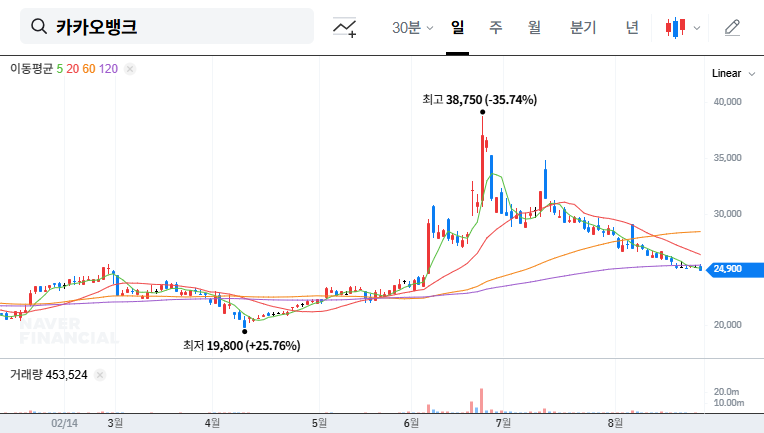
    KakaoBank has decided to invest $450 billion in a real estate fund to acquire the Pangyo Tech One building, aiming to diversify its portfolio and enhance operational returns. This investment represents 6.88% of its equity capital and 0.72% of its total assets.

    2. Opportunity Analysis: Stable Income and Portfolio Diversification

    Pangyo Tech One, located in a prime business district, is expected to generate stable rental income. This investment will also diversify KakaoBank’s asset portfolio, reducing its dependence on specific assets and mitigating risks. In the long term, securing its own office building could enhance operational stability.

    3. Risk Analysis: Market Volatility and Investment Size

    The substantial investment size of $450 billion carries the risk of principal loss if the real estate market declines. Current market uncertainties, high interest rates, and the possibility of an economic slowdown could negatively impact the investment. The large capital outlay might also affect short-term liquidity, and the investment’s classification as non-core business raises questions about resource allocation efficiency.

    4. Market Context and KakaoBank’s Track Record

    Considering the current interest rate environment and real estate market outlook, the Pangyo Tech One investment is expected to have relatively stable demand, but a general market correction cannot be ruled out. Examining KakaoBank’s past asset management performance and declining BIS capital adequacy ratio suggests the need for ongoing monitoring of its capital soundness.

    5. Action Plan for Investors

    While this investment is a strategic decision for long-term portfolio diversification and return enhancement, it requires a cautious approach given the investment size and market conditions. Investors should carefully monitor the fund’s performance, real estate market trends, KakaoBank’s capital adequacy indicators, and its efforts to strengthen its core business competitiveness before making investment decisions.

    What is the purpose of KakaoBank’s investment in Pangyo Tech One?

    To diversify its portfolio and enhance operational returns.

    What is the investment amount and its proportion to equity capital?

    $450 billion, representing approximately 6.88% of its equity capital.

    What are the main risks associated with this investment?

    Real estate market volatility, significant investment size, liquidity impact, and non-core business investment.

    KakaoBank's $450 Billion Real Estate Investment: Opportunity or Risk? (Pangyo Tech One Analysis) 관련 이미지
  • Wonbiogen Announces KRW 3 Billion Share Buyback: What Investors Need to Know

    Wonbiogen Announces KRW 3 Billion Share Buyback: What Investors Need to Know 대표 차트 이미지

    1. What is the Share Buyback?

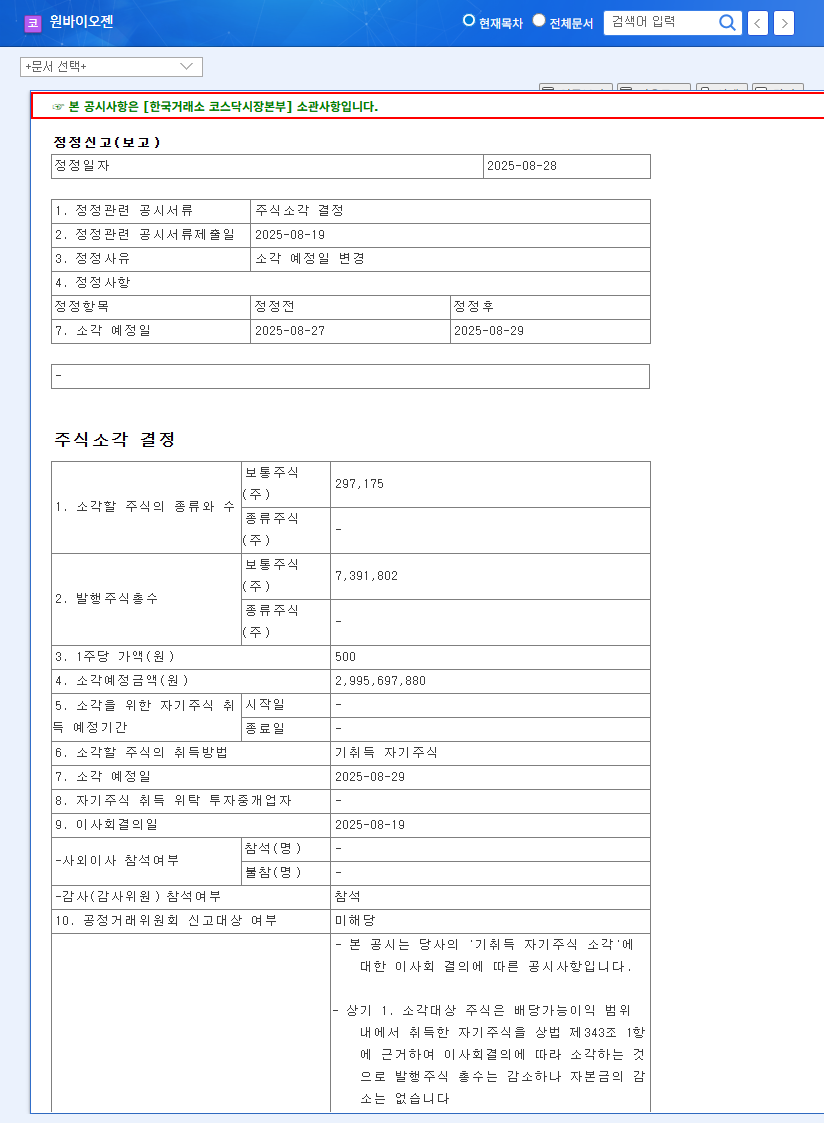
    Wonbiogen has decided to repurchase and retire KRW 3 billion worth of its own shares. A share buyback reduces the number of outstanding shares, increasing the value per share. This is generally viewed as a shareholder-friendly policy returning value to investors.

    2. Why the Buyback?

    Wonbiogen is experiencing robust growth in its polyurethane foam dressings and cosmetics sectors, and is actively expanding into overseas markets. They are also focusing on new product development through active R&D. Despite this positive outlook, the company believes its stock is undervalued, leading to the share buyback decision to enhance shareholder value and improve investor sentiment.

    3. How Will the Buyback Affect the Stock Price?

    • Positive Impacts:
      • Increased Earnings Per Share (EPS) and Book Value Per Share (BPS)
      • Potential stock price appreciation due to reduced outstanding shares
      • Improved investor sentiment and enhanced corporate image
    • Potential Risks:
      • Potential for increased short-term stock price volatility
      • Risks related to ongoing lawsuits and seizures
      • Intensifying technological and market competition
      • Potential for profit fluctuations due to exchange rate volatility

    4. What Should Investors Do?

    While the share buyback may positively impact the stock price in the short term, investors should carefully consider several factors before making investment decisions. Thorough fundamental analysis, including future earnings trends, R&D performance, and lawsuit outcomes, is crucial. Investors should also closely monitor macroeconomic indicators and market conditions. It’s essential to recognize that ongoing legal issues can significantly influence investment decisions.

    What is a share buyback?

    A share buyback is when a company repurchases its own outstanding shares and retires them. This reduces the number of shares available in the market, potentially increasing the value of each remaining share.

    What is the size of Wonbiogen’s share buyback?

    Wonbiogen is repurchasing KRW 3 billion worth of its shares, representing approximately 7.22% of its market capitalization.

    Does a share buyback guarantee a stock price increase?

    While share buybacks are generally considered positive for stock prices, they do not guarantee an increase. Various factors, including company performance, market conditions, and investor sentiment, can influence stock prices.

    Wonbiogen Announces KRW 3 Billion Share Buyback: What Investors Need to Know 관련 이미지
    Wonbiogen Announces KRW 3 Billion Share Buyback: What Investors Need to Know 관련 이미지
  • QSI(066310) Treasury Stock Disposal: A Turning Point Through Collaboration?

    QSI(066310) Treasury Stock Disposal: A Turning Point Through Collaboration? 대표 차트 이미지

    1. What Happened?: Treasury Stock Disposal Announced

    QSI announced the disposal of treasury stock worth 3 billion KRW on August 27, 2025. The stated purpose is ‘pursuing collaborations according to mid- to long-term management strategies.’

    2. Why?: Strengthening Collaborations and Improving Financial Structure

    QSI aims to strengthen collaborations with potential partners and secure new business opportunities through this treasury stock disposal. The proceeds will also be used to improve the financial structure and secure liquidity.

    3. What’s Next?: Opportunities and Risks Coexist

    • Positive Aspects: Increased growth potential through collaboration, improved financial structure.
    • Negative Aspects: Short-term stock price volatility, uncertainty in achieving disposal objectives, continued poor performance.

    4. Investor Action Plan: 4 Key Checkpoints

    Investors should consider the following factors:

    • Specific terms of the treasury stock disposal (target, price, schedule, etc.)
    • Performance improvement from the second half of 2025 onwards
    • Tangible results from R&D investments
    • Changes in the macroeconomic environment (interest rates, exchange rates, etc.)

    While the treasury stock disposal is a positive signal, a true rebound requires accompanying performance improvements.

    What is the purpose of QSI’s treasury stock disposal?

    The purpose is ‘pursuing collaborations according to mid- to long-term management strategies.’

    What is the size of the treasury stock disposal?

    Approximately 3 billion KRW.

    Will the treasury stock disposal positively impact the stock price?

    While there is potential for growth through strengthened collaborations, short-term stock price volatility and the possibility of continued poor performance should also be considered.

    What should investors be cautious of?

    Investors should comprehensively analyze the terms of the treasury stock disposal, performance improvement, R&D results, and changes in the macroeconomic environment.

    QSI(066310) Treasury Stock Disposal: A Turning Point Through Collaboration? 관련 이미지
    QSI(066310) Treasury Stock Disposal: A Turning Point Through Collaboration? 관련 이미지
  • Yesti IR Analysis: Will HBM Propel its Growth? 2025 Second Half Investment Strategy

    Yesti IR: What Happened?

    On August 26, 2025, Yesti presented its 2025 H1 earnings and updates on high-pressure annealing equipment and HBM-related equipment promotions. While semiconductor equipment sales increased by 45% YoY, overall revenue slightly decreased, and operating profit significantly declined.

    Why the Sluggish Performance?

    The decline in revenue and operating profit is primarily attributed to the slowdown in the display market, increased cost of goods sold, and higher R&D expenses. The possibility of decreased sales from a major client (Company A) further fuels concerns about future performance.

    What’s Next for Yesti?

    The growing demand for HBM and other AI chips presents a significant opportunity for Yesti. However, the company must address challenges related to its struggling display business and declining profitability. The equipment promotion updates and future strategies announced during the IR are crucial for investors.

    • Positive Factors: HBM market growth, technological competitiveness, and potential for overseas expansion
    • Negative Factors: Continued weakness in the display business, declining profitability, and macroeconomic uncertainties

    Investor Action Plan

    Carefully analyze the IR presentation and develop investment strategies from both short-term and long-term perspectives.

    • Short-term Investors: Be mindful of potential stock price volatility following the IR announcements. Prepare for both positive and negative scenarios.
    • Long-term Investors: Continuously monitor HBM market growth, Yesti’s technological competitiveness, potential for overseas expansion, and the success of its component internalization strategy. Pay close attention to changes in macroeconomic indicators.

    Effective risk management requires ongoing monitoring of risk factors, including the display business, profitability, and potential dilution effects.

    Frequently Asked Questions

    What is Yesti’s main business?

    Yesti manufactures semiconductor/display heat treatment and pressure process equipment, semiconductor process infrastructure components, and process components.

    What were the key takeaways from the IR?

    The key takeaways were the announcement of the 2025 H1 earnings and updates on high-pressure annealing equipment and HBM-related equipment promotions.

    What is the outlook for Yesti?

    Yesti is expected to benefit from the growth of the AI chip market, but faces challenges related to improving profitability and overcoming weakness in the display business.

  • Opticore’s After-Hours Trading Surge: Analyzing the Impact and Future Outlook

    1. What Happened?

    On August 22nd, Opticore saw significant after-hours trading activity. A large buy order of ₩1.1 billion from an institutional investor was recorded, alongside a smaller sell order from foreign investors totaling ₩0.08 billion. A total of 762,185 shares were traded.

    2. Why Did This Happen?

    Opticore reported declining sales and a shift to negative earnings in the first half of 2025. This was attributed to the slowdown in 5G investments and subsequent weaker demand for optical transceivers. However, Opticore is pursuing growth strategies, including developing high-speed optical transceivers for data centers in the AI era, expanding into overseas markets, and diversifying its business. The large institutional buy order could indicate a positive outlook on these growth strategies.

    3. What’s Next?

    The institutional buy order is expected to positively impact short-term supply and demand dynamics, potentially supporting Opticore’s stock price. It could also improve investor sentiment. However, increased price volatility is possible depending on market reactions in the following trading sessions.

    4. What Should Investors Do?

    Investors should carefully evaluate Opticore’s long-term growth potential rather than focusing solely on short-term price fluctuations. Key factors to monitor include the performance of new businesses, success in overseas market expansion, and management of financial health. Further changes in shareholding patterns should also be observed. While the after-hours trading activity might be a positive sign, sustainable stock price growth depends on fundamental improvements and the successful execution of growth strategies.

    Frequently Asked Questions

    What is after-hours trading?

    After-hours trading refers to the buying and selling of securities outside of regular trading hours. It can often reflect specific investor intentions or changing market conditions.

    What is the outlook for Opticore’s stock price?

    Opticore’s stock price is likely to be influenced by various factors, including the performance of new businesses, success in overseas market expansion, and the overall macroeconomic environment.

    What should investors consider before investing?

    Investors should consider the company’s financial health, growth strategies, and the competitive landscape before making any investment decisions. It’s important to remember that investments always carry risk and careful consideration is essential.

  • Namuga Announces ₩5B Stock Buyback: What Does It Mean for Investors?

    1. What’s Happening with Namuga’s Stock Buyback?

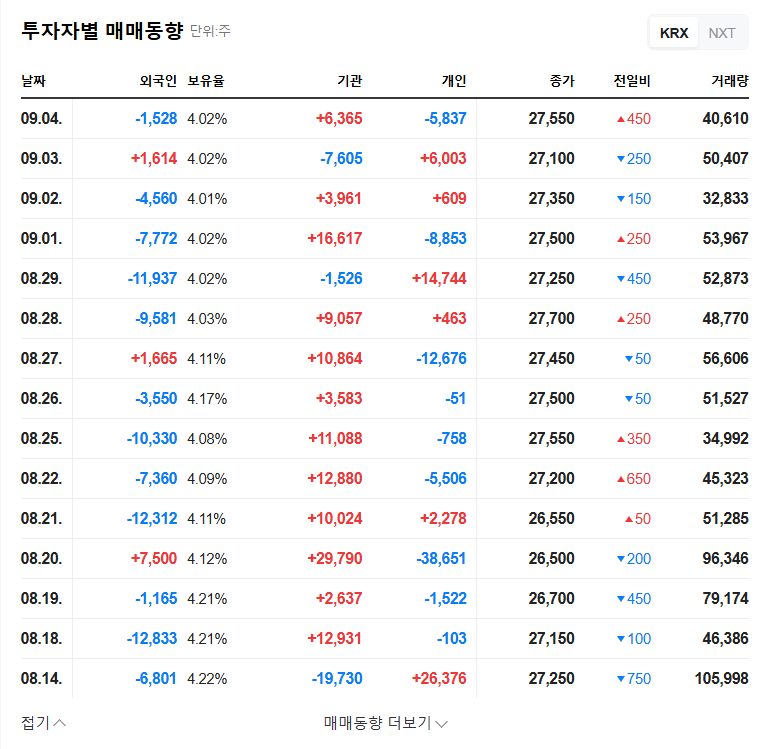
    On August 19, 2025, Namuga announced its plan to repurchase and retire 366,009 shares, equivalent to approximately 2.06% of its market capitalization, for ₩5 billion. The buyback is scheduled for August 26.

    2. Why the Buyback?

    Officially, the company aims to enhance shareholder value and improve capital structure efficiency. Reducing outstanding shares is expected to increase earnings per share (EPS) and book value per share (BPS), while strengthening the company’s financial position. It can also signal a commitment to shareholder returns, potentially boosting investor sentiment.

    3. So, What’s the Impact on Stock Price?

    A positive short-term momentum is possible. However, the stock price ultimately depends on the company’s fundamentals. While Namuga showed significant improvement in its first-half 2025 earnings, it faces challenges such as high dependence on specific clients and intensifying global competition. Securing future growth engines, such as expanding into the 3D camera market, will be crucial. Macroeconomic factors like the USD/KRW exchange rate and interest rate hikes also warrant close attention.

    4. What Should Investors Do?

    • Consider the potential for short-term price gains, but avoid impulsive investments.
    • Monitor Namuga’s core business competitiveness, performance in the 3D camera market, efforts to reduce client dependency, and technological development capabilities.
    • Closely observe changes in the macroeconomic environment and their potential impact.
    • Determine whether this buyback is a one-off event or part of a sustained shareholder return policy.

    FAQ

    What is a stock buyback?

    A stock buyback, or share repurchase, is when a company buys its own shares on the open market and retires them, reducing the number of outstanding shares and potentially increasing the value of remaining shares.

    What is the scale of Namuga’s stock buyback?

    Namuga will repurchase 366,009 shares for ₩5 billion, which represents approximately 2.06% of its market capitalization.

    Does a stock buyback guarantee a price increase?

    No, a stock buyback does not guarantee a price increase. While it can have a positive short-term impact, the stock price ultimately depends on the company’s fundamentals and market conditions.