Tag: StockForecast

  • (089010) CHEMTRONICS Stock (089010) Analysis: Axis Investment Divests – What Investors Must Know

    (089010) CHEMTRONICS Stock (089010) Analysis: Axis Investment Divests – What Investors Must Know

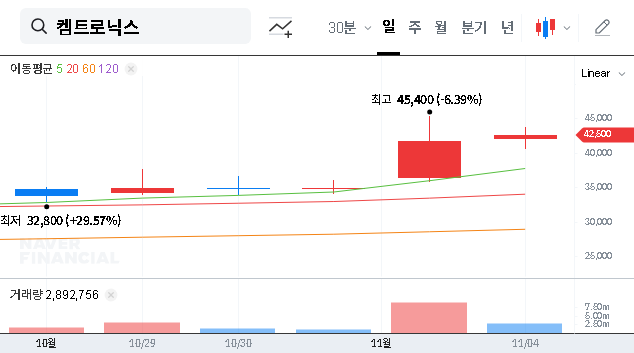
    The recent news surrounding CHEMTRONICS stock (089010) has captured the market’s attention. A significant divestment by a major shareholder, Axis Investment, has raised critical questions among investors. Is this a sign of underlying weakness, creating downward pressure on the stock price, or does it open a window of opportunity for those with a long-term perspective? This comprehensive CHEMTRONICS stock analysis will dissect the event, evaluate the company’s core fundamentals, and consider the wider market forces at play to provide a clear, actionable outlook for investors.

    The Catalyst: Axis Investment’s Major Stake Sale

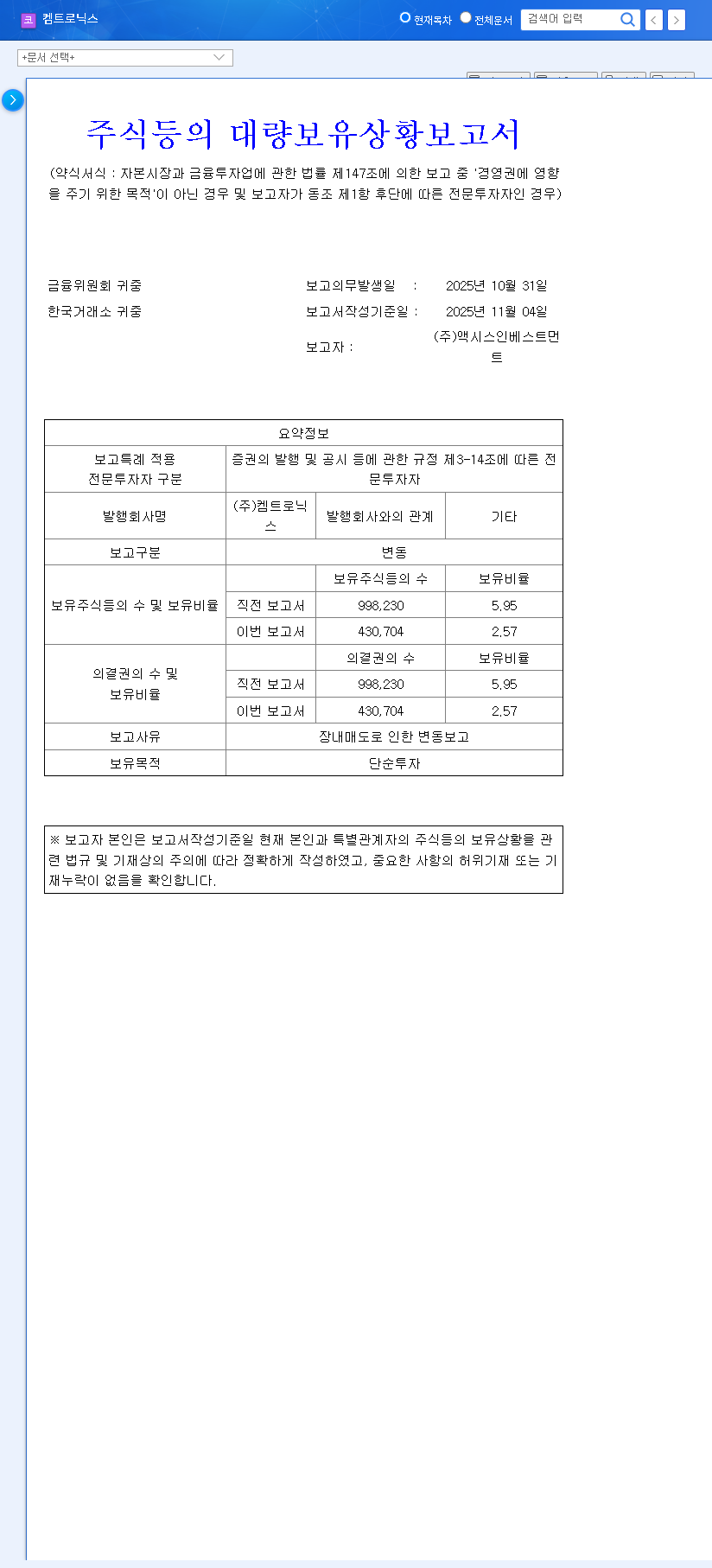
    On November 4, 2025, a significant event unfolded for CHEMTRONICS. Axis Investment, along with related entities, announced a substantial reduction of their holdings. The details of this transaction were made public in an Official Disclosure, confirming the large-scale divestment through open market sales.

    Axis Investment’s stake was reduced from 5.95% to 2.57%, a sale of approximately 3.38 percentage points of total shares, valued at roughly 694.4 billion KRW. This injection of shares into the market is a key factor influencing the current CHEMTRONICS stock price.

    Deep Dive into CHEMTRONICS Stock Fundamentals

    Beyond the immediate news, a sound investment decision requires a thorough look at the company’s underlying health and future prospects. This event provides an opportunity to reassess the fundamentals of the CHEMTRONICS stock.

    Core Business and Growth Engines

    CHEMTRONICS operates across several high-potential sectors, including advanced electronics, specialty chemicals, and automotive electronics. The company is actively developing future growth drivers that could significantly enhance its value:

    • EUV Materials: Development of materials for Extreme Ultraviolet lithography, a critical technology in next-generation semiconductor manufacturing.
    • Glass Substrate Technology: In-house processing technology for glass substrates, a key component for advanced displays and electronics.
    • Automotive Electronics Expansion: Growing its footprint in the automotive sector, supplying components for modern vehicles.

    Recent Financial Headwinds

    Despite these promising areas, the company’s performance in the first half of 2025 showed signs of weakness. A decrease in overall revenue and a notable decline in operating profit margins were primarily driven by reduced sales in the electronics and distribution segments. This mixed financial picture contributes to the uncertainty surrounding the 089010 stock.

    The Broader Market Environment

    No company operates in a vacuum. A complete CHEMTRONICS stock analysis must account for macroeconomic factors that could impact its performance. Investors should consider these external pressures, as discussed in many market analysis resources.

    • High Interest Rates: Elevated benchmark rates in the US and Korea increase borrowing costs for the company and can dampen overall investor sentiment.
    • Exchange Rate Volatility: Fluctuations in the KRW/USD and KRW/EUR exchange rates directly affect the profitability of CHEMTRONICS’ exports and imports.
    • Raw Material & Logistics Costs: The prices of international oil and shipping (e.g., Baltic Dry Index) can impact manufacturing costs and supply chain expenses.

    Impact Analysis of the Stake Sale

    Short-Term: Increased Selling Pressure

    The most immediate consequence of the Axis Investment sale is the increased supply of CHEMTRONICS stock on the market. This surge in selling volume is likely to create short-term downward pressure on the stock price. Furthermore, the market may interpret the sale as a negative signal, regardless of the stated ‘simple investment’ purpose, leading to weakened investor confidence and potentially higher trading volatility.

    Long-Term: A Renewed Focus on Fundamentals

    In the long run, this event shifts the focus squarely back to the company’s performance. While the stake reduction is significant, Axis Investment’s remaining 2.57% holding does not pose an immediate threat to management control. The true test will be whether CHEMTRONICS can deliver on its growth promises. Investors should compare its progress to others in the sector, similar to how one might analyze other semiconductor stocks. A dip in stock price could affect future capital raising, but sustained operational success will ultimately dictate the long-term value.

    Action Plan for Prudent Investors

    Given the current uncertainty, investors should adopt a cautious and analytical approach. Before making a decision on CHEMTRONICS stock, consider these key points:

    • Assess the Opportunity: Is a potential short-term price drop a genuine buying opportunity based on long-term value, or is it a reflection of deeper issues? A thorough analysis is critical.
    • Monitor Shareholder Activity: Keep a close eye on any further changes in shareholding by Axis Investment and watch for the emergence of new major investors.
    • Demand Performance Visibility: Look for concrete signs of sales and profitability improvement in upcoming quarterly reports. The performance of the EUV and automotive segments is particularly crucial.
    • Factor in Macro Trends: Continuously evaluate how macroeconomic indicators like interest rates and exchange rates are affecting the business environment for CHEMTRONICS.

    Frequently Asked Questions (FAQ)

    Why did Axis Investment sell its CHEMTRONICS stock?

    The stated purpose was ‘simple investment’. The sale is likely a strategic move for portfolio rebalancing or to realize profits. No specific negative reason has been officially disclosed by the firm.

    What is the immediate impact on the CHEMTRONICS stock price?

    The large influx of shares is expected to increase selling pressure and could lead to a short-term downward trend in the stock price as the market absorbs the new supply.

    Does CHEMTRONICS have long-term investment appeal?

    CHEMTRONICS possesses strong future growth drivers in high-tech sectors like EUV and automotive electronics. However, its investment appeal is balanced against recent sluggish performance and macroeconomic risks. A patient approach focused on tangible performance improvements is advised.
    (089010) CHEMTRONICS Stock (089010) Analysis: Axis Investment Divests – What Investors Must Know 관련 이미지
  • (020150) LOTTE ENERGY MATERIALS Q3 2025 IR: A Deep Dive into Turnaround & Stock Growth Strategy

    (020150) LOTTE ENERGY MATERIALS Q3 2025 IR: A Deep Dive into Turnaround & Stock Growth Strategy

    The upcoming LOTTE ENERGY MATERIALS Q3 2025 Investor Relations (IR) conference, scheduled for November 10, 2025, is a watershed moment for investors. After a challenging first half marked by significant revenue decline and operating losses, the market is anxiously awaiting signs of a turnaround. This deep-dive analysis explores the critical factors behind the H1 slump, the key questions for the Q3 IR, and the potential future growth strategies that could redefine the company’s trajectory in the competitive battery materials market.

    We will unpack the financial data, assess the macroeconomic headwinds, and provide a strategic framework for evaluating the information presented. This comprehensive overview is essential for anyone conducting an investment analysis on LOTTE ENERGY MATERIALS.

    Deconstructing the H1 2025 Underperformance

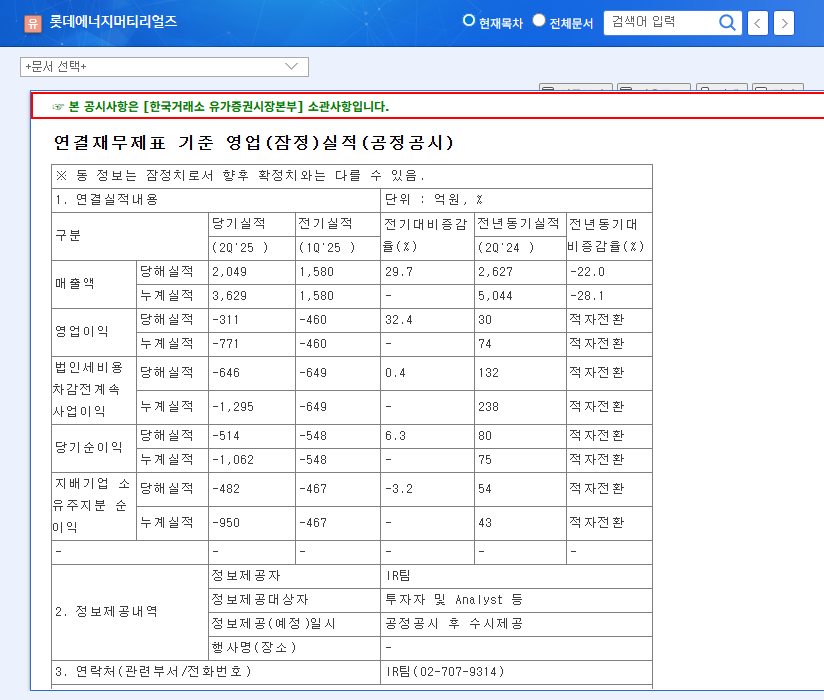
    To understand the future, we must first examine the past. The first half of 2025 was a difficult period for LOTTE ENERGY MATERIALS, primarily driven by external pressures and internal operational challenges. The company’s official disclosure provides a transparent look at the figures. You can view the full financial details in the Official Disclosure (DART Report).

    Financial Setbacks and Core Causes

    The headline numbers from H1 2025 were stark. Revenue fell to KRW 362.92 billion, a staggering 39.9% decrease year-over-year. This slump directly led to an operating loss of KRW 77.12 billion, a dramatic swing from the KRW 90.22 billion profit in the previous year. The primary culprit was a sharp decline in export sales from the core materials segment, specifically Elecfoil (copper foil used in batteries). This was caused by a confluence of factors, including a global economic slowdown, inventory corrections across the secondary battery market, and fierce competition. Furthermore, the low utilization rate of 48.1% at the crucial Malaysia plant exacerbated the fixed cost burden, squeezing profitability.

    A Look at Financial Health

    Despite the operational losses, the company’s balance sheet remains relatively stable. With a debt-to-equity ratio of approximately 22.26%, financial risk is contained for now. However, an increase in short-term borrowings to fund expansion plans warrants careful monitoring. Managing this debt will be critical as the company pursues its large-scale investment strategy for future growth.

    The Q3 IR is pivotal. Investors will be scrutinizing the report not just for signs of a Q3 recovery, but for a clear and credible roadmap for navigating the volatile battery materials landscape and achieving sustainable profitability.

    The Upcoming LOTTE ENERGY MATERIALS IR: What to Watch For

    The Q3 IR announcement is more than just a financial report; it’s a strategic communication that will shape investor sentiment for months to come. The narrative presented by the management team will be just as important as the numbers themselves. For a broader context on market trends, investors often consult sources like leading financial news outlets for macroeconomic analysis.

    • Elecfoil Segment Recovery: Is there evidence of recovering export volumes or stabilizing prices for Elecfoil? This is the company’s core business and the primary driver of any turnaround.
    • Malaysia Plant Utilization: What concrete steps are being taken to increase the plant’s utilization rate? A clear plan to ramp up production and improve efficiency is non-negotiable for restoring profitability.
    • Future Growth Roadmap: Details on next-generation battery materials, progress on overseas expansion (particularly in high-growth markets), and projected timelines are crucial for long-term investors.
    • Risk Management: How is the company hedging against currency fluctuations, volatile raw material prices, and rising interest rates? A robust strategy will inspire confidence.

    Investment Strategy & Outlook

    Formulating a prudent investment strategy requires a balanced view of both short-term catalysts and long-term fundamentals. The upcoming LOTTE ENERGY MATERIALS IR will provide critical data points for both perspectives.

    Short-Term Perspective

    In the short term, the stock price will be highly sensitive to the Q3 results. If earnings beat expectations and management provides a confident outlook, a relief rally is likely. Conversely, if underperformance continues and the growth story remains vague, further downward pressure can be expected. Traders should be prepared for volatility around the announcement date.

    Mid-to-Long-Term Perspective

    Long-term investors should look beyond the immediate quarter. The structural growth story for high-end battery materials remains intact, driven by the global expansion of electric vehicles and AI data centers. The key is whether LOTTE ENERGY MATERIALS can maintain its technological edge in High-End Elecfoil and successfully execute its expansion. For those interested in this sector, understanding the fundamentals of the global EV supply chain is essential. Success will be measured by sustained improvements in profitability and market share over several quarters, not just one.

    Conclusion: A Critical Juncture

    The Q3 2025 IR is a critical juncture for LOTTE ENERGY MATERIALS. It offers a vital opportunity for the company to restore investor confidence and prove that the H1 2025 downturn was a temporary setback, not a permanent decline. By carefully analyzing the earnings data, management’s strategic plans, and the company’s approach to risk, investors can make well-informed decisions based on a comprehensive understanding of the challenges and opportunities that lie ahead.

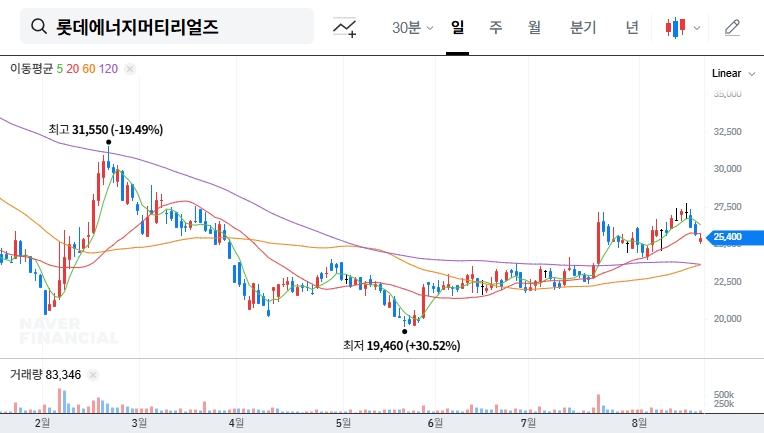
    (020150) LOTTE ENERGY MATERIALS Q3 2025 IR: A Deep Dive into Turnaround & Stock Growth Strategy 관련 이미지
  • (099750) Eazycaretech Stock Analysis: Why BioNex’s Major Investment is a Game-Changer

    (099750) Eazycaretech Stock Analysis: Why BioNex’s Major Investment is a Game-Changer

    The market is buzzing with significant news surrounding Eazycaretech stock. BioNex, a major player in the healthcare sector, has publicly increased its stake in the leading medical IT company, a move that demands a closer look. This BioNex investment, now approaching a 10% ownership stake, signals strong confidence and has investors asking critical questions about the future. Is this a precursor to a short-term rally, or does it signify a fundamental shift in Eazycaretech’s long-term value proposition?

    This comprehensive Eazycaretech stock analysis will dissect the event, evaluate the company’s core fundamentals, assess the macroeconomic landscape, and provide a clear investment thesis. We will explore the potential impacts and offer a strategic stock outlook to help you navigate this pivotal moment.

    Event Overview: The Details of the BioNex Investment

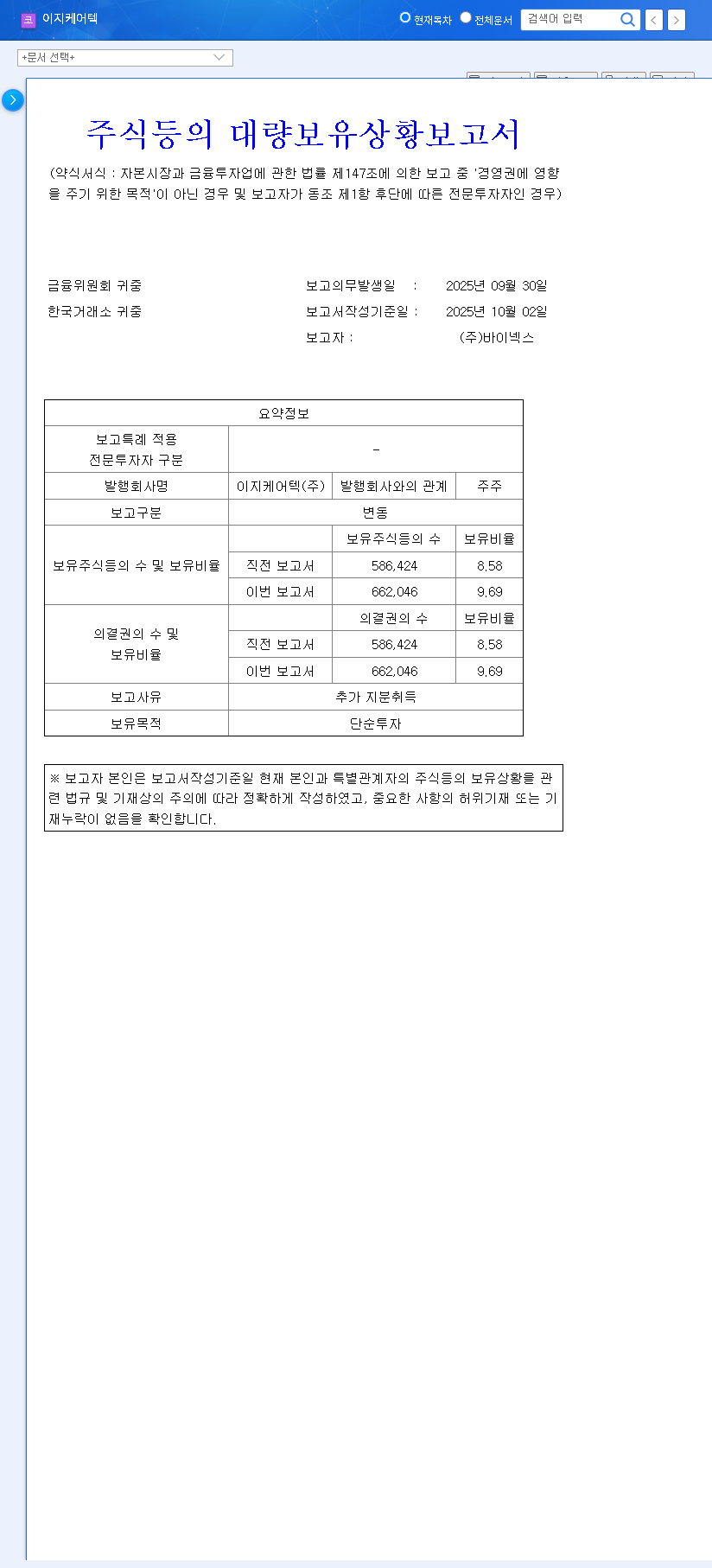
    On October 10, 2025, BioNex officially disclosed the acquisition of an additional 9,154 shares of Eazycaretech. This transaction increased BioNex’s total holdings from 8.58% to a substantial 9.69%. According to the filing, the stated purpose of ownership is ‘simple investment,’ a term investors often scrutinize for deeper meaning. You can view the Official Disclosure (Source) for complete details.

    While labeled a ‘simple investment,’ a stake of this size is a powerful vote of confidence. It indicates that BioNex sees significant untapped value and long-term growth potential in the Eazycaretech stock, sending a clear positive signal to the broader market.

    Why It Matters: Company Fundamentals & Market Context

    Eazycaretech: A Leading Medical IT Company Poised for Growth

    Eazycaretech has carved a niche as a specialized medical IT company, renowned for its Hospital Information Systems (HIS) in top-tier Korean hospitals. While Q1 2025 financials showed a temporary downturn—with sales at KRW 15.9 billion (-17.3%) and a net loss of KRW 89 million—the underlying growth narrative remains compelling. The company is strategically pivoting towards high-growth sectors:

    • Cloud HIS ‘EDGE&NEXT’: Cloud service revenue is a bright spot, growing 8.9% year-on-year. This division is crucial as the healthcare industry increasingly adopts cloud infrastructure for flexibility, scalability, and data security.
    • AI and Global Expansion: Development of AI-powered diagnostic tools, such as lung disease support software, and strategic expansion into markets like Saudi Arabia and the UAE, represent significant long-term growth catalysts.
    • Market Leadership: A deep-rooted relationship with Seoul National University Hospital and a team of skilled experts solidify Eazycaretech’s competitive advantage in the domestic market. For more on this, you can review our guide on current trends in the medical IT sector.

    Macroeconomic Headwinds

    The global economic climate in late 2025 is marked by uncertainty. With interest rate cycles potentially peaking and fears of a slowdown, investors are cautious. In such an environment, company-specific news and clear growth drivers become paramount. The BioNex investment acts as a powerful counter-narrative to market-wide pessimism, drawing attention to Eazycaretech’s individual merit.

    Future Outlook: Short & Long-Term Impact Analysis

    Short-Term: A Catalyst for Positive Momentum

    In the short term, the market is likely to interpret BioNex’s move as a strong buy signal. This can trigger a cascade of positive effects for the Eazycaretech stock, including increased buying pressure, higher trading volumes, and a boost in investor sentiment. Existing shareholders may feel reassured, while new investors may be attracted by the institutional validation.

    Mid to Long-Term: Synergy and Strategic Possibilities

    The long-term implications are even more profound. As BioNex’s ownership stake nears the 10% threshold, the possibility of future strategic involvement increases. This could range from a board seat to influencing key decisions, potentially accelerating Eazycaretech’s growth. Furthermore, the potential for business synergy is immense. A partnership between BioNex’s pharmaceutical expertise and Eazycaretech’s data management solutions could unlock new efficiencies in clinical trials, patient record management, and personalized medicine, creating a powerful competitive moat.

    Investor Action Plan & Recommendations

    The Eazycaretech stock outlook is cautiously optimistic. The company’s future growth engines (Cloud HIS, AI) are clear, and the BioNex investment provides strong validation. However, investors must balance this against recent sluggish performance and execution risks.

    • For Investors: Focus on the long-term potential. Monitor Eazycaretech’s quarterly earnings for a return to growth, track progress in its AI and cloud divisions, and watch for further announcements regarding its relationship with BioNex. Avoid making decisions based solely on short-term price movements.
    • For Management: The key is execution. Eazycaretech must deliver on its growth promises while managing costs effectively. Maintaining a constructive dialogue with BioNex and leveraging their expertise will be critical to maximizing shareholder value.

    Disclaimer: This analysis is for informational purposes only. Investment decisions carry risk and should be made based on your own research and judgment.

    (099750) Eazycaretech Stock Analysis: Why BioNex's Major Investment is a Game-Changer 관련 이미지
  • (352820) HYBE Shareholding Change (Oct 2025): A Deep Dive for Investors

    (352820) HYBE Shareholding Change (Oct 2025): A Deep Dive for Investors

    A recent HYBE shareholding change disclosure has caught the attention of the market, raising questions among investors about the future of the K-POP entertainment powerhouse. On October 2, 2025, a report detailed a minor adjustment in Chairman Bang Si-hyuk’s stake in HYBE (352820). While the shift was minuscule, any change in a founder’s holdings warrants a closer look. Is this a routine corporate maneuver, or does it signal a deeper strategic shift? This in-depth analysis will dissect the official disclosure, evaluate HYBE’s robust fundamentals, and provide a clear outlook on what this event means for the HYBE stock price and long-term investors.

    Decoding the HYBE Shareholding Change: What Actually Happened?

    The catalyst for this discussion is the ‘Report on Status of Large Shareholder’s Holding (General)’ filed on October 2, 2025. You can view the Official Disclosure on DART. At first glance, the numbers seem almost negligible, but the reasons behind them tell a story of internal strategy and financial prudence.

    The Key Figures at a Glance

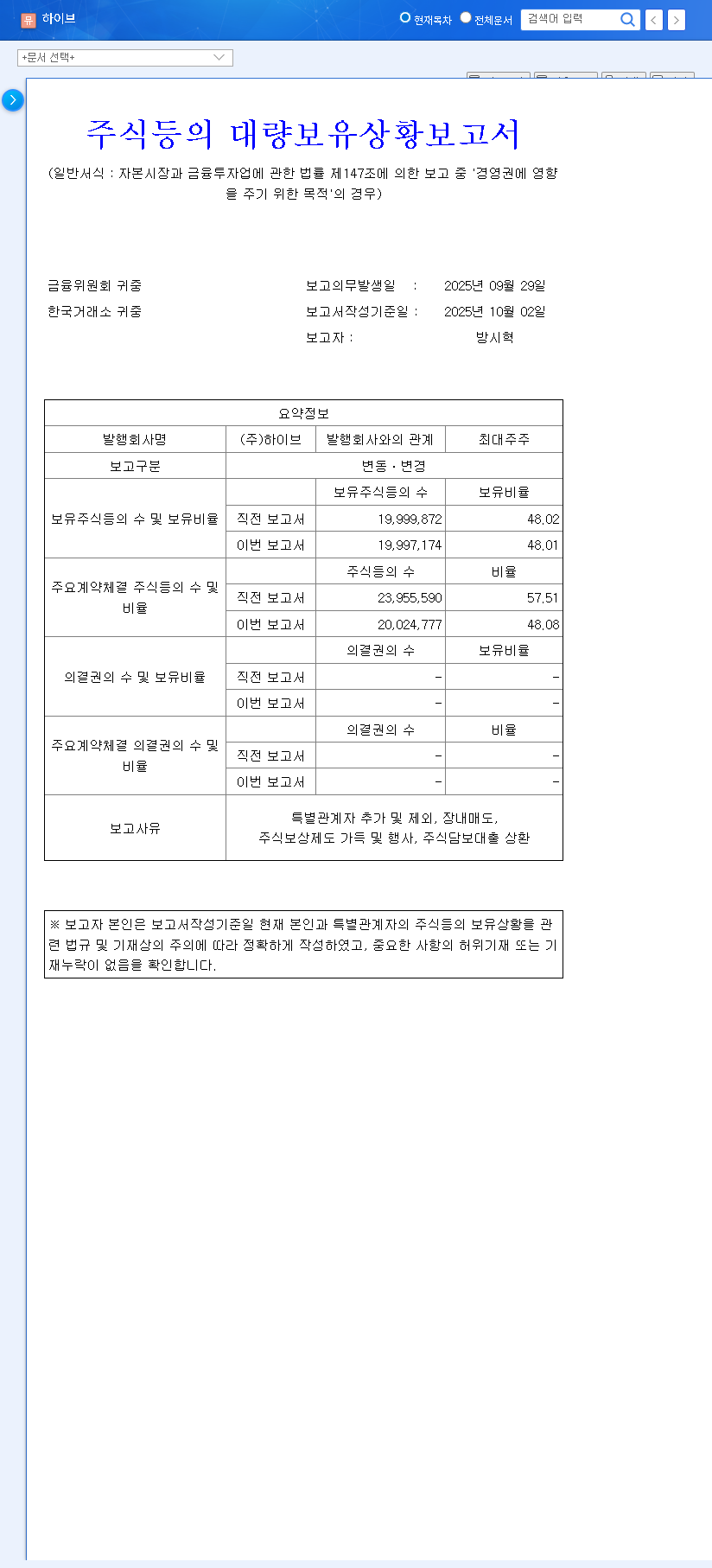
    • Main Reporting Party: Chairman Bang Si-hyuk
    • Ownership Before Change: 48.02%
    • Ownership After Change: 48.01%
    • Net Change: A slight decrease of 0.01%

    The primary drivers behind this adjustment were multifaceted, involving standard corporate operations rather than a single large transaction. These include the vesting of employee stock options, minor on-market sales by executives for personal financial management, and, notably, the repayment of stock-backed loans. This indicates a focus on rewarding talent and strengthening the company’s financial footing.

    “Minor adjustments in a founder’s stake are common. The key for investors is to analyze the ‘why’ behind the change. In HYBE’s case, the reasons—employee compensation and debt reduction—point towards healthy, long-term corporate governance, not a lack of confidence.”

    Beyond the Numbers: HYBE’s Unshakable Fundamentals

    To truly understand the minimal impact of this shareholding change, one must look at the powerhouse fundamentals HYBE has built. The H1 2025 financial report paints a picture of a company that is not just surviving but thriving through strategic diversification and innovation.

    Core Strengths Fueling Growth

    • Profitability on the Rise: Despite market fluctuations, operating profit surged by over 34%. This wasn’t driven by revenue alone but by masterful cost control and focusing on high-margin sectors like world tours and merchandise.
    • Diversified Revenue Streams: HYBE has successfully reduced its dependency on physical album sales. The explosive growth in concerts (featuring artists like SEVENTEEN and LE SSERAFIM) and high-demand MD/licensing has created a more resilient and balanced business model.
    • Weverse Platform Dominance: The fan community platform Weverse is a critical growth engine. It deepens fan engagement and serves as a powerful e-commerce hub, creating a direct-to-consumer flywheel. For more on this, read our deep dive into HYBE’s Weverse platform strategy.
    • Investing in the Future: HYBE is not just a music label; it’s a tech company. Significant investments in game development and proprietary AI solutions signal a commitment to owning the future of entertainment technology.

    Investor Outlook: Long-Term Value Over Short-Term Noise

    Given the context, the 0.01% HYBE shareholding change is unlikely to have any meaningful negative impact on the stock price. In fact, the underlying reasons can be interpreted as net positives. Motivating key employees with stock compensation ensures talent retention, while repaying loans enhances financial stability—both are hallmarks of a well-run company. As reported by leading financial outlets like Bloomberg, market sentiment often rewards companies with strong governance and a clear vision for the future.

    Key Factors to Monitor Moving Forward:

    Instead of over-analyzing this minor stock ownership shift, a prudent HYBE investor analysis should focus on the strategic drivers that will truly shape its value:

    • Global Artist Pipeline: The success of upcoming group debuts and the continued global expansion of established acts will be paramount.
    • Weverse Monetization: Keep an eye on user growth, new feature rollouts, and the expansion of its e-commerce and subscription services.
    • New Venture Performance: The tangible results from investments in gaming and technology will be crucial for long-term diversification.

    In conclusion, the recent news about the HYBE shareholding change should be seen as business as usual. It’s a small technical adjustment within a much larger, compelling growth story. For investors, the focus should remain on the company’s strong execution, its multi-layered business strategy, and its dominant position in the expanding global market for K-POP entertainment stocks. The intrinsic value of HYBE lies in its innovation and vision, not in the third decimal place of its founder’s ownership percentage.

    (352820) HYBE Shareholding Change (Oct 2025): A Deep Dive for Investors 관련 이미지
  • (079550) LIG Nex1 Stock Analysis: Deep Dive into the KRW 91.7B Mine Sonar DAPA Contract

    (079550) LIG Nex1 Stock Analysis: Deep Dive into the KRW 91.7B Mine Sonar DAPA Contract

    Amid rising geopolitical tensions and a global surge in demand for advanced military technology, South Korea’s defense industry is experiencing unprecedented growth. At the forefront of this wave is LIG Nex1, a key player whose technological prowess continues to capture international attention. The company recently announced a significant development that has investors talking: a major contract that reinforces its strategic importance in naval defense.

    This article provides a comprehensive analysis of the new LIG Nex1 DAPA contract, its impact on the company’s financials, and what it means for the future of LIG Nex1 stock. We’ll explore the opportunities, potential risks, and a recommended investment strategy for those watching this dynamic sector.

    Deconstructing the KRW 91.7 Billion DAPA Contract

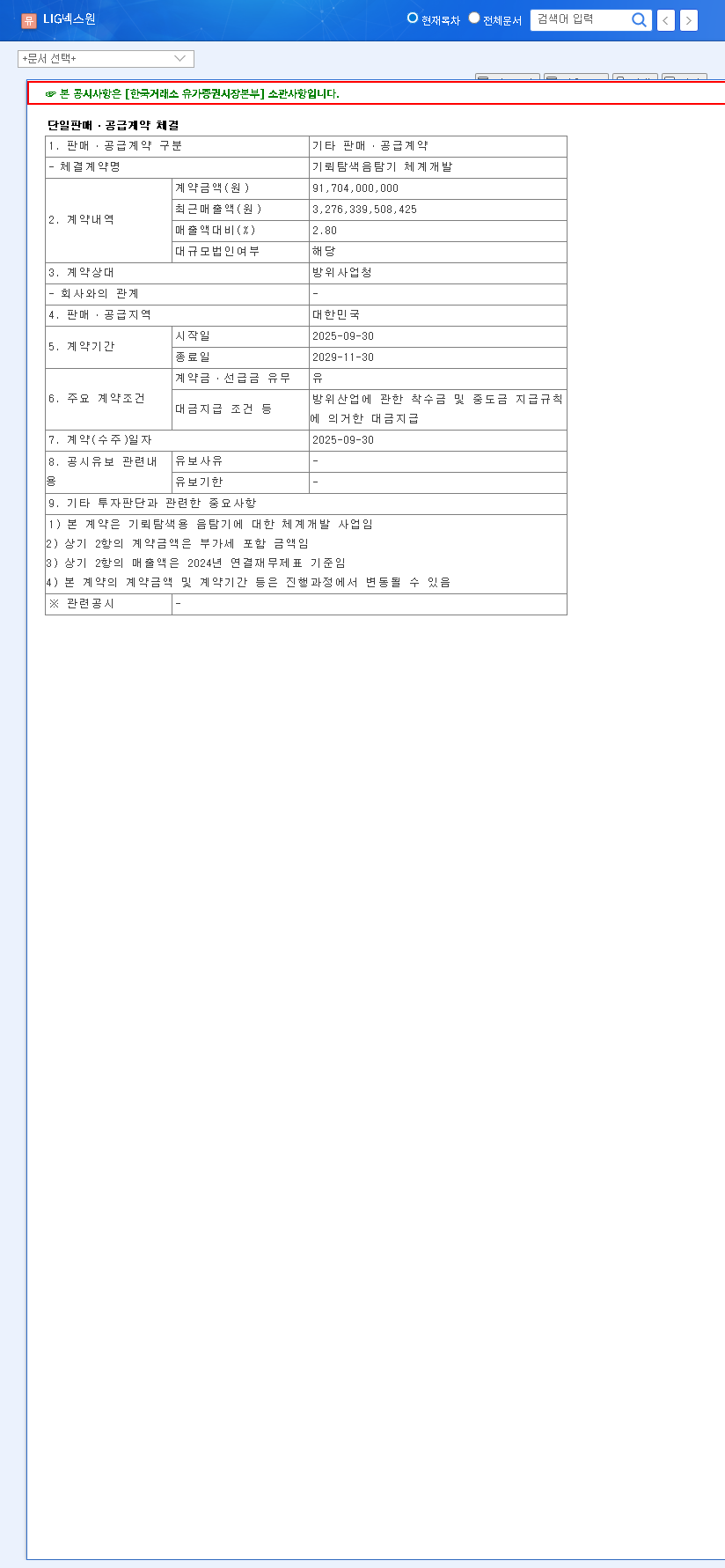
    LIG Nex1 has officially secured a KRW 91.7 billion (approx. $66 million USD) contract with South Korea’s Defense Acquisition Program Administration (DAPA) for the development of a next-generation ‘Mine Sonar System’. The project is set to run from September 2025 to November 2029. The official filing can be viewed here: Official Disclosure (DART).

    Why the Mine Sonar System is a Strategic Win

    A Mine Sonar System is a critical piece of naval technology designed to detect, classify, and neutralize underwater mines, which pose a significant threat to both military and commercial maritime routes. This DAPA contract is more than just another revenue stream; it signifies:

    • Technological Leadership: It validates LIG Nex1’s expertise in advanced underwater acoustics and sensor fusion, crucial areas for modern naval warfare.
    • Domestic Market Dominance: Securing this key development project solidifies its relationship with DAPA and its role as a primary supplier for the Republic of Korea Navy.
    • Future Export Potential: Successfully developing this system opens doors for exporting it to allied nations seeking to upgrade their mine countermeasure (MCM) capabilities, a growing global market. For further reading on global defense trends, see this analysis from defense industry experts.

    Financial Health and Performance Analysis

    While the contract itself represents about 2.8% of projected 2025 revenue, its true value lies in its contribution to a massive and stable order backlog. As of Q2 2025, LIG Nex1 reported an impressive order backlog of KRW 23.47 trillion, providing excellent revenue visibility for years to come. This stability is a key factor for long-term investors.

    “The stability provided by LIG Nex1’s massive order backlog is a significant defensive moat. This new Mine Sonar System contract, while modest in size, reinforces the quality and long-term nature of that backlog, signaling continued trust from its primary government client.”

    Addressing Key Financial Metrics

    Investors have rightly pointed to two areas of concern: the high debt-to-equity ratio and negative operating cash flow. However, context is crucial. The debt ratio, while noted at 396.18% in a semi-annual report, is on a strong downward trajectory, projected to fall to just 7.90% by the end of 2025. This indicates aggressive and successful deleveraging.

    The negative cash flow from operations is largely due to increased working capital and investments needed to fulfill its large-scale export contracts. As these major projects progress and payments are received, this metric is expected to improve. Continuous monitoring remains essential, but it is a symptom of rapid growth rather than fundamental weakness.

    Investment Strategy: Is LIG Nex1 Stock a Buy?

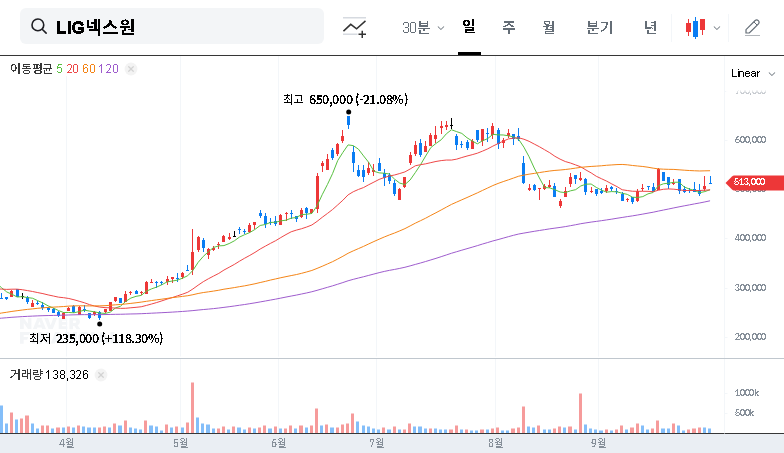
    The stock has seen a significant upward trend from 2023, reflecting the company’s export successes and the broader strength of Korean defense stocks. The recent price action suggests a period of healthy consolidation. This contract, while fundamentally positive, is unlikely to be a catalyst for a sharp, immediate price surge, as the market has already priced in a high degree of success for LIG Nex1.

    • For Long-Term Investors: The outlook remains highly positive. The consistent contract flow, technological validation, and expanding export opportunities form a strong foundation for sustained growth. Any price dips could represent attractive entry points for building a long-term position.
    • For Short-Term Traders: The impact is more neutral. The news reinforces the existing bullish narrative rather than creating a new one. Traders should monitor broader market sentiment and key technical support levels.

    In conclusion, this Mine Sonar System contract is another solid brick in the impressive wall LIG Nex1 is building. It strengthens the company’s core competencies and enhances its long-term earnings predictability. For investors with a medium to long-term horizon, LIG Nex1 remains a compelling story within the burgeoning global defense market. For more on the sector, you can read our Guide to Investing in Korean Defense Stocks.

    Frequently Asked Questions (FAQ)

    What is the significance of LIG Nex1’s new contract?

    This KRW 91.7 billion DAPA contract is for developing a critical Mine Sonar System. It solidifies LIG Nex1’s technological leadership in naval defense and enhances future domestic and international sales prospects.

    How will this impact the LIG Nex1 stock price?

    The short-term impact may be limited as the market already has high expectations. However, it strongly supports the positive medium to long-term growth thesis by adding to the stable revenue backlog and proving technological capability.

    Should I be concerned about LIG Nex1’s debt?

    While the debt-to-equity ratio has been high, it is projected to improve dramatically by the end of 2025. This indicates successful financial management amid rapid expansion, though it remains a key metric to monitor.

    (079550) LIG Nex1 Stock Analysis: Deep Dive into the KRW 91.7B Mine Sonar DAPA Contract 관련 이미지
  • Interojo Announces KRW 21.8 Billion Share Buyback: What’s Next for the Stock?

    Interojo Announces KRW 21.8 Billion Share Buyback: What's Next for the Stock? 대표 차트 이미지

    1. What Happened?

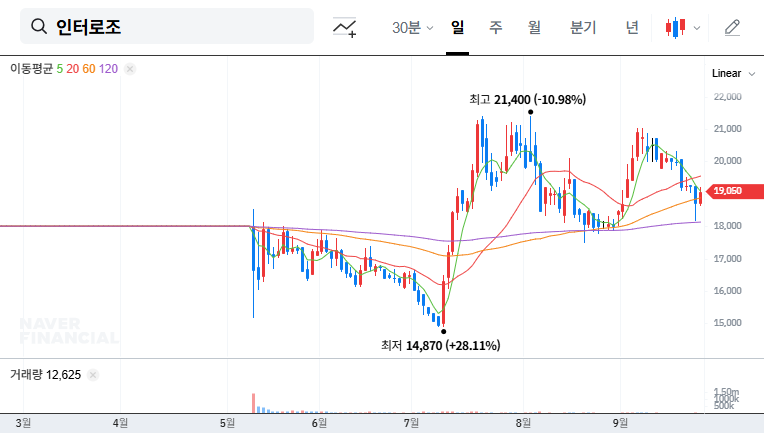
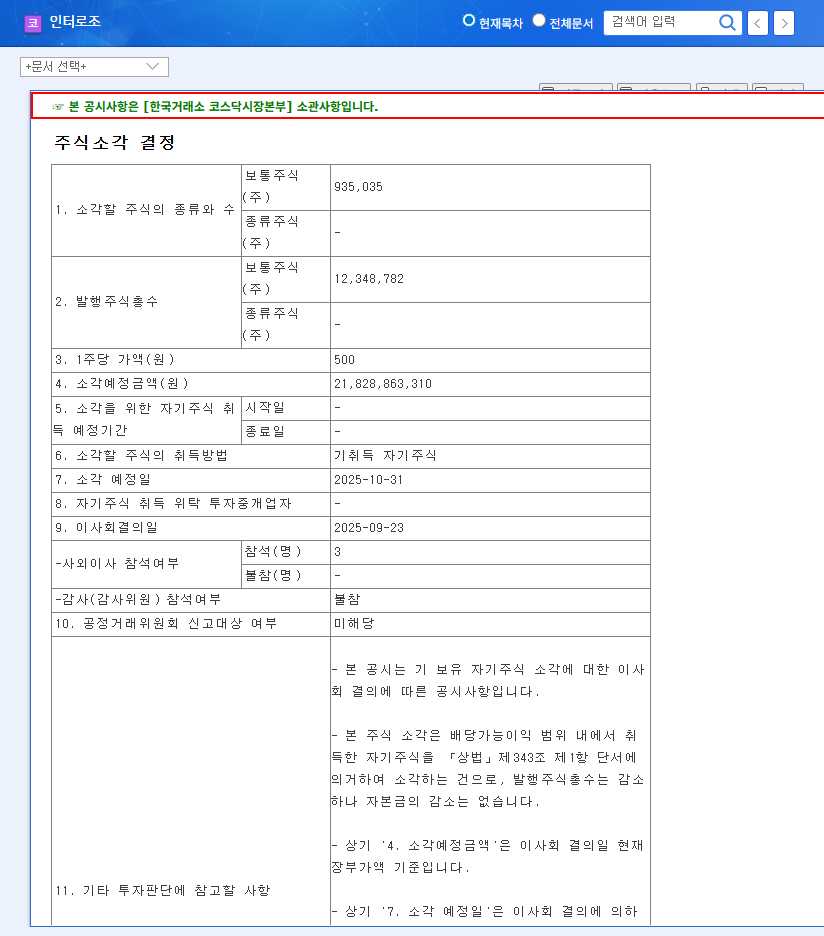
    On September 23, 2025, Interojo’s board of directors approved a share buyback program of 935,035 shares, totaling approximately KRW 21.8 billion. The buyback is scheduled to be completed by October 31, 2025.

    2. Why the Buyback?

    Share buybacks reduce the number of outstanding shares, increasing the value per share. This is generally seen as a way to return value to shareholders and boost the company’s overall valuation. Interojo has a history of share buybacks positively impacting its stock price.

    3. What Does This Mean for the Stock Price?

    • Positive Outlook: The buyback is expected to create upward momentum for the stock price due to increased earnings per share and improved investor sentiment.
    • Negative/Limited Outlook: If fundamental issues like declining sales and internal accounting control weaknesses persist, the positive impact may be limited. External economic factors could also increase stock volatility.

    4. What Should Investors Do?

    • Short-Term Investors: A price increase following the announcement is possible, but be aware of potential volatility.
    • Long-Term Investors: Carefully consider the impact of the new factory, new product launches, and improvements in fundamentals before making investment decisions. Pay close attention to sales recovery and improvements in internal accounting controls.
    • Risk Management: Continuously monitor potential risks such as exchange rate fluctuations, customer concentration, and macroeconomic conditions.

    Disclaimer: This content is not investment advice. All investment decisions are the sole responsibility of the investor.

    What is a share buyback?

    A share buyback is when a company repurchases its own shares from the market and retires them. This reduces the number of outstanding shares, increasing the value of each remaining share.

    Why do companies buy back their shares?

    Companies buy back shares to increase shareholder value, boost stock prices, and improve the company’s overall valuation.

    When will Interojo’s share buyback be completed?

    The buyback is scheduled for completion on October 31, 2025.

    Interojo Announces KRW 21.8 Billion Share Buyback: What's Next for the Stock? 관련 이미지
    Interojo Announces KRW 21.8 Billion Share Buyback: What's Next for the Stock? 관련 이미지
  • Samhyun Announces KRW 3 Billion Share Buyback: Impact on Stock Price and Investment Strategy

    Samhyun Announces KRW 3 Billion Share Buyback: Impact on Stock Price and Investment Strategy 대표 차트 이미지

    1. Samhyun’s Share Buyback: What Happened?

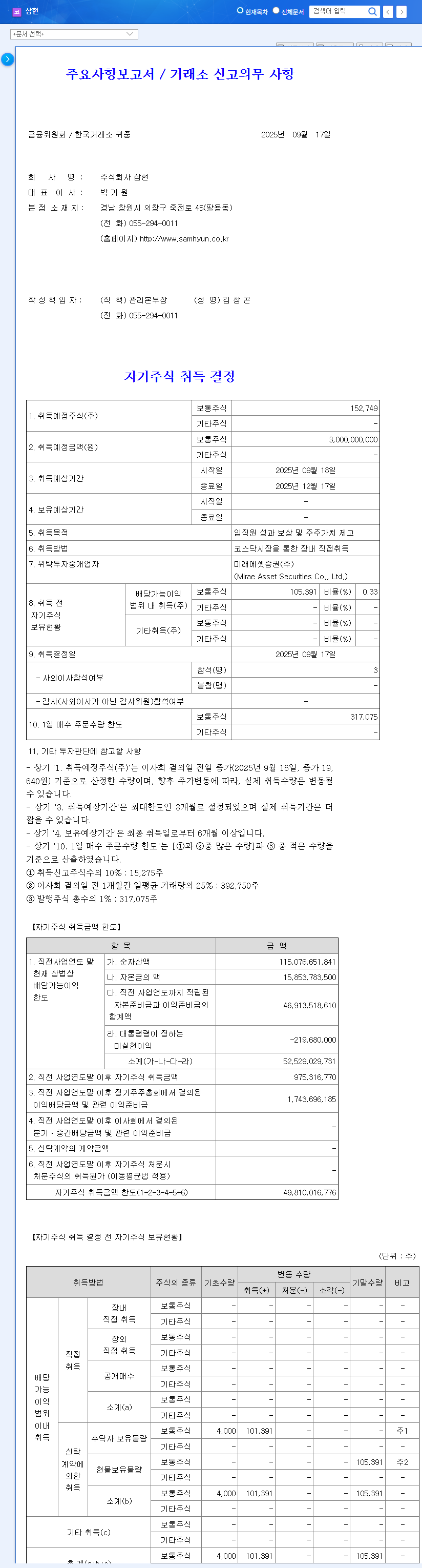
    On September 17, 2025, Samhyun announced its decision to repurchase 152,749 common shares (0.48% of total market capitalization) for approximately KRW 3 billion through open market purchases. The stated purpose is employee performance compensation and shareholder value enhancement.

    2. Why the Buyback?: Rationale and Implications

    Share buybacks can increase earnings per share by reducing the number of outstanding shares and may have a positive impact on stock price. It can also signal management’s confidence in the company’s future, potentially improving investor sentiment. Given Samhyun’s recent stock price volatility, this move could provide stability to the market.

    3. Samhyun’s Fundamentals: Unveiling Hidden Opportunities

    • Core Business: Providing ‘3-in-1 Solutions’ (integrated motor, controller, and reducer) applicable to various industries including automotive, defense, and robotics.
    • Growth Drivers: Expansion into future mobility sectors such as robotics, electric ships, and AAM.
    • Technological Prowess: First domestic producer of DCT motors, first global mass production of CVVD products, and A-SPICE CL2 certification.
    • Financial Status: Decline in revenue in the first half of 2025 and increasing debt. However, the growing proportion of defense/research institute sales is a positive sign.

    4. Market Reaction: Expert Analysis

    Concrete market expectations from analyst reports are yet to be seen. However, share buybacks generally act as a short-term positive catalyst for stock prices.

    5. Investor Action Plan: Should You Invest in Samhyun Now?

    While the share buyback is a positive signal, investment decisions require careful consideration. Existing holders may maintain a ‘hold’ position, while new investors should adopt a ‘wait-and-see’ approach, closely monitoring the company’s future performance and business strategies.

    What is the size of Samhyun’s share buyback?

    Approximately KRW 3 billion, representing 152,749 common shares (0.48% of the total market capitalization).

    What is the purpose of the share buyback?

    Employee performance compensation and enhancement of shareholder value.

    What is Samhyun’s main business?

    Samhyun provides ‘3-in-1 Solutions,’ integrating motors, controllers, and reducers for the automotive, defense, and robotics industries.

    Samhyun Announces KRW 3 Billion Share Buyback: Impact on Stock Price and Investment Strategy 관련 이미지
    Samhyun Announces KRW 3 Billion Share Buyback: Impact on Stock Price and Investment Strategy 관련 이미지
  • HPO Share Buyback: A Bullish Signal? Fact Check and Investment Strategy


    HPO Share Buyback: A Bullish Signal? Fact Check and Investment Strategy 대표 차트 이미지


    What Happened? HPO Announces Share Buyback

    HPO is planning to buy back KRW 9 billion worth of its own shares, equivalent to 796,011 common shares, on September 12, 2025. This represents 8.32% of the company’s market capitalization and can be interpreted as a positive signal for shareholders.

    Why the Buyback? Background and Objectives

    Share buybacks are generally part of a company’s shareholder return policy aimed at increasing shareholder value. Reducing the number of outstanding shares increases earnings per share (EPS), which can lead to a rise in stock price. HPO’s share buyback can be seen as a way to demonstrate its growth potential and commitment to returning value to shareholders.

    So, What About the Stock Price? Short-Term and Long-Term Impact Analysis

    In the short term, the share buyback is likely to have a positive impact on the stock price. However, the extent of the increase might be limited due to concerns about the company’s underperformance in 2024. In the long term, the company’s recovery from the 2024 earnings slump and the success of its new business ventures will have a greater impact on the stock price than the buyback itself. Potential financial risks, such as the call option related to BioPharm Co., Ltd., should also be carefully considered.

    What Should Investors Do? Action Plan

    • Check for continued shareholder return policies in the future.
    • Monitor the recovery from the 2024 earnings decline and the performance of new investments.
    • Keep an eye on the management of financial risks, such as the call option related to BioPharm Co., Ltd.
    • Analyze the impact of macroeconomic variables such as exchange rates, interest rates, and oil prices.

    FAQ

    What is the size of HPO’s share buyback?

    KRW 9 billion, equivalent to 796,011 common shares or 8.32% of the company’s market cap.

    When is the share buyback scheduled?

    September 12, 2025.

    Will the share buyback positively affect the stock price?

    It’s likely to be positive in the short term, but the extent of the increase may be limited by factors like the 2024 earnings slump.

    What should investors be cautious about?

    Consider factors like earnings recovery, new business performance, and potential financial risks.


    HPO Share Buyback: A Bullish Signal? Fact Check and Investment Strategy 관련 이미지
    HPO Share Buyback: A Bullish Signal? Fact Check and Investment Strategy 관련 이미지


  • Wonbiogen Announces KRW 3 Billion Share Buyback: What Investors Need to Know

    Wonbiogen Announces KRW 3 Billion Share Buyback: What Investors Need to Know 대표 차트 이미지

    1. What is the Share Buyback?

    Wonbiogen has decided to repurchase and retire KRW 3 billion worth of its own shares. A share buyback reduces the number of outstanding shares, increasing the value per share. This is generally viewed as a shareholder-friendly policy returning value to investors.

    2. Why the Buyback?

    Wonbiogen is experiencing robust growth in its polyurethane foam dressings and cosmetics sectors, and is actively expanding into overseas markets. They are also focusing on new product development through active R&D. Despite this positive outlook, the company believes its stock is undervalued, leading to the share buyback decision to enhance shareholder value and improve investor sentiment.

    3. How Will the Buyback Affect the Stock Price?

    • Positive Impacts:
      • Increased Earnings Per Share (EPS) and Book Value Per Share (BPS)
      • Potential stock price appreciation due to reduced outstanding shares
      • Improved investor sentiment and enhanced corporate image
    • Potential Risks:
      • Potential for increased short-term stock price volatility
      • Risks related to ongoing lawsuits and seizures
      • Intensifying technological and market competition
      • Potential for profit fluctuations due to exchange rate volatility

    4. What Should Investors Do?

    While the share buyback may positively impact the stock price in the short term, investors should carefully consider several factors before making investment decisions. Thorough fundamental analysis, including future earnings trends, R&D performance, and lawsuit outcomes, is crucial. Investors should also closely monitor macroeconomic indicators and market conditions. It’s essential to recognize that ongoing legal issues can significantly influence investment decisions.

    What is a share buyback?

    A share buyback is when a company repurchases its own outstanding shares and retires them. This reduces the number of shares available in the market, potentially increasing the value of each remaining share.

    What is the size of Wonbiogen’s share buyback?

    Wonbiogen is repurchasing KRW 3 billion worth of its shares, representing approximately 7.22% of its market capitalization.

    Does a share buyback guarantee a stock price increase?

    While share buybacks are generally considered positive for stock prices, they do not guarantee an increase. Various factors, including company performance, market conditions, and investor sentiment, can influence stock prices.

    Wonbiogen Announces KRW 3 Billion Share Buyback: What Investors Need to Know 관련 이미지
    Wonbiogen Announces KRW 3 Billion Share Buyback: What Investors Need to Know 관련 이미지
  • QSI(066310) Treasury Stock Disposal: A Turning Point Through Collaboration?

    QSI(066310) Treasury Stock Disposal: A Turning Point Through Collaboration? 대표 차트 이미지

    1. What Happened?: Treasury Stock Disposal Announced

    QSI announced the disposal of treasury stock worth 3 billion KRW on August 27, 2025. The stated purpose is ‘pursuing collaborations according to mid- to long-term management strategies.’

    2. Why?: Strengthening Collaborations and Improving Financial Structure

    QSI aims to strengthen collaborations with potential partners and secure new business opportunities through this treasury stock disposal. The proceeds will also be used to improve the financial structure and secure liquidity.

    3. What’s Next?: Opportunities and Risks Coexist

    • Positive Aspects: Increased growth potential through collaboration, improved financial structure.
    • Negative Aspects: Short-term stock price volatility, uncertainty in achieving disposal objectives, continued poor performance.

    4. Investor Action Plan: 4 Key Checkpoints

    Investors should consider the following factors:

    • Specific terms of the treasury stock disposal (target, price, schedule, etc.)
    • Performance improvement from the second half of 2025 onwards
    • Tangible results from R&D investments
    • Changes in the macroeconomic environment (interest rates, exchange rates, etc.)

    While the treasury stock disposal is a positive signal, a true rebound requires accompanying performance improvements.

    What is the purpose of QSI’s treasury stock disposal?

    The purpose is ‘pursuing collaborations according to mid- to long-term management strategies.’

    What is the size of the treasury stock disposal?

    Approximately 3 billion KRW.

    Will the treasury stock disposal positively impact the stock price?

    While there is potential for growth through strengthened collaborations, short-term stock price volatility and the possibility of continued poor performance should also be considered.

    What should investors be cautious of?

    Investors should comprehensively analyze the terms of the treasury stock disposal, performance improvement, R&D results, and changes in the macroeconomic environment.

    QSI(066310) Treasury Stock Disposal: A Turning Point Through Collaboration? 관련 이미지
    QSI(066310) Treasury Stock Disposal: A Turning Point Through Collaboration? 관련 이미지