Tag: Stock Report

  • (259960) KRAFTON Shareholding Report (2025): CEO Stake & Impact on KRAFTON Stock

    (259960) KRAFTON Shareholding Report (2025): CEO Stake & Impact on KRAFTON Stock

    In the fast-paced world of tech and gaming stocks, corporate disclosures are a critical window into a company’s health and strategic direction. The recently released KRAFTON shareholding report provides just such a window, offering investors crucial clues about governance stability and insider confidence. While the headline numbers suggest minimal change, a deeper dive reveals significant implications for the future of KRAFTON stock and its long-term strategy. This analysis will decode the nuances of this corporate disclosure, from CEO Jang Byung-gyu’s steadfast control to the subtle meaning behind minor executive purchases and stock option exercises.

    We will explore what this report means for both short-term market sentiment and the long-term investment thesis for KRAFTON, the powerhouse behind global phenomena like PUBG: BATTLEGROUNDS.

    Deconstructing the KRAFTON Shareholding Report

    On November 14, 2025, KRAFTON, Inc. filed its official “Report on Large Shareholding Status.” This document, while seemingly routine, is essential for a thorough investor analysis. The full Official Disclosure provides the raw data, but the real value lies in its interpretation.

    Key Takeaways from the Disclosure:

    • Chairman Jang Byung-gyu’s Unchanged Stake: The most critical piece of information is that Chairman Jang Byung-gyu’s ownership remains firm at 37.21%. This substantial holding is explicitly for ‘management influence,’ signaling a continued commitment to stable, long-term leadership.
    • Reason for Filing: The report was triggered by market purchases and the exercise of stock options by other individuals, not by a change in the Chairman’s position.
    • Minor Executive Purchase: Song Richard Kyong Chan made minor market acquisitions totaling 180 common shares, a small but symbolically positive gesture.

    The stability of Chairman Jang Byung-gyu’s stake is the cornerstone of this report. For a company reliant on long-term IP development, consistent leadership is a significant asset that reassures the market and protects strategic initiatives from short-term pressures.

    Investor Analysis: Reading Between the Lines

    While the surface-level data shows little change, a sophisticated investor analysis requires looking deeper into the implications of this corporate disclosure.

    The Strategic Importance of Stable Governance

    Chairman Jang’s significant and stable shareholding is a powerful signal. In the gaming industry, success is often the result of multi-year development cycles and building enduring global franchises. A consistent leadership vision, free from the disruptions of shareholder activism or takeover threats, allows KRAFTON to invest confidently in ambitious projects, from new game development to pioneering the use of AI in its creative pipeline. This stability is a core component of the long-term investment case for KRAFTON stock.

    Decoding the Mention of Stock Options

    The report’s mention of ‘exercise of stock options’ deserves special attention. While the current impact is negligible, it serves as a reminder of potential future share dilution. Stock options are a common way for tech companies to incentivize key talent. When exercised, they create new shares, which can slightly dilute the ownership percentage of existing shareholders. Investors should monitor future disclosures for the scale and frequency of these exercises, as they relate directly to the company’s compensation strategies and potential impact on earnings per share. For more on how market trends affect tech valuations, you can read insights from sources like Bloomberg.

    Impact on KRAFTON Stock: A Forward Outlook

    Short-Term Market Reaction

    The immediate impact on KRAFTON’s stock price from this report is expected to be minimal. The market thrives on significant news, and the key takeaway here is ‘no change’ in the controlling stake. The minor purchases by another executive are a positive but immaterial signal. Therefore, short-term volatility is unlikely unless further details about large-scale option exercises emerge.

    Mid-to-Long-Term Governance and Growth

    In the long run, this report reinforces the thesis of stable corporate governance. This stability is a crucial backdrop for KRAFTON’s fundamental growth drivers, which include:

    • Successful monetization and expansion of its flagship PUBG IP.
    • Strategic M&A activity to acquire new studios and technologies.
    • Investments in AI and next-generation gaming platforms.

    Ultimately, an investment decision should be based on these fundamental factors, not solely on this shareholding report. For a deeper look at the company’s performance, consider reviewing our analysis of KRAFTON’s Q3 2025 earnings.

    Frequently Asked Questions (FAQ)

    Did KRAFTON CEO Jang Byung-gyu sell any shares?

    No. According to the latest KRAFTON shareholding report, Chairman Jang Byung-gyu’s stake remains unchanged at 37.21%. This reinforces his commitment to management control and the company’s long-term strategy.

    Will the minor share purchases affect KRAFTON’s stock price?

    The purchase of 180 shares by executive Song Richard Kyong Chan is too small to have a material impact on the stock price. It is best viewed as a minor vote of confidence rather than a significant market event.

    Should I invest in KRAFTON based on this corporate disclosure?

    This report confirms governance stability, which is a positive factor. However, making an investment decision requires a comprehensive analysis of KRAFTON’s fundamentals, including revenue growth, new game pipeline, profitability, and the competitive landscape. This report is one piece of a much larger puzzle.
    (259960) KRAFTON Shareholding Report (2025): CEO Stake & Impact on KRAFTON Stock 관련 이미지
  • (310210) Voronoi, Inc. Stock Analysis: Decoding the Major Shareholding Report

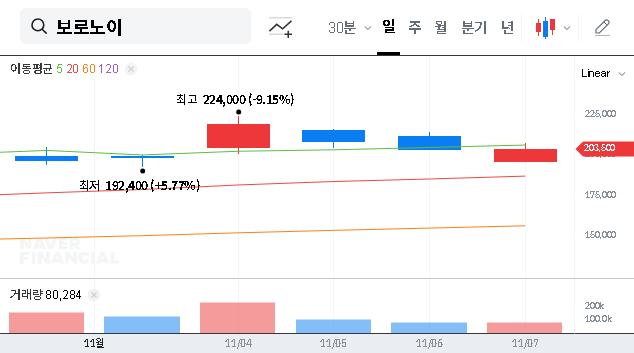
    (310210) Voronoi, Inc. Stock Analysis: Decoding the Major Shareholding Report

    This in-depth Voronoi, Inc. stock analysis unpacks the recent ‘Report on the Status of Major Shareholders’ that has captured the attention of the biotech investment community. When key executives adjust their stakes, it naturally raises questions. We will delve beyond the surface-level numbers to explore the true implications for Voronoi’s trajectory, the power of its VORONOMICS® platform, and what this all means for your investment strategy.

    We’ll examine the company’s fundamental value, its promising drug pipeline, and provide a balanced view to help you navigate the short-term market noise and focus on the long-term potential of this innovative biotech industry leader.

    Deconstructing the Voronoi Major Shareholding Change

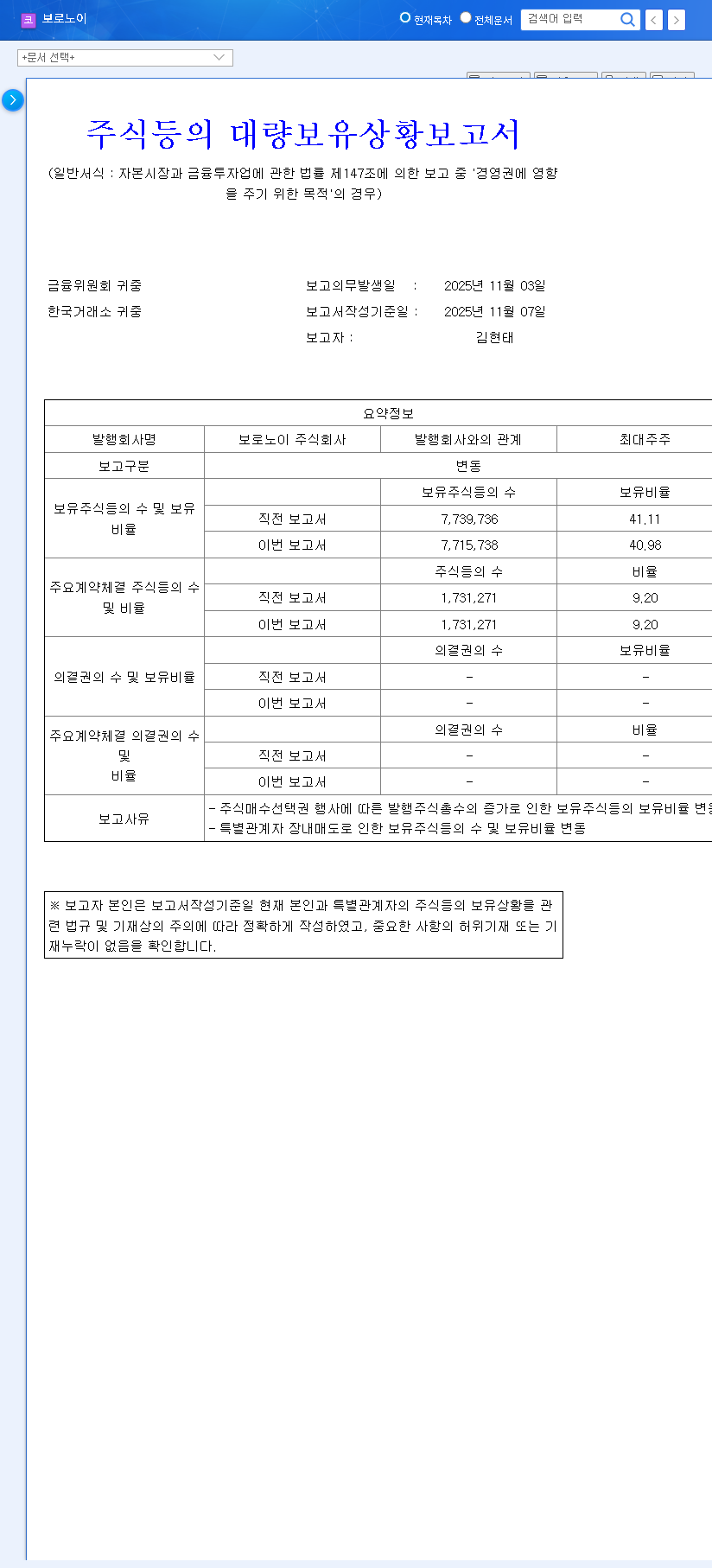
    On November 7, 2025, Voronoi, Inc. filed a disclosure detailing a shift in its major shareholder status. The report, led by Director Kim Hyun-tae, revealed a minor decrease in his personal ownership from 41.11% to 40.98%. While the 0.13% change seems small, the declared purpose of ‘influencing management rights’ makes it a significant event for analysis.

    Key Details from the Report

    • Primary Change: Director Kim Hyun-tae’s stake reduced by 0.13%.
    • Stated Reasons: The change resulted from an increase in total outstanding shares due to stock option exercises, combined with open market sales by several special related parties (Kim Dae-kwon, Kim Hyun-seok, etc.) between November 3rd and 7th.
    • Official Source: The complete filing is available for public review. (Official DART Disclosure)

    It’s crucial to understand that sales by related parties can stem from various personal financial needs, such as tax planning or portfolio diversification, and do not automatically signal a lack of confidence in the company’s future.

    In-Depth Voronoi, Inc. Stock Analysis: Fundamentals & Financials

    A proper Voronoi, Inc. stock analysis requires looking past shareholder movements to the core drivers of its value: its technology and financial health. Voronoi is at the forefront of the AI drug discovery revolution, leveraging its proprietary VORONOMICS® platform to develop a robust oncology pipeline.

    The VORONOMICS® Advantage and Pipeline Potential

    The VORONOMICS® platform isn’t just a buzzword; it’s a strategic asset that allows Voronoi to identify and design novel drug candidates with greater speed and precision than traditional methods. This efficiency is critical in the high-stakes world of pharmaceutical R&D. For more on this technology, you can read our guide on AI Drug Discovery Platforms.

    • Key Pipelines: VRN11, VRN10, and VRN07 have shown immense promise, particularly in treating brain metastatic cancer, a significant unmet medical need.
    • Licensing Success: Successful licensing-out (L/O) deals with partners like ORIC Pharmaceuticals and HK inno.N not only provide non-dilutive funding but also validate the platform’s technology and pipeline value.

    Financial Health Check

    While H1 2025 revenue showed a profit, this was largely due to a one-time option contract. The company still records a net loss, which is standard for a pre-commercial biotech heavily investing in R&D. The recent 50 billion KRW convertible bond issuance shores up its capital reserves for these crucial activities but introduces potential future share dilution, a factor savvy investors must monitor.

    In biotech investing, it’s essential to distinguish between short-term market ‘noise,’ like minor share sales, and the long-term ‘signal,’ which is driven by clinical data, technological milestones, and regulatory progress.

    Investor Outlook: Navigating Risk and Opportunity

    The central question for investors is how to interpret this Voronoi major shareholding event. While the insider sales could create short-term selling pressure, the impact on management stability is negligible. Director Kim Hyun-tae’s 40.98% stake provides a robust foundation for consistent leadership and long-term strategic execution.

    Key Monitoring Points for Investors

    A prudent approach to biotech investing in a company like Voronoi involves focusing on fundamental progress markers:

    • Clinical Trial Progress: Monitor the speed and success of Phase 1/2 trials for key pipeline assets. Positive data is the ultimate value driver.
    • Future Licensing Deals: New partnerships for other pipeline candidates will further validate the VORONOMICS® platform.
    • Path to Profitability: Watch for a strategy to balance R&D spend with revenue generation to improve financial health long-term.
    • Corporate Communication: Pay attention to the clarity and transparency of the company’s investor relations.

    Conclusion: While the recent shareholding report created a ripple, the fundamental growth story for Voronoi, Inc. remains intact. The company’s high-growth potential is anchored in its innovative AI drug discovery technology and a pipeline aimed at high-value therapeutic areas. This event should be seen as an opportunity for investors to reaffirm their thesis based on a long-term Voronoi, Inc. stock analysis rather than reacting to short-term market sentiment.

    (310210) Voronoi, Inc. Stock Analysis: Decoding the Major Shareholding Report 관련 이미지
  • (356860) TLB Co., Ltd. (356860) Stock: Morgan Stanley Stake Cut – A Buying Opportunity?

    (356860) TLB Co., Ltd. (356860) Stock: Morgan Stanley Stake Cut – A Buying Opportunity?

    Recent news has sent ripples through the investment community focused on TLB Co., Ltd. (356860), a key player in the semiconductor PCB market. The report of Morgan Stanley & Co. International PLC/UK reducing its stake has left many investors questioning the future of TLB stock. Is this a warning sign of underlying weakness, or a fleeting market event that creates a strategic entry point? This comprehensive investment analysis will dissect the situation, evaluate TLB’s robust fundamentals, and provide a clear roadmap for investors to navigate this period of uncertainty.

    While a major investor’s stake reduction can trigger short-term volatility, the true value of TLB Co., Ltd. is anchored in its technological leadership and strong financial health. Understanding the context is crucial before making any reactive decisions.

    Deconstructing the Morgan Stanley Stake Change

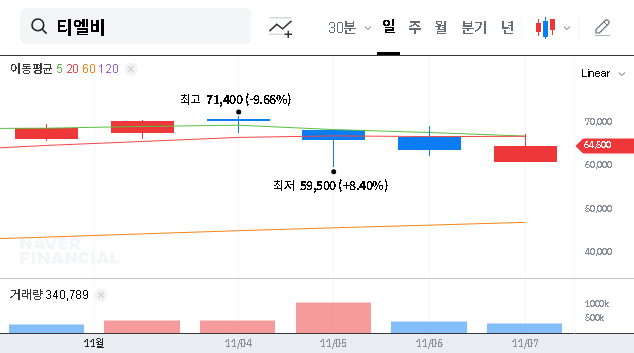
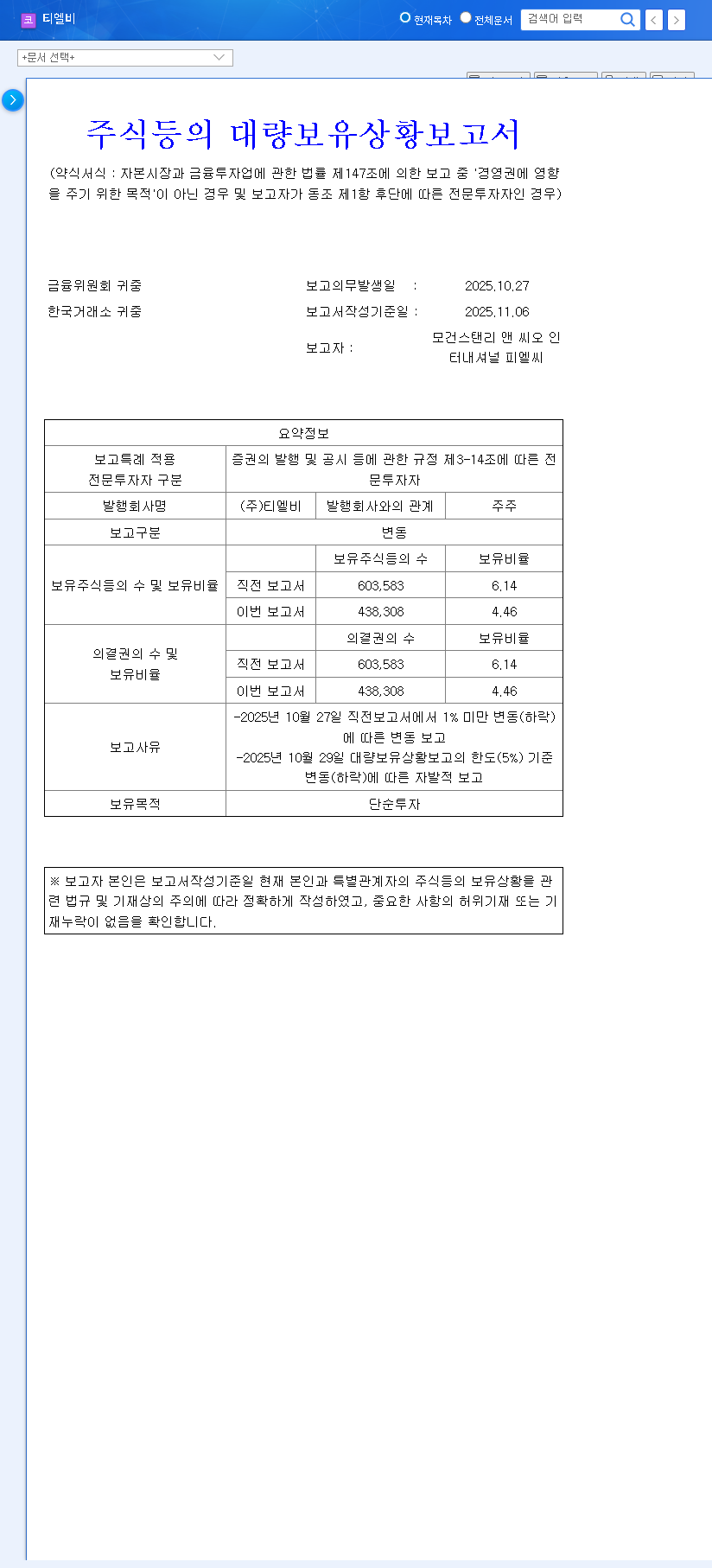
    On November 7, 2025, an official disclosure revealed that Morgan Stanley had adjusted its holdings in TLB Co., Ltd., reducing its stake from 6.14% to 4.46%. This was a voluntary report, triggered because the change exceeded a 1% threshold and the total holding fell below the significant 5% ownership mark. You can view the Official Disclosure here. While any reduction by a major institution can spook the market, it’s essential to look beyond the headline. Often, such moves are part of broader portfolio rebalancing strategies and may not reflect a negative outlook on the company’s core business.

    TLB’s Unwavering Fundamentals: The Core Growth Story

    The long-term case for TLB stock is not built on the whims of a single investor, but on its powerful position within the semiconductor industry. The company’s fundamentals remain exceptionally strong, driven by several key factors.

    1. Leadership in Next-Generation Technology

    TLB is at the forefront of the technological shift in memory. The industry-wide adoption of new standards is creating massive demand for their high-performance PCBs. Key growth drivers include:

    • DDR5 Transition: As data centers and consumer electronics upgrade to DDR5 memory for faster performance, the demand for complex, high-value PCBs, TLB’s specialty, is exploding. You can read more about the growing DDR5 market here.
    • CXL & SOCAMM: The rise of new interconnect technologies like Compute Express Link (CXL) and advanced module form factors like SOCAMM for AI and high-performance computing are creating entirely new, high-margin revenue streams for TLB.

    2. Robust Financial Performance and Stability

    A look at the numbers confirms the company’s health. In Q2 2025, TLB Co., Ltd. reported a stunning 39.8% year-over-year revenue increase to KRW 117 billion. More impressively, operating profit swung to a surplus of KRW 8.73 billion, showcasing a return to strong profitability. This financial strength is complemented by a healthy debt-to-equity ratio of 76.1%, indicating prudent financial management and a stable foundation for future growth. According to market analysts at Reuters, such a turnaround is a highly positive indicator for the sector.

    3. Strategic Global Expansion

    TLB is proactively enhancing its competitive advantage by establishing production bases in Vietnam. This strategic move not only improves cost-competitiveness but also diversifies its supply chain, mitigating geopolitical and logistical risks—a crucial factor in today’s global economy.

    Investor Action Plan: Navigating the TLB Stock Landscape

    Given the short-term noise from the Morgan Stanley stake report, a disciplined approach is essential. The temporary dip could be an opportunity for long-term investors who believe in the company’s core story.

    • Focus on Fundamentals: Look past the daily price fluctuations. The key metrics are revenue growth, profit margins, and updates on next-generation product adoption.
    • Monitor Institutional Flow: Keep an eye on whether other institutions follow Morgan Stanley’s lead or if they use the price dip to accumulate shares. A divergence would be a strong bullish signal.
    • Assess Macro-Economic Factors: Monitor exchange rates and global semiconductor demand, as these broader trends will influence TLB’s performance.

    Conclusion: A Temporary Cloud Over a Bright Horizon

    In summary, while the reduction of the Morgan Stanley stake may create short-term selling pressure on TLB Co., Ltd., it does not appear to signal any degradation in the company’s excellent fundamentals or growth prospects. The powerful tailwinds from the DDR5 transition and new AI-related technologies provide a robust mid-to-long-term outlook. For savvy investors, the current market overreaction could represent a compelling opportunity to invest in a technologically advanced leader at a more attractive valuation. As always, investment decisions should be based on your own research and risk tolerance.

    (356860) TLB Co., Ltd. (356860) Stock: Morgan Stanley Stake Cut – A Buying Opportunity? 관련 이미지
  • (129920) Daesung Hi-Tech Stock Analysis: Shareholder Stake Change Signals Stability Amid Financial Headwinds

    (129920) Daesung Hi-Tech Stock Analysis: Shareholder Stake Change Signals Stability Amid Financial Headwinds

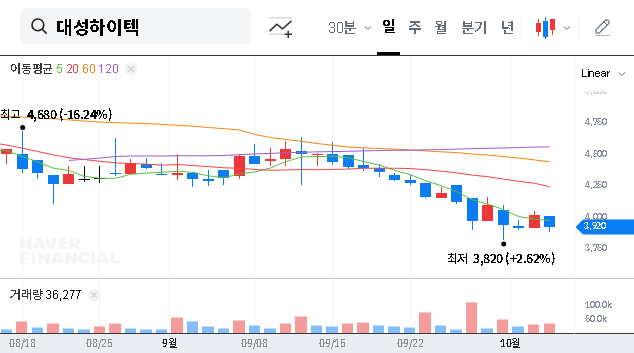
    Recent corporate filings from Daesung Hi-Tech have sparked conversations among investors about a noteworthy change in its major shareholder’s stake. While the adjustment itself is minor, the implications for management stability and the company’s future direction are significant. This comprehensive analysis dives deep into the official disclosure, evaluating the company’s underlying financial health and technological strengths to provide a clear picture for potential investors.

    We will explore what this shareholder activity truly signals and whether it’s enough to bolster confidence in Daesung Hi-Tech stock amidst challenging financial headwinds. Understanding the full context is key to making an informed decision about this high-precision technology firm.

    The Disclosure Decoded: A Closer Look at the Filing

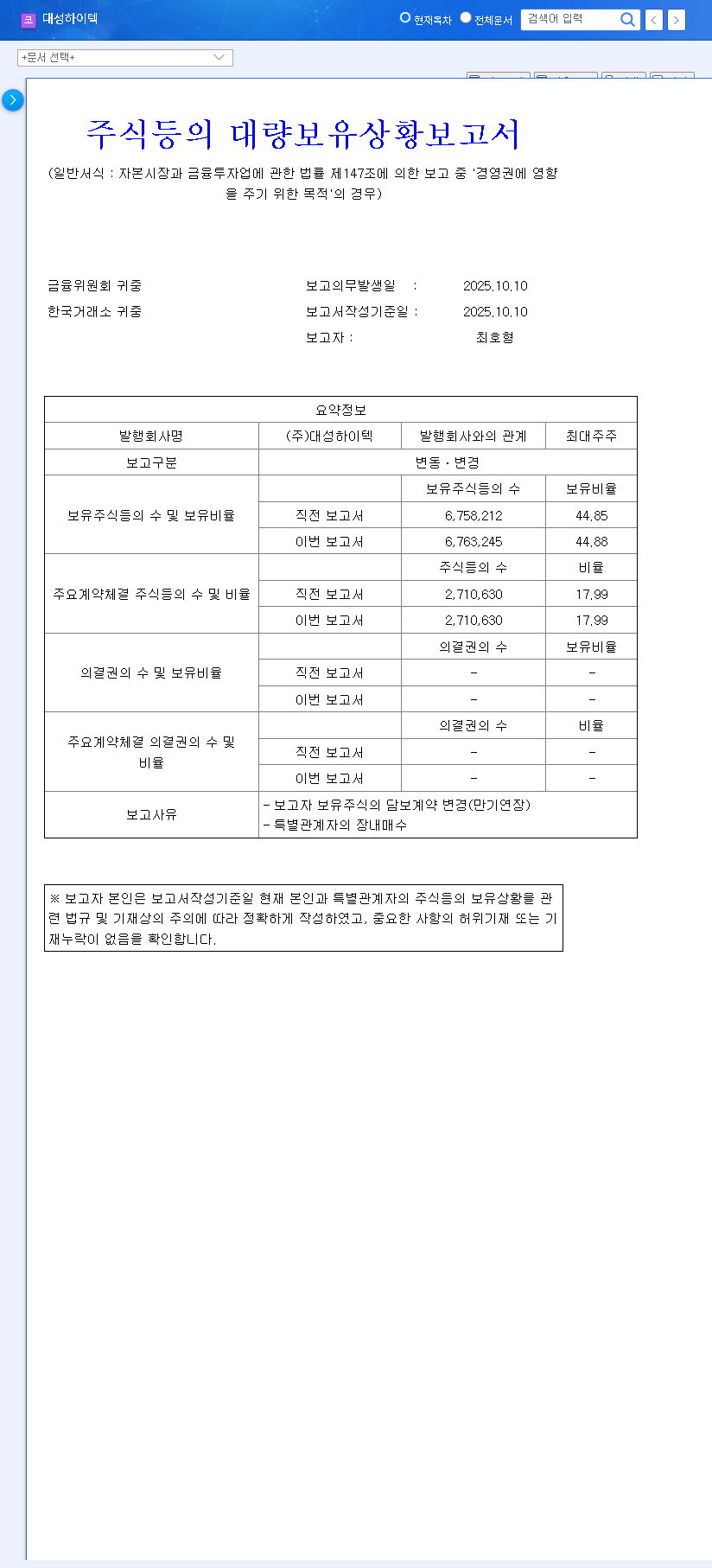
    On October 10, 2025, Daesung Hi-Tech submitted a mandatory ‘Report on the Status of Large Shareholding in Stocks, etc.’ to financial regulators. This filing, detailed in an Official Disclosure, outlined several key points:

    • Stake Increase: CEO Choi Ho-hyung and related parties increased their collective stake from 44.85% to 44.88%, a marginal gain of 0.03 percentage points. This was primarily driven by an on-market purchase of 5,033 shares by a related party.
    • Stated Purpose: The declared reason for the holding is to ‘influence management,’ signaling a clear intent to maintain and solidify control over the company’s strategic direction.
    • Collateral Extension: Crucially, the maturity date for existing collateral agreements on the held shares was extended. This move secures the current ownership structure and reduces the risk of forced selling or instability related to loan terms.

    Understanding Daesung Hi-Tech: Technology Powerhouse Facing Hurdles

    Founded on a bedrock of over two decades of high-precision processing technology, Daesung Hi-Tech boasts a strong competitive position in several niche markets. Its core business revolves around three main pillars: precision parts, Swiss-type automatic lathes, and compact machining centers. The company is a Top 5 global player in the Swiss-type lathe market and is carving out a significant presence in high-growth sectors like electric vehicle (EV) components.

    However, this technological prowess is currently overshadowed by significant financial challenges. In the first half of 2025, the company reported troubling figures: a 49.2% year-on-year drop in sales revenue, an operating loss of KRW 1.71 billion, and a net loss of KRW 5.29 billion. This performance has strained its balance sheet, leading to a high debt-to-equity ratio of 240.44% and substantial inventory levels, which can impact cash flow.

    The central conflict for investors is weighing Daesung Hi-Tech’s impressive technological capabilities and market position against its pressing short-term financial weaknesses.

    Signal vs. Substance: The True Impact on Daesung Hi-Tech Stock

    The recent shareholder stake change is best interpreted as a strategic move to reinforce management stability. While the 0.03% increase is numerically insignificant, the act of purchasing shares on the open market sends a message of internal confidence. It suggests that leadership believes the company’s stock is undervalued and is committed to its long-term recovery and growth. Extending the collateral agreements further solidifies this stability, removing a potential source of market uncertainty.

    However, this event does not fundamentally alter the company’s financial reality. The positive signal cannot, on its own, resolve issues like declining revenue, negative profitability, or high debt. Therefore, while it might provide a small, short-term positive sentiment boost, a sustained rally in Daesung Hi-Tech stock is unlikely until tangible improvements in financial performance are demonstrated. For context on market sentiment, investors often track trends on platforms like Bloomberg’s market analysis pages.

    Investor Action Plan: A Prudent, Long-Term Approach

    For those considering an investment in Daesung Hi-Tech, a patient and observant strategy is paramount. The focus should be on fundamental business improvements rather than short-term market noise. Here are the key areas to monitor:

    1. Track Performance Turnaround

    Scrutinize upcoming quarterly earnings reports for signs of revenue stabilization and a return to profitability. Pay close attention to the performance of new growth drivers, such as contracts in the defense, medical device, and EV sectors. Tangible results here are the most powerful catalyst for the stock.

    2. Monitor Financial Health Metrics

    Keep an eye on the company’s efforts to manage its high debt-to-equity ratio and improve inventory turnover. Any successful debt restructuring or reduction in inventory would be a strong positive signal. For a deeper dive, consider learning how to analyze a company’s balance sheet.

    3. Assess Long-Term Growth Potential

    Ultimately, the investment thesis for Daesung Hi-Tech rests on its long-term potential. The strengthened management stability provides a solid foundation, but the execution of its growth strategy is what will create shareholder value. A prudent decision requires balancing the company’s technological edge against its current financial burdens, waiting for clear evidence of a sustainable operational recovery.

    (129920) Daesung Hi-Tech Stock Analysis: Shareholder Stake Change Signals Stability Amid Financial Headwinds 관련 이미지
  • (004690) Samchully (004690) Investment Analysis: NPS Acquires 5% Stake – What Investors Need to Know

    (004690) Samchully (004690) Investment Analysis: NPS Acquires 5% Stake – What Investors Need to Know

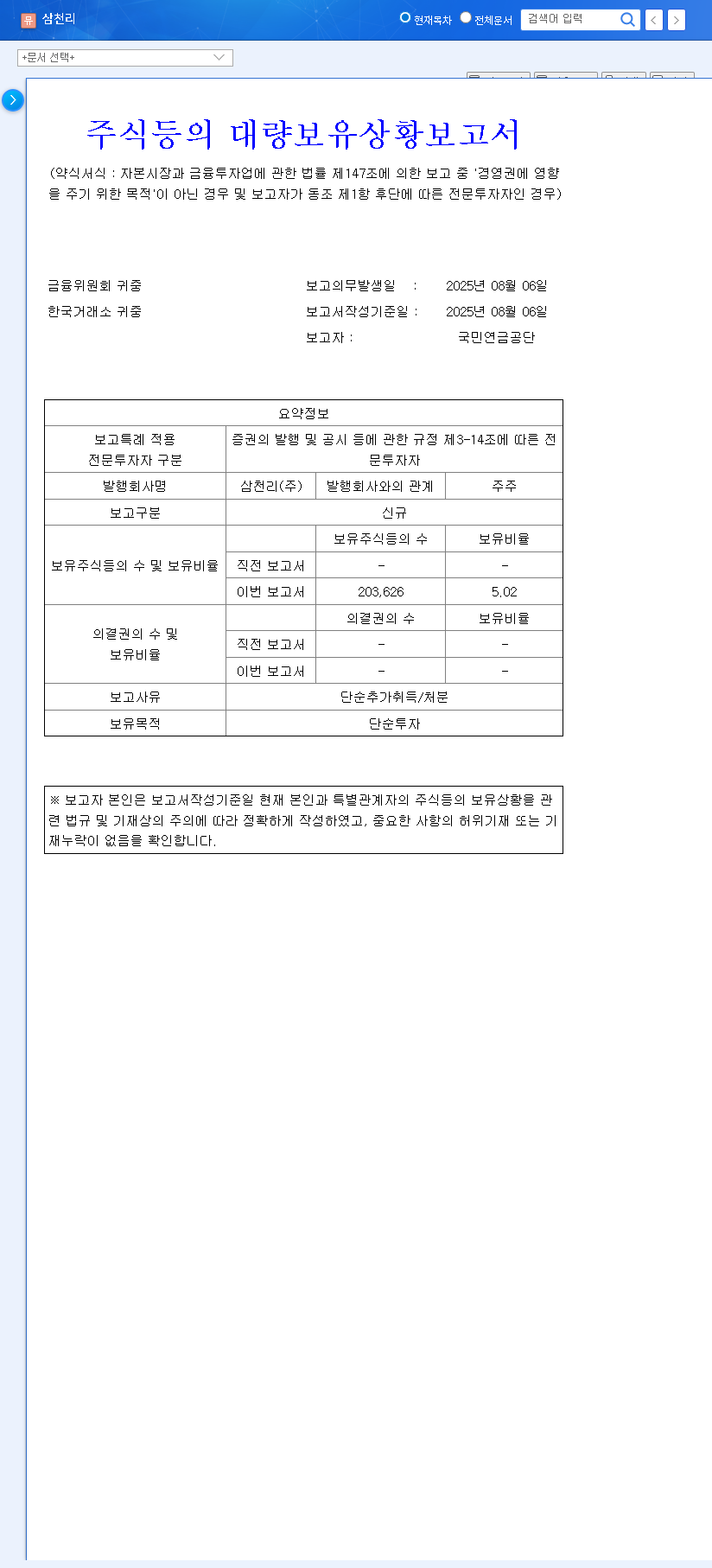
    A significant development has captured the market’s attention: a major Samchully (004690) investment by South Korea’s National Pension Service (NPS). On October 1, 2025, the institutional giant disclosed its acquisition of a 5.02% stake in the energy company, signaling a major vote of confidence. This move by the NPS, a notoriously cautious and long-term-oriented investor, raises critical questions. What does this investment signal for Samchully’s future, and how should current and prospective investors interpret this news? This comprehensive analysis will break down the implications, from market sentiment to macroeconomic factors, providing you with a clear roadmap for understanding this pivotal event.

    The Disclosure: NPS Acquires 5.02% Stake in Samchully

    The official announcement came via a ‘Report on the Status of Large Shareholdings (Simplified)’ filed on October 1, 2025. According to the document, the National Pension Service now holds a 5.02% stake in Samchully (004690). The stated purpose of this holding is for ‘simple investment’. This isn’t just a routine portfolio adjustment; crossing the 5% threshold is a significant reporting event in South Korea, indicating a substantial and deliberate allocation of capital. You can view the filing directly from the source: Official Disclosure.

    Why the NPS ‘Simple Investment’ Purpose Matters

    The term ‘simple investment’ is key. It officially denotes that the NPS does not intend to influence management decisions or engage in shareholder activism. Instead, it points towards a belief in the company’s intrinsic value and its potential for long-term capital appreciation. This distinction is crucial for understanding the nature of this NPS investment in Samchully.

    A Powerful Signal of Confidence

    When an institution with the scale and due diligence capabilities of the NPS makes a substantial investment, it acts as a powerful endorsement. This move can positively sway general market sentiment, attracting other investors who see the NPS’s stake as a de-facto validation of Samchully’s corporate value and growth trajectory. This often creates a positive feedback loop, boosting liquidity and potentially the stock price.

    The NPS’s ‘simple investment’ is a strategic bet on Samchully’s core business fundamentals and its capacity for sustained growth, free from the desire for short-term management shake-ups.

    Fundamental and Macroeconomic Analysis

    The NPS’s decision was likely not made in a vacuum. It aligns with a brightening outlook for Samchully’s fundamentals and a relatively stable macroeconomic environment.

    Projected Performance Recovery

    After a challenging period from 2022 to 2024, which saw declines in sales and operating profit, financial forecasts are now signaling a turnaround. Projections indicate that Samchully’s sales are expected to grow to KRW 233.9 billion with an operating profit of KRW 23.7 billion in 2025. The NPS is likely positioning itself ahead of this anticipated recovery, making this Samchully 004690 investment a forward-looking move.

    Favorable Macroeconomic Indicators

    Several external factors create a supportive environment for Samchully’s diverse business lines, from city gas to its overseas hotel operations:

    • Currency Rates: A weakening EUR and USD against the Korean Won can boost the profitability of Samchully’s overseas businesses when revenues are repatriated.
    • Interest Rates: With both the US and Korean central banks holding policy rates steady, the immediate pressure on financing costs is low, providing operational stability.
    • Energy & Shipping Costs: Stable crude oil prices and a steady Baltic Dirty Tanker Index suggest that input costs for its core energy businesses are not facing significant upward volatility.

    Considerations for Investors

    While the NPS stake is a clear positive, investors should maintain a balanced perspective. Financial forecasts are projections, not guarantees. For a broader view on market trends, investors often consult high-authority sources like Reuters market analysis. Furthermore, macroeconomic variables can shift unexpectedly. Continuous monitoring of energy prices, currency fluctuations, and interest rate policies is essential. Understanding these dynamics is a core part of a sound strategy, which you can learn more about in our guide to institutional investing signals.

    Frequently Asked Questions (FAQ)

    Q1: What is the primary significance of the NPS acquiring a stake in Samchully?

    A1: The key significance is the vote of confidence from a major, long-term institutional investor. The NPS’s 5.02% ‘simple investment’ stake signals a strong belief in Samchully’s intrinsic value and future growth potential, which can positively influence overall market sentiment and stock stability.

    Q2: What is Samchully’s current financial outlook?

    A2: After a period of decline, Samchully’s financial outlook is improving. Projections for 2025 show expected growth in both sales and operating profit, indicating a potential recovery and a return to a positive growth trajectory. This turnaround is a likely catalyst for the recent institutional interest.

    Q3: What are the main risk factors for a Samchully investment?

    A3: The primary risks are twofold. First, financial forecasts may not materialize as predicted. Second, Samchully remains exposed to macroeconomic volatility, including sudden spikes in oil prices, adverse currency movements, or unexpected interest rate hikes. Prudent investors should monitor these external factors closely.

    (004690) Samchully (004690) Investment Analysis: NPS Acquires 5% Stake – What Investors Need to Know 관련 이미지
  • (002100) Kyeongnong (002100) Major Shareholding Report: A Deep Dive Analysis for Investors

    (002100) Kyeongnong (002100) Major Shareholding Report: A Deep Dive Analysis for Investors

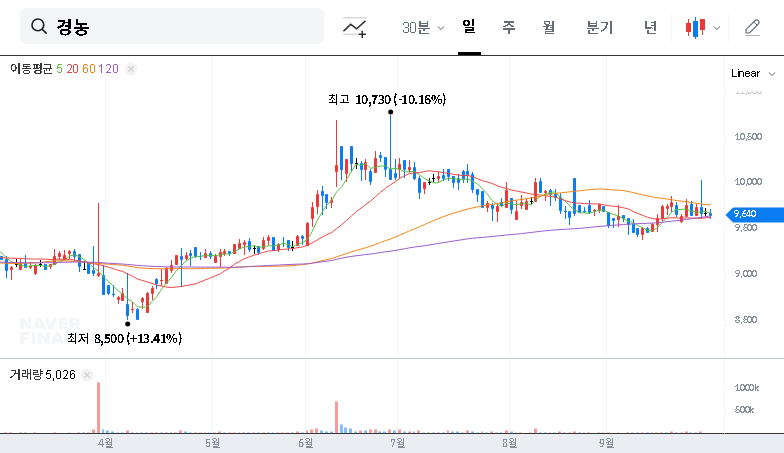
    (002100) Kyeongnong (002100) Major Shareholding Report: A Deep Dive Analysis for Investors 대표 차트 이미지

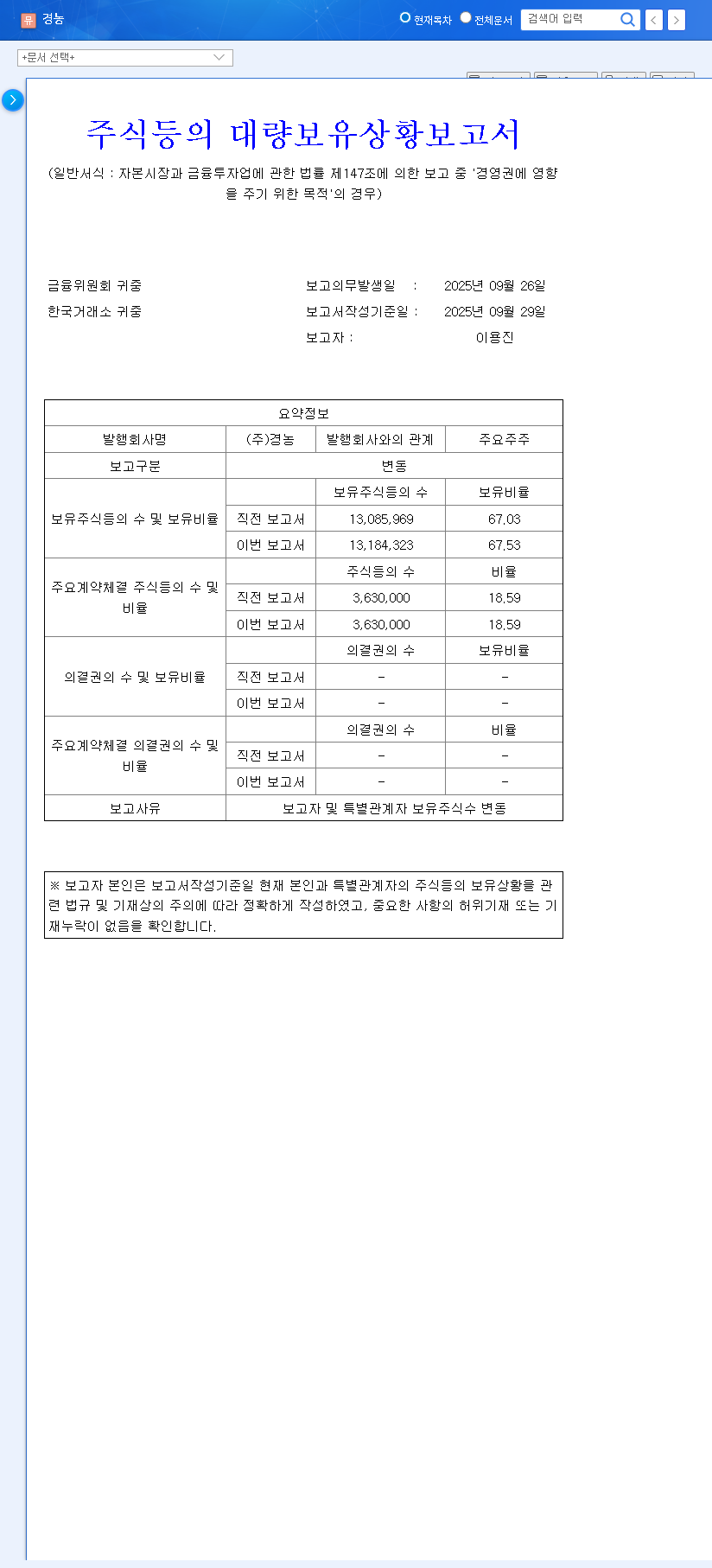
    The latest Kyeongnong Major Shareholding Report has sent a clear signal to the market, revealing a strategic increase in ownership by CEO Lee Yong-jin and associated parties. This move, which boosts their collective stake from 67.03% to 67.53%, is far more than a simple transaction. It represents a deliberate consolidation of management control and a powerful vote of confidence in the company’s future trajectory. For investors tracking agricultural stock investments, understanding the nuances of this development is crucial for assessing the long-term value of Kyeongnong (002100).

    This comprehensive analysis will dissect the report’s details, explore Kyeongnong’s fundamental business strengths and weaknesses, and evaluate the potential impact on its stock price. We’ll delve into the company’s financial health, its ambitious smart farm initiatives, and provide a balanced outlook for current and prospective shareholders.

    Breaking Down the Kyeongnong Major Shareholding Report

    On September 30, 2025, Kyeongnong officially filed its ‘Major Shareholding Status Report’. This document is a critical piece of information for the market, offering transparency into the control structure of the company. The core details are as follows:

    • Primary Reporting Person: CEO Lee Yong-jin
    • Stated Purpose of Holding: To exert influence over management rights.
    • Total Shareholding Change: An increase of 0.50 percentage points, from 67.03% to 67.53%.
    • Method of Acquisition: On-market purchases totaling 107,316 shares by CEO Lee Yong-jin and related individuals.
    • Source: Official Disclosure (DART Report)

    The explicit statement ‘influence over management rights’ is key. It broadcasts to investors that the leadership is not merely accumulating shares but is actively fortifying its control to steer the company’s long-term strategic vision with confidence.

    Core Fundamentals: A Kyeongnong Stock Analysis

    While the shareholding news is significant, it must be viewed in the context of the company’s underlying business operations and financial stability.

    Business Portfolio: The Old Guard and the New Hope

    Crop Protection & Fertilizers: These traditional segments are Kyeongnong’s cash cows, representing the vast majority of its revenue. Decades of experience and strong relationships with agricultural cooperatives (Nonghyup) provide a stable foundation. However, these markets face headwinds from raw material volatility, intense competition, and a market shift towards more eco-friendly solutions.

    Smart Farm Business: This is Kyeongnong’s designated future growth engine. Positioned to capitalize on the booming global smart agriculture market and supportive government policies, this division holds immense potential. However, it is still in its nascent stages, facing challenges like high initial investment costs and dependency on imported technology. Its success is paramount to the long-term Kyeongnong stock analysis.

    Financial Health & Shareholder Value

    Kyeongnong exhibits remarkable financial stability. A very low debt-to-equity ratio (7.90%) and a high current ratio (441.35%) indicate a fortress-like balance sheet with minimal financial risk. This provides a solid platform from which to invest in growth areas like the smart farm business. Furthermore, a consistent policy of maintaining a dividend payout ratio above 30% demonstrates a strong commitment to shareholder returns, which is a positive sign for income-focused investors.

    The insider buying detailed in the Kyeongnong Major Shareholding Report, combined with a robust balance sheet, suggests that management believes the company is undervalued and poised for strategic execution.

    Investor Outlook: Opportunities and Risks

    The consolidation of control by CEO Lee Yong-jin is a net positive, but investors must weigh the potential upside against inherent market and business risks.

    Positive Catalysts to Watch

    • Increased Market Confidence: Insider buying is often interpreted as the most potent bullish signal, potentially attracting new investors and building stock price momentum.
    • Long-Term Strategic Focus: With solidified control, management can pursue long-term projects like the smart farm expansion without pressure from short-term market fluctuations.
    • Fundamental Improvement: Active investment from leadership often precedes or coincides with periods of operational improvement and growth.

    Risks and Considerations

    • Reduced Liquidity: As more shares are concentrated in fewer hands, the ‘free float’ of available shares decreases, which can sometimes lead to lower trading volume and higher volatility.
    • Execution Risk: The success of the smart farm initiative is not guaranteed. Failure to achieve profitability in this key growth area could limit long-term stock appreciation.
    • Macroeconomic Headwinds: As a company with high import dependency for raw materials, Kyeongnong’s profitability remains sensitive to KRW/USD exchange rate fluctuations and global commodity prices, as noted by sources like Bloomberg’s market analysis.

    Investor Action Plan

    The Kyeongnong (002100) Major Shareholding Report should be viewed as a bullish long-term indicator. Management is putting its own capital on the line, signaling deep belief in the company’s value. However, prudent investment decisions require a holistic view. Investors should focus on the tangible progress of the smart farm business and monitor macroeconomic factors closely. Rather than reacting to short-term price movements, a focus on the company’s ability to execute its long-term growth strategy will be key. For more on this approach, see our guide to long-term investing.

    (002100) Kyeongnong (002100) Major Shareholding Report: A Deep Dive Analysis for Investors 관련 이미지
    (002100) Kyeongnong (002100) Major Shareholding Report: A Deep Dive Analysis for Investors 관련 이미지