The future of KOREA CABLE T.V CHUNG-BUK SYSTEM CO., LTD. (CCCS, KOSDAQ: 066790) hangs in the balance, creating a high-stakes scenario for investors. The core issue revolves around the impending CCCS delisting decision by the Korea Exchange. After an initial ruling to delist, the company has formally submitted an appeal, thrusting shareholders into a period of significant uncertainty. This guide provides a detailed analysis of the situation, potential outcomes, and strategic considerations to help you navigate this critical time.
We will dissect the timeline of events, explore the possible futures for CCCS stock, and outline what investors must monitor as the final judgment approaches.
The Path to a Delisting Appeal: A Timeline of Events
Understanding the sequence of events is crucial for grasping the gravity of the situation surrounding the CCCS delisting review. The process has been swift, leaving little time for investor sentiment to stabilize.
The Initial Decision and the Company’s Response
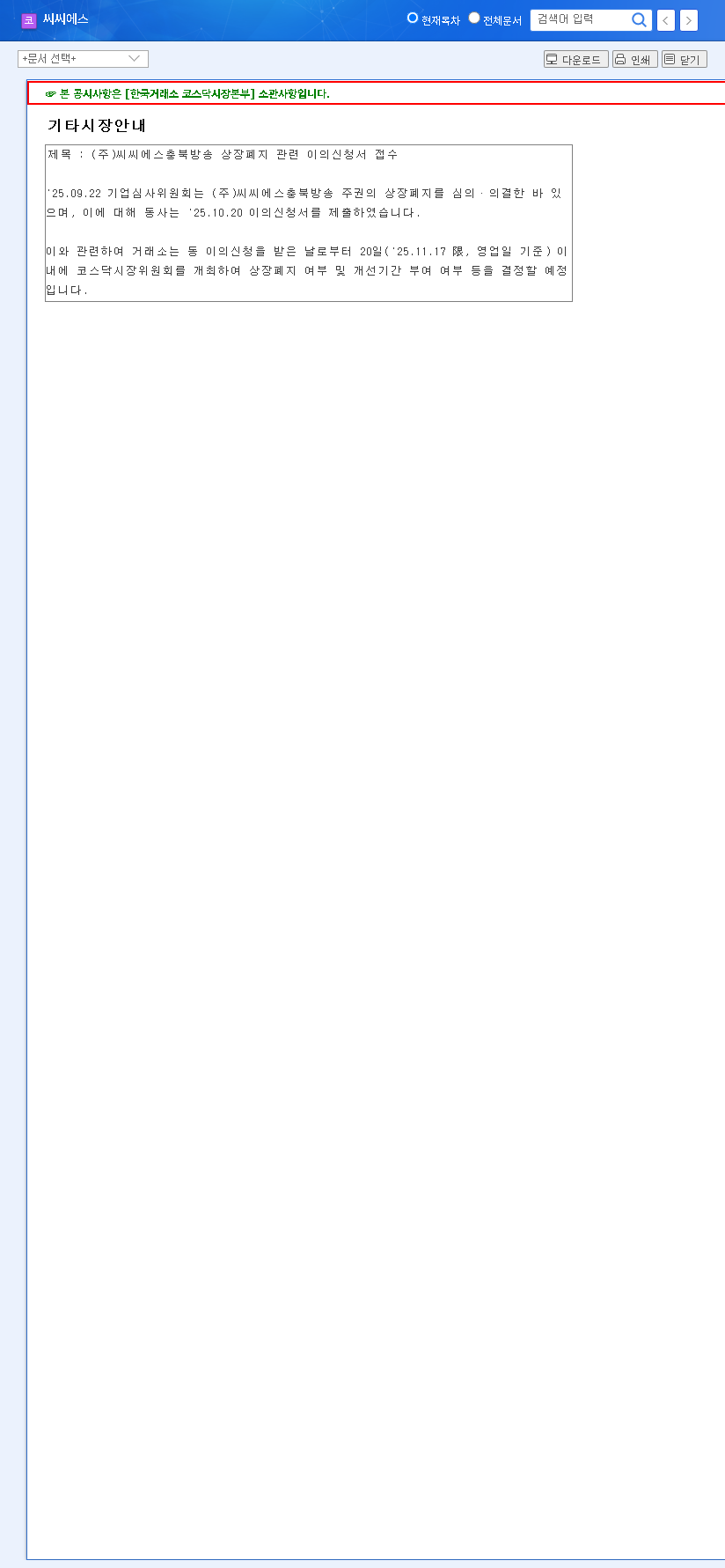
On September 22, 2025, the Korea Exchange’s Corporate Review Committee delivered a significant blow by resolving to delist CCCS. This decision immediately raised alarms about the company’s operational viability and financial health.
In a determined move to maintain its listed status, CCCS submitted a formal delisting appeal to the Korea Exchange on October 20, 2025. This action has triggered the final stage of the review process. The KOSDAQ Market Committee is now obligated to convene within 20 business days of the appeal—by November 17, 2025—to render a final verdict. This verdict will determine whether CCCS is delisted, granted a grace period for improvement, or has its appeal accepted outright.
Analyzing the Potential Outcomes and Market Impact
The KOSDAQ Market Committee’s decision will create one of three distinct scenarios, each with profound implications for shareholders. Until the decision is announced, investors should brace for heightened stock price volatility and increased selling pressure as others try to mitigate risk.
Scenario 1: Delisting Confirmed
This is the worst-case scenario. If the appeal is rejected and delisting is finalized, trading of stock 066790 on the KOSDAQ market will be suspended. While a brief period for liquidation trading may be permitted, the stock’s value is expected to plummet, making it exceedingly difficult for investors to recover their capital.
Scenario 2: Listing Maintained with an Improvement Period
The committee could acknowledge the company’s appeal but still have concerns, resulting in a grace period to address underlying issues. This would offer a lifeline but not a full reprieve. The stock might see a short-term rebound on the news, but its long-term trajectory would depend entirely on CCCS’s ability to execute a convincing and effective turnaround plan. Failure to meet the improvement criteria would likely lead back to delisting procedures.
Scenario 3: Appeal Accepted and Listing Maintained
If CCCS presents a powerful case and a feasible improvement plan, the committee may overturn the original decision. This would be the most favorable outcome, likely triggering significant relief and a sharp rise in the stock price. However, the underlying issues that led to the review would still need to be resolved to ensure long-term stability and rebuild investor confidence.
Given the current lack of information and the binary nature of the upcoming decision, any new investment in CCCS stock should be considered extremely high-risk. The potential for a total loss of capital is significant.
Strategic Action Plan for Investors
Navigating this situation requires a prudent, information-driven approach. Here are the key factors to monitor and the steps you should take to make an informed decision about your investment in CCCS.
What to Watch For:
- •The Official Appeal Details: Scrutinize the company’s formal explanation and proposed improvement plan. The feasibility and commitment demonstrated in this plan are paramount. You can find this in the Official Disclosure (DART).
- •Financial Health Analysis: Conduct a deep dive into CCCS’s recent financial statements. Look for trends in revenue, profitability, cash flow, and debt levels. This will provide clues about its ability to engineer a turnaround.
- •The Final Committee Decision: The verdict from the KOSDAQ Market Committee by November 17, 2025, is the single most important catalyst.
- •Market & Media Sentiment: Keep an eye on news reports and investor forums, but be wary of unverified rumors that can cause irrational price swings. For more context on delisting risks, you can read this guide from a high-authority financial education site.
Investors should base their final decisions on a thorough review of these factors. For further reading on market regulations, you can explore our internal guide on Understanding KOSDAQ Listing Rules.
Frequently Asked Questions (FAQ)
Q1: What does the CCCS delisting appeal really mean?
A1: It means CCCS is formally challenging the initial delisting decision. This gives the company one final chance to present its case to the KOSDAQ Market Committee, argue for its continued listing, and present a concrete plan for improvement.
Q2: How should current CCCS investors respond?
A2: Extreme caution is required. You must assess your own risk tolerance. Holding the stock is a high-risk bet on a favorable outcome, while selling now could lock in losses but prevent a potentially larger loss if the company is delisted.
Q3: What happens to my investment if delisting is confirmed?
A3: If delisting proceeds, your shares will no longer trade on the public KOSDAQ exchange. They may trade on over-the-counter (OTC) markets, but liquidity is typically very low and the stock price is likely to be a fraction of its listed value, making recovery of capital very difficult.
In conclusion, the CCCS delisting appeal marks a critical juncture. The outcome is uncertain, and the stakes are incredibly high. All investment decisions should be made with a full understanding of the risks involved, and ultimate responsibility rests with the individual investor.