Tag: Stock Forecast

  • (069260) TKG Huchems Yasojima Acquisition: A Deep-Dive Analysis for Investors (069260)

    (069260) TKG Huchems Yasojima Acquisition: A Deep-Dive Analysis for Investors (069260)

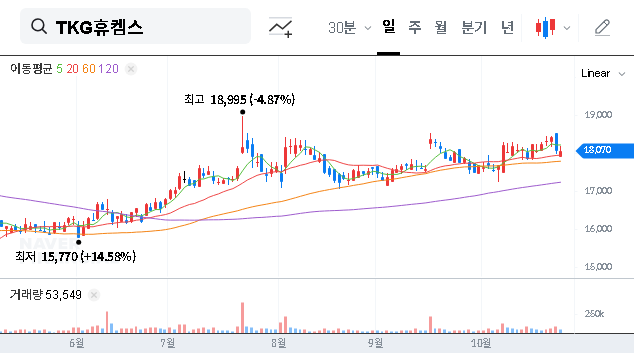
    The reported TKG Huchems Yasojima acquisition has sent ripples through the specialty chemicals sector, marking a potentially transformative moment for TKG Huchems Co.,Ltd. (069260). This ambitious move, pursued in partnership with IMM Private Equity, could either catapult the company into a new growth trajectory or introduce significant financial and operational risks. For investors, understanding the nuances of this deal is paramount.

    This comprehensive analysis delves into the strategic rationale behind the bid, TKG Huchems’ robust financial standing, and the potential impact on its corporate value and stock performance. We’ll unpack the opportunities and threats to provide investors with the deep insights needed for informed decision-making.

    The Bid for Yasojima: What We Know

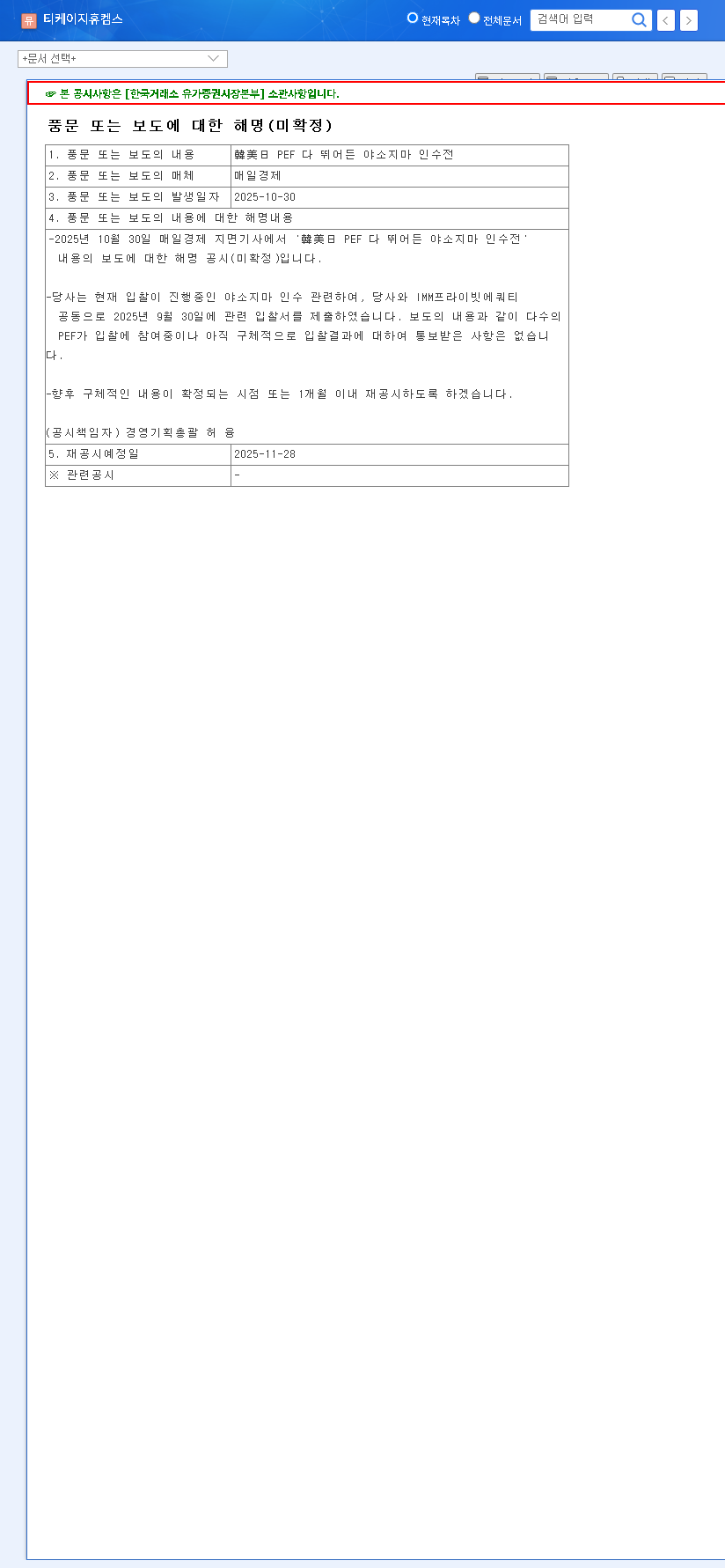
    On October 30, 2025, reports emerged confirming that TKG Huchems, in a consortium with IMM Private Equity, submitted a bid for Yasojima on September 30, 2025. While the bidding process is ongoing and the final outcome remains uncertain, the company’s intent is clear. The market awaits further details, with a crucial re-disclosure scheduled for November 28, 2025. This development was confirmed in an Official Disclosure via the DART system, which serves as the primary source for this information.

    While the TKG Huchems Yasojima acquisition presents a compelling growth narrative, investors must balance this potential with a clear-eyed assessment of the financial and operational risks involved in such a large-scale integration.

    Analyzing TKG Huchems’ Financial Foundation

    Before any major acquisition, a company’s underlying financial health is critical. TKG Huchems stands on a solid foundation as a fine chemical manufacturer. Its primary revenue streams come from NT-series products (DNT, MNB) and NA-series products (Nitric Acid, Ammonium Nitrate), which are essential materials in industries ranging from polyurethane production to agriculture.

    As of the first half of 2025, the company’s financials paint a picture of stability. With total equity of KRW 871.3 billion dwarfing total liabilities of KRW 239.4 billion, TKG Huchems maintains a very healthy balance sheet. This low leverage provides significant financial flexibility, a key advantage when pursuing a major acquisition. Although operating profit saw a year-over-year decrease, the recent completion of new production facilities is expected to enhance cost competitiveness and bolster future profitability.

    The Acquisition: Opportunities vs. Risks

    Potential Upside of the Yasojima Deal

    • New Growth Engine: The primary driver for the TKG Huchems Yasojima acquisition is to secure a new, long-term growth engine. Acquiring Yasojima could diversify TKG Huchems’ product portfolio and provide entry into new, high-margin markets, reducing reliance on its current core products.
    • Enhanced Corporate Value: A successful M&A of this scale signals ambition and strategic vision to the market. It can boost corporate recognition, attract new investors, and ultimately lead to a higher valuation if synergies are realized.
    • Strategic Partnership: Partnering with IMM PE distributes the immense financial burden of the acquisition, mitigating risk and preserving capital for post-merger integration and operational investments.

    Inherent Risks and Considerations

    • Acquisition Uncertainty: The deal is not yet final. If the bid fails, the market’s positive expectations could evaporate, leading to negative pressure on the TKG Huchems stock price.
    • Financial Strain: Even with a partner, the acquisition will require significant capital. This could lead to increased debt, potentially straining short-term financials and impacting dividend policies.
    • Integration Challenges: Post-merger integration is notoriously difficult. Risks include clashing corporate cultures, operational inefficiencies, and failing to achieve the projected synergies, which could ultimately destroy rather than create value.

    Stock Impact (069260) & Investor Outlook

    The announcement of the Yasojima bid has likely introduced a new catalyst for the TKG Huchems stock. Investor sentiment will be a key driver in the short term, hinging on news and speculation leading up to the November 28 disclosure. This trend of consolidation is common in the global chemical industry, as reported by leading financial news outlets like Reuters, as companies seek to gain a competitive edge.

    Investors should adopt a strategy of cautious optimism. It is essential to monitor official communications from the company closely. For those looking to deepen their understanding of market dynamics, consider reviewing our guide on how to analyze chemical sector stocks. The long-term performance of the stock will depend entirely on the successful execution and integration of the acquisition, should the bid succeed.

    Frequently Asked Questions (FAQ)

    What are TKG Huchems’ primary business areas?

    TKG Huchems is a fine chemical manufacturer specializing in NT-series products like DNT and MNB, and NA-series products such as Nitric Acid and Ammonium Nitrate. These form the core of its revenue.

    What are the main benefits of the TKG Huchems Yasojima acquisition?

    A successful acquisition could provide a significant long-term growth engine by expanding TKG Huchems’ business into new markets, enhancing overall corporate value, and improving its strategic position in the global chemical industry.

    What should investors watch for regarding the 069260 analysis?

    Investors should closely monitor the re-disclosure on November 28, 2025, for concrete details. Key factors for any 069260 analysis will be the final acquisition price, the financing structure, and management’s strategic plan for post-merger integration.

    Disclaimer: This article is for informational purposes only and is based on publicly available information. It does not constitute financial advice. Investors should conduct their own research, and the final responsibility for investment decisions rests with the individual.
    (069260) TKG Huchems Yasojima Acquisition: A Deep-Dive Analysis for Investors (069260) 관련 이미지
  • (018260) SAMSUNG SDS Q3 2025 Earnings: A Deep Dive into Revenue, Profit, and Future Stock Outlook

    (018260) SAMSUNG SDS Q3 2025 Earnings: A Deep Dive into Revenue, Profit, and Future Stock Outlook

    The latest SAMSUNG SDS Q3 2025 earnings report presents a complex picture for investors. While the company demonstrated impressive resilience in profitability, a noticeable slowdown in top-line revenue has raised important questions about its short-term trajectory. This comprehensive Samsung SDS financial analysis unpacks the key figures, explores the strategic drivers behind the numbers, and provides a forward-looking perspective on the company’s stock outlook amid a challenging global economy.

    We’ll move beyond the surface-level data to examine the core factors influencing Samsung SDS performance, from the contraction in IT investments to the strategic pivot towards high-margin AI and Cloud services. Join us as we explore what these results mean for the future of SAMSUNG SDS.

    SAMSUNG SDS Q3 2025 Earnings at a Glance

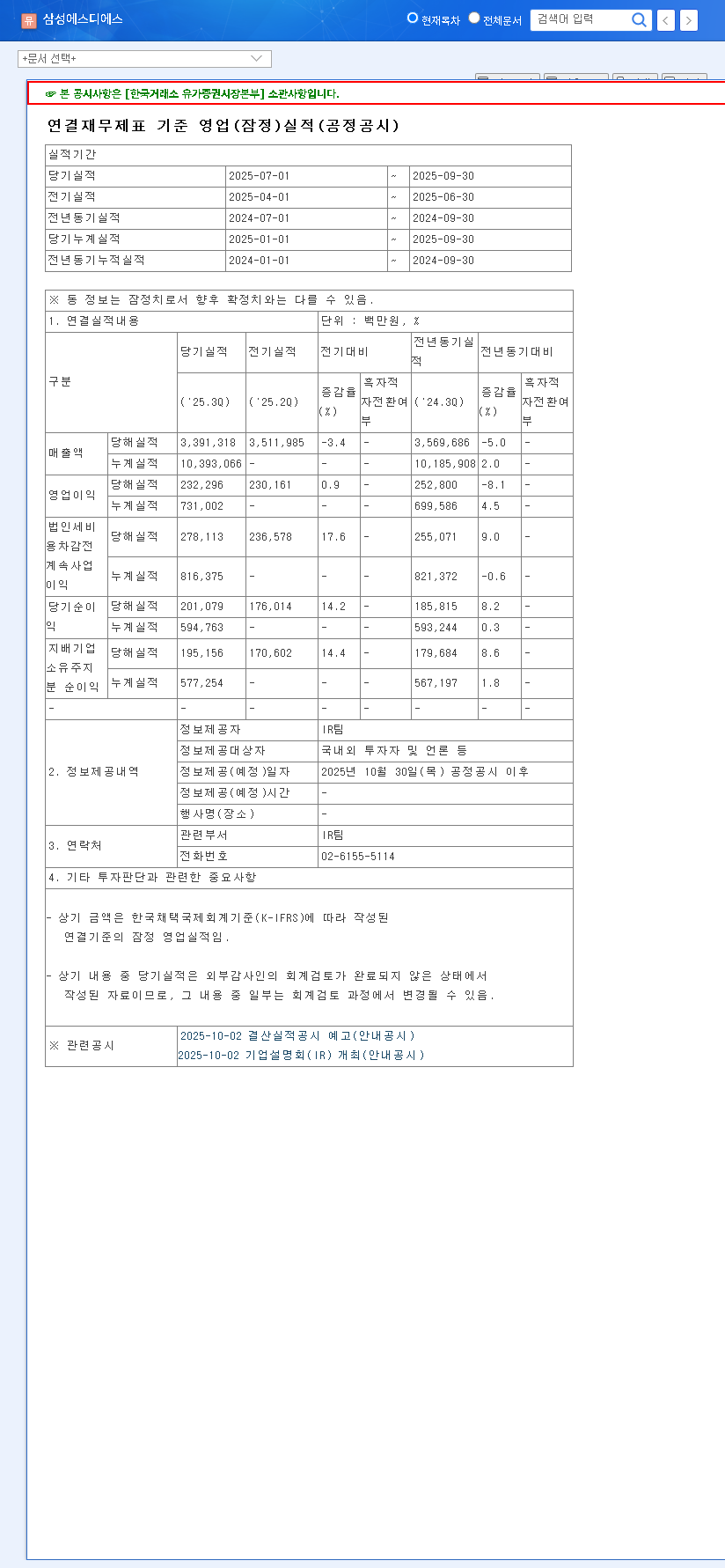
    For the third quarter of 2025, SAMSUNG SDS reported consolidated financials that, while solid, slightly missed consensus expectations on the top line. According to the Official Disclosure filed with DART, the results were as follows:

    • Consolidated Revenue: KRW 3.3913 trillion (a 3.7% miss vs. market expectations).
    • Operating Profit: KRW 232.3 billion (a 1.6% miss vs. market expectations).
    • Net Profit: KRW 195.2 billion (largely in line with market expectations).

    The key narrative from these figures is one of strategic trade-offs: sacrificing some top-line Samsung SDS revenue growth to protect and enhance profitability through a focus on higher-value services.

    Decoding the Performance: Revenue Headwinds vs. Profit Stability

    Factors Behind the Revenue Slowdown

    The continuation of a revenue decline, marking a 4% year-over-year decrease, can be attributed to a convergence of factors impacting both of the company’s core segments:

    • IT Services Segment: A general contraction in corporate IT spending, influenced by macroeconomic uncertainty, likely led to delays in the execution and acquisition of large-scale projects. While demand for digital transformation remains, budget cycles have lengthened, impacting revenue recognition.
    • Logistics BPO Segment: This segment is highly sensitive to global economic conditions. A worldwide slowdown in trade and reduced freight volumes have directly pressured logistics revenue, a trend seen across the industry.

    The Strategy Behind Strong Profitability

    Despite the revenue challenges, the company’s ability to nearly meet operating profit expectations is a testament to its effective management and strategic focus. This resilience is built on two pillars:

    • High-Value Service Mix: SAMSUNG SDS is successfully increasing the proportion of revenue from high-margin areas. The growth of its Cloud services and AI-powered solutions, like the ‘FabriX’ platform, commands better pricing and contributes more significantly to the bottom line.
    • Disciplined Cost Management: Proactive cost-efficiency measures across the organization have helped offset the impact of lower revenues, ensuring that profitability remains robust and stable.

    SAMSUNG SDS’s Q3 performance showcases a deliberate strategy: navigating market headwinds by prioritizing profitable growth in next-generation AI and Cloud services over sheer revenue volume.

    Investment Thesis: A Neutral Samsung SDS Stock Outlook

    Considering the mixed signals from the SAMSUNG SDS Q3 2025 earnings, a neutral investment stance is prudent. The analysis reveals both compelling long-term drivers and significant short-term risks that investors must weigh.

    The Bull Case: Long-Term Growth Engines

    • AI & Cloud Dominance: The structural shift towards cloud computing and AI integration is a powerful tailwind. Platforms like ‘FabriX’ position the company to capture high-value enterprise AI demand. You can read more in our deep dive into the AI industry.
    • Financial Fortress: A low debt-to-equity ratio and strong cash flow provide exceptional stability, allowing the company to invest in growth and weather economic downturns better than less-capitalized peers.
    • Samsung Group Synergy: Access to a steady stream of large-scale projects from Samsung affiliates provides a stable revenue base and a testing ground for new technologies.

    The Bear Case: Short-Term Headwinds

    • Macroeconomic Pressure: Persistent inflation and high interest rates continue to suppress corporate IT budgets globally. As noted by sources like Reuters, economic uncertainty is a primary concern for enterprise spending.
    • Intensifying Competition: The markets for Cloud, SaaS, and AI services are fiercely competitive. Sustaining an edge requires continuous, heavy investment in R&D and innovation.
    • Logistics Market Volatility: The logistics segment’s performance is tied to global trade flows, which remain unpredictable due to geopolitical tensions and shifting supply chains.

    Key Monitoring Points for Investors

    Moving forward, investors should keep a close watch on several key indicators to gauge the Samsung SDS stock outlook. The company’s ability to re-accelerate revenue growth while maintaining its strong profit margins will be critical. Pay close attention to the pipeline for new IT projects, the adoption rate of its AI and Cloud services, and any signs of stabilization or recovery in the global logistics market. These factors will ultimately determine if the current headwinds are temporary or indicative of a more prolonged challenge.

    Disclaimer: This report is for informational purposes only and is based on the preliminary earnings information provided. Investment decisions should be made based on your own research and consultation with a financial professional. The final responsibility for investment decisions rests solely with the investor.

    (018260) SAMSUNG SDS Q3 2025 Earnings: A Deep Dive into Revenue, Profit, and Future Stock Outlook 관련 이미지
  • (003650) MICHANG OIL Stake Sale: In-Depth Analysis of the ₩30.3B Deal & Future Stock Impact

    (003650) MICHANG OIL Stake Sale: In-Depth Analysis of the ₩30.3B Deal & Future Stock Impact

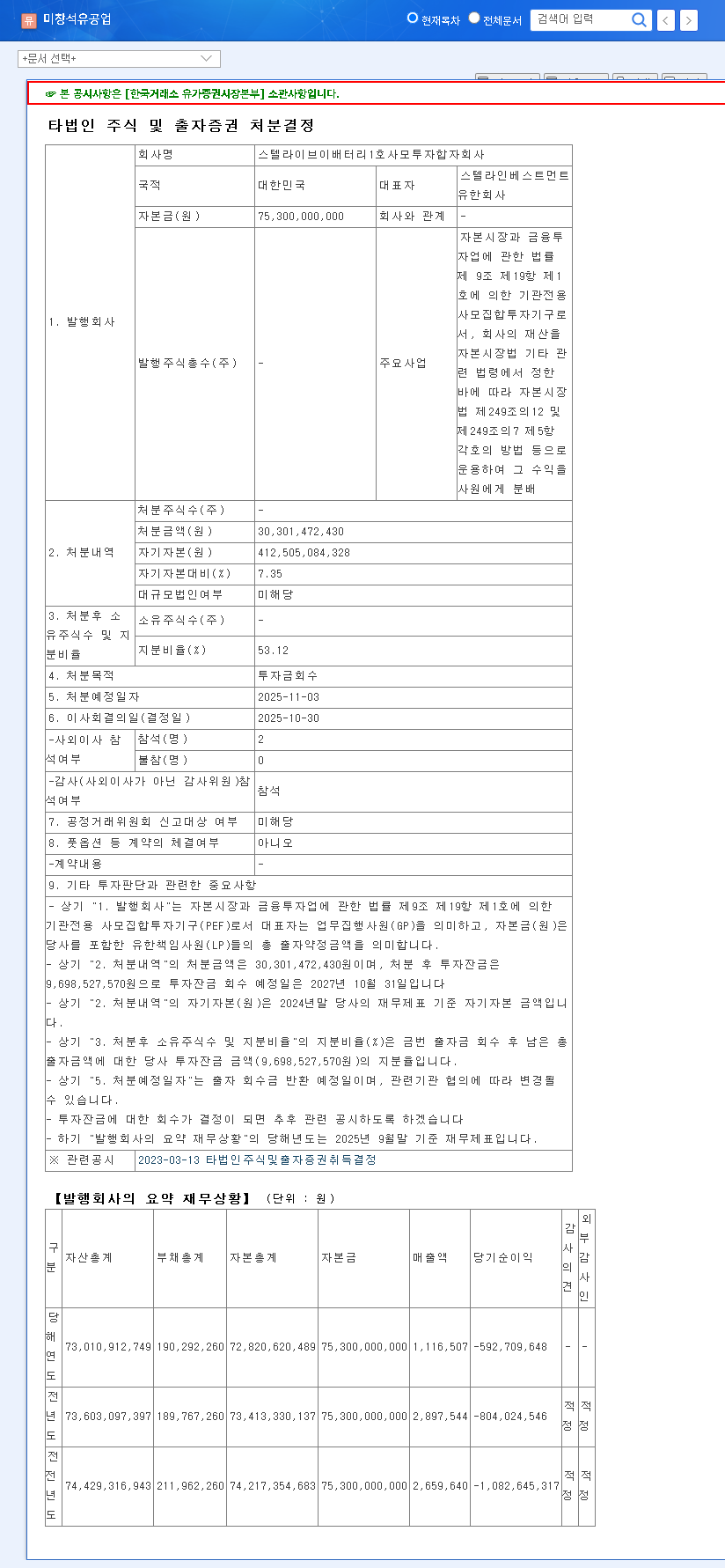
    The recent MICHANG OIL stake sale has sent ripples through the investment community. On October 30, 2025, MICHANG OIL IND CO.,LTD (003650) announced the partial disposition of its holdings in the ‘Stella EV Battery No. 1 Private Equity Fund’ for ₩30.3 billion. This isn’t just a simple transaction; it’s a strategic maneuver that signals a potential pivot in the company’s financial planning and investment focus. For investors, this event raises critical questions about liquidity, future growth, and the long-term valuation of MICHANG OIL (003650) stock.

    This comprehensive MICHANG OIL financial analysis will dissect the details of the sale, explore its immediate and long-term implications, and provide a strategic framework for investors to monitor the company’s next moves. How will this capital infusion build upon an already strong H1 2025 performance, and what should you be watching for?

    The ₩30.3 Billion Stake Sale: A Closer Look

    MICHANG OIL’s decision involves the sale of a portion of its 53.12% stake in the Stella EV Battery Fund, an investment initially made in March 2023 for ₩40 billion. The sale recoups a significant ₩30.3 billion of this capital. The company formally announced this through its ‘Decision on Disposition of Stocks and Investment Securities of Other Corporations’ disclosure, a key document for any serious financial analysis. You can view the Official Disclosure (Source: DART) for complete details. This move is pivotal, as it provides a substantial cash injection while still retaining a majority interest in the fund.

    Why This Move, and Why Now?

    The timing of the MICHANG OIL stake sale is strategic, aimed at capitalizing on a period of operational strength to further bolster the company’s financial foundation.

    Bolstering Financial Health and Liquidity

    The primary driver is clear: strengthening the balance sheet. This ₩30.3 billion infusion significantly enhances liquidity. It comes after an impressive first half of 2025, where MICHANG OIL reported an operating profit of ₩19.5 billion despite a slight dip in sales. This was achieved through effective cost management, which improved key metrics across the board. The fresh capital is expected to solidify this positive trend, reduce financial risk, and provide a stronger buffer against market volatility.

    A Shift in MICHANG OIL’s Investment Strategy

    Divesting a portion of the Stella EV Battery Fund while maintaining control suggests a deliberate shift in the MICHANG OIL investment strategy. This isn’t a full exit but a rebalancing. The secured funds could be redeployed into several areas: financing R&D for next-generation lubricants, acquiring smaller competitors to consolidate market share, or diversifying into new high-growth sectors. This strategic flexibility is a key advantage the sale provides.

    For investors, the most critical question is not about the sale itself, but about how MICHANG OIL will allocate this new capital. The answer will define the company’s growth trajectory for the next several years.

    Potential Impact on MICHANG OIL (003650) Stock

    Short-Term Market Reaction

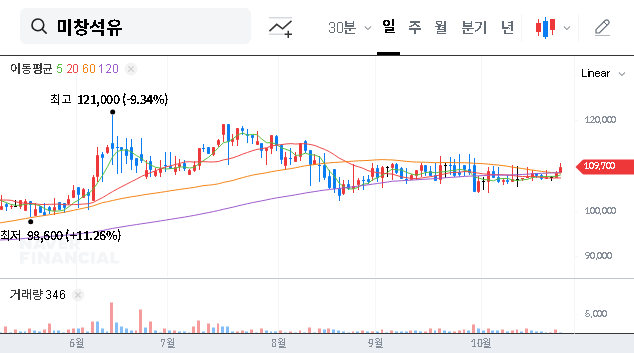
    Historically, MICHANG OIL’s stock responds positively to event-driven news. We saw a 7.66% surge on March 13, 2025, following a previous announcement. The market is likely to view this stake sale as a positive catalyst in the short term. The news of improved financial health often attracts investor interest, which could lead to increased trading volume and upward price pressure. Learning how to analyze corporate disclosures can help investors anticipate these movements.

    Mid-to-Long-Term Value Creation

    The long-term impact hinges entirely on the company’s capital allocation plan. If the ₩30.3 billion is invested wisely into projects with high ROI, it could create substantial shareholder value. However, investors should also monitor the company’s debt structure, including the recent increase in long-term borrowings, to ensure a balanced approach to growth. The company’s performance is also tied to macroeconomic factors. Fluctuations in international oil prices, as tracked by sources like Reuters Markets, directly impact raw material costs and profitability.

    Investor Action Plan: What to Watch

    Given the nuances of the MICHANG OIL stake sale, a prudent investment approach is required. Here are the key areas to monitor:

    • Capital Utilization Announcements: Closely watch for official press releases or statements in the next quarterly report detailing the specific use of the ₩30.3 billion.
    • Portfolio Diversification Efforts: Track any new investments or M&A activities that signal a move beyond the company’s core lubricant business. This is crucial for long-term growth.
    • Profitability Margins: In upcoming earnings reports, conduct a MICHANG OIL financial analysis focusing on whether operating and net profit margins continue to improve post-capital injection.
    • Shareholder Return Policies: Look for any announcements regarding share buybacks or dividend increases, which would be a strong positive signal to the market.

    In conclusion, while the MICHANG OIL stake sale is a fundamentally positive development for its financial stability, the ultimate success of this move will be written in the strategic choices that follow. Our investment opinion remains Neutral, with a strong recommendation to monitor the company’s actions closely. The potential for value creation is significant, but it requires careful and informed observation.

    Disclaimer: This content is for informational purposes only and is based on publicly available information. It does not constitute investment advice. All investment decisions should be made by investors based on their own judgment and responsibility.

    (003650) MICHANG OIL Stake Sale: In-Depth Analysis of the ₩30.3B Deal & Future Stock Impact 관련 이미지
  • (361610) SK ie technology Rights Offering: A 2024 Investor’s Deep-Dive Analysis

    (361610) SK ie technology Rights Offering: A 2024 Investor’s Deep-Dive Analysis

    The recent news of the SK ie technology rights offering has sent ripples through the investment community, presenting a critical juncture for the company and its shareholders. With 209.4 billion KRW on the line, investors are faced with a pivotal question: is this capital raise a strategic masterstroke to solidify SKIET’s market leadership and financial stability, or does it signal underlying risks and the unwelcome dilution of shareholder value? This comprehensive analysis will dissect the offering, evaluate SKIET’s robust fundamentals, and provide a strategic roadmap for investors navigating this event.

    We will explore the intricacies of this major financial decision, its potential impact on SKIET stock analysis, and what it means for the company’s long-term trajectory in the competitive EV battery separator market.

    Dissecting the SK ie technology Rights Offering

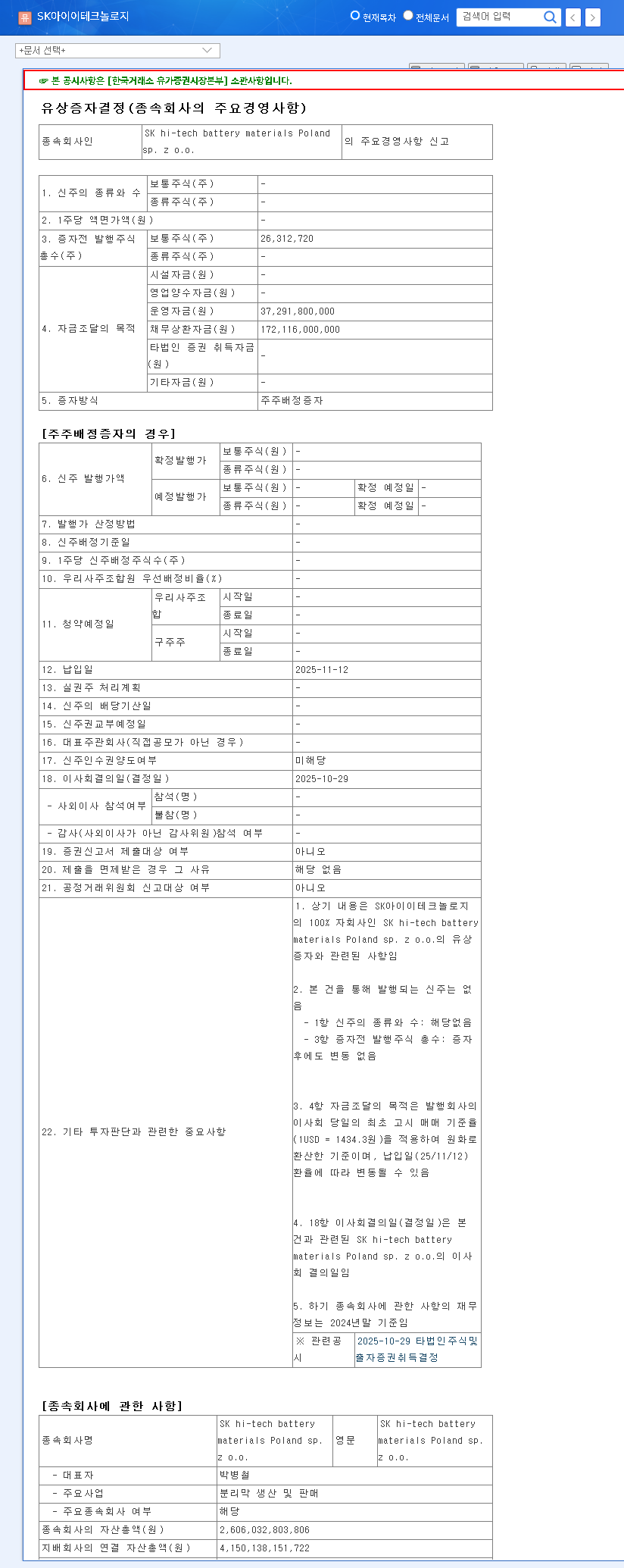
    On October 29, 2025, SK ie technology Co., Ltd. (SKIET) formally announced a significant rights offering aimed at its subsidiary, SKhi-techbatterymaterialsPolandsp.zo.o. This move, conducted via a shareholder allocation method, is designed to raise a substantial 209.4 billion KRW. The primary motivation behind this capital injection is twofold: a strategic deleveraging of the subsidiary’s balance sheet and securing necessary operational liquidity.

    The core of the strategy is to allocate the majority of the funds, approximately 172.1 billion KRW, towards debt repayment, with the remaining 37.3 billion KRW earmarked for operating capital. This allocation clearly signals a management priority to fortify the company’s financial foundation.

    This decision is not just a financial maneuver; it’s a statement of intent to improve the overall financial structure, reduce interest burdens, and ensure the Polish subsidiary can operate and expand with greater stability. For detailed, official information, investors should consult the original filing. Official Disclosure: Click to view DART report.

    Company Fundamentals and Market Position

    Improving Financial Health and Profitability

    Despite a decrease in top-line sales, SKIET’s recent financial reports reveal a positive trend in profitability. Through disciplined cost-cutting and a strategic shift towards higher-margin, value-added products, both operating and net profits are on an upward trajectory. The company’s debt-to-equity ratio has notably improved, falling from 58.95% to a more manageable 49.38%, a clear indicator of enhanced SKIET financial health. This rights offering, primarily aimed at debt reduction, is set to further strengthen this positive trend, de-risking the balance sheet and improving resilience against economic headwinds.

    Unmatched Technological Edge in the LiBS Market

    SKIET’s competitive advantage is anchored in its world-class technology within the Lithium-ion Battery Separator (LiBS market). Key differentiators include:

    • Sequential Stretching Process: A proprietary manufacturing technique that allows for precise control over separator pore structure, enhancing battery safety and performance.
    • Thin Film Leadership: The development of ultra-thin 5㎛ film products, which enables higher energy density in batteries—a critical factor for increasing EV range.
    • Advanced Coating Technology: Commercialization of double-sided simultaneous coating, improving the durability and lifespan of the battery cell.

    Furthermore, global policy is creating significant tailwinds. The U.S. Inflation Reduction Act (IRA) and its stringent supply chain requirements are expected to disadvantage Chinese competitors, positioning SKIET to capture a larger share of the lucrative North American market. For more on this, you can review expert analysis from high-authority sources like Reuters on the IRA’s impact on EV supply chains.

    Investor Impact and Strategic Outlook

    The Double-Edged Sword: Dilution vs. Growth

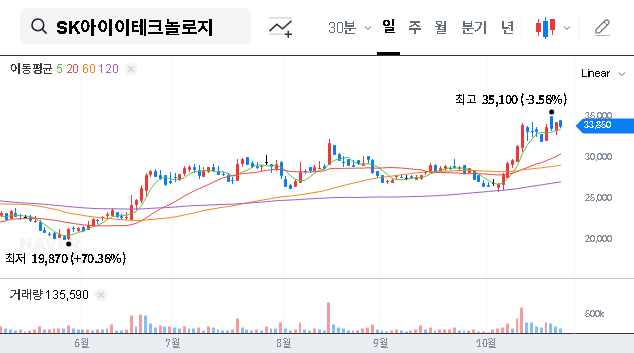
    The most immediate concern for existing shareholders is the potential for value dilution. A rights offering increases the total number of shares outstanding, which can decrease the value per share if an investor chooses not to participate. This often causes short-term downward pressure on the stock price. However, the long-term view can be markedly different. By using the funds to pay down debt and invest in operations, SKIET is positioning itself for more sustainable and profitable growth. A healthier balance sheet can lead to a higher valuation multiple from the market over time, potentially offsetting the initial dilution. The key is whether management can efficiently convert this new capital into tangible returns. Investors looking to deepen their knowledge may want to read our guide on analyzing a company’s financial health.

    An Action Plan for Investors

    Navigating the SK ie technology rights offering requires a calculated approach. Here are strategic steps to consider:

    • Analyze the Terms: Carefully review the official disclosure for specifics on the new share price, subscription ratio, and key dates. Understanding the discount offered is crucial to evaluating the proposition.
    • Assess Long-Term Conviction: If you believe in SKIET’s technological leadership and the growth of the EV battery separator market, participating in the offering could be a way to increase your position at a potential discount.
    • Monitor Fund Utilization: Post-offering, closely watch quarterly earnings reports to see how management is deploying the capital. Evidence of effective debt reduction and operational improvements will be key validation points.
    • Consider Macro Factors: Keep an eye on interest rates, currency fluctuations, and raw material costs, as these will continue to influence SKIET’s performance.

    Conclusion: A Strategic Move for a Stronger Future

    While the short-term market reaction to the SK ie technology rights offering may be one of caution due to dilution concerns, the underlying strategic rationale is sound. This is a proactive move to strengthen the company’s financial core, reduce risk, and empower its European operations for future growth. For the long-term investor, the decision hinges on confidence in SKIET’s management and its enduring technological prowess in the booming LiBS market. If executed effectively, this capital raise is less of a crisis and more of a catalyst, paving the way for a more resilient and valuable enterprise.

    (361610) SK ie technology Rights Offering: A 2024 Investor's Deep-Dive Analysis 관련 이미지
  • (347850) D&D Pharmatech Free Share Issue (300%): A Deep-Dive Stock Analysis

    (347850) D&D Pharmatech Free Share Issue (300%): A Deep-Dive Stock Analysis

    The recent announcement of the D&D Pharmatech free share issue has sent ripples through the investment community, capturing significant attention. The company (KOSDAQ: 347850) declared a massive 300% bonus issue, a move that is often seen as shareholder-friendly. However, seasoned investors know to look beyond the headlines. This in-depth D&D Pharmatech stock analysis will dissect this decision, exploring whether it signals a new era of growth and enhanced shareholder value or if it carries underlying risks that warrant caution.

    We will unpack the short and long-term implications for the stock price, examine the company’s core fundamentals, and provide actionable strategies for both short-term traders and long-term investors.

    Understanding the 300% Free Share Issue

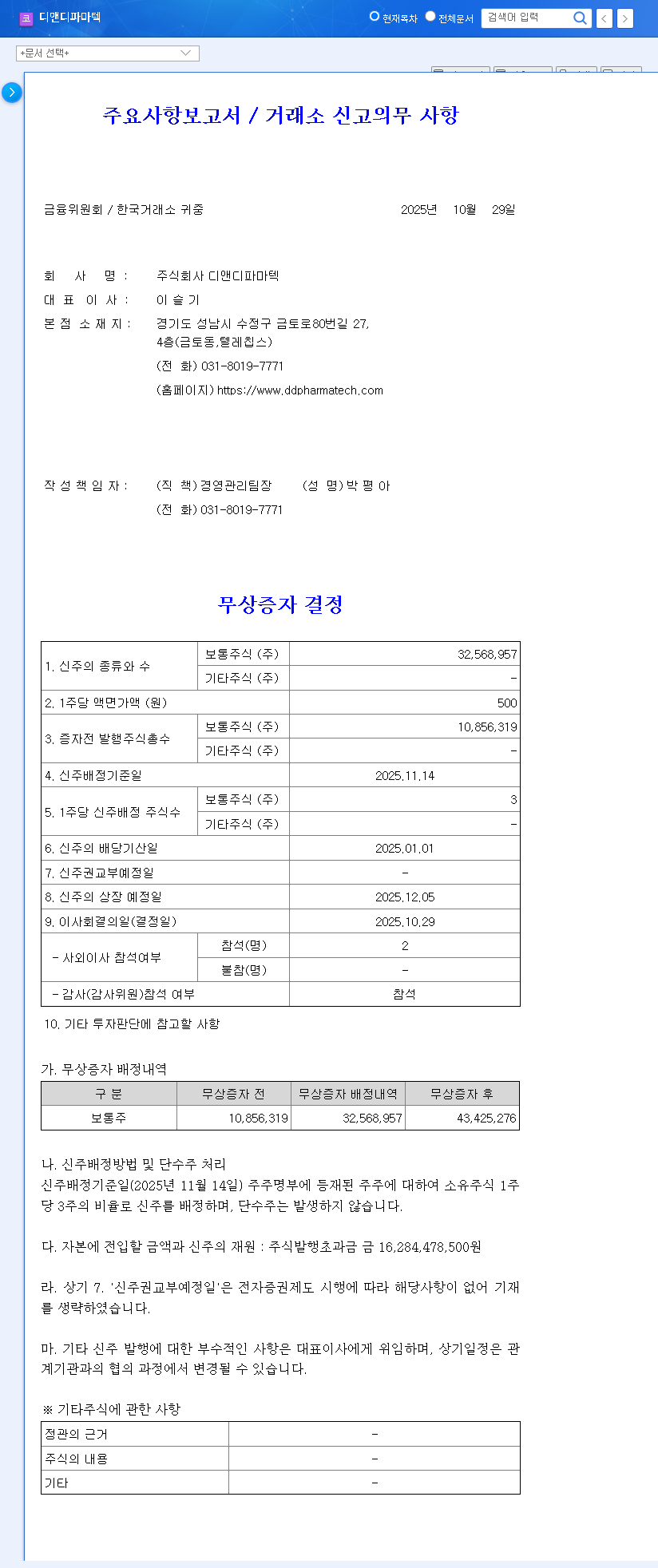
    On October 29, 2025, D&D Pharmatech formally announced its plan for a 300% free share issue. This means for every one share an investor holds, they will receive three additional new shares at no cost. The key dates for this event are:

    • Record Date: November 14, 2025
    • New Share Listing Date: December 5, 2025

    This move effectively quadruples the number of outstanding shares. The specifics of this corporate action were confirmed in the company’s filing. Official Disclosure (Source: DART).

    A free share issue, or bonus issue, does not change the company’s market capitalization. It reallocates funds from reserves to capital stock and increases the share count, theoretically reducing the per-share price proportionally.

    Core Fundamentals: The Engine Behind the Stock

    A free share issue is meaningless without strong fundamentals. D&D Pharmatech’s recent performance reveals a classic biotech profile of high potential balanced by significant risk.

    Positive Catalysts (Growth Drivers)

    • DD01 (MASH Treatment) Success: Achieving the primary endpoint in its Phase 2 clinical trial is a massive milestone. MASH (Metabolic dysfunction-associated steatohepatitis) is a major unmet medical need, and this success is a key driver for global partnerships and pipeline valuation.
    • Promising Obesity Pipeline: With its oral peptide technology (MET-002o), the company is well-positioned in the rapidly expanding obesity treatment market, a sector attracting immense investment and attention.
    • Strong R&D and IP: A history of successful technology transfers and co-development projects, combined with a strengthening IP portfolio, creates a solid foundation for future licensing deals.

    Challenges and Considerations

    • High R&D Burn Rate: Research and development costs are substantial and far exceed current sales. Profitability hinges entirely on future clinical successes and successful technology transfers.
    • Persistent Operating Losses: The company continues to post losses on a consolidated basis, underscoring the need for strategic financial management and future fundraising.
    • Potential for Future Dilution: The presence of stock options and convertible bonds means the share count could increase further in the future, independent of this bonus issue.

    Market Impact of the D&D Pharmatech Free Share Issue

    Short-Term Stock Price Effects

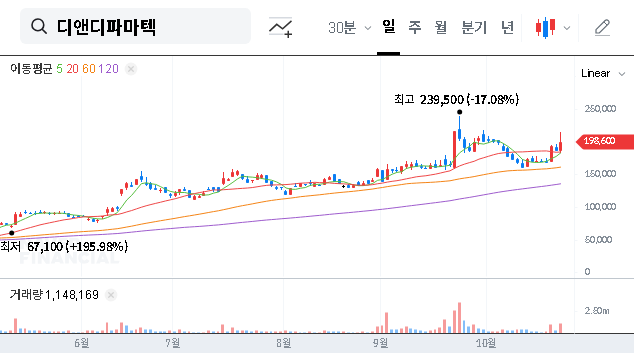
    The announcement is likely to boost short-term investor interest. The increased liquidity and lower per-share price can make the stock seem more accessible, potentially leading to a price run-up before the record date. However, as the company’s intrinsic value remains unchanged, this momentum can be fleeting if not supported by new, positive fundamental news. Information on market trends can often be found on platforms like Bloomberg.

    Long-Term Value Proposition

    From a long-term perspective, the D&D Pharmatech free share issue is a secondary factor. The ultimate determinant of the stock’s value will be the progress of its clinical pipelines. The success of DD01 and the advancement of its obesity treatments are the true value drivers. The increased share liquidity is a positive structural change, but it’s the science that will dictate the company’s trajectory over the next several years.

    Actionable Investment Strategy

    Investors should tailor their approach based on their time horizon and risk tolerance. Understanding the nuances of this event is key to making an informed decision. For deeper insights, you might explore our guide on how to analyze biotech stocks.

    For the Short-Term Investor

    Traders might capitalize on the volatility around the record and listing dates. Monitor trading volumes and price action closely. A surge in interest could present profit-taking opportunities. However, be wary of a ‘sell the news’ event after the new shares are listed. A cautious approach with defined entry and exit points is crucial.

    For the Long-Term Investor

    Focus on the fundamentals, not the share issue itself. The key questions are: Can D&D Pharmatech secure a lucrative partnership for DD01? Will their obesity pipeline continue to show promise? Can they manage their cash burn effectively until they reach profitability? The bonus shares are a nice addition, but your investment thesis should be built on the company’s long-term scientific and commercial potential.

    Frequently Asked Questions (FAQ)

    Q1: How will the D&D Pharmatech free share issue affect my total investment value?

    Immediately after the issue, your total investment value should theoretically remain the same. While you will own four times as many shares, the price per share is expected to adjust downwards to roughly one-fourth of its pre-issue price. Future changes in value will depend on market performance.

    Q2: Does a free share issue mean the company is financially healthy?

    Not necessarily. It indicates the company has sufficient accumulated reserves to convert into share capital. For a biotech company like D&D Pharmatech, it’s more of a signal of confidence and a tool to increase liquidity rather than a direct indicator of current profitability.

    Q3: What’s the difference between a free share issue and a stock split?

    While the outcome is similar (more shares at a lower price), the accounting is different. A stock split reduces the par value of each share, while a free share issue converts company reserves into capital stock, keeping the par value the same. For most investors, the practical effect on their portfolio is nearly identical.

    Q4: What are the biggest risks for D&D Pharmatech stock right now?

    The primary risks are clinical and financial. The failure of a key clinical trial, especially for DD01, would be a major setback. Financially, the high R&D spending requires careful management, and the company may need to raise additional capital in the future, which could lead to further dilution.

    (347850) D&D Pharmatech Free Share Issue (300%): A Deep-Dive Stock Analysis 관련 이미지
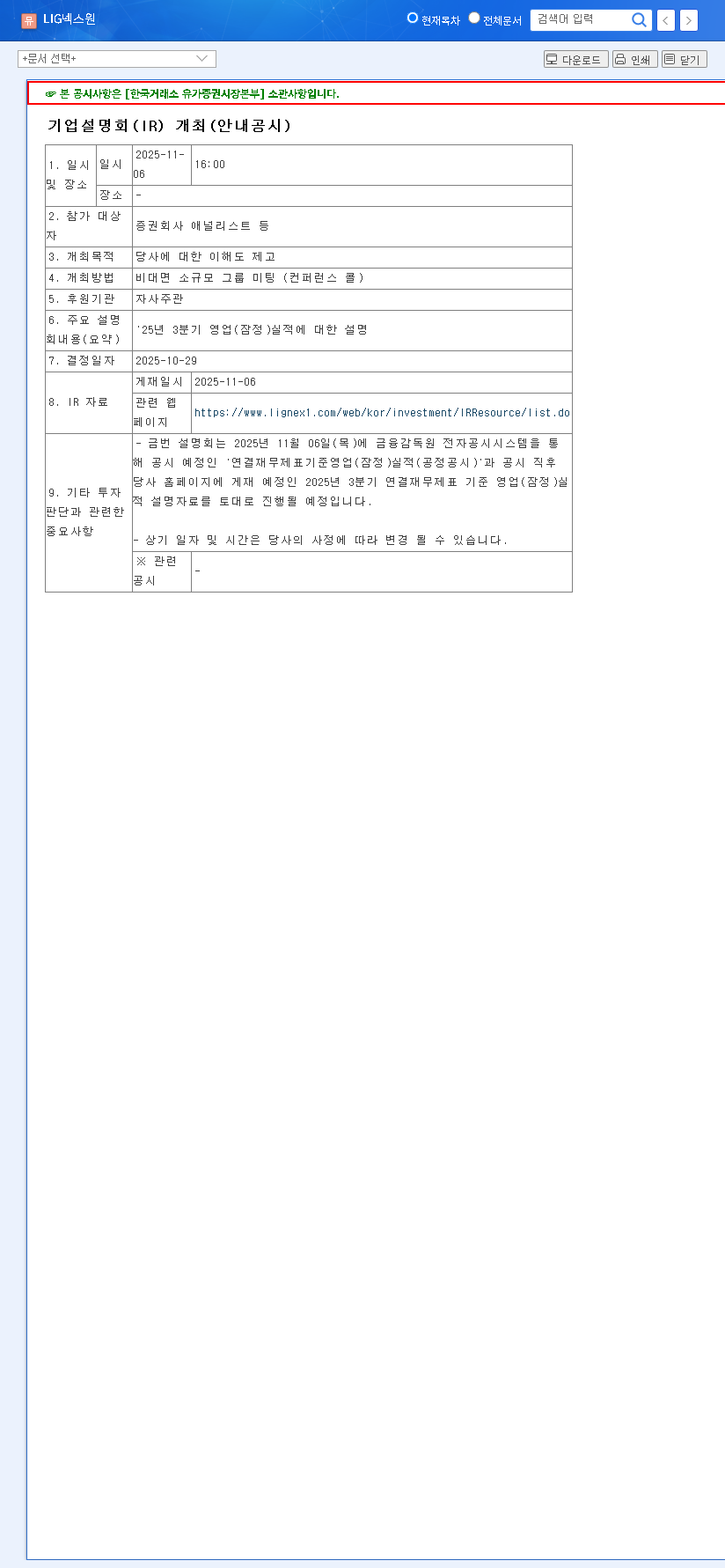
  • (079550) LIG Nex1 Stock Analysis (079550): Q3 Earnings & Future Outlook

    (079550) LIG Nex1 Stock Analysis (079550): Q3 Earnings & Future Outlook

    In a world of escalating geopolitical tensions, the defense sector is under an intense spotlight. This comprehensive LIG Nex1 stock analysis delves into the prospects of South Korea’s leading defense contractor, LIG Nex1 Co., Ltd. (079550), as it approaches a pivotal Investor Relations (IR) event on November 18, 2025. Following a surprising revenue decline in the first half of the year, all eyes are on the upcoming Q3 earnings report and the company’s strategic vision for the future.

    This article provides an expert breakdown of LIG Nex1’s current financial standing, its promising growth catalysts, and the critical factors investors must monitor during the IR event. We will dissect the numbers, evaluate the strategies, and offer a clear framework for making informed investment decisions.

    The Q3 2025 IR Event: A Moment of Truth

    LIG Nex1’s scheduled IR event is more than a routine update; it’s a critical platform to address investor concerns and chart a course for future growth. The primary agenda includes the announcement of preliminary LIG Nex1 earnings for Q3 2025 and a detailed presentation on the company’s operational status. The market is eager for clarity on the H1 revenue dip and reassurance about the company’s long-term trajectory.

    In-Depth LIG Nex1 Stock Analysis: Financial Health & Performance

    The Paradox: Declining Revenue vs. a Massive Order Backlog

    According to its H1 2025 report, LIG Nex1 posted revenue of KRW 1,852.97 billion, marking a 35.6% decrease year-on-year. This naturally raised concerns. However, the headline number doesn’t tell the whole story. The company boasts an incredibly robust order backlog of KRW 23,466.5 billion. This massive backlog provides a stable and predictable foundation for revenue streams for years to come, suggesting the H1 decline may be a matter of project timing rather than a fundamental business weakness. You can review the Official Disclosure (Source: DART) for more details.

    An order backlog of over KRW 23 trillion acts as a powerful buffer against short-term revenue fluctuations, securing the company’s financial stability and offering significant long-term visibility for investors.

    Core Business Segments and Export Outlook

    The PGM (Precision Guided Munitions) segment remains the company’s revenue cornerstone, accounting for 47.8% of the total. The observed decline in other areas like ISR (Intelligence, Surveillance, Reconnaissance) and C4I (Command, Control, Communications, Computers, and Intelligence) is largely attributed to the cyclical nature of large-scale government contracts. The export share, which stood at 17.3%, also saw a temporary decrease. A key focus of the upcoming LIG Nex1 IR event will be the strategy to re-accelerate international sales and secure new overseas contracts.

    Future Growth Engines: Robotics and Geopolitical Tailwinds

    The Strategic Acquisition of Ghost Robotics

    LIG Nex1’s forward-looking strategy is highlighted by its significant acquisition of Ghost Robotics Corporation. This move is not merely a diversification play; it’s a strategic pivot to secure a foothold in the future of defense technology. This acquisition establishes a powerful robotics platform, opens a direct channel into the lucrative U.S. defense market, and positions LIG Nex1 at the forefront of autonomous warfare systems. This investment signals a strong commitment to becoming a global, tech-driven defense powerhouse.

    Macroeconomic and Geopolitical Opportunities

    The global landscape presents significant opportunities for the Korean defense industry. Rising global defense budgets, driven by heightened security concerns, create a fertile ground for companies like LIG Nex1. According to reports from leading defense analysts, global military expenditure continues to climb. Additionally, the weaker Korean Won against the US Dollar provides a competitive pricing advantage for LIG Nex1’s exports, potentially boosting profitability on international contracts.

    Investor Action Plan: What to Watch in the IR Briefing

    For investors conducting a thorough LIG Nex1 stock analysis, the IR event will provide crucial data points. Pay close attention to the management’s commentary on the following key areas:

    • Q3 Performance: Is there a clear reversal or stabilization of the revenue decline? Listen for a detailed analysis of the causes and the outlook for Q4 and beyond.
    • Robotics Synergy: Demand concrete plans on how Ghost Robotics will be integrated and the timeline for realizing synergies and penetrating the U.S. market.
    • Export Strategy: What is the specific plan to regain momentum in overseas markets? Look for announcements of new contracts or progress in key international negotiations.
    • Financial Management: How is the company managing its balance sheet and cash flow amidst large R&D investments and acquisitions?

    For more insights, you can compare this with our Deep Dive into the Korean Defense Sector.

    Frequently Asked Questions (FAQ)

    Q1: When is the LIG Nex1 IR event?

    A1: The Investor Relations (IR) event is scheduled for November 18, 2025. It will feature the announcement of preliminary Q3 2025 operating results and a detailed corporate briefing.

    Q2: What is the significance of LIG Nex1’s order backlog?

    A2: Despite an H1 2025 revenue dip, the company holds a massive order backlog of over KRW 23 trillion. This provides a very stable and predictable foundation for future revenues, mitigating short-term performance concerns.

    Q3: What are LIG Nex1’s key future growth drivers?

    A3: Key growth drivers include strengthening its core domestic business and expanding into future technologies through strategic moves like the acquisition of Ghost Robotics, which is aimed at securing a leading position in defense robotics and entering the U.S. market.

    Q4: What are the primary risks for the 079550 stock?

    A4: Key risks include potential delays in converting the order backlog to revenue, increased competition in the global defense market, the efficiency of R&D spending, and the impact of currency fluctuations on profitability.

    (079550) LIG Nex1 Stock Analysis (079550): Q3 Earnings & Future Outlook 관련 이미지
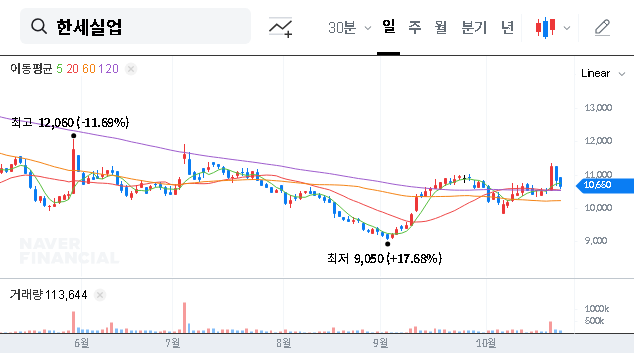
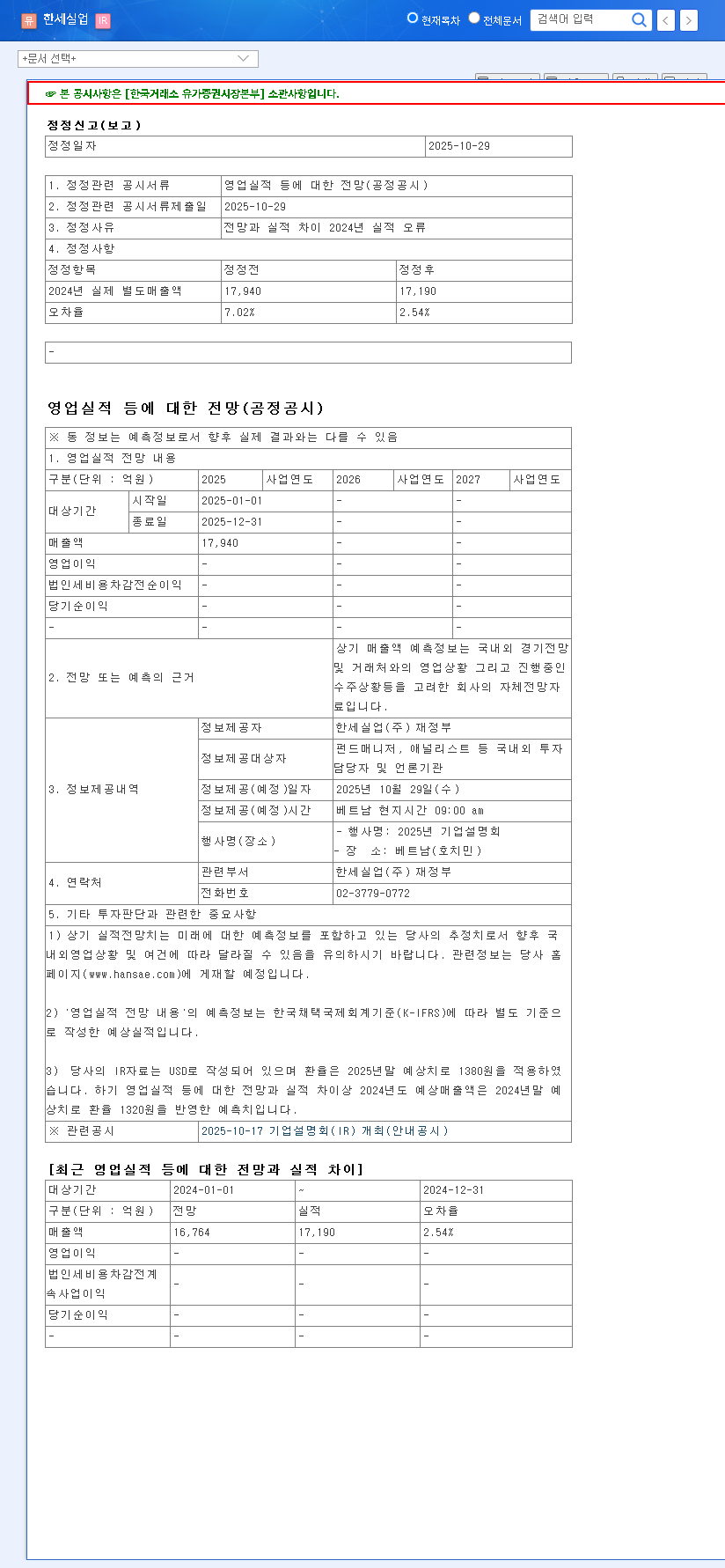
  • (105630) HANSAE CO.,LTD. Stock: In-Depth Analysis of the 2025 Earnings Forecast & Investment Outlook

    (105630) HANSAE CO.,LTD. Stock: In-Depth Analysis of the 2025 Earnings Forecast & Investment Outlook

    Global apparel manufacturing powerhouse, HANSAE CO.,LTD., is making waves in the financial markets with a remarkably positive 2025 annual earnings forecast. After a period of sluggish performance, this projection suggests a significant turnaround, with investors keenly watching if the HANSAE CO.,LTD. stock is poised for a major rally. The company anticipates substantial growth in both operating and net profits compared to 2024, raising a critical question for investors: Is now the time to buy?

    This comprehensive HANSAE investment analysis provides a deep dive into the 2025 earnings outlook, dissecting the company’s core fundamentals, strategic growth initiatives, and the multifaceted factors—both positive and negative—that could influence its stock price. Whether you’re a current shareholder or considering a new position, this report will equip you with clear, actionable insights.

    The Landmark 2025 Earnings Forecast: A Turning Point?

    On October 29, 2025, HANSAE CO.,LTD. released its official annual revenue forecast, signaling a new era of growth. According to the Official Disclosure (Source: DART), the company projects revenue for 2025 to reach KRW 2.7987 trillion, a solid 5% increase from the 2024 estimate. The more striking figures lie in profitability:

    • Operating Profit Surge: Expected to skyrocket by an impressive 55%, from KRW 215.6 billion in 2024 to KRW 333.9 billion in 2025.
    • Net Profit Turnaround: Projected to improve dramatically from a modest KRW 3.2 billion in 2024 to a robust KRW 333.1 billion in 2025.

    This optimistic HANSAE 2025 earnings forecast marks a significant departure from the operating losses recorded in 2022 and 2023. This turnaround is widely seen as the culmination of strategic internal improvements meeting a more favorable global market environment.

    Core Strengths & Future Growth Strategy

    HANSAE’s foundation is its role as a leading global Original Equipment Manufacturer (OEM) and Original Design Manufacturer (ODM) in the apparel industry. This means it manufactures clothing for major U.S. retail giants like TARGET, OLD NAVY, and GAP. Understanding its strategic pillars is key to evaluating the potential of HANSAE CO.,LTD. stock.

    Robust Global Production Network

    The company operates an expansive production network across 8 countries, including key hubs in Vietnam, Indonesia, and Central America. This geographic diversification provides crucial operational efficiency, cost competitiveness, and resilience against supply chain disruptions—a significant advantage in the post-pandemic era, as noted by industry experts at Bloomberg.

    Strategic Vertical Integration & Diversification

    HANSAE is aggressively moving to control more of its supply chain and diversify its revenue streams:

    • Acquisition of TEXOLLINI, INC.: This move signals a strategic push into higher-value product categories, enhancing profit margins.
    • Guatemala Spinning/Dyeing Factory: By producing its own key raw materials, HANSAE strengthens its defense against cost volatility and gains greater control over production timelines and quality. This is a critical step for any apparel OEM stock.
    • Fabric Business Growth: The expansion of its subsidiary, Color & Touch Co., Ltd., adds a stable and growing revenue stream to its overall business structure.

    Analyzing the Impact on HANSAE CO.,LTD. Stock Price

    The forecast is promising, but investors must weigh the positive catalysts against potential headwinds. Here’s a breakdown of the factors at play.

    Positive Catalysts: Strong Tailwinds for Growth

    The projected improvements in key profitability metrics are the strongest drivers for stock price appreciation. Indicators like operating profit margin (expected to rise from 8.09% to 11.93%) and Return on Equity (ROE) (from 0.49% to 5.84%) signal a fundamental strengthening of the company’s financial health and operational efficiency.

    Neutral Variables: The Double-Edged Swords

    Certain macroeconomic factors could have a mixed impact. Fluctuations in the USD/KRW exchange rate can boost revenue in KRW terms but may also increase overseas production costs. Similarly, while stable oil prices and interest rates are currently favorable, any future volatility remains a significant variable that could affect everything from raw material costs to consumer spending.

    Potential Risks: Factors Requiring Vigilance

    Despite the positive outlook, several risks warrant continuous monitoring:

    • U.S. Market Dependence: With a high concentration of clients in the United States, an economic slowdown there could directly impact orders and revenue.
    • Geopolitical Instability: Operational risks, such as the business environment in Haiti, require careful management.
    • Macroeconomic Headwinds: Global inflation and unpredictable geopolitical events can dampen investor sentiment and affect the real economy. For more on this, see our guide to investing in textile stocks during uncertain times.

    Overall Assessment & Investment Thesis

    Investment Opinion: Buy. The 2025 earnings outlook for HANSAE CO.,LTD. presents a compelling case for investment. The substantial profit growth, coupled with strategic initiatives in vertical integration and portfolio diversification, indicates a company overcoming past challenges and building a stronger foundation for long-term growth.

    Based on the 2025 estimated Earnings Per Share (EPS) of KRW 3,776, the closing price of KRW 20,800 on Oct 29, 2025 (PER 14.86x) appears to be an attractive valuation that does not yet fully reflect the company’s growth potential and improved fundamentals. The combination of an exceptional growth forecast and efforts to secure long-term drivers makes the HANSAE stock price look appealing at current levels.

    Disclaimer

    This analysis is for informational purposes only and is based on publicly available data. It does not constitute an investment recommendation. All investment decisions carry risk, and the ultimate responsibility rests with the individual investor. Please conduct your own due diligence before making any investment.

    (105630) HANSAE CO.,LTD. Stock: In-Depth Analysis of the 2025 Earnings Forecast & Investment Outlook 관련 이미지
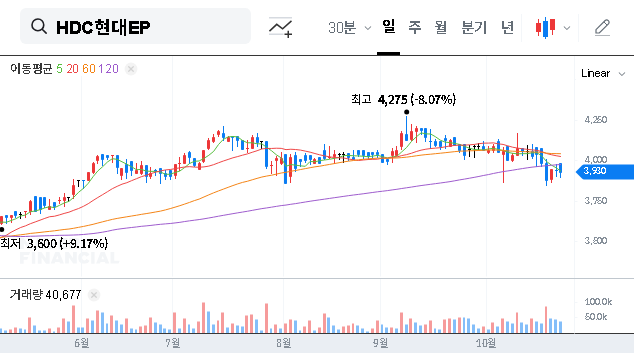
  • (089470) HDC Hyundai EP Production Halt: A Deep Dive for Investors (2025 Analysis)

    (089470) HDC Hyundai EP Production Halt: A Deep Dive for Investors (2025 Analysis)

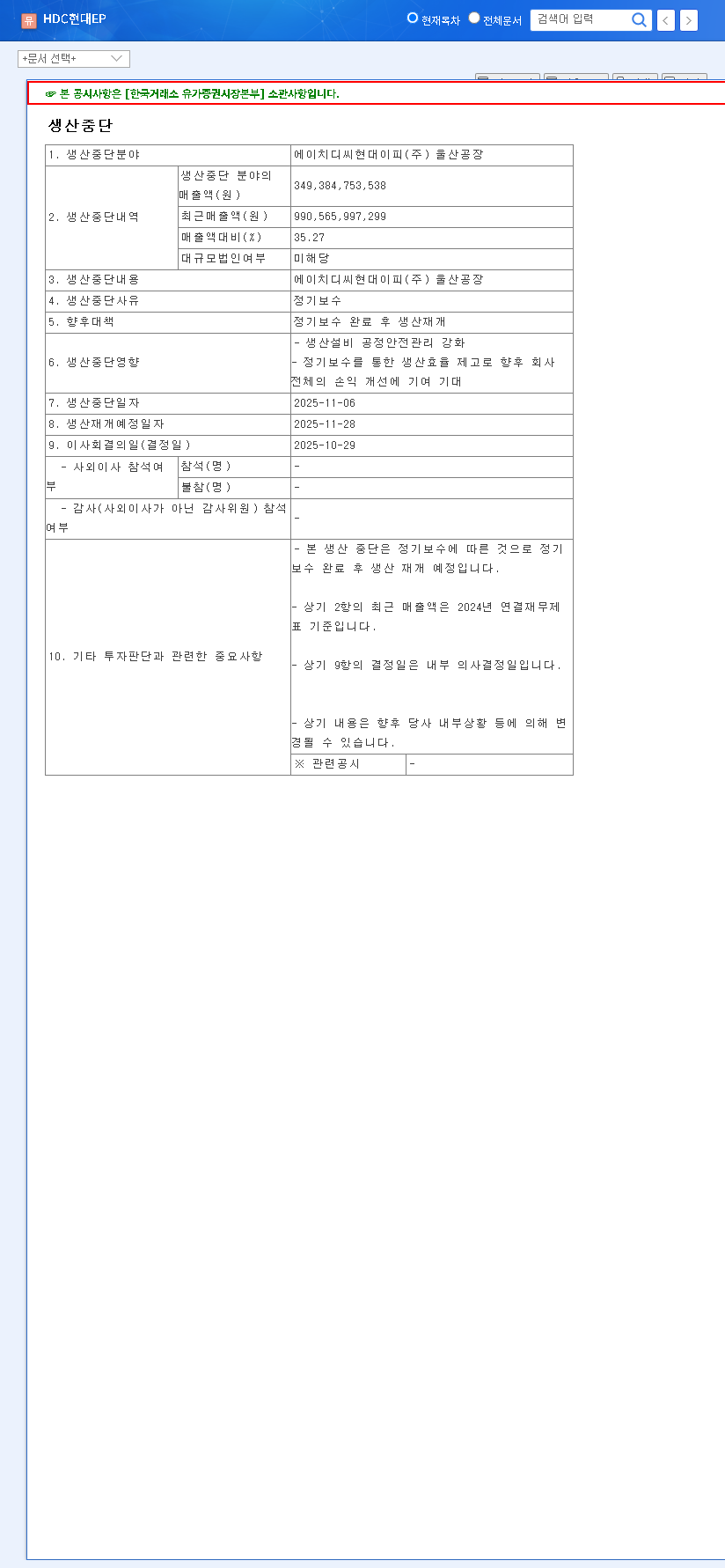
    The recent announcement of the HDC Hyundai EP production halt has sent shockwaves through the investment community. A disclosure from the prominent South Korean engineering plastics company revealed a staggering KRW 349.4 billion stoppage at its Ulsan plant, slated for October 29, 2025. This figure represents an alarming 35.27% of the company’s recent total revenue, signaling potentially severe consequences for its financial health and stock performance. For investors, this unexpected news raises urgent questions about the company’s stability and future trajectory.

    This comprehensive analysis delves into the specifics of the production suspension, evaluates the deep financial and operational impacts, and provides a strategic roadmap for investors to navigate the uncertainty surrounding the HDC Hyundai EP stock.

    The Announcement: Unpacking the KRW 349.4 Billion Stoppage

    According to the company’s filing, the production halt at the Ulsan plant is a significant event, not just in its monetary value but also in its timing and lack of prior warning. The market, which had not received any preceding brokerage reports or guidance on this matter, was caught completely off guard. You can view the Official Disclosure (DART Report) for complete details. This information vacuum is likely to fuel speculation and investor anxiety, creating immediate and intense downward pressure on the stock price.

    This isn’t just a minor operational hiccup; a production halt of this magnitude—over a third of the company’s revenue—is a foundational challenge that questions the company’s core operational stability and management oversight.

    In-Depth Analysis: Financial and Operational Ramifications

    1. Severe Financial Impact

    The financial fallout from the HDC Hyundai EP production halt is expected to be widespread and severe. The immediate KRW 349.4 billion loss in production value will directly translate into a significant revenue decline. This reduction in sales will create a ripple effect across the income statement:

    • Profitability Collapse: With lower revenue to cover fixed costs (such as plant maintenance, administrative salaries, and depreciation), operating and net profit margins are set to plummet.
    • Cash Flow Constraints: Reduced income will strain operating cash flow, potentially limiting the company’s ability to fund new investments, service debt, or return capital to shareholders.
    • Asset Value Questions: An idle plant raises questions about asset impairment and may necessitate a review of depreciation schedules, further impacting the balance sheet.

    2. Core Business and Competitiveness at Risk

    Beyond the financials, the Ulsan plant shutdown jeopardizes the company’s operational integrity. As a key supplier of engineering plastics for automotive and electronics sectors, this disruption could be catastrophic. Competitors will be quick to fill the supply void, potentially leading to a long-term loss of market share. This situation creates a cascade of issues, including strained client relationships, supply chain chaos, and damage to the company’s reputation as a reliable partner. For more context on the sector, you can read about the South Korean manufacturing industry’s challenges on major financial news outlets.

    Investor Action Plan: Navigating the Uncertainty

    For current and prospective investors, this is a critical moment that demands vigilance and a rational, data-driven approach. The investment appeal of HDC Hyundai EP has been significantly diminished, and a reassessment is essential. Here is a recommended course of action:

    • Demand Transparency: The most urgent task is to understand the root cause of the production halt. Was it due to regulatory issues, equipment failure, or a strategic pivot? The answer will determine the path to recovery. Monitor all subsequent company disclosures closely.
    • Re-evaluate Financial Models: Investors must conservatively adjust their performance forecasts. Factor in the full revenue loss, potential one-off costs related to the shutdown, and any long-term margin compression.
    • Monitor Market and Peer Response: Keep a close eye on the HDC Hyundai EP stock price, trading volume, and analyst rating changes. Additionally, watch how competitors react—are they launching aggressive campaigns to win over HDC’s clients?
    • Assess Management’s Strategy: How management communicates and handles this crisis is a key indicator of their capability. Look for a clear, credible, and swift recovery plan. For further reading, see our guide on How to Analyze Corporate Disclosures for Red Flags.

    In conclusion, the HDC Hyundai EP production halt is a profoundly negative event that overshadows any positive macroeconomic trends. Until the company provides a clear explanation and a viable recovery strategy, investors should exercise extreme caution. A thorough reassessment of any investment position is not just recommended; it is imperative.

    (089470) HDC Hyundai EP Production Halt: A Deep Dive for Investors (2025 Analysis) 관련 이미지
  • (234920) Zaigle Delisting Review (2025): Full Analysis, Stock Risks & Investor Guide

    (234920) Zaigle Delisting Review (2025): Full Analysis, Stock Risks & Investor Guide

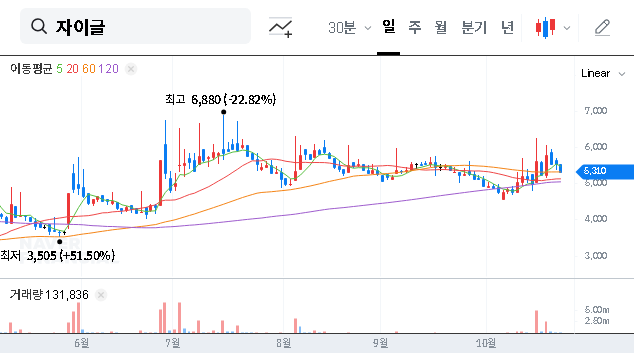
    Investors in Zaigle Co., Ltd. (KOSDAQ) are facing a period of critical uncertainty. The recent announcement of a pending Zaigle delisting review has sent shockwaves through the investment community, raising serious questions about the company’s future and the safety of shareholder capital. This comprehensive analysis will break down the situation, from the initial disclosure to the underlying financial weaknesses, helping you understand the immense risks and formulate a rational strategy in these turbulent times.

    We will explore the company’s precarious fundamentals, the external market pressures, and the potential scenarios that could unfold, providing you with the insights needed to navigate this high-stakes event.

    What Happened? The Official Zaigle Delisting Review Announcement

    On October 29, 2025, Zaigle Co., Ltd. filed a disclosure that triggered an alarm for every shareholder. The company officially announced the occurrence of a reason for a delisting eligibility substantial review. According to the filing, a decision on whether the company is subject to this formal review will be made by November 19, 2025. You can view the complete report directly from the source: Official Disclosure (DART).

    If the Korea Exchange (KRX) determines a formal review is unnecessary, the currently suspended trading of Zaigle stock will be lifted. However, if Zaigle is deemed subject to the review, it enters a high-risk deliberation process that could lead to severe consequences, including designation as an administrative issue or, in the worst-case scenario, complete delisting from the exchange.

    Why Is Zaigle Facing a Delisting Review? A Look at the Cracks

    This critical situation did not arise overnight. It is the culmination of deteriorating business fundamentals, questionable financial health, and a history of compliance issues that have eroded investor trust.

    Struggling Core Business & Uncertain New Ventures

    • Existing Business Slump: Sales of its flagship ‘Zaigle Grill’ and other well-being appliances have remained sluggish. The healthcare segment has also failed to gain traction, showing a decline in sales year-over-year.
    • Unproven New Ventures: While the company is pinning its hopes on new ventures like the ‘Zaigle On Simple’ medical device, their contribution to revenue is still negligible. More concerning is the collapse of its highly anticipated US secondary battery joint venture, which has amplified uncertainty. Plans for domestic LFP battery development remain on paper, with no clear path to production. For more information on market challenges, you can read about global supply chain disruptions.

    Alarming Financial Health Indicators

    • Deteriorating Profitability: With falling revenue and operating losses for two consecutive quarters in the first half of 2025, the company’s core profitability is in question.
    • Solvency Concerns: The debt-to-equity ratio climbed to a concerning 135.03% as of Q1 2025. This indicates the company is relying more on debt to finance its assets, which is a major red flag for financial stability.
    • Negative Cash Flow: Negative operating cash flow reveals that the company’s core business activities are not generating enough cash to sustain operations, forcing it to rely on financing or asset sales.
    • History of Sanctions: A past record of fines for dishonest disclosures has damaged corporate credibility, making investors wary of management’s transparency. If you want to learn more, check out our guide on how to analyze high-risk stocks.

    The combination of a failing core business, unproven ventures, and weak financials creates a perfect storm. The Zaigle delisting review is a direct consequence of these deep-seated issues.

    The Ripple Effect: Potential Impacts on Zaigle Stock and Business

    The outcome of this review will have profound and far-reaching consequences. Investors must prepare for significant volatility and potential downside.

    Direct Consequences

    • Stock Price Volatility: The uncertainty alone will likely lead to severe downward pressure on Zaigle’s stock price.
    • Trading Suspension: If subjected to the full review, a prolonged trading suspension is highly probable, locking up investor capital and creating immense liquidity risk.
    • Total Loss of Investment: In the worst-case scenario of delisting, the stock could become worthless, leading to a total loss for shareholders.

    Indirect Consequences

    • Credit Rating Downgrade: The situation could trigger a downgrade, making it harder and more expensive for Zaigle to raise capital.
    • Business Contraction: Partners, suppliers, and clients may become hesitant to do business with a company on the verge of being delisted, impacting contracts and revenue streams.

    Investor Playbook: Navigating the Uncertainty

    Given the high degree of investment risk, a cautious and defensive strategy is paramount.

    Potential Scenarios by November 19

    • Positive Scenario (Not Subject to Review): This would resolve immediate uncertainty and could cause a short-term relief rally. However, without a fundamental business turnaround, any gains may be short-lived.
    • Negative Scenario (Subject to Review): This is the worst outcome. It would trigger the formal Zaigle delisting review process, almost certainly leading to a trading suspension and a sharp drop in value if and when trading resumes.

    Recommendations for Investors

    For Potential Investors: Initiating a new position in Zaigle at this time carries an extremely high level of risk. It is strongly advised to stay on the sidelines until there is absolute clarity on the company’s listed status.

    For Existing Shareholders: The decision is more complex. You must assess your risk tolerance and be prepared for the possibility of a total loss. Monitoring the situation closely until the November 19 deadline is crucial. Any decision to sell or hold should be based on the understanding that the stock’s value is highly precarious.

    (234920) Zaigle Delisting Review (2025): Full Analysis, Stock Risks & Investor Guide 관련 이미지
  • (098460) KohYoung Technology IR: H1 2025 Analysis, Stock Risks & Growth Drivers

    (098460) KohYoung Technology IR: H1 2025 Analysis, Stock Risks & Growth Drivers

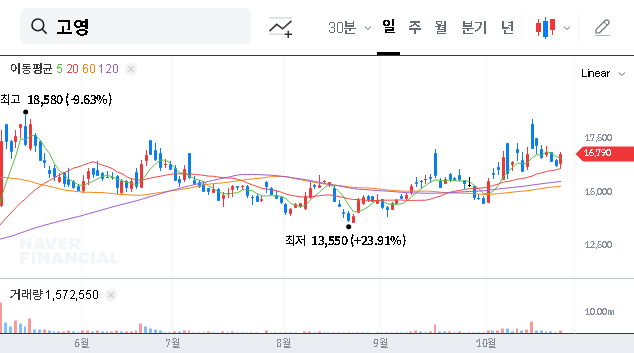
    KohYoung Technology Inc. has presented a complex financial narrative for the first half of 2025, leaving investors with critical questions. While the company demonstrated operational resilience with an improved operating profit, a surprising net loss has cast a shadow over its performance. The upcoming KohYoung Technology IR (Investor Relations) conference on November 6th is now a pivotal moment for leadership to restore confidence and chart a clear path forward. This comprehensive KohYoung stock analysis will unpack the H1 2025 results, explore the underlying business trends, and outline the key factors that will determine the company’s trajectory.

    Deconstructing the KohYoung H1 2025 Performance

    At first glance, the KohYoung H1 2025 performance report is a study in contrasts. A marginal dip in revenue was offset by commendable cost management, but a sharp reversal to a net loss demands scrutiny.

    A Tale of Two Profits

    • Revenue & Operating Profit: Revenue saw a slight year-on-year decrease of 2.2%, landing at KRW 103.2 billion. This was driven by a slowdown in the 3D AOI segment. However, operating profit impressively grew by 7.5% to KRW 5.7 billion, boosting the operating margin to 5.7%. This signals strong internal cost controls.
    • The Net Loss Reversal: The most alarming figure is the shift from a KRW 14.6 billion net profit in the prior year to a KRW 1.5 billion net loss. This was primarily caused by a massive surge in other non-operating expenses from KRW 0.56 billion to KRW 11.38 billion, a point that requires detailed explanation. For a granular breakdown, investors can consult the Official Disclosure (DART).

    The core challenge for KohYoung is to prove that its profitability improvements are sustainable and that the non-operating expenses leading to the net loss are a one-off event, not a systemic issue. The upcoming KohYoung Technology IR is their main stage to make this case.

    Business Segment Analysis: Strengths, Weaknesses, and Opportunities

    A successful KohYoung investment strategy depends on understanding the performance of its individual business units. The company’s future hinges on the synergy between its established segments and its burgeoning new ventures.

    3D SPI Business: The Reliable Engine

    The 3D Solder Paste Inspection (SPI) segment remains a bright spot, showing robust growth of 6.0%. This is fueled by high demand from the automotive electronics and server industries. KohYoung’s dominant market share in the Surface Mount Technology (SMT) inspection market provides a stable foundation for the company’s revenue.

    3D AOI Business: Facing Headwinds

    The 3D Automated Optical Inspection (AOI) business experienced a 7.7% revenue decline, largely due to reduced orders from smartphone manufacturers. While the company is focusing on advanced AI-based solutions to regain momentum, this segment is susceptible to global economic volatility and shifting consumer electronics demand.

    Medical Robotics: The KYMERO Growth Catalyst

    Perhaps the most exciting long-term driver is the KYMERO medical robot. Following its U.S. FDA approval, this brain surgery medical robot is poised for entry into the lucrative North American market. As the demand for precision medicine and minimally invasive surgery grows—a trend confirmed by market analysis from sources like Bloomberg—KYMERO could become a significant new revenue stream and a core part of KohYoung’s future identity.

    Investor Checklist for the Upcoming KohYoung Technology IR

    The investor relations event on November 6th will be a crucial test of management’s transparency and strategic vision. Investors should listen carefully for clear answers to the following points:

    • Explanation for Net Loss: What were the specific non-operating expenses that caused the net loss, and what measures are in place to prevent a recurrence?
    • 3D AOI Recovery Plan: What is the concrete strategy to reverse the decline in the AOI segment and expand into new markets beyond smartphones?
    • KYMERO Commercialization Roadmap: What are the specific timelines, sales targets, and market expansion plans for the KYMERO medical robot in North America and globally?
    • Liquidity and Inventory Management: How will the company address the decline in its current ratio and worsening inventory turnover to ensure financial stability?

    Conclusion: A Pivotal Moment for Investor Confidence

    This KohYoung Technology IR is more than just a financial update; it is an opportunity to redefine the company’s investment narrative. A successful presentation that transparently addresses concerns while powerfully showcasing its growth engines like KYMERO could lead to a positive re-evaluation of its stock. Conversely, an evasive or unclear performance could exacerbate market fears. For anyone considering a KohYoung investment, the insights from this event will be indispensable in shaping a well-informed strategy.

    (098460) KohYoung Technology IR: H1 2025 Analysis, Stock Risks & Growth Drivers 관련 이미지