Tag: Stock Forecast

  • (373220) LG Energy Solution Stock: Analysis of LG Chem’s Stake Sale & Future Outlook

    (373220) LG Energy Solution Stock: Analysis of LG Chem’s Stake Sale & Future Outlook

    The recent news surrounding the LG Energy Solution stock has been dominated by a significant move from its parent company, LG Chem. The announcement of an off-market sale of a 2.46% stake has sent ripples through the investment community, raising critical questions. Why did LG Chem reduce its holding, and what does this mean for the future of LGES stock price and its long-term strategy? This comprehensive analysis unpacks the details behind the stake sale, evaluates the potential impact, and provides actionable insights for current and prospective investors.

    The Event: LG Chem Reduces Its Stake

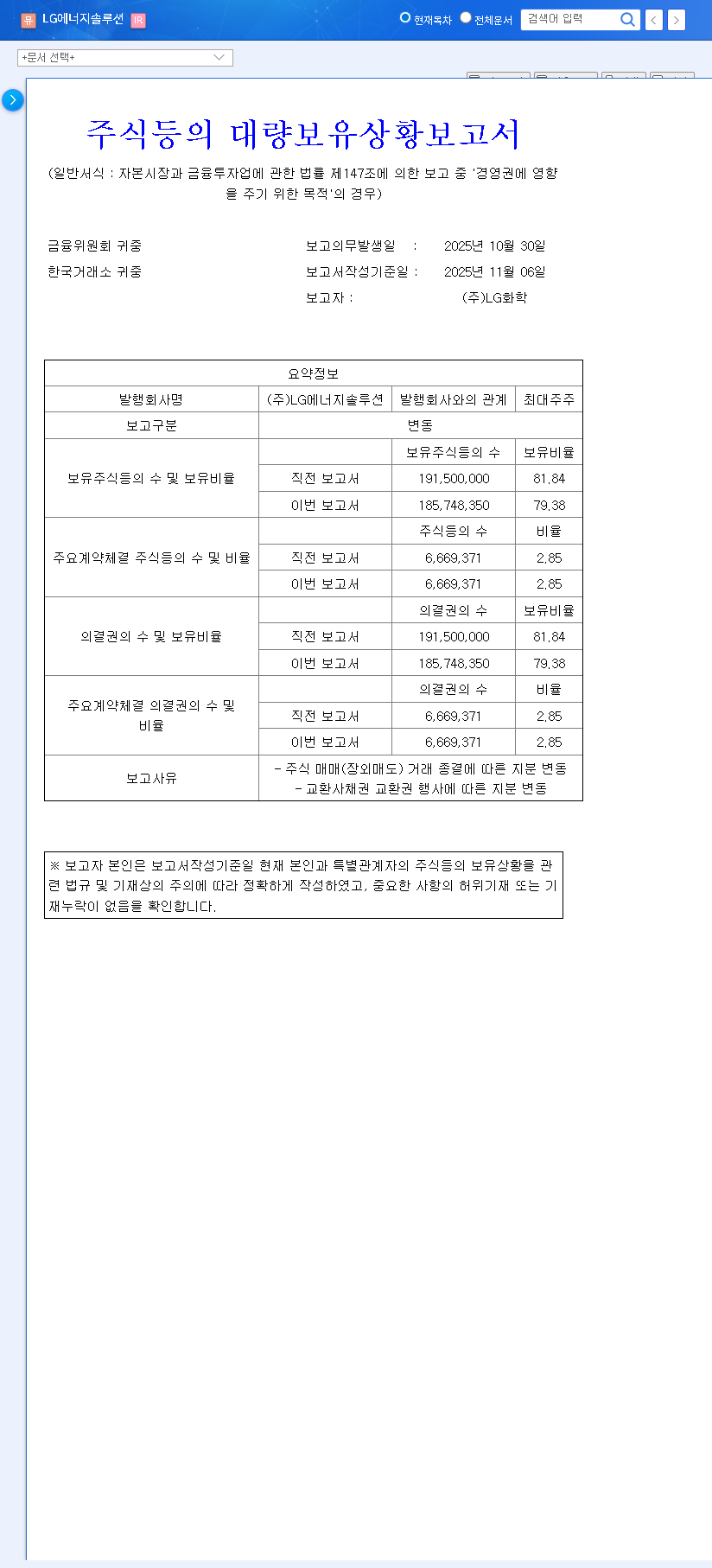
    On October 30, 2025, LG Chem executed an off-market sale of 5,750,000 common shares in LG Energy Solution. According to the Official Disclosure (Source: DART), this transaction reduced LG Chem’s ownership from 81.84% to 79.38%. While a 2.46% change may seem minor, a block sale of this magnitude is a significant event that warrants close examination. The stated reasons included general stock trading and the exercise of exchange rights for exchangeable bonds, but the underlying strategic motivations are what truly matter to investors.

    Despite the sale, LG Chem retains a commanding 79.38% stake, ensuring that management control over LG Energy Solution remains firmly intact and undisputed.

    Analyzing the ‘Why’: Potential Motives Behind the Sale

    While LG Chem’s official holding purpose remains ‘influence over management,’ such a large divestment is typically driven by strategic financial goals. Here are the most likely reasons behind the decision:

    • Capital for New Investments: The proceeds could be earmarked to fund LG Chem’s expansion into other high-growth sectors, such as advanced battery materials (e.g., cathodes, anodes), which are critical for the entire EV supply chain.
    • Strengthening Financial Health: The sale provides a significant cash infusion that can be used to pay down debt, improve the balance sheet, and enhance LG Chem’s overall financial resilience in a volatile economic climate.
    • Strategic Portfolio Realignment: This move might be part of a broader strategy by the LG Group to rebalance its portfolio, unlocking value from its mature assets to reinvest in next-generation technologies and businesses.

    It’s crucial to understand this was likely a strategic financial maneuver by the parent company rather than a signal of lost confidence in LG Energy Solution’s future.

    Impact Analysis for LG Energy Solution Investors

    Short-Term Market Reaction and Stock Volatility

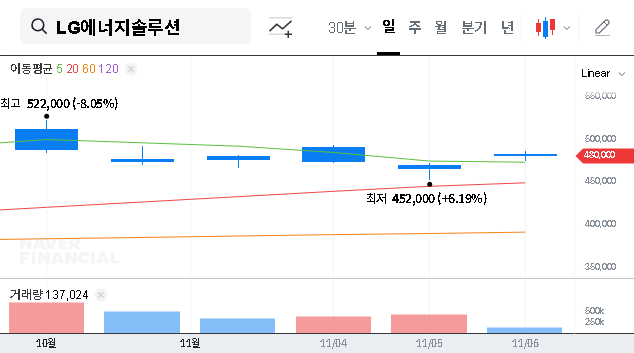
    In the short term, a large block sale like this can create what’s known as ‘stock overhang.’ This puts downward pressure on the LGES stock price as the market works to absorb the new supply of shares. Investor sentiment may temporarily weaken, leading to increased price volatility. However, such movements are often disconnected from the company’s underlying operational performance. For a detailed view of market trends, investors often consult authoritative sources like Bloomberg’s market analysis.

    Long-Term Outlook: Fundamentals Remain Strong

    Looking beyond the immediate market noise, the fundamental case for an LG Energy Solution investment remains compelling. The company is a global leader in the rapidly expanding electric vehicle (EV) battery market. Key strengths include:

    • Technological Leadership: LGES continues to innovate in battery chemistry and design, securing major contracts with leading automakers worldwide.
    • Aggressive Investment: With plans for KRW 5.8 trillion in new investments and a significant increase in R&D spending, the company is positioning itself for future dominance.
    • Market Growth: The global shift to electrification provides a powerful tailwind. You can learn more in our deep dive into the EV battery market.

    Therefore, this stake sale does not alter the company’s long-term growth trajectory or its competitive position in the industry.

    Actionable Investment Strategy & Outlook

    How should investors react to this development concerning their LG Energy Solution stock position?

    For the Cautious Short-Term Trader

    A prudent approach is to monitor the stock for signs of stabilization. Watch for the trading volume to normalize as the sold shares are absorbed by the market. Increased volatility presents risks, but also potential entry points for those with a high risk tolerance. A wait-and-see approach is advisable until the near-term selling pressure subsides.

    For the Fundamental Long-Term Investor

    For those focused on the company’s intrinsic value, any price dip resulting from this sale could represent a strategic buying opportunity. The long-term growth story of the EV and battery storage markets is unchanged. This event is external to LGES’s operations and, if it leads to a lower stock price, may offer a more attractive entry point for accumulating a long-term position.

    Conclusion: A Strategic Move, Not a Red Flag

    In conclusion, LG Chem’s sale of a minority stake in LG Energy Solution appears to be a calculated financial decision to unlock capital for its own strategic priorities. It does not compromise control over LGES or signal a lack of faith in its future. While the LG Energy Solution stock may experience short-term turbulence, the company’s robust fundamentals, market leadership, and the secular growth trend of electrification remain firmly in place. Investors should view this event through a strategic lens, separating short-term market sentiment from long-term business potential.
    (373220) LG Energy Solution Stock: Analysis of LG Chem's Stake Sale & Future Outlook 관련 이미지
  • (039130) HANATOUR Earnings (039130) Miss in Q3 2025: An In-Depth Stock Analysis for Investors

    (039130) HANATOUR Earnings (039130) Miss in Q3 2025: An In-Depth Stock Analysis for Investors

    The latest HANATOUR earnings report for Q3 2025 has sent ripples of concern through the investment community. Despite a backdrop of recovering global travel, HANATOUR SERVICE INC. (039130) delivered provisional results that fell short of market expectations, particularly a significant miss in net profit. This unexpected outcome suggests increased short-term downward pressure on the HANATOUR stock price and raises critical questions about the company’s profitability and future trajectory.

    This comprehensive (039130) analysis will dissect the Q3 performance, explore the underlying factors behind the earnings miss, evaluate the potential impact on stock prices, and provide a strategic action plan for investors navigating this uncertainty. Let’s delve into what these numbers mean for Hanatour’s position in the competitive travel landscape.

    Deconstructing the Q3 2025 Provisional Results

    On November 5, 2025, Hanatour announced its provisional results, revealing a disconnect between operational performance and market consensus. The official figures, which can be verified in the Official Disclosure on DART, show a clear miss in key financial metrics.

    • Revenue: KRW 123.3 billion (6% below the estimate of KRW 130.7 billion)
    • Operating Profit: KRW 8.3 billion (1% below the estimate of KRW 8.4 billion)
    • Net Profit: KRW 7.7 billion (a significant 21% miss versus the estimate of KRW 9.8 billion)

    The most alarming figure is the net profit, which dramatically undershot expectations. While operating profit was nearly in line, it still represents a year-over-year decrease from Q3 2024’s KRW 12 billion. This signals that even as travel demand returns, Hanatour is struggling to convert top-line activity into bottom-line profit, a key concern for investors analyzing travel industry stocks.

    Why Did the HANATOUR Earnings Miss Expectations?

    The disappointing Q3 2025 earnings were not the result of a single issue, but rather a confluence of external pressures and internal challenges.

    Macroeconomic Headwinds and Industry Pressures

    While stable interest and exchange rates provided some relief, the travel sector remains highly sensitive to global volatility. According to recent industry reports from Skift, rising operational costs are a major concern. For Hanatour, volatile oil prices directly impact airfare costs, while higher freight indices burden logistics. These external cost pressures have evidently squeezed profit margins despite the industry’s post-pandemic recovery tailwinds.

    Fundamental Strengths and Weaknesses

    A deeper look at Hanatour’s fundamentals reveals a mixed picture:

    • Positives: The company is well-positioned to benefit from long-term tourism recovery. Strategic initiatives, including cost-efficiency programs, shareholder-friendly actions like treasury stock cancellation, and investments in new IT and location-based services, show a forward-looking approach.
    • Risks: Persistent revenue decline, a high debt-to-equity ratio, and intensifying competition from both traditional and digital-native travel agencies are significant concerns. Furthermore, the company remains exposed to macroeconomic shocks and potential litigation risks.

    Stock Price Outlook and Investor Sentiment

    The immediate reaction to the earnings miss is likely to be negative for the HANATOUR stock. Selling pressure is anticipated as the market digests the 21% net profit shortfall, which could erode investor confidence and reinforce a more conservative outlook on future performance.

    In the mid-to-long term, the market will shift its focus from this single quarter to a broader reassessment of Hanatour’s fundamental recovery narrative. The key question will be whether this is a temporary setback or a sign of deeper structural issues.

    The success of new ventures and the company’s ability to defend its market share will be critical catalysts for a potential rebound. As a bellwether for the Korean travel market, Hanatour’s performance could also dampen sentiment across the wider sector. Investors can read our analysis of the broader travel industry outlook for 2026 to understand these trends better.

    Investor Action Plan: Maintain ‘Neutral’ and Monitor Closely

    Given the conflicting signals—a recovering industry versus weakening profitability—a ‘Neutral’ investment stance is prudent. However, passive waiting is not enough. Active monitoring of several key indicators is essential to identify the next inflection point:

    • Q4 Earnings & Guidance: Scrutinize the next report for signs of a profitability turnaround.
    • Margin Improvement: Look for concrete evidence that cost-control strategies are working.
    • New Business Traction: Track the revenue contribution and growth of new IT and location-based service ventures.
    • Competitive Positioning: Monitor market share data against competitors like Mode Tour and emerging online travel agencies.

    Frequently Asked Questions (FAQ)

    Q1: How did HANATOUR’s Q3 2025 earnings perform against expectations?

    A1: Hanatour’s Q3 2025 earnings fell short of market expectations. Revenue was 6% below estimates, while net profit missed by a significant 21%.

    Q2: What is the expected short-term impact on the HANATOUR stock price?

    A2: A negative short-term impact is anticipated, with downward pressure on the stock price due to the substantial net profit miss and weakened investor confidence.

    Q3: What are the main factors behind Hanatour’s underperformance?

    A3: Key factors include macroeconomic pressures like high oil prices squeezing margins, intensifying market competition, a high debt-to-equity ratio, and a general failure to translate recovering travel demand into strong net profit.

    (039130) HANATOUR Earnings (039130) Miss in Q3 2025: An In-Depth Stock Analysis for Investors 관련 이미지
  • (011760) HYUNDAI CORPORATION Q3 Earnings Analysis (2025): A Deep Dive for Investors

    (011760) HYUNDAI CORPORATION Q3 Earnings Analysis (2025): A Deep Dive for Investors

    The latest HYUNDAI CORPORATION Q3 Earnings report for 2025 presents a complex narrative for investors. While the company showcased robust top-line growth by surpassing revenue expectations, a miss on operating profit has cast a shadow of uncertainty. This mixed result raises a critical question: Is this a temporary setback or a sign of deeper structural issues? This in-depth Hyundai Corporation analysis will dissect the preliminary results, explore the underlying fundamentals driving these numbers, and provide a clear, actionable investment outlook for both current and potential shareholders.

    Breaking Down the HYUNDAI CORPORATION Q3 Earnings Report

    On November 4, 2025, Hyundai Corporation released its preliminary Q3 performance figures, which painted a dual-sided picture of strength and weakness. According to the Official Disclosure, the company’s operational capabilities appear strong, but profitability faced headwinds. Here are the key takeaways:

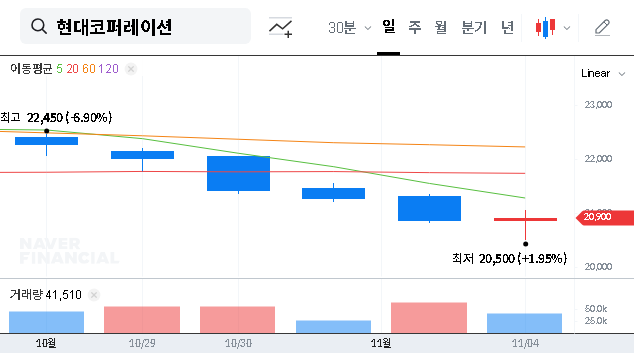
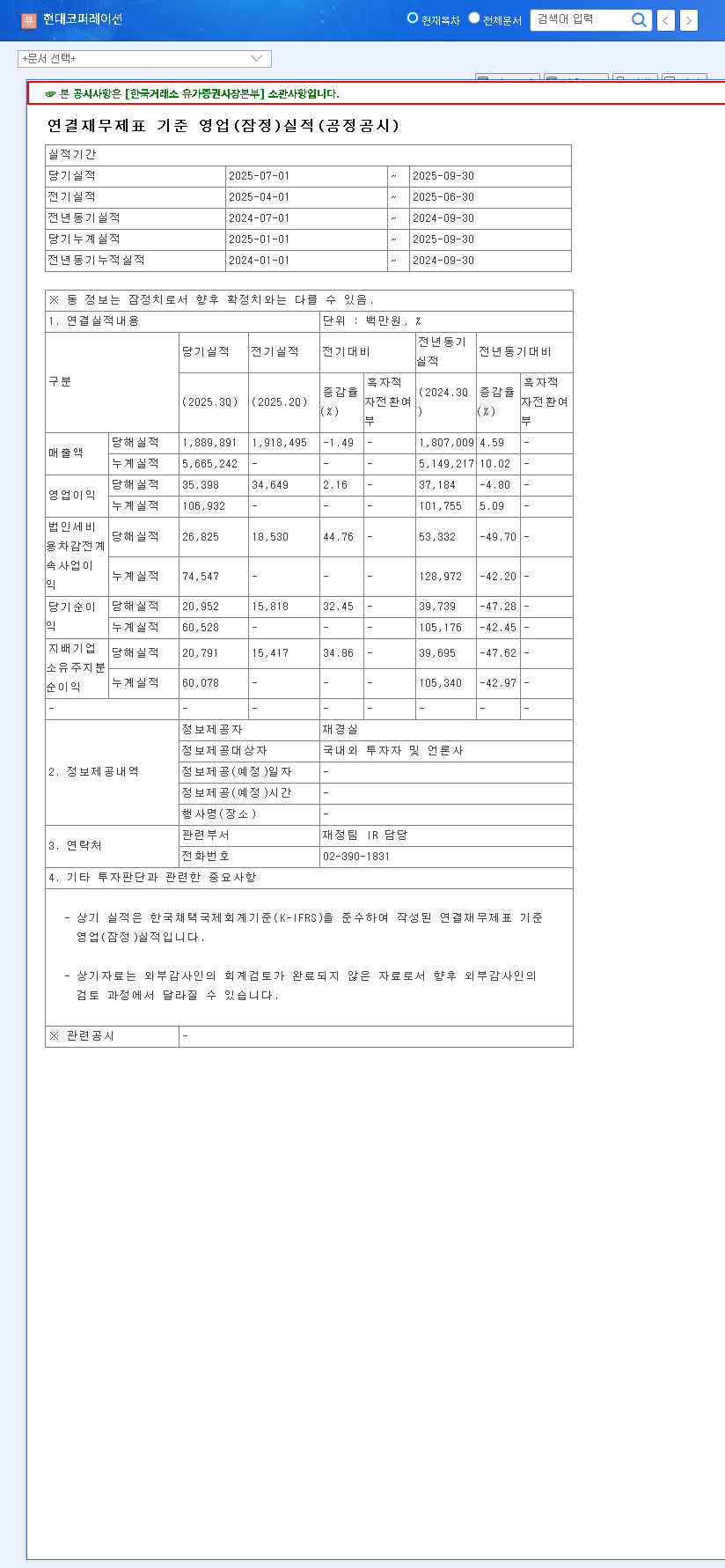
    • Strong Revenue Performance: The company posted revenue of 1.8899 trillion KRW, narrowly beating the market consensus of 1.8837 trillion KRW. This suggests resilient demand and stable operations in its core business segments.
    • Operating Profit Miss: Operating profit came in at 35.4 billion KRW, falling just short of the 36.1 billion KRW estimate. While the miss is slight, it’s a critical indicator of profitability that has rightly captured investor attention.
    • Solid Net Income: Net income was reported at 20.8 billion KRW. Without a market estimate for comparison, this figure provides a baseline for future performance analysis.

    Why Did Operating Profit Fall Short? A Fundamental Analysis

    To understand the slight yet significant miss in operating profit, we must look beyond the surface-level numbers and into the company’s core structure and the economic environment it operates in. Several converging factors likely contributed to the pressure on profitability.

    Dependency on Volatile Sectors

    Hyundai Corporation’s business is heavily weighted towards sectors known for their cyclical nature and sensitivity to external shocks. The Petrochemical segment (33.3%) is directly tied to fluctuating oil prices, while the Steel (28.6%) and Passenger Vehicle (22.5%) segments are subject to global demand, supply chain disruptions, and shifting industrial policies. A temporary cost increase or margin squeeze in any one of these large segments can easily impact overall profitability, which may have been the case in Q3.

    The core challenge for Hyundai Corporation is its high dependency on external macroeconomic variables. Fluctuations in currency exchange rates, raw material prices, and geopolitical tensions can directly and immediately impact performance.

    A Closer Look at Financial Health

    A significant point of concern for investors is the company’s rising debt-to-equity ratio, which climbed to 273.4% as of the first half of 2025. This elevated ratio suggests a higher financial burden and increased risk, as more of the company’s earnings may be allocated to servicing debt rather than reinvesting for growth. On a more positive note, the company’s cash and cash equivalents also increased, indicating healthy short-term liquidity and the ability to meet immediate obligations. This financial tension is a key factor when investing in Hyundai Corporation.

    Market Impact and Future Outlook for Hyundai Corporation Stock

    In the short term, the operating profit miss could weigh on Hyundai Corporation stock as the market digests the profitability concerns alongside the high debt ratio. However, the strong revenue figure provides a solid foundation, preventing a more severe negative reaction. For a broader perspective on market trends, investors often consult sources like Reuters Financial News.

    Looking ahead, the long-term outlook holds promise. The company has signaled investments in new growth areas, including robotics and other business diversification efforts. These strategic pivots, if successful, could reduce its reliance on volatile legacy sectors and unlock new revenue streams. The progress of these new ventures will be a critical determinant of the stock’s long-term trajectory. You can learn more about market diversification strategies in our related article on Portfolio Diversification in a Volatile Market.

    Investor Action Plan: Key Factors to Monitor

    Based on this comprehensive Hyundai earnings report analysis, a ‘Neutral’ or ‘Hold’ stance is prudent. Investors should closely monitor the following developments in the upcoming quarters:

    • Q4 Profitability Trends: Look for a detailed explanation of the Q3 profit miss and signs of margin improvement in the next earnings call.
    • Debt Management: Watch for any strategic initiatives aimed at improving financial soundness and reducing the debt-to-equity ratio.
    • New Business Progress: Seek concrete updates and business plans related to investments in robotics and other diversification efforts.

    Disclaimer: This article is for informational purposes only and is based on the provided preliminary data. Investment decisions should be made based on individual research, and the final responsibility rests with the investor.

    (011760) HYUNDAI CORPORATION Q3 Earnings Analysis (2025): A Deep Dive for Investors 관련 이미지
  • (138360) Hyupjin Co., Ltd. Convertible Bond Exercise: A Deep Dive for Investors

    (138360) Hyupjin Co., Ltd. Convertible Bond Exercise: A Deep Dive for Investors

    The recent announcement of the Hyupjin Co., Ltd. convertible bond exercise has sent ripples through the investment community. This pivotal financial event, officially disclosed on November 4, 2025, presents a complex scenario for shareholders. On one hand, it signals potential stock dilution; on the other, it points towards a strengthening financial foundation. For investors, this raises a critical question: is this a short-term risk to be navigated carefully or a long-term opportunity signaling corporate confidence? This comprehensive analysis will explore the details of the convertible bond conversion, assess Hyupjin’s improving fundamentals, and provide a strategic roadmap for making informed decisions.

    The Details: Understanding the Convertible Bond Conversion

    On November 4, 2025, Hyupjin Co., Ltd. formally announced a ‘Claim for Conversion Rights’. This action allows holders of the company’s convertible bonds to exchange their debt instruments for equity shares. As detailed in the Official Disclosure filed on DART, the key figures are as follows:

    • Company: Hyupjin Co., Ltd. (Market Cap: KRW 48.9 billion)
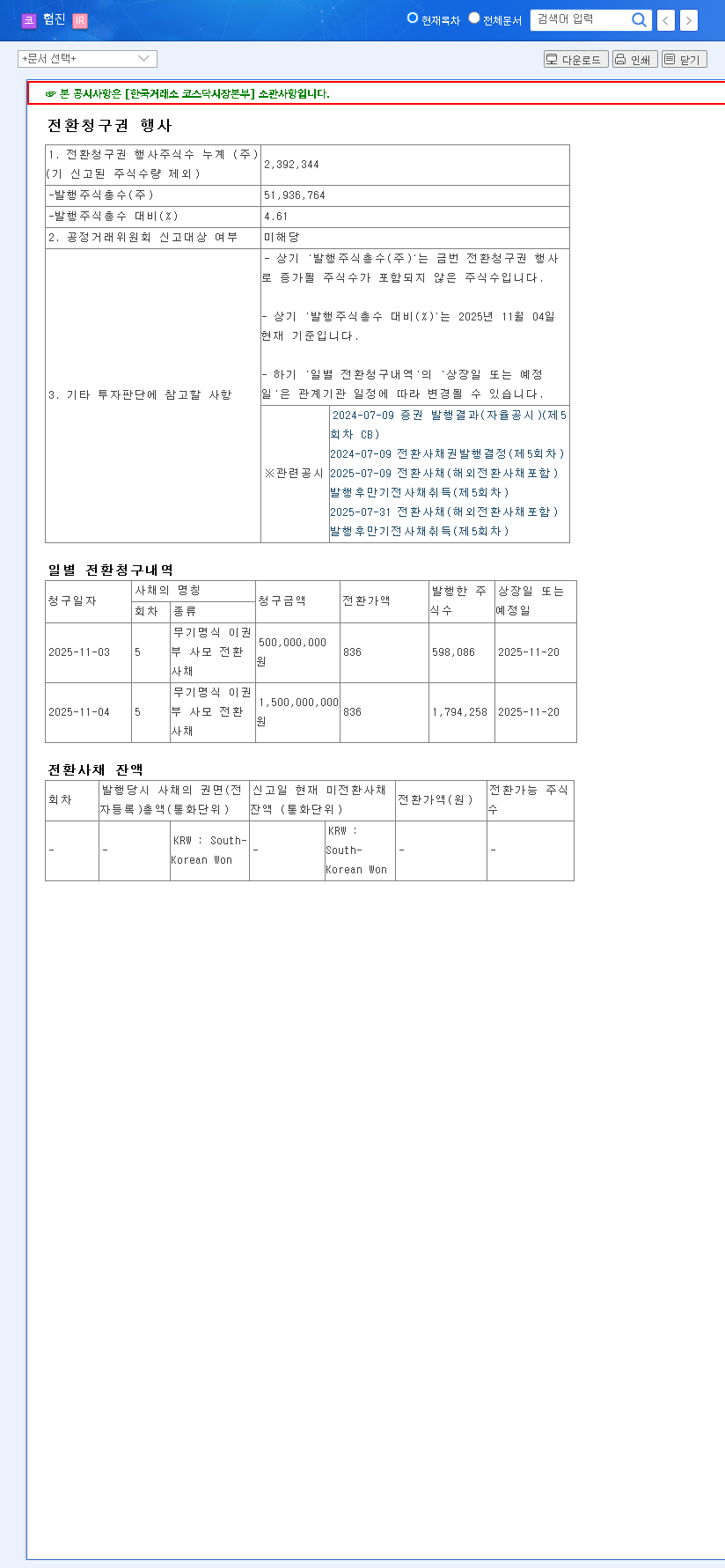
    • Shares to be Converted: 2,392,344 shares
    • Conversion Price: KRW 836 per share
    • Dilution Impact: Approx. 4.61% of total outstanding shares
    • Expected Listing Date: November 20, 2025

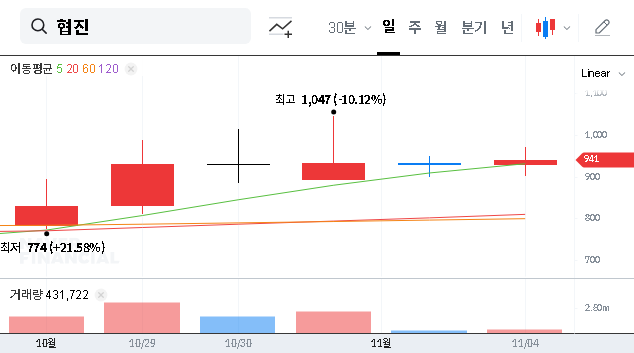
    The conversion price of KRW 836 is notably lower than the recent stock price of KRW 941. This price difference creates a clear incentive for bondholders to exercise their rights, as it allows them to acquire stock at a discount and potentially realize immediate profits by selling on the open market. This is a primary driver behind the timing of this large-scale conversion.

    Why Now? A Look at Hyupjin’s Improving Financial Health

    While an event like the Hyupjin Co., Ltd. convertible bond exercise might initially spook the market due to stock dilution fears, it’s crucial to analyze it within the context of the company’s strengthening fundamentals. The December 2024 business report reveals several positive developments that paint a more optimistic picture.

    Strengthened Financial Structure

    Hyupjin has made significant strides in bolstering its financial stability. Through a combination of capital increases and strategic convertible bond issuance, the company has increased its cash reserves while simultaneously reducing its debt-to-equity ratio. This convertible bond conversion further reduces debt from its balance sheet, converting it into equity and signaling a healthier financial posture. For more on this topic, see our guide to analyzing corporate balance sheets.

    Improved Profitability and Diversification

    The company’s 2024 performance showed a remarkable turnaround, with a substantial revenue increase leading to a net profit. A significant portion of this success can be attributed to profitable investments in associate companies like ‘Kwangmu’. This diversification strategy is paying off, creating revenue streams beyond its core business and contributing positively to Hyupjin’s bottom line and Return on Equity (ROE).

    The conversion of debt to equity is a double-edged sword: it dilutes existing shares but simultaneously de-risks the company by lowering its debt obligations, potentially paving the way for future growth investments.

    Impact Analysis: Stock Price, Financials, and Operations

    The immediate effect of this event will be felt across several areas of the company. Investors should anticipate both short-term pressures and long-term strategic shifts.

    Short-Term Stock Price and Dilution

    The listing of nearly 2.4 million new shares will cause a stock dilution of approximately 4.61%. In simple terms, the company’s net income will be spread across more shares, which can lead to a decrease in Earnings Per Share (EPS). This, combined with the potential for newly converted shareholders to sell their stock to lock in profits, could exert downward pressure on the stock price in the days following November 20, 2025.

    Long-Term Financial and Business Impact

    Financially, the move is a net positive for stability. Reducing debt lowers interest expenses and improves the company’s credit profile, which can reduce future borrowing costs. This improved financial flexibility can be a catalyst for growth. The capital can be channeled into R&D for its core food processing machinery business or used to expand its facility, as noted by leading industry analysts at authoritative sources like the Financial Times. Operationally, the core business remains unaffected, but a stronger balance sheet provides the fuel for strategic expansion.

    A Strategic Guide for Investors

    A comprehensive investor analysis must weigh the short-term dilution against the long-term benefits of enhanced financial health. While the immediate market reaction may be negative, the underlying fundamentals suggest a more resilient company is emerging. Investors should consider the following:

    • Monitor Sell-Offs: Keep an eye on trading volume around the listing date. A massive sell-off could create a buying opportunity if you believe in the long-term story.
    • Evaluate Macro-Factors: Favorable macroeconomic conditions, such as expected interest rate cuts, could improve overall market sentiment and mitigate some of the downward pressure on the stock.
    • Assess Risk Factors: It is critical to remember Hyupjin’s past. A history of administrative stock designation and auditors’ remarks on revenue recognition are risk factors that demand cautious optimism.

    In conclusion, the Hyupjin Co., Ltd. convertible bond exercise is a pivotal moment. For the patient investor, looking beyond the immediate stock dilution reveals a company actively working to strengthen its financial base, which is the cornerstone of sustainable, long-term growth.

    (138360) Hyupjin Co., Ltd. Convertible Bond Exercise: A Deep Dive for Investors 관련 이미지
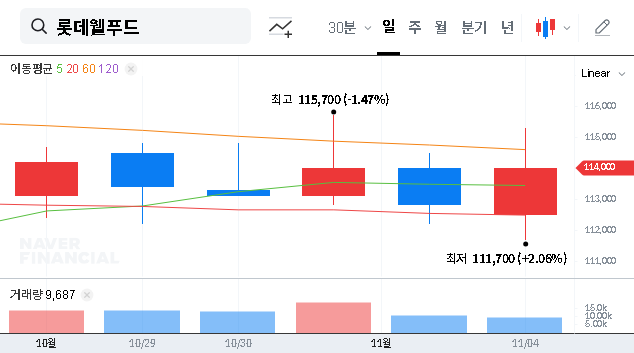
  • (280360) LOTTE WELLFOOD Q3 Earnings: Revenue Up, Profit Dips – A 2025 Investment Analysis

    (280360) LOTTE WELLFOOD Q3 Earnings: Revenue Up, Profit Dips – A 2025 Investment Analysis

    The latest LOTTE WELLFOOD Q3 earnings report for 2025 presents a complex picture for investors. On one hand, the company demonstrated solid top-line growth, beating revenue expectations. On the other, a surprising dip in operating profit has raised questions about underlying profitability and cost pressures. This mixed result creates a critical moment for a thorough LOTTE WELLFOOD investment analysis.

    Is this a temporary setback on a long-term growth path, or a red flag signaling deeper issues? This article provides a comprehensive breakdown of the Q3 performance, explores the fundamental drivers and risks, and outlines a clear investment strategy for anyone monitoring LOTTE WELLFOOD stock.

    Unpacking the LOTTE WELLFOOD Q3 Earnings Report

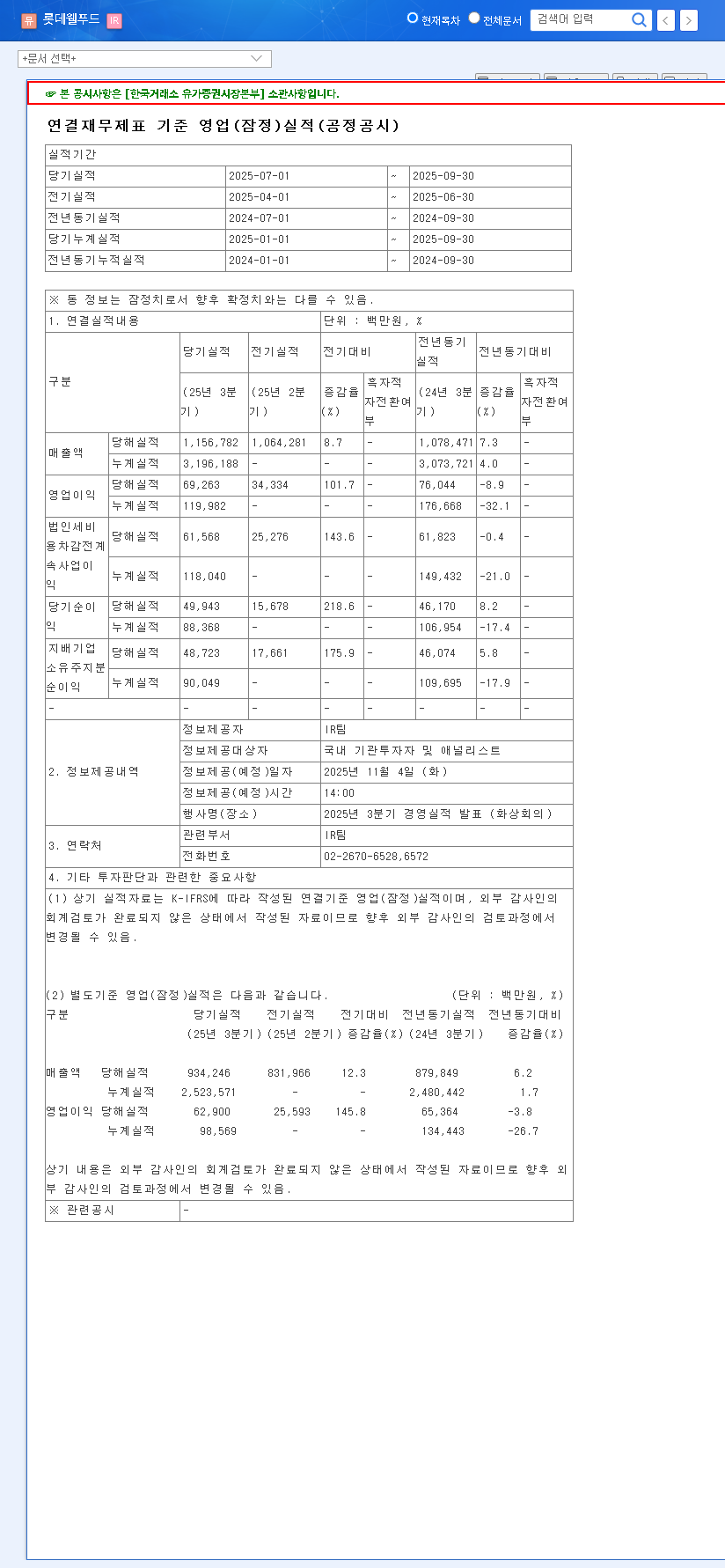
    On a consolidated basis, LOTTE WELLFOOD announced its preliminary Q3 2025 operating results, which revealed a diverging performance against market consensus. The official figures can be reviewed in the company’s disclosure. (Source: DART)

    Here are the key metrics from the report:

    • Revenue: KRW 1,156.8 billion, which was 3% above the market forecast of KRW 1,121.5 billion.
    • Operating Profit: KRW 69.3 billion, a notable 5% below the market forecast of KRW 72.9 billion.
    • Net Profit: KRW 48.7 billion, a surprising 9% above the market forecast of KRW 44.7 billion.

    While the strong revenue and net profit figures are encouraging, the shortfall in operating profit—the key indicator of a company’s core business profitability—is the central point of concern for analysts and investors. This suggests that while sales are growing, the cost of achieving those sales is rising faster than anticipated.

    The Core Challenge: Why Did Operating Profit Miss Expectations?

    The operating profit miss wasn’t an isolated event. It reflects several persistent headwinds that were already visible in the first half of the year. A detailed corporate earnings analysis points to a combination of external and internal pressures.

    Macroeconomic Headwinds

    The global economic environment has been challenging. For LOTTE WELLFOOD, three factors are particularly impactful:

    • Raw Material Volatility: Rising prices for key ingredients, influenced by global commodity markets and oil prices, directly compress profit margins. For more on this trend, see analysis from sources like Bloomberg.
    • Exchange Rate Pressure: As a major importer of raw materials, a strong dollar against the Korean Won increases the cost of goods, creating a significant burden on the company’s bottom line.
    • High Interest Rates: A sustained high-interest-rate environment increases borrowing costs and can dampen consumer spending, adding financial strain.

    Competitive and Operational Pressures

    Beyond the macro environment, the food industry itself is fiercely competitive. Increased selling, general, and administrative (SG&A) expenses, likely from marketing and promotional activities to fend off rivals, have eaten into profits. The rise of private-label brands and the growth of e-commerce channels further intensify price competition, making it difficult to pass on rising costs to consumers.

    The Q3 earnings report highlights a classic dilemma: pursue revenue growth at the expense of short-term profitability or protect margins and risk losing market share. LOTTE WELLFOOD appears to be navigating this challenging trade-off.

    Investment Thesis: A ‘Neutral’ Stance on LOTTE WELLFOOD Stock

    Given the conflicting signals from the LOTTE WELLFOOD Q3 earnings, a ‘Neutral’ investment opinion is maintained. The market will likely react cautiously, weighing the positive revenue momentum against the clear profitability concerns. While the better-than-expected net profit offers some relief, it may be influenced by non-operating factors rather than core business strength.

    The long-term bull case for the stock relies on the success of its strategic initiatives:

    • Health & Wellness (H&W) Focus: The continued expansion of its popular ‘ZERO’ and ‘0 Kcal’ product lines taps into a powerful consumer trend.
    • Global Market Expansion: Strong performance in key overseas markets like India and Kazakhstan can offset domestic sluggishness.
    • Brand Power: LOTTE’s strong brand recognition remains a formidable competitive advantage.

    However, the bear case is rooted in the immediate challenges highlighted in this report. Until there is clear evidence that the company can improve its operating profit margin, the stock may remain range-bound. For a broader perspective, you might read our guide to investing in food industry stocks.

    Future Monitoring Points for Investors

    For those conducting a LOTTE WELLFOOD investment analysis, the path forward requires diligent monitoring. The future trajectory of the stock will likely depend on the following factors:

    • Operating Profit Margin Recovery: Watch for any announcements or strategies aimed at cost reduction, SG&A rationalization, and a focus on higher-margin products in Q4 and beyond.
    • Growth Engine Performance: Confirm that the H&W and overseas business segments continue their strong growth trajectory to drive overall revenue.
    • Pricing Power: Assess the company’s ability to implement price adjustments to offset inflation without significantly impacting sales volume amidst heavy competition.

    (280360) LOTTE WELLFOOD Q3 Earnings: Revenue Up, Profit Dips – A 2025 Investment Analysis 관련 이미지
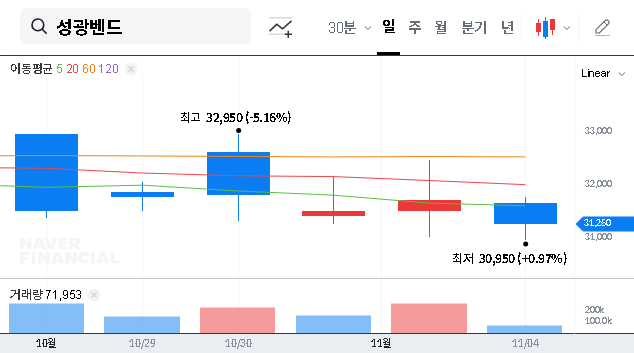
  • (014620) SUNG KWANG BEND Q3 2025 Earnings: In-Depth Analysis & Stock Outlook

    (014620) SUNG KWANG BEND Q3 2025 Earnings: In-Depth Analysis & Stock Outlook

    The latest SUNG KWANG BEND Q3 2025 earnings report has landed, presenting a complex but revealing picture for investors. The company, a key player in the industrial fittings sector, announced strong revenue figures that surpassed market expectations. However, a miss on operating profit has introduced a note of caution, leaving many to wonder about the underlying health and future trajectory of SUNG KWANG BEND stock. These figures are far more than just numbers on a spreadsheet; they are critical signals about the company’s operational efficiency, market position, and resilience in a dynamic economic environment. This comprehensive earnings analysis will dissect the results, explore the challenges and opportunities ahead, and provide a clear roadmap for formulating a prudent investment strategy.

    Q3 2025 Preliminary Earnings: The Headline Figures

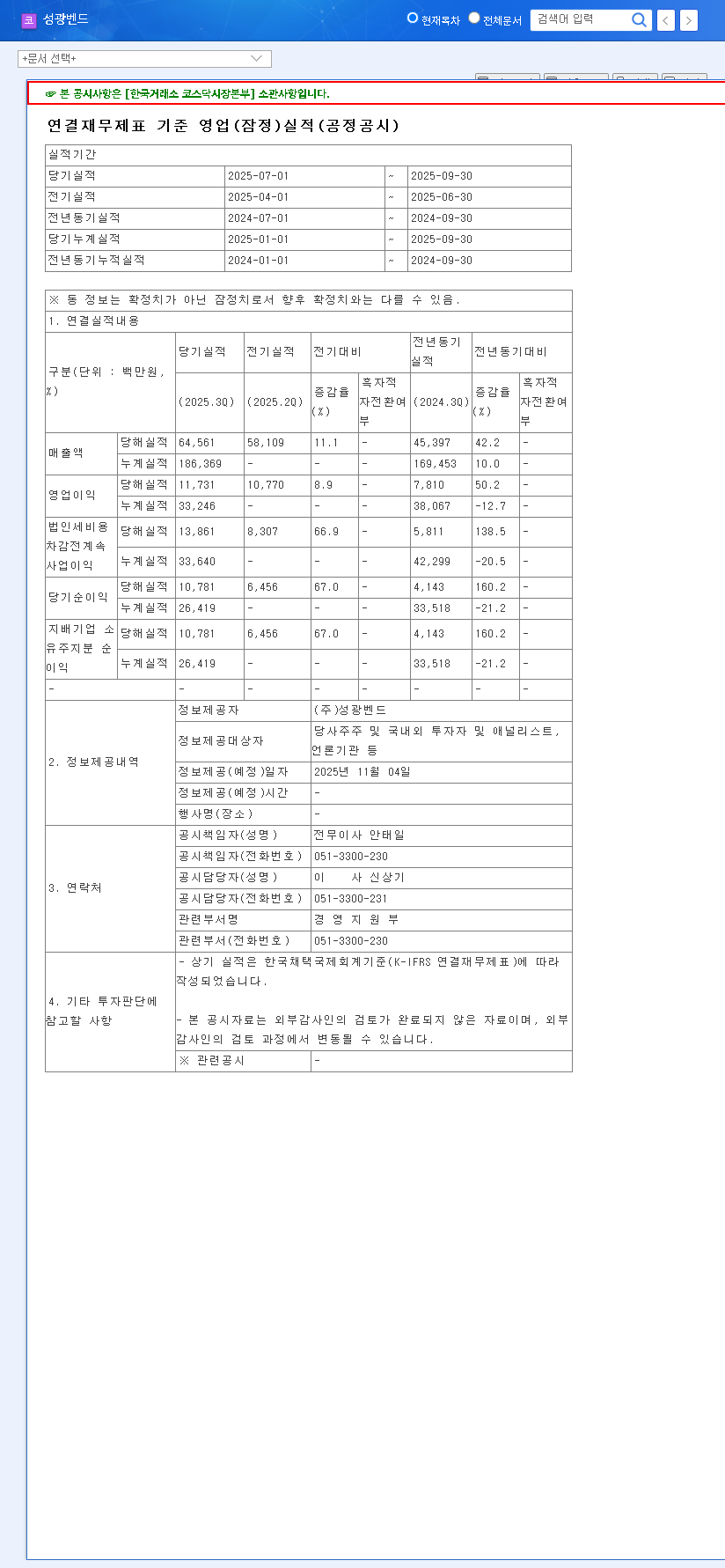
    On November 4, 2025, SUNG KWANG BEND released its preliminary operating results, revealing a mixed but intriguing performance. The official numbers, as filed, can be viewed in the Official Disclosure (DART). Here are the key takeaways:

    • Revenue: KRW 64.6 billion, which is approximately 5.4% above market consensus.
    • Operating Profit: KRW 11.7 billion, falling about 3.3% below market forecasts.
    • Net Profit: KRW 10.8 billion, a significant beat of 13.7% above market estimates.

    The core story of the SUNG KWANG BEND Q3 2025 earnings is a classic conflict: robust top-line growth overshadowed by margin pressure. While strong sales indicate healthy demand, the dip in operating profit signals underlying cost challenges that investors must carefully evaluate.

    In-Depth Analysis: Behind the Numbers

    Robust Revenue Driven by Core Industries

    The revenue of KRW 64.6 billion is a clear positive, representing a continued growth trajectory from previous quarters. This strength suggests that the company’s fundamentals are solid and that demand from its key downstream industries, such as shipbuilding and LNG plant construction, is recovering. This top-line performance indicates a healthy order book and effective market positioning, which is a crucial pillar for any positive investor outlook.

    What Dragged Down Operating Profit?

    The slight miss in operating profit is primarily attributed to two key factors: volatile conditions in front-line industries and, more critically, rising raw material costs. As a manufacturer of industrial fittings, SUNG KWANG BEND is heavily reliant on steel and other alloys. Recent global supply chain disruptions and inflationary pressures have likely increased these input costs, squeezing profit margins. This challenge to company profitability highlights the importance of cost management and pricing power in the current economic climate.

    The Net Profit Rebound Explained

    The impressive 13.7% beat on net profit, despite the operating profit miss, suggests favorable non-operating factors. This could include gains from foreign exchange translations, income from financial assets, or a lower-than-expected corporate tax burden. While positive for the bottom line, investors should view this as a one-off or non-recurring benefit until proven otherwise, keeping the focus on the core operational performance.

    Financial Health and Strategic Outlook

    The company’s stable financial structure, characterized by a low debt-to-equity ratio, provides a strong foundation. This financial prudence enhances its resilience against market shocks and provides flexibility for future investments. Historically, the company’s performance, as seen in our previous quarterly reviews, has been tied to cyclical industries. However, a strategic investment in solar power signals a forward-thinking approach. This move not only strengthens its ESG credentials but also aims to diversify revenue streams and secure long-term growth momentum, reducing its dependence on traditional sectors.

    Investor’s Corner: Stock Impact and Future Path

    So, how will the SUNG KWANG BEND Q3 2025 earnings affect the stock? In the short term, the market’s reaction will likely be mixed. The positive revenue and net profit figures may be counterbalanced by concerns over profitability. The stock, which has historically traded in a range, will likely experience some volatility as investors digest these conflicting signals.

    Positive and Negative Factors to Consider

    • Positives: The company boasts a stable market position, growing orders from recovering shipbuilding and LNG sectors, and long-term growth potential from its solar venture. A history of shareholder-friendly policies like dividends and buybacks adds to its appeal.
    • Negatives: Key risks include high sensitivity to industry cycles, profitability erosion from raw material and currency volatility, and a relatively high inventory burden that could tie up capital.

    Action Plan: A Prudent Investment Thesis

    The Q3 2025 results signal a fundamental recovery in demand but also highlight persistent margin challenges. A wise investment approach requires continuous monitoring of key external trends, such as global macroeconomic indicators discussed by sources like Reuters, and internal company efforts. Investors should focus on the company’s ability to manage costs, the pace of recovery in its core industries, and the tangible progress of its solar business. While SUNG KWANG BEND showcases potential, a long-term perspective that weighs both its intrinsic value and growth prospects against the prevailing risks is essential for success.

    (014620) SUNG KWANG BEND Q3 2025 Earnings: In-Depth Analysis & Stock Outlook 관련 이미지
  • (247540) ECOPRO BM Q3 2025 Earnings: A Deep Dive Analysis for Investors

    (247540) ECOPRO BM Q3 2025 Earnings: A Deep Dive Analysis for Investors

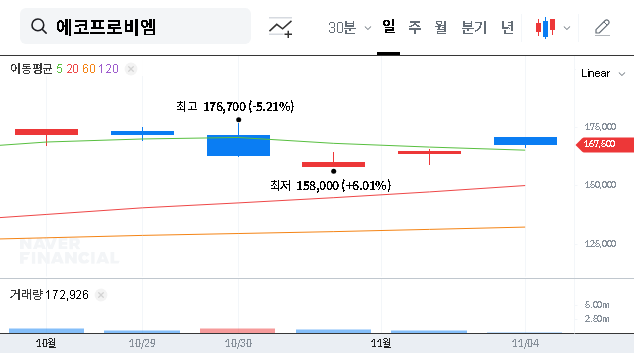
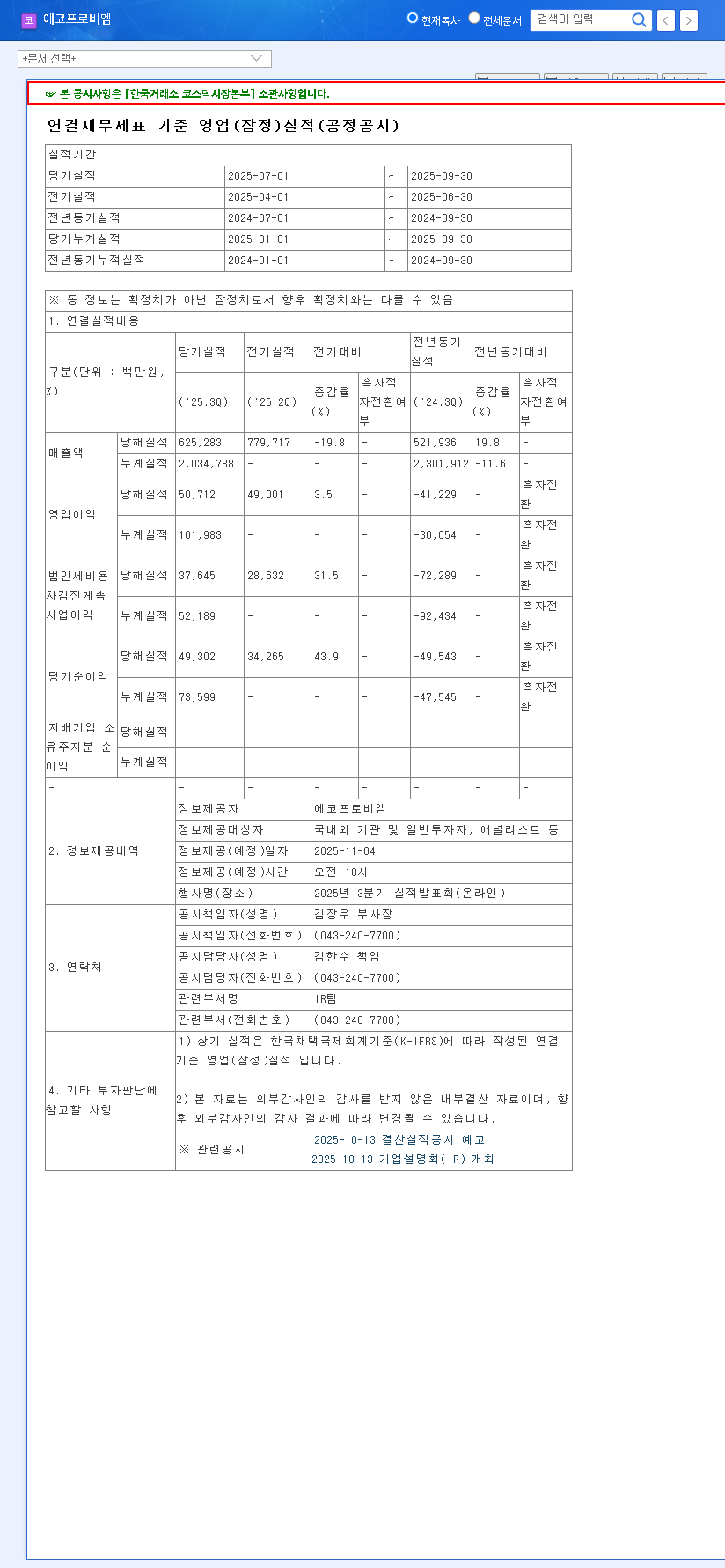
    The latest ECOPRO BM Q3 2025 earnings report presents a complex but revealing picture for investors in the secondary battery industry. The company, a critical player in the global electric vehicle (EV) supply chain, announced provisional results that, on the surface, seem contradictory: a significant dip in revenue that missed market expectations, yet a surprising surge in operating profit that beat them. This detailed ECOPRO BM earnings analysis unpacks these results, examines the underlying causes, and provides a strategic outlook for current and potential investors. For an official breakdown, you can view the Official Disclosure on DART.

    While top-line revenue faced headwinds, ECOPRO BM’s ability to bolster bottom-line profitability demonstrates a resilient operational core. The key question for investors is whether this is a sustainable trend or a temporary feat of cost management.

    Q3 2025 Earnings: The Key Figures

    ECOPRO BM’s provisional Q3 2025 performance can be summarized as a masterclass in profitability defense amidst challenging market conditions. Here are the headline numbers that caught the market’s attention:

    • Revenue: KRW 625.3 billion (17% below market consensus).
    • Operating Profit: KRW 50.7 billion (15% above market consensus).
    • Operating Profit Margin: 8.1% (a notable improvement both Quarter-on-Quarter and Year-on-Year).
    • Net Income: Provisional switch to a deficit, signaling non-operating pressures.

    Analysis: Deconstructing the Mixed Results

    Understanding the divergence between revenue and profit is crucial to forming a clear investment thesis for the ECOPRO BM stock. Let’s dissect the primary factors driving these outcomes.

    The Revenue Shortfall Explained

    The 20.1% Quarter-on-Quarter revenue decline can be attributed to a confluence of factors. Primarily, a temporary slowdown in the global EV market growth rate led major customers, such as Samsung SDI and SK On, to adjust their inventory levels. This downstream caution directly impacted orders for ECOPRO BM’s cathode materials. This sensitivity to short-term market shifts is a critical characteristic of the industry, but it underscores the importance of monitoring broader automotive and economic trends, as reported by sources like Bloomberg’s EV outlook.

    The Bright Spot: A Masterclass in Profitability

    Despite the challenging revenue environment, the company’s ability to exceed operating profit expectations is the standout story of the ECOPRO BM Q3 2025 earnings. This achievement highlights a successful internal focus on operational excellence. Key drivers include rigorous cost-cutting measures, enhanced production yields, supply chain optimizations, and a strategic shift towards a higher mix of premium, high-value-added cathode products. This demonstrates a maturing business model capable of defending margins even when top-line growth is stalled.

    Unpacking the Net Income Deficit

    The shift to a net income deficit requires careful scrutiny. This was likely driven by non-operating factors. Potential culprits include foreign exchange losses from a volatile KRW/USD rate impacting import costs of raw materials, increased financial costs associated with funding aggressive capacity expansion, or other one-time non-recurring expenses. Investors must await the finalized report to understand the precise nature and potential recurrence of these charges.

    Investment Outlook and Strategic Action Plan

    Considering the structural growth of the secondary battery industry, ECOPRO BM’s technological leadership and aggressive expansion plans keep its long-term potential intact. However, near-term volatility is expected. The stock price will likely be a battleground between the negative sentiment from the revenue miss and the positive surprise of strong profitability.

    Action Plan for Investors

    For those evaluating their position, a ‘Neutral’ but watchful stance is prudent. The company’s fundamental strengths are clear, but confirmation of a revenue recovery and sustainable profitability is needed. Monitor the following key areas closely:

    • Customer Demand Signals: Watch for announcements from key clients about inventory normalization and production ramp-ups.
    • Margin Sustainability: Can the 8.1% operating margin be maintained or improved as revenue potentially rebounds in Q4 and beyond?
    • CAPA Expansion Updates: Track the progress and financial burn rate of new production facilities in North America and Europe, which are critical for long-term growth.
    • Net Income Drivers: Scrutinize the final Q3 report for the specific causes of the net loss and the company’s plan to mitigate these factors. You can learn more in our guide to investing in the battery supply chain.

    In conclusion, ECOPRO BM’s Q3 2025 earnings reflect a company in a phase of maturation, flexing its operational muscles during a period of market softness. While the revenue figures warrant caution, the underlying profitability suggests a robust business ready to capitalize when demand accelerates. Prudent investors will watch for signs of that acceleration before making their next move.

    (247540) ECOPRO BM Q3 2025 Earnings: A Deep Dive Analysis for Investors 관련 이미지
  • (006400) SAMSUNG SDI’s 3 Trillion Won Battery Supply Deal: A Deep Dive for Investors

    The news of a potential 3 trillion Won SAMSUNG SDI battery supply contract has sent shockwaves through the financial markets, creating a mix of excitement and uncertainty for SAMSUNG SDI investors. While the sheer scale of the deal suggests a monumental win, the company’s official stance remains cautious. This crucial ambiguity presents a pivotal question: is this a ground-floor investment opportunity or a speculative trap?

    This comprehensive analysis moves beyond the headlines to provide a data-driven evaluation. We will dissect SAMSUNG SDI’s current fundamentals, analyze the competitive landscape of the EV battery market, and assess the broader macroeconomic factors at play. Our goal is to equip you with the insights needed to navigate this volatility and make strategic decisions regarding your SAMSUNG SDI stock position.

    The 3 Trillion Won Announcement: What We Know

    Official Stance and Key Dates

    On November 4, 2025, in response to widespread market reports, SAMSUNG SDI issued a formal disclosure. The company acknowledged that discussions for a major battery supply are in progress but stressed that nothing is finalized. The official disclosure (Source) confirms a re-disclosure is scheduled within one month, by December 3, 2025, which will provide a definitive update.

    SAMSUNG SDI’s Position: “Currently in discussions regarding the reported battery supply, but nothing has been definitively confirmed.”

    This ‘unconfirmed’ status is critical. It has created a speculative environment where the market is pricing in the potential upside, but significant risk remains until the details are concrete. All eyes are on the upcoming December deadline.

    SAMSUNG SDI’s Health Check: Fundamentals & Market Position

    To understand the potential impact of this deal, we must first assess the company’s current state based on its H1 2025 performance and the competitive EV battery market.

    The Challenged Energy Solutions Division

    The core of SAMSUNG SDI’s business is facing headwinds. The global slowdown in EV market growth, exacerbated by high interest rates and delayed automaker production schedules, has led to a significant performance decline.

    • Financial Strain: The division posted an operating loss of 883.2 billion Won on sales of 5.94 trillion Won, a sharp decrease year-over-year.
    • Low Utilization: Critically low factory utilization rates (44% for small batteries, 24% for EMC) are eroding profitability, making a large new contract essential for operational efficiency.
    • Competitive Pressure: The company faces intense competition from rivals like LG Energy Solution and SK On, as well as Chinese manufacturers such as CATL. Staying ahead requires continuous innovation, as discussed in this in-depth market report from Bloomberg.

    Bright Spots: Electronic Materials & Financials

    In contrast, the Electronic Materials division is thriving, fueled by demand for AI semiconductors and OLED panels. Financially, the company is on reasonable footing with a healthy 82.7% debt ratio, though this could become a concern if the Energy Solutions division’s losses continue. A recent 1.65 trillion Won rights issue provides capital for future investment, which could be deployed to support this new contract.

    Potential Scenarios for the SAMSUNG SDI Battery Supply Deal

    The confirmation—or failure—of this 3 trillion Won contract presents two very different futures for the company’s stock.

    The Bull Case: A Confirmed, High-Quality Contract

    • Revenue & Profit Surge: A contract of this size would immediately boost revenues and, more importantly, increase factory utilization rates, which is the fastest path back to profitability for the Energy Solutions division.
    • Enhanced Market Credibility: Securing a new major automotive partner would diversify SAMSUNG SDI’s customer base and serve as a powerful validation of its battery technology and quality.
    • Positive Stock Momentum: Confirmation with favorable terms could be the catalyst that reverses the recent downturn in SAMSUNG SDI stock, attracting significant investor interest.

    The Bear Case: Failure or Unfavorable Terms

    • Market Disappointment: If the deal falls through or is significantly smaller than reported, the market’s optimistic expectations will evaporate, likely leading to a sharp stock price correction.
    • Profit Margin Concerns: In a competitive market, automakers are pushing for lower prices. A large contract signed with thin profit margins might boost revenue but fail to meaningfully improve the bottom line.
    • Prolonged Uncertainty: Any delay beyond the December 3rd deadline will extend the period of volatility and could be interpreted negatively by the market.

    Investment Strategy and Recommendations

    Navigating this period requires a clear-eyed, strategic approach. While the potential upside of the SAMSUNG SDI battery supply deal is high, the risks are equally pronounced.

    1. Monitor Information Closely: The single most important action is to watch for the official re-disclosure on or before December 3, 2025. This will be the definitive catalyst.
    2. Focus on the ‘Quality’ of the Contract: When the news breaks, look beyond the 3 trillion Won headline. The critical details are the profit margins, the duration of the supply, and the identity of the partner. These factors will determine the long-term value.
    3. Manage Risk: Given the binary nature of this event, it is prudent to avoid overly aggressive positions until there is clarity. Consider this a period for observation rather than heavy accumulation.
    4. Evaluate the Broader Context: Remember that this deal exists within the larger EV battery market. Keep an eye on competitor movements and the overall health of EV sales, which you can read about in our full analysis of the EV sector.

    In conclusion, SAMSUNG SDI is at a crossroads. A confirmed, profitable 3 trillion Won contract could reinvigorate its most important division and its stock price. Conversely, a negative outcome could deepen its current struggles. A cautious, informed, and patient approach is the wisest strategy for investors until the fog of uncertainty lifts.

  • (125020) TC Materials Co., Ltd. Stock Analysis: Shareholder Sell-Off & 2025 Investor Guide

    (125020) TC Materials Co., Ltd. Stock Analysis: Shareholder Sell-Off & 2025 Investor Guide

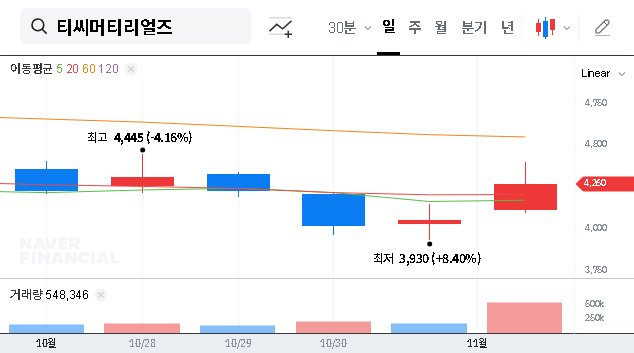
    The recent activity surrounding TC Materials Co., Ltd. stock (티씨머티리얼즈) has sent ripples through the investment community. When a major shareholder significantly reduces their stake, it naturally raises questions and concerns about the company’s future trajectory. This in-depth analysis will dissect the recent sell-off, evaluate the company’s underlying fundamentals, and provide a clear, actionable guide for current and potential investors trying to navigate the increased stock volatility.

    We will explore the short-term pressures and long-term implications of this event to help you make informed decisions about your investment in TC Materials Co., Ltd.

    The Event: A Major Shareholder Reduces Their Stake

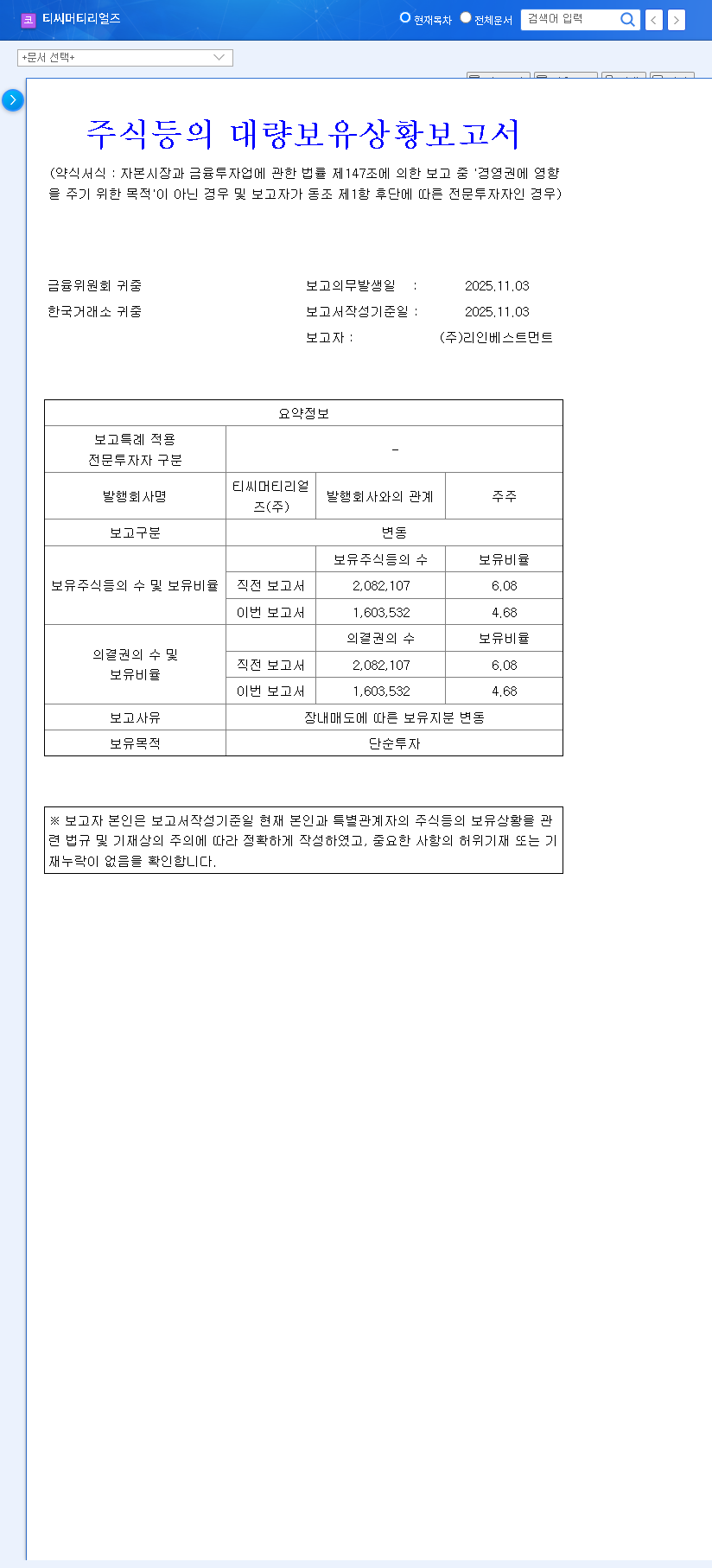
    On November 3, 2025, Reinvestment/Republic of Korea (operating as Rebound New Technology Investment Association No. 1), a significant shareholder in TC Materials Co., Ltd., officially disclosed a reduction in their holdings. According to the Official Disclosure filed with DART, the association’s stake decreased from 6.08% to 4.68%. This 1.4% point reduction was executed through a series of market sales between October 28 and November 3, 2025. Such a move by an institutional investor is a critical signal that warrants careful analysis.

    Analyzing the Market Impact of the Sell-Off

    A major shareholder sell-off is more than just a transaction; it’s a statement that can dramatically influence market sentiment and stock performance. Let’s break down the potential consequences.

    Short-Term Effects: Immediate Pressure and Uncertainty

    • Increased Supply: The influx of a large block of shares into the market creates an immediate supply/demand imbalance, which typically exerts downward pressure on the stock price.
    • Negative Market Signal: Other investors may interpret the sale as a lack of confidence in the company’s future prospects, sparking fear and potentially leading to panic selling among retail investors.
    • Heightened Volatility: Trading volume is likely to surge as the market digests the news, leading to significant price swings and increased stock volatility.

    Long-Term Implications: Overhang and Reassessment

    While the sale doesn’t alter the company’s core operations overnight, it sets a new tone for the long-term outlook of the TC Materials Co., Ltd. stock.

    • Potential Overhang: With the association still holding a 4.68% stake, the market will be wary of a potential future sell-off (an ‘overhang’), which can suppress stock price appreciation until that stake is fully divested or a lock-up is announced.
    • Focus on Fundamentals: With a major institutional supporter stepping back, the market will scrutinize the company’s fundamental performance even more closely. Future earnings reports will carry significantly more weight.

    This event shifts the narrative. The focus is no longer just on potential, but on proven performance. The market will demand tangible results to justify the company’s valuation.

    Deep Dive: TC Materials’ Fundamentals and Risks

    To understand if this sell-off is a warning sign or a buying opportunity, we must look beyond the transaction and into the company’s health, based on its H1 2025 reports.

    Positive Factors

    • Improved Financial Health: A dramatic reduction in the debt-to-equity ratio from 230.1% to just 29.9% is a major achievement, indicating stronger financial stability.
    • Market Position: The company maintains a strong market share in its core power infrastructure segment.
    • Growth Initiatives: Expansion into promising new areas like ship propulsion motors, KDDX, and superconductors presents long-term growth potential.

    Concerning Factors & Risks

    • Declining Performance: Sales dropped 6.7% and operating profit fell 36.5% in H1 2025, culminating in a net loss. This trend is a significant red flag.
    • Low R&D Investment: An R&D ratio of just 0.2% is alarmingly low for a company in the materials and technology sector, raising questions about future innovation.
    • Operational Inefficiency: The motor-related business is operating at a low 33.2% utilization rate, indicating a drag on profitability.
    • Macroeconomic Headwinds: Volatility in raw material prices (like copper) and adverse exchange rate fluctuations continue to pressure margins. For more on this, see analysis from authoritative sources like Reuters on global commodity markets.

    Investor Guide: Navigating TC Materials Stock Volatility

    Given the short-term pressure and underlying fundamental concerns, a cautious and strategic approach to any TC Materials investment is warranted. Here are key actions to consider:

    • Monitor Key Metrics: Closely watch the upcoming H2 2025 earnings report. Look specifically for a recovery in sales, an improvement in the motor business utilization rate, and any commentary on increased R&D spending.
    • Watch for Further Sales: Keep an eye on institutional holdings reports. Any further reduction by Reinvestment or other major holders could signal continued downward pressure.
    • Assess Your Risk Tolerance: The stock will likely remain volatile. Investors should ensure their position size aligns with their personal risk tolerance. For more on this, read our guide on How to Analyze Company Fundamentals.
    • Look for a Clear Vision: The onus is now on TC Materials’ management to present a clear and compelling strategy to address the performance decline and convince the market of its long-term value proposition.

    In conclusion, the major shareholder sell-off is a significant event that casts a shadow over the TC Materials Co., Ltd. stock. Without a clear turnaround in financial and operational performance, the stock may struggle to overcome the negative sentiment. Prudent investors should weigh the company’s improved balance sheet against its current profitability challenges before making any decisions.

    (125020) TC Materials Co., Ltd. Stock Analysis: Shareholder Sell-Off & 2025 Investor Guide 관련 이미지
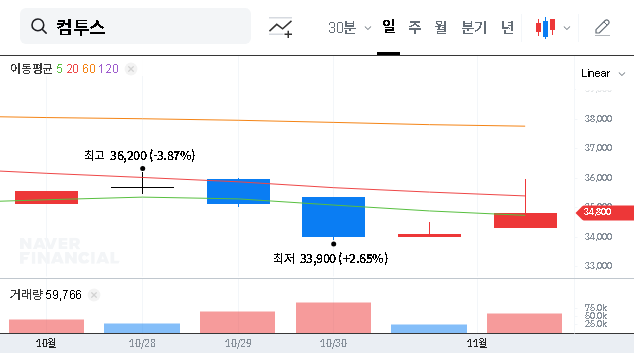
  • (078340) Com2us Investment Analysis: Will the 2025 NDR Spark a Stock Rebound?

    (078340) Com2us Investment Analysis: Will the 2025 NDR Spark a Stock Rebound?

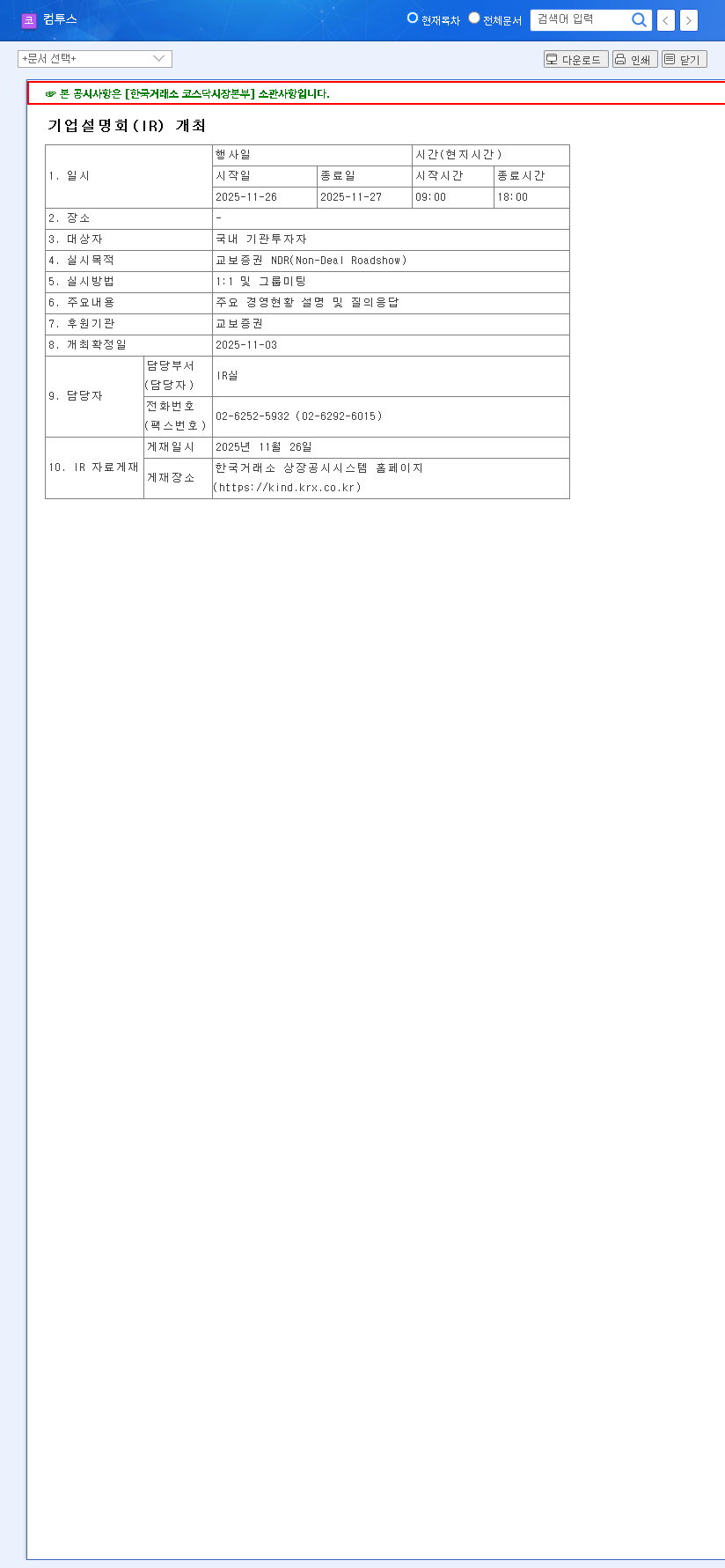
    This Com2us investment analysis provides a crucial look into the company’s future as it approaches a pivotal moment. The mobile gaming giant, Com2us Corporation (Com2us), is set to host a Non-Deal Roadshow (NDR) on November 26, 2025. After facing significant headwinds with declining revenue and profitability, this event is a critical juncture for the company to communicate its strategy for a Com2us 2025 rebound. For investors evaluating Com2us stock, understanding the details presented in this NDR will be paramount to making an informed decision.

    We will dissect the essential information, from an overview of the event to a deep dive into the Com2us financials, the macroeconomic landscape, and the potential impact on investor sentiment. Join us as we explore whether Com2us can chart a new course for growth and restore investor confidence.

    The Crucial Com2us NDR: What Investors Need to Know

    Organized by Kyobo Securities, the Com2us NDR is scheduled for 9:00 AM on November 26, 2025. Unlike an IPO roadshow, a Non-Deal Roadshow is not about selling new shares. Instead, its primary purpose is to foster open communication between the company’s management and the investment community. It’s an opportunity for Com2us to present its current operational status, address concerns head-on, and unveil its strategic vision for the future. For investors, this provides a rare chance to gain direct insights and assess the leadership’s conviction and capability.

    Dissecting Com2us Financials: An Investment Analysis

    A thorough Com2us investment analysis must begin with its financial health. Recent performance indicators paint a picture of a company facing significant challenges, making the need for a turnaround strategy more urgent than ever.

    Profitability and Performance Under Pressure

    The numbers reveal a clear trend of declining profitability that Com2us aims to reverse.

    • Revenue: After falling from 3,841.4B KRW in 2022 to 3,202.3B KRW in 2023, projections show a slight recovery to 3,351.4B KRW in 2025.
    • Operating Profit: A stark drop from 315.1B KRW in 2022 to a predicted 174.9B KRW in 2025 highlights the core profitability challenge. The operating margin is expected to shrink to 5.22%.
    • Net Profit: Forecasted to be just 32.6B KRW in 2025, a fraction of the 160.2B KRW seen in 2022, signaling severe bottom-line pressure.
    • Return on Equity (ROE): Expected to plummet from 19.11% in 2022 to a mere 1.23% in 2025, indicating a sharp decline in shareholder value creation.

    Balance Sheet and Valuation Metrics

    While profitability is a concern, the balance sheet and valuation metrics offer a mixed view. The debt-to-equity ratio is improving but remains high, and the declining current ratio warrants careful liquidity management. A projected PER of 64.67x for 2025 seems steep, suggesting the Com2us stock might be overvalued relative to its earnings. However, a PBR falling below 1 could signal an undervaluation from an asset perspective. For more on valuation, see our guide on understanding key metrics in the gaming industry.

    The core issue for Com2us is not just about stemming the decline but articulating a credible and compelling strategy for generating new, sustainable growth. The 2025 NDR is management’s platform to do precisely that.

    External Factors: Macroeconomic & Industry Headwinds

    Com2us doesn’t operate in a vacuum. Broader economic trends, as reported by sources like Reuters, significantly impact its global operations. Volatile exchange rates (USD/KRW at 1,431.20) directly affect overseas earnings, which constitute a large portion of its revenue. Furthermore, sustained high interest rates in the US and Korea increase the cost of capital, potentially hindering future investments in large-scale projects or acquisitions. The competitive landscape in mobile gaming also remains fiercely intense, demanding constant innovation and significant marketing spend to capture and retain user attention.

    Investor Checklist: Key Focus Areas for the Com2us NDR

    Investors should listen intently for clear, actionable plans during the roadshow. Vague promises will not be enough to turn the tide. Here are the key areas to watch:

    • New Game Pipeline: What is the concrete release schedule for new titles? What are the revenue projections and marketing strategies for these launches?
    • Profitability Roadmap: Beyond new games, what specific cost-control measures or operational efficiencies are being implemented to improve margins?
    • Strategy for Associates: Com2us has numerous investments in associates. A clear explanation of their strategic value and contribution to the bottom line is needed. For detailed filings, see the Official Disclosure on DART (Source).
    • Capital Allocation: How does the company plan to use its capital? Will there be a focus on R&D, M&A, or returning capital to shareholders?

    Conclusion: A Turning Point for Com2us Stock

    The upcoming Com2us NDR is more than just a corporate meeting; it’s a critical test of the company’s resolve and strategic clarity. A successful presentation that outlines a convincing path to a 2025 rebound could restore investor confidence and act as a positive catalyst for the Com2us stock. Conversely, a failure to address the core issues of profitability and growth could lead to further erosion of market sentiment. Investors should watch closely, as the information revealed will likely define the investment narrative for Com2us in the years to come.

    (078340) Com2us Investment Analysis: Will the 2025 NDR Spark a Stock Rebound? 관련 이미지