Tag: Stock Forecast

  • (091440) HanWool Materials Science (091440) Stock Analysis: Share Dilution & Future Growth

    (091440) HanWool Materials Science (091440) Stock Analysis: Share Dilution & Future Growth

    Investors are closely watching HanWool Materials Science, Inc. (091440) after the company announced a significant exercise of its 2nd round of new share subscription rights. This move, which injects fresh capital but also introduces new shares into the market, creates a complex scenario for current and potential shareholders. This comprehensive stock analysis will dissect the announcement, evaluate the company’s precarious financial health, explore its high-stakes pivot into new industries, and provide a clear, actionable investment thesis.

    The Share Rights Exercise: What Exactly Happened?

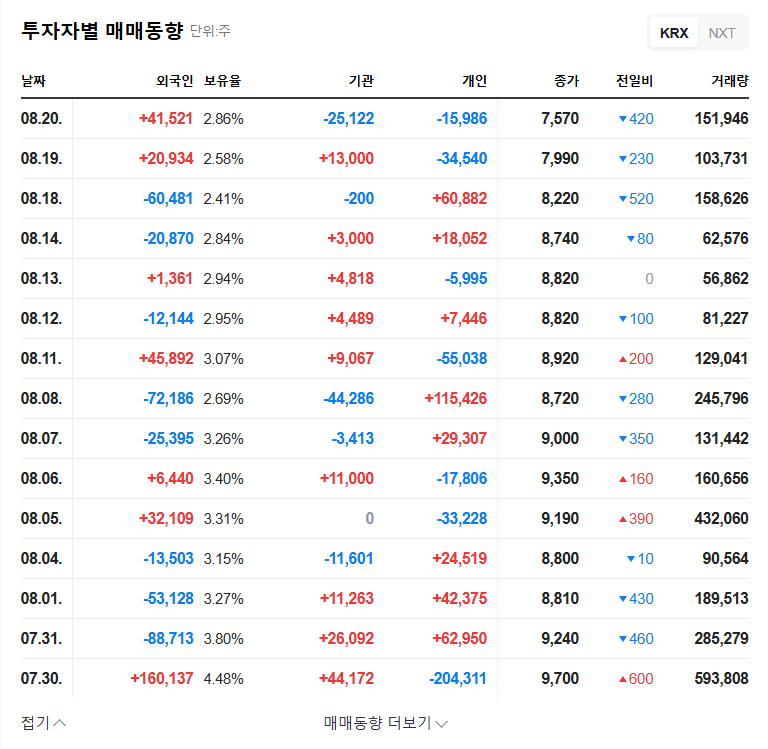
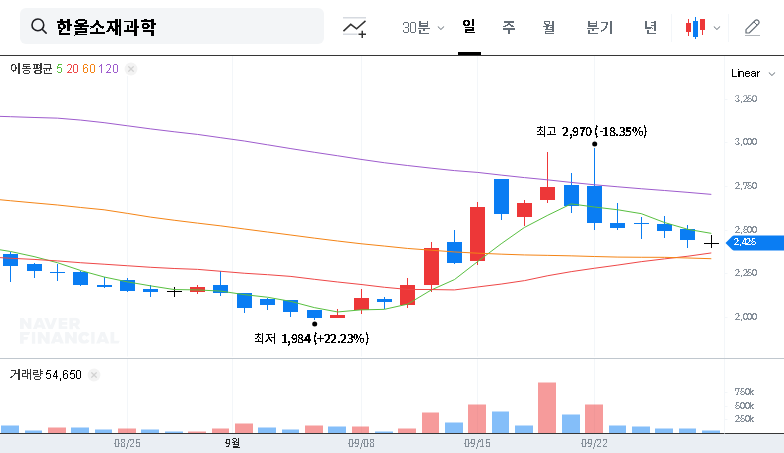
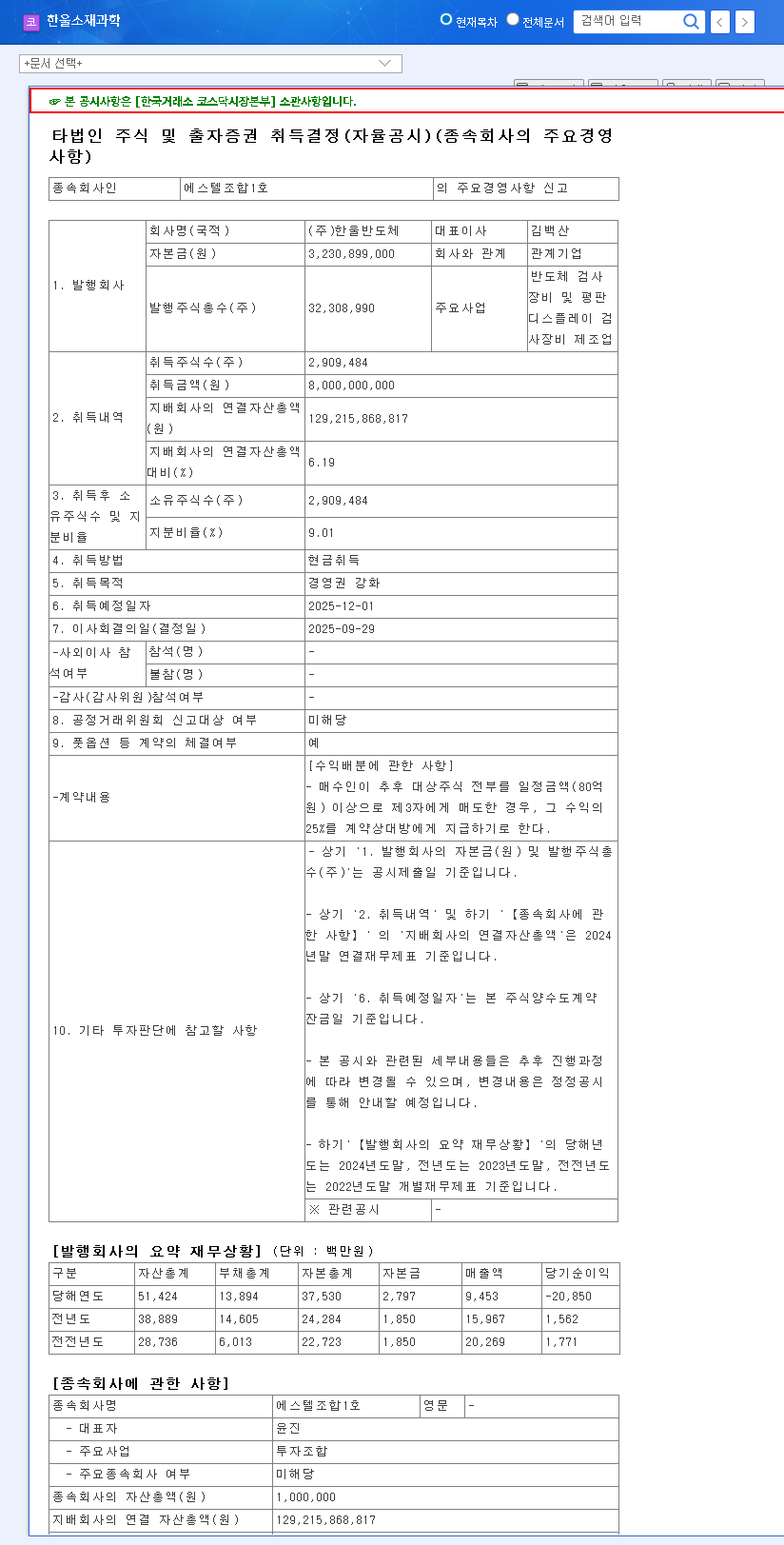
    On November 13, 2025, HanWool Materials Science formally disclosed the issuance of 434,027 new shares. This was triggered by the exercise of its 2nd round of new share subscription rights. According to the Official Disclosure (DART), the exercise price was set at KRW 2,304 per share. These new shares are scheduled for listing on December 4, 2025, which will increase the company’s total outstanding shares by approximately 1.48%. While this raises around KRW 1 billion in capital, it also introduces immediate concerns about stock value dilution.

    Strategic Pivot or Desperate Gamble? Analyzing HanWool’s Fundamentals

    The context for this capital raise is critical. HanWool Materials Science (091440) is at a crossroads, attempting to fund ambitious new ventures to escape the decline of its core business. This strategy, however, is fraught with significant financial and operational risks.

    Chasing New Growth Engines

    To secure its future, HanWool has made substantial investments in two high-potential sectors:

    • Semiconductor Materials (Photoresist): With investments exceeding KRW 50 billion, HanWool is entering the fiercely competitive semiconductor market. While the growth potential is immense, success hinges on overcoming steep technological hurdles and commercialization challenges against established players.
    • GFRP Rebar Distribution: This move into eco-friendly construction materials aligns with global ESG trends. However, its profitability is directly tied to the volatile construction market and fluctuating commodity prices, making it a high-risk venture.

    Deteriorating Financial Health and Core Business Slump

    The push into new businesses is largely a response to a worrying decline in its existing operations. The company’s financial statements paint a grim picture:

    • Revenue Collapse: Sales from legacy telecommunications and IoT segments have fallen sharply, eroding profitability.
    • Persistent Losses: The company continues to post significant operating and net losses, raising serious concerns about its long-term financial soundness.
    • Liquidity Crisis: Declining current assets coupled with rising current liabilities have weakened liquidity ratios, signaling potential trouble in meeting short-term financial obligations.

    Furthermore, the macroeconomic environment, marked by interest rate volatility and supply chain instability, as noted by sources like Reuters, adds another layer of external pressure on costs and financing.

    In a market that rewards certainty, HanWool’s current path is one of high-risk, high-reward. The exercise of new share subscription rights is a necessary move for survival, but its success is far from guaranteed.

    Investment Implications: Short-Term Pain for Long-Term Gain?

    Short-Term Pressure: The Reality of Share Dilution

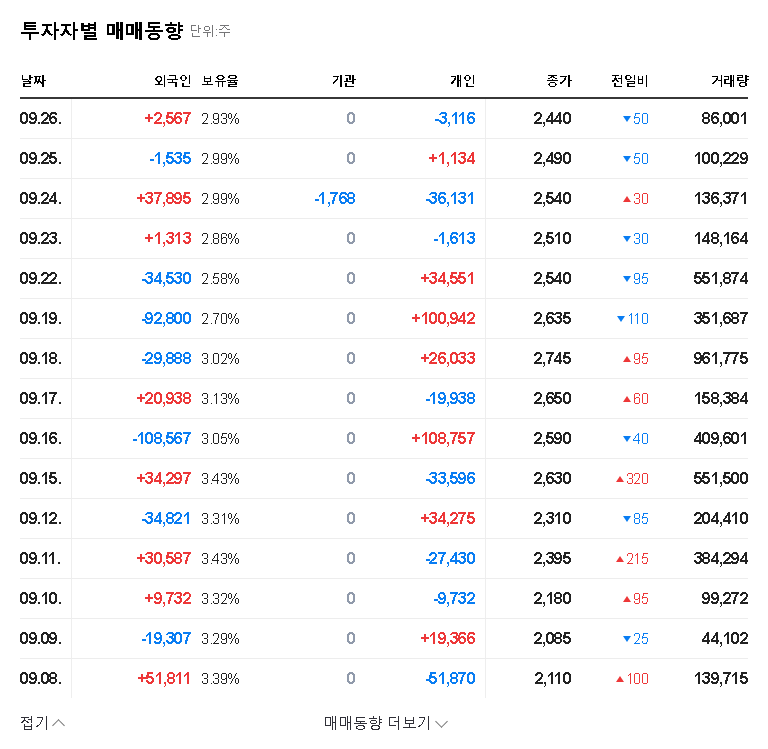
    The immediate impact of issuing over 430,000 new shares is shareholder dilution. With more shares in circulation, each existing share represents a smaller percentage of ownership, which can depress the stock price. Although the current price is above the exercise price, the influx of new shares can create selling pressure as early investors cash in. To learn more, read our Guide to Understanding Share Dilution.

    Medium-to-Long-Term Outlook: A Bet on Execution

    The long-term success of this move depends entirely on how effectively management utilizes the new capital. If the KRW 1 billion is strategically deployed to accelerate the new ventures and stabilize the company’s financial footing, it could be a major positive catalyst. However, if the new businesses fail to generate returns, this capital injection will only have served to dilute existing shareholders without creating sustainable value.

    Investor Action Plan for HanWool Materials Science (091440)

    Given the high degree of uncertainty, a cautious and disciplined approach is essential. Investors should weigh the potential of the company’s new ventures against the severe risks in its current financial and management structure.

    Recommendation: Maintain a Cautious, Observational Stance

    Aggressive buying is not recommended at this time. Instead, investors should adopt a ‘wait-and-see’ approach, closely monitoring key performance indicators before committing capital. Focus on tangible progress in the new business segments and any signs of a turnaround in the core operations.

    Key Factors to Monitor Moving Forward:

    • Use of Funds: Look for transparent disclosures from management detailing how the new capital is being spent.
    • New Business Milestones: Track progress reports, pilot project results, and revenue generation from the semiconductor and GFRP businesses.
    • Profitability Improvements: Monitor quarterly earnings for any signs of margin improvement or a slowdown in losses from existing businesses.
    • Management Stability: Any further changes in key leadership or major shareholders should be viewed as a significant red flag.
    (091440) HanWool Materials Science (091440) Stock Analysis: Share Dilution & Future Growth 관련 이미지
    (091440) HanWool Materials Science (091440) Stock Analysis: Share Dilution & Future Growth 관련 이미지
  • (452260) Hanwha Galleria Five Guys Sale: A Deep Dive for Investors (452260 Stock Analysis)

    (452260) Hanwha Galleria Five Guys Sale: A Deep Dive for Investors (452260 Stock Analysis)

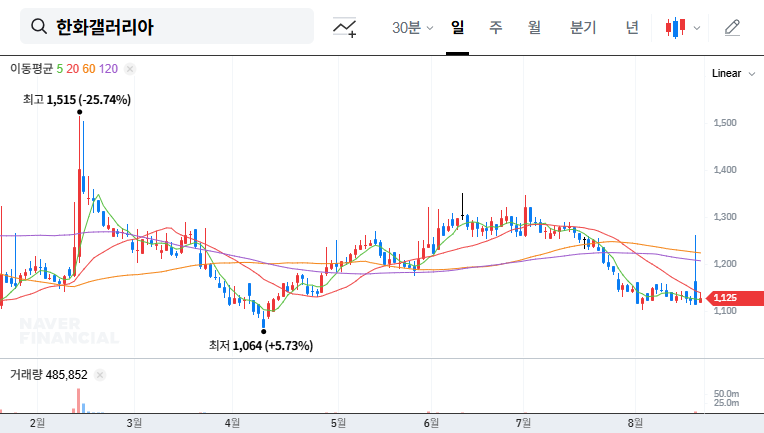
    The investment community is buzzing with speculation surrounding the potential Hanwha Galleria Five Guys sale, a move that could significantly alter the trajectory of HANWHA GALLERIA CORPORATION (452260). With the company’s core department store business facing significant challenges, its F&B division, led by the popular American burger chain Five Guys, has emerged as a critical driver of growth. This detailed analysis explores the rumors, dissects the company’s recent financial performance, and provides a strategic outlook for investors navigating this period of uncertainty.

    The Core Issue: The Hanwha Galleria Five Guys Sale Rumor

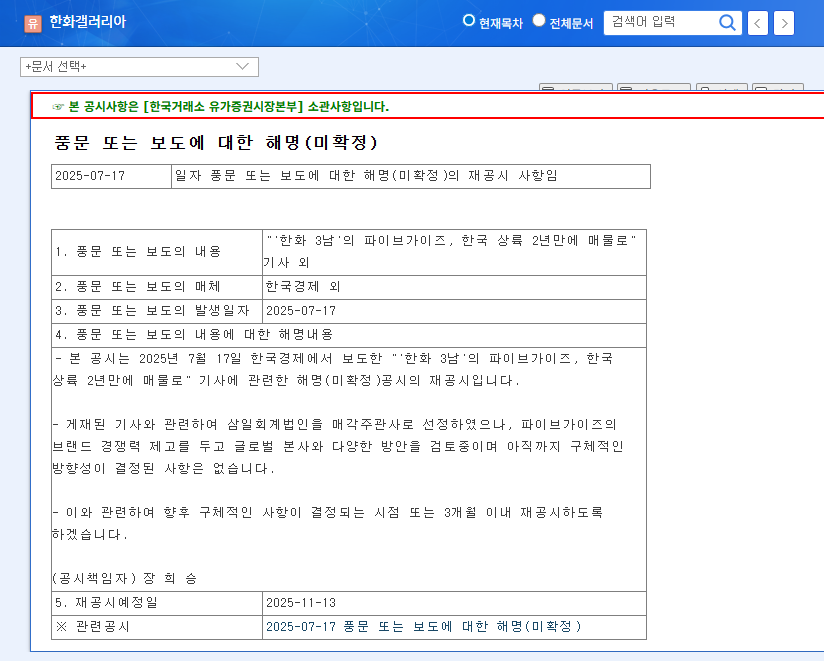
    The situation escalated when reports surfaced on July 17, 2025, suggesting that the Five Guys Korea franchise, managed by ‘Hanwha’s third son’, was on the market. In response, Hanwha Galleria issued a clarification disclosure to quell the speculation. The company’s official stance, re-disclosed on November 13, 2025, remains deliberately ambiguous.

    Hanwha Galleria is ‘reviewing various options with its global headquarters to enhance brand competitiveness, but no specific direction has been decided.’

    This statement, available in the company’s Official Disclosure (Source: DART), indicates that while a sale is not confirmed, it is a tangible possibility. With a commitment to re-disclose by May 12, 2026, investors are left in a state of suspense, waiting for a clear strategic direction.

    A Look Under the Hood: Hanwha Galleria’s Q3 2025 Financial Health

    To understand why the Hanwha Galleria Five Guys sale is even being considered, one must look at the company’s challenging financial landscape. The Q3 2025 results paint a picture of a company struggling in its primary market while being propped up by a newer, more dynamic business segment.

    Key Performance Indicators (Jan 1 – Sep 30, 2025)

    • Consolidated Revenue: 381.7 billion KRW, a slight decrease year-over-year, primarily due to the department store segment’s underperformance (331.1 billion KRW).
    • F&B Segment Growth: The Food & Beverage division was the sole bright spot, growing to 79.7 billion KRW, fueled by the aggressive expansion of Five Guys stores and a robust ice cream business.
    • Operating Profit Collapse: A dramatic drop to just 320 million KRW from 3.12 billion KRW in the previous year, crushed by rising administrative expenses and financial costs.
    • Widening Net Loss: The company’s net loss expanded to a concerning 21.7 billion KRW.
    • Rising Debt: The debt-to-equity ratio climbed to 144.26%, signaling increasing financial leverage and risk.

    Macroeconomic Headwinds

    The company’s struggles are compounded by a difficult macroeconomic environment. Volatile exchange rates (USD/KRW ~1,321) negatively affect the cost of imported goods for both its retail and F&B segments. Furthermore, elevated interest rates, though frozen in South Korea, increase borrowing costs and dampen consumer sentiment, which is critical for a luxury retailer. These external pressures, as noted in many global economic outlooks, create a challenging operational climate.

    Strategic Crossroads: The Impact of a Potential Five Guys Sale

    Divesting the Five Guys brand presents both significant opportunities and substantial risks for HANWHA GALLERIA CORPORATION.

    The Upside: Potential for Financial Rejuvenation

    A successful sale could provide a much-needed cash infusion. These proceeds could be strategically deployed to pay down debt, immediately improving the company’s debt-to-equity ratio and strengthening its balance sheet. This would not only enhance financial stability but also free up capital for reinvestment into revitalizing the core department store business or acquiring a new, more synergistic growth engine. It represents a chance to reset and refocus.

    The Downside: Losing the Growth Champion

    The most significant risk is the loss of its only proven growth driver. Selling Five Guys would leave the struggling department store segment exposed, amplifying concerns about the company’s future growth prospects. Moreover, such a move could damage investor confidence, suggesting a lack of a coherent long-term strategy and potentially harming the company’s corporate image. If the sale falls through or is executed on unfavorable terms, it could leave the company in an even weaker position.

    Investor Playbook: Navigating the Uncertainty with 452260 Stock

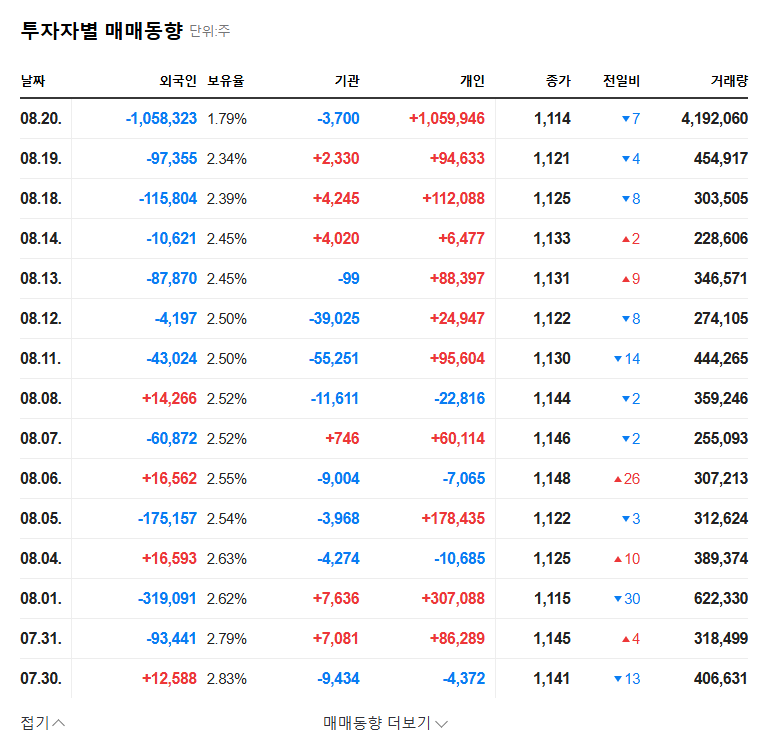
    Given the high degree of uncertainty, a cautious and watchful approach is warranted. The stock’s future trajectory hinges entirely on the outcome of the Hanwha Galleria Five Guys sale discussions.

    Investment Thesis and Key Monitoring Points

    At present, a ‘Hold’ or ‘Neutral’ recommendation is most prudent. Short-term volatility is highly likely as rumors ebb and flow. The long-term outlook depends on management’s execution. Investors should closely monitor the following:

    • Official Communications: The next official disclosure by May 12, 2026, is a critical catalyst. Any preceding announcements will be heavily scrutinized by the market.
    • Core Business Performance: Watch for any signs of a turnaround in the department store segment. Improved sales or margins would reduce the company’s reliance on a potential asset sale, as we’ve discussed in our broader analysis of the retail sector.
    • Macroeconomic Shifts: Keep an eye on interest rate policies and currency fluctuations, as these will continue to impact profitability and consumer behavior.

    Disclaimer: This analysis is for informational purposes only and is based on publicly available data. All investment decisions carry risk and should be made at the investor’s own discretion. Market conditions can change rapidly, and continuous monitoring is essential.

    (452260) Hanwha Galleria Five Guys Sale: A Deep Dive for Investors (452260 Stock Analysis) 관련 이미지
    (452260) Hanwha Galleria Five Guys Sale: A Deep Dive for Investors (452260 Stock Analysis) 관련 이미지
  • (131400) EV ADVANCED MATERIAL CO., LTD. Rights Offering Withdrawal: A Deep-Dive Financial Analysis & Stock Outlook

    (131400) EV ADVANCED MATERIAL CO., LTD. Rights Offering Withdrawal: A Deep-Dive Financial Analysis & Stock Outlook

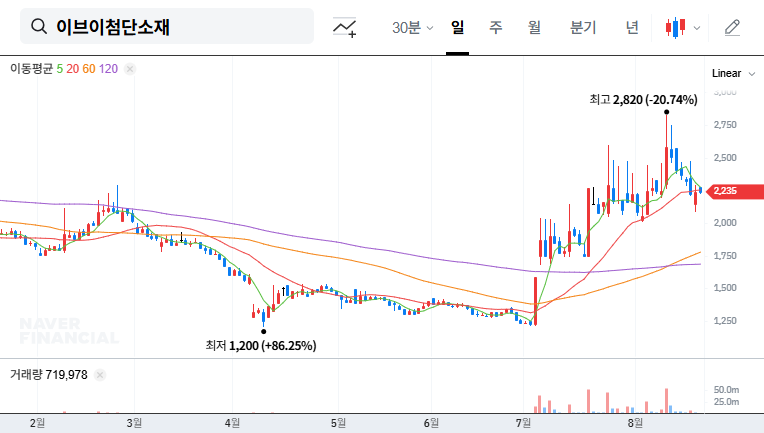
    The sudden rights offering withdrawal by EV ADVANCED MATERIAL CO., LTD. (이브이첨단소재) on November 13, 2025, has sent shockwaves through the investment community. This move, far from a routine corporate decision, signals potential underlying financial distress and raises critical questions about the company’s stability and future prospects. Compounded by the looming threat of being designated an ‘unfaithful disclosure corporation,’ investors are left navigating a storm of uncertainty. This comprehensive financial analysis will dissect the reasons behind this decision, evaluate the company’s Q3 2025 performance, and provide a clear, data-driven investment outlook.

    The company formally announced this decision, citing prolonged reviews by the Financial Supervisory Service (FSS), which could disrupt funding timelines. You can view the Official Disclosure (Source: DART) for complete details.

    A Look Under the Hood: Q3 2025 Financial Red Flags

    While procedural delays were the official reason, a deep dive into the Q3 2025 quarterly report for EV ADVANCED MATERIAL CO., LTD. reveals a much more troubling picture. The company’s fundamentals are flashing several warning signs that likely contributed to the difficulty in securing capital.

    Deteriorating Core Financials

    • Revenue Decline & Profitability Collapse: Consolidated revenue fell year-over-year, while both operating profit and net income plunged into significant losses. This isn’t just a slowdown; it’s a severe erosion of the company’s core earning power.
    • Soaring Debt-to-Equity Ratio: Financial stability is a major concern. The company’s debt-to-equity ratio has climbed, indicating increased leverage and vulnerability to interest rate hikes and economic downturns. This high ratio makes securing new debt or equity financing significantly more challenging.
    • Underperformance in Key Segments: The FPCB (Flexible Printed Circuit Board) business, a primary revenue driver, experienced a notable decline in sales, suggesting a struggle to maintain market share or broader industry headwinds.
    • Costly Affiliate Investments: A substantial impairment loss related to its investment in Dynamic Design Co., Ltd. has placed an additional, heavy burden on the company’s already strained financial position.

    While potential growth in the EV battery and transparent display markets exists, these future opportunities seem insufficient to counterbalance the immediate financial crisis and the severe damage to corporate credibility.

    The Domino Effect: Repercussions of the Withdrawal

    The cancellation of the rights offering is not an isolated event. It triggers a cascade of negative consequences that will impact EV ADVANCED MATERIAL CO., LTD. in both the short and long term, creating a challenging environment for recovery.

    Funding Uncertainty and Eroding Trust

    The most immediate impact is a critical disruption to funding. The capital was earmarked for facility investments, strategic acquisitions, and operational needs—all vital for growth. The failure to secure these funds puts future projects in jeopardy. This, combined with the ‘unfaithful disclosure’ designation, severely damages credibility. Investor trust is paramount, and once lost, it is incredibly difficult to regain, leading to sustained downward pressure on the stock price. For more on this topic, see our guide on How to Analyze High-Risk Tech Stocks.

    Navigating Macroeconomic Headwinds

    The company’s internal struggles are amplified by a challenging external environment. Rising interest rates in key markets increase the cost of borrowing, making alternative financing more expensive. Furthermore, volatility in currency exchange rates (EUR/KRW, USD/KRW) can negatively affect overseas operations and the cost of imported materials, squeezing already thin profit margins.

    Investment Thesis: A Time for Extreme Caution

    Considering the totality of the circumstances—the abrupt rights offering withdrawal, alarming Q3 financials, loss of investor confidence, and macroeconomic pressures—the outlook for EV ADVANCED MATERIAL CO., LTD. is precarious.

    Investment Opinion: Highly Negative. Investment is not recommended at this time.

    The risks associated with investing in the company currently are exceptionally high. A prudent strategy would be to remain on the sidelines and observe. Before any investment can be considered, the company must demonstrate tangible improvements in its financial health, provide a transparent and viable plan for future funding, and take concrete steps to rebuild its credibility with the market. Until these fundamental issues are resolved, the potential for further downside in the stock price remains significant.

    Frequently Asked Questions

    Why did EV ADVANCED MATERIAL CO., LTD. withdraw its rights offering?

    The officially stated reason was potential disruptions in funding timelines due to a prolonged review process by the Financial Supervisory Service. However, our analysis suggests that the company’s poor Q3 2025 financial performance was a significant contributing factor.

    What is the likely impact on the company’s stock price?

    A rights offering withdrawal is a strong negative market signal. This, combined with the anticipated ‘unfaithful disclosure corporation’ designation, is highly likely to erode investor confidence and lead to sustained downward pressure on the stock price.

    Should I invest in EV ADVANCED MATERIAL CO., LTD. now?

    Our expert analysis concludes that investing at this time carries extremely high risk. It is advisable to refrain from new investments and observe the company’s progress in improving its financial health and restoring credibility before reassessing.

    (131400) EV ADVANCED MATERIAL CO., LTD. Rights Offering Withdrawal: A Deep-Dive Financial Analysis & Stock Outlook 관련 이미지
  • (475150) SK eternix Financial Analysis: Q3 2025 Earnings Crisis & Future Investment Strategy

    (475150) SK eternix Financial Analysis: Q3 2025 Earnings Crisis & Future Investment Strategy

    This comprehensive SK eternix financial analysis delves into the company’s challenging Q3 2025 performance ahead of its pivotal Investor Relations (IR) event. With a dramatic decline in revenue and a precarious surge in debt, investors are keenly watching to see if management can present a credible turnaround strategy. We will break down the numbers, analyze the external pressures, and provide a checklist of what to watch for during the SK eternix IR event.

    As SK eternix Co., Ltd. prepares for its Q3 2025 earnings release on November 17, 2025, the stakes have never been higher. The company is at a critical juncture, facing significant financial headwinds that threaten its stability. This event is not just a routine update; it’s an opportunity to rebuild trust and chart a new course for the future. For any serious investor, understanding the details of the SK eternix Q3 2025 earnings is essential for making informed decisions.

    Deep Dive: SK eternix Q3 2025 Earnings Breakdown

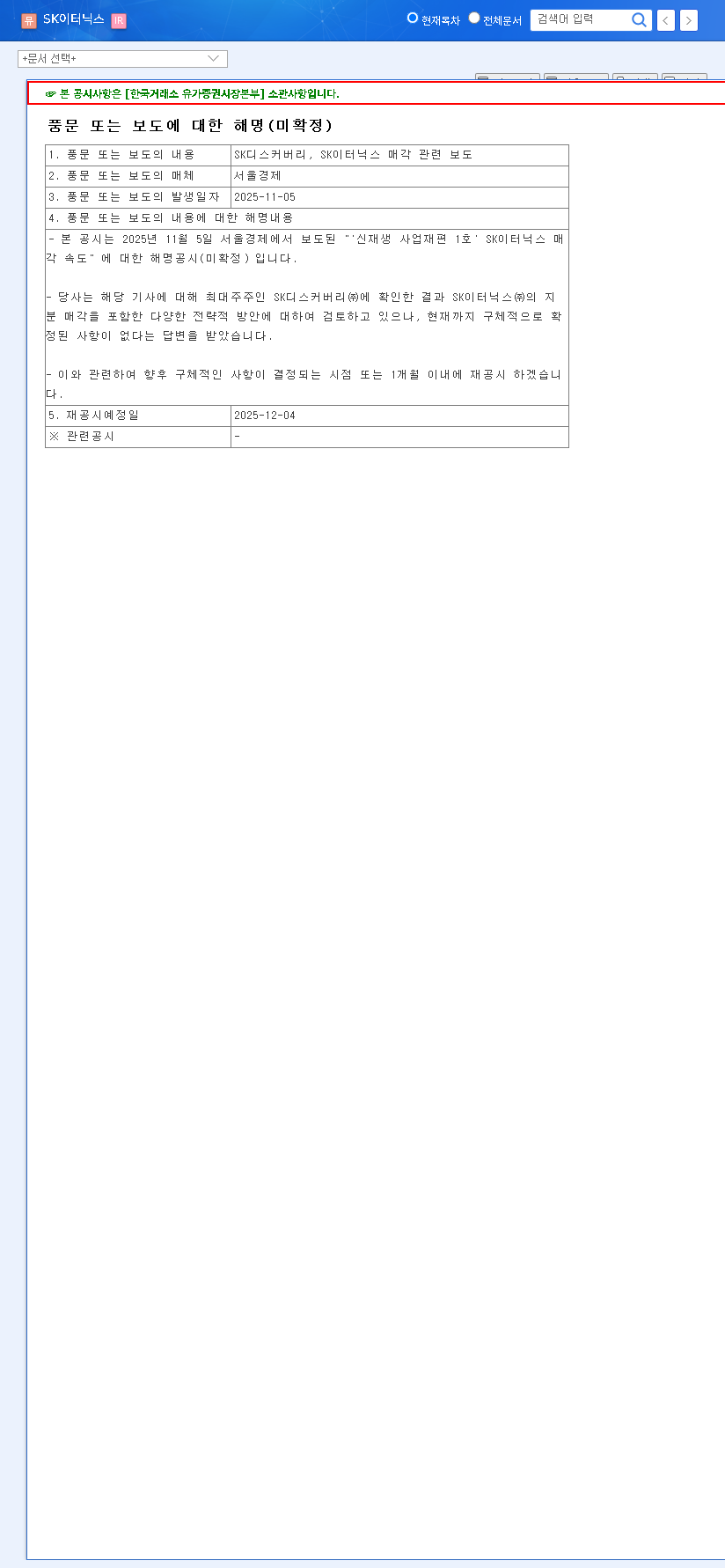
    The preliminary numbers, detailed in the official disclosure (Source), paint a concerning picture. Let’s examine the core financial changes that are causing alarm among stakeholders.

    1. Alarming Decline in Revenue and Profitability

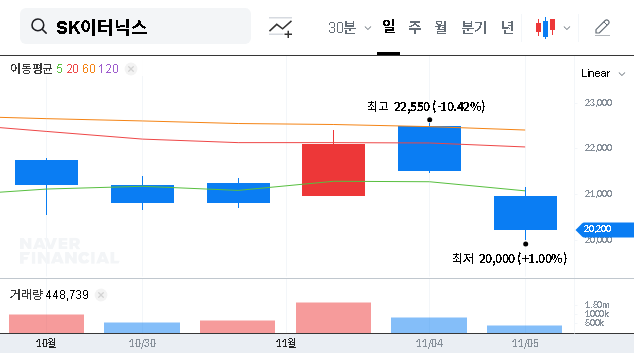
    The top-line and bottom-line figures are stark. For the first nine months of 2025, cumulative revenue fell by a staggering 58.6% year-on-year to KRW 137.7 billion. The impact on profitability was even more severe, with operating profit declining by 68.6% to just KRW 11.8 billion. The primary driver behind this collapse is the complete absence of product sales in its renewable energy business segment, a cornerstone of its operations. This raises fundamental questions about demand, project pipelines, and market competitiveness.

    2. Precarious Financial Health: Soaring Debt and Bloated Inventory

    The balance sheet reveals equally troubling trends that compound the profitability issue:

    • Skyrocketing Debt Ratio: Total liabilities have ballooned by 143%, pushing the debt ratio to a dangerous 472.13%. A high debt-to-equity ratio can signal excessive risk and limit a company’s ability to secure future financing. The high concentration of current liabilities puts immense pressure on short-term cash flow.
    • Exploding Inventory: Inventory assets swelled by an incredible 9.7 times to KRW 576.9 billion. This suggests either a dramatic miscalculation of demand or significant project delays, tying up valuable capital and risking future write-downs.

    Despite these challenges, a notable improvement in operating cash flow to KRW 81.4 billion and a net inflow from financing activities of KRW 79.6 billion offer a sliver of hope, indicating the company is still able to secure capital and manage its day-to-day cash needs. The key question is how this new capital will be used.

    The IR Event: A Turning Point for the SK eternix Stock?

    The upcoming SK eternix IR event is a make-or-break moment. The company’s management must address investor concerns head-on. The market’s reaction will hinge on the clarity and credibility of their strategic response.

    Short-Term Impact: Rebuilding Confidence

    A positive outcome requires a transparent explanation for the poor performance and, more importantly, a detailed, actionable plan. If management presents a concrete strategy for deleveraging the balance sheet and reigniting growth in new ventures like offshore wind power, it could stabilize the SK eternix stock price. Conversely, vague promises or a failure to address the inventory and debt issues will likely lead to further sell-offs.

    Long-Term Impact: The Viability of New Growth Engines

    Long-term success depends on the company’s pivot to new, sustainable revenue streams. Investors will be scrutinizing plans for ventures like offshore wind and Virtual Power Plant (VPP) platforms. A VPP is a cloud-based distributed power plant that aggregates the capacities of various energy resources. For a deeper understanding, you can review our guide to renewable energy technologies. If SK eternix can provide a credible roadmap with clear timelines, funding plans, and projected returns for these new businesses, it could set the foundation for a long-term recovery and re-rate the company’s valuation.

    Investor Checklist: Key Questions for the SK eternix IR Event

    Investors should go into the IR with a clear set of questions. A thorough SK eternix financial analysis demands answers to the following:

    • Profitability Recovery: What specific actions will be taken to restart product sales in the renewable energy sector?
    • Debt Management: What is the detailed, step-by-step plan to reduce the 472.13% debt ratio to a manageable level?
    • Inventory Strategy: How will the company liquidate KRW 576.9 billion in excess inventory without incurring massive losses?
    • New Business Roadmap: What are the concrete timelines, capital expenditure plans, and expected revenue contributions from offshore wind and VPP projects?
    • Risk Mitigation: What hedging strategies are in place to counter the negative impacts of currency volatility and sustained high interest rates?

    In conclusion, the SK eternix investment thesis is currently under severe pressure. The Q3 2025 IR is a critical test of leadership’s ability to navigate this crisis. By listening carefully for clear, data-driven answers to these crucial questions, investors can determine whether this is a company in terminal decline or a value opportunity on the cusp of a major turnaround.

    (475150) SK eternix Financial Analysis: Q3 2025 Earnings Crisis & Future Investment Strategy 관련 이미지
  • (046890) Seoul Semiconductor IR Analysis (Q3 2025): Financials, Stock Outlook & Turnaround Potential

    (046890) Seoul Semiconductor IR Analysis (Q3 2025): Financials, Stock Outlook & Turnaround Potential

    This comprehensive SEOUL SEMICONDUCTOR IR Analysis for Q3 2025 offers a critical look into the company’s upcoming investor relations event on November 14, 2025. Amid a challenging global economy and fierce market competition, Seoul Semiconductor (KOSDAQ:046890) stands at a crossroads. This event is more than a simple earnings call; it’s a pivotal moment that will signal whether the company can navigate its current crisis and unlock future growth or if deeper concerns await. For investors, understanding the nuances of the Seoul Semiconductor financials is paramount to making an informed decision.

    We will dissect the Q3 2025 earnings announcement, evaluate the Q4 outlook, and analyze the company’s fundamental strengths and weaknesses to provide a clear roadmap for what investors should be watching.

    The Financial State of Affairs: A Look at Past Performance

    To understand the gravity of the upcoming IR, we must first look at the company’s recent performance. The semi-annual report for Q1 2025 painted a stark picture of the difficulties Seoul Semiconductor is facing.

    Q1 2025 Financial Snapshot

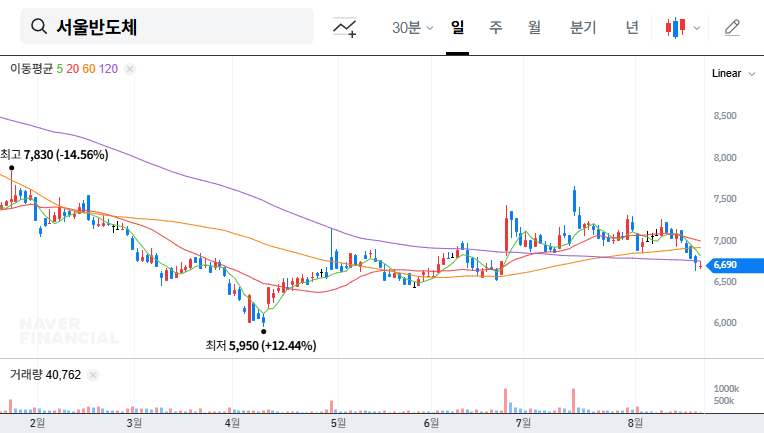
    The numbers revealed a significant downturn, raising alarm bells across the market. The company reported a staggering 55% year-over-year decrease in revenue to KRW 490.805 billion. More concerning were the substantial operating loss of KRW 28.54 billion and a net loss of KRW 50.501 billion, signaling deep-seated operational and financial challenges.

    • Revenue: KRW 490.805 billion (a 55% YoY decrease)
    • Operating Income: -KRW 28.54 billion (loss)
    • Net Income: -KRW 50.501 billion (loss)
    • Return on Equity (ROE): -7.57% (indicating destruction of shareholder value)

    Why the Downturn? Root Causes and Core Risks

    This severe performance decline wasn’t caused by a single issue, but a convergence of external market pressures and internal challenges. A thorough SEOUL SEMICONDUCTOR IR Analysis must consider these factors.

    External Market Headwinds

    • Global Economic Slowdown: Reduced consumer and corporate spending has led to lower demand in key downstream industries like electronics and automotive, a trend noted by authorities like global market analysts.
    • Customer Inventory Adjustments: Major clients have been cutting back on orders to manage their own stock levels, creating a bullwhip effect on suppliers like Seoul Semiconductor.
    • Intensified Price Competition: The LED market is highly competitive, particularly with pressure from Chinese manufacturers, which continues to erode profit margins.
    • Exchange Rate Volatility: Fluctuations in the EUR/KRW and USD/KRW exchange rates have negatively impacted profitability and added financial uncertainty.

    Internal Financial and Governance Risks

    Beyond market conditions, the company’s financial health is a key concern. Operating cash flow has dwindled, placing significant pressure on liquidity. Furthermore, a history of restating financial statements, as highlighted in the company’s Official Disclosure (DART), has eroded investor trust. This history necessitates a renewed focus on strengthening accounting transparency and internal controls, a topic investors will expect to be addressed directly in the IR.

    The upcoming IR is a critical test of management’s ability to communicate a clear, credible, and executable strategy for a turnaround. Transparency will be just as important as the financial projections.

    Potential Scenarios: Opportunity vs. Continued Crisis

    The outcome of the IR event will likely push the Seoul Semiconductor stock in one of two directions. Investors should prepare for both positive and negative scenarios.

    The Bull Case (Positive Scenario)

    A positive reaction could be triggered if management presents evidence of a Q3 performance that has bottomed out or shows signs of improvement. A realistic and optimistic Q4 outlook, backed by new orders or market share gains, would be highly influential. Crucially, a detailed roadmap for commercializing high-margin technologies like WICOP (Wafer Incorporated Chip on PCB), which offers superior brightness and cost efficiency, could reignite long-term investor confidence. For more on evaluating tech company fundamentals, you can read our guide on analyzing tech stock financials.

    The Bear Case (Negative Scenario)

    Conversely, the stock could face significant downward pressure if the Q3 results are worse than feared or if the Q4 outlook is vague and uninspiring. If management fails to provide clear, convincing answers regarding past accounting issues or a concrete plan to manage currency risks, it will deepen concerns about governance and financial stability, leading to a further sell-off.

    Investor Action Plan & Final Recommendations

    Given the high degree of uncertainty and negative fundamentals, a prudent and cautious approach is strongly recommended. The Seoul Semiconductor Q3 2025 Earnings call is not an event for speculative bets but for careful analysis.

    Key Focus Points for the IR Call:

    • Q3 Performance vs. Expectations: Is there any sign of stabilization or improvement?
    • Q4 Outlook Realism: Are the forward-looking statements backed by concrete data?
    • Growth Engine Strategy: What is the tangible plan to leverage the 18,000+ patents and core technologies?
    • Financial Transparency: How will the company address past accounting issues to restore trust?

    In conclusion, this IR event is a moment of truth for Seoul Semiconductor. The company must deliver a narrative of resilience, transparency, and strategic clarity to convince the market it has a viable path to recovery. For investors, the results will determine whether the current depressed stock price represents a value trap or a genuine turnaround opportunity. Close and critical monitoring is essential.

    (046890) Seoul Semiconductor IR Analysis (Q3 2025): Financials, Stock Outlook & Turnaround Potential 관련 이미지
    (046890) Seoul Semiconductor IR Analysis (Q3 2025): Financials, Stock Outlook & Turnaround Potential 관련 이미지
  • (393970) DAEJIN ADVANCED MATERIALS Inc. Stock (393970): Deep Dive Analysis After Kolon’s 9.4% Sale

    (393970) DAEJIN ADVANCED MATERIALS Inc. Stock (393970): Deep Dive Analysis After Kolon’s 9.4% Sale

    An in-depth analysis of DAEJIN ADVANCED MATERIALS Inc. stock (393970) has become critical following a major market event. A significant institutional investor, Kolon Investment, has divested a substantial portion of its holdings, sending ripples through the investment community. This move raises urgent questions: Is this a sign of underlying trouble, or simply a strategic portfolio adjustment? For current and potential investors, understanding the context behind this sale is paramount.

    This comprehensive article breaks down the event, performs a deep dive into the company’s current financial health and business fundamentals, and provides a clear, actionable investment thesis to help you navigate the uncertainty surrounding DAEJIN ADVANCED MATERIALS Inc. stock.

    The Catalyst: Kolon Investment’s Major Block Sale

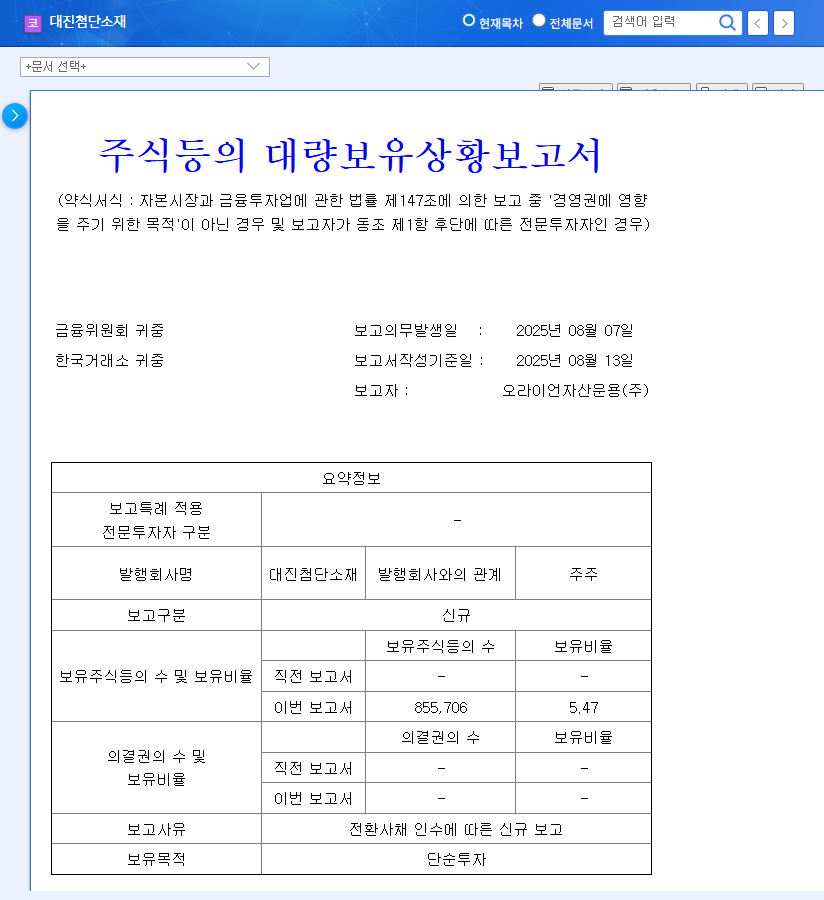
    On November 13, 2025, a mandatory disclosure confirmed that Kolon Investment executed a large-scale sale of its shares in DAEJIN ADVANCED MATERIALS Inc. The official filing, known as a ‘Report on the Status of Large Shareholdings,’ detailed a significant reduction in their position. The official disclosure can be reviewed directly on DART (Source).

    This wasn’t a minor trim. Kolon Investment offloaded 917,050 shares, slashing their stake from 13.96% down to just 4.53%—a decrease of approximately 9.43 percentage points.

    While the stated reason for the sale was a ‘simple investment purpose’—often used to signify profit-taking or portfolio rebalancing—the sheer size of the sale by a major institutional holder is a material event that warrants close scrutiny.

    Deep Dive: Analyzing DAEJIN ADVANCED MATERIALS Inc. (393970) Fundamentals

    To understand the potential long-term trajectory of the DAEJIN ADVANCED MATERIALS Inc. stock, we must look beyond this single event and assess the health of the underlying business.

    Core Business Under Pressure

    The company’s primary revenue comes from materials used in secondary battery processes and automotive parts. Unfortunately, this segment has faced severe headwinds. In the first half of 2025, revenue from this division plummeted by a staggering 63.7% year-over-year. This is largely attributed to a market phenomenon known as the ‘chasm’ in the electric vehicle (EV) industry, where growth temporarily slows as the market transitions from early adopters to the more pragmatic mainstream consumer, compounded by a challenging macroeconomic environment.

    The Future Bet: Carbon Nanotube (CNT) Technology

    DAEJIN is pinning its future growth on its Carbon Nanotube (CNT) business. CNTs are advanced materials with exceptional strength and conductivity, making them highly valuable for next-generation batteries and other high-tech applications. While the company is actively pursuing technology acquisition and global expansion in this area, it’s crucial to note that tangible sales results from the CNT division are still minimal. It remains a promising but currently unproven growth engine.

    Financial Red Flags: A Look at the Numbers

    The 2025 semi-annual report paints a concerning financial picture:

    • Worsening Profitability: The company posted an operating loss of 3.4 billion KRW and a net loss of 10.5 billion KRW, a sharp reversal into deficit.
    • Rising Debt: Total debt increased by 27.5%, with a notable rise in short-term borrowings and convertible bonds, increasing financial risk.
    • Negative Cash Flow: Operating cash flow was a deeply negative -22.6 billion KRW, indicating the core business is burning through cash rather than generating it.

    Investment Outlook and Strategic Plan

    Given the block sale and the weak fundamentals, how should investors approach the 393970 stock analysis?

    Short-Term Impact: Expect Volatility

    The immediate consequence of Kolon’s sale will likely be significant downward pressure on the stock price. The large influx of shares can create an oversupply, and the negative signal sent by a major investor exiting can erode market confidence. Short-term traders should exercise extreme caution, as volatility is expected to be high.

    Mid-to-Long-Term Outlook: All Eyes on Recovery

    Over the long run, this single sale will become a footnote. The future of DAEJIN ADVANCED MATERIALS Inc. stock will be determined by its ability to execute a turnaround. Key catalysts to watch for are:

    • A recovery in the secondary battery and automotive markets.
    • Meaningful revenue generation from the CNT business.
    • Tangible steps to improve the company’s financial structure and reduce debt.

    For context on market cycles, it’s helpful for investors to understand the risks and rewards of evaluating technology growth stocks during downturns.

    Conclusion: A ‘Conservative’ Investment Opinion

    Taking all factors into account—the major block sale by Kolon Investment, the severe downturn in core business revenue, and the precarious financial situation—our overall investment opinion on DAEJIN ADVANCED MATERIALS Inc. stock is ‘Conservative.’ The combination of external selling pressure and internal fundamental weakness creates a high-risk environment. Investors should wait for clear, sustained signs of a fundamental business recovery before considering a significant position. Monitoring macroeconomic factors is also crucial; for a broader view, resources like Reuters’ global market analysis can provide valuable context.

    (393970) DAEJIN ADVANCED MATERIALS Inc. Stock (393970): Deep Dive Analysis After Kolon's 9.4% Sale 관련 이미지
    (393970) DAEJIN ADVANCED MATERIALS Inc. Stock (393970): Deep Dive Analysis After Kolon's 9.4% Sale 관련 이미지
  • (307870) B2En Name Change to BuildAI: An Investor’s Deep Dive into AI Transition Risks & Opportunities

    (307870) B2En Name Change to BuildAI: An Investor’s Deep Dive into AI Transition Risks & Opportunities

    The recent announcement of the B2En name change to ‘BuildAI Co., Ltd.’ represents a pivotal moment for the company, signaling a decisive shift towards the booming artificial intelligence sector. This strategic pivot, driven by the immense growth potential of the AI market, raises a critical question for stakeholders and investors: is this a genuine springboard to future success or a high-risk gamble masking underlying financial distress? This analysis delves deep into the fundamentals behind this transformation, evaluating the opportunities against the substantial challenges that lie ahead for the newly christened BuildAI.

    This transition is more than a rebranding; it’s a declaration of intent. The success of BuildAI will hinge not on its name, but on its ability to execute a tangible AI strategy while navigating fierce market competition and restoring investor confidence.

    Deconstructing the B2En Name Change to ‘BuildAI’

    Pending shareholder approval on November 27, 2025, B2En Co., Ltd. will officially become BuildAI Co., Ltd. This move is explicitly designed to overhaul the company’s corporate image and signal a strategic diversification into AI and data-centric business models. It marks a deliberate pivot away from its legacy consulting services in data and IT to capture a share of the AI market, which many see as the primary engine of future economic growth. The official documentation for this corporate action is publicly available, as seen in this Official Disclosure from DART.

    Key Details of the Corporate Transition:

    • Former Name: B2En Co., Ltd.
    • New Name: BuildAI Co., Ltd.
    • Primary Rationale: To enhance corporate identity and aggressively pursue an AI business transition.
    • Shareholder Meeting Date: November 27, 2025

    The Financial Imperative: Why Pivot to AI Now?

    This rebranding is not a move made from a position of strength. A closer look at B2En’s recent financial performance reveals a company grappling with significant challenges, making the pivot to the high-growth AI sector a strategic necessity for survival and future relevance.

    A Shadow of Deteriorating Performance

    The 2024 fiscal year was particularly harsh for B2En. A domestic economic slowdown, coupled with reduced IT spending from public institutions, led to a severe business downturn. The company’s financial metrics paint a stark picture:

    • Revenue Collapse: Plummeted from KRW 67.3 billion in 2022 to just KRW 33.4 billion in 2024.
    • Profitability Crisis: Swung from a KRW 0.9 billion operating profit to a staggering KRW -59.4 billion loss.
    • Shareholder Value Erosion: Return on Equity (ROE) fell from 5.12% to a deeply negative -46.01%.

    Despite these alarming figures, there is a silver lining. The company’s debt-to-equity ratio improved dramatically to 38.67%. However, this is likely a consequence of asset reduction and business restructuring rather than organic growth. Amid this crisis, the B2En name change is a clear signal of intent to find a new, more promising growth trajectory in the AI market, a sector where tech giants are currently pouring billions, as documented by sources like Forbes.

    Evaluating the Impact on B2En’s Corporate Value

    The rebranding to BuildAI can influence the company’s valuation in both positive and negative ways. Investors must weigh the potential upside against the significant execution risks.

    Potential Positives (The Bull Case)

    • Market Anticipation: The ‘BuildAI’ name clearly signals a focus on a high-growth sector, which can generate positive market sentiment and attract new investors.
    • Improved Image: A modern, tech-forward brand can help attract top talent and appeal to a new class of enterprise customers.
    • Strategic Clarity: The pivot provides a clear narrative for the company’s future, moving beyond its struggling legacy businesses.

    Potential Negatives and Risks (The Bear Case)

    • Substance vs. Style: A name change doesn’t fix a broken balance sheet. Without tangible results from the AI business transition, it remains superficial branding.
    • Intense Competition: The AI landscape is dominated by well-funded giants and agile startups. BuildAI will need significant capital and a unique technological edge to compete.
    • Trust Deficit: A history of being designated as a dishonest disclosure corporation presents a major hurdle. Restoring market trust is paramount.
    • Stock Volatility: The stock may see a short-term boost from AI hype, but it could face a sharp correction if the company fails to deliver on its promises.

    Investor Action Plan: Navigating the Transition

    For investors, the B2En name change demands a cautious and analytical approach. Instead of chasing short-term speculation, focus on the following key performance indicators. For a broader perspective, you may want to review our guide on analyzing tech stock turnarounds.

    1. Demand a Concrete AI Roadmap

    Look beyond buzzwords. Scrutinize the company’s specific plans for its AI business. What problems will it solve? Who are the target customers? What is the technology development timeline and the path to monetization?

    2. Monitor Financial Health Diligently

    The company’s top priority must be to reverse its massive operating losses. Track quarterly financial reports for signs of improved cost efficiency, operational streamlining, and any early revenue from new AI initiatives.

    3. Assess Management’s Transparency

    Given past issues, transparent communication is non-negotiable. The company must proactively and accurately disclose its progress, challenges, and financial performance to rebuild trust with the market and its shareholders.

    Conclusion: B2En’s transformation into BuildAI is a bold and necessary move, but its success is far from guaranteed. It is a classic high-risk, high-reward scenario. Long-term success will depend entirely on the management’s ability to execute a sound AI strategy, stabilize financials, and operate with transparency. Investors are advised to proceed with caution, basing their decisions on tangible results rather than speculative promise.

    (307870) B2En Name Change to BuildAI: An Investor's Deep Dive into AI Transition Risks & Opportunities 관련 이미지
  • (093050) Deep-Dive LF Corp. Stock Analysis (093050): A Buying Opportunity After Truston’s Sale?

    (093050) Deep-Dive LF Corp. Stock Analysis (093050): A Buying Opportunity After Truston’s Sale?

    This in-depth LF Corp. stock analysis explores the recent news that Truston Asset Management has reduced its stake in LF Corp. (KRX: 093050). For investors, this raises a critical question: is this a warning sign or a strategic buying opportunity? The market has been buzzing since the disclosure, and a closer look reveals a story of solid fundamentals clashing with short-term market noise. We will meticulously dissect LF Corp.’s financial health, growth drivers, and the broader macroeconomic landscape to provide a clear perspective on this potential investment opportunity.

    The Catalyst: Truston Asset Management’s Stake Adjustment

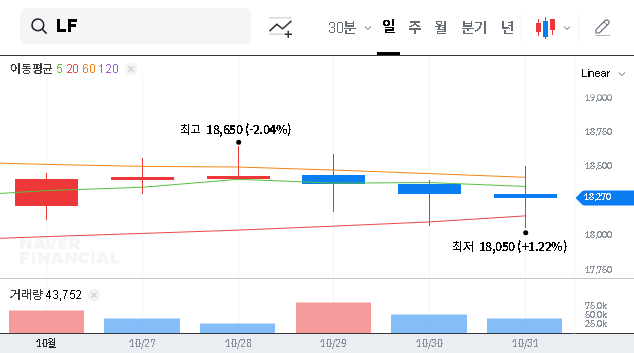
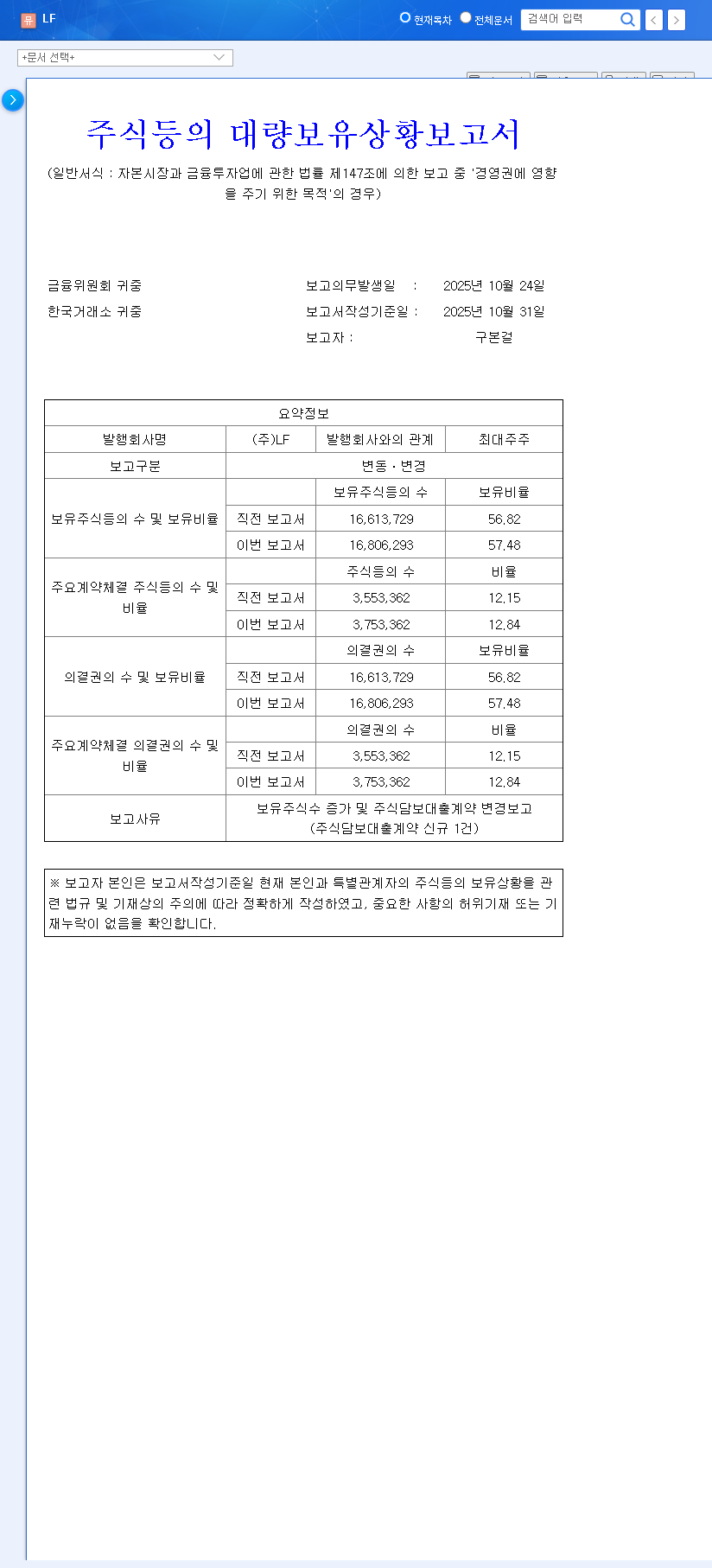
    On November 12, 2025, Truston Asset Management officially disclosed a reduction in its shareholding of LF Corp. stock. The filing, available via the official DART system, confirmed their stake dropped from 5.73% to 4.85%. While any major shareholder selling shares can cause initial concern, the context here is crucial.

    • The Event: A reduction below the key 5% ownership threshold, which removes certain reporting requirements.
    • The Reason: The sale was attributed to on-market and off-market transactions for ‘general investment purposes’. This suggests a portfolio rebalancing rather than a fundamental loss of faith in LF Corp.
    • The Source: The details were confirmed in an Official Disclosure on the DART portal.

    Because the sale was not driven by a negative outlook on the company’s core business, the direct impact on LF Corp.’s fundamentals is likely minimal. The move may create short-term selling pressure but is unlikely to signal long-term weakness.

    Comprehensive LF Corp. Stock Analysis: Beyond the Headlines

    To truly understand the value of 093050 stock, we must look past the recent news and into the company’s operational strengths and strategic initiatives.

    1. Resilient Core Fashion Business

    LF Corp.’s foundation is its robust fashion segment, which continues to demonstrate stable growth. Iconic brands like ‘Daks’, ‘Hazzy’s’, and ‘JILLSTUART’ command strong brand loyalty. The company isn’t resting on its laurels; it is actively strengthening its digital marketing and e-commerce channels to capture the lucrative MZ generation (Millennial and Gen Z) market, ensuring relevance for years to come.

    2. Strategic Diversification and Future Growth

    LF Corp. is intelligently expanding beyond fashion. Its financial business divisions, including KorAmCo Asset Trust, are building a reliable revenue stream. Simultaneously, the LF Food business is posting steady growth. Critically, the company is investing in future-proof assets like data centers and modern logistics facilities, positioning itself to capitalize on the digital economy’s infrastructure needs. For more on sector trends, see this analysis of the global digital infrastructure market.

    3. Rock-Solid Financial Health

    A look at the H1 2025 financial reports reveals a company on solid ground. With a current ratio of 162% and a debt ratio of just 72%, LF Corp. boasts a healthy balance sheet that provides flexibility and resilience. Furthermore, its commitment to shareholder value is evident through ongoing treasury stock acquisitions, which can help support the stock price.

    Despite market noise from the stake sale, LF Corp.’s strong fundamentals—a stable core business, strategic growth initiatives, and a healthy balance sheet—suggest that any resulting price dip could be a compelling entry point for long-term investors.

    The Macroeconomic Environment: Headwinds and Tailwinds

    No company operates in a vacuum. Broader economic trends are influencing LF Corp.’s outlook. According to reports from authoritative sources like Bloomberg, several factors are at play:

    • Exchange Rates (Headwind): A rising USD/KRW and EUR/KRW rate increases costs for overseas sourcing. However, LF Corp. mitigates this risk through currency forward contracts.
    • Interest Rates (Tailwind): A global trend of falling benchmark interest rates is a significant positive. This eases borrowing costs, freeing up capital for investment and operations.
    • Commodity & Logistics Costs (Tailwind): Declining international oil prices and container freight indices directly reduce operational costs, which should improve profit margins.

    Conclusion: An Investment Thesis for LF Corp. Stock

    The fundamental impact of Truston Asset Management’s stake reduction appears neutral to slightly positive. The move likely removes a potential source of future selling pressure now that their stake is below the 5% threshold. When weighed against the company’s solid operational performance and favorable macroeconomic tailwinds (lower interest rates and logistics costs), the outlook remains bright. For those interested in similar value assessments, you might find our guide on How to Analyze Retail Sector Stocks useful.

    Therefore, any short-term price weakness in LF Corp. stock following this news could represent a strategic investment opportunity for investors with a long-term horizon. Continuous monitoring of macroeconomic shifts and the performance of LF’s new business ventures remains essential.

    Frequently Asked Questions (FAQ)

    Why did Truston Asset Management sell its LF Corp. shares?

    Truston cited ‘general investment purposes’ for the sale, suggesting it was part of a routine portfolio adjustment or rebalancing strategy rather than a negative commentary on LF Corp.’s future prospects.

    What are LF Corp.’s primary business segments?

    LF Corp.’s core business is its strong fashion segment. It is actively diversifying into stable growth areas like financial services (KorAmCo Asset Trust), food (LF Food), and future-focused ventures such as data and logistics centers.

    How is LF Corp.’s financial health?

    Excellent. As of H1 2025, the company has a strong current ratio of 162% and a low debt ratio of 72%, indicating high liquidity and a stable financial structure that can weather economic shifts.

    (093050) Deep-Dive LF Corp. Stock Analysis (093050): A Buying Opportunity After Truston's Sale? 관련 이미지
  • (092300) HYUNWOOINDUSTRIALCO.,LTD Conversion Claim Exercise (092300): A 2025 Investor’s Guide

    (092300) HYUNWOOINDUSTRIALCO.,LTD Conversion Claim Exercise (092300): A 2025 Investor’s Guide

    For shareholders and prospective investors in HYUNWOOINDUSTRIALCO.,LTD (092300), the recent news surrounding its HYUNWOOINDUSTRIALCO.,LTD conversion claim exercise is a critical development. An official announcement on November 12, 2025, confirmed a new share issuance stemming from the exercise of convertible bonds. This event introduces both short-term volatility and long-term strategic questions, demanding a thorough analysis from every investor. Understanding the mechanics of this financial maneuver is the first step toward making an informed decision.

    This comprehensive guide will deconstruct the conversion claim exercise, analyze the company’s current financial standing, assess the macroeconomic landscape, and provide a clear HYUNWOOINDUSTRIALCO.,LTD investment strategy. Our goal is to equip you with the knowledge to navigate this period of uncertainty and identify potential opportunities.

    Understanding the Conversion Claim Exercise

    First, what exactly is a conversion claim exercise? It occurs when investors who hold a company’s convertible bonds—a type of debt security—choose to convert those bonds into a predetermined number of common shares. This is typically done when the company’s stock price is trading significantly above the bond’s conversion price, making the shares more valuable than the bond itself.

    According to the Official Disclosure, HYUNWOOINDUSTRIALCO.,LTD has detailed the specifics of this event:

    • New Share Volume: 314,267 new shares will be issued.
    • Market Impact: This represents 1.68% of the company’s current market capitalization.
    • Listing Date: The new shares are expected to be listed and begin trading on November 28, 2025.
    • Conversion Price: The price is set at 3,182 KRW per share.

    The primary consequence is an increase in the number of outstanding shares, an event known as stock dilution. This can put downward pressure on the stock price in the short term as the company’s net income is now divided among more shares.

    With the current stock price (3,840 KRW) being 20.66% higher than the conversion price, the potential for immediate profit-taking by bondholders is high, creating significant selling pressure.

    Fundamental Analysis: The Company’s Core Health (Q3 2025)

    To understand if the company can weather this short-term pressure, we must examine its underlying fundamentals as of the third quarter of 2025. Explore our full library of in-depth company analyses for more context.

    Profitability and Sales

    While total sales saw a 14.4% year-on-year decrease, HYUNWOOINDUSTRIALCO.,LTD managed a slight improvement in operating profit, which reached 8,873 million KRW. This suggests successful cost-cutting measures in selling, general, and administrative expenses, which is a positive sign of operational efficiency.

    Balance Sheet Concerns

    There are two key areas of concern on the balance sheet. First, inventory assets grew by 25% to 47,223,515 thousand KRW. This indicates a persistent inventory management burden that could tie up capital. Second, due to increased borrowings and the issuance of these convertible bonds, the company’s debt ratio has climbed to 82.10%, a notable increase that warrants close monitoring of its financial soundness.

    Future Outlook: Order Backlog

    On a brighter note, the company’s order backlog stood at a healthy 34,010 million KRW at the end of Q3. This backlog provides a degree of revenue visibility and is expected to have a positive impact on future sales, potentially offsetting some of the negative sentiment from the stock dilution.

    Crafting Your HYUNWOOINDUSTRIALCO.,LTD Investment Strategy

    Given the specifics of the HYUNWOOINDUSTRIALCO.,LTD conversion claim exercise and the company’s mixed fundamentals, a nuanced investment strategy is required.

    Short-Term Approach (Next 1-3 Months)

    The period surrounding the new share listing on November 28, 2025, is likely to be marked by heightened volatility. The anticipated sell-off from converting bondholders could depress the stock price. Conservative investors might consider a wait-and-see approach, holding their current position without adding to it, or even trimming their position to manage risk. Aggressive traders might look for shorting opportunities, but this carries substantial risk.

    Long-Term Perspective (6+ Months)

    The long-term trajectory will depend on how effectively the market absorbs the new shares and, more importantly, on the company’s operational performance. Key factors to monitor include:

    • Earnings Growth: Can the company convert its order backlog into strong, profitable sales in the coming quarters?
    • Financial Health: Are there signs of improved inventory management and a reduction in the debt-to-equity ratio?
    • Macroeconomic Factors: Favorable shifts in exchange rates and interest rates could provide significant tailwinds.

    A long-term investment decision should only be made after observing sustained improvements in these core areas.

    Frequently Asked Questions (FAQ)

    Q1: Will this event definitely cause the stock price to drop?

    While short-term downward pressure is highly likely due to stock dilution and profit-taking, it is not guaranteed. Strong positive news or broader market rallies could offset the effect. However, investors should prepare for increased volatility.

    Q2: Is a conversion claim exercise a bad sign for a company?

    Not necessarily. It indicates that the company’s stock has performed well enough to make conversion attractive. It also converts debt into equity on the balance sheet, which can improve certain financial ratios. The main drawback is the dilution for existing shareholders.

    Q3: What should I watch for on November 28, 2025?

    On the listing date, monitor the trading volume closely. Unusually high volume could indicate that many of the new shares are being sold into the market. Also, watch the price action around the conversion price of 3,182 KRW, as it may act as a temporary psychological support or resistance level.

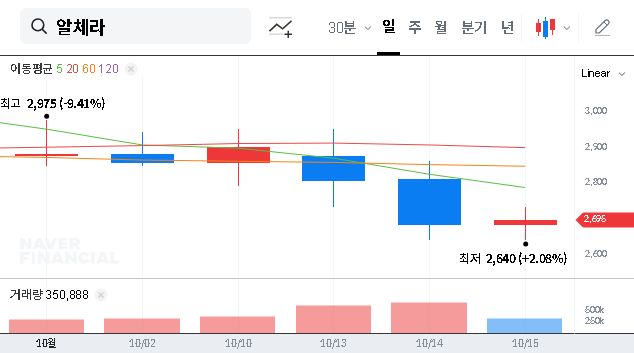
  • (347860) Alchera Stock Analysis: Will a ₩2.2B Hyundai Mobis Contract Fuel Growth?

    (347860) Alchera Stock Analysis: Will a ₩2.2B Hyundai Mobis Contract Fuel Growth?

    Investors closely watching Alchera stock are dissecting the recent announcement of a landmark deal. Alchera Inc., a specialist in AI vision recognition solutions, has secured a significant ₩2.2 billion contract with automotive giant Hyundai Mobis. Representing nearly 13% of its recent half-year revenue, this agreement could be a pivotal moment for a company whose stock has faced considerable headwinds. But does this contract signal a genuine turnaround, or are underlying financial risks still too great? This comprehensive analysis explores the full implications of the Hyundai Mobis contract for Alchera’s future and what it means for potential investors.

    The Landmark Deal: Deconstructing the Hyundai Mobis Contract

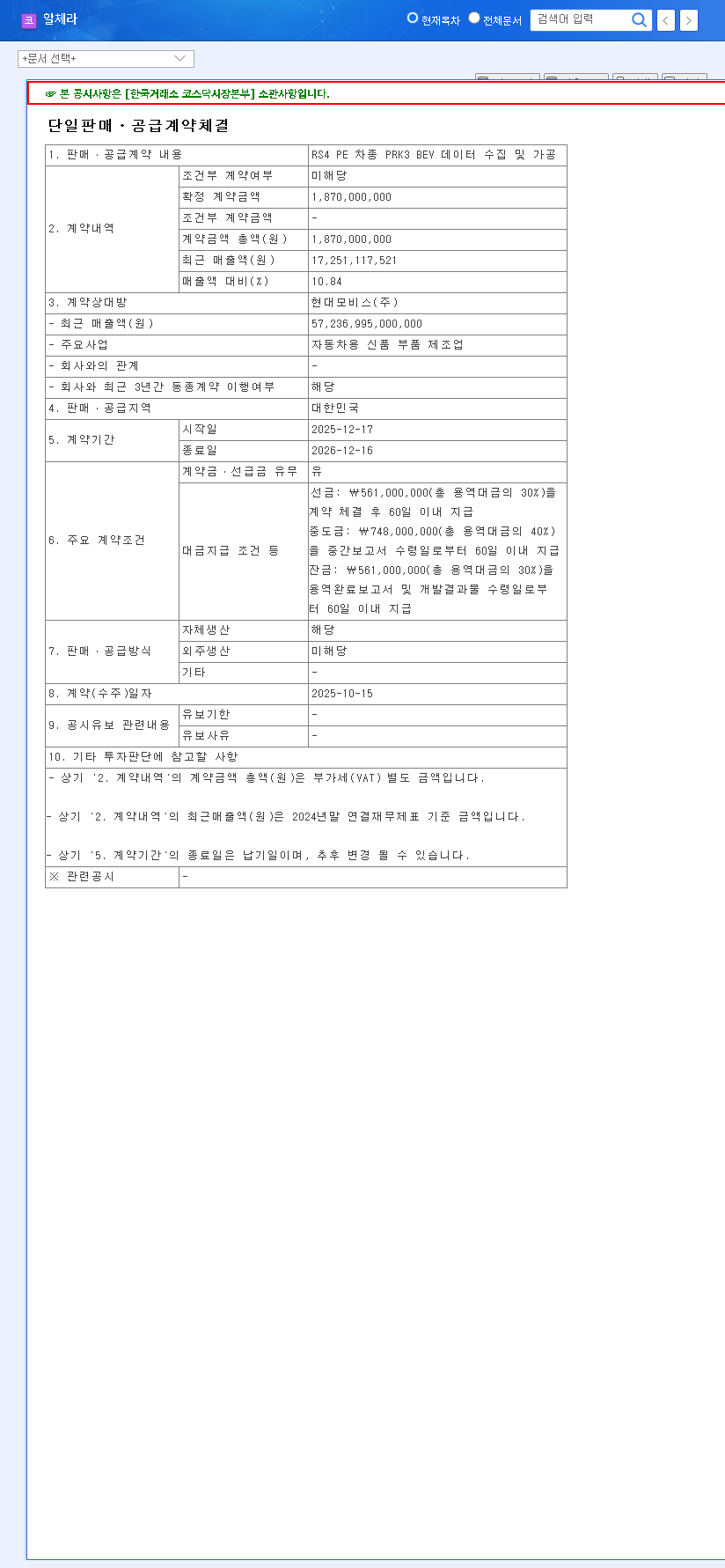
    On November 12, 2025, Alchera Inc. officially announced a ₩2.2 billion DB (database) construction service contract with Hyundai Mobis Co., Ltd. This is not just another sales win; its scale and the prestige of the client make it a cornerstone event for the company. The contract, which runs for approximately 14 months until January 22, 2027, is a significant validation of Alchera’s capabilities in the competitive AI training data market. The details of this agreement were confirmed in an official filing (Source: Official Disclosure).

    The core of the project involves building a high-quality database, which is the lifeblood for developing sophisticated AI systems. For a company like Hyundai Mobis, this data is critical for advancing their autonomous driving technology, in-cabin driver monitoring systems, and other next-generation automotive features. Securing this deal proves Alchera can meet the rigorous standards of a global industry leader.

    This contract is more than a revenue boost; it’s a powerful endorsement of Alchera’s technology and its strategic importance in the evolving automotive AI supply chain.

    Investor Outlook: Balancing Opportunity and Risk

    For those evaluating Alchera stock, this contract presents a clear turning point. However, a prudent investment decision requires weighing the undeniable positive impacts against the company’s historical challenges.

    The Bull Case: Why This Contract Matters for Alchera Stock

    • Substantial Revenue Injection: The ₩2.2 billion deal represents a massive 12.87% of H1 2025 revenue. This provides a predictable, significant revenue stream for 2026, which is crucial for a company working towards profitability.
    • Improved Profitability & Cash Flow: AI training data services typically carry higher profit margins than software licensing. This contract could directly improve Alchera’s bottom line and strengthen its cash position, reducing the need for dilutive capital raises.
    • Enhanced Market Credibility: Winning a competitive bid with Hyundai Mobis solidifies Alchera Inc. as a top-tier player. This credibility can be leveraged to secure more large-scale enterprise contracts in the future, creating a flywheel effect for growth.
    • Strategic Diversification: This project strengthens Alchera’s data construction business, diversifying its revenue away from pure AI vision recognition software and creating a more resilient business model.

    The Bear Case: Key Risks to Monitor

    Despite the positive news, investors must remain aware of the challenges that have previously impacted Alchera stock performance.

    • History of Operating Losses: Alchera has a track record of persistent operating losses. It is critical to monitor whether the profitability from this contract marks the beginning of a sustained trend toward positive earnings.
    • Capital Structure Concerns: Past reliance on capital raising through rights offerings and convertible bonds presents a potential for future shareholder dilution. Investors should watch the overhang from these financial instruments.
    • Intense Market Competition: The AI data market is fiercely competitive. Alchera must continue to innovate and execute flawlessly to maintain its edge and secure follow-on business.

    Conclusion: An Action Plan for Investors

    The Hyundai Mobis contract is unequivocally a major positive catalyst for Alchera Inc. It provides a clear path to revenue growth, enhances business credibility, and validates its technological prowess in AI. However, this one contract does not erase the company’s past financial struggles.

    The prudent approach for investors is one of cautious optimism. This news significantly brightens the outlook for Alchera stock, but the key will be execution. Investors should closely monitor quarterly earnings reports to see if the financial benefits of this deal materialize and lead to sustained profitability. For a deeper dive into market trends, consider our guide to the broader AI industry landscape.

    (347860) Alchera Stock Analysis: Will a ₩2.2B Hyundai Mobis Contract Fuel Growth? 관련 이미지