Tag: Stock Dividend

  • (217190) Genesem Inc. Stock Dividend: A Complete 2025 Investor’s Guide

    (217190) Genesem Inc. Stock Dividend: A Complete 2025 Investor’s Guide

    The semiconductor industry is abuzz following a major announcement from Genesem Inc., a key player in backend automation equipment. The company’s recent decision regarding a Genesem Inc. stock dividend has captured the attention of investors, prompting critical questions about its impact on share price, intrinsic value, and the company’s future. This move, granting 0.5 new common shares for every existing share, is more than a simple line item—it’s a strategic signal that warrants a thorough investigation.

    In this comprehensive guide, we will dissect this financial event, providing a clear and detailed analysis to help you make informed investment decisions. We’ll explore the immediate details, the company’s underlying financial health, and the long-term implications for shareholders.

    The Announcement: Genesem’s Stock Dividend Details

    On November 10, 2025, Genesem Inc. officially declared its plan to issue a stock dividend. This is a significant event for existing shareholders and potential investors alike. The core of the decision is a dividend ratio of 0.5, meaning for every one common share an investor holds, they will receive an additional half-share.

    This is a non-cash distribution that increases the total number of shares outstanding, effectively diluting the price per share while keeping the investor’s total stake value the same, at least in theory. The move is often seen as a sign of management’s confidence. For full transparency, you can view the Official Disclosure (DART Report).

    Key Dates for Investors

    • Announcement Date: November 10, 2025
    • Record Date: November 25, 2025 (Shareholders must be on record by this date to be eligible)
    • New Shares Listing Date: December 17, 2025 (The new shares begin trading)

    Understanding Genesem Inc. & Its Financial Health

    Before analyzing the dividend’s impact, it’s crucial to understand the company behind it. Genesem Inc. specializes in semiconductor backend equipment—the machinery used in the final stages of chip manufacturing, including testing, handling, and packaging. With over 130 patents, they possess unique technological capabilities in a market projected for robust growth. The company is also making strategic moves, such as establishing a China JV for market expansion.

    Financial Snapshot (H1 2025)

    The company’s recent financials present a mixed but interesting picture:

    • Revenue: KRW 27.02 billion (A decrease year-over-year).
    • Operating Profit: KRW 1.346 billion (Shifted to profitability, a positive sign of operational efficiency).
    • Net Profit: KRW 171 million (Decreased year-over-year, a point of concern).
    • Debt-to-Equity Ratio: 74.83% (Increased, indicating higher leverage that needs monitoring).

    While the return to operating profitability is a strong positive, the declining revenue and net profit, combined with rising debt, create a complex backdrop for the Genesem Inc. stock dividend decision.

    Stock Dividend Analysis: The Pros and Cons for Investors

    A stock dividend is fundamentally different from a cash dividend. For a deeper understanding, resources like Investopedia’s guide on stock dividends can be helpful. Let’s break down what Genesem’s move means.

    Potential Positives

    • Increased Liquidity: With more shares in circulation at a lower price per share, the stock becomes more accessible to a wider range of retail investors. This can significantly boost trading volume and liquidity.
    • Positive Market Signal: Management may issue a stock dividend to signal confidence in the company’s future earnings potential. It suggests they believe the company will grow enough to support a larger number of outstanding shares without value erosion.
    • Enhanced Shareholder Value Perception: It is a form of shareholder return that rewards long-term investors and can improve the company’s image as being shareholder-friendly.

    Neutral Factors & Potential Risks

    • No Change in Intrinsic Value: This is critical. A stock dividend is like cutting a pizza into more slices. The size of the pizza (the company’s total value) doesn’t change. Any short-term price jump is based on market sentiment, not a fundamental improvement.
    • No Financial Structure Improvement: The dividend is an accounting entry moving funds from retained earnings to paid-in capital. It brings in no new cash and does not help pay down debt. Given Genesem’s rising debt-to-equity ratio, this is a significant consideration.
    • Risk of Profit-Taking: A sentiment-driven price rally after the announcement could be short-lived. Investors should be wary of a potential sell-off around the new shares listing date as early movers take profits.

    Strategic Investor Outlook & Final Recommendation

    The Genesem Inc. stock dividend is a catalyst that could generate short-term excitement and liquidity. The high dividend ratio is certain to attract market attention. However, savvy investors must look beyond the immediate hype and focus on the fundamentals.

    Our investment opinion remains Neutral. The positive signal from management is tempered by the lack of fundamental change to the company’s value and the existing financial concerns like declining net profit and rising debt. For those interested in this sector, you might also want to read our guide on How to Analyze Semiconductor Stocks for broader context.

    Actionable Points for Monitoring

    • Watch Q4 2025 Earnings: The next earnings report is crucial. Look for sustained operating profitability, a reversal in the net profit decline, and a strategy to manage the debt-to-equity ratio.
    • Monitor Market Reaction: Observe trading volumes and price stability after the new shares are listed on December 17. A sharp decline could indicate that the initial excitement has faded.
    • Track Business Developments: Pay close attention to news regarding the China JV and any new major client orders, as these are the true drivers of long-term value.
    (217190) Genesem Inc. Stock Dividend: A Complete 2025 Investor's Guide 관련 이미지
    (217190) Genesem Inc. Stock Dividend: A Complete 2025 Investor's Guide 관련 이미지
  • (175330) JB Financial Group Dividend 2025: In-Depth Analysis & Investment Strategy

    (175330) JB Financial Group Dividend 2025: In-Depth Analysis & Investment Strategy

    In a landscape of market volatility, the recent announcement of the JB Financial Group quarterly dividend has captured the attention of savvy investors. A company’s dividend policy is more than just a payout; it’s a powerful statement about its financial health, management confidence, and commitment to its shareholders. This comprehensive analysis will dissect what this dividend means, explore the robust fundamentals supporting it, and outline a strategic approach for potential and current investors.

    JB Financial Group’s latest dividend signals a clear focus on sustainable shareholder returns, backed by top-tier profitability and prudent risk management. This approach prioritizes long-term value over short-term gains.

    Decoding the Dividend Announcement

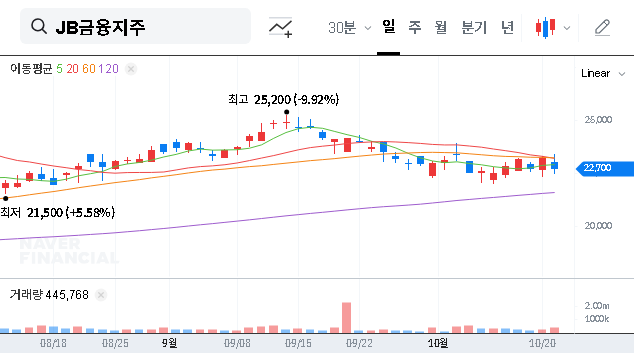
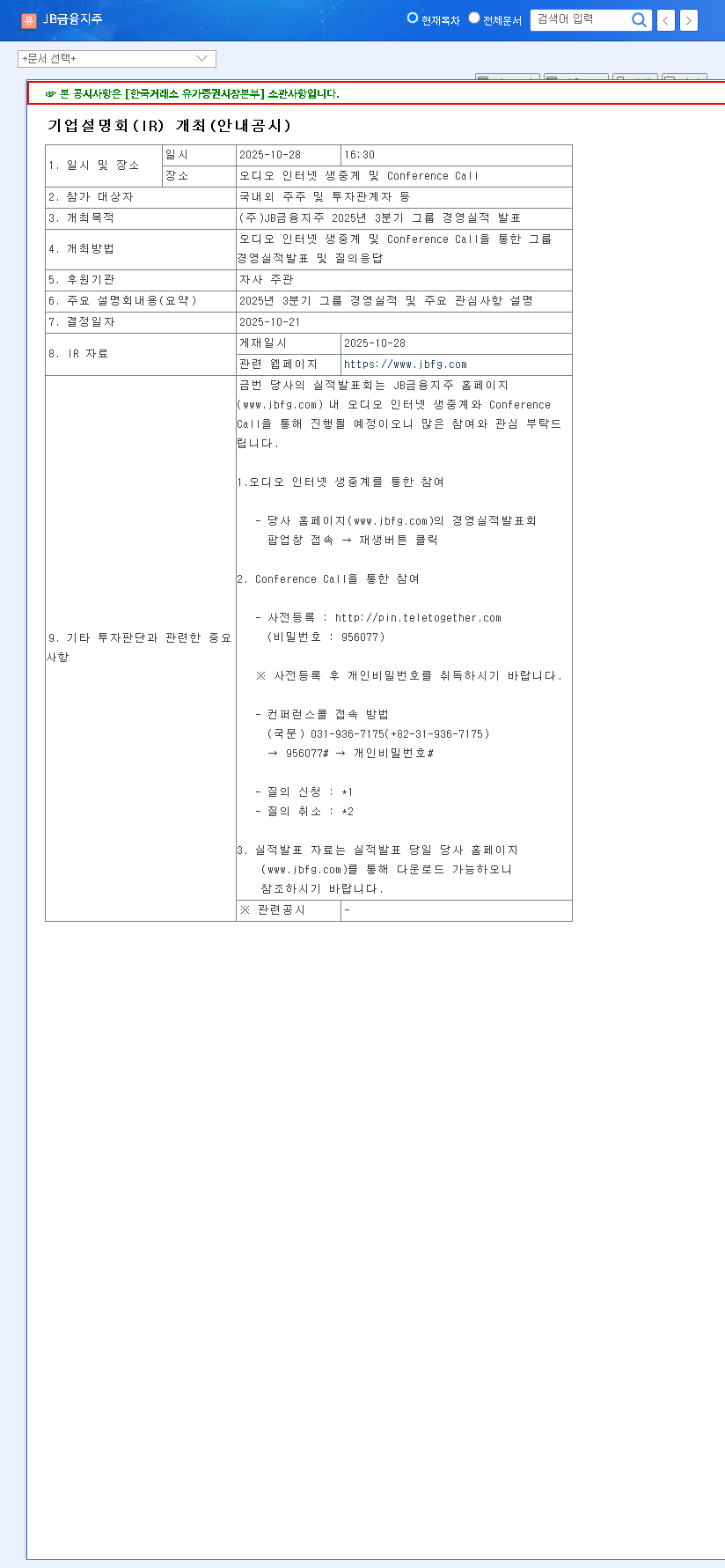
    JB Financial Group has declared a cash dividend of 160 KRW per common share. The key dates for investors are a record date of November 12, 2025, and a payment date of November 27, 2025. Based on the current stock price, this translates to a dividend yield of approximately 0.7%. While this figure may seem modest, it’s a strategic move that underscores a commitment to consistent, predictable shareholder return rather than chasing a high, potentially unsustainable, short-term yield. This consistency is often a hallmark of a mature and financially sound institution.

    Robust Fundamentals: The Engine Behind the Payout

    A dividend is only as reliable as the company paying it. The decision from JB Financial Group is supported by a foundation of impressive financial strength and operational efficiency, as detailed in its recent reports. For a complete financial picture, investors can review the Official Disclosure (DART Source).

    Key Financial Health Indicators

    • Exceptional Profitability: With a consolidated net profit of KRW 370.4 billion in Q2 and an ROE (Return on Equity) of 13.1%, the group demonstrates top-tier profitability. This efficiency is further highlighted by a low Cost-to-Income Ratio (CIR) of 35.8%, proving its adept cost management.
    • Solid Capital Adequacy: The Common Equity Tier 1 (CET1) ratio stands at a healthy 12.40%. This crucial metric, which compares a bank’s core equity capital to its risk-weighted assets, signifies a strong buffer to absorb unexpected losses and navigate economic turbulence. To learn more, you can read about understanding key financial ratios for banking institutions.
    • Diversified Subsidiary Performance: Strong growth from Jeonbuk Bank, JB Woori Capital, and particularly the Cambodian subsidiary PPCBank (which saw a 50.4% net profit increase) showcases successful diversification. While Kwangju Bank’s decreased profit is a point to monitor, the overall portfolio remains robust.

    Future Outlook and Investment Strategy

    The quarterly JB Financial Group dividend is not just a reward for past performance; it’s a bridge to future growth. The group’s forward-looking strategy includes ambitious targets that could significantly enhance shareholder value over the long term. This includes targeting an ROE of 15% and a shareholder return ratio of 50%.

    Growth Catalysts and Risk Factors

    Future growth is expected to be driven by digital transformation initiatives and strategic fintech partnerships, which will enhance competitiveness and operational efficiency. However, investors must remain vigilant. Macroeconomic factors like interest rate changes and currency fluctuations can impact profitability. As noted by sources like Reuters, the global financial climate requires careful navigation. Internally, the rise in the non-performing loan (NPL) ratio at JB Woori Capital to 2.71% is a specific risk that warrants continuous monitoring and proactive management from the group.

    An Action Plan for Prudent Investors

    • Adopt a Long-Term View: The current JB Financial stock strategy points towards long-term value creation. Focus on the company’s intrinsic growth potential rather than short-term market noise.
    • Monitor Key Risks: Keep an eye on macroeconomic trends and the asset quality of key subsidiaries. The company’s ability to manage these risks will be critical to its performance.
    • Track Shareholder Return Goals: The group’s progress towards its ambitious ROE and shareholder return ratio targets will be a leading indicator of its future dividend capacity and overall investment appeal.

    In conclusion, the JB Financial Group quarterly dividend is a positive indicator of financial stability and a shareholder-friendly policy. For investors with a long-term horizon, the company’s solid fundamentals and clear growth strategy present a compelling case for consideration as part of a well-diversified portfolio.

    (175330) JB Financial Group Dividend 2025: In-Depth Analysis & Investment Strategy 관련 이미지
  • Onconik Therapeutics Announces Stock Dividend: A Catalyst for Growth? (476060)

    What is the Stock Dividend?

    Onconik Therapeutics officially announced a stock dividend on September 17, 2025. This means existing shareholders will receive additional shares free of charge, increasing the total number of outstanding shares. This typically leads to increased stock liquidity and potentially drives up the share price.

    Why the Stock Dividend?

    Onconik Therapeutics is riding a wave of positive momentum with the successful launch of Zastaprazan and ongoing clinical trials for Nesuparib. The stock dividend can be interpreted as a strategic move to enhance shareholder value and attract further investor interest. Their robust financial position (returned to profitability in the first half of 2025, negative net debt) also supports this decision.

    How Will the Stock Dividend Impact the Share Price?

    • Positive Impacts: Increased shareholder value, enhanced liquidity, potential upward momentum in share price, improved corporate image and investment attractiveness.
    • Potential Considerations: Short-term stock dilution effect, market volatility.

    In the long term, the market expansion of Zastaprazan and the success of Nesuparib’s clinical trials will be the key determinants of the company’s value.

    What Should Investors Do?

    While a stock dividend is generally perceived as a positive signal, careful analysis is crucial before making any investment decisions. Investors should thoroughly examine the stock dividend ratio, the record date, and the overall market conditions. Consider the company’s fundamentals and growth potential before investing.

    FAQ

    What is a stock dividend?

    A stock dividend is a payment made to shareholders in the form of additional shares, rather than cash.

    Why do companies issue stock dividends?

    Companies issue stock dividends to enhance shareholder value, increase liquidity, and potentially drive up the share price.

    What are Onconik Therapeutics’ key pipeline products?

    The key pipeline products are Zastaprazan, a P-CAB acid suppressant, and Nesuparib, an anti-cancer drug.

  • Studio Samick Announces 200% Stock Dividend: Is it a Good Investment Opportunity?

    Studio Samick Announces 200% Stock Dividend: Is it a Good Investment Opportunity? 대표 차트 이미지

    What’s Happening with the Stock Dividend?

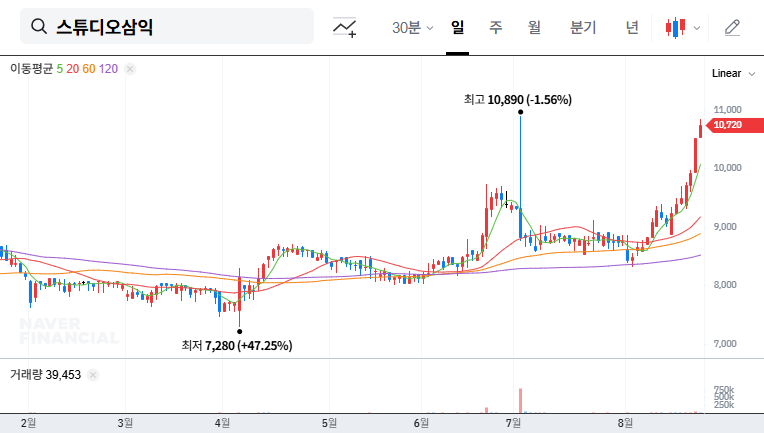
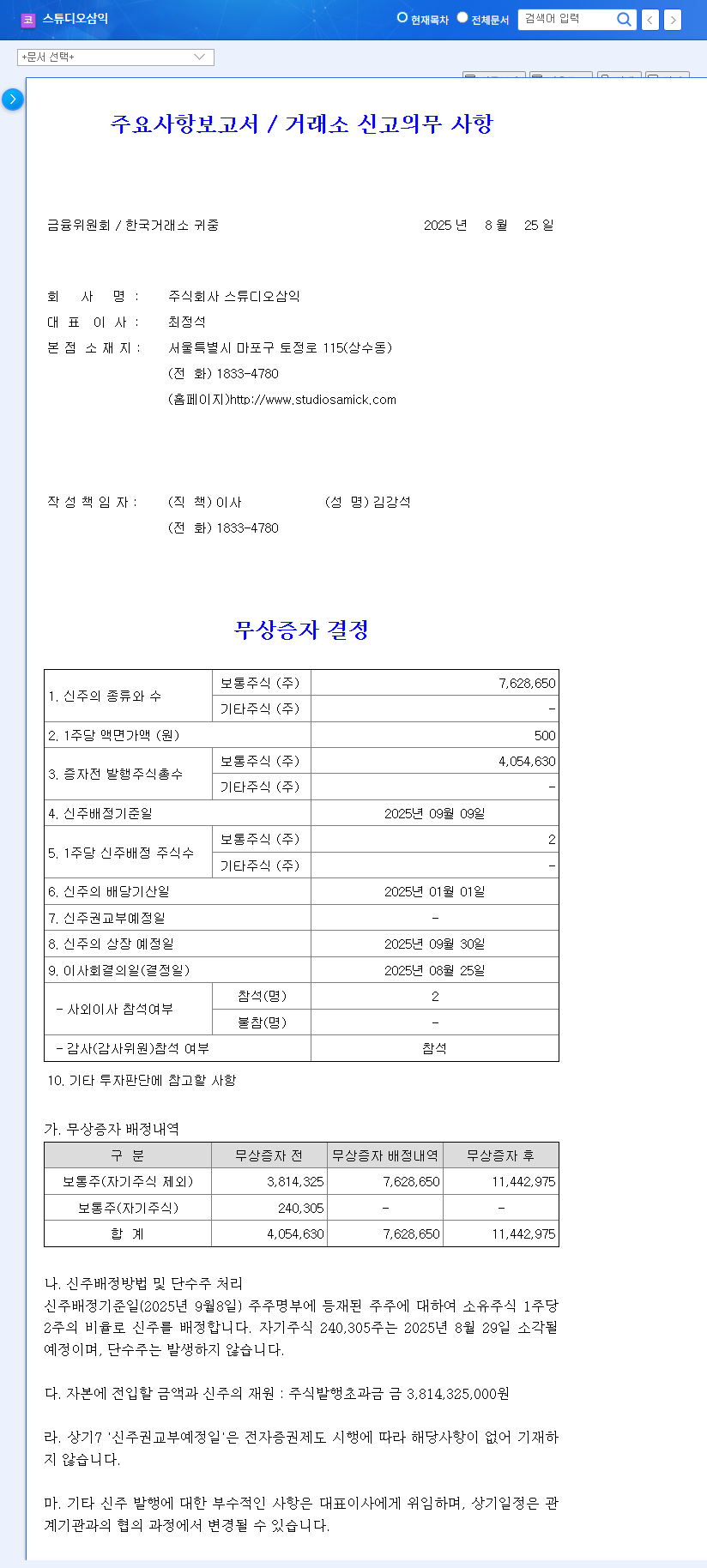
    Studio Samick announced a 200% stock dividend on August 25, 2025, granting 2 new shares for each existing share. The new shares are expected to be listed on September 30th. The company stated that the goal is to enhance shareholder value and increase trading volume by expanding the number of outstanding shares.

    Why the Stock Dividend?

    Officially, the company cites increased shareholder value and trading volume as the reasons. However, following the July share buyback, this stock dividend can be interpreted as a strong signal of their intent to boost the stock price and confidence in future growth. This can attract investor attention and potentially drive short-term price increases.

    What’s the Potential Impact?

    Positive Impacts

    • ▶ Increased accessibility for investors due to lower share price
    • ▶ Potential for increased trading volume due to a higher number of outstanding shares
    • ▶ Possibility of short-term upward momentum in stock price

    Negative/Neutral Impacts

    • ▶ No change in company fundamentals
    • ▶ Potential for short-term share dilution
    • ▶ Continued decline in sales and intensified market competition

    Since a stock dividend itself doesn’t improve a company’s performance, the long-term stock price will depend on fundamentals. The success of new ventures like Studio Sleep and securing market competitiveness are crucial.

    Investor Action Plan

    Studio Samick’s stock dividend could present a short-term investment opportunity. However, a long-term perspective requires careful consideration of fundamental improvements. Continuous monitoring of new brand growth, competitive landscape changes, and macroeconomic conditions is crucial for developing a sound investment strategy. Be aware of increased price volatility following the stock dividend.

    Frequently Asked Questions

    When will the stock dividend be implemented?

    The record date is September 9, 2025, and the new shares are expected to be listed on September 30, 2025.

    What will happen to the stock price after the stock dividend?

    There’s a potential for a short-term price increase, but the long-term price depends on the company’s performance and market conditions.

    What are the investment considerations?

    A stock dividend doesn’t change the fundamentals of the company. Carefully analyze the company’s performance and growth potential.

    Studio Samick Announces 200% Stock Dividend: Is it a Good Investment Opportunity? 관련 이미지
  • YJ Link Announces 100% Stock Dividend: Good News or Bad? Unpacking the Implications

    1. What is the Stock Dividend About?

    YJ Link announced a 100% stock dividend on August 21, 2025. Shareholders will receive one additional share for every share they own as of September 5, with the new shares listed on September 19.

    2. Why the Stock Dividend?

    YJ Link has been facing recent performance challenges. According to its 2025 half-year report, sales decreased by 26.6% year-on-year, and operating profit turned negative. In this context, the stock dividend can be interpreted as an attempt to boost shareholder morale and improve investor sentiment. It can also lead to increased liquidity and trading activity.

    3. What Does This Mean for Investors?

    • Short-term impact: The stock price might experience a short-term increase following the announcement. However, after the listing of new shares, a dilution effect could occur due to the increased number of shares.
    • Long-term impact: YJ Link’s future depends on the success of its EMS business entry and global production expansion strategy. Successful execution of these strategies, leading to improved performance, could make the stock dividend a positive factor for long-term investment value.

    4. What Should Investors Do?

    • Short-term investors: Consider profit-taking if the stock price rises after the announcement. Be mindful of price volatility around the new share listing date.
    • Long-term investors: Continuously monitor YJ Link’s EMS business performance and the improvement of its overseas subsidiaries’ earnings. The recovery of its financial health is also a critical factor to consider.
    Why issue a stock dividend?

    A stock dividend is when a company distributes additional shares to its existing shareholders for free. While the stock price typically decreases due to the increased number of shares, it can stimulate trading activity and attract investor attention.

    Are stock dividends always good?

    Not necessarily. A stock dividend itself doesn’t enhance a company’s inherent value. Sustainable stock price increase requires improved company performance.

    Should I invest in YJ Link after the stock dividend?

    Investment decisions should be based on your own judgment. Consider the short-term price volatility and carefully monitor YJ Link’s performance improvement for long-term investment.

  • LTC Announces Shareholder Return Policy: Cash & Stock Dividends + Stock Split

    1. What is LTC’s Shareholder Return Policy?

    On July 31, 2025, LTC announced plans to increase cash dividends, distribute LSE stock dividends, and implement a stock split to enhance shareholder value.

    • Cash Dividends: Dividend payout ratio increased to at least 15% (starting from FY2025), and 50% of LSE’s dividends will be distributed to LTC shareholders (assuming LSE is listed).
    • Stock Dividends: 10% of LSE’s IPO shares will be distributed as stock dividends to LTC’s common shareholders (excluding major shareholders and related parties, assuming LSE is listed).
    • Stock Split: A 100-200% stock split will be implemented to increase LTC’s trading volume (concurrently with cash/stock dividends).

    2. LTC Fundamentals and Market Conditions

    LTC’s Q1 2025 earnings were weaker year-over-year, but the order backlog for the equipment business is positive, and there is growth potential in new businesses. The current KRW/USD and KRW/EUR exchange rates are stable, but rising raw material prices and interest rates could impact LTC’s performance. The long-term growth outlook for the display and semiconductor industries is positive, but increased competition should be considered.

    3. How Will the Shareholder Return Policy Affect LTC’s Stock Price?

    Increased cash dividends could improve investor sentiment, but the actual dividend amount may vary depending on future earnings. LSE stock dividends offer additional investment opportunities, but LSE’s growth and listing status are key variables. The stock split could increase liquidity but also has the potential to dilute share prices.

    4. Investor Action Plan

    LTC’s shareholder return plan could be positive for the stock price in the short term, but investors should consider the potential dilution effect of the stock split and the uncertainty surrounding LSE’s listing and performance. It’s crucial to continuously monitor information related to LSE, LTC’s future earnings announcements, and market reactions to develop an effective investment strategy.

    LTC Shareholder Return Policy FAQs

    When will LTC shareholders start receiving increased cash dividends?

    The increased cash dividends, with a payout ratio of at least 15%, will be distributed starting from the fiscal year 2025.

    Who is eligible for the LSE stock dividends?

    Assuming LSE is listed, LTC’s common shareholders, excluding major shareholders and related parties, will be eligible for the LSE stock dividends.

    What is the potential impact of the stock split on the share price?

    The stock split will increase the number of outstanding shares, improving liquidity, but it also has the potential to dilute the share price.