On October 27, 2025, a mandatory disclosure rippled through the investment community, detailing a minor but notable SK Inc. shareholding change involving its chairman, Chey Tae-won. For investors holding or watching SK Inc. (KRX: 034730), such announcements can trigger a wave of questions about stock stability, management control, and long-term value. While the adjustment is fractional, understanding its context is crucial for making informed decisions.
This comprehensive analysis breaks down the disclosure, explores the underlying reasons for the change, and evaluates the potential impact on SK Inc.’s stock price. We’ll provide a clear, actionable framework for investors to navigate this development and focus on what truly matters for the company’s future.
The Disclosure Deconstructed: What Exactly Happened?
The filing, formally titled “Report on the Status of Large Shareholding, etc. (General),” was submitted to South Korea’s Financial Supervisory Service. The core of the report details a slight decrease in Chairman Chey Tae-won’s stake in SK Inc. Here are the essential facts from the disclosure:
- •Reporting Entity: SK Inc. (Market Cap: 18.01 Trillion KRW)
- •Reporting Individual: Chairman Chey Tae-won
- •Previous Holding: 25.50%
- •New Holding: 25.48%
- •Net Change: -0.02 percentage points
- •Stated Reason: Change in contract regarding shares, adjustments in special relationships, and minor open market trading.
Investors can review the complete filing directly from the source. The Official Disclosure on DART provides the full regulatory details.
Analyzing the ‘Why’: Management Stability and Special Relationships
Is Management Control at Risk?
The immediate concern with any SK Inc. shareholding change is its effect on governance. However, the 0.02% decrease is negligible in the grand scheme. Chairman Chey still holds a commanding stake of over 25%, and the disclosure explicitly states his holding purpose is for ‘Influence on Management Rights.’ This signals a clear intention to maintain firm control over the conglomerate’s strategic direction. The adjustment is more likely a technical rebalancing or a minor portfolio diversification rather than a precursor to a significant shift in leadership or strategy. Therefore, management stability is expected to remain firmly intact.
Understanding ‘Special Relationships’
The mention of ‘change in special relationships’ is a key detail. In the context of South Korean corporate governance, this often refers to share transfers between family members, affiliated entities, or close associates. While these shifts don’t always impact the public market directly, they can hint at long-term succession planning or strategic alignments within the ownership group. Investors should monitor future disclosures for more clarity on these relationships, but for now, it appears to be an internal restructuring with no immediate external impact.
For a diversified conglomerate like SK Inc., long-term value is driven by innovation and market leadership in its core segments—not by fractional shifts in executive shareholding.
Stock Price Impact: Short-Term Noise vs. Long-Term Fundamentals
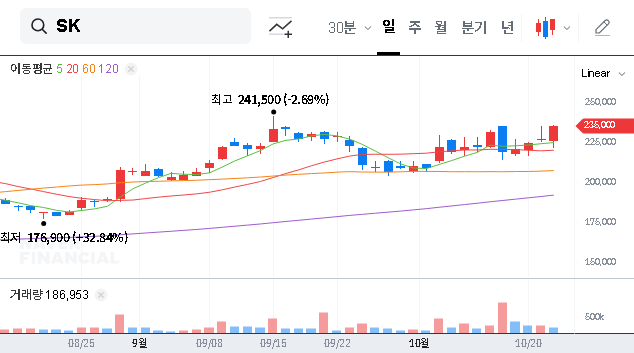
In the short term, the market’s reaction to this SK Inc. stock analysis is likely to be muted. The change is too small to trigger significant selling pressure. However, algorithmic traders and speculative investors might cause minor volatility as they digest the news. The real drivers of SK Inc.’s stock price lie in its powerful and diverse business portfolio and the broader macroeconomic climate.
SK Inc. is a holding company with major stakes in world-class enterprises like SK Hynix (semiconductors), SK On (EV batteries), and SK Telecom (telecommunications). The company’s long-term performance is far more sensitive to global semiconductor demand, the pace of EV adoption, and macroeconomic factors like interest rates and energy prices. As noted by financial analysts at sources like Bloomberg, these global trends will ultimately dictate SK Inc.’s earnings and valuation.
Action Plan for the Prudent Investor
This disclosure should be treated as a single data point, not a complete investment thesis. Astute investors should use this as a prompt to conduct a broader health check on their SK Inc. investment. Here’s a strategic checklist:
- •Review Business Segment Performance: Analyze the latest earnings reports from SK Hynix, SK On, and other key subsidiaries. Are they meeting growth targets and managing costs effectively?
- •Assess the Macro Environment: Evaluate how current global economic conditions, from exchange rates to commodity prices, are impacting SK’s diverse operations.
- •Consult Analyst Consensus: Check recent brokerage reports and market consensus to understand how financial experts view SK Inc.’s valuation and future price targets.
- •Understand the Filing Process: For more context, review Our Guide to Analyzing Corporate Disclosures to better interpret future reports.
Frequently Asked Questions (FAQ)
When was the SK Inc. shareholding change disclosed?
The official report was filed and disclosed on October 27, 2025.
How much did Chairman Chey Tae-won’s stake change?
His stake decreased by a very small margin of 0.02 percentage points, from 25.50% to 25.48%.
Does this change affect SK Inc.’s management control?
No. The change is minimal, and Chairman Chey’s stated purpose of holding the shares is to maintain management influence. No significant impact on control is expected.
What is the likely short-term impact on SK Inc.’s stock?
The short-term impact is expected to be limited. While minor volatility is possible, the fundamentals of the disclosure do not warrant a major price movement.