Tag: Stock Dilution

  • (340810) SECERN AI Convertible Bond (₩3B): Analysis, Stock Impact & Investor Guide

    (340810) SECERN AI Convertible Bond (₩3B): Analysis, Stock Impact & Investor Guide

    SECERN AI Co., Ltd. (stock code: 340810) has made a significant financial move, announcing the issuance of a ₩3 billion private placement SECERN AI convertible bond. This news has sent ripples through the investment community, presenting both a potential catalyst for growth and the looming risk of stock dilution. For current and prospective shareholders, understanding the nuances of this financial instrument is critical for making informed decisions. Is this a sign of strength or a necessary measure that could harm shareholder value down the line?

    This comprehensive analysis will dissect the SECERN AI convertible bond issuance from every angle. We’ll explore the strategic reasons behind the move, break down the potential impact on the SECERN AI stock price, and provide a clear action plan for investors navigating this pivotal event.

    Unpacking the Details of the ₩3 Billion Issuance

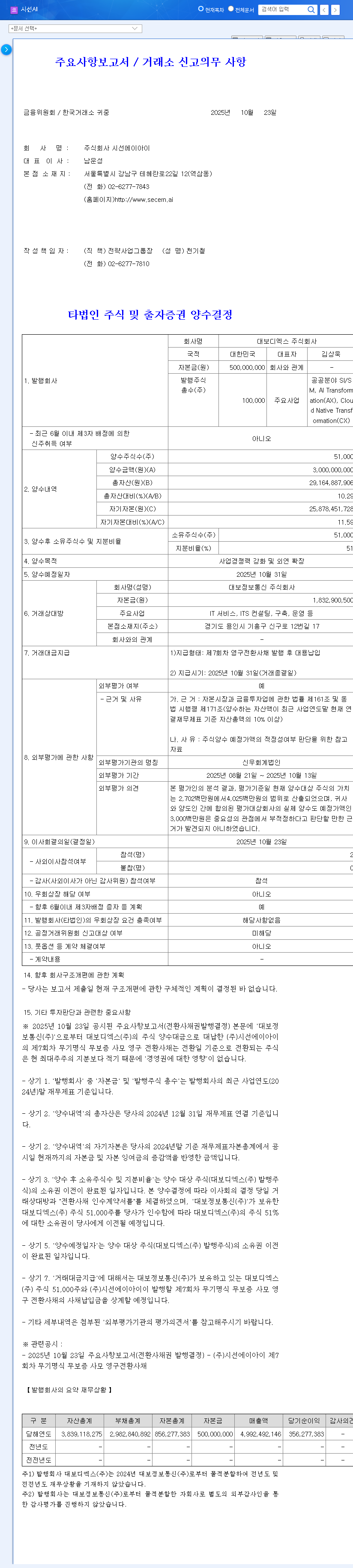
    On October 23, 2025, SECERN AI formally announced its decision through a public filing. A convertible bond is a hybrid security that acts like a loan but gives the bondholder the option to convert their debt into a predefined number of the company’s common stock shares. For a full breakdown, you can review the Official Disclosure (DART Source). Here are the crucial terms of this deal:

    • Total Issuance Amount: ₩3 billion, a significant capital injection for the company.
    • Issuance Method: A private placement to specific investors, including DAEBO Information & Communications.
    • Conversion Price: ₩3,648 per share. This is the price at which bondholders can convert their debt into equity.
    • Coupon Rate: 0%. SECERN AI will not pay regular interest on this debt, preserving cash flow.
    • Yield to Maturity: 3%. If the bonds are not converted, bondholders will receive a 3% annualized return at maturity.
    • Conversion Period: Begins one year after issuance, from October 31, 2026.

    The Strategic Rationale: Why Raise Capital Now?

    A company like SECERN AI doesn’t raise ₩3 billion without a clear purpose. The primary driver is to secure operating funds to fuel growth and strategic initiatives. This capital can be deployed in several high-impact areas, such as accelerating research and development in its core AI technologies, expanding into new markets, or strengthening its financial position against competitors. The 0% coupon rate is particularly advantageous, as it allows the company to access significant funds without the immediate pressure of interest payments, a major benefit for its short-term financial health.

    This fundraising signals ambition. The participation of a strategic investor like DAEBO Information & Communications can be seen as a strong vote of confidence in SECERN AI’s long-term vision and technological roadmap.

    Analyzing the Impact: Opportunity vs. Risk

    The issuance of a SECERN AI convertible bond creates a classic duality for investors. The potential outcomes depend heavily on how effectively the company utilizes the new capital and how the market reacts.

    The Bull Case: Fueling Growth and Investor Confidence

    On the positive side, this ₩3 billion infusion can be a powerful growth catalyst. If used to successfully develop and launch new products, it could lead to substantial revenue growth and a higher SECERN AI stock price. The fact that an established entity like DAEBO is investing sends a strong positive signal to the market about SECERN AI’s perceived value and potential. This can attract further institutional investment and improve overall market sentiment.

    The Bear Case: The Inevitable Risk of Stock Dilution

    The most significant risk for existing shareholders is stock dilution. If the stock price rises above the ₩3,648 conversion price, bondholders will be incentivized to convert their debt into stock. This increases the total number of shares outstanding, which dilutes the ownership stake of each existing shareholder. For a deeper understanding of this financial concept, resources like Investopedia provide excellent explanations. Essentially, each existing share represents a smaller piece of the company pie. Furthermore, if the funds are not used efficiently, the company is left with a future debt obligation (the 3% yield to maturity) without the corresponding business growth, creating a financial drag.

    An Action Plan for Smart Investors

    Navigating this event requires vigilance. Investors should not react impulsively but rather adopt a strategic, monitoring approach.

    • Monitor Fund Utilization Plans: Pay close attention to company announcements, press releases, and earnings calls. Look for specific details on how the ₩3 billion will be deployed. Concrete plans for R&D or expansion are positive signs.
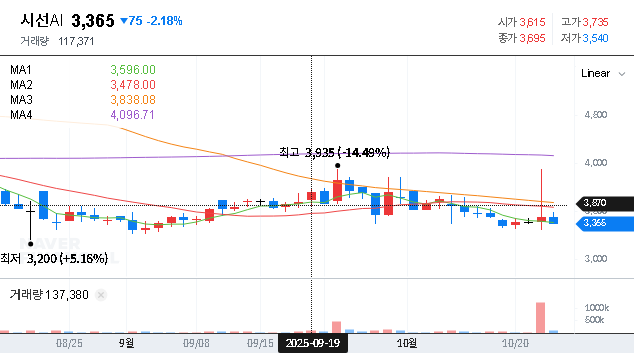
    • Track the Stock Price vs. Conversion Price: The ₩3,648 conversion price is now a key technical level. As the stock price approaches or surpasses this benchmark, the probability of conversion and subsequent dilution increases.
    • Re-evaluate Company Fundamentals: This event should be analyzed in the context of the company’s overall health. Continue to review financial statements and market performance. For more context, you can read our Deep Dive into SECERN AI’s Q3 Earnings.

    In conclusion, the SECERN AI convertible bond issuance is a pivotal moment. While it secures vital capital for growth, it introduces a tangible risk of stock dilution. The ultimate impact will be determined by management’s execution and the market’s response, making continuous, informed monitoring the best strategy for any investor.
    (340810) SECERN AI Convertible Bond (₩3B): Analysis, Stock Impact & Investor Guide 관련 이미지
  • (013310) A-JIN INDUSTRY Rights Offering: 2025 Investor’s Guide to Growth vs. Dilution

    (013310) A-JIN INDUSTRY Rights Offering: 2025 Investor’s Guide to Growth vs. Dilution

    The recent announcement of the A-JIN INDUSTRY rights offering has sent ripples through the investment community. The company plans to raise significant capital for its subsidiary, JoonGeorgia, Inc., presenting a classic dilemma for shareholders: is this a rocket ship moment for long-term growth, or a prelude to the immediate pain of stock dilution? This comprehensive analysis will dissect the offering, evaluate the potential upside, weigh the inherent risks, and provide a clear action plan for investors navigating this pivotal event.

    At its core, this move is a bet on the future of JoonGeorgia. The success of the A-JIN INDUSTRY rights offering hinges entirely on the efficient and profitable deployment of this new capital.

    Deconstructing the A-JIN INDUSTRY Rights Offering

    Before diving into the strategic implications, it’s crucial to understand the mechanics. A rights offering is a way for a company to raise capital by giving existing shareholders the right (but not the obligation) to purchase additional shares, typically at a discount to the current market price. On October 23, 2025, A-JIN INDUSTRY officially disclosed its plan. Here are the key details:

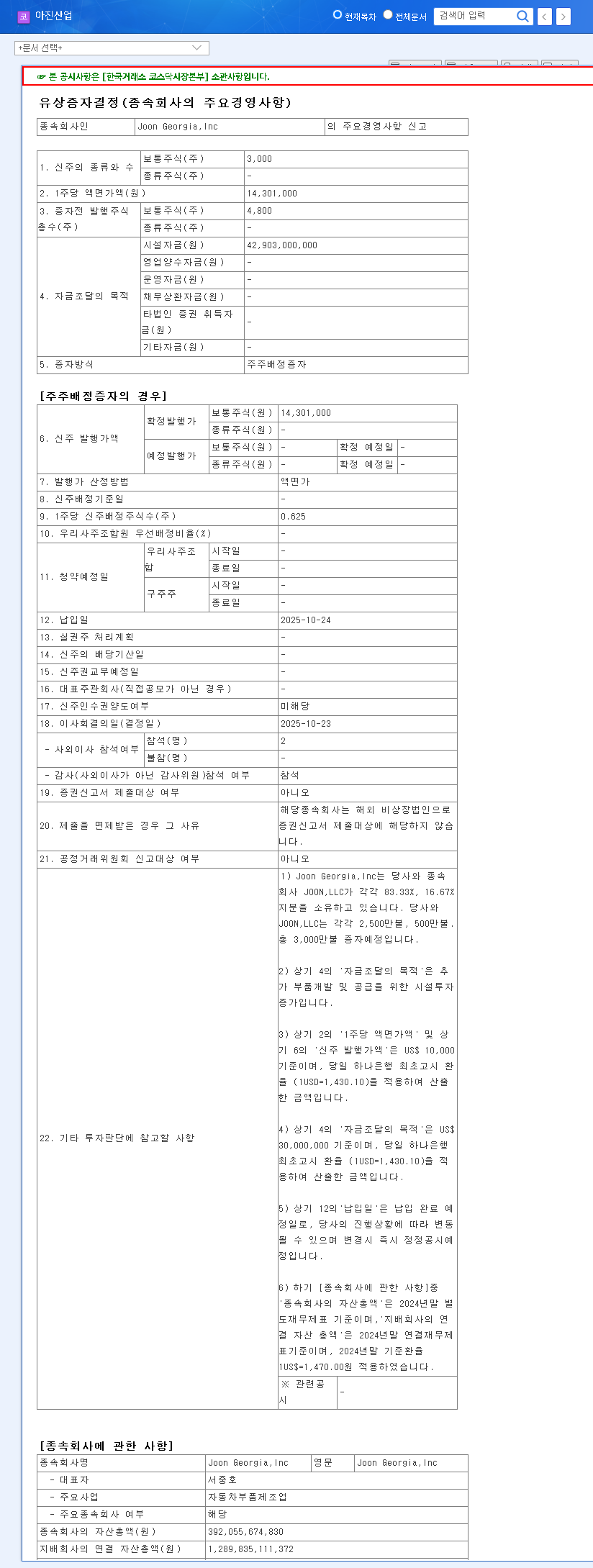
    • Purpose: To raise KRW 42.9 billion for facility and equipment investments at its subsidiary, JoonGeorgia, Inc.
    • Method: Shareholder allocation, ensuring current investors have the first opportunity to participate.
    • Ratio: 0.62 new shares offered for every 1 existing share held.
    • Payment Date: Scheduled for October 24, 2025.

    This significant capital injection is aimed squarely at expanding JoonGeorgia’s production capacity, a move A-JIN INDUSTRY believes is critical for its future competitiveness and consolidated growth. For a deeper understanding of corporate actions like this, resources like Investopedia provide excellent definitions of financial terms.

    The Bull Case: A Catalyst for Long-Term Value

    Supercharging JoonGeorgia’s Growth Engine

    The primary argument in favor of this JoonGeorgia funding initiative is its potential to unlock substantial long-term value. By investing in new facilities and state-of-the-art equipment, JoonGeorgia can increase its production output, improve efficiency, and potentially secure larger contracts within its industry. This could lead to a significant boost in revenue and profitability, which would, in turn, positively impact A-JIN INDUSTRY’s consolidated financial statements. A stronger, more productive subsidiary enhances the parent company’s market position and competitive edge.

    Strategic Market Positioning

    In a competitive global market, standing still is equivalent to moving backward. This investment can be seen as a proactive, strategic move to capture more market share. Enhanced production capabilities may allow JoonGeorgia to meet growing demand, enter new markets, or become a more critical supplier to its key clients. Success here would not only justify the initial shareholder dilution but could lead to a much higher stock valuation in the future.

    The Bear Case: Navigating Stock Dilution and Uncertainty

    The Immediate Risk of Stock Dilution

    The most immediate and tangible risk is stock dilution. By increasing the total number of shares outstanding, the earnings per share (EPS) metric is reduced, assuming profits remain the same. This often puts short-term downward pressure on the stock price. Furthermore, existing shareholders face a choice: either invest more money to purchase new shares and avoid dilution of their ownership percentage, or do nothing and see their stake in the company shrink. This creates a financial burden and a difficult decision for many investors.

    Execution and Investment Uncertainty

    Raising capital is only half the battle. The ultimate success of the A-JIN INDUSTRY rights offering depends on execution. What if the investment in JoonGeorgia fails to deliver the expected returns? If the new facilities are underutilized, or if the market demand was overestimated, the company’s value could be negatively impacted. At present, a lack of detailed brokerage reports and market consensus makes it difficult to gauge the probability of success, adding a layer of uncertainty to any investment analysis.

    Investor Action Plan & Final Verdict

    Given the limited public information, a cautious and diligent approach is paramount. Your decision should be based on thorough research. Here is a checklist to guide your next steps:

    • Review the Primary Source: The first step is to read the Official Disclosure on DART. This document contains the most accurate details directly from the company.
    • Conduct Fundamental Analysis: Dig deep into A-JIN INDUSTRY’s financial health. Analyze their balance sheet, income statement, and cash flow. You can learn more from our guide to fundamental analysis.
    • Assess JoonGeorgia’s Strategic Importance: Understand the subsidiary’s role in the parent company’s overall strategy. How critical is its success?
    • Monitor Market Sentiment: Look for forthcoming analyst reports and market commentary to gauge how the broader financial community is viewing this rights offering.

    In conclusion, the A-JIN INDUSTRY rights offering is a classic high-risk, high-reward scenario. While the short-term effects of stock dilution are a valid concern, the long-term growth potential fueled by a stronger JoonGeorgia could deliver substantial returns. A thorough, personal investigation is not just recommended; it’s essential.

    (013310) A-JIN INDUSTRY Rights Offering: 2025 Investor's Guide to Growth vs. Dilution 관련 이미지
  • (069920) Exion Group Convertible Bond: A ₩10B Issuance Deep Dive for Investors

    (069920) Exion Group Convertible Bond: A ₩10B Issuance Deep Dive for Investors

    The recent announcement of the Exion Group convertible bond issuance has sent ripples through the investment community. With a significant ₩10 billion deal on the table, stakeholders are closely watching what this strategic financial maneuver means for the company’s future. This represents a substantial capital injection, amounting to 14.66% of Exion Group’s market capitalization, and raises critical questions about its growth trajectory, financial health, and the potential impact on Exion Group stock.

    This comprehensive analysis will break down the intricate details of the deal, explore the potential upsides and inherent risks, and provide a strategic outlook for current and prospective investors. Understanding the nuances of this Exion Group CB issuance is crucial for making informed decisions.

    Unpacking the Terms: A Deep Dive into the ₩10 Billion Deal

    On October 22, 2025, Exion Group finalized its decision to issue the convertible bonds via a private placement, primarily to the ‘Cross No.1 Fund’. A convertible bond is a hybrid security that acts like a standard bond, paying interest, but can also be converted into a predetermined number of common stock shares. For a detailed primer, you can read more about how they work on authoritative financial sites. The official terms of this issuance provide a clear picture of the deal’s structure.

    Key Financial Metrics Investors Must Watch

    • Issuance Amount: ₩10 billion
    • Conversion Price: ₩1,672 per share
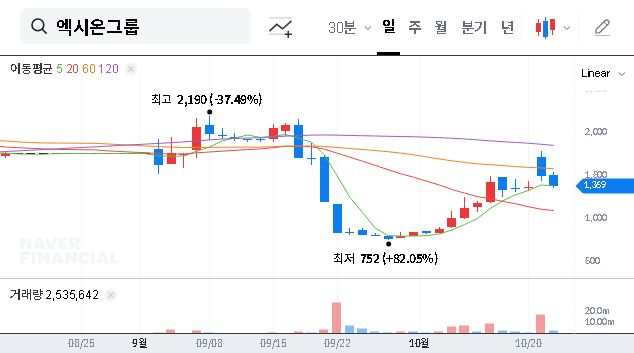
    • Current Share Price (at time of announcement): ₩1,369 per share
    • Minimum Adjustment Conversion Price: ₩1,170 per share
    • Coupon & Maturity Rates: 0.0% coupon rate with a 4.0% maturity yield.
    • Conversion Period: From November 13, 2026, to October 13, 2028.

    The full details were published in a regulatory filing. Source: Official DART Disclosure

    The Bull Case: Potential Upsides for Exion Group and Its Stock

    From an optimistic perspective, this fundraising is a proactive step. The ₩10 billion capital injection can act as a powerful catalyst for growth, enabling the company to secure operational funds, invest in promising new business ventures, and bolster its R&D capabilities. This is precisely the kind of move that can drive long-term shareholder value if executed well, similar to what we noted in our analysis of Exion Group’s previous expansion efforts.

    Furthermore, the fact that the conversion price (₩1,672) is set significantly higher than the current share price (₩1,369) can be interpreted as a vote of confidence. It suggests that both the company and the primary investor, Cross No.1 Fund, anticipate a substantial rise in the Exion Group stock price. If the stock surpasses this price, it creates a win-win scenario: the investor profits from conversion, and the company’s valuation is affirmed.

    The Bear Case: Navigating the Risks of the Exion Group CB Issuance

    However, investors must approach this development with caution. The most significant risk associated with any convertible bond analysis is the threat of share dilution. If and when these bonds are converted into stock, the total number of outstanding shares increases, which can dilute the ownership percentage and earnings per share for existing shareholders. This influx of new shares, especially if triggered by a stock price surge, could create overhead supply and put downward pressure on the stock price.

    While the 0% coupon rate avoids immediate interest payments, the 4.0% maturity yield creates a future liability. If Exion Group’s business performance falters, this debt obligation could become a significant financial burden.

    The ‘Minimum Adjustment Conversion Price’ of ₩1,170 is another critical detail. This clause protects the bondholder by allowing the conversion price to be lowered if the stock price falls, which would lead to even greater dilution for existing shareholders upon conversion. This makes the company’s future stock performance a key variable in determining the ultimate financial impact.

    Strategic Analysis for Investors: What’s the Next Move?

    The future trajectory of Exion Group stock hinges on several factors. The most crucial will be how effectively management deploys this new capital. Investors should demand clear communication regarding the specific business plans and monitor the company’s performance metrics closely over the coming quarters.

    Short-Term vs. Long-Term Outlook

    • Short-Term: The key technical level to watch is the ₩1,672 conversion price. A sustained move above this price could attract momentum traders looking to capitalize on the positive sentiment.
    • Long-Term: The company’s fundamental performance is paramount. If the stock price languishes or declines, the ₩1,170 minimum adjustment price becomes a critical support level to monitor. A break below this could signal deeper issues.

    In conclusion, the Exion Group convertible bond is a calculated risk aimed at fueling growth. While it presents a clear pathway to expansion, it also introduces potential dilution and financial obligations. Prudent investors will weigh both sides carefully, keeping a close eye on management’s execution and the stock’s price action relative to the key conversion levels outlined in this deal.

    Disclaimer: This analysis is for informational purposes only and is based on publicly available information. It should not be construed as financial advice. All investment decisions should be made after conducting your own thorough research.

    (069920) Exion Group Convertible Bond: A ₩10B Issuance Deep Dive for Investors 관련 이미지
  • (095610) TESCO.,LTD. Exchangeable Bonds: Treasury Stock Disposal & Stock Dilution Risk Analysis

    (095610) TESCO.,LTD. Exchangeable Bonds: Treasury Stock Disposal & Stock Dilution Risk Analysis

    TESCO.,LTD. (테스) has announced a significant corporate finance move: a major treasury stock disposal designed to fund the issuance of TESCO.,LTD. exchangeable bonds. This strategic decision has sent ripples through the investment community, raising critical questions about the potential stock price impact and the looming stock dilution risk. For shareholders and potential investors, understanding the mechanics and implications of this action is paramount.

    This comprehensive analysis will deconstruct the official disclosure, explore the strategic rationale behind this move, and provide a balanced view of both the opportunities and the risks involved. We will delve into what this means for the company’s future and equip you with the knowledge to make an informed decision.

    Deconstructing the Announcement: The Core Details

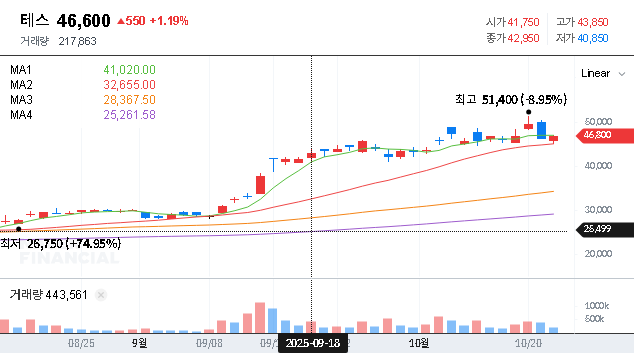
    On October 22, 2025, TESCO.,LTD. filed a major disclosure regarding its decision on treasury stock disposal. This isn’t just procedural; it’s a clear signal of the company’s capital strategy. The key facts from the filing are:

    • Action: Decision on Treasury Stock Disposal.
    • Shares Involved: 300,000 common shares.
    • Approximate Value: 15.7 billion KRW.
    • Primary Purpose: To serve as the underlying asset for issuing new exchangeable bonds (EBs).

    In essence, TESCO.,LTD. is not selling its treasury shares directly on the open market. Instead, it’s packaging them as a feature of a new debt instrument. This sophisticated approach to corporate finance allows the company to raise capital while offering bondholders a potential equity upside.

    The Strategic Rationale: Why Use Exchangeable Bonds?

    A company’s choice of funding mechanism speaks volumes about its financial health and strategic goals. Opting for a treasury stock disposal linked to EBs is a calculated move. The primary driver is capital acquisition—funds that can be injected into operations, research and development, strategic acquisitions, or debt restructuring. But why this specific method?

    Advantages for TESCO.,LTD.

    • Lower Interest Costs: The equity conversion option (the “exchangeable” part) is a sweetener for investors. This typically allows the company to offer a lower interest rate (coupon) on the bonds compared to traditional debt, reducing interest expenses.
    • Monetizing an Asset: Treasury stock is an idle asset on the balance sheet. This transaction effectively monetizes it without the immediate, and potentially disruptive, impact of a large-scale sale on the open market.
    • Delayed Dilution: Unlike a secondary stock offering, the potential share dilution only occurs if and when bondholders decide to exchange their bonds for stock. This is contingent on the stock price rising above the agreed-upon exchange price.

    For investors, this creates a classic risk-reward scenario. The capital raised could fuel significant growth, boosting the stock’s value. Conversely, the specter of future share dilution could place a ceiling on the stock price, creating an overhang in the market.

    Analyzing the Stock Price Impact: Bull vs. Bear Case

    The market’s reaction will hinge on its interpretation of the company’s motives and the specific terms of the TESCO.,LTD. exchangeable bonds, which are not yet fully public. Here’s a breakdown of the potential outcomes.

    The Bull Case: A Catalyst for Growth

    If the market believes the 15.7 billion KRW will be used wisely, the reaction could be positive. Investors might see this as a proactive step to:

    • Fund New Projects: Securing capital for expansion, R&D, or entering new markets could create long-term shareholder value that far outweighs the future dilution.
    • Strengthen the Balance Sheet: Using funds to pay down higher-interest debt can improve financial stability and profitability, making the stock more attractive.

    The Bear Case: The Shadow of Stock Dilution Risk

    The most significant negative factor is the stock dilution risk. When bondholders exchange their debt for equity, the number of outstanding shares increases. This can negatively affect existing shareholders by:

    • Reducing Earnings Per Share (EPS): The company’s net income is spread across a larger number of shares, which can lower the EPS and, consequently, the stock’s valuation.
    • Creating a Price Overhang: The market knows these 300,000 shares could potentially enter the market, which can suppress the stock price as it approaches the exchange price.
    • Signaling Financial Weakness: Some investors may interpret this move as a sign that the company is unable to secure funding through more conventional means, raising concerns about its underlying health.

    Investor Action Plan: What to Do Next

    Hasty decisions are ill-advised. A cautious, research-driven approach is essential. Here are the key steps to take:

    • Analyze the Terms: Once the full details of the EBs are released (interest rate, maturity, and most importantly, the exchange price), analyze them carefully. A high exchange price is less dilutive and more favorable for current shareholders. You can find primary information in the Official Disclosure.
    • Re-evaluate Company Fundamentals: Dive back into the company’s financial statements. Does TESCO.,LTD. have a strong track record of deploying capital effectively? For more guidance, learn how to analyze corporate financial statements.
    • Monitor Market Reaction: Watch how institutional investors and analysts react. Their sentiment can often set the short-term tone for the stock price.
    • Understand the Instruments: If you are unfamiliar with these types of securities, research them further. An excellent resource is Investopedia’s guide to convertible securities.

    Ultimately, the disposal of treasury stock for TESCO.,LTD. exchangeable bonds is a complex event with no guaranteed outcome. While it presents a clear path to new capital, the associated stock dilution risk must be a central part of any investor’s calculus. Careful due diligence is your best defense and tool for opportunity.

    (095610) TESCO.,LTD. Exchangeable Bonds: Treasury Stock Disposal & Stock Dilution Risk Analysis 관련 이미지
  • (125020) TC Materials Co Ltd Conversion Rights: A Deep Dive on Stock Dilution & Investor Impact

    (125020) TC Materials Co Ltd Conversion Rights: A Deep Dive on Stock Dilution & Investor Impact

    The recent announcement from TC Materials Co., Ltd. regarding its conversion rights exercise for its 1st tranche convertible bonds has sent ripples through the investment community. For current and prospective shareholders, this event raises critical questions about potential stock dilution, future price stability, and overall corporate value. Understanding the mechanics and implications of this financial maneuver is essential for making informed decisions.

    This comprehensive analysis will break down the TC Materials Co Ltd conversion rights announcement, explore the direct and indirect impacts on the stock, and provide a strategic roadmap for investors navigating this period of change.

    First, What Are Convertible Bonds?

    Before diving into the specifics of the TC Materials event, it’s crucial to understand the instrument at its heart: the convertible bond (CB). A CB is a type of hybrid security that functions like a regular bond, providing interest payments to the holder. However, it also contains an option to be converted into a predetermined number of the issuing company’s common stock. This gives investors the safety of a bond with the potential upside of a stock. For a deeper explanation, you can refer to authoritative sources like Investopedia’s guide on convertible bonds.

    The TC Materials Conversion Rights Exercise: By the Numbers

    According to the official filing on October 21, 2025, TC Materials is proceeding with a significant conversion. Here are the key details that every investor needs to know:

    • Event: Exercise of Conversion Rights (1st Tranche Convertible Bonds)
    • Shares to be Converted: 810,735 new shares
    • Expected Conversion Date: November 5, 2025
    • Conversion Price: 1,807 KRW per share
    • Stock Price (as of 2025.10.21): 1,971 KRW per share

    Analyzing the Impact on TC Materials Stock

    1. The Inevitable Stock Dilution

    The most immediate consequence is stock dilution. When 810,735 new shares are created, the total number of outstanding shares increases. This means that each existing share now represents a smaller percentage of ownership in the company. This can negatively affect key financial metrics like Earnings Per Share (EPS), as the company’s net income is now divided by a larger number of shares, potentially putting downward pressure on the stock’s valuation in the short term.

    2. The Profit Motive: Conversion Price vs. Market Price

    The disparity between the conversion price (1,807 KRW) and the current market price (1,971 KRW) is a critical factor. Bondholders can convert their bonds into stock at a discount and immediately sell those shares on the open market for a profit. This creates a strong incentive to convert and sell, leading to what is known as an ‘overhang’—a cloud of potential selling pressure that can suppress the stock price as the conversion date approaches and passes.

    The overhang from a convertible bond conversion can significantly dampen investor sentiment. The market anticipates the new supply of shares, which often leads to preemptive selling or a lack of buying interest until the new shares are fully absorbed.

    Investor Action Plan: Navigating the Uncertainty

    Given the limited public information on TC Materials’ fundamentals, a cautious and well-researched approach is paramount. Here’s a strategic plan to consider.

    Short-Term Strategy (Pre- and Post-Conversion)

    • Monitor Price & Volume: Pay close attention to trading volume and price action around the November 5, 2025 conversion date. A spike in volume could indicate that the newly converted shares are entering the market.
    • Watch Market Reaction: Look for any news, analyst reports, or institutional commentary that follows the event. The initial market reaction can provide clues about the prevailing investor sentiment.

    Mid-to-Long-Term Strategy (Deeper Research)

    Long-term success depends on looking beyond this single event. A crucial step is to perform your own due diligence.

    • Analyze Corporate Fundamentals: Dig into TC Materials’ financial health, business model, and growth prospects. Is the company generating profit? Does it have a competitive advantage? This is where you can learn more about fundamental analysis.
    • Understand the ‘Why’: Why were the convertible bonds issued in the first place? Was the capital used for expansion, R&D, or paying off debt? Productive use of capital can be a strong positive signal for future growth.
    • Review the Official Source: Always verify information from the primary source. The company’s filing provides the definitive details of this event. Source: Official Disclosure (DART Report).
    • Check for Remaining Bonds: Is this the full conversion, or are there more convertible bonds outstanding? The potential for future dilution is a key risk factor to manage.

    Frequently Asked Questions (FAQ)

    Q1: What does ‘conversion rights exercise’ mean for TC Materials?

    It means investors who hold the company’s convertible bonds are choosing to swap that debt for company stock at the agreed-upon conversion price. This action increases the total number of shares available on the market.

    Q2: Why is the TC Materials stock price likely to face downward pressure?

    Two reasons: first, the increase in shares dilutes the value of existing shares (stock dilution). Second, since the conversion price is lower than the market price, bondholders are likely to sell their newly acquired shares for a quick profit, increasing the selling supply in the market.

    Q3: Is this event always a bad sign for a company?

    Not necessarily. While it causes short-term disruption, a conversion also reduces a company’s debt obligations. If the capital raised from the initial bond sale was invested wisely into growth projects, the long-term benefits could outweigh the short-term dilution.

    Ultimately, the TC Materials Co Ltd conversion rights exercise is a complex event with significant short-term implications. By staying informed and conducting thorough research, investors can better position themselves to navigate the potential volatility and make sound decisions for their portfolios.

    (125020) TC Materials Co Ltd Conversion Rights: A Deep Dive on Stock Dilution & Investor Impact 관련 이미지
  • (162300) SHIN STEEL Convertible Bond: A Deep Dive for Investors on the ₩10B Issuance

    (162300) SHIN STEEL Convertible Bond: A Deep Dive for Investors on the ₩10B Issuance

    The recent announcement of the SHIN STEEL convertible bond issuance has sent ripples through the investment community. The decision by SHIN STEEL CO.,LTD. to raise ₩10 billion through convertible bonds (CBs) presents both a significant opportunity and a potential risk. For investors, understanding the nuances of this capital-raising method is critical to navigating its impact on share value and the company’s future trajectory.

    This comprehensive analysis will delve into every critical aspect of the SHIN STEEL CB issuance, breaking down its structure, exploring the potential upside, highlighting the inherent risks like share dilution, and providing a clear action plan for current and prospective investors.

    What is a Convertible Bond? A Quick Primer

    Before we dissect SHIN STEEL’s specifics, let’s clarify what a convertible bond is. A convertible bond is a hybrid financial instrument that starts as a standard bond, paying interest to the holder. However, it carries an embedded option that allows the bondholder to convert the bond into a predetermined number of the company’s common shares at a specified price. As explained by financial authorities like Investopedia, this gives investors the safety of a bond with the potential upside of an equity investment. Companies use them to raise capital at a lower interest rate than traditional bonds.

    Core Details of the SHIN STEEL Convertible Bond Issuance

    SHIN STEEL CO.,LTD. (market cap ~₩80.5 billion) is raising ₩10 billion, a significant sum representing approximately 10.92% of its market capitalization. This private placement is designated for specific investors. Here are the crucial details based on the Official Disclosure (DART):

    • Issuance Amount: ₩10 Billion (10.92% of market cap)
    • Issuance Method: Private Placement (to several A-One affiliated private equity funds)
    • Interest Rate: 0.0% (Zero coupon and yield to maturity)
    • Conversion Price: ₩1,968 (Slightly above the recent trading price)
    • Payment Date: October 29, 2025
    • Conversion Period: October 29, 2026 – September 29, 2030

    The Bull Case: Potential Positives for SHIN STEEL

    Fuel for Growth and Financial Stability

    The primary benefit is the immediate injection of ₩10 billion in capital. This liquidity can be a powerful catalyst for growth if deployed strategically. Potential uses include facility upgrades, research and development for new steel products, or expansion into new markets. This capital raising could significantly enhance long-term corporate value. For a deeper understanding, investors may want to review our guide on analyzing a company’s financial health.

    Zero-Interest Financing

    With a 0.0% coupon and yield, this is essentially an interest-free loan. This is highly advantageous for SHIN STEEL as it avoids the financial strain of regular interest payments, preserving cash flow for core operations. This structure indicates that the investors are betting entirely on capital gains from a future stock price increase, rather than fixed income.

    While zero-interest financing is a win for the company’s balance sheet, it places the entire burden of investor returns on future stock performance, amplifying the importance of a clear growth strategy.

    The Bear Case: Key Risks Investors Must Consider

    The Specter of Share Dilution

    This is the most significant risk for existing shareholders. When these bonds are converted, new shares are created, increasing the total number of shares outstanding. This process, known as share dilution, reduces each existing share’s ownership percentage and can put downward pressure on earnings per share (EPS). With the potential for over 10% of the market cap to be converted into new stock, the dilutive effect could be substantial if and when the stock price rises above the ₩1,968 conversion price.

    Private Placement and Investor Influence

    Because this is a private placement, the bonds are concentrated in the hands of a few private equity funds. This could grant them significant influence over corporate governance and strategic decisions, which may not always align with the interests of smaller, individual shareholders. Monitoring the actions and history of these specific funds is a prudent step.

    Uncertainty of Fund Utilization

    The official disclosure provides a general purpose for the funds (‘Operating Funds’). This lack of specificity is a red flag. Without a detailed plan, investors cannot accurately assess whether the capital will be used to create value or simply to cover operational shortfalls. A clear, strategic roadmap from management is essential to justify the risk of future dilution.

    Investor Action Plan & Final Verdict

    The SHIN STEEL convertible bond is a double-edged sword. To make an informed decision, investors must conduct thorough due diligence. Here is a recommended checklist:

    • Demand Clarity: Monitor company announcements for a detailed plan on how the ₩10 billion will be used.
    • Assess Financial Health: Analyze SHIN STEEL’s balance sheet, income statement, and cash flow to ensure the company is fundamentally sound.
    • Model Dilution Scenarios: Calculate the potential impact on your holdings if the stock price rises and full conversion occurs.
    • Evaluate Industry Outlook: Consider the broader trends in the steel industry and how SHIN STEEL is positioned against its competitors.

    In conclusion, while the capital infusion from this SHIN STEEL CB issuance could pave the way for future growth, the significant risk of share dilution cannot be ignored. Prudent investors should weigh the potential for strategic capital deployment against the cost to their equity. Ultimate responsibility for any investment decision rests solely with the individual investor.

    (162300) SHIN STEEL Convertible Bond: A Deep Dive for Investors on the ₩10B Issuance 관련 이미지
  • (211050) INCAR FINANCIAL SERVICE Treasury Stock Disposal: A Deep Dive for Investors

    (211050) INCAR FINANCIAL SERVICE Treasury Stock Disposal: A Deep Dive for Investors

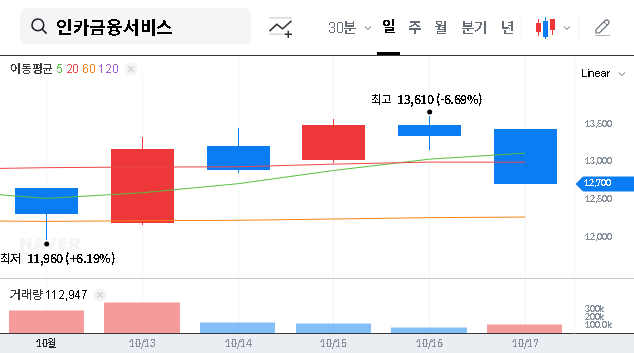
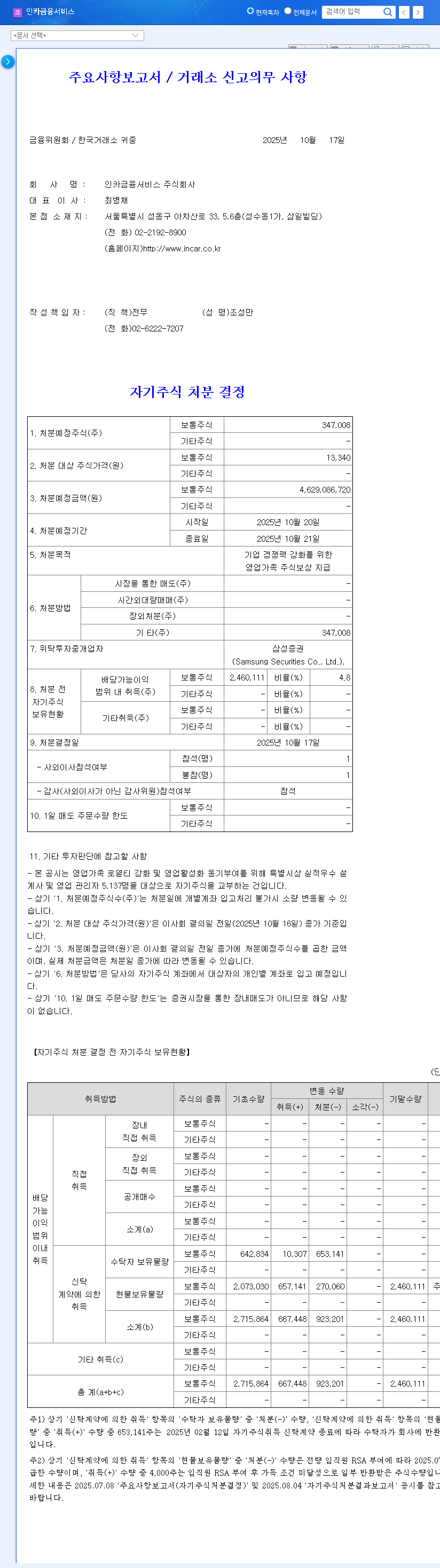
    The recent announcement regarding the INCAR FINANCIAL SERVICE treasury stock disposal has sent ripples through the investment community. On October 17, 2025, the company disclosed a plan to dispose of treasury stock valued at approximately 4.6 billion KRW. The stated goal is to fund stock-based compensation for its sales team, a move aimed at bolstering corporate competitiveness. For shareholders and potential investors, this raises a critical question: what does this mean for the company’s stock price and long-term value?

    This in-depth analysis will break down the key details of the announcement, explore the strategic motivations, weigh the potential positive outcomes against the inherent risks, and provide a clear action plan for investors navigating this development.

    The Announcement: Key Details

    According to the ‘Report on Major Matters (Decision on Disposal of Treasury Stock)’ filed on October 17, 2025, INCAR FINANCIAL SERVICE Co.,Ltd. outlined the following terms. You can view the complete filing for full transparency.

    • Subject of Disposal: 347,008 common shares
    • Disposal Value: Approximately 4.6 billion KRW (estimated)
    • Designated Broker: Samsung Securities
    • Official Source: Click to view DART report

    This action involves releasing company-held shares back into the hands of specific individuals (the sales force), a significant management decision that can influence shareholder value and capital structure.

    Strategic Intent: Why Use Stock-Based Compensation?

    The company’s rationale is centered on long-term growth by incentivizing its most critical revenue-generating employees. By offering stock-based compensation, INCAR FINANCIAL SERVICE aims to align the interests of its sales team with those of its shareholders.

    The stated purpose is the ‘payment of stock-based compensation to the sales force for strengthening corporate competitiveness.’ This highlights a focus on talent retention and performance motivation.

    Potential Upside for the Company

    If successful, this strategy could yield significant long-term benefits:

    • Talent Attraction & Retention: In a competitive market, equity is a powerful tool to attract and keep high-performing sales professionals.
    • Fostering an Ownership Culture: When employees own stock, they are more likely to think and act like owners, focusing on long-term value creation rather than short-term gains.
    • Performance Alignment: Linking compensation directly to the company’s stock performance ensures that individual success is tied directly to the company’s growth, potentially boosting sales and overall efficiency.

    Analyzing the Share Price Impact and Investor Risks

    While the strategic intent is positive, the mechanism of a treasury stock disposal introduces risks that investors must carefully consider. The market’s reaction will depend on balancing the long-term vision against these potential short-term drawbacks.

    The Primary Concern: Stock Dilution

    The most immediate risk is the dilution of shareholder value. When the 347,008 treasury shares are disposed of, the total number of outstanding shares increases. This can negatively affect key financial metrics:

    • Lower Earnings Per Share (EPS): The company’s net income is now divided by a larger number of shares, which reduces the EPS. A lower EPS is often viewed negatively by the market and can lead to a short-term drop in the stock price.
    • Reduced Ownership Percentage: Each existing shareholder will own a slightly smaller percentage of the company after the new shares are issued.

    The severity of this dilution depends entirely on the ratio of disposed shares to the total outstanding shares—a key piece of data investors must find.

    Other Key Considerations for Investors

    • Disposal Price: If the shares are disposed of at a price significantly below the current market price, it can be perceived as detrimental to existing shareholders. Monitoring the final transaction price is crucial.
    • Cash Flow Impact: While there’s a cash inflow from the disposal, how this interacts with the company’s overall liquidity and compensation expenses needs to be fully assessed.
    • Market Sentiment: The market may interpret this as a lack of other means to finance incentives, potentially signaling cash flow weakness. Close monitoring of stock price trends and trading volume post-announcement is key.

    Investor Action Plan & Future Outlook

    Given the limited information, a cautious and analytical approach is warranted. This investment strategy is not about making a rash decision, but about diligent monitoring and research. For more on corporate actions, authoritative sources like Investopedia offer excellent educational resources.

    What to Monitor Now

    • Follow-Up Disclosures: Watch for reports detailing the final disposal price and volume.
    • Sales & Performance Data: In subsequent quarterly reports, look for evidence that this incentive program is actually boosting sales performance and improving corporate competitiveness.
    • Brokerage & Analyst Reports: Secure research from financial analysts covering INCAR FINANCIAL SERVICE stock to gauge institutional sentiment.

    Before making any decisions, a comprehensive review of the company’s fundamentals is essential. Our guide on How to Analyze a Company’s Financial Health can be a valuable internal resource for your research.

    In conclusion, the INCAR FINANCIAL SERVICE treasury stock disposal is a classic example of a corporate action with both promising long-term strategic value and tangible short-term risks. Informed investors will weigh the potential for enhanced performance against the certainty of share dilution, making decisions based on data as it becomes available.

    (211050) INCAR FINANCIAL SERVICE Treasury Stock Disposal: A Deep Dive for Investors 관련 이미지
  • (000300) DHAUTONEX CO.,LTD Rights Offering: A Deep Dive Analysis for Investors

    (000300) DHAUTONEX CO.,LTD Rights Offering: A Deep Dive Analysis for Investors

    The recent announcement of the DHAUTONEX CO.,LTD rights offering has sent ripples through the investment community. The company’s decision to raise KRW 3.35 billion in fresh capital presents a critical juncture. Will this move fortify its financial foundation and unlock new avenues for growth, or does it signal potential stock dilution that could harm existing shareholders? This expert analysis will dissect the official disclosure, explore the potential impacts, and provide a clear roadmap for investors considering their next move.

    Based on the ‘Report on Major Matters’ filed on October 17, 2025, we will delve into the nuances of this significant corporate action to help you understand the opportunities and risks involved in the DHAUTONEX capital increase.

    Deconstructing the DHAUTONEX Rights Offering

    On October 17, 2025, DHAUTONEX CO.,LTD (Market Cap: KRW 162.9 billion) formally announced its decision to proceed with a rights offering. Let’s break down the core components of this fundraising event.

    Key Details at a Glance

    • Total Capital Raised: Approximately KRW 3.35 billion
    • New Shares Issued: 6,704,318 common shares
    • Issue Price: KRW 500 per share
    • Issuance Ratio (Dilution): 8% of existing shares
    • Key Investors: Korea Eximbank, Chaghong Meiling, Winia Electronics Manufacturing, Winia
    • Payment & Listing Dates: Payment by Nov 3, 2025; Listing on Nov 24, 2025

    This KRW 3.35 billion fundraising effort represents about 2.06% of the company’s current market capitalization, a relatively modest figure that suggests a targeted, rather than transformative, use of funds.

    Potential Impacts: The Good, The Bad, and The Ambiguous

    A rights offering is a double-edged sword. For a comprehensive investor analysis of DHAUTONEX, we must weigh the potential upsides against the inherent risks.

    Positive Scenarios for Growth

    • Strengthened Financials: The capital injection can be used to pay down debt, improve liquidity, and lower interest expenses, leading to a healthier balance sheet. A strong financial base is crucial for weathering economic downturns, as noted by many leading financial analysts.
    • Fueling Future Engines: These funds could be earmarked for strategic R&D, facility upgrades, or small-scale acquisitions that enhance long-term growth potential and competitiveness.
    • Strategic Alliances: The participation of notable investors like Korea Eximbank and Winia Group affiliates could be a vote of confidence, potentially leading to valuable business synergies and partnerships down the road.

    Negative Risks to Consider

    • Share Value Dilution: The most immediate risk is stock dilution. By issuing 6.7 million new shares, the ownership stake of existing shareholders is reduced. While an 8% increase is not massive, the low issue price of KRW 500 could create downward pressure if it’s significantly below the market price.
    • Market Sentiment: Rights offerings can sometimes be perceived as a sign of financial distress, causing negative market sentiment and a short-term dip in the stock price as investors react to the news.

    The most critical factor for investors is the profound lack of clarity. The official report does not specify the exact use of the KRW 3.35 billion. This ambiguity makes it difficult to assess whether the capital will generate a return that outweighs the dilution effect.

    An Actionable Checklist for Investors

    Before making any decisions, a thorough due diligence process is essential. This is more than just a single event; it’s a piece of a larger puzzle. Here’s what to investigate next:

    • Scrutinize the Source: The first step is to review the primary document. The Official Disclosure on DART provides the unfiltered details directly from the company. Look for any fine print regarding the use of proceeds.
    • Analyze Financial Health: Go beyond this announcement. A deep dive into the company’s recent financial statements is non-negotiable. Our guide on how to analyze a balance sheet can help you assess if this capital raise is a strategic move or a necessity to cover operational shortfalls.
    • Evaluate the Issue Price: Compare the KRW 500 issue price to the stock’s trading price before the announcement and its current level. A large discount can exacerbate the dilution effect and may incentivize participants to sell immediately upon listing, creating price pressure.
    • Understand Investor Motives: Who are the key investors and why are they participating? Is Winia Group consolidating its influence? Is Korea Eximbank providing strategic financial backing for a specific project? Their motives will heavily influence the long-term outcome.

    Conclusion: Opportunity or Red Flag?

    The DHAUTONEX CO.,LTD rights offering presents a complex scenario. On one hand, the injection of KRW 3.35 billion and the backing of strategic investors could pave the way for enhanced financial stability and growth. On the other hand, the uncertainty surrounding the use of funds and the inherent risk of stock dilution demand caution.

    Ultimately, this event is neither definitively positive nor negative without more information. The decisive factor will be management’s ability to deploy this new capital effectively to generate value that exceeds the cost of dilution. For investors, the path forward requires diligent research and a clear-eyed assessment of the company’s fundamentals and strategic direction.

    Disclaimer: This article is for informational purposes only and is based on publicly available data. It does not constitute investment advice. All investment decisions should be made at the investor’s own discretion and responsibility.

    (000300) DHAUTONEX CO.,LTD Rights Offering: A Deep Dive Analysis for Investors 관련 이미지
  • (052900) KX HITECH Conversion Rights Exercise: A 2024 Investor’s Guide to Stock Impact

    (052900) KX HITECH Conversion Rights Exercise: A 2024 Investor’s Guide to Stock Impact

    Investors are closely watching after a significant announcement regarding the KX HITECH conversion rights exercise. With a large number of new shares poised to enter the market, understanding the potential stock impact is critical for every shareholder. This guide provides a comprehensive analysis of the event, its implications for share value, and strategic considerations tailored for the unique dynamics of the KONEX market.

    This isn’t just a routine corporate action; it’s a pivotal moment that could introduce short-term volatility and requires a well-informed investor response. We will break down what this means for you and your investment in KX HITECH CO.,LTD (052900).

    The Event: Deconstructing the KX HITECH Conversion Rights Exercise

    First, let’s clarify what a ‘conversion rights exercise’ entails. Companies often raise capital by issuing convertible bonds (CBs), which are a type of loan that can be converted into a predetermined number of the company’s common stock. When bondholders choose to convert their bonds into shares, it’s called a conversion rights exercise. This is precisely what has happened with KX HITECH.

    According to the official disclosure filed on May 16, 2024, KX HITECH announced the following details:

    • New Shares Issued: A total of 2,316,919 new shares.
    • Market Impact Size: This volume represents a significant 4.20% of the company’s total outstanding shares.
    • Conversion Price: The price at which the bonds are converted is 974 KRW per share.
    • Listing Date: These new shares are scheduled to be listed and begin trading on November 5, 2025.
    • Official Source: Details can be verified via the Official Disclosure on DART.

    Analyzing the Stock Impact: Dilution, Pressure, and Volatility

    With no other major corporate news accompanying this announcement, our analysis must focus on the direct financial mechanics of the event. The primary stock impact can be broken down into two main forces: share dilution and selling pressure.

    1. The Inevitable Share Dilution

    When a company issues new shares, the ownership stake of existing shareholders is reduced. In this case, the issuance of 2.3 million new shares will dilute the value of existing shares by approximately 4.20%. This means that each share now represents a slightly smaller piece of the company. Consequently, key financial metrics like Earnings Per Share (EPS) can decrease, which often leads to a negative short-term perception by the market.

    2. The Risk of Selling Pressure (Overhang)

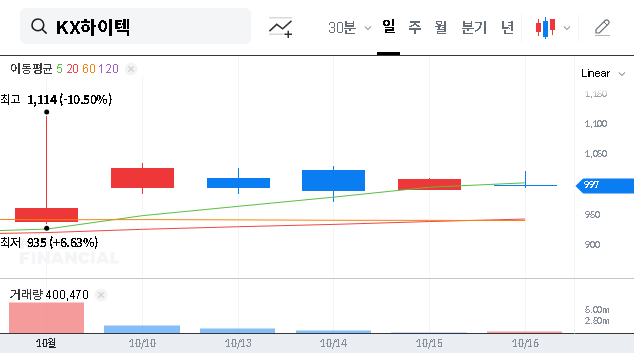
    The conversion price is 974 KRW, while the current market price hovers around 997 KRW. This presents an immediate, albeit small, profit opportunity for the converting bondholders. Many institutional investors who hold these bonds may seek to lock in this profit by selling the newly acquired shares as soon as they are listed. This potential flood of sell orders is known as ‘overhang’ and can exert significant downward pressure on the stock price.

    The combination of a 4.20% equity dilution and the potential for immediate selling creates a challenging short-term environment for KX HITECH’s stock price.

    3. The KONEX Market Multiplier Effect

    The KONEX market has unique characteristics that can amplify these effects. Unlike more mature markets like KOSPI or KOSDAQ, KONEX is known for its lower trading volumes and limited liquidity. When a large block of shares (4.20% of the market cap) becomes available, the market may struggle to absorb it without a significant price drop. This illiquidity means that even a moderate amount of selling pressure can lead to heightened stock price volatility. For more information on market dynamics, you can consult resources from major financial analysts like Bloomberg.

    An Investor Guide: Navigating the Aftermath

    Given the factors above, a cautious approach is warranted. This investor guide is designed to help you think through your next steps.

    • Acknowledge Short-Term Risk: The most probable immediate outcome is downward pressure on the stock price. Be prepared for volatility, especially around the listing date of the new shares.
    • Monitor Investor Sentiment: A conversion rights exercise can dampen investor confidence. Keep an eye on trading volumes and market commentary in the weeks leading up to the listing.
    • Conduct Deeper Due Diligence: This event should prompt further research. Ask critical questions: Why were these convertible bonds issued initially? Was the capital used for growth-oriented projects that could enhance long-term value? Answering these can help you look past the short-term noise. For more on this, check out our guide on evaluating corporate actions.
    • Evaluate Your Position: Based on your risk tolerance and investment horizon, decide if the long-term fundamentals of KX HITECH outweigh the short-term pressures from this event.

    Disclaimer: This analysis is based on publicly available information and focuses on the short-term impact of the conversion rights exercise. It is not financial advice and should not be the sole basis for any investment decision. All investors should conduct their own thorough research.

    (052900) KX HITECH Conversion Rights Exercise: A 2024 Investor's Guide to Stock Impact 관련 이미지
  • (357880) SKAI Rights Offering Explained (2025): A Deep Dive for Investors

    (357880) SKAI Rights Offering Explained (2025): A Deep Dive for Investors

    The recent announcement of the SKAI rights offering has sent ripples through the investment community. For current and prospective shareholders of SKAI worldwide Co., Ltd. (SKAI), this move presents a critical juncture. Is this a strategic capital raise poised to fuel future growth, or does it signal potential shareholder dilution and underlying financial weakness? This comprehensive analysis will dissect the offering, explore the fundamental mechanics of such corporate actions, and provide a clear, actionable framework for investors to evaluate this development.

    Anatomy of the SKAI Rights Offering

    On October 15, 2025, SKAI worldwide Co., Ltd. filed a major disclosure report detailing its plan to raise capital. According to the Official Disclosure, the key parameters of the transaction are as follows:

    • Company: SKAI worldwide Co., Ltd. (Market Cap: ~KRW 73.7 billion)
    • Total Capital Raised: Approximately KRW 1.002 billion
    • Shares Issued: 526,315 common shares
    • Issue Price: KRW 1,900 per share
    • Dilution Ratio: Approx. 1% of existing shares
    • Primary Investor: Kim Kwang-soo
    • Key Dates: Payment by Oct 23, 2025; Listing on Nov 7, 2025

    This capital injection, facilitated through a third-party allotment to a specific investor, is a relatively small-scale event. However, even minor changes in a company’s capital structure can have significant implications for SKAI stock performance.

    Rights Offerings: The Double-Edged Sword of Corporate Finance

    A rights offering is a common tool in corporate finance used to raise new equity capital. It is crucial to understand that such an event is not inherently positive or negative; its impact depends entirely on the context and the company’s subsequent actions. For a deeper dive into the mechanics, you can explore comprehensive resources on corporate actions from authoritative financial educators.

    The Upside: Strengthening and Growth

    When executed effectively, a rights offering can be a powerful catalyst. The fresh capital can be used to pay down debt, which deleverages the balance sheet and improves financial stability. Alternatively, the funds can be channeled into high-growth initiatives like R&D, market expansion, or strategic acquisitions, creating long-term value that far outweighs the initial dilution.

    The Downside: The Risk of Shareholder Dilution

    The primary risk is shareholder dilution. By issuing new shares, the ownership stake of every existing shareholder is marginally reduced. This can also lead to a decrease in Earnings Per Share (EPS), as the company’s profits are now divided among a larger number of shares. If the market perceives the capital is not being used effectively, this can put downward pressure on the stock price.

    The ultimate success of a rights offering hinges on one question: Will the return generated by the new capital exceed the cost of the dilution incurred to raise it?

    An Investor Analysis of SKAI’s Strategic Move

    With the limited information available, a conclusive judgment is premature. However, we can construct a bull and bear case to guide an investor analysis.

    The Bull Case (Potential Positives)

    The involvement of a specific external investor, Kim Kwang-soo, can be interpreted as a vote of confidence. An outside party conducting due diligence and committing capital suggests a belief in SKAI’s future prospects. Furthermore, with a dilution of only 1%, the immediate negative impact is minimal. If this ~KRW 1 billion is a targeted investment into a high-return project, it could be a very efficient and value-accretive move for long-term investors.

    The Bear Case (Risks & Uncertainties)

    The most significant uncertainty is the intended use of the funds. If the capital is simply for shoring up working capital or general operating expenses, it suggests a lack of organic growth drivers. Additionally, the issue price of KRW 1,900 needs to be compared against the market price on the announcement date. A steep discount can be perceived negatively, suggesting the company couldn’t raise funds at a more favorable price.

    Actionable Checklist for SKAI Investors

    To make an informed decision, investors should actively seek more information and monitor the following points closely:

    • Clarify Fund Utilization: Watch for subsequent disclosures detailing precisely how the ~KRW 1 billion will be deployed. Is it for growth or maintenance?
    • Analyze the Issue Price: Compare the KRW 1,900 issue price to the historical trading range of SKAI stock. A significant discount may warrant caution.
    • Review Company Fundamentals: This event should prompt a fresh look at the company’s overall health. Read our comprehensive guide to fundamental analysis to re-evaluate SKAI’s core business and competitive position.
    • Monitor Market Sentiment: Keep an eye on reports from brokerage firms and financial analysts to gauge the broader market’s interpretation of the move.

    In conclusion, the SKAI rights offering is a developing story. While the initial details provide a framework, the true impact will only become clear as the company reveals its strategic intentions for the newly raised capital.

    (357880) SKAI Rights Offering Explained (2025): A Deep Dive for Investors 관련 이미지