Tag: Stake Sale

  • (393970) DAEJIN ADVANCED MATERIALS Inc. Stock Analysis: Decoding the Plunge & What’s Next

    (393970) DAEJIN ADVANCED MATERIALS Inc. Stock Analysis: Decoding the Plunge & What’s Next

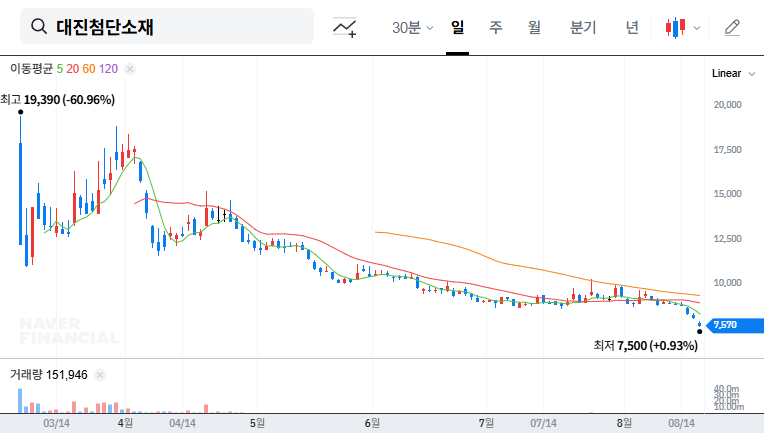
    The recent, sharp downturn in DAEJIN ADVANCED MATERIALS Inc. stock (KRX: 393970) has understandably sent shockwaves through the investor community. Following a period of fluctuation since its KOSDAQ listing, the sudden plunge, especially after November 6th, has raised urgent questions. This turbulence was not random; it was triggered by a significant move from a major institutional investor. This comprehensive analysis will dissect the massive stake sale by SJ Investment Partners, evaluate its true impact on the company’s trajectory, and provide a clear, actionable strategy for navigating the path forward.

    The Catalyst: Unpacking the SJ Investment Partners Stake Sale

    The primary driver behind the recent volatility in DAEJIN ADVANCED MATERIALS Inc. stock was the large-scale divestment by SJ Investment Partners and its associated funds. Such moves by venture capital or private equity firms are often part of their fund’s lifecycle, aimed at realizing returns for their limited partners. However, the sheer size and speed of this exit inevitably created significant market pressure.

    Details of the Share Divestment

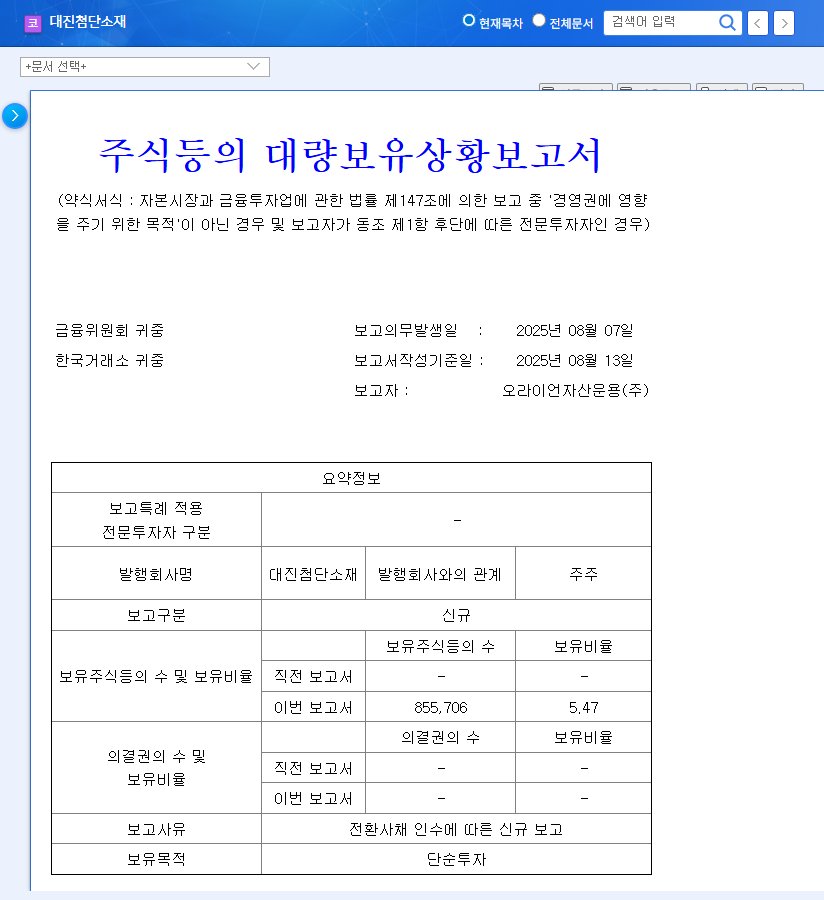
    According to the official disclosure filed on November 13, 2025, the specifics of the sale paint a clear picture. You can view the full filing here: Official Disclosure (DART). The key takeaways from this SJ Investment Partners stake sale were:

    • Reporting Entities: SJ Investment Partners and four related funds.
    • Holding Purpose: Simple Investment (indicating no strategic or management control intent).
    • Shareholding Reduction: A dramatic drop from an 11.82% stake down to just 2.10%, liquidating 9.72% of the company’s total shares.
    • Primary Sale Date: A concentrated sale of 1,472,916 shares occurred on November 6, 2025, directly causing the market shock.

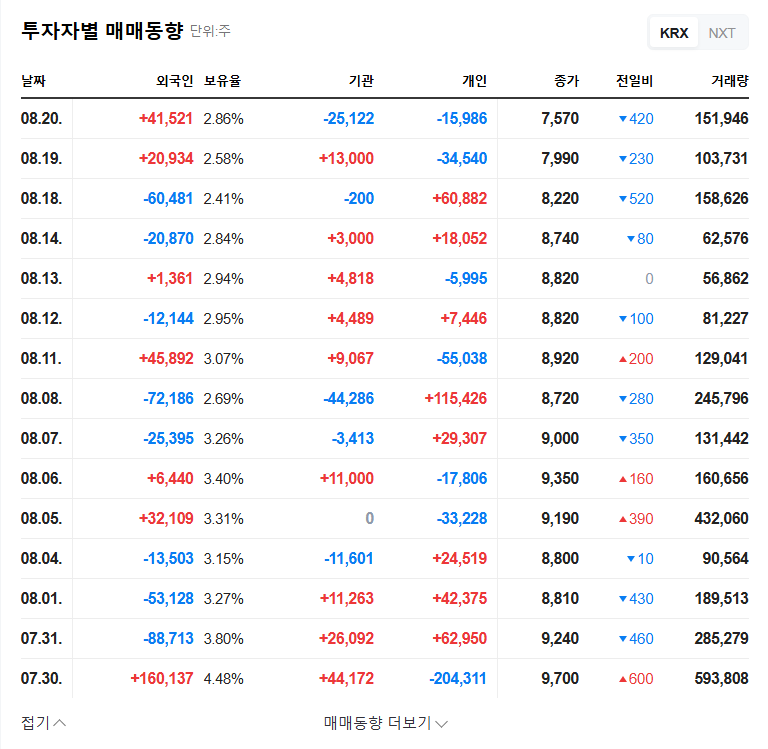
    When an institutional investor of this size exits a position so rapidly, the market often interprets it as a strong negative signal, regardless of the underlying reason. This perception alone can fuel a cycle of panic selling among retail investors.

    Analyzing the Impact on DAEJIN ADVANCED MATERIALS Inc. Stock

    It is crucial for investors to separate the short-term market noise from the long-term fundamental reality. The impact of this sale must be viewed through these two distinct lenses.

    Short-Term: Price Pressure and Weakened Sentiment

    In the immediate term, the consequences are clear. A massive influx of shares for sale creates a supply/demand imbalance, driving the price down. This was exacerbated by the current macroeconomic climate of high interest rates and economic uncertainty, which has already dampened general market sentiment. As authoritative sources like Bloomberg often report, institutional movements are heavily scrutinized, and this exit has undoubtedly weakened investor confidence and created significant downward pressure on the stock.

    Mid-to-Long-Term: Fundamentals Remain the Key

    This is the most critical point for long-term investors: the stake sale does not alter the company’s intrinsic value. DAEJIN’s revenue streams, profit margins, technological assets, and core business strategy are unaffected. This was a shareholder portfolio adjustment, not a reflection of a sudden flaw in the company’s operations. In fact, the removal of this large ‘overhang’ of shares that the market knew would eventually be sold could be a long-term positive, establishing a more stable shareholder base.

    Future performance will depend entirely on the company’s ability to execute on its core business, particularly its high-growth ventures like its Carbon Nanotube (CNT) business. For a deeper understanding of this technology, you can read our guide on the potential of advanced material science.

    Investor Action Plan: Navigating the Volatility

    Given this stock plunge analysis, a prudent and phased approach is recommended for investors considering their position in DAEJIN ADVANCED MATERIALS Inc. stock.

    Short-Term Strategy (Next 1-3 Months)

    • Exercise Extreme Caution: Avoid making rash decisions. New investments should be considered high-risk until the price finds a stable support level.
    • Monitor for Capitulation: Watch for signs that selling pressure is exhausting. This may include high volume days with minimal price drops, which can indicate a bottom is forming.
    • For Existing Holders: Review your risk tolerance. Implementing a stop-loss order might be a prudent risk management strategy to protect against further significant declines.

    Mid-to-Long-Term Strategy (3+ Months)

    • Focus on Fundamentals: Shift your focus from the stock chart to the company’s financial reports. Look for revenue growth, margin improvement, and positive cash flow in upcoming quarterly earnings.
    • Track Key Business Drivers: Monitor progress in the CNT division, updates on overseas subsidiary performance, and announcements of new partnerships or contracts.
    • Adopt an Observational Stance: Wait for clear, tangible evidence of business recovery and growth before committing significant new capital. Let the company prove that its fundamental value is increasing.

    Frequently Asked Questions

    Q1: What caused the recent sharp decline in DAEJIN ADVANCED MATERIALS Inc. stock?

    The primary cause was the on-market sale of a 9.72% stake in the company by a major institutional holder, SJ Investment Partners, with a particularly large sale occurring on November 6, 2025.

    Q2: Does this stake sale mean the company is in trouble?

    No. This event does not directly impact the company’s core fundamentals like revenue, technology, or business operations. It is a change in shareholder structure, likely driven by the investment fund’s own strategy to realize profits.

    Q3: What is the recommended investment strategy for DAEJIN ADVANCED MATERIALS Inc. stock now?

    In the short term, a highly cautious and observational approach is advised due to potential continued volatility. In the long term, investment decisions should be based on a close monitoring of the company’s fundamental performance and business growth.
    (393970) DAEJIN ADVANCED MATERIALS Inc. Stock Analysis: Decoding the Plunge & What's Next 관련 이미지
    (393970) DAEJIN ADVANCED MATERIALS Inc. Stock Analysis: Decoding the Plunge & What's Next 관련 이미지
  • (156100) L&K Biomed Stock: Full Investment Analysis After Tiger Asset Management Sale

    (156100) L&K Biomed Stock: Full Investment Analysis After Tiger Asset Management Sale

    A significant institutional sell-off can send ripples of uncertainty through the market, leaving investors wondering if it’s a sign of trouble or a strategic shift. This is the exact situation facing L&K Biomed (156100), a prominent player in the spinal implant market. Recently, major investor Tiger Asset Management reduced its holdings, prompting a closer look at the company’s health. This comprehensive L&K Biomed investment analysis will dissect this event, evaluate the company’s core fundamentals, and provide a clear outlook for potential and current investors.

    We’ll move beyond the headlines to explore L&K Biomed’s robust sales growth, promising new ventures, and the financial headwinds that demand careful monitoring. Is the market overreacting, or are there genuine concerns investors should heed? Let’s find out.

    The Catalyst: Tiger Asset Management’s Stake Reduction

    On November 13, 2025, the market took note as Tiger Asset Management filed a mandatory disclosure revealing a change in its holdings of L&K Biomed stock. According to the Official Disclosure (DART Report), the investment firm’s position changed as follows:

    • Previous Holding: 5.82%
    • Current Holding: 4.41%
    • Change: A reduction of 1.41% (107,638 shares) through open market sales.

    Crucially, the filing stated the reason for holding was ‘simple investment purposes’. This suggests the sale is more likely part of a portfolio rebalancing strategy or profit-taking rather than a bearish verdict on L&K Biomed’s fundamental value. While such a sale can create short-term selling pressure on the L&K Biomed stock price, it doesn’t automatically signal a decline in the company’s long-term prospects. To understand the full picture, we must look at the company itself.

    Analyzing L&K Biomed’s Financial Health & Growth Prospects

    A balanced investment decision requires looking at both the strengths and weaknesses. L&K Biomed presents a compelling case with clear positive drivers, but also notable challenges that require strategic resolution.

    The Bull Case: Strong Fundamentals and New Ventures

    • Impressive Sales Growth: In the first half of 2025, sales surged to KRW 202,133 million, a 23.9% year-over-year increase. This growth is anchored by its core ‘Thoraco Lumbar’ spinal implant segment and a dominant international footprint, with 97% of sales originating overseas, primarily in the Americas.
    • New Growth Engine: The company is strategically expanding into the thoracic implant sector with its ‘Pectus Bar System’. Having already secured US FDA and Thailand FDA approvals, L&K Biomed is poised to generate new revenue streams from the lucrative US market starting in the second half of 2025.
    • Strengthened Financials: The company has made progress in improving its balance sheet. Total debt decreased by 8.1%, largely due to reductions in convertible bonds, which improved the overall debt ratio.

    The Bear Case: Areas Requiring Urgent Attention

    Despite the positive momentum, several financial metrics warrant caution:

    • Negative Operating Cash Flow: A critical indicator of financial health, operating cash flow turned to a net outflow in H1 2025. This means the core business operations are currently using more cash than they are generating, a situation that needs to be reversed. To learn more about this metric, you can review this guide to cash flow analysis.
    • Profitability Challenge: The company reported a net loss of KRW 3 billion in the first half of the year. Sustaining growth requires a clear path back to profitability.
    • Asset Management: Efficient management of inventory and accounts receivable is crucial to improving cash flow and overall operational efficiency.

    The central challenge for L&K Biomed is to translate its impressive top-line sales growth into bottom-line profitability and positive cash flow. Its future stock performance hinges on this execution.

    Macroeconomic Factors and Investment Outlook

    With 97% of its sales from overseas, L&K Biomed is highly sensitive to global economic trends, especially currency fluctuations. The strengthening of the US Dollar against the Korean Won (from 1,354.00 in June to 1,466.60 in November 2025) provides a significant tailwind, as it boosts the value of US-based revenue when converted back to KRW. The company estimates a 10% rise in the USD can increase its operating profit by KRW 574.26 million.

    Meanwhile, stable interest rates in the US and Korea, along with steady oil and shipping costs, suggest a relatively neutral external cost environment. For a broader view, consider our 2025 Medical Device Market Overview.

    Conclusion: A Smart Investment Strategy for L&K Biomed Stock

    L&K Biomed stands at a crossroads. It has undeniable long-term growth potential fueled by a strong market position and new product innovation. However, its short-term financial weaknesses, particularly in cash flow and profitability, cannot be ignored. The Tiger Asset Management sale appears to be market noise rather than a fundamental red flag.

    Investors should focus on the following key points going forward:

    • The successful rollout and revenue generation of the Pectus Bar System in the US.
    • Quarterly earnings reports showing a trend toward positive operating cash flow.
    • Management’s execution of specific strategies to improve profitability.

    Ultimately, investing in L&K Biomed requires a belief in its growth story while closely monitoring its ability to navigate current financial challenges. Prudent investors will weigh the long-term potential against these short-term risks.

    (156100) L&K Biomed Stock: Full Investment Analysis After Tiger Asset Management Sale 관련 이미지
  • (049630) JAEYOUNG SOLUTEC Stock (049630) Analysis: Investment Strategy After Major Stake Sale

    (049630) JAEYOUNG SOLUTEC Stock (049630) Analysis: Investment Strategy After Major Stake Sale

    The JAEYOUNG SOLUTEC stock (049630) has entered a period of scrutiny following a significant disclosure. The ‘J&Moorim Jade New Technology Investment Association’ announced the sale of a substantial 6.46% stake in the company. This move, stemming from a strategic shift to exercise conversion rights and liquidate shares, has sent ripples through the investment community. As the sole South Korean manufacturer of all key smartphone camera components like OIS, ENCODER, and VCM, Jaeyoung Solutec’s market position is unique. This article provides a comprehensive analysis of the stake sale, its potential impact on the JAEYOUNG SOLUTEC stock, and a forward-looking investment strategy based on its fundamentals and industry landscape.

    Deconstructing the Major Stake Sale Disclosure

    On November 13, 2025, a pivotal filing revealed that the ‘J&Moorim Jade New Technology Investment Association’ had significantly reduced its holdings in JAEYOUNG SOLUTEC. Their stake was halved from 12.92% down to 6.46%. The reason cited was a change in holding purpose from ‘simple investment’ to the ‘exercise of conversion rights and sale of converted shares.’ This essentially means the investment fund converted its debt-based securities into equity and immediately sold them on the open market. You can view the Official Disclosure (DART) for precise details. This action often signals an investor’s desire to realize profits or exit a position, creating potential short-term supply pressure on the stock.

    While the sale creates short-term uncertainty, the long-term trajectory for JAEYOUNG SOLUTEC stock will ultimately be dictated by its fundamental performance and its ability to capitalize on the growing high-performance camera market.

    Deep Dive: Company Fundamentals and Market Environment

    Analyzing JAEYOUNG SOLUTEC’s Financial Health

    The company’s financial picture is a mixed bag, showing signs of both strength and areas requiring close monitoring.

    • Strong Revenue Growth: Cumulative sales for Q3 2025 surged by an impressive 33% year-over-year. This growth is directly tied to the increasing complexity and demand for advanced smartphone camera modules, a trend that plays to the company’s strengths.
    • Profitability Pressures: Despite higher sales, cumulative operating profit saw a sharp decline. This compression in margins is attributed to a trio of factors: rising raw material costs, unfavorable exchange rate fluctuations, and strategic increases in R&D spending to maintain a technological edge.
    • Encouraging Q3 Turnaround: On a positive note, the third quarter itself saw a successful return to profitability. This suggests that cost control measures or favorable pricing may be starting to take effect, a key trend for investors to watch in Q4.
    • Financial Structure Concerns: The debt-to-equity ratio, while improving, remains high at around 150%. Furthermore, a negative operating cash flow indicates the company is currently spending more to run its business than it’s bringing in, a situation that warrants careful monitoring. Investors should look for improvements in the company’s cash flow management strategies in upcoming reports.

    Industry Tailwinds and Macroeconomic Factors

    JAEYOUNG SOLUTEC operates within a dynamic global market influenced by several key factors.

    Smartphone Camera Market Evolution: The demand for high-performance smartphone cameras is relentless. The market is rapidly moving towards multi-camera systems, larger sensors, and advanced optical image stabilization (OIS). As the only Korean firm producing all critical components (OIS, ENCODER, VCM), Jaeyoung Solutec is uniquely positioned to benefit from these advanced camera technology trends.

    Economic Climate: Stable interest rates in the US and Korea could ease corporate financing burdens. Meanwhile, relatively stable oil prices and shipping costs help contain operational expenses. However, the depreciation of the Korean Won is a double-edged sword: it boosts the value of export revenues but also increases the cost of imported raw materials.

    Investment Outlook: Navigating the Volatility

    Short-Term vs. Long-Term Impact

    The immediate aftermath of the stake sale is likely to be negative for the JAEYOUNG SOLUTEC stock price. The sudden influx of 6.46% of the company’s shares creates an ‘overhang,’ meaning there is significant selling pressure that can depress the price and dampen investor sentiment. However, it’s crucial to recognize that this is a technical event, not a fundamental one. The sale does not change the company’s technology, its customer base, or its role in the supply chain. Over the mid-to-long term, these fundamental factors will reassert themselves as the primary drivers of the stock’s value.

    Investment Strategy: A Neutral Stance with Key Monitors

    Given the short-term technical pressure balanced by long-term fundamental potential, a Neutral investment opinion is warranted. For prospective or current investors, a patient and watchful approach is recommended. Here are the key areas to monitor:

    • Sustained Earnings Improvement: The Q4 and subsequent earnings reports will be critical. Investors need to see if the Q3 profit turnaround was an anomaly or the beginning of a sustainable trend.
    • Financial Discipline: Look for concrete steps to improve the balance sheet, such as reducing the high debt-to-equity ratio and bringing operating cash flow back into positive territory.
    • Technological Innovation and Customer Wins: Pay attention to announcements regarding next-generation component development or contracts with new smartphone manufacturers, as these will be the primary long-term growth catalysts.

    Conclusion: The major stake sale introduces short-term headwinds for the JAEYOUNG SOLUTEC stock. Cautious investors should wait for the market to absorb this new supply. However, the company’s unique technological position in a growing market presents a compelling long-term story. Diligent monitoring of its financial and operational progress is the most prudent path forward.

    Disclaimer: This analysis is for informational purposes only and is based on publicly available data. It should not be considered investment advice. All investment decisions should be made with personal discretion and responsibility.

    (049630) JAEYOUNG SOLUTEC Stock (049630) Analysis: Investment Strategy After Major Stake Sale 관련 이미지
  • (093050) Deep-Dive LF Corp. Stock Analysis (093050): A Buying Opportunity After Truston’s Sale?

    (093050) Deep-Dive LF Corp. Stock Analysis (093050): A Buying Opportunity After Truston’s Sale?

    This in-depth LF Corp. stock analysis explores the recent news that Truston Asset Management has reduced its stake in LF Corp. (KRX: 093050). For investors, this raises a critical question: is this a warning sign or a strategic buying opportunity? The market has been buzzing since the disclosure, and a closer look reveals a story of solid fundamentals clashing with short-term market noise. We will meticulously dissect LF Corp.’s financial health, growth drivers, and the broader macroeconomic landscape to provide a clear perspective on this potential investment opportunity.

    The Catalyst: Truston Asset Management’s Stake Adjustment

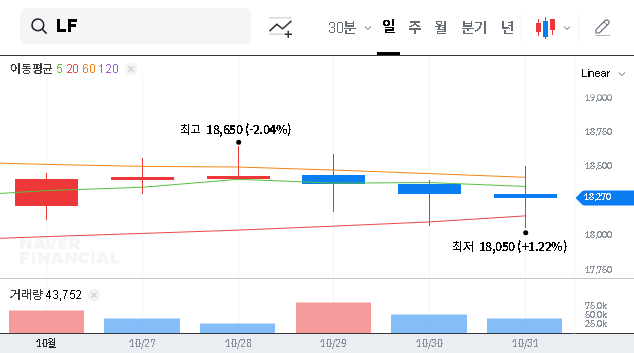
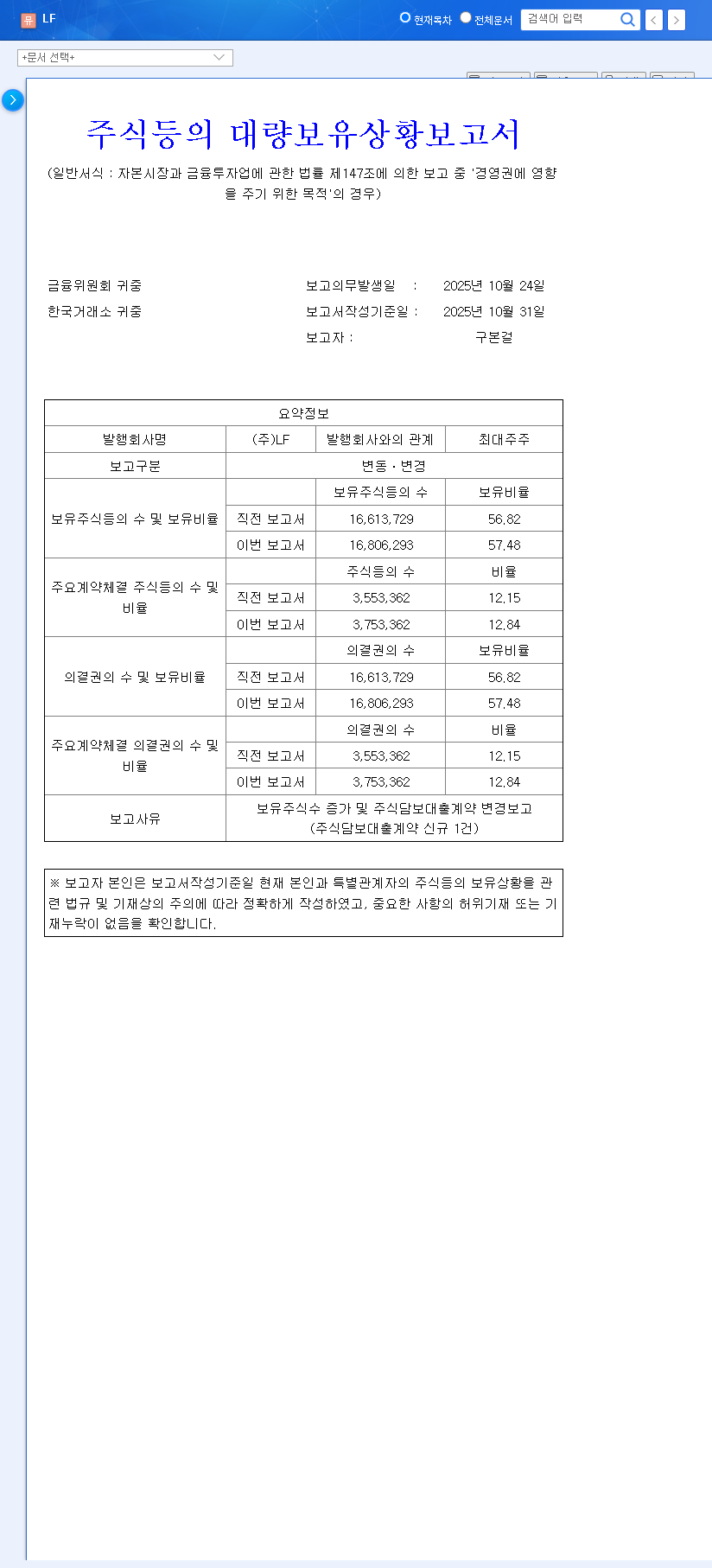
    On November 12, 2025, Truston Asset Management officially disclosed a reduction in its shareholding of LF Corp. stock. The filing, available via the official DART system, confirmed their stake dropped from 5.73% to 4.85%. While any major shareholder selling shares can cause initial concern, the context here is crucial.

    • The Event: A reduction below the key 5% ownership threshold, which removes certain reporting requirements.
    • The Reason: The sale was attributed to on-market and off-market transactions for ‘general investment purposes’. This suggests a portfolio rebalancing rather than a fundamental loss of faith in LF Corp.
    • The Source: The details were confirmed in an Official Disclosure on the DART portal.

    Because the sale was not driven by a negative outlook on the company’s core business, the direct impact on LF Corp.’s fundamentals is likely minimal. The move may create short-term selling pressure but is unlikely to signal long-term weakness.

    Comprehensive LF Corp. Stock Analysis: Beyond the Headlines

    To truly understand the value of 093050 stock, we must look past the recent news and into the company’s operational strengths and strategic initiatives.

    1. Resilient Core Fashion Business

    LF Corp.’s foundation is its robust fashion segment, which continues to demonstrate stable growth. Iconic brands like ‘Daks’, ‘Hazzy’s’, and ‘JILLSTUART’ command strong brand loyalty. The company isn’t resting on its laurels; it is actively strengthening its digital marketing and e-commerce channels to capture the lucrative MZ generation (Millennial and Gen Z) market, ensuring relevance for years to come.

    2. Strategic Diversification and Future Growth

    LF Corp. is intelligently expanding beyond fashion. Its financial business divisions, including KorAmCo Asset Trust, are building a reliable revenue stream. Simultaneously, the LF Food business is posting steady growth. Critically, the company is investing in future-proof assets like data centers and modern logistics facilities, positioning itself to capitalize on the digital economy’s infrastructure needs. For more on sector trends, see this analysis of the global digital infrastructure market.

    3. Rock-Solid Financial Health

    A look at the H1 2025 financial reports reveals a company on solid ground. With a current ratio of 162% and a debt ratio of just 72%, LF Corp. boasts a healthy balance sheet that provides flexibility and resilience. Furthermore, its commitment to shareholder value is evident through ongoing treasury stock acquisitions, which can help support the stock price.

    Despite market noise from the stake sale, LF Corp.’s strong fundamentals—a stable core business, strategic growth initiatives, and a healthy balance sheet—suggest that any resulting price dip could be a compelling entry point for long-term investors.

    The Macroeconomic Environment: Headwinds and Tailwinds

    No company operates in a vacuum. Broader economic trends are influencing LF Corp.’s outlook. According to reports from authoritative sources like Bloomberg, several factors are at play:

    • Exchange Rates (Headwind): A rising USD/KRW and EUR/KRW rate increases costs for overseas sourcing. However, LF Corp. mitigates this risk through currency forward contracts.
    • Interest Rates (Tailwind): A global trend of falling benchmark interest rates is a significant positive. This eases borrowing costs, freeing up capital for investment and operations.
    • Commodity & Logistics Costs (Tailwind): Declining international oil prices and container freight indices directly reduce operational costs, which should improve profit margins.

    Conclusion: An Investment Thesis for LF Corp. Stock

    The fundamental impact of Truston Asset Management’s stake reduction appears neutral to slightly positive. The move likely removes a potential source of future selling pressure now that their stake is below the 5% threshold. When weighed against the company’s solid operational performance and favorable macroeconomic tailwinds (lower interest rates and logistics costs), the outlook remains bright. For those interested in similar value assessments, you might find our guide on How to Analyze Retail Sector Stocks useful.

    Therefore, any short-term price weakness in LF Corp. stock following this news could represent a strategic investment opportunity for investors with a long-term horizon. Continuous monitoring of macroeconomic shifts and the performance of LF’s new business ventures remains essential.

    Frequently Asked Questions (FAQ)

    Why did Truston Asset Management sell its LF Corp. shares?

    Truston cited ‘general investment purposes’ for the sale, suggesting it was part of a routine portfolio adjustment or rebalancing strategy rather than a negative commentary on LF Corp.’s future prospects.

    What are LF Corp.’s primary business segments?

    LF Corp.’s core business is its strong fashion segment. It is actively diversifying into stable growth areas like financial services (KorAmCo Asset Trust), food (LF Food), and future-focused ventures such as data and logistics centers.

    How is LF Corp.’s financial health?

    Excellent. As of H1 2025, the company has a strong current ratio of 162% and a low debt ratio of 72%, indicating high liquidity and a stable financial structure that can weather economic shifts.

    (093050) Deep-Dive LF Corp. Stock Analysis (093050): A Buying Opportunity After Truston's Sale? 관련 이미지
  • (396270) Nextchip Stake Sale: NCN’s Exit Signals Deep Financial Crisis & Capital Impairment

    (396270) Nextchip Stake Sale: NCN’s Exit Signals Deep Financial Crisis & Capital Impairment

    The recent Nextchip stake sale by its largest shareholder, NCN, has sent shockwaves through the investment community. This significant move, involving a 12.24% reduction in shares, isn’t just a simple portfolio adjustment; it’s a critical event that demands a thorough Nextchip financial analysis. For investors, the key question is whether this is a strategic pivot or a desperate signal from a company grappling with severe financial distress, including a state of complete capital impairment.

    This article dives deep into the official disclosure, breaking down the implications for Nextchip’s future, its stock performance, and what stakeholders should watch for next. We will analyze the reasons behind the sale and connect them to the company’s precarious financial health to provide a clear, actionable investment perspective.

    The Event: NCN’s Substantial Reduction in Nextchip Stake

    On November 12, 2025, Nextchip Co., Ltd. filed a ‘Report on the Status of Large Shareholdings,’ revealing a significant change. NCN, the largest shareholder, drastically reduced its stake from 46.62% to 34.38%. A 12.24 percentage point drop from a shareholder whose stated purpose was ‘management influence’ is highly unusual and immediately raises red flags. The official reasons cited are a complex mix of financial maneuvers.

    • Reporting Entity: NCN Co., Ltd.
    • Previous Stake: 46.62%
    • New Stake: 34.38%
    • Net Change: -12.24%
    • Official Source: View DART Report

    While reasons like option exercises and block trades were cited, these technical explanations often mask a deeper underlying issue. For NCN Nextchip, this move cannot be viewed in isolation from the company’s alarming financial condition.

    Financial Analysis: The Crisis of Complete Capital Impairment

    The context for the Nextchip stake sale is the company’s dire financial health. Nextchip, which specializes in automotive semiconductors for a growing ADAS market, is paradoxically facing insolvency. The most critical issue is its state of complete capital impairment.

    What is Complete Capital Impairment?

    This is a severe financial state where a company’s total liabilities exceed its total assets, resulting in negative shareholder equity. Essentially, the company’s accumulated losses have wiped out all the capital invested by its shareholders. As of Q3 2025, Nextchip’s debt-to-equity ratio was a staggering -4,537.67%, a clear indicator of this crisis. For investors, this means the company is technically bankrupt and poses a significant risk of delisting if not resolved.

    The sale of shares by a major shareholder during a period of complete capital impairment is often interpreted as a loss of confidence in the company’s ability to recover, amplifying negative sentiment in the market.

    Compounding Risk Factors for Nextchip Stock

    • Persistent Losses: The company continues to post significant operating and net losses with no clear path to profitability.
    • High R&D Burn: While necessary for innovation, a high R&D expense ratio is draining cash reserves without generating sufficient revenue.
    • Market & Financial Risks: Heavy reliance on the Chinese market, currency fluctuations, and outstanding convertible bonds add layers of uncertainty.

    Investor Outlook & Action Plan

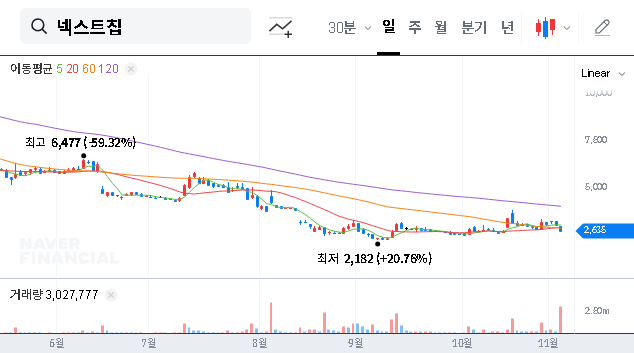
    The combination of the major shareholder’s exit and the grave financial situation paints a bleak picture for the Nextchip stock. The market is likely to view this as a ‘very negative’ signal, leading to significant downward pressure on the stock price.

    Investment Recommendation: Very Negative (Sell/Hold)

    At present, a ‘Sell’ or ‘Hold’ stance is strongly advised. Without a drastic and credible turnaround plan that addresses the fundamental issue of Nextchip capital impairment and secures a path to profitability, any positive momentum will likely be short-lived. Investors should not be swayed by potential short-term bounces but focus on the long-term viability of the business. For more information on market trends, you can refer to authoritative sources like Reuters Financial News.

    What to Monitor Moving Forward:

    • Capital Increase Plan: Closely watch the success and execution of Nextchip’s proposed capital increase. Will NCN participate? Will new investors step in?
    • Management Stability: NCN’s reduced influence could lead to management instability or strategic shifts. Any further changes will be critical.
    • Quarterly Financials: Look for any signs of improvement in revenue, a reduction in losses, and progress toward resolving the negative equity.

    Navigating this situation requires extreme caution. For further reading, see our guide on analyzing financially distressed companies.

    Frequently Asked Questions (FAQ)

    Q1: What does the NCN Nextchip stake sale mean for investors?

    It is a significant negative signal. When a major shareholder with management influence sells a large stake during a financial crisis, it suggests a lack of confidence in the company’s recovery, which can lead to a sharp decline in stock price.

    Q2: Can Nextchip recover from complete capital impairment?

    Recovery is possible but extremely difficult. It would require a massive infusion of new capital through a successful rights offering, a drastic operational turnaround to achieve profitability, or a strategic acquisition. The path to recovery is fraught with uncertainty.

    Q3: How will this affect Nextchip’s stock in the short term?

    In the short term, the stock will likely face intense selling pressure. The news of the stake sale, combined with the underlying financial weakness, will erode investor confidence and could lead to a significant price drop.

  • (298380) ABL Bio Inc. Stake Sale: A Deep Dive for Investors | Analysis & 2025 Outlook

    (298380) ABL Bio Inc. Stake Sale: A Deep Dive for Investors | Analysis & 2025 Outlook

    The recent news of the ABL Bio Inc. stake sale by several special related parties has sent ripples through the investment community, raising a critical question: Is this a signal of underlying trouble, or simply a case of short-term market noise? When insiders sell shares, it often triggers concerns about stock price pressure and weakening sentiment. Investors are right to wonder if the company’s strong fundamentals are still intact and how to navigate this development.

    This comprehensive analysis cuts through the speculation. We will dissect the official Q1 2025 reports and the latest shareholding disclosures to provide a clear, data-driven assessment of this ABL Bio Inc. stake sale. By evaluating the company’s robust pipeline, financial health, and long-term growth potential, you can gain practical insights to make informed investment decisions regarding the future of ABL Bio Inc. stock.

    Unpacking the ABL Bio Inc. Stake Sale: The Details

    Official Report Summary and Key Changes

    The transaction details were formally reported on November 11, 2025, in a Report on Status of Large Shareholdings. The full details are available in the Official Disclosure (DART). Here are the crucial takeaways:

    • Shareholder Group: Special related parties connected to representative reporter Lee Sang-hoon.
    • Change in Holdings: The collective stake decreased modestly from 26.32% to 26.15%.
    • Total Shares Sold: A total of 76,241 shares were sold on the open market between October 13 and October 23, 2025.
    • Stated Reason: The report cites the ‘termination of stock-backed loan agreements and open market sales’ as the reason for the change, suggesting a need for liquidity by the individuals involved.

    Fundamental Health Check: Strengths vs. Risks

    Robust Growth Drivers & Positive Fundamentals

    Despite the market noise from the ABL Bio insider trading report, the company’s core fundamentals appear strong and are driven by several key factors:

    • Explosive Revenue Growth: A landmark technology transfer deal with GSK generated KRW 77.9 billion in revenue in the first half of 2025, a massive 470% year-over-year increase, validating its technological prowess.
    • Elite Global Partnerships: Ongoing collaborations with pharmaceutical giants like Sanofi and GSK enhance pipeline value. The proprietary BBB shuttle platform (‘Grabody-B’) is a particularly exciting asset, showing immense potential for treating neurodegenerative diseases like Parkinson’s.
    • Deep R&D Capabilities: With a team of over 100 researchers, the company is developing a diverse pipeline in high-demand areas like oncology and ADCs, securing multiple long-term growth engines.
    • Fortified Financial Position: Cash reserves have swelled to KRW 132.7 billion, further bolstered by a KRW 140 billion capital raise in July 2024. This strong balance sheet provides a long runway for R&D initiatives.

    Understanding the Potential Risks

    A balanced ABL Bio investment thesis must also acknowledge the inherent risks in the biotech sector:

    • High Cash Burn Rate: R&D expenses are significant (KRW 53.5 billion), a necessary cost for innovation but one that impacts short-term profitability.
    • Accumulated Deficit: A deficit of KRW 386.6 billion is typical for an R&D-focused company but remains a financial metric to monitor.
    • Clinical and Macro Risks: The potential for clinical trial setbacks and macroeconomic shifts (e.g., interest rates) are persistent risks for any biotech firm.

    The key for investors is to separate the short-term market noise, such as a minor stake sale, from the long-term fundamental signals driving the company’s core value.

    Conclusion: Investor Action Plan

    The evidence strongly suggests the ABL Bio Inc. stake sale is motivated by the personal financial needs of the related parties rather than a negative outlook on the company’s future. While short-term price volatility is possible due to shifts in supply and investor sentiment, the long-term growth story, underpinned by strong ABL Bio fundamentals, remains compelling.

    For those looking to make a decision, we recommend the following actions:

    • Focus on the Fundamentals: Prioritize news related to pipeline progress, clinical trial milestones, and new partnerships over short-term ownership changes.
    • Maintain a Long-Term Perspective: Biotech investing requires patience. Base your strategy on the company’s multi-year potential, not on day-to-day stock fluctuations. For more on this, see our guide on How to Evaluate Biotech Stocks.
    • Understand the Context: Remember that insider sales are common and often non-indicative of company performance. Rules around these sales are strict, as detailed by regulatory bodies like the SEC.

    Frequently Asked Questions (FAQ)

    Q1: What does this ABL Bio Inc. stake sale truly signify?

    Given the stated reasons and the small percentage of shares sold, it most likely signifies personal liquidity events for the sellers (e.g., diversifying assets, tax planning, or repaying loans). It does not appear to be a reflection of a negative outlook on the company’s strong fundamentals.

    Q2: What is the likely impact on ABL Bio Inc.’s stock price?

    In the immediate short-term, such news can create downward pressure as the market absorbs the new supply of shares and sentiment temporarily weakens. However, for a company with strong growth drivers, this impact is often transient and can be overcome by positive fundamental news.

    Q3: Are ABL Bio Inc.’s long-term fundamentals still strong?

    Yes. The company’s long-term outlook is anchored by major positive factors, including massive revenue growth from the GSK deal, a promising and diverse R&D pipeline featuring the valuable BBB shuttle platform, and a very healthy cash position to fund future growth.

    Q4: What should an investor considering ABL Bio Inc. do?

    It is crucial to look past the short-term noise of this stake sale. Conduct due diligence on the company’s core value drivers—its technology, partnerships, and clinical progress. An investment strategy should be based on this long-term potential, not on the minor portfolio adjustments of a few related parties.

    (298380) ABL Bio Inc. Stake Sale: A Deep Dive for Investors | Analysis & 2025 Outlook 관련 이미지
  • (348340) Neuromeka Stock Analysis: Major Shareholder Sale & 2025 Investor Guide

    (348340) Neuromeka Stock Analysis: Major Shareholder Sale & 2025 Investor Guide

    Recent market activity surrounding Neuromeka Co., Ltd., a prominent name in the collaborative robots industry, has raised important questions for current and potential investors. A significant disclosure revealed that a major shareholder divested a portion of their holdings. While the official reason is ‘simple investment purpose,’ such a move always warrants a closer look. This analysis delves into the specifics of the sale, examines the underlying health of Neuromeka stock, and provides a comprehensive outlook to help you make informed investment decisions.

    The Event: A Closer Look at the Shareholder Sale

    On November 11, 2025, a mandatory disclosure confirmed that ‘DaeShin-Skywalk New Technology Investment Association,’ a key institutional investor, sold a portion of its shares on the open market. This transaction reduced their total stake in Neuromeka Co., Ltd. from 8.20% to 6.79%. According to the Official Disclosure filed with the regulatory body, the reason cited was for ‘simple investment purposes.’ This typically means the sale is part of the fund’s portfolio management strategy, such as realizing profits or rebalancing assets, rather than a reaction to negative internal information about the company’s future.

    Decoding the Impact on Neuromeka Stock

    While the sale itself may not signal a fundamental crisis, its ripple effects are worth analyzing. We must consider both the immediate market reaction and the deeper financial context of Neuromeka Co., Ltd.

    Short-Term Market Sentiment and Supply Dynamics

    The immediate consequence of a major shareholder sale is an increase in the supply of shares available for trading. This can create short-term downward pressure on the stock price as the market absorbs the new liquidity. Investor psychology plays a critical role here; if the market interprets the sale as a lack of confidence, it could trigger further selling. However, given the ‘simple investment’ classification and the relatively modest size of the divestment, the direct impact on Neuromeka stock may be contained. The key is to watch for sustained selling pressure in the following weeks.

    Neuromeka’s Financial Health: A Deeper Dive

    Beyond the noise of this single transaction, the true value of Neuromeka lies in its fundamental financial health and growth trajectory. The picture here is mixed, presenting both challenges and opportunities.

    While possessing significant growth potential in the collaborative robots sector, Neuromeka is currently navigating significant financial headwinds, most notably a high debt-to-equity ratio that demands investor caution.

    • Revenue and Profitability: After a period of consistent growth, revenue saw a downturn in 2024. More concerningly, operating losses have widened due to increased spending on Research & Development and other operational costs. While R&D is vital for a tech company, it currently weighs on profitability.
    • Debt Burden: The company’s debt-to-equity ratio surged to an alarming 776.1% by the end of 2024. This level of leverage poses a significant financial risk and increases the company’s vulnerability to interest rate fluctuations and economic downturns.
    • Capital Raising: To its credit, management is actively addressing these financial strains through continuous capital-raising efforts. The successful completion of a planned capital increase in early 2025 is a positive step toward shoring up the balance sheet.

    Growth Strategy and Market Opportunities

    The investment case for Neuromeka Co., Ltd. hinges on its ability to execute its growth strategy within a booming market. The global demand for collaborative robots is expanding rapidly across manufacturing, logistics, and service industries. According to a report by MarketsandMarkets, the cobot market is projected to grow significantly over the next five years.

    Neuromeka’s key strategy is to leverage its technological innovation and expand its Robot as a Service (RaaS) business model. RaaS lowers the barrier to entry for small and medium-sized businesses to adopt automation, creating a recurring revenue stream for Neuromeka. Success in this area could transform the company’s financial profile. For more on this trend, see our article on The Rise of Robot-as-a-Service.

    Investor Action Plan: Navigating Neuromeka Stock

    Given the conflicting signals, a prudent investment approach is required. The recent shareholder sale should be viewed not as a definitive sell signal, but as a prompt to re-evaluate the risk-reward profile of Neuromeka stock.

    The Bull Case (Opportunities)

    • Strong position in the high-growth collaborative robots market.
    • Innovative RaaS model with potential for recurring revenue.
    • Technological edge and ongoing R&D investments.

    The Bear Case (Risks)

    • High debt-to-equity ratio creating financial instability.
    • Persistent operating losses and a challenging path to profitability.
    • Intense market competition and macroeconomic headwinds like exchange rate volatility.

    In conclusion, this major shareholder sale is best interpreted as short-term market noise. The long-term value of Neuromeka stock will ultimately be determined by the company’s ability to navigate its financial challenges, improve profitability, and successfully execute its growth strategy in the competitive robotics investment landscape.

    (348340) Neuromeka Stock Analysis: Major Shareholder Sale & 2025 Investor Guide 관련 이미지
  • (043260) SUNGHO ELECTRONICS (043260) Stock: Major Shareholder Sells Stake – What Investors Must Know

    (043260) SUNGHO ELECTRONICS (043260) Stock: Major Shareholder Sells Stake – What Investors Must Know

    A significant development for SUNGHO ELECTRONICS CORP. (043260) has investors on high alert. A recent disclosure reveals that a major shareholder, Seoryong Electronics, is reducing its stake and, more critically, has changed its holding purpose from ‘management influence’ to ‘market sale.’ This shift signals potential turbulence ahead, raising questions about the company’s future stability and stock performance.

    For current and potential investors, this event is more than just a line item on a report; it’s a potential red flag. In this comprehensive analysis, we will dissect the implications of this sale, evaluate the underlying financial health of SUNGHO ELECTRONICS, and outline a strategic approach for navigating the uncertainty.

    The Catalyst: A Major Shareholder Changes Course

    Details of the Stake Reduction

    On November 10, 2025, an official disclosure rocked the market. The ‘Report on the Status of Large Shareholdings’ filed by SUNGHO ELECTRONICS confirmed that Seoryong Electronics sold a portion of its shares, reducing its total stake from 55.23% to 55.15%. While the percentage seems minor, the true significance lies in the declared change of intent. You can view the complete filing here: Official Disclosure (DART).

    The pivotal change from ‘management influence’ to ‘market sale’ implies the major shareholder is no longer interested in steering the company’s direction and is now focused on liquidating its position. This can create a significant stock overhang, where the market anticipates a large volume of shares to be sold, potentially depressing the price.

    Fundamental Health Check: A Look Under the Hood

    To understand if this sale is a symptom of a deeper issue, we must analyze the fundamental health of SUNGHO ELECTRONICS. The company’s recent performance paints a mixed but concerning picture.

    A Tale of Two Business Segments

    The company’s core operations are split, with diverging results:

    • Condenser Business (Growth Engine): This segment is a bright spot, commanding over 70% of the domestic market share. Its competitive technology in vapor-deposited film production is driving growth in high-value-added markets, with its sales share increasing year-over-year.
    • Power (SMPS) Business (Struggling): Despite attempts to expand into renewable energy, sales in this segment have decreased. This slump is a major drag on overall performance and profitability.

    Financial Red Flags and Profitability Concerns

    The company’s financials reveal several areas of concern. Revenue has been declining since 2022, and both operating and net profit have followed suit. The fact that the separate operating profit has turned into a deficit is particularly alarming, signaling that the core business is struggling to remain profitable. Furthermore, the balance sheet shows high total liabilities, with a significant amount of short-term debt that requires careful management. The presence of convertible bonds and bonds with warrants introduces a risk of future capital dilution, which could devalue existing shares. This challenging financial backdrop could be a primary motivator for Seoryong Electronics’ decision to sell.

    Market Impact and Investment Strategy

    Short-Term vs. Long-Term Outlook for SUNGHO ELECTRONICS Stock

    In the short term, the market is likely to react negatively. As seen in similar situations across global markets (a topic covered by sources like Bloomberg), insider or major shareholder selling often triggers a loss of confidence, leading to downward pressure on the stock price.

    The long-term picture is filled with uncertainty. While the removal of a potentially disgruntled major shareholder could eventually be seen as a positive, the immediate question is: why are they selling now? Until the market gains clarity on Seoryong Electronics’ full intentions and timeline for selling its remaining stake, a cloud of uncertainty will hang over the SUNGHO ELECTRONICS stock price.

    A Proactive Investor Action Plan

    Navigating this period requires a prudent and informed strategy. Investors should focus on the following key areas:

    • Monitor Fundamentals Closely: Pay extra attention to the next quarterly earnings report. Look for signs of a turnaround in the SMPS business and continued strength in the condenser segment. Is the company taking concrete steps to improve profitability?
    • Track Shareholder Movements: Keep a close watch on any further disclosures regarding Seoryong Electronics’ stake. A gradual, orderly sale is less damaging than a sudden, large-scale dump of shares.
    • Assess Debt Management: Look for evidence that management is actively working to reduce its high debt ratio and manage its short-term liabilities effectively. Any successful refinancing or debt reduction would be a positive signal. For more on this, see our guide on how to analyze a company’s balance sheet.
    • Stay Cautious: Given the combination of weakening fundamentals and shareholder uncertainty, a cautious approach is warranted. Avoid making large investment decisions based on short-term price drops alone.

    Conclusion: A Time for Caution

    The decision by Seoryong Electronics to begin selling its stake in SUNGHO ELECTRONICS is a significant event that cannot be ignored. Compounded by the company’s declining revenue and profitability, it creates a precarious situation for investors. While the condenser business shows promise, it may not be enough to offset the weaknesses elsewhere. Until there is clear evidence of a fundamental business turnaround and more clarity on the major shareholder’s exit strategy, a prudent and cautious investment approach is the most sensible path forward.

    Disclaimer: This analysis is for informational purposes only and does not constitute investment advice. All investment decisions should be made based on your own research and judgment.

  • (214320) INNOCEAN Stock Analysis: Baring’s Stake Sale & Future Outlook 2025

    (214320) INNOCEAN Stock Analysis: Baring’s Stake Sale & Future Outlook 2025

    Recent news surrounding the INNOCEAN stock has stirred the market, as major institutional investor Baring Asset Management announced a significant reduction in its holdings. This move has understandably created ripples of uncertainty among investors, prompting a critical question: Is this a sign of underlying weakness, or merely a strategic portfolio adjustment? This comprehensive INNOCEAN analysis delves deep into the company’s fundamentals, strategic initiatives, and the potential impact on the INNOCEAN stock price to provide a clear, data-driven perspective.

    The Catalyst: Baring Asset Management’s Stake Reduction

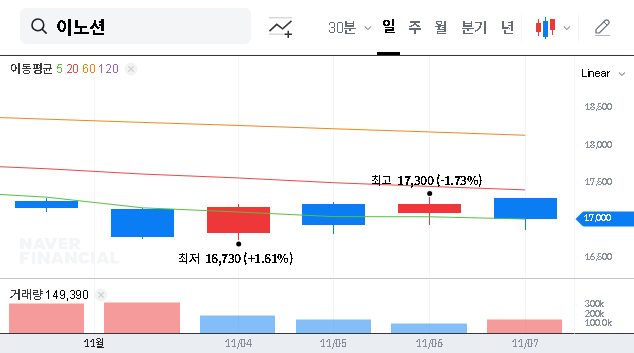
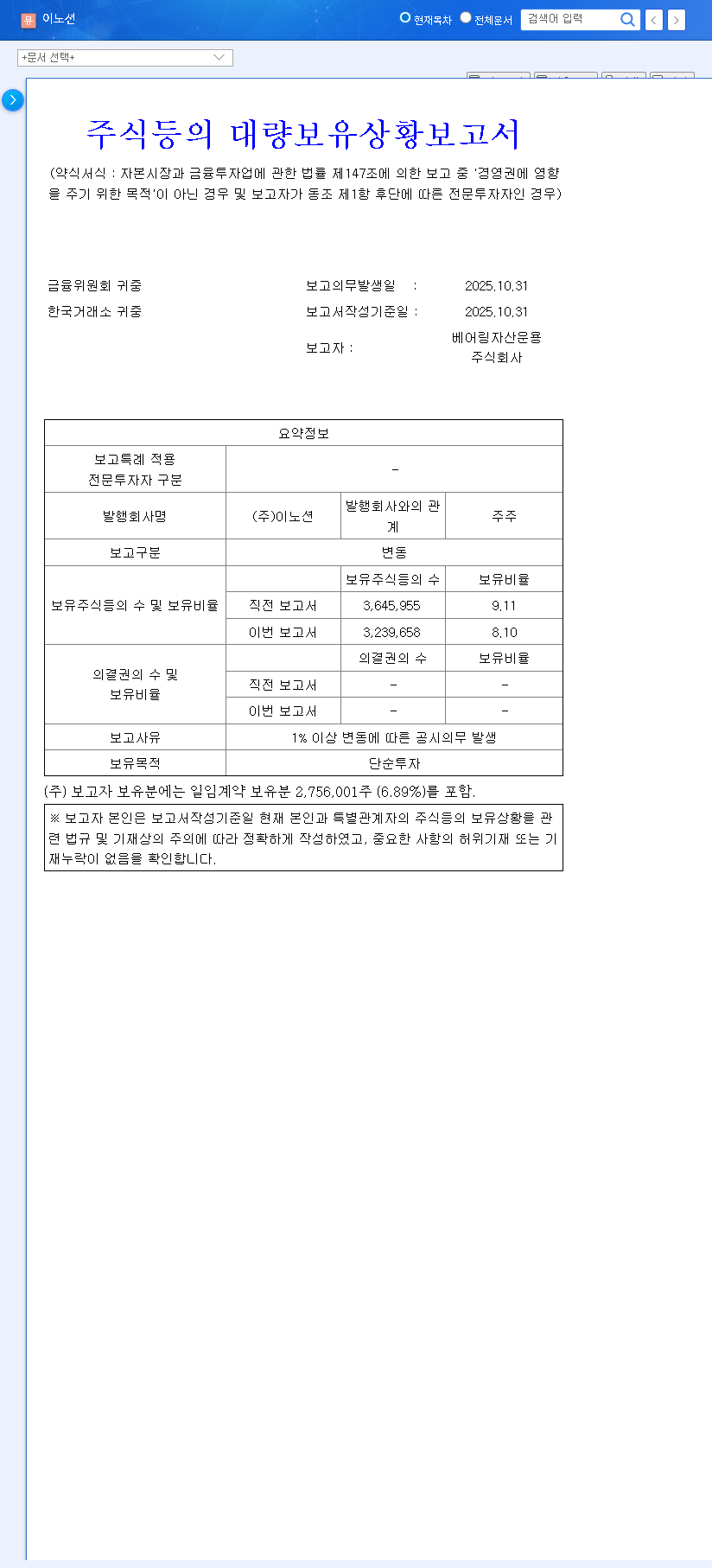
    On November 7, 2025, the investment community took note as Baring Asset Management, a prominent Korean asset management firm, officially disclosed a change in its shareholding of INNOCEAN WORLDWIDE INC. The firm’s stake was reduced from 9.11% to 8.10%, a sale of just over 1% of its total shares. According to the Official Disclosure filed with DART, the transaction was classified as a ‘market sale for simple investment purposes.’ While the stated reason appears routine, any significant move by an institutional investor can influence market sentiment and warrants a closer examination.

    While the sale could introduce short-term volatility for INNOCEAN stock, a thorough review of the company’s fundamentals suggests this is more likely a portfolio rebalancing act than a red flag regarding its long-term viability.

    Analyzing INNOCEAN’s Core Fundamentals

    To understand the potential long-term trajectory of the INNOCEAN stock price, we must look beyond the headlines and scrutinize the company’s financial health and strategic positioning.

    Revenue Growth vs. Profitability Squeeze

    INNOCEAN demonstrated resilience with solid revenue growth, reaching 1,022,434 million KRW in sales for the first half of 2025, a 1.3% increase year-over-year. However, this top-line growth didn’t translate to the bottom line. Operating profit saw a slight decrease of 1.3%, while consolidated net profit fell more sharply by 27.6%. This profitability squeeze can be attributed to two key factors:

    • Strategic Investments: The company has significantly increased spending on future-proofing its business, particularly in AI capabilities and advanced digital marketing tools. These are essential for staying competitive in a rapidly evolving industry.
    • Rising Labor Costs: Like many companies in the creative and tech sectors, INNOCEAN is facing upward pressure on labor costs to attract and retain top talent.

    Financial Health Indicators

    A closer look at the balance sheet reveals a mixed but generally stable picture. The company’s debt ratio improved to 145.16% by mid-2025, a positive sign of deleveraging. However, its Return on Equity (ROE) declined to 3.96%. While this is an improvement from the full-year 2024 figures, it highlights the need for more efficient capital deployment to generate shareholder value. Maintaining a stable operating profit margin of 6.48% is commendable, but the drop in net profit margin to 3.98% will be a key metric for investors to monitor in upcoming quarters.

    Future Growth Engines and Global Strategy

    INNOCEAN WORLDWIDE INC. is not standing still. The company is actively building a diversified and robust future through several key initiatives. Its consistent recognition at prestigious global advertising festivals like Cannes Lions and Spikes Asia cements its creative excellence. Strategically, INNOCEAN is pursuing M&A to bolster its digital and content production capabilities. Furthermore, its proactive ventures into new territories, such as forming AI alliances and launching its own IP character, ‘Boss Tokki,’ demonstrate a clear strategy to diversify revenue streams beyond traditional advertising. These initiatives are crucial for navigating shifts in the global advertising market.

    Investment Strategy & Outlook for INNOCEAN Stock

    Given the context, how should investors approach INNOCEAN stock? The sale by Baring Asset Management is likely to cause short-term downward pressure as the market digests the news. However, long-term value is dictated by fundamentals, not temporary sentiment.

    • For New Investors: This could present a buying opportunity. It’s wise to monitor for price stabilization and pay close attention to the Q4 earnings report, specifically looking for tangible results from the company’s AI investments and improved cost controls.
    • For Existing Holders: The core investment thesis seems intact. Rather than reacting to short-term noise, focus on the long-term growth story. Assess the company’s progress on its strategic goals, such as the internalization of digital services and new business diversification. See our guide on long-term portfolio management for more insights.

    Ultimately, INNOCEAN’s ability to translate its strategic investments in AI and digital into concrete profits will be the primary driver of its stock performance. The company must continue to strengthen its fundamentals and communicate its vision effectively through investor relations to build and maintain market confidence. The Baring sale, while notable, appears to be a minor subplot in the larger, evolving story of INNOCEAN’s transformation.

    Disclaimer: This analysis is for informational purposes only and does not constitute investment advice. All investment decisions should be made based on your own research and risk tolerance.

    (214320) INNOCEAN Stock Analysis: Baring's Stake Sale & Future Outlook 2025 관련 이미지
  • (260970) S&D Co., Ltd Stock Analysis (260970): Tiger Asset Management Sale & Fundamentals

    (260970) S&D Co., Ltd Stock Analysis (260970): Tiger Asset Management Sale & Fundamentals

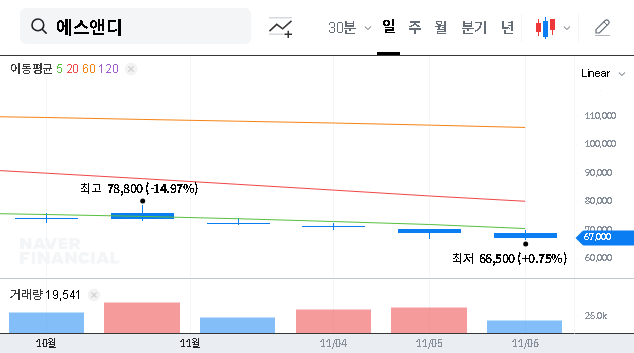
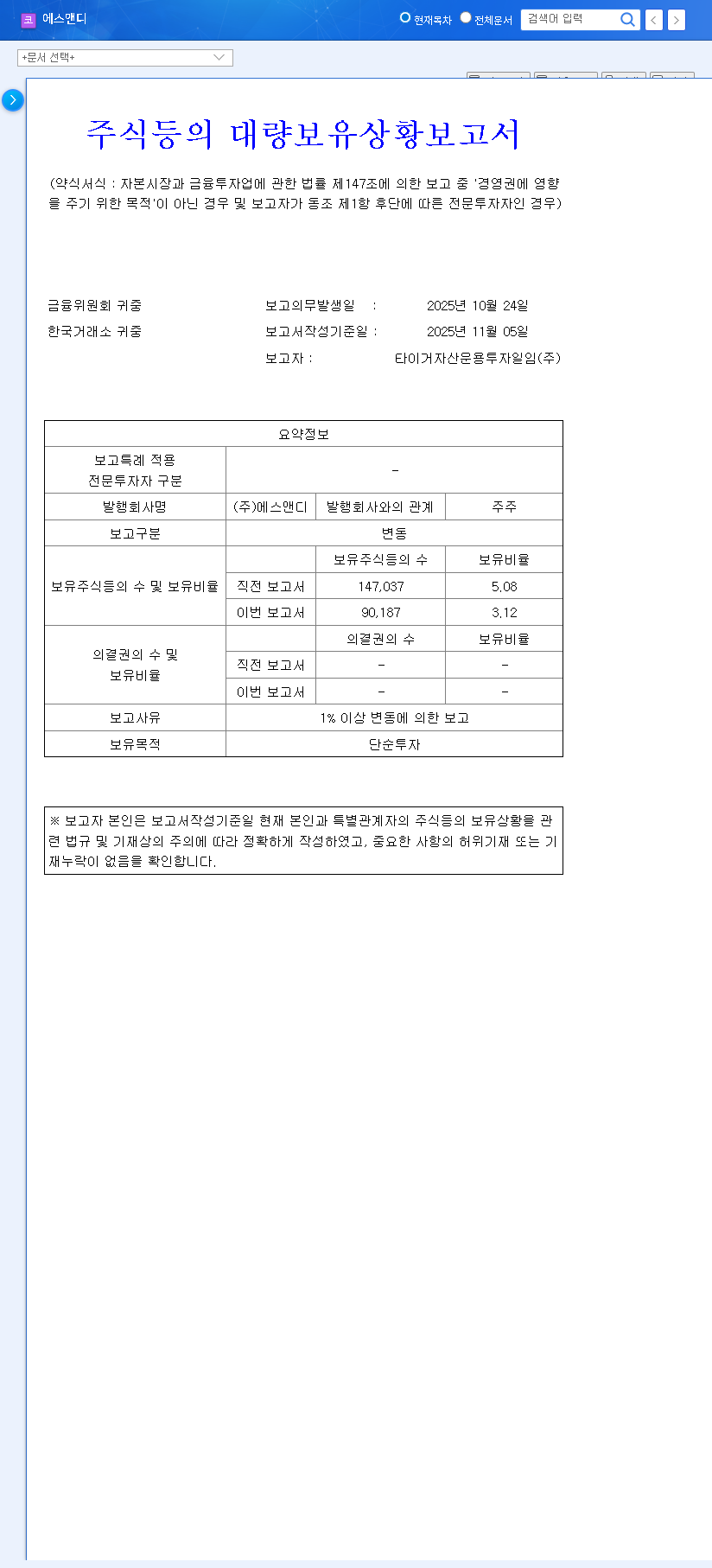
    This comprehensive S&D Co., Ltd stock analysis unpacks the recent news of Tiger Asset Management significantly reducing its stake in the company (ticker: 260970). The move, which saw their holdings drop from 5.08% to 3.12%, has understandably raised questions among investors about the potential impact on the S&D stock price and its underlying value. Is this institutional sell-off a red flag signaling deeper issues, or is it merely short-term market noise? We will explore the company’s fundamentals, growth prospects, and the potential fallout from this key event to provide investors with a clear, data-driven perspective.

    When a major institutional holder like Tiger Asset Management divests a significant portion of its shares, the market pays close attention. It often prompts a re-evaluation of a company’s financial health and future trajectory.

    This article provides an in-depth look at S&D Co., Ltd’s current situation, helping you understand the full context before making any investment decisions. We will cover the specifics of the sale, analyze the company’s financial health, and provide an actionable outlook for current and prospective shareholders.

    The Tiger Asset Management Divestment: A Closer Look

    The core event triggering this analysis is the stake sale by Tiger Asset Management. Understanding the details is the first step in assessing its impact. The sale was not a minor portfolio adjustment; it represents a substantial reduction in their position.

    Key Details of the Transaction

    • Previous Holding: 5.08%
    • Current Holding: 3.12%
    • Stated Purpose: Originally held for ‘simple investment’ purposes.
    • Transaction Period: Primarily executed via market sales between October 30 and November 5, 2025.
    • Disclosure Trigger: Mandatory reporting was required due to the change in shareholding exceeding 1%. You can view the Official Disclosure here.

    Such a sale can be interpreted as a bearish signal, suggesting that a well-informed institutional investor has lost confidence in the company’s short-to-medium term prospects. This action invariably influences broader market sentiment and requires a deeper look into the S&D fundamentals.

    In-Depth S&D Co., Ltd Stock Analysis: Fundamentals Under the Microscope

    To understand if Tiger Asset Management’s move is justified, we must analyze S&D’s core business and financial health. A company’s stock price may fluctuate on news, but its long-term value is rooted in its fundamentals. For more on this, consider reading a Guide to Analyzing Corporate Fundamentals.

    Financial Performance: A Mixed Picture

    S&D’s recent financial performance presents a conflicting narrative. While the first half of 2025 showed impressive growth, the longer-term trend raises significant concerns.

    • H1 2025 Positives: The company reported a 40% year-over-year revenue increase and a 37% rise in operating profit. Crucially, operating cash flow turned positive, indicating improved operational efficiency.
    • Long-Term Concerns: Despite this recent surge, both revenue and operating profit have been on a downward trajectory since late 2022. Full-year forecasts for 2025 predict an overall revenue decrease and a shift to an operating loss. This suggests the H1 performance may not be sustainable.

    Business Structure and Growth Initiatives

    S&D’s revenue is heavily concentrated, with over 92% coming from general functional food materials. While this specialization can be a strength, it also introduces risk. To counter this, the company is actively pursuing new growth drivers:

    • Health Functional Foods: Acquiring new certifications, such as for Ecklonia cava extract, signals a push into higher-margin health products.
    • Infrastructure Investment: The completion of a new factory, backed by a 17 billion KRW investment, significantly boosts production capacity and signals long-term confidence from management.

    Projected Impact on the S&D Stock Price

    The sale by Tiger Asset Management is likely to have immediate and lasting effects on the S&D stock price.

    Short-Term Outlook: Increased Volatility and Selling Pressure

    In the short term, the market’s reaction is often driven by sentiment. A large institutional sell-off creates a supply-demand imbalance, which typically pushes prices down. Retail investors may follow suit, fearing that Tiger Asset Management possesses negative information, thus amplifying the downward pressure. For more on market psychology, see analysis from authoritative sources like Bloomberg.

    Long-Term Outlook: A Return to Fundamentals

    Over the long term, the stock price will realign with the company’s actual performance. The critical question is whether the deteriorating profitability trend is a temporary blip or a systemic issue. The success of their new facility and expansion into health functional foods will be the ultimate determinant of long-term value. Tiger’s exit could be a preemptive move based on a negative assessment of this very turnaround potential.

    Conclusion: An Action Plan for Investors

    The S&D Co., Ltd stock analysis reveals a company at a crossroads. While H1 2025 results were positive, they are overshadowed by a concerning long-term financial decline and a significant vote of no-confidence from a major institutional investor. The S&D stock price will likely face short-term headwinds.

    Investors should exercise caution. Prudent decision-making requires careful monitoring of the following factors:

    • Monitor Q3 and Q4 Earnings: Upcoming financial reports are critical. Look for evidence that the revenue and profit decline is reversing and that the H1 2025 performance was not an anomaly.
    • Track New Business Performance: Pay close attention to announcements regarding the output of the new factory and the market reception of new health functional food products.
    • Watch for Further Institutional Moves: Keep an eye on any changes in holdings by other major investors, as this can indicate a broader shift in institutional sentiment.

    (260970) S&D Co., Ltd Stock Analysis (260970): Tiger Asset Management Sale & Fundamentals 관련 이미지