Tag: Specialty Gases

  • (105330) KNW Co., Ltd. Earnings Analysis: Deep Dive into Q3 2025 Losses & Future Stock Outlook

    (105330) KNW Co., Ltd. Earnings Analysis: Deep Dive into Q3 2025 Losses & Future Stock Outlook

    KNW Q3 2025 Earnings: Navigating Mounting Losses

    This comprehensive KNW Co., Ltd. earnings analysis delves into the recently announced preliminary Q3 2025 results, revealing a company at a critical crossroads. With persistent losses and an increasing financial burden, investors are cautiously evaluating whether KNW’s strategic investments in high-growth sectors like semiconductor materials can offset its current financial instability. This report dissects the numbers, explores the root causes, and provides a clear KNW stock outlook to help you make informed investment decisions.

    Breaking Down the Q3 2025 Financial Performance

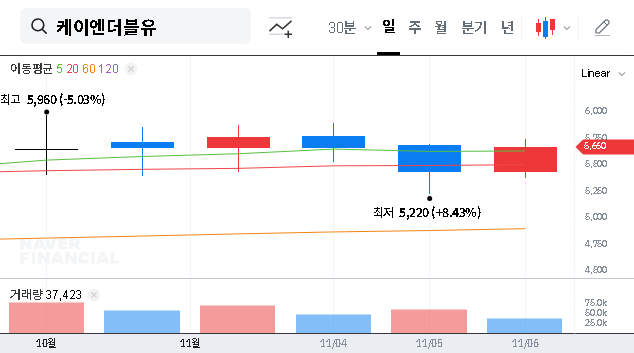
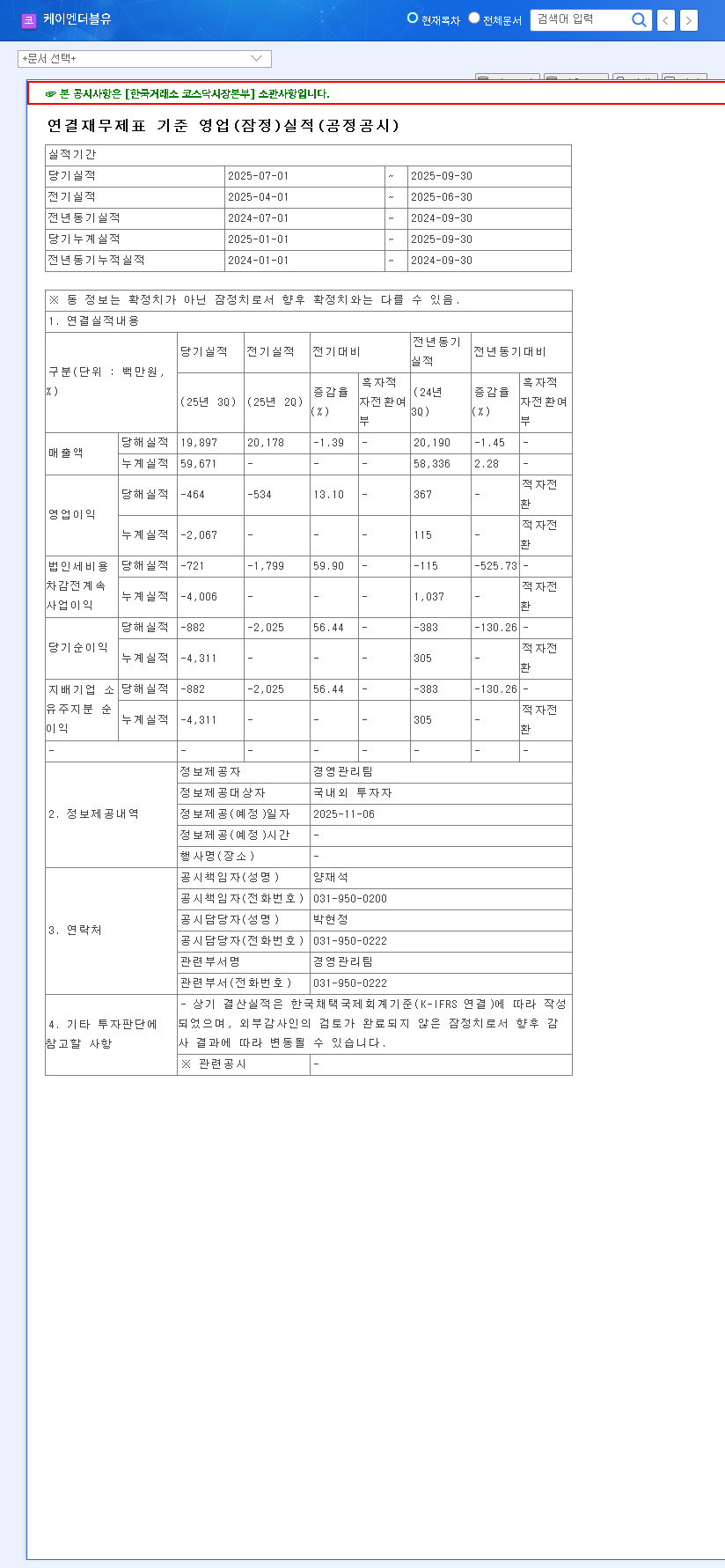
    KNW’s preliminary earnings for Q3 2025 paint a challenging picture. The company reported sales of KRW 19.9 billion, an operating loss of KRW 0.5 billion, and a net loss of KRW 0.9 billion. These figures, consistent with the losses from the previous quarter, confirm that the downward profitability trend that started in 2023 is not yet reversing. This data is based on the company’s official filing (Official Disclosure).

    The first half (H1) of 2025 already showed widening deficits compared to the prior year, with an operating loss of KRW 1.6 billion on sales of KRW 39.7 billion. While significant investments in future growth are evident from the -KRW 37.5 billion investing cash flow, the negative operating cash flow of -KRW 0.6 billion raises serious questions about the company’s core ability to generate cash from its primary business activities.

    The continuation of operating and net losses into Q3 2025 underscores a fundamental profitability issue that strategic investments have yet to resolve. This persistent burn rate is a primary concern for the current KNW stock outlook.

    Core Business Segments: A Double-Edged Sword

    A detailed KNW financial analysis requires looking at its individual segments. While diversified, each carries its own set of opportunities and risks that contribute to the company’s volatile performance.

    Semiconductor Materials: The High-Stakes Growth Engine

    Constituting nearly 62% of sales, this is KNW’s most critical division. Its strength lies in being Korea’s sole producer of SF6 special gas and its strategic investments in anhydrous hydrogen fluoride (AHF) facilities. These materials are vital for chip manufacturing. However, this heavy reliance makes KNW extremely vulnerable to the notoriously cyclical semiconductor industry and global supply chain disruptions. A downturn in chip demand directly impacts KNW’s top and bottom lines.

    Automotive & Electronic Parts: Stable but Vulnerable

    The automotive parts and electronic components segments provide a more stable revenue base, accounting for the remaining share. The growth of EVs and advanced technologies like 5G and AI presents significant opportunities. However, these markets are fiercely competitive, and performance is tied to the health of the broader automotive and consumer electronics industries, which are currently facing macroeconomic pressures.

    Decoding KNW’s Financial Health & Risk Factors

    The KRW 50 Billion Convertible Bond Burden

    A major red flag in the KNW financial analysis is the recent issuance of KRW 50 billion in convertible bonds. While this secures capital for investment, it introduces two major risks: future stock dilution for existing shareholders when bonds are converted to equity, and a heavier interest expense burden that will further erode net profits. For more details, see our guide to analyzing convertible bond risks.

    Macroeconomic Headwinds and Currency Exposure

    KNW is highly exposed to external economic forces. Global inflation, rising interest rates, and geopolitical instability can disrupt supply chains and dampen demand. Furthermore, the company’s significant exposure to USD and EUR exchange rate fluctuations is a key risk. A 10% swing in currency can materially impact net profit, yet the company has not implemented an aggressive hedging strategy, leaving its earnings vulnerable to volatility.

    Investor Action Plan & Final Recommendation

    Given the persistent profitability issues and rising financial risks highlighted in this KNW Co., Ltd. earnings analysis, the company’s fundamentals are currently assessed as negative. Short-term downward pressure on the stock price is highly likely to continue until tangible performance improvements are seen.

    Investors should adopt a cautious, observant stance rather than initiating new positions. Key factors to monitor closely include:

    • Profitability Turnaround: Any concrete evidence of margin improvement or a reduction in operating losses in the upcoming quarters.
    • Financial Management: Clear strategies to manage debt, control interest expenses, and mitigate the dilutive effect of convertible bonds.
    • Semiconductor Segment Performance: Signs that the investments in SF6 and AHF are translating into market share gains and profitable revenue.
    • Risk Mitigation: Implementation of a robust currency hedging strategy to protect earnings from exchange rate volatility.

    Until these areas show significant improvement, a wait-and-see approach is the most prudent course of action for investors considering KNW Co., Ltd.
    (105330) KNW Co., Ltd. Earnings Analysis: Deep Dive into Q3 2025 Losses & Future Stock Outlook 관련 이미지
  • (004800) HYOSUNG CORPORATION Q3 2025 Earnings: In-Depth Analysis of a 32% Profit Surprise & Stock Outlook

    (004800) HYOSUNG CORPORATION Q3 2025 Earnings: In-Depth Analysis of a 32% Profit Surprise & Stock Outlook

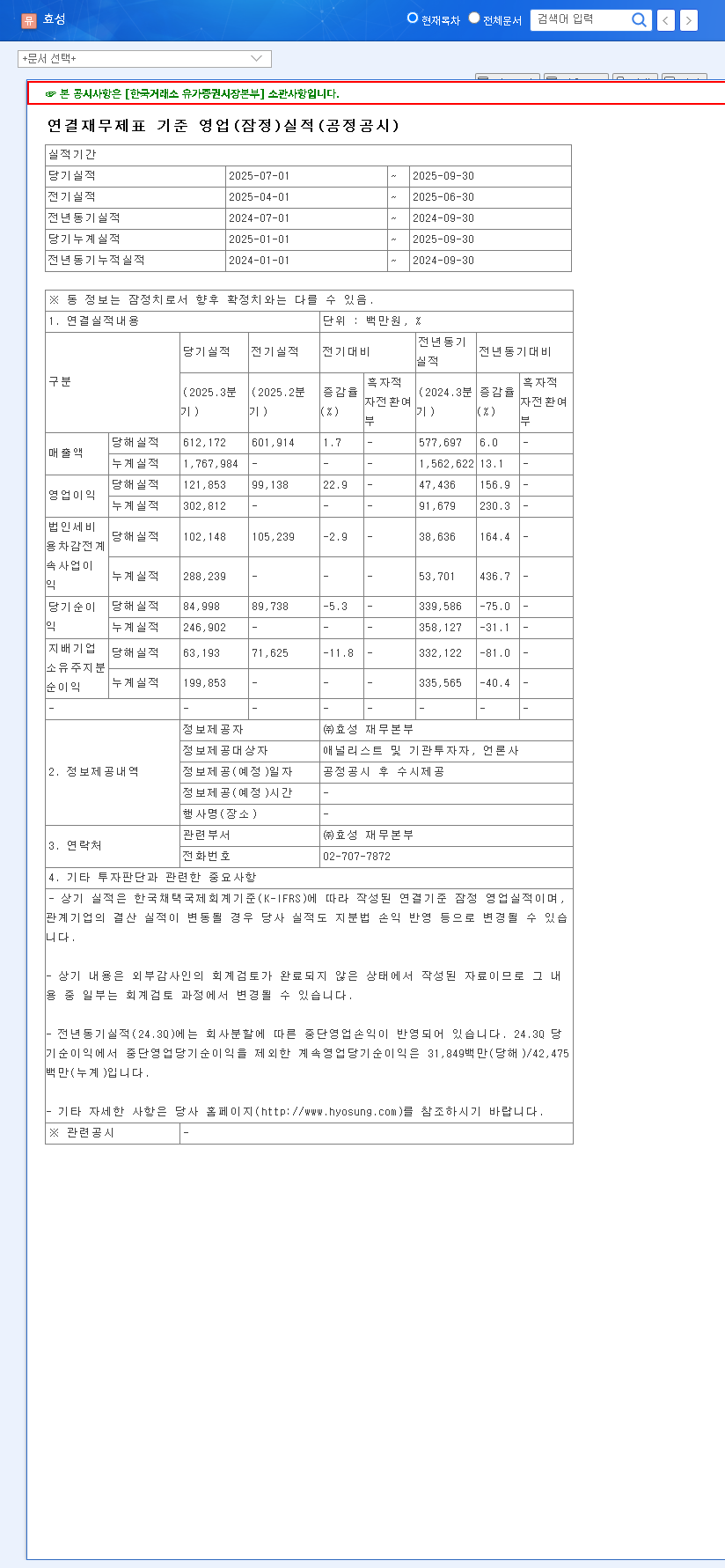
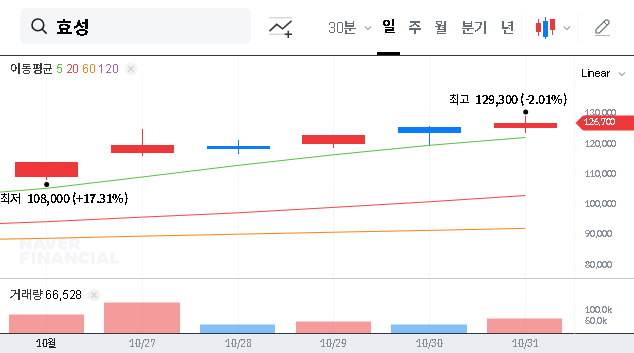
    The latest HYOSUNG CORPORATION earnings report for Q3 2025 has sent a clear and powerful signal to the market. On October 31, 2025, the company unveiled preliminary results that didn’t just meet expectations—they shattered them. With revenue climbing 2% above market consensus and operating profit surging an astonishing 32% beyond estimates, HYOSUNG (KRX: 004800) has once again demonstrated its formidable competitive edge and operational excellence. This analysis unpacks the figures, explores the underlying growth drivers, and provides a comprehensive HYOSUNG investment outlook for discerning investors.

    This isn’t just a story about numbers; it’s a testament to a resilient business model and strategic investments in future-forward industries. We will explore how HYOSUNG’s performance positions its stock in the current macroeconomic climate and what potential investors should monitor moving forward.

    Deep Dive: Analyzing HYOSUNG CORPORATION’s Q3 2025 Earnings Triumph

    The preliminary consolidated financial results for HYOSUNG Q3 2025 painted a picture of robust health and impressive profitability. The official figures, as per the company’s disclosure, confirm a significant outperformance against market expectations. You can view the Official Disclosure (DART) for the complete filing.

    • Revenue: KRW 612.2 billion, a 2% beat over the market estimate of KRW 599.5 billion.
    • Operating Profit: KRW 121.9 billion, a massive 32% surprise above the market estimate of KRW 92.6 billion.
    • Net Profit: KRW 63.2 billion (market consensus was not available for comparison).

    The 32% surge in operating profit is the key takeaway. It signals a profound improvement in core profitability and operational efficiency across HYOSUNG’s diverse business segments, a factor that is sure to capture positive investor attention.

    The Pillars of Success: Unpacking HYOSUNG’s Growth Drivers

    This outstanding performance is not an accident but the direct result of a carefully crafted long-term strategy centered on structural stability and forward-thinking investments.

    A Resilient Holding Company Structure

    As a holding company, HYOSUNG CORPORATION benefits from a diversified and stable business structure. The consistent performance of its major subsidiaries, such as Hyosung T&C (textiles) and Hyosung Heavy Industries (power systems & construction), creates a reliable foundation of profitability. This structure provides a buffer against volatility in any single sector and ensures the group can effectively navigate challenging market conditions, a topic we’ve covered in our industry analysis.

    Strategic Investments in Future Industries

    HYOSUNG is aggressively securing its future by investing heavily in high-potential growth engines. These strategic pivots are already beginning to bear fruit and are crucial to the long-term HYOSUNG stock narrative.

    • Advanced Materials: Ventures into Bio-BDO (a biodegradable polymer) and high-purity specialty gases for the semiconductor and display industries are tapping into global megatrends.
    • Digital & Green Energy: Significant investments in modern data centers and the burgeoning hydrogen economy position the company at the forefront of the next industrial revolution.

    Navigating Headwinds: Macro-Environment and Risk Factors

    While the HYOSUNG CORPORATION earnings are impressive, a prudent investor must also consider the broader economic landscape and potential risks. The company’s performance is intrinsically linked to global trends, as reported by major financial news outlets.

    Opportunities: A gradual downtrend in benchmark interest rates could lower borrowing costs, freeing up capital. Furthermore, massive global investment in power infrastructure, driven by AI and carbon-neutrality goals, presents a significant tailwind for Hyosung Heavy Industries.

    Risks to Monitor: Volatility in crude oil prices can impact raw material costs for the chemical division. Foreign exchange fluctuations (USD/KRW) affect both export competitiveness and foreign currency debt. Additionally, the financial leverage of Hyosung Chemical remains a point of observation for the market.

    Investor Action Plan: What This Means for HYOSUNG Stock

    This stellar earnings report acts as a powerful, positive catalyst. In the short term, the significant beat is likely to fuel upward momentum for HYOSUNG stock as investor sentiment improves and analysts revise their forecasts. The market now has tangible proof of the company’s strengthening operational core.

    From a long-term perspective, the key to sustained value creation lies in the execution of its growth strategy. Investors should focus on the following:

    • Tracking New Ventures: Monitor the progress and profitability of the new growth engines like specialty gases and hydrogen.
    • Risk Management: Keep an eye on the identified risk factors, particularly the financial health of key subsidiaries and exposure to commodity prices.
    • Valuation Check: While fundamentals are strong, a prudent approach requires assessing the stock’s valuation relative to its peers and historical levels after the initial price reaction.

    In conclusion, HYOSUNG CORPORATION’s Q3 2025 earnings report is a clear indicator of a company firing on all cylinders. The results reaffirm its robust fundamentals and brighten its growth potential, making it a compelling story for investors. While macroeconomic risks warrant a cautious and informed approach, the strategic direction and proven execution capabilities of HYOSUNG present a positive investment signal for both the near and long term.

    (004800) HYOSUNG CORPORATION Q3 2025 Earnings: In-Depth Analysis of a 32% Profit Surprise & Stock Outlook 관련 이미지
  • Hooseung’s Management Stability Reinforced: Analysis of Large Shareholding Report and Investment Strategy

    Hooseung's Management Stability Reinforced: Analysis of Large Shareholding Report and Investment Strategy 대표 차트 이미지

    1. What Happened at Hooseung?

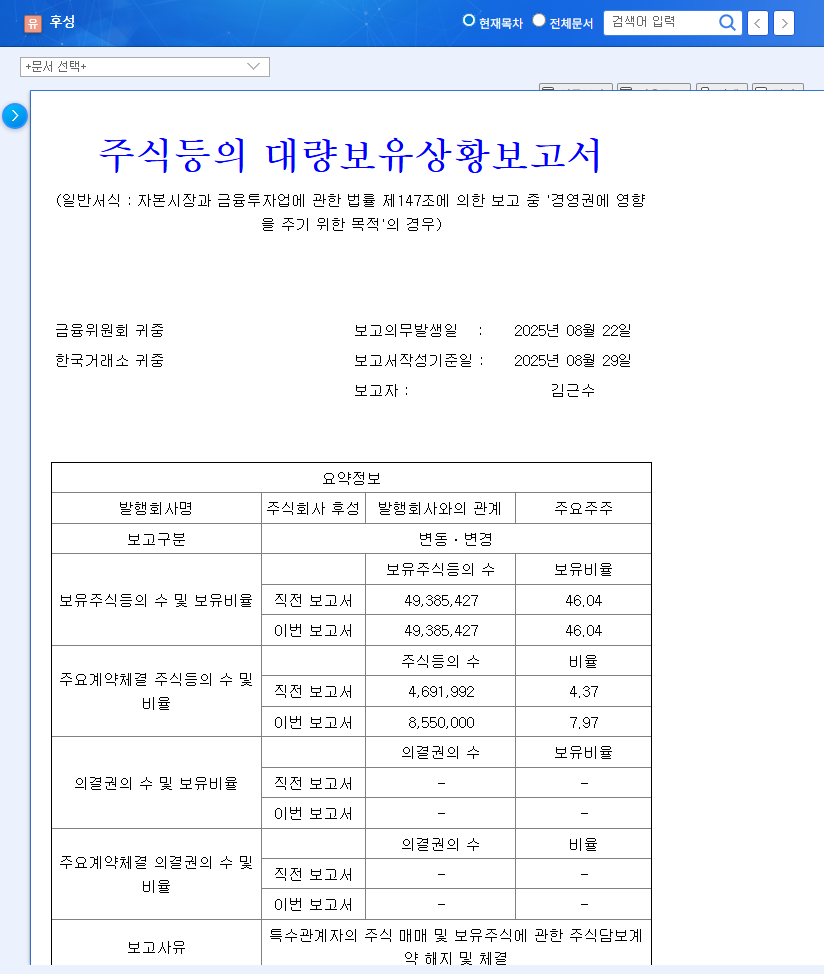
    CEO Keun-Soo Kim and his related parties maintained their 46.04% stake in Hooseung. The key takeaway from the report is the stock transfer between related parties, Ilkwang E&C and Hooseung Holdings, and changes in stock pledge agreements. This suggests an internal restructuring of ownership.

    2. Why Does It Matter?

    The report signals management’s commitment to stability, a crucial factor for long-term investment planning and operational continuity. This is particularly important for Hooseung, given its anticipated investments in battery materials and semiconductor specialty gases.

    3. What’s Next for Hooseung?

    Hooseung reported Q1 2025 revenue of KRW 231.3 billion (up 4.91% YoY) and operating profit of KRW 14.6 billion (turning to profit). The strong performance in battery materials and semiconductor specialty gases drove the improvement. However, raw material prices and exchange rate volatility remain key risks. The reinforced management stability is expected to facilitate a more focused approach to managing these risks. The solid performance of the chemical equipment segment is also a positive factor.

    4. What Should Investors Do?

    • Maintain a long-term perspective: Considering the growth potential of the battery materials market and Hooseung’s competitive position, a long-term investment approach is recommended.
    • Monitor management changes and strategies: Pay close attention to any further changes in management ownership or strategic shifts.
    • Track macroeconomic factors: Continuously monitor the impact of macroeconomic variables like exchange rates and interest rates.
    • Observe market expectations: Refer to analyst reports and market forecasts to inform investment decisions.

    What are Hooseung’s main businesses?

    Hooseung’s primary businesses are basic chemicals (including battery materials and semiconductor specialty gases) and chemical equipment.

    What is the key takeaway from the large shareholding report?

    CEO Keun-Soo Kim and related parties maintained their 46.04% stake, and there was a transfer of shares between related parties. This suggests a move towards greater management stability.

    What is the outlook for Hooseung?

    Hooseung is expected to benefit from the growth of the battery materials market and continued strong performance in the chemical equipment segment. However, investors should be mindful of risks related to raw material prices and exchange rate fluctuations.

    Hooseung's Management Stability Reinforced: Analysis of Large Shareholding Report and Investment Strategy 관련 이미지
    Hooseung's Management Stability Reinforced: Analysis of Large Shareholding Report and Investment Strategy 관련 이미지
  • Hyosung TNC Q2 Earnings Shock: 75% Net Profit Plunge, Analysis of Causes and Future Outlook

    1. A Shocking Q2: Significant Drop Compared to Expectations

    Hyosung TNC’s Q2 revenue reached ₩18,892 billion, falling 4.6% short of the ₩19,800 billion estimate. Operating profit stood at ₩733 billion, 7.97% lower than the projected ₩797 billion. Most alarming was the net profit, which plummeted by a massive 75.15% to ₩122 billion, compared to the ₩495 billion estimate.

    2. Unraveling the Causes: A SWOT Analysis

    The main factors contributing to this disappointing performance include:

    • Textile Segment: Continued decline in PTMG prices, coupled with a strengthening KRW/USD exchange rate and concerns about a global economic slowdown impacting textile demand.
    • Trading Segment: Increased volatility in raw material prices and exchange rates, exacerbated by uncertainties in the Chinese market.
    • Specialty Gases Business: Minimal revenue contribution from the new business segment.

    The company’s strengths, such as the ‘CREORA’ and ‘regen’ brand integration strategy and the global network leveraged in the trading segment, failed to translate into improved performance. The Bio-BDO plant construction and entry into the semiconductor/display materials market, while considered long-term growth drivers, have yet to yield tangible results.

    3. Future Outlook and Investment Strategies

    Hyosung TNC needs to focus on managing raw material price and exchange rate volatility, cost reduction, and strengthening the competitiveness of its new business segments. Investors should closely monitor further information disclosures and management’s future strategy announcements and make cautious investment decisions.

    4. Further Analysis Points

    For a more accurate analysis, further information is needed on raw material price fluctuations, the quantitative impact of exchange rate fluctuations, detailed trading segment performance, and the causes of the increase in SG&A expenses.

    Frequently Asked Questions

    Q1. Why did Hyosung TNC’s Q2 results fall short of expectations?

    A1. The main factors contributing to the underperformance include the decline in PTMG prices in the textile segment, increased raw material price and exchange rate volatility in the trading segment, and minimal revenue contribution from the new business segment.

    Q2. What is the outlook for Hyosung TNC?

    A2. The outlook remains somewhat uncertain due to ongoing uncertainties such as raw material price and exchange rate volatility and the global economic slowdown. The company’s risk management capabilities and the growth potential of its new business segments are key factors to watch.

    Q3. What should investors keep in mind?

    A3. Investors should closely monitor future information disclosures and management’s future strategy announcements and exercise caution in their investment decisions.