Tag: Solid

  • (050890) Solid Inc’s Darwin Friction Acquisition: A Deep Dive into the ₩10B Defense Deal & Stock Impact

    (050890) Solid Inc’s Darwin Friction Acquisition: A Deep Dive into the ₩10B Defense Deal & Stock Impact

    In a significant strategic pivot, telecommunications leader Solid, Inc. has announced a major move that has the market buzzing. The Solid Inc Darwin Friction acquisition, a ₩10 billion deal for a majority stake in an aircraft parts manufacturer, signals a bold leap into the Solid Inc defense sector ambitions. This move aims to diversify revenue streams and secure new growth engines beyond its core telecom business. But what does this mean for the company’s future, and how should investors interpret this development for their stock analysis?

    This comprehensive analysis will delve into the specifics of the acquisition, evaluate Solid’s underlying financial health, and explore the potential synergies and inherent risks. We’ll provide a clear-eyed view of both the promising opportunities and the significant challenges that lie ahead for Solid, Inc. following this transformative investment.

    The Details of the Deal: Solid Inc’s Acquisition of Darwin Friction

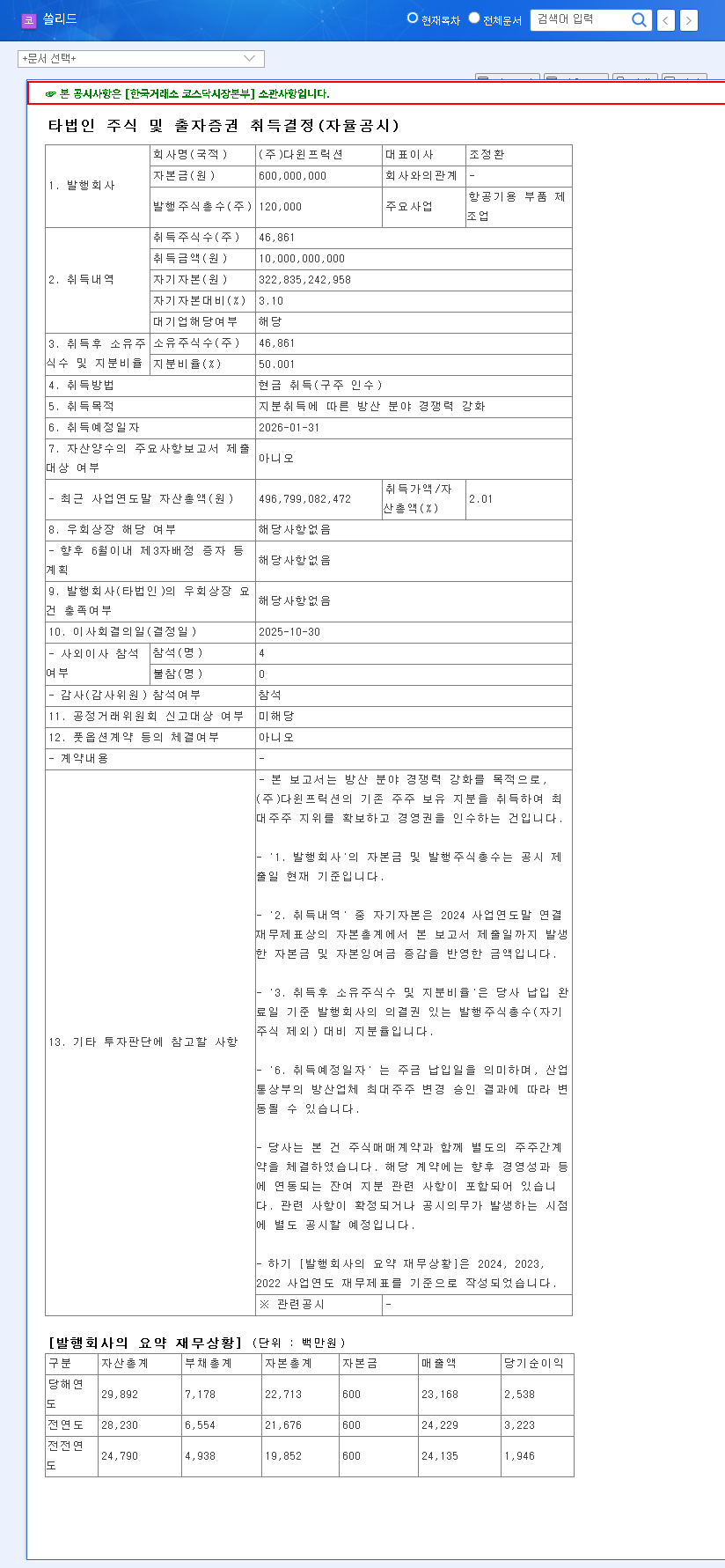
    On October 30, 2025, Solid, Inc. confirmed its strategic investment via a public announcement. The company is set to acquire a controlling 50.001% stake in Darwin Friction for ₩10 billion, with the cash transaction scheduled to be completed by January 31, 2026. This investment represents 3.10% of Solid’s total capital. The full details of the transaction were confirmed in an Official Disclosure filed with the Financial Supervisory Service (DART).

    Darwin Friction is a specialized manufacturer of high-performance friction materials, primarily for braking systems in military and commercial aircraft. The explicit goal of this acquisition is to significantly bolster Solid’s competitiveness within the burgeoning Solid Inc defense sector and strategically diversify its business portfolio for long-term, sustainable growth.

    Strategic Rationale: Why This Pivot to Defense?

    To understand the logic behind the Darwin Friction acquisition, it’s essential to examine Solid’s current business landscape and financial standing. This move isn’t happening in a vacuum; it’s a calculated decision based on internal strengths and external market opportunities.

    Solid’s Strong Financial Foundation

    Solid, Inc. enters this deal from a position of improving financial strength. After turning a deficit in 2023, the company has demonstrated a strong recovery, posting a net profit of ₩4 billion in the first half of 2025. Its financial health is robust, with a debt-to-equity ratio improving to 49.38% and a healthy liquidity ratio of 111.97%. This stability provides the necessary capital and confidence to pursue strategic acquisitions like that of Darwin Friction without over-leveraging the company.

    Core Business and Market Tailwinds

    While diversifying, Solid’s core business in 5G and Open RAN telecommunications equipment continues to benefit from a positive market environment. For more on this technology, you can read our guide on understanding the Open RAN ecosystem. Concurrently, its existing defense communications subsidiary, Solidwintech, provides a stable foundation and a logical entry point for deeper integration into the defense supply chain. With a high export dependency (73.8% of revenue), favorable exchange rates and declining global logistics costs also create a positive macroeconomic backdrop for this expansion.

    This acquisition is a clear signal of Solid’s intent to evolve from a pure-play telecom provider into a diversified technology powerhouse with a significant footprint in the high-margin defense industry.

    Impact Analysis: Opportunities vs. Risks

    The Solid Inc Darwin Friction acquisition presents a duality of compelling opportunities and notable risks that investors must weigh carefully.

    The Upside: Potential Synergies and Growth

    • Defense Sector Synergy: The most significant opportunity lies in combining Solidwintech’s defense communication systems with Darwin Friction’s critical aircraft components. This could lead to integrated, higher-value solutions for defense clients and unlock cross-selling opportunities.
    • Portfolio Diversification: The deal reduces Solid’s reliance on the cyclical telecom market and its high sensitivity to North American and European demand, creating more stable, diversified revenue streams.
    • Long-Term Value Creation: By securing a foothold in the resilient defense industry, Solid is positioning itself for long-term growth. As noted by industry analysts at authoritative sources like Bloomberg, the global defense market is projected to see steady growth.

    The Downside: Potential Challenges and Concerns

    • Integration Complexity: Merging the cultures and operations of a telecom equipment firm and an aerospace parts manufacturer is a significant challenge. The risk of execution failure or a lack of meaningful synergy is real and could turn the acquisition into a financial drain.
    • Financial Strain: While Solid’s finances are healthy, the ₩10 billion cash outlay is substantial. This could temporarily strain cash flow and limit capital available for R&D in its core telecom business if returns from Darwin Friction are not realized promptly.
    • Market Volatility: The defense market is subject to geopolitical tensions and shifts in government spending priorities. This introduces a new layer of risk and volatility that Solid’s management must learn to navigate.

    Conclusion: A Calculated Gamble for Future Growth

    Solid, Inc.’s acquisition of Darwin Friction is a bold, strategic gamble. It has the clear potential to unlock significant long-term value by establishing a strong new pillar in the defense sector. The success of this venture will hinge entirely on management’s ability to execute a seamless integration and realize the promised synergies between these two disparate business units.

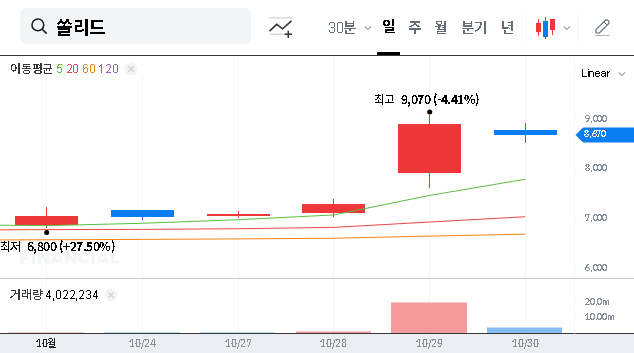
    For investors, the short-term Solid Inc stock analysis will likely show volatility as the market digests the news. However, the long-term trajectory will be determined by tangible results. Close monitoring of integration milestones and the performance of the newly formed defense division will be critical in assessing whether this strategic leap will ultimately pay off.
    (050890) Solid Inc's Darwin Friction Acquisition: A Deep Dive into the ₩10B Defense Deal & Stock Impact 관련 이미지
  • Solid Announces KRW 2.2 Billion Share Buyback: Analyzing Stock Outlook and Investment Strategy


    Solid Announces KRW 2.2 Billion Share Buyback: Analyzing Stock Outlook and Investment Strategy 대표 차트 이미지


    What Happened? – Solid Announces KRW 2.2 Billion Share Buyback

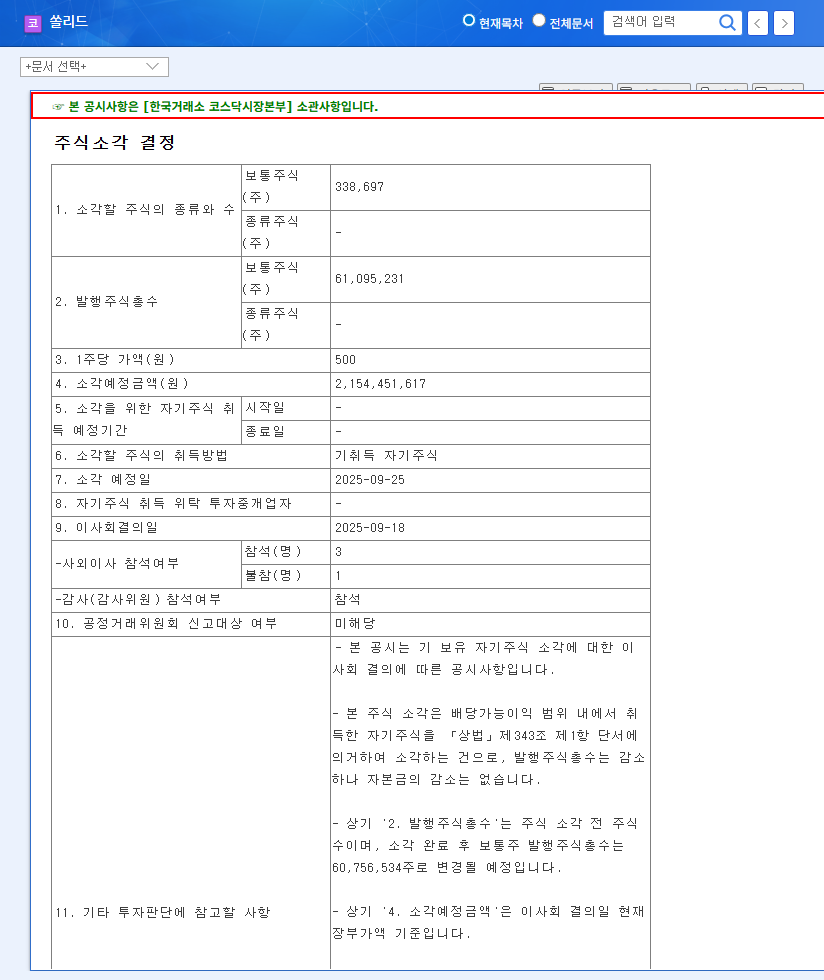
    On September 18, 2025, Solid announced its decision to buy back 338,697 common shares. The estimated amount is approximately KRW 2.2 billion, representing 0.52% of the market capitalization. The buyback is scheduled for September 25.

    Why the Buyback? – Enhancing Shareholder Value and Investor Sentiment

    Solid stated that this share buyback aims to enhance shareholder value and improve market sentiment. The decrease in outstanding shares is expected to increase earnings per share (EPS) and signals the company’s commitment to shareholder return.

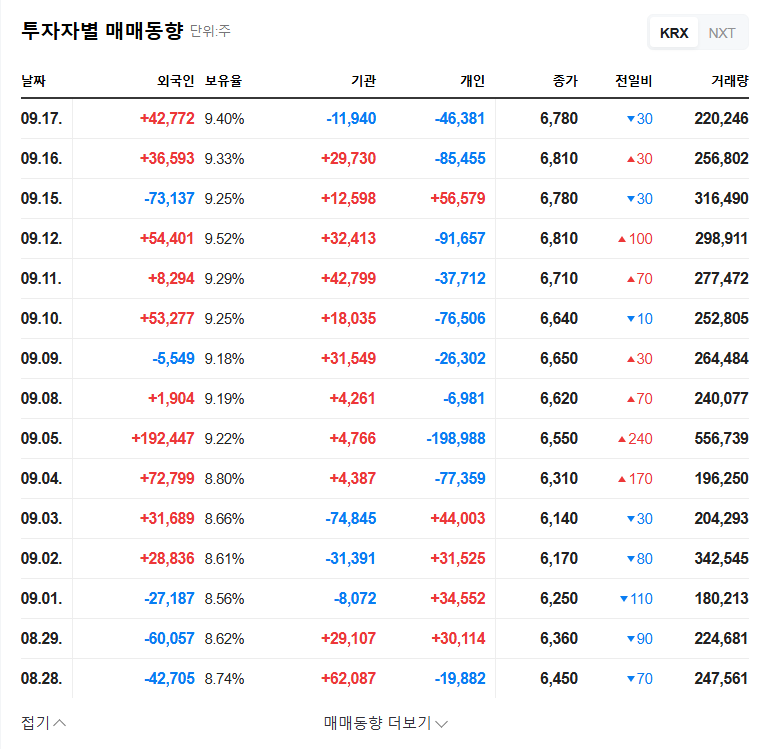
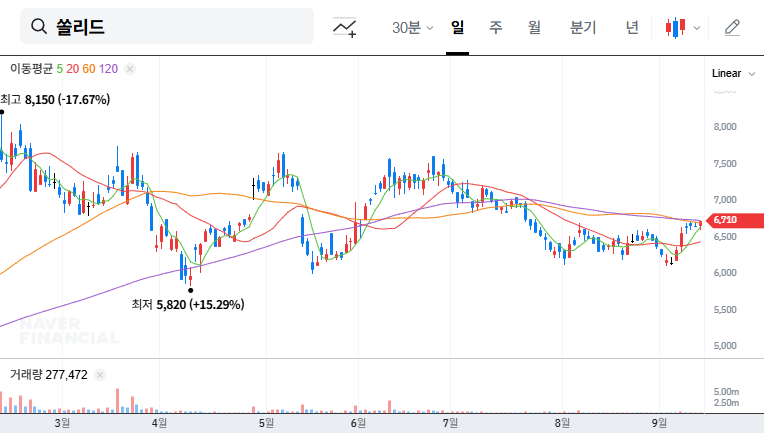
    So, What About the Stock Price? – Short-Term Gains Possible, Long-Term Outlook Uncertain

    The share buyback could boost the stock price in the short term. However, Solid’s first-half 2025 results showed declining sales and profits, coupled with increasing debt. Therefore, it’s difficult to be optimistic about the long-term stock outlook. The key variables will be the performance of its core businesses, including 5G, Open RAN, defense contracts, and venture capital investments.

    What Should Investors Do? – Remain Cautious, Monitor Key Indicators

    The investment recommendation is ‘Hold.’ Investors should closely monitor global telecom market recovery, Open RAN performance, defense and venture capital investment outcomes, further shareholder return policies, and debt reduction efforts to inform their investment strategies.


    FAQ

    What is a share buyback?

    A share buyback is when a company repurchases its own outstanding shares, reducing the number of shares available on the market. This often increases the value of the remaining shares.

    What is the size of Solid’s share buyback?

    The buyback is worth KRW 2.2 billion, representing 0.52% of the total outstanding shares.

    What is the outlook for Solid’s stock price after the buyback?

    While the buyback might positively impact the stock price in the short term, the long-term outlook depends on Solid’s business performance improvements.

    What should investors pay attention to?

    Investors should monitor Solid’s core business performance, debt reduction efforts, and potential further shareholder return initiatives.


    Solid Announces KRW 2.2 Billion Share Buyback: Analyzing Stock Outlook and Investment Strategy 관련 이미지
    Solid Announces KRW 2.2 Billion Share Buyback: Analyzing Stock Outlook and Investment Strategy 관련 이미지


  • Solid’s Rising Star IR: Unlocking Investment Opportunities


    Solid's Rising Star IR: Unlocking Investment Opportunities 대표 차트 이미지


    1. What was discussed at Solid’s IR?

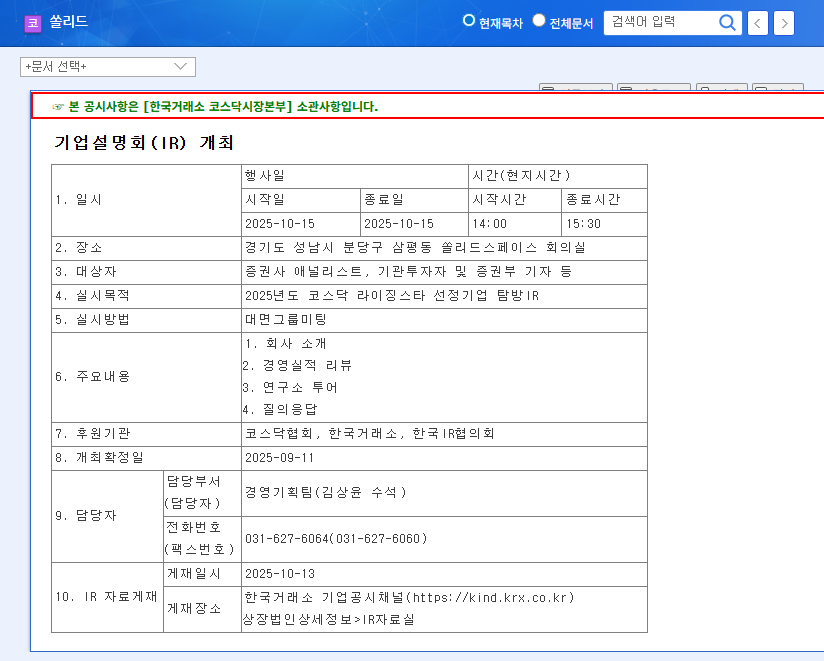
    On October 15, 2025, Solid held an IR presentation to commemorate its selection as a KOSDAQ Rising Star. Through company introductions, reviews of business performance, lab tours, and Q&A sessions, Solid unveiled its growth strategies focusing on core businesses such as 5G, Open RAN, defense, and venture capital investments.

    2. What are Solid’s growth drivers and the purpose of the IR?

    • Robust telecommunications equipment business: The expansion of 5G networks and growth of the Open RAN market represent significant opportunities for Solid. AT&T’s investment plans in Open RAN are particularly noteworthy.
    • Stable defense business: Solid’s involvement in TICN, TMMR, and military satellite communication equipment provides a solid revenue base.
    • Future growth engine, venture capital: By registering as a new technology business finance company and actively investing, Solid aims to secure long-term growth momentum.

    Solid aimed to actively communicate its growth potential and investment attractiveness, strengthening communication with investors through this IR presentation.

    3. What’s next for Solid after the IR?

    Positive Outlook: The IR presentation has the potential to attract investor attention and increase the likelihood of new investments. The performance of the Open RAN business, in particular, could serve as momentum for stock price appreciation.

    Potential Risks: Presentation content falling short of market expectations or the disclosure of unforeseen negative news could negatively impact the stock price. Exchange rate volatility also requires continuous management.

    4. Action Plan for Investors

    • Thorough analysis of IR presentation content: Grasp key information such as 5G and Open RAN order status, overseas expansion strategies, and venture capital investment performance.
    • Confirmation of exchange rate risk management capabilities: Examine the company’s response strategies to exchange rate fluctuations.
    • Monitoring macroeconomic indicators: Continuously observe external factors such as interest rates, exchange rates, and the global economic situation.
    • Maintain a long-term perspective: Evaluate venture capital investments from a long-term perspective. Make investment decisions considering the stable growth of core businesses.


    Frequently Asked Questions (FAQ)

    What are Solid’s main businesses?

    Solid’s main businesses are telecommunications equipment (5G, Open RAN), defense, and venture capital investments.

    What were the key takeaways from the IR presentation?

    The IR presentation, commemorating Solid’s selection as a KOSDAQ Rising Star, highlighted its growth strategies and provided updates on its core businesses (5G, Open RAN, defense, and venture capital).

    What should investors consider when investing in Solid?

    Investors should consider market expectations, exchange rate volatility, and venture capital investment risks. A thorough analysis of the IR presentation content and macroeconomic indicators is crucial, and investment decisions should be made with a long-term perspective.


    Solid's Rising Star IR: Unlocking Investment Opportunities 관련 이미지
    Solid's Rising Star IR: Unlocking Investment Opportunities 관련 이미지


  • Solid’s H1 2025 Earnings Disappoint: Investment Strategies and Growth Outlook (Open RAN, Defense)

    1. Solid’s H1 2025 Performance: Analyzing the Decline

    Solid’s Q2 2025 revenue of 56.2 billion KRW missed market expectations, and net profit plummeted to 0.9 billion KRW. The decline is primarily attributed to the global telecom capex slowdown and continued weakness in core business segments.

    2. Open RAN and Defense: Solid’s New Growth Engines

    Despite the disappointing results, Solid is actively pursuing opportunities in the Open RAN market and expanding its defense communications business. The 5G Open RAN market holds significant growth potential, while the defense sector offers a stable revenue stream. Venture capital investments are also seen as a long-term growth strategy.

    3. Investing in Solid: Short-Term vs. Long-Term

    In the short term, downward pressure on Solid’s stock price is expected due to the weak earnings and negative market sentiment. A cautious approach is advised, with consideration given to a dollar-cost averaging strategy. The long-term outlook hinges on the success of new ventures like Open RAN and defense, as well as the recovery of the 5G investment cycle.

    4. Key Monitoring Points

    • Open RAN revenue growth trajectory
    • Performance of venture capital investments
    • New orders and earnings in the defense business
    • Recovery of the 5G investment cycle

    Frequently Asked Questions

    Q: What are Solid’s main businesses?

    A: Solid’s primary businesses include Distributed Antenna Systems (DAS), specialized network solutions for mobile communications and defense, and 5G Open RAN.

    Q: What caused Solid’s weak H1 2025 performance?

    A: The slowdown in global telecom equipment spending and weakness in core business segments are the main reasons.

    Q: What is the outlook for investing in Solid?

    A: Downward pressure on the stock price is expected in the short term, but long-term growth potential exists depending on the success of new ventures like Open RAN and defense.