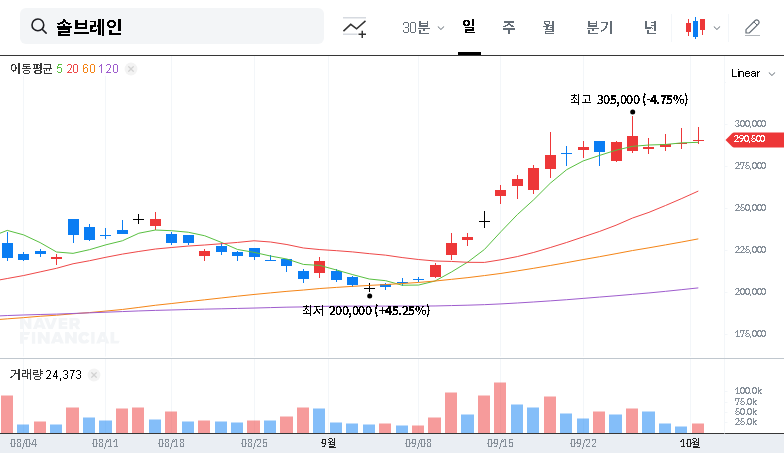
Tag: Solbrain

  • (357780) Solbrain Stock Analysis: NPS Acquires 5% Stake – Full Breakdown for Investors

    (357780) Solbrain Stock Analysis: NPS Acquires 5% Stake – Full Breakdown for Investors

    This comprehensive Solbrain stock analysis delves into the recent major development where South Korea’s National Pension Service (NPS) acquired a significant 5.02% stake in the company. The news has ignited interest among investors, raising crucial questions about the future of Solbrain’s stock price and its long-term value. Is this a signal of strong future growth, or are there underlying risks to consider? This article provides a detailed breakdown of Solbrain’s fundamentals, the macroeconomic landscape, and what this pivotal investment means for you.

    We’ll explore the rationale behind the NPS investment, analyze Solbrain’s financial health, and provide a strategic outlook to help you make informed decisions about this key semiconductor materials company.

    The Landmark Investment: NPS Secures 5.02% of Solbrain

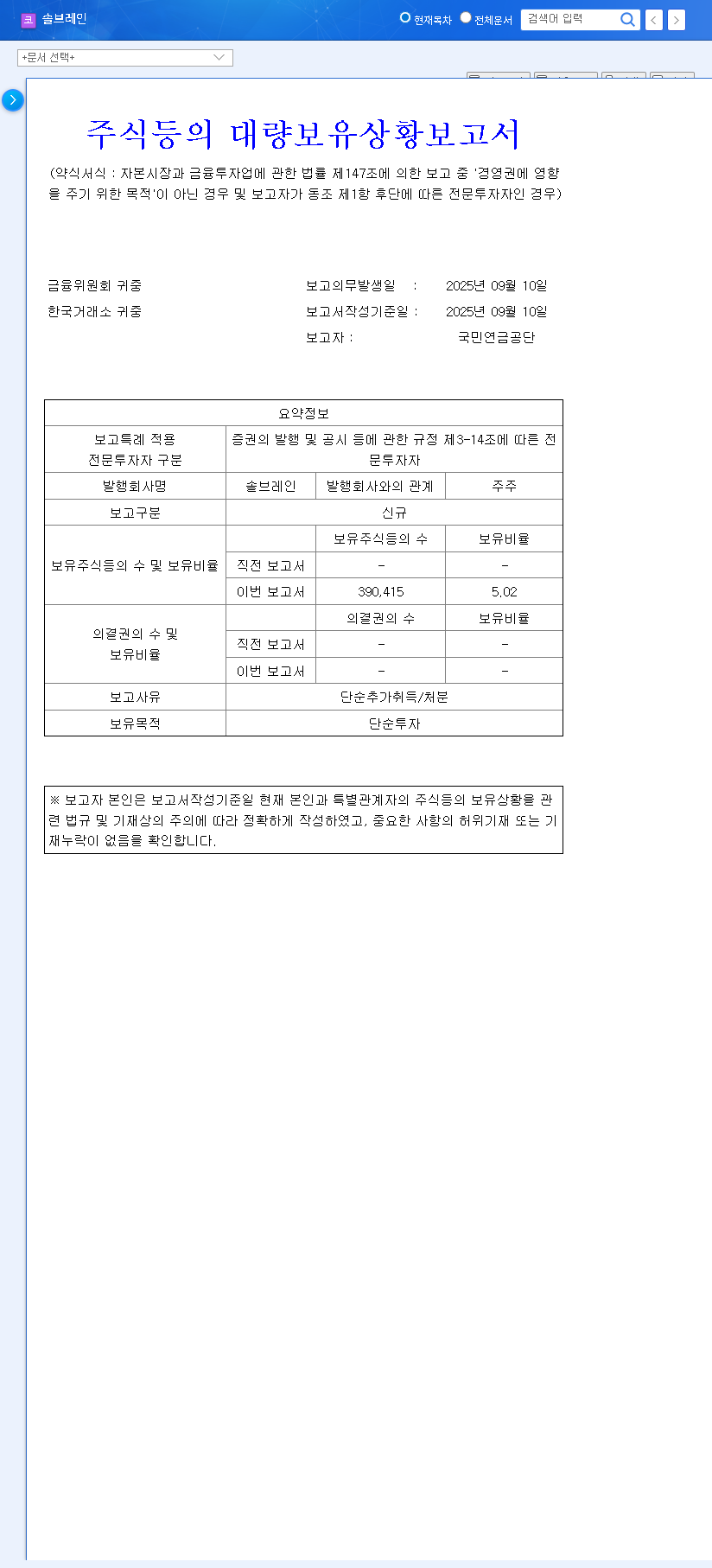
    On October 1, 2025, a significant event reshaped the shareholder landscape of Solbraine Co., Ltd. The National Pension Service (NPS), one of the world’s largest pension funds, disclosed its acquisition of a 5.02% stake. The stated purpose is for “simple investment,” meaning the fund does not intend to influence company management directly but sees strong potential for financial returns. This move by a major institutional investor serves as a powerful signal to the market, often interpreted as a vote of confidence in a company’s long-term trajectory.

    The details of this major shareholding report are publicly available. You can view the Official Disclosure on the DART system for complete transparency.

    Deep Dive: A Complete Solbrain Stock Analysis for H1 2025

    To understand the NPS’s decision, we must conduct a thorough Solbrain stock analysis, starting with its core fundamentals. Solbrain is a pivotal player in the high-tech supply chain, manufacturing critical chemical materials for semiconductors, displays, and next-generation secondary batteries. The semiconductor division is its powerhouse, contributing over 81% of total revenue.

    Financial Health: Growth & Red Flags

    Solbrain’s financial statements present a mixed picture of robust growth alongside emerging risks that investors must monitor closely.

    • Asset Growth: Total assets grew by a healthy 14.85% year-over-year, reaching KRW 1.34 trillion, a clear indicator of expansion.
    • Liability Concerns: Total liabilities surged by a significant 109.78% to KRW 275.5 billion. This sharp increase, particularly in non-current liabilities, is a critical risk factor requiring diligent oversight.
    • Profitability Squeeze: Both operating profit margin (12.83%) and net profit margin (10.40%) have seen a decline, suggesting potential pressure on pricing or rising operational costs.

    While the NPS investment is a positive signal, the rising debt and shrinking margins are fundamental weaknesses that cannot be ignored. A truly smart investment strategy involves weighing both sides of the coin.

    Growth Drivers and Competitive Moat

    Solbrain’s future success hinges on its ability to innovate and outpace competitors in a fast-moving industry. The company’s investment in Research & Development (R&D) is a promising sign, with 4.46% of revenue dedicated to securing future growth engines. This is vital in the semiconductor materials sector, where technological preemption is key. However, the low utilization rates in its display (26%) and secondary battery (15%) segments represent both a challenge and an opportunity for future growth if they can be improved. Learn more about market trends by reviewing reports from high-authority sources like the Semiconductor Industry Association.

    The Broader Economic Picture: Macro Factors at Play

    No company operates in a vacuum. Broader macroeconomic trends significantly influence the Solbrain stock performance. For H1 2025, a stable KRW/USD exchange rate has been a double-edged sword, potentially boosting foreign exchange gains while increasing the cost of imported raw materials. Meanwhile, stable-to-falling interest rates in the US and Korea offer a positive tailwind, reducing the burden of interest expenses tied to the company’s increased liabilities.

    Investor Strategy: How to Approach Solbrain Stock Now

    The NPS Solbrain investment is a major catalyst, but a disciplined investment approach is paramount. Here are key considerations for your strategy:

    • Look Beyond the Headlines: The NPS stake is an event, not a fundamental change. Your focus should remain on quarterly earnings reports, especially concerning liability management and profitability trends.
    • Monitor Industry Health: The performance of the broader semiconductor and display industries will have a more substantial long-term impact on Solbraine Co Ltd than this single investment. For context, you might explore our guide on how to analyze semiconductor stocks.
    • Adopt a Cautious Stance: While the news may create short-term positive momentum, a prudent approach is to observe the market’s reaction and wait for further data from Solbrain’s upcoming financial reports before making a significant move.

    Conclusion

    In conclusion, the National Pension Service’s acquisition is a significant endorsement of Solbrain’s potential. However, this positive signal must be balanced against the clear fundamental risks of rising debt and declining profitability. Investors should use this event as a catalyst for a deeper Solbrain stock analysis, not as a standalone buy signal. A cautious, data-driven approach will be key to navigating the opportunities and risks ahead.

    Frequently Asked Questions (FAQ)

    Why did the National Pension Service acquire shares in Solbrain?

    The NPS stated its purpose as “simple investment.” This suggests their analysis points to Solbrain’s strong long-term growth potential and an opportunity for portfolio appreciation, rather than an intent to influence corporate governance.

    What is the expected impact on Solbrain’s stock price?

    Short-term, the news can boost market confidence and create positive price momentum. However, long-term performance will depend more heavily on Solbrain’s actual earnings, industry trends, and overall macroeconomic conditions.

    What are the main risks for Solbrain investors?

    The primary risks highlighted in the H1 2025 report are the dramatic increase in total liabilities and the decline in operating and net profit margins. Investors should also monitor the low utilization rates in the display and secondary battery segments.
    (357780) Solbrain Stock Analysis: NPS Acquires 5% Stake – Full Breakdown for Investors 관련 이미지
  • DNF Corp (092070) Semi-Annual Report Analysis: Uncovering Investment Opportunities Amidst Declining Performance

    1. What Happened? : Analyzing DNF’s Declining Performance

    DNF recorded sales of KRW 35.664 billion (a 10.1% decrease year-on-year) and an operating loss of KRW 17.15 billion (shift to a deficit) in the first half of 2025. This is a result of a combination of factors, including the semiconductor market downturn, customer production adjustments, increased SG&A expenses, and inventory valuation losses. Q2 results continued this negative trend, adding to investor concerns.

    2. Why Did This Happen? : Underlying Causes of the Performance Decline

    DNF’s declining performance is not solely attributed to internal factors but is also significantly influenced by external factors such as the global semiconductor market slowdown. Decreased investment and inventory adjustments by major customers have also played a significant role in the company’s worsened performance. Moreover, volatility in raw material prices and exchange rate fluctuations have added to the burden on profitability.

    3. What’s Next? : DNF’s Future and Investment Strategies

    Despite short-term challenges, DNF still holds growth potential. Positive factors include the long-term growth outlook for the semiconductor market, the change in majority shareholder to Solbrain, and the development of new materials for the growing AI and high-performance computing market. Investors should keep an eye on the semiconductor market recovery, customer investment expansion, and new technology development and commercialization.

    4. Investor Action Plan: What to Watch For

    • Short-term perspective: Whether performance improves, cost management strategies, synergy effects with Solbrain
    • Mid- to long-term perspective: Timing of the semiconductor market recovery, success of new material development and commercialization, changes in the competitive landscape

    While the short-term performance decline is a cause for concern, investors should develop prudent investment strategies considering the long-term growth potential.

    Frequently Asked Questions

    What is DNF’s main business?

    DNF specializes in producing thin-film materials (especially DPT products) used in semiconductor processes. They supply their products to major domestic and international semiconductor manufacturers such as Samsung Electronics and SK Hynix.

    What are the key takeaways from this semi-annual report?

    Performance significantly deteriorated with declining sales and a shift to an operating loss. The main causes are analyzed to be the semiconductor market slowdown and reduced customer investment.

    What is the outlook for DNF?

    While sluggish performance is expected in the short term, the company still maintains high growth potential in the mid- to long term due to the long-term growth of the semiconductor market and new technology development.

  • Solbrain (357780) IR Analysis: AI Semiconductor Boom vs. Display Risks, Investment Strategy?

    1. Solbrain’s Q1 2025 Earnings: A Mixed Bag

    Solbrain’s Q1 2025 results presented a mixed picture, with growth in the semiconductor materials segment offset by declines in display and secondary battery materials. Driven by increased demand for AI semiconductors, semiconductor material sales reached 166.968 billion KRW, accounting for 80% of total revenue. However, sales of display and secondary battery materials remained at 10% and 7%, respectively, contributing to the overall decline in revenue (209.47 billion KRW).

    2. Key Takeaways from the IR: Analyzing Future Growth Drivers and Risk Factors

    The August 18th IR is expected to focus on Solbrain’s future growth strategies and risk management plans. Investors are particularly interested in the continued growth potential of the semiconductor materials segment, the outlook for recovery in the display/secondary battery materials segment, and plans to manage risks associated with exchange rate fluctuations.

    3. Investment Implications: A Balanced Investment Strategy is Crucial

    • Positive Factors: Growth of the AI semiconductor market, solid financial structure, proactive facility investment
    • Risk Factors: Volatility in display/secondary battery material earnings, exchange rate fluctuations, dependence on major customers

    Investors should carefully consider both the growth potential and risk factors associated with Solbrain when making investment decisions. A thorough analysis of the management’s business strategies and market outlook presented at the IR is recommended, along with a long-term investment perspective.

    Frequently Asked Questions

    What are Solbrain’s main businesses?

    Solbrain manufactures materials for semiconductors, displays, and secondary batteries. The semiconductor materials business accounts for 80% of its total revenue.

    What should investors be aware of when investing in Solbrain?

    Investors should consider the volatility in display/secondary battery material earnings, exchange rate fluctuations, and dependence on major customers.

    What are Solbrain’s future growth drivers?

    Solbrain is expected to benefit from the growth of the AI semiconductor market. The development of new products in next-generation display and secondary battery materials will also be a key growth driver.

  • Fidelity’s Solbrain Stake Remains Unchanged: Short-Term Impact Minimal, Long-Term Strategy?

    1. Analyzing Fidelity’s Stake Change: Simple Adjustment or Strategic Shift?

    Fidelity sold some Solbrain shares on July 10th, but their 9.98% stake remains the same. This was reported as an adjustment due to fund restructuring, and the short-term impact on investor sentiment is expected to be minimal. However, it’s crucial to consider the possibility of a long-term shift in Fidelity’s investment strategy and monitor their future actions.

    2. Solbrain’s Fundamentals: Risks and Growth Drivers

    Solbrain’s Q1 2025 earnings were disappointing. Profitability declined across semiconductor, secondary battery, and display material sectors. Rising raw material prices and exchange rate volatility are putting pressure on earnings. However, Solbrain’s high market share (85%) in the semiconductor materials sector and the growth of AI investment offer potential growth drivers.

    3. Action Plan for Investors: Wait and See or Buy?

    Fidelity’s announcement is unlikely to significantly impact short-term stock price fluctuations. However, investors should closely monitor Solbrain’s Q2 earnings announcement and any changes in Fidelity’s future investment strategy. For investors who believe in Solbrain’s long-term growth potential, it’s crucial to carefully analyze the current situation and make informed investment decisions. Risk management through competitor analysis and scenario analysis of raw material prices and exchange rate fluctuations is essential.

    Frequently Asked Questions

    What does Fidelity’s change in Solbrain stake mean?

    This change is due to fund restructuring and is expected to have a limited impact on short-term investor sentiment. However, the possibility of a long-term strategy shift can’t be ruled out, so monitoring their future actions is important.

    What is Solbrain’s future outlook?

    While Q1 earnings were weak, Solbrain’s dominant market share in semiconductor materials and the increasing demand related to AI are positive factors. Managing risks related to external environment changes and improving profitability in secondary battery and display materials are key challenges.

    What should investors do?

    Focus on Solbrain’s fundamentals and Fidelity’s long-term investment strategy rather than short-term price fluctuations. Carefully analyze the Q2 earnings announcement and future market conditions to make informed investment decisions.