Tag: Solar Business

  • (014620) SUNG KWANG BEND IR Analysis [2025]: Q3 Performance & Stock Outlook

    (014620) SUNG KWANG BEND IR Analysis [2025]: Q3 Performance & Stock Outlook

    Investors are closely monitoring SUNG KWANG BEND CO., LTD., a pivotal player in the industrial pipe fittings market. On November 19, 2025, the company will step into the global spotlight, hosting an Investor Relations (IR) session at Morgan Stanley’s prestigious ‘Twenty-Fourth Annual Asia Pacific Summit’. This event is far more than a routine financial update; it’s a critical moment where the company’s leadership will address pressing questions about its Q3 2025 performance and outline its strategic vision for future growth.

    The central question for the market is whether SUNG KWANG BEND can navigate the crosscurrents of a booming plant market against the backdrop of a recent slowdown in profitability. This analysis will provide a comprehensive breakdown of the key factors at play, offering a detailed look into the company’s opportunities, challenges, and what investors should watch for during this crucial IR event.

    Event Details: SUNG KWANG BEND’s Global Investor Briefing

    Mark your calendars for November 19, 2025, at 09:30 AM KST. SUNG KWANG BEND CO., LTD. (market cap: KRW 762.2 billion) will present its Q3 2025 results and year-to-date performance. The session aims to provide clarity on the industry outlook for its core business—high-quality pipe fittings—and will feature an interactive Q&A session with global investors. This is a prime opportunity for the company to reinforce its value proposition and articulate its long-term growth narrative.

    The core challenge for SUNG KWANG BEND’s management is to convincingly explain the Q3 profit margin dip while highlighting a robust pipeline of future opportunities in the plant and shipbuilding sectors. Investor confidence hangs in the balance.

    Deep Dive: Business Environment & Market Dynamics

    As a leading manufacturer of technical pipe fittings like Elbows, Tees, and Reducers, SUNG KWANG BEND, along with its peer Taekwang, holds a dominant duopolistic position in the South Korean market. These components are critical for energy infrastructure, including oil refineries, chemical plants, and shipbuilding. Understanding the forces shaping these sectors is key to evaluating the company’s stock potential.

    Key Growth Drivers & Opportunities

    • Strong Plant Market Recovery: Sustained high oil prices are prompting oil-producing nations to increase capital expenditure on new plants and upgrades. According to the International Energy Agency, this trend is expected to continue, directly benefiting suppliers like SUNG KWANG BEND.
    • Booming Shipbuilding & Offshore Sector: A record-breaking order book for LNG carriers and large container ships provides a stable and highly profitable revenue stream. The company’s specialized fittings are essential for these complex vessels.
    • Emerging Solar Business: From Q3 2025, the company’s new solar power venture is expected to begin contributing to revenue. This not only diversifies income but also enhances its ESG (Environmental, Social, and Governance) profile, attracting a wider pool of investors.
    • Shareholder-Friendly Policies: The recent cancellation of treasury stock signals a commitment to enhancing shareholder value, which can significantly boost investor confidence and support the stock price.

    Risk Factors & Investor Concerns

    • Q3 Profitability Slowdown: While revenue grew 10.0% YoY to KRW 186.4 billion, operating profit declined, with the margin falling to 17.84%. This was primarily due to higher SG&A costs. The IR must provide a clear path to margin recovery. For a complete financial breakdown, investors can refer to the Official Disclosure on the DART system.
    • Currency Exchange Volatility: With a significant portion of assets and liabilities in USD, fluctuations in the KRW/USD exchange rate pose a tangible risk to financial performance. A clear hedging strategy is needed.
    • Macroeconomic Headwinds: Global concerns about persistent inflation, high interest rates, and a potential economic slowdown could delay new projects and dampen investment sentiment across SUNG KWANG BEND’s end markets.

    Investor Strategy: Key Items to Watch in the IR

    Astute investors should use this IR to look beyond the headlines and assess the underlying health and strategy of SUNG KWANG BEND. Focus your attention on management’s commentary regarding the following four areas:

    1. 1.Profit Margin Recovery Plan: Are there specific, actionable plans for cost control and operational efficiency to restore operating margins to previous levels?
    2. 2.Long-Term Order Outlook: What is the company’s visibility on mid-to-long-term demand from its core shipbuilding and plant customers?
    3. 3.New Business Roadmap: How significant will the solar business be? Is there a clear roadmap for it to become a major revenue contributor?
    4. 4.Risk Mitigation Strategies: How is the company actively managing external risks, particularly foreign exchange exposure and potential macroeconomic slowdowns?

    The answers to these questions will likely determine the market’s reaction and shape the trajectory of the SUNG KWANG BEND stock in the months to come. By preparing in advance, you can better interpret the information presented. For more foundational knowledge, you can learn how to analyze industrial stocks here.

    Ultimately, the responsibility for all investment decisions lies with the individual investor. This analysis is intended to provide context and highlight key areas for due diligence.

    (014620) SUNG KWANG BEND IR Analysis [2025]: Q3 Performance & Stock Outlook 관련 이미지
  • (066130) HAATZ Inc. Q3 2025 Loss: In-Depth Stock Analysis & Investor Guide

    (066130) HAATZ Inc. Q3 2025 Loss: In-Depth Stock Analysis & Investor Guide

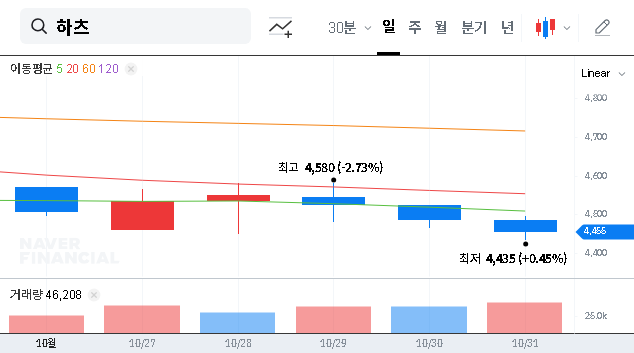
    The recent announcement of the HAATZ Inc. Q3 2025 loss has sent shockwaves through the investment community, raising urgent questions about the company’s trajectory. For a firm previously lauded for its stable business model and promising expansion plans, this sudden shift to unprofitability is a significant cause for concern. This earnings report is more than just a set of numbers; it’s a critical event that will likely influence not only short-term stock prices but also the long-term perception of HAATZ’s corporate value. This comprehensive guide will provide a deep-dive analysis into the factors behind this performance, evaluate the macroeconomic context, and offer actionable insights for investors navigating this turbulent period.

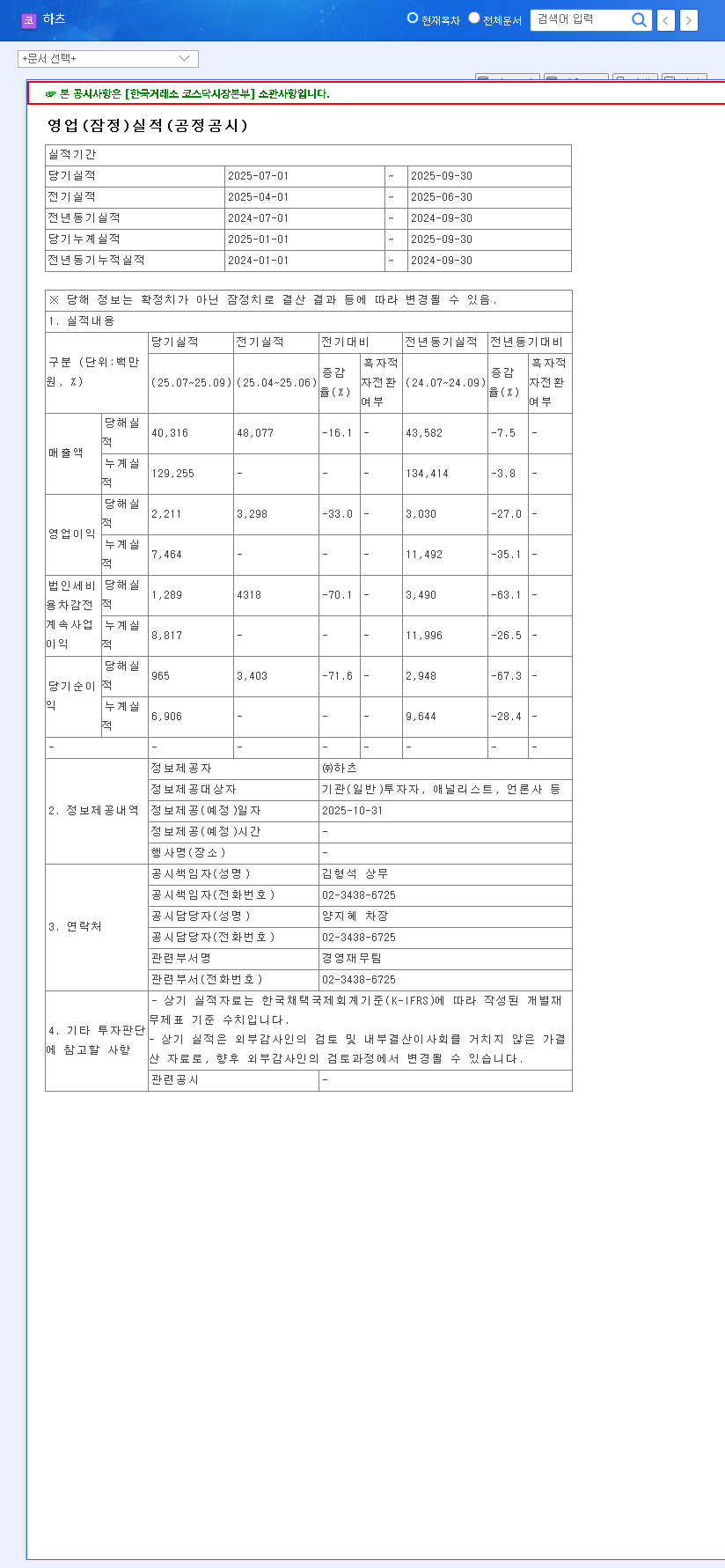
    The Q3 report revealed a staggering operating loss of -2.3 billion KRW, a stark reversal from the 3.4 billion KRW profit in the previous quarter. This dramatic downturn demands a thorough investigation into its root causes and future implications.

    Deconstructing the Q3 2025 Financial Meltdown

    HAATZ Inc.’s preliminary earnings for the third quarter of 2025 fell drastically short of market expectations. The company reported a revenue of -100.8 billion KRW, an operating loss of -2.3 billion KRW, and a net loss of -4.2 billion KRW. This performance represents a severe decline from Q2 2025, which saw a healthy operating profit of 3.4 billion KRW. The comparison to the same period last year (Q3 2024), which posted a 3.0 billion KRW operating profit, further highlights the gravity of this financial slump. These figures, taken directly from the company’s filing, paint a clear picture of a sudden and unexpected challenge. You can review the complete financial data in the Official Disclosure (DART report).

    Why the Sudden Decline? A Multi-Factor Analysis

    The poor HAATZ Inc. Q3 2025 loss is not the result of a single issue, but rather a perfect storm of internal and external pressures. Understanding these interconnected factors is crucial for a complete HAATZ stock analysis.

    Core Business and Macroeconomic Headwinds

    Several elements converged to negatively impact HAATZ’s profitability:

    • Seasonal & Cyclical Pressures: The core business of kitchen appliances and ventilation systems is inherently tied to the construction market, which experienced a seasonal slowdown and potential project delays in Q3.
    • Macroeconomic Volatility: Global economic instability, as reported by sources like Reuters, has led to volatile exchange rates and rising interest rates. While HAATZ has minimal foreign currency exposure, the company projects an annual interest cost increase of 168 million KRW for every 100bp rate hike, directly squeezing margins.
    • Intensified Competition: The domestic market has become increasingly competitive, forcing higher marketing expenditures and creating downward pressure on pricing, which erodes profitability.

    The Cost of Future Growth

    HAATZ has been actively investing in new ventures to secure future growth, but these investments come with significant upfront costs that were reflected in the Q3 results. The 1.16 billion KRW investment in a new solar power business and costs associated with the new BOSCH dealership agreement have temporarily weighed on the bottom line. While strategically sound for the long term, the market’s short-term reaction to the associated costs has been negative.

    Outlook for HAATZ Stock and Investor Strategy

    The unexpected deficit is poised to have a significant, negative short-term impact on HAATZ’s stock price. Investor sentiment has soured, and confidence has been shaken. However, a balanced view is necessary. For a different perspective, you can read our previous analysis of HAATZ’s Q2 performance. The company still possesses a stable financial foundation (28.7% debt-to-equity ratio as of H1 2025) and a strong core business. The long-term value will depend on how effectively management can navigate this downturn and prove the viability of its new ventures.

    Investor Action Plan: A Prudent Approach

    In light of the HAATZ Inc. Q3 2025 loss, a conservative and watchful approach is recommended. This investor guide suggests focusing on the following areas:

    • Scrutinize Q4 Results: Pay close attention to the upcoming Q4 earnings call for a clear explanation of the Q3 issues and concrete steps for a turnaround. Look for signs of margin recovery.
    • Analyze New Venture ROI: Monitor the progress and initial revenue generation from the solar and BOSCH businesses. Are they on track to contribute positively to the bottom line?
    • Monitor Financial Health: Keep an eye on the company’s debt levels and interest expense coverage, especially if interest rates continue to pose a threat.
    • Track Litigation Risks: Stay informed on the outcomes of ongoing lawsuits, as they could present further financial liabilities for the company.

    Ultimately, navigating this period requires diligence. While the Q3 results are alarming, HAATZ’s foundational strengths and strategic investments could pave the way for a future recovery. The coming quarters will be pivotal in determining the company’s long-term success.

    (066130) HAATZ Inc. Q3 2025 Loss: In-Depth Stock Analysis & Investor Guide 관련 이미지
  • (002880) Daeyu Atec Stock Analysis: Donggang Holdings Increases Stake – What Investors Need to Know

    (002880) Daeyu Atec Stock Analysis: Donggang Holdings Increases Stake – What Investors Need to Know

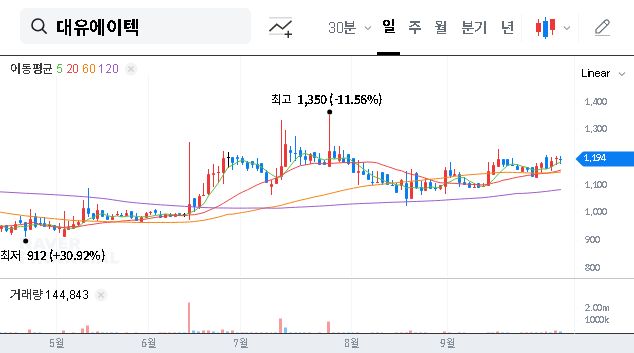
    The recent news surrounding Daeyu Atec (122014400512), a key player in the automotive components industry, has captured significant market attention. This interest was sparked by a pivotal announcement: its largest shareholder, Donggang Holdings, executed a shareholder stake increase. While such moves are often seen as a vote of confidence, savvy investors are asking the critical questions: What does this mean for Daeyu Atec’s future, its stock performance, and overall corporate strategy? This comprehensive analysis will dissect the implications of this development, evaluate the company’s current financial health, and provide a clear roadmap for investors navigating this evolving situation.

    We’ll move beyond the headlines to offer a deep-dive, mid-to-long-term perspective on the opportunities and risks associated with Daeyu Atec stock following this strategic move by its principal investor.

    The Official Disclosure: Analyzing the Donggang Holdings Stake Increase

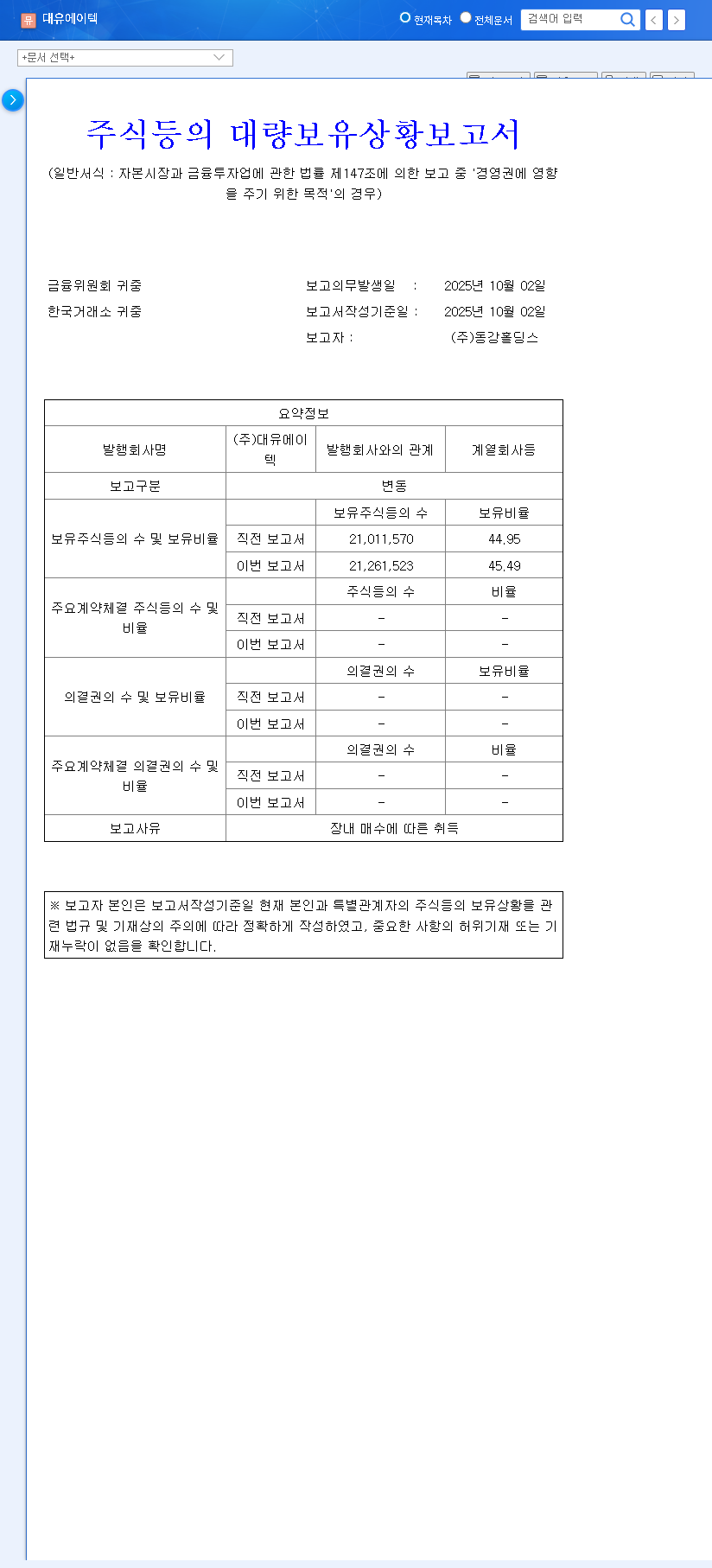
    On October 2, 2025, a significant filing was made public. According to the Official Disclosure (Source), Donggang Holdings increased its ownership in Daeyu Atec from 44.95% to 45.49%. While a 0.54 percentage point increase may seem modest, the crucial detail lies in the stated objective: ‘management influence.’ This declaration signals a clear intent from Donggang Holdings to play a more active and direct role in steering Daeyu Atec’s corporate direction, moving beyond a passive investment. At the time of this report, Daeyu Atec’s market capitalization was approximately KRW 55.8 billion, making this a noteworthy strategic maneuver.

    The key takeaway is not just the increased ownership, but the explicit goal of ‘management influence,’ which suggests a more hands-on approach from Donggang Holdings is imminent. This could lead to significant shifts in strategy, governance, and operational focus.

    Deep Dive: Daeyu Atec’s Financial Health (H1 2025 Report)

    To understand the true impact of this shareholder stake increase, we must look under the hood at Daeyu Atec’s core fundamentals. The company presents a mixed financial picture, with promising growth drivers shadowed by significant challenges.

    Strengths & Opportunities

    • Steady Revenue Stream: Consolidated revenue saw a slight year-over-year increase of 0.54% to KRW 300.3 billion, indicating stable demand for its automotive components.
    • Diversifying Portfolio: The company is successfully supplying parts for new and popular vehicle models like the Casper and the upcoming Ioniq 9, reducing reliance on older product lines.
    • Future-Facing Ventures: By adding solar power generation to its business objectives, Daeyu Atec is actively seeking new growth engines beyond the traditional automotive sector.
    • High Operational Efficiency: A consolidated operating rate of 99.4% suggests that its manufacturing facilities are running at near-full capacity, maximizing asset utilization.

    Weaknesses & Threats

    • Eroding Profitability: A significant concern is the sharp decline in profits. Operating profit fell 11.8% to KRW 21.1 billion, and net profit plummeted by 66.4% to KRW 4.2 billion, squeezed by rising costs.
    • Heavy Debt Load: Total borrowings stand at a substantial KRW 136.7 billion. The total equity to borrowings ratio of 281.13% signals high leverage, which can be risky in a high-interest-rate environment.
    • Liquidity Concerns: A rise in current liabilities points to potential short-term cash flow pressures, making effective liquidity management a top priority for the company.
    • Macroeconomic Headwinds: As an exporter, Daeyu Atec is exposed to exchange rate volatility (KRW/EUR), and persistent high interest rates globally can further strain its financial position. For more details on market trends, investors often consult sources like Reuters Business.

    What This Means for Daeyu Atec Stock Investors

    The shareholder stake increase by Donggang Holdings creates a duality of short-term sentiment and long-term reality. In the immediate term, the market may react positively, interpreting the move as a sign of undervaluation and a commitment to unlocking value. This could fuel a temporary rise in the Daeyu Atec stock price.

    However, sustainable, long-term growth hinges entirely on whether Donggang Holdings’ increased influence can translate into tangible improvements in the company’s fundamentals. The critical question is: can the new management direction solve the core issues of high debt and shrinking profit margins? Success will depend on creating real synergy, potentially by leveraging Donggang’s network to bolster Daeyu’s new solar venture or streamline its core automotive components business. For more on this, check out our internal guide to analyzing corporate fundamentals.

    Investor Action Plan & Key Monitoring Points

    A prudent investment strategy requires careful monitoring. While the stabilized management structure is a plus, the underlying financial weaknesses cannot be ignored. Investors should watch for the following developments:

    • Detailed Strategic Announcements: Look for clear, actionable plans from Donggang Holdings regarding debt reduction, profitability improvement, and the strategic direction for new business ventures.
    • Quarterly Financial Reports: Scrutinize upcoming earnings reports for any signs of a turnaround in profit margins and a reduction in the company’s debt load.
    • Management Changes and Governance: Pay attention to any new executive appointments or changes to the board that could signal a shift in corporate culture and operational priorities.

    In conclusion, Donggang Holdings’ increased stake in Daeyu Atec is a significant catalyst, but it is not a magic bullet. It creates a window of opportunity for positive change, but the heavy lifting of financial and operational improvement is just beginning. Cautious optimism, coupled with diligent monitoring, is the most advisable approach for any investor considering Daeyu Atec stock.

    (002880) Daeyu Atec Stock Analysis: Donggang Holdings Increases Stake - What Investors Need to Know 관련 이미지