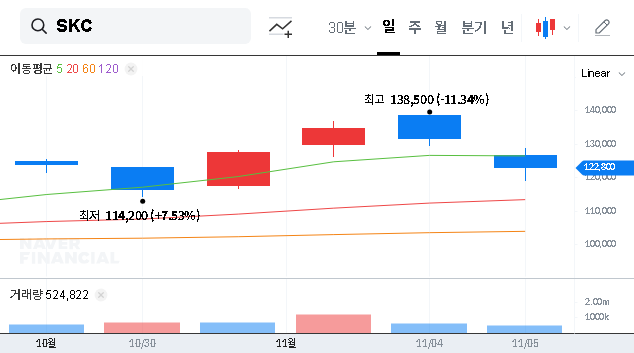
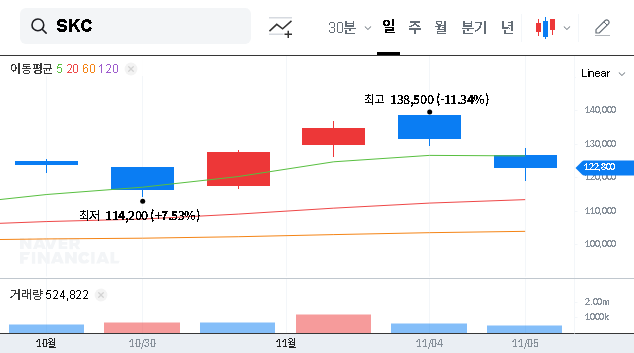
Tag: SKC LTD

  • (011790) SKC LTD Divestiture: Analysis of the SK PIC Global Sale & Future Strategy

    (011790) SKC LTD Divestiture: Analysis of the SK PIC Global Sale & Future Strategy

    The recent news surrounding the potential SKC LTD divestiture of its subsidiary, SK PIC Global, has sent ripples through the investment community. This isn’t just a simple asset sale; it’s a clear signal of a major strategic pivot, representing a fundamental realignment of SKC’s business portfolio toward high-growth industries. For investors, this moment is critical, filled with both immense opportunity and significant risk.

    This comprehensive analysis will unpack the layers of this strategic move. We will explore the motivations behind the SK PIC Global sale, evaluate the company’s shift towards future growth drivers, and assess the potential impact on SKC’s financial health and stock performance. Our goal is to provide investors with the detailed insights needed to navigate this transformative period.

    What’s Driving the SKC LTD Divestiture?

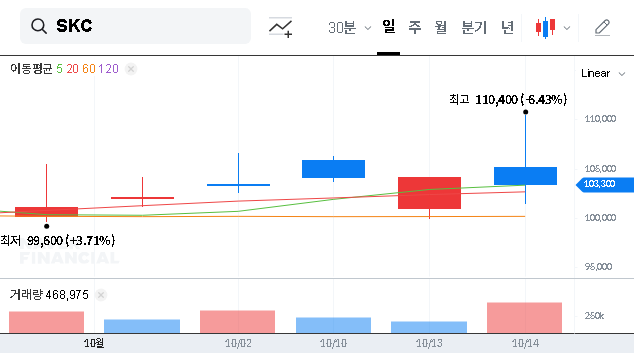
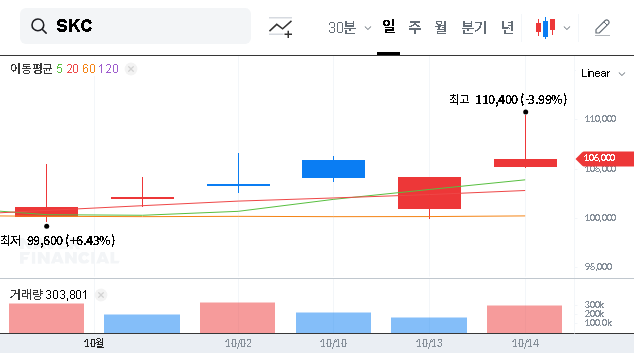
    On October 14, 2025, reports surfaced suggesting that SKC LTD had initiated the process to sell its stake in SK PIC Global, a key player in its chemical business segment. While the company has been cautious in its public statements, the underlying strategy is clear: streamline operations and redeploy capital into more promising sectors.

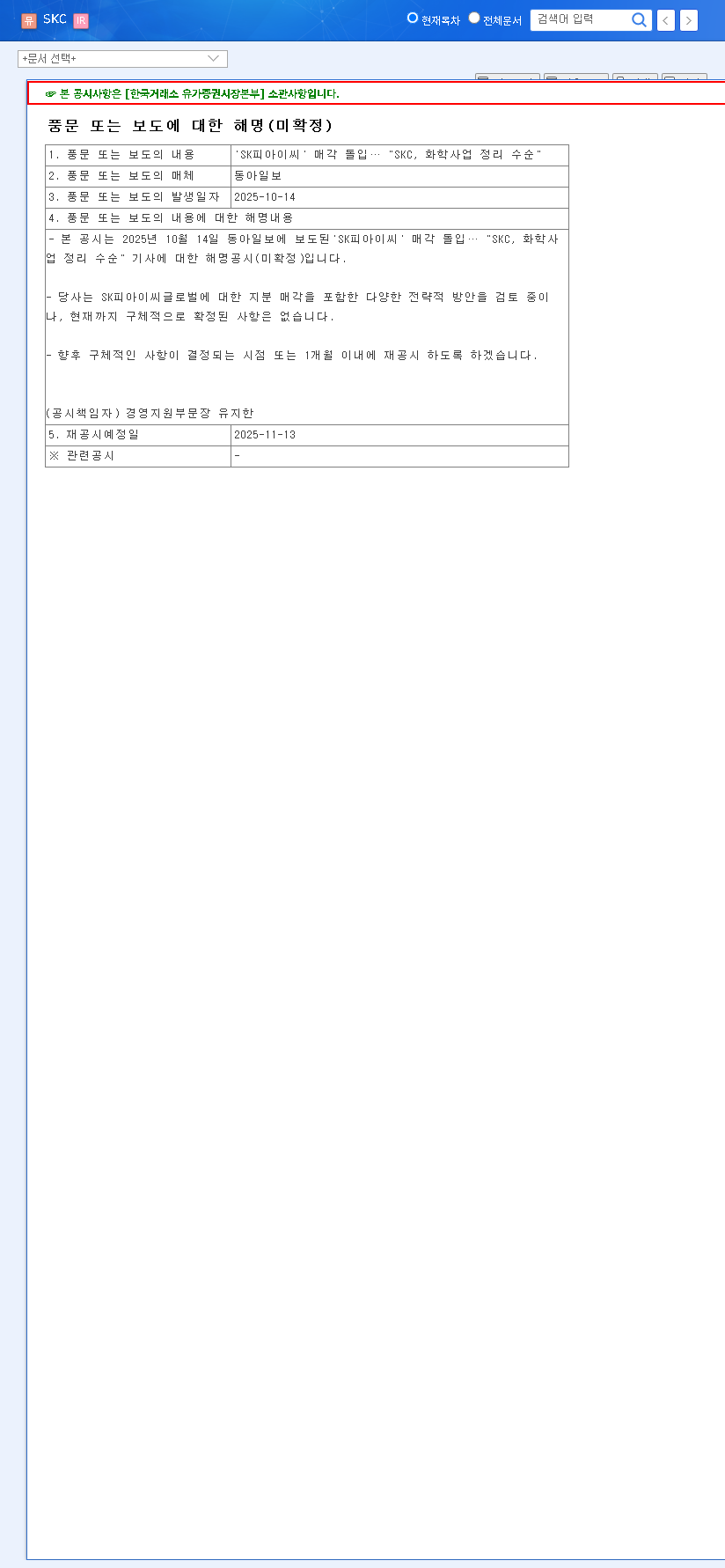
    According to its official disclosure, SKC LTD is “reviewing various strategic options to enhance corporate value, including the sale of our stake in SK PIC Global, but nothing has been definitively confirmed at this time.” A follow-up disclosure is expected within three months. (Official Disclosure)

    Strategic Pivot: A Focus on High-Growth Sectors

    The core motivation behind this SKC LTD divestiture is a deliberate shift away from the traditional, cyclical chemical industry towards markets with exponential growth potential. This SKC portfolio realignment is focused on two key areas:

    Future Growth Drivers: Batteries & Semiconductors

    • Secondary Battery Materials: With the global explosion in electric vehicle (EV) demand, materials like copper foil (a core product of SKC’s subsidiary SK Nexilis) are critical components. Focusing here allows SKC to ride a powerful secular growth wave.
    • Semiconductor Materials: The rise of AI, data centers, and advanced computing has created immense demand for high-performance semiconductor components like test sockets and blank masks. This is a high-margin business central to modern technology.

    However, this strategic shift is not without its challenges. The chemical business, while less dynamic, has been a stable source of revenue. Its sale could lead to short-term revenue declines and earnings volatility until the newer businesses can fully scale and achieve consistent profitability.

    Analyzing the Financial Ripple Effects

    The financial implications of the SK PIC Global sale are profound. A successful transaction could significantly de-leverage the company’s balance sheet and provide a substantial cash infusion for future investments.

    Improving Financial Health

    As of the first half of 2025, SKC’s debt-to-equity ratio stood at a high 188.47%. The proceeds from the divestiture could be used to pay down debt, reducing interest expenses and strengthening the company’s financial foundation. This improved stability is crucial as the company navigates the capital-intensive expansion of its battery and semiconductor operations.

    Navigating Macroeconomic Headwinds

    SKC operates in a complex global environment. Investors must monitor several macroeconomic factors:

    • Currency Fluctuations: As a major exporter and importer, SKC’s profitability is highly sensitive to changes in the USD/KRW exchange rate.
    • Interest Rates: Global interest rate policies directly affect the company’s borrowing costs and overall financial burden.
    • Commodity Prices: While the chemical business divestiture reduces direct exposure, prices of raw materials for battery components remain a key cost factor.

    Investment Outlook: An In-Depth SKC Stock Analysis

    The SKC LTD divestiture marks a pivotal moment, requiring a balanced SKC stock analysis. While the long-term vision is compelling, near-term uncertainties warrant a cautious approach. For further reading, consider this deep dive into the semiconductor materials market.

    The Bull Case (Potential Upside)

    • Enhanced Corporate Value: Focusing on high-growth markets could lead to a significant re-rating of the company’s valuation over the long term.
    • Improved Financials: A successful sale would clean up the balance sheet, reduce financial risk, and provide capital for growth.
    • Higher Profit Margins: The battery and semiconductor businesses have the potential for much higher profitability than the legacy chemical segment.

    The Bear Case (Potential Risks)

    • Execution Risk: The success of the pivot depends on flawlessly executing the global expansion of new businesses, which faces intense competition.
    • Short-Term Profitability Gap: The new businesses are still facing operating losses, and it may take time for them to offset the lost earnings from the chemical division.
    • Market Volatility: The growth sectors SKC is targeting are subject to market cycles and technological shifts, as reported by industry analysts like Bloomberg.

    Key Questions for Investors

    As SKC LTD moves forward, investors should seek answers to the following questions:

    What are the main reasons for the potential divestiture?

    The primary goal is to sharpen the company’s focus on high-growth sectors like secondary battery materials (copper foil) and semiconductor materials, unlocking long-term corporate value by moving away from the more traditional chemical business.

    How might this impact SKC LTD’s stock price?

    In the short term, uncertainty may cause stock volatility. However, if the market views the business restructuring as a positive strategic shift, it could lead to long-term optimism. The final sale terms and future performance of the core businesses will be the ultimate drivers.

    What should investors monitor going forward?

    Key items to watch include the specific details of the SK PIC Global sale (price, terms), the profitability trajectory of the battery and semiconductor divisions, the company’s overall cost management, and the impact of macroeconomic trends on business operations.
    (011790) SKC LTD Divestiture: Analysis of the SK PIC Global Sale & Future Strategy 관련 이미지
  • (011790) SKC LTD Earnings Q3 2025: In-Depth Analysis of Underperformance & Stock Outlook

    (011790) SKC LTD Earnings Q3 2025: In-Depth Analysis of Underperformance & Stock Outlook

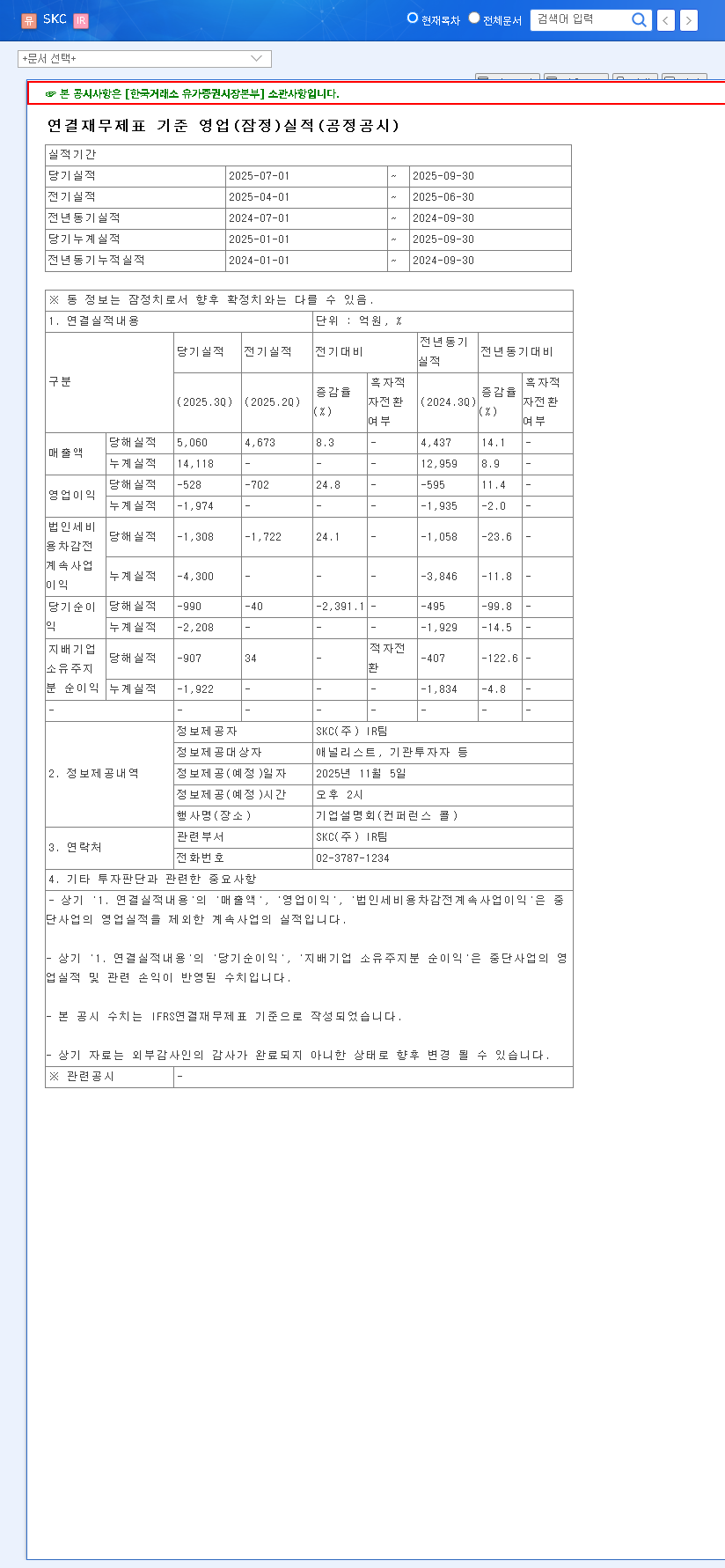
    The latest SKC LTD earnings report for Q3 2025 has sent significant ripples through the investment community, revealing a stark underperformance that widely missed market expectations. With mounting operating losses and declining revenue, investors are questioning the path forward for the materials giant. This comprehensive analysis unpacks the official SKC LTD financial results, explores the structural issues plaguing its core businesses, and provides a clear-eyed view of its future outlook and what it means for the company’s stock.

    Dissecting the Q3 2025 SKC LTD Earnings Report

    SKC LTD’s preliminary Q3 2025 results painted a challenging picture, marking its third consecutive quarter of operating losses. The numbers highlight a significant downturn compared to the previous year and fell far short of consensus estimates, triggering concerns about the company’s near-term profitability and financial stability.

    Key Financial Highlights:
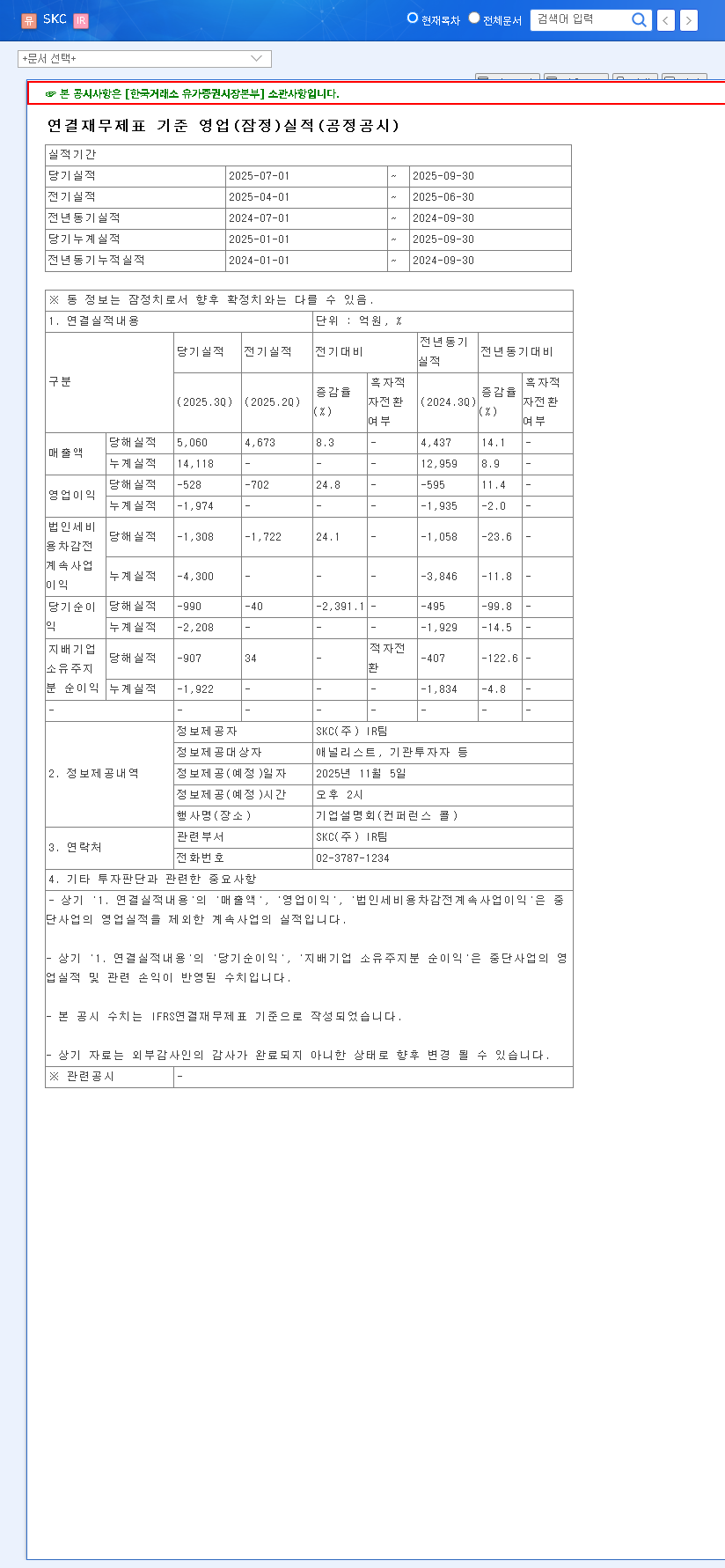
    Consolidated Revenue: KRW 506 billion (a 70.5% decrease year-on-year).
    Operating Loss: KRW 52.8 billion (a stark reversal from a KRW 276.8 billion profit in the prior year).
    Net Loss: KRW 90.7 billion.
    Debt-to-Equity Ratio: 188%, indicating significant financial leverage.

    This performance points to deep-seated issues within SKC’s primary business segments. For a complete breakdown of the financial data, investors can refer to the Official Disclosure filed with DART, which provides granular detail on the company’s filings.

    What’s Behind the Underperformance? A Sector-by-Sector Breakdown

    The poor SKC LTD earnings are not the result of a single issue but a confluence of challenges across its main divisions, compounded by macroeconomic pressures.

    Secondary Battery Materials: A Perfect Storm

    The secondary battery materials business, once a key growth driver, is now facing a perfect storm. A notable slowdown in the global Electric Vehicle (EV) market, as detailed by sources like BloombergNEF, has led to widespread inventory adjustments by battery cell makers. This directly impacted SK Nexilis, whose copper foil plant in Poland operated at a mere 58.6% utilization. This low rate drastically increases the fixed cost burden per unit produced, crushing profitability in a market already experiencing intense price competition.

    Semiconductor Materials: Cyclical Downturns and Integration Questions

    Similarly, the semiconductor materials business is suffering from the well-documented global industry downturn. With a low utilization rate of just 21.7%, fixed costs have become a major drain. Furthermore, the recent high-profile acquisition of ISC, intended to bolster its post-process business, is now under scrutiny. Investors are expressing concerns about the potential for weakened synergy and a longer-than-expected path to profitability improvement, a common challenge discussed in our article on successful M&A integration strategies.

    Macroeconomic and Financial Headwinds

    Broad economic factors are exacerbating the company’s internal challenges. Volatile raw material prices and slowing global demand are squeezing margins across the board. More alarmingly, SKC’s high debt-to-equity ratio of 188% becomes a significant risk in a rising interest rate environment. This increases the company’s interest burden and strains its financial stability. Adverse currency fluctuations, particularly the appreciation of the KRW against the USD and EUR, also negatively impact a company with substantial foreign currency dealings.

    The Road Ahead: Future Outlook for SKC LTD

    Despite the grim Q3 results, SKC LTD is actively pursuing a long-term strategy to navigate these challenges. However, the path to recovery is fraught with uncertainty.

    Strategic Investments for Long-Term Growth

    Management is focused on securing new growth engines by investing heavily in next-generation technologies. Key initiatives include the expansion of the SK Nexilis copper foil plant, a strategic investment in Nexeon to enter the high-growth silicon anode materials business, and the aforementioned acquisition of ISC for the semiconductor post-process sector. The company is also divesting non-core assets to streamline its portfolio and improve capital efficiency. These moves are designed to build a foundation for future growth, even as they strain near-term financials.

    Why a Short-Term Recovery is Unlikely

    The SKC LTD underperformance is structural, and a quick turnaround is not on the horizon. Persistent market uncertainties in both the battery and semiconductor industries mean that demand is unlikely to rebound sharply. The significant financial burden from the high debt ratio remains a major obstacle that cannot be resolved overnight. This current state negatively impacts corporate value, and any meaningful recovery in SKC LTD stock analysis will depend on a visible improvement in both performance and financial structure.

    Investor Action Plan: Key Metrics for Your Watchlist

    Given the structural difficulties and financial pressures, investors should adopt a cautious and highly vigilant approach. The following factors are critical to monitor:

    • Market Recovery Timing: Watch for signs of a rebound in the secondary battery materials market and a corresponding improvement in SK Nexilis’ plant utilization rate.
    • Synergy Realization: Monitor the integration of ISC and whether the expected synergies in the semiconductor business begin to materialize in financial reports.
    • Next-Gen Commercialization: Track progress on new ventures like silicon anodes and glass substrates, looking for successful commercialization milestones.
    • Financial Health Improvement: Look for concrete actions to improve the financial structure, such as strategic asset sales or capital increases, and their visible impact on the balance sheet.

    In conclusion, while SKC LTD is making long-term strategic bets, the immediate negative SKC LTD earnings report serves as a major deterrent. A meaningful recovery in corporate value will require tangible business achievements and a clear, sustained improvement in financial health.

    (011790) SKC LTD Earnings Q3 2025: In-Depth Analysis of Underperformance & Stock Outlook 관련 이미지
  • (011790) SKC LTD Q3 2025 Earnings Preview: A Deep Dive for Investors

    (011790) SKC LTD Q3 2025 Earnings Preview: A Deep Dive for Investors

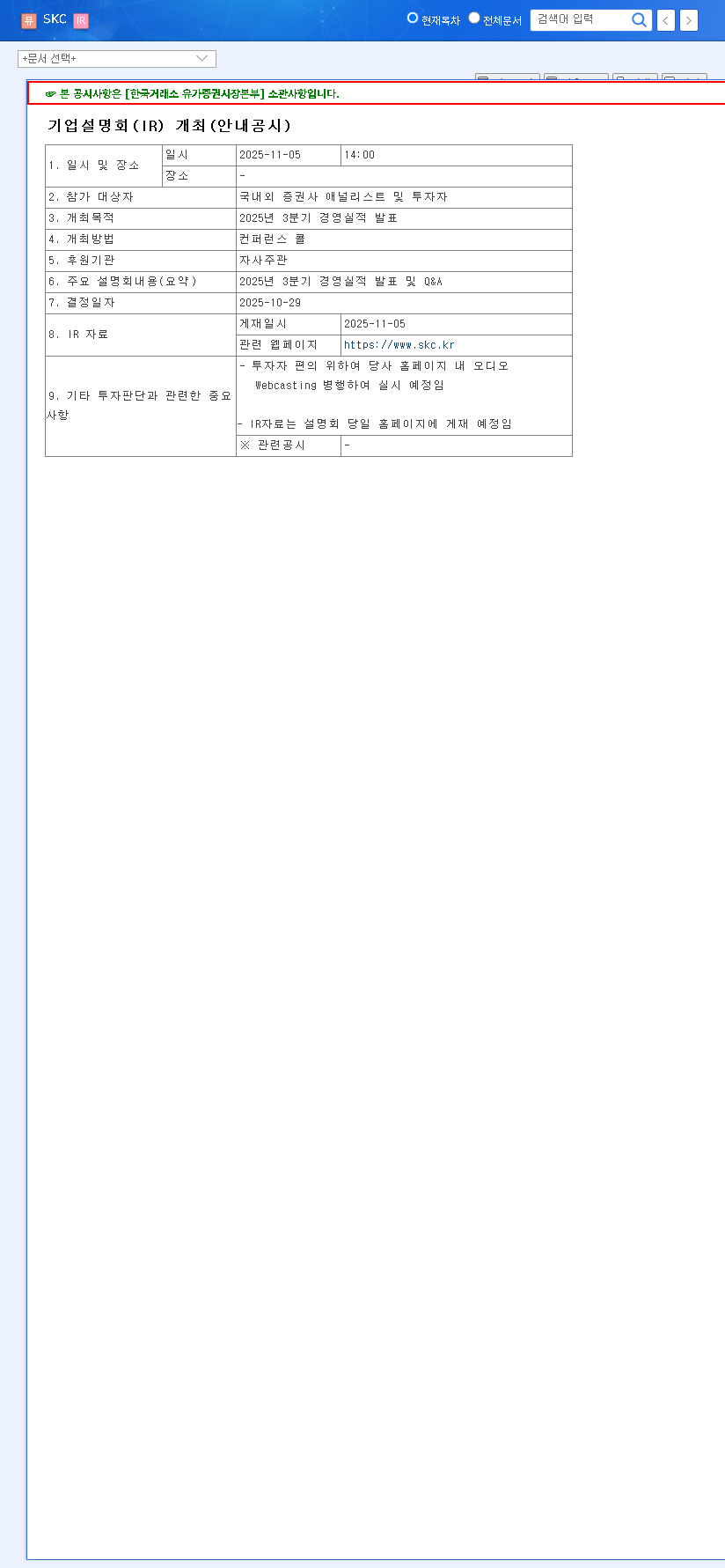
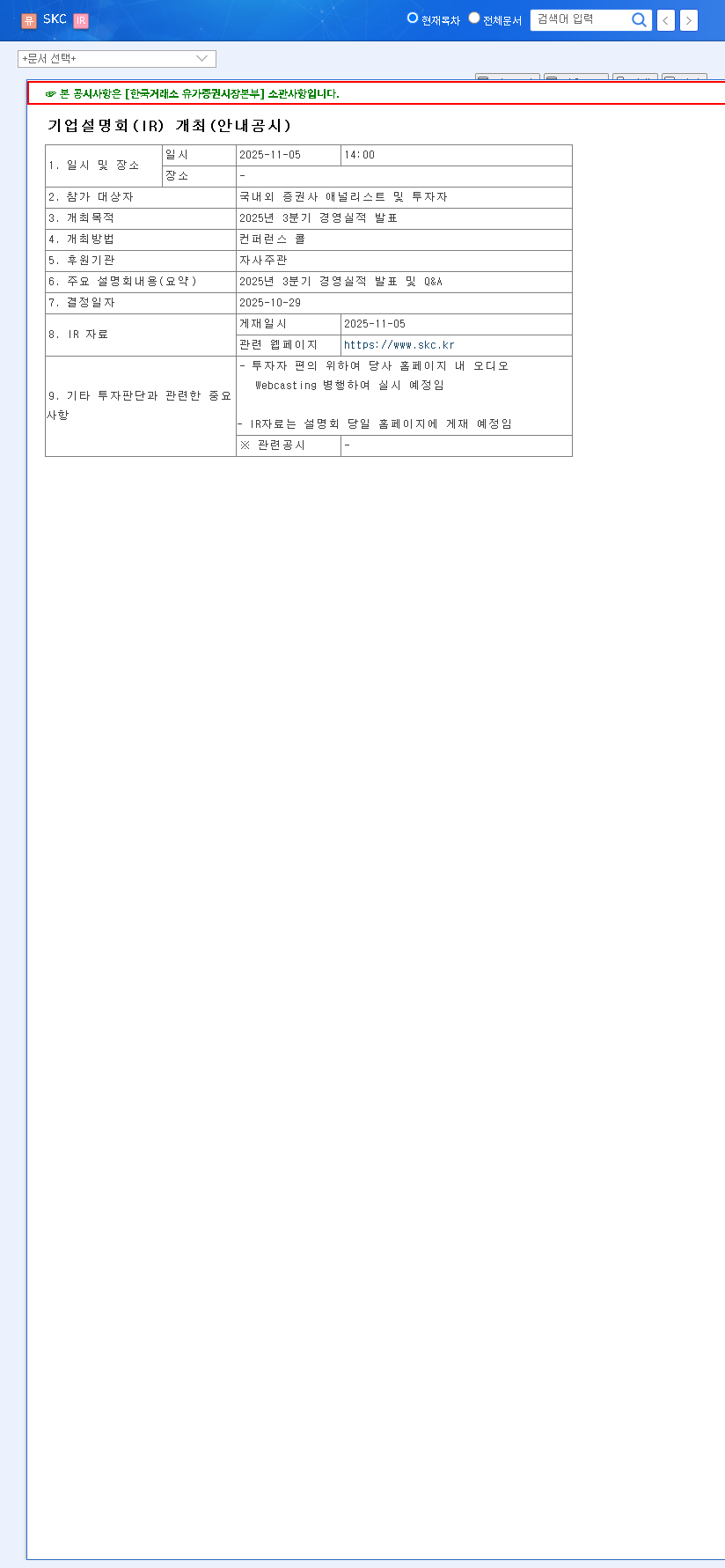
    As the November 5, 2025, conference approaches, the market is keenly anticipating the SKC LTD Q3 2025 earnings announcement. This Investor Relations (IR) event is far more than a routine financial report; it represents a critical opportunity for investors to gauge the momentum of SKC’s ambitious growth strategy, particularly in its battery and semiconductor materials divisions. This comprehensive analysis provides a forward-looking SKC LTD investment outlook, dissecting each business segment, evaluating financial health, and outlining potential market impacts to help you formulate a smart investment strategy.

    We will explore how SKC LTD’s unique competitive advantages are positioned against global economic volatility and what key metrics investors should be monitoring. From the high-growth trajectory of its copper foil business to the strategic strengthening of its semiconductor portfolio, this article offers a complete picture of what to expect.

    Deep Dive into SKC LTD’s Core Business Segments

    SKC LTD’s growth engine is powered by three primary business segments, each with distinct strengths and challenges. Understanding these is fundamental to a complete SKC LTD stock analysis.

    Battery Materials (SK Nexilis): The EV Powerhouse

    The crown jewel of SKC’s portfolio is its battery materials division, led by SK Nexilis. This segment’s phenomenal growth is directly tied to the booming global electric vehicle (EV) market, which drives immense demand for its core product: copper foil. SK Nexilis possesses world-class technology, including the mass production of ultra-thin 4㎛ copper foil, a critical component for high-density EV batteries. The ongoing capacity expansion with new plants in Malaysia and Poland is set to solidify its global leadership. However, this aggressive expansion comes with significant initial investment costs and exposes the company to intense competition and the volatility of raw material prices.

    Chemical Business (SK picglobal): Stable and Eco-Friendly

    While not as high-growth as battery materials, the chemical business provides a bedrock of stable profitability. As the sole domestic producer of Propylene Glycol (PG), SK picglobal holds a strong market position. A key competitive advantage is its eco-friendly HPPO manufacturing process, which appeals to an increasingly environmentally conscious market. The primary risk for this segment lies in its sensitivity to fluctuations in downstream industries, which can impact demand and pricing.

    Semiconductor Materials (ISC & SK Enpulse): Riding the AI Wave

    The strategic acquisition of ISC has significantly bolstered SKC’s semiconductor materials portfolio. ISC’s dominant position in the test socket market is a massive asset, especially with the explosive growth of the AI semiconductor industry. This synergy, combined with SK Enpulse’s strengths in Blank Masks and CMP Slurry, creates a formidable presence. Investors looking for insights should read our complete guide to the semiconductor supply chain. The main challenge remains the cyclical nature of the semiconductor industry and the constant threat of new competitors entering the market.

    Financial Health: Analyzing the Numbers

    The H1 2025 report revealed a nuanced financial picture. A 6.2% year-over-year revenue decrease was primarily due to a strategic restructuring of the chemical business, while the battery materials segment showed robust growth. The consolidated operating loss of KRW 144.6 billion can be interpreted as a temporary consequence of the massive capital expenditures required to build out future capacity. These investments are essential for long-term dominance.

    The company’s debt-to-equity ratio stood at a manageable 188.5%, indicating a sound underlying financial structure. Proactive measures, like issuing exchangeable bonds, demonstrate a commitment to shoring up the balance sheet. While operating cash flow was negative, overall cash reserves increased, reflecting a necessary phase of investment for securing long-term growth. For a detailed breakdown, please review the Official Disclosure: Click to view DART report.

    SKC LTD is at a pivotal crossroads, balancing aggressive, large-scale investments in future growth sectors with the need to manage near-term financial pressures. The Q3 2025 earnings report will be a key indicator of how well they are navigating this balance.

    Market Outlook: Post-IR Opportunities and Risks

    The SKC LTD Q3 2025 earnings call will likely act as a major catalyst for the stock. Here are the potential positive and negative impacts investors should anticipate.

    • Positive Catalysts: Stronger-than-expected performance from SK Nexilis, driven by its expanded capacity, could significantly boost revenue and investor confidence. Furthermore, any concrete updates on new ventures, such as the timeline for Absolics’ semiconductor glass substrates, could ignite positive sentiment by providing clear visibility into future growth drivers.
    • Risk Factors: Macroeconomic headwinds, including a global economic slowdown or persistent high interest rates, could dampen demand in the EV and semiconductor markets. Intensifying competition in the battery materials space could pressure margins, while the financial burden of new investments remains a key variable. Finally, if the results or management’s guidance fall short of market expectations, it could trigger a negative stock price reaction.

    Strategic Investment Thesis and Conclusion

    Our overall SKC LTD investment outlook remains positive (BUY), predicated on the company’s strengthening global leadership in essential, high-growth industries. The upcoming SKC LTD IR will be a crucial event to confirm this thesis.

    Long-term investors should focus on the operational progress of the new manufacturing facilities and the development pipeline for next-generation materials. Short-term traders should pay close attention to the profitability trends in the battery segment and any forward-looking guidance from management. Key areas to monitor during the call include the profitability improvement of SK Nexilis, the growth acceleration in semiconductor materials, and specific updates on new business ventures. By carefully analyzing these factors, investors can make an informed decision on how to position themselves for SKC LTD’s evolving growth story.

    (011790) SKC LTD Q3 2025 Earnings Preview: A Deep Dive for Investors 관련 이미지
  • (011790) SKC LTD Q3 2025 Earnings Preview: Deep Dive Analysis for Investors

    (011790) SKC LTD Q3 2025 Earnings Preview: Deep Dive Analysis for Investors

    The upcoming SKC LTD Q3 2025 earnings announcement and subsequent investor relations (IR) call, scheduled for November 6, 2025, at 09:00 KST, represents a pivotal moment for the company and its stakeholders. Investors are eagerly awaiting clarity on the effectiveness of SKC’s strategic business restructuring, the performance of its core divisions, and the roadmap for future growth. This event is far more than a simple financial report; it’s a critical test of management’s ability to navigate a complex market and deliver on its promises.

    This comprehensive analysis dissects the key factors influencing SKC’s performance, from the challenges in battery materials to the explosive growth in AI semiconductors. We provide an in-depth look at the fundamentals, potential catalysts, and risks to help you formulate a prudent investment strategy ahead of the official SKC investor relations briefing. All data is based on the company’s H1 2025 performance and market analysis, with further details available in the Official Disclosure.

    SKC’s Strategic Overhaul: Focusing the Portfolio

    SKC is in the midst of a significant business transformation, sharpening its focus on three core pillars: rechargeable battery materials (led by SK Nexilis), chemicals (SK picglobal), and semiconductor materials (anchored by ISC and SK Enpulse). Recent strategic divestitures, including the sale of the Fine Ceramics, CMP PAD, and FCCL businesses, are not signs of weakness but rather calculated moves to streamline operations, concentrate resources on high-growth areas, and bolster the company’s financial health. The issuance of exchangeable bonds in May 2025 further underscores this strategy, securing vital capital for future investments while managing debt.

    The core question for the Q3 2025 earnings call is whether the growth in the semiconductor division can offset the persistent headwinds in the battery materials and chemicals sectors, proving the restructuring strategy is bearing fruit.

    Deep Dive: Performance by Business Segment

    1. Rechargeable Battery Materials (SK Nexilis)

    The copper foil business, essential for EV batteries, faces a mixed reality. While long-term demand linked to the global EV transition remains a powerful tailwind, the short-term picture is challenging. An operating rate of just 58.6% in the first half of 2025 highlights issues of oversupply in the market, primarily from Chinese competitors, and a temporary slowdown in EV demand in certain regions. The expansion of its Poland plant is a strategic play for the European market, but investors will be looking for a clear plan during the SKC LTD Q3 2025 earnings call to improve utilization rates and manage production costs effectively.

    2. Chemical Business (SK picglobal)

    SKC’s chemical division, centered on Propylene Glycol (PG) and Propylene Oxide (PO), benefits from a competitive advantage with its eco-friendly HPPO manufacturing process. This has allowed it to maintain a high operating rate of 93.6%. However, the chemical industry is cyclical and currently facing sluggish global demand, which puts pressure on margins. This division’s underperformance acts as a drag on consolidated earnings, and analysts will be keen to hear about strategies for profitability improvement and market diversification.

    3. Semiconductor Materials (ISC & SK Enpulse)

    This segment is SKC’s brightest star. The explosive growth of the AI semiconductor market is a massive tailwind for ISC. As a leading producer of test sockets, which are critical components for testing high-performance chips like GPUs and AI accelerators, ISC is perfectly positioned. Its strong Q2 2025 performance was a direct result of this trend. Future growth is expected to accelerate with new supplies of module testers and test sockets. For a detailed view on market trends, check out our deep dive into the semiconductor industry. This division’s success is crucial to the overall SKC stock analysis and investment thesis.

    Financial Health & Key Metrics to Watch

    As of H1 2025, SKC’s financials tell a story of transition. While revenue increased year-over-year to KRW 9.06 trillion, the company posted an operating loss of KRW 144.6 billion. This highlights the core challenge: top-line growth isn’t yet translating to bottom-line profitability due to the struggles in battery materials and chemicals. Positively, the debt-to-equity ratio remains healthy at 76.93%, well below the company’s target of 200%, providing financial flexibility for strategic investments.

    • ISC Growth Rate: Investors will want to see continued double-digit growth and positive forward-looking statements.
    • SK Nexilis Operating Rate: Any tangible improvement or a clear roadmap to achieving higher utilization will be a major positive catalyst.
    • Profitability Margins: Look for updates on cost-cutting measures and margin improvement plans across all divisions.
    • Capital Expenditure Plans: Details on future investments, particularly in the semiconductor space, will signal long-term growth ambitions.

    Investment Outlook: A Cautious ‘Hold’

    SKC is a company with undeniable long-term potential, particularly through its exposure to the AI revolution via ISC. The commitment to restructuring and focusing on core strengths is commendable. However, the short-term profitability challenges in two of its three main businesses cannot be ignored. The market needs to see tangible proof that the turnaround is taking hold.

    Therefore, a ‘Hold’ investment opinion is warranted pending the results and guidance from the SKC LTD Q3 2025 earnings call. While the long-term growth story is compelling, a cautious and watchful approach is prudent until stabilization and performance improvements are clearly demonstrated. A positive surprise in the battery materials segment or an even stronger-than-expected forecast for semiconductors could quickly change this outlook.

    (011790) SKC LTD Q3 2025 Earnings Preview: Deep Dive Analysis for Investors 관련 이미지
  • (011790) SKC LTD Merger with SK Enpulse: A Deep Dive into Semiconductor Strategy & Financial Health

    (011790) SKC LTD Merger with SK Enpulse: A Deep Dive into Semiconductor Strategy & Financial Health

    The recent announcement of the SKC LTD merger with its highly profitable subsidiary, SK Enpulse Co., Ltd., marks a pivotal moment for the company. This strategic consolidation is far more than a simple corporate restructuring; it’s a calculated move designed to fortify SKC’s semiconductor materials division, streamline governance, and significantly improve its overall SKC financial health. For investors and market watchers, understanding the layers of this decision is key to gauging the future trajectory of SKC’s evolving business portfolio.

    This comprehensive analysis will delve into the core objectives behind the merger, its anticipated impact on financials and market position, and the key considerations for stakeholders navigating this transition. The official announcement, made on October 14, 2025, details the absorption of SK Enpulse, with SKC LTD remaining as the surviving entity. You can view the complete filing here: Official Disclosure.

    The Strategic Rationale Behind the SKC LTD Merger

    SKC LTD has articulated a clear, multi-faceted strategy for absorbing SK Enpulse. The decision is rooted in creating a more agile, financially robust, and competitive organization ready to capitalize on key industry trends.

    1. Simplifying Governance and Boosting Efficiency

    By dissolving the subsidiary structure, SKC aims to eliminate redundant administrative layers and create a leaner, more direct line of command. This simplification accelerates decision-making processes, allowing the company to respond more nimbly to market shifts. A unified structure fosters greater synergy across the entire organization, from R&D to marketing, ensuring that resources are allocated with maximum efficiency.

    2. A Direct Infusion to SKC Financial Health

    SK Enpulse has been a standout performer, posting a remarkable net profit of KRW 156.1 billion in the first half of 2025 alone. In contrast, SKC LTD faced an operating loss during the same period, burdened by heavy capital investments and fierce price competition in other sectors. This merger directly integrates SK Enpulse’s robust profits into SKC’s consolidated financial statements. This will immediately improve key profitability metrics, providing a much-needed boost to the bottom line and enhancing investor confidence in the company’s financial stability.

    This merger is a strategic financial maneuver, transforming SK Enpulse’s profitability from a subsidiary contribution into a core component of SKC’s primary earnings report.

    3. Cementing Leadership in Semiconductor Materials

    Perhaps the most critical aspect of the SKC LTD merger is the consolidation of its semiconductor materials capabilities. SK Enpulse specializes in high-value products like Blank Masks (essential for photolithography) and CMP Slurry (used for polishing wafers). Integrating this expertise directly with SKC’s existing semiconductor business—bolstered by its recent acquisition of ISC—creates a formidable, end-to-end solutions provider. This synergy is expected to accelerate innovation and strengthen SKC’s position to capitalize on the booming AI and High-Bandwidth Memory (HBM) markets, a trend analyzed by industry leaders like Gartner Research.

    Impact Analysis for Investors

    This strategic move reshapes the SKC business portfolio and presents both significant opportunities and points of consideration for investors. A balanced view is essential for making informed decisions.

    The Bull Case: Potential for Increased Corporate Value

    • Enhanced Profitability: The direct reflection of SK Enpulse’s high net profit on SKC’s books is a major positive catalyst for the stock’s valuation.
    • Semiconductor Powerhouse: A fully integrated semiconductor materials business positions SKC to capture more value from high-growth tech sectors. To learn more about our other divisions, you can read about SKC’s role in the 2nd battery market.
    • Streamlined Operations: Improved management efficiency and a simplified structure are expected to lead to better long-term performance and higher returns on investment.

    Key Considerations and Potential Risks

    • Short-Term Volatility: The market’s reaction to the merger ratio and other procedural details could cause temporary fluctuations in the stock price.
    • Integration Challenges: Successfully merging corporate cultures and operational workflows is crucial for realizing the projected synergies. Any friction could delay the benefits.
    • External Market Factors: SKC’s performance remains subject to the cyclical nature of the semiconductor industry and volatility in its other business segments, such as chemicals.

    Conclusion: A Forward-Looking Strategy

    The SKC LTD merger with SK Enpulse is a decisive and strategic step toward building a more resilient and growth-oriented company. By reinforcing its semiconductor materials business and improving its financial health, SKC is positioning itself for long-term success. While investors should remain vigilant of short-term risks and monitor the integration process, the merger’s underlying logic points to a stronger, more competitive SKC in the years to come.

    (011790) SKC LTD Merger with SK Enpulse: A Deep Dive into Semiconductor Strategy & Financial Health 관련 이미지
  • (011790) SKC LTD’s SK PIC Global Divestment: 2025 Investor Deep Dive & Stock Analysis

    (011790) SKC LTD’s SK PIC Global Divestment: 2025 Investor Deep Dive & Stock Analysis

    Recent market reports surrounding the potential SKC LTD SK PIC Global divestment have sparked significant discussion among investors. This strategic move, first highlighted by Dong-A Ilbo on October 14, 2025, is widely seen as a pivotal step in SKC LTD’s overarching plan to streamline its chemical business and double down on high-growth sectors. This comprehensive analysis breaks down the rumors, examines the company’s fundamentals, and provides a clear, actionable perspective for anyone considering an SKC LTD investment.

    Understanding this potential SKC LTD divestment is crucial, as it offers a window into the company’s future trajectory. We will explore both the promising opportunities and the inherent risks to help you make well-informed financial decisions.

    The SK PIC Global Divestment Rumors: What We Know

    The initial report claimed that the SKC LTD SK PIC Global sale was actively underway as part of a broader consolidation of the SKC LTD chemical business. In response, SKC LTD issued a clarification, stating it is reviewing various strategic options for its stake in SK PIC Global, but no final decision has been made. The company has committed to providing a further update once details are confirmed or within one month. (Source: Official Disclosure).

    SKC LTD Fundamental Analysis (Based on H1 2025 Report)

    To grasp the full context of this move, a deep dive into SKC LTD’s current financial and strategic state is essential. The company is in the midst of a significant transformation, pivoting away from legacy operations to secure its position in next-generation industries.

    Business Restructuring and Core Focus

    SKC LTD has been methodically divesting non-core assets to sharpen its focus on three key pillars: secondary battery materials (copper foil, silicon anode), advanced semiconductor materials, and eco-friendly solutions. This strategic realignment is designed to enhance competitiveness and unlock long-term value in high-growth markets.

    Financial Health and Capital Allocation

    To fuel this expansion, SKC has been actively raising capital. As of June 30, 2025, its debt-to-equity ratio improved to a healthy 76.93%. However, this aggressive investment has come at a cost. The company reported a significant consolidated net loss in the first half of the year, driven by large-scale capital expenditures and weakening profitability in its traditional chemical segments. This financial pressure likely adds urgency to the SKC LTD SK PIC Global divestment considerations.

    Market Environment and Risk Management

    Each of SKC’s core businesses operates in a dynamic environment:

    • Secondary Battery Materials: The electric vehicle market underpins gradual but steady demand for copper foil. However, SKC must navigate increasing competition from global players. For more on this sector, read our complete guide to battery material stocks.
    • Semiconductor Materials: With the boom in AI, the long-term outlook is robust. Yet, the industry is famously cyclical, exposing SKC to economic volatility, as noted by analysts at high-authority sites like Reuters Business.
    • Chemical Business: The markets for Propylene Oxide (PO) and Propylene Glycol (PG) remain steady but are highly susceptible to downturns in manufacturing and industrial demand.

    Impact Analysis: How the Sale Could Reshape SKC LTD

    The rumored SKC LTD divestment carries significant potential consequences, both positive and negative, that require careful consideration in any SKC LTD stock analysis.

    Potential Upsides: A Leaner, More Focused Company

    • Accelerated Core Business Focus: Selling SK PIC Global would free up capital and management bandwidth to pour into the high-growth battery and semiconductor divisions.
    • Improved Financial Structure: Proceeds could be used to pay down debt or fund critical R&D, directly addressing the recent net loss and improving the balance sheet.
    • Corporate Re-evaluation: Shifting away from the legacy chemical business could help the market re-evaluate SKC LTD as a forward-looking technology materials company, potentially unlocking a higher valuation multiple.

    Potential Downsides and Inherent Risks

    • Market Uncertainty: As the deal is unconfirmed, the ensuing speculation can lead to short-term stock price volatility.
    • Loss of Profit Contribution: If SK PIC Global is a significant contributor to revenue, its sale could create a short-term earnings gap that the growth businesses may not immediately fill.
    • Execution Risk: A poorly executed sale or a lower-than-expected price could limit the financial benefits and disappoint the market.

    Investment Opinion: Neutral. While SKC LTD’s long-term pivot towards future-proof industries is strategically sound, the short-term uncertainties tied to the SKC LTD SK PIC Global divestment and current financial performance warrant a cautious, observant approach.

    Conclusion and Investor Recommendations

    The potential sale of SK PIC Global is a defining moment for SKC LTD. It represents a trade-off: sacrificing a stable, cash-generating asset for a more aggressive, focused push into higher-growth markets. Long-term, this strategy is commendable. Short-term, investors must remain vigilant.

    Key Recommendations:

    • Monitor Official Disclosures: Pay close attention to SKC LTD’s follow-up announcements regarding the sale’s progress and terms.
    • Analyze Core Business Performance: Track the profitability and market share gains in the secondary battery and semiconductor segments to see if the investment is paying off.
    • Assess Macroeconomic Factors: Keep an eye on exchange rates, interest rates, and commodity prices, as they directly impact SKC’s global operations and profitability.

    (011790) SKC LTD's SK PIC Global Divestment: 2025 Investor Deep Dive & Stock Analysis 관련 이미지