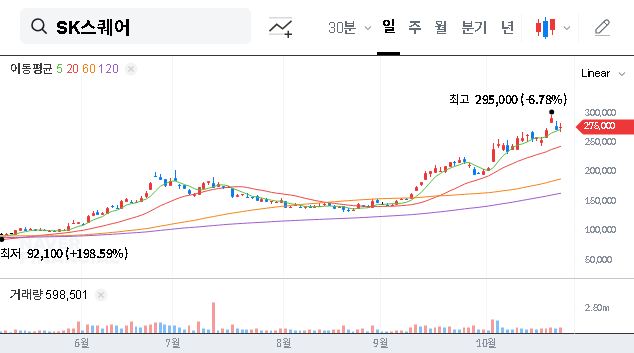
Tag: SK Hynix

  • (402340) SK Square Share Buyback: A ₩100B Strategy for Shareholder Value

    (402340) SK Square Share Buyback: A ₩100B Strategy for Shareholder Value

    The recent SK Square share buyback announcement has captured significant market attention. On November 14, 2025, the leading Korean investment firm unveiled a plan for a ₩100 billion treasury share acquisition, a move that signals more than just a short-term stock price boost. This strategic decision is deeply rooted in enhancing long-term shareholder value, motivating its workforce, and solidifying its path toward future growth, all backed by exceptionally strong company fundamentals.

    This comprehensive analysis will explore the profound implications of this share buyback on SK Square’s stock and its overall corporate valuation. We’ll examine the company’s recent Q3 earnings, the pivotal role of SK Hynix, and provide actionable insights for investors looking to understand the true value proposition behind SK Square’s decisive action.

    Unpacking the ₩100 Billion SK Square Share Buyback

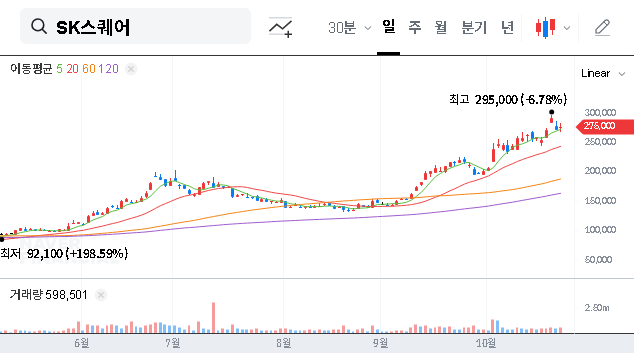
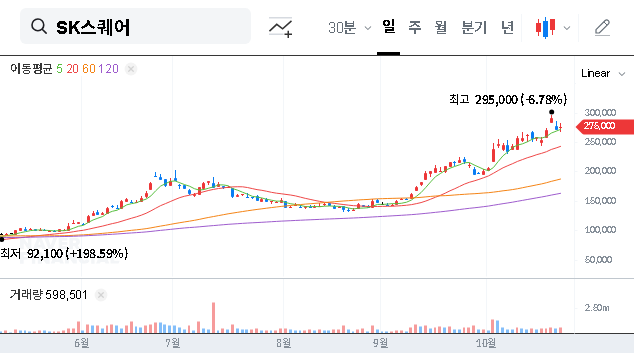
    On November 13, 2025, SK Square’s board of directors greenlit the direct market acquisition of 310,077 common shares, a transaction valued at approximately ₩100 billion. This figure represents about 0.23% of the company’s market capitalization. The official rationale, as detailed in its public filing, is twofold: to robustly enhance shareholder value and to fund employee stock compensation programs. The full details of this strategic move are available in the company’s Official Disclosure (Source: DART). This announcement is a clear and powerful statement of the company’s confidence in its own valuation and future prospects.

    This isn’t just a financial maneuver; it’s a strategic message to the market that SK Square believes its stock is undervalued and is committed to delivering tangible returns to its shareholders.

    The Strategic Rationale: Why This Buyback Matters Now

    SK Square’s decision is underpinned by a foundation of stellar financial performance and strategic foresight. The company’s Q3 2025 consolidated results were exceptionally strong, with profitability seeing a significant uplift. This success is not accidental but the result of several key factors.

    The SK Hynix Factor: An Engine of Growth

    The remarkable performance of subsidiary SK Hynix is a primary driver of SK Square’s value. SK Hynix has masterfully capitalized on the booming demand for AI servers and strengthened its competitive edge in the high-bandwidth memory (HBM) market. This directly translates to robust consolidated results and bolsters SK Square’s investment portfolio value. To understand this sector better, you can read our guide on investing in AI and semiconductor trends.

    Impeccable Financial Health

    A large-scale share buyback is only possible with a rock-solid balance sheet. SK Square boasts exceptional financial soundness. With a consolidated debt-to-equity ratio of a mere 9.60% and a separate ratio of just 0.1007%, the company operates with minimal leverage. This financial stability not only de-risks the company against macroeconomic headwinds but also provides the flexibility to execute value-enhancing strategies like this treasury share acquisition.

    Expected Impact on SK Square Stock and Shareholder Value

    The ₩100 billion investment is poised to create a ripple effect, benefiting both the company and its investors in several ways.

    • Immediate Shareholder Value Accretion: By reducing the number of outstanding shares, the company automatically increases its Earnings Per Share (EPS). This makes each remaining share more valuable and is a direct return to shareholders.
    • Positive Market Sentiment & Price Support: A significant buyback signals strong insider confidence, which can attract new investors and provide a stable floor for the stock price, especially in volatile markets, as noted by leading market analysts at platforms like Reuters.
    • Enhanced Employee Motivation: Tying the buyback to employee stock compensation aligns the interests of the staff with those of shareholders, fostering a culture of ownership and a shared commitment to long-term growth.

    Investor Takeaway: A Long-Term Opportunity?

    The SK Square share buyback is a compelling, positive signal for current and potential investors. It showcases a management team dedicated to maximizing shareholder returns, backed by the financial muscle to do so. The synergistic growth from SK Hynix’s performance and ongoing portfolio optimizations at subsidiaries like 11st and Tmap Mobility paint a promising picture for long-term value creation.

    However, prudent investors should continue to monitor key performance indicators. The sustained profitability of SK Hynix, progress in the business restructuring efforts, and the macroeconomic environment remain crucial factors. Given the company’s strong fundamentals and clear growth strategy, a long-term investment perspective appears most prudent. This share buyback could very well be the catalyst that triggers a significant re-evaluation of SK Square’s intrinsic value in the market.

    Frequently Asked Questions

    What is the main goal of the SK Square share buyback?

    The primary goals are to enhance long-term shareholder value by increasing Earnings Per Share (EPS) and to provide stock-based compensation to employees, aligning their incentives with corporate growth.

    How does SK Hynix’s performance affect SK Square?

    As a key subsidiary, SK Hynix’s strong performance, particularly in the AI server and HBM memory markets, significantly boosts SK Square’s consolidated earnings and overall investment portfolio value, providing the financial strength for initiatives like this share buyback.

    Is SK Square financially stable enough for this buyback?

    Absolutely. SK Square exhibits exceptional financial health with a very low consolidated debt-to-equity ratio of 9.60%. This stability provides a strong foundation for executing a ₩100 billion share buyback without compromising its financial integrity.
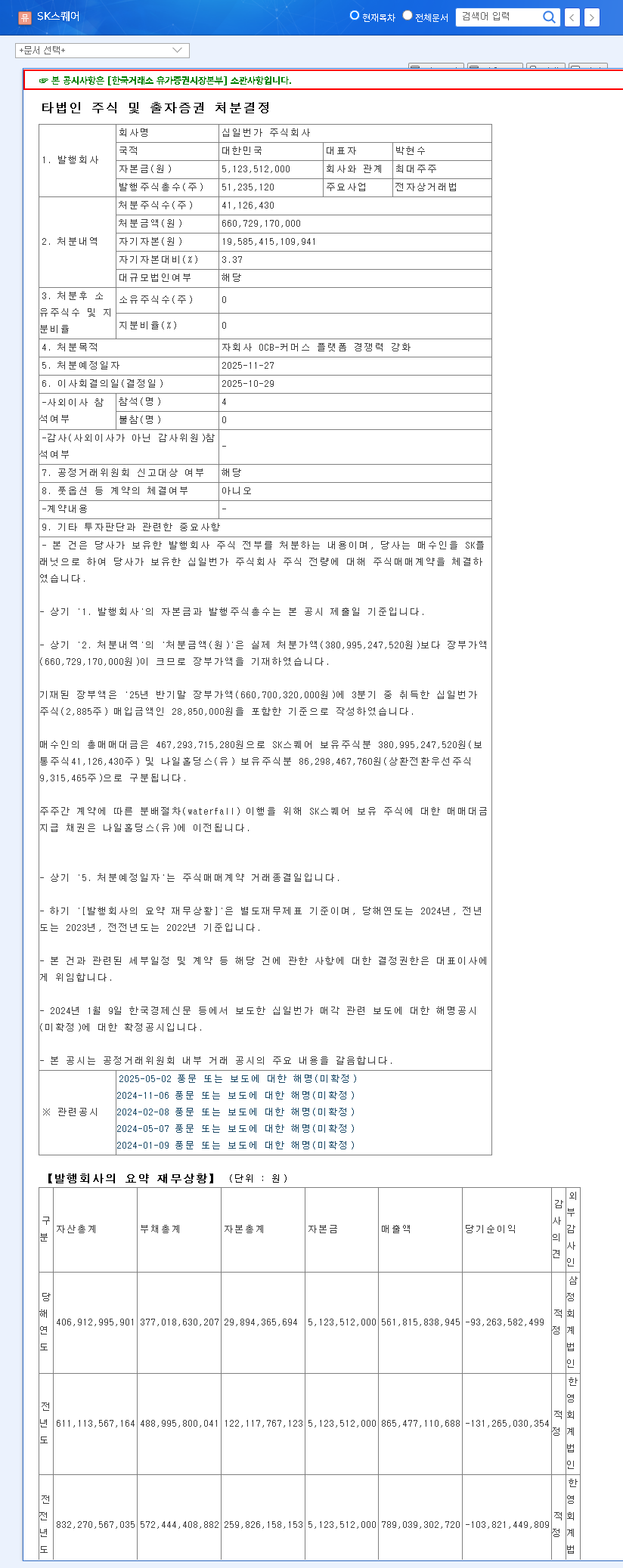
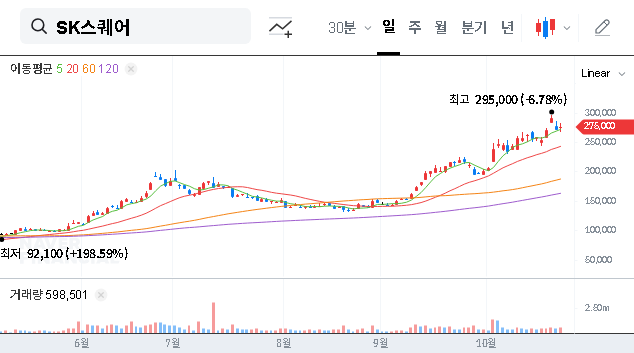
    (402340) SK Square Share Buyback: A ₩100B Strategy for Shareholder Value 관련 이미지
  • (402340) SK Square Share Buyback: KRW 100B Move to Boost Shareholder Value | Q3 2025 Analysis

    (402340) SK Square Share Buyback: KRW 100B Move to Boost Shareholder Value | Q3 2025 Analysis

    SK Square Co., Ltd. has made a significant move that has captured the market’s attention: a massive SK Square share buyback program valued at KRW 100 billion. Announced on November 13, 2025, this strategic decision is far more than a simple financial transaction. It’s a powerful statement about the company’s confidence in its future and a direct commitment to enhancing SK Square shareholder value. For investors, this raises critical questions: What financial strengths underpin this decision, and what does it signal for the future of SK Square stock?

    This comprehensive SK Square analysis will delve into the company’s robust Q3 2025 performance, dissect its diverse portfolio, and evaluate the macroeconomic landscape to provide a clear perspective on the implications of this major share repurchase. Whether you’re a current shareholder or considering an investment, this is the essential information you need to navigate what’s next.

    The KRW 100 Billion Commitment: A Closer Look

    Following a board resolution, SK Square officially announced its plan to acquire 310,077 of its own common shares directly from the market, an investment totaling KRW 100 billion. The stated objectives are twofold: to directly enhance shareholder returns and to secure shares for employee stock compensation programs. You can view the complete filing here: Official Disclosure (DART).

    This share buyback is a strong signal to the market of our unwavering commitment to shareholder returns and our profound confidence in the company’s long-term growth trajectory.

    Financial Underpinnings: The Solid SK Square Q3 Performance

    This bold move is backed by an impressive financial performance in the first three quarters of 2025. The company’s cumulative results demonstrate significant year-over-year profit growth and a marked improvement in financial stability.

    Key Q3 2025 Cumulative Financials:

    • Operating Revenue: KRW 1,217.29 billion
    • Operating Profit: KRW 569.89 billion
    • Net Profit: KRW 554.17 billion
    • Debt Ratio: A healthy 9.60%, showcasing improved financial soundness.

    A significant portion of this success is attributed to the stellar performance of portfolio cornerstone SK Hynix, which is capitalizing on the booming AI semiconductor market. This strong financial position provides the necessary cash flow to execute the share buyback without compromising operational investments.

    Portfolio Analysis: A Mixed Bag of Results

    SK Square’s strength lies in its diverse portfolio, though performance varies across its subsidiaries. Understanding these dynamics is key to a complete SK Square analysis.

    Highlights and Headwinds:

    • SK Hynix: Continues to be the primary profit driver, benefiting from high demand in the AI sector. For more details, you can read our deep dive into SK Hynix’s AI dominance.
    • TMAP Mobility: Despite an operating loss, its growth as a data-driven AI mobility platform is promising, with its Data & Solutions segment growing over 45%.
    • 11st & One Store: These platforms face significant profitability challenges due to fierce competition in the e-commerce and app store markets, respectively. Turning these businesses around remains a key structural challenge.

    Ripple Effects of the SK Square Share Buyback

    A share buyback, also known as a share repurchase, is when a company buys its own outstanding shares to reduce the number of shares available on the open market. According to authoritative financial sources, this action typically has several positive effects.

    Immediate Market Impact:

    • Increased Earnings Per Share (EPS): With fewer shares outstanding, the company’s earnings per share automatically increase, making the stock appear more valuable.
    • Stock Price Support: The act of buying creates demand, which can support the stock price and provide a buffer against market downturns.
    • Improved Investor Sentiment: It signals that management believes the stock is undervalued and is confident in the company’s financial health, boosting investor trust.

    Investor Outlook and Strategic Considerations

    The SK Square share buyback is a clear positive catalyst for the stock in the short term. It provides price support and reinforces a narrative of financial strength and shareholder-friendly management. However, long-term investors must look beyond this immediate boost.

    The ultimate appreciation of SK Square stock will depend on the company’s ability to solve its structural challenges. This includes successfully navigating the intense competition faced by 11st and One Store, identifying new growth engines, and continuing to wisely manage its investment portfolio amidst fluctuating macroeconomic conditions like interest rates and currency exchange rates.

    In conclusion, while the KRW 100 billion buyback provides a strong tailwind, prudent investors should continue to monitor the fundamental performance of SK Square’s core and developing subsidiaries as the true measure of its enduring value.

    Disclaimer: This article is for informational purposes only and is based on publicly available information. It does not constitute financial advice. Investment decisions should be made based on an individual’s own judgment and thorough research.

    (402340) SK Square Share Buyback: KRW 100B Move to Boost Shareholder Value | Q3 2025 Analysis 관련 이미지
  • (402340) SK Square Share Cancellation: A Deep Dive into Boosting Shareholder Value

    (402340) SK Square Share Cancellation: A Deep Dive into Boosting Shareholder Value

    In a significant move to bolster investor confidence, SK Square Co., Ltd. has announced a major SK Square share cancellation, a strategic decision with far-reaching implications. This report provides a comprehensive investment analysis of SK Square, dissecting the economic rationale, market expectations, and the robust corporate fundamentals that underpin this commitment to enhancing shareholder value. For investors, understanding this event is key to formulating prudent strategies and capitalizing on the company’s future direction.

    The KRW 77.9 Billion Share Cancellation Explained

    On November 13, 2025, SK Square officially confirmed its plan to cancel 453,743 of its common shares, valued at approximately KRW 77.9 billion. This action involves retiring treasury shares—stock that the company had previously repurchased from the open market. The cancellation, scheduled for November 24, 2025, represents a direct and tangible return of value to its shareholders. The full details of this corporate action are available in the Official Disclosure (Source) on the DART system.

    A share cancellation of this magnitude is more than an accounting entry; it’s a bold declaration of confidence in future earnings and a direct commitment to rewarding long-term shareholders.

    Why a Treasury Share Cancellation Matters

    A treasury share cancellation is one of the most powerful tools a company can use for enhancing shareholder value. By permanently reducing the number of shares in circulation, the company increases the ownership stake of each remaining shareholder. This has several positive effects:

    • Increased Earnings Per Share (EPS): With fewer shares to divide the profits among, the EPS automatically rises, making the SK Square stock appear more valuable to investors.
    • Improved Financial Ratios: Key metrics like Return on Equity (ROE) are improved, signaling greater efficiency in how the company uses shareholder capital.
    • Positive Market Signal: This action conveys a powerful message of management’s confidence. It suggests they believe the stock is undervalued and that the company’s future prospects are strong enough to justify this use of capital. For more on market signals, you can read analysis from sources like Bloomberg.

    Financial Strength: The Bedrock of the Decision

    This bold shareholder return policy is not happening in a vacuum. It is supported by SK Square’s robust financial health and solid corporate fundamentals, driven primarily by its strategic portfolio.

    The SK Hynix Powerhouse

    SK Hynix’s stellar performance continues to be the primary engine of SK Square’s consolidated results. As a global leader in memory semiconductors, especially high-bandwidth memory (HBM) crucial for the AI revolution, SK Hynix provides a stable and substantial revenue stream. This financial foundation gives SK Square the confidence and capability to execute significant capital return programs.

    Diversified Growth in Tech and Mobility

    Beyond semiconductors, SK Square’s portfolio includes promising tech platforms with significant growth potential:

    • Tmap Mobility: A leader in future mobility, leveraging vast data sets and AI to innovate in navigation and transportation solutions.
    • Dreamus Company: Expanding its content footprint by leveraging valuable K-POP intellectual property (IP).
    • One Store: Pursuing global expansion to establish itself as a competitive alternative in the app marketplace ecosystem.

    With a remarkably low debt-to-equity ratio of 9.60% and retained earnings of KRW 9.27 trillion, SK Square’s financial soundness is unquestionable. This powerful balance sheet allows the company to pursue growth and shareholder returns simultaneously. To learn more about financial health, consider our guide on Understanding Corporate Balance Sheets.

    Investor Implications and Market Outlook

    The SK Square share cancellation is expected to act as a positive catalyst for the stock price in the short term. However, long-term performance will depend on continued execution and broader market conditions. Investors should monitor the performance of SK Hynix, the growth trajectory of the platform subsidiaries, and macroeconomic factors like interest rates and exchange rates.

    This decision solidifies SK Square’s reputation as a company committed to responsible capital management and shareholder-friendly policies. It signals that management is focused on closing the valuation gap and achieving a corporate value that truly reflects the strength of its underlying assets. For investors, this provides a compelling reason to closely watch the SK Square stock as it embarks on this next phase of value creation.

    Frequently Asked Questions (FAQ)

    Q1. What is the core of the SK Square share cancellation?

    A1. SK Square is cancelling KRW 77.9 billion worth of its own treasury shares. This reduces the total number of shares outstanding, thereby increasing the value and ownership percentage of each remaining share for existing shareholders.

    Q2. How does this decision benefit SK Square stockholders?

    A2. The primary benefit is enhancing shareholder value. By increasing metrics like Earnings Per Share (EPS), the stock becomes fundamentally more attractive. It also signals strong management confidence in the company’s future, which can positively influence the SK Square stock price.

    Q3. What financial foundation supports this share cancellation?

    A3. The decision is backed by SK Square’s exceptional financial health, including massive retained earnings (KRW 9.27 trillion) and a very low debt-to-equity ratio. This stability is largely driven by the consistent, strong performance of its key holding, SK Hynix.

    Q4. What should investors monitor going forward?

    A4. While the SK Square share cancellation is a positive event, investors should continue to monitor the performance of its core businesses, competitive dynamics in the app and mobility markets, and macroeconomic trends. The long-term stock trajectory will be a function of both these shareholder-friendly policies and continued business execution.

    (402340) SK Square Share Cancellation: A Deep Dive into Boosting Shareholder Value 관련 이미지
  • (402340) SK Square Share Buyback: A KRW 100B Strategy for Shareholder Value

    (402340) SK Square Share Buyback: A KRW 100B Strategy for Shareholder Value

    SK Square has made a significant market announcement regarding a KRW 100 billion SK Square share buyback, a strategic move designed to bolster stock prices, enhance shareholder value, and incentivize employees. This decision signals strong confidence from management and has caught the attention of investors. But what does this massive capital allocation truly mean for the company’s trajectory and for those holding its stock? This comprehensive analysis will explore the intricate details behind the decision, from the company’s financial fundamentals to the turbulent market conditions and the long-term investment outlook.

    The Landmark Announcement: A KRW 100 Billion Commitment

    On November 13, 2025, SK Square officially disclosed its plan to acquire KRW 100 billion of its own shares. The stated purpose is twofold: to directly increase shareholder value and to fund employee stock compensation programs. This isn’t merely a financial transaction; it’s a powerful statement from the investment-focused company about its commitment to its own valuation and fostering shared growth with its stakeholders. For official confirmation, you can view the Official Disclosure on DART.

    A share buyback, also known as a share repurchase, is a crucial corporate action. By reducing the number of shares outstanding, a company can increase its earnings per share (EPS), often leading to a higher stock price. It’s a direct way to return value to shareholders. For more on this, see this comprehensive guide from Investopedia.

    Why Now? Analyzing the Financial and Market Context

    Robust Fundamentals: A Look at SK Square’s Financial Health

    This bold move is underpinned by SK Square’s solid financial foundation. The key consolidated financial indicators for Q3 2025 paint a picture of strength despite some revenue headwinds:

    • Surging Operating Profit: A remarkable 151.1% year-over-year increase, reaching KRW 5,698,935 million, primarily driven by equity method gains from investments in associates.
    • Growing Asset Base: Total assets expanded by 24% to KRW 27,254,204 million, showcasing significant growth in corporate scale.
    • Rock-Solid Financial Structure: The debt-to-equity ratio remains exceptionally stable at 9.60%, indicating minimal financial risk and high solvency.

    While the core investment business remains a stable profit engine, performance across subsidiaries is mixed. Commerce platform 11st, for instance, still shows an operating loss but has achieved a crucial turnaround in its open market segment, a positive sign for future profitability. This financial stability provides the necessary firepower for the SK Square share buyback without compromising future investments.

    Navigating a Challenging Market Environment

    The decision also comes amidst significant external pressures. Persistent macroeconomic uncertainty, including recession fears and inflation, creates a volatile backdrop. Furthermore, intensified competition in e-commerce and the rapid acceleration of AI and digital transformation demand strategic agility. In this context, the share buyback can be seen as a defensive-yet-offensive move: stabilizing the SK Square stock price while signaling deep-seated confidence in its long-term strategy to navigate these challenges.

    Impact Analysis: Opportunities and Risks for Investors

    The Upside: Potential Benefits of the Buyback

    • Enhanced Per-Share Metrics: By reducing the share count, both Earnings Per Share (EPS) and Book Value Per Share (BPS) can increase, making the stock more attractive on paper.
    • Powerful Undervaluation Signal: It communicates to the market that management believes the stock is currently trading below its true intrinsic value, boosting investor confidence.
    • Increased Employee Alignment: Using repurchased shares for compensation aligns employee interests with those of shareholders, fostering a culture of long-term growth and commitment.

    Considerations and Potential Risks

    While the buyback is a net positive, a prudent investment analysis requires acknowledging potential risks. The immediate positive market reaction may not be sustainable if not supported by fundamental performance improvements in core and subsidiary businesses. A share buyback alone cannot prop up a stock price indefinitely. True, long-term shareholder value creation will depend on the performance of its portfolio companies, such as SK Hynix, and the successful turnaround of its platform businesses. You can read more about our analysis of SK Square’s portfolio companies here.

    Investment Outlook and Key Takeaways

    Our overall assessment is a cautious but optimistic ‘Neutral’. The SK Square share buyback is a clear positive catalyst, signaling financial strength and a commitment to shareholders. However, the underperformance of some subsidiaries and prevailing macroeconomic uncertainties warrant careful monitoring.

    Investors should keep a close watch on the following key areas moving forward:

    • Subsidiary Profitability: Are platforms like 11st and SK Planet demonstrating a clear path to profitability?
    • Core Investment Performance: How are major holdings like SK Hynix performing, and what new investments are being made?
    • Market Reaction Post-Buyback: Does the stock price hold its gains, or does it fade after the initial excitement?

    (402340) SK Square Share Buyback: A KRW 100B Strategy for Shareholder Value 관련 이미지
  • (212710) ISTE’s Landmark PECVD Equipment Deal with SK Hynix: Fueling the HBM Revolution

    (212710) ISTE’s Landmark PECVD Equipment Deal with SK Hynix: Fueling the HBM Revolution

    In a significant development for the semiconductor industry, ISTE Co., Ltd. (212710) has officially entered a new phase of growth by securing a pivotal contract to supply its advanced ISTE PECVD equipment to global memory leader, SK Hynix. This deal, centered on Plasma Enhanced Chemical Vapor Deposition (PECVD) technology, is a critical validation of ISTE’s capabilities and strategically positions the company within the explosive HBM market, which is the backbone of the current AI revolution.

    This article provides an in-depth analysis of the contract’s implications, exploring how this partnership with SK Hynix will shape ISTE’s financial fundamentals, market position, and long-term prospects. For investors and industry observers, this is a crucial moment that warrants a closer look.

    This contract is more than a transaction; it’s a technological endorsement from a world leader, signaling ISTE’s readiness to compete on a global scale in the high-stakes semiconductor equipment arena.

    Breaking Down the SK Hynix Contract

    On November 12, 2025, ISTE Co., Ltd. announced the landmark deal via a voluntary disclosure. The agreement involves the sale and delivery of specialized semiconductor PECVD equipment to an SK Hynix facility in South Korea. The details, confirmed in the Official Disclosure (DART Report), are as follows:

    • Contract Value: 2.4 billion KRW
    • Percentage of Recent Sales: 5.90%
    • Contract Period: November 11, 2025 to November 14, 2025

    While the contract value represents a modest portion of total sales, its strategic importance far outweighs the monetary figure. It serves as the commercial debut for ISTE’s flagship PECVD product line, proving its viability in a highly demanding production environment.

    Why This Deal is a Game-Changer for ISTE

    1. The Power of HBM and AI Demand

    The insatiable demand for generative AI and high-performance computing (HPC) has put High-Bandwidth Memory (HBM) in the spotlight. HBM is a specialized type of RAM that stacks memory chips vertically to achieve incredibly fast data transfer speeds, which is essential for training and running large AI models. Manufacturing these complex stacked chips requires cutting-edge techniques, and that’s where ISTE’s technology comes in. The company’s PECVD equipment is understood to be crucial for processes like hybrid bonding, a key enabler for next-generation HBM. By supplying to SK Hynix, a leader in the HBM market, ISTE directly plugs into the most dynamic segment of the semiconductor industry. To learn more about High-Bandwidth Memory (HBM) technology, you can explore detailed industry reports.

    2. Technology Validation and Market Credibility

    Securing a contract with a tier-one manufacturer like SK Hynix is the ultimate vote of confidence. It validates years of R&D and proves that ISTE’s PECVD technology meets the stringent performance, reliability, and quality standards of a global leader. This successful deployment de-risks the technology for other potential customers and significantly boosts ISTE’s credibility. This validation is a powerful marketing tool that can open doors to other semiconductor giants, potentially leading to a cascade of future orders.

    3. A Beachhead for Financial Improvement

    ISTE has been navigating financial challenges, including an operating loss and a high debt ratio. While this 2.4 billion KRW contract won’t single-handedly solve these issues, it represents a crucial first step. It generates positive revenue from a new, high-growth business segment and signals to investors that the company’s strategic pivot is bearing fruit. The key will be converting this initial success into a steady stream of orders for ISTE PECVD equipment, which can create a sustainable path toward profitability and strengthen the company’s balance sheet.

    Investor Outlook: A Prudent Growth Opportunity

    The market reacted positively to the news, with ISTE’s stock price showing a significant jump. This reflects investor optimism about the company’s entry into the high-value HBM supply chain. However, a prudent approach is necessary.

    Key Factors to Monitor:

    • Follow-on Orders: The most critical indicator of success will be the frequency and size of subsequent orders from SK Hynix and other potential clients. Consistent deal flow is essential.
    • Financial Health Metrics: Investors should keep a close eye on quarterly earnings reports for signs of improving operating margins, positive cash flow, and a reduction in the debt-to-equity ratio.
    • Competitive Landscape: The semiconductor equipment market is fiercely competitive. Monitoring ISTE’s technological edge against established players is crucial for assessing long-term viability. For more context, you can read our analysis of the global semiconductor market.

    In conclusion, ISTE’s PECVD equipment contract with SK Hynix is a watershed moment. It confirms the company’s technological prowess and provides a clear pathway into the lucrative HBM manufacturing ecosystem. While significant financial and operational hurdles remain, this deal has fundamentally improved ISTE’s growth narrative. For investors with a long-term horizon and an appetite for technology-driven growth, ISTE Co., Ltd. has become a compelling company to watch.

  • (348350) WITHTECH Stock Analysis: Impact of ₩3.6B SK hynix Deal & 2026 Investment Outlook

    (348350) WITHTECH Stock Analysis: Impact of ₩3.6B SK hynix Deal & 2026 Investment Outlook

    The outlook for WITHTECH stock has entered a pivotal phase following a major contract announcement. WITHTECH, Inc., a key player in the semiconductor ecosystem, recently secured a substantial ₩3.6 billion supply deal with industry giant SK hynix. While this news injects significant optimism, it arrives amidst underlying profitability concerns. This comprehensive analysis will dissect the contract’s implications, evaluate the company’s fundamental health, and present a clear investment strategy for investors considering a position in WITHTECH Inc.

    Can this landmark deal be the catalyst that resolves persistent profitability issues and propels the company into a new era of sustainable growth? We will explore the opportunities and risks to provide a balanced view on making a wise WITHTECH investment.

    The Landmark SK hynix Deal: A Closer Look

    On November 10, 2025, WITHTECH, Inc. announced a significant supply contract with SK hynix, one of the world’s leading memory chip makers. The deal, valued at ₩3.6 billion, is for advanced semiconductor manufacturing environment monitoring equipment, including their flagship NAVI-TM200L model. According to the Official Disclosure, this contract represents a substantial 8.24% of the company’s projected 2025 revenue. The contract period extends from November 7, 2025, to May 31, 2026, ensuring a solid revenue stream for the next two quarters.

    This SK hynix deal is more than just a financial boost; it’s a powerful endorsement of WITHTECH’s technological capabilities, solidifying its position as a critical supplier within the highly competitive semiconductor industry.

    Fundamental Analysis: Growth with Underlying Challenges

    A review of WITHTECH’s H1 2025 semi-annual report reveals a complex picture. The company achieved an impressive 16% year-on-year revenue growth, a clear sign of market demand. However, this top-line growth was overshadowed by an operating loss of ₩590 million, highlighting a critical decline in profitability. This was attributed to a rise in the cost of goods sold and increased SG&A expenses.

    The AMC Segment: WITHTECH’s Growth Engine

    The primary driver behind the revenue surge was the ‘Atmospheric Molecular Contamination’ (AMC) segment, which saw an explosive 393% increase. AMC control is vital in modern semiconductor fabrication, where even parts-per-billion level contaminants can ruin entire batches of wafers. WITHTECH’s expertise in high-sensitivity measurement and contamination control technology places it at the forefront of this crucial niche, a fact validated by the recent SK hynix deal.

    Core Strengths and Weaknesses

    • Strengths: Leading-edge precision measurement technology, a robust portfolio of patents, a deep pool of engineering talent, and promising diversification into new markets like nuclear power plant decommissioning waste analysis.
    • Weaknesses: Deteriorating operating and net profit margins, negative ROE and EPS in H1 2025. The company faces an urgent need to improve its financial health and translate revenue into profit.

    Navigating Macroeconomic Headwinds

    The global environment presents both opportunities and risks for any semiconductor stock analysis. While the overall industry growth is a tailwind, WITHTECH must navigate several macroeconomic factors:

    • Interest Rates: A high-interest rate environment, particularly in the U.S., increases borrowing costs, which can strain a company working to improve its financial standing.
    • Exchange Rates: Fluctuations in the EUR/KRW and USD/KRW rates can impact the value of foreign currency assets and liabilities, affecting both revenue from exports and the cost of imported components.
    • Supply Chain & Logistics: As noted by the rising China Containerized Freight Index, global supply chain instability persists. This can lead to increased logistics costs, directly impacting WITHTECH’s bottom line. For more on this, see analysis from sources like The Wall Street Journal’s logistics reports.

    Investment Strategy: A Prudent Approach to WITHTECH Stock

    Our overall opinion on a WITHTECH investment is currently “Neutral.” The company holds significant growth potential validated by the SK hynix contract, but this is balanced by the critical challenge of improving profitability.

    The core investment thesis hinges on whether WITHTECH can leverage its top-line momentum to achieve operational efficiency and deliver sustainable profit growth. A cautious, monitoring-focused approach is advised.

    Short-Term Outlook (1-3 Months)

    Investors should closely watch for initial market reactions to the deal and the company’s next quarterly earnings report. Look for specific commentary on cost management strategies during the SK hynix contract execution. A strategy of staggered buying or observing from the sidelines is recommended until clear signs of margin improvement appear.

    Mid- to Long-Term Outlook (6+ Months)

    The long-term health of WITHTECH stock depends on two key factors: the sustained growth of its core AMC business and tangible progress in its new ventures, particularly the nuclear power plant decommissioning analysis unit. Investment decisions should be guided by evidence of improving financial health and the successful expansion into these new, high-potential markets.

    (348350) WITHTECH Stock Analysis: Impact of ₩3.6B SK hynix Deal & 2026 Investment Outlook 관련 이미지
  • (348350) WITHTECH SK Hynix Contract: A KRW 3.9B Deep Dive & Stock Analysis

    (348350) WITHTECH SK Hynix Contract: A KRW 3.9B Deep Dive & Stock Analysis

    The recent announcement of the WITHTECH SK Hynix contract, a substantial KRW 3.9 billion deal, has sent ripples through the semiconductor industry and caught the attention of keen investors. As the demand for advanced semiconductors skyrockets, the technology that underpins their flawless production—specifically, manufacturing environment monitoring—becomes mission-critical. This deal not only represents a significant revenue injection for WITHTECH, Inc. but also serves as a powerful endorsement of its technological leadership.

    This comprehensive analysis unpacks the details of this pivotal agreement, examines WITHTECH’s current financial health, and provides a forward-looking perspective for potential investors. We will explore whether this contract is the catalyst for a new era of growth or if underlying financial concerns warrant a more cautious approach to WITHTECH stock.

    Deconstructing the WITHTECH SK Hynix Contract

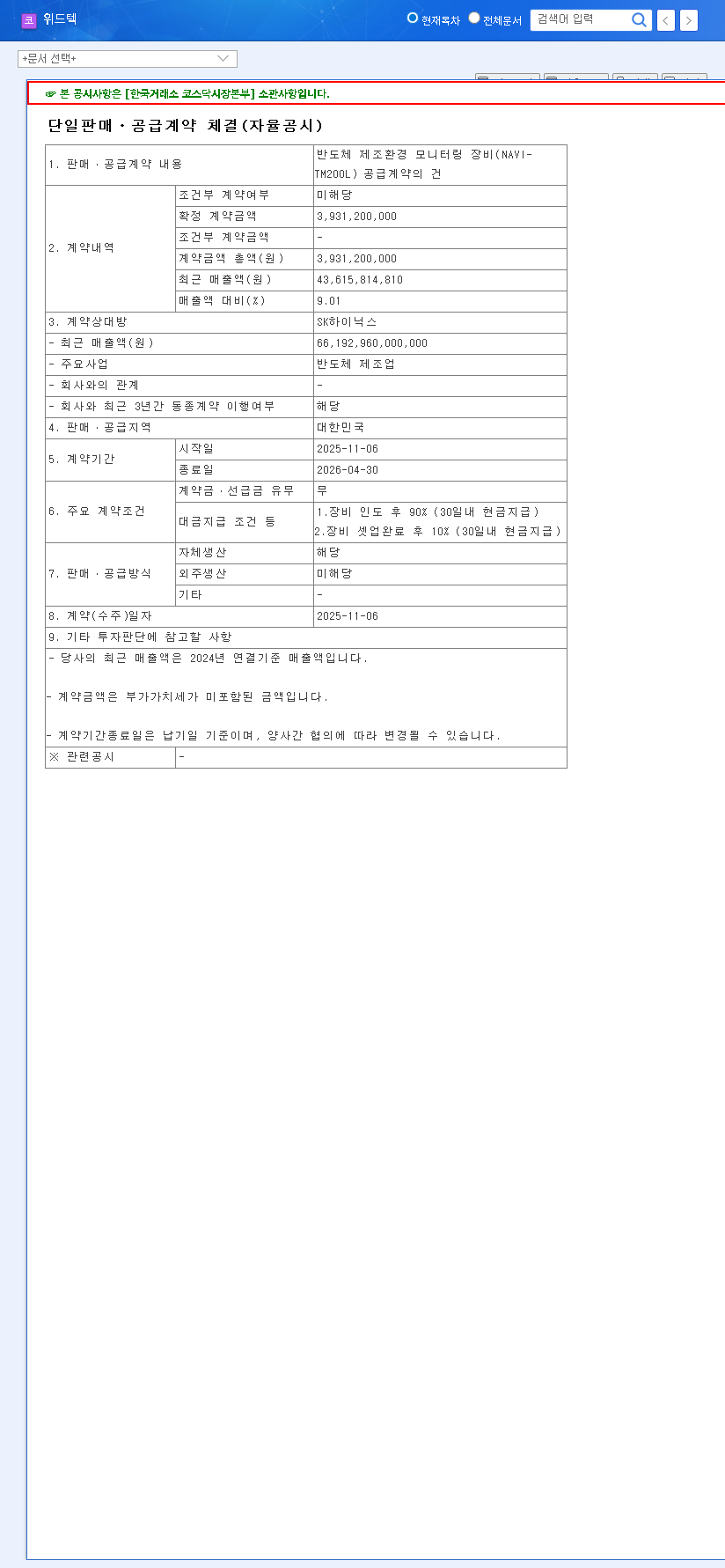
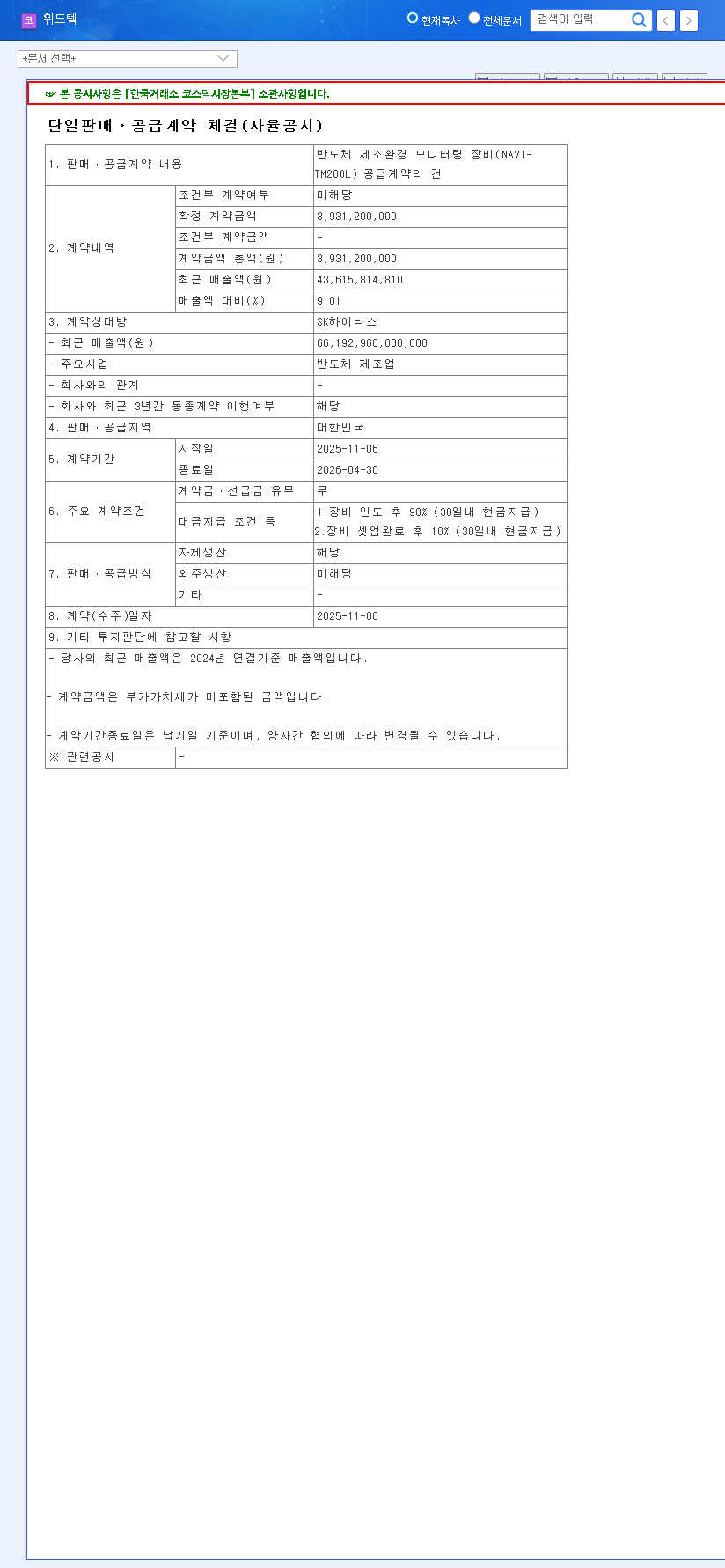
    On November 7, 2025, WITHTECH, Inc. formally disclosed a major agreement with SK Hynix, a global leader in memory semiconductors. The deal involves the supply of its advanced semiconductor monitoring equipment, specifically the NAVI-TM200L model. Here are the core details:

    • Contract Value: KRW 3.9 billion.
    • Financial Impact: This figure represents a significant 20.3% of WITHTECH’s revenue from its 23rd semi-annual period.
    • Contract Period: November 6, 2025, to April 30, 2026.
    • Source: The details of this agreement are publicly available in the Official Disclosure on DART.

    This isn’t just a simple equipment sale. The NAVI-TM200L system is crucial for monitoring and controlling molecular-level contaminants in real-time within fabrication plants (fabs). As chip architecture shrinks to the nanometer scale, even the slightest impurity can render an entire wafer useless, making this technology indispensable for maximizing yield and profitability.

    Why This Deal is a Game-Changer for WITHTECH

    1. Validating Technological Supremacy

    Securing a contract of this magnitude from a tier-one manufacturer like SK Hynix is the ultimate validation. It proves that WITHTECH’s technology meets the incredibly stringent standards required for cutting-edge memory production, such as HBM for AI applications. This credibility can be leveraged to attract new clients and solidify its market position against competitors.

    2. Immediate and Future Revenue Growth

    The immediate KRW 3.9 billion boost is set to significantly impact WITHTECH’s top-line growth. More importantly, it deepens the company’s integration into the SK Hynix supply chain. As SK Hynix continues to expand its production capacity to meet AI-driven demand, WITHTECH is now perfectly positioned to win subsequent, potentially larger, orders. This is a critical step in building a long-term, predictable revenue stream. For a deeper understanding of industry trends, explore insights from authoritative sources like Gartner’s semiconductor forecast.

    This contract is more than a financial transaction; it’s a strategic partnership that anchors WITHTECH’s technology at the heart of the global AI revolution, driven by industry leaders like SK Hynix.

    WITHTECH Investment Analysis: A Look at the Fundamentals

    While the SK Hynix deal is unequivocally positive, a prudent WITHTECH investment decision requires a balanced view of the company’s underlying financial health.

    Strengths to Consider

    • Premier Client Roster: Long-standing relationships with titans like Samsung Electronics and SK Hynix provide a stable business foundation.
    • Favorable Market Tailwinds: The entire semiconductor industry is moving towards more complex processes, increasing the need for sophisticated contamination monitoring.
    • Financial Stability: The company maintains a low debt-to-equity ratio, indicating a healthy balance sheet and reduced financial risk.

    Concerns Requiring Monitoring

    Despite growing revenue, profitability has become a challenge. The 23rd semi-annual report revealed a consolidated operating loss of KRW 0.59 billion and a net loss of KRW 2.1 billion. This was driven by rising costs in sales, administration, and crucial R&D. Furthermore, operating cash flow was negative at KRW -5.017 billion, signaling that the company spent more cash than it generated from its core operations during the period. Investors must watch to see if the profitability of the WITHTECH SK Hynix contract can help reverse this trend. To learn more, you can read our guide on understanding cash flow statements.

    Future Outlook and Investor Action Plan

    The SK Hynix contract is a powerful catalyst for WITHTECH. It provides a clear pathway to revenue growth and enhances its industry standing. However, the long-term success of WITHTECH stock hinges on the company’s ability to translate this top-line momentum into bottom-line profitability.

    Investors should keep a close watch on the following key metrics in upcoming quarterly reports:

    • Profit Margins: Will the new contract carry a high enough margin to improve overall profitability?
    • Operating Cash Flow: Can the company convert its new sales into positive cash flow?
    • Cost Management: Are there clear strategies in place to control rising SG&A and other operational expenses?

    In conclusion, the WITHTECH SK Hynix contract is a significant and promising development that reaffirms the company’s growth potential. For investors, it signals a major opportunity, but one that must be balanced with diligent monitoring of the company’s progress toward sustainable profitability.

    (348350) WITHTECH SK Hynix Contract: A KRW 3.9B Deep Dive & Stock Analysis 관련 이미지
  • (089970) In-Depth VM Inc. Financial Analysis: Beyond the SK Hynix Contract

    (089970) In-Depth VM Inc. Financial Analysis: Beyond the SK Hynix Contract

    In the volatile semiconductor industry, news of a major contract can send ripples of optimism through the market. This is precisely the case for VM Inc. (089970), which recently announced a significant deal to supply semiconductor manufacturing equipment to industry titan SK Hynix. This development provides a much-needed boost, seemingly validating VM Inc.’s technology in a competitive landscape.

    However, this celebratory news is juxtaposed against a backdrop of deteriorating financial health. This comprehensive VM Inc. financial analysis aims to look beyond the headlines. We will dissect the SK Hynix contract, scrutinize the company’s precarious financial statements, and evaluate the macroeconomic environment to provide a clear-eyed investment strategy. Is this deal a true turning point, or merely a temporary reprieve?

    The Landmark SK Hynix Contract: A Glimmer of Hope?

    On November 6, 2025, VM Inc. disclosed a pivotal agreement with SK Hynix. The details of this single sales and supply contract are crucial for understanding its immediate impact.

    • Contract Value: A substantial 7.6 billion KRW, which represents 10.89% of VM Inc.’s 2022 annual revenue.
    • Contract Period: A very short term, running from November 6, 2025, to December 23, 2025.
    • Product: High-value semiconductor manufacturing equipment, a core component of its business.

    This deal is a significant event, not just for its monetary value but for its strategic implications. You can view the Official Disclosure on DART for verification.

    While the SK Hynix contract provides a critical revenue injection and powerful market validation, investors must weigh this against VM Inc.’s deep-seated financial vulnerabilities to form a balanced view.

    The Bull Case: Why the SK Hynix Deal Matters

    The positive implications of this deal extend far beyond the immediate balance sheet entry. For a company like VM Inc., this is a major strategic win.

    Validation of Technology and Competitiveness

    Securing a contract with a global semiconductor powerhouse like SK Hynix is the ultimate endorsement. It signals to the entire market that VM Inc.’s semiconductor equipment meets the highest standards of quality and performance. This ‘halo effect’ can be instrumental in attracting other major clients, building a more robust sales pipeline, and enhancing its competitive standing.

    Enhanced Corporate Transparency

    Recent amendments to business reports, including supplements regarding minority shareholder rights, suggest a management team that is becoming more responsive. This commitment to transparency and communication can reduce legal risks and build crucial trust with investors, which is essential for long-term stability.

    The Bear Case: A Deep Dive into VM Inc.’s Financial Risks

    Despite the positive news, the core of our VM Inc. financial analysis reveals several red flags that cannot be ignored. The company’s financial foundation appears worryingly weak.

    Persistent Decline in Performance

    • Plummeting Revenue: Annual revenue dropped from ~11.4 billion KRW in 2022 to a projected 4.6 billion KRW in 2025.
    • Profitability Crisis: Operating profit is expected to turn negative in 2025, and net income has been in deficit since 2022, with losses widening.

    Worsening Financial Health

    The company’s balance sheet shows increasing strain:

    • Rising Debt-to-Equity Ratio: This metric climbed from 92% in 2022 to 114% in 2024, indicating higher reliance on debt. For context, you can learn more about what this ratio means for investors.
    • Liquidity Concerns: The Current Ratio, a measure of short-term solvency, collapsed from a healthy 340% in 2022 to a dangerous 58% in 2024, raising questions about its ability to meet short-term obligations.

    Investment Strategy: Navigating VM Inc. Stock

    A prudent investment strategy for the VM Inc. stock requires a dual focus on short-term catalysts and long-term fundamental recovery.

    Short-Term Outlook

    The SK Hynix contract will positively impact Q4 2025 revenue. However, its effect will be limited. The key to sustaining any positive stock momentum is evidence of follow-on orders. Without a steady stream of new contracts, this will be seen as a one-off event.

    Long-Term Investor Checklist

    For a genuine, sustainable turnaround, investors should monitor the following:

    • Consistent Order Flow: Look for a pattern of new orders beyond the SK Hynix deal.
    • Financial Restructuring: Watch for concrete plans to reduce debt and improve liquidity.
    • Profit Margin Improvement: Track gross and operating margins to see if efficiency is improving.
    • Industry Trends: Follow the broader global semiconductor market analysis, as an industry-wide recovery would provide a significant tailwind.

    Conclusion: A Crossroads for VM Inc.

    VM Inc. finds itself at a critical juncture. The SK Hynix contract is a powerful testament to its technological capabilities and provides a vital lifeline. However, it does not erase the serious financial challenges related to declining revenue, poor profitability, and a weak balance sheet. For investors, this is a classic high-risk, high-reward scenario. Prudent decision-making requires a comprehensive view that values the company’s long-term recovery efforts over short-term news events.

    Frequently Asked Questions

    Q1: What kind of company is VM Inc.?

    VM Inc. (089970) is a company that manufactures and supplies semiconductor manufacturing equipment. It has recently gained attention for signing a major supply contract with SK Hynix.

    Q2: How will the SK Hynix contract impact VM Inc.’s finances?

    The contract will boost Q4 2025 revenue. However, its value is about 10.9% of 2022 revenue and the contract period is short, so its direct impact on overall financial health may be limited without follow-up orders.

    Q3: What are the main risks of investing in VM Inc. stock?

    The primary risks are the company’s history of declining revenue, consistent net losses, a high debt-to-equity ratio, and poor short-term liquidity, as highlighted in our VM Inc. financial analysis.

    (089970) In-Depth VM Inc. Financial Analysis: Beyond the SK Hynix Contract 관련 이미지
  • (402340) SK Square 11st Divestment: A Deep Dive into the KRW 660.7B Sale and Investment Outlook

    (402340) SK Square 11st Divestment: A Deep Dive into the KRW 660.7B Sale and Investment Outlook

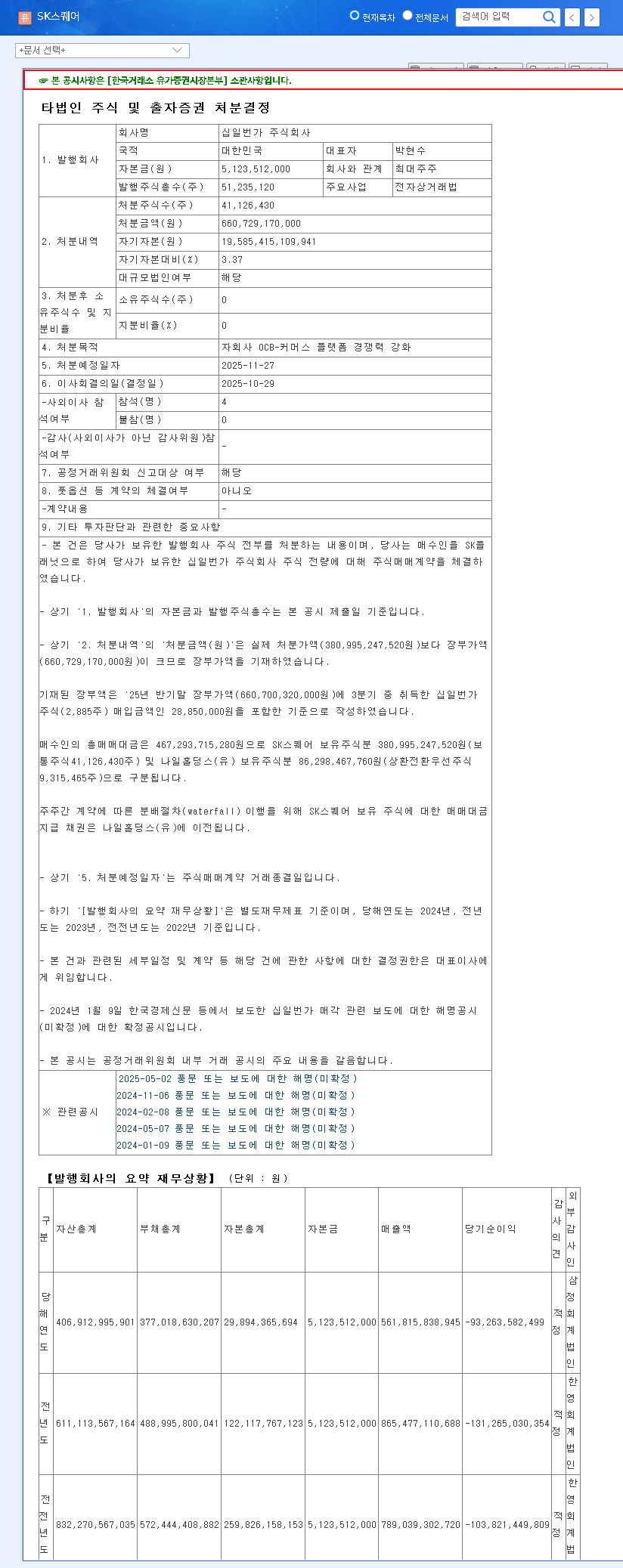
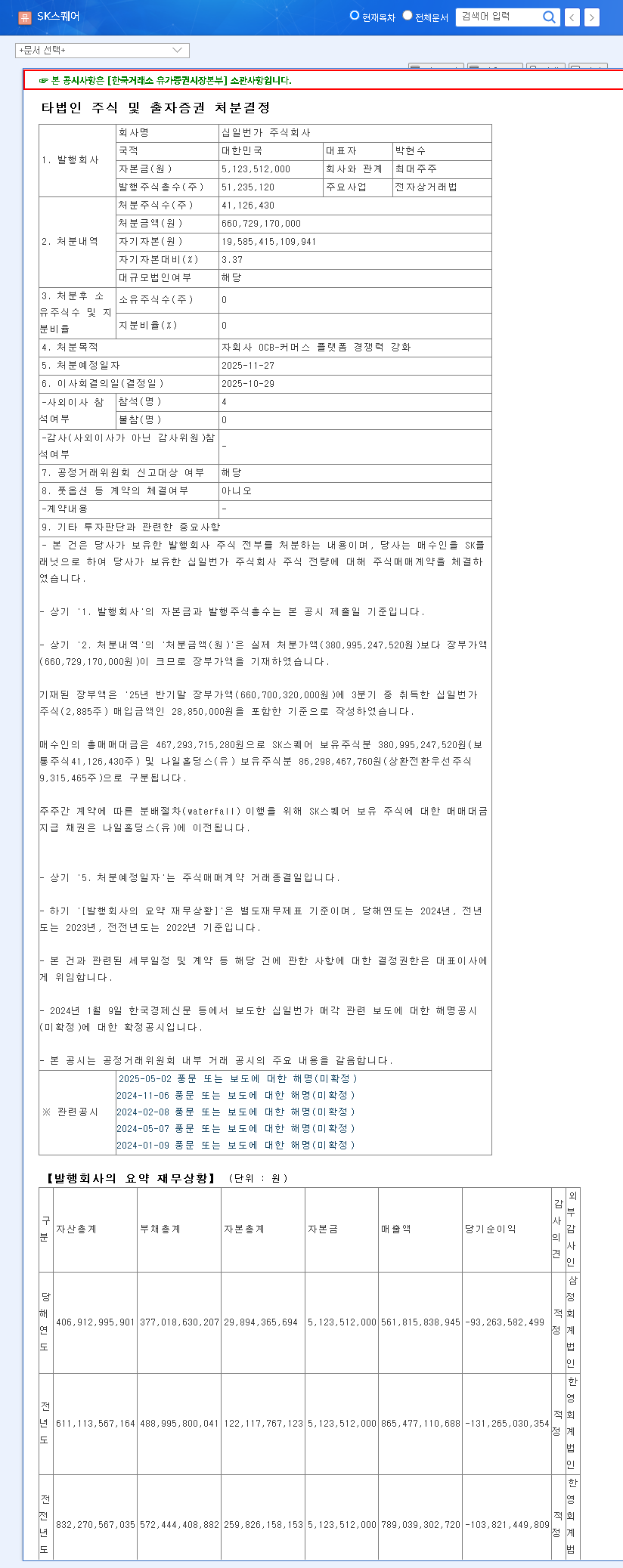
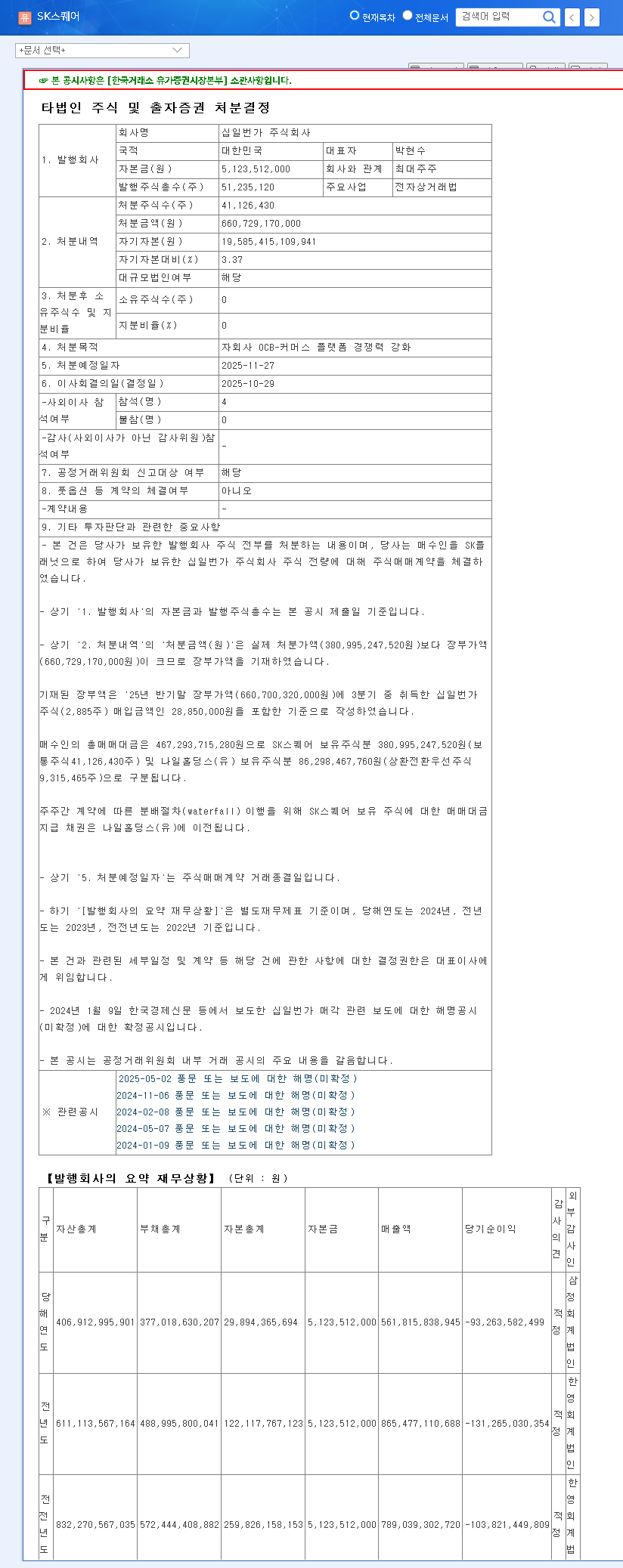
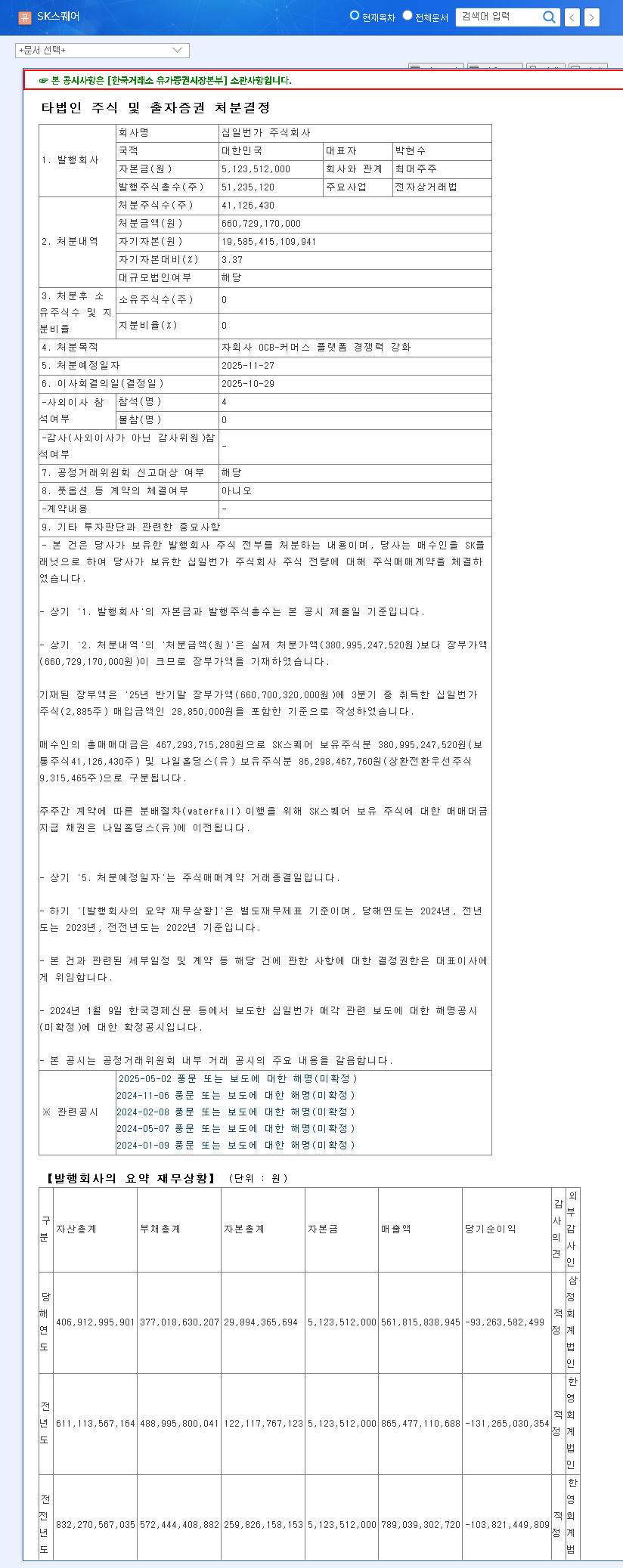
    The recent SK Square 11st divestment has sent ripples through the investment community, signaling a major strategic pivot for the South Korean investment holding company. SK Square Co., Ltd. has officially announced the sale of its entire stake in the e-commerce platform 11st for KRW 660.7 billion. This isn’t just a simple asset sale; it’s a calculated move to shed a loss-making subsidiary and double down on high-growth core businesses, most notably the semiconductor powerhouse, SK Hynix. For investors, this raises critical questions: What does this mean for the future of SK Square stock, and is now the right time to invest? This comprehensive analysis will explore the motives, financial implications, and long-term strategy following this landmark decision.

    The Landmark Decision: Unpacking the 11st Sale

    SK Square has confirmed its decision to dispose of its full KRW 660.7 billion stake in 11st, effectively reducing its ownership to 0%. This concludes an approximately seven-year journey with the e-commerce platform. The company’s stated purpose, according to the official disclosure, is to “enhance the competitiveness of the OCB-Commerce platform,” a clear indication of its intent to streamline operations and reallocate capital more efficiently. You can view the complete filing here: Official Disclosure (Source).

    Why Divest Now? A Tale of Two Markets

    The decision to proceed with the 11st sale is a direct result of two diverging realities. On one hand, the South Korean e-commerce market has become a hyper-competitive battleground. The dominance of players like Coupang and the aggressive market entry of Chinese platforms like AliExpress and Temu have squeezed margins and made profitability for platforms like 11st increasingly difficult. In the first half of 2025 alone, 11st recorded an operating loss of KRW 19.906 billion, continuing a trend of financial underperformance.

    On the other hand, SK Square’s core holdings are thriving. The company’s consolidated operating profit surged to KRW 3.0534 trillion in H1 2025, largely driven by the stellar performance of SK Hynix. The global recovery in the memory semiconductor market, fueled by the insatiable demand for AI technologies, has positioned SK Hynix as a critical growth engine. This contrast made the decision clear: cut losses from the underperforming e-commerce arm to fuel the high-performing technology core.

    Financial Impact and Future Strategy

    The financial implications of the SK Square 11st divestment are overwhelmingly positive in the short term. The injection of KRW 660.7 billion in cash provides a massive boost to the company’s liquidity and strengthens an already healthy balance sheet, which boasts a low debt ratio of just 9.84%. By removing a chronically loss-making subsidiary, SK Square is poised to see a significant improvement in its consolidated profitability.

    This strategic divestment is not just about stopping the bleeding; it’s about sharpening the company’s focus and reallocating capital to areas with the highest potential for exponential growth and shareholder value creation.

    Redirecting Capital for Maximum Growth

    The key question for investors is where this newfound capital will be deployed. The primary focus will undoubtedly be on strengthening its portfolio of high-growth technology assets. This includes:

    • Bolstering SK Hynix: Further investment in semiconductor R&D and production capacity, particularly in high-demand areas like High Bandwidth Memory (HBM) for AI applications. You can learn more about this trend from industry reports on the global semiconductor market.
    • Cultivating Other Subsidiaries: Accelerating the growth of other promising ventures like One Store (app market), Tmap Mobility (navigation and mobility services), and ADT Caps (security services).
    • Shareholder Returns: Continuing shareholder-friendly policies, such as the previously announced treasury stock cancellation, to directly enhance shareholder value.

    SK Square Investment Analysis: A ‘Buy’ Opportunity?

    With the divestment news, our SK Square investment analysis points towards a ‘Buy’ rating, but with key considerations. The mid-to-long-term success of SK Square stock will hinge on the flawless execution of its new, more focused strategy.

    The Bull Case (Positive Factors)

    • Strengthened Financials: Profit turnaround, enhanced liquidity, and a cleaner balance sheet post-sale.
    • Laser Focus on Core Tech: Capital allocation is now directed towards the high-margin, high-growth semiconductor sector via SK Hynix. Check out our deep dive into SK Hynix’s AI dominance.
    • Improved Profitability: The removal of 11st’s consistent losses is expected to boost overall consolidated profit margins.

    The Bear Case (Risks & Considerations)

    • Over-Reliance on SK Hynix: The company’s fortunes are now even more tightly linked to the volatile semiconductor market.
    • Execution Risk: Success depends on the wise investment of the proceeds and the ability to grow its other subsidiaries to profitability.
    • Subsidiary Performance: Other key holdings like One Store and Tmap Mobility are still facing intense competition and are not yet consistently profitable.

    Conclusion: A Promising New Chapter

    The SK Square 11st divestment is a decisive and logical move that positions the company for a more focused, tech-driven future. While risks remain, the strategic realignment to capitalize on the strength of SK Hynix and streamline the business portfolio is a compelling narrative for investors. The key will be to monitor how management deploys its new war chest and whether it can translate this strategic clarity into sustained earnings growth and long-term shareholder value.

    (402340) SK Square 11st Divestment: A Deep Dive into the KRW 660.7B Sale and Investment Outlook 관련 이미지
  • (348210) In-Depth Nextin Analysis (348210): AI & HBM Growth Driving 2024 Earnings

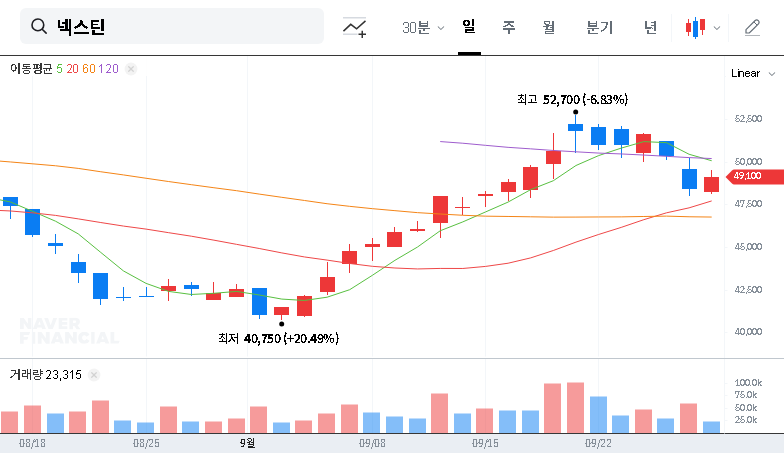
    (348210) In-Depth Nextin Analysis (348210): AI & HBM Growth Driving 2024 Earnings 대표 차트 이미지

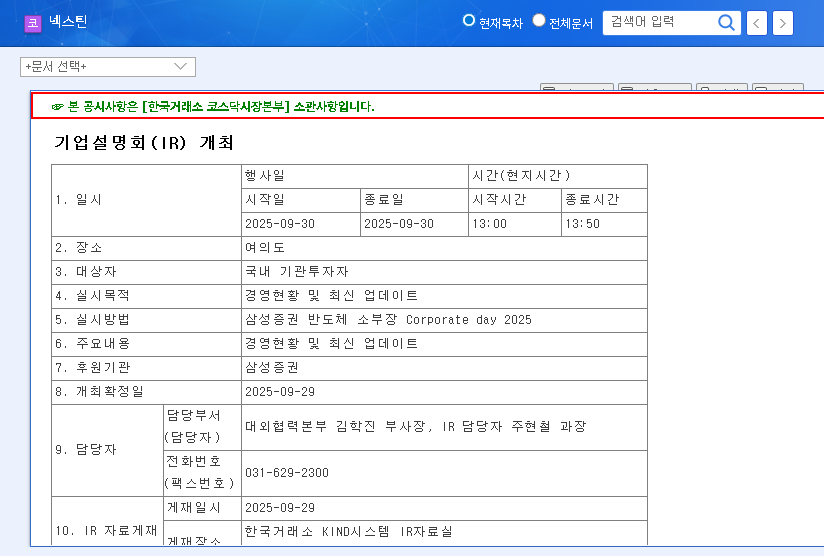
    Nextin (ticker: 348210), a pivotal force in the semiconductor inspection equipment sector, has recently drawn significant investor attention following its latest Investor Relations (IR) event. This event was more than a routine update; it unveiled a strategic roadmap for growth, capitalizing on a stellar 2024 performance and the explosive demand in the AI and High Bandwidth Memory (HBM) markets. This comprehensive Nextin analysis will delve into the company’s fundamentals, growth catalysts, and potential risks to provide investors with the insights needed for informed decision-making.

    As the AI revolution accelerates, the demand for advanced memory solutions like HBM is skyrocketing. Companies like Nextin, which provide the critical inspection tools to ensure quality and yield, are positioned at the very heart of this technological shift. Understanding their role is key to unlocking investment opportunities.

    Deep Dive: Nextin’s 2024 Financial Performance

    Nextin’s financial results for 2024 paint a picture of robust health and significant momentum. The company reported impressive figures, largely driven by a recovering semiconductor market and the successful commercialization of its next-generation inspection equipment. According to its latest financial disclosure (Official Disclosure), the key metrics are:

    • Revenue: 113.7 billion KRW
    • Operating Profit: 46.9 billion KRW

    These numbers represent a substantial year-over-year increase, signaling strong operational efficiency and market demand for Nextin’s products. This performance provides a solid foundation for the company’s ambitious growth plans centered on the AI semiconductor growth trend.

    Core Growth Catalysts for Nextin Stock

    Several powerful factors are converging to create a favorable environment for Nextin. Investors performing a Nextin analysis should pay close attention to these key drivers.

    1. The AI and HBM Market Explosion

    The insatiable demand for processing power from AI applications has made HBM a critical component in modern GPUs. Manufacturing HBM involves stacking multiple DRAM dies, a complex process where defects are costly. This is where Nextin’s specialized HBM inspection equipment, such as its ‘KROKY’ system, becomes indispensable. It ensures the integrity of these high-value components, directly benefiting from the industry’s rapid expansion. For more context, you can read our complete guide to the HBM supply chain.

    2. Innovative Product Portfolio (IRIS & KROKY)

    Nextin has fortified its competitive edge with the launch of new, cutting-edge equipment. The IRIS platform offers advanced wafer inspection capabilities, while the KROKY system is tailored for the specific challenges of HBM. This technological leadership allows Nextin to compete effectively with global giants like KLA, often providing a compelling combination of performance and price competitiveness.

    3. Strategic Client Relationships & Expansion

    Solid contracts with major players like SK Hynix and SMIC provide a stable and predictable revenue stream. The anticipation of new, larger-scale contracts with SK Hynix, a leader in the HBM space, signals strong future growth potential. Furthermore, Nextin’s planned manufacturing facility expansion in Yongin City is a clear indicator of its long-term strategy to scale production and meet rising global demand.

    Navigating Potential Risks and Headwinds

    While the outlook is bright, a balanced Nextin analysis must also consider potential risks. Prudent investors should monitor the following factors:

    • Client Concentration: A high dependency on a few key customers, while currently beneficial, introduces risk. Diversifying its client base will be crucial for long-term stability.
    • Industry Cyclicality: The semiconductor industry is notoriously cyclical. While the AI trend provides a strong secular tailwind, macroeconomic slowdowns could still impact capital expenditures and equipment orders, as noted by the Semiconductor Industry Association (SIA).
    • Competitive Landscape: The market for semiconductor inspection is intensely competitive. Nextin must continue to innovate relentlessly to maintain its technological edge against larger, well-established competitors.

    Investment Thesis: A Forward-Looking View on Nextin Stock

    Based on this analysis, Nextin (348210) presents a compelling investment case, particularly for those with a long-term horizon. The company is strategically positioned to capitalize on the secular growth trends of AI and HBM. Its strong technological foundation, robust financial health, and clear expansion plans provide a solid basis for future appreciation.

    For short-term traders, the stock may experience volatility based on contract announcements and quarterly earnings. However, for long-term investors, the structural demand for its HBM inspection equipment and other advanced systems offers a clear and powerful growth narrative. Continuous monitoring of client diversification efforts and the competitive landscape will be key to managing risk and maximizing the potential of an investment in Nextin stock.

    (348210) In-Depth Nextin Analysis (348210): AI & HBM Growth Driving 2024 Earnings 관련 이미지
    (348210) In-Depth Nextin Analysis (348210): AI & HBM Growth Driving 2024 Earnings 관련 이미지