Tag: SHINHUNG CO.

  • (004080) SHINHUNG Investment Strategy (004080): Shareholding Change vs. Weak Fundamentals

    (004080) SHINHUNG Investment Strategy (004080): Shareholding Change vs. Weak Fundamentals

    Investors in SHINHUNG CO.,LTD (004080) are facing a complex picture. A recent disclosure on November 3, 2025, revealed a change in major shareholder ownership, a move often scrutinized for its implications on management. But does this signal of stability outweigh the company’s troubling financial performance? This analysis provides a detailed SHINHUNG investment strategy, dissecting the shareholder report, evaluating the underlying fundamentals, and offering a clear path forward for current and prospective investors.

    This isn’t just about a minor shift in percentages; it’s about understanding the strategic intent behind the numbers and how it aligns—or conflicts—with the company’s financial health. We’ll help you see the complete picture.

    Decoding the SHINHUNG Shareholding Change

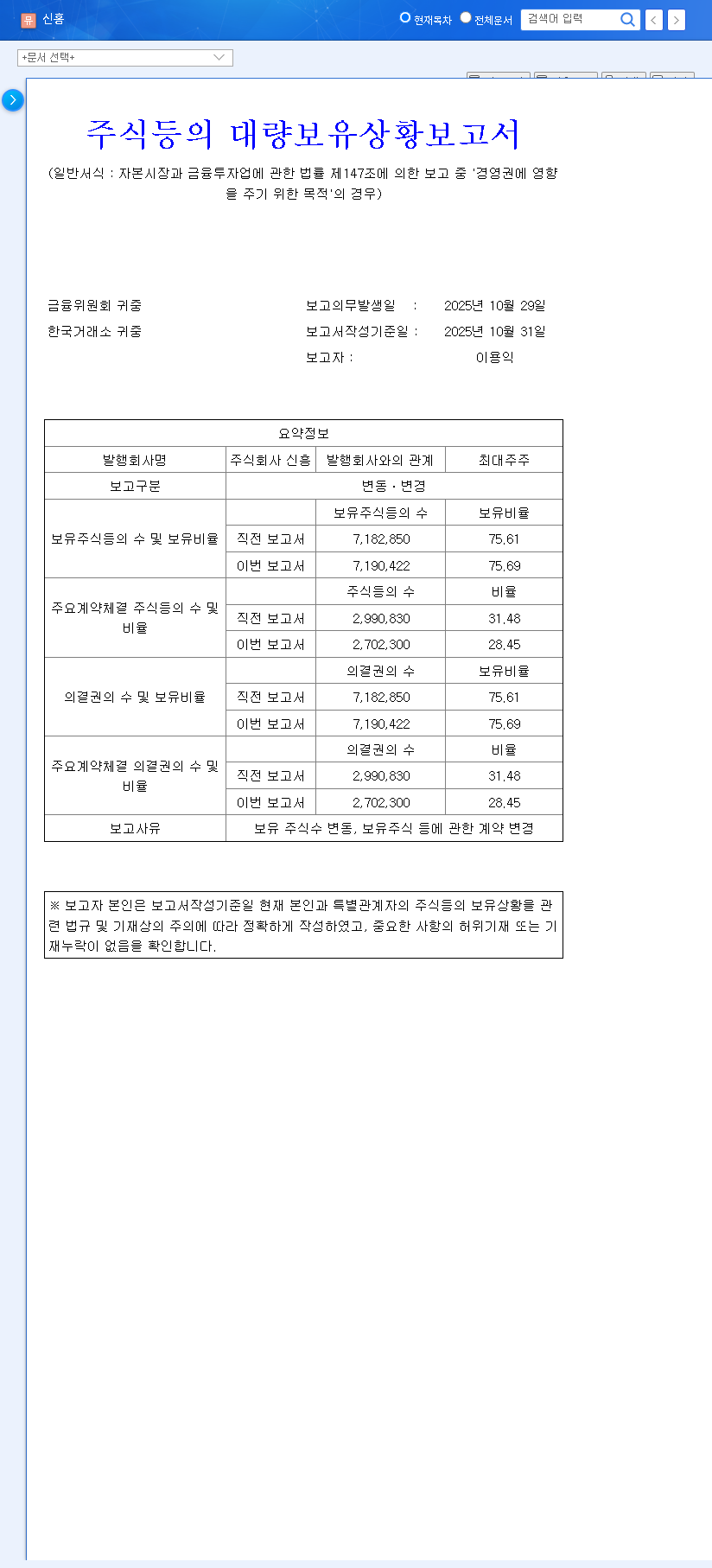
    On November 3, 2025, a disclosure was filed concerning the holdings of Lee Yong-Ik and three related parties. While the headline number seems minor, the details offer insight into the controlling shareholders’ intentions. Investors can review the complete filing via the Official Disclosure (DART Report).

    Key Details from the Report:

    • Total Shareholding Change: A marginal increase of 0.08 percentage points, moving from 75.61% to 75.69%.
    • Stated Purpose: Explicitly declared as ‘influence on management rights,’ signaling a clear intent to maintain and potentially strengthen control.
    • Internal Movements: While some individuals (Kim Yang-Soon and Lee Hyun-Sook) sold small amounts, key corporate entities like DV Holdings (+8,368 shares) and Shinsungchijae (+3,723 shares) were net buyers, consolidating the core group’s position.

    Investment Analysis: The Bull vs. Bear Case

    The Bull Case: A Vote for Management Stability

    The primary positive takeaway from the SHINHUNG shareholding change is the reinforcement of management stability. For long-term investors, a committed and stable leadership team is paramount. It reduces the risk of sudden strategic shifts or internal power struggles that can disrupt operations. The net purchases by related corporate entities suggest confidence from within regarding the company’s future direction, even amidst current financial headwinds. This move can be interpreted as management ‘doubling down’ on their long-term vision, which can foster investor confidence and lay the groundwork for a future recovery.

    The Bear Case: Alarming Fundamental Weaknesses

    Despite the positive signal on governance, the SHINHUNG fundamentals paint a concerning picture. Stability means little if the underlying business is deteriorating. A comprehensive SHINHUNG stock analysis must weigh these critical issues:

    • Deteriorating Profitability: In the first half of 2025, revenue fell 6% year-over-year. More alarmingly, operating profit plummeted by 26.8% and net profit by 19.1%. This indicates severe margin compression and an inability to control costs relative to sales.
    • Worsening Financial Health: Borrowings more than doubled, causing the debt-to-equity ratio to spike from a very healthy 1.55% to a more concerning 5.78%. While still low in absolute terms, the rapid rate of increase is a significant red flag that requires monitoring.
    • Macroeconomic Headwinds: The persistent high-interest rate environment inflates borrowing costs, directly impacting the bottom line. Furthermore, exposure to foreign currency debt makes SHINHUNG vulnerable to fluctuations in the KRW/Euro and KRW/USD exchange rates, adding another layer of risk.

    The Final Verdict: A Prudent SHINHUNG Investment Strategy

    Considering the conflicting signals, a prudent SHINHUNG investment strategy calls for a cautious and neutral stance. The minor shareholding increase is too small to catalyze a significant stock price rally on its own. The market will, and should, remain focused on the company’s ability to address its fundamental challenges. Real upward momentum can only be expected when tangible signs of a turnaround appear.

    Investors should add SHINHUNG to a watchlist and monitor the following key performance indicators before committing capital. For broader context, it’s also wise to read market analysis from authoritative sources like Bloomberg’s industry reports and compare SHINHUNG’s performance with key competitors discussed in our analysis of the Korean dental market.

    Key Monitoring Points for Investors:

    • Quarterly Earnings Turnaround: Look for a stabilization and subsequent recovery in both revenue and operating profit margins in the upcoming financial reports.
    • Debt Management: Watch for any strategic initiatives aimed at reducing the new debt load or improving the company’s cash flow to service it.
    • Market Share Trends: Analyze SHINHUNG’s competitive position within the dental device industry. Is it losing ground to rivals, or is this an industry-wide slowdown?

    Frequently Asked Questions (FAQ)

    Is the SHINHUNG shareholding change a strong buy signal?

    No. While the 0.08% increase in the major shareholders’ stake is a positive sign for management stability, it is far too small to be considered a strong buy signal on its own. The company’s weak fundamentals are a much more significant factor for the stock price at present.

    What are the biggest risks facing SHINHUNG CO.,LTD right now?

    The primary risks are continued deterioration in revenue and profitability, a rising debt burden in a high-interest-rate environment, and potential loss of market share in the competitive dental device sector. Foreign exchange volatility also poses a threat due to foreign currency-denominated debt.

    What should an investor do with SHINHUNG stock?

    A cautious ‘hold’ or ‘wait-and-see’ approach is advisable. The current SHINHUNG investment strategy should focus on monitoring the company’s financial results for signs of a concrete turnaround before considering a new or larger position.
    (004080) SHINHUNG Investment Strategy (004080): Shareholding Change vs. Weak Fundamentals 관련 이미지
  • (004080) SHINHUNG Share Buyback: An Expert Analysis of Stock Price & Shareholder Value

    (004080) SHINHUNG Share Buyback: An Expert Analysis of Stock Price & Shareholder Value

    Investors are taking a keen interest in SHINHUNG CO.,LTD following a significant corporate action. The recent announcement of a SHINHUNG share buyback has sparked discussions about its potential effects on the company’s stock price and the overall return for investors. This comprehensive analysis will explore the mechanics of this treasury stock acquisition, dissect the potential market reactions, and provide a clear roadmap for shareholders to navigate this event. We aim to deliver actionable insights to help you make well-informed investment decisions.

    First, What is a Share Buyback?

    A share buyback, or treasury stock acquisition, is a corporate action where a company repurchases its own outstanding shares from the open market. This reduces the number of shares available, a move that can have several strategic implications. Companies often initiate buybacks when they believe their stock is undervalued or when they have excess cash and wish to return value to their shareholders without committing to a long-term dividend increase.

    By reducing the supply of shares, a buyback can increase the earnings per share (EPS) and often signal management’s confidence in the company’s future prospects, which can be a powerful catalyst for the stock price.

    SHINHUNG’s Share Buyback: The Key Details

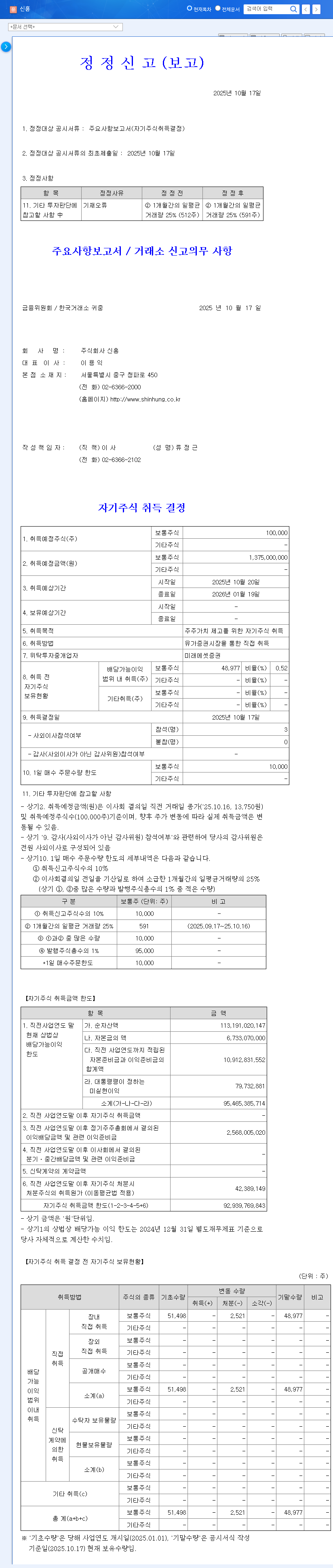
    On October 17, 2025, SHINHUNG CO.,LTD formally announced its decision to acquire its own treasury shares. The full details were released in an Official Disclosure (Source) on the DART system. Here are the core facts of the announcement:

    • Company: SHINHUNG CO.,LTD (Market Cap: KRW 131 billion)
    • Number of Shares: 100,000 common shares
    • Total Acquisition Value: KRW 1.4 billion
    • Stated Purpose: To enhance shareholder value
    • Acquisition Method: Direct purchase via the stock market
    • Ratio to Market Cap: 1.05%

    Analyzing the Impact on SHINHUNG’s Stock Price

    The decision to initiate a share buyback can influence a company’s stock and valuation in multiple ways. Let’s examine the potential scenarios for SHINHUNG.

    The Positive Case: A Boost to Shareholder Value

    The most direct benefit is the potential for an increased Earnings Per Share (EPS). With fewer shares outstanding, the company’s net income is divided by a smaller number, mathematically boosting the EPS. This is a key metric investors use for valuation, and a higher EPS is generally viewed favorably. For a detailed explanation, you can review this guide from a leading financial education site. Furthermore, the act of buying back shares creates demand in the market, which can provide support for the SHINHUNG stock price and potentially cushion it against market downturns. Finally, it sends a strong signal of confidence from management to the market, suggesting they believe the shares are currently undervalued.

    The Neutral Case: A Modest but Limited Impact

    While positive, the scale of the buyback is important. An acquisition of KRW 1.4 billion, representing 1.05% of the market cap, is significant enough to be noticed. However, it may not be large enough to trigger an immediate, dramatic surge in the stock price. The market may view this as a good first step but will likely wait for signs of further buybacks or other shareholder-friendly initiatives. The long-term impact will depend on whether this is a one-off event or part of a larger, ongoing strategy to enhance shareholder value.

    Potential Concerns and Considerations

    While unlikely to be negative, investors should consider the opportunity cost. The capital used for the SHINHUNG share buyback could have been used for other purposes, such as research and development, capital expenditures for expansion, or debt reduction. If the company is forgoing high-growth investment opportunities to repurchase stock, it could raise questions about its future growth trajectory. However, without more information on the company’s cash reserves and investment pipeline, this remains purely speculative.

    Actionable Checklist for SHINHUNG Investors

    For current and prospective investors, the announcement of a treasury stock acquisition warrants a strategic review. Here is a checklist to guide your analysis:

    • Analyze Financial Health: Dig into the company’s balance sheet. Does SHINHUNG have ample cash reserves to fund this buyback without straining its operational finances? You can learn more about how to evaluate corporate financial statements here.
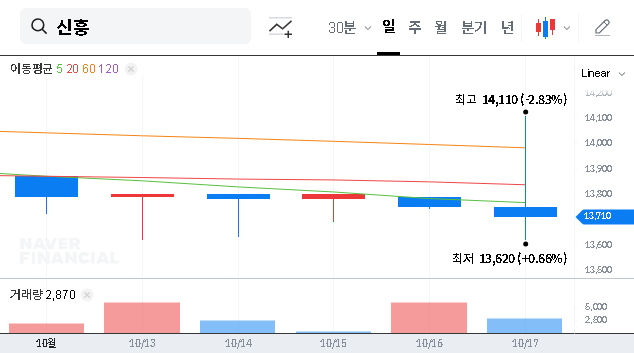
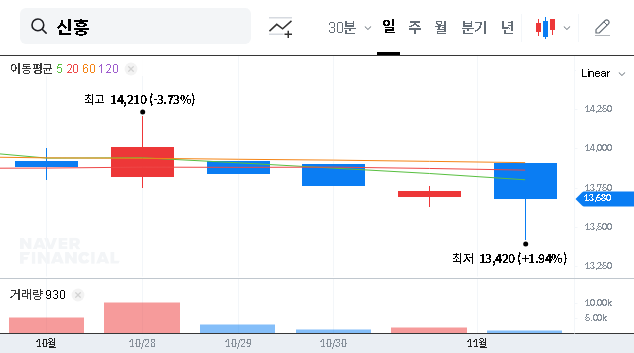
    • Monitor Market Reaction: Keep a close eye on the SHINHUNG stock price and trading volume in the days and weeks following the buyback period. Is the market reacting positively, or is the event being met with indifference?
    • Look for Future Signals: Pay attention to subsequent corporate communications. Does management hint at additional buybacks or other measures to increase shareholder value? This initial buyback could be the start of a larger trend.
    • Review Analyst Reports: Check for updated reports from financial analysts. Their revised price targets and ratings can provide insight into how the professional investment community views this development.

    Frequently Asked Questions

    Q: What is the primary purpose of SHINHUNG CO.,LTD’s share buyback?

    A: The company has officially stated the purpose is to ‘enhance shareholder value.’ This is a clear signal of intent to increase per-share value by reducing the total number of outstanding shares and boosting investor confidence.

    Q: Is the scale of this buyback large enough to impact the stock price?

    A: At 1.05% of the market cap, the buyback is substantial enough to provide price support and create positive sentiment. While it may not cause a dramatic, immediate price surge, it is a fundamentally positive action that supports long-term shareholder value.

    Disclaimer: This analysis is based on publicly available information and is intended for informational purposes only. It should not be construed as investment advice. All investment decisions are the sole responsibility of the individual investor.

    (004080) SHINHUNG Share Buyback: An Expert Analysis of Stock Price & Shareholder Value 관련 이미지
  • (004080) SHINHUNG Treasury Stock Acquisition (004080): An In-Depth Analysis for Investors

    (004080) SHINHUNG Treasury Stock Acquisition (004080): An In-Depth Analysis for Investors

    The recent announcement of the SHINHUNG treasury stock acquisition has sent ripples through the investment community, focusing significant attention on the specialized medical device company, SHINHUNG CO.,LTD (004080). A stock buyback is a powerful corporate action, often interpreted as a bullish signal from management. But for discerning investors, it’s crucial to look beyond the headlines. Is this a genuine move to enhance shareholder value based on deep confidence, or is it a short-term financial tactic? This comprehensive analysis will dissect the details, explore the potential upside, weigh the inherent risks, and provide actionable insights to guide your investment decisions regarding SHINHUNG’s future.

    Unpacking the SHINHUNG Stock Buyback Announcement

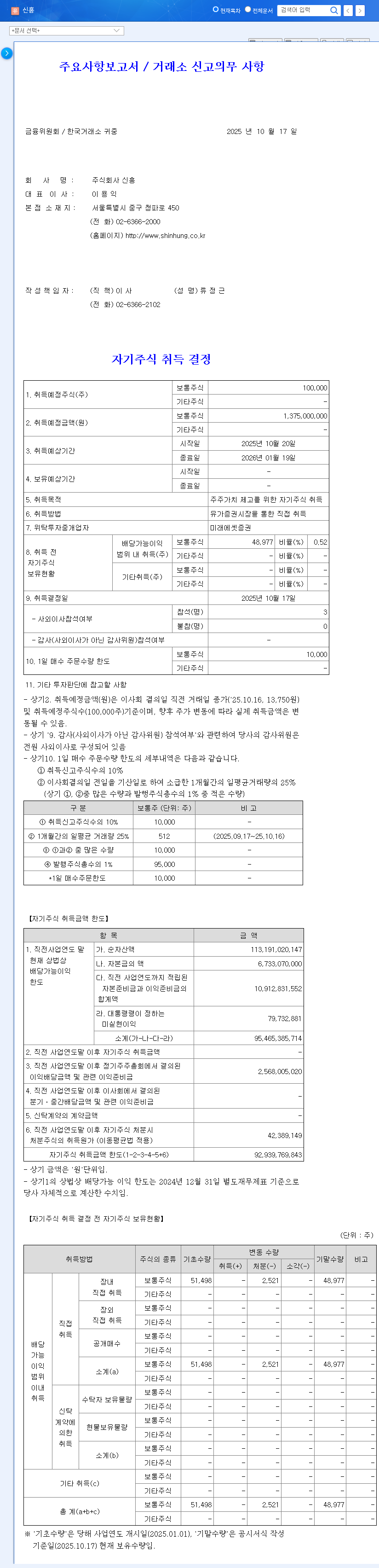
    First, let’s establish the facts. A company’s decision to repurchase its own shares from the open market is a significant financial event. Here are the core details of SHINHUNG’s plan, as outlined in their public filing.

    Key Details of the Acquisition

    • Decision Date: October 17, 2025
    • Primary Purpose: Enhancement of shareholder value and stock price stabilization.
    • Number of Shares: 100,000 common shares.
    • Estimated Value: Approximately KRW 1.4 billion (representing about 1.05% of the current market capitalization).
    • Acquisition Method: Direct purchase on the KOSPI market.
    • Brokerage Partner: Mirae Asset Securities.

    By removing these shares from circulation, SHINHUNG effectively reduces the total number of outstanding shares. This simple act of supply reduction has several important implications for the company’s financial metrics and stock valuation. This decision was formally filed, and interested parties can review the Official Disclosure for complete details.

    The Bull Case: Why This Is a Positive Signal

    From an investor’s perspective, a SHINHUNG stock buyback can be interpreted in several positive ways, suggesting underlying strength and a commitment to its shareholders.

    1. Direct Boost to Shareholder Value Metrics

    With fewer shares outstanding, the company’s net income is divided among a smaller pool of equity. This automatically increases key performance indicators like Earnings Per Share (EPS). A higher EPS can make the stock appear more attractive on a valuation basis and can lead to a higher dividend per share, directly increasing returns to shareholders.

    2. A Strong Signal of Management Confidence

    When a company’s leadership team, who has the most intimate knowledge of its operations and future prospects, decides to buy its own stock, it sends a powerful message. It implies they believe the current stock price is undervalued and that they expect future growth that the market has not yet priced in. This act of ‘putting your money where your mouth is’ can significantly boost investor confidence.

    A well-executed treasury stock acquisition can create a positive feedback loop: the buyback boosts per-share metrics, which signals confidence, attracting new investors and potentially driving the stock price higher.

    The Bear Case: A Prudent Investor’s Checklist of Risks

    However, a thorough 004080 stock analysis demands a balanced view. While the upside is clear, there are potential risks and alternative interpretations that should be carefully considered before making an investment decision.

    1. The Opportunity Cost of Capital

    The KRW 1.4 billion allocated for this buyback is a significant sum. Investors must ask: could this capital have generated a higher return if used elsewhere? For instance, it could have funded R&D for new medical devices, been used for a strategic acquisition to expand market share, or been applied to paying down debt to strengthen the balance sheet. A buyback’s return is only superior if the stock price appreciates significantly.

    2. Masking Weaker Fundamentals?

    In some cases, companies use stock buybacks as a form of financial engineering to artificially inflate EPS when organic earnings growth is slowing. It is critical for investors to analyze if SHINHUNG’s core business is healthy and growing, or if the buyback is a tactic to distract from underlying operational challenges. A rising EPS from buybacks is less valuable than one driven by increased sales and profitability.

    Conclusion: A Calculated Move That Requires Monitoring

    The SHINHUNG treasury stock acquisition is a clear and positive step towards enhancing shareholder value. On balance, it is a favorable development that is likely to provide support for the stock price in the near term. However, the long-term impact on corporate value hinges on whether this is the most efficient use of capital and if the company’s fundamental growth story remains intact. Prudent investors should view this as one important piece of a much larger puzzle. Continuous monitoring of financial performance, market reaction, and management’s future capital allocation decisions is essential. For a deeper look into the sector, you may find value in our complete guide to analyzing medical device stocks.

    (004080) SHINHUNG Treasury Stock Acquisition (004080): An In-Depth Analysis for Investors 관련 이미지