Investors are taking a keen interest in SHINHUNG CO.,LTD following a significant corporate action. The recent announcement of a SHINHUNG share buyback has sparked discussions about its potential effects on the company’s stock price and the overall return for investors. This comprehensive analysis will explore the mechanics of this treasury stock acquisition, dissect the potential market reactions, and provide a clear roadmap for shareholders to navigate this event. We aim to deliver actionable insights to help you make well-informed investment decisions.
First, What is a Share Buyback?
A share buyback, or treasury stock acquisition, is a corporate action where a company repurchases its own outstanding shares from the open market. This reduces the number of shares available, a move that can have several strategic implications. Companies often initiate buybacks when they believe their stock is undervalued or when they have excess cash and wish to return value to their shareholders without committing to a long-term dividend increase.
By reducing the supply of shares, a buyback can increase the earnings per share (EPS) and often signal management’s confidence in the company’s future prospects, which can be a powerful catalyst for the stock price.
SHINHUNG’s Share Buyback: The Key Details
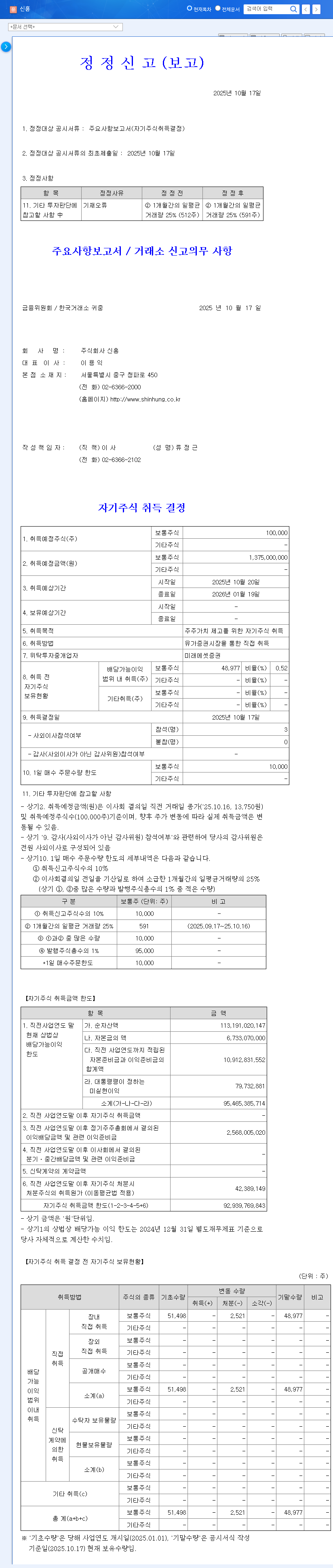
On October 17, 2025, SHINHUNG CO.,LTD formally announced its decision to acquire its own treasury shares. The full details were released in an Official Disclosure (Source) on the DART system. Here are the core facts of the announcement:
- •Company: SHINHUNG CO.,LTD (Market Cap: KRW 131 billion)
- •Number of Shares: 100,000 common shares
- •Total Acquisition Value: KRW 1.4 billion
- •Stated Purpose: To enhance shareholder value
- •Acquisition Method: Direct purchase via the stock market
- •Ratio to Market Cap: 1.05%
Analyzing the Impact on SHINHUNG’s Stock Price
The decision to initiate a share buyback can influence a company’s stock and valuation in multiple ways. Let’s examine the potential scenarios for SHINHUNG.
The Positive Case: A Boost to Shareholder Value
The most direct benefit is the potential for an increased Earnings Per Share (EPS). With fewer shares outstanding, the company’s net income is divided by a smaller number, mathematically boosting the EPS. This is a key metric investors use for valuation, and a higher EPS is generally viewed favorably. For a detailed explanation, you can review this guide from a leading financial education site. Furthermore, the act of buying back shares creates demand in the market, which can provide support for the SHINHUNG stock price and potentially cushion it against market downturns. Finally, it sends a strong signal of confidence from management to the market, suggesting they believe the shares are currently undervalued.
The Neutral Case: A Modest but Limited Impact
While positive, the scale of the buyback is important. An acquisition of KRW 1.4 billion, representing 1.05% of the market cap, is significant enough to be noticed. However, it may not be large enough to trigger an immediate, dramatic surge in the stock price. The market may view this as a good first step but will likely wait for signs of further buybacks or other shareholder-friendly initiatives. The long-term impact will depend on whether this is a one-off event or part of a larger, ongoing strategy to enhance shareholder value.
Potential Concerns and Considerations
While unlikely to be negative, investors should consider the opportunity cost. The capital used for the SHINHUNG share buyback could have been used for other purposes, such as research and development, capital expenditures for expansion, or debt reduction. If the company is forgoing high-growth investment opportunities to repurchase stock, it could raise questions about its future growth trajectory. However, without more information on the company’s cash reserves and investment pipeline, this remains purely speculative.
Actionable Checklist for SHINHUNG Investors
For current and prospective investors, the announcement of a treasury stock acquisition warrants a strategic review. Here is a checklist to guide your analysis:
- •Analyze Financial Health: Dig into the company’s balance sheet. Does SHINHUNG have ample cash reserves to fund this buyback without straining its operational finances? You can learn more about how to evaluate corporate financial statements here.
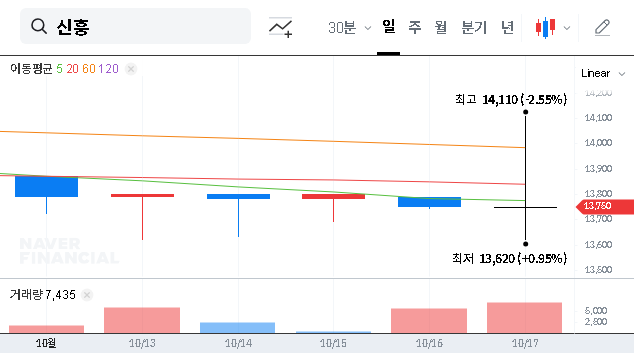
- •Monitor Market Reaction: Keep a close eye on the SHINHUNG stock price and trading volume in the days and weeks following the buyback period. Is the market reacting positively, or is the event being met with indifference?
- •Look for Future Signals: Pay attention to subsequent corporate communications. Does management hint at additional buybacks or other measures to increase shareholder value? This initial buyback could be the start of a larger trend.
- •Review Analyst Reports: Check for updated reports from financial analysts. Their revised price targets and ratings can provide insight into how the professional investment community views this development.
Frequently Asked Questions
Q: What is the primary purpose of SHINHUNG CO.,LTD’s share buyback?
A: The company has officially stated the purpose is to ‘enhance shareholder value.’ This is a clear signal of intent to increase per-share value by reducing the total number of outstanding shares and boosting investor confidence.
Q: Is the scale of this buyback large enough to impact the stock price?
A: At 1.05% of the market cap, the buyback is substantial enough to provide price support and create positive sentiment. While it may not cause a dramatic, immediate price surge, it is a fundamentally positive action that supports long-term shareholder value.
Disclaimer: This analysis is based on publicly available information and is intended for informational purposes only. It should not be construed as investment advice. All investment decisions are the sole responsibility of the individual investor.