Tag: Shares

  • Shilla Trading Stock Forecast: Inheritance Issues, Weakening Fundamentals – What Should Investors Do?

    Shilla Trading Stock Forecast: Inheritance Issues, Weakening Fundamentals - What Should Investors Do? 대표 차트 이미지

    1. What Happened?: Analysis of Shilla Trading’s Shareholding Change Disclosure

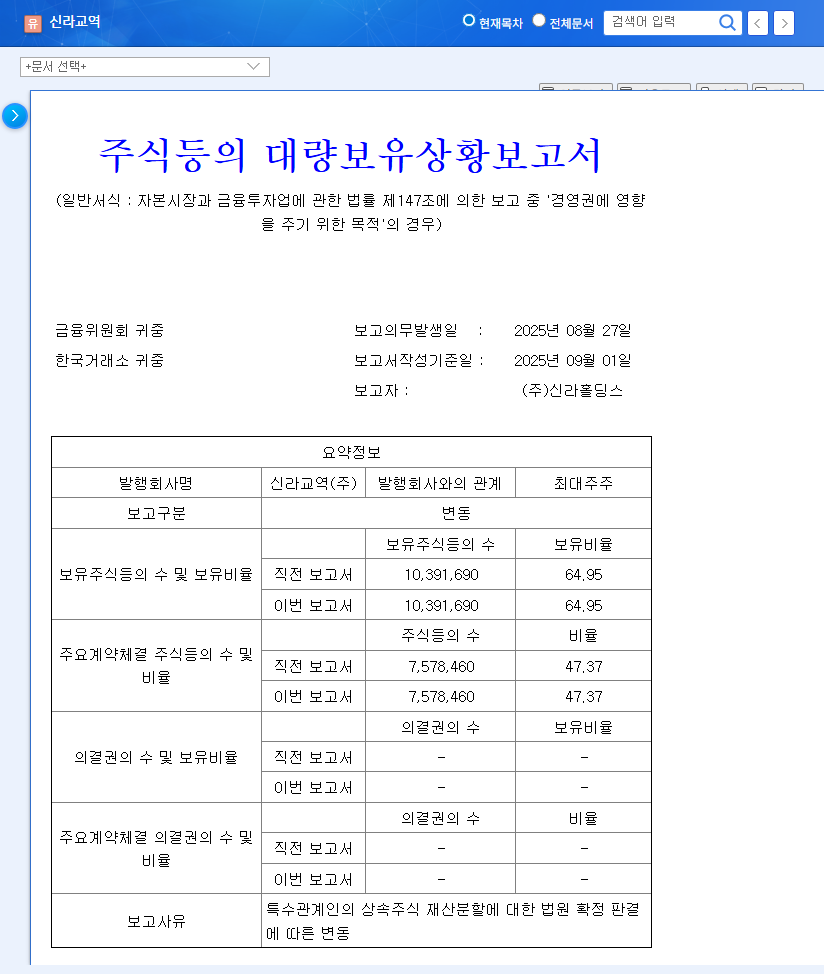
    On September 1, 2025, Shilla Trading disclosed its ‘Report on the Status of Large Shareholdings’. The key takeaway is the inheritance and redistribution of shares among related parties. While Shilla Holdings maintained its 64.95% stake, there were changes in the shareholdings of related parties, including Park Jae-heung. While no immediate impact on management is expected, continuous monitoring of potential future changes in the ownership structure is necessary.

    2. Why It Matters: Fundamental Analysis and Market Conditions

    Shilla Trading is currently facing a challenging business environment. Declining sales and net losses continue due to poor performance in the pelagic fishing and seafood distribution sectors, and cash flow and financial soundness are also deteriorating. External headwinds such as the global economic slowdown, increasing exchange rate volatility, and rising interest rates are also adding pressure. However, the growth potential of some business segments (dining, canned tuna) and efforts to improve the financial structure can be positive factors.

    3. What To Do: Investment Strategy

    The event itself is expected to have a limited impact on stock prices in the short term. However, considering the deteriorating fundamentals and external uncertainties, a cautious approach to investment is necessary. Careful investment decisions should be made by closely monitoring the recovery of key business segments, changes in macroeconomic indicators, and the company’s efforts to strengthen its business competitiveness.

    4. Investor Action Plan: Step-by-Step Guide

    • Step 1: Observe and Gather Information – Continuously monitor fundamental improvements and changes in the external environment.
    • Step 2: Check Key Indicators – Look for signs of recovery in the pelagic fishing and seafood distribution sectors.
    • Step 3: Risk Management – Establish a risk management strategy for macroeconomic volatility, including exchange rates, oil prices, and interest rates.
    • Step 4: Maintain a Long-Term Perspective – Focus on the company’s long-term growth potential without being swayed by short-term stock price fluctuations.
    Q: How will Shilla Trading’s recent shareholding change affect its stock price?

    A: This change in shareholding is due to inheritance within the major shareholder group and is expected to have a limited impact on stock price in the short term. However, it’s crucial to make investment decisions based on a comprehensive consideration of fundamentals and market conditions.

    Q: What are Shilla Trading’s core businesses?

    A: Shilla Trading engages in various businesses including pelagic fishing, seafood distribution, steel, dining, and canned tuna. The recent poor performance of the pelagic fishing and seafood distribution sectors is a major concern.

    Q: What should investors be aware of when considering investing in Shilla Trading?

    A: It’s important to closely monitor signs of fundamental improvement, changes in the external environment, recovery of key business segments, and establish a risk management plan for macroeconomic volatility. Investments should be considered from a long-term perspective.
    Shilla Trading Stock Forecast: Inheritance Issues, Weakening Fundamentals - What Should Investors Do? 관련 이미지
    Shilla Trading Stock Forecast: Inheritance Issues, Weakening Fundamentals - What Should Investors Do? 관련 이미지
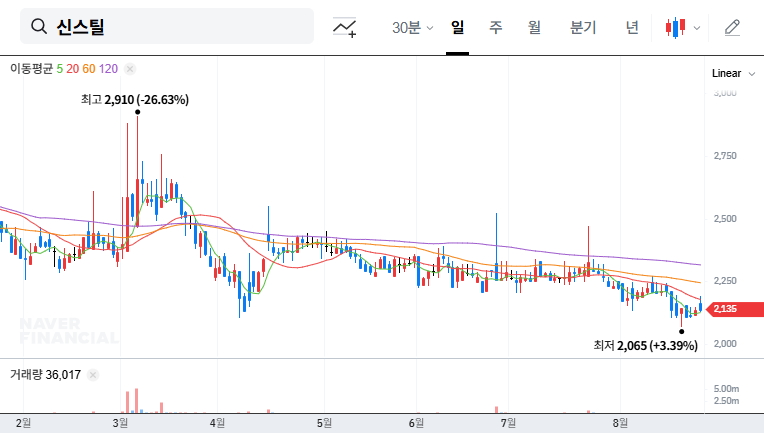
  • Shinstill Stock Forecast: Opportunity or Crisis After Major Shareholder’s Gift?

    Shinstill Stock Forecast: Opportunity or Crisis After Major Shareholder's Gift? 대표 차트 이미지

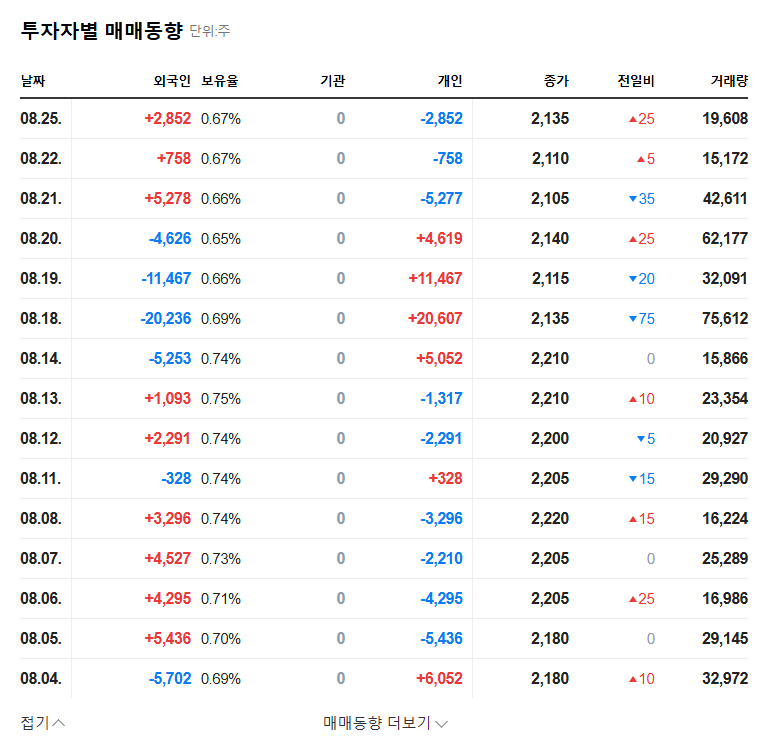
    What Happened at Shinstill?

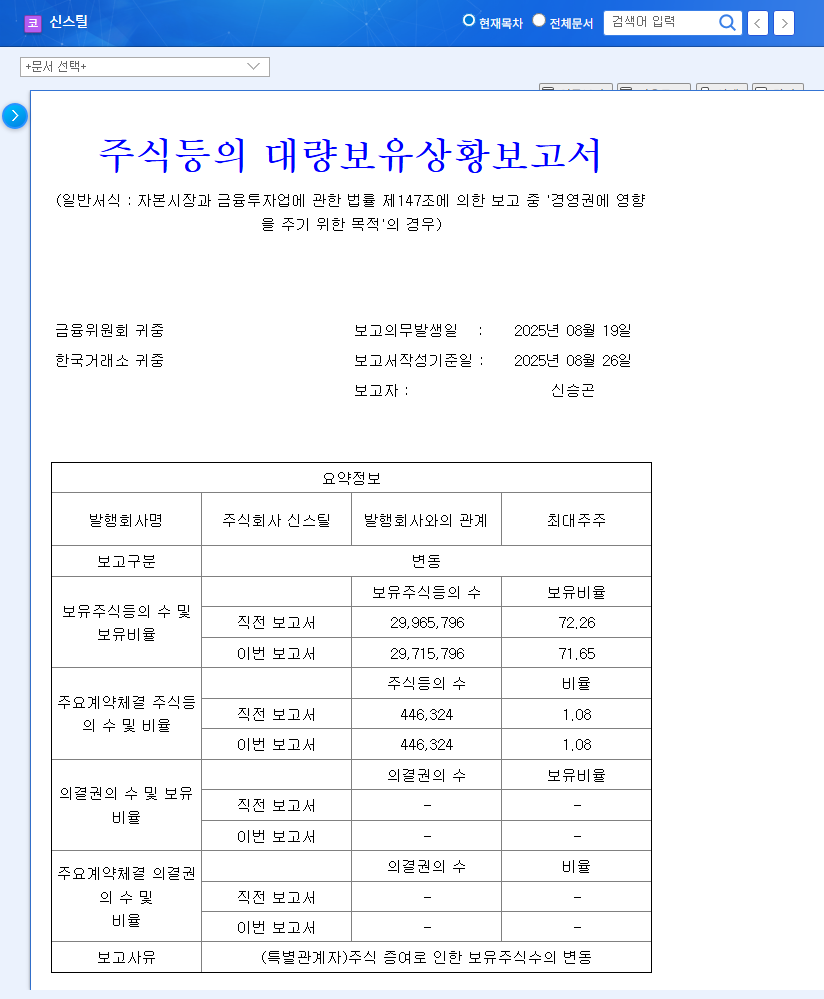
    Shinstill’s CEO Shin Seung-gon and related parties gifted 250,000 common shares to Mr. Seok Jin-gwang, resulting in a change in shareholding ratio. This decreased the total shareholding from 72.26% to 71.65%. This information was disclosed on August 19, 2025.

    Why Did This Happen?

    The specific purpose of the gift hasn’t been disclosed, but generally, there can be various reasons such as share diversification, inheritance planning, or management succession. Currently, the stock gift itself doesn’t directly impact the company’s fundamentals. However, it’s necessary to closely monitor potential changes in shareholder composition and management strategies.

    The Gift’s Impact on Shinstill’s Future

    Short-term Impact:

    • Potential for Increased Stock Volatility: Share changes can influence investor sentiment, increasing short-term stock volatility.
    • Low Possibility of Management Change: As CEO Shin Seung-gon still maintains a high ownership stake, the possibility of a short-term management change is low.

    Mid- to Long-term Impact:

    • The emergence of new shareholders could lead to future changes in management strategies.
    • If the gifted shares are sold, it could put downward pressure on the stock price.

    What Should Investors Do?

    Shinstill is currently facing difficulties due to the global economic slowdown and sluggishness in related industries. There are many challenges to overcome, such as declining sales, deteriorating profitability, and the burden of foreign exchange and financial costs. While this stock gift may cause short-term stock price fluctuations, it doesn’t solve the company’s fundamental problems. Therefore, investors should focus on whether the company’s fundamentals improve and its long-term growth potential rather than short-term price fluctuations. Careful investment decisions should be made by closely monitoring future earnings announcements and changes in management strategies.

    Frequently Asked Questions

    How will this stock gift affect Shinstill’s stock price?

    It could increase stock volatility in the short term, but the long-term impact depends on Shinstill’s fundamental improvement.

    What is Shinstill’s current financial status?

    Due to the global economic slowdown and a sluggish related industry, Shinstill is experiencing difficulties, including declining sales and deteriorating profitability. However, the high ownership stake of major shareholders can contribute to management stability.

    Should I invest in Shinstill?

    Currently, there is high uncertainty, so it is recommended to approach with a conservative perspective. Careful investment decisions should be made by closely monitoring future earnings improvements, normalization of overseas businesses, and cost management strategies.

    Shinstill Stock Forecast: Opportunity or Crisis After Major Shareholder's Gift? 관련 이미지
    Shinstill Stock Forecast: Opportunity or Crisis After Major Shareholder's Gift? 관련 이미지
  • ABION Stock Forecast: Is the Massive Sale by S&P Savings Bank a Crisis or an Opportunity?

    What Happened?

    S&P Savings Bank and S&P Plus Savings Bank reduced their stake in ABION from 11.22% to 6.42%. This was due to the repayment of a portion of convertible bonds and the sale of shares acquired through conversion.

    Background of the Sale and its Impact

    This sale has the positive aspect of reducing ABION’s debt burden. However, in the short term, the possibility of downward pressure on the stock price and a contraction in investment sentiment cannot be ruled out. As the sold shares enter the market, the stock price may decline, and the news of the massive sale may act as a negative signal to investors.

    So, should you invest in ABION now?

    This massive sale announcement is likely to affect short-term supply and demand factors and investor sentiment. However, ABION’s long-term stock price depends on fundamental factors such as the success of its key pipeline ‘ABN401’ clinical trials and technology transfer agreements. It is important to focus on the company’s long-term growth potential rather than being swayed by short-term stock price fluctuations.

    • Short-term investment strategy: Consider new entry or increasing your stake if the stock price falls, but be wary of increased volatility.
    • Mid-to-long-term investment strategy: Keep an eye on ABN401 clinical trial results, technology transfer news, etc., and continuously monitor R&D progress and improvements in financial soundness.

    Key Investment Points

    • Final results of ABN401 Phase 2 clinical trials and technology transfer agreements
    • R&D progress of other pipelines
    • Progress on repayment/conversion of convertible bonds and derivative liabilities
    • Management’s pipeline development and fundraising strategy
    Why did S&P Savings Bank sell a large amount of ABION stock?

    The sale was a result of repaying a portion of convertible bonds and selling the shares acquired through conversion.

    What is the impact of this sale on ABION’s stock price?

    In the short term, there is a possibility of downward pressure on the stock price and a contraction in investment sentiment, but the long-term stock price depends on the success of the key pipeline development.

    What is ABION’s main pipeline?

    It is ‘ABN401’, a targeted anticancer drug for non-small cell lung cancer. It is currently undergoing Phase 2 global clinical trials and showing positive results.

  • LS Stock Forecast: Impact of Koo Ja-yeol’s Stake Change on Investors

    1. LS Stake Change: What Happened?

    According to the report released on August 8, 2025, Chairman Koo Ja-yeol’s stake in LS slightly decreased from 32.11% to 32.10%. This is a result of Koo Bon-hyuk selling 4,000 shares and INVENI purchasing 1,000 shares.

    2. Why the Stake Change?

    The change in Chairman Koo’s stake is minimal and not significant enough to affect management control. It is presumed to be due to internal asset management or contract modifications. Koo Bon-hyuk’s sale is likely for personal financial management purposes. INVENI’s purchase is too small to warrant any significant interpretation.

    3. Impact on Stock Price

    This stake change is unlikely to significantly impact LS’s stock price in the short term. The current stake is sufficient to defend management control, and there’s no change in the company’s fundamentals. LS’s solid Q1 earnings and investments in future growth drivers are expected to have a greater influence on the stock price. However, macroeconomic factors such as a global economic slowdown and raw material price volatility can affect the stock price.

    4. Investor Action Plan

    • Short-term Investors: It is recommended to observe the market situation and monitor the trend rather than focusing on short-term stock fluctuations.
    • Long-term Investors: It is advisable to make investment decisions based on LS’s business outlook and fundamentals. Consider long-term investment while monitoring growth drivers such as renewable energy and the expansion of the electric vehicle market.

    Frequently Asked Questions

    Will the change in Chairman Koo’s stake affect LS’s management control?

    The change is too small to likely affect management control.

    What is the outlook for LS stock?

    No significant short-term fluctuations are expected, but the stock price is expected to move according to the company’s fundamentals and growth drivers in the mid-to-long term.

    What should investors be aware of?

    It’s important to make investment decisions while consistently monitoring changes in the macroeconomic environment and the company’s business performance.

  • i-SENS (099190) CEO Sells Shares: What’s Next for Stock Price? (August 2025 Analysis)

    1. What Happened? : CEO Share Sell-off Background

    i-SENS CEO Keun-Sik Cha sold 2,742 common shares on July 31 and August 4, 2025. While the change in ownership percentage is minimal, combined with the poor Q1 results, this has heightened market anxiety. Although the disclosed purpose is for a collateral loan agreement with no impact on management control, investors await further clarification.

    2. Why Did This Happen? : Weak Earnings and External Factors

    i-SENS recorded disappointing Q1 2025 results with significant declines in both revenue and operating profit compared to the previous quarter. Factors contributing to this decline include seasonal factors, increased market competition, and the global economic slowdown. External pressures such as rising raw material prices, exchange rate fluctuations, and interest rate hikes have also added to the challenges.

    3. What’s Next? : Stock Price Outlook

    The stock price outlook appears negative in the short term. Investors should closely monitor the effectiveness of the Songdo Plant investment, the successful launch of CareSens Air2, and further details regarding the CEO’s share sale.

    4. Investor Action Plan : Hold or Sell, Further Information Needed

    Holding or selling might be the appropriate strategy for now. It’s advisable to make investment decisions after reviewing the Q2 2025 earnings announcement and further information regarding the CEO’s share sale. Continuous monitoring of raw material price trends, competitor analysis, and the progress of the Songdo Plant investment is also recommended.

    Frequently Asked Questions

    What does the i-SENS CEO’s share sale mean?

    CEO Keun-Sik Cha sold 2,742 common shares and entered into a collateral loan agreement. While the ownership change is small, it raises concerns among investors, especially considering the recent weak earnings.

    What is the outlook for i-SENS’s stock price?

    The short-term outlook is potentially negative. It’s recommended to wait for the Q2 earnings release and further details on the CEO’s share sale before making investment decisions.

    What should investors do?

    Investors might consider holding or selling their shares. It’s crucial to gather more information and carefully monitor the situation before making any investment decisions.

  • Samsung C&T Stock Forecast: No Lee Jae-yong Stake Change, But What’s the Hidden Meaning?

    1. What Happened? – Analysis of Samsung C&T’s Disclosure

    On August 1, 2025, Samsung C&T announced that Chairman Lee Jae-yong holds a 36.33% stake. While Samsung Life Insurance engaged in buying and selling activities during the reporting period, Lee Jae-yong’s stake remained unchanged. However, the impact of Samsung Life’s trading activities on the market needs to be analyzed.

    2. Why Did This Happen? – Background and Hidden Meaning

    Samsung Life’s small-volume stock trading could have various purposes, such as stock price management or portfolio adjustments. Currently, there are factors that negatively affect Samsung C&T’s fundamentals, such as the global economic slowdown, high interest rates, and rising raw material prices. On the other hand, increased infrastructure investment in the Middle East is a positive factor for the construction sector. In this complex situation, Samsung Life’s trading activity is difficult to interpret as a simple signal.

    3. So, What’s Next? – Short-term and Long-term Forecast

    In the short term, Samsung Life’s trading activities may cause slight volatility in the stock price, but the impact on the stock price is expected to be limited due to the small trading volume. In the long term, this disclosure is not expected to directly impact Samsung C&T’s corporate fundamentals. With both positive and negative factors coexisting, the future stock price is expected to move depending on domestic and international economic conditions, raw material prices, performance improvement efforts of each business segment, and effective risk management strategies.

    4. What Should Investors Do? – Action Plan

    Investors should make investment decisions based on a comprehensive consideration of Samsung C&T’s long-term growth potential and risk factors, rather than focusing on short-term stock price fluctuations. It will be helpful to continuously monitor future earnings announcements and changes in market conditions, and to compare and analyze stock price reactions in similar past market situations.

    How will Samsung Life’s stock trading affect Samsung C&T’s stock price?

    It may cause some volatility in the short term, but the long-term impact is expected to be limited.

    What is the outlook for Samsung C&T’s future stock price?

    It will depend on global economic conditions, raw material prices, the performance of each business segment, and risk management strategies.

    What should investors be aware of?

    Investors should consider long-term growth potential and risks rather than short-term stock price fluctuations, and continuously monitor changes in market conditions.

  • Sonokong Stock Plunge: Pume Asset Management Dumps Shares – What Investors Need to Know

    1. What Happened? Pume Asset Management Sells Off Sonokong Shares

    Pume Asset Management significantly reduced its stake in Sonokong from 13.77% to 3.43% between July 22nd and 29th, 2025, raising concerns about the stock’s future performance.

    2. Why Did This Happen? Sonokong’s Shaky Fundamentals

    Sonokong’s 2024 performance was weak, with a 36.4% year-over-year decrease in revenue and continued operating losses. Factors contributing to this decline include a high exchange rate and the termination of a contract with Riot Games. Despite an increase in total assets, the company’s financial structure remains unstable with rising liabilities. Improved liquidity is attributed to accounting changes rather than operational improvements. The recent change in majority shareholder also adds to the uncertainty.

    3. What’s Next? Potential Stock Decline and Market Anxiety

    Pume Asset Management’s sell-off is likely to negatively impact Sonokong’s stock price in the short term, exacerbating existing concerns about the company’s weak fundamentals and dampening investor sentiment. The current market environment, characterized by a high exchange rate, rising interest rates, and increasing bond yields, further complicates the situation for Sonokong.

    4. What Should Investors Do? Proceed with Caution and Monitor Closely

    Investors should exercise caution when considering investments in Sonokong. Closely monitor the company’s future management strategies, performance improvement plans, and their execution. Key indicators such as exchange rate fluctuations and inventory management improvements warrant careful observation. Further market research and financial analysis are crucial for minimizing investment risk.

    Why did Pume Asset Management sell off its Sonokong shares?

    Officially, the sell-off was for investment purposes, but Sonokong’s poor performance and unstable market conditions likely played a role.

    What is the outlook for Sonokong’s stock price?

    A negative impact is expected in the short term, but the long-term outlook depends on the company’s ability to improve its fundamentals and the prevailing market conditions.

    How should investors react?

    Investors should proceed with caution and closely monitor the company’s management strategies, performance improvement plans, and exchange rate fluctuations.

  • Chabiotech Stock Update: What Does the Recent Shareholder Activity Mean for Investors?

    1. What Happened at Chabiotech?

    On July 24, 2025, Chabiotech disclosed a purchase of 1,860 shares by a related party of the largest shareholder, along with the addition of a new related party. While the shareholding ratio remained unchanged, the market reacted immediately. Is this just noise, or a significant signal?

    2. Decoding the Hidden Meaning

    Although a small purchase, any activity by the largest shareholder’s side warrants attention. Who is the new related party, ‘Taejun Jeon,’ and how will his arrival impact Chabiotech’s future? While information is currently limited, investors should consider the possibility of future changes in management strategy.

    3. Chabiotech’s Financials: Points of Concern

    According to the amended quarterly report, Chabiotech’s debt-to-equity ratio has increased (1.73 → 1.93) and net profit has decreased. A thorough analysis of the reasons behind these changes is necessary. Furthermore, the impact of macroeconomic indicators such as exchange rates, interest rates, and commodity prices on Chabiotech should be carefully examined.

    4. Action Plan for Investors

    While this disclosure may not have a significant immediate impact, it raises questions about Chabiotech’s fundamentals. Before making any investment decisions, it is crucial to seek clarification on the increased debt-to-equity ratio and declining net profit, as well as the company’s future strategy. Make informed investment decisions based on further financial analysis and market research.

    Frequently Asked Questions

    Q1. How will this shareholding change affect the stock price?

    A1. The small purchase is unlikely to have a major impact beyond short-term fluctuations. However, increased volatility is possible depending on future information releases.

    Q2. Is Chabiotech financially sound?

    A2. The recent increase in debt-to-equity ratio and decrease in net profit are concerning. It’s essential to carefully review financial statements and seek clarification from the company before investing.

    Q3. Should I invest in Chabiotech?

    A3. Currently, there is insufficient information to make an investment decision. Consider additional financial analysis, management explanations, and market conditions before investing.

  • Ananti Stock Forecast: Convertible Bond Exercise – A Cause for Concern?

    Ananti’s Convertible Bond Exercise: What’s Happening?

    Ananti will exercise its convertible bonds on August 12, 2025, issuing 3,156,430 shares, representing 3.56% of its market capitalization. The conversion price is set at 5,766 KRW, higher than the current stock price of 3,253 KRW. However, stock dilution due to the increased number of shares is inevitable.

    Why is Stock Dilution a Concern?

    An increase in the number of shares can lead to a decrease in earnings per share (EPS), potentially driving down the stock price. Ananti’s Q1 operating loss and high debt ratio exacerbate these concerns. The current high-interest rate environment and potential slowdown in the leisure market could further worsen the situation.

    What Should Investors Do?

    In the short term, investors should be wary of potential stock price declines. Closely monitoring stock price movements after the bond exercise and setting stop-loss orders are crucial. For long-term investors, focusing on Ananti’s new platform development, the recovery of the domestic and international leisure markets, and fluctuations in exchange rates and interest rates is essential. Thorough analysis of Ananti’s financial statements and business plans, along with competitor analysis, is a must.

    Action Plan for Investors

    • Short-term investors: Be cautious of increased volatility; set stop-loss orders.
    • Long-term investors: Focus on potential business expansion and financial restructuring; monitor consistently.
    • All investors: Analyze Ananti’s financial statements and business plans; conduct competitor analysis.

    Frequently Asked Questions

    What are convertible bonds?

    Convertible bonds give the holder the right to convert them into shares of the issuing company’s stock at a predetermined price (conversion price) after a specific period.

    Why does a convertible bond exercise negatively impact stock prices?

    It increases the number of outstanding shares, diluting earnings per share (EPS).

    What should investors consider when investing in Ananti?

    Factors to consider include the high debt-to-equity ratio, weak Q1 earnings, and the current state of the leisure market.

  • Daeho A.L Stock Analysis: Decoding BizAlpha’s Divestment

    1. What Happened?

    BizAlpha, a major shareholder of Daeho A.L, sold a portion of its shares on July 18th, reducing its stake from 14.18% to 11.53%. On the same day, Daeho A.L issued a correction to its 2024 business report.

    2. Why Does It Matter?

    BizAlpha’s divestment is a significant signal for investors. It could influence market sentiment and the potential for management participation. The business report correction also raises questions about Daeho A.L’s corporate governance and transparency.

    3. Impact on Stock Price

    3.1. Short-Term Impact

    BizAlpha’s stake sale may negatively impact the stock price in the short term. The selling pressure and negative investor sentiment could lead to a price decline. However, considering the market capitalization, the impact of the 40,000 share sale might be limited. Analyzing past similar events can help predict potential price patterns.

    3.2. Long-Term Impact

    The long-term impact depends on BizAlpha’s future actions and Daeho A.L’s management performance. Investors should monitor the possibility of further divestment by BizAlpha and its level of engagement with Daeho A.L’s management. The company’s ability to ensure stable corporate governance and improve transparency will determine its long-term investment value.

    4. What Should Investors Do?

    • Monitor BizAlpha’s future actions and Daeho A.L’s management strategy.
    • Analyze the impact of external factors (commodity prices, exchange rates, interest rates, and industry trends) and develop a risk management plan.
    • Assess the company’s efforts to improve corporate governance and strengthen communication with shareholders.

    Frequently Asked Questions

    What does BizAlpha’s divestment signify?

    BizAlpha’s sale of shares could indicate a change in its investment strategy regarding Daeho A.L. This could be due to various reasons, including withdrawing from potential management participation or simply liquidating assets.

    Why is the business report correction important?

    The correction to the business report raises concerns about the company’s transparency and reliability in information disclosure. Analyzing the content and reason for the correction is crucial for making informed investment decisions.

    Should I invest in Daeho A.L?

    The investment decision rests solely with the individual. It’s essential to carefully consider BizAlpha’s future actions, Daeho A.L’s management performance, and external factors before making any investment decisions.