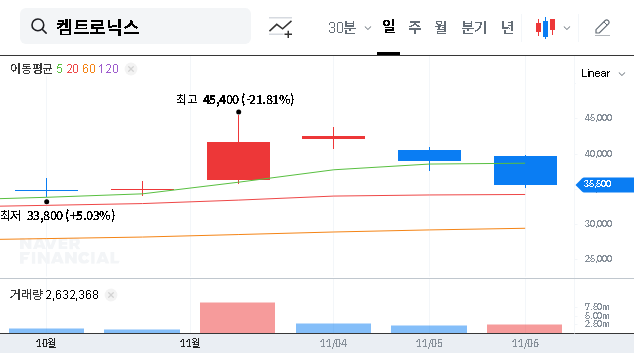
Tag: ShareholdingChange

  • (089010) CHEMTRONICS Co., Ltd. Share Sale: In-Depth Stock Analysis & Investor Guide

    (089010) CHEMTRONICS Co., Ltd. Share Sale: In-Depth Stock Analysis & Investor Guide

    A recent disclosure has sent ripples through the investment community: a significant CHEMTRONICS Co., Ltd. share sale by parties related to CEO Kim Bo-kyun. While any insider transaction can trigger alarm bells, what does this specific event truly mean for the company’s future and your investment? This comprehensive analysis cuts through the market noise to provide a clear-eyed view of the situation.

    We will dissect the details of the equity change, evaluate Chemtronics’ robust fundamentals against its inherent risks, and offer actionable investment strategies for both short-term traders and long-term believers in the company’s vision.

    The Disclosure: Unpacking the Insider Share Sale

    On November 10, 2025, CHEMTRONICS Co., Ltd. filed a “Report on Status of Large Shareholdings,” revealing a notable shift in its ownership structure. Understanding the specifics is the first step in a thorough Chemtronics stock analysis.

    • Principal Reporting Person: Kim Bo-kyun (Stated Purpose: Management Influence)
    • Ownership Before Sale: 25.37%
    • Ownership After Sale: 23.52%
    • Reason for Change: The on-market sale of 163,408 shares by special related parties (Ms. Lee Jung-sook and Ms. Jang Jung-sun), leading to a 2.15 percentage point decrease in the total related-party holding.

    The full details of this transaction were made public in an official filing. Source: Official DART Disclosure. An on-market sale by insiders, particularly those connected to a CEO with a stated goal of ‘management influence,’ is an event that the market watches closely for its potential impact on supply and sentiment.

    Investors are now weighing the short-term market pressure from this share sale against the company’s promising long-term growth prospects in the high-demand semiconductor sector.

    Fundamental Analysis: The Bull vs. Bear Case

    To understand the true implications of the CHEMTRONICS Co., Ltd. share sale, we must look beyond the single transaction and analyze the company’s core health and the environment it operates in.

    The Bull Case: Key Growth Drivers

    • Aggressive Semiconductor Expansion: Chemtronics is strategically positioning itself in the high-growth semiconductor market. Key initiatives include the mass production of eco-friendly, ultra-high purity PGMEA for advanced EUV lithography and the acquisition of wafer processing firm J3, which are set to create significant synergies.
    • Stable Cash Cow: The company’s basic materials and distribution business continues to provide robust and stable sales, ensuring a reliable stream of cash flow to fund new growth ventures.
    • Proactive Risk Management: Management is actively working to improve its debt structure, utilizing tools like currency swap agreements to hedge against interest rate volatility—a prudent move in the current macroeconomic climate.

    The Bear Case: Potential Risks & Headwinds

    • Legacy Business Struggles: The electronics and automotive segments face intense competition, particularly from low-cost Chinese manufacturers, leading to declining sales. While breakthroughs in wireless charging and foldable glass offer hope, this remains a challenge.
    • Increased Financial Leverage: Ambitious investments in semiconductor M&A and new facilities have increased the company’s reliance on borrowing. A sustained high-interest-rate environment could significantly escalate financial pressure.
    • Macroeconomic Volatility: As a global player, Chemtronics is exposed to currency exchange rate fluctuations, geopolitical tensions like the US-China trade conflict, and the risk of a global economic slowdown. For more on industry-wide factors, see our deep dive on The Future of the Global Semiconductor Market.

    Investor Action Plan: Navigating the Uncertainty

    While this insider stock sale creates short-term noise, it doesn’t fundamentally alter Chemtronics’ long-term value proposition. A prudent Chemtronics investment approach requires a balanced perspective. It’s crucial to understand that not all insider sales are a red flag; they can occur for reasons like portfolio diversification, as explained by financial authorities like Investopedia.

    Short-Term Strategy (1-3 Months)

    The immediate market reaction could be negative due to increased share supply. A cautious stance is recommended.

    • Observe and Monitor: Adopt a ‘wait-and-see’ approach. Watch for further disclosures and monitor trading volumes for signs of capitulation or stabilization.
    • Identify Key Support Levels: Use technical analysis to pinpoint critical price support levels. A breach of these levels could signal further downside.

    Mid-to-Long-Term Strategy (6+ Months)

    Long-term success hinges on the execution of the company’s growth strategy. Focus on tangible results.

    • Verify Fundamental Progress: Track quarterly reports for concrete revenue growth from the semiconductor division and signs of a turnaround in the electronics business.
    • Analyze Financial Health: Scrutinize the balance sheet for improvements in the debt-to-equity ratio and other key financial health indicators.
    • Assess Management Control: While the stake has decreased, 23.52% is still a very significant holding. Continue to monitor the actions and communications from CEO Kim Bo-kyun‘s team.

    In conclusion, the CHEMTRONICS Co., Ltd. share sale by related parties is a notable event that warrants caution but not panic. The company’s future value will be determined not by this single transaction, but by its ability to execute its ambitious semiconductor growth strategy and manage its financial risks effectively. Investors who maintain a long-term, data-driven perspective will be best positioned for success.
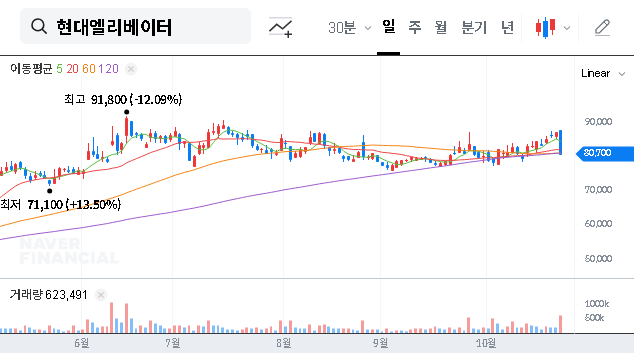
  • (017800) Hyundai Elevator Stock Analysis: Navigating Shareholder Changes & Investment Strategy

    (017800) Hyundai Elevator Stock Analysis: Navigating Shareholder Changes & Investment Strategy

    The outlook for Hyundai Elevator stock has become a focal point for investors following a significant disclosure about its ownership structure. A recent report detailing a major shift in shareholding by Hyundai Holdings Company has introduced a new layer of complexity and potential volatility. This isn’t a routine transaction; the stated purpose of ‘exercising management influence’ combined with intricate financial maneuvers like the exercise of exchangeable bonds signals potentially transformative changes ahead.

    This comprehensive analysis will dissect the official disclosure, explore the underlying reasons for the change, and project the short-term and long-term impacts on Hyundai Elevator’s stock price and corporate strategy. For investors seeking to navigate this uncertainty, we provide a clear action plan to make informed decisions about their Hyundai Elevator investment analysis.

    The Catalyst: Deconstructing the Shareholding Disclosure

    On October 29, 2025, Hyundai Elevator Co., Ltd. filed a regulatory report that immediately captured the market’s attention. The document, a ‘Report on Status of Large Shareholder’s Holding’, outlined a notable change in the stake held by Hyundai Holdings Company. You can view the complete filing here: Official Disclosure (DART).

    Key Details of the Filing:

    • Reporting Entity: Hyundai Holdings Company
    • Stated Purpose: To exercise management influence.
    • Stake Change: A decrease from 27.06% to 22.18%, marking a 4.88% reduction.
    • Primary Reasons: Exercise of exchangeable bonds, modifications to share-related contracts, and a significant share disposal by a related entity, Metropolitan Holdings (Yoo).

    This reduction in Hyundai Elevator shareholding by its major stakeholder is far from a simple sell-off. The combination of factors points to a strategic repositioning that could have lasting implications for the company’s governance and future direction, creating significant uncertainty around the Hyundai Elevator stock.

    Behind the Numbers: Why the Sudden Change?

    Understanding the ‘why’ is crucial for any investor. The disclosed reasons suggest a multi-faceted strategy rather than a single event. The exercise of exchangeable bonds, for instance, introduces new shareholders and can dilute the value of existing shares. Simultaneously, the ambiguity around ‘changes in contracts’ hints at evolving alliances or agreements that could reshape control dynamics. The large-scale share disposal by Metropolitan Holdings adds immediate selling pressure, contributing to the expected stock volatility.

    Despite reducing its stake, Hyundai Holdings Company’s explicit goal to ‘exercise management influence’ is a powerful signal. It suggests they are not relinquishing control but are instead adapting their strategy, possibly to consolidate power or fend off external pressures.

    Impact on Hyundai Elevator Stock: A Two-Fold Analysis

    Short-Term Outlook: Brace for Volatility

    In the immediate future, investors should anticipate heightened stock volatility. The large block of shares sold by Metropolitan Holdings could create a supply-demand imbalance, pushing the price down. Furthermore, the uncertainty surrounding the new shareholder landscape and contract changes will likely fuel speculation, leading to price swings as the market digests the news. For a broader view on market reactions, see analysis from leading sources like Bloomberg’s market coverage.

    Long-Term Perspective: Governance and Strategy at a Crossroads

    The long-term effects are more profound. A shift in the shareholder base could lead to a significant shakeup in the boardroom and, consequently, the company’s strategic priorities. This could manifest in several ways:

    • Strategic Alliances: New major shareholders may push for new partnerships or M&A activities.
    • Capital Allocation: Changes in R&D spending, dividend policies, or global expansion plans could be on the table.
    • Operational Focus: The company’s focus could shift, impacting its strong fundamental position in the vertical transportation industry.

    Ultimately, the stability of the Hyundai Elevator stock will hinge on the company’s ability to maintain its competitive edge amidst these internal changes. For more on this, you might read our Deep Dive into Elevator Industry Trends.

    Actionable Investor Strategy

    Given the circumstances, a cautious and informed approach is paramount. Here’s how investors should respond to the latest news about the Hyundai Elevator shareholding structure:

    • Monitor for Clarity: Watch for subsequent disclosures that provide more detail on the contract changes and the identities of new major shareholders from the bond conversion.
    • Focus on Fundamentals: Look past the short-term noise. Re-evaluate Hyundai Elevator’s core business strengths, market share, financial health, and technological pipeline. A strong underlying business can weather governance storms.
    • Enhance Risk Management: The increased potential for stock volatility means that risk management is key. Consider using stop-loss orders and ensure your portfolio is diversified to mitigate the impact of any sharp downturns in Hyundai Elevator stock.

    (017800) Hyundai Elevator Stock Analysis: Navigating Shareholder Changes & Investment Strategy 관련 이미지