Tag: Shareholding

  • (096770) NPS Trims SK Innovation Stake: A 2025 Deep Dive for Investors

    (096770) NPS Trims SK Innovation Stake: A 2025 Deep Dive for Investors

    The recent reduction of the SK Innovation stake by South Korea’s National Pension Service (NPS) has sent ripples through the investment community. As the nation’s largest institutional investor, any portfolio adjustment by the NPS is scrutinized for deeper meaning. This move, cutting their holding from 6.07% to 5.00%, raises critical questions: Is this a vote of no confidence in SK Innovation’s future, or simply a routine portfolio rebalancing? For current and potential investors, understanding the context behind this decision is paramount.

    This comprehensive analysis will dissect the NPS’s decision, perform a deep dive into SK Innovation’s current financial health and business segments, and provide a strategic outlook for investors navigating this uncertain period. We will explore both the short-term market reactions and the long-term fundamental drivers that will truly define the trajectory of SK Innovation stock.

    The Filing Details: What Exactly Happened?

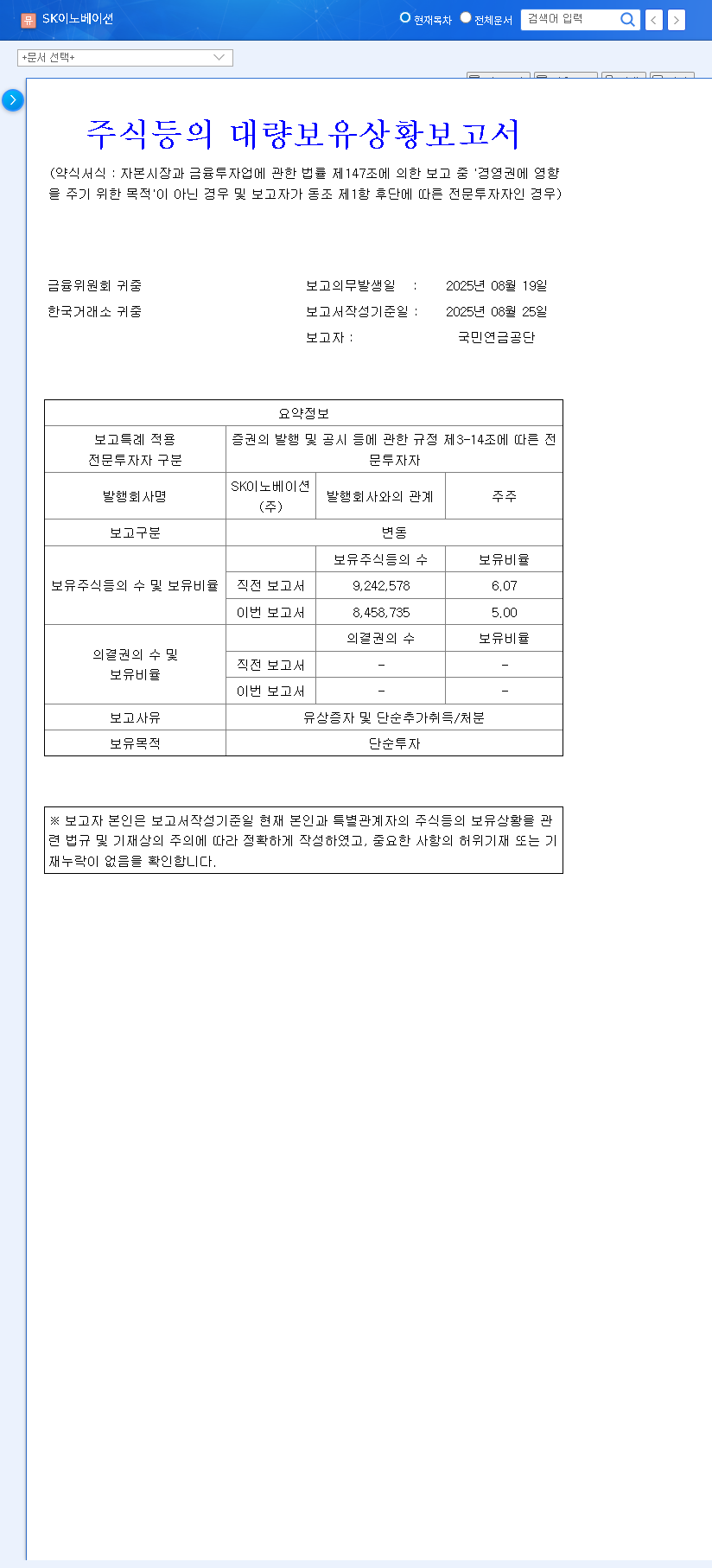
    On October 1, 2025, the National Pension Service officially reported a change in its major shareholding status for SK Innovation. The disclosure revealed a 1.07 percentage point decrease in their ownership, a significant move for an investor of this scale.

    Official Report Summary:
    Reporting Entity: National Pension Service
    Previous Holding: 6.07%
    Current Holding: 5.00%
    Change: -1.07%
    Stated Reason: Simple investment; participation in capital increase and additional acquisition/disposal.

    The stated purpose of ‘simple investment’ implies that the NPS is not seeking management control and retains the flexibility to adjust its holdings based on market performance and its own internal strategies. While a 1.07% reduction might seem minor, it represents a substantial volume of shares being sold, which can create downward pressure on the stock price and signal caution to other market participants. You can view the full filing directly from the Official Disclosure (DART report).

    SK Innovation Analysis: Under the Hood

    To understand why the NPS might be adjusting its SK Innovation stake, we must look beyond the headline and analyze the company’s fundamental health and strategic direction.

    A Company in Transition

    Following its 2024 merger with SK E&S, SK Innovation has been aggressively repositioning itself as a comprehensive energy company. The strategy is to pivot from its legacy petroleum and chemical businesses towards future growth engines in green energy. However, this transition is capital-intensive and fraught with challenges. The current business is a mix of old and new:

    • Petroleum/Chemical (68% of sales): The traditional cash cow, but highly susceptible to volatile global oil prices.
    • Battery Business (9% of sales): Positioned to capture growth from the expanding EV market, but currently a major drain on profitability due to high investment costs and fierce competition.
    • E&S CIC (16% of sales): Focused on LNG, hydrogen, and renewables, representing the company’s long-term green energy ambitions.

    Financial Health Check (H1 2025)

    A look at the recent financial data reveals some concerning trends that likely factored into the NPS’s decision. The first half of 2025 showed sluggish performance, primarily dragged down by the battery division’s persistent losses and mounting financial costs.

    The most glaring red flag is the company’s leverage. With a debt-to-equity ratio of 678.57%, SK Innovation is operating with a significant amount of debt. This high leverage makes the company vulnerable to rising interest rates and can limit its ability to fund future growth without further diluting shareholder equity. This financial strain is a key risk that prudent investors like the NPS would be monitoring closely. For more on industry trends, you can read about the global EV battery market challenges.

    Investor Outlook: How to Interpret This Move

    The reduction in the SK Innovation stake by the NPS can be seen as a risk-management measure. It doesn’t signal an impending collapse but rather a cautious stance given the company’s current challenges.

    The Bear Case: Key Risks to Watch

    • Delayed Battery Profitability: The path to profitability for the battery segment remains uncertain. Intense competition, particularly from Chinese manufacturers like CATL, and fluctuating raw material costs could prolong losses.
    • High Financial Burden: The substantial debt load is a major headwind. High interest payments eat into profits and reduce financial flexibility.
    • Macroeconomic Volatility: As a global business, SK Innovation is exposed to swings in oil prices, currency exchange rates (especially KRW/USD), and global economic growth.

    The Bull Case: Long-Term Opportunities

    • EV Market Growth: The long-term trend towards vehicle electrification is undeniable. As a key player in the battery supply chain, SK Innovation is well-positioned to benefit if it can navigate the short-term profitability hurdles. Explore our analysis of the renewable energy sector for more context.
    • E&S Synergies: The integration of SK E&S provides a strong foothold in the growing LNG and hydrogen markets, offering diversification and a hedge against the volatility of the oil and battery sectors.
    • Valuation: The recent stock price pressure may present a compelling entry point for long-term investors who believe in the company’s strategic pivot and can tolerate the associated risks.

    Actionable Investment Strategy

    The NPS’s move should not trigger panic selling. Instead, it should serve as a prompt for investors to re-evaluate their thesis on SK Innovation based on fundamentals.

    For Short-Term Investors: The stock is likely to experience continued volatility. A wait-and-see approach is prudent. Look for clear signs of improvement in the battery division’s margins or a concrete plan for debt reduction before committing capital.

    For Long-Term Investors: If you believe in the green energy transition and SK’s role within it, the current climate may offer an opportunity for phased accumulation. Rather than making a single large investment, consider a dollar-cost averaging strategy to build a position over time, mitigating the risk of short-term price drops. The key is to focus on fundamental progress—specifically, the timeline for battery business profitability and improvements in the company’s balance sheet—rather than on the day-to-day stock price fluctuations.
    (096770) NPS Trims SK Innovation Stake: A 2025 Deep Dive for Investors 관련 이미지
  • (211050) Incafinancial Services Stock Analysis: CEO Increases Stake, What’s the Outlook?

    (211050) Incafinancial Services Stock Analysis: CEO Increases Stake, What’s the Outlook?

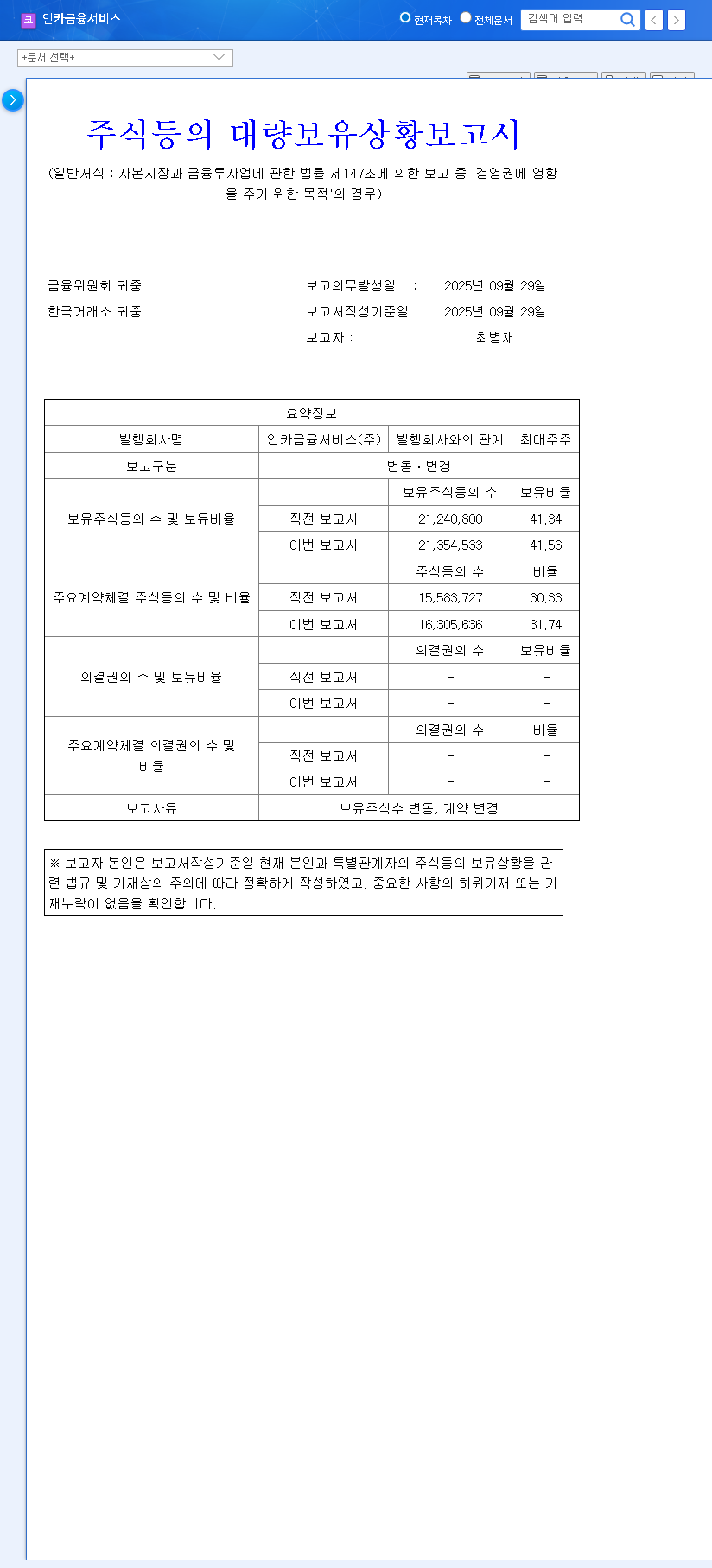
    A pivotal development at Incafinancial Services (121702973440) has captured investor attention following a Report on Large Shareholding filed on September 30, 2025. This report reveals a strategic increase in CEO Choi Byung-Chae’s ownership stake, a move often interpreted as a significant vote of confidence in a company’s future. While the company’s stock has been on an upward trajectory, its recent financial performance shows a decline in profitability, creating a complex picture for investors.

    This comprehensive analysis delves into the details of the shareholding changes, dissects the company’s fundamentals, and evaluates the broader market environment. We’ll explore the critical question: Why is the market rewarding Incafinancial Services stock despite profitability headwinds? This article provides the essential insights needed to formulate a well-informed investment strategy.

    The Shareholding Shake-Up: What Changed?

    On September 30, 2025, a mandatory disclosure provided a transparent look into the ownership structure of Incafinancial Services. The most significant takeaway was the CEO’s move to solidify his control.

    The official report confirms that CEO Choi Byung-Chae’s holdings increased from 41.34% to 41.56%. The stated purpose for this holding is to maintain and strengthen management influence over the company’s strategic direction.

    Other Key Shareholder Movements

    Alongside the CEO’s purchase, other notable transactions occurred among major shareholders. You can view the full details in the Official Disclosure (Source: DART). Here’s a summary:

    • Kim Jong-Myeong: Executed a market sale of 7,000 shares.
    • Kim Tae-Yeol: Donated 7,000 shares to a child, Kim Min-Young.
    • Lee Kyung-Hee: Made a market purchase of 6,100 shares.
    • Colosseum Media Co., Ltd.: Significantly increased its stake with a market purchase of 40,035 shares, signaling strong institutional confidence.

    Fundamental Analysis: Growth vs. Profitability

    The financial health of Incafinancial Services presents a classic case of growth outpacing profitability in the short term. This dichotomy is central to understanding the current stock valuation.

    H1 2025 Financial Performance Breakdown

    In the first half of 2025, the company demonstrated robust top-line growth. Consolidated revenue climbed to KRW 468.87 billion, an impressive 18.3% increase year-over-year. However, the bottom line tells a different story. Operating profit fell 13.7% to KRW 44.85 billion, primarily due to rising SG&A expenses. This suggests the company is investing heavily in growth initiatives like advertising, technology, and commission fees to expand its market share. While the high debt-to-equity ratio of 356% warrants attention, it’s not unusual for the capital-intensive insurance industry. For more on this, check out our guide to analyzing financial reports.

    Strategic Focus: Technology and Diversification

    Incafinancial Services is not just a traditional General Agency (GA). Its strategy is firmly planted in the future, with significant investments in technology and business diversification. Key initiatives include:

    • AI-Powered Agents: Development of AI tools to enhance non-face-to-face sales and provide customized financial planning.
    • Financial Platform Expansion: Building a comprehensive digital ecosystem that includes financial consulting and loan brokerage services.
    • Ethical Sales Practices: Maintaining an imperfect sales rate below 0.01% for three consecutive years, building crucial consumer trust.

    Market Perspective and Stock Outlook

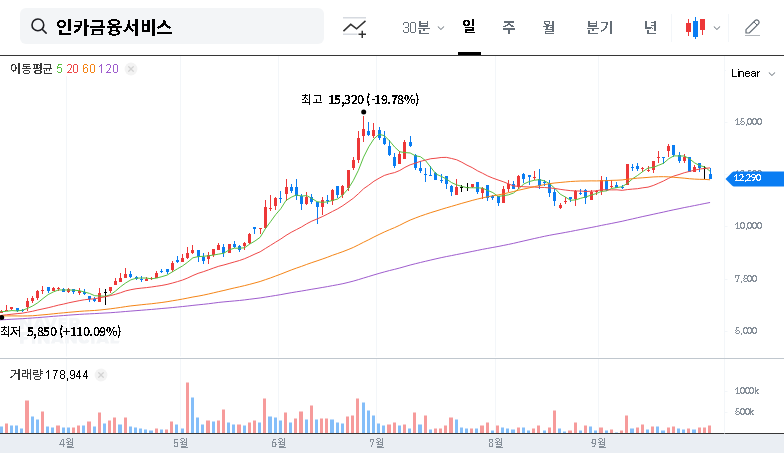
    The market’s reaction to the Incafinancial Services stock appears to be forward-looking. The significant stock price surge since May 2025 suggests investors are prioritizing long-term growth potential over temporary margin compression. According to broader financial market analysis, tech-infused financial firms often see valuations based on future earnings potential rather than current profits.

    Interpreting the CEO’s Move

    The increase in CEO Choi Byung-Chae’s stake is a powerful bullish signal. It indicates that the person with the most intimate knowledge of the company’s operations and future projects believes the stock is undervalued. This act of ‘skin in the game’ bolsters investor confidence by ensuring management’s interests are aligned with those of shareholders, promoting stable governance and a commitment to long-term value creation.

    Conclusion: An Investment Thesis for Incafinancial Services

    Incafinancial Services stands at a crossroads of impressive growth and necessary profitability improvements. The recent shareholding changes, especially the CEO’s increased stake, provide a strong pillar of support for the investment case. The market is clearly betting on the success of the company’s diversification and technology strategies.

    Key Investment Points to Monitor:

    • Profitability Margins: Watch for improvements in operating profit in the upcoming quarterly reports as investments begin to mature.
    • New Business Traction: Look for specific data on the performance of the financial platform and AI agent initiatives.
    • Governance Stability: The CEO’s strengthened control is a positive, and continued stability is key for executing the long-term vision.

    For investors with a medium-to-long-term horizon, Incafinancial Services presents a compelling growth story. The primary risk lies in the execution of its strategy and the ability to translate top-line growth into sustainable profits. Careful monitoring of these key points will be crucial in navigating this investment opportunity.

    (211050) Incafinancial Services Stock Analysis: CEO Increases Stake, What's the Outlook? 관련 이미지
    (211050) Incafinancial Services Stock Analysis: CEO Increases Stake, What's the Outlook? 관련 이미지