Tag: Share Sale

  • (049630) JaeYoung Solutec (049630) Share Sale: Deep-Dive Stock Analysis for Investors

    (049630) JaeYoung Solutec (049630) Share Sale: Deep-Dive Stock Analysis for Investors

    A significant development concerning JaeYoung Solutec (049630) has captured the market’s attention, raising critical questions for current and potential investors. The company’s representative reporter, Kim Dae-yong, has executed a substantial sale of his shares. This action, especially when juxtaposed with the company’s recent financial performance, could be interpreted as a major red flag. Is this a simple portfolio adjustment, or a concerning signal from an insider about the fundamental health of JaeYoung Solutec (049630)? This comprehensive analysis will explore the implications of this event, dissect the company’s H1 2025 earnings, and provide a clear action plan for investors.

    The Details of the JaeYoung Solutec Share Sale

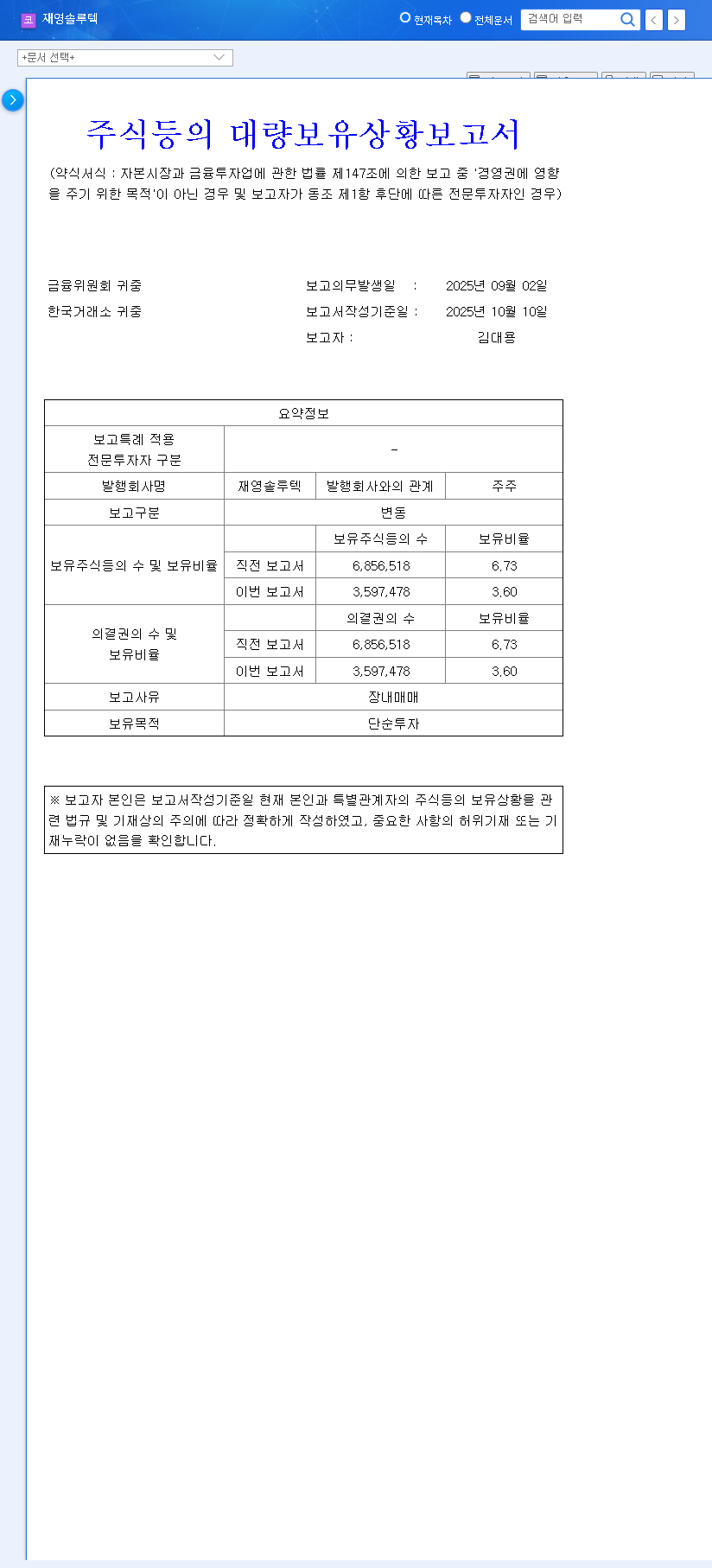
    On October 11, 2025, a mandatory disclosure sent ripples through the investment community. According to the filing, Kim Dae-yong’s ownership stake in JaeYoung Solutec (049630) was reduced from 6.73% to just 3.60%. This represents a significant offloading of 3.13 percentage points, executed via a direct market sale. The official filing can be viewed here: Official Disclosure (DART).

    For a company with a market capitalization of approximately KRW 91.6 billion, a single insider selling over 3% of the company’s total shares is a highly material event that cannot be overlooked. Such actions often precede periods of increased stock volatility and negative investor sentiment.

    This type of transaction is often referred to as insider selling, and while not illegal, it is closely watched by analysts. When high-level executives sell large portions of their holdings, it can signal a lack of confidence in the company’s future prospects, prompting a re-evaluation by the broader market.

    Financial Health: A Look Under the Hood (H1 2025)

    The timing of the JaeYoung Solutec share sale is particularly alarming when viewed in the context of its recent financial report. The H1 2025 results paint a picture of a company struggling with profitability, despite top-line growth. For a deeper understanding of financial statements, you can review our guide to fundamental analysis.

    Deteriorating Profitability & Balance Sheet Concerns

    While revenue saw a healthy increase of 17.7% year-on-year to KRW 71.7 billion, the story ends there. The costs associated with generating that revenue ballooned, leading to a severe profitability crisis.

    • Operating Income Collapse: Operating income plummeted to a mere KRW 270.45 million, a drastic reduction from the previous year, crushed by higher cost of goods sold and administrative expenses.
    • Net Loss Conversion: The company swung from a net profit of KRW 5.52 billion to a jarring net loss of KRW 2.95 billion. This indicates severe issues in managing expenses below the operating line.
    • Weakening Financial Position: Total assets decreased by 8.5%, driven by a reduction in cash equivalents. Meanwhile, total equity also decreased due to an increased accumulated deficit, a major red flag for long-term financial stability.

    Core Business vs. Financial Reality

    JaeYoung Solutec operates in a high-tech, promising sector. The company is a specialist in manufacturing actuators (OIS, AF, VCM), which are critical components for modern smartphone cameras. Its nano-optics segment is its sole revenue driver, and it holds a strong competitive advantage as the only domestic Korean producer capable of manufacturing a full lineup of actuator products. This aligns well with the technological trend toward more advanced smartphone cameras.

    However, this operational strength is completely overshadowed by the grim financial results. A strong business model is meaningless if it cannot translate to profitability and a healthy balance sheet. The current situation suggests that despite its market position, the company is failing to manage costs and generate shareholder value.

    Investor Action Plan & Stock Outlook

    The combination of a major insider share sale and deteriorating fundamentals creates a powerfully negative signal for JaeYoung Solutec (049630). The market is likely to react negatively for several reasons:

    • Loss of Confidence: The CEO’s sale implies a potential lack of faith in the company’s ability to turn its performance around.
    • Supply Pressure: A 3.13% stake hitting the open market creates significant supply that can depress the stock price in the short to medium term.
    • Heightened Scrutiny: Investors will now look at future earnings reports with extreme skepticism, punishing any further signs of weakness.

    Given these factors, our current recommendation for JaeYoung Solutec (049630) is a ‘SELL’. Investors should consider liquidating their positions to mitigate further risk. For those considering an entry, it is prudent to wait for multiple quarters of confirmed financial improvement and stability before reassessing.

    Frequently Asked Questions

    Q1: What was the exact scale of the JaeYoung Solutec share sale?

    A1: Representative reporter Kim Dae-yong sold a 3.13 percentage point stake, reducing his total holdings from 6.73% down to 3.60% through a direct market sale.

    Q2: How bad were JaeYoung Solutec’s recent earnings?

    A2: In H1 2025, despite revenue growth, operating income collapsed, and the company reported a net loss of KRW 2.95 billion, signaling a severe deterioration in profitability and financial health.

    Q3: Why is a major shareholder selling shares a negative sign?

    A3: A large sale by a top insider can signal a lack of confidence in the company’s future. It also creates excess supply in the market, which can put significant downward pressure on the stock price.

    Q4: What is the current investment recommendation for 049630 stock?

    A4: Due to the combination of poor financial performance and the negative signal from the insider share sale, the current recommendation is a ‘SELL’ to avoid potential further losses.
    (049630) JaeYoung Solutec (049630) Share Sale: Deep-Dive Stock Analysis for Investors 관련 이미지
  • (179530) AdBiotech (179530) Major Shareholder Sells: A Deep-Dive Stock Analysis for Investors

    (179530) AdBiotech (179530) Major Shareholder Sells: A Deep-Dive Stock Analysis for Investors

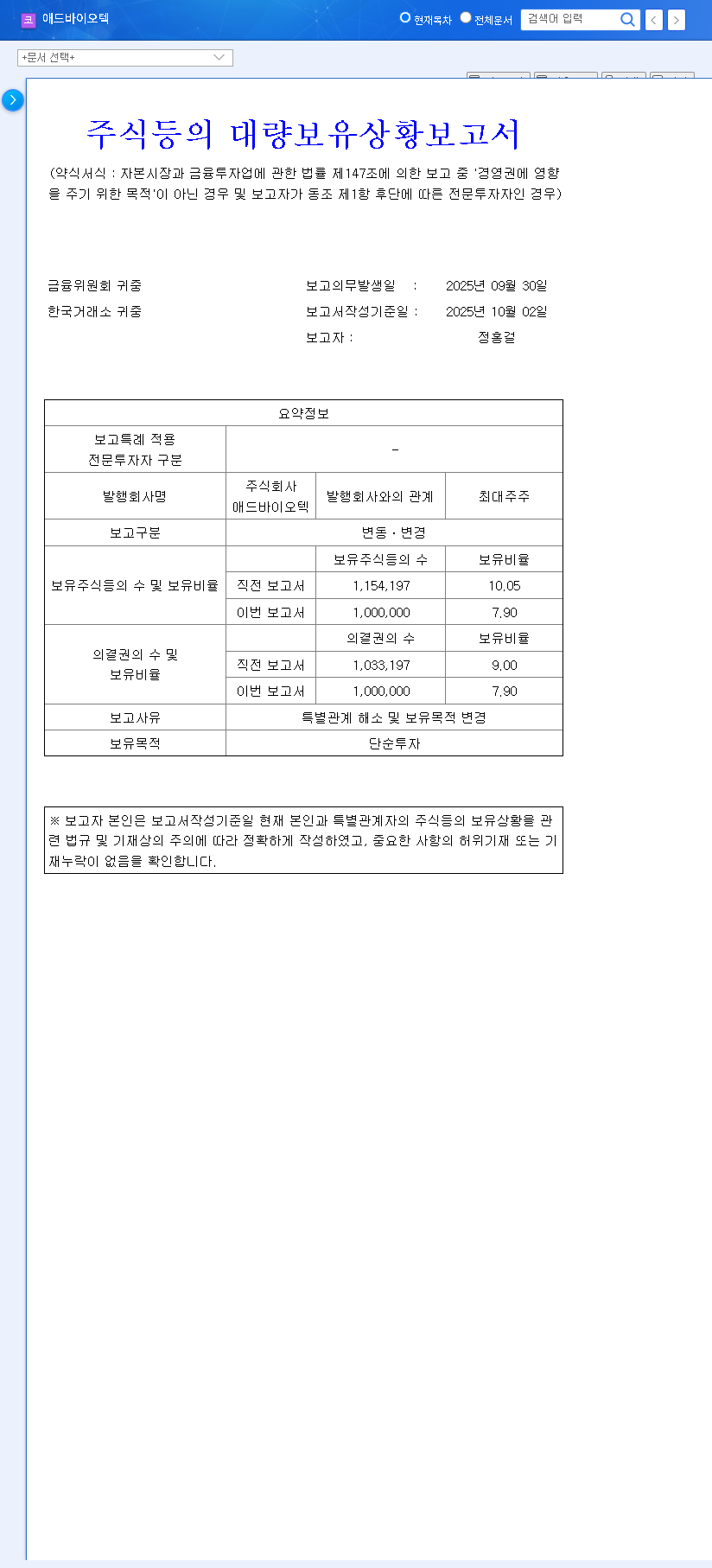
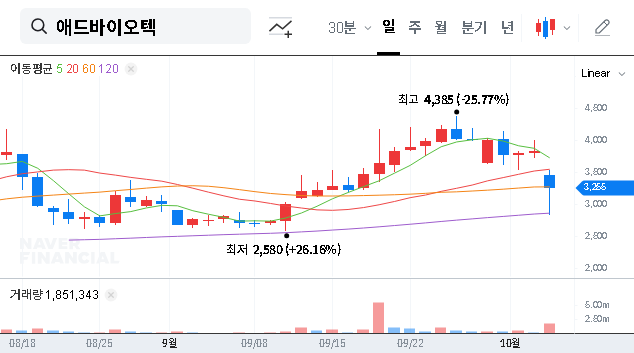
    News of an AdBiotech (179530) major shareholder reducing their stake has sent ripples through the investment community. On October 10, 2025, a significant disclosure revealed that CEO Jung Hong-geol sold a portion of his shares in the KOSDAQ-listed company. Such events are often scrutinized as potential indicators of a company’s future trajectory. Is this a routine portfolio adjustment, or a warning sign for AdBiotech’s corporate health?

    This comprehensive AdBiotech stock analysis will dissect the details of this share sale, evaluate the company’s underlying fundamentals—both positive and negative—and provide a strategic action plan for current and prospective investors trying to navigate the market uncertainty.

    The AdBiotech Share Sale: What Exactly Happened?

    According to the official filing, AdBiotech’s CEO, Jung Hong-geol, reduced his ownership stake from 10.05% down to 7.90%. The company stated this was a result of a ‘dissolution of a special relationship’ and a change in the purpose of holding the shares. You can view the full report here: Official Disclosure. While seemingly administrative, any change in a major shareholder’s position warrants close inspection, as it can sometimes signal shifts in corporate strategy or confidence in the company’s prospects.

    For investors, the key is to look beyond the headline. It’s crucial to analyze whether this is an isolated event or part of a larger pattern connected to the company’s performance and financial health.

    Fundamental Stock Analysis of AdBiotech (KOSDAQ 179530)

    To understand the context of the AdBiotech share sale, we must perform a deep dive into the company’s fundamentals as of its latest semi-annual report. The picture is complex, with promising technological assets overshadowed by significant financial strain.

    Positive Factors: Future Growth Engines

    • Core Technology Portfolio: AdBiotech’s continuous R&D in proprietary technologies like IgY (immune egg yolk antibodies) and VHH (nanobody) antibodies represents a significant long-term growth driver. These technologies have wide applications in animal health and potentially human therapeutics, positioning the company in a high-growth sector.
    • Quality & Expansion Potential: Achieving FDA factory registration and ISO certifications is not trivial. It signals a commitment to quality management and opens doors for international business expansion, a crucial step for any biotech firm.
    • Proactive Financial Restructuring: The company is actively working to improve its financial standing. Measures like capital increases and the issuance of convertible bonds are aimed at shoring up the balance sheet and funding new business initiatives. This proactive stance is a positive sign.

    Negative Factors: Persistent Financial Instability

    The most glaring red flag is the company’s consolidated debt-to-equity ratio, which stands at an alarming 877.68%. This indicates a very high level of leverage and significant financial risk for equity investors.

    • Ongoing Deficits: AdBiotech has consistently recorded operating and net income deficits. This is largely driven by high Selling, General & Administrative (SG&A) expenses and substantial financial costs from its debt burden.
    • Declining Revenue: The 2025 semi-annual revenue showed a decrease compared to the prior year, a worrying trend that suggests challenges in its core business operations or merchandise sales.
    • Subsidiary Losses: The company had to recognize impairment losses on investment assets tied to a subsidiary’s poor performance, further dragging down its financial results.

    External Market Conditions and Impact

    No company operates in a vacuum. Key macroeconomic factors are influencing AdBiotech’s situation. The ongoing trend of high global benchmark interest rates increases the company’s borrowing costs, putting more pressure on its already strained net income. While a weaker Korean Won can benefit exporters, this advantage may be neutralized by AdBiotech’s declining revenue and high costs.

    Investor Action Plan: A Prudent Approach is Key

    Given the sale by the AdBiotech (179530) major shareholder amidst a challenging financial backdrop, a cautious and long-term perspective is essential. Short-term stock price volatility is likely, but savvy investors should focus on the underlying business drivers.

    Your investment decision should not hinge on this single event. Instead, it should be based on a comprehensive evaluation of the company’s ability to execute its turnaround plan. For more on this, see our guide on the fundamental analysis of biotech companies. Monitor the following closely in upcoming quarters:

    • Progress on financial restructuring and debt reduction.
    • Tangible commercialization results from its core IgY and VHH technologies.
    • Any positive shifts in revenue trends and profit margins.

    Ultimately, if AdBiotech can successfully leverage its technological assets and stabilize its finances, the current challenges could be viewed in hindsight as a turning point. However, the risks remain substantial.

    Disclaimer: This article is for informational purposes only and does not constitute investment advice. All investment decisions should be made based on your own research and judgment.

    (179530) AdBiotech (179530) Major Shareholder Sells: A Deep-Dive Stock Analysis for Investors 관련 이미지
  • (047810) Korea Aerospace Industries Stock (KAI): Analysis of Fidelity’s Sale & Future Outlook

    (047810) Korea Aerospace Industries Stock (KAI): Analysis of Fidelity’s Sale & Future Outlook

    News of a major institutional investor reducing their stake can send tremors through the market, and that’s precisely what happened with Korea Aerospace Industries stock. Fidelity Management, a global asset management titan, recently disclosed a reduction in its KAI holdings. For current and prospective investors, this immediately raises critical questions: Is this a red flag signaling underlying problems, or does it create a strategic entry point? This comprehensive KAI stock analysis will dissect the situation, evaluate the company’s core fundamentals, and examine the macroeconomic currents shaping its future to provide a clear, actionable investment outlook.

    While Fidelity’s move introduces short-term uncertainty, KAI’s long-term trajectory appears anchored by a formidable order backlog and its pivotal role in national and global defense projects.

    The Catalyst: Unpacking Fidelity’s Stake Reduction

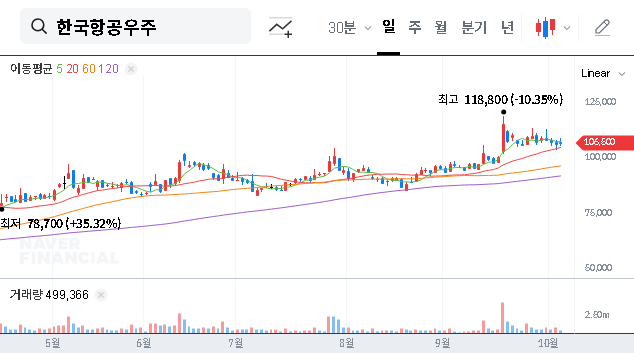
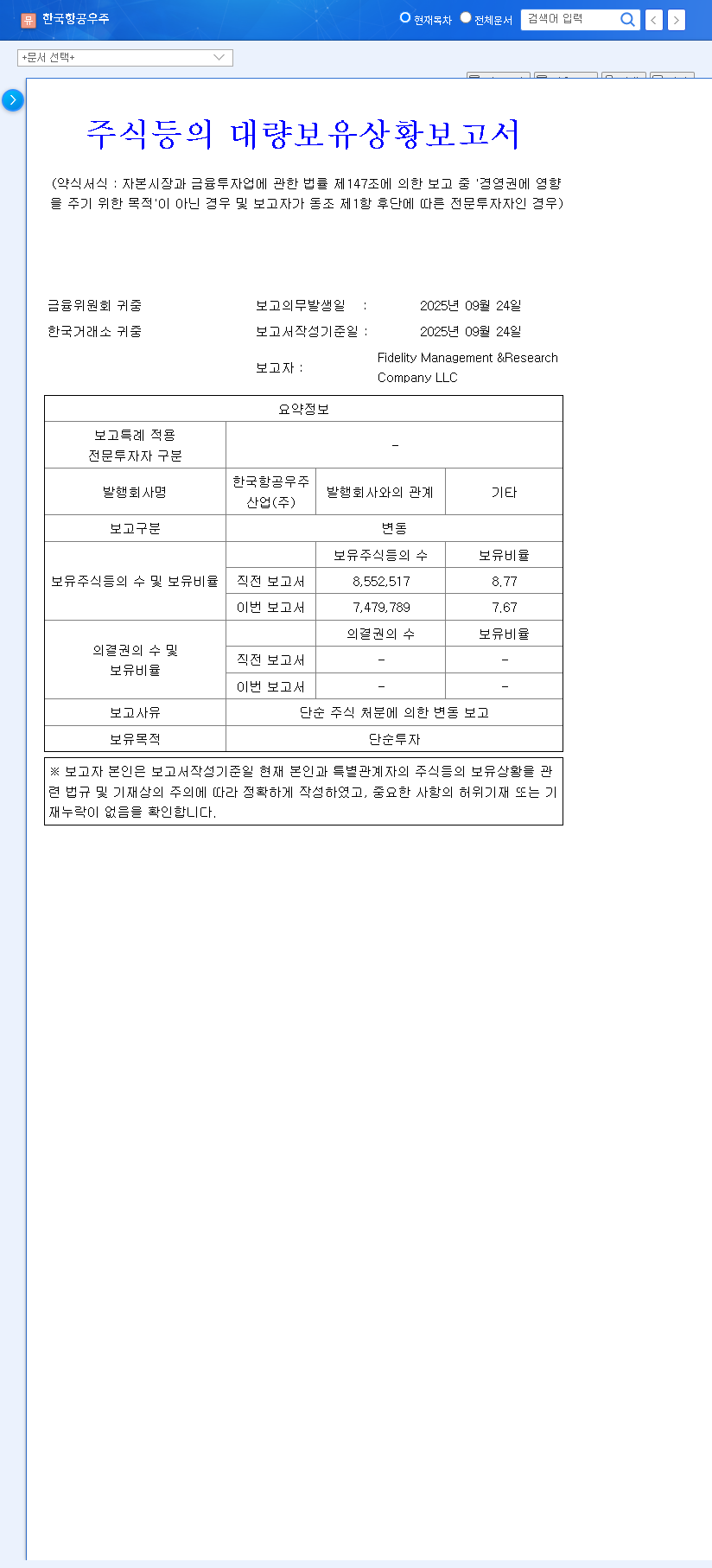
    On October 10, 2025, Fidelity Management & Research Company filed a mandatory disclosure report detailing a change in their significant shareholding of Korea Aerospace Industries. The filing revealed a 1.10 percentage point decrease in their ownership, dropping from 8.77% to 7.67%. The transactions, involving the sale of 303,764 shares, occurred between September 15 and September 24, 2025. You can view the Official Disclosure on DART. While Fidelity cited ‘simple investment’ as the reason—a common term for portfolio rebalancing—the sale’s magnitude is enough to warrant a deeper investigation into KAI’s intrinsic value and external pressures.

    A Deep Dive into Korea Aerospace Industries Stock Fundamentals

    An institutional sale doesn’t alter a company’s core business. To truly understand the KAI investment outlook, we must look past the market noise and at the company’s financial and operational health. KAI presents a classic case of powerful strengths balanced by notable financial concerns.

    The Bull Case: Pillars of Strength

    • Massive Order Backlog: KAI boasts an impressive order backlog of 26.67 trillion KRW. This isn’t just a number; it represents guaranteed revenue streams for years to come, providing exceptional stability and visibility into future earnings.
    • Strategic Defense Projects: The company is at the heart of South Korea’s defense modernization, leading cornerstone projects like the KF-21 fighter jet development and the LAH/KUH helicopter mass production. These are not just contracts; they are long-term, government-backed programs with high strategic importance and export potential.
    • Favorable Global Tailwinds: Rising geopolitical tensions are prompting nations worldwide to increase defense spending. This trend directly benefits KAI’s military aircraft and defense parts exports. Simultaneously, the post-pandemic recovery in commercial air travel, as noted by industry leaders like Boeing and Airbus, buoys its civil aircraft parts business.

    The Bear Case: Points of Caution

    • Heavy Debt Load: KAI’s consolidated debt ratio stands at a high 432.37%. While common in capital-intensive industries, this level of leverage makes the company vulnerable to interest rate hikes, which can squeeze profitability by increasing financing costs.
    • Short-Term Profit Dip: The first half of 2025 saw a year-on-year decrease in operating profit and net income. This was primarily driven by increased R&D expenditures for future projects. While investing in growth is positive, the market often reacts negatively to short-term profit declines.
    • Macroeconomic Sensitivity: As a major exporter, KAI’s bottom line is highly sensitive to fluctuations in currency exchange rates and interest rates, factors largely outside its control.

    The Macroeconomic Environment

    For a global player like KAI, the big picture matters. A weak Korean Won (a high USD/KRW rate) is a double-edged sword: it makes KAI’s exports cheaper and more competitive abroad, boosting revenue, but it also increases the cost of imported raw materials and components. The recent trend of interest rate cuts by the US Federal Reserve and ECB is a net positive, potentially lowering borrowing costs. However, investors must monitor whether these cuts are sustained. To understand this better, you can review our complete analysis of the global defense market for more context.

    Final Verdict & Investor Action Plan

    The Fidelity KAI sale is best viewed as a source of short-term price pressure rather than a fundamental flaw in the company’s long-term story. The core drivers for Korea Aerospace Industries stock—its massive backlog and strategic national projects—remain firmly intact. However, the high debt and macroeconomic sensitivity are undeniable risks that cannot be ignored.

    Given this balance, a ‘Neutral’ investment stance is prudent. This is not a signal to sell, but rather a call for diligent monitoring. Investors should keep a close watch on the following key points:

    • Any further changes in Fidelity’s holdings.
    • Progress and export contract milestones for the KF-21 project.
    • Quarterly financial reports, with a focus on debt reduction and profit margins.
    • Market adoption and results from new ventures like UAM and satellite services.

    Positive developments in these areas could shift the outlook from Neutral to Buy, but for now, observation is the wisest course of action.

    Disclaimer: This report is for informational purposes only and is based on publicly available information. Investment decisions should be made at the investor’s own discretion and responsibility.

    (047810) Korea Aerospace Industries Stock (KAI): Analysis of Fidelity's Sale & Future Outlook 관련 이미지
  • (100840) SNT Energy Stock Analysis (2025): Deep Dive After Major Share Sale

    (100840) SNT Energy Stock Analysis (2025): Deep Dive After Major Share Sale

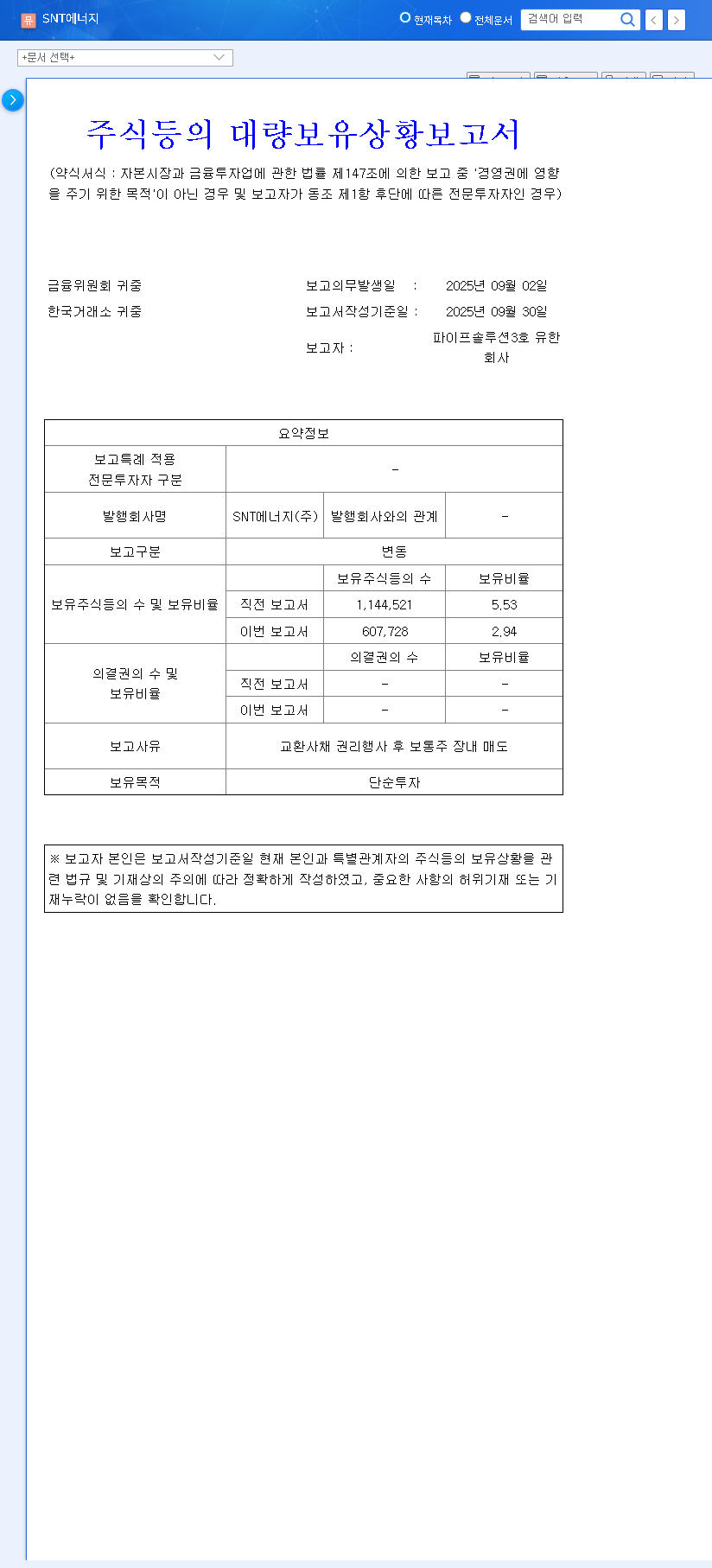
    The outlook for SNT Energy stock has become a hot topic among investors following a significant disclosure. On October 2, 2025, a major shareholder, PipeSolution3 Co., Ltd., offloaded a substantial portion of its holdings. This event has understandably sent ripples through the market, leaving many to question the future trajectory of SNT Energy’s valuation.

    Is this large-scale share sale a temporary headwind, or does it point to deeper concerns about the company’s long-term fundamentals? In this comprehensive SNT Energy analysis, we will dissect the event, evaluate the company’s financial health, assess the macroeconomic landscape, and provide a strategic outlook to help you make a well-informed investment decision.

    The Share Sale Event: What Exactly Happened?

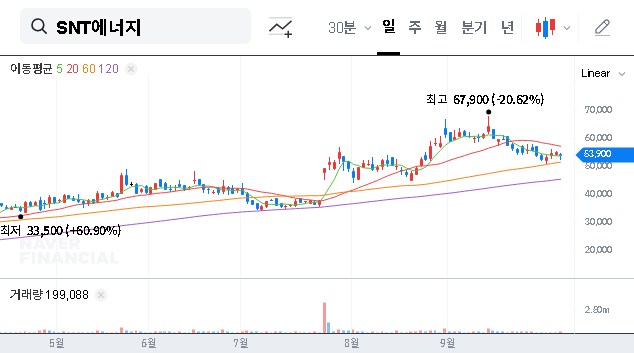
    The catalyst for the current uncertainty was a formal announcement filed on October 2, 2025. PipeSolution3 Co., Ltd., which held its SNT Energy shares for ‘simple investment’ purposes, significantly reduced its position. The details, confirmed in the official disclosure, paint a clear picture of the transaction.

    A major shareholder’s exit can cause short-term market anxiety. However, discerning investors must look beyond the immediate reaction and scrutinize the underlying corporate fundamentals to determine the true health of the company.

    Key Details of the PipeSolution3 Share Sale

    • Reporting Entity: PipeSolution3 Co., Ltd.
    • Change in Stake: A reduction from 5.53% down to 2.94% of total shares.
    • Reason for Sale: Stated as an open market sale of common stock following the exercise of exchangeable bond rights.
    • Sale Period: The transactions occurred over several days, from September 3 to September 16, 2025.
    • Official Disclosure: The full details can be verified in the Official DART Report (Source).

    The sale by an entity whose stated purpose is ‘simple investment’ rather than strategic management often signals to the market a belief that the short-to-medium term upside might be limited, creating immediate downward pressure on the SNT Energy stock price.

    SNT Energy Analysis: A Look at the Fundamentals

    Despite the share sale, the long-term SNT Energy stock outlook depends entirely on its core business health. A review of the company’s 2025 semi-annual report reveals a mixed but intriguing picture.

    The Good: Soaring Profitability

    The most striking positive is the massive 81.08% year-over-year increase in operating profit, which reached KRW 40.244 billion. This was achieved through a strategic shift towards high-value-added products and successful cost-reduction initiatives. Furthermore, the company maintains a healthy financial position and is anticipating large-scale project orders from the Middle East, which could serve as a powerful future catalyst.

    The Concerns: Declining Revenue and Orders

    On the other hand, total revenue saw a 13.02% decrease, falling to KRW 255.937 billion. This decline is attributed to reduced sales in core product lines like air-cooled heat exchangers and Heat Recovery Steam Generators (HRSG). Compounding this is a decreased order backlog, which raises questions about future revenue streams if new, significant contracts are not secured promptly. This highlights the company’s sensitivity to global economic cycles and plant investment trends.

    Macroeconomic Headwinds and Tailwinds

    As a global player in the plant business, SNT Energy’s performance is intrinsically linked to the wider economic environment. According to leading economic reports, several factors are at play:

    • Exchange Rates: The company seems to be managing currency risk effectively, with the impact of a rising USD/KRW being mitigated by its foreign currency asset holdings.
    • Interest Rates: Persistently high interest rates in the U.S. and Europe could dampen new investment in large-scale industrial projects, potentially affecting SNT’s sales pipeline.
    • Shipping Indices: A decline in global shipping indicators like the Baltic Dry Index points to a slowdown in international trade. This is a potential red flag for SNT Energy, as it could signal lower demand for its overseas plant projects.

    Investor Action Plan & Strategic Outlook

    Given this complex environment, how should investors approach SNT Energy stock? A prudent strategy involves balancing short-term caution with a focus on long-term value drivers.

    1. Brace for Short-Term Volatility

    The PipeSolution3 share sale will likely cause continued stock price volatility. The increased supply of shares, coupled with negative sentiment, creates downward pressure. Avoid making reactive decisions based on daily price swings and maintain a long-term perspective.

    2. Monitor Core Fundamental KPIs

    Ultimately, the stock’s performance will revert to its fundamentals. The shareholder sale does not alter the company’s operational reality. Pay close attention to the following in upcoming quarterly reports:

    • New Order Intake: Especially confirmation of the anticipated large-scale projects in the Middle East.
    • Profit Margin Trends: Can the company sustain its high profitability even if revenues are flat?
    • Eco-Friendly Initiatives: Progress in adapting its product portfolio to the green energy transition (e.g., hydrogen, carbon capture).

    3. Contextualize with Broader Market Trends

    Keep an eye on the macroeconomic factors mentioned above. A positive shift in global trade or a decrease in interest rates could provide a significant tailwind for SNT Energy. For more on this, you might find our guide on how to analyze industrial sector stocks useful.

    In conclusion, while the PipeSolution3 share sale is a significant event causing short-term concern, it doesn’t fundamentally derail the investment thesis for SNT Energy. The company’s future rests on its ability to convert its high profitability into sustainable revenue growth by securing new orders and adapting to the evolving energy market. Cautious, fundamentally-driven investors may find opportunity in the current volatility.

    (100840) SNT Energy Stock Analysis (2025): Deep Dive After Major Share Sale 관련 이미지
  • (272550) Samyang Packaging (272550) Stock Analysis: Impact of SK Geo Centric’s Full Share Sale

    (272550) Samyang Packaging (272550) Stock Analysis: Impact of SK Geo Centric’s Full Share Sale

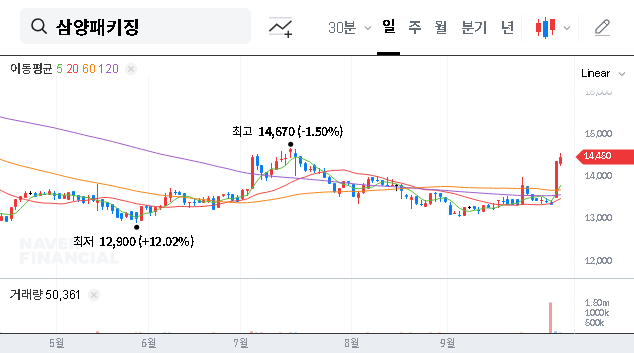
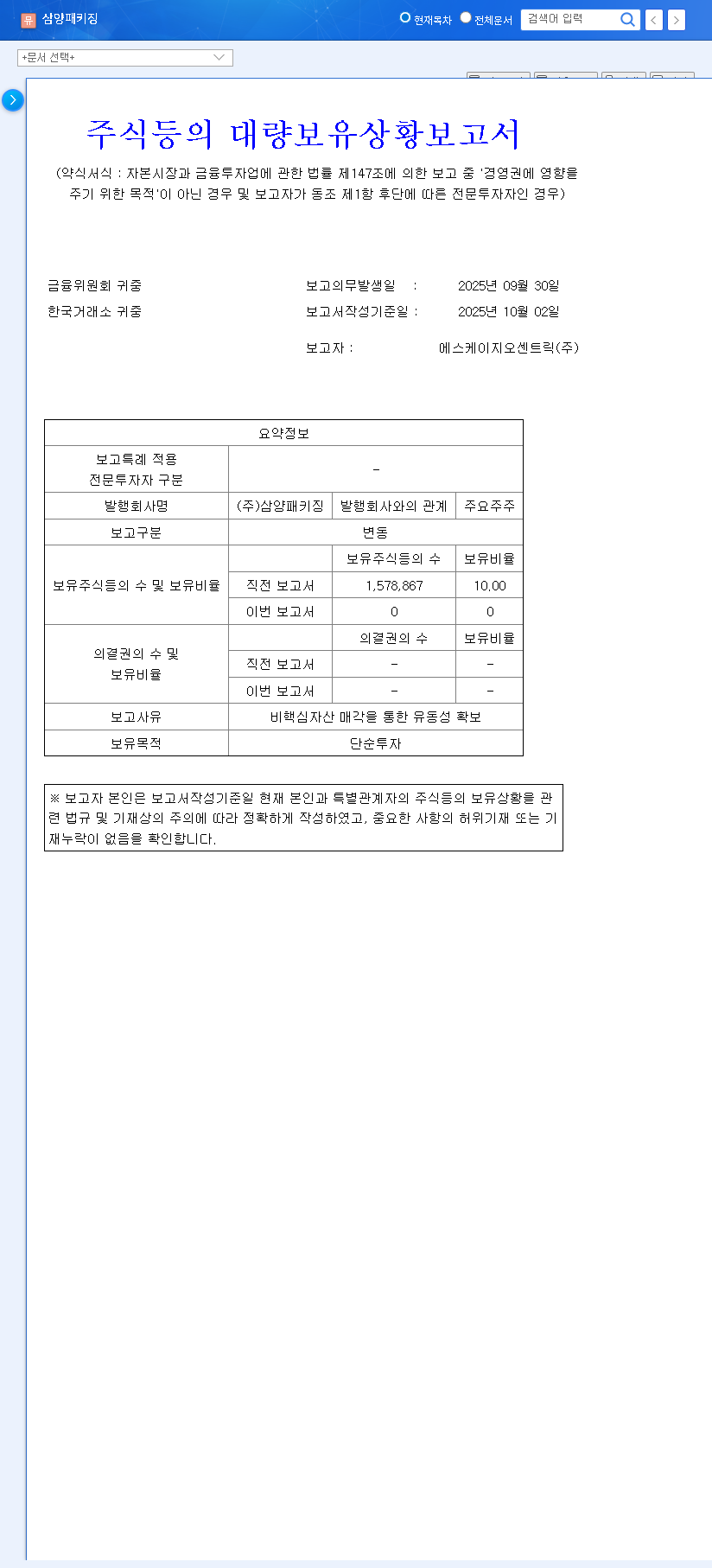
    The sudden news of a major shareholder divesting their stake can create significant market uncertainty. For investors in Samyang Packaging (272550), the recent announcement from SK Geo Centric has raised critical questions. This move to sell its entire 10% holding has put the spotlight firmly on Samyang Packaging’s stock stability and future prospects.

    What does this mean for the stock price in the near term? Do the company’s underlying fundamentals remain strong enough to weather this change? This comprehensive analysis will explore the rationale behind SK Geo Centric’s decision, dissect the potential impact on Samyang Packaging stock, and outline a clear investment strategy to navigate the path forward.

    The Divestment: SK Geo Centric’s Strategic Exit

    On October 2, 2025, SK Geo Centric executed an off-hours block trade, selling its entire holding of 1,578,867 shares in Samyang Packaging. This stake represented a significant 10% of the company. The official reason cited for the sale was to ‘secure liquidity through the divestment of non-core assets’. This move is a classic example of corporate portfolio rebalancing, where a company shifts capital away from passive investments to fuel its primary business objectives. The details of the transaction were confirmed in an Official Disclosure.

    Why Did SK Geo Centric Sell?

    It’s crucial for investors to understand that this sale is more reflective of SK Geo Centric’s internal strategy than a negative verdict on Samyang Packaging’s future. As a company increasingly focused on its core eco-friendly materials and chemical recycling businesses, a passive ‘simple investment’ in a packaging company no longer aligned with its strategic direction. Liquidating this non-core asset allows SK Geo Centric to unlock capital and reinvest it into its primary growth engines.

    Analyzing the Impact on Samyang Packaging Stock

    Short-Term: The Supply Overhang Effect

    The immediate consequence of such a large block sale is an increase in the available supply of stock on the market, an effect known as ‘supply overhang’. This can create downward pressure on the stock price as the market works to absorb the new float. As financial news outlets like Reuters often report, large institutional sales can trigger short-term volatility. However, since SK Geo Centric was not involved in management, this event has no direct impact on Samyang Packaging’s operational control or day-to-day business.

    While short-term market turbulence is expected, the core investment thesis for Samyang Packaging hinges on its resilient business fundamentals and long-term growth initiatives.

    Long-Term: A Look at the Core Fundamentals

    Beyond the market noise, the company’s intrinsic value remains intact. Samyang Packaging possesses a robust and defensive business model built on several key pillars:

    • Dominant PET Container Business: With a market-leading position held for over four decades, the company benefits from long-standing client relationships and economies of scale.
    • High-Barrier Aseptic Beverage OEM: Its leadership in aseptic (sterile) filling technology for beverages creates a significant competitive moat, ensuring stable, high-margin revenue streams.
    • Future-Proof Recycling Business: Through its subsidiary Samyang Eco-Tech, the company is well-positioned to capitalize on the growing global demand for sustainable packaging and ESG-focused initiatives.

    Despite these strengths, investors must monitor macroeconomic headwinds like rising raw material costs and fluctuating exchange rates, which have recently impacted profitability. The success of ongoing investments in automated logistics will be key to offsetting these pressures long-term.

    A Practical Investment Strategy

    For Short-Term Traders

    A cautious approach is warranted. It is advisable to monitor the stock’s price action and volume closely as the market absorbs the sold shares. Wait for signs of price stabilization before considering an entry. Keep a close watch on key macroeconomic indicators that directly affect the company’s bottom line.

    For Mid-to-Long-Term Investors

    This event may present an opportunity. If the stock price experiences an excessive drop unrelated to the company’s fundamentals, it could create an attractive valuation. This is a core principle of a fundamentals-based value investing approach. Focus on the long-term earnings power of the business, its competitive advantages, and the growth trajectory of its recycling segment. A strategy of gradually accumulating shares (dollar-cost averaging) during periods of weakness could be prudent.

    Frequently Asked Questions (FAQ)

    Q: Why did SK Geo Centric sell its Samyang Packaging shares?

    A: The sale was part of SK Geo Centric’s broader corporate strategy to liquidate non-core assets and secure capital for reinvestment into its primary, eco-friendly material businesses. It was not a reflection on Samyang’s performance.

    Q: Does this sale affect Samyang Packaging’s management?

    A: No. SK Geo Centric was a passive financial investor. Its exit does not impact the management team, operational control, or business strategy of Samyang Packaging.

    Q: Are Samyang Packaging’s fundamentals still strong?

    A: Yes, the company’s core fundamentals remain solid, with market leadership in PET containers and aseptic filling, plus strong growth potential in recycling. However, external macroeconomic pressures on profitability warrant continued monitoring.

    (272550) Samyang Packaging (272550) Stock Analysis: Impact of SK Geo Centric's Full Share Sale 관련 이미지
  • (122990) Wisol Stock Price Outlook: Analyzing the NPS Share Sale & 2025 Investment Strategy

    (122990) Wisol Stock Price Outlook: Analyzing the NPS Share Sale & 2025 Investment Strategy

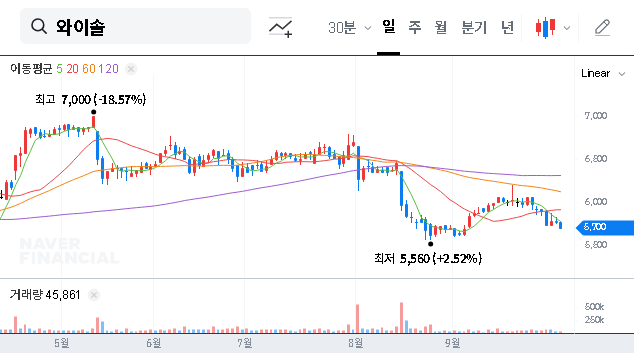
    The recent announcement of the National Pension Service (NPS) reducing its stake in Wisol (122990) has sent ripples through the investment community. This development, coupled with existing market headwinds, significantly impacts the Wisol stock price outlook. For current and prospective investors, understanding the implications of this move is critical. This comprehensive analysis will dissect the NPS share sale, evaluate Wisol’s current fundamentals, and provide a clear, strategic roadmap for navigating the path ahead.

    We will explore the short-term pressures and long-term opportunities, offering data-driven insights to help you make informed decisions about your Wisol investment strategy in an uncertain market.

    The Catalyst: National Pension Service Reduces Wisol Stake

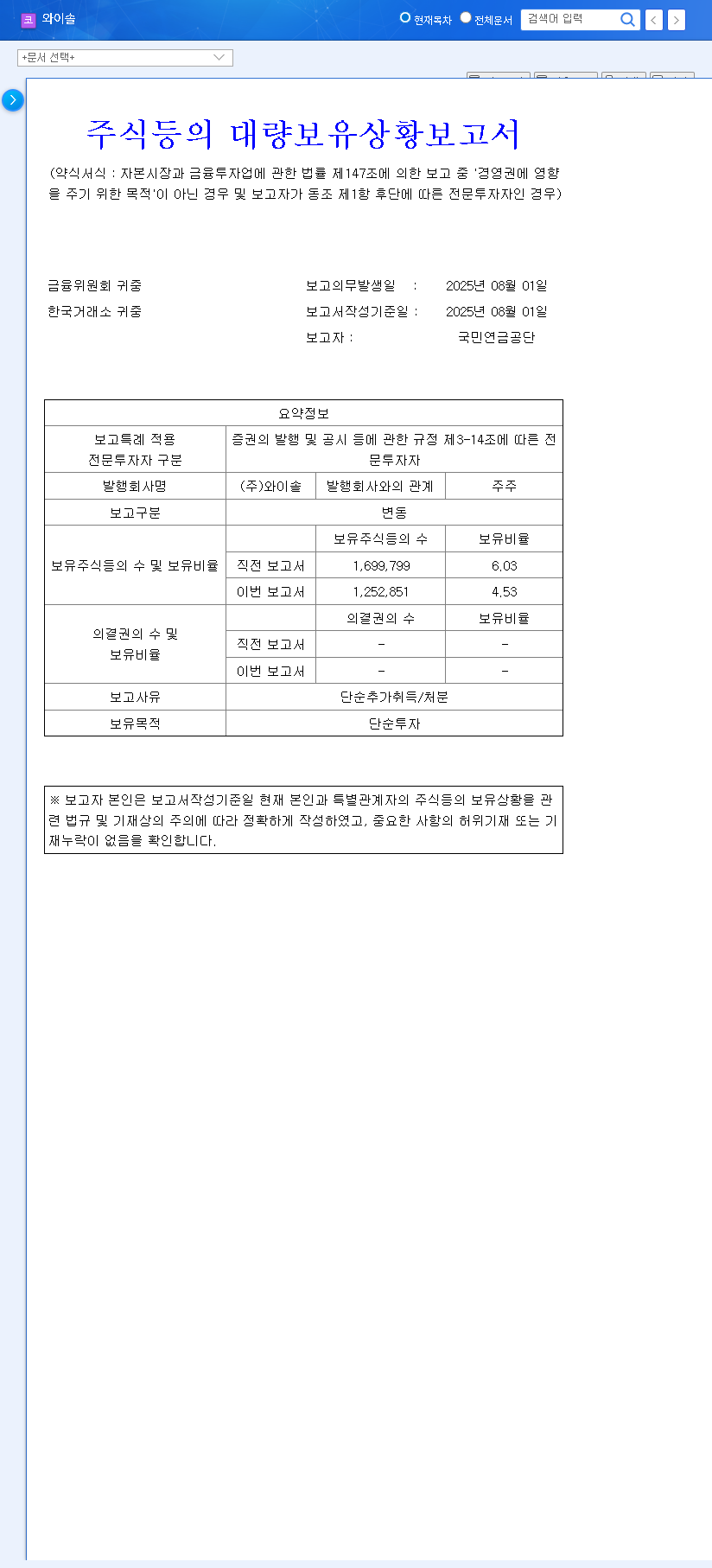
    On October 1, 2025, a significant filing revealed a major shift in institutional ownership. The National Pension Service, a key institutional investor, reported a reduction in its holdings of Wisol shares. According to the Official Disclosure (DART), the NPS stake decreased from 6.03% to 4.53%, a notable 1.5 percentage point drop. This action was filed under a ‘Report on the Status of Large-Scale Shareholding (Simplified)’ for simple investment purposes.

    A reduction in holdings by a major institutional player like the NPS is often interpreted by the market as a bearish signal. It can trigger a chain reaction, dampening overall investor sentiment and potentially indicating underlying concerns about the company’s future performance.

    Understanding the behavior of institutional investors is crucial. Their large-scale movements can create significant price pressure, and their rationale—whether simple profit-taking or a fundamental reassessment—provides valuable clues about a company’s health.

    Wisol’s Fundamentals Under the Microscope

    The NPS’s decision may be rooted in Wisol’s deteriorating fundamentals. A close examination of the company’s latest semi-annual report paints a picture of a company facing significant operational and financial challenges, which directly affects the long-term Wisol stock price outlook.

    Financial Performance and Profitability Strain

    • Declining Revenue & Operating Loss: Consolidated revenue has seen a sharp decline year-over-year. More concerningly, operating profit has swung to a loss, and that loss is widening, primarily driven by underperformance in the core RF (Radio Frequency) business unit.
    • Weakening Cash Flow: Cash flow from operating activities has decreased significantly. This indicates a reduced ability to generate cash internally, which is vital for funding operations, R&D, and future growth without relying on external financing.
    • High Fixed Cost Burden: Despite falling revenue, fixed costs related to R&D and SG&A (Selling, General & Administrative) expenses remain high. This operational deleverage puts immense pressure on margins. Recent severance payments from voluntary retirement have further inflated these costs.

    Strategic and Operational Headwinds

    • Delayed R&D Payoffs: Wisol is investing in new ventures like automotive components and next-gen RF filter technology. However, these are long-term plays, and tangible, revenue-generating results are not expected in the immediate future.
    • Inefficient Production: The low utilization rate of production facilities points to operational inefficiency, further hindering profitability and return on invested capital.

    Navigating an Unforgiving Macroeconomic Climate

    External factors are compounding Wisol’s internal struggles. The broader economic environment adds layers of risk and uncertainty to the company’s outlook. For a deeper understanding, you can review our guide on how macroeconomic trends affect tech stocks.

    • Persistent High-Interest Rates: While central banks have paused hikes, the high-interest-rate environment increases financing costs for corporations and generally dampens equity market valuations.
    • Currency Volatility: Fluctuations in the USD/KRW exchange rate create unpredictability for a business with international operations, affecting both revenue reporting and import costs.
    • Rising Input Costs: Elevated prices for raw materials like gold and rising international freight costs put direct pressure on Wisol’s cost of goods sold, squeezing already thin profit margins.

    Recommended Wisol Investment Strategy for 2025

    Given the confluence of negative factors, a prudent and cautious Wisol investment strategy is warranted. The path forward depends heavily on your risk tolerance and investment horizon.

    Short-Term Strategy: A Conservative Stance

    In the immediate future, the stock will likely face continued downward pressure. The combination of weak fundamentals and a major institutional seller creates a toxic environment for short-term price appreciation.

    • For New Investors: It is advisable to remain on the sidelines. Wait for clear signs of a fundamental turnaround or for the price to stabilize after absorbing the institutional selling pressure.
    • For Existing Shareholders: Avoid adding to your position at this time. Monitor upcoming earnings reports for any signs of improvement in the core business.

    Mid-to-Long-Term Perspective: Watching for Catalysts

    The long-term Wisol stock price outlook hinges on the company’s ability to execute a turnaround. A potential bottom-fishing opportunity may arise, but only if specific positive signals emerge.

    • Monitor Key Turnaround Signals: Watch for announcements related to new business wins (especially in automotive), significant improvements in production utilization, and a stabilization or recovery in operating margins.
    • Track Institutional Flow: Keep an eye on whether other institutions follow the NPS’s lead or if buying activity begins to emerge at lower price levels. Stabilization of institutional ownership would be a positive sign.

    Disclaimer: This report is based on the information provided and analyzed, and actual investment decisions should be made by the investor’s own judgment and responsibility.

    (122990) Wisol Stock Price Outlook: Analyzing the NPS Share Sale & 2025 Investment Strategy 관련 이미지
  • (097950) CJ CheilJedang Stock Analysis: NPS Sells Stake – What Investors Need to Know

    (097950) CJ CheilJedang Stock Analysis: NPS Sells Stake – What Investors Need to Know

    An in-depth analysis of CJ CheilJedang stock is now more critical than ever for investors. The recent news that South Korea’s largest institutional investor, the National Pension Service (NPS), has reduced its holdings has sent ripples through the market. On October 1, 2025, an official disclosure confirmed the sale, sparking a crucial debate: Is this a bearish signal forewarning of underlying weakness, or merely a strategic portfolio rebalancing by a major player? This comprehensive CJ CheilJedang investment analysis will dissect the company’s fundamentals, evaluate the market environment, and provide a clear outlook to help you make informed decisions.

    The Catalyst: National Pension Service Reduces Its Stake

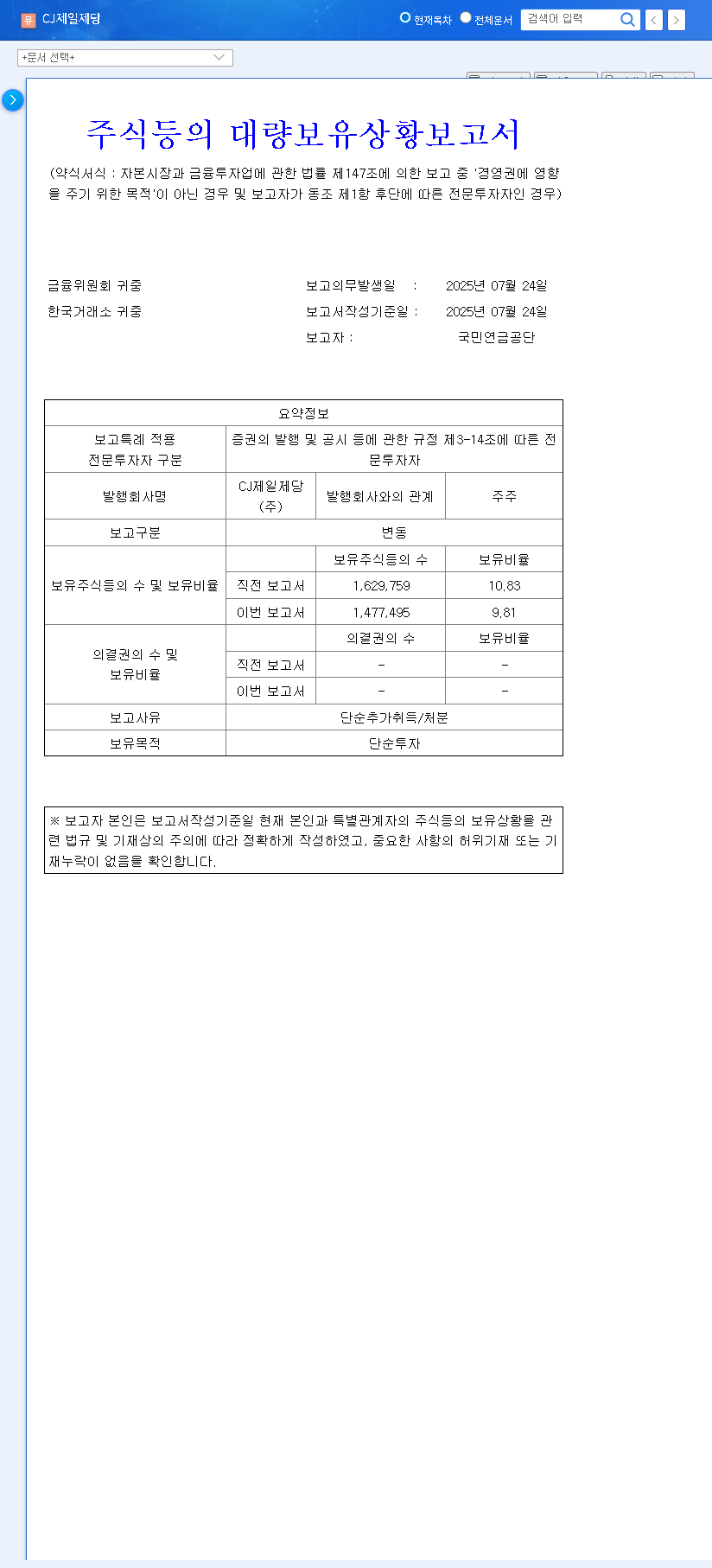
    The event that triggered this market-wide discussion was the announcement by the National Pension Service regarding a change in its shareholdings. The NPS’s stake in CJ CheilJedang decreased from 10.83% to 9.81%, a significant divestment of approximately 1.02 percentage points. While the NPS officially cited ‘simple investment’ as its holding purpose, such a large-scale sale from a leading institution inevitably invites speculation. The official filing provides the raw data for this transaction (Official Disclosure), but the story behind the numbers requires a deeper look into the company’s health.

    Deep Dive: A Fundamental Analysis of CJ CheilJedang’s Business

    To understand the true CJ CheilJedang outlook, we must look past the short-term market noise and focus on its core fundamentals. The company operates across diverse segments, each with its own set of strengths and weaknesses.

    The Bullish Case: Core Strengths and Growth Engines

    • Dominant Food Business & Global Reach: The ‘Bibigo’ brand continues its powerful global expansion, complemented by the successful integration of ‘Schwan’s Company’ in the US market. This overseas momentum provides a steady and growing revenue stream.
    • Innovation in the BIO Segment: CJ CheilJedang is not just a food company. Its BIO division is pushing into high-value areas like fermented proteins and specialty solutions. Future growth is anchored in promising ventures like biodegradable plastics (PHA) and microbiome-based pharmaceuticals.
    • Logistics Modernization: Through digital transformation, including automated technologies and the ‘LoIS Parcel’ system, the logistics arm is boosting efficiency and strengthening its competitive advantage in a demanding e-commerce landscape.
    • Financial Stability: A strong credit rating (AA- corporate bonds) provides a solid financial foundation, enabling the company to weather economic storms and fund future growth initiatives effectively.

    The Bearish Case: Headwinds and Inherent Risks

    • Macroeconomic Sensitivity: The company’s profitability is highly susceptible to fluctuations in currency exchange rates and international grain prices, which are significant cost drivers for its food business.
    • Margin Pressure: A combination of rising raw material costs, increased capital expenditures for growth, and higher interest rates poses a tangible threat to operating profit margins across all segments.
    • Segment Profitability Disparity: The F&C (Food & Culture) business unit exhibits a notably low operating profit margin (around 5%) and has a history of losses, indicating a persistent need for strategic improvement.
    • Competitive Landscape: CJ CheilJedang faces intense competition in every sector, from global food giants to specialized biotech firms and agile logistics startups, requiring constant innovation to maintain market share.

    Outlook & Investor Strategy for CJ CheilJedang Stock

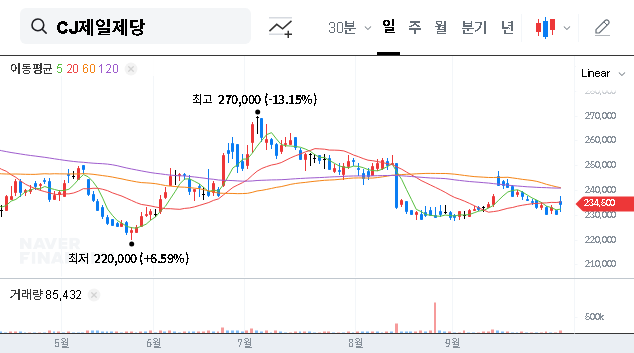
    The sale by the National Pension Service could create short-term selling pressure and weaken investor sentiment, potentially causing a temporary dip in the CJ CheilJedang stock price. However, long-term investors should focus on whether the fundamental value of the company is changing. According to many global economic reports, volatility in commodity markets is expected to continue, a key factor for this stock.

    The key for investors is to differentiate between temporary market sentiment driven by a single large sale and a genuine shift in the company’s long-term growth trajectory and profitability.

    Actionable Investor Plan

    • For Short-Term Traders: Monitor trading volumes to see how the market absorbs the NPS’s sell-off. A significant price drop on high volume could be a sign of further weakness, while a quick recovery could signal resilience and a potential entry point.
    • For Long-Term Investors: Focus on the quarterly earnings reports. Look for continued growth in the global food and BIO segments and assess the company’s strategies for mitigating macroeconomic risks. This event could present a buying opportunity if you believe in the long-term CJ CheilJedang fundamentals. Consider this as part of a well-rounded portfolio; read our guide on portfolio diversification for more context.

    Frequently Asked Questions (FAQ)

    Q1: Why did the National Pension Service sell its stake in CJ CheilJedang?

    While the official reason was ‘simple investment’ purposes, the sale is likely due to strategic portfolio rebalancing, profit-taking, or a move to allocate capital to other opportunities. It may also reflect a cautious stance on the company’s exposure to commodity and currency volatility.

    Q2: How will this sale affect the CJ CheilJedang stock price?

    In the short term, it may lead to increased selling pressure and a potential stock price decline. However, the long-term impact will be dictated by the company’s actual performance and fundamentals, not by the actions of a single investor, even one as large as the NPS.

    Q3: What is the overall outlook for CJ CheilJedang?

    The CJ CheilJedang outlook is mixed but leans positive for the long term. The company has powerful growth drivers in its food and BIO businesses. However, investors must remain aware of the significant risks tied to macroeconomic factors and internal profitability challenges.

    Conclusion: A Balanced Perspective

    In conclusion, the National Pension Service’s decision to trim its stake in CJ CheilJedang stock is a significant event that warrants attention but not panic. It serves as a reminder of the inherent risks and external pressures facing the company. For investors, the path forward is clear: conduct a thorough CJ CheilJedang investment analysis based on its resilient core businesses and future growth prospects, while continuously monitoring its ability to navigate a challenging global economic environment.

    (097950) CJ CheilJedang Stock Analysis: NPS Sells Stake – What Investors Need to Know 관련 이미지
  • (097230) HJ Heavy Industries Major Shareholder Sells Stake: 2025 HJHI Stock Analysis

    (097230) HJ Heavy Industries Major Shareholder Sells Stake: 2025 HJHI Stock Analysis

    A significant development has captured the market’s attention regarding HJ Heavy Industries (HJHI). The decision by the HJ Heavy Industries major shareholder, Eco-Prime Marine Pacific Co. Ltd., to divest a substantial portion of its holdings has sent ripples of uncertainty through the investment community. This move raises critical questions about the company’s future, its stock valuation, and the appropriate strategy for current and prospective investors.

    This comprehensive analysis dissects the stake sale, examines the underlying fundamentals of HJHI, and projects the potential short-term and long-term impacts on the HJ Heavy Industries stock price. We will provide a clear, data-driven perspective to help you navigate this pivotal moment.

    The Event: A Detailed Look at the Major Shareholder Divestment

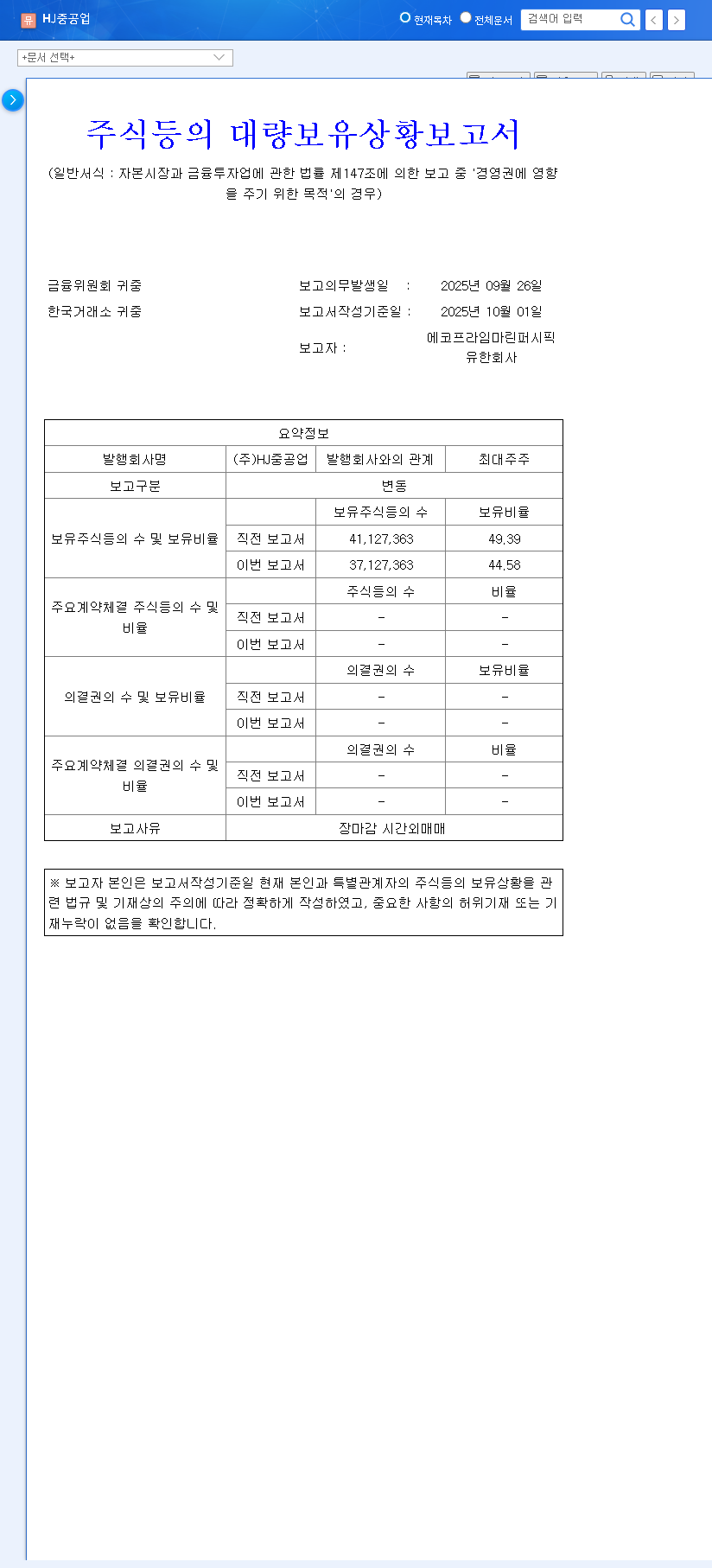
    On October 27, 2024, a crucial disclosure was made public. Eco-Prime Marine Pacific Co. Ltd. (‘Eco-Prime’), the largest shareholder, executed an after-hours block trade, selling approximately 4.81% of its total stake in HJ Heavy Industries. This transaction involved 4 million shares and reduced Eco-Prime’s ownership from a commanding 49.39% down to 44.58%. You can view the complete filing in the Official Disclosure on DART.

    What makes this sale particularly noteworthy is Eco-Prime’s previously stated purpose for holding the shares: ‘influencing management rights’. When a major shareholder with such an explicit goal decides to reduce their position, it naturally signals a potential shift in strategy or confidence, introducing significant uncertainty into the market’s perception of the company’s stability and value.

    Unpacking the ‘Why’: An HJHI Stock Analysis of Fundamentals

    To understand the context behind this divestment, a deep dive into HJ Heavy Industries’ financial health is essential. The company operates in the cyclical shipbuilding and construction sectors, with recent forays into renewable energy. The first half of 2025 provides a mixed but telling picture.

    Financial Status & Debt Load

    While total assets saw a slight increase, they remain down from year-end 2023 figures. More alarmingly, total liabilities stand at KRW 1.9415 trillion. The company’s consolidated debt-to-equity ratio has soared to an extremely high 564.98%. This level of leverage is a major red flag for investors, indicating significant financial risk and a fragile balance sheet.

    A debt-to-equity ratio exceeding 500% places immense pressure on a company’s financial stability, making it vulnerable to interest rate fluctuations and constraining its ability to invest in future growth.

    Income and Profitability

    On a brighter note, despite a slight year-over-year revenue decrease to KRW 917.8 billion in H1 2025, HJHI successfully achieved an operating profit of KRW 10.8 billion. This turnaround from a loss is a positive operational signal. However, the victory was short-lived, as mounting financial costs (largely due to its high debt) pushed the company to a net loss of KRW 1.059 billion. This highlights how the company’s debt burden is eroding its operational successes.

    Projected Impact on HJ Heavy Industries Stock

    The market’s reaction to the HJ Heavy Industries major shareholder sale will likely unfold in distinct phases.

    Short-Term: Heightened Volatility and Negative Sentiment

    In the immediate term, the stock is expected to face downward pressure. The sale is a negative signal for two primary reasons:

    • Management Uncertainty: A reduced stake from the key shareholder raises questions about leadership stability and long-term corporate strategy.
    • Negative Value Perception: The market may interpret the sale as the ‘insider’ belief that the company’s future prospects are dim or that the stock is currently overvalued. For broader market context, you can read analysis on investor sentiment from sources like Reuters.

    Mid-to-Long-Term: Fundamentals Will Dictate the Path

    The long-term trajectory of HJHI stock will hinge entirely on its ability to address its fundamental weaknesses. The key catalysts to watch for are:

    • Debt Reduction: Aggressive and successful efforts to deleverage the balance sheet.
    • Profitability Growth: Sustaining and growing the operating profit to overcome financial costs and achieve net profitability.
    • Segment Performance: Securing stable orders in its special purpose ship division and navigating the challenging construction market effectively.

    If the company can demonstrate tangible progress in these areas, the impact of this sale could fade, potentially opening up a buying opportunity. If not, sustained downward pressure is likely.

    Investment Strategy: A Cautious and Vigilant Approach

    Given the high level of uncertainty, a “Neutral” rating on HJ Heavy Industries stock is prudent. Investors should adopt a cautious approach tailored to their risk tolerance and time horizon. For more on this, you might review our guide on how to analyze industrial sector stocks.

    For Short-Term Traders

    Expect increased volatility. The stock may experience sharp movements based on rumors and news flow. Prudence is key; avoid taking large positions until a clearer trend emerges. Monitor trading volumes and price action closely following the event.

    For Long-Term Investors

    This is a time for monitoring, not immediate action. Your focus should be on the company’s quarterly earnings reports and management’s plans to improve the financial structure. Keep a close watch on the performance of its growth drivers, such as renewable energy projects and defense-related shipbuilding contracts. The stock’s value will ultimately be determined by these fundamental improvements, not the shareholder shuffle.

    Conclusion: A Critical Turning Point

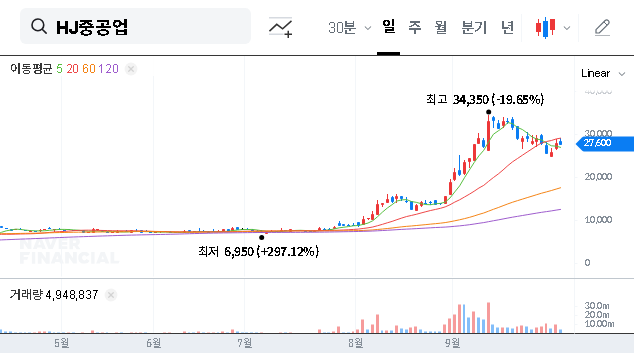
    The divestment by the HJ Heavy Industries major shareholder is a significant event that rightfully introduces caution. While the company has shown signs of an operational turnaround, its towering debt remains a critical risk factor. The path forward for the HJHI stock price depends less on this single transaction and more on the management’s ability to execute a convincing plan for financial stabilization and profitable growth. Investors are advised to remain on the sidelines, conduct thorough due diligence, and await concrete evidence of fundamental improvement before committing capital.

    (097230) HJ Heavy Industries Major Shareholder Sells Stake: 2025 HJHI Stock Analysis 관련 이미지
  • (051900) LG H&H Stock Analysis (051900): NPS Sale Impact & 2025 Outlook

    (051900) LG H&H Stock Analysis (051900): NPS Sale Impact & 2025 Outlook

    The recent news of South Korea’s National Pension Service (NPS) divesting a significant stake in LG H&H stock has stirred the market, leaving many investors questioning the future trajectory of the company’s share price. Is this a signal of underlying weakness, or simply a strategic portfolio adjustment by a major institutional player? This comprehensive LG H&H stock analysis will dissect the situation, providing clarity on the NPS’s actions, the company’s fundamental health, and what it all means for your investment strategy in 2025 and beyond.

    The NPS Share Sale: What Investors Need to Know

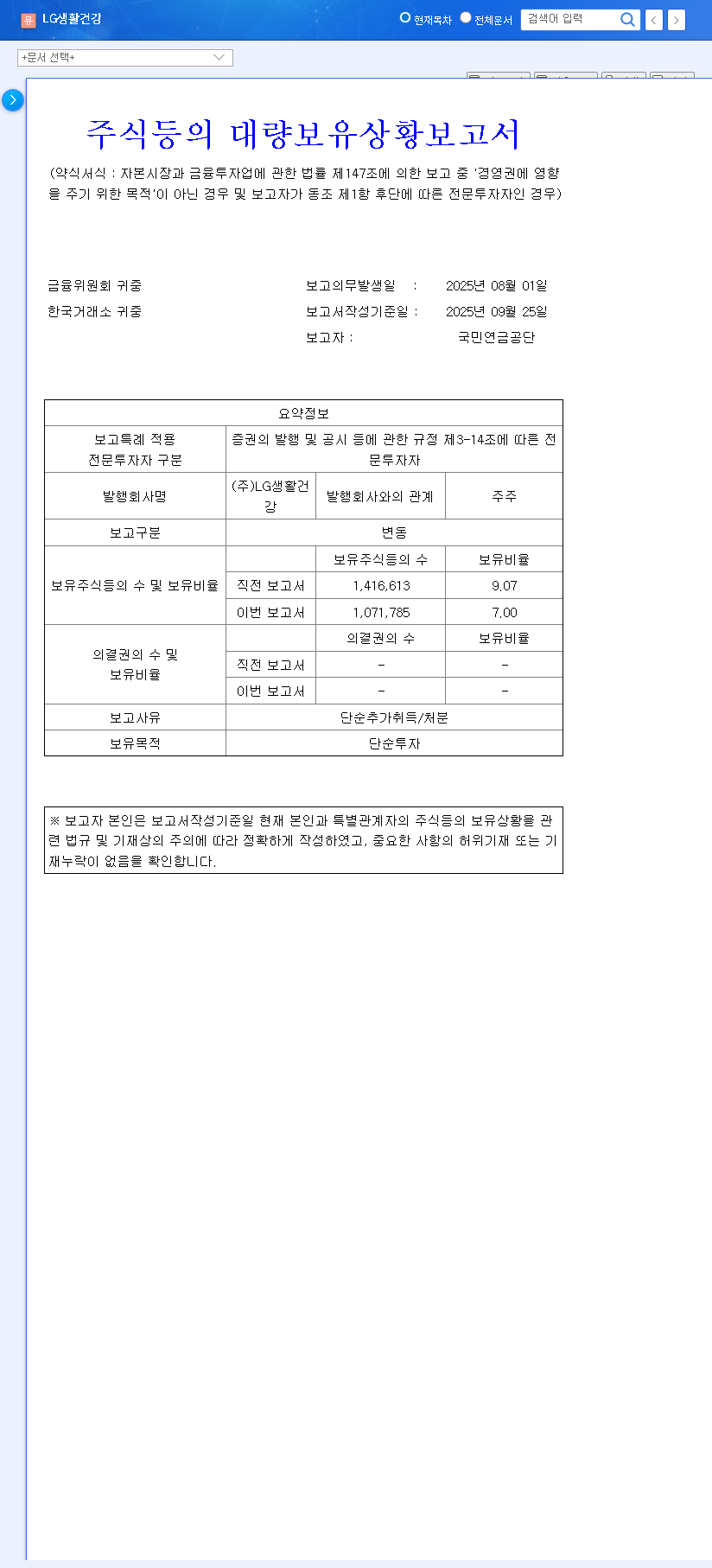
    On October 1, 2025, a public disclosure revealed that the National Pension Service, one of the world’s largest pension funds, had reduced its holdings in LG H&H (ticker: 051900). The fund’s stake decreased from 9.07% to 7.00%, a notable reduction of 2.07 percentage points. According to the Official Disclosure, the stated purpose for the holding was ‘Simple Investment’.

    This type of move by a major institution can often be interpreted in two ways. On one hand, it could be a strategic rebalancing of their portfolio, a common practice to manage risk or lock in profits after a period of growth. On the other hand, it could be perceived as a loss of confidence in the company’s future prospects. However, given the ‘Simple Investment’ classification, the former is the more probable scenario. The immediate impact is likely to be felt more in market sentiment and short-term volatility rather than as a reflection of a fundamental shift in the LG H&H stock value proposition.

    Deep Dive into LG H&H Stock Fundamentals (H1 2025)

    Beyond the headlines, a thorough LG H&H stock analysis requires a close look at the company’s core performance. The first half of 2025 painted a picture of resilience amidst challenges.

    Revenue and Segment Performance

    LG H&H reported total revenue of KRW 3.3 trillion, a marginal decrease year-over-year. The Beauty division, with KRW 1.3 trillion in revenue, felt the headwinds from a sluggish Chinese market, a key area of concern for investors. However, the HDB (Home Care & Daily Beauty) segment showed robust growth, reaching KRW 1.1 trillion, driven by the strong performance of its premium brands. The Refreshment segment remained a pillar of stability, maintaining its revenue at KRW 874.7 billion. This diversified portfolio demonstrates an ability to weather turbulence in specific markets.

    Profitability and Financial Health

    Operating profit saw a significant drop to KRW 197.2 billion, a 57% decrease year-over-year. This was primarily attributed to increased strategic investments aimed at revitalizing the Beauty segment and some one-off expenses. Despite this, the high-margin Refreshment business provided a crucial buffer, helping to defend overall profitability. Crucially, the company’s financial foundation remains rock-solid.

    With a low debt-to-equity ratio of just 20.8% and a healthy reserve of cash equivalents, LG H&H is well-positioned to navigate economic uncertainties and fund future growth initiatives without financial strain.

    Market Impact and Future Outlook

    Short-Term Volatility vs. Long-Term Value

    The immediate aftermath of the NPS news could introduce downward pressure on the LG H&H share price and increase trading volatility. Negative sentiment often follows when a major institution trims its position, a phenomenon frequently covered by leading financial news outlets. However, for long-term investors, this could represent a buying opportunity. The market’s short-term reaction is unlikely to impact LG H&H’s fundamental business competitiveness, brand equity, or its strategic growth plans.

    Future Growth Catalysts

    Management’s focus in H1 2025 was clearly on securing future growth. Investors should pay close attention to these initiatives, which are far more indicative of long-term value than a single institutional trade. For more on market trends, review our analysis of the global beauty industry.

    • Strengthening Luxury Brands: Continued investment in high-margin luxury cosmetics like ‘The History of Whoo’ and ‘Su:m37’ is key to improving profitability.
    • Strategic Acquisitions: The acquisition of new color cosmetics brands diversifies the portfolio and captures new market segments.
    • Beauty Tech Investment: Venturing into the beauty device business opens up a new, high-growth revenue stream.
    • Shareholder Returns: Ongoing share buybacks and dividends signal confidence from management and a commitment to enhancing corporate value.

    Comprehensive Investment Strategy for LG H&H Stock

    In conclusion, while the NPS share sale is a notable event, it should be viewed within the broader context of LG H&H’s solid fundamentals and strategic initiatives. The prudent investor will look past the short-term noise and focus on the underlying health and long-term growth trajectory of the business.

    Investment Opinion: Neutral with Positive Long-Term Outlook

    The current recommendation is ‘Neutral’ due to short-term market headwinds and macroeconomic uncertainties. However, the long-term potential for the 051900 stock remains attractive for patient investors.

    • Positives: Diversified business portfolio, powerful brand equity, stable financial structure, and clear investment in future growth engines.
    • Risks: Over-reliance on the Chinese market, intense competition in the beauty sector, and macroeconomic factors like interest rates and currency fluctuations.

    Investors should monitor LG H&H’s H2 2025 earnings reports and management’s progress on their growth strategies. Decisions should be based on fundamental performance rather than a single institutional portfolio adjustment.

    Disclaimer: This article is for informational purposes only and does not constitute investment advice. All investment decisions should be made based on your own research and judgment.

    (051900) LG H&H Stock Analysis (051900): NPS Sale Impact & 2025 Outlook 관련 이미지
  • (033340) Joheun Saramdeul Stock Analysis: Major Shareholder Sale Sparks Concern | 2025 Outlook

    (033340) Joheun Saramdeul Stock Analysis: Major Shareholder Sale Sparks Concern | 2025 Outlook

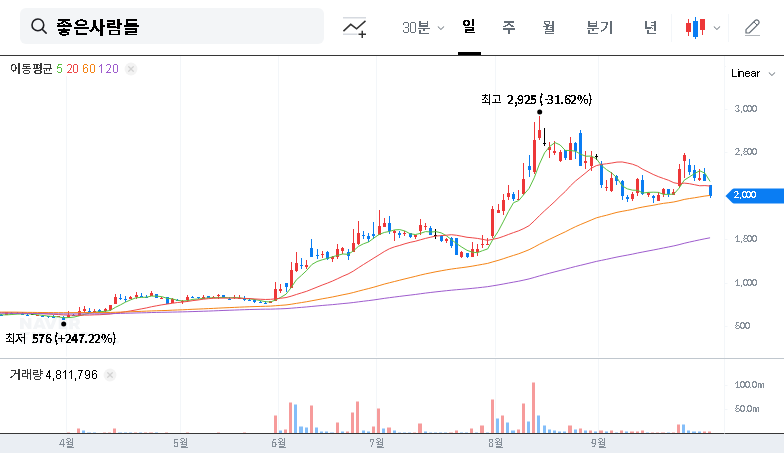
    A recent development has cast a significant shadow over the Joheun Saramdeul stock, prompting investors to question the company’s stability and future. A large shareholding status report revealed that a key related party to the company’s largest shareholder has offloaded a substantial number of shares. For a company already navigating a turbulent market and internal financial struggles, this news could be a critical inflection point.

    This article provides a comprehensive Joheun Saramdeul financial analysis, dissecting the details of the share sale, the company’s alarming fundamentals, and the direct implications for investor sentiment and stock price. We will offer a clear, actionable investment strategy for those currently holding or considering an investment in Good People Co. stock.

    The combination of a major insider-related sale and deteriorating financial fundamentals creates a perfect storm of negative sentiment. This event acts as a powerful sell signal to the market, amplifying existing concerns about the company’s viability.

    The Share Sale: Unpacking the Disclosure

    On September 30, 2025, a mandatory disclosure sent ripples through the investment community. The filing, known as a Large Shareholding Status Report, detailed a significant transaction involving the underwear manufacturer, Joheun Saramdeul Co. The full details can be reviewed in the Official Disclosure (Source: DART).

    Key Details of the Transaction

    • Seller: Pine Wood Private Equity Co., a special related party of the largest shareholder, Our Intertex.
    • Shares Sold: A total of 1,908,307 shares between September 23 and September 29, 2025.
    • Ownership Change: The combined stake of Our Intertex and its related parties decreased by 2.08%, falling from 48.55% to 46.47%.
    • Stated Purpose of Holding: Management influence.

    The sale is particularly concerning because the shares were held for ‘management influence.’ When an entity with this stated purpose sells, it can signal a loss of confidence in the company’s direction or financial prospects. While a 46.47% stake still represents significant control, the move by a knowledgeable insider party is a major red flag for the market.

    Financial Analysis: A Company in Crisis

    The Joheun Saramdeul share sale did not happen in a vacuum. The company’s H1 2025 financial report paints a grim picture of a business facing severe headwinds. A deep dive into these numbers is essential for any investor performing comprehensive fundamental analysis.

    Deteriorating Revenue and Profitability

    The company’s core business is contracting at an alarming rate. Revenue in the first half of 2025 stood at 36.6 billion KRW, a sharp 17.2% decrease year-over-year. This top-line erosion is compounded by massive losses, including an operating loss of -32.1 billion KRW and a net loss of -31.6 billion KRW. Furthermore, inventory has swelled by nearly 29% to 35.1 billion KRW, indicating that products are not moving, which ties up capital and signals weakening demand.

    Unstable Financial Foundation

    The balance sheet provides little comfort. Total liabilities have climbed to 27 billion KRW, pushing the debt ratio to 50.68%. Cash flow, the lifeblood of any company, has also been severely weakened. Cash and cash equivalents have dwindled to just 2.7 billion KRW, with operating activities draining an additional 3.7 billion KRW from the company. While management believes short-term obligations can be met, the overall financial structure is fragile.

    Impact on Joheun Saramdeul Stock Price & Investor Sentiment

    This combination of poor performance and an insider-related sale is expected to have a profoundly negative impact on the Joheun Saramdeul stock price. In a volatile economic climate, where investors are already risk-averse, as reported by global financial news outlets, such news can trigger significant selling pressure. The market often interprets a major shareholder’s sale as a leading indicator, suggesting that those with the most information see little upside in the near term.

    This is likely to create a cycle of negative sentiment, where falling prices beget more selling. Without a strong, positive catalyst, it will be difficult for the stock to find a bottom. Investors should also be wary of potential overhang, as the market may now anticipate further sales from other related parties.

    Investment Strategy: A Time for Extreme Caution

    Given the confluence of risks—weak fundamentals, negative market signals from the share sale, and lingering legal risks from an investigation into former executives—our investment recommendation is a firm ‘Sell’ or ‘Cautious Observation.’ Investing in the Joheun Saramdeul stock at this juncture carries an unacceptably high level of risk.

    For a more positive thesis to emerge, investors should wait for clear, tangible signs of a turnaround. These would include:

    • Multiple quarters of sustained revenue growth.
    • A return to positive operating cash flow.
    • Significant improvement in inventory turnover rates.
    • Favorable resolution of the ongoing legal investigations.

    Until these conditions are met, prudence is paramount. Investors should monitor company disclosures and financial reports closely from the sidelines.

    Frequently Asked Questions

    Q1: What does the major shareholder’s stake sale at Joheun Saramdeul mean?

    It means that Pine Wood Private Equity, an affiliate of the largest shareholder, sold over 1.9 million shares. This reduced the controlling group’s stake to 46.47% and is widely seen as a negative signal about the company’s future prospects.

    Q2: Is Joheun Saramdeul’s management control at risk?

    While a 46.47% stake is still substantial, the sale raises concerns about management stability and confidence. A direct hostile takeover is unlikely in the short term, but the perception of weakening control is a risk factor.

    Q3: What is the current financial status of Joheun Saramdeul?

    The company is in poor financial health. It’s experiencing a significant revenue decline (-17.2% YoY), substantial operating and net losses, rising debt, and deteriorating cash flow, indicating a very unstable financial structure.

    Q4: What is the stock price outlook for Joheun Saramdeul?

    The outlook is negative. The stock price is likely to face continued downward pressure due to the combination of weak financial results and the negative signal sent by the major shareholder’s share sale. Investor sentiment is expected to remain poor in the short-to-medium term.

    (033340) Joheun Saramdeul Stock Analysis: Major Shareholder Sale Sparks Concern | 2025 Outlook 관련 이미지
    (033340) Joheun Saramdeul Stock Analysis: Major Shareholder Sale Sparks Concern | 2025 Outlook 관련 이미지