Tag: Share Sale

  • (112290) YCCHEM Shareholder Sale: In-Depth Stock Analysis & 2025 Investor Guide

    (112290) YCCHEM Shareholder Sale: In-Depth Stock Analysis & 2025 Investor Guide

    The semiconductor industry is no stranger to volatility, and recent news surrounding YCCHEM CO., LTD. (YCCHEM) has captured the attention of investors. A significant YCCHEM shareholder sale by a major institutional investor has created ripples, prompting a deeper look into the company’s future. This analysis provides a comprehensive guide for understanding the implications of this event and making informed investment decisions.

    We will dissect the details of the share sale, evaluate YCCHEM’s current financial health and technological edge, and assess the broader market factors at play. Is this a warning sign or a non-event for long-term investors? Let’s find out.

    The Catalyst: K&Investment Partners Reduces Its Stake

    On November 10, 2025, a mandatory disclosure revealed that K&Investment Partners, a key shareholder in YCCHEM, executed a significant open market sale. The firm’s holding was reduced by 2.57 percentage points, dropping from 7.06% to 4.49%. The details of this transaction were made public in an Official Disclosure on the DART system.

    K&Investment Partners cited the reason for the sale as being for ‘simple investment’ purposes. In venture capital and private equity, this is common terminology for an ‘exit’ or investment recovery. Funds have a lifecycle and are obligated to return capital to their limited partners. While not necessarily a negative reflection on YCCHEM’s fundamentals, such a large sale can create short-term market overhang and negative sentiment.

    An institutional sell-off, even for strategic reasons, often tests market confidence. The key for investors is to separate the shareholder’s strategy from the company’s intrinsic value and long-term potential.

    YCCHEM Fundamentals: A Deep Dive into the Technology

    To perform a thorough YCCHEM stock analysis, we must look beyond the shareholder movements and focus on the company’s core business. YCCHEM is a crucial player in the semiconductor materials space, specializing in high-purity chemicals essential for cutting-edge chip manufacturing.

    Core Technological Strengths

    YCCHEM develops and produces vital components like Surfactants, Polymers, and Developers for advanced photolithography processes, including ArF (Argon Fluoride) and EUV (Extreme Ultraviolet). These are not commodity chemicals; they are highly specialized materials that enable the creation of smaller, faster, and more powerful microchips. The company’s future growth is pinned on its expansion into next-generation materials for:

    • HBM (High Bandwidth Memory): Supplying photoresists critical for stacking memory dies, a key technology for AI and high-performance computing.
    • Glass Substrates: Developing coating materials for next-generation glass semiconductor substrates, which promise improved performance and efficiency.

    Financial Health Check (H1 2025)

    The recent semiconductor industry slowdown has impacted YCCHEM’s short-term financials:

    • Revenue: KRW 37.86 billion, a slight decrease year-over-year.
    • Operating Income: A loss of KRW 2.36 billion, widening due to fixed costs.
    • Net Income: Turned profitable at KRW 1.50 billion, primarily due to non-operating financial gains.
    • Debt-to-Equity Ratio: 188.9%. This is a high figure that warrants careful monitoring. You can learn more about what this means at high-authority finance sites like Investopedia.
    • Operating Cash Flow: A positive sign at KRW 1.58 billion, indicating the core business is generating cash.

    Investment Strategy: Navigating the YCCHEM Shareholder Sale

    Given the YCCHEM shareholder sale, a prudent investment strategy requires balancing the long-term potential against short-term risks and macroeconomic headwinds. The sale itself does not alter YCCHEM’s competitive landscape, but it does introduce market dynamics that cannot be ignored.

    The Bull Case (Reasons for Optimism)

    • Technological Moat: Strong R&D focus and positioning in next-gen materials like HBM and EUV create a long-term growth runway.
    • Industry Rebound: As the semiconductor cycle bottoms out and demand for AI chips accelerates, YCCHEM is well-positioned to benefit.
    • Improving Cash Flow: Positive operating cash flow despite an operating loss is a sign of underlying operational health.

    The Bear Case (Factors for Caution)

    • Share Overhang: The risk that K&Investment Partners may sell their remaining 4.49% stake could continue to pressure the stock price.
    • Financial Leverage: The high debt-to-equity ratio makes the company vulnerable to rising interest rates, increasing borrowing costs and impacting profitability.
    • Macroeconomic Risks: Unfavorable exchange rate movements can increase raw material costs, while a prolonged global economic slowdown could further delay the semiconductor industry’s recovery. For more on this, see our guide to macroeconomics for tech investors.

    Conclusion: A Balanced Perspective on YCCHEM Investment

    The YCCHEM investment thesis is a tale of two horizons. In the short term, the market may react negatively to the shareholder sale and macroeconomic pressures. However, for long-term investors, the focus should remain on the company’s technological prowess and its strategic importance in the advanced semiconductor supply chain. Investors should comprehensively evaluate their risk tolerance while monitoring YCCHEM’s efforts to improve its financial soundness and capitalize on its clear growth potential.

    (112290) YCCHEM Shareholder Sale: In-Depth Stock Analysis & 2025 Investor Guide 관련 이미지
    (112290) YCCHEM Shareholder Sale: In-Depth Stock Analysis & 2025 Investor Guide 관련 이미지
  • (299170) WSI Co., Ltd. (299170) Stock Analysis: Inside Life Asset Management’s Major Share Sale

    (299170) WSI Co., Ltd. (299170) Stock Analysis: Inside Life Asset Management’s Major Share Sale

    The recent WSI Co., Ltd. share sale by Life Asset Management, a major institutional investor, has sent ripples through the market, raising critical questions for current and potential investors. This disclosure, detailing a significant reduction in their holdings of WSI (299170), warrants a thorough WSI stock analysis. Why would an institution divest from a company with promising revenue growth? What does this move signal about WSI’s underlying financial health and future prospects? This article provides a comprehensive breakdown of the event, its potential impact, and a strategic roadmap for navigating the resulting market volatility.

    We will dissect WSI’s fundamentals—both the impressive growth story and the concerning profitability challenges—within the context of a volatile macroeconomic environment. By understanding all facets of this situation, investors can make more informed decisions about their position in WSI Co., Ltd.

    The Catalyst: Life Asset Management’s Divestment

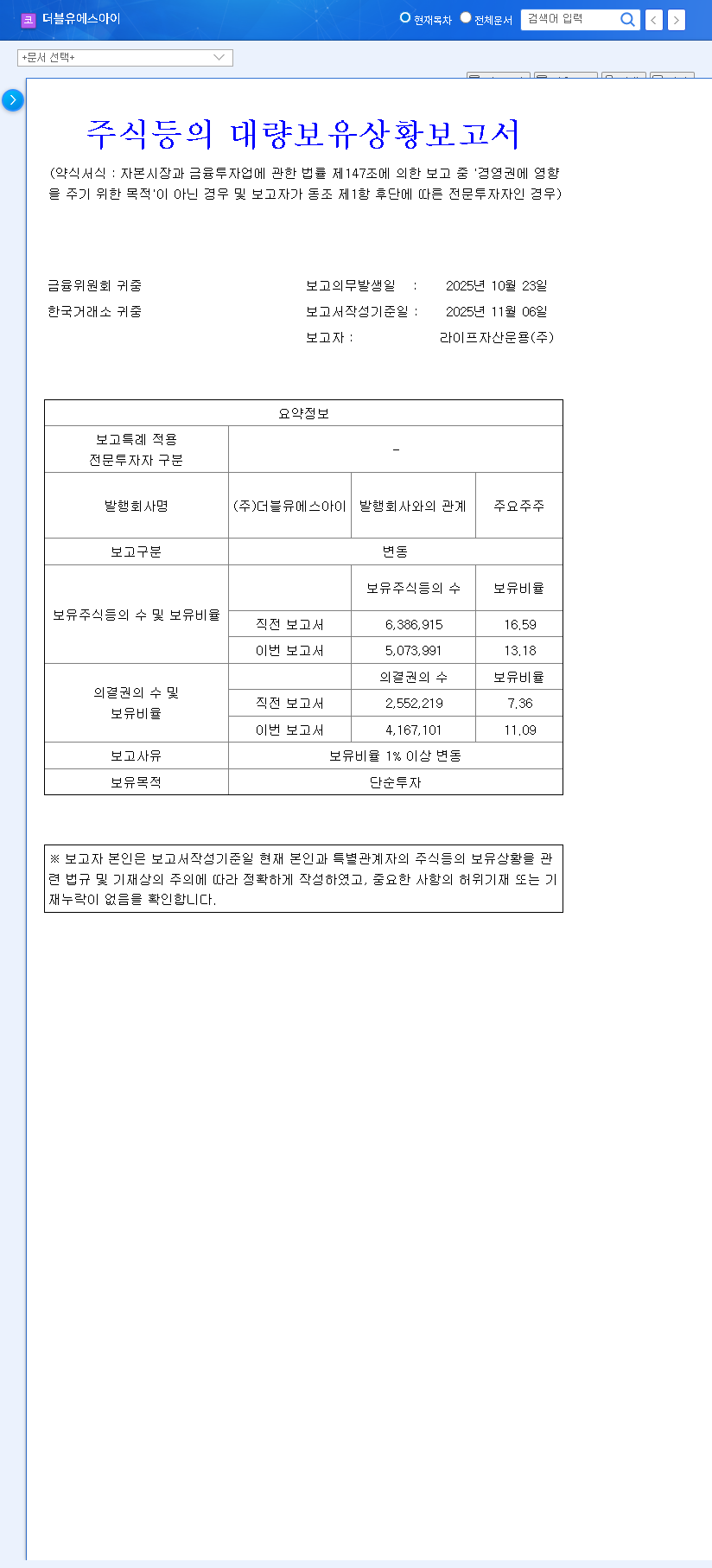
    On November 7, 2025, the market took note of an important filing concerning WSI Co., Ltd. (299170). The ‘Report on the Status of Large Shareholdings (Simplified)’ revealed that Life Asset Management sold approximately 1.03 million shares of WSI. This transaction reduced their significant stake from 16.59% down to 13.18%. For investors, a large-scale sale by a sophisticated institutional player initially holding for ‘simple investment’ purposes is a significant red flag that demands closer inspection. You can view the Official Disclosure here.

    Institutional sell-offs are often interpreted by the market as a leading indicator of underlying issues or a shift in confidence regarding a company’s short-term growth trajectory.

    Analyzing the ‘Why’: WSI’s Financial Landscape

    To understand the rationale behind the WSI Co., Ltd. share sale, we must look at the company’s dual narrative of rapid expansion clashing with profitability pressures and macroeconomic headwinds.

    The Bull Case: Impressive Growth and Diversification

    On the surface, WSI’s growth story is compelling. The company is actively and successfully diversifying its business model beyond its core distribution services.

    • Strategic Expansion: WSI is making calculated moves into high-growth areas like pharmaceutical manufacturing (via the IntroBiopharma acquisition) and medical robotics with its ‘U-Bot’ technology. This signals a strong focus on securing future revenue streams.
    • Robust Revenue Growth: A staggering 60% year-on-year revenue increase in Q1 2025 to KRW 25.808 billion is a testament to the success of these expansion efforts, particularly the integration of IntroBiopharma.

    The Bear Case: Profitability and Financial Health Concerns

    However, beneath the impressive top-line growth, signs of strain are emerging, which likely contributed to Life Asset Management’s decision.

    • Margin Compression: Operating profit grew by only 16.7%, lagging far behind the 60% revenue growth. This indicates that the cost of expansion and rising financial costs (KRW 4.195 billion from convertible bonds) are eating into profits.
    • Net Loss & Weak Cash Flow: The company posted a net loss of KRW 2.438 billion and saw its operating cash flow turn negative. This is a critical concern, as it suggests WSI is burning through cash despite higher sales. For more on this, see our guide to analyzing cash flow statements.
    • Macroeconomic Pressures: A rising USD/KRW exchange rate, sustained high interest rates, and volatile oil prices create a challenging operating environment, increasing import, logistics, and borrowing costs.

    Future Outlook: Navigating Short-Term Turbulence

    The immediate consequence of the WSI Co., Ltd. share sale is likely to be negative investor sentiment for WSI. The market may interpret Life Asset Management’s move as a vote of no confidence in WSI’s ability to manage its short-term financial burdens, overshadowing its long-term growth narrative.

    This could lead to increased downward pressure on the WSI 299170 stock price as other investors may follow suit or adopt a wait-and-see approach. The risk of further sales from the remaining 13.18% stake held by Life Asset Management creates an overhang on the stock. Understanding institutional investor behavior is key; you can learn more from authoritative sources like Investopedia’s analysis of institutional selling.

    Investor Action Plan & Key Monitorables

    Given the heightened uncertainty, a cautious and disciplined approach is warranted. Before making any investment decisions regarding WSI 299170, investors should closely monitor the following key areas:

    • Continued Institutional Flow: Keep a close watch on any further disclosures from Life Asset Management or other major shareholders. Continued selling could signal deeper issues.
    • Upcoming Earnings Reports: The next quarterly report is crucial. Look for tangible evidence of improved profitability, better cost controls, and a return to positive operating cash flow.
    • Business Plan Execution: Monitor progress reports on the integration of IntroBiopharma and the market adoption of the ‘U-Bot’ system. Real-world success in these new ventures is key to justifying the company’s long-term value.

    In conclusion, while the WSI Co., Ltd. share sale by a major institution is a significant headwind causing short-term concern, the company’s long-term growth initiatives remain intact. The path to stock price recovery will depend on WSI’s ability to translate its revenue growth into sustainable profit and manage its financial health effectively in a challenging economic climate.

    (299170) WSI Co., Ltd. (299170) Stock Analysis: Inside Life Asset Management's Major Share Sale 관련 이미지
  • (020000) HANDSOME CORPORATION Stock (020000): In-Depth Analysis of Bearing Asset Management’s Sell-Off

    (020000) HANDSOME CORPORATION Stock (020000): In-Depth Analysis of Bearing Asset Management’s Sell-Off

    The recent news surrounding HANDSOME CORPORATION stock (020000) has stirred significant debate among investors. A prominent institutional player, Bearing Asset Management, has reduced its stake, prompting a critical question: Is this a sign of underlying weakness or a strategic opportunity for discerning investors? This move, while officially cited for ‘simple investment purposes,’ requires a much deeper analysis to understand its true implications for the HANDSOME CORPORATION share price.

    In this comprehensive analysis, we will dissect the company’s financial standing, evaluate the turbulent macroeconomic environment, and interpret the potential signals from this major share sale. Our goal is to provide a clear, data-driven perspective to help you navigate the complexities and make well-informed decisions regarding your investment in HANDSOME CORPORATION.

    The Catalyst: Bearing Asset Management’s Share Reduction

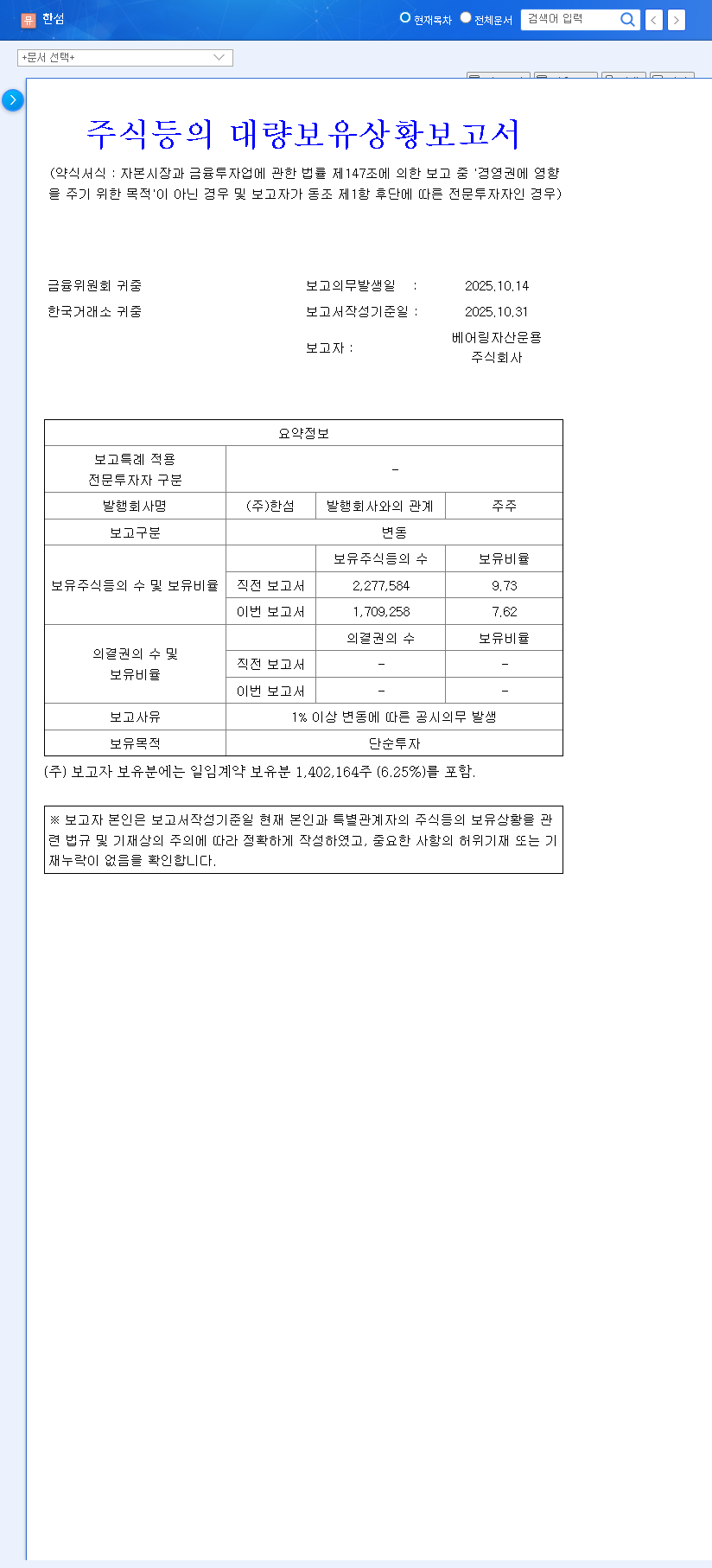
    On November 7, 2023, the market took note of a key disclosure. Bearing Asset Management, a major domestic asset management firm, officially reported a significant change in its holdings of HANDSOME CORPORATION (020000). The firm’s stake decreased by over 2%, moving from 9.73% down to 7.62%. The transaction was categorized as an in-market sale for simple investment reasons, which typically points towards portfolio rebalancing rather than a fundamental loss of faith in the company. For full transparency, you can view the Official Disclosure on DART.

    While the stated reason is routine, any large-scale sale by an institutional investor can create short-term supply pressure and psychological uncertainty in the market. It compels us to look beyond the filing and scrutinize the company’s core health.

    Financial Health: A Tale of Two Metrics

    HANDSOME CORPORATION’s financial statements present a conflicting picture. On one hand, the company boasts a robust and stable foundation. On the other, its recent profitability is a source of major concern.

    The Good: A Rock-Solid Balance Sheet

    • Low Debt: With a debt-to-equity ratio of just 84.85%, the company is not over-leveraged and has minimal financial risk from creditors.
    • High Surplus: An impressive surplus ratio of 24,438.24% indicates significant retained earnings and financial stability accumulated over years of operation.

    The Challenge: Deteriorating Profitability

    Despite stable revenue figures (KRW 78.717 billion), the bottom line tells a different story. The most alarming trend is the company’s swing to a net loss.

    The shift from profit to a significant net loss of KRW -18.167 billion in 2023, with another loss anticipated in 2024, is the single most critical challenge facing the company. This suggests internal pressures beyond general market conditions.

    This profitability crunch raises questions about rising competition, shifting consumer fashion trends, or internal cost control issues. While the balance sheet provides a safety net, sustained losses will inevitably erode long-term corporate value and investor confidence in the HANDSOME CORPORATION stock.

    Macroeconomic Headwinds and Tailwinds

    No company operates in a vacuum. Several external factors are influencing HANDSOME’s performance. For a broader view on market dynamics, investors often consult resources like global financial news outlets for context.

    • Currency Risk: A rising won/dollar and won/euro exchange rate increases the cost of importing overseas brands and raw materials, directly squeezing profit margins.
    • Interest Rate Relief: Stabilizing interest rates in both Korea and the U.S. are a positive sign, potentially lowering corporate borrowing costs and boosting consumer spending power.
    • Logistics Cost Easing: Declining shipping rates, as seen in the Baltic Dry Index (BDI), can reduce supply chain expenses and provide some cost relief.
    • Economic Uncertainty: Rising gold prices signal a flight to safety among investors, reflecting broader economic uncertainty that could dampen consumer spending on discretionary items like high-end fashion.

    Investment Outlook and Strategic Considerations

    Considering all factors, what is the most prudent path forward for investors? The key is to separate the short-term market noise from the long-term fundamental picture. For those new to this type of analysis, our guide on how to evaluate company fundamentals can be a helpful resource.

    Short-Term Cautious Approach

    The institutional sale is likely to cause heightened volatility. A cautious, wait-and-see approach is advisable. Monitor the stock’s price action and trading volume to gauge how the market digests this news before making any reactive trades.

    Mid-to-Long-Term Focus on Profitability Turnaround

    The ultimate investment thesis for HANDSOME CORPORATION stock hinges on its ability to reverse the trend of net losses. Key performance indicators to watch include:

    • Strategic Initiatives: Success of new brand launches and the performance of global expansion efforts.
    • Operational Efficiency: Evidence of effective cost-cutting measures and margin improvement in upcoming quarterly reports.
    • Financial Reporting: Closely analyze financial results for the upcoming fiscal years to confirm a tangible improvement in net income before committing new capital.

    In conclusion, while Bearing Asset Management’s share sale creates short-term headwinds, it should be viewed as a prompt for deeper diligence rather than a definitive sell signal. The company’s future rests squarely on its ability to address its profitability problem and execute a successful growth strategy in a challenging market.

    (020000) HANDSOME CORPORATION Stock (020000): In-Depth Analysis of Bearing Asset Management's Sell-Off 관련 이미지
  • (370090) Furonteer Inc. Stock (370090): CEO Sells Shares Amid Slump | Full Analysis & Outlook

    (370090) Furonteer Inc. Stock (370090): CEO Sells Shares Amid Slump | Full Analysis & Outlook

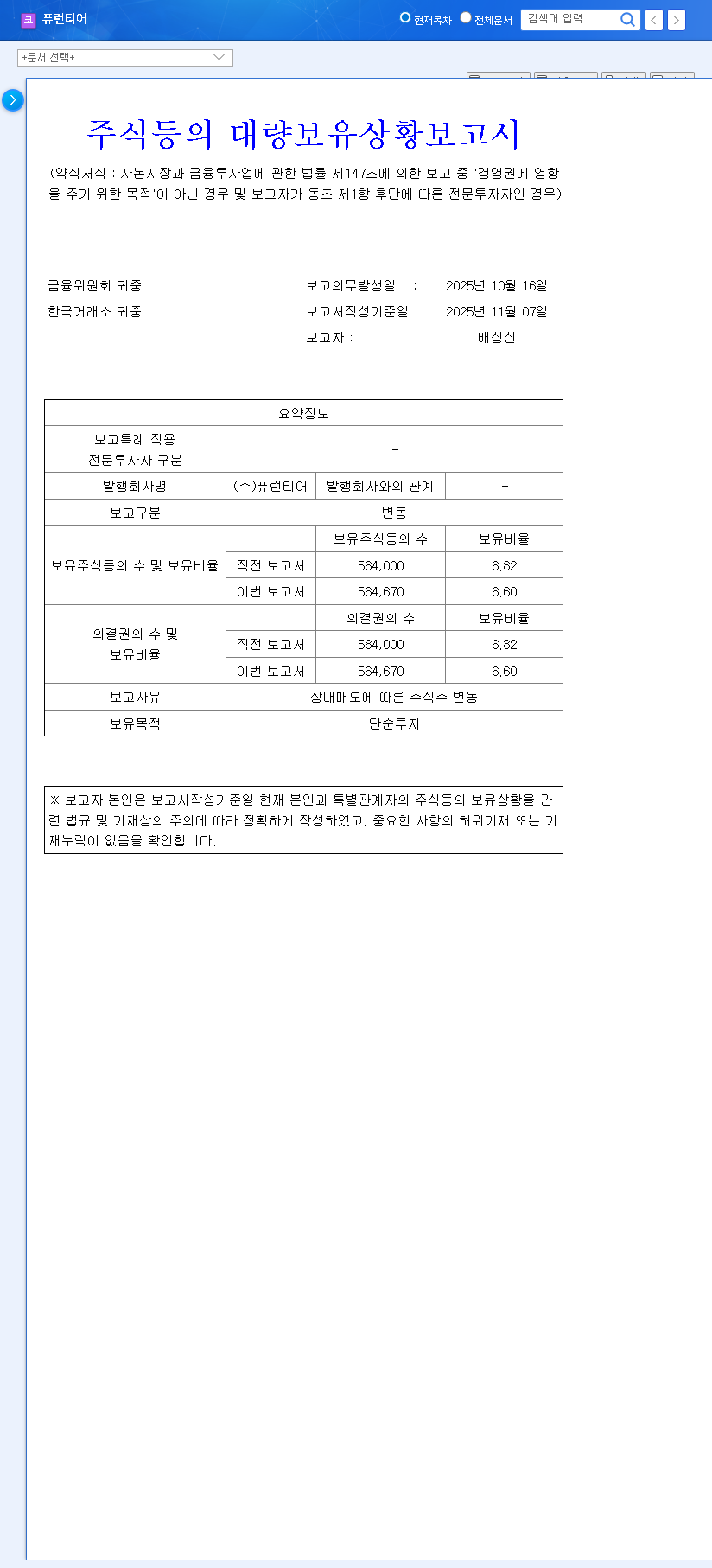
    The market is closely watching Furonteer Inc. stock (370090) following a notable share sale by its CEO, Bae Sang-shin. Insider transactions, especially during periods of financial turbulence, often raise questions among investors. Furonteer’s recent underperformance in the first half of 2025 adds a layer of complexity to this event, prompting a crucial question: Is this a warning sign of deeper issues, or merely a personal financial decision with little bearing on the company’s future? This analysis will dissect the CEO’s actions, the company’s current financial health, and its promising long-term growth drivers to provide a comprehensive outlook for investors.

    The Catalyst: CEO Bae Sang-shin’s Share Sale

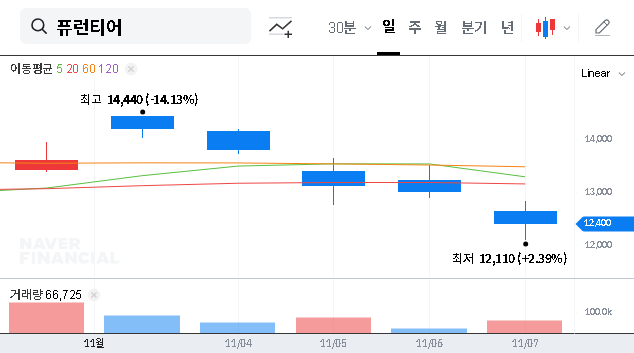
    Between October 16 and November 3, 2025, Furonteer’s CEO executed a series of on-market sales, reducing his personal stake in the company from 6.82% to 6.60%. While the 0.22% reduction may seem modest, the timing and context are what give it significance. According to the Official Disclosure filed with DART, the stated purpose for the transaction was ‘simple investment’. However, market participants often scrutinize such moves, looking for implied signals about a company’s internal health and future prospects.

    Context is Key: Furonteer’s H1 2025 Financial Slump

    The CEO’s sale is particularly noteworthy given Furonteer’s recent financial report. The first half of 2025 was challenging, marked by a significant downturn:

    • Revenue Decline: Revenue fell by approximately 28.4% year-over-year, indicating a sharp contraction in business activity.
    • Profitability Issues: Both operating profit and net income swung from profit to a deficit, signaling severe pressure on margins.
    • Underlying Causes: This slump is attributed to a slowdown in capital investments from key clients and the cyclical off-season in the global smartphone market, a core segment for Furonteer.

    This financial backdrop amplifies the negative perception of an insider sale, leading to heightened investor anxiety and potential short-term pressure on the Furonteer Inc. stock price.

    While short-term headwinds are undeniable, the long-term thesis for Furonteer hinges on its successful pivot to high-growth sectors. The key for investors is to weigh the present challenges against future potential.

    The Bull Case: Mid-to-Long-Term Growth Engines

    Despite the current difficulties, Furonteer is actively investing in what could be powerful future growth drivers. The company’s strategic focus is on the burgeoning autonomous vehicle and advanced sensor markets.

    Pivoting to ADAS and LiDAR Markets

    The markets for ADAS (Advanced Driver-Assistance Systems) and LiDAR (Light Detection and Ranging) sensing cameras are projected for explosive growth over the next decade. These technologies are foundational for autonomous driving. Furonteer is leveraging its proprietary technology to expand into these areas, which could offset the volatility of the smartphone market. For more on this technology, see this in-depth guide from SAE International.

    Strategic Investments and Order Backlog

    The company maintains a solid order backlog and is strengthening collaborations with overseas clients. Furthermore, Furonteer has increased its R&D expenditure to 23.3% of revenue. While this weighs on short-term profitability, it is a clear signal of the company’s commitment to innovation and securing a technological edge in next-generation products like Time-of-Flight (ToF) modules.

    Investment Analysis: What Does This Mean for You?

    Evaluating a Furonteer investment requires a balanced perspective, considering both the immediate risks and the potential long-term rewards.

    Short-Term Outlook: Caution is Warranted

    In the short term, the combination of a CEO share sale and poor financials is a classic negative signal. This is likely to weaken investor sentiment and could lead to increased volatility and downward pressure on the stock. For traders and short-term investors, this environment suggests a risk-off approach. Selling or observing from the sidelines may be a prudent strategy until the financial performance shows clear signs of a turnaround.

    Mid-to-Long-Term Outlook: Focus on Fundamentals

    For long-term investors, the CEO’s minor stake reduction is less important than the company’s fundamental trajectory. The ultimate value of Furonteer Inc. stock will be determined by its ability to execute its growth strategy. The key is to monitor whether the ADAS and LiDAR ventures translate into tangible revenue and market share. Observing the next few quarterly earnings reports for signs of progress in these new segments is critical before committing new capital. This approach aligns with broader strategies on how to analyze emerging tech stocks.

    Key Monitoring Points Going Forward:

    • Quarterly Earnings: Watch for revenue stabilization and a return to profitability.
    • New Business Revenue: Track the specific sales contribution from ADAS, LiDAR, and ToF products.
    • Client Updates: Monitor investment trends from major clients like Samsung Electro-Mechanics and LG Innotek.
    • Macro Environment: Keep an eye on interest rates and currency fluctuations that could impact costs and investment.

    (370090) Furonteer Inc. Stock (370090): CEO Sells Shares Amid Slump | Full Analysis & Outlook 관련 이미지
  • (015360) INVENI Co., Ltd. Stock Analysis: Insider Sale Sparks Questions for Investors

    (015360) INVENI Co., Ltd. Stock Analysis: Insider Sale Sparks Questions for Investors

    The recent disclosure of an insider share sale involving INVENI Co., Ltd. stock (formerly known as YESCO Holdings) has caught the attention of the market. While the transaction itself is minor, savvy investors know that insider activity can be a leading indicator of a company’s future prospects. This comprehensive analysis will explore the details of the sale, dissect INVENI’s financial health, and evaluate the potential impact on its stock price to help you make a well-informed decision.

    We will break down what this event means in the short and long term, considering the company’s strategic pivot towards becoming an investment holding company and the broader macroeconomic landscape.

    The Insider Share Sale: What Exactly Happened?

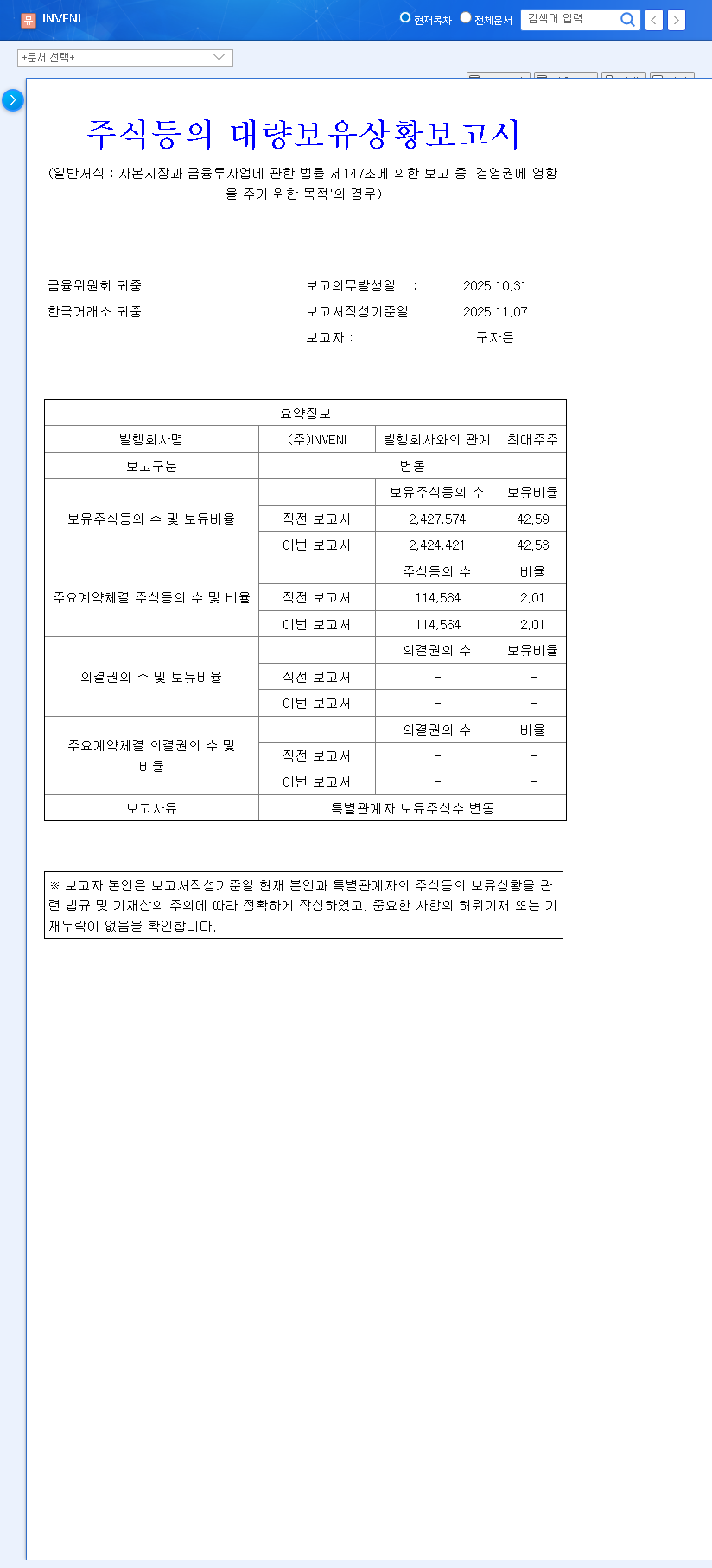
    On November 7, 2025, an official disclosure was made regarding a change in shareholdings at INVENI Co., Ltd. A ‘specially related party,’ identified as Goo Jae-hee, conducted on-market sales of company stock. This resulted in a slight reduction of the total related party shareholding from 42.59% down to 42.53%—a net decrease of just 0.06 percentage points. The details of this transaction were made public through the official regulatory filing system.

    You can view the Official Disclosure on the DART system for complete transparency.

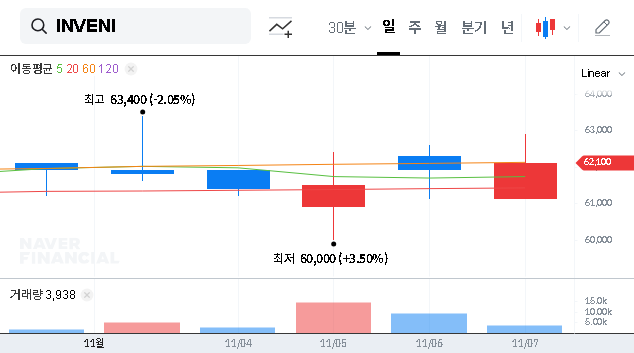
    While the 0.06% change is numerically small, any shift in insider holdings can signal underlying sentiment or strategic repositioning, making it a critical piece of the puzzle for a thorough INVENI stock analysis.

    Deep-Dive Analysis of INVENI Co., Ltd. Stock Fundamentals

    To understand the context of the sale, we must look at the company’s core financial health and strategic direction. INVENI presents a mixed but intriguing picture for potential investors.

    The Bull Case: Strategic Transformation & Shareholder Focus

    • Transition to an Investment Holding Company: INVENI’s name change from YESCO Holdings signals a fundamental shift in its business model. This strategic pivot aims to unlock value from its various business segments, potentially leading to a higher overall valuation. For more details, see our guide on Understanding Investment Holding Companies.
    • Commitment to Shareholder Value: The company has been transparent about its treasury stock acquisition plans, a move often seen as a direct commitment to enhancing shareholder returns. This proactive stance is a positive long-term signal.

    The Bear Case: Financial Instability and Performance Concerns

    • Volatile Net Income: Despite steady sales growth, profitability has been erratic. The company reported a net loss of 18.167 billion KRW in 2023 and a smaller loss of 1.619 billion KRW in 2024. This lack of consistent bottom-line performance is a significant red flag.
    • Declining Profit Margins: The operating profit margin has compressed, falling from a healthy 8.38% in 2022 to just 5.85% in 2024. While projections for 2025 show a rebound to 7.98% and a net income of 57.10 billion KRW, these are forward-looking statements that must be met to restore investor confidence.

    Market Context: Stock Trends and Macroeconomic Headwinds

    INVENI Co., Ltd. stock does not operate in a vacuum. Its historical performance and the current economic climate provide crucial context.

    Historical Price Action: For nearly five years (2020-2024), the stock has been in a consolidation phase, trading largely within a range of 30,000 to 40,000 KRW. While it showed resilience in recovering from the 2020 pandemic lows, it has struggled to break out decisively. Foreign ownership has remained stable, between 10-15%, suggesting a consistent but not growing international interest.

    Macroeconomic Factors: Global economic conditions, as reported by authoritative sources like Bloomberg, present both challenges and opportunities. Currency volatility, particularly the rising KRW/EUR rate, could impact the value of INVENI’s international assets. Furthermore, uncertainty around central bank interest rate policies can affect borrowing costs and investment valuations, which is particularly relevant for an investment holding company.

    Investor Outlook: What This Means For You

    Short-Term Impact (Weeks to Months)

    The direct short-term impact of this minor insider share sale on the stock price is expected to be minimal. However, it may fuel speculation and persistent investor interest, as any change in major shareholder stakes can be a precursor to future actions related to management control.

    Mid- to Long-Term Impact (1-3 Years)

    The long-term trajectory of INVENI Co., Ltd. stock will be defined by execution, not speculation. The key catalysts for a re-rating of the stock are the successful execution of its investment holding strategy and, most importantly, a demonstrated ability to generate stable and growing profits. The company must prove that its 2025 financial projections are achievable.

    Actionable Investment Strategy for INVENI

    Based on this analysis, here is a prudent action plan for current and prospective investors:

    • Monitor Financial Performance: Pay close attention to quarterly earnings reports. The primary focus should be on whether the company achieves its projected 2025 turnaround in net income and operating margin.
    • Track Strategic Execution: Look for updates on the transition to an investment holding company. Are they making smart acquisitions? Are they divesting underperforming assets? The quality of capital allocation is key.
    • Watch for Further Insider Activity: While one small sale is minor, a pattern of selling could be a major bearish signal. Conversely, insider buying would be a strong vote of confidence.
    • Maintain a Diversified Portfolio: Avoid making concentrated bets based on single events. Ensure that any investment in INVENI fits within a well-diversified and risk-managed portfolio strategy.

    Ultimately, the future of YESCO Holdings’ successor, INVENI Co., Ltd., rests on its ability to translate ambitious strategies into tangible financial results. Vigilant analysis and a focus on fundamentals will be the key to successful investing.

    (015360) INVENI Co., Ltd. Stock Analysis: Insider Sale Sparks Questions for Investors 관련 이미지
  • (006740) YOUNGPOONG PAPER MFG Stock Analysis (006740): Red Flags After Major Shareholder Sell-Off

    (006740) YOUNGPOONG PAPER MFG Stock Analysis (006740): Red Flags After Major Shareholder Sell-Off

    This comprehensive YOUNGPOONG PAPER MFG stock analysis dives into the recent and unsettling news surrounding the company (KRX: 006740). A significant public disclosure has revealed that a major shareholder divested a massive portion of their shares. For investors, this raises immediate questions: Is this a routine portfolio adjustment, or a critical warning signal about the company’s future? This article will thoroughly examine the major shareholder sell-off, analyze the company’s precarious financial health, and provide a clear, actionable investment strategy for the 006740 stock.

    We will break down the specifics of the transaction, explore the deteriorating fundamentals that likely prompted it, and predict the subsequent impact on stock price and overall market sentiment. Read on to make informed decisions in a volatile market.

    The Catalyst: A Major Shareholder Sell-Off Event

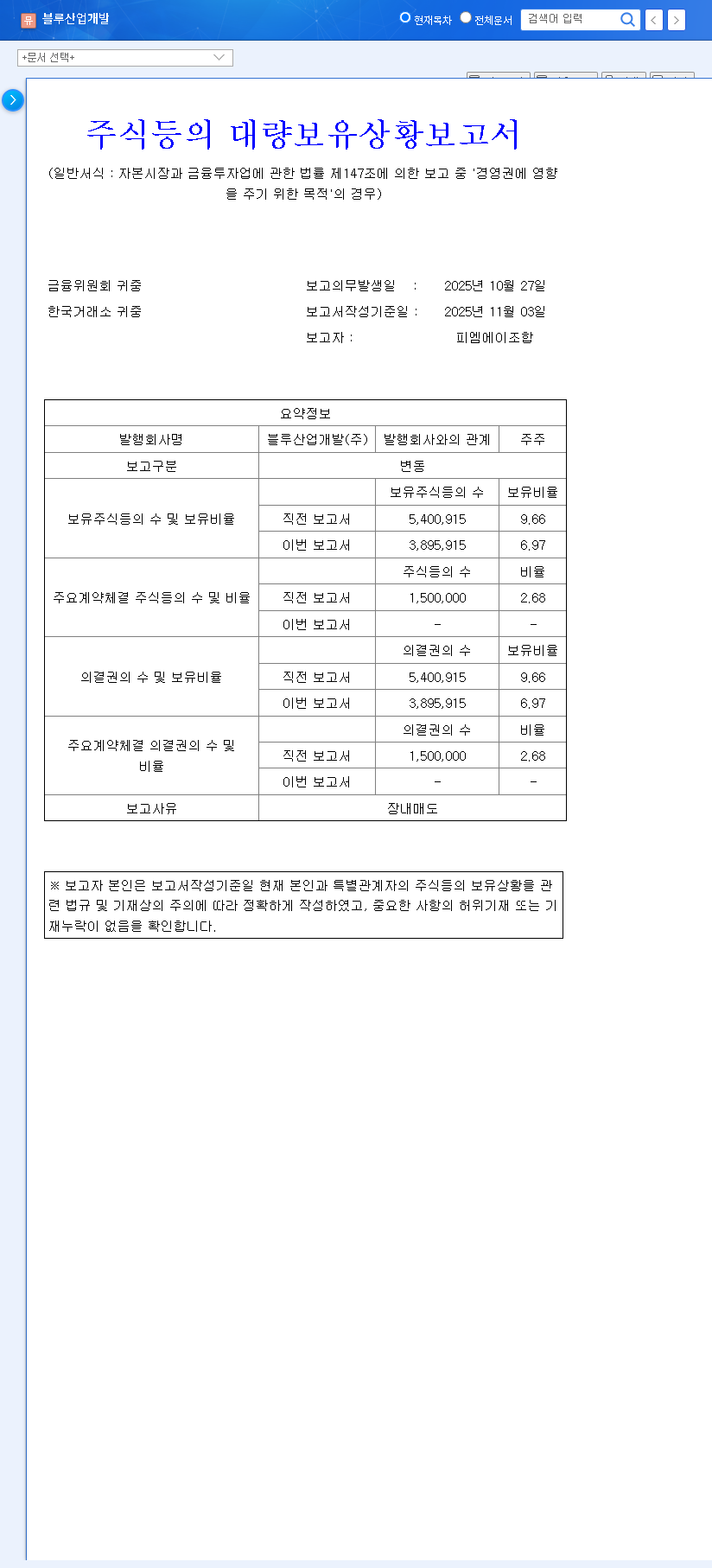
    On November 3, 2025, the market was alerted to a significant transaction involving YOUNGPOONG PAPER MFG CO., LTD. According to the Official Disclosure (DART Report), an entity with significant influence made a substantial move.

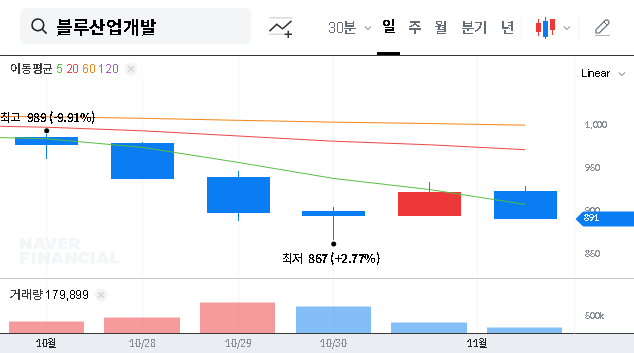
    The report detailed that PMA Partnership/Republic of Korea, an entity that held its stake with the stated purpose of “management control influence,” sold a staggering 1,710,000 shares on the open market between October 27 and October 30, 2025. This move is a critical piece of any current YOUNGPOONG PAPER MFG stock analysis.

    • Shareholding Before Sale: 9.66%
    • Shareholding After Sale: 6.97%
    • Total Reduction: A significant 2.69 percentage point decrease.

    When a major shareholder, particularly one involved in management control, liquidates such a large position, it often signals a lack of confidence in the company’s future prospects. This action forces a deeper look into the company’s underlying health.

    Wavering Fundamentals: A Look Under the Hood

    The major shareholder sell-off is not happening in a vacuum. A review of YOUNGPOONG PAPER MFG’s 2025 semi-annual report reveals a company grappling with significant financial challenges, making the sell-off appear more like a calculated exit than a simple portfolio rebalancing.

    Deepening Profitability Crisis

    Profitability is the lifeblood of any company, and here, YOUNGPOONG is struggling. Despite stable consolidated revenue, the company recorded an operating deficit of 6.55 billion KRW and a net loss of 7.275 billion KRW. This indicates that the core business operations are not generating enough income to cover costs, a major red flag for investors. The deepening sales slump in its primary paper and corrugated board segments is the root cause of this alarming trend.

    Deteriorating Financial Stability

    A company’s balance sheet tells a story of its resilience. For YOUNGPOONG, it’s a cautionary tale. For a deeper understanding of these metrics, you can learn more about how to analyze a company’s financial statements.

    • Debt-to-Equity Ratio: This critical metric surged by 53.31%, showing that the company is taking on more debt while its equity base shrinks. This increases financial risk and interest expenses.
    • Current Ratio: This measure of short-term liquidity fell by a dramatic 57.77%. It suggests the company has fewer liquid assets to cover its short-term liabilities, raising concerns about its ability to meet immediate financial obligations.

    The combination of falling profits, rising debt, and shrinking liquidity paints a grim picture of the company’s financial health, providing a clear context for the major shareholder’s exit.

    Market Impact and Investment Strategy

    The convergence of a major share sale with poor fundamentals is a potent cocktail for negative market sentiment. According to financial experts at authoritative sources like Bloomberg, such insider-led selling often precedes further stock price declines.

    Expected Impact on 006740 Stock

    • Short-Term Price Pressure: The sudden influx of 1.71 million shares into the market will increase supply, likely driving the stock price down in the short term.
    • Weakened Investor Confidence: The event serves as a strong negative signal, reinforcing existing fears about the company’s performance and potentially triggering further selling from other investors.
    • Heightened Uncertainty: The market will be left to speculate on the full story, increasing volatility around the Youngpoong Paper investment case and its ongoing management disputes.

    Recommended Investor Action Plan

    Given the confluence of negative factors, a highly cautious approach is warranted. Our YOUNGPOONG PAPER MFG stock analysis leads to a clear recommendation.

    Overall Assessment: ‘Sell’ Recommendation. The risk of further downside outweighs the potential for a near-term recovery.

    • For Existing Shareholders: We strongly advise considering an active sell-off to mitigate potential further losses.
    • For Potential Investors: It is prudent to avoid entering a new position until there are clear, tangible signs of a fundamental turnaround.
    • For Long-Term Watchers: Monitor key metrics such as a return to operating profitability, stabilization of the debt ratio, and positive developments in customer relationships before reconsidering this stock.

    Disclaimer: This analysis is based on publicly available information. All investment decisions are the sole responsibility of the individual investor. Always conduct your own due diligence.

    (006740) YOUNGPOONG PAPER MFG Stock Analysis (006740): Red Flags After Major Shareholder Sell-Off 관련 이미지
  • (192410) ONEUL E&M Stock Crisis (192410): Major Share Sale Exposes Deep Financial Trouble

    (192410) ONEUL E&M Stock Crisis (192410): Major Share Sale Exposes Deep Financial Trouble

    Alarm bells are ringing for investors in ONEUL E&M co.,Ltd (192410). A recent disclosure revealing a significant share sale by major stakeholders has cast a harsh spotlight on the company’s already fragile financial state. This move is widely seen as a vote of no confidence, compounding concerns about liquidity, operational viability, and a high-stakes tax investigation.

    This in-depth analysis unpacks the critical events surrounding the ONEUL E&M crisis, examining the fundamental weaknesses plaguing the company and providing a clear-eyed outlook for its stock price. For current and potential investors, understanding these risk factors is not just prudent—it’s essential for survival.

    The Catalyst: A Major Shareholder Exodus

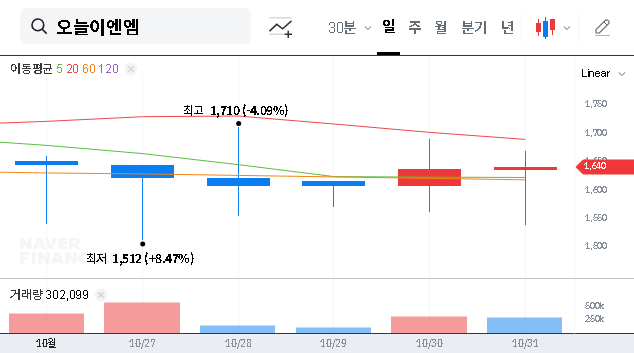
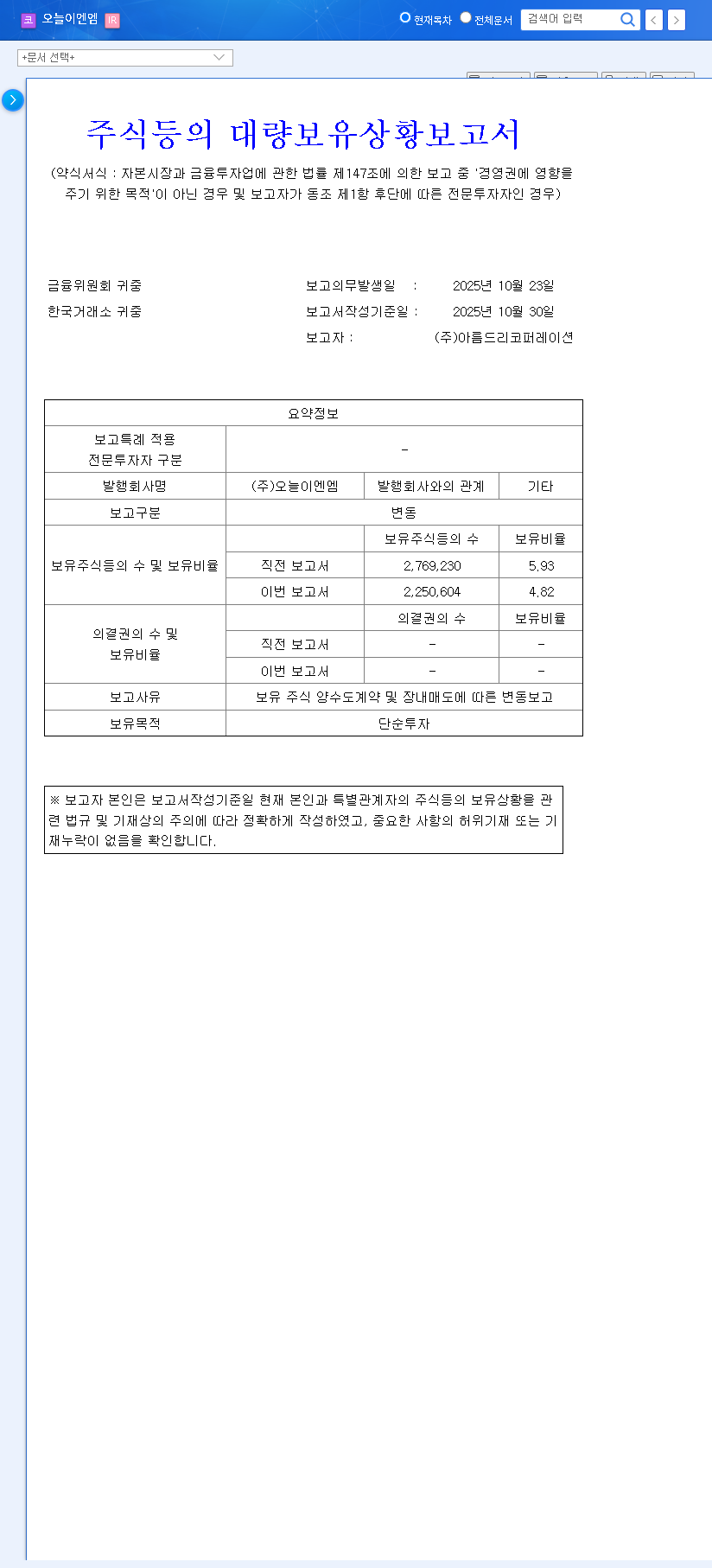
    On October 31, 2025, a mandatory disclosure sent shockwaves through the market. The report on Major Shareholdings for ONEUL E&M detailed a significant reduction in stakes by key corporate shareholders. The full details can be reviewed in the Official Disclosure from DART.

    Key Details of the Divestment

    • Primary Sellers: The sellers were identified as Areumdri Corporation and Wishbone Co., Ltd.
    • Stake Reduction: Areumdri Corporation’s stake was notably reduced from 5.93% to 4.82% through a combination of a share transfer agreement and direct open market sales.
    • Market Signal: This isn’t a simple portfolio rebalancing. When major, informed shareholders sell off significant portions of their holdings, it often signals a deeply negative outlook on the company’s future prospects, creating widespread market anxiety for ONEUL E&M stock.

    The divestment acts as a critical red flag, suggesting that those with insider knowledge may be losing faith in ONEUL E&M’s ability to navigate its severe fundamental crisis.

    Under the Hood: ONEUL E&M’s Deepening Financial Crisis

    The share sale is not happening in a vacuum. It’s a symptom of a much larger disease: the severe deterioration of ONEUL E&M’s financial and operational health, as highlighted in its 2025 semi-annual report.

    1. Collapsing Financial Soundness

    • Massive Losses: The company posted a staggering net loss of approximately KRW 55 billion in the first half of 2025 alone. This was primarily driven by setting aside massive provisions for an ongoing, large-scale tax investigation.
    • Extreme Liquidity Risk: With current liabilities (KRW 68.1 billion) dwarfing current assets (KRW 11.0 billion), the company faces an immediate and severe risk of being unable to meet its short-term obligations. This is a classic sign of a company on the brink of insolvency. For more information, investors can read about analyzing liquidity ratios.
    • Plummeting Credit Rating: Credit rating agencies have taken notice. The company’s rating from Korea Evaluation Data has steadily dropped from BB- to B, a clear external validation of its deteriorating financial health.

    2. High-Risk, Unrelated Business Expansion

    In an apparent attempt to pivot away from its declining core antenna business, ONEUL E&M has announced ambitious plans to enter highly competitive and capital-intensive sectors like AI semiconductors, data centers, and even nuclear energy. However, these ventures carry immense uncertainty and appear disconnected from the company’s core competencies.

    The proposed KRW 800 billion data center, in particular, represents an enormous financial burden on a company already struggling with liquidity. Sourcing funding for such a project without further compromising its financial structure seems highly improbable, raising questions about the feasibility of the entire strategy.

    3. Existential Operational Threats

    The most significant threat is the ongoing tax investigation. The potential for hundreds of billions of won in additional tax liabilities casts a dark shadow over the company’s ability to continue as a going concern. The outcome of related administrative lawsuits will be a pivotal, make-or-break moment for ONEUL E&M. This uncertainty alone is enough to deter most risk-averse investors, as noted by financial analysts at leading firms like Bloomberg.

    Stock Price Outlook and Investor Strategy

    Given the toxic cocktail of a major shareholder sell-off and dire fundamentals, the outlook for ONEUL E&M stock (192410) is decidedly bearish.

    • Short-Term (1 Month): Expect significant downward pressure and high volatility as the market digests this negative news. Worsening investor sentiment could trigger further panic selling.
    • Mid- to Long-Term (1 Month+): Any potential recovery is contingent on a series of near-miraculous turnarounds: a favorable resolution to the tax investigation, a drastic improvement in financial health, and tangible success from its high-risk new ventures. Currently, the probability of this positive scenario is extremely low.

    Conclusion: An Unacceptably High-Risk Investment

    At this juncture, an investment in ONEUL E&M is fraught with peril. The combination of a severe liquidity crisis, existential legal threats, and a vote of no confidence from major shareholders makes the stock highly unattractive.

    Our investment opinion is a firm ‘Sell’ for existing holders and ‘Avoid’ for potential investors. A conservative ‘wait-and-see’ approach is critical. Before even considering this stock, investors must see clear, undeniable evidence of progress on:

    • The final outcome of the tax investigation.
    • A concrete, viable plan to resolve the liquidity crisis.
    • Tangible revenue and profit from any new business ventures.

    Until these monumental hurdles are cleared, the risk of capital loss in ONEUL E&M stock remains exceptionally high.

    (192410) ONEUL E&M Stock Crisis (192410): Major Share Sale Exposes Deep Financial Trouble 관련 이미지
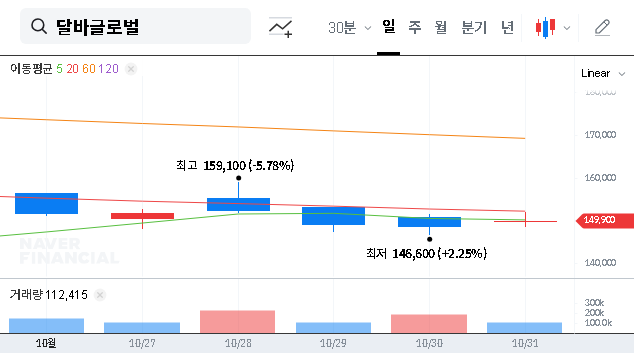
  • (483650) d’Alba Global Stock Analysis: CEO Sale Sparks Volatility | Deep Dive

    (483650) d’Alba Global Stock Analysis: CEO Sale Sparks Volatility | Deep Dive

    The recent disclosure of a major share sale by CEO Ban Sung-yeon has sent ripples through the investment community, casting a spotlight on d’Alba Global stock (483650). When a key executive reduces their stake, it naturally raises questions about short-term price stability and long-term confidence. Is this a signal of underlying issues, or a strategic move within a larger growth story? This analysis unpacks the event, dives deep into d’Alba Global’s robust fundamentals, and provides a clear outlook for investors navigating the current market volatility.

    We will move beyond the headlines to provide a comprehensive d’Alba Global investment analysis, weighing the immediate market pressures against the company’s impressive growth trajectory in the booming K-Beauty sector.

    The Core Event: Decoding the d’Alba Global CEO Stake Change

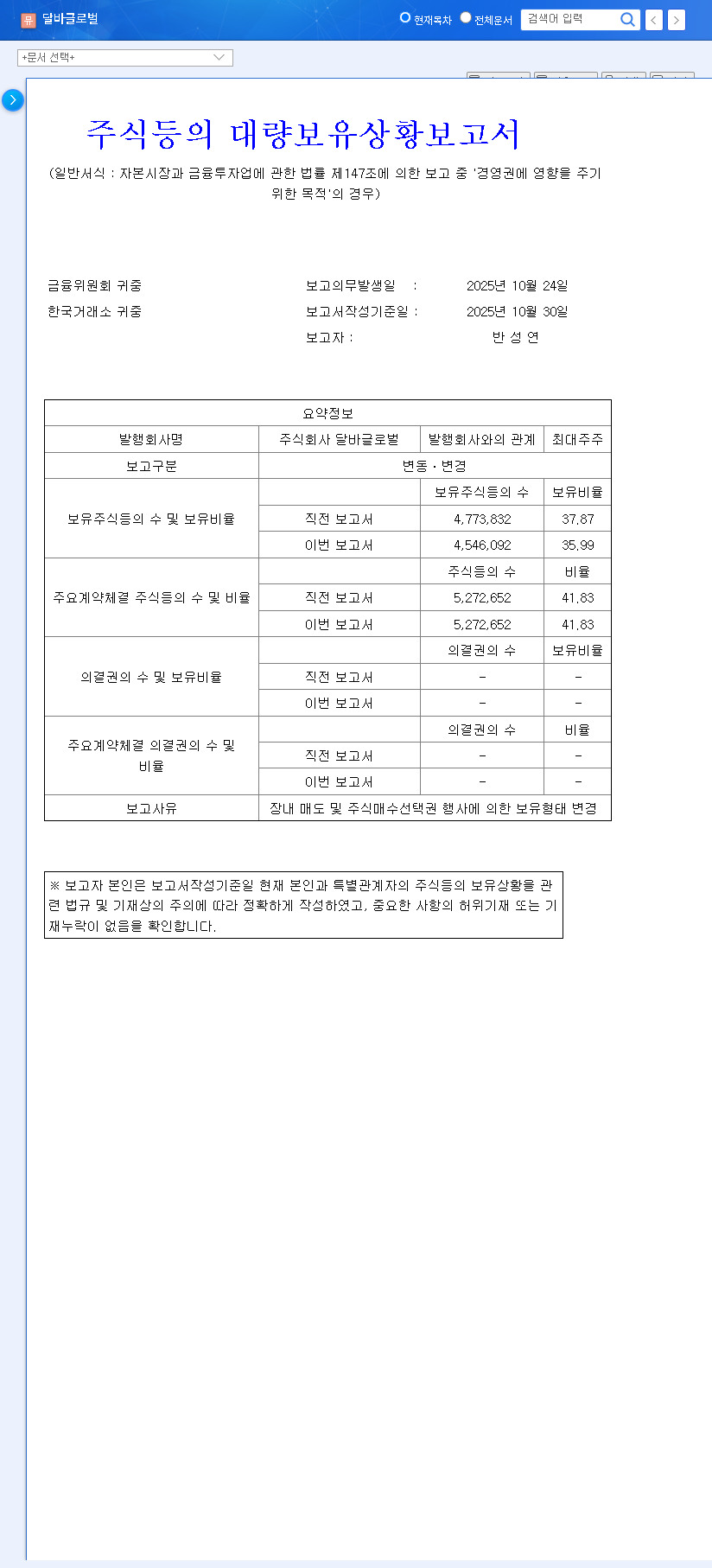
    On October 31, 2025, d’Alba Global Co., Ltd. filed a “Major Shareholder Status Report” that detailed significant changes in ownership. This official disclosure is the primary source of the current market discussion. You can view the full report here: Official Disclosure (DART). The key takeaways from the report are:

    • CEO Stake Reduction: CEO Ban Sung-yeon’s ownership stake decreased from 37.87% to 35.99%. This was a result of both open market sales and a change in holding type following the exercise of stock options.
    • Institutional Sales: Alongside the CEO, major investment funds, including the d’Alba New Technology Business Investment Association, also conducted open market sales. This is often a standard procedure for venture funds to realize profits after a successful investment period.

    This d’Alba Global CEO stake change introduces a significant volume of shares into the market, which can temporarily disrupt the supply-demand balance and create downward pressure on the stock price.

    Impact Analysis: Volatility vs. Value

    The market’s reaction to news like this is often twofold, creating a divergence between short-term sentiment and long-term fundamental value. Understanding both is critical for any investor evaluating d’Alba Global stock.

    Short-Term Headwinds

    In the immediate term, the release of a large block of shares is likely to cause increased stock price volatility. The market may interpret the CEO’s sale as a negative signal, regardless of the underlying reason, leading to bearish sentiment. This supply-demand imbalance could put downward pressure on the stock price until the new shares are fully absorbed by the market.

    Mid-to-Long-Term Perspective

    Long-term value is driven by business performance, not temporary share movements. While the CEO’s sale requires scrutiny, it doesn’t erase the company’s strong operational track record. The reason for the sale is crucial; it could be for personal financial planning or diversification rather than a lack of faith in the company. For long-term investors, the focus must remain on whether d’Alba’s growth drivers are intact. The company’s future performance and clear communication will be essential to restore investor confidence.

    While short-term market noise can be unsettling, the true test for d’Alba Global lies in its ability to continue executing on its strategic vision and delivering strong financial results.

    Beyond the Headlines: d’Alba Global’s Strong Fundamentals

    Despite the stake change, the 2025 half-year report paints a picture of a fundamentally sound and rapidly growing company. d’Alba Global’s strategy is built on a diversified, multi-pronged approach that taps into major global trends. For more on these trends, you can explore in-depth market reports from sources like Bloomberg.

    • Core Cosmetics (d’Alba): The engine of growth. The brand is a powerhouse in both domestic and international markets, with a high and growing export ratio. This success is a key reason it is one of the most watched K-Beauty stocks.
    • Inner Beauty (Veganery): Tapping into the global wellness and clean beauty movement, this segment shows promising growth and creates powerful synergies with the core cosmetics business.
    • Home Beauty Devices: A strategic expansion into a high-growth category, leveraging the d’Alba brand’s premium reputation to build a new revenue stream.

    Financially, the company is robust. H1 2025 saw consolidated revenue of KRW 242.13 billion, with a significant net profit increase year-over-year. The recent KOSPI listing approval further enhances credibility and access to capital, solidifying its position for future expansion. To learn more about K-Beauty market trends, check out our deep dive into the global K-Beauty industry.

    Overall Outlook and Investor Action Plan

    d’Alba Global stands at a crossroads of short-term uncertainty and long-term potential. The reduction in the CEO’s stake is a legitimate concern that has introduced volatility to the 483650 stock price. However, this event should be weighed against the company’s undeniable business strengths, its alignment with powerful consumer trends (K-Beauty, veganism), and its solid financial footing.

    Key Factors for Investors to Monitor:

    • Official Communication: Look for clear communication from the company regarding the CEO’s rationale for the sale to help alleviate market concerns.
    • Business Performance: Closely watch upcoming quarterly reports for continued growth in new business segments and sustained profitability. Execution is the best antidote to uncertainty.
    • Macroeconomic Tailwinds: Monitor exchange rates. A weaker Korean Won is highly beneficial for an export-heavy company like d’Alba Global and can provide a significant boost to earnings.

    In conclusion, while short-term caution is warranted, the underlying fundamentals suggest that d’Alba Global’s long-term growth story remains compelling. Patient investors who focus on business performance over market noise may find the current volatility to be a strategic entry point.

    Disclaimer: This analysis is for informational purposes only and is based on publicly available data. It does not constitute investment advice. All investment decisions should be made at the investor’s own discretion and responsibility.

    (483650) d'Alba Global Stock Analysis: CEO Sale Sparks Volatility | Deep Dive 관련 이미지
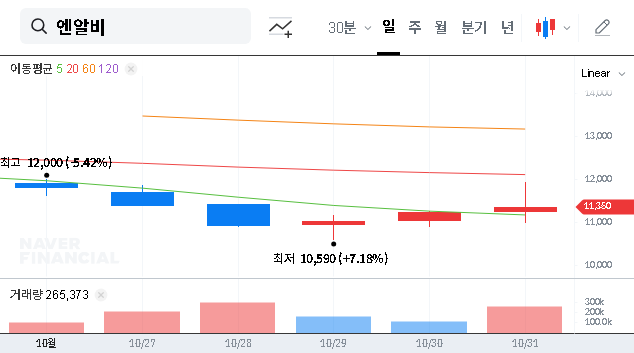
  • (475230) NRB, Inc Stock Analysis: Decoding the Venture Capital Sell-Off & Your 2025 Investment Strategy

    (475230) NRB, Inc Stock Analysis: Decoding the Venture Capital Sell-Off & Your 2025 Investment Strategy

    The recent performance of NRB, inc stock (KOSDAQ: 475230) has caught the attention of the market, but not for the reasons investors might hope. A significant share sale by a major venture capital firm has sent ripples of concern through the community, accelerating a downward trend. So, what does this mean for the future of NRB, inc stock, and how should you adjust your investment strategy in response?

    In this comprehensive analysis, we dissect the recent disclosure, evaluate NRB’s fundamental health, and explore the long-term potential of the modular construction sector. We’ll provide clear, actionable insights to help you navigate this volatility and make informed investment decisions.

    The Catalyst: Our Venture Partners’ Share Sale Explained

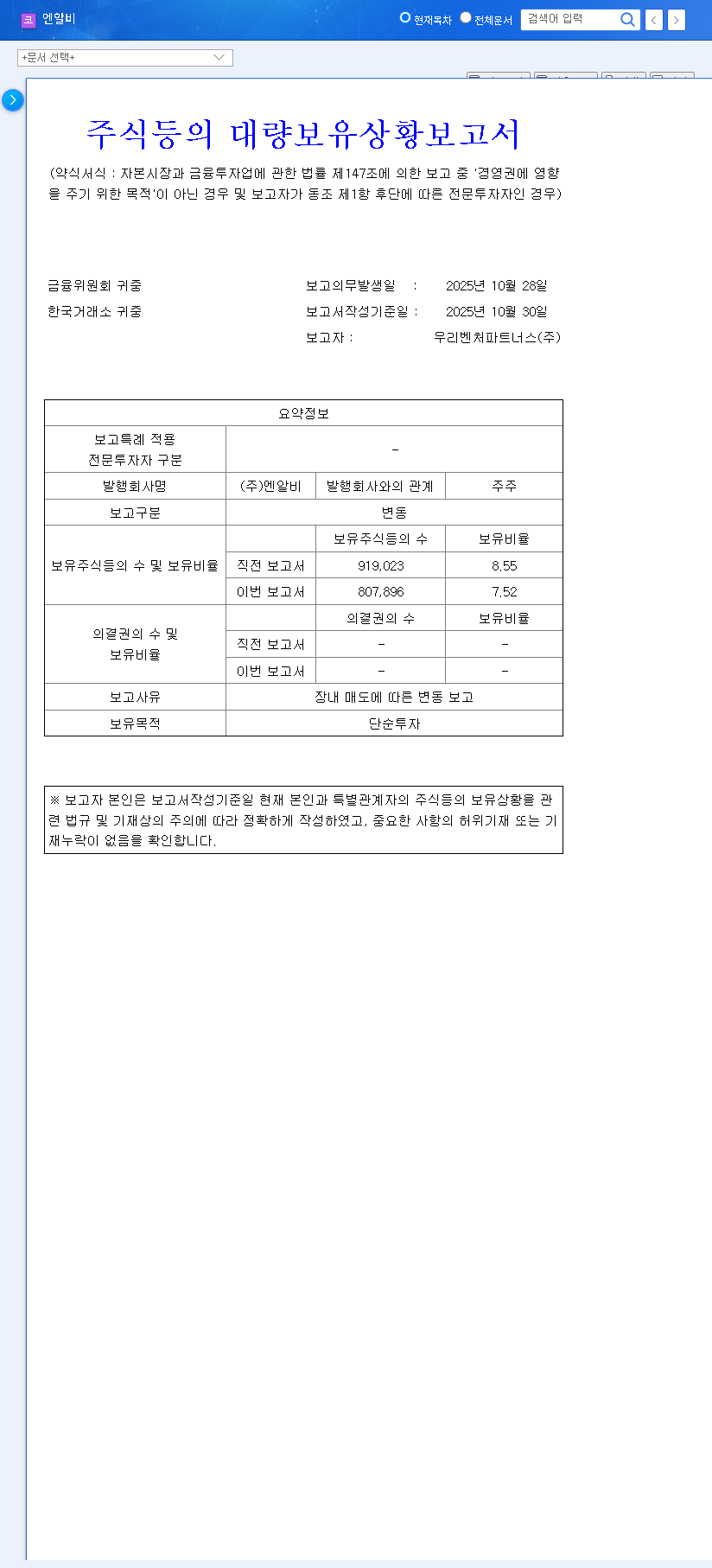
    On October 31, 2025, a mandatory disclosure sent a clear signal to the market. Our Venture Partners, through its KTBN 18th Venture Investment Fund, reduced its stake in NRB, inc. This wasn’t a minor portfolio adjustment; it was a notable sale that warrants close inspection.

    The sale of over 1% of a company’s shares by a significant institutional investor is often interpreted as a bearish signal, regardless of the stated reason. It inevitably creates short-term downward pressure.

    Key Details from the Disclosure

    The official report, available on DART, outlines the specifics of the transaction. You can view the Official Disclosure here. Here are the crucial points:

    • Change in Stake: The fund’s holding decreased from 8.55% to 7.52%.
    • Volume Sold: A total of 15,000 shares were sold on the open market.
    • Sale Period: The sales occurred between October 23 and October 29, 2025.
    • Stated Purpose: The purpose of holding was listed as ‘Simple Investment,’ suggesting the sale could be for profit-taking, portfolio rebalancing, or fund lifecycle management.

    Beyond the Sale: Is the NRB, Inc Stock Fundamentally Sound?

    While the NRB share sale is a major headline, prudent investors must look deeper into the company’s core business and financial health. NRB, inc is a specialist in modular construction, a disruptive force in the building industry. Here’s what its H1 2025 report reveals:

    Financial & Growth Analysis

    • Profitability Pressures: Operating profit saw a significant decrease. This is attributed to heavy investment in facility expansion and R&D for future growth. Such capital expenditures are common for companies in a high-growth phase and can temporarily depress profits.
    • Business Diversification: Revenue in H1 2025 was KRW 22.784 billion. While down year-over-year, the emergence of new construction revenue streams indicates a positive diversification strategy.
    • Long-Term Potential: The tailwinds for NRB are strong. The global modular market is expanding rapidly, driven by demand for efficiency and sustainability. Government support for Off-Site Construction (OSC) and ESG trends further bolster this outlook. For more on market trends, see analysis from sources like Reuters Business.

    Developing Your NRB Investment Strategy

    The key question is how to synthesize this information into a coherent NRB investment strategy. The path forward depends heavily on your investment horizon and risk tolerance.

    For the Short-Term Trader

    The immediate outlook for NRB, inc stock is bearish. The venture capital sell-off is likely to create continued downward pressure and erode market confidence. A cautious, wait-and-see approach is advisable. Watch for signs of price stabilization and a reversal in selling pressure before considering an entry point.

    For the Long-Term Investor

    For those with a multi-year horizon, the current situation could present a compelling opportunity. If you believe in the long-term growth story of modular construction and NRB’s position within it, the current price weakness may be a chance to accumulate shares at a discount. The key is to monitor fundamental progress—new contracts, improved margins, and successful project completions. Consider learning more about the industry with our guide on Investing in Modular Construction Stocks.

    Frequently Asked Questions (FAQ)

    Why did Our Venture Partners sell their NRB, Inc stock?

    The official reason is ‘simple investment,’ which is broad. It could be due to internal fund management rules (like a fund reaching maturity), a strategic decision to reallocate capital, or a bearish view on the company’s near-term prospects. Without direct confirmation, the market often assumes the latter, causing negative sentiment.

    What is NRB, inc’s biggest growth driver?

    The company’s primary growth driver is the expanding modular construction market. This method offers faster build times, reduced waste, and greater cost certainty, making it increasingly attractive for residential and commercial projects. Government initiatives promoting OSC (Off-Site Construction) are a major catalyst.

    Does this share sale impact NRB’s financial health directly?

    No, a secondary share sale does not directly affect the company’s cash flow or balance sheet. The transaction is between two investors. However, a falling stock price can indirectly impact a company by making it more expensive to raise capital through new share offerings and potentially affecting employee morale tied to stock options.

    Disclaimer: This article is for informational purposes only and does not constitute financial advice. The final responsibility for all investment decisions rests with the individual investor.

    (475230) NRB, Inc Stock Analysis: Decoding the Venture Capital Sell-Off & Your 2025 Investment Strategy 관련 이미지
  • (356860) TLB Major Shareholder Sale: A Deep Dive on Stock Price Impact & Investment Strategy for 2025

    (356860) TLB Major Shareholder Sale: A Deep Dive on Stock Price Impact & Investment Strategy for 2025

    The recent TLB major shareholder sale has sent ripples through the investment community, prompting a critical question: is this a warning sign or a golden opportunity? When insiders sell shares, especially with ‘management influence’ cited as the purpose, the market takes notice. This move can trigger short-term volatility and concern. However, for the discerning investor, it’s crucial to look beyond the headline and analyze the underlying strength of the company.

    This comprehensive analysis delves into the specifics of the share sale, evaluates the robust TLB fundamentals, and projects the potential impact on the TLB stock price. We will equip you with a tailored TLB investment strategy to navigate the weeks and months ahead, whether you’re a short-term trader or a long-term value investor.

    The Details: What Happened with the TLB Major Shareholder Sale?

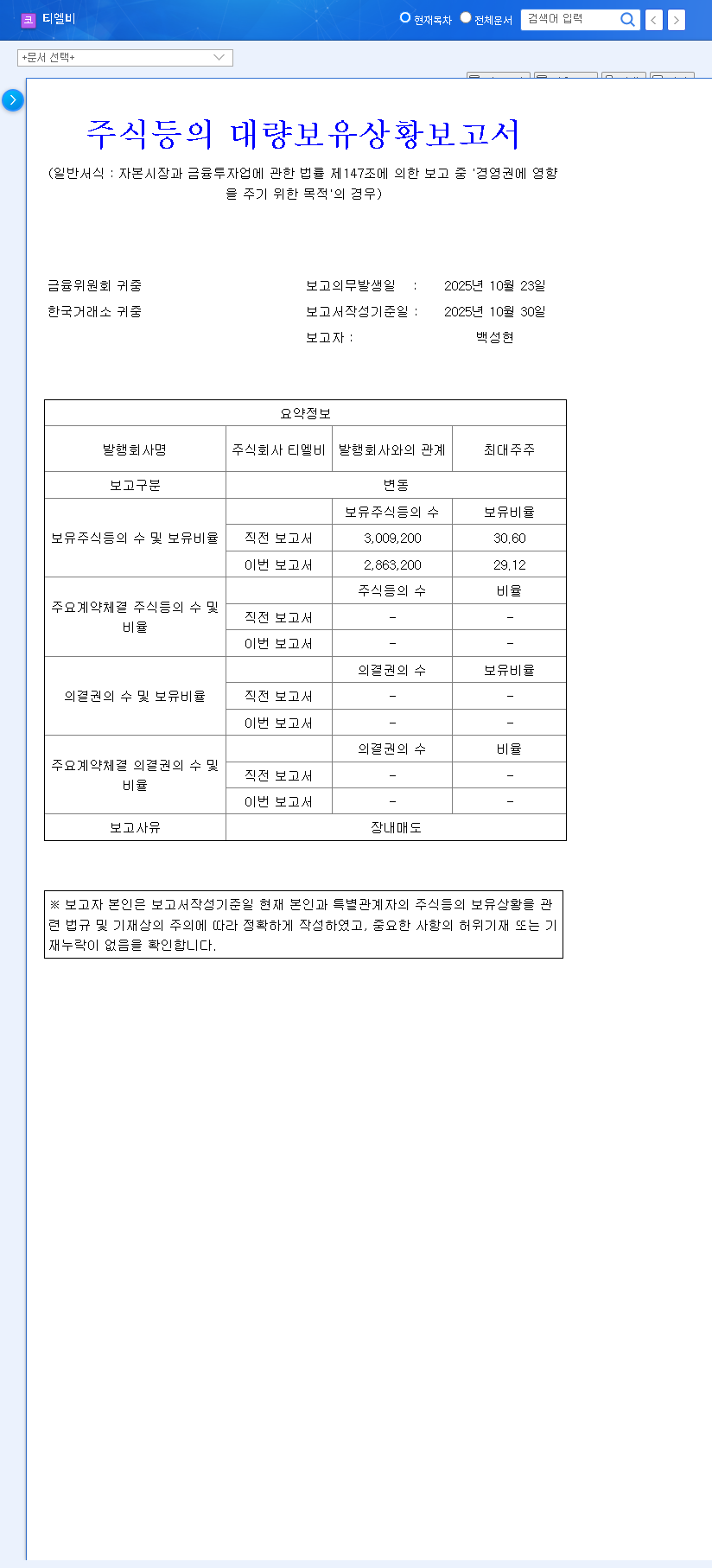
    On October 30, 2025, a significant change in shareholding was reported for TLB Co., Ltd. The report, filed by representative Baek Seong-hyun and two others, detailed an open market sale that reduced their collective stake. Here are the key facts from the disclosure:

    • Reporting Parties: Baek Seong-hyun and 2 others
    • Stated Purpose of Holding: Influence on management rights
    • Previous Holding: 30.60% of total shares
    • New Holding: 29.12% (a decrease of 1.48 percentage points)
    • Total Shares Sold: Approximately 69,900 shares
    • Source: Official Disclosure (DART)

    While an open market sale is a common transaction, the lack of a specific reason beyond ‘management influence’ creates ambiguity that investors must carefully consider.

    Beyond the Sale: Unpacking TLB’s Robust Fundamentals

    To truly assess the impact of this sale, we must look at the health of the underlying business. TLB Co., Ltd., established in 2011, is a specialized Printed Circuit Board (PCB) manufacturer at the heart of the high-performance memory industry. Its focus on PCBs for memory modules and SSDs places it in a critical, high-growth sector.

    Powering the Next Generation of AI and Data Centers

    The company’s performance in the first half of 2025 was stellar, with consolidated sales reaching KRW 117 billion—a 40% year-over-year surge. Crucially, operating profit turned positive at KRW 8.73 billion, signaling a strong growth trajectory. This success is built on several pillars:

    • Strategic Tech Investments: TLB is heavily invested in PCBs for next-generation memory like DDR5, CXL, and SOCAMM, which are essential for AI, machine learning, and data center applications. For more on these technologies, you can read expert analysis from high-authority sources like leading tech publications.
    • Expanded Production: The company’s Vietnam plant has significantly boosted production capacity, allowing TLB to meet soaring demand efficiently.
    • Key Industry Partnerships: TLB maintains strong relationships with major semiconductor giants, ensuring its products are integrated into the latest technology.

    In a market driven by fundamentals, a company’s long-term growth trajectory and financial health often outweigh short-term noise from insider stock sales.

    Stock Price Impact: Short-Term Headwinds vs. Long-Term Value

    The news of a major shareholder sale can have a dual impact on the TLB stock price.

    Potential Short-Term Pressure

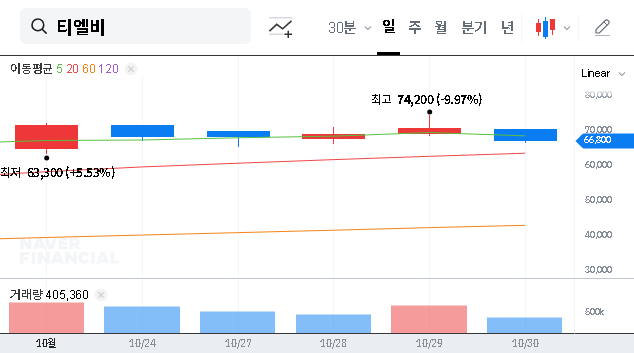
    Initially, the market may react negatively. The introduction of nearly 70,000 shares creates selling pressure. Furthermore, insider selling can weaken investor sentiment, as it raises questions about the leadership’s confidence in the company’s immediate future. This uncertainty could lead to a temporary dip in the stock price.

    Mid-to-Long-Term Outlook Driven by Fundamentals

    Looking beyond the short term, the picture is more optimistic. A 1.48% reduction in stake is unlikely to destabilize management control. More importantly, TLB’s fundamentals remain exceptionally strong. The company’s financial structure is sound, with a low debt-to-equity ratio of 43.2%. As the demand for AI and high-performance computing continues to explode, TLB’s technological leadership in the memory PCB space positions it for sustained growth. This suggests that any short-term price drop could be followed by a fundamentally-driven recovery.

    A Smart TLB Investment Strategy for Every Investor

    Given these dynamics, how should you approach your TLB investment strategy? Your approach should align with your investment horizon. For general guidance, you can explore our guide to fundamental analysis.

    For the Short-Term Trader

    • Be prepared for potential volatility and downward price pressure in the immediate aftermath of the news.
    • Monitor trading volumes and technical indicators for signs of a price floor or a potential rebound.
    • Stay alert for any follow-up disclosures that might clarify the reason for the sale.

    For the Mid-to-Long-Term Investor

    • View any significant price drop not as a crisis, but as a potential buying opportunity.
    • Focus on the company’s strong growth, profitability, and strategic position in the next-gen memory market.
    • Reaffirm your belief in the long-term thesis: the growth of AI and data centers will continue to fuel demand for TLB’s core products.

    In conclusion, while the TLB major shareholder sale warrants caution, a deeper look reveals a company with powerful momentum and a bright future. A prudent, strategy-led approach will be key to navigating the short-term market reaction and capitalizing on the long-term potential.

    (356860) TLB Major Shareholder Sale: A Deep Dive on Stock Price Impact & Investment Strategy for 2025 관련 이미지