Tag: SEOJIN SYSTEM CO.

  • (178320) SEOJIN SYSTEM (124075900928) Stock Analysis: Performance, Risks & Investor Outlook

    (178320) SEOJIN SYSTEM (124075900928) Stock Analysis: Performance, Risks & Investor Outlook

    Investors examining SEOJIN SYSTEM (124075900928) are currently facing a complex picture. The company has recently been navigating significant headwinds, including a notable decline in its H1 2025 performance and concurrent shifts in its major shareholder structure. These events raise critical questions for any current or potential investor: Are these temporary setbacks in a volatile market, or do they signal a fundamental turning point for the company’s long-term value? This comprehensive SEOJIN SYSTEM analysis will dissect the company’s recent performance, explore the underlying causes, and provide a clear, forward-looking investment thesis to guide your decision-making process.

    The Dual Challenge: Performance and Ownership

    At the heart of the recent market concern are two primary developments that have created uncertainty around the SEOJIN SYSTEM stock. First, the company’s financial results for the first half of 2025 showed a significant downturn. Second, changes were reported in the holdings of its controlling shareholder, creating speculation about stability and future direction.

    Major Shareholder Fluctuations

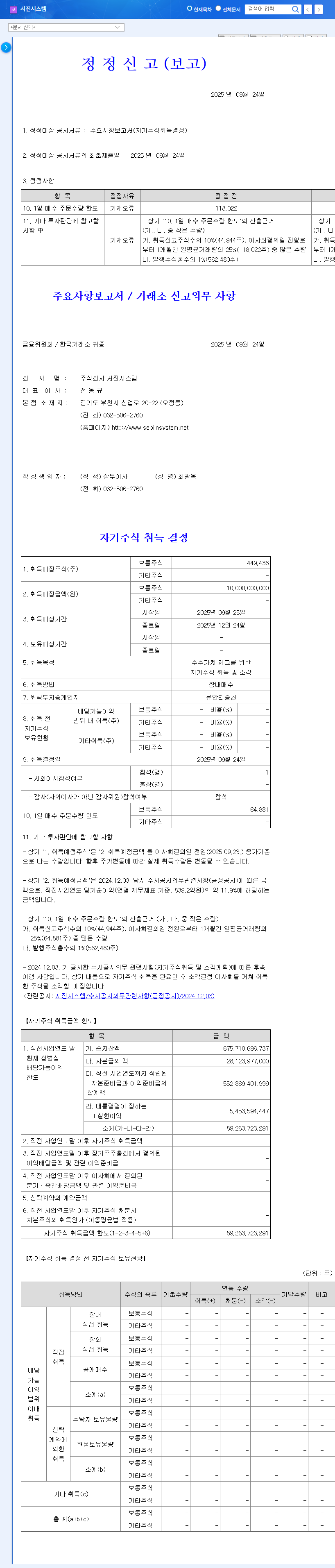
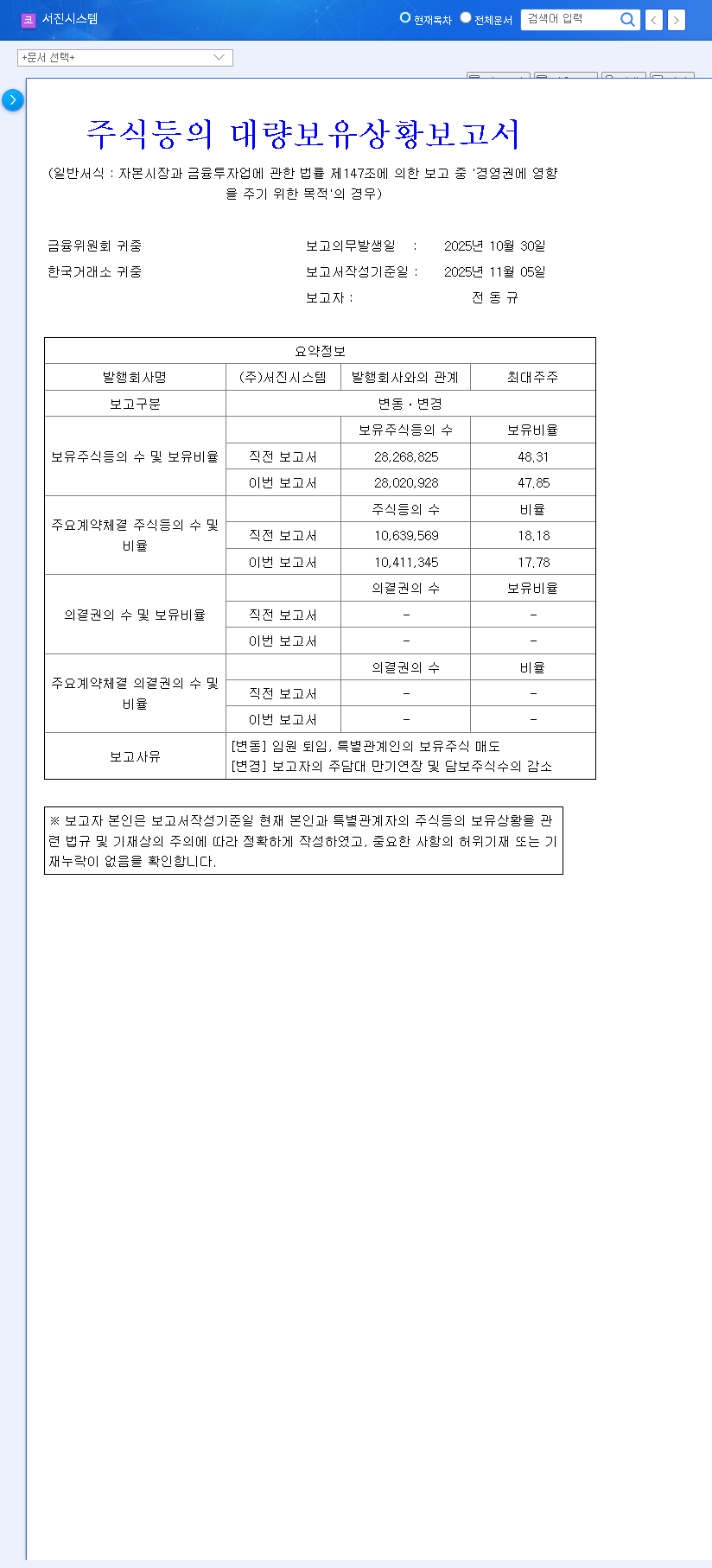
    On November 6, 2025, a mandatory disclosure revealed shifts in the shares held by controlling shareholder Dong-kyu Jeon and related parties. According to the Official Disclosure (DART), the collective stake decreased by 0.46 percentage points, from 48.31% to 47.85%. This was attributed to an executive’s retirement, a sale of shares by an affiliate, and personal financial adjustments by the shareholder. While not a massive reduction, any change in a controlling stake can impact investor sentiment.

    H1 2025 Performance Downturn

    The financial report for the first half of 2025 painted a challenging picture. Consolidated revenue and operating profit saw substantial year-over-year reductions, and net income flipped to a deficit. This slump was not isolated to one area but was observed across all of the company’s key business segments, including Energy Storage Systems (ESS), electric vehicles (EV), semiconductors, and communications equipment.

    Why the Downturn? A Deeper Look at the Fundamentals

    Understanding the reasons behind the performance drop is crucial. The issues stem from both sector-specific challenges and a weakening overall financial structure, which is a key part of this SEOJIN SYSTEM investor report.

    Underperformance Across Key Business Segments

    • ESS Equipment: Despite the global ESS market’s strong growth trajectory, H1 sales for SEOJIN SYSTEM decreased significantly, suggesting potential market share loss or project delays.
    • Electric Vehicle & Battery Components: Similarly, sales in the booming EV sector declined. Compounding this, substantial facility investments are increasing the company’s financial burden without yet delivering commensurate returns.
    • Semiconductor Equipment: While market analysts like Gartner project long-term growth, H1 sales fell, highlighting the company’s vulnerability to industry volatility and intense competition.
    • Communication Equipment: A sharp decline in sales, despite global investment in 5G, shows a high sensitivity to the capital expenditure cycles of major telecom operators.

    Worsening Financial Health

    The company’s balance sheet reflects this operational strain. The debt-to-equity ratio rose from 1.40x to 1.83x, a worrying trend that signals increasing leverage. A decrease in total equity alongside this rising debt raises concerns about overall financial soundness. For a deeper dive into these metrics, investors can review our guide on Understanding Financial Ratios for Tech Stocks.

    Investment Outlook: Navigating the Uncertainty

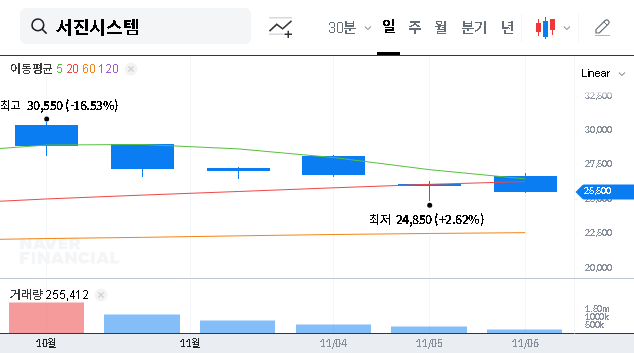
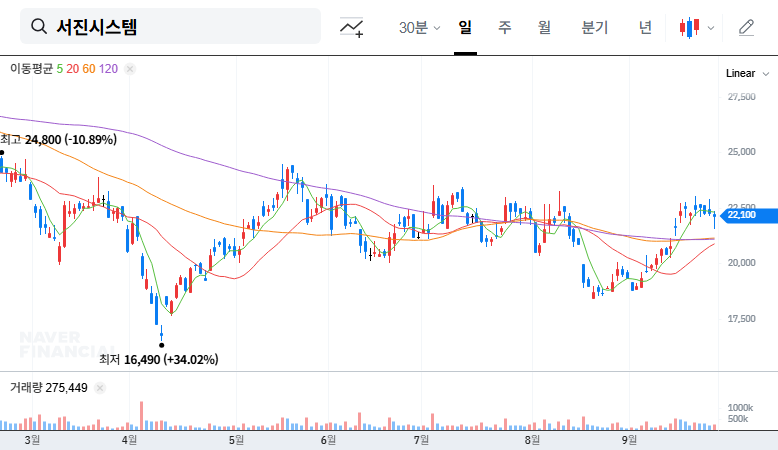
    Given the dual headwinds of poor performance and ownership changes, the short-to-medium-term outlook for SEOJIN SYSTEM stock is clouded. The market is likely to react with caution, putting downward pressure on the stock price. The declining trend in foreign ownership, which fell from 10.44% in 2020 to 7.84% in August 2024, could accelerate if these negative trends persist.

    Given the confluence of fundamental deterioration and market uncertainty, our current investment opinion for SEOJIN SYSTEM is a ‘Hold.’ It is essential for investors to monitor for clear recovery signals before considering new or additional positions.

    Key Risk Factors to Monitor

    • Delayed Recovery: If the key business segments fail to rebound in the coming quarters, the stock could face further downward pressure.
    • Shareholder Overhang: The potential for additional share sales from affiliates could continue to weigh on market sentiment.
    • Financial Burden: The high debt ratio becomes a significant risk in a sustained high-interest-rate environment, potentially limiting future investment.
    • Macroeconomic Volatility: As an exporter, SEOJIN SYSTEM is highly exposed to exchange rate fluctuations (KRW/USD, KRW/EUR), which can directly impact profitability.

    Potential Positive Catalysts

    Despite the current challenges, it’s important to recognize the company’s underlying strengths. A comprehensive SEOJIN SYSTEM analysis isn’t complete without acknowledging its long-term potential.

    • High-Growth Portfolio: The company operates in industries—ESS, electric vehicles, and semiconductors—that are poised for significant long-term growth.
    • Operational Strengths: Its competitive Vietnam production base and proprietary technology provide a durable competitive advantage that can help it weather market downturns.

    Investors should closely watch upcoming earnings releases for signs of a turnaround, monitor any further shareholder changes, and look for proactive efforts from management to improve the company’s financial structure.
    (178320) SEOJIN SYSTEM (124075900928) Stock Analysis: Performance, Risks & Investor Outlook 관련 이미지
  • (178320) SEOJIN SYSTEM IR Analysis: A Deep Dive into Stock Risks & Recovery Potential

    (178320) SEOJIN SYSTEM IR Analysis: A Deep Dive into Stock Risks & Recovery Potential

    The upcoming SEOJIN SYSTEM IR (Investor Relations) conference, scheduled for October 30, 2025, is poised to be a pivotal moment for the company and its investors. Following a deeply concerning semi-annual report that revealed a staggering drop in revenue and a significant operating loss, the market is holding its breath. Will this event signal a credible turnaround strategy and restore confidence, or will it confirm the fears of further downside risk? This comprehensive SEOJIN SYSTEM stock analysis will dissect the company’s precarious financial position, explore the external market pressures, and outline what investors must watch for during this critical event.

    With investor confidence shaken, the upcoming IR is more than a presentation; it’s a test of leadership’s ability to navigate a crisis and present a viable path forward for SEOJIN SYSTEM.

    The Financial Crisis: A Look at the Alarming 2025 Report

    To understand the gravity of the upcoming SEOJIN SYSTEM IR, we must first confront the numbers that have spooked the market. The 2025 semi-annual report painted a bleak picture of deteriorating performance across almost all key business segments. The figures, sourced from the company’s official disclosure, are stark. You can review the complete filing here: Official Disclosure (DART).

    Revenue Collapse and Profitability Plunge

    The headline figures from SEOJIN SYSTEM financials are alarming. The company’s core revenue streams experienced a severe contraction, leading to a dramatic impact on the bottom line.

    • Plummeting Revenue: A 55.5% year-over-year decrease to 539.8 billion KRW. The decline was widespread: ESS Equipment (-64.4%), EV/Battery Components (-73.1%), Semiconductor Equipment (-31.1%), and Telecommunication Equipment (-46.1%).
    • Eroding Profitability: Operating profit crashed by 86.3% to a mere 14.9 billion KRW, indicating severe pressure on margins.
    • Massive Net Loss: The company swung to an 80.1 billion KRW net loss, largely attributed to financial costs from derivatives and foreign currency translation losses.
    • Rising Debt: The debt-to-equity ratio swelled from 1.40 to 1.83, a concerning sign of weakening financial stability.

    Market Headwinds and External Pressures

    SEOJIN SYSTEM’s struggles are not happening in a vacuum. Broader macroeconomic trends and sector-specific challenges are compounding the company’s internal issues. The volatility in the ESS (Energy Storage Systems) and EV markets, despite a positive long-term outlook, has created short-term demand shocks. For a detailed overview of global EV market trends, see this in-depth report from Reuters.

    Furthermore, fluctuating interest rates and adverse currency movements, particularly the strong USD/KRW rate, directly inflate the company’s financial costs due to its significant foreign currency borrowings. This external environment adds another layer of complexity that management must address during the investor relations call.

    The IR Crossroads: Potential Scenarios for SEOJIN SYSTEM Stock

    This IR event can realistically push the company’s stock in one of two directions. Investors should prepare for both a bull and a bear case scenario.

    The Bull Case: A Path to Recovery

    A positive outcome hinges on management’s ability to communicate a clear and convincing recovery plan. This includes providing transparent reasons for the underperformance in the ESS and EV segments, coupled with a detailed strategy to reignite growth. Highlighting the relative stability of the semiconductor and telecom divisions, and providing concrete evidence of traction in new ventures like container boxes, could significantly lift sentiment. If the IR successfully demonstrates a firm grip on cost control, debt management, and risk mitigation, it could attract new institutional investment and mark the bottom for the stock price.

    The Bear Case: Risk of Further Disappointment

    Conversely, a negative scenario would unfold if the IR provides vague assurances without substance. If management is evasive during the Q&A, especially regarding financial derivatives and currency exposure, it could shatter remaining investor confidence. Presenting recycled information or failing to offer a specific, actionable plan for improving the SEOJIN SYSTEM financials would be seen as a major red flag, potentially triggering another sell-off as investors capitulate.

    Investor Checklist: Key Questions for the SEOJIN SYSTEM IR

    As you assess the outcome, focus on the substance behind the presentation. For a more complete understanding, consider our guide on how to analyze corporate financial reports. Pay close attention to the answers to these critical questions:

    • Revenue Recovery: What are the specific, actionable steps to reverse the sales decline in the ESS and EV segments? What is the timeline?
    • Financial Health: Is there a clear plan to reduce the debt-to-equity ratio and manage the risks associated with derivatives and currency fluctuations?
    • Future Growth: How will the company protect its more stable semiconductor and telecom businesses? What is the real market potential and strategy for the new container box venture?
    • Management Credibility: Does the leadership team take ownership of the poor performance, and is their response during the Q&A session transparent and confident?

    Ultimately, the October 30th SEOJIN SYSTEM IR is a moment of truth. For investors, the focus should not be on promises, but on the credibility and specificity of the plans presented. Prudent analysis of this event will be key to navigating the stock’s future direction.

    (178320) SEOJIN SYSTEM IR Analysis: A Deep Dive into Stock Risks & Recovery Potential 관련 이미지