Tag: Semiconductors

  • Hooseung’s Management Stability Reinforced: Analysis of Large Shareholding Report and Investment Strategy

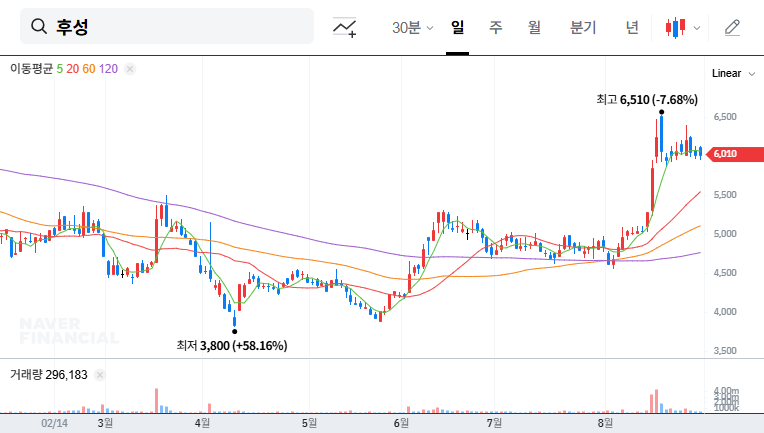
    Hooseung's Management Stability Reinforced: Analysis of Large Shareholding Report and Investment Strategy 대표 차트 이미지

    1. What Happened at Hooseung?

    CEO Keun-Soo Kim and his related parties maintained their 46.04% stake in Hooseung. The key takeaway from the report is the stock transfer between related parties, Ilkwang E&C and Hooseung Holdings, and changes in stock pledge agreements. This suggests an internal restructuring of ownership.

    2. Why Does It Matter?

    The report signals management’s commitment to stability, a crucial factor for long-term investment planning and operational continuity. This is particularly important for Hooseung, given its anticipated investments in battery materials and semiconductor specialty gases.

    3. What’s Next for Hooseung?

    Hooseung reported Q1 2025 revenue of KRW 231.3 billion (up 4.91% YoY) and operating profit of KRW 14.6 billion (turning to profit). The strong performance in battery materials and semiconductor specialty gases drove the improvement. However, raw material prices and exchange rate volatility remain key risks. The reinforced management stability is expected to facilitate a more focused approach to managing these risks. The solid performance of the chemical equipment segment is also a positive factor.

    4. What Should Investors Do?

    • Maintain a long-term perspective: Considering the growth potential of the battery materials market and Hooseung’s competitive position, a long-term investment approach is recommended.
    • Monitor management changes and strategies: Pay close attention to any further changes in management ownership or strategic shifts.
    • Track macroeconomic factors: Continuously monitor the impact of macroeconomic variables like exchange rates and interest rates.
    • Observe market expectations: Refer to analyst reports and market forecasts to inform investment decisions.

    What are Hooseung’s main businesses?

    Hooseung’s primary businesses are basic chemicals (including battery materials and semiconductor specialty gases) and chemical equipment.

    What is the key takeaway from the large shareholding report?

    CEO Keun-Soo Kim and related parties maintained their 46.04% stake, and there was a transfer of shares between related parties. This suggests a move towards greater management stability.

    What is the outlook for Hooseung?

    Hooseung is expected to benefit from the growth of the battery materials market and continued strong performance in the chemical equipment segment. However, investors should be mindful of risks related to raw material prices and exchange rate fluctuations.
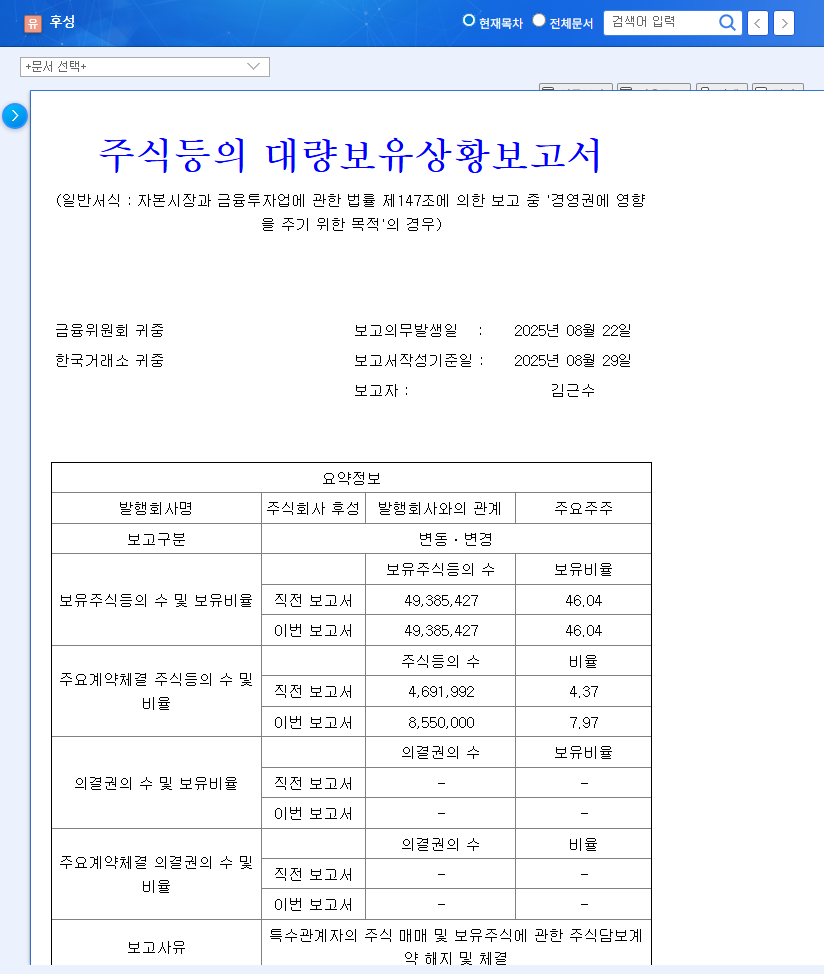
    Hooseung's Management Stability Reinforced: Analysis of Large Shareholding Report and Investment Strategy 관련 이미지
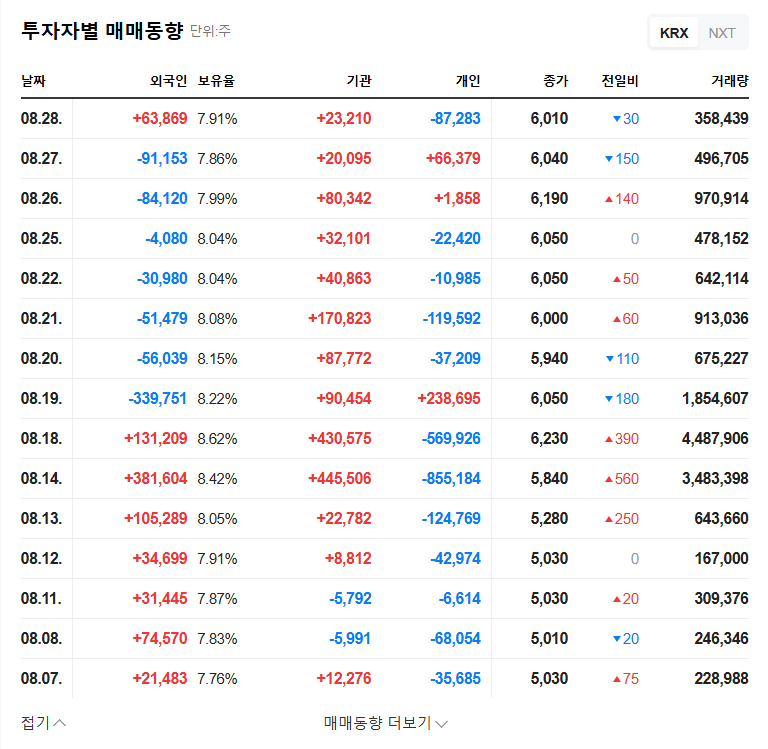
    Hooseung's Management Stability Reinforced: Analysis of Large Shareholding Report and Investment Strategy 관련 이미지
  • YC’s After-Hours Block Deal: Decoding the Foreign Buy and Institutional Sell-Off

    1. What Happened? YC’s After-Hours Block Deal

    On August 22, 2025, before the market opened, YC saw a substantial after-hours block deal totaling $185 million for 1,682,956 shares. Foreign investors were net buyers at $154 million, while institutional investors were net sellers at $175 million.

    2. Why Did This Happen? Unpacking the Dynamics

    The foreign buying likely reflects optimism about the growth of the AI chip market and positive sentiment towards YC’s new ventures. Conversely, the institutional selling suggests potential profit-taking or portfolio adjustments.

    3. What Does This Mean for Investors? Strategic Implications

    In the short term, increased price volatility is likely as the market digests the opposing forces of foreign buying and institutional selling. The long-term trajectory will depend on YC’s performance in the AI chip market and the success of its new ventures. However, the current high valuation and macroeconomic uncertainties warrant careful consideration.

    4. Investor Action Plan

    • Short-term investors: Proceed with caution, mindful of increased volatility, and look for short-term profit-taking opportunities.
    • Long-term investors: Closely monitor YC’s performance in the AI chip market, new venture progress, and financial metrics, while maintaining a long-term investment strategy.

    Frequently Asked Questions

    What are YC’s main businesses?

    YC’s primary business is semiconductor testing equipment, with investment management as a new venture.

    How does an after-hours block deal impact stock prices?

    After-hours block deals can introduce short-term price volatility. In this case, with both buying and selling pressure, the price direction will depend on subsequent trading activity.

    What should investors consider when investing in YC?

    Investors should consider the high valuation, currency exchange rate fluctuations, and potential global economic slowdown. Furthermore, continued monitoring of new venture progress and earnings growth is crucial.

  • Deokwoo Electronics (263600) H1 2025 Earnings Report Analysis: Revenue Growth but Profitability Decline

    1. What Happened? Deokwoo Electronics H1 2025 Performance Analysis

    Deokwoo Electronics achieved revenue of KRW 71.174 billion (up 19.1% YoY) in the first half of 2025, but recorded an operating loss of KRW -22.478 billion and a net loss of KRW -29.042 billion. Concerns are heightened by the decline in Q2 performance compared to Q1. The main factors contributing to this are the sluggish mobile segment, slow growth in the automotive electronics segment, and losses from investments in related companies.

    2. Why These Results? Analyzing the Reasons for the Decline

    Deokwoo Electronics’ poor performance stems from multiple factors. The intensifying competition in the smartphone market has weakened the profitability of the mobile segment, coupled with slow growth in the automotive electronics sector. Increased costs associated with investments in new businesses, such as secondary batteries and semiconductor components, also play a significant role. Furthermore, increasing inventory levels and liquidity concerns, along with a high debt-to-equity ratio, pose significant financial risks.

    3. What’s Next? Investment Strategy Recommendations

    In the short term, Deokwoo needs to improve profitability in the mobile segment, enhance inventory management efficiency, and reduce costs to minimize losses. In the medium to long term, successful establishment and tangible results from new businesses, such as secondary batteries and automotive electronics components, are crucial for diversifying the business portfolio.

    4. Action Plan for Investors

    • Closely monitor the possibility of short-term performance improvements, new business growth strategies, and financial soundness indicators.
    • Continuously evaluate management’s business strategies and execution capabilities and reflect these assessments in investment decisions.
    • Stay informed about market changes and competitor trends to revise and refine investment strategies accordingly.

    Frequently Asked Questions

    What were Deokwoo Electronics’ Q2 2025 financial results?

    Deokwoo Electronics reported revenue of KRW 31.5 billion, an operating loss of KRW -3.6 billion, and a net loss of KRW -3.7 billion in Q2 2025.

    What are Deokwoo Electronics’ main business segments?

    Deokwoo Electronics’ main business segments are mobile (89.11% of revenue) and automotive electronics (4.74% of revenue).

    What is the outlook for Deokwoo Electronics?

    Deokwoo Electronics faces the dual challenge of investing in new businesses and improving the profitability of its core operations. The company’s future value will depend on how effectively its management strategies are executed.

  • SKC H1 2025 Earnings Report Analysis: Battery Materials Growth and Investment Strategy

    SKC H1 2025 Performance: A Closer Look at the Disappointing Results

    SKC reported weaker-than-expected results for Q2 2025, with revenue of KRW 467.2 billion (down 7% YoY) and an operating loss of KRW 70.1 billion. This is attributed to increased investment in battery materials and the downturn in the semiconductor market.

    Business Segment Analysis and Outlook: Can Battery Materials Drive Future Growth?

    • Battery Materials: The growing EV market is a positive factor for SKC’s battery foil business, but intensifying competition and investment burdens pose challenges to profitability.
    • Chemicals: Steady demand for core products like PO and PG provides a stable cash flow, but caution is needed regarding the cyclical nature of downstream industries.
    • Semiconductor Materials: Growth in high-performance semiconductors like AI and HBM presents opportunities, while market volatility and competition remain risks.
    • Other Businesses (Eco-friendly Materials): Aligns with the ESG trend, but initial investment burdens and market uncertainties need to be addressed.

    Financial Health and Investment Strategy: Will Aggressive Investments Pay Off?

    SKC continues its aggressive investments in battery materials and semiconductor materials. While the debt-to-equity ratio has improved, the potential increase in financial burden due to large-scale investments should be considered.

    Key Takeaways and Action Plan for Investors

    Investors considering SKC should carefully evaluate the long-term growth potential of the battery and semiconductor materials businesses while balancing the risks of intensifying competition and macroeconomic volatility. Attention should also be paid to ESG performance and the growth prospects of eco-friendly materials.

    Frequently Asked Questions

    What are the reasons for SKC’s underperformance in H1 2025?

    Increased investment in battery materials and the downturn in the semiconductor market are key factors.

    What are SKC’s key growth drivers?

    Battery materials and semiconductor materials are considered the main growth drivers.

    What should investors be aware of when considering SKC?

    Factors such as intensifying competition, macroeconomic volatility, and the potential increase in financial burden due to large-scale investments should be considered.

  • SKC Q2 2025 Earnings Analysis: Surprise Net Profit Turnaround, But Losses Continue?

    1. SKC Q2 Earnings: What Happened?

    SKC reported revenue of KRW 467.2 billion (+6% YoY), an operating loss of KRW 70.1 billion (continued loss, narrower than expected), and a net profit of KRW -3.9 billion (turnaround to profit). While the above-expectation revenue and net profit turnaround are positive, the continued operating loss is a concern.

    2. Drivers of Performance: Why These Results?

    Positive Factors:

    • Growth in battery materials business: Increasing demand for copper foil due to expanding EV/ESS market driving SK Nexilis’ growth
    • Entry into the semiconductor materials market: Acquisition of ISC facilitates entry into the semiconductor back-end process market, securing new growth engines
    • Strengthened ESG management: Investment in eco-friendly materials enhances corporate value

    Negative Factors:

    • Sluggish chemical business: Impacting overall performance
    • Investment in new growth drivers: Large-scale investment adding to short-term financial burden
    • High debt-to-equity ratio: 188% as of half-year, raising financial stability concerns
    • Macroeconomic uncertainty: Potential for deteriorated profitability due to rising interest rates, exchange rate fluctuations, and raw material price volatility
    • Intensifying competition: Increasing competition in battery materials and semiconductor materials markets

    3. Investment Strategy: What’s Next?

    Short-term perspective: Monitor improvement in chemical business profitability and actual profit generation in battery materials and semiconductor businesses.
    Long-term perspective: Focus on growth industries and strengthened ESG management are positive, but managing risks such as high debt ratio and intensifying competition is crucial. Hedging against exchange rate fluctuations is also essential.

    4. Action Plan for Investors

    Investors should make investment decisions considering both SKC’s growth potential and risks. Focus on mid-to-long-term growth potential rather than short-term profitability, and continuously monitor the company’s risk management capabilities. Careful attention should be paid to the company’s strategies for dealing with exchange rate volatility.

    Why did SKC’s Q2 net profit turn positive?

    SKC’s Q2 net profit turnaround is attributed to a combination of factors, including the effects of business restructuring and one-off gains.

    When is SKC’s operating loss expected to be resolved?

    The timing of SKC’s operating profit turnaround depends on the growth rate of its battery materials and semiconductor materials businesses and the improvement in the profitability of its chemical business. Investors should closely monitor the performance trends of these businesses.

    What are the biggest risks when investing in SKC?

    The biggest risks associated with investing in SKC include high debt-to-equity ratio, intensifying competition, macroeconomic uncertainty, and exchange rate volatility. Managing foreign exchange risk is particularly important due to SKC’s sensitivity to exchange rate fluctuations.

  • Hansol Technics (004710) H1 2025 Earnings Report Analysis: Navigating Growth and Profitability Challenges

    1. What Happened? H1 2025 Performance Review

    Hansol Technics reported consolidated revenue of KRW 631.3 billion in H1 2025, a 14.6% increase year-over-year. Strong performance in the electronic components and mobile phone segments fueled this growth. However, operating profit slightly decreased compared to the previous year, reaching KRW 32.09 billion. This decline in profitability has become a significant concern, particularly with a substantial drop in operating profit within the electronic components division.

    2. Why Did This Happen? Drivers of Performance Change

    • Revenue Growth Factors: The trend towards larger, higher-resolution TVs and a stable supply chain for mobile phone components to global top-tier clients contributed to revenue growth.
    • Profitability Decline Factors: The global economic slowdown and intensified market competition are considered the primary reasons for the pressure on profitability. Increased competition within the electronic components sector, in particular, significantly impacted the decline in profit margins.

    3. What’s Next? Future Outlook and Growth Drivers

    Hansol Technics is expanding its portfolio through the acquisition of Orion Technology, venturing into the marine and robotics electronics businesses. They are also strengthening ESG management through initiatives like semiconductor byproduct recycling and processing, securing new growth drivers. However, improving the low operating rate of the semiconductor business and mitigating financial burdens stemming from increased debt remain key challenges.

    4. What Should Investors Do? Investment Strategy and Key Considerations

    • Monitor Profitability Improvement Strategies: Investors should closely track the effectiveness of cost reduction efforts and the development of high-value-added products.
    • Observe New Business Performance: Pay close attention to the synergy from the Orion Technology acquisition and the realization of growth potential in the semiconductor business.
    • Assess Financial Risk Management: Evaluate the company’s ability to manage financial risks, including debt levels and foreign exchange volatility.
    Q: What are Hansol Technics’ main business segments?

    A: Hansol Technics operates in electronic components, mobile phones, semiconductors, and automotive electronics. They recently expanded into marine and robotics electronics through the acquisition of Orion Technology.

    Q: How did Hansol Technics perform in H1 2025?

    A: While revenue increased by 14.6% year-over-year, operating profit experienced a slight decline. The slowdown in profitability is a key concern.

    Q: What are the key considerations for investing in Hansol Technics?

    A: Investors should carefully consider the effectiveness of profitability improvement strategies, the growth potential of new businesses, and the company’s ability to manage financial risks.

  • Okins Electronics’ Convertible Bond Exercise: Impact Analysis and Investment Strategy

    1. What Happened? Overview of the Convertible Bond Exercise

    On August 12, 2025, Okins Electronics announced the exercise of its convertible bonds. A significant 246,395 shares (1.30% of market capitalization) will be issued at a conversion price of ₩5,276. This scale of issuance could have a substantial impact on the market.

    2. Why Does It Matter? Implications of the Exercise

    Convertible bond exercises can significantly influence a company’s financial structure and stock price. In Okins Electronics’ case, the conversion of debt to equity is expected to reduce the debt-to-equity ratio. However, the simultaneous issuance of new shares raises the possibility of diluting existing shareholders’ equity.

    3. What’s the Impact? Analyzing the Effects

    • Positive Impact: Improved financial structure through debt reduction.
    • Negative Impact: Potential stock dilution and increased volatility due to new share issuance.

    As the current stock price (₩7,070) is higher than the conversion price (₩5,276), there is a high probability of active exercise of the convertible bonds. This can lead to increased short-term stock price volatility.

    4. What Should Investors Do? Investment Strategy and Considerations

    Okins Electronics has positive growth momentum driven by the semiconductor industry’s growth and its venture into new businesses. However, high debt-to-equity ratio and profitability improvement remain challenges. Therefore, investors should carefully consider the following factors when making investment decisions:

    • Performance and profitability of new businesses
    • Profitability improvement strategy
    • Stock price trends after the conversion
    • Changes in the macroeconomic environment

    Frequently Asked Questions

    What are convertible bonds?

    Convertible bonds give the holder the right to convert them into company shares at a predetermined price (conversion price).

    How does a convertible bond exercise affect stock price?

    In the short term, increased share supply may put downward pressure on the price, but in the long term, it can improve the company’s financial structure.

    Should I invest in Okins Electronics now?

    Prudent investment decisions are recommended, considering the potential for increased stock price volatility after the exercise. Careful monitoring of the company’s performance and financial structure improvement is essential.

  • Samsung Electronics Q2 Earnings Shock: A Deep Dive into the Fundamentals and Investment Strategies

    1. Decoding the Earnings Shock

    Samsung Electronics reported preliminary Q2 2025 earnings of KRW 745.66 trillion in revenue, KRW 4.67 trillion in operating profit, and KRW 4.93 trillion in net profit. These figures significantly missed market expectations and represent a substantial decline compared to the same period last year. Profitability deteriorated across all business segments: DX (smartphones and consumer electronics), DS (semiconductors), SDC (displays), and Harman (automotive). Key factors contributing to the decline include weak smartphone and TV sales, falling semiconductor prices, and the global economic slowdown.

    2. Segment Breakdown: Identifying the Pain Points

    • DX: Weak smartphone and TV sales, intensified price competition
    • DS: Declining memory chip prices, slowing demand
    • SDC: Falling display panel prices, increased competition
    • Harman: Reduced demand for automotive components, intensifying market competition

    3. External Factors: Navigating the Uncertainties

    External factors such as the global economic slowdown, increasing exchange rate volatility, rising raw material prices, and interest rate hikes negatively impacted Samsung’s performance. Geopolitical risks, including the US-China trade dispute, further contribute to the uncertainty.

    4. Action Plan for Investors

    Increased stock price volatility is expected in the short term, necessitating a cautious investment approach. In the medium to long term, securing future growth engines, such as AI and automotive businesses, will likely determine the stock’s trajectory. Investors should consider a comprehensive investment strategy incorporating earnings recovery prospects, competitor analysis, and changes in the external environment.

    Frequently Asked Questions

    Q1. What are the main reasons for Samsung’s weak Q2 performance?

    A1. The primary factors include decreased demand due to the global economic slowdown, falling semiconductor prices, and weak smartphone and TV sales.

    Q2. What is the outlook for Samsung’s stock price?

    A2. While short-term volatility is anticipated, the stock’s medium to long-term trajectory will likely depend on securing future growth engines, such as AI and automotive businesses.

    Q3. What strategy should investors adopt?

    A3. Instead of reacting to short-term price fluctuations, investors should focus on a long-term perspective, analyzing the company’s fundamentals and future growth potential to develop a sound investment strategy.

  • Nextchip IR: Can Autonomous Driving Be the Key to Overcoming Financial Risks?

    1. What to Expect from Nextchip’s IR

    Nextchip will present its current status and future strategy at the IR session on July 23rd. The focus is expected to be on aiMotive, their next-gen autonomous driving platform. Despite revenue growth, Nextchip faces challenges with operating losses and a high debt-to-equity ratio. This IR is crucial for addressing these concerns and rebuilding investor confidence.

    2. Why is Nextchip Holding an IR Now?

    Nextchip’s stock price has been declining since its Q1 earnings release. Investor concerns stem from the high debt-to-equity ratio and intensifying competition in the autonomous driving chip market. This IR is a strategic move to highlight Nextchip’s growth potential and improve investor sentiment. The company is likely to emphasize aiMotive as a key driver of future growth.

    3. How Will the IR Impact Nextchip’s Future?

    The IR’s outcome could significantly impact Nextchip’s stock price in the short term. A well-received presentation of aiMotive’s strategy and a clear roadmap for profitability could create positive momentum. Conversely, negative Q&A or a disappointing presentation could lead to further declines. Long-term growth will ultimately depend on Nextchip’s ability to improve its financial performance.

    4. What Should Investors Do?

    • Carefully analyze the IR presentation. Pay close attention to the growth potential of aiMotive, profitability plans, and debt reduction strategies.
    • Monitor market reaction. Observe post-IR stock price movements and investor sentiment to adjust your investment strategy.
    • Manage risks diligently. Consider the risks Nextchip faces, including its high debt-to-equity ratio, raw material price fluctuations, and exchange rate volatility.

    Frequently Asked Questions

    What is Nextchip’s main business?

    Nextchip specializes in automotive semiconductors, developing and manufacturing Image Signal Processors (ISPs), high-definition analog cameras (AHD), and Advanced Driver-Assistance Systems (ADAS) SoCs. They are currently focusing on their autonomous driving platform, aiMotive.

    What is Nextchip’s financial status?

    As of Q1 2025, Nextchip reported an operating loss despite revenue growth, and their debt-to-equity ratio remains very high. Improving financial stability is a pressing concern.

    What is the aiMotive business?

    aiMotive is an autonomous driving platform development company acquired by Nextchip. Nextchip plans to leverage aiMotive’s technology to target the next-generation autonomous driving chip market.