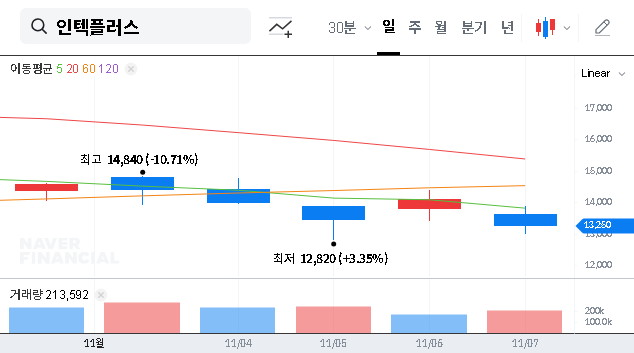
Tag: Semiconductor Inspection Equipment

  • (064290) INTEKPLUS Treasury Stock Disposal: A Deep Dive for Investors (₩11.7B Analysis)

    (064290) INTEKPLUS Treasury Stock Disposal: A Deep Dive for Investors (₩11.7B Analysis)

    INTEKPLUS CO., LTD (KRX: 064290), a prominent name in the semiconductor and secondary battery inspection equipment industry, has made a significant financial move that has investors talking. The company recently announced an INTEKPLUS treasury stock disposal valued at approximately ₩11.7 billion. This decision, which involves using treasury shares to back the issuance of Exchangeable Bonds (EB), raises critical questions: Is this a masterstroke for financial stability and growth, or a red flag for existing shareholders? This comprehensive analysis will dissect the fundamentals, market conditions, and strategic implications to provide a clear investment outlook.

    The core of this corporate action is the disposal of 661,773 treasury shares, representing 5.14% of total equity. The primary goal is to secure capital by issuing Exchangeable Bonds, a strategic maneuver to bolster the company’s financial structure and fund future operations.

    Deconstructing the Treasury Stock Disposal

    On November 7, 2025, INTEKPLUS officially announced its decision to dispose of a substantial portion of its treasury stock. These are shares that the company had previously repurchased from the open market. Instead of reissuing or retiring them, INTEKPLUS is using them as the underlying asset for Exchangeable Bonds. In essence, they are raising debt that can later be exchanged for these shares by the bondholders. This is a sophisticated financing method aimed at raising capital without immediately diluting shareholder equity. The full details of this transaction can be reviewed in the Official Disclosure on DART.

    Understanding Exchangeable Bonds (EBs)

    Unlike convertible bonds, which convert into new shares of the issuing company, exchangeable bonds are exchanged for existing shares—in this case, the treasury stock INTEKPLUS holds. This is a crucial distinction. For investors, it means the potential dilution comes from existing shares re-entering the market, not from the creation of new ones. The terms of these bonds, such as the interest rate (coupon) and the exchange price, will be critical in determining the financial burden and overall attractiveness of this deal.

    INTEKPLUS Financial Health: A H1 2025 Snapshot

    To grasp the context of this decision, we must examine the company’s recent performance. The semi-annual report from H1 2025 paints a mixed but intriguing picture.

    • Profitability Pivot: Despite a 5.4% year-over-year revenue dip, INTEKPLUS achieved an operating profit surplus. This signals successful cost management and operational efficiency improvements. The growth is notably powered by its display and secondary battery inspection segments (53.5%), capitalizing on the booming battery market.
    • Debt Concerns: Financial soundness requires a watchful eye. Total liabilities and long-term borrowings have increased, pushing the debt-to-equity ratio to a high 202.99%. The capital injection from the EB issuance is likely a direct strategy to address this leverage.
    • Innovation Investment Risk: A significant red flag is the year-over-year reduction in R&D investment. For a tech company, sustained innovation is paramount. Investors must question if this is a temporary cutback or a worrying strategic shift that could harm long-term competitiveness.

    The Bull vs. Bear Case for the INTEKPLUS Treasury Stock Disposal

    The Bull Case (Potential Positives)

    Securing ₩11.7 billion provides INTEKPLUS with critical capital. This can be used to pay down high-interest debt, thereby improving its balance sheet and reducing financial risk, especially in a high-interest-rate environment as seen in the global economy (source: global economic reports). Furthermore, these funds can be reinvested into high-growth areas like the secondary battery inspection division or used to reverse the concerning decline in R&D spending. If managed wisely, this move could fuel the next phase of growth and enhance shareholder value in the long run.

    The Bear Case (Potential Negatives)

    The primary risk is share value dilution. When the bonds are exchanged, the 5.14% of treasury shares will enter the public market, increasing the total number of shares available and potentially putting downward pressure on the stock price. Additionally, the terms of the Exchangeable Bonds are crucial. If the interest rate is high, it could add a significant expense burden, negating some of the benefits of the capital raised. The market may also interpret this move as a signal that the company is unable to secure funding through more conventional, less dilutive means.

    Investor Strategy: A Neutral Stance with Vigilant Monitoring

    Given the balance of opportunities and risks, a “Neutral” investment opinion is warranted at this stage. The INTEKPLUS treasury stock disposal is a pivotal event, but its ultimate success is not yet guaranteed. The path forward depends entirely on execution. For more insights on evaluating such corporate actions, you can read our guide to understanding corporate finance.

    Investors should adopt a cautious, wait-and-see approach, focusing on three key areas:

    • EB Issuance Terms: Scrutinize the final interest rate, exchange price, and maturity date. Favorable terms will be a strong positive indicator.
    • Capital Allocation Plan: Look for clear communication from management on how the ₩11.7 billion will be used. A detailed plan focusing on R&D and debt reduction would be bullish.
    • Future R&D Budgets: Monitor subsequent quarterly reports to see if the R&D spending trend reverses. Increased investment in innovation is non-negotiable for long-term success.

    The investment thesis could shift from Neutral to Buy or Sell based on how these factors unfold in the coming months.

    (064290) INTEKPLUS Treasury Stock Disposal: A Deep Dive for Investors (₩11.7B Analysis) 관련 이미지
  • (089030) NPS Reduces TECHWING Stake: Deep Dive Analysis for Investors

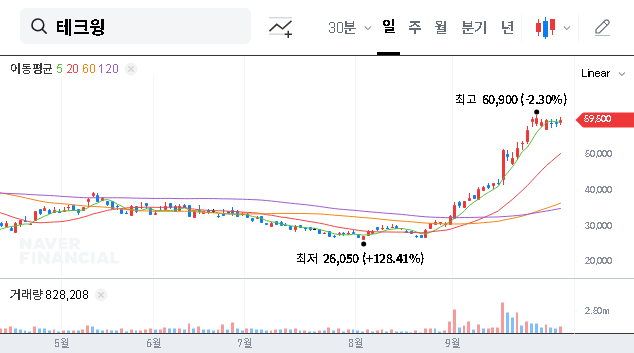
    (089030) NPS Reduces TECHWING Stake: Deep Dive Analysis for Investors

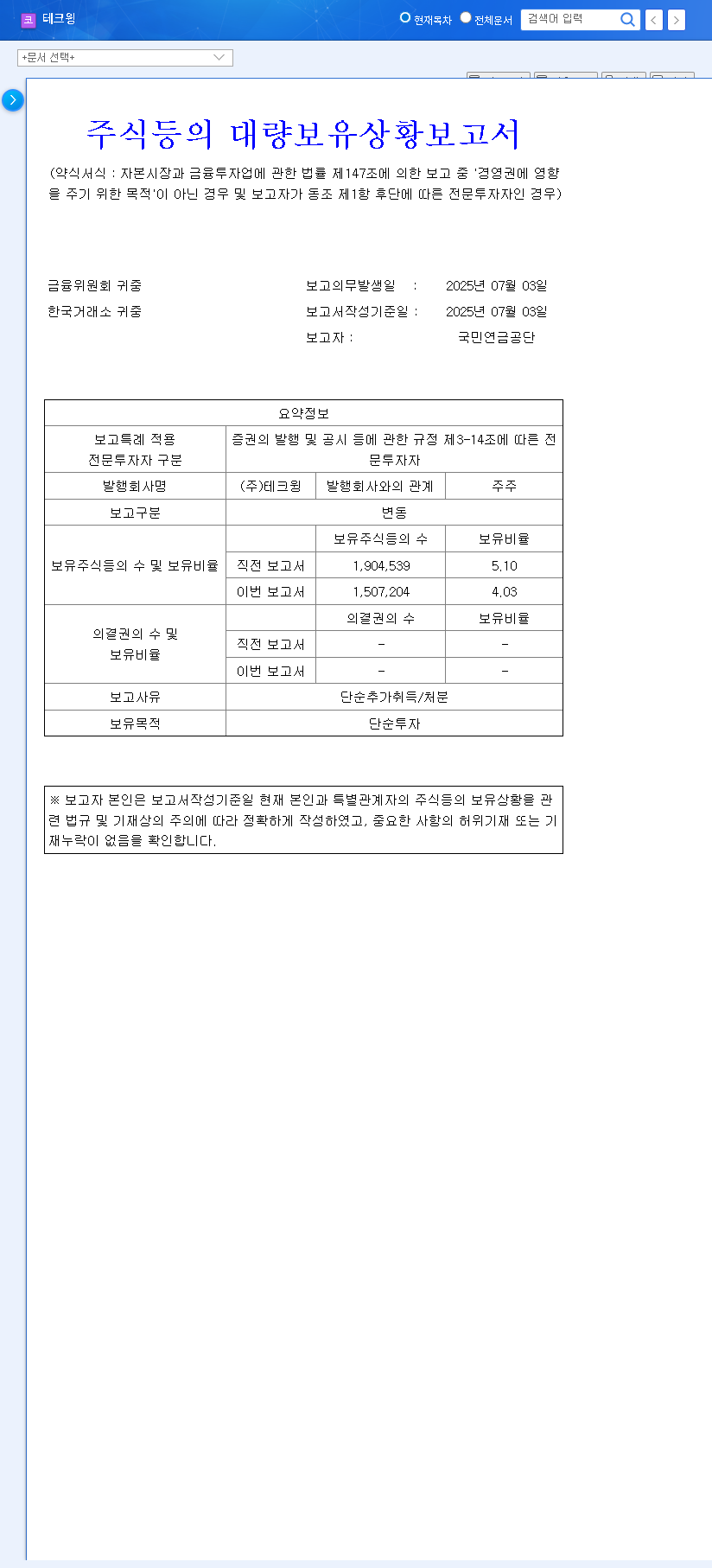
    On October 1, 2025, a significant disclosure regarding the NPS TECHWING stake caught the market’s attention. The National Pension Service (NPS) of South Korea, a major institutional investor, filed a ‘Report on the Status of Large-Scale Stock Holdings’ revealing a reduction in its ownership of TECHWING Co., Ltd. The filing, available via the official DART system (Source), showed the NPS decreased its stake from 5.10% to 4.03%.

    This move by such a prominent entity naturally raises questions for investors: Is this a simple portfolio rebalancing act, or does it signal a deeper concern about TECHWING’s future prospects? This comprehensive analysis will dissect the disclosure, evaluate TECHWING’s current financial health, explore its position in the booming HBM market, and provide a strategic outlook for investors.

    Deconstructing the NPS Stake Reduction

    The disclosure specified the purpose of holding as ‘simple investment’ and the reason for the change as ‘simple additional acquisition/disposal.’ This language is crucial. It suggests the transaction was not intended to influence company management but was part of the NPS’s broader investment strategy. However, the market often reads between the lines when a heavyweight investor like the NPS makes a move.

    Two Sides of the Coin: Potential Interpretations

    Investors should consider two primary viewpoints when analyzing this NPS TECHWING stake adjustment:

    • The Bullish View: Profit Realization & Rebalancing. Institutional funds like the NPS regularly adjust their portfolios. After a period of stock price appreciation, it’s standard practice to sell a portion of a holding to realize profits and reallocate capital to other assets. This is a disciplined, routine financial maneuver, not necessarily a vote of no-confidence in TECHWING.
    • The Bearish View: A Potential Warning Signal. Conversely, the market may interpret this sale as a sign that the NPS sees limited short-term upside or potential headwinds for TECHWING. A large sell-off can also create downward pressure on the stock price as the newly available shares are absorbed by the market.

    While the ‘simple investment’ clause points towards a routine adjustment, the market’s perception often matters more in the short term. The key is to look past the immediate noise and focus on the company’s underlying fundamentals.

    TECHWING Stock Analysis: A Financial Health Check (H1 2025)

    To understand the context of the NPS’s decision, a thorough review of TECHWING’s financials is essential. The first half of 2025 presented a mixed but revealing picture.

    Performance & Profitability

    The company experienced a downturn in its core operations:

    • Revenue: Declined by 8.37% year-over-year to KRW 83.481 billion, driven by reduced sales in semiconductor and display inspection equipment.
    • Operating Profit: Dropped significantly by 36.12% to KRW 8.144 billion, squeezed by lower revenue and rising operational costs.

    However, the bottom line told a different story. Net profit turned positive to KRW 20.135 billion. This was largely due to non-operating factors, specifically valuation gains on financial derivatives, rather than core business strength.

    Balance Sheet Concerns

    Several metrics point to areas requiring investor attention:

    • High Leverage: The debt-to-equity ratio stands at a high 166.76%, indicating significant reliance on debt financing.
    • Negative Operating Cash Flow: This is a critical red flag. At a negative KRW 21.470 billion, it shows that the company’s core operations are spending more cash than they are generating, signaling a need for improved working capital management.

    Growth Engine: The AI and HBM Market Opportunity

    Despite the financial concerns, TECHWING’s future is intrinsically linked to the explosive growth of AI semiconductors and High Bandwidth Memory (HBM). This is where the company’s primary growth story lies. The demand for HBM, which is essential for training and running large AI models, is skyrocketing.

    TECHWING is strategically positioned to capitalize on this trend. Its Cube Prober technology is a key differentiator in the HBM inspection equipment sector. This technology allows for more efficient and accurate testing of HBM chips, giving TECHWING a competitive advantage. The company’s expansion from Final Test equipment into Burn-in, Sorters, and Probe stations further solidifies its role as a critical partner for major global semiconductor firms. The growth in the TECHWING HBM business segment is a key factor that long-term investors are watching closely.

    Investment Strategy: Navigating the Uncertainty

    Given the conflicting signals—an institutional sale versus a strong market position—a prudent investment approach is necessary. For more information on evaluating institutional ownership changes, you can read this guide from a leading financial education website.

    • Monitor Key Financial Metrics: The most crucial task for investors is to track whether TECHWING can improve its negative operating cash flow and manage its high debt-to-equity ratio. Future earnings reports will be vital. For a deeper understanding of these metrics, review our internal guide on how to analyze tech stock fundamentals.
    • Track HBM Market Penetration: Keep a close watch on industry news regarding AI and HBM market growth. Pay attention to announcements from TECHWING about new contracts, product launches, and sales performance related to its HBM equipment.
    • Adopt a Long-Term Perspective: The NPS stake sale is primarily a short-term supply/demand event. Long-term value will be driven by TECHWING’s ability to execute its strategy and capitalize on the durable AI trend, not by one institutional trade.

    In conclusion, while the reduction of the NPS TECHWING stake warrants careful consideration, it should not be the sole basis for an investment decision. It serves as a catalyst to conduct a deeper analysis. The company faces clear financial hurdles but also possesses a powerful growth driver in the HBM market. The prudent investor will weigh these factors carefully, focusing on fundamental improvements as the ultimate indicator of long-term success.

    (089030) NPS Reduces TECHWING Stake: Deep Dive Analysis for Investors 관련 이미지
  • (348210) In-Depth Nextin Analysis (348210): AI & HBM Growth Driving 2024 Earnings

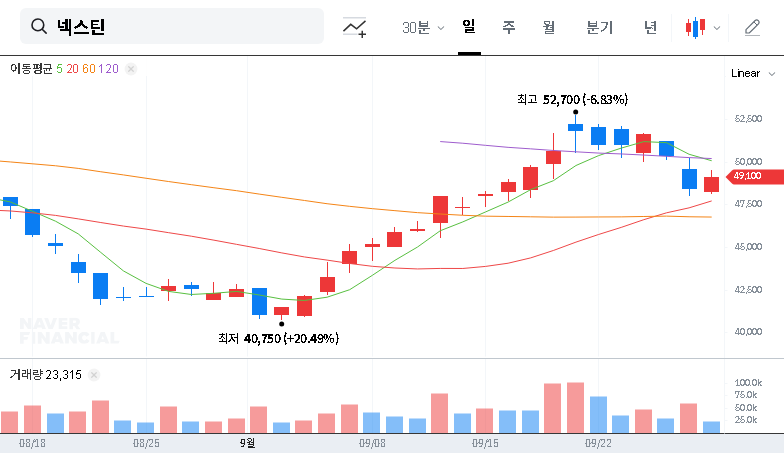
    (348210) In-Depth Nextin Analysis (348210): AI & HBM Growth Driving 2024 Earnings 대표 차트 이미지

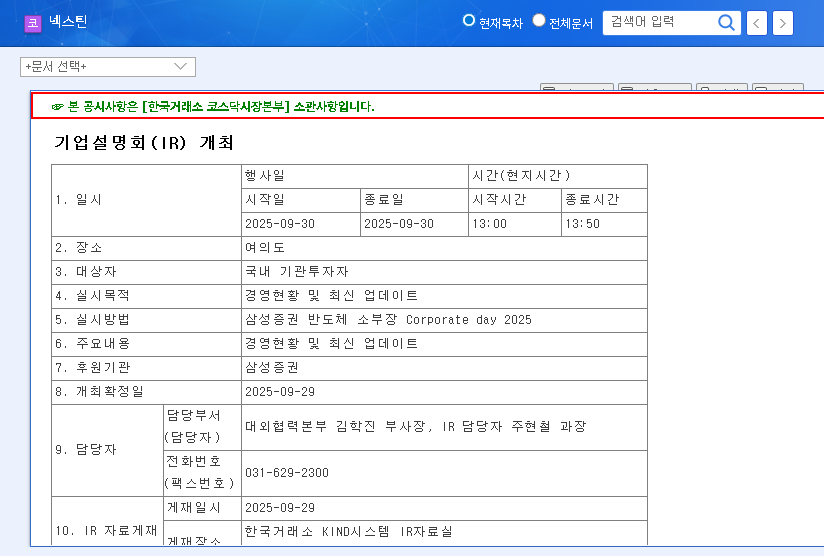
    Nextin (ticker: 348210), a pivotal force in the semiconductor inspection equipment sector, has recently drawn significant investor attention following its latest Investor Relations (IR) event. This event was more than a routine update; it unveiled a strategic roadmap for growth, capitalizing on a stellar 2024 performance and the explosive demand in the AI and High Bandwidth Memory (HBM) markets. This comprehensive Nextin analysis will delve into the company’s fundamentals, growth catalysts, and potential risks to provide investors with the insights needed for informed decision-making.

    As the AI revolution accelerates, the demand for advanced memory solutions like HBM is skyrocketing. Companies like Nextin, which provide the critical inspection tools to ensure quality and yield, are positioned at the very heart of this technological shift. Understanding their role is key to unlocking investment opportunities.

    Deep Dive: Nextin’s 2024 Financial Performance

    Nextin’s financial results for 2024 paint a picture of robust health and significant momentum. The company reported impressive figures, largely driven by a recovering semiconductor market and the successful commercialization of its next-generation inspection equipment. According to its latest financial disclosure (Official Disclosure), the key metrics are:

    • Revenue: 113.7 billion KRW
    • Operating Profit: 46.9 billion KRW

    These numbers represent a substantial year-over-year increase, signaling strong operational efficiency and market demand for Nextin’s products. This performance provides a solid foundation for the company’s ambitious growth plans centered on the AI semiconductor growth trend.

    Core Growth Catalysts for Nextin Stock

    Several powerful factors are converging to create a favorable environment for Nextin. Investors performing a Nextin analysis should pay close attention to these key drivers.

    1. The AI and HBM Market Explosion

    The insatiable demand for processing power from AI applications has made HBM a critical component in modern GPUs. Manufacturing HBM involves stacking multiple DRAM dies, a complex process where defects are costly. This is where Nextin’s specialized HBM inspection equipment, such as its ‘KROKY’ system, becomes indispensable. It ensures the integrity of these high-value components, directly benefiting from the industry’s rapid expansion. For more context, you can read our complete guide to the HBM supply chain.

    2. Innovative Product Portfolio (IRIS & KROKY)

    Nextin has fortified its competitive edge with the launch of new, cutting-edge equipment. The IRIS platform offers advanced wafer inspection capabilities, while the KROKY system is tailored for the specific challenges of HBM. This technological leadership allows Nextin to compete effectively with global giants like KLA, often providing a compelling combination of performance and price competitiveness.

    3. Strategic Client Relationships & Expansion

    Solid contracts with major players like SK Hynix and SMIC provide a stable and predictable revenue stream. The anticipation of new, larger-scale contracts with SK Hynix, a leader in the HBM space, signals strong future growth potential. Furthermore, Nextin’s planned manufacturing facility expansion in Yongin City is a clear indicator of its long-term strategy to scale production and meet rising global demand.

    Navigating Potential Risks and Headwinds

    While the outlook is bright, a balanced Nextin analysis must also consider potential risks. Prudent investors should monitor the following factors:

    • Client Concentration: A high dependency on a few key customers, while currently beneficial, introduces risk. Diversifying its client base will be crucial for long-term stability.
    • Industry Cyclicality: The semiconductor industry is notoriously cyclical. While the AI trend provides a strong secular tailwind, macroeconomic slowdowns could still impact capital expenditures and equipment orders, as noted by the Semiconductor Industry Association (SIA).
    • Competitive Landscape: The market for semiconductor inspection is intensely competitive. Nextin must continue to innovate relentlessly to maintain its technological edge against larger, well-established competitors.

    Investment Thesis: A Forward-Looking View on Nextin Stock

    Based on this analysis, Nextin (348210) presents a compelling investment case, particularly for those with a long-term horizon. The company is strategically positioned to capitalize on the secular growth trends of AI and HBM. Its strong technological foundation, robust financial health, and clear expansion plans provide a solid basis for future appreciation.

    For short-term traders, the stock may experience volatility based on contract announcements and quarterly earnings. However, for long-term investors, the structural demand for its HBM inspection equipment and other advanced systems offers a clear and powerful growth narrative. Continuous monitoring of client diversification efforts and the competitive landscape will be key to managing risk and maximizing the potential of an investment in Nextin stock.

    (348210) In-Depth Nextin Analysis (348210): AI & HBM Growth Driving 2024 Earnings 관련 이미지
    (348210) In-Depth Nextin Analysis (348210): AI & HBM Growth Driving 2024 Earnings 관련 이미지