Tag: Sell

  • (092200) DAE-IL Corporation Stock (092200): Shareholder Sale & Q3 Slump Analysis

    (092200) DAE-IL Corporation Stock (092200): Shareholder Sale & Q3 Slump Analysis

    Investor sentiment surrounding DAE-IL Corporation stock (ticker: 092200) has turned cautious. The company finds itself at a challenging crossroads, grappling with a significant drop in profitability despite rising revenues in its Q3 2025 report. Compounding this concern, a major shareholder has reduced their stake, sending a potentially worrying signal to the market. This detailed DAE-IL Corporation analysis will dissect these events, examine the underlying fundamentals, and provide a clear investment strategy for current and potential investors.

    The Catalyst: A Major Shareholder Stake Reduction

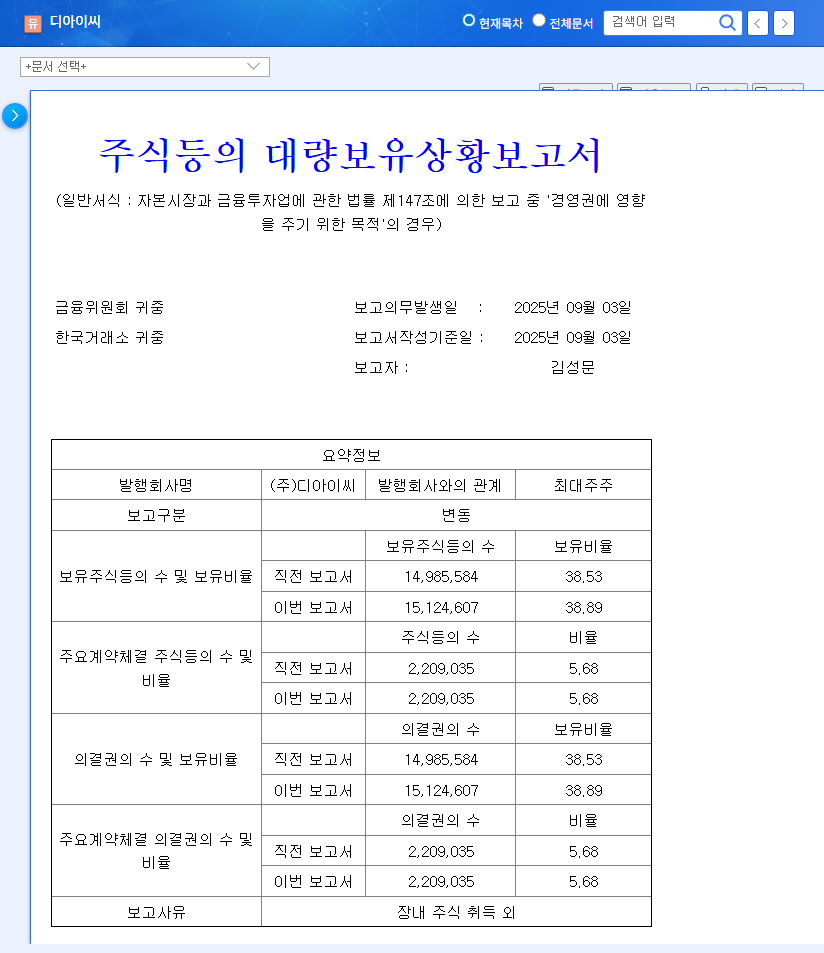
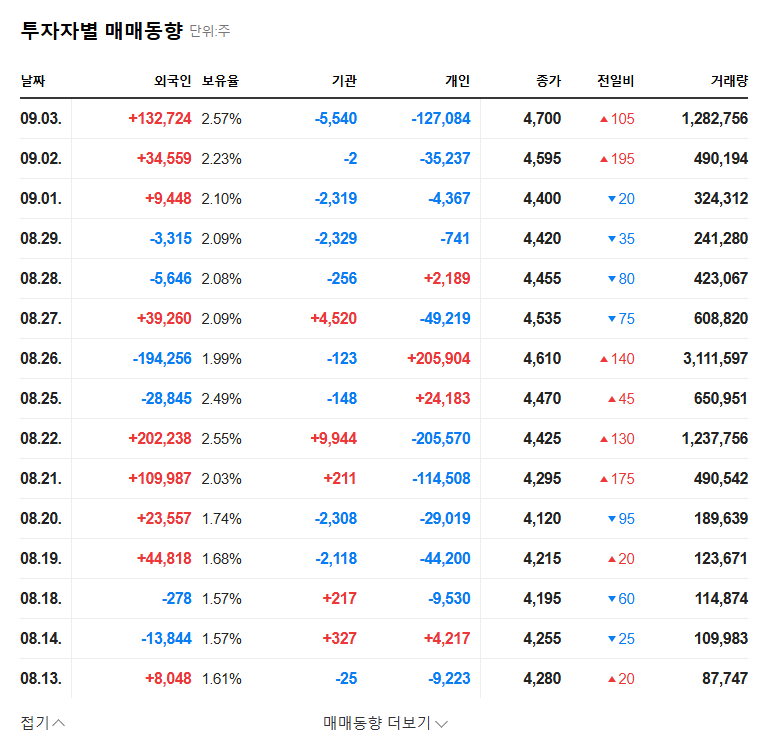
    On November 12, 2025, a significant disclosure captured the market’s attention. According to the Official Disclosure filed with DART, major shareholder Kim Seong-moon’s ownership stake in DAE-IL Corporation decreased from 38.89% to 35.68%. While the stated purpose for holding the shares remains ‘management influence,’ the sale itself raises questions. A reduction in stake by a key insider, especially when timed with poor financial performance, is often interpreted by investors as a lack of confidence in the company’s near-term prospects. This major shareholder sale, involving related parties like DAE-IL Innovate Co., Ltd., has understandably created downward pressure on the stock.

    Decoding the Q3 2025 Performance Slump

    The shareholder sale appears to be directly linked to the company’s deteriorating fundamentals in the third quarter of 2025. While top-line growth seems healthy, the bottom line tells a different, more concerning story.

    The Paradox: Revenue Growth vs. Profitability Collapse

    DAE-IL Corporation reported a consolidated revenue of KRW 588.5 billion, a respectable 10.3% increase year-on-year, driven primarily by its automotive components sector. However, this growth was overshadowed by a severe decline in profitability.

    Operating profit plummeted to KRW 21.3 billion, a staggering 36.1% decrease compared to the same period last year. This resulted in the operating profit margin shrinking to just 3.62%, a drop of 2.25 percentage points.

    This profitability crisis is attributed to a combination of external and internal pressures, including rising raw material prices, unfavorable exchange rate fluctuations, and increased capital expenditures for new vehicle models and the crucial transition to eco-friendly vehicle components.

    Key Financial Health Indicators

    • Assets & Liabilities: Both total assets (KRW 728.9 billion) and liabilities (KRW 551.8 billion) saw a slight increase, mainly due to a rise in inventory and borrowings, suggesting potential financial strain.
    • Cash Flow: Operating cash flow decreased to KRW 36.7 billion, with significant cash being used for investments in tangible assets, highlighting the heavy cost of future-proofing the business.
    • Risk Exposure: The company faces notable foreign exchange risk (USD, JPY, EUR) and interest rate risk from its variable-rate borrowings. You can learn more about managing such risks from authoritative sources like leading financial publications.

    Future Outlook: The EV Promise vs. Market Headwinds

    The long-term investment strategy for DAE-IL Corporation hinges on its ability to navigate the transition to electric vehicles (EVs) while surviving current macroeconomic pressures. The company is heavily investing in future growth drivers like reducers, Shift-by-Wire (SBW) systems, and e-Axles. This forward-looking approach is essential for long-term survival in the automotive industry. However, these investments are costly and are currently weighing down profitability.

    The global trend toward eco-friendly vehicles is a massive tailwind, but it’s countered by the headwinds of a potential global economic slowdown, volatile raw material costs, and currency fluctuations. For investors, this creates a classic battle between short-term pain and long-term gain. For more on this sector, check out our complete guide to automotive components stocks.

    Conclusion: An Investment Strategy for DAE-IL Corporation Stock

    Given the confluence of declining profitability and a major insider sale, a conservative and cautious approach to DAE-IL Corporation stock is warranted. The negative signals are likely to suppress investor sentiment and exert downward pressure on the share price in the short to medium term. The uncertainty around management’s confidence further clouds the outlook.

    Investment Opinion: Sell / Against Holding.

    Before considering an investment, it is crucial to wait for tangible signs of a turnaround. This includes seeing a clear recovery in profit margins and concrete results from the company’s investments in the eco-friendly vehicle business.

    Key Investor Precautions

    • Monitor Profitability: Watch future earnings reports closely for any signs of margin improvement.
    • Track Shareholder Activity: Keep an eye out for any further changes in the stakes of major shareholders.
    • Analyze Macro Trends: Pay attention to exchange rates and commodity prices, as they have a direct impact on the company’s performance.
    (092200) DAE-IL Corporation Stock (092200): Shareholder Sale & Q3 Slump Analysis 관련 이미지
    (092200) DAE-IL Corporation Stock (092200): Shareholder Sale & Q3 Slump Analysis 관련 이미지
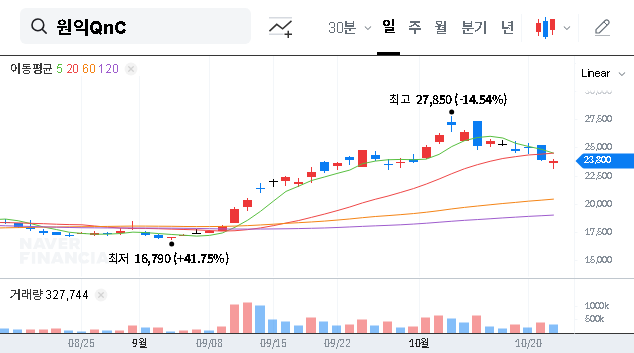
  • (074600) WONIK QnC Earnings Analysis (Q3 2025): Profit Plummets 61% – A Sell Signal for Investors?

    (074600) WONIK QnC Earnings Analysis (Q3 2025): Profit Plummets 61% – A Sell Signal for Investors?

    The latest financial disclosure from WONIK QnC, a key player in the semiconductor components sector, has sent shockwaves through the investment community. The company’s preliminary earnings for the third quarter of 2025 revealed a dramatic and unexpected plunge in profitability. While revenue figures held relatively steady, the core metric of operating profit missed market consensus by a staggering 61%, raising urgent questions about the company’s financial health and future prospects. This report provides a comprehensive investment analysis of the situation, dissecting the causes of this performance and outlining a strategic approach for investors navigating this uncertainty.

    The sheer scale of the operating profit miss suggests deep-seated issues that go beyond a single bad quarter, warranting a thorough reassessment of any investment thesis related to WONIK QnC stock.

    Deconstructing the Q3 2025 Earnings Shock

    On November 11, 2025, WONIK QnC released its preliminary consolidated financial results, which fell alarmingly short of expectations. The full details can be reviewed in the Official Disclosure (DART). Here are the key figures that every investor needs to understand:

    • Revenue: KRW 230.3 billion, a 3% miss compared to the market estimate of KRW 236.9 billion.
    • Operating Profit: KRW 8 billion, a catastrophic 61% plunge from the market estimate of KRW 20.3 billion.
    • Net Income: KRW 6.5 billion.

    While the slight revenue dip is a concern, it is the collapse in operating profit that serves as the primary red flag. This indicates that even as the company generates sales, its ability to convert that revenue into actual profit has severely deteriorated, signaling fundamental problems within its operations.

    Core Reasons for the Profitability Collapse in WONIK QnC Earnings

    The dramatic underperformance is not due to a single factor but a confluence of persistent issues that have reached a critical point. A deeper dive reveals several troubling trends for the semiconductor components manufacturer.

    Steep Decline in Operating Profit Margin

    The company’s operating profit margin tells a story of consistent erosion. Dropping from a healthy 16.21% in 2022 to a preliminary Q3 2025 figure of just 3.47%, this decline points to severe structural problems. These could include rising manufacturing costs, intense pricing pressure from competitors, or significant decreases in production efficiency. A favorable KRW/USD exchange rate, which should have boosted an exporter like WONIK QnC, was completely nullified by these powerful headwinds.

    Competitive Pressures and Market Headwinds

    The global semiconductor market is fiercely competitive. While the original report focuses on internal issues, it’s crucial to consider the external landscape. According to a recent industry analysis, while long-term demand is robust, short-term cyclical downturns and supply chain disruptions can squeeze margins for component suppliers. WONIK QnC’s results suggest it may be losing ground to more efficient or better-positioned competitors.

    Underperforming Subsidiaries

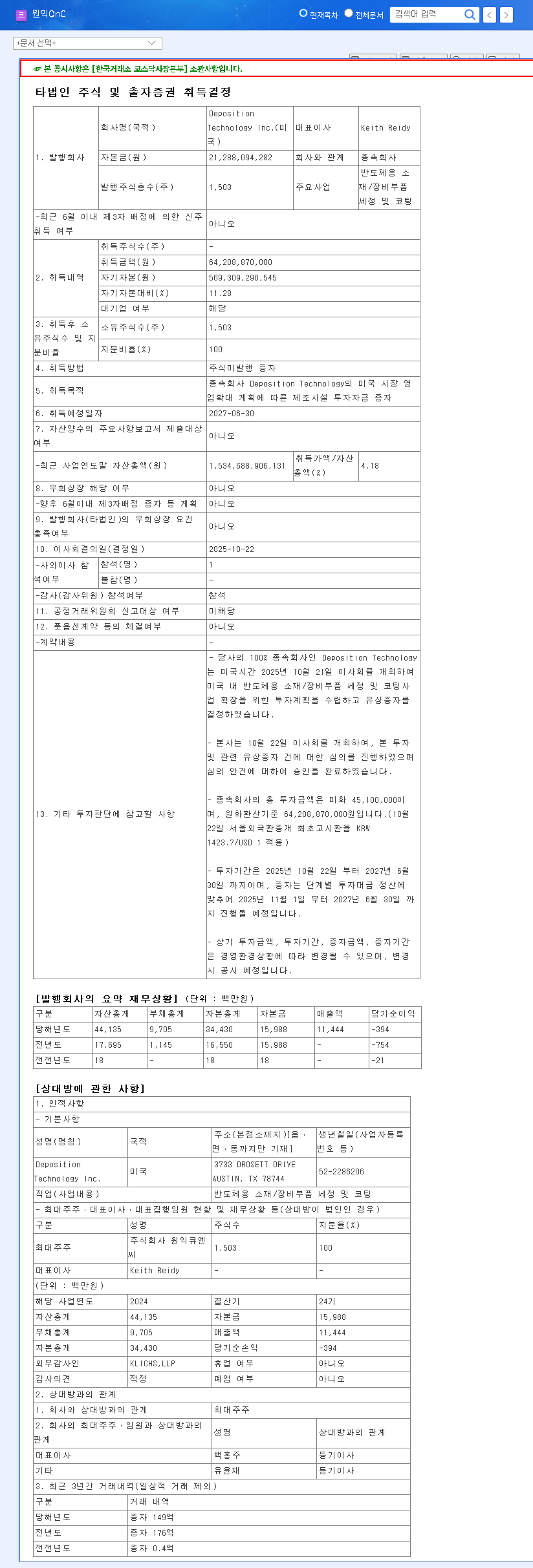
    The consolidated financial statements are being dragged down by operational losses at overseas subsidiaries, including those under MT Holding and Deposition Technology Inc. in the US. This suggests that the company’s diversification and expansion strategies are not currently yielding positive returns and are instead becoming a significant financial drain.

    Investor Action Plan: Navigating the Uncertainty of WONIK QnC Stock

    Given the severity of the Q3 results and the underlying issues, a cautious and defensive stance is warranted. The market is likely to react negatively, leading to short-term downward pressure on the WONIK QnC stock price.

    Investment Opinion: Sell / Reassess Position

    The recommendation is to sell existing positions or avoid initiating new ones until there is clear, tangible evidence of a turnaround. The primary reasons for this stance are:

    • Erosion of Core Earnings Power: The 61% profit miss is not a minor fluctuation; it questions the company’s fundamental ability to generate profit.
    • Persistent Performance Volatility: The recovery seen in early 2025 has been wiped out, demonstrating a lack of stability and resilience.
    • High Uncertainty: Without a clear explanation from management and a credible recovery plan, the outlook for Q4 and 2026 is shrouded in doubt.

    Recommendations for Current and Prospective Investors

    For those considering an investment, it is crucial to remain on the sidelines. For current shareholders, reducing exposure is a prudent risk management strategy. Before re-evaluating WONIK QnC as a viable investment, investors should seek clarity on several fronts. For more information, you can read our guide on analyzing company fundamentals. Monitor upcoming earnings calls for management’s detailed analysis of the cost structure issues and any announced operational efficiency initiatives. A sustained improvement in operating margins for at least two consecutive quarters would be the first sign of a potential recovery.

    (074600) WONIK QnC Earnings Analysis (Q3 2025): Profit Plummets 61% - A Sell Signal for Investors? 관련 이미지
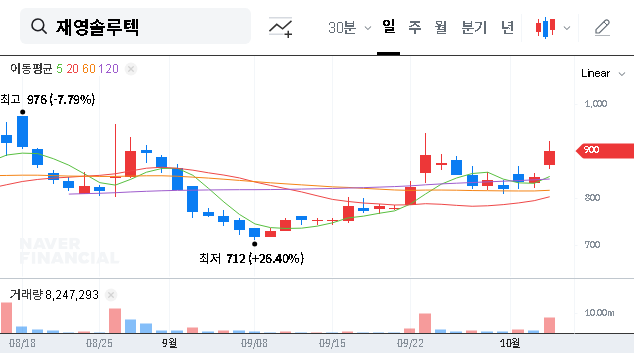
  • (049630) JaeYoung Solutec (049630) Share Sale: Deep-Dive Stock Analysis for Investors

    (049630) JaeYoung Solutec (049630) Share Sale: Deep-Dive Stock Analysis for Investors

    A significant development concerning JaeYoung Solutec (049630) has captured the market’s attention, raising critical questions for current and potential investors. The company’s representative reporter, Kim Dae-yong, has executed a substantial sale of his shares. This action, especially when juxtaposed with the company’s recent financial performance, could be interpreted as a major red flag. Is this a simple portfolio adjustment, or a concerning signal from an insider about the fundamental health of JaeYoung Solutec (049630)? This comprehensive analysis will explore the implications of this event, dissect the company’s H1 2025 earnings, and provide a clear action plan for investors.

    The Details of the JaeYoung Solutec Share Sale

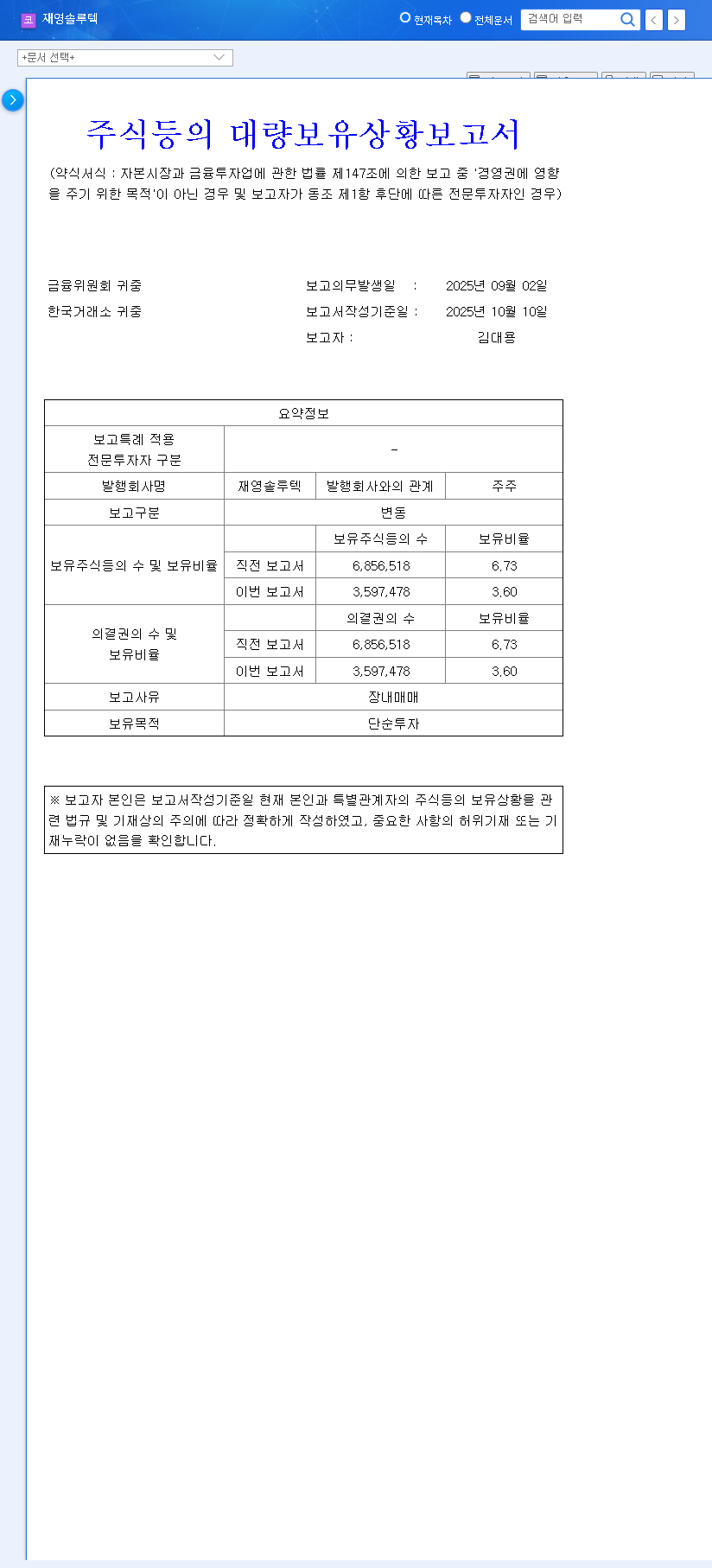
    On October 11, 2025, a mandatory disclosure sent ripples through the investment community. According to the filing, Kim Dae-yong’s ownership stake in JaeYoung Solutec (049630) was reduced from 6.73% to just 3.60%. This represents a significant offloading of 3.13 percentage points, executed via a direct market sale. The official filing can be viewed here: Official Disclosure (DART).

    For a company with a market capitalization of approximately KRW 91.6 billion, a single insider selling over 3% of the company’s total shares is a highly material event that cannot be overlooked. Such actions often precede periods of increased stock volatility and negative investor sentiment.

    This type of transaction is often referred to as insider selling, and while not illegal, it is closely watched by analysts. When high-level executives sell large portions of their holdings, it can signal a lack of confidence in the company’s future prospects, prompting a re-evaluation by the broader market.

    Financial Health: A Look Under the Hood (H1 2025)

    The timing of the JaeYoung Solutec share sale is particularly alarming when viewed in the context of its recent financial report. The H1 2025 results paint a picture of a company struggling with profitability, despite top-line growth. For a deeper understanding of financial statements, you can review our guide to fundamental analysis.

    Deteriorating Profitability & Balance Sheet Concerns

    While revenue saw a healthy increase of 17.7% year-on-year to KRW 71.7 billion, the story ends there. The costs associated with generating that revenue ballooned, leading to a severe profitability crisis.

    • Operating Income Collapse: Operating income plummeted to a mere KRW 270.45 million, a drastic reduction from the previous year, crushed by higher cost of goods sold and administrative expenses.
    • Net Loss Conversion: The company swung from a net profit of KRW 5.52 billion to a jarring net loss of KRW 2.95 billion. This indicates severe issues in managing expenses below the operating line.
    • Weakening Financial Position: Total assets decreased by 8.5%, driven by a reduction in cash equivalents. Meanwhile, total equity also decreased due to an increased accumulated deficit, a major red flag for long-term financial stability.

    Core Business vs. Financial Reality

    JaeYoung Solutec operates in a high-tech, promising sector. The company is a specialist in manufacturing actuators (OIS, AF, VCM), which are critical components for modern smartphone cameras. Its nano-optics segment is its sole revenue driver, and it holds a strong competitive advantage as the only domestic Korean producer capable of manufacturing a full lineup of actuator products. This aligns well with the technological trend toward more advanced smartphone cameras.

    However, this operational strength is completely overshadowed by the grim financial results. A strong business model is meaningless if it cannot translate to profitability and a healthy balance sheet. The current situation suggests that despite its market position, the company is failing to manage costs and generate shareholder value.

    Investor Action Plan & Stock Outlook

    The combination of a major insider share sale and deteriorating fundamentals creates a powerfully negative signal for JaeYoung Solutec (049630). The market is likely to react negatively for several reasons:

    • Loss of Confidence: The CEO’s sale implies a potential lack of faith in the company’s ability to turn its performance around.
    • Supply Pressure: A 3.13% stake hitting the open market creates significant supply that can depress the stock price in the short to medium term.
    • Heightened Scrutiny: Investors will now look at future earnings reports with extreme skepticism, punishing any further signs of weakness.

    Given these factors, our current recommendation for JaeYoung Solutec (049630) is a ‘SELL’. Investors should consider liquidating their positions to mitigate further risk. For those considering an entry, it is prudent to wait for multiple quarters of confirmed financial improvement and stability before reassessing.

    Frequently Asked Questions

    Q1: What was the exact scale of the JaeYoung Solutec share sale?

    A1: Representative reporter Kim Dae-yong sold a 3.13 percentage point stake, reducing his total holdings from 6.73% down to 3.60% through a direct market sale.

    Q2: How bad were JaeYoung Solutec’s recent earnings?

    A2: In H1 2025, despite revenue growth, operating income collapsed, and the company reported a net loss of KRW 2.95 billion, signaling a severe deterioration in profitability and financial health.

    Q3: Why is a major shareholder selling shares a negative sign?

    A3: A large sale by a top insider can signal a lack of confidence in the company’s future. It also creates excess supply in the market, which can put significant downward pressure on the stock price.

    Q4: What is the current investment recommendation for 049630 stock?

    A4: Due to the combination of poor financial performance and the negative signal from the insider share sale, the current recommendation is a ‘SELL’ to avoid potential further losses.

    (049630) JaeYoung Solutec (049630) Share Sale: Deep-Dive Stock Analysis for Investors 관련 이미지
  • UTI (179900) Stock Forecast: Focus Asset Management Reduces Stake, Is it a Sell Signal?


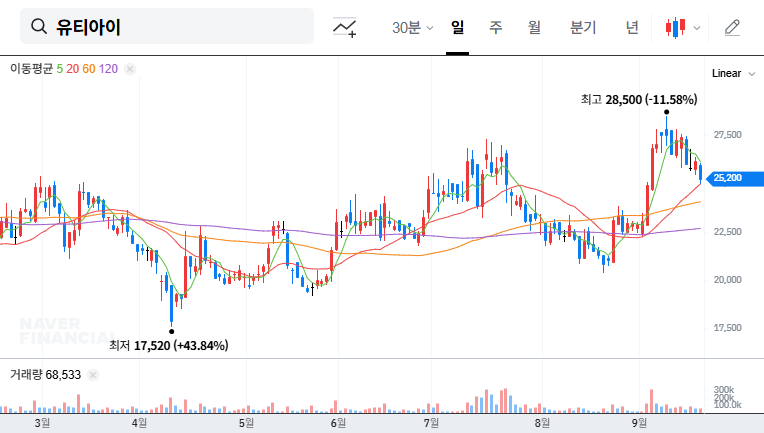
    UTI (179900) Stock Forecast: Focus Asset Management Reduces Stake, Is it a Sell Signal? 대표 차트 이미지


    What Happened? Focus Asset Management Reduces Stake in UTI

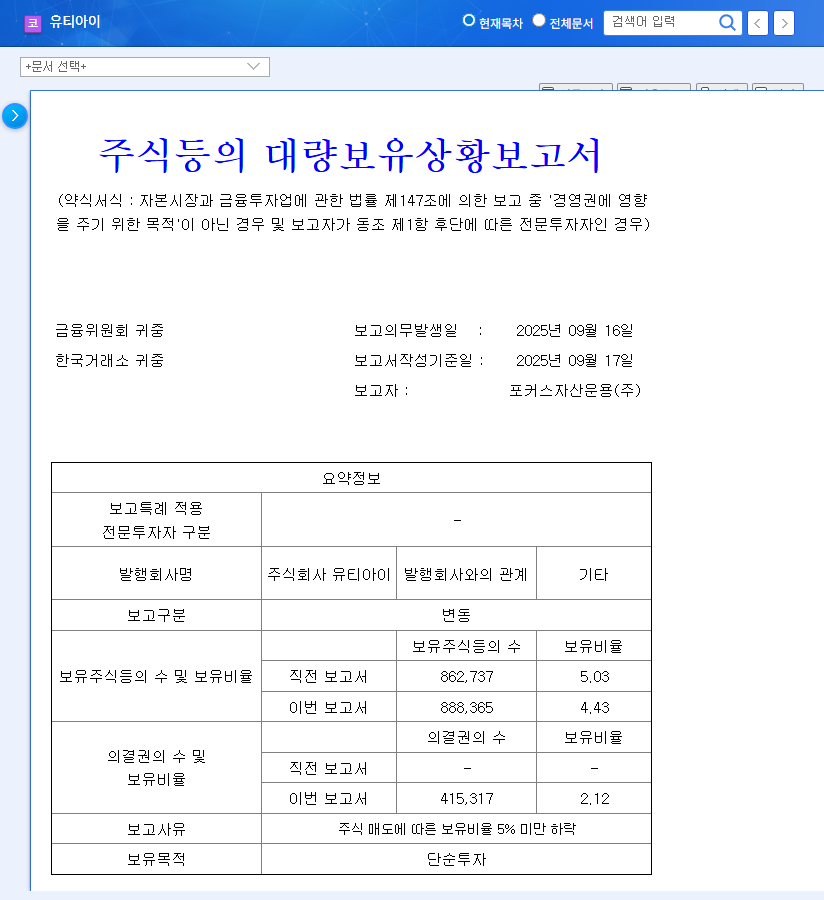
    On September 17, 2025, Focus Asset Management announced a decrease in its stake in UTI from 5.03% to 4.43%. Although it was reported as a change for simple investment purposes, investors are paying attention to its background and the impact it will have on future stock prices.

    How are UTI’s Fundamentals? Risk Factors vs. Growth Potential

    UTI is currently facing a challenging business environment. Declining sales trends, continuous operating losses, high debt ratios, and concerns about capital erosion are unsettling factors for investors. However, the growth potential of new businesses such as foldable glass and AR/VR components, and efforts in technology development can be positive factors.

    • Negative Factors: Declining sales, continuous operating losses, high financial burden, concerns about capital erosion, burden of new business investment
    • Positive Factors: Growth potential of new businesses, technology development efforts, track record of attracting institutional investment

    So, What Will Happen to the Stock Price? Short-term Downward Pressure vs. Long-term Growth Potential

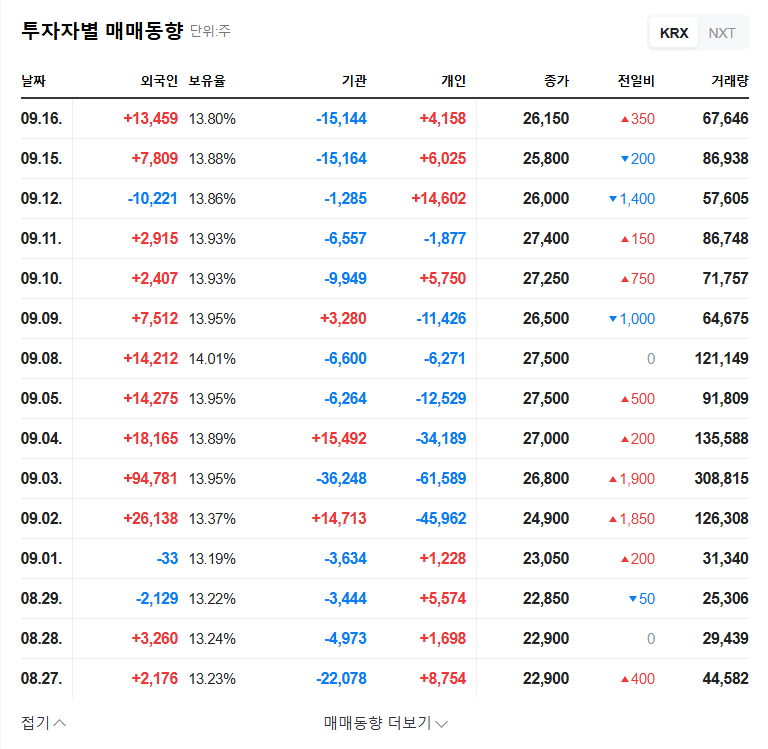
    Focus Asset Management’s stake reduction may put downward pressure on the stock price in the short term, but the direct impact on fundamentals is expected to be limited. However, the possibility of a negative impact on investor sentiment cannot be ruled out. In the long term, the performance of new businesses and improvement in fundamentals will determine the direction of the stock price.

    What Should Investors Do? Conservative Approach, Continuous Monitoring

    A conservative approach is necessary when investing in UTI. Investors should continuously monitor key points such as the performance of new businesses, the timing of operating profit turnaround, and improvements in financial structure, while adjusting their investment strategies. It’s crucial to focus on long-term growth potential rather than short-term stock price fluctuations.


    FAQ

    Is Focus Asset Management’s stake reduction a sell signal?

    Although it’s known as a stake change for simple investment purposes, it can have a negative impact on investor sentiment. However, it is difficult to conclude that this is a sell signal.

    What is the future stock price outlook for UTI?

    Downward pressure is expected in the short term, but the direction of the stock price will be determined by the performance of new businesses and improvement in fundamentals in the long run.

    How should I invest in UTI?

    A conservative approach is necessary. Continuously monitor the performance of new businesses, the timing of operating profit turnaround, and improvements in financial structure, and adjust your investment strategy accordingly.


    UTI (179900) Stock Forecast: Focus Asset Management Reduces Stake, Is it a Sell Signal? 관련 이미지
    UTI (179900) Stock Forecast: Focus Asset Management Reduces Stake, Is it a Sell Signal? 관련 이미지


  • Newkizon Stock Forecast: KB Securities Sells 3% Stake – Opportunity or Crisis?


    Newkizon Stock Forecast: KB Securities Sells 3% Stake - Opportunity or Crisis? 대표 차트 이미지


    Why Did KB Securities Sell Newkizon Stock? (Event Analysis)

    KB Securities reduced its stake in Newkizon from 5.21% to 2.27%, a decrease of 3.04%, due to ‘simple investment purposes.’ The selloff occurred through on-market trades between August 13th and 18th, 2025, with a significant portion, over 180,000 shares, sold on August 13th. This could lead to short-term downward pressure on the stock price.

    Is Newkizon’s Financial Health Sound? (Company Analysis)

    Newkizon has growth potential, thanks to its diversified brand portfolio and a strong online sales network. While showing steady revenue growth, the company recorded a net loss in the first half of 2025 due to merger costs and increased marketing investments. However, its KOSDAQ listing has eased funding access, and with plans for international expansion, the long-term growth outlook remains positive.

    What’s the Outlook for Newkizon’s Stock Price? (Stock Forecast)

    In the short term, KB Securities’ selloff and the company’s weak first-half performance could increase stock price volatility. However, in the long term, improvements in fundamentals and success in international expansion could drive stock price appreciation. The current low valuation, with a P/E ratio around 3, might present an attractive investment opportunity.

    What Should Investors Do? (Investment Strategy)

    • Short-term investors: Proceed with caution, considering the possibility of further price declines.
    • Long-term investors: Monitor second-half earnings improvements and international expansion progress, looking for opportunities to buy at a lower price.

    Key Points to Watch

    • Absorption of KB Securities’ sold shares
    • Improvement in second-half 2025 earnings
    • Success of international expansion


    Frequently Asked Questions (FAQ)

    Will KB Securities’ sale of Newkizon shares negatively impact the stock price?

    It may create downward pressure in the short term, but it’s not expected to significantly impact long-term fundamentals.

    When is a good time to invest in Newkizon?

    Short-term investors should proceed with caution, while long-term investors could consider buying at a lower price after observing second-half earnings and international expansion progress.

    What is the outlook for Newkizon’s future growth?

    Positive growth is expected, considering the company’s diverse brand portfolio, online channel competitiveness, and international expansion plans.


    Newkizon Stock Forecast: KB Securities Sells 3% Stake - Opportunity or Crisis? 관련 이미지
    Newkizon Stock Forecast: KB Securities Sells 3% Stake - Opportunity or Crisis? 관련 이미지


  • TFE Stock Forecast: IBK Capital Divests Stake, What Should Investors Do?

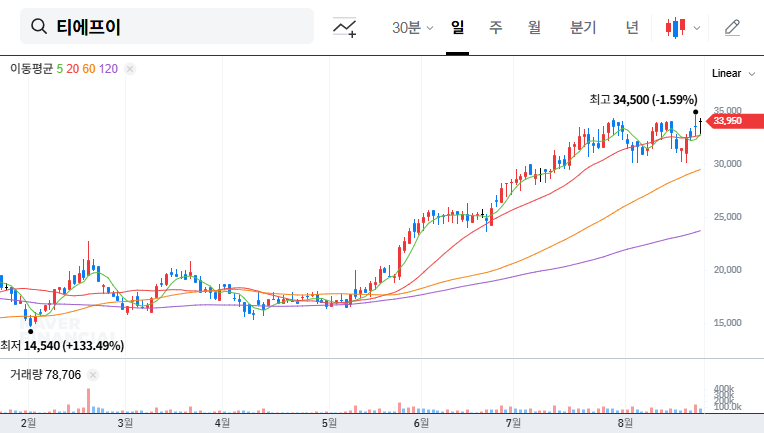
    TFE Stock Forecast: IBK Capital Divests Stake, What Should Investors Do? 대표 차트 이미지

    What Happened?

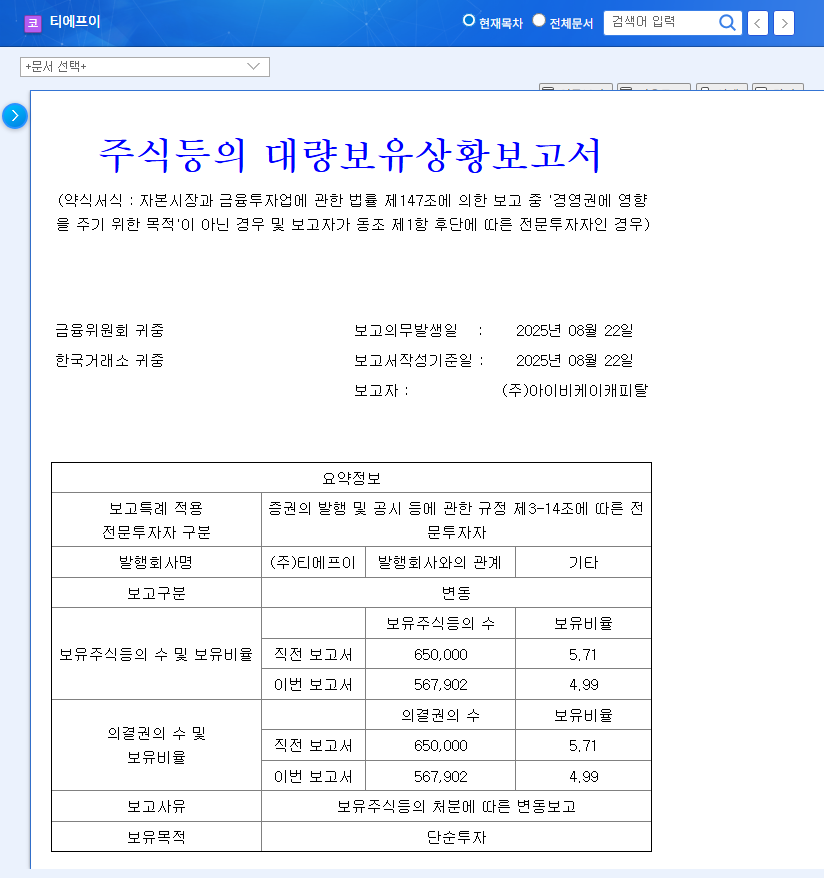
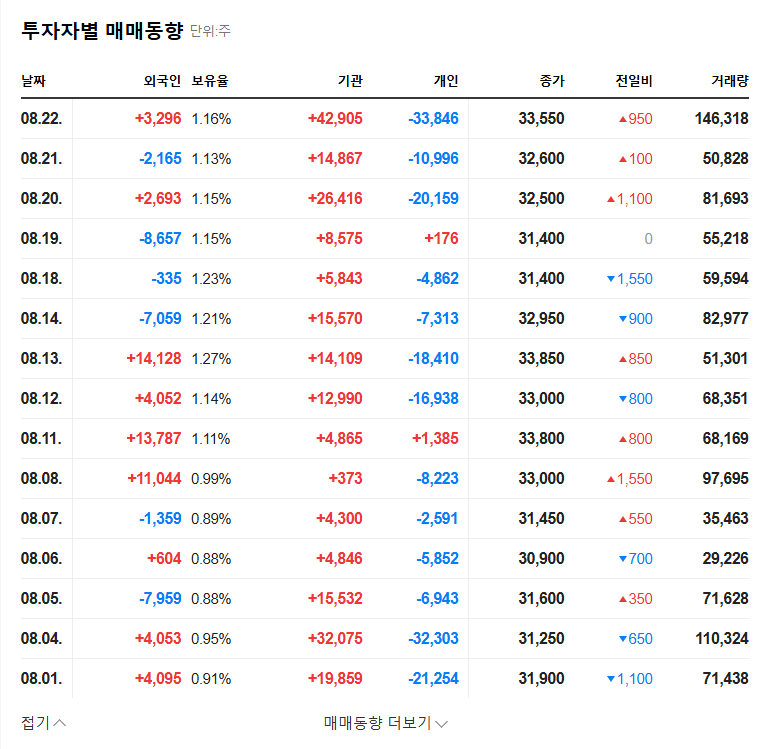
    On August 25, 2025, IBK Capital sold 82,098 shares of TFE through Petriko-IBKC No. 1 New Technology Business Investment Association. This reduced IBK Capital’s stake in TFE from 5.71% to 4.99%. As the shares were held for simple investment purposes, the market is interpreting this move in various ways.

    Why Does IBK Capital’s Divestment Matter?

    The actions of institutional investors like IBK Capital can significantly impact the market. This divestment could put downward pressure on TFE’s stock price in the short term. It’s also important to be mindful of the potential negative impact on investor sentiment. However, the key takeaway is that this sale doesn’t directly affect TFE’s underlying fundamentals.

    How Are TFE’s Fundamentals?

    TFE experienced a decline in earnings in the first half of 2025. Sales decreased by 36.1% year-on-year, and operating profit and net income also fell by 56.8% and 44.4%, respectively. However, the company is actively investing in new businesses, such as advanced packaging process heat dissipation solutions and high-performance memory testing, and its long-term growth potential remains valid. A new facility investment plan worth KRW 14.3 billion is also underway.

    What Should Investors Do?

    • Short-term investors: Be aware of the possibility of further selling by IBK Capital and the market’s short-term volatility.
    • Long-term investors: Closely monitor changes in TFE’s fundamentals, the performance of new businesses, and the recovery of major clients’ earnings, and develop an investment strategy from a long-term perspective.

    The potential dilution of shares due to convertible bond issuance, the semiconductor industry cycle, and changes in the macroeconomic environment are also important factors to consider when investing.

    Frequently Asked Questions

    How will IBK Capital’s divestment affect TFE?

    It could negatively impact the stock price in the short term, but it doesn’t directly affect the company’s fundamentals.

    What is the outlook for TFE?

    It depends on the semiconductor market, the performance of major clients, and the success of new businesses, but the long-term growth potential remains.

    What should investors be cautious about?

    Consider the possibility of further selling by IBK Capital, earnings improvements, the impact of convertible bond issuance, and changes in the macroeconomic environment.

    TFE Stock Forecast: IBK Capital Divests Stake, What Should Investors Do? 관련 이미지
    TFE Stock Forecast: IBK Capital Divests Stake, What Should Investors Do? 관련 이미지
  • Samyoung ENC (065570): Strong Interim Earnings, But Investor Beware! Deep Dive into Underlying Risks

    1. What Happened? Interim Earnings and Amended Business Report

    Samyoung ENC reported strong interim earnings for 2025, with revenue of ₩8.1 billion (up 72% YoY), operating profit of ₩1.4 billion (up 208% YoY), and net income of ₩1.1 billion (up 57% YoY), significantly exceeding market expectations. However, an amended business report revealed ongoing management disputes, changes to articles of incorporation, and past shareholder meeting resolutions that failed to pass.

    2. Why Does It Matter? Positive vs. Negative Factors

    Positive Factors: The company achieved a surprising turnaround after a period of decline since Q3 2024. Strong sales of defense equipment appear to be the primary driver.

    • However, these positive factors are dwarfed by the negative factors outlined below.

    Negative Factors: Serious financial deterioration, ongoing management disputes, and weakness in core businesses remain unresolved.

    • Financial Distress: Capital erosion, high debt ratios, and a going concern uncertainty opinion from auditors raise serious concerns about the company’s survival.
    • Management Instability: Disputes over management changes, director appointments, and weak internal accounting controls threaten management stability and increase investment risks.
    • Business Weakness: Declining sales in core marine communication and navigation equipment indicate a weakening fundamental business.

    3. What Should You Do? Investment Recommendation and Outlook

    Investment Recommendation: Sell

    Despite the positive interim results, the serious financial distress, management instability, and legal risks associated with Samyoung ENC present a high level of investment risk. Investors are advised to hold off on investing or consider selling existing holdings. The possibility of delisting and other significant events should be closely monitored.

    4. Investor Action Plan

    Investors in Samyoung ENC should consider the following action plan:

    • Current Holders: Seriously consider selling, given the current share price and the significant risks.
    • Potential Investors: Avoid investing and closely monitor future company disclosures and news.

    Frequently Asked Questions

    How did Samyoung ENC perform in the first half of 2025?

    The company reported revenue of ₩8.1 billion, operating profit of ₩1.4 billion, and net income of ₩1.1 billion, all showing year-over-year growth. However, the sustainability of this performance is questionable.

    Is it a good time to invest in Samyoung ENC?

    Currently, Samyoung ENC faces serious financial distress, management disputes, and legal risks, posing a high level of investment risk. Extreme caution is advised, and consulting with a financial advisor is recommended.

    What are the biggest risks associated with Samyoung ENC?

    The biggest risks include severe financial distress, including a going concern uncertainty opinion, capital erosion, and high debt ratios, as well as management disputes and legal risks related to embezzlement and breach of trust allegations.

  • KC Cottrell Q2 Earnings Shock: Investor Alert, Sell Recommendation Issued

    KC Cottrell’s Earnings Shock: What Happened?

    KC Cottrell reported sales of ₩53 billion, an operating loss of ₩400 million, and a net loss of ₩8.6 billion for Q2 2025. While sales met market expectations, operating and net income fell far short.

    Analyzing the Decline: Why Did This Happen?

    The decline in sales is primarily attributed to sluggish new orders and a challenging business environment compared to the same period last year. The operating loss is a result of not only decreased sales but also increased selling, general and administrative expenses, and higher cost of sales. The net loss widened due to non-operating losses and increased financial expenses.

    A Bleak Outlook: What’s Next?

    The worsening macroeconomic environment, including a global economic slowdown, inflationary pressures, and energy policy changes, negatively impacts KC Cottrell’s business environment. Addressing fundamental issues like the disclaimer of opinion and uncertainty surrounding going concern assumptions is also crucial. Uncertainties related to overseas projects, including accounts receivable and lawsuits, further contribute to the risks.

    Action Plan for Investors: What Should You Do?

    KC Cottrell’s current situation demands extreme caution from investors. Considering the poor Q2 performance, financial instability, and uncertainties surrounding overseas projects, the investment recommendation is ‘Sell’.

    Frequently Asked Questions

    Why are KC Cottrell’s Q2 earnings important?

    These earnings are a key indicator of the company’s worsening financial health and the uncertainty surrounding its future growth.

    Should I invest in KC Cottrell?

    Extreme caution is advised at this time, and experts recommend selling the stock.

    What is KC Cottrell’s main business?

    KC Cottrell supplies and manages air pollution control equipment.

  • Ananti (025980) Q2 Earnings Shock: Revenue Beats Estimates, But Profits Plunge into the Red

    1. What Happened? Ananti’s Q2 Earnings Breakdown

    Ananti announced its Q2 2025 earnings on August 14, 2025. Revenue came in at 618 billion KRW, exceeding expectations. However, the company reported an operating loss of 25 billion KRW and a net loss of 294 billion KRW.

    2. Why the Disappointing Results? Unpacking the Underperformance

    Platform Development Struggles: The platform development (sales & lease) segment continues to struggle due to a slowdown in the construction market and high interest rates.
    Rising Costs in Platform Operations: While the platform operations segment saw a slight increase in revenue, rising operating costs, including marketing and labor expenses, eroded profitability.
    Mounting Financial Burden: Issuance of convertible bonds and other factors have contributed to increasing debt and worsening liquidity ratios, impacting the company’s financial health.

    3. What’s Next? Investment Strategy

    The current investment recommendation for Ananti is ‘Sell’. Considering the significant decline in profitability, deteriorating financial health, missed market expectations, and macroeconomic uncertainties, the short-term investment appeal is low.

    4. Investor Action Plan

    Investors should closely monitor Ananti’s future earnings performance and management’s efforts to improve the business. Pay particular attention to the performance of the platform development segment and the company’s plans to improve its financial structure.

    Frequently Asked Questions

    What are the main reasons for Ananti’s poor Q2 performance?

    The primary reasons are the struggles in the platform development segment and rising costs in the platform operations segment. External factors like the construction market slowdown and high interest rates also played a role.

    What is the investment strategy for Ananti?

    The current recommendation is ‘Sell’. The decline in profitability and deteriorating financial health make the stock unattractive in the short term.

    What should investors watch for?

    Key things to monitor include future earnings performance, management’s restructuring efforts, improvements in the platform development segment, and plans to strengthen the financial structure.

  • Purunsongnamu (057880) Delisting Crisis: A Critical Analysis of the Impact on Investors

    What Happened? Purunsongnamu’s Rehabilitation and Delisting

    Purunsongnamu entered rehabilitation proceedings on June 24, 2025, and received a delisting notice on June 26, 2025. This poses a significant threat to the company’s continued existence.

    Why Did This Happen? Purunsongnamu’s Deteriorating Fundamentals

    Purunsongnamu’s core businesses, senior care and bio, are both operating at a loss, struggling to generate profit. The company’s financial health is extremely vulnerable, marked by deepening capital impairment, surging debt-to-equity ratio, and an audit disclaimer. The significant increase in bad debt write-offs further points to uncertainty in receivables collection, a critical warning sign about the company’s financial stability.

    What Does This Mean? Impact on Investors

    The rehabilitation proceedings and delisting decision have severe implications for investors. Trading of the stock will be halted, making it difficult to recover investments, and raising new capital will become virtually impossible. The company’s credibility and value will plummet, potentially leading to substantial losses for investors.

    Investor Action Plan

    Investing in Purunsongnamu is extremely risky. Existing investors should seriously consider the potential for further stock value decline and delisting. New investment should be avoided entirely.

    Frequently Asked Questions

    What is the current stock price of Purunsongnamu?

    Trading of Purunsongnamu’s stock has been halted due to the delisting decision.

    What happens if I invest in Purunsongnamu now?

    Investing in Purunsongnamu is currently extremely risky, with a high probability of losing your investment. It is advisable to avoid investing.

    Is there a chance Purunsongnamu will recover?

    The chances of recovery are very low. While the company is undergoing rehabilitation proceedings, the severe financial situation and delisting decision make recovery unlikely.