Tag: SCM Lifescience Co.

  • (298060) SCM Lifescience Stock Analysis (298060): Ex-CEO’s Share Sale & Future Outlook

    (298060) SCM Lifescience Stock Analysis (298060): Ex-CEO’s Share Sale & Future Outlook

    Investors in SCM Lifescience (KOSDAQ: 298060), a pioneering biotech company, are closely monitoring recent developments after a significant change in its ownership structure. The disclosure that former CEO Song Ki-ryung has reduced his stake has sent ripples through the market, raising critical questions about the company’s stability and future trajectory. This comprehensive SCM Lifescience analysis will dissect the implications of this event, evaluate the company’s core stem cell technology, scrutinize its financial health, and provide a clear outlook for investors considering the 298060 stock.

    The Catalyst: A Major Shareholding Shift

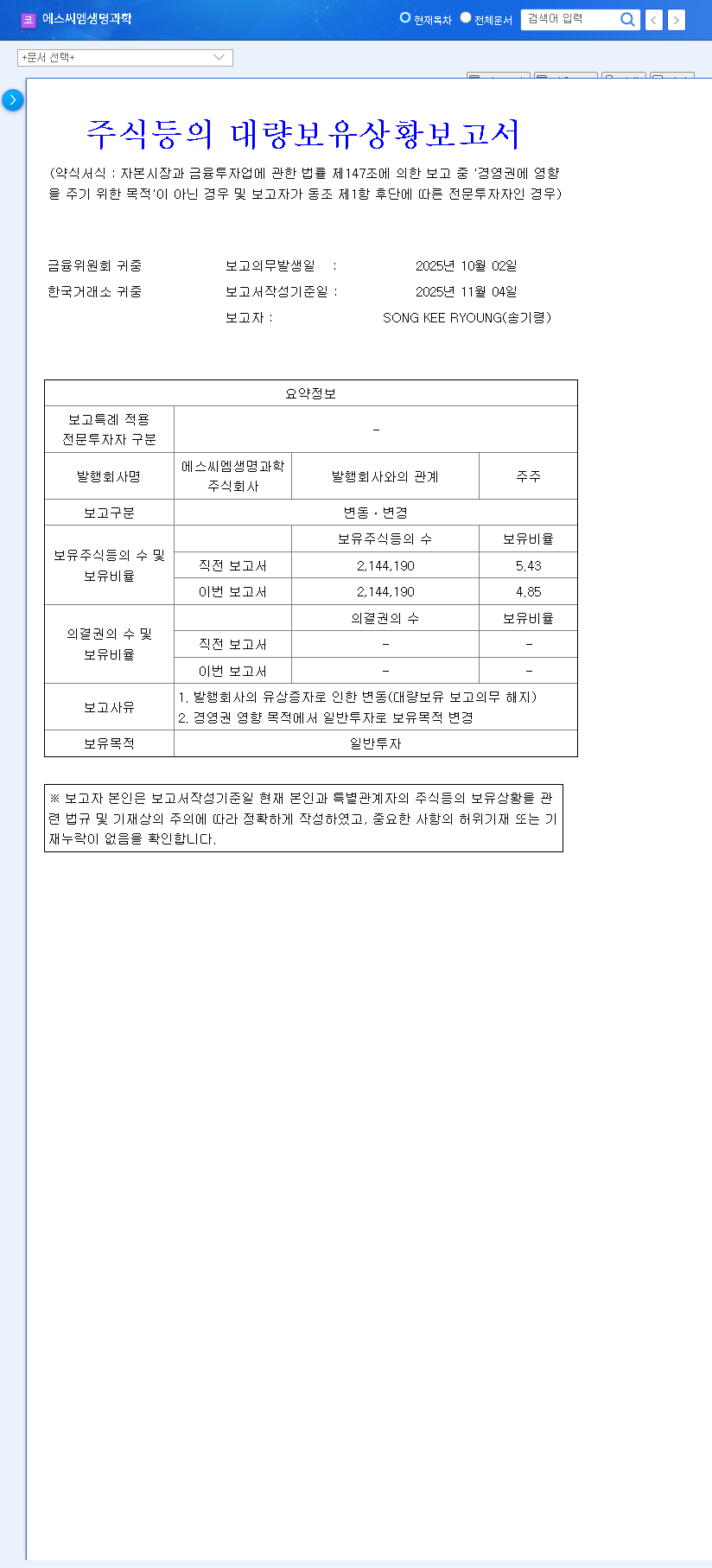
    On November 4, 2025, SCM Lifescience formally announced a notable change in its shareholder registry. Former CEO Song Ki-ryung’s ownership stake decreased from 5.43% to 4.85%. More significantly, the stated purpose of his shareholding shifted from ‘management influence’ to ‘general investment purposes’. This change, detailed in the Official Disclosure on DART, signals a pivotal transition for the company’s leadership dynamics.

    This reduction is primarily attributed to share dilution following a recent rights offering. However, the change in intent is the key takeaway. It suggests the former CEO is stepping back from direct involvement in corporate governance, positioning himself as a passive investor. For the new management team that took the helm in March 2025, this could mean more autonomy. For the market, it introduces a layer of uncertainty and potential for short-term stock volatility.

    The shift from ‘management influence’ to ‘general investment’ is a critical signal. It may grant the new leadership team operational freedom but could also lead to selling pressure on SCM Lifescience stock if the former CEO decides to liquidate further.

    Core Strengths: A Deep Dive into SCM Lifescience’s Technology

    At the heart of SCM Lifescience‘s long-term potential is its proprietary technology. Understanding this is key to any investment thesis. The company’s primary competitive advantage lies in its patented ‘Stratified Isolation Method’ for high-purity stem cell separation and culture. This innovative process allows for the development of potent and consistent cell-based therapies.

    Key Technology and Pipelines

    • Proprietary Method: The ‘Stratified Isolation Method’ forms the foundation of its R&D, promising higher efficacy in its therapeutic candidates.
    • Orphan Drug Designation: Its treatment for chronic graft-versus-host disease (e.g., SCM-CGH) has been designated as an orphan drug, which can lead to faster regulatory review and extended market exclusivity. This is a significant de-risking factor.
    • Business Diversification: Beyond therapeutics, the company has smartly leveraged its expertise to launch ‘IROROO’, a derma-cosmetic brand. This generates early-stage revenue to help fund the capital-intensive R&D, a crucial strategy for a pre-profitability biotech firm. The potential of stem cell technology in regenerative medicine is widely recognized by leading research institutions.

    Financial Health & Risk Analysis

    While the technology is promising, the financial statements reveal significant challenges. As of the first half of 2025, SCM Lifescience is in a high-growth, high-risk phase. The R&D expenditure ratio stands at an aggressive 124.74% of sales, underscoring its commitment to innovation but also its cash burn rate.

    Key Financial Considerations

    • Persistent Losses: The company reported an operating loss of KRW 2.413 billion in H1 2025, contributing to a large accumulated deficit of KRW -178.881 billion. Profitability remains a distant goal.
    • High Debt Load: A debt-to-equity ratio of 230.13% is a major red flag, increasing financial risk, especially in a high-interest-rate environment.
    • Capital Infusion: A recent rights offering raised KRW 16.378 billion, providing a necessary lifeline, but shareholder dilution is the cost. Future fundraising will be critical.
    • Affiliate Issues: The liquidation of its affiliate, CoImmune, could negatively impact asset values and disrupt planned business collaborations, adding another layer of operational risk.

    Investor Outlook & Strategic Path Forward

    For investors, SCM Lifescience stock represents a classic high-risk, high-reward biotech play. The former CEO’s shareholding change is a near-term headwind that could suppress the stock price. However, the company’s long-term value will be determined by its ability to execute on its clinical and commercial goals. For those looking to learn more about this sector, reviewing our guide to investing in biotech stocks can provide valuable context.

    Key Catalysts for Future Growth:

    • Clinical Trial Success: Positive data from its key pipelines, especially SCM-CGH, is the single most important value driver.
    • Licensing & Partnerships: A successful technology transfer or licensing deal with a major pharmaceutical partner would validate its platform and provide non-dilutive funding.
    • Financial Discipline: Demonstrating effective cash management and securing a path to improved financial stability is crucial to rebuilding investor confidence.
    • Derma-Cosmetic Growth: Continued expansion and profitability of the ‘IROROO’ brand can provide a stable revenue base.

    In conclusion, while the recent management and shareholder shifts create short-term noise, disciplined investors should focus on the underlying fundamentals. The success of SCM Lifescience hinges on its scientific progress and the new leadership’s ability to navigate a challenging financial landscape. Careful monitoring of clinical data, partnership news, and quarterly financials is essential before making any investment decisions.
    (298060) SCM Lifescience Stock Analysis (298060): Ex-CEO's Share Sale & Future Outlook 관련 이미지
  • (298060) SCM Lifescience Stock Analysis: New Major Shareholder & Future Outlook

    (298060) SCM Lifescience Stock Analysis: New Major Shareholder & Future Outlook

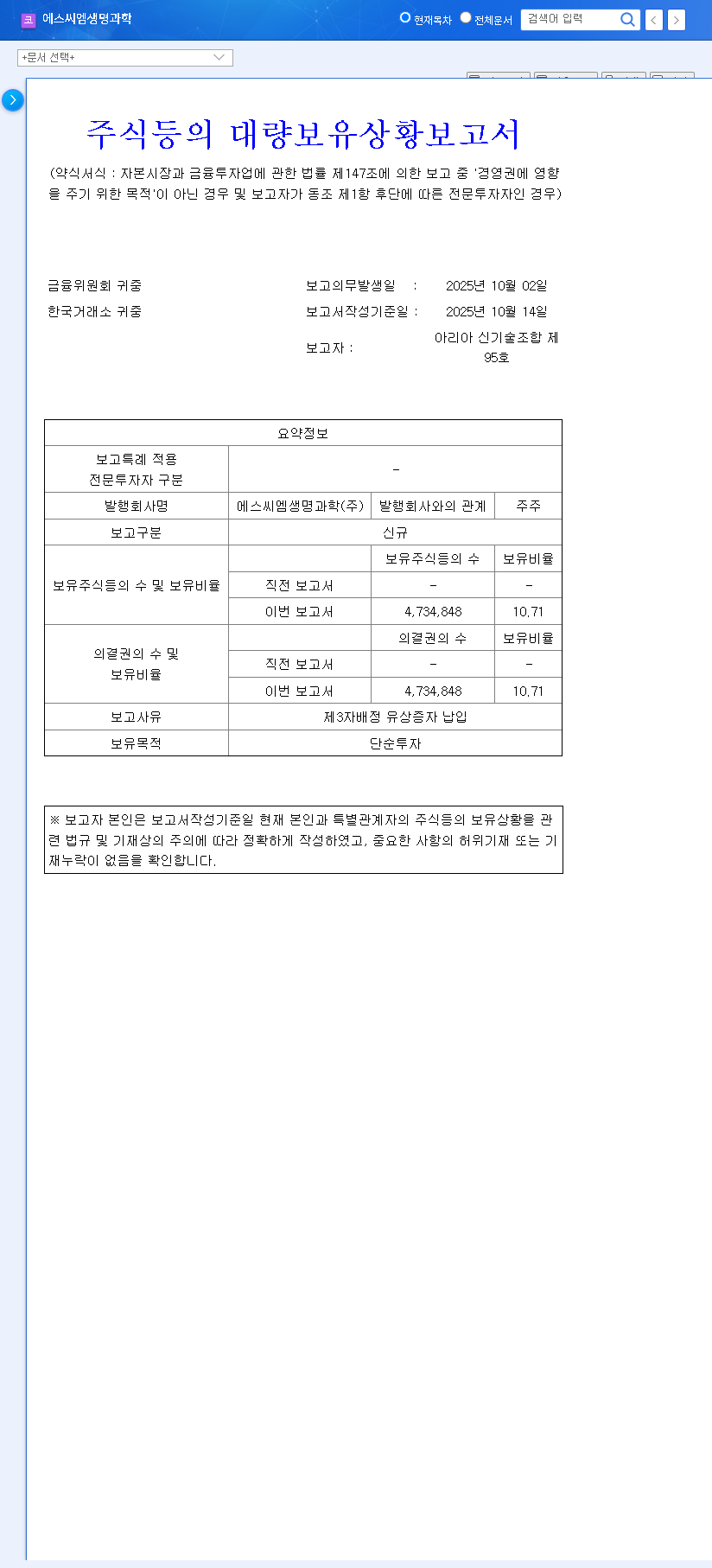
    A significant development at SCM Lifescience Co., Ltd. has captured the market’s attention, as the ‘Aria New Technology Association No. 95’ emerges as a new major shareholder. This pivotal shift not only reshapes the company’s ownership structure but also confirms the successful infusion of capital from recent increases. For investors, this news brings a mix of optimism about financial stability and questions regarding the company’s future trajectory. What does this mean for the SCM Lifescience stock and its long-term potential?

    This comprehensive analysis delves into the implications of this event, examining the company’s core fundamentals, the challenging market environment, and what investors can expect in the short and long term. We’ll provide a balanced perspective on the opportunities and risks facing SCM Lifescience today.

    The Event: ‘Aria New Technology Association’ Takes a Major Stake

    SCM Lifescience officially announced that ‘Aria New Technology Association No. 95’ has secured a 10.71% stake, becoming a major shareholder. This acquisition is the direct result of successfully completed payments for third-party allocation capital increases that occurred in March, April, and June. The full details were published in an Official Disclosure on the DART system.

    This development is significant for several reasons:

    • Validation of Capital Infusion: It confirms that the planned KRW 80 billion capital injection is complete, bolstering the company’s balance sheet and operational runway.
    • Strategic Influence: The arrival of a new major shareholder could signal a shift in corporate strategy, bringing new perspectives and potentially more active oversight to management decisions.
    • Increased Investor Confidence: Such a substantial investment can be viewed as a vote of confidence in the company’s long-term vision and its pipeline, potentially attracting further interest. For more background on institutional investment, see this overview from a leading financial news source.

    An In-Depth SCM Lifescience Analysis: Strengths vs. Hurdles

    To understand the road ahead, we must weigh the company’s growth potential against its current profitability and clinical challenges.

    Positive Catalysts: Financial Health and Diversification

    The recent capital increase has dramatically improved the company’s financial posture. With KRW 80 billion in fresh funds and total borrowings reduced to zero, SCM Lifescience has significantly de-risked its financial profile. This provides a crucial buffer to fund costly R&D without immediate financing pressures. Furthermore, the strategic addition of 17 new business objectives, spanning from biopharmaceutical R&D to derma-cosmetics, signals a clear intent to diversify revenue streams and reduce reliance on a single clinical outcome.

    Negative Factors and Ongoing Risks

    Despite external growth, profitability remains elusive. High, yet necessary, R&D expenditures continue to result in operating and net losses. The most significant headwind is the uncertainty surrounding its core clinical pipeline. The Phase 2 trial for SCM-CGH (chronic graft-versus-host disease) failed to meet its primary endpoint, casting doubt on its path to market. Progress on SCM-AGH (acute pancreatitis) is also expected to be slow. These clinical realities are central to any biotech investment thesis. To learn more, consider reading our guide on how to evaluate biotech stocks.

    For SCM Lifescience, the key challenge is converting its strengthened financial position into tangible clinical success and, ultimately, profitability. The path forward requires flawless execution in R&D and strategic capital allocation.

    Future Outlook: Short and Long-Term Projections

    Short-Term (1-3 Months)

    In the immediate future, investor sentiment is likely to be positive due to the confirmed capital injection. This can reduce perceived risk and may lead to increased stock price volatility as the market digests the news. However, fundamental business operations are unlikely to change overnight. The focus will remain on the shareholder shift rather than on new clinical data.

    Mid-to-Long Term (3-12+ Months)

    The long-term value of SCM Lifescience will be determined by its ability to achieve key milestones. The efficient use of the new capital to advance clinical trials and materialize its diversification strategy is paramount. The success or failure of its core pipeline, particularly the next steps for SCM-CGH and SCM-AGH, remains the single most critical factor. Additionally, investors will watch closely to see if the new major shareholder takes an active role in steering the company towards greater R&D efficiency and profitability.

    Investor Action Plan & Final Thoughts

    Investing in SCM Lifescience requires a balanced and patient approach. The emergence of ‘Aria New Technology Association’ is a clear positive for financial stability, but the underlying clinical and profitability risks have not disappeared.

    • For Short-Term Traders: Be prepared for heightened volatility. The news may create short-term trading opportunities, but caution is advised until a clear trend emerges.
    • For Long-Term Investors: The focus should be on monitoring pipeline progress, the performance of newly launched business segments, and any signs of improved R&D efficiency. The ultimate success story will be written in the clinic, not just the boardroom.

    In conclusion, while the new shareholder provides a significant tailwind, the journey for SCM Lifescience is still one of high risk and high potential reward. Diligent monitoring of clinical trial data and financial reports will be essential for making informed investment decisions.

    (298060) SCM Lifescience Stock Analysis: New Major Shareholder & Future Outlook 관련 이미지
  • (298060) SCM Lifescience Investment Analysis: Stock Volatility & Stem Cell Therapy Future

    (298060) SCM Lifescience Investment Analysis: Stock Volatility & Stem Cell Therapy Future

    A comprehensive SCM Lifescience investment analysis is more critical than ever for investors navigating the volatile biotech sector. Recent disclosures about a major shareholder’s stake reduction have sent ripples through the market, prompting questions about the company’s stability and future. While such events can trigger short-term stock price fluctuations, seasoned investors know that the true value of a company like SCM Lifescience lies in its fundamental science, clinical progress, and long-term commercialization strategy. This deep dive will dissect the recent events, evaluate the company’s core pipelines and financial health, and provide a clear action plan for assessing your biotech investment strategy.

    The Catalyst: Deconstructing the Shareholder Stake Sale

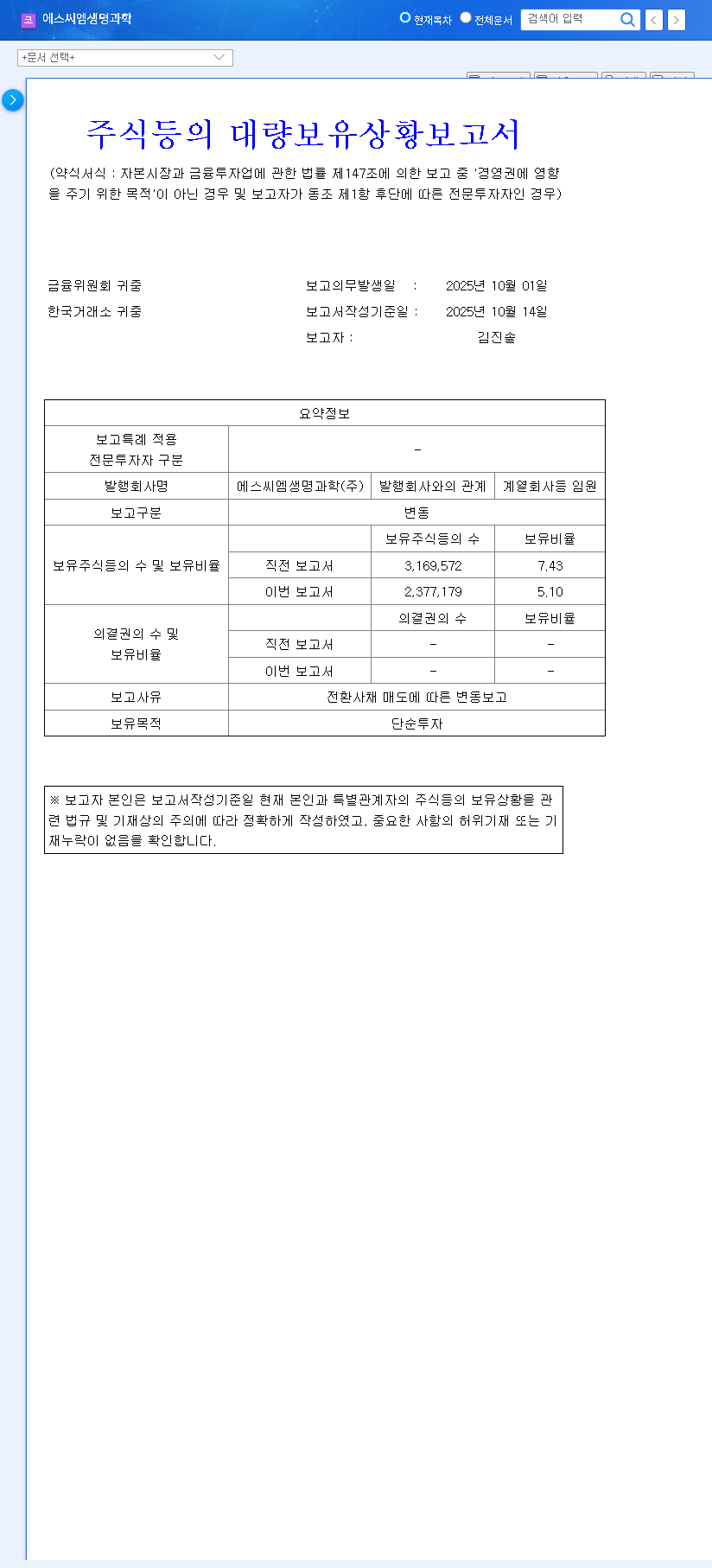
    The primary news driving recent attention is the stake reduction by major shareholder Kim Jin-sol. The holding was reduced from 7.43% to 5.10% following the sale of convertible bonds. According to the Official Disclosure (DART Source), this means approximately 790,000 shares, previously held as convertible bonds, were converted into common stock and sold on the open market. This action is often interpreted as an investor deciding to realize profits, recover capital, or reallocate their investment portfolio. While it creates an overhang on the SCM Lifescience stock, it doesn’t intrinsically alter the company’s scientific research or business operations.

    Market Impact and Investor Sentiment

    The immediate consequences of such a large sale can include:

    • Short-Term Selling Pressure: A significant influx of shares can temporarily depress the stock price as the market absorbs the new supply.
    • Increased Market Float: While potentially creating a supply/demand imbalance, a higher free float can also lead to increased liquidity in the long run.
    • Perception Shift: The market may interpret the sale as a lack of confidence from a key investor, although this is purely speculative without direct knowledge of their motives.

    While the shareholder sale creates market noise, the true signal for SCM Lifescience’s future will come from clinical data and partnership agreements, not from a single investor’s exit strategy. The focus must remain on the underlying fundamentals.

    Core Business and Pipeline: An SCM Lifescience Analysis

    To look beyond the short-term news, a thorough SCM Lifescience investment analysis requires a deep look at its core assets: the stem cell therapy pipeline. The global market for cell and gene therapies is expanding rapidly, a trend detailed in many industry reports from authoritative sources like the FDA and other global regulators.

    Promising Clinical Developments

    • SCM-CGH (Graft-versus-Host Disease): The company has completed Phase 2 clinical trial registration and dosing. This is a significant milestone, as GvHD is a serious complication of allogeneic stem cell transplants.
    • SCM-AGH (Acute Pancreatitis, Atopic Dermatitis): Progress is being made toward Phase 3 trials, with partner discussions underway. Success in these common and difficult-to-treat conditions could be transformative.
    • Revenue Diversification: The ‘IRORO’ derma-cosmetic brand provides a secondary, albeit smaller, revenue stream and helps build commercial infrastructure.

    Persistent Risks and Challenges

    No biotech investment is without significant risk. Investors must weigh the potential against these considerable hurdles:

    • Chronic Deficit Structure: R&D expenses are immense (over 120% of sales), leading to sustained operating losses. The path to profitability is long and uncertain.
    • Clinical and Commercialization Uncertainty: The history of biotech is littered with promising drugs that failed in late-stage trials. For more on this, you can read our guide on understanding clinical trial phases for investors.
    • Management and Governance Issues: Recent changes in the largest shareholder, the liquidation of a US affiliate, and a temporary ban from national R&D projects (Jan 2025 – Dec 2027) are significant red flags that could impact strategy and investor trust.

    Investor Action Plan: Key Monitoring Points

    A prudent approach is required. Rather than reacting to daily price swings, focus on monitoring these fundamental long-term value drivers:

    • Clinical Trial Data: The single most important catalyst. Watch for announcements on Phase 2 results and the initiation of Phase 3 trials.
    • Financial Health: Track cash burn rate and any future capital raises. A clear plan to manage finances and extend the operational runway is crucial.
    • Partnerships & Licensing (L/O): Securing a partnership with a major pharmaceutical company would provide validation, non-dilutive funding, and commercial expertise.
    • Management Stability: Look for clear communication and resolution regarding the governance issues and R&D project sanctions.

    Frequently Asked Questions (FAQ)

    Q1: How does the stake sale affect the SCM Lifescience stock price?

    The sale can create short-term downward pressure and volatility due to increased share supply. However, it does not change the company’s long-term scientific or business fundamentals, which are the ultimate drivers of value.

    Q2: What is SCM Lifescience’s core business model?

    The company’s core focus is on developing advanced stem cell therapy treatments for conditions like GvHD and pancreatitis. It also has a secondary derma-cosmetic business for revenue diversification.

    Q3: What are the biggest risks for an SCM Lifescience investment?

    The primary risks are the high uncertainty of clinical trial success, the continuous need for funding (cash burn), and recent management-related issues, including a temporary ban from national R&D projects.

    (298060) SCM Lifescience Investment Analysis: Stock Volatility & Stem Cell Therapy Future 관련 이미지