Tag: Samyang Packaging

  • (272550) Samyang Packaging Stock Retirement: A 2025 Investor Analysis

    (272550) Samyang Packaging Stock Retirement: A 2025 Investor Analysis

    The recent announcement regarding the Samyang Packaging stock retirement has sent ripples through the investment community. This strategic move to retire a significant number of its own shares raises critical questions for current and potential investors: Is this a genuine signal of strength and a commitment to boosting shareholder value, or a temporary measure to mask underlying performance issues? This comprehensive analysis will dissect the decision, evaluate the company’s fundamentals, and provide a clear investment outlook.

    For those looking for a clear strategy for Samyang Packaging stock in a volatile market, this report provides the essential data and insights needed to make an informed decision.

    The Announcement: Key Details of the Stock Retirement

    Samyang Packaging Corporation has officially declared its intention to retire treasury shares as a direct measure to enhance shareholder value. This is a definitive action where the company permanently cancels shares it has previously repurchased from the open market. Here are the crucial details from the company’s Official Disclosure.

    • Shares to be Retired: 262,565 shares of common stock.
    • Estimated Value: Approximately 3.8 billion KRW.
    • Market Cap Impact: Represents 1.79% of the company’s total market capitalization.
    • Acquisition Method: Utilizes previously acquired treasury shares.
    • Scheduled Retirement Date: November 26, 2025.

    Analyzing the ‘Why’: Fundamentals and Business Health

    This stock retirement initiative appears to be a strategic response to a period of sluggish financial performance. By executing a shareholder-friendly policy, the company aims to bolster investor confidence. A look at the recent half-year report reveals a trend of declining profitability, primarily driven by underperformance in specific business segments and rising operational costs.

    While the core PET container and aseptic beverage businesses remain market leaders in Korea, challenges in the PET-Flake and PET-Chip segments have created significant headwinds for overall profitability.

    Key Financial Headwinds

    • Revenue Contraction: Half-year revenue saw a 7.7% year-over-year decrease to 212.1 billion KRW.
    • Operating Profit Decline: A more significant 43.2% drop in operating profit to 12.4 billion KRW, largely due to increased selling, general, and administrative (SG&A) expenses.
    • Segment Disparity: The PET-Flake and PET-Chip businesses experienced declining operating rates, which directly impacted the bottom line despite the stability of the core segments.

    Impact of the Samyang Packaging Stock Retirement

    A stock retirement of this nature is designed to directly benefit shareholders by increasing the value of the remaining shares. The primary mechanism for this is an improvement in key financial metrics.

    The Bull Case: A Boost for Shareholder Value

    Reducing the number of shares in circulation directly boosts Earnings Per Share (EPS), a critical metric used in stock valuation. A higher EPS can make the stock appear more attractive, potentially leading to a higher price-to-earnings (P/E) ratio. Furthermore, this action is a clear signal from management that they believe the stock is undervalued and are committed to returning capital to shareholders, which can significantly improve market sentiment.

    The Bear Case: Fundamentals Still Matter

    While mathematically positive, the 1.79% retirement is moderate. Its positive effects could be overshadowed if the company’s fundamental profitability continues to decline. The market may view this as a financial maneuver rather than a sign of a true operational turnaround. Ultimately, sustained stock price appreciation will depend on improved revenue and profit margins, particularly in the struggling PET-Flake and PET-Chip divisions.

    Strategic Investment Thesis & Outlook

    The Samyang Packaging stock retirement is a clear positive for investors, but it must be viewed within the broader context of the company’s operational health.

    Short-Term Strategy (3-6 Months)

    In the short term, a bump in investor sentiment may provide some upward price momentum. However, a conservative approach is recommended. Investors should watch for stabilization in quarterly earnings and signs that the company is getting SG&A costs under control before committing significant new capital.

    Long-Term Strategy (12+ Months)

    The long-term success of Samyang Packaging hinges on three factors: the continued dominance of its core PET container business, a successful turnaround in its recycling and raw materials segments (explore more on the PET recycling market), and the tangible results of its ESG initiatives. The company’s focus on sustainable growth through its Samyang Ecotech subsidiary and efforts to develop recycled PET containers could become a major value driver as global demand for green packaging solutions increases.

    Frequently Asked Questions (FAQ)

    What is the main goal of the Samyang Packaging stock retirement?

    The primary goal is to increase shareholder value. By reducing the number of outstanding shares, the company aims to improve key financial metrics like EPS and signal confidence in its long-term prospects, thereby boosting investor sentiment.

    Should I invest based on this news alone?

    While the stock retirement is a positive signal, it is not advisable to invest based on this single event. A thorough analysis of the company’s underlying fundamentals, including revenue growth, profit margins, and the performance of its key business segments, is essential for a sound investment decision.
    (272550) Samyang Packaging Stock Retirement: A 2025 Investor Analysis 관련 이미지
  • (272550) Samyang Packaging (272550) Stock Analysis: Impact of SK Geo Centric’s Full Share Sale

    (272550) Samyang Packaging (272550) Stock Analysis: Impact of SK Geo Centric’s Full Share Sale

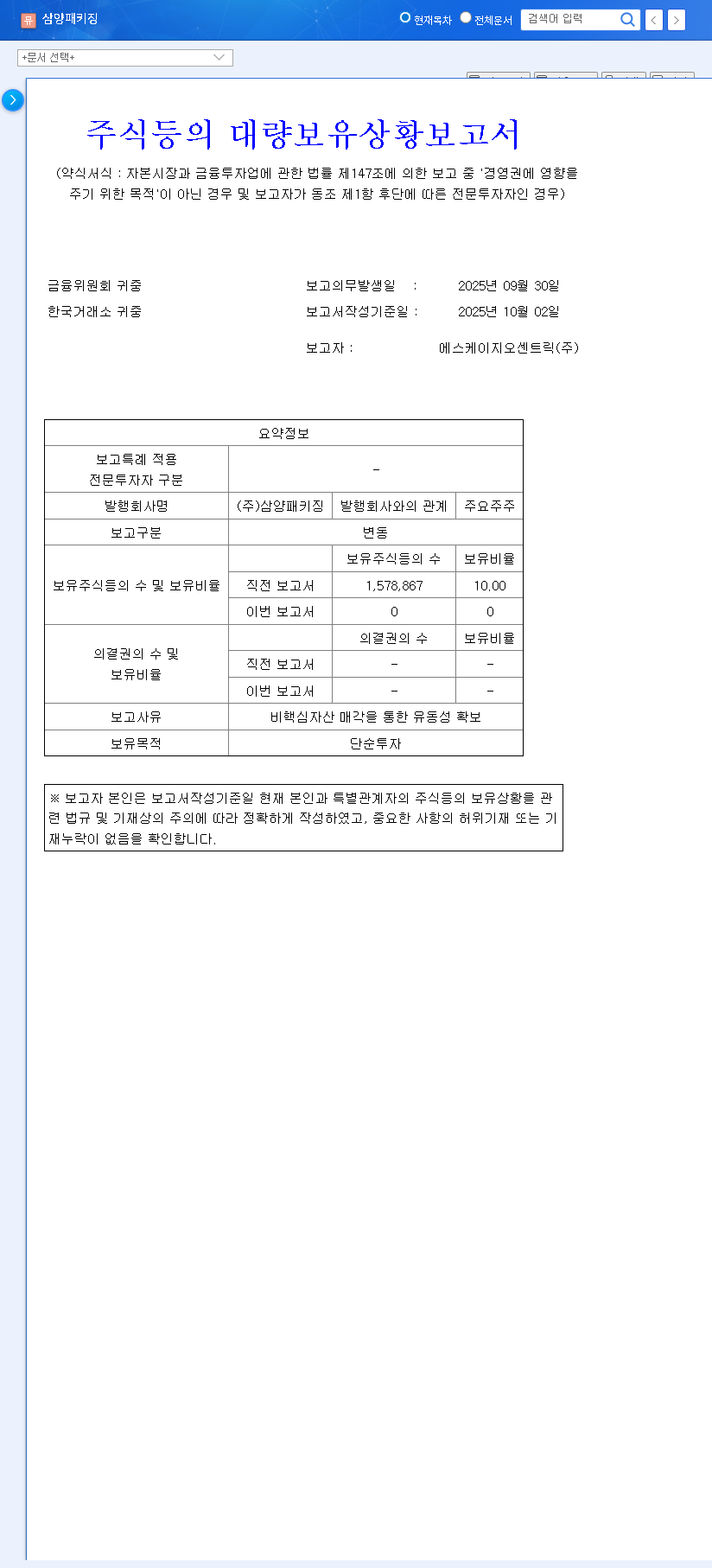
    The sudden news of a major shareholder divesting their stake can create significant market uncertainty. For investors in Samyang Packaging (272550), the recent announcement from SK Geo Centric has raised critical questions. This move to sell its entire 10% holding has put the spotlight firmly on Samyang Packaging’s stock stability and future prospects.

    What does this mean for the stock price in the near term? Do the company’s underlying fundamentals remain strong enough to weather this change? This comprehensive analysis will explore the rationale behind SK Geo Centric’s decision, dissect the potential impact on Samyang Packaging stock, and outline a clear investment strategy to navigate the path forward.

    The Divestment: SK Geo Centric’s Strategic Exit

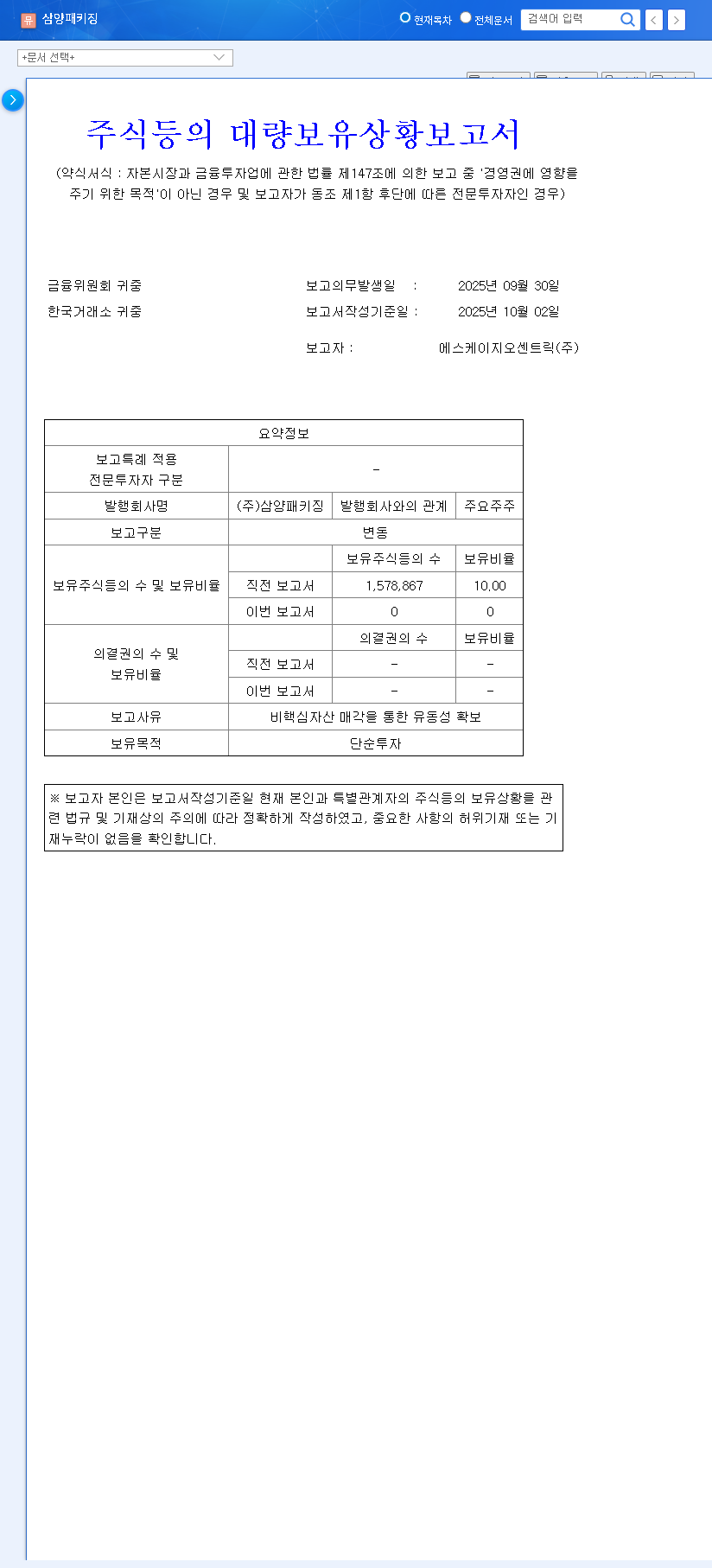
    On October 2, 2025, SK Geo Centric executed an off-hours block trade, selling its entire holding of 1,578,867 shares in Samyang Packaging. This stake represented a significant 10% of the company. The official reason cited for the sale was to ‘secure liquidity through the divestment of non-core assets’. This move is a classic example of corporate portfolio rebalancing, where a company shifts capital away from passive investments to fuel its primary business objectives. The details of the transaction were confirmed in an Official Disclosure.

    Why Did SK Geo Centric Sell?

    It’s crucial for investors to understand that this sale is more reflective of SK Geo Centric’s internal strategy than a negative verdict on Samyang Packaging’s future. As a company increasingly focused on its core eco-friendly materials and chemical recycling businesses, a passive ‘simple investment’ in a packaging company no longer aligned with its strategic direction. Liquidating this non-core asset allows SK Geo Centric to unlock capital and reinvest it into its primary growth engines.

    Analyzing the Impact on Samyang Packaging Stock

    Short-Term: The Supply Overhang Effect

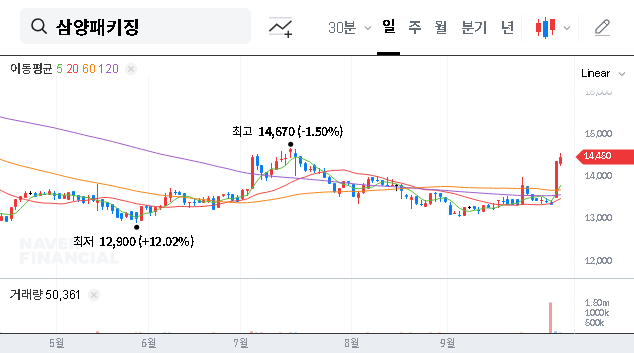
    The immediate consequence of such a large block sale is an increase in the available supply of stock on the market, an effect known as ‘supply overhang’. This can create downward pressure on the stock price as the market works to absorb the new float. As financial news outlets like Reuters often report, large institutional sales can trigger short-term volatility. However, since SK Geo Centric was not involved in management, this event has no direct impact on Samyang Packaging’s operational control or day-to-day business.

    While short-term market turbulence is expected, the core investment thesis for Samyang Packaging hinges on its resilient business fundamentals and long-term growth initiatives.

    Long-Term: A Look at the Core Fundamentals

    Beyond the market noise, the company’s intrinsic value remains intact. Samyang Packaging possesses a robust and defensive business model built on several key pillars:

    • Dominant PET Container Business: With a market-leading position held for over four decades, the company benefits from long-standing client relationships and economies of scale.
    • High-Barrier Aseptic Beverage OEM: Its leadership in aseptic (sterile) filling technology for beverages creates a significant competitive moat, ensuring stable, high-margin revenue streams.
    • Future-Proof Recycling Business: Through its subsidiary Samyang Eco-Tech, the company is well-positioned to capitalize on the growing global demand for sustainable packaging and ESG-focused initiatives.

    Despite these strengths, investors must monitor macroeconomic headwinds like rising raw material costs and fluctuating exchange rates, which have recently impacted profitability. The success of ongoing investments in automated logistics will be key to offsetting these pressures long-term.

    A Practical Investment Strategy

    For Short-Term Traders

    A cautious approach is warranted. It is advisable to monitor the stock’s price action and volume closely as the market absorbs the sold shares. Wait for signs of price stabilization before considering an entry. Keep a close watch on key macroeconomic indicators that directly affect the company’s bottom line.

    For Mid-to-Long-Term Investors

    This event may present an opportunity. If the stock price experiences an excessive drop unrelated to the company’s fundamentals, it could create an attractive valuation. This is a core principle of a fundamentals-based value investing approach. Focus on the long-term earnings power of the business, its competitive advantages, and the growth trajectory of its recycling segment. A strategy of gradually accumulating shares (dollar-cost averaging) during periods of weakness could be prudent.

    Frequently Asked Questions (FAQ)

    Q: Why did SK Geo Centric sell its Samyang Packaging shares?

    A: The sale was part of SK Geo Centric’s broader corporate strategy to liquidate non-core assets and secure capital for reinvestment into its primary, eco-friendly material businesses. It was not a reflection on Samyang’s performance.

    Q: Does this sale affect Samyang Packaging’s management?

    A: No. SK Geo Centric was a passive financial investor. Its exit does not impact the management team, operational control, or business strategy of Samyang Packaging.

    Q: Are Samyang Packaging’s fundamentals still strong?

    A: Yes, the company’s core fundamentals remain solid, with market leadership in PET containers and aseptic filling, plus strong growth potential in recycling. However, external macroeconomic pressures on profitability warrant continued monitoring.

    (272550) Samyang Packaging (272550) Stock Analysis: Impact of SK Geo Centric's Full Share Sale 관련 이미지
  • (272550) Samyang Packaging (272550): Deep-Dive Analysis on Samyang Corp’s Increased Stake

    (272550) Samyang Packaging (272550): Deep-Dive Analysis on Samyang Corp’s Increased Stake

    Samyang Packaging: Decoding Samyang Corp’s Major Stake Increase

    The market is buzzing after Samyang Corp, the largest shareholder of Samyang Packaging (272550), significantly increased its ownership. This strategic maneuver, boosting its stake to a commanding 71.47%, is far more than a simple stock transaction. It’s a clear signal of intent with profound implications for the company’s management, long-term growth trajectory, and overall corporate value. For investors, understanding the nuances of this development is critical.

    What are the real-world impacts of this increased control? How does it affect Samyang Packaging’s fundamentals and its ambitious investment plans? This comprehensive analysis will explore the pros and cons, providing a clear roadmap for investors to navigate the changes and make well-informed decisions.

    The Deal Explained: What Does the Stake Increase Mean?

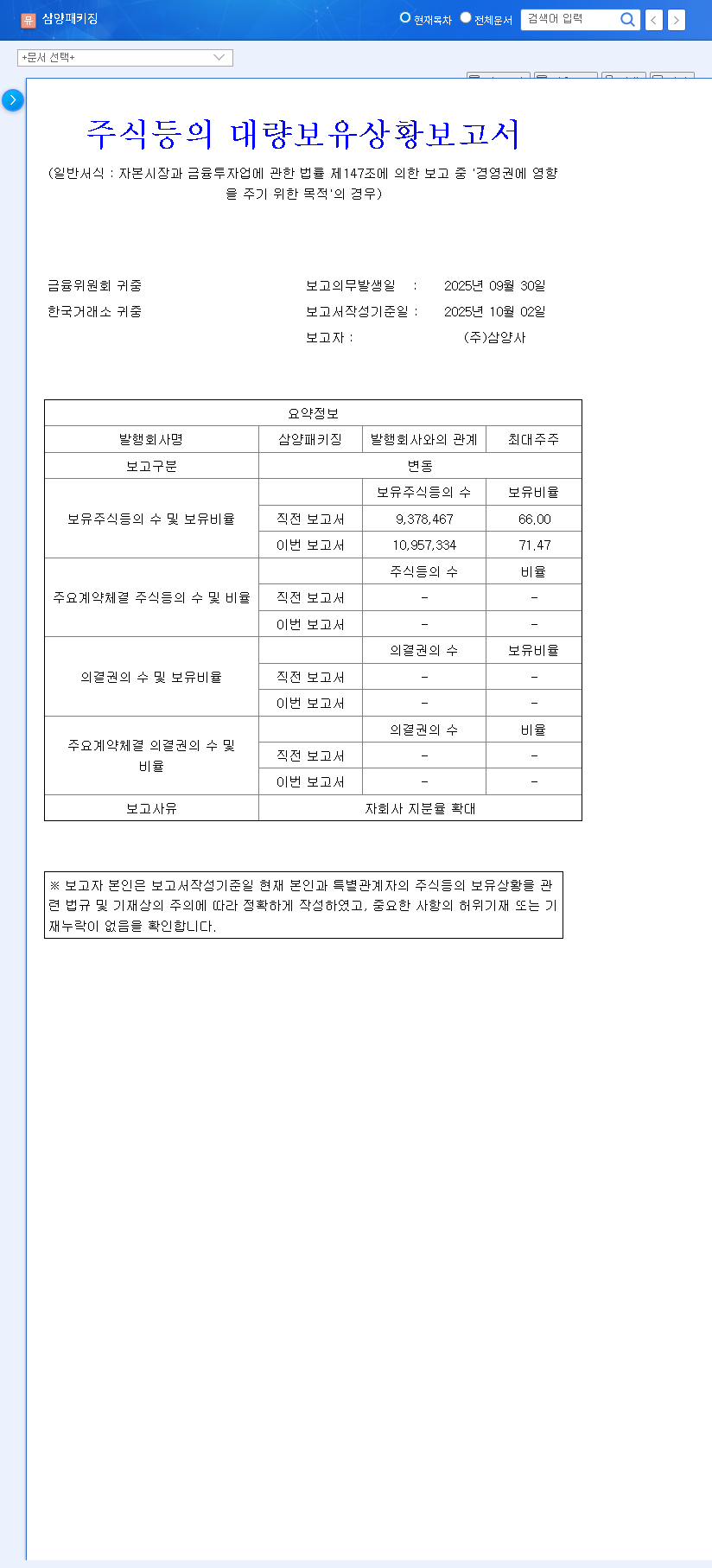
    According to an Official Disclosure on DART, Samyang Corp acquired an additional 1,578,867 common shares of Samyang Packaging via an after-hours block trade. This raised its total stake from 66.00% to 71.47%. The stated purpose was unambiguous: ‘influence on management.’ This move effectively solidifies Samyang Corp’s control, enabling faster, more decisive strategic execution.

    This action is widely seen as a vote of confidence, aimed at enhancing management stability and accelerating key initiatives. With large-scale facility investments already underway, the reinforced backing from its parent company provides a powerful tailwind for securing future growth engines, particularly in the promising recycling sector.

    With a reinforced mandate, Samyang Corp’s increased stake is poised to accelerate Samyang Packaging’s strategic investments, particularly in high-growth areas like sustainable recycling and aseptic packaging.

    Fundamental Diagnosis: The State of Samyang Packaging (272550)

    To grasp the full context of this Samyang Corp stake increase, we must examine the current health of Samyang Packaging. While facing some short-term headwinds, the company’s core strengths and market position remain robust.

    Current Financial & Operational Snapshot

    • Performance: H1 2025 results showed a temporary dip, with sales at KRW 212.1 billion (-7.6%) and operating profit at KRW 12.4 billion (-43%), primarily due to softer demand in PET containers and recycled materials.
    • Financial Health: The company maintains a very healthy balance sheet. Despite a slight asset decrease, a reduction in total liabilities has kept the debt-to-equity ratio at a solid 72.7%.
    • Major Investments: Significant capital is being deployed for future growth, including KRW 39.3 billion for advancing its container business and a massive KRW 71.3 billion for new logistics warehouse construction.
    • Market Leadership: Samyang Packaging holds the #1 market share in the domestic PET container sector and is the leading aseptic beverage OEM/ODM manufacturer in Korea, a high-growth area.
    • Macro Environment: The business is navigating a complex global landscape, including a rising USD/KRW exchange rate and fluctuating oil prices. Understanding how these factors impact corporate performance is key, a topic well-covered by resources like Investopedia.

    Analyzing the Impact of the Increased Samyang Corp Stake

    Samyang Corp’s tighter control introduces both significant opportunities and potential risks for investors in Samyang Packaging.

    Positive Impacts:

    The primary benefit is enhanced management stability and efficiency. With a stronger mandate, decision-making becomes faster and more aligned, reducing internal friction and allowing the company to pivot quickly to market changes. This leads to greater operational synergy. Furthermore, it signals stronger financial and strategic support for the company’s ambitious capital expenditures. The large investments in logistics and container technology are now more secure, and we can expect focused investment in high-potential areas like the recycling business (Samyang Ecopartners), which aligns with supportive government green policies. Ultimately, this combination of efficiency and focused growth aims for long-term shareholder value enhancement.

    Negative Impacts & Potential Risks:

    A high concentration of ownership can lead to concerns over centralized decision-making, where the interests of minority shareholders might be overlooked. While Samyang Corp’s track record suggests this risk is currently low, it remains a factor to watch. In the short term, such significant ownership changes can lead to stock price volatility as the market digests the news. Finally, investors should consider the financial health of the parent company, as the method used to finance the stake acquisition could have indirect effects.

    Action Plan for Investors: Outlook & Key Watch Points

    Overall, the increased stake is a net positive, signaling confidence and strategic alignment for Samyang Packaging. The move should de-risk the company’s major investment cycle and provide a clearer path to growth.

    Investment Recommendation & Risk Management

    A “Maintain Buy” perspective is warranted. The long-term growth potential, underpinned by market leadership and strategic investment, is compelling. However, investors must actively monitor the company’s ability to reverse the recent dip in performance and improve operating rates. Prudent risk management involves staying aware of macroeconomic pressures like currency fluctuations and interest rate policies.

    Key Factors to Monitor

    • Execution of Facility Investments: Track the progress and ROI of the new logistics and container business facilities.
    • Recycling Business Growth: Monitor the profitability and market share expansion of Samyang Ecopartners.
    • Profitability Metrics: Watch for a recovery in operating profit margins and sales growth in the coming quarters.
    • Corporate Governance: Observe how the increased stake influences board decisions and shareholder relations. For a broader perspective, see our full analysis of the Korean corporate governance landscape.

    Disclaimer: This analysis is based on publicly available information and represents an expert opinion. All investment decisions are the sole responsibility of the individual investor.

    (272550) Samyang Packaging (272550): Deep-Dive Analysis on Samyang Corp's Increased Stake 관련 이미지
  • Samyang Packaging Q2 2025 Earnings: Declining Sales and Profits Despite Recycling Growth

    1. Samyang Packaging Q2 2025 Performance Overview

    Samyang Packaging announced its Q2 2025 earnings on August 14, 2025. Sales reached 120.1 billion KRW, a 4.4% decrease year-over-year, while operating profit declined by 25.7% to 13.9 billion KRW. Net income also decreased by 10.6% to 13.5 billion KRW.

    2. Reasons for Decline

    The decline in sales was primarily attributed to weakness in the PET container segment, impacted by intensifying competition and customer inventory management. The decrease in operating profit was driven by lower sales, coupled with rising raw material prices, including PET Chip, and increased logistics costs.

    3. Recycling Business Growth

    Samyang Ecotech’s recycling business continued its steady growth trajectory, fueled by government policies promoting recycled plastic use and the growing trend of eco-conscious consumption. However, this growth was not enough to offset the overall decline in sales.

    4. Key Investment Considerations

    • Short-term: Investors should monitor the company’s ability to improve earnings in the second half of the year, manage costs effectively, and navigate the impact of fluctuating exchange rates and oil prices on profitability.
    • Long-term: Focus on the company’s strategy to strengthen its competitiveness in the recycling business, expand market share, and realize the benefits of ongoing facility investments.

    While Samyang Packaging possesses a stable business foundation and future growth potential, the short-term earnings pressure and its ability to adapt to external environmental changes will be crucial factors influencing its stock performance.

    Frequently Asked Questions

    Q: What are the main reasons for Samyang Packaging’s decline in Q2 2025 sales and operating profit?

    A: The decline was primarily due to weakness in the PET container segment, coupled with increasing raw material costs and logistics expenses.

    Q: How is Samyang Packaging’s recycling business performing?

    A: The recycling business, led by Samyang Ecotech, is experiencing steady growth and is considered a promising segment with high future potential.

    Q: What key factors should investors consider regarding Samyang Packaging?

    A: In the short term, investors should monitor earnings improvements, cost management, and the impact of exchange rates and oil prices. Long-term considerations include the competitiveness of the recycling business and the effectiveness of facility investments.

  • Samyang Packaging’s ₩71.3B Investment: A Turning Point or a Gamble?

    1. What Happened? : ₩71.3 Billion Investment in Automated Warehouse

    Samyang Packaging is investing ₩71.3 billion (18.78% of its capital) to build an automated warehouse, aiming to improve logistics efficiency and cost competitiveness. Construction is scheduled to begin in January 2026 and be completed by June 2027.

    2. Why? : Addressing Poor Performance and Securing Future Growth

    Samyang Packaging reported a disappointing first quarter of 2025, with an 11.4% decrease in sales and a swing to an operating loss. Intensified competition in the PET container market and a slowdown in related industries are the main culprits. This investment aims to address these challenges and secure future growth drivers. Despite steady growth in the aseptic beverage OEM business and the potential of the Recycling business, improving profitability is a pressing issue.

    3. What’s Next? : Expected Effects and Risks

    • Positive Effects:
      • Increased logistics efficiency and cost reduction
      • Improved productivity and market responsiveness
      • Strengthened ESG management
    • Risks:
      • Burden of initial investment costs
      • Potential delay in performance recovery
      • Insufficient investment effect
      • External environmental changes (exchange rates, interest rates, oil prices, etc.)

    4. What Should Investors Do? : Neutral Investment Opinion, Continuous Monitoring Required

    While this investment is positive in the long term, short-term financial burdens and uncertainties regarding performance recovery must be considered. Investors should continuously monitor the investment execution process, improvements in logistics efficiency, changes in related industries, and the performance of the Recycling business.

    Frequently Asked Questions

    What is the size of Samyang Packaging’s automated warehouse investment?

    ₩71.3 billion.

    What is the purpose of the investment?

    To improve logistics efficiency, secure cost competitiveness, and secure future growth engines.

    What are the expected effects of the investment?

    Improved logistics efficiency, cost reduction, increased productivity, and strengthened ESG management are expected.

    What are the risks of the investment?

    The burden of initial investment costs, potential delay in performance recovery, insufficient investment effect, and external environmental changes are potential risks.