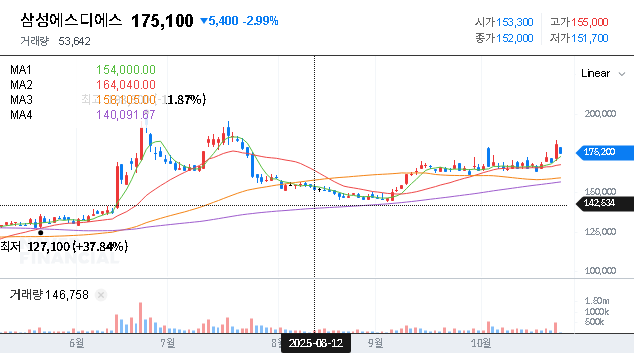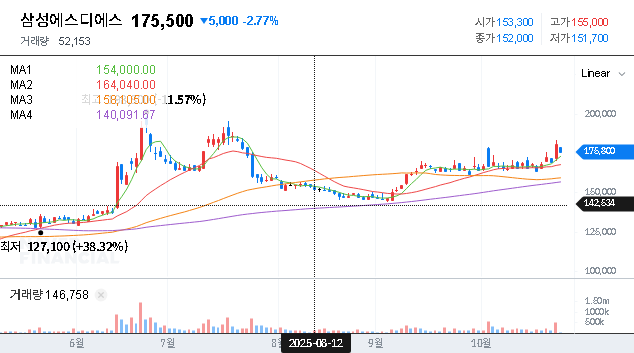
Tag: Samsung SDS

  • (058970) EMRO Investor Relations: Q3 2025 Analysis, AI Growth & Stock Outlook

    (058970) EMRO Investor Relations: Q3 2025 Analysis, AI Growth & Stock Outlook

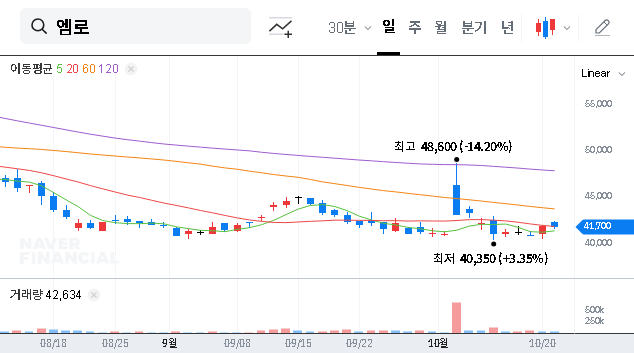
    The upcoming EMRO Investor Relations event on November 19, 2025, is poised to be a pivotal moment for the company and its stakeholders. Following the release of its Q3 2025 results, investors are keenly focused on understanding the balance between aggressive strategic investments in AI and global expansion against a backdrop of short-term profitability pressures. This comprehensive analysis will dissect EMRO’s financial health, explore its core growth drivers, identify potential risks, and provide a clear action plan for evaluating the company’s long-term growth potential.

    As a leader in Supply Relationship Management (SRM) solutions, EMRO is at a critical juncture. The decisions made today are shaping its trajectory in the competitive global SaaS market. Let’s delve into the data and strategy that will be central to the forthcoming EMRO Investor Relations conference.

    Decoding EMRO’s Q3 2025 Financial Performance

    EMRO’s Q3 2025 financial report tells a story of strategic investment. While some headline numbers show a decline, they are the direct result of a calculated push into high-growth areas. Understanding this context is essential for any EMRO stock analysis. For a complete breakdown of the numbers, you can view the Official Disclosure on DART.

    • Revenue: Consolidated revenue reached 63.97 billion KRW. While a slight decrease year-over-year, it’s crucial to note the high dependency on a single client (‘Company A’), a point of risk that demands diversification.
    • Operating Profit: Recorded at 1.43 billion KRW, a significant drop from the prior year. This is primarily fueled by increased R&D and stock-based compensation costs earmarked for developing advanced AI SRM solutions and funding global expansion.
    • Net Income: A bright spot, reaching 2.21 billion KRW. The company successfully returned to profitability on a net basis, largely due to a tax expense refund.
    • Financial Health: The debt-to-equity ratio has increased, reflecting the capital-intensive nature of its current growth phase. Investors will be looking for a clear strategy to manage this leverage moving forward.

    EMRO is strategically sacrificing short-term profitability for a commanding long-term position in the global AI-powered supply chain market. The key is execution.

    The Engines of Future Growth: AI & Global Markets

    The decline in operating profit is not a sign of weakness but rather fuel for EMRO’s future. The company is betting big on two interconnected pillars that define its EMRO growth potential.

    1. Advanced AI and Cloud-Based SRM Solutions

    EMRO’s core competitive advantage lies in its sophisticated, Agentic AI-based software. Unlike basic automation, these solutions act as intelligent agents that can proactively manage supply chain complexities, predict disruptions, and optimize procurement. This aligns perfectly with the explosive growth in the global AI and SaaS markets, positioning EMRO as a key innovator. This technological edge has been validated by top industry analysis, including the prestigious IDC MarketScape Report, which recognizes EMRO’s strength in the AI-powered Source-to-Pay segment.

    2. Aggressive Global Expansion (Caidentia)

    With its global SRM SaaS brand, Caidentia, EMRO is actively targeting the lucrative North American market. This expansion is not just a plan but a necessity for long-term growth and reducing client concentration risk. The synergy with partner Samsung SDS is a critical accelerator for this global push, providing crucial market access, credibility, and integration capabilities that would otherwise take years to build.

    Navigating Headwinds: Risks Investors Must Monitor

    While the long-term vision is promising, a prudent EMRO stock analysis must account for the challenges ahead. These are the key areas management needs to address at the EMRO Investor Relations meeting:

    • Client Diversification: A concrete plan to reduce the 47.5% revenue dependency on ‘Company A’ is non-negotiable for stable, long-term performance.
    • Path to Profitability: Investors need to see a clear roadmap detailing how and when the current investments will translate into improved operating profit margins.
    • Intensifying Competition: The AI and supply chain software space is crowded. EMRO must continually demonstrate its unique value proposition to fend off competitors.
    • Macroeconomic Pressures: While B2B SaaS is relatively resilient, a global slowdown could impact IT spending. Risk management strategies should be transparent.

    Conclusion: A Strategic Bet on the Future

    EMRO is at a crossroads, choosing to invest heavily in its future as a global leader in AI-powered SRM solutions. The short-term financial metrics reflect this ambitious strategy. The upcoming EMRO Investor Relations event is the company’s opportunity to articulate its vision, provide clarity on its execution plan, and build confidence that the current sacrifices will yield substantial future rewards. For investors, it’s a critical moment to listen, question, and ultimately decide if they believe in EMRO’s high-growth journey.

    Disclaimer: This report is based on publicly available information and is for informational purposes only. It does not constitute investment advice. All investment decisions should be made based on the investor’s own judgment and due diligence.

    (058970) EMRO Investor Relations: Q3 2025 Analysis, AI Growth & Stock Outlook 관련 이미지
  • (018260) SAMSUNG SDS ITO Contract (₩471.1B): A Deep Dive for Investors

    (018260) SAMSUNG SDS ITO Contract (₩471.1B): A Deep Dive for Investors

    In a significant development for the Korean tech sector, SAMSUNG SDS, a premier IT service provider, has officially secured a landmark SAMSUNG SDS ITO contract valued at a substantial ₩471.1 billion with its primary partner, Samsung Electronics. This move not only solidifies their long-standing relationship but also sends strong signals to the market about the company’s future trajectory. For investors, this isn’t just another headline; it’s a critical piece of the puzzle for any SAMSUNG SDS investment strategy.

    This comprehensive analysis will dissect the multifaceted implications of this major IT outsourcing agreement. We’ll explore the immediate financial benefits, the long-term strategic advantages, and the potential challenges that investors must consider. From stable revenue streams to the ongoing balance with its logistics division, we provide the essential insights needed to navigate what comes next.

    The Landmark Deal: Breaking Down the Agreement

    SAMSUNG SDS has formally announced the signing of an Information Technology Outsourcing (ITO) service contract with Samsung Electronics Co., Ltd. The agreement, valued at precisely ₩471.1 billion, is set for a one-year term, running from January 1, 2025, to December 31, 2025. This figure represents approximately 3.41% of the company’s projected revenue for the same year, making it a cornerstone of its financial foundation. The full details of this significant transaction have been made public, as seen in the Official Disclosure. This contract is more than just a renewal; it’s a powerful reaffirmation of the deep-seated trust and operational synergy between two titans of the Samsung ecosystem, cementing SAMSUNG SDS’s role as the technological backbone for the electronics giant.

    Why This SAMSUNG SDS ITO Contract is a Game-Changer

    The strategic implications of this deal extend far beyond its monetary value. It provides a stable platform for growth and reinforces market confidence. Let’s explore the core positive impacts on the company’s fundamentals.

    Pillar 1: Fortified Revenue Stability

    In a volatile global economy, predictability is priceless. This ₩471.1 billion contract provides a solid, predictable revenue base for the IT service division. This stability is crucial as it allows the company to confidently invest in next-generation growth engines like generative AI and cloud services, which are central to its long-term vision. This deal builds upon the existing positive momentum and creates a powerful synergy for sustained growth.

    Pillar 2: Deepening the Samsung Electronics Partnership

    The renewal of a long-term, high-value IT outsourcing contract with a key client like Samsung Electronics is a testament to the quality and reliability of SAMSUNG SDS’s services. This reinforces the strategic partnership and could pave the way for expanded collaboration in emerging tech fields, further intertwining their mutual success. For a detailed overview of IT service market trends, you can refer to analysis from authoritative sources like Gartner’s latest market reports.

    This contract acts as an anchor, providing the financial stability needed for SAMSUNG SDS to aggressively pursue high-growth areas like cloud computing and enterprise AI solutions.

    Navigating Potential Headwinds & Market Variables

    While the outlook is overwhelmingly positive, a thorough SAMSUNG SDS stock analysis requires acknowledging potential challenges. The company’s diverse portfolio means it is subject to various external pressures.

    The Logistics Division Balancing Act

    SAMSUNG SDS operates a significant logistics business alongside its IT services. With the logistics division’s operating profit margin reportedly declining, it’s crucial for the company to balance the robust growth in IT with strategic efforts to enhance profitability in logistics. Investors should monitor how digital transformation initiatives, like those discussed in our analysis of supply chain technology, are being leveraged to improve efficiency.

    Macroeconomic Factors to Watch

    • Exchange Rate Fluctuations: As a global player, an appreciating Korean Won can impact overseas revenue and profitability.
    • Interest Rate Shifts: Changes in benchmark rates can influence funding costs for new investments, though the company’s strong financial health provides a solid buffer.
    • Global Freight & Oil Prices: These variables directly affect the logistics division’s bottom line and represent a persistent source of volatility.

    Investor Action Plan & Strategic Outlook

    Given this major contract, investors should focus on several key areas. The positive market sentiment is likely to continue, backed by strong fundamentals in the IT service division. The challenge and opportunity lie in how effectively the company can translate this stability into broader, more diversified growth while shoring up its logistics segment.

    Frequently Asked Questions (FAQ)

    What is the nature of the new SAMSUNG SDS ITO contract?

    SAMSUNG SDS signed a ₩471.1 billion Information Technology Outsourcing (ITO) contract with Samsung Electronics to provide comprehensive IT services for one year, from Jan 1, 2025, to Dec 31, 2025.

    How significant is this contract for SAMSUNG SDS’s revenue?

    The contract value of ₩471.1 billion represents approximately 3.41% of SAMSUNG SDS’s projected 2025 revenue, providing a significant and stable income stream for its IT division.

    What are the main concerns for the company’s logistics business?

    The primary concern is the declining operating profit margin in the logistics division. Investors are watching to see if digital transformation and other efficiency efforts can improve profitability and balance the growth from IT services.

    How do macroeconomic factors impact SAMSUNG SDS?

    Exchange rates can affect the value of overseas earnings, interest rates can alter investment costs, and oil/freight prices directly impact the profitability of the logistics segment. Monitoring the company’s resilience to these factors is key.

    What is the overall investment outlook for SAMSUNG SDS?

    The outlook is strong, thanks to this ITO contract ensuring stable IT service growth. While challenges in logistics and macro-risks require monitoring, the company’s fundamental trajectory appears positive, driven by its core tech competencies.

    (018260) SAMSUNG SDS ITO Contract (₩471.1B): A Deep Dive for Investors 관련 이미지
  • (018260) SAMSUNG SDS Q3 2025 Earnings: A Deep Dive into Revenue, Profit, and Future Stock Outlook

    (018260) SAMSUNG SDS Q3 2025 Earnings: A Deep Dive into Revenue, Profit, and Future Stock Outlook

    The latest SAMSUNG SDS Q3 2025 earnings report presents a complex picture for investors. While the company demonstrated impressive resilience in profitability, a noticeable slowdown in top-line revenue has raised important questions about its short-term trajectory. This comprehensive Samsung SDS financial analysis unpacks the key figures, explores the strategic drivers behind the numbers, and provides a forward-looking perspective on the company’s stock outlook amid a challenging global economy.

    We’ll move beyond the surface-level data to examine the core factors influencing Samsung SDS performance, from the contraction in IT investments to the strategic pivot towards high-margin AI and Cloud services. Join us as we explore what these results mean for the future of SAMSUNG SDS.

    SAMSUNG SDS Q3 2025 Earnings at a Glance

    For the third quarter of 2025, SAMSUNG SDS reported consolidated financials that, while solid, slightly missed consensus expectations on the top line. According to the Official Disclosure filed with DART, the results were as follows:

    • Consolidated Revenue: KRW 3.3913 trillion (a 3.7% miss vs. market expectations).
    • Operating Profit: KRW 232.3 billion (a 1.6% miss vs. market expectations).
    • Net Profit: KRW 195.2 billion (largely in line with market expectations).

    The key narrative from these figures is one of strategic trade-offs: sacrificing some top-line Samsung SDS revenue growth to protect and enhance profitability through a focus on higher-value services.

    Decoding the Performance: Revenue Headwinds vs. Profit Stability

    Factors Behind the Revenue Slowdown

    The continuation of a revenue decline, marking a 4% year-over-year decrease, can be attributed to a convergence of factors impacting both of the company’s core segments:

    • IT Services Segment: A general contraction in corporate IT spending, influenced by macroeconomic uncertainty, likely led to delays in the execution and acquisition of large-scale projects. While demand for digital transformation remains, budget cycles have lengthened, impacting revenue recognition.
    • Logistics BPO Segment: This segment is highly sensitive to global economic conditions. A worldwide slowdown in trade and reduced freight volumes have directly pressured logistics revenue, a trend seen across the industry.

    The Strategy Behind Strong Profitability

    Despite the revenue challenges, the company’s ability to nearly meet operating profit expectations is a testament to its effective management and strategic focus. This resilience is built on two pillars:

    • High-Value Service Mix: SAMSUNG SDS is successfully increasing the proportion of revenue from high-margin areas. The growth of its Cloud services and AI-powered solutions, like the ‘FabriX’ platform, commands better pricing and contributes more significantly to the bottom line.
    • Disciplined Cost Management: Proactive cost-efficiency measures across the organization have helped offset the impact of lower revenues, ensuring that profitability remains robust and stable.

    SAMSUNG SDS’s Q3 performance showcases a deliberate strategy: navigating market headwinds by prioritizing profitable growth in next-generation AI and Cloud services over sheer revenue volume.

    Investment Thesis: A Neutral Samsung SDS Stock Outlook

    Considering the mixed signals from the SAMSUNG SDS Q3 2025 earnings, a neutral investment stance is prudent. The analysis reveals both compelling long-term drivers and significant short-term risks that investors must weigh.

    The Bull Case: Long-Term Growth Engines

    • AI & Cloud Dominance: The structural shift towards cloud computing and AI integration is a powerful tailwind. Platforms like ‘FabriX’ position the company to capture high-value enterprise AI demand. You can read more in our deep dive into the AI industry.
    • Financial Fortress: A low debt-to-equity ratio and strong cash flow provide exceptional stability, allowing the company to invest in growth and weather economic downturns better than less-capitalized peers.
    • Samsung Group Synergy: Access to a steady stream of large-scale projects from Samsung affiliates provides a stable revenue base and a testing ground for new technologies.

    The Bear Case: Short-Term Headwinds

    • Macroeconomic Pressure: Persistent inflation and high interest rates continue to suppress corporate IT budgets globally. As noted by sources like Reuters, economic uncertainty is a primary concern for enterprise spending.
    • Intensifying Competition: The markets for Cloud, SaaS, and AI services are fiercely competitive. Sustaining an edge requires continuous, heavy investment in R&D and innovation.
    • Logistics Market Volatility: The logistics segment’s performance is tied to global trade flows, which remain unpredictable due to geopolitical tensions and shifting supply chains.

    Key Monitoring Points for Investors

    Moving forward, investors should keep a close watch on several key indicators to gauge the Samsung SDS stock outlook. The company’s ability to re-accelerate revenue growth while maintaining its strong profit margins will be critical. Pay close attention to the pipeline for new IT projects, the adoption rate of its AI and Cloud services, and any signs of stabilization or recovery in the global logistics market. These factors will ultimately determine if the current headwinds are temporary or indicative of a more prolonged challenge.

    Disclaimer: This report is for informational purposes only and is based on the preliminary earnings information provided. Investment decisions should be made based on your own research and consultation with a financial professional. The final responsibility for investment decisions rests solely with the investor.

    (018260) SAMSUNG SDS Q3 2025 Earnings: A Deep Dive into Revenue, Profit, and Future Stock Outlook 관련 이미지
  • (018260) Samsung SDS IR: A Deep Dive into their AI & Cloud Growth Strategy for Investors

    (018260) Samsung SDS IR: A Deep Dive into their AI & Cloud Growth Strategy for Investors

    In the fast-paced world of tech investment, a company’s Investor Relations (IR) session is a critical event, offering a transparent glimpse into its future trajectory. For investors focused on cutting-edge technology, the upcoming SAMSUNG SDS IR is a can’t-miss opportunity. It serves as a vital platform for the company to communicate its growth roadmap, particularly concerning its ambitious SAMSUNG SDS AI strategy and expanding cloud business.

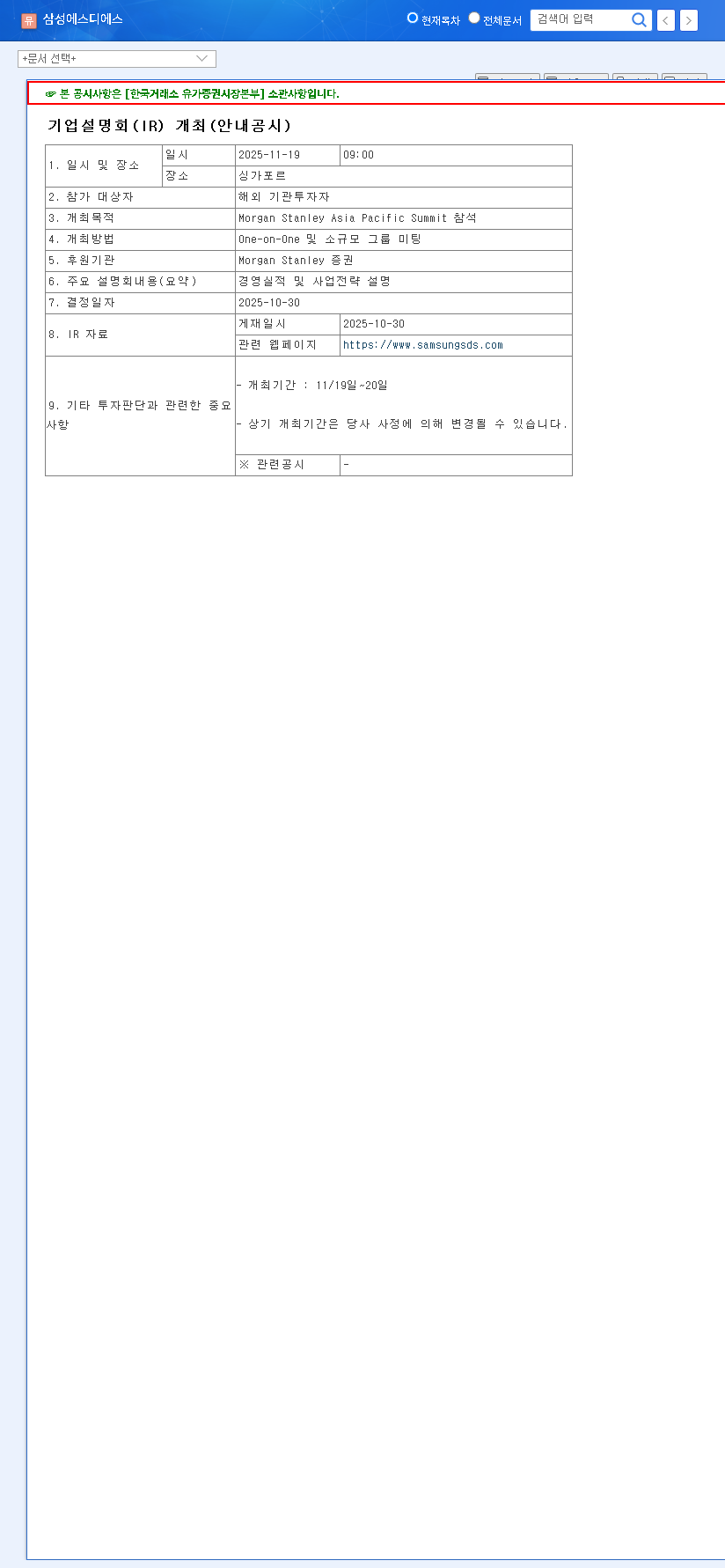
    On November 19, 2025, SAMSUNG SDS CO., LTD. is set to present at the prestigious Morgan Stanley Asia Pacific Summit. With consistent growth propelled by its core engines—Artificial Intelligence (AI) and cloud computing—this event is more than a standard update; it’s a declaration of future intent. This analysis will break down everything investors need to know, from the company’s fundamentals to the strategic implications of the IR and how to position your portfolio accordingly.

    The Main Event: SAMSUNG SDS’s Vision at the Global IR

    The IR session hosted by SAMSUNG SDS is a strategic move to engage with global investors and articulate a compelling vision for long-term growth. This isn’t merely an earnings call; it’s a platform to detail the intricate business strategies that underpin its performance, with a special focus on the high-growth sectors of AI and cloud services. By presenting at a top-tier event like the Morgan Stanley summit, the company aims to solidify its standing in the global market and build robust investor confidence.

    This SAMSUNG SDS IR is a pivotal moment for the company to demonstrate not just its current success, but its strategic foresight in capitalizing on the global demand for enterprise AI and cloud transformation.

    Why Investors Should Pay Attention: A Deep Dive into Fundamentals

    SAMSUNG SDS has consistently demonstrated strong fundamentals, with sustained growth across both its IT Services and Logistics divisions. The real story for Samsung SDS investors, however, lies in the engines driving this expansion: the SAMSUNG SDS cloud business and its generative AI services.

    IT Services: Fueled by AI and Cloud Dominance

    The IT Services division is the company’s powerhouse, with revenue growth directly fueled by the rapid expansion of its cloud services and the strategic deployment of generative AI solutions for enterprises. The company is expertly navigating the expanding global AI market, which according to market research from firms like Gartner, is set for exponential growth. This positions SAMSUNG SDS to capture significant new opportunities.

    • Impressive Growth: Cloud revenue in H1 2025 surged an incredible 21.3% year-over-year, showcasing strong market adoption and service quality.
    • High Profitability: This growth translated to a 17.4% YoY increase in operating profit, largely attributed to the high-margin nature of the cloud business.
    • Positive Outlook: The global demand for digital and cloud transformation remains exceptionally strong, providing a favorable tailwind for future Samsung SDS growth.

    Logistics: Digital Transformation as a Competitive Edge

    While the IT division captures headlines, the Logistics division is undergoing its own powerful transformation. By expanding its digital forwarding services, like its Cello Square™ platform, SAMSUNG SDS is enhancing its global competitiveness. Though facing increased competition, this digital-first approach is key to securing stable revenue and navigating a complex global supply chain environment. Managing profitability remains a key challenge, but its commitment to innovation is a positive indicator. For more details on this strategy, investors can review the company’s Official Disclosure on the DART system.

    Stellar Financial Health

    Underpinning these growth stories is a foundation of sound financial health. SAMSUNG SDS maintains an impressive debt-to-equity ratio of just 33.23%, indicating low leverage and high stability. This financial prudence allows the company to reinvest strategically in its future, with ongoing investments in data center expansion and R&D (1.54% of revenue) to further bolster its AI and Cloud capabilities.

    Looking Ahead: Potential Impacts and Strategic Risks

    This SAMSUNG SDS IR presents a clear opportunity to enhance its global recognition. However, savvy investors must weigh the potential upside against inherent market risks.

    • Positive Signal: A strong presentation on its SAMSUNG SDS AI strategy can significantly boost investor confidence and expand its global shareholder base.
    • Risk of High Expectations: The market has high hopes. The presentation must deliver specific, credible roadmaps to avoid a negative reaction if it’s perceived as falling short.
    • Macroeconomic Headwinds: Global interest rate hikes, commodity price fluctuations, and geopolitical risks could dampen IT investment and logistics demand, impacting future performance.
    • Competitive Pressure: The AI and cloud markets are fiercely competitive. Investors will be looking for clear differentiators and strategies to maintain a competitive edge.

    Action Plan for Investors

    To make an informed decision, investors should approach the SAMSUNG SDS IR with a strategic mindset. Focus on these key areas:

    Key Questions to Ask During the IR:

    • What are the specific, tangible commercialization achievements of their generative AI services? You can learn more about this in our guide to AI enterprise solutions.
    • How does their technology roadmap for the SAMSUNG SDS cloud business differentiate them from major hyperscalers?
    • What are the concrete steps being taken to improve profitability in the competitive logistics sector?
    • How is the company proactively managing risks related to currency fluctuations and macroeconomic uncertainty?

    Ultimately, it’s crucial to adopt a mid-to-long-term perspective. Short-term stock fluctuations are inevitable, but the real value lies in how effectively the vision presented at this IR aligns with the company’s potential for sustained, long-term growth. The clarity of the presentation will be the ultimate determinant of its success. This event is a prime opportunity to gauge the strength of Samsung SDS growth for the years to come.

    (018260) Samsung SDS IR: A Deep Dive into their AI & Cloud Growth Strategy for Investors 관련 이미지
  • (018260) SAMSUNG SDS AI Strategy & Cloud Services: An Investor’s Guide to the JP Morgan Conference

    (018260) SAMSUNG SDS AI Strategy & Cloud Services: An Investor’s Guide to the JP Morgan Conference

    In the fast-paced world of digital transformation, global IT leader SAMSUNG SDS CO., LTD. is poised to make a significant statement. The company is set to present its vision at the prestigious JP Morgan Global TMT Conference, and the market is keenly focused on the Samsung SDS AI strategy and the expansion of its cloud services. This event isn’t just a routine update; it’s a critical moment for investors to gauge the company’s trajectory in the generative AI and cloud computing arenas. This comprehensive analysis will break down what’s at stake, the company’s robust fundamentals, and the key insights investors should be watching for.

    We will explore the concrete achievements driving SAMSUNG SDS forward, providing a clear picture of its potential market impact and future growth prospects ahead of this pivotal investor relations session.

    The Main Event: JP Morgan Global TMT Conference

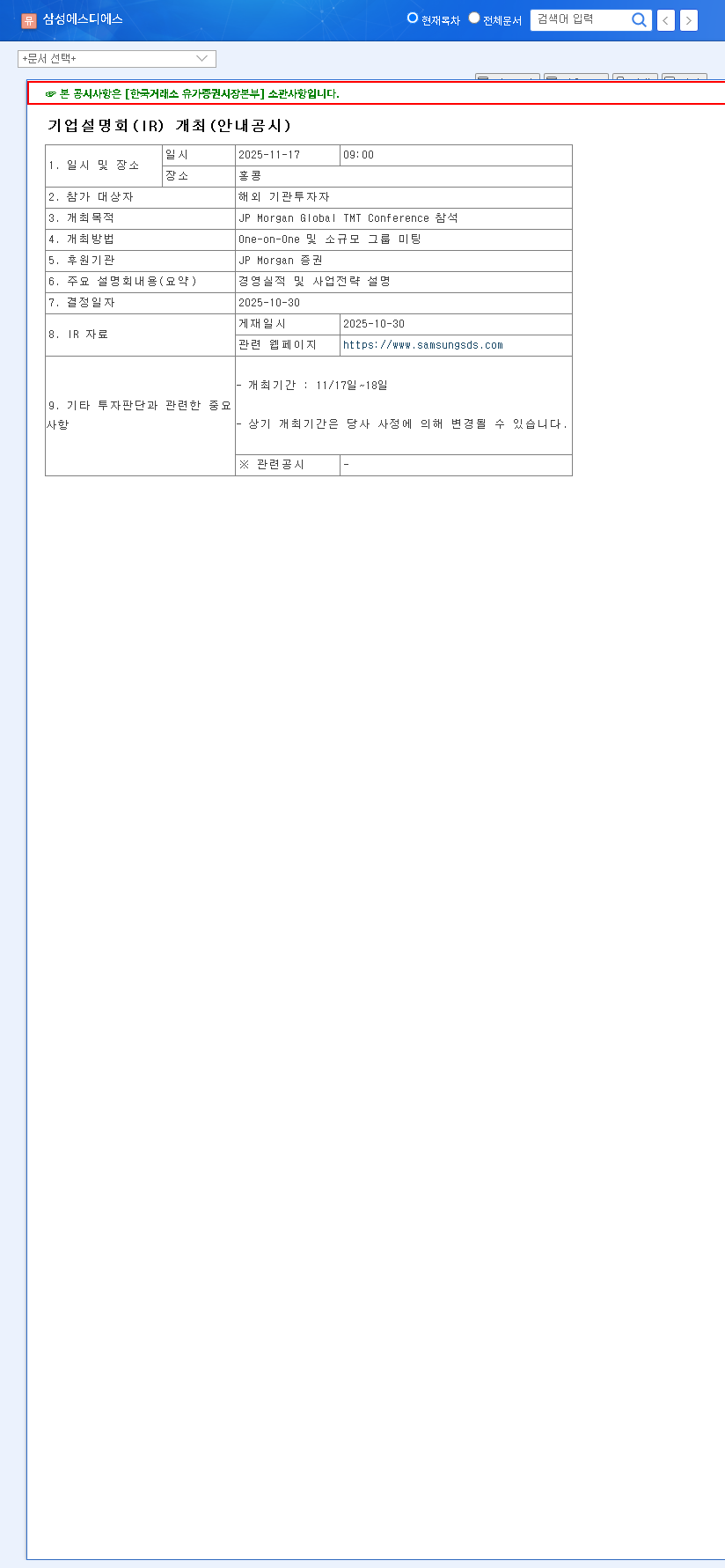
    SAMSUNG SDS is scheduled to take the stage in New York on November 17, 2025, for a key Investor Relations (IR) session. The JP Morgan Global TMT Conference is a premier event, attracting the most influential players and investors in technology, media, and telecommunications. For SAMSUNG SDS, this is a prime opportunity to communicate its 2025 performance and, more importantly, its forward-looking strategies directly to a global audience hungry for innovation and growth.

    • Event: Investor Relations (IR) at JP Morgan Global TMT Conference
    • Date: November 17, 2025
    • Key Focus: Business performance, future growth engines, and a deep dive into its generative AI and Cloud strategies.

    Deep Dive: SAMSUNG SDS’s AI Strategy and Cloud Dominance

    This IR session is built on a foundation of impressive financial health and strategic execution. A look at the company’s recent performance reveals why market expectations are so high. The data, supported by the company’s Official Disclosure, paints a picture of a company firing on all cylinders.

    Explosive Growth in Cloud and Generative AI

    The IT Services division is the core growth engine, with the Samsung SDS cloud services business expanding by a remarkable 18.8%. This isn’t just generic cloud growth; it’s fueled by a sophisticated suite of generative AI solutions that are gaining significant market traction. The generative AI market is expanding rapidly, and SAMSUNG SDS is positioning itself as a leader.

    • FabriX™: An enterprise-grade generative AI platform that enables businesses to securely harness large language models (LLMs) with their own data, accelerating AI adoption.
    • Brity Copilot™: An AI-powered assistant integrated into collaboration tools, automating tasks like meeting summaries, email drafting, and message coding to boost productivity.
    • GPUaaS (GPU as a Service): Provides businesses with the high-performance computing power necessary for developing and running complex AI models without the massive upfront hardware investment.

    Robust Logistics and Financial Stability

    Beyond its high-tech offerings, the company’s Logistics division shows solid 7.1% growth, driven by the global expansion of its Cello Square digital forwarding service. Financially, SAMSUNG SDS is a fortress. With a low debt-to-equity ratio of 33.23% and significant cash reserves, it is well-capitalized to fund ongoing R&D and pursue strategic M&A opportunities, ensuring sustainable long-term growth. This financial prudence provides a stable platform for navigating any macroeconomic headwinds.

    Market Impact and Investor Action Plan

    A successful presentation at the Samsung SDS investor relations event could significantly enhance global trust and boost investor expectations. Clear roadmaps for AI monetization and cloud expansion will be critical. However, investors must also be mindful of the risks, including the immense pressure to meet lofty market expectations and navigate ongoing global economic uncertainties.

    The key for investors is to look past the hype and focus on the substance: a clear, executable strategy for turning cutting-edge AI technology into sustainable, profitable revenue streams. SAMSUNG SDS has the foundation; now it needs to articulate the future.

    Key Questions for Investors to Watch

    As you tune into the updates from the conference, focus on how the leadership of SAMSUNG SDS addresses these critical points:

    • What are the specific monetization models and client success stories for FabriX and Brity Copilot?
    • How will the company defend its market share against hyper-scalers in the global cloud business?
    • What are the next steps for digital innovation in the Cello Square logistics platform?
    • What is the long-term vision for R&D investment and potential acquisitions to maintain a competitive edge? For more on this, read our analysis of enterprise AI platform trends.

    This investor relations event is a crucial turning point. By carefully analyzing the strategies presented, investors can make informed decisions about the role of SAMSUNG SDS in their portfolios as a leader in the ongoing digital revolution.

    Frequently Asked Questions

    Q1: What are the main business areas of SAMSUNG SDS CO., LTD.?

    A: SAMSUNG SDS is a major player in two primary sectors: IT services (including Cloud, Generative AI, Security, and ERP solutions) and IT-based logistics services. The company is strategically focused on leading enterprise digital transformation through its advanced cloud and AI capabilities.

    Q2: What are the key takeaways from SAMSUNG SDS’s AI business performance?

    A: The Samsung SDS AI strategy is delivering tangible results. Its Cloud business grew 18.8%, largely driven by generative AI platforms like FabriX and Brity Copilot. The upcoming IR will provide more detailed metrics on the commercial success of these innovative products.

    Q3: What should investors consider before investing in SAMSUNG SDS?

    A: While fundamentals are strong, investors should assess if the company’s IR presentation meets high market expectations, particularly concerning concrete AI monetization plans. It is also important to consider the company’s resilience and strategy in the face of potential macroeconomic shifts.

    (018260) SAMSUNG SDS AI Strategy & Cloud Services: An Investor's Guide to the JP Morgan Conference 관련 이미지
  • (018260) SAMSUNG SDS IR Analysis 2025: A Deep Dive into Cloud & AI Growth Strategy

    (018260) SAMSUNG SDS IR Analysis 2025: A Deep Dive into Cloud & AI Growth Strategy

    The upcoming SAMSUNG SDS IR (Investor Relations) conference, scheduled for November 3, 2025, is poised to be a pivotal event for investors and market analysts. More than a standard financial review, this conference will unveil the company’s strategic vision, with a significant focus on its aggressive expansion into cloud computing and generative AI. This in-depth analysis unpacks the fundamentals, evaluates the growth drivers, and provides a clear roadmap for what to expect, helping you make informed investment decisions.

    As a key player in the digital transformation landscape, SAMSUNG SDS aims to leverage this platform to showcase its future roadmap. Can the company’s strategy in cloud and AI services truly accelerate its growth trajectory and exceed market expectations? Let’s explore the data and potential outcomes.

    Event Overview: The H2 2025 SAMSUNG SDS IR Conference

    SAMSUNG SDS CO., LTD. has confirmed its Investor Relations conference for domestic institutional investors will take place on November 3, 2025, at 9:00 AM. The primary agenda includes the presentation of financial results for the first half of 2025 and, more critically, a detailed outline of future business strategies. The key talking points are expected to revolve around the company’s two primary engines for SAMSUNG SDS growth: the enhancement of its cloud and AI capabilities and the expansion of its global digital logistics business.

    This isn’t just a report on past performance; it’s a forward-looking statement on how SAMSUNG SDS plans to dominate the next wave of enterprise technology. Investors will be scrutinizing the tangible plans for monetizing AI and improving profitability across all segments.

    Fundamental Analysis: A Strong Financial Foundation

    Robust Performance in H1 2025

    SAMSUNG SDS has demonstrated consistent and solid growth, reporting a total revenue of KRW 7.017 trillion in the first half of 2025, a notable 5.8% increase year-over-year. This growth is not monolithic but diversified across its core divisions.

    • IT Service Division: This division saw revenues climb by 3.3%. The standout performer was SAMSUNG SDS Cloud services, which surged by an impressive 21.4%. This highlights the success of their strategic pivot towards generative AI solutions and next-gen tech services.
    • Logistics Division: Benefitting from an expanding global market and the digitization of forwarding services, this division grew by 7.1%. However, its lower operating profit margin remains a key challenge that investors will want to see addressed at the SAMSUNG SDS IR event.
    • Financial Stability: The company’s balance sheet is exceptionally strong, with a low debt-to-equity ratio of 33.23%, providing a stable platform for future investment and growth.

    Strategic Focus on AI and Cloud Services

    The market environment is highly favorable, with the global IT service sector projected to grow significantly. SAMSUNG SDS is perfectly positioned to capture this growth, thanks to its deep investment in high-demand technologies. The company’s strategy is centered on accelerating its transformation into a cloud-native organization and strengthening its generative SAMSUNG SDS AI business. Key initiatives include:

    • FabriX: A platform designed to streamline the integration of generative AI into enterprise systems, enabling businesses to build and deploy custom AI applications securely.
    • Brity Copilot: An AI-powered assistant that enhances productivity by automating tasks and providing intelligent insights directly within existing workflows.
    • GPUaaS (GPU as a Service): Providing on-demand access to high-performance computing resources, which are essential for training and running complex AI models. This is a critical service in the current AI landscape, according to market analysis from sources like Gartner.

    Market Expectations and Investment Thesis

    The consensus among market analysts is positive, with many maintaining a ‘BUY’ rating for SAMSUNG SDS stock. This optimism is fueled by the robust growth in its core IT businesses and the vast market potential of its new generative AI services. The stable financial backing of the Samsung Group further solidifies its position. However, a comprehensive Samsung SDS stock analysis must also consider potential risks.

    The company’s success will depend on its ability to improve profitability in the logistics division and navigate global economic uncertainties. If the SAMSUNG SDS IR presentation fails to deliver a convincing strategy or falls short of lofty market expectations, it could temper investor enthusiasm. The full details of the company’s filing can be reviewed in the Official Disclosure (Source: DART).

    Action Plan: Key Watch Points for Investors

    For investors tuning into the event, the focus should be on specifics. Vague promises won’t suffice; the market will be looking for concrete data and clear roadmaps. To better understand the technology at play, you might want to read our guide on how generative AI is transforming business.

    Here are the critical points to watch for during the presentation:

    • AI & Cloud Revenue Models: Look for specific performance indicators (KPIs) and clear monetization strategies for FabriX, Brity Copilot, and other AI services.
    • Logistics Profitability Plan: Demand a convincing and detailed plan for improving the operating margins in the logistics division.
    • Medium-to-Long-Term Forecasts: Pay attention to any new business plans or updated financial forecasts that can shed light on the company’s long-term growth ambitions.

    In conclusion, this SAMSUNG SDS IR event is a crucial opportunity for the company to reinforce investor confidence. By effectively communicating its strategic direction in AI and cloud, and by addressing concerns about profitability, SAMSUNG SDS can set a positive tone for its stock performance and solidify its position as a leader in the digital era.

    (018260) SAMSUNG SDS IR Analysis 2025: A Deep Dive into Cloud & AI Growth Strategy 관련 이미지
  • (018260) Samsung SDS Q3 Earnings 2025: A Deep Dive on AI, Cloud, and Stock Impact

    (018260) Samsung SDS Q3 Earnings 2025: A Deep Dive on AI, Cloud, and Stock Impact

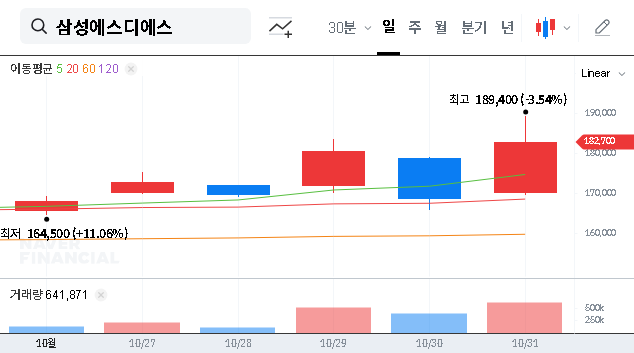
    The upcoming Samsung SDS Q3 earnings briefing, scheduled for October 30, 2025, is a pivotal event for investors. As a leader in IT services and logistics, Samsung SDS (018260) is increasingly betting its future on high-growth sectors like artificial intelligence and cloud computing. This analysis will dissect the company’s current financial health, explore the potential market impact of the Q3 results, and provide a strategic outlook for those considering a Samsung SDS investment.

    We’ll delve into the key growth drivers, identify potential risks, and outline what stakeholders should be listening for during the call to make informed decisions about the future of Samsung SDS stock.

    Event Snapshot: Samsung SDS Q3 Earnings Call

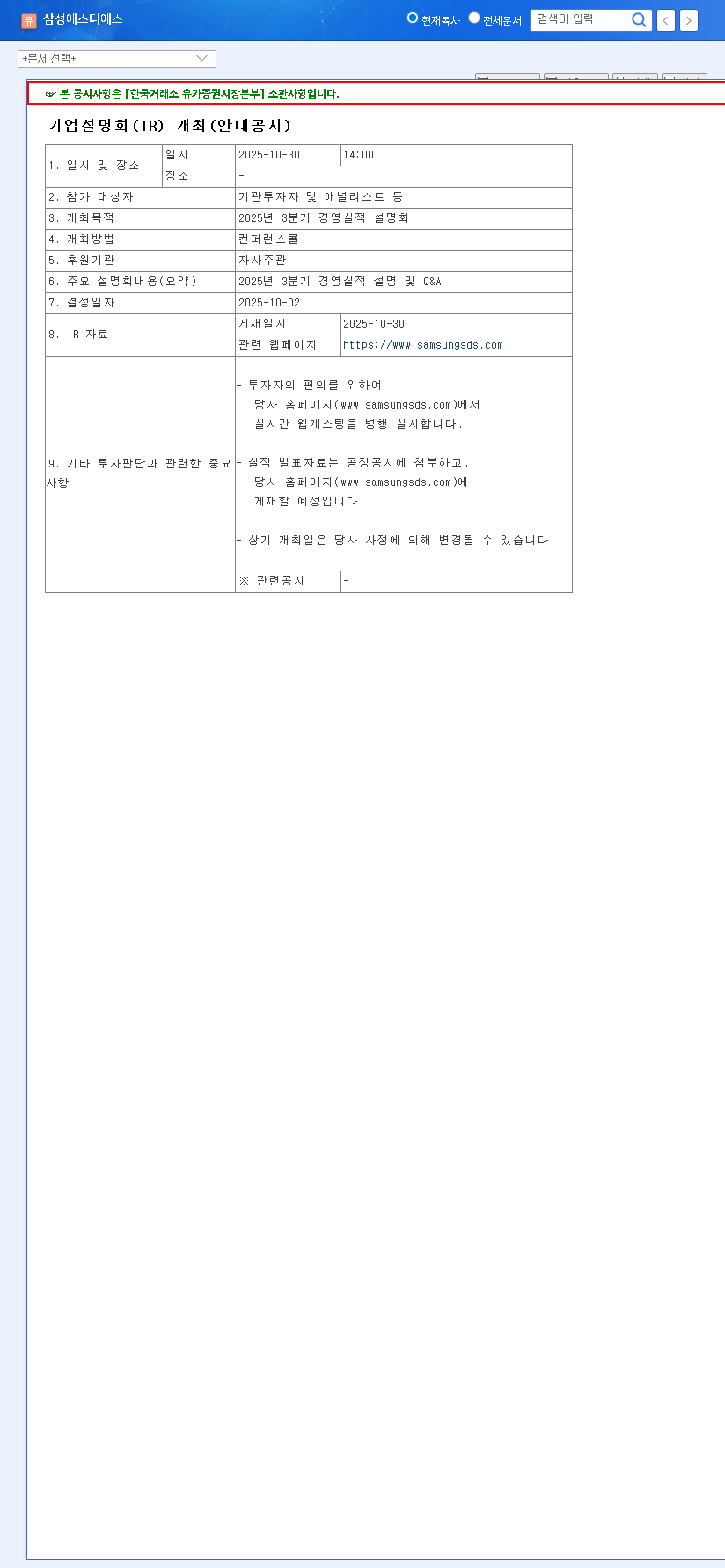
    Mark your calendars: Samsung SDS will present its Q3 2025 financial results and business outlook on October 30, 2025, at 2:00 PM KST. This briefing is more than just a numbers report; it’s a critical opportunity for management to articulate their strategy, particularly concerning the performance and roadmap for their burgeoning AI and cloud divisions. The subsequent Q&A session will offer invaluable, direct insights into the company’s trajectory.

    Fundamental Analysis: Growth Drivers & Key Risks

    Powering Growth with Samsung SDS AI and Cloud

    The core of the investment thesis for Samsung SDS revolves around its successful transition into a next-generation technology provider. The company’s focus on Samsung SDS AI and Samsung SDS cloud services is not just a talking point; it’s a significant revenue driver. The IT Services division’s growth, which outpaced the logistics arm in H1 2025, was largely fueled by cloud adoption.

    Key platforms to watch are the generative AI offerings: FabriX (an enterprise collaboration platform) and Brity Copilot (an AI-powered work assistant). Their adoption rates and monetization strategies will be a focal point of the Q3 earnings call.

    Furthermore, the expansion of its GPU-as-a-Service (GPUaaS) offering positions Samsung SDS to capitalize on the insatiable demand for AI-driven computational power. Investors should look for concrete metrics on customer acquisition and revenue contribution from these new technology ventures. To understand the broader market, you can explore market trends in cloud computing for more context.

    Financial Stability vs. Profitability Challenges

    Financially, Samsung SDS stands on solid ground. A consolidated debt-to-equity ratio of 33.23% indicates low leverage and a resilient balance sheet. Consistent investment in R&D (1.54% of sales) further reinforces its commitment to innovation. For a complete financial overview, investors can review the Official Disclosure on DART.

    However, headwinds exist that could affect the Samsung SDS stock price:

    • Logistics Margin Pressure: The logistics division’s operating profit margin (13.8%) lags behind the IT services unit. Any failure to present a clear path to improving profitability could weigh on investor sentiment.
    • Regional Disparities: A reported 8.2% revenue decrease in China highlights geopolitical and economic risks. The company must address its strategy for navigating these challenging markets.
    • Macroeconomic Factors: Global economic slowdowns, persistent high-interest rates, and currency fluctuations are external risks that require savvy management and hedging strategies.

    Potential Scenarios Following the Q3 Earnings Call

    Positive Scenario (Bull Case)

    If Q3 results significantly beat expectations, showcasing accelerated growth in the Samsung SDS cloud and AI divisions, the stock could see a substantial rally. A positive surprise would be concrete evidence of FabriX and Brity Copilot gaining major enterprise clients, coupled with a clear, actionable plan to boost logistics profitability. This would signal strong execution and validate the company’s long-term growth narrative.

    Neutral Scenario (Base Case)

    An in-line earnings report that meets market consensus would likely keep the stock price stable. In this scenario, the company demonstrates steady, continued growth in its core businesses. The focus would be on management’s forward-looking guidance. Positive commentary on the AI pipeline and a stable outlook for the logistics sector would reinforce confidence, preventing any significant sell-off.

    Negative Scenario (Bear Case)

    Downward pressure on the Samsung SDS stock is likely if Q3 results miss expectations or if guidance is weak. Key triggers for a negative reaction would include a slowdown in cloud revenue growth, an admission of slower-than-expected adoption of AI platforms, or a further deterioration in logistics margins without a credible solution. This would raise concerns about the company’s ability to navigate the competitive landscape and macroeconomic challenges.

    Investor Action Plan & Strategic Outlook

    The Samsung SDS Q3 earnings report is a critical data point. For long-term investors, the key is to look beyond a single quarter’s results and focus on the strategic trajectory. The company’s push into generative AI is a high-potential area; to learn more about generative AI platforms, see our related analysis.

    Investment Opinion: Neutral with a Positive Long-Term Bias. While short-term volatility is expected around the earnings release, the company’s solid financial footing and strategic investments in AI and cloud create a compelling long-term growth story. We recommend that investors carefully analyze the Q3 report and management’s commentary before making new investment decisions. Pay closest attention to the growth rate of high-margin IT services and any specific progress on improving logistics profitability.

    Disclaimer: This analysis is for informational purposes only and is based on publicly available information. Investment decisions should be made based on individual research and consultation with a financial advisor.

    (018260) Samsung SDS Q3 Earnings 2025: A Deep Dive on AI, Cloud, and Stock Impact 관련 이미지
  • (018260) Samsung SDS Stock Analysis: Why NPS’s Major Investment Signals Growth in Cloud & AI

    (018260) Samsung SDS Stock Analysis: Why NPS’s Major Investment Signals Growth in Cloud & AI

    When South Korea’s largest institutional investor, the National Pension Service (NPS), makes a significant move, the market pays close attention. Recently, the NPS increased its stake in Samsung SDS, a major player in IT services. This action is more than just a routine transaction; it’s a powerful vote of confidence in the future of Samsung SDS stock and its strategic direction, particularly in the high-growth sectors of cloud computing and artificial intelligence (AI).

    This comprehensive analysis will delve into the details of the NPS investment, dissect the core drivers of Samsung SDS’s business, and provide a clear-eyed view of the potential impact on its stock price. Whether you’re a current investor or considering a new position, this guide will equip you with the essential insights needed for a sound investment strategy.

    Decoding the NPS Investment in Samsung SDS

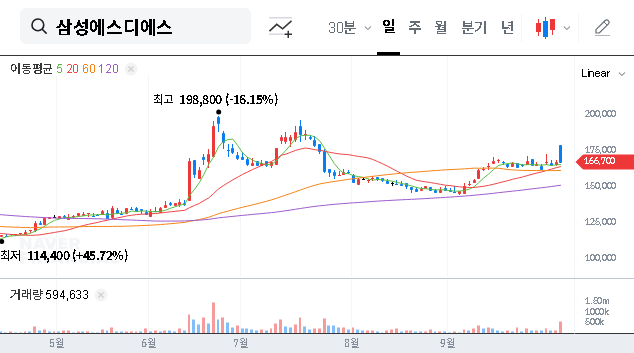
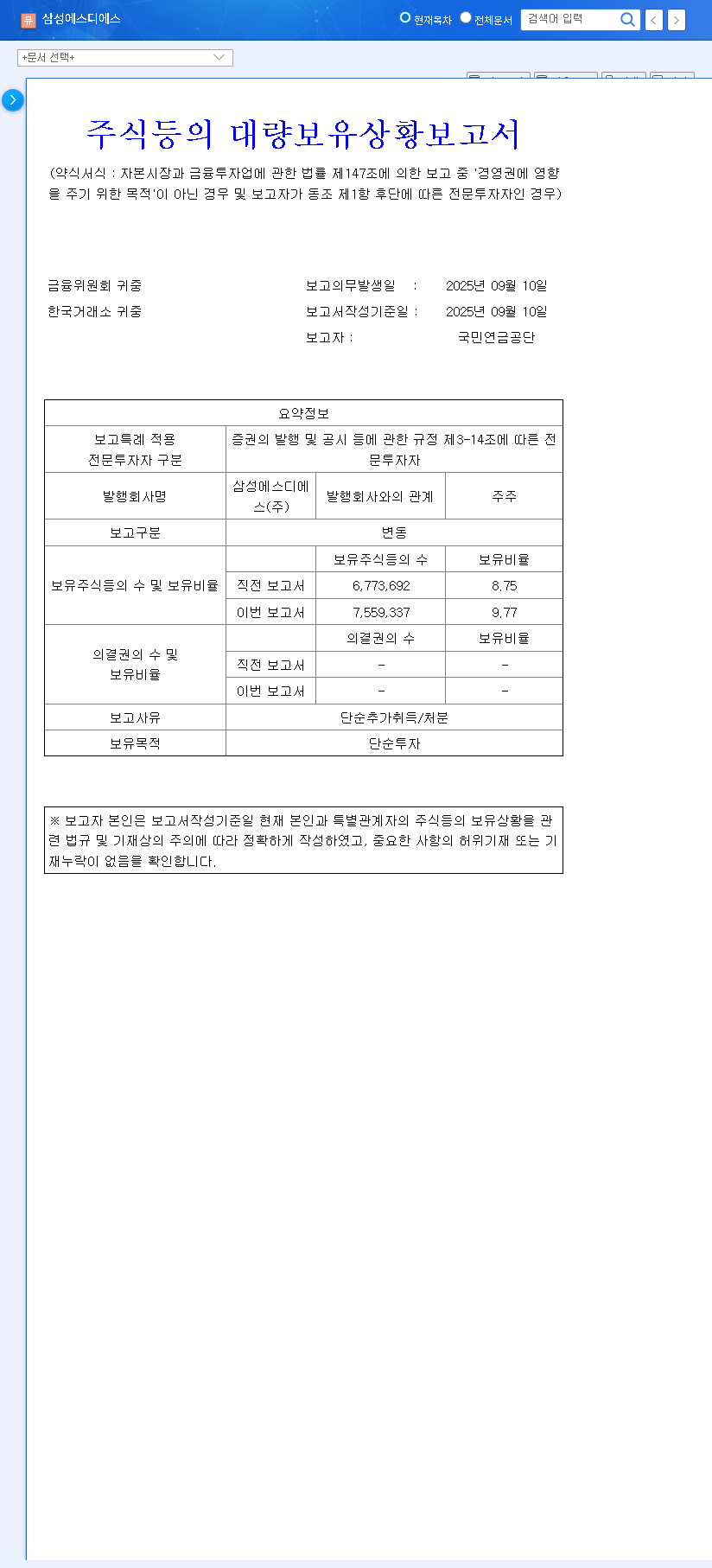
    The National Pension Service acquired an additional 1.02 percentage point stake in Samsung SDS, raising its total holding from 8.75% to a significant 9.77%. According to the Official Disclosure, the stated purpose is ‘simple investment’. This classification is crucial—it signals that the NPS is not seeking to influence management but rather believes strongly in the company’s intrinsic value and long-term growth potential. For the average investor, this is a bullish signal, suggesting that the fundamentals of the Samsung SDS stock are robust.

    An increased stake by a powerhouse investor like the NPS often precedes positive market sentiment, enhancing investor confidence and potentially creating upward momentum for the stock price.

    The Growth Engines: A Deep Dive into Samsung SDS’s Business

    To understand the NPS’s confidence, we must look at the company’s core operations. Samsung SDS is primarily divided into two key segments: high-margin IT services and large-scale logistics.

    1. IT Services: The Powerhouse of Cloud and AI

    The IT services division is the crown jewel of Samsung SDS. It’s where the most exciting growth is happening, driven by the global demand for digital transformation. The performance here is stellar:

    • Explosive Cloud Growth: The Samsung SDS cloud business recorded a phenomenal 21.5% growth, significantly outpacing the market.
    • Generative AI Leadership: The company is enhancing its Samsung SDS AI capabilities, launching innovative services like GPUaaS (GPU as a Service) to power the next wave of artificial intelligence applications.
    • Incredible Profitability: This division boasts an exceptionally high operating profit margin of 86.2%, demonstrating immense efficiency and pricing power.
    • Favorable Market Trends: The broader IT services market is projected to grow annually by 8.6% to 10.4%, according to industry analysis from firms like Gartner, providing a strong tailwind for continued expansion.

    2. Logistics Division: Growth with a Need for Optimization

    The logistics arm of Samsung SDS also shows solid revenue growth at 7.1%. However, it faces challenges with profitability, as its operating profit margin of 13.8% saw a year-on-year decline. The key opportunity here lies in leveraging technology. The rapid growth of the digital forwarding market (19.6% CAGR) is a perfect match for Samsung SDS’s Cello Square platform, which could significantly boost efficiency and margins over time.

    Investment Strategy: What This Means for Samsung SDS Stock

    Considering all factors, what is the best investment strategy for Samsung SDS? Let’s break down the key points for investors.

    Key Positives (Strengths)

    • Dominant and highly profitable IT services division.
    • Strong institutional backing from the NPS, boosting market confidence.
    • Rock-solid financial health with a low debt-to-equity ratio of 33.23%.
    • Positioned perfectly to benefit from ongoing digital transformation and AI trends.

    Points of Consideration (Risks)

    • Logistics Profitability: The need to improve margins in the logistics segment is a key focus area.
    • Macroeconomic Factors: Global interest rate changes and currency fluctuations can impact performance.
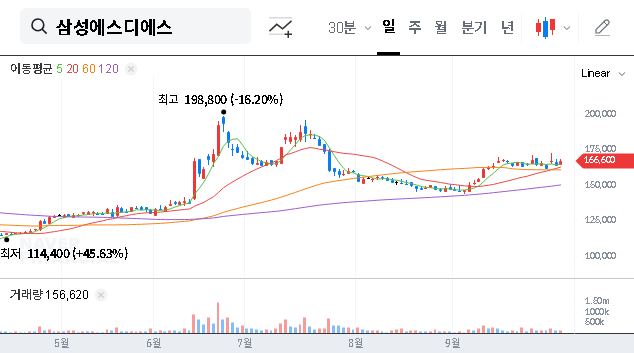
    • Valuation: The stock’s valuation (2025E PER 136.16x) is high, suggesting much of the future growth is already priced in. Investors should understand how this fits their risk profile. For more on this, see our guide on how to value tech stocks.

    Conclusion and Recommendation

    The NPS’s increased stake is a clear endorsement of Samsung SDS’s long-term vision. For short-term traders, this news could provide positive momentum. For long-term investors, the fundamental story is compelling, rooted in the undeniable growth of Samsung SDS cloud and AI services. However, due to the high valuation, a prudent investment strategy would be to consider a phased-in buying approach or dollar-cost averaging rather than a single lump-sum investment. The outlook for Samsung SDS stock remains bright, but patience and strategic entry will be key.

    Disclaimer: This article is for informational purposes only and does not constitute investment advice. All investment decisions should be based on your own research and judgment.

    (018260) Samsung SDS Stock Analysis: Why NPS's Major Investment Signals Growth in Cloud & AI 관련 이미지
  • Samsung SDS at KB Korea Conference: AI & Cloud Growth Momentum and Logistics Profitability Strategy

    Samsung SDS at KB Korea Conference: AI & Cloud Growth Momentum and Logistics Profitability Strategy 대표 차트 이미지

    1. KB Korea Conference: What Did Samsung SDS Announce?

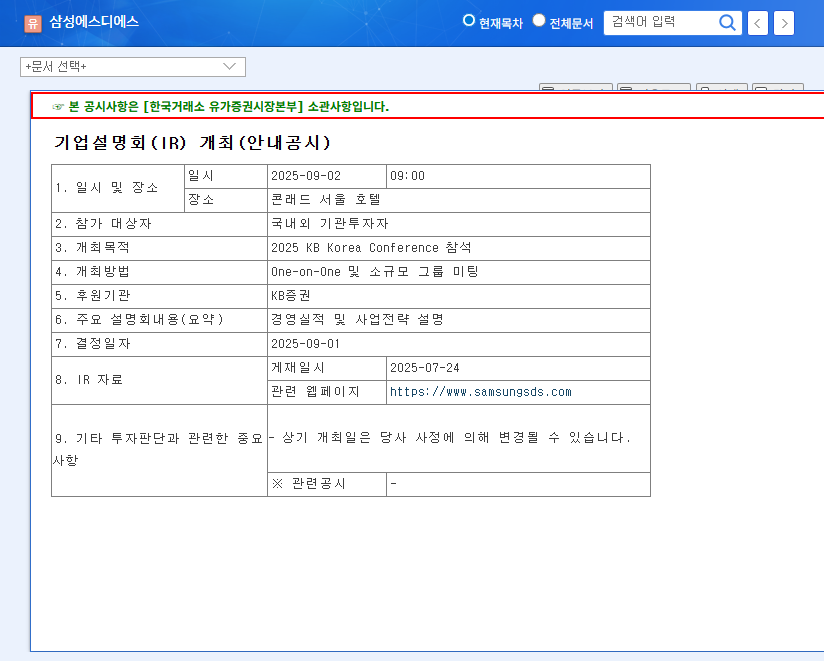
    Samsung SDS presented its first-half 2025 business performance and future strategies at the KB Korea Conference on September 2, 2025. Key highlights included the robust growth of its IT services, increased investment in AI and cloud businesses, and efforts to improve profitability in the logistics sector.

    2. Performance Analysis: IT Services Growth vs. Logistics Decline, Why?

    In the first half of 2025, Samsung SDS achieved revenue of KRW 7.017 trillion (a 5.8% increase year-on-year). While the IT services sector grew by 4.4%, operating profit decreased by 11.2% to KRW 498.7 billion due to declining profitability in the logistics sector (-12.8%) and increased R&D expenses. The decline in logistics profitability is attributed to intensified competition and freight rate volatility.

    3. Future Growth Strategies: AI, Cloud, and Digital Logistics Innovation. How?

    Samsung SDS plans to strengthen its AI and cloud businesses within the IT services sector with FabriX, Brity Copilot, and GPUaaS. In the logistics sector, the company will focus on expanding digital forwarding services based on Cello Square and enhancing competitiveness through investment in Vizion, a US-based digital logistics startup.

    4. Key Checkpoints for Investors

    • Concrete achievements and future growth potential of AI and cloud businesses
    • Effectiveness of logistics profitability improvement strategies
    • Response strategies to global economic slowdown and exchange rate volatility

    Investors should carefully analyze the future growth potential and risk factors of Samsung SDS based on information from this IR session and reflect them in their investment strategies.

    Frequently Asked Questions (FAQ)

    What are the main business segments of Samsung SDS?

    Samsung SDS focuses on two main business segments: IT services and logistics. The IT services segment covers cloud, AI, SI, and ITO businesses, while the logistics segment provides digital logistics services based on the Cello Square platform.

    What are the competitive advantages of Samsung SDS’s AI and cloud business?

    Samsung SDS strengthens its competitiveness by providing customized services based on its proprietary AI platform, Brity, and cloud platform, FabriX. It also offers specialized cloud services such as GPUaaS (GPU as a Service).

    What are the strategies to improve profitability in the Samsung SDS logistics division?

    Samsung SDS is striving to improve competitiveness and profitability in its logistics business by expanding digital forwarding services based on the Cello Square platform and strengthening its global network. They are also focusing on acquiring external capabilities through investments in Vizion, a US-based digital logistics startup.

    Samsung SDS at KB Korea Conference: AI & Cloud Growth Momentum and Logistics Profitability Strategy 관련 이미지
  • Samsung SDS to Hold IR on August 18th: Generative AI, Q2 Earnings, and Investment Strategy

    1. Key IR Focus: What to Expect

    The Samsung SDS IR on August 18, 2025, will unveil the company’s Q2 earnings and future business strategies. Key areas of focus include the concrete roadmap for their generative AI business, strategies to improve profitability in the logistics sector, and plans to address the global economic slowdown.

    2. Q1 2025 Earnings Analysis: Growth and Risks

    Samsung SDS reported KRW 3.4898 trillion in revenue for Q1 2025, a 7.5% increase year-over-year. Growth was driven by the IT services division, particularly cloud services. However, decreased operating profit margins in the logistics division raise questions about future profitability.

    3. Investment Strategy: Utilizing IR Information

    Information revealed during the IR can significantly impact stock prices. Positive business outlooks and concrete growth plans can drive stock prices upward, while unexpected risk factors or negative forecasts can lead to declines. Investors should carefully analyze the IR information, assess future business strategies and risk management plans, and make informed investment decisions.

    • Key Checkpoints:
      • Generative AI Business Roadmap
      • Logistics Sector Profitability Improvement Strategy
      • Global Economic Slowdown Countermeasures
      • Plans to Reduce Reliance on Major Clients

    Frequently Asked Questions

    What are Samsung SDS’s main businesses?

    Samsung SDS focuses on IT services and logistics. In IT services, they offer cloud, AI, and security services. In logistics, they provide digital forwarding services based on the Cello Square platform.

    What is their generative AI business about?

    Samsung SDS is developing generative AI services like FabriX and Brity Copilot. These services are expected to increase business efficiency and create new opportunities for companies.

    How can I participate in the IR?

    Information on how to participate in the IR can be found on the official Samsung SDS website or related announcements.