Tag: Samsung Life Insurance

  • (028260) SAMSUNG C&T Stock Disclosure: Decoding Lee Jae-yong’s ‘Contract Change’

    (028260) SAMSUNG C&T Stock Disclosure: Decoding Lee Jae-yong’s ‘Contract Change’

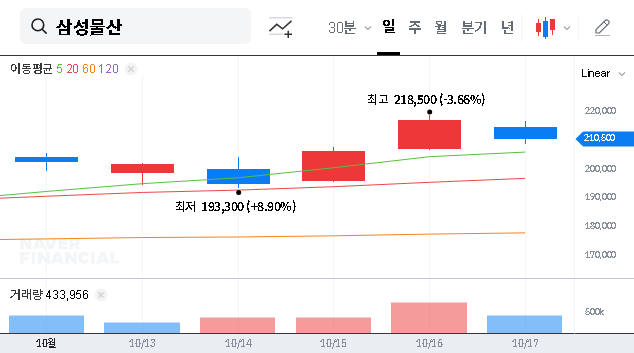
    In the world of high-stakes corporate finance, few events garner as much attention as a major shareholder filing. The recent SAMSUNG C&T stock disclosure by Lee Jae-yong is a prime example, creating a ripple of curiosity among investors. While his direct SAMSUNG C&T shareholding remained unchanged, the filing’s mention of a ‘contract change’ opens a door to strategic maneuvers happening behind the scenes. This report is more than a formality; it’s a signal about the future of Samsung’s intricate corporate governance structure.

    This comprehensive analysis will dissect the nuances of this disclosure, explore the potential meanings behind the mysterious ‘contract change,’ and provide a strategic framework for investors to navigate the implications for SAMSUNG C&T CORPORATION, the de facto holding company of the Samsung Group.

    Deconstructing the Official Disclosure

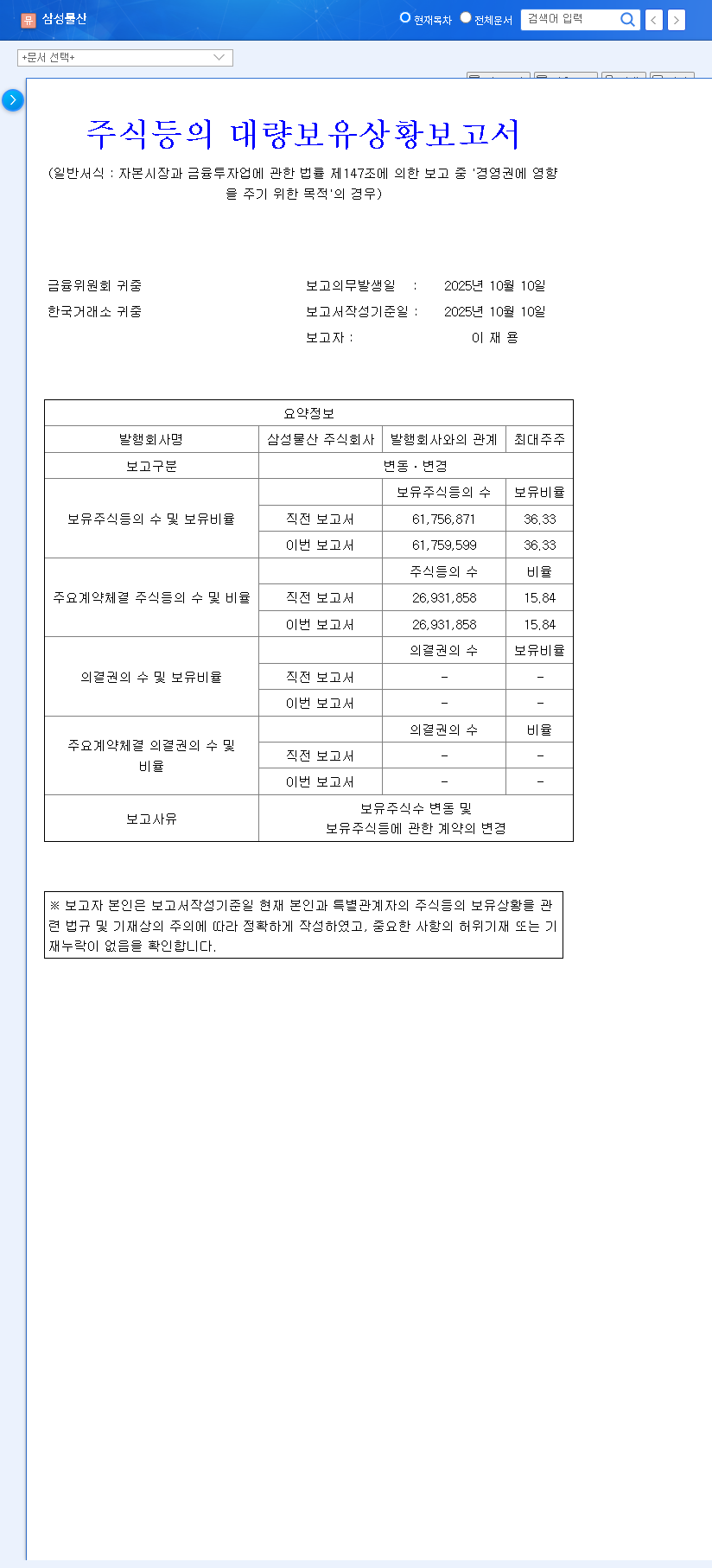
    On October 17, 2025, a mandatory filing titled ‘Report on the Status of Large Shareholder’s Holdings of Stocks, etc. (General)’ was submitted. The purpose stated by Lee Jae-yong for SAMSUNG C&T was explicitly ‘management control influence.’ While the headline numbers showed no change, the devil is in the details.

    Key Filing Details at a Glance

    • Reporting Party: Lee Jae-yong
    • Holding Purpose: Management control influence
    • Shareholding Ratio: Unchanged at 36.33%
    • Stated Reason for Report: Change in the number of shares held and change in contracts related to shares held.

    The complete filing offers the most granular data. You can review the Official Disclosure on DART for a first-hand look at the report.

    The Core Mystery: What is the SAMSUNG C&T ‘Contract Change’?

    The most significant part of this SAMSUNG C&T stock disclosure is the ‘contract change.’ This vague terminology can encompass several strategic financial arrangements that alter control or obligations without an outright sale or purchase of shares. Potential scenarios include:

    • Trust Agreements: Placing shares into a trust for succession planning, wealth management, or to consolidate voting rights.
    • Stock Lending or Collateral Agreements: Using shares as collateral for loans, which could have covenants that affect control under certain conditions.
    • Shareholder Agreements: A new or revised agreement with other major shareholders that redefines voting blocs or strategic alignment.

    While the share count remains static, the underlying power dynamics may be in flux. This ‘contract change’ is a precursor to a potential strategic shift, making it a critical detail for long-term investors.

    Why Samsung C&T is the Linchpin of Samsung’s Governance

    To understand the weight of this news, one must appreciate Samsung C&T’s role. It is not merely a construction and trading company; it is the key holding company at the apex of Samsung Group’s complex circular shareholding structure. Lee Jae-yong’s substantial stake in Samsung C&T gives him effective control over Samsung Life Insurance, which in turn is a major shareholder in Samsung Electronics. Therefore, any adjustment to his SAMSUNG C&T shareholding or related contracts has cascading effects throughout the entire conglomerate. For a deeper look, you can read our guide on Samsung’s Corporate Governance Structure.

    Investor Strategy: Navigating the Uncertainty

    Given the limited information, a knee-jerk reaction is unwarranted. However, proactive analysis is essential. The immediate market impact is likely to be muted, but the long-term implications depend entirely on the nature of the contract change.

    Potential Risks and Opportunities

    • Risk: Uncertainty is the primary risk. If the contract change introduces complexity or perceived instability in management control, it could create stock price volatility.
    • Opportunity: If the change is part of a broader strategy to streamline governance, simplify succession, or unlock value (e.g., restructuring), it could be a major long-term positive for corporate value.

    Actionable Monitoring Points

    Investors should monitor follow-up disclosures for clarity on the contract. It’s also wise to stay updated on analyses from reputable financial sources like Bloomberg or Reuters. Continue to evaluate Samsung C&T’s fundamentals across its diverse segments—Construction, Trading & Investment, Fashion, and Resort—to ensure the underlying business remains strong.

    Frequently Asked Questions (FAQ)

    Q1: What is the key takeaway from Lee Jae-yong’s recent SAMSUNG C&T stock disclosure?

    A1: The main takeaway is the ‘change in contracts related to shares held.’ While Lee Jae-yong’s 36.33% shareholding is unchanged, this contractual modification signals a potential strategic adjustment in his management control over Samsung Group.

    Q2: Did Lee Jae-yong’s ownership percentage in SAMSUNG C&T change?

    A2: No. The report clearly states his shareholding ratio in SAMSUNG C&T CORPORATION remained constant at 36.33%.

    Q3: How should investors react to this news?

    A3: The recommended approach is ‘watchful waiting.’ Avoid immediate trading decisions based on this single disclosure. Instead, focus on seeking more information about the contract change and continue to analyze Samsung C&T’s fundamental business performance.
    (028260) SAMSUNG C&T Stock Disclosure: Decoding Lee Jae-yong's 'Contract Change' 관련 이미지
  • Asiana IDT Secures KRW 22.3 Billion IT Outsourcing Contract with Samsung Life Insurance: Investment Outlook


    Asiana IDT Secures KRW 22.3 Billion IT Outsourcing Contract with Samsung Life Insurance: Investment Outlook 대표 차트 이미지


    1. What Happened? – KRW 22.3 Billion Contract with Samsung Life

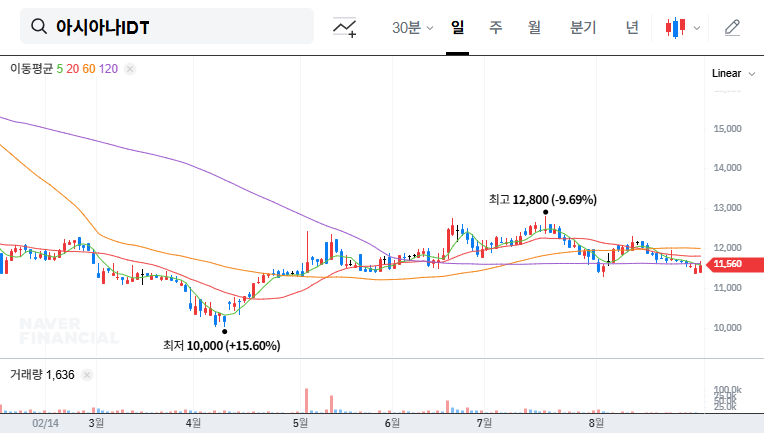
    Asiana IDT has signed a three-year contract with Samsung Life Insurance to provide IT outsourcing services starting September 1, 2025. The contract is worth a significant KRW 22.3 billion, representing 11.51% of Asiana IDT’s recent annual revenue. This agreement, focusing on ‘2nd Information Technology Outsourcing services,’ is expected to be a crucial stepping stone for expanding Asiana IDT’s core business.

    2. Why Does It Matter? – Securing Asiana IDT’s Growth Engine

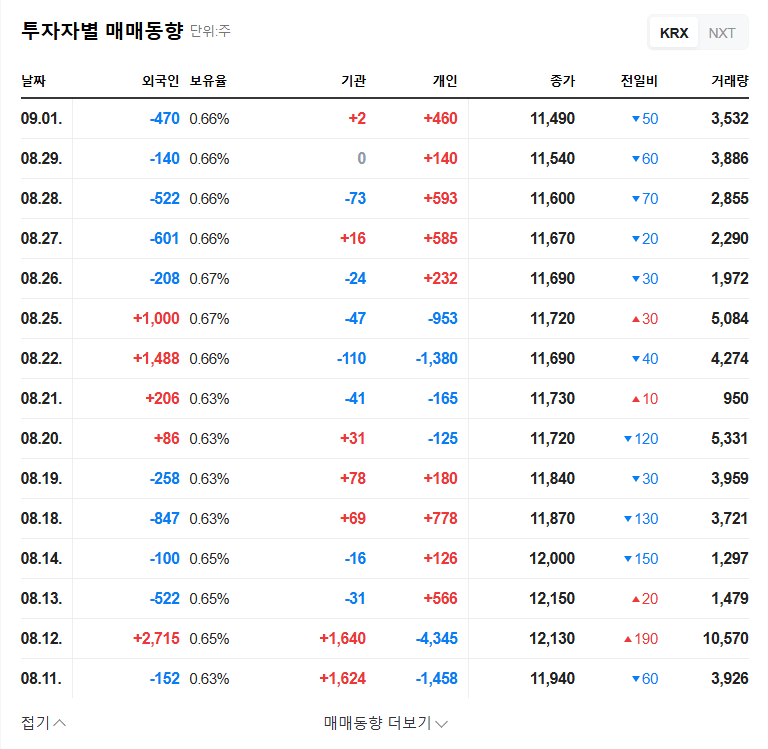
    This contract signifies more than just revenue growth; it’s a key factor that could positively transform Asiana IDT’s future. The three-year term provides a stable revenue stream and the collaboration with a major financial institution like Samsung Life Insurance is expected to enhance Asiana IDT’s technological capabilities and credibility. This is particularly important for expanding its presence in the financial IT outsourcing market and increasing the likelihood of securing similar contracts in the future, ultimately contributing to long-term growth. For Asiana IDT, which recorded operating losses in both 2023 and 2024, this contract represents a significant opportunity to improve profitability.

    3. What’s Next? – Investment Outlook and Considerations

    Experts have a positive outlook on this contract. The growth of the IT outsourcing market and securing Samsung Life as a major client are expected to positively impact Asiana IDT’s corporate value. However, there are some points to consider. The profitability of IT outsourcing services heavily relies on operational efficiency, and macroeconomic changes (interest rates, exchange rates, etc.) can also have an impact. Therefore, investors should continuously monitor improvements in profitability and efforts towards further business expansion.

    4. What Should Investors Do? – Careful Observation and Long-Term Perspective

    This contract is a significant indicator of Asiana IDT’s growth potential. Investors should continuously monitor the company’s earnings announcements and business progress, analyze the impact of macroeconomic indicator changes, and develop investment strategies from a long-term perspective.


    Frequently Asked Questions (FAQ)

    How much will this contract contribute to Asiana IDT’s profitability?

    While the KRW 22.3 billion contract is expected to directly contribute to increased revenue, the actual impact on profitability will depend on the operational efficiency of the service delivery. Investors should closely monitor the company’s future earnings announcements to assess the improvement in profitability.

    Besides the Samsung Life contract, what are other growth drivers for Asiana IDT?

    Asiana IDT provides IT services in the aviation/airport, finance, and construction/mobility sectors. It is expected to secure various business opportunities driven by the growth of the IT market, including digital transformation, cloud adoption, and the expansion of AI technology.

    What are the key considerations for investment?

    Investors should carefully consider changes in the macroeconomic environment (interest rates, exchange rate fluctuations, etc.) and the competitive landscape of the IT market. It is also important to continuously monitor the company’s efforts to improve profitability and its strategies for further business expansion.


    Asiana IDT Secures KRW 22.3 Billion IT Outsourcing Contract with Samsung Life Insurance: Investment Outlook 관련 이미지
    Asiana IDT Secures KRW 22.3 Billion IT Outsourcing Contract with Samsung Life Insurance: Investment Outlook 관련 이미지


  • Samsung Life Insurance IR Analysis: H1 2025 Earnings and Stock Outlook

    1. Key IR Highlights: What’s Happening?

    Samsung Life will release its H1 2025 financial results on August 12th at 10:00 AM KST. Key performance indicators, including revenue, operating profit, and net income, will be revealed, along with updates on the RBC ratio, future business outlook, and asset management plans.

    2. Core Analysis: Why It Matters

    • RBC Ratio Decline: While the recently confirmed RBC ratio of 177.2% is stable, the downward trend could negatively impact investor sentiment.
    • Profitability Indicators: Projected declines in operating and net profit margins for 2025 require clarification during the IR.
    • External Factors: Analysis of how external factors like exchange rates, interest rates, and oil prices have impacted Samsung Life’s performance is crucial. The US and Korean interest rate hikes and bond yield fluctuations, in particular, will heavily influence asset management strategies.

    3. Market Expectations and Outlook: What’s Next?

    While the absence of analyst reports makes gauging market expectations challenging, considering past stock price patterns and the current economic climate, the Q3 earnings forecast and RBC ratio trajectory are key factors to watch. A positive growth outlook and a clear strategy for navigating external factors could drive stock price appreciation, while disappointing results could lead to declines.

    4. Investor Action Plan

    Carefully review the IR information and analyze the earnings and future outlook to adjust your investment strategy accordingly. Closely monitor stock price movements and conduct further analysis to evaluate long-term investment value.

    Q: When is the Samsung Life Insurance IR scheduled?

    A: The IR is scheduled for August 12, 2025, at 10:00 AM KST.

    Q: What is the RBC ratio?

    A: The Risk-Based Capital ratio is an indicator of an insurance company’s ability to meet its obligations to policyholders.

    Q: What information will be released during the IR?

    A: The IR will cover H1 2025 financial results (revenue, operating profit, net income, etc.), RBC ratio updates, future business outlook, and asset management plans.

  • Samsung Electronics Stock Forecast: Samsung C&T Holds Stake, Q1 Earnings Strong! What’s Your Investment Strategy?

    1. Samsung C&T Maintains Stake, But What About Samsung Life Insurance?

    On July 18th, Samsung C&T announced that its stake in Samsung Electronics remains at 20.15%. However, Samsung Life Insurance’s recent buying and selling activities within the past 7 days were cited as the reason for the report, raising questions among investors. This is interpreted as a portfolio adjustment by Samsung Life Insurance and is not expected to affect management control.

    2. Strong Q1 Earnings, But Are There Hidden Risks?

    Samsung Electronics reported strong Q1 2025 earnings with revenue of KRW 79.14 trillion (a 10% increase year-over-year). The DX division showed remarkable growth, driven by strong sales of AI-related products. However, the DS division experienced relatively slower growth due to intensified competition in the memory market. The global economic slowdown and intensifying market competition pose risks in the mid-to-long term.

    3. Investment Strategy: Short-Term vs. Long-Term

    In the short term, the positive earnings announcement and Samsung Life Insurance’s trading activity could positively impact stock prices. However, for long-term investments, careful monitoring of external factors such as the global economic slowdown, memory market volatility, and fluctuations in exchange rates and interest rates is crucial.

    4. Investor Action Plan

    • It’s essential to understand market expectations by referring to analyst reports and analyzing Samsung Electronics’ foreign exchange risk management strategy, growth strategies, and competitiveness of each division.
    • Investors should understand Samsung Electronics’ strategies to address the global economic slowdown and make cautious investment decisions.

    Frequently Asked Questions

    How will Samsung Life Insurance’s stock trading affect Samsung Electronics’ stock price?

    It may increase short-term price volatility but is not expected to affect management control.

    Can Samsung Electronics’ strong Q1 earnings be sustained?

    While the growth of the DX division is positive, intensified competition in the DS division and the global economic slowdown require ongoing monitoring.

    What should investors be cautious about when investing in Samsung Electronics?

    Investors should consider external factors such as the global economy, memory market volatility, exchange rates, and interest rates, as well as the company’s risk management strategy and technological innovation capabilities.