Tag: Samsung

  • (095610) TESCO.,LTD. Exchangeable Bond: Samsung’s 15.7B KRW Bet & Stock Price Impact

    (095610) TESCO.,LTD. Exchangeable Bond: Samsung’s 15.7B KRW Bet & Stock Price Impact

    The recent announcement of the TESCO.,LTD. exchangeable bond issuance has sent ripples through the market. Valued at 15.7 billion KRW, this financial maneuver is particularly noteworthy because the sole investor is the ‘Samsung-Spacetime AI Semiconductor New Technology Fund No. 1’. For investors in the competitive semiconductor equipment industry, this news presents a complex puzzle. Is this a strategic masterstroke paving the way for unprecedented growth, or does it introduce risks that could impact the TESCO.,LTD. stock price? This comprehensive analysis will break down the deal, explore the implications of Samsung’s involvement, weigh the potential rewards against the risks, and provide a strategic guide for current and prospective investors.

    Deconstructing the 15.7B KRW Bond Issuance

    First, let’s look at the core details of this financial instrument. TESCO.,LTD. has opted for a private placement of exchangeable bonds, a decision that has specific implications. While the total amount of 15.7 billion KRW represents a modest 1.68% of the company’s market capitalization, the terms of the deal are what truly demand attention.

    • Issuance Amount: 15.7 billion KRW, providing a direct injection of capital.
    • Investor: ‘Samsung-Spacetime AI Semiconductor New Technology Fund No. 1’, a clear signal of strategic alignment.
    • Interest Rate: 0.0% surface and maturity interest. This means TESCO.,LTD. acquires this capital with no direct interest cost, a significant financial advantage.
    • Exchange Price: 52,223 KRW. This is the pivotal figure, set drastically higher than the current stock price.
    • Exchange Period: The exchange right can be exercised starting from November 6, 2025.

    The Samsung Factor: A Powerful Vote of Confidence

    The involvement of the Samsung AI semiconductor fund is the most compelling aspect of this deal. This isn’t just a financial transaction; it’s a strategic endorsement. For a company like TESCO.,LTD., having a fund associated with an industry titan like Samsung Electronics provides immense credibility. It suggests that Samsung sees significant untapped potential in TESCO.,LTD.’s technology and its role in the future of AI semiconductors.

    This investment can be interpreted as a precursor to deeper collaboration, potentially leading to joint R&D projects, preferential supplier status, or access to Samsung’s extensive technological ecosystem. It’s a powerful signal that TESCO.,LTD. is a key player in a high-growth sector.

    The capital itself, though modest, can be strategically deployed into critical R&D, helping TESCO.,LTD. to innovate faster and solidify its competitive advantage. The 0% interest rate means this growth is financed without adding any debt service burden to the company’s balance sheet, preserving financial flexibility for future operations and investments.

    Navigating the Risks: The High Exchange Price and Dilution

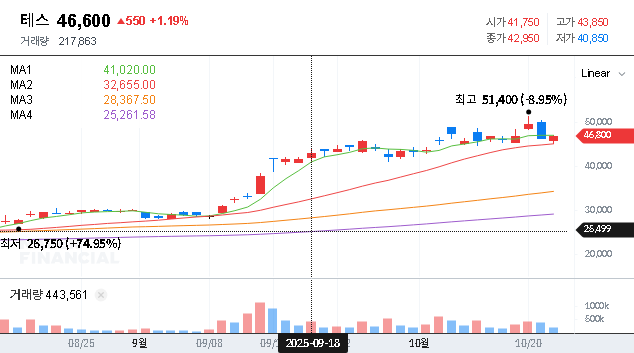
    While the Samsung endorsement is a clear positive, savvy investors must also analyze the potential risks associated with the TESCO.,LTD. exchangeable bond. The primary concern stems from the vast difference between the current stock price (around 3,580 KRW) and the exchange price (52,223 KRW). For the investor to profit by converting the bonds to stock, the share price must increase more than tenfold. This high bar implies immense confidence from the Samsung fund, but it also creates uncertainty.

    If the stock price does surge past this level, the conversion of bonds into shares will introduce new shares into the market. This could lead to a ‘dilution effect,’ where the value of existing shares is reduced because the company’s ownership is spread across a larger number of shares. Although the issuance size is small (1.68% of market cap), the principle of potential dilution remains a factor that long-term shareholders must monitor. For a deeper understanding of market dynamics, it’s often useful to consult analysis from major financial publications like The Wall Street Journal’s market section.

    A Strategic Playbook for Investors

    Given this landscape of opportunity and risk, how should an investor approach TESCO.,LTD.? A well-rounded investment analysis requires diligent research beyond the headlines. Here are critical steps to take:

    • Review the Primary Source: The most crucial step is to examine the Official Disclosure on DART. This document contains the unfiltered facts of the deal straight from the company.
    • Analyze Capital Utilization: Monitor company announcements for specific plans on how the 15.7 billion KRW will be used. Is it for a new factory, specific R&D, or talent acquisition? Concrete plans add to the investment thesis.
    • Understand the AI Semiconductor Market: Research the broader industry trends. Is the demand for TESCO.,LTD.’s specific technology growing? Who are the main competitors? A rising tide in the AI chip sector will lift all quality players.
    • Compare Financial Instruments: To fully grasp the implications, it can be helpful to understand the differences between various corporate bonds. You can learn more by reading our guide on Exchangeable vs. Convertible Bonds.

    In conclusion, TESCO.,LTD.’s exchangeable bond issuance is a significant long-term positive indicator, largely due to the strategic backing of a Samsung-affiliated fund. It signals strong belief in the company’s future growth trajectory within the vital AI semiconductor space. While investors must remain mindful of the potential for future share dilution, the immediate benefits of a cost-free capital injection and a powerful strategic alliance appear to outweigh the risks. Careful and continuous due diligence will be key to capitalizing on this development.

    (095610) TESCO.,LTD. Exchangeable Bond: Samsung's 15.7B KRW Bet & Stock Price Impact 관련 이미지
  • Samsung Electronics H1 2025 Earnings: Navigating Growth in the Age of AI


    1. Samsung H1 2025 Performance: What Happened?

    Samsung Electronics reported KRW 153.7 trillion in revenue for H1 2025, a 5.3% increase year-over-year. The DX (Device eXperience) division saw a 6.6% rise fueled by AI-powered products and premium offerings. The DS (Device Solutions) division grew by 2.5% thanks to increased AI server demand. However, declining prices for TVs and OLED panels posed profitability challenges.

    2. Behind the Numbers: Why These Results?

    • Positives: Expansion of AI technology integration, strengthened premium product lineup, rising server memory demand.
    • Negatives: Price erosion for key products, global economic slowdown and geopolitical risks, weakening demand for System LSI.

    3. After-Hours Block Trade: The Impact?

    The after-hours block trade of 813,000 shares, worth KRW 69.3 billion, may contribute to short-term price volatility but is unlikely to significantly affect long-term fundamentals. Net buying by foreign investors is viewed as a positive signal.

    4. Investor Action Plan: What to Do?

    Samsung holds strong potential in the age of AI, but profitability management and navigating macroeconomic uncertainties are crucial. Investors should consider:

    • AI market growth and Samsung’s competitiveness.
    • Returns on new technology investments and profitability improvement strategies.
    • Global economic and geopolitical risks.


    Frequently Asked Questions

    What were the key takeaways from Samsung’s H1 2025 earnings?

    Revenue growth was driven by AI integration and premium product sales, but profitability was challenged by declining prices for key products.

    How might the after-hours block trade affect Samsung’s stock price?

    It may contribute to short-term price fluctuations but is unlikely to significantly impact long-term fundamentals.

    What should investors consider when evaluating Samsung?

    Key factors include AI market growth, returns on technology investments, profitability strategies, and global economic/geopolitical risks.


  • E8 Secures $800 Million Deal with Samsung: Investment Outlook


    E8 Secures $800 Million Deal with Samsung: Investment Outlook 대표 차트 이미지


    E8 Lands $800 Million Contract with Samsung: What Happened?

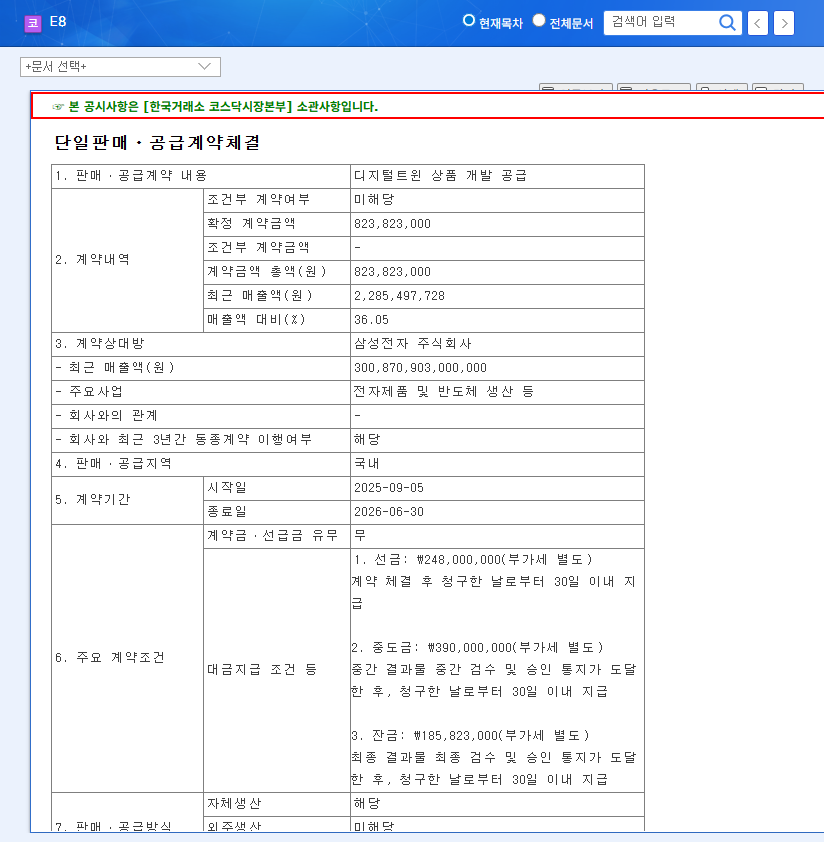
    E8 announced on September 5, 2025, that it has secured an $800 million contract with Samsung Electronics for the ‘Development and Supply of Digital Twin Products’. The contract period is nine months, ending on June 30, 2026.

    What Does This Contract Mean for E8?

    This contract signifies more than just increased revenue for E8.

    • Significant Revenue Boost: The $800 million contract represents 36.05% of E8’s 2024 revenue and is expected to contribute significantly to its 2025 performance. It even surpasses E8’s first-half 2025 revenue of $930 million.
    • Enhanced Credibility: The partnership with Samsung validates E8’s technology and business capabilities. It’s expected to increase the likelihood of securing further large-scale contracts.
    • Leading the Digital Twin Market: Collaboration with Samsung will further strengthen E8’s digital twin technology and enhance its market competitiveness.

    What Should Investors Do?

    This contract is a positive signal, demonstrating E8’s long-term growth potential. We maintain a ‘buy’ rating and recommend monitoring the contract’s implementation and any further large-scale contract wins.

    • Key Monitoring Points:
    • Contract implementation and profitability
    • Progress of digital twin product development
    • Further large-scale contract wins
    • Improvements in financial structure

    ※ Disclaimer: This analysis is not investment advice. Investment decisions are the sole responsibility of the investor.


    What is the size of the contract between E8 and Samsung?

    $800 million.

    How much will this contract contribute to E8’s revenue?

    It represents 36.05% of E8’s 2024 revenue and is expected to make a substantial contribution to its 2025 performance.

    What is E8’s main business?

    Developing digital twin and simulation technologies.


    E8 Secures $800 Million Deal with Samsung: Investment Outlook 관련 이미지
    E8 Secures $800 Million Deal with Samsung: Investment Outlook 관련 이미지


  • Remed Stock Forecast: Analyzing Samsung’s Stake Change (September 2025)


    Remed Stock Forecast: Analyzing Samsung's Stake Change (September 2025) 대표 차트 이미지


    What Happened? – Samsung’s Stake Change

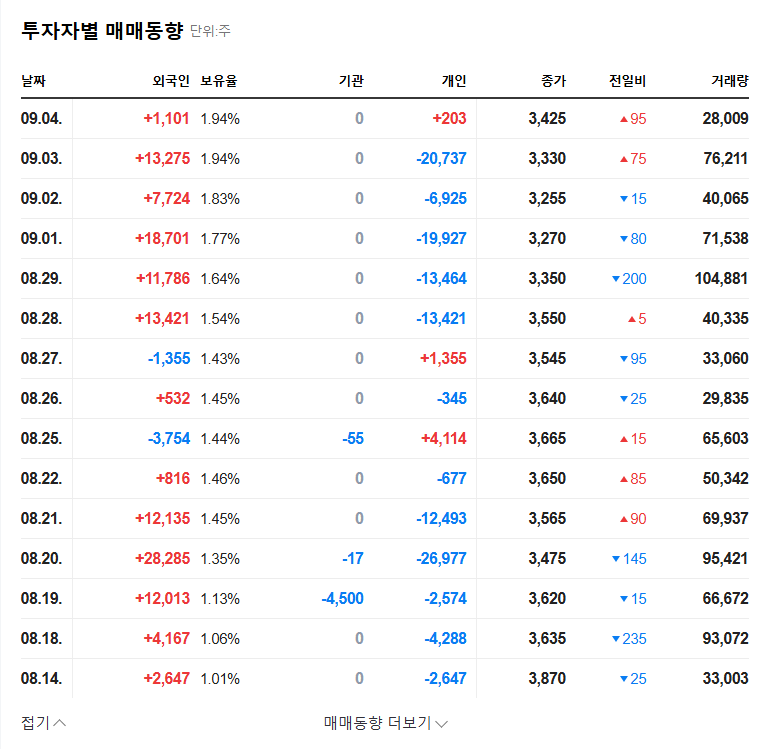
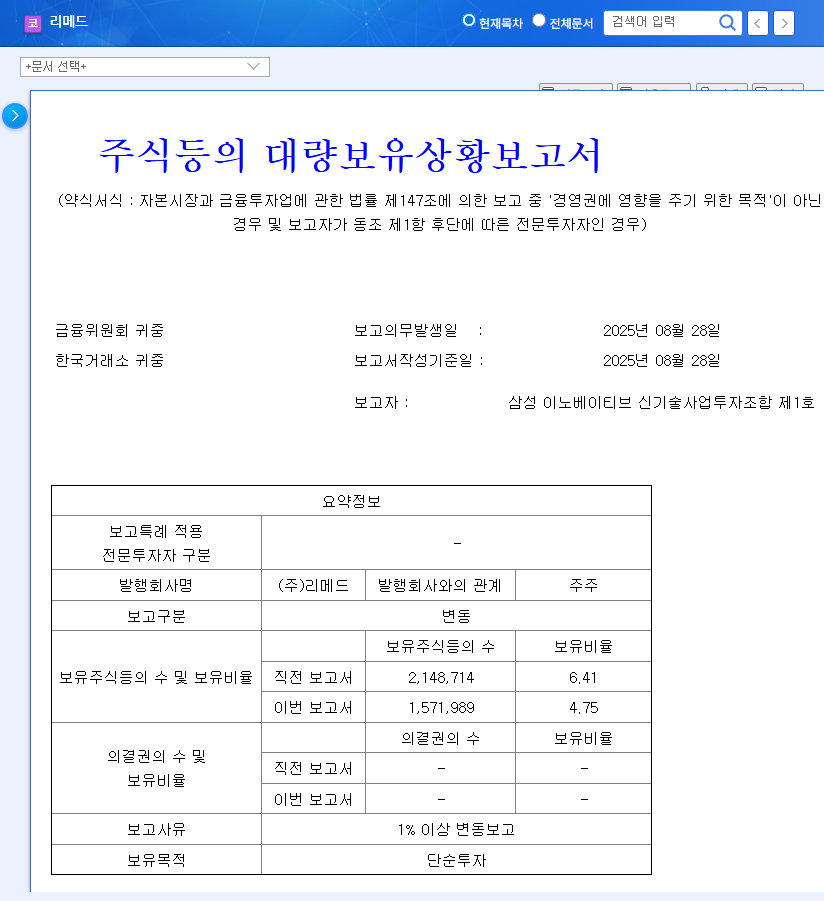
    On September 3, 2025, Samsung Innovative New Technology Investment Association No. 1 reduced its stake in Remed (302550) from 6.41% to 4.75%, a decrease of 1.66%. This follows the conversion of convertible bonds into common stock on August 28th and is likely due to profit-taking or portfolio rebalancing.

    Why Does It Matter? – Implications and Fundamental Analysis

    While the stake change may cause short-term stock volatility, it doesn’t directly impact Remed’s fundamentals. The bond conversion is positive for Remed, strengthening its financial structure through increased capital.

    However, Remed’s H1 2025 results show declining sales and operating profit, which could negatively impact investor sentiment. Decreased exports in the chronic pain treatment business are the primary cause, coupled with increased selling, general, and administrative expenses.

    Positive aspects include FDA approval for a brain rehabilitation product, ongoing clinical trials for Alzheimer’s/stroke, collaboration with Zimmer in chronic pain treatment, and new product launches in the aesthetics business, all pointing to growth potential. However, FX volatility and rising logistics costs pose risks.

    What Should Investors Do? – Investment Strategies

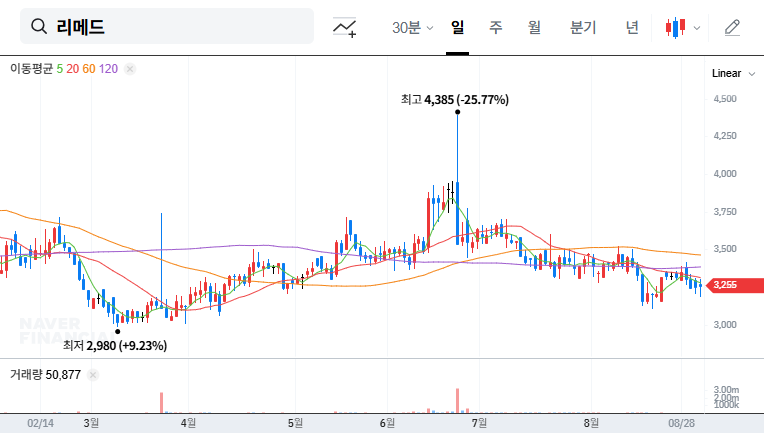
    In the short term, investors should be mindful of potential selling pressure due to the stake change and monitor stock movements closely.

    Long-term investors should focus on fundamental improvements, particularly sales recovery in the chronic pain treatment business and the performance of the aesthetics business. It’s crucial to distinguish between the effects of the bond conversion and actual value growth.

    Key Monitoring Points:

    • H2 2025 and full-year earnings (sales recovery, operating profit improvement)
    • Overseas sales performance of chronic pain treatment and Zimmer collaboration
    • Expansion of new indications for brain rehabilitation and market response to BrainStim
    • New product launches and market competitiveness in the aesthetics business
    • FX and macroeconomic trends


    Frequently Asked Questions

    What are Remed’s main businesses?

    Remed operates in brain rehabilitation, chronic pain treatment, and aesthetics. Each area holds growth potential based on innovative technology.

    How will Samsung’s stake change affect Remed’s stock price?

    It may cause short-term volatility, but the long-term impact depends on fundamental improvements. The bond conversion is positive for Remed’s financial structure.

    What should investors consider when investing in Remed?

    Consider risk factors like weak H1 results and macroeconomic uncertainty. Continuously monitor future earnings improvements and new business performance.


    Remed Stock Forecast: Analyzing Samsung's Stake Change (September 2025) 관련 이미지
    Remed Stock Forecast: Analyzing Samsung's Stake Change (September 2025) 관련 이미지


  • Samsung SPAC No. 8 on the Brink: Delisting Risk and Investment Strategies

    1. What’s Happening? Samsung SPAC No. 8 at a Crossroads

    Samsung SPAC No. 8 must submit its merger application by August 22, 2025. Failure to do so could lead to its designation as a 관리종목 and potential delisting if the situation isn’t resolved within one month.

    2. Why is This Happening? The Nature of SPACs and the Importance of Mergers

    Samsung SPAC No. 8 is a Special Purpose Acquisition Company (SPAC). SPACs are shell companies created to acquire private companies. They face delisting if they fail to complete a merger within a specific timeframe. Samsung SPAC No. 8 hasn’t found a merger target yet, and time is running out.

    3. What are the Potential Outcomes? Merger Success vs. Failure Scenarios

    • Merger Success: The SPAC transforms into the acquired company, gaining a new business and growth potential. Stock prices may rise depending on the acquired company’s prospects.
    • Merger Failure: Delisting procedures begin, leading to a high probability of investment losses.

    4. What Should Investors Do? Key Checkpoints and Action Plan

    • Watch the August 22nd Deadline: Whether the merger application is submitted will significantly impact short-term stock prices.
    • Analyze the Merger Target: If an application is submitted, carefully analyze the target company’s business model, financials, and growth potential before investing.
    • Invest Cautiously: Always consider the possibility of merger failure and delisting.
    • Monitor Macroeconomic Trends: Interest rates, exchange rates, and other macroeconomic factors can affect the merger and the company’s valuation.

    Frequently Asked Questions

    What is a SPAC?

    A SPAC (Special Purpose Acquisition Company) is a shell company formed to acquire a private company. They face delisting if a merger isn’t completed within a set timeframe.

    Why is Samsung SPAC No. 8 considered risky?

    The deadline for merging is approaching, and they haven’t found a target company yet. Failure to merge could lead to delisting.

    What should investors be aware of?

    Investors should closely monitor merger announcements and analyze any potential target company’s information. They should also be aware of the risk of merger failure and potential delisting.

  • Samsung Electronics Dividend of 367 KRW: Investment Strategy & Forecast (August 2025)

    1. Dividend Announcement: What Happened?

    Samsung Electronics declared a cash dividend of 367 KRW per share based on the record date of June 30, 2025. The dividend yield is 0.6% for common stock and 0.7% for preferred stock, with the payment date set for August 20th.

    2. Why the Dividend?

    Samsung reported improved performance in Q1 2025, driven by increased smartphone sales and server DRAM demand. This dividend likely reflects the company’s strong performance and aims to reward shareholders and build investor confidence.

    3. Dividend Impact: What to Expect?

    • Short-term Impact: The dividend announcement may positively influence investor sentiment, potentially leading to a short-term stock price increase. However, the ex-dividend date effect should be considered.
    • Long-term Impact: Consistent dividends can enhance long-term investment appeal. However, the recovery of the memory market and the success of Samsung’s AI business expansion are more critical factors.
    • External Factors: The global economic downturn, geopolitical risks, and fluctuations in raw material prices can significantly impact Samsung’s future growth.

    4. Investor Action Plan: What Should You Do?

    Short-term investors should be mindful of price fluctuations around the ex-dividend date. Long-term investors should continuously monitor Samsung’s fundamentals and external environment changes. Consulting with a financial advisor is recommended before making investment decisions.

    Frequently Asked Questions

    When will the Samsung dividend be paid?

    The dividend payment date is August 20, 2025.

    When is the ex-dividend date?

    The ex-dividend date is typically two business days before the record date. Refer to the Korea Exchange announcements for confirmation.

    Should I buy Samsung stock now?

    Investment decisions should be based on individual circumstances and risk tolerance. Consider the analysis provided in this article and consult with a financial advisor before making any investment decisions.

  • Samsung Electronics Lands $168 Billion Foundry Deal: What It Means for Investors

    What Happened?

    On July 28, 2025, Samsung Electronics announced an 8-year, 5-month foundry contract worth $168 billion with a major global corporation.

    Why Does It Matter?

    This contract signifies a quantum leap for Samsung’s foundry business. It secures stable long-term revenue, mitigating uncertainty and alleviating the burden of large-scale investments. Furthermore, it’s expected to boost market share and enhance technological competitiveness, fueling long-term growth.

    What’s Next?

    • Short-term Impact: Improved foundry performance and potential stock surge, but also anticipated short-term cost increases.
    • Long-term Impact: Increased market share, enhanced technological competitiveness, and reinforced financial stability. However, factors such as client demands, technological shifts, and geopolitical risks require careful consideration.
    • External Factors: Fluctuations in exchange rates, raw material prices, interest rates, and the global economy necessitate continuous monitoring.

    Investor Action Plan

    This contract is a significant catalyst for Samsung’s long-term growth potential. However, investors should adopt a prudent strategy considering the uncertainties surrounding external factors and contract implementation. Continuous analysis and monitoring of long-term exchange rate and raw material price fluctuations, as well as the potential for a global economic downturn, are crucial. The synergistic effects of the Rainbow Robotics acquisition should also be closely observed from a long-term perspective.

    Q: How will this contract affect Samsung’s stock price?

    A: In the short term, it is likely to drive stock prices upward. However, the long-term trajectory will depend on various external factors and the contract’s implementation, requiring ongoing monitoring.

    Q: Who is the other party involved in the contract?

    A: Specific details regarding the contracting party have not been disclosed in this report.

    Q: How will this contract change Samsung’s competitiveness?

    A: It is expected to enhance Samsung’s competitive edge by increasing market share and strengthening technological capabilities, paving the way for long-term growth.

  • Remed Stock Forecast: Opportunity or Crisis After Samsung’s Divestment?

    1. Why Did Samsung Divest from Remed?

    Officially, Samsung stated ‘investment portfolio strategy adjustment.’ However, the sale of a substantial number of shares in a short period may indicate concerns about changing market conditions or lowered expectations for Remed’s growth potential. Given the increasing macroeconomic uncertainties at the time, such as interest rate hikes in the US and Europe and rising raw material prices, it’s possible these factors influenced the decision.

    2. How Strong Are Remed’s Fundamentals?

    Despite a decline in sales, Remed achieved improved operating profit margins in Q1 2025 due to cost reductions and improved sales and administrative expenses efficiency.

    • Brain Rehabilitation: Positive factors include the launch of antidepressants and FDA approvals, while negative factors include clinical trial stages for Alzheimer’s/stroke treatments and intensifying competition.
    • Chronic Pain Treatment: Positive factors include FDA approval for NMS products and a favorable market response to Salus FSWT, offset by intensifying competition with BTL.
    • Aesthetics: A short-term negative is the Allergan supply disruption, but long-term growth potential exists with new product launch plans and growth in the EBD market.

    3. What’s the Forecast for Remed’s Stock Price?

    Samsung’s large-scale selling could negatively impact the stock price in the short term. This could lead to a decline in investor sentiment and put downward pressure on the stock. However, if Remed’s fundamentals remain strong, the impact may be limited. In the long term, the success of Remed’s US market entry and new product development strategy will likely have a greater impact on the stock price.

    4. What Actions Should Investors Take?

    Instead of reacting to short-term price fluctuations, investors should focus on Remed’s fundamentals and long-term growth potential. It’s crucial to analyze analyst reports to understand market expectations and continuously monitor competitor trends and changes in relationships with key customers.

    What does Samsung’s divestment from Remed signify?

    Officially it’s portfolio adjustment, but it could be interpreted as a sign of concern about Remed’s future.

    What are Remed’s main businesses?

    Remed operates in brain rehabilitation, chronic pain treatment, and aesthetics.

    What are the key investment points for Remed?

    Key investment points include US market entry, new product development, and strong fundamentals.