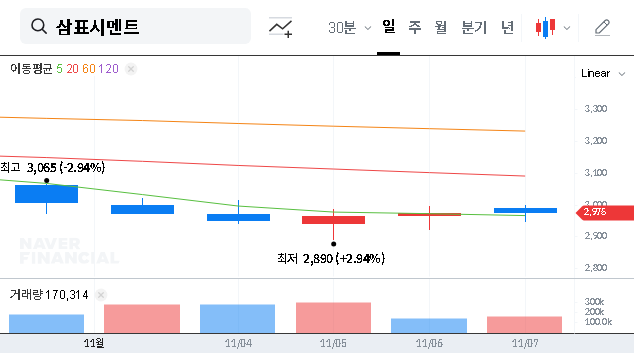
Tag: SAMPYO Cement Co.

  • (038500) SAMPYO Cement Stake Change (2025): A Deep Analysis for Investors

    (038500) SAMPYO Cement Stake Change (2025): A Deep Analysis for Investors

    The recent disclosure of the SAMPYO Cement stake change has sent ripples through the investment community. On November 13, 2025, the company’s largest shareholder, Sampyo Industrial, along with related parties, consolidated their control. While on the surface this signals a move towards stronger management, it occurs against a backdrop of significant industry headwinds and weakening company fundamentals. This comprehensive SAMPYO Cement analysis will dissect this event, examining the company’s financial health, the challenging market environment, and what this strategic ownership shift truly means for the future of SAMPYO Cement stock and its investors.

    Deconstructing the SAMPYO Cement Stake Change

    The official filing revealed a calculated move by Sampyo Industrial and its affiliates to increase their holdings. This wasn’t a minor adjustment but a significant reinforcement of control. According to the Official Disclosure (DART Report), the specifics are as follows:

    • Previous Ownership Stake: 64.69%
    • New Ownership Stake: 68.32%
    • Total Increase: 3.63 percentage points
    • Method of Acquisition: An affiliated entity, SPSNA, acquired 4,202,332 shares via off-market trading.

    The transaction was also coupled with administrative changes, including the dissolution of certain special relationships following an executive’s retirement. The primary interpretation is clear: this move is intended to solidify management control and stabilize the corporate governance structure of SAMPYO Cement, providing a unified front to navigate future challenges and implement long-term strategies.

    While increased shareholder control can be a bullish signal, it cannot single-handedly resolve the deep-seated fundamental weaknesses currently plaguing SAMPYO Cement’s core business segments.

    Financial Health Under the Microscope

    An optimistic view of the stake change is tempered by the company’s H1 2025 performance report, which paints a concerning picture of its operational health.

    Struggles in Core Business Segments

    Performance has faltered significantly across the board. The cement business, the company’s backbone, saw revenue plummet by approximately 58.3% and operating profit by a staggering 70.7% year-over-year. The ready-mix concrete business fared no better, with declining revenue and a troubling shift into an operating loss. These declines are a direct result of falling sales prices and critically low plant utilization rates—just 51.2% for cement and a mere 16% for ready-mix concrete—indicating a severe demand shortfall.

    Mixed Financial Ratios and Looming Risks

    On the balance sheet, there are some positive signs. The debt-to-equity ratio improved to a healthy 87.9%, and the current ratio rose to 122.4%, suggesting better short-term liquidity. However, these improvements are overshadowed by a collapse in profitability, with Earnings Per Share (EPS) falling from KRW 616 to just KRW 117. Furthermore, external risks persist. The volatility of raw material prices, such as bituminous coal and petroleum coke, continues to threaten margins. Global commodity trends, as tracked by sources like S&P Global Commodity Insights, show that these pressures are unlikely to ease in the short term.

    Macroeconomic and Cement Industry Analysis

    SAMPYO Cement’s troubles are not isolated; they reflect a difficult environment for the entire cement industry. A slowdown in the domestic South Korean construction market, driven by high interest rates and rising material costs, has suppressed demand. Concurrently, the global push for carbon neutrality is forcing heavy investment in greener technologies, adding another layer of financial burden. The company’s focus on ESG, while crucial for long-term viability and part of its corporate sustainability strategy, may limit capital available for other immediate growth initiatives.

    Investor Outlook: What to Watch For

    The consolidation of power via the SAMPYO Cement stake change presents a dual-edged sword for investors. On one hand, it promises stability and decisive leadership. On the other, it does not erase the fundamental operational and market challenges.

    Key Considerations for Investors

    • Short-Term Volatility: News of the stake change will likely cause short-term fluctuations in SAMPYO Cement stock as the market digests the information.
    • Focus on Management’s Next Moves: The critical factor will be how the newly empowered management team plans to address the core issues of low demand and poor profitability. Watch for new strategic announcements.
    • Monitor Industry Recovery: Any genuine, sustained turnaround for SAMPYO Cement is intrinsically linked to a recovery in the broader construction sector. Keep an eye on macroeconomic indicators.
    • Long-Term Value in ESG: While not a short-term fix, the company’s commitment to ESG and eco-friendly products could position it as a leader if and when the market rebounds and regulations tighten.

    In conclusion, while the increased stake by Sampyo Industrial is a vote of confidence from its largest shareholder, investors should remain cautious. The path to improved corporate value depends less on who owns the shares and more on the effective execution of a turnaround strategy that can navigate the formidable market headwinds.

    Disclaimer: This report is based on publicly available information. Investment decisions should be made based on individual research and consultation with a financial advisor. The final responsibility for investment decisions lies with the investor.
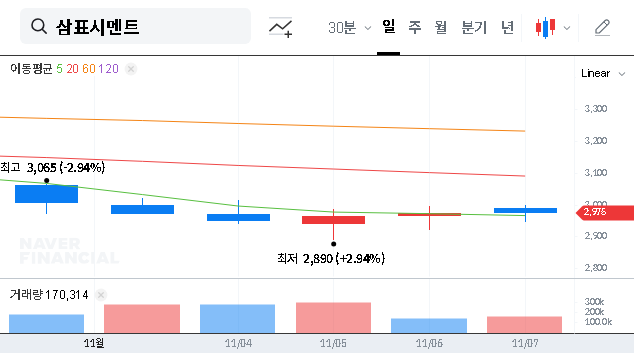
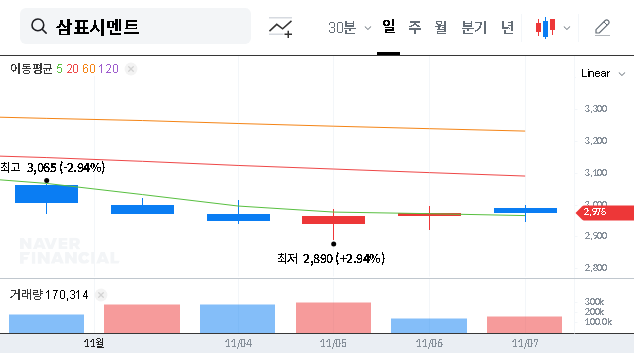
  • (038500) SAMPYO Cement Stock: Shareholder Increase Analysis & 2025 Forecast

    (038500) SAMPYO Cement Stock: Shareholder Increase Analysis & 2025 Forecast

    The recent announcement that the SAMPYO Cement major shareholder has significantly increased its stake has sent ripples through the market. This move, which consolidates control, raises a critical question for investors: Is this a prelude to enhanced corporate value and a bullish signal for SAMPYO Cement stock, or does it merely mask underlying fundamental weaknesses amid a challenging economic landscape? This comprehensive analysis will delve into the positive and negative implications, scrutinize the company’s financial health, and provide a forward-looking perspective for investors.

    The Details of the Shareholder Consolidation

    According to the Official Disclosure filed on November 10, 2025, SPS&A and its related parties acquired an additional 4,202,332 shares of SAMPYO Cement Co., Ltd. This after-hours transaction increased their total holdings to a commanding 68.32% of the company’s total issued shares. Such a significant consolidation by a major shareholder is often interpreted as a strong vote of confidence and a strategic move to solidify control over the company’s long-term direction, ostensibly shielding it from external pressures and enabling more agile decision-making.

    This move is more than a simple transaction; it’s a statement about the future governance and strategic intent for SAMPYO Cement. The key is to discern whether this stability will translate into tangible performance improvements.

    The Bull Case: Potential Catalysts for Growth

    An increased stake by a key shareholder can unlock several positive outcomes. For SAMPYO Cement, investors are hopeful that this signals a new phase of strategic focus and operational excellence.

    Enhanced Management Stability

    With a super-majority stake, the management team can operate with a long-term horizon, free from the distractions of short-term market pressures or the threat of activist investors. This stability allows for the implementation of multi-year capital investment projects, research into greener cement production, and strategic pivots that might not yield immediate returns but are crucial for sustainable growth.

    Foundation for Strategic Investments

    A unified ownership structure can streamline the approval process for major investments. This could mean upgrading aging facilities to improve efficiency, expanding into new geographic markets, or diversifying the product portfolio. The ability to act decisively is a significant competitive advantage in the capital-intensive cement industry analysis landscape.

    The Bear Case: Persistent Headwinds and Challenges

    However, a change in ownership structure does not erase fundamental business challenges or macroeconomic pressures. Investors must weigh the potential positives against some significant risks facing SAMPYO Cement.

    • Underperforming Business Segments: The core cement business, while generating sales, is hampered by a low operating rate of just 51.2%, indicating significant room for efficiency gains. More alarmingly, the ready-mixed concrete division is posting operating losses with a critically low operating rate of 16%, demanding an urgent and effective turnaround strategy.
    • Financial Health Concerns: While the debt ratio has seen improvement, a decrease in cash and cash equivalents raises concerns about liquidity. The ongoing burden of debt repayment requires careful financial management, especially in a high-interest-rate environment.
    • Macroeconomic Pressures: The broader economic climate is unfavorable. A slowdown in the construction sector, volatile raw material prices, elevated logistics costs, and persistent high interest rates all pose significant threats to profitability. For a deeper dive into market trends, resources like Bloomberg’s market analysis provide valuable context.

    Investor Outlook and Strategic Considerations

    In conclusion, the SAMPYO Cement major shareholder increase provides a crucial element of management stability, which is a clear positive. This could pave the way for long-term strategic execution. However, this stability must be leveraged to address the company’s pressing challenges. The long-term trajectory of the SAMPYO Cement stock will not be determined by ownership percentages alone, but by the tangible results of the new leadership’s strategy.

    Investors should adopt a prudent and watchful approach. While the news may generate short-term positive sentiment, the real indicators of success will be found in the company’s quarterly reports. Key metrics to monitor include improvements in operating margins, a successful turnaround in the ready-mixed concrete business, and effective management of the company’s balance sheet amidst economic headwinds. For those interested in this sector, it’s also wise to read about how to evaluate other industrial stocks for comparison. Diligent monitoring of fundamental improvements will be the key to making an informed investment decision.

    Disclaimer: This analysis is for informational purposes only and is based on publicly available data. It does not constitute investment advice or a solicitation to buy or sell securities. All investment decisions should be made by the investor after conducting their own due diligence.

  • (038500) SAMPYO Cement Co., Ltd. Stock (038500): Shareholder Divestment Deep Dive & 2025 Outlook

    (038500) SAMPYO Cement Co., Ltd. Stock (038500): Shareholder Divestment Deep Dive & 2025 Outlook

    In a significant development for investors monitoring the SAMPYO Cement Co., Ltd. stock (KRX: 038500), news of a major shareholder divestment has sent ripples through the market. With the company already navigating a challenging construction downturn, this move by KMUS One Co., Ltd. introduces a new layer of uncertainty. This analysis will break down the specifics of the share sale, explore the underlying causes, and evaluate the potential short-term and long-term impact on SAMPYO Cement’s share price and management stability.

    This isn’t just a simple transaction; it’s a critical signal about insider confidence amidst severe market headwinds. Understanding the context is paramount for any current or prospective investor.

    The Catalyst: A Major Shareholder Makes an Exit

    On November 10, 2024, an official disclosure confirmed that KMUS One Co., Ltd., a significant shareholder in SAMPYO Cement, drastically reduced its holdings. The stake was cut from 8.71% down to just 3.89%—a substantial decrease of 4.82 percentage points. Critically, KMUS One’s original holding purpose was cited as ‘management influence,’ which makes this sale more than a simple portfolio rebalancing. It signals a strategic withdrawal, raising immediate questions about the company’s future leadership and stability. The transaction was officially documented in a ‘Report on the Status of Large-scale Shareholding,’ which can be viewed in the Official Disclosure (DART).

    Why Now? A Perfect Storm of Challenges

    The decision by KMUS One was not made in a vacuum. It comes at a time when SAMPYO Cement is facing a convergence of internal performance issues and external market pressures, creating a ‘perfect storm’ for the company.

    Severe Deterioration in Corporate Fundamentals

    The company’s 2025 semi-annual report paints a bleak picture. Revenue plummeted by a staggering 58.3% year-over-year, while operating profit fell by an even more alarming 70.6%. This decline is not isolated to one segment; both the core Cement and Ready-Mixed Concrete businesses have suffered from a severe construction market slump. Despite a drop in some raw material costs, falling cement prices combined with rising electricity costs have squeezed profit margins. Furthermore, lower production volumes have increased the fixed cost burden per unit, eroding profitability from multiple angles.

    Unfavorable Macroeconomic Environment

    The broader economic landscape offers little relief. While there are hints of future interest rate cuts, current high rates continue to suppress new construction projects. A strengthening US Dollar and Euro against the Korean Won reflects a broader ‘risk-off’ sentiment in global markets. While falling international oil prices could reduce logistics and operational costs, this benefit is partially offset by market volatility and the overarching weakness in demand that it signals. For more on market trends, investors often consult sources like Bloomberg’s economic analysis.

    Analysis: The Impact on SAMPYO Cement Co., Ltd. Stock

    The large-scale SAMPYO Cement shareholder divestment is a bearish signal that is likely to amplify negative market sentiment and exert significant downward pressure on the stock price in the short term. Key consequences include:

    • Eroding Investor Confidence: A major insider cashing out raises red flags, suggesting a lack of faith in the company’s near-term recovery prospects.
    • Increased Selling Pressure: The process of offloading a large block of shares can create a supply-demand imbalance, potentially leading to further price declines as the market absorbs the new float.
    • Compounding Negative Momentum: This news, combined with the already poor financial performance, creates a powerful negative narrative that could scare away potential buyers and encourage existing shareholders to sell.
    • Management Stability Concerns: The exit creates a power vacuum. While it could eventually lead to a new strategic investor, the immediate future is filled with uncertainty about who will fill the void.

    While SAMPYO Cement has made positive strides in ESG management and R&D, these long-term initiatives are likely to be overshadowed by the immediate negative sentiment. Investors interested in how such factors are weighed can read about our analysis of ESG investing trends.

    Investor Action Plan & Strategic Outlook

    Given the circumstances, a cautious and highly observant approach is warranted for anyone invested in or considering the SAMPYO Cement Co., Ltd. stock. A prudent strategy should involve the following steps:

    • Brace for Volatility: Expect heightened price swings in the coming weeks. Avoid making large, emotionally-driven trades and consider risk management tools like stop-loss orders.
    • Monitor Management News: Pay close attention to any announcements regarding the buyer of the divested shares. A strategic corporate buyer would be viewed more favorably than a simple financial investor.
    • Focus on Fundamental Triggers: Long-term recovery will depend entirely on a rebound in the construction market and improved company performance. Watch key industry indicators and the company’s next quarterly earnings report for signs of a turnaround.
    • Re-evaluate ESG Impact: Continue to assess if the company’s sustainability efforts are translating into tangible financial benefits or simply serving as corporate talking points.

    In conclusion, the divestment by KMUS One Co., Ltd. is a significant negative catalyst that will likely weigh on the SAMPYO Cement Co., Ltd. stock in the short term. Investors should prioritize caution, monitor new information closely, and wait for clear evidence of a fundamental business recovery before making any significant investment decisions.