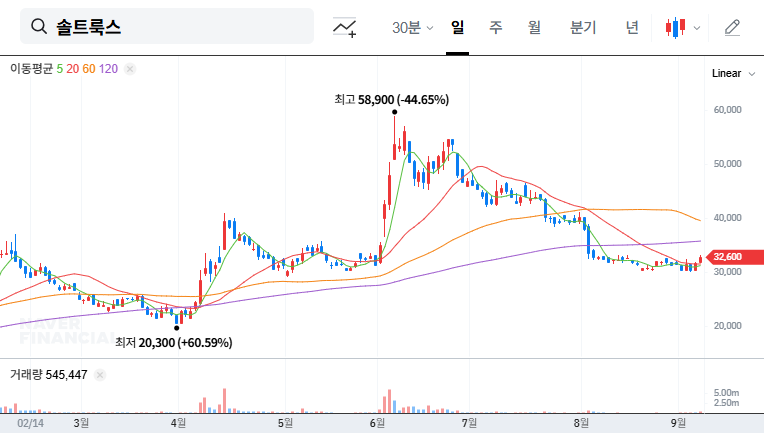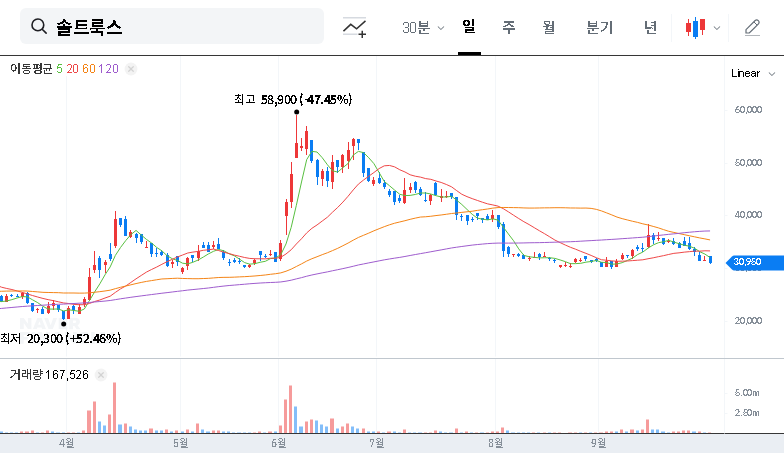
Tag: Saltlux

  • (304100) Saltlux Stock Warrant Exercise: An Investor’s Guide to AI Growth vs. Dilution Risk

    (304100) Saltlux Stock Warrant Exercise: An Investor’s Guide to AI Growth vs. Dilution Risk

    The recent announcement regarding the Saltlux stock warrant exercise has sent ripples through the investment community. As a pioneering force in artificial intelligence, Saltlux presents a compelling growth story. However, the prospect of new shares entering the market raises valid concerns about value dilution. This comprehensive Saltlux investment analysis will dissect the event, examine the company’s core fundamentals, and provide a clear framework for evaluating the risks and opportunities for your portfolio.

    We’ll explore whether this capital injection will fuel Saltlux’s ambitious AI projects or simply create short-term volatility. By understanding the full context, investors can move beyond the headlines and make a truly informed decision.

    Breaking Down the Saltlux Stock Warrant Exercise

    First, let’s clarify what’s happening. A stock warrant gives the holder the right, but not the obligation, to buy a company’s stock at a specific price (the exercise price) within a certain timeframe. When these warrants are exercised, the company issues new shares and receives cash. Saltlux has officially announced the details of this financial maneuver.

    Key Details of the Issuance

    • Event: Exercise of New Stock Warrants
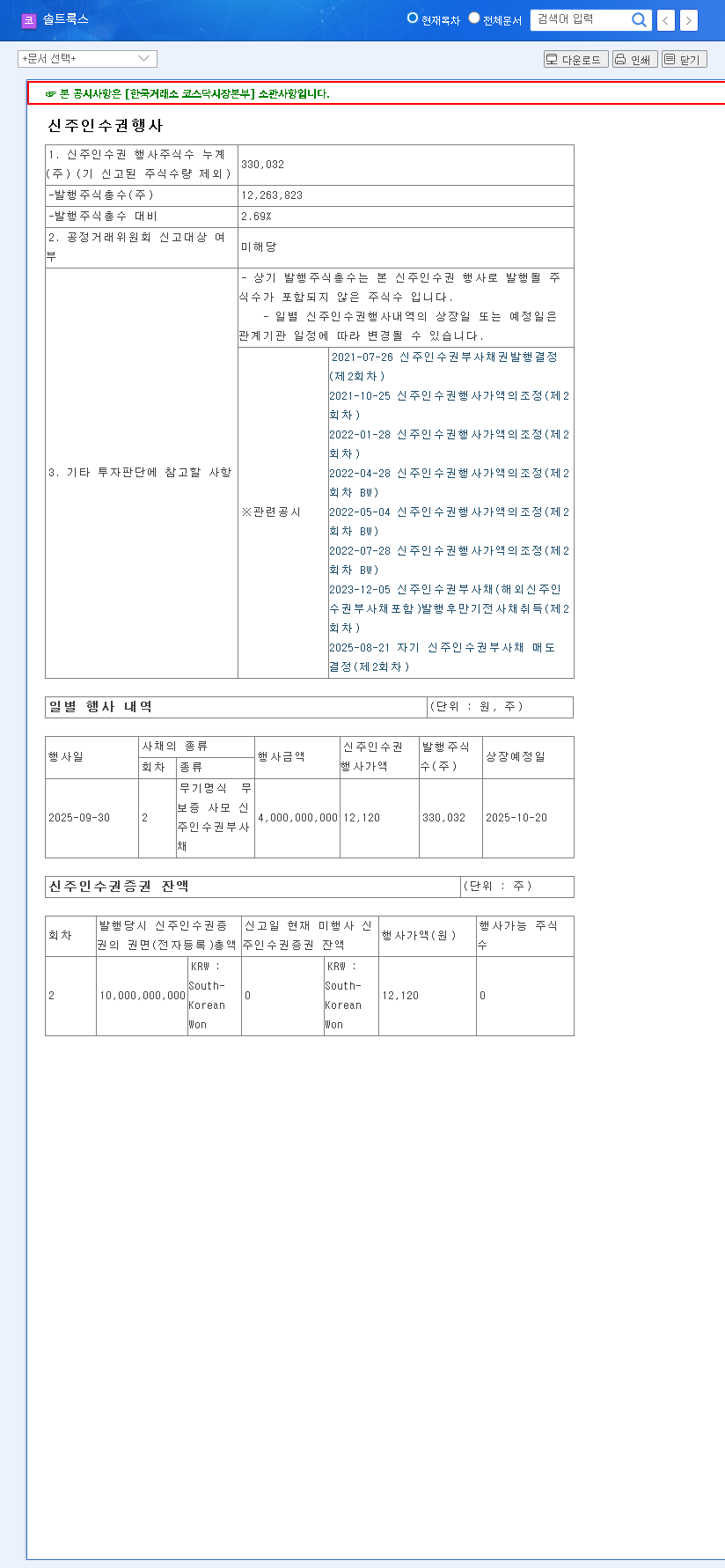
    • Number of New Shares: 330,032 shares
    • Ratio to Market Cap: Approximately 2.69%
    • Exercise Price: KRW 12,120 per share
    • Scheduled Listing Date: October 20, 2025
    • Capital Raised: Approximately KRW 4 billion

    This move is intended to raise capital, likely to fund ongoing research and development or support global expansion efforts. For full transparency, you can view the Official Disclosure on the DART system.

    Saltlux Fundamentals: A Tale of Two Tapes

    To understand the context of the Saltlux stock warrant exercise, we must look at the company’s strengths and weaknesses. It’s a classic case of groundbreaking technology meeting financial headwinds.

    The Bull Case: A Leader in AI Technology

    Saltlux is not just another player in the AI field. Its competitive edge stems from its proprietary Large Language Model (LLM), ‘Lucia 3.0’, and the global expansion of its AI agent service, ‘Goover’. The company’s unique integration of Retrieval-Augmented Generation (RAG) with its LLM sets it apart, allowing its AI to pull from vast, real-time datasets to provide more accurate and context-aware responses. This technological prowess positions Saltlux to capture a significant share of the rapidly growing generative AI market, a sector that market analysts predict will see exponential growth.

    The Bear Case: Financial Pressures

    Despite its technological achievements, Saltlux’s recent financial performance is a cause for concern. The Q1 2025 report showed a year-on-year revenue decrease of 33% and widening operating and net losses. This is partly due to aggressive R&D spending, which accounts for 23% of revenue. While essential for long-term innovation, this continuous investment puts significant pressure on short-term profitability. The negative operating cash flow highlights the company’s need for capital, which this warrant exercise aims to address.

    The core dilemma for any Saltlux investor is weighing its undeniable AI innovation and market potential against its current financial instability and the immediate impact of share dilution.

    Impact Analysis for the Saltlux Stock

    The issuance of over 330,000 new shares will inevitably have consequences for the Saltlux stock and its holders.

    • Share Value Dilution: With more shares in circulation, the ownership stake of each existing share decreases. This can dilute key metrics like Earnings Per Share (EPS), potentially lowering the stock’s valuation in the short term.
    • Increased Volatility: The significant difference between the exercise price (KRW 12,120) and the current market price may incentivize new shareholders to sell for a quick profit around the listing date, increasing supply and creating price volatility.
    • Improved Financial Health (Potentially): The KRW 4 billion capital injection could stabilize the company’s balance sheet, fund critical R&D, and extend its operational runway. The long-term success of this move depends entirely on how effectively management deploys these new funds to generate growth and profitability.

    Investment Strategy & Key Monitoring Points

    For those considering an investment in Saltlux, a nuanced approach is required. The story is more complex than a simple ‘buy’ or ‘sell’. Investors interested in this space should also explore other AI technology stocks to benchmark performance and valuation.

    Recommendation: Cautious Hold & Vigilant Monitoring

    In the immediate short term, a ‘Hold’ strategy is advisable. It’s prudent to wait and observe the market’s reaction as the October 2025 listing date approaches and passes. For long-term investors with a higher risk tolerance, the focus should be on the company’s execution.

    Key points to monitor over the next several quarters include:

    • Commercialization of ‘Lucia 3.0’: Are they securing major contracts and generating meaningful revenue from their flagship LLM?
    • Growth of ‘Goover’ Service: Is the global expansion translating into user growth and a clear path to monetization?
    • Path to Profitability: Is there a clear strategy to reverse the trend of operating losses and improve margins?
    • Competitive Landscape: How is Saltlux faring against giants like OpenAI and other emerging competitors in the fierce AI market?

    Ultimately, the success of the Saltlux stock will depend on its ability to convert its technological lead into sustainable financial performance. This warrant exercise provides the fuel; now, the company must prove it can build a powerful and efficient engine.
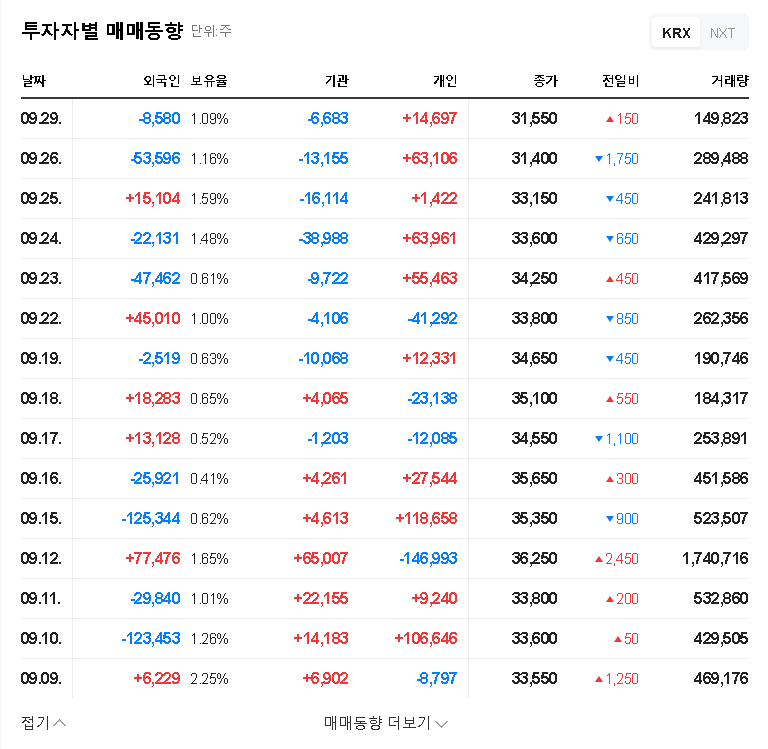
    (304100) Saltlux Stock Warrant Exercise: An Investor's Guide to AI Growth vs. Dilution Risk 관련 이미지
    (304100) Saltlux Stock Warrant Exercise: An Investor's Guide to AI Growth vs. Dilution Risk 관련 이미지
  • Saltlux’s Warrant Exercise: Short-term Impact and Long-term Investment Strategy


    Saltlux's Warrant Exercise: Short-term Impact and Long-term Investment Strategy 대표 차트 이미지


    Saltlux Warrant Exercise: What Happened?

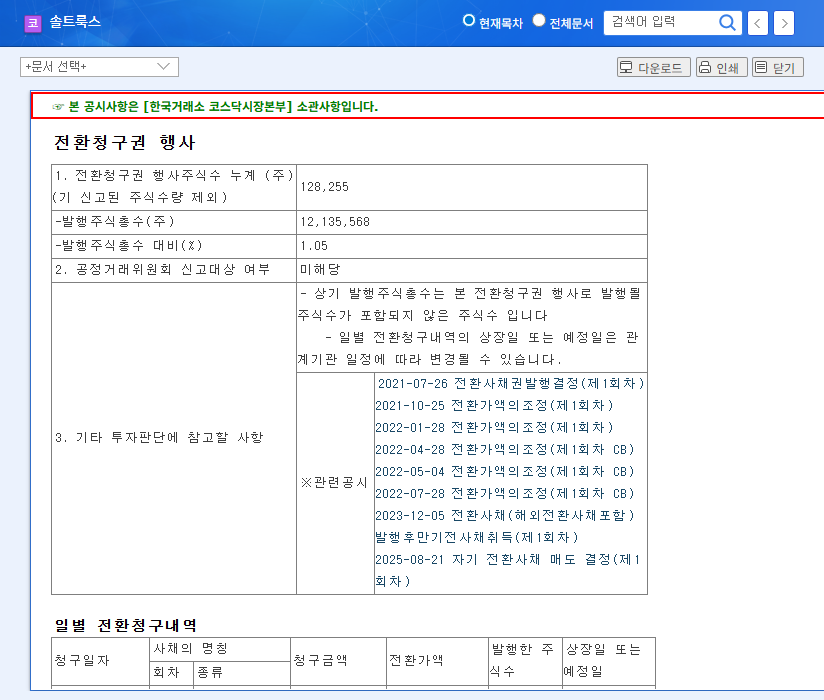
    On September 5, 2025, Saltlux announced a warrant exercise amounting to approximately KRW 1.5 billion. 128,255 shares will be converted at an exercise price of KRW 12,120, with the new shares listed on September 25th. This represents about 0.39% of the company’s market capitalization.

    Why is the Warrant Exercise Important?

    This warrant exercise is expected to contribute to improving Saltlux’s financial structure and capital increase. As convertible bonds are converted into stocks, the debt ratio will decrease, and the secured funds can be used for R&D investment and new business expansion. However, the potential dilution of existing shareholders’ stakes due to the issuance of new shares should also be considered.

    So, What Will Happen to the Stock Price?

    • Short-term Impact: The direct impact on the stock price is expected to be limited due to the small size of the exercise. However, temporary volatility may occur on the new share listing date.
    • Long-term Impact: While financial structure improvement can be a positive factor, Saltlux’s ultimate stock price direction depends on strengthening its AI technology competitiveness, improving profitability, and successfully expanding into the global market.

    What Should Investors Do?

    Instead of reacting to short-term price fluctuations, investors should focus on Saltlux’s core business performance and long-term growth potential. The warrant exercise can be interpreted as a positive signal, but investment decisions should be made cautiously after thoroughly analyzing the company’s fundamentals.


    Frequently Asked Questions

    What is Saltlux’s warrant exercise?

    A warrant is a right to convert into company shares at a predetermined price (exercise price) within a specified period. This warrant exercise by Saltlux means that convertible bond holders are exercising their right to acquire shares.

    How does the warrant exercise affect the stock price?

    Generally, a warrant exercise can lead to the dilution of existing shareholders’ stakes due to the increase in the number of shares from the new share issuance. However, in the case of Saltlux, the size of the exercise is negligible compared to the market capitalization, so the short-term impact on the stock price is expected to be limited. In the long term, the effect of improving the financial structure can be positive.

    What should investors be aware of?

    Investors should focus on Saltlux’s AI technology competitiveness, profitability improvement, and global market expansion strategy, rather than short-term price volatility. These factors will be the key drivers in determining long-term investment value.


    Saltlux's Warrant Exercise: Short-term Impact and Long-term Investment Strategy 관련 이미지
    Saltlux's Warrant Exercise: Short-term Impact and Long-term Investment Strategy 관련 이미지


  • Saltlux Q2 2025 Earnings Disappoint: Balancing AI Growth Potential with Financial Challenges

    1. What Happened? Saltlux Q2 2025 Earnings Breakdown

    Saltlux reported Q2 2025 revenue of KRW 12.779 billion, a 33.3% decrease year-over-year, alongside an operating loss of KRW 9.206 billion and a net loss of KRW 9.413 billion. The declining revenue and widening operating loss highlight deepening profitability concerns. Preliminary earnings announcements confirmed this trend, showing decreased revenue and a shift from operating profit to loss compared to the same period last year.

    2. Why the Decline? Analyzing Saltlux’s Performance

    The decline can be attributed to both external and internal factors. Externally, macroeconomic uncertainties, including high interest rates and a volatile exchange rate, have led to reduced IT spending by businesses. Internally, aggressive R&D investment has increased costs, while expansion into new business areas has incurred initial investment expenses. Intensifying competition in the AI market has also likely contributed to margin pressure.

    3. What’s Next? Saltlux’s Future Outlook

    Short-term concerns regarding the financial performance are likely to persist. However, the long-term outlook holds potential for growth, driven by LUXIA 3.0’s Agentic AI capabilities and the expansion of the Goover service. Significant traction in the B2B/B2G market could be a key catalyst for positive momentum. It’s important to note that realizing this potential will take time, and continuous monitoring of the competitive landscape and macroeconomic factors is crucial.

    4. Investor Action Plan: Navigating the Saltlux Landscape

    • Monitor Technology Commercialization and Profitability: Key focus should be on LUXIA 3.0’s contribution to revenue generation.
    • Assess Financial Health Improvement Efforts: Evaluate management’s plans for improving cash flow and managing debt.
    • Analyze Competitive Landscape and Market Penetration Strategy: Saltlux’s ability to differentiate itself is crucial.
    • Monitor Macroeconomic Factors: Consider the impact of exchange rate and interest rate fluctuations on overseas operations.
    • Maintain a Long-Term Perspective: A long-term investment strategy is advisable, given the potential for short-term volatility.
    Q: What are the main reasons for Saltlux’s disappointing Q2 2025 earnings?

    A: Increased R&D expenses, initial investment costs for new business ventures, macroeconomic uncertainties, and intensifying competition in the AI market are key factors.

    Q: What is the outlook for Saltlux’s future growth?

    A: The company’s long-term growth potential is considered strong, driven by LUXIA 3.0’s Agentic AI and Goover service expansion. However, achieving tangible financial improvement will require time and careful monitoring of market conditions and competition.

    Q: What should investors consider when evaluating Saltlux?

    A: Investors should consider the timing of technology commercialization and profitability, management’s plans for improving financial health, the competitive landscape, and macroeconomic factors. A cautious approach with a long-term perspective is recommended.