Tag: Robot Industry

  • (388720) Yuilrobotics Major Shareholder Stake Change: A 2025 Deep Dive for Investors

    (388720) Yuilrobotics Major Shareholder Stake Change: A 2025 Deep Dive for Investors

    The recent Yuilrobotics major shareholder stake change has sent ripples through the investment community. On October 31, 2025, CEO Kim Dong-Heon, the company’s largest shareholder, significantly reduced his holdings. This move raises a critical question for current and potential investors: Is this a warning sign of instability, or a strategic maneuver paving the way for future growth? This deep-dive analysis will dissect the transaction, evaluate the company’s fundamentals, and provide actionable strategies for navigating the uncertainty surrounding Yuilrobotics stock.

    Unpacking the Transaction: The Details of the Stake Change

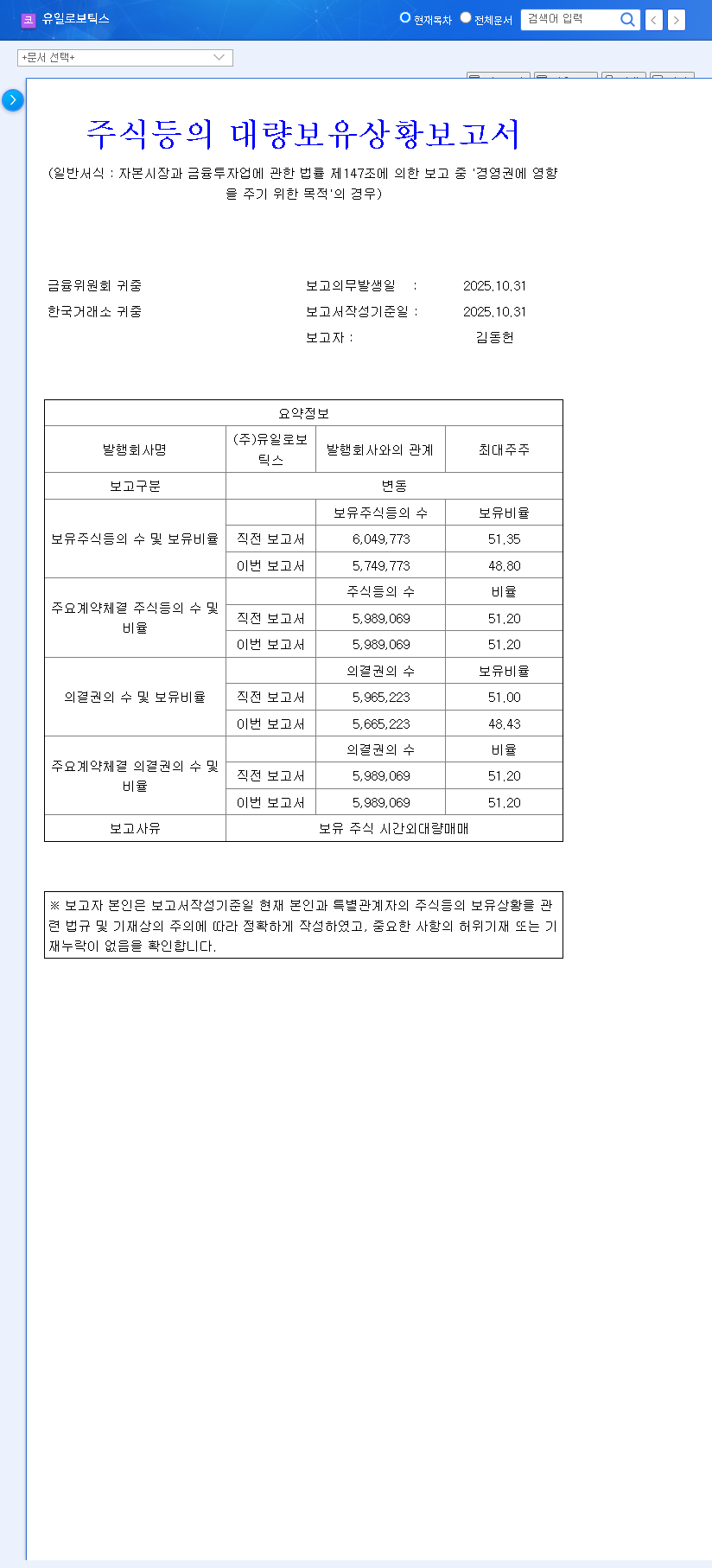
    The disclosure filed on October 31, 2025, confirmed that CEO Kim Dong-Heon executed a large-scale, after-hours block trade. A block trade is a privately negotiated transaction of a large number of securities, often done after market hours to minimize impact on the stock price. Here are the key details:

    • Shares Sold: 300,000 shares of Yuilrobotics.
    • Stake Reduction: CEO Kim Dong-Heon’s ownership decreased from a controlling 51.35% to 48.80%.
    • Stated Purpose: The company officially cited the reason as ‘Influence over management rights.’

    This transaction is significant because it drops the primary shareholder’s stake below the 50% threshold, a symbolic and often critical level for corporate control. Interested parties can view the Official Disclosure (DART report) for complete details.

    While the dip below 50% may seem alarming, the stated purpose of maintaining management influence suggests this wasn’t a move to exit, but perhaps to create strategic flexibility.

    Yuilrobotics at a Crossroads: Financial Hurdles vs. Growth Ambitions

    To understand this stake change, we must look at the company’s current state. Yuilrobotics is simultaneously facing financial pressures while aggressively pursuing future growth, creating a complex picture for investors.

    Navigating Financial Headwinds

    The company’s H1 2025 report revealed some concerning trends. Despite solid sales, Yuilrobotics reported significant operating and net losses, raising alarms about profitability and potential capital impairment. To shore up its balance sheet, the company raised capital through a rights issue and convertible bonds. However, this fundraising came at the cost of share dilution, which can reduce earnings per share and diminish the value of existing holdings. These financial struggles form a critical backdrop to the CEO’s share sale.

    Forging a Path to Growth with Robotics Investing

    Despite the financials, Yuilrobotics is not standing still. The company is making bold investments in high-growth sectors to secure its future:

    • Business Diversification: A strategic push into manufacturing secondary battery automation equipment directly targets the booming global electric vehicle (EV) market.
    • Technology Development: Heavy investment in R&D for next-generation heavy-duty robots, advanced reducers, and AI-powered fault prediction systems aims to create a strong technological moat.
    • Global Expansion: Actively establishing a presence in key overseas markets like the USA, Mexico, and Poland to capture international demand.

    Investment Strategy: How to Approach Yuilrobotics Stock Now

    Given the conflicting signals, a prudent investment strategy is essential. Investors should consider both short-term risks and long-term potential.

    Short-Term Tactical Approach

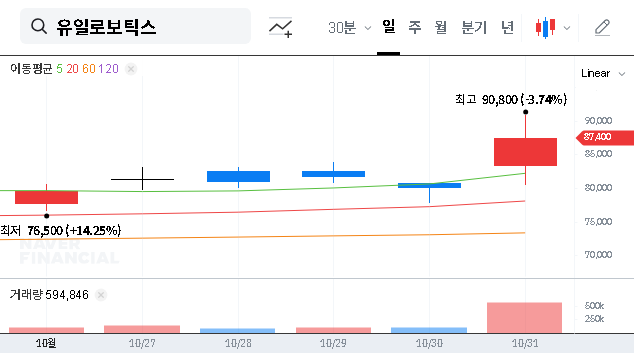
    The announcement of the Yuilrobotics major shareholder stake change will likely cause short-term volatility. Cautious investors may prefer to wait on the sidelines to observe market reaction. Technical traders might look for patterns in trading volume and price action following the block trade to identify entry or exit points. Monitor the news closely for any follow-up statements from the company or Kim Dong-Heon.

    Mid-to-Long Term Value Approach

    Long-term investors should focus on fundamentals. The key is to track whether the company’s growth initiatives are translating into tangible results. Keep a close eye on quarterly earnings reports for signs of improved profitability and progress in the new business ventures. The global industrial robot market is projected to grow significantly, a trend that could lift all boats, including Yuilrobotics. According to a recent analysis by industry experts at authoritative sources like MarketsandMarkets, automation demand is surging. It’s also crucial to learn more about how to analyze convertible bonds and their impact on a company’s capital structure.

    Frequently Asked Questions

    Q1: Why did CEO Kim Dong-Heon sell his shares in Yuilrobotics?

    He sold 300,000 shares, reducing his stake to 48.80%. The officially stated purpose was to maintain ‘influence over management rights,’ which could imply a strategic restructuring or capital reallocation rather than a loss of faith in the company.

    Q2: How bad are Yuilrobotics’ current financials?

    As of H1 2025, the company is in a deficit, reporting operating and net losses. While it has raised capital, this has led to share dilution. These are significant challenges that the company must overcome.

    Q3: What is the long-term growth potential for Yuilrobotics?

    The company’s long-term potential is promising, tied to its investments in high-demand areas like secondary battery automation and advanced robotics. Success in these ventures, combined with a growing market for industrial automation, could drive significant future growth.

    Final Verdict

    The Yuilrobotics major shareholder stake change is a pivotal event that adds a layer of uncertainty to an already complex investment thesis. The company presents a classic case of risk versus reward. The financial weaknesses are real and cannot be ignored. However, the strategic investments in future-proof industries offer a compelling pathway to long-term value creation. Investors must conduct their own due diligence, weighing the short-term sentiment risk against the long-term growth story.
    (388720) Yuilrobotics Major Shareholder Stake Change: A 2025 Deep Dive for Investors 관련 이미지
  • (160190) HIGEN RNM Self-Stock Disposal: A Deep Dive for Investors on Growth vs. Share Dilution Risk

    (160190) HIGEN RNM Self-Stock Disposal: A Deep Dive for Investors on Growth vs. Share Dilution Risk

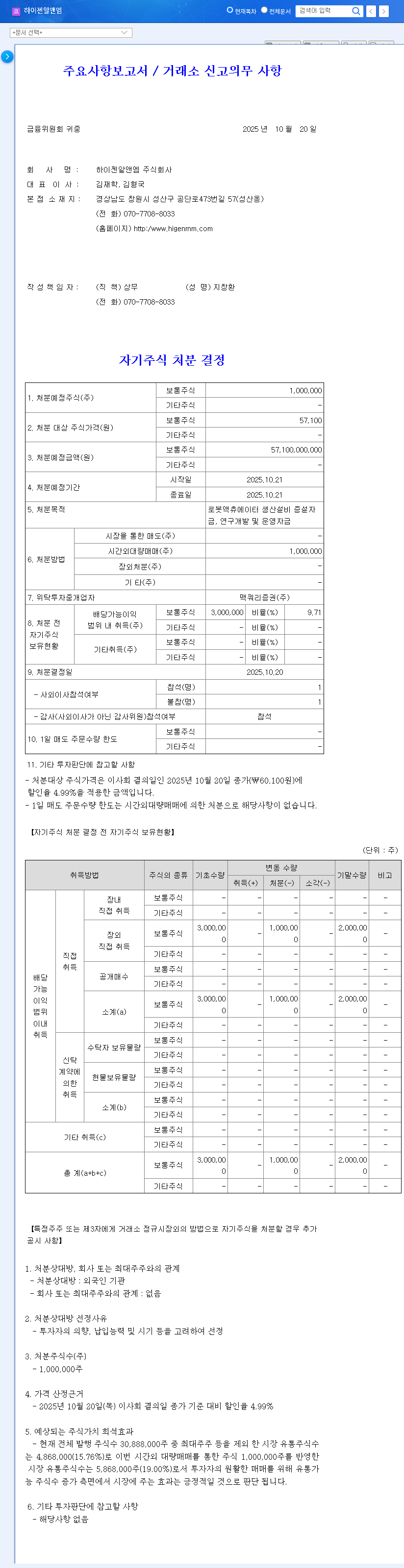
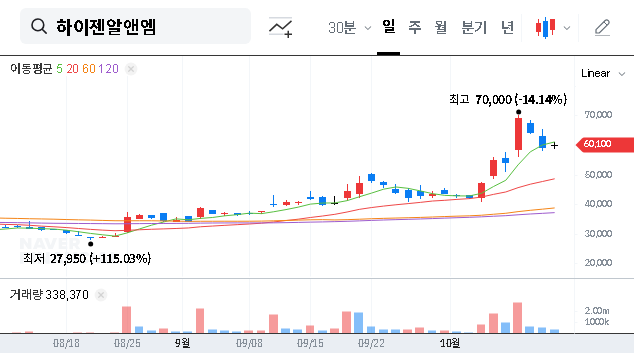
    The recent announcement of the HIGEN RNM self-stock disposal has sent ripples through the investment community. As a key player in the burgeoning robotics sector, HIGEN RNM CO., LTD (하이젠알앤엠) is at a critical juncture. The company has detailed a plan to dispose of 1,000,000 treasury shares, a move valued at approximately ₩57.1 billion, with the transaction scheduled for October 20, 2025. This decision presents a classic dilemma for shareholders: is this a strategic masterstroke to fund next-generation growth in the robot actuator business, or does it carry an unavoidable risk of share dilution for existing investors?

    This comprehensive guide will dissect the announcement, explore the strategic rationale, weigh the potential upsides against the inherent risks, and provide actionable insights for anyone with HIGEN RNM stock in their portfolio. We will delve into the nuances of this significant financial maneuver to determine its true impact on the company’s future value.

    The Core Details of the Treasury Share Disposal

    On October 27, 2023, HIGEN RNM made its intentions clear through a public disclosure. The plan to offload 1,000,000 treasury shares is not merely a financial transaction but a strategic signal of the company’s future direction. The full details were published in their official filing. (Official Disclosure: Click to view DART report). The stated purpose of this capital infusion is multi-faceted and directly tied to cementing their leadership in the robotics market.

    Strategic Objectives of the Capital Raise

    This treasury share disposal is a clear commitment to ambitious growth. The funds are earmarked for several key areas:

    • Expanding Robot Actuator Production: A significant portion of the capital will be used to scale up production facilities. This proactive investment aims to meet the soaring demand from the global robotics industry, which is a crucial part of our comprehensive analysis of the robotics industry.
    • Fueling Research & Development (R&D): To maintain a competitive edge, continuous innovation is paramount. This funding will bolster R&D efforts in advanced actuator technology, ensuring HIGEN RNM stays ahead of the curve.
    • Strengthening Operational Liquidity: Securing additional operating funds enhances financial stability, allowing the company to navigate market volatility and seize new business opportunities without constraint.

    The transaction is set to be managed by Macquarie Securities (Korea) Ltd., whose global expertise could facilitate an efficient and successful disposal process.

    For HIGEN RNM, this isn’t just about raising cash; it’s a strategic robot actuator investment designed to secure long-term market leadership and create sustainable shareholder value.

    Analyzing the Impact: Growth Engine vs. Dilution Risk

    Any significant corporate action like a treasury share disposal is a double-edged sword. Investors must carefully weigh the potential for long-term rewards against the short-term risks.

    The Bull Case: A Catalyst for Growth

    The upside is directly linked to the company’s ability to execute its growth strategy. By investing heavily in production capacity and R&D, HIGEN RNM can increase its market share and enhance its technological moat. According to recent market analysis from industry experts, the demand for high-precision robotics components is expected to grow exponentially. This capital injection positions HIGEN RNM to capture that growth, potentially leading to significantly higher revenues, improved profitability, and ultimately, a higher stock valuation in the long run.

    The Bear Case: The Specter of Share Dilution

    The primary concern for current shareholders is the share dilution risk. When treasury shares are sold back into the market, the total number of outstanding shares increases. This means each existing share represents a smaller percentage of ownership, which can dilute earnings per share (EPS) and put downward pressure on the stock price. The specific disposal method—be it a block deal to an institutional investor, a public offering, or a third-party allocation—will be critical. A poorly executed disposal at a price below market expectations could amplify negative sentiment and lead to short-term price volatility.

    Investor Strategy: Key Factors to Monitor

    Given the HIGEN RNM self-stock disposal, a prudent investor should adopt a watchful and analytical approach. Your investment decision should not be based on the announcement alone, but on the evolving details and the company’s subsequent performance.

    • Confirm Disposal Method & Price: The most crucial upcoming information will be the exact method and price of the sale. This will determine the immediate impact on shareholder value. A strategic placement with a long-term partner is far more favorable than a broad market sale at a discount.
    • Track Capital Allocation: Scrutinize future quarterly reports to ensure the secured funds are being deployed effectively as promised. Look for tangible progress in facility expansion and new product developments stemming from R&D.
    • Assess Company Fundamentals: Continue to monitor core business performance, market trends in the robotics industry, and overall financial health. The success of this capital raise will ultimately be reflected in the company’s fundamental growth.

    In conclusion, HIGEN RNM’s decision is a bold, forward-looking move. While the share dilution risk is real and requires careful consideration, the potential for this robot actuator investment to fuel substantial long-term growth is compelling. Cautious optimism and diligent monitoring are the recommended course of action for investors.

    (160190) HIGEN RNM Self-Stock Disposal: A Deep Dive for Investors on Growth vs. Share Dilution Risk 관련 이미지