Tag: RF Semi

  • (096610) RF Semi Delisting Crisis: A Deep Dive for Investors on the Injunction & High-Risk Future

    (096610) RF Semi Delisting Crisis: A Deep Dive for Investors on the Injunction & High-Risk Future

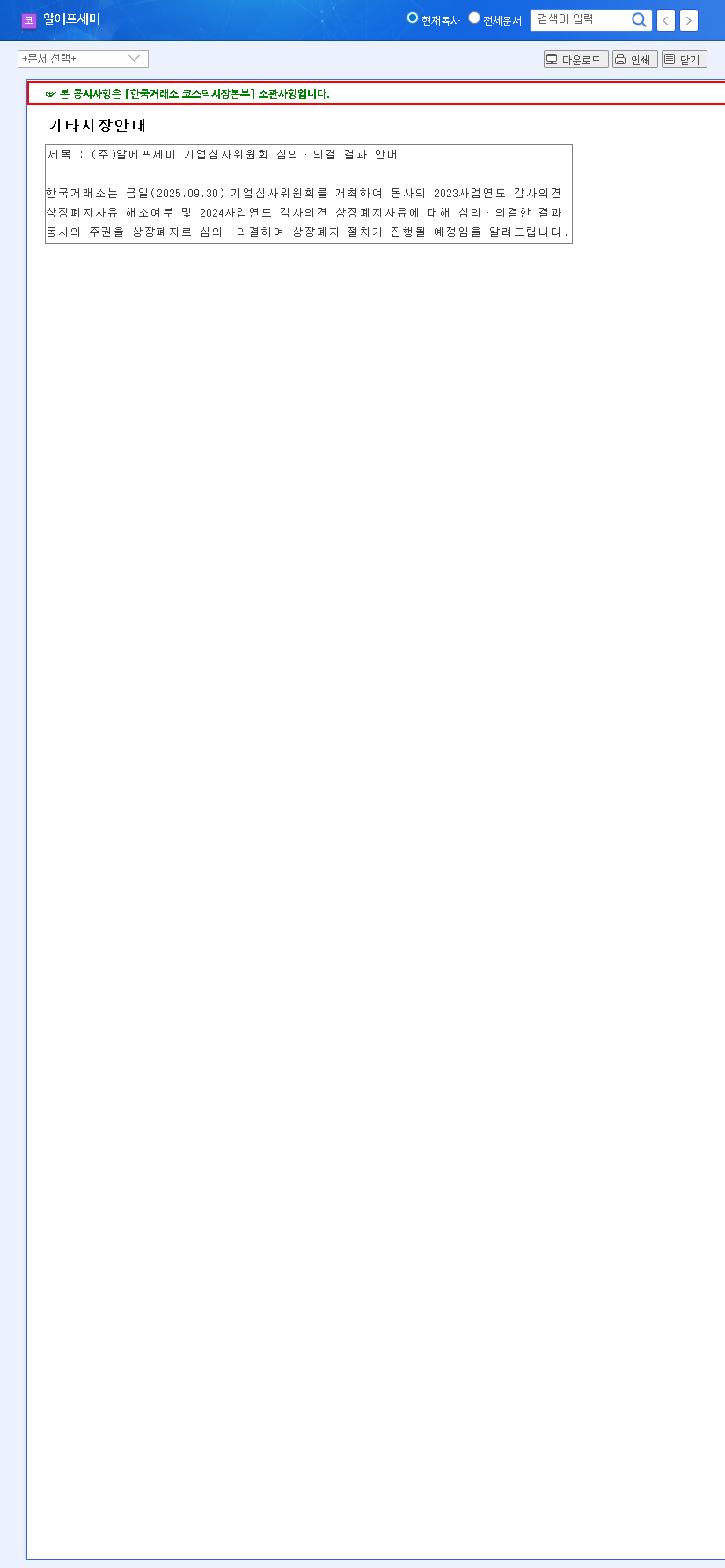
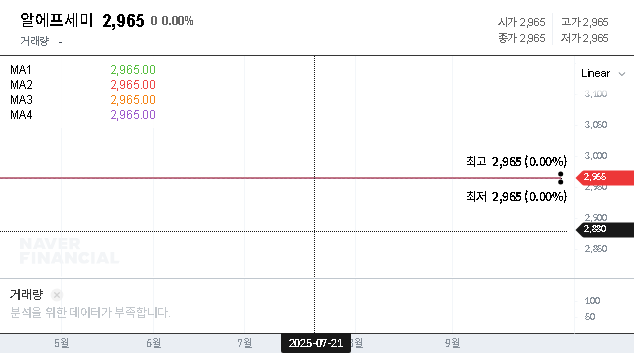
    The recent news surrounding the potential RF Semi delisting has sent shockwaves through the investment community. After the Korea Exchange announced its decision, RF Semi Co., Ltd. filed an injunction to suspend the action, creating a complex and high-stakes situation for shareholders. This is far more than a simple legal maneuver; it’s a critical battle for the company’s survival that directly threatens investor assets. This in-depth analysis will dissect the RF Semi injunction, evaluate the company’s precarious fundamentals, and provide a clear outlook on the significant stock investment risk involved.

    Can RF Semi navigate this crisis, or is this the final chapter? We will explore the facts to help you make an informed decision.

    The Core of the Crisis: Delisting Decision and Legal Response

    A Race Against Time

    On September 30, 2025, the Korea Exchange officially notified RF Semi of its delisting decision. Wasting no time, the company responded on October 1, 2025, by filing an injunction with the Seoul Southern District Court to suspend the effect of this decision. This legal filing, as documented in the Official Disclosure, is a desperate attempt to buy time and maintain its listed status while it pursues a main lawsuit against the delisting.

    More Than Just a Legal Procedure

    While the RF Semi injunction may temporarily halt liquidation trading, it is crucial for investors to understand that this does not address the root cause of the problem. The delisting decision was triggered by severe financial and managerial red flags, including dishonest disclosures and, most critically, the auditor’s repeated warnings about the company’s ability to continue as a ‘going concern.’ This term, which you can learn more about from authoritative sources like Investopedia, signifies substantial doubt about a company’s ability to operate without the threat of liquidation in the near future.

    Unpacking the Shaky RF Semi Fundamentals

    A thorough review of RF Semi’s 2025 semi-annual report paints a grim picture of its financial health. The case for the RF Semi delisting is built on a foundation of deep-seated issues:

    • Plummeting Revenue: Sales from its core ECM semiconductor business have collapsed, dropping from a 63.69% share to just 15.79%, signaling a catastrophic business stall.
    • Chronic Operating Losses: Both consolidated and separate financial statements reveal persistent and volatile operating losses, highlighting a complete breakdown in profitability.
    • Crushing Debt & Weak Structure: A high debt ratio, exacerbated by convertible bonds and derivative liabilities, has created a fragile financial structure that is struggling to stay afloat.
    • Pervasive ‘Going Concern’ Uncertainty: The auditor’s repeated warnings are the most severe indicator of the company’s existential crisis.
    • Hostile Business Environment: The shrinking ECM market and fierce competition provide no relief, compounding the company’s internal struggles.

    The Injunction’s Impact: Short-Term Chaos vs. Long-Term Reality

    Short-Term: Volatility and Speculation

    If the court grants the injunction, trading in RF Semi stock could temporarily resume. However, this would likely unleash a torrent of volatility. With the fundamental problems unresolved, any trading would be driven by speculation rather than value, creating an environment of extreme risk. Investor confidence is already shattered, and this legal maneuver, without a credible turnaround plan, will only deepen the mistrust.

    Mid-to-Long-Term: A Fight for Survival

    The ultimate fate of RF Semi hinges not on the injunction, but on the outcome of the main lawsuit and, more importantly, on the management’s ability to execute a genuine operational turnaround. Without drastic improvements to its financial structure and business competitiveness, maintaining its listed status will be a hollow victory. Attracting new investment under these circumstances is nearly impossible, further strangling any hope of recovery. For a deeper understanding of these dynamics, investors can explore our guide on how to analyze company fundamentals.

    At this critical juncture, RF Semi represents an extremely high level of stock investment risk. The injunction application is a temporary reprieve, not a fundamental solution to the deep-seated problems threatening its existence.

    Investor Action Plan: What to Watch Now

    For those holding RF Semi stock or considering a speculative play, the path forward requires extreme vigilance. Focus on these key developments:

    • Court Decisions: Monitor the court’s ruling on the injunction application and the subsequent progress of the main lawsuit.
    • Corporate Review Committee: The final verdict from this committee will be a decisive factor in the delisting process.
    • Tangible Improvement Efforts: Look for objective evidence of management action. Are they restructuring debt? Securing new revenue streams? Or simply engaging in legal delays?

    Final Investment Opinion: ‘Highly Risky’. Given the overwhelming negative factors and the sheer uncertainty, we strongly advise against any new investment in RF Semi Co., Ltd. Existing shareholders should conduct a serious and careful re-evaluation of the company’s viability and their own risk tolerance in the face of a potential total loss.
    (096610) RF Semi Delisting Crisis: A Deep Dive for Investors on the Injunction & High-Risk Future 관련 이미지
  • (096610) RF Semi Delisting 2025: A Complete Guide for Investors on Stock Suspension & Future

    (096610) RF Semi Delisting 2025: A Complete Guide for Investors on Stock Suspension & Future

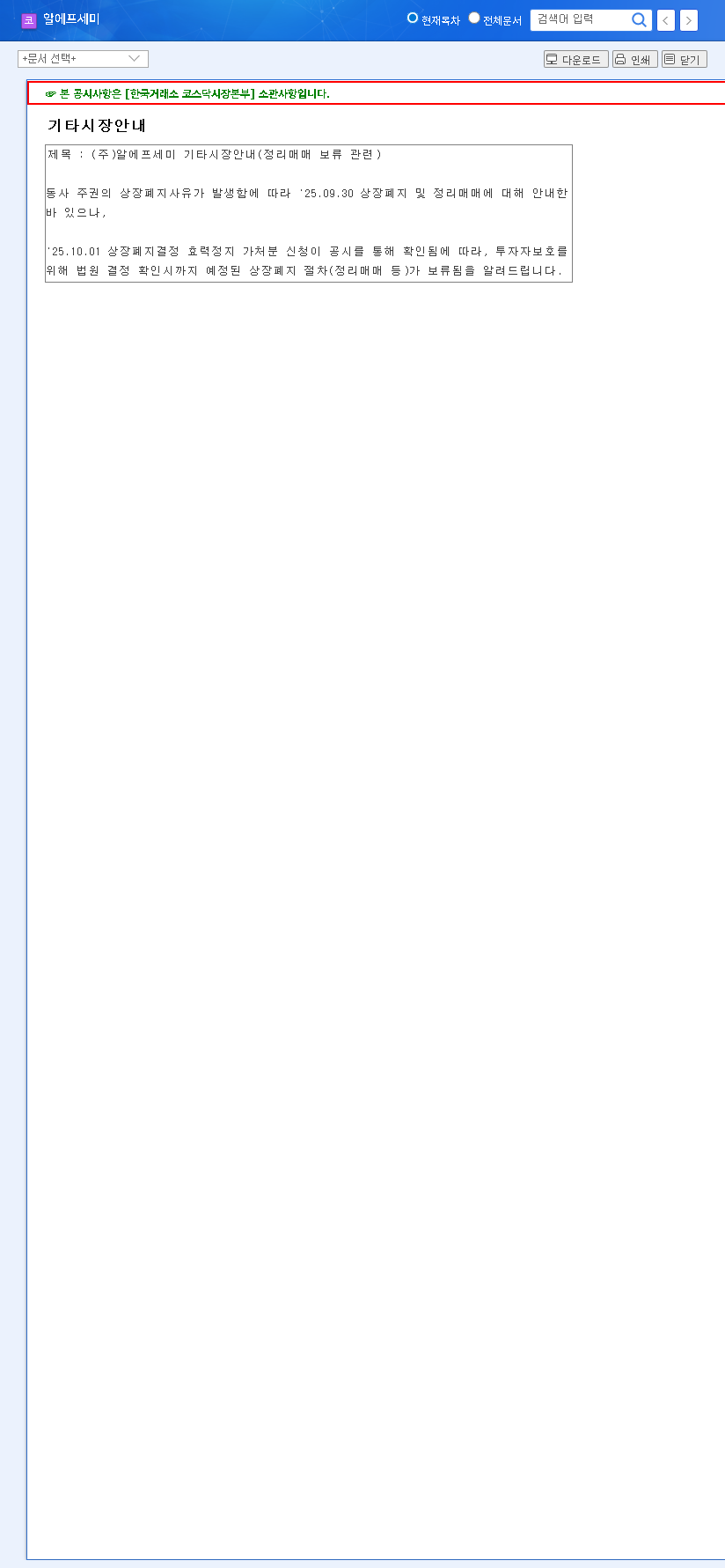
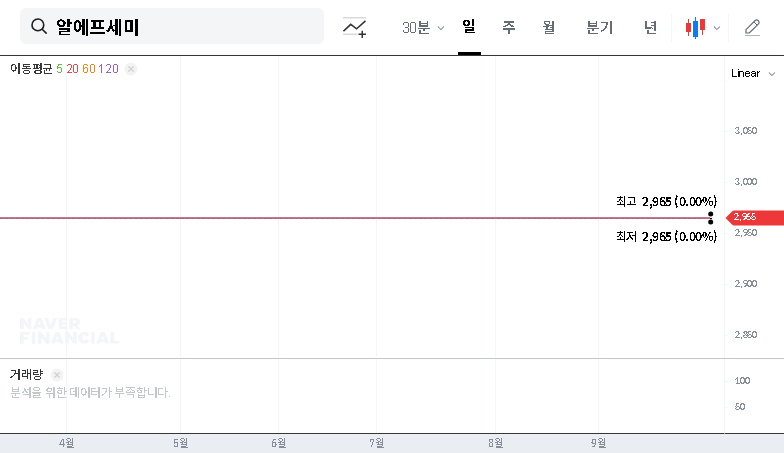
    The news of the RF Semi delisting on September 30, 2025, following a decision by the Korea Exchange, has understandably caused significant concern among shareholders. This event is more than a corporate headline; it signifies a critical turning point for the company and raises urgent questions for investors about the future of their holdings and the potential for investment recovery. The suspension of RF Semi stock trading is the first of many challenges shareholders now face.

    This in-depth guide provides a clear analysis of the RF Semi delisting decision, its profound effects on the company’s viability, and the ripple effects on the market. We will explore the underlying causes, offer practical guidance for investors navigating this uncertain period, and provide a realistic future outlook for RF Semi.

    What Led to the RF Semi Delisting Decision?

    On September 30, 2025, the Korea Exchange’s Corporate Review Committee finalized its decision to delist RF Semi Co., Ltd. This conclusion was reached after a thorough review found that the company failed to resolve the critical issues that led to adverse auditor opinions for both the 2023 and 2024 fiscal years. The specifics of this decision, as filed with the regulator, can be reviewed in the Official Disclosure (DART). The reasons are a complex mix of fundamental business weaknesses and a breakdown in corporate governance.

    Delisting is not merely a procedural step; it represents a fundamental breakdown in a company’s financial health, operational stability, and the trust it holds with investors.

    1. Severe Corporate & Financial Issues

    At the heart of the RF Semi delisting were deep-seated operational and financial problems that could no longer be overlooked.

    • Declining Profitability: While a semi-annual report in 2025 showed a superficial return to operating profit, this was achieved by drastic cost-cutting rather than growth. Persistent sales declines indicated that sustainable profitability was out of reach without a major turnaround in revenue.
    • Pervasive Financial Instability: Despite some improvements in the debt-to-equity ratio, the company faced mounting financial pressure from maturing convertible bonds and an inability to secure new financing, creating a precarious financial situation.
    • Stalled Growth Initiatives: Ambitious plans to expand into new semiconductor sectors (Foundry, SiC, GaN) and LED lighting were crippled by a severe lack of capital, leaving the company without a viable path to future growth.

    2. Erosion of Management Transparency and Trust

    Beyond the numbers, a critical factor was the erosion of trust. Adverse audit opinions are a major red flag, often pointing to issues like inadequate financial records, non-compliance with accounting standards, or a failure to provide sufficient information to auditors. These are not just technicalities; they signal a severe lack of management transparency and undermine the very foundation of corporate credibility. For more information, investors can review our guide on how to analyze corporate governance issues.

    The Far-Reaching Impact of the Delisting

    The consequences of the RF Semi stock suspension and subsequent delisting are severe and will be felt across the company, by its investors, and within the wider market.

    • For the Company: Delisting severs access to public capital markets, effectively halting fundraising for operations, R&D, and expansion. This will likely accelerate the decline in sales and profitability, destroy its competitive edge, and make any long-term growth strategy impossible.
    • For Investors: Shareholders face the most immediate and painful consequences. The stock suspension is followed by a delisting, making it extremely difficult to recover invested capital. The company’s credibility is irrevocably damaged, which also harms its relationships with customers and suppliers, threatening its very existence.
    • For the Market: While one company’s failure may have a limited direct impact, the RF Semi delisting serves as a cautionary tale. It can dampen investor sentiment and increase scrutiny on other companies exhibiting similar financial or governance weaknesses. High-authority sources like Investopedia provide further context on the broader market effects of delisting events.

    Frequently Asked Questions for Investors

    Why exactly was RF Semi delisted?

    The delisting was finalized because RF Semi failed to resolve the issues that led to adverse auditor opinions for two consecutive years (2023 and 2024). This stemmed from a combination of persistent sales decline, severe financial instability, a stalled growth strategy, and a critical loss of management transparency and credibility.

    What should RF Semi shareholders do now?

    Shareholders must act cautiously. First, understand the official delisting procedures by monitoring announcements from the Korea Exchange. Explore all potential avenues for investment recovery, which may be limited. Avoid making rushed decisions and strongly consider seeking professional advice from legal and financial experts who specialize in such situations.

    How does the delisting process work?

    Following the delisting decision, there is typically a brief grace period known as ‘liquidation trading’ (정리매매). During this time, investors can sell their shares on the exchange. However, liquidity is extremely low and price volatility is exceptionally high, presenting significant risk. After this period, the company is officially removed from the exchange, and the stock becomes unlisted.

    What happens to the company after delisting?

    Post-delisting, RF Semi becomes a private, unlisted company. It loses its ability to raise capital from the public markets. The future of its operations and the handling of its assets will proceed according to legal frameworks, which could include restructuring, bankruptcy, or acquisition. For shareholders, trading shares becomes much more difficult, often relegated to sparse over-the-counter (OTC) markets with little to no liquidity.

    (096610) RF Semi Delisting 2025: A Complete Guide for Investors on Stock Suspension & Future 관련 이미지
  • RF Semi Turns a Profit, But Delisting Risk Remains: What Should Investors Do?

    1. What Happened? RF Semi’s H1 2025 Earnings

    RF Semi reported sales of 5.9 billion KRW, operating profit of 400 million KRW, and net income of 300 million KRW for the first half of 2025, marking a return to profitability. This exceeded market expectations. However, sales of its main product, ECM semiconductors, decreased significantly year-over-year, and the LED lighting division also continued to struggle.

    2. Why Did This Happen? Profitability Drivers and Delisting Risk

    The main drivers of the return to profitability were a decrease in selling, general, and administrative expenses (SG&A), an increase in other income, and a decrease in financial expenses. Despite these positive factors, the risk of delisting due to a qualified audit opinion in 2024 remains. The results of the delisting review are expected on August 31st and will be a critical factor determining the stock’s future.

    3. What’s Next? RF Semi’s Future and Investment Strategy

    The delisting decision will determine RF Semi’s future. If the company avoids delisting, short-term stock price gains are possible. However, delisting could result in significant losses for investors. In the long term, recovery of the main business segments, performance of new businesses such as the foundry business, securing financial soundness, and improving management transparency are crucial.

    4. Investor Action Plan

    Investing in RF Semi is currently very risky. Investment decisions should be made carefully, considering the possibility of delisting. Avoid short-term investment. Even if the company avoids delisting, a thorough analysis of its fundamentals is crucial. For long-term investors, continuous monitoring of the delisting risk, main business recovery, and new business performance is essential.

    Why is RF Semi facing delisting?

    RF Semi received a qualified audit opinion in 2024. The results of the delisting review are expected on August 31st.

    How did RF Semi perform in H1 2025?

    The company reported sales of 5.9 billion KRW, operating profit of 400 million KRW, and net income of 300 million KRW, returning to profitability.

    Should I invest in RF Semi?

    Investing in RF Semi carries significant risk due to the delisting threat. Extreme caution is advised.

  • RF Semi 2025 Half-Year Earnings: Delisting Risk Intensifies? Urgent Investor Check Required!

    1. RF Semi’s 2025 Half-Year Results: Far Below Market Expectations

    RF Semi’s 2025 half-year revenue was 5.9 billion KRW, slightly below expectations (6.1 billion KRW). However, operating profit and net income were significantly lower than expected at 0.4 billion KRW and 0.3 billion KRW, respectively, compared to projections of 1.4 billion KRW and 1.5 billion KRW.

    2. Analyzing the Causes of Underperformance: Ongoing Going Concern Uncertainty

    Despite a decline in semiconductor sales, the overall revenue decline was limited due to strong performance in the LED lighting segment. However, the auditor’s opinion of ‘substantial doubt about the company’s ability to continue as a going concern’ remains unresolved, raising doubts about the company’s fundamentals. High debt ratios and convertible bonds maturing in 2026 also pose a financial burden.

    3. Key Information for Investors: Assessing the Delisting Risk

    The most significant risk factor is the possibility of delisting. If the Korea Exchange decides to delist RF Semi, investors could lose their entire investment. Furthermore, macroeconomic uncertainties such as a global economic slowdown, rising interest rates, and raw material price volatility also pose investment risks.

    4. Investment Strategies: Extreme Caution Required

    • New Investments: Under the current circumstances, new investments should be considered with extreme caution. Investing in RF Semi while the delisting risk remains is highly risky.
    • Existing Investments: Closely monitor the company’s financial restructuring efforts and the Korea Exchange’s review results. Consider cutting losses if negative outcomes are anticipated.
    How did RF Semi perform in the first half of 2025?

    RF Semi’s performance fell significantly short of market expectations, reporting lower revenue, operating profit, and net income than projected.

    What is the biggest risk for RF Semi?

    The most substantial risk is the possibility of delisting from the Korea Exchange due to ongoing concerns about its ability to continue as a going concern.

    What should investors do?

    New investors should exercise extreme caution. Existing investors should monitor the company’s situation closely and consider selling their shares if necessary.

  • RF Semi Faces Delisting Crisis: Embezzlement Allegations and Investor Action Plan

    1. What Happened?: Embezzlement Allegations Against RF Semi

    On August 13, 2025, RF Semi disclosed allegations of embezzlement, triggering a review for delisting. Despite recent improvements in semiconductor performance, this event, combined with existing concerns about auditor opinions and going concern uncertainties, poses a significant threat to the company’s future.

    2. Why Does it Matter?: Delisting Risks and Investment Implications

    Embezzlement allegations severely damage a company’s financial health and credibility, leading to potential stock plunges, diminished investor confidence, and funding difficulties. For RF Semi, this drastically increases the risk of delisting, potentially resulting in complete loss of investment for shareholders.

    3. What’s Next?: Potential Scenarios and Outlook

    The fate of RF Semi rests on the decisions of the Korea Exchange. The veracity of the allegations, investigation outcomes, and the company’s remedial actions will be crucial factors. In a worst-case scenario, delisting is a real possibility, leading to substantial investor losses.

    4. What Should Investors Do?: Action Plan

    • Avoid any further investment in RF Semi.
    • If you currently hold shares, carefully monitor the situation and consider selling strategies, keeping in mind the potential for trading halts.
    • Stay updated on news and announcements regarding the Korea Exchange’s decisions and developments.
    • Seek professional advice to reassess your investment strategy.

    Frequently Asked Questions (FAQ)

    Why is RF Semi facing a delisting crisis?

    The combination of embezzlement allegations, existing auditor opinion issues, and going concern uncertainties have created a significant risk of delisting.

    Can investors recover their investments?

    If delisting occurs, recovering investments might be impossible. The current situation is extremely risky.

    What is the expected stock price outlook?

    The allegations are likely to cause a sharp decline in stock price. High volatility is expected pending the Korea Exchange’s decision.

  • RF Semi Embezzlement Scandal: What Investors Need to Know (Urgent Analysis)

    1. The Embezzlement Scandal: 14.3 Billion Won and Trading Suspension

    On August 13, 2025, allegations of embezzlement and breach of trust amounting to 14.3 billion won by a former RF Semi executive came to light. This is a substantial amount, equivalent to 109.52% of the company’s capital, dealing a critical blow to the company. Consequently, trading of the company’s stock has been suspended, and the possibility of delisting is now being discussed.

    2. The Fallout: Delisting Risk and Deteriorating Investor Sentiment

    This incident goes beyond mere financial loss; it has severely damaged the company’s credibility and management transparency. Already facing the risk of delisting due to issues such as dishonest disclosure, the embezzlement scandal has dealt a fatal blow to RF Semi. Investor anxiety is at its peak, and a significant drop in stock price is anticipated upon the resumption of trading.

    3. Q1 Profits Rendered Meaningless: Embezzlement Overshadows Performance Improvement

    RF Semi successfully turned a profit in both operating income and net income in Q1 2025. However, this positive momentum has been completely overshadowed by the embezzlement incident. The significance of the profit turnaround has faded, and the company’s future remains uncertain.

    4. Investor Action Plan: Avoid Investment, Closely Monitor the Situation

    Investment in RF Semi is strongly discouraged at this time. Investors should closely monitor the progress of the embezzlement case and the delisting decision, while also preparing for the possibility of further negative developments. It is crucial for investors to understand that they face a very high risk of losing their entire investment.

    What is the scale of the RF Semi embezzlement scandal?

    The embezzlement amounts to 14.3 billion won, a significant figure equivalent to 109.52% of RF Semi’s capital.

    Is there a possibility of RF Semi being delisted?

    Yes, the likelihood of delisting is very high due to existing issues like dishonest disclosure and audit opinion refusal, compounded by the recent embezzlement scandal.

    Should I invest in RF Semi?

    No, investment in RF Semi is strongly discouraged at present. The company’s very survival is uncertain due to the embezzlement scandal.