Tag: Report

  • GI Innovation Stock Forecast: Special Relationship Shareholder Changes and Investment Strategies


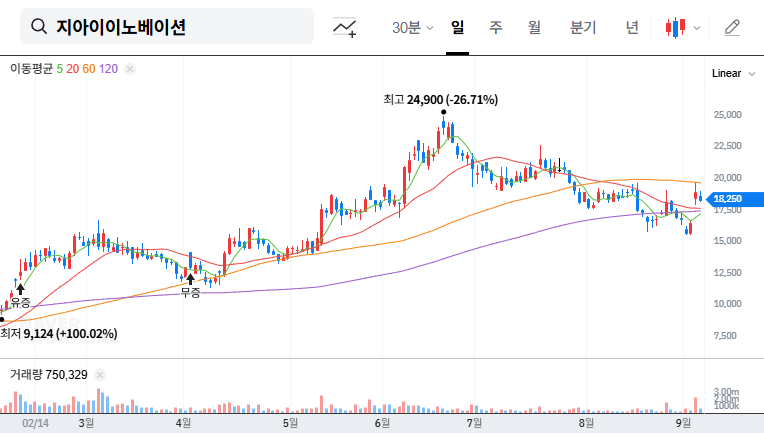
    GI Innovation Stock Forecast: Special Relationship Shareholder Changes and Investment Strategies 대표 차트 이미지


    What Happened? Changes in GI Innovation’s Special Relationship Shareholder Stakes

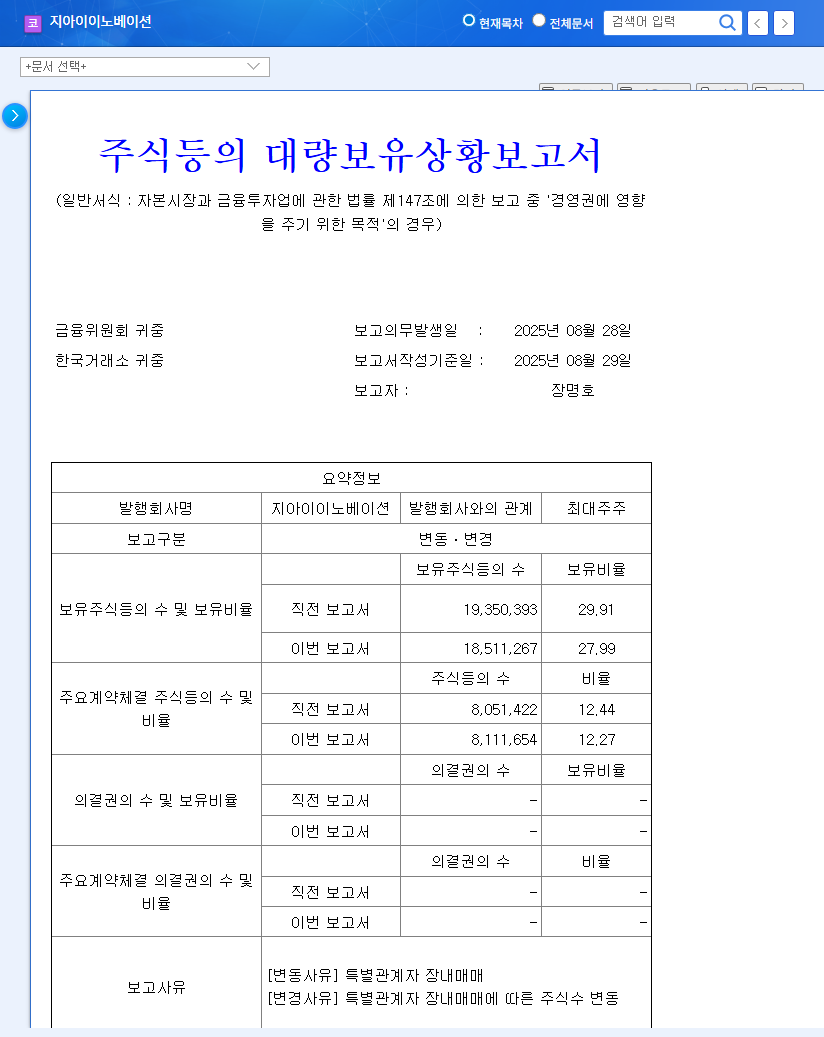
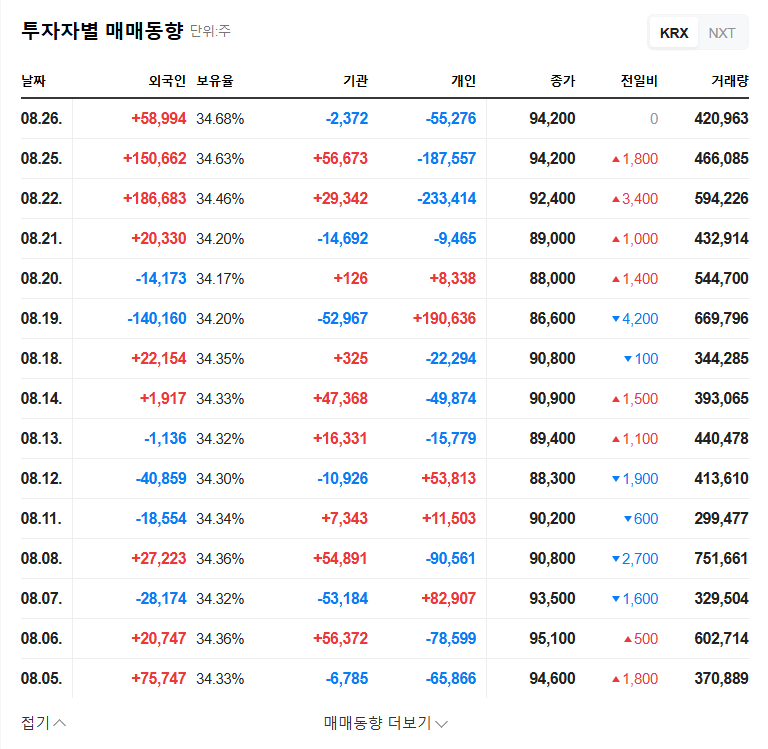
    According to the ‘Report on the Status of Large-volume Holdings of Stocks, etc.’ released on September 4, 2025, the stake held by CEO Myung-Ho Jang and other special relationship shareholders decreased from 29.91% to 27.99%. DS Asset Management, Anda Asset Management, and others reduced their stakes through market sales, while Brain Asset Management’s stake changed due to the dissolution of a special relationship related to convertible preferred stock.

    Why Are These Changes Important?

    Changes in special relationship shareholder stakes can impact market confidence in a company’s management stability and future direction. While this stake decrease may put short-term pressure on the stock price, the remaining stake is sufficient for maintaining management control.

    So, What Does the Future Hold for GI Innovation?

    Positive Factors: A robust R&D pipeline, successful technology transfers, and improved financial structure underpin GI Innovation’s long-term growth potential. Diverse pipelines, including immuno-oncology drugs (GI-101/GI-102), allergy treatments (GI-301), and metabolic immuno-oncology drugs (GI-108), will serve as future growth drivers.

    Negative Factors: The sale of shares by special relationship shareholders may cause short-term stock price volatility. The inherent high failure rate of new drug development, financial burden from continuous R&D investment, and intensifying market competition are also risk factors to consider.

    What Should Investors Do? Action Plan

    • Monitor Pipeline Clinical Trial Results: Clinical trial results significantly impact stock prices, requiring continuous attention.
    • Check for New Technology Transfer Agreements: Additional technology transfer agreements are a crucial indicator of the company’s growth potential.
    • Understand Funding Plans: Investors should assess the company’s funding plans and execution capabilities for R&D investments.
    • Observe Shareholder Movement Trends: Changes in major shareholder stakes can influence market sentiment.
    • Consider Macroeconomic Factors: Interest rates, exchange rates, and bio-industry trends should be factored into investment decisions.

    GI Innovation holds high growth potential, but investment always carries risk. Consider the action plan above to make informed investment decisions.


    FAQ

    What are GI Innovation’s main pipelines?

    GI Innovation has a diverse pipeline including immuno-oncology drugs (GI-101/GI-102), allergy treatments (GI-301), and metabolic immuno-oncology drugs (GI-108).

    How do special relationship shareholder changes affect the stock price?

    In the short term, it can act as selling pressure, leading to a decline in stock price. However, the long-term impact depends on the company’s fundamentals and future outlook.

    What should investors be aware of when investing in GI Innovation?

    Investors should consider the high failure rate of new drug development, the financial burden from continuous R&D investment, and intensifying market competition. It’s also crucial to monitor clinical trial results, technology transfer agreements, and funding plans.
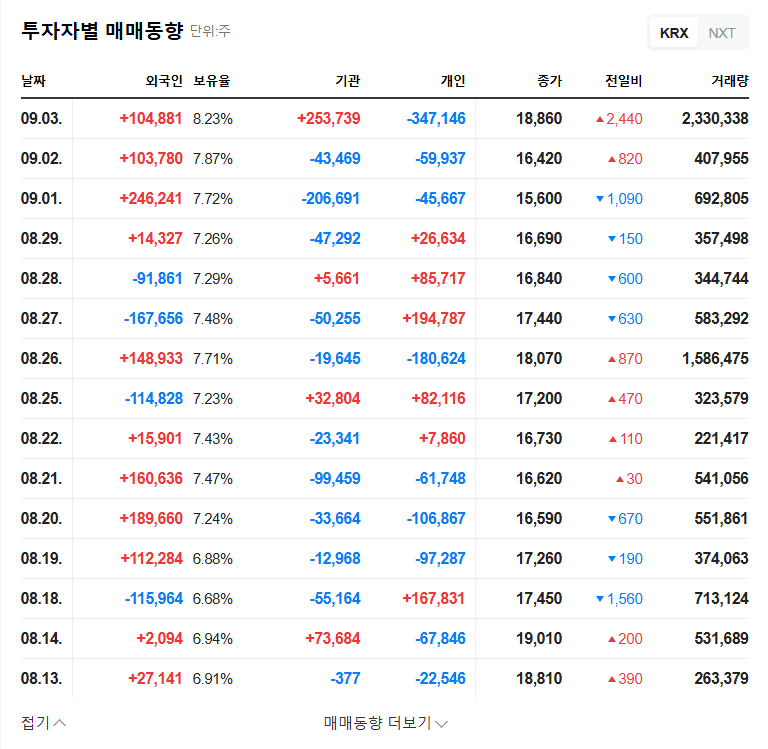



    GI Innovation Stock Forecast: Special Relationship Shareholder Changes and Investment Strategies 관련 이미지
    GI Innovation Stock Forecast: Special Relationship Shareholder Changes and Investment Strategies 관련 이미지


  • HysAir Takes Flight: Management Control Strengthened Amid Turnaround

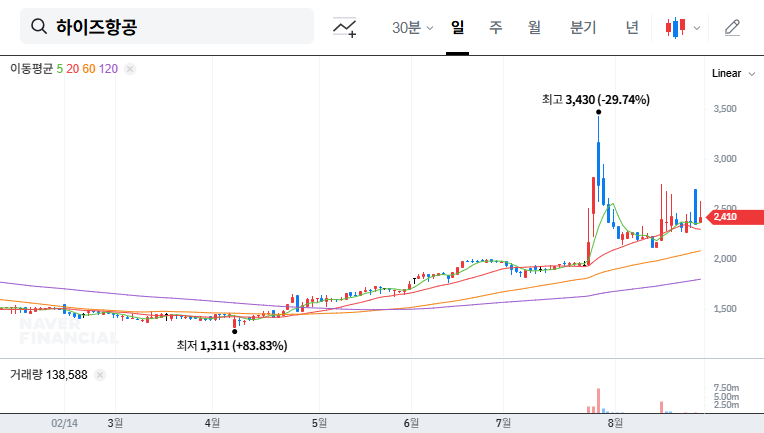
    HysAir Takes Flight: Management Control Strengthened Amid Turnaround 대표 차트 이미지

    1. What Happened?

    On August 27, 2025, HysAir’s CEO, Sangheon Ha, along with other related parties, increased their stake for management control purposes from 43.32% to 43.35%. Purchases by Byeongbu Kim and Jonghwan Ha were the primary drivers.

    2. Why Does It Matter?

    This stake change signifies more than just an increase in ownership. It comes amidst a positive fundamental improvement trend, with HysAir returning to profitability in the first half of 2025. This enhanced management stability combined with improved financials creates potential for synergistic growth. The active acquisition of shares by management demonstrates a strong commitment to the turnaround, which can instill confidence in investors and potentially lead to increased corporate value.

    3. What’s Next?

    Strengthened management control is expected to positively impact HysAir’s long-term growth strategy. However, risk factors such as a high debt-to-equity ratio of 175.1%, dependence on key customers like Boeing, and exchange rate volatility still exist. Therefore, the possibility of short-term stock price fluctuations should also be considered.

    4. What Should Investors Do?

    Investors considering HysAir should closely monitor future earnings announcements, order trends, and efforts to improve the financial structure. It’s also crucial to pay attention to macroeconomic factors such as global aviation industry trends and policy changes. Successful investment hinges on confirming that management’s efforts for sustained growth translate into tangible results.

    How was HysAir’s performance in the first half of 2025?

    HysAir successfully returned to profitability in H1 2025, with both operating income and net income turning positive.

    What was the main reason for the recent change in stake ownership?

    Open market purchases by Byeongbu Kim and Jonghwan Ha increased the stake held by related parties, including the reporting person.

    What are the key considerations for investing in HysAir?

    Investors should consider the high debt-to-equity ratio, dependence on major customers, and exchange rate volatility. Continuous monitoring of future performance and financial improvements is essential.

    HysAir Takes Flight: Management Control Strengthened Amid Turnaround 관련 이미지
    HysAir Takes Flight: Management Control Strengthened Amid Turnaround 관련 이미지
  • Samsung Electronics Stock: Analyzing the Impact of Samsung C&T’s Stake Change Report

    1. What Happened?

    Samsung C&T reported maintaining a 20.15% stake in Samsung Electronics for ‘management influence.’ The reasons for the report were ‘changes in the number of shares held’ and ‘changes in contracts related to the shares held.’

    2. Why Does it Matter?

    As the largest shareholder in Samsung Electronics, Samsung C&T’s stake changes and ownership objectives can significantly influence the company’s management stability and future direction. The ‘changes in the number of shares held’ and ‘contract changes’ can lead to various market interpretations depending on their context and details.

    3. What’s the Impact?

    Samsung C&T’s stake in Samsung Electronics remains at 20.15%, unchanged from the previous report. The stated objective of ‘management influence’ also remains consistent. Therefore, the report itself is unlikely to cause significant short-term fluctuations in Samsung Electronics’ stock price. However, depending on the details of the ‘changes in the number of shares held’ and ‘contract changes,’ there is potential for future impact on stock prices.

    • Positive Impact: Samsung C&T’s stable stake could reinforce confidence in management stability.
    • Neutral Impact: The unchanged stake suggests a limited impact on the market.
    • Negative Impact: Potential risks could arise depending on the details of the ‘contract changes.’

    4. What Should Investors Do?

    Investors should consider not only this report but also Samsung Electronics’ fundamentals, competitive landscape, and macroeconomic factors when making investment decisions. Pay close attention to the details of the ‘changes in the number of shares held’ and ‘contract changes’ that will be disclosed in the future. Furthermore, continuous attention should be paid to macroeconomic factors such as AI technology development, semiconductor market conditions, and the global economic situation.

    Frequently Asked Questions

    Will Samsung C&T’s stake change affect Samsung Electronics’ stock price?

    As there was no change in the stake percentage in this report, significant short-term stock price fluctuations are not expected. However, there is a possibility of future impact depending on the details of ‘contract changes,’ etc.

    What is the outlook for Samsung Electronics?

    Positive factors such as AI technology advancements and semiconductor market recovery coexist with negative factors like global recession concerns. Investors should consider various factors comprehensively.

    What are the key things to consider when investing?

    Thoroughly analyze Samsung Electronics’ fundamentals, competitive landscape, and macroeconomic factors, and pay continuous attention to future information disclosures.

  • VOneTech H1 2025 Earnings Report Analysis: A Turnaround with AI?

    1. VOneTech H1 2025 Performance: What Happened?

    VOneTech reported KRW 13.4 billion in revenue, KRW -3.6 billion in operating income, and KRW -4.3 billion in net income for H1 2025, reflecting weak performance. The downward trend in sales, observed since Q3 2024, continued, with operating income turning negative.

    2. Reasons for Decline: Why These Results?

    The primary driver behind VOneTech’s underperformance is the sales decline across key business segments, including display, secondary batteries, and robotics. External factors such as a maturing LCD market, intensified competition in OLEDs, and a slowdown in the secondary battery investment cycle contributed to this decline. Increased R&D spending also impacted profitability.

    • Display: Revenue share decreased by 11.4% due to a sluggish LCD market and intensified OLED competition.
    • Secondary Batteries: Despite market growth, revenue share fell by 27.1% due to heightened competition and the impact of the investment cycle.
    • Robotics: While the AMR/AGV market is growing, VOneTech faces challenges in profitability due to intensifying competition, despite robotics being their largest segment at 49.7% of revenue.

    3. Future Growth Potential: What Lies Ahead?

    Despite the short-term setbacks, VOneTech’s future growth prospects remain promising. The AI-powered ‘With AI’ platform is anticipated to be a key growth driver, creating synergies with existing business segments. The continued growth of the robotics segment and long-term potential of the secondary battery market are also positive indicators.

    4. Action Plan for Investors: What Should You Do?

    Investors should focus on the long-term growth potential rather than short-term results. Closely monitor the commercialization and market reception of the ‘With AI’ platform, the growth trajectory of the robotics business, and improvements in profitability. Managing exchange rate volatility and key customer acquisition strategies should also be carefully considered.

    Q. How did VOneTech perform in H1 2025?

    A. VOneTech reported KRW 13.4 billion in revenue, KRW -3.6 billion in operating income, and KRW -4.3 billion in net income, showing a decline in sales and a shift into operating losses compared to the same period last year.

    Q. What are the reasons for VOneTech’s poor performance?

    A. The decline in sales across key business segments like display, secondary batteries, and robotics, coupled with increased R&D expenditure impacting operating expenses, are the main contributors. External market conditions also played a role.

    Q. What are the future growth prospects for VOneTech?

    A. The launch of the ‘With AI’ platform is expected to drive future growth by creating synergies with existing businesses. The growth in robotics and the long-term potential of the secondary battery market are also positive signs.

    Q. What should investors focus on?

    A. Investors should monitor the commercialization and market reception of ‘With AI’, the growth of robotics, profitability improvements, exchange rate volatility management, and key customer acquisition strategies.

  • Cowell Fashion (033290) H1 2025: A Deep Dive into the Crisis and What Investors Should Do

    1. Cowell Fashion’s Decline: Sharp Drop in Sales Across All Segments

    Cowell Fashion’s H1 2025 revenue decreased by 2.8% year-on-year to KRW 383.836 billion. The logistics segment’s drastic sales decline (-53%) was the primary driver of this downturn. The electronics (-46%) and fashion (-55%) segments also experienced substantial drops.

    2. Understanding the Causes: Segment-Specific Analysis

    • 2.1 Electronics: Production disruptions due to a domestic factory fire and a general decrease in market demand appear to be the main causes of the decline. Despite efforts to shift towards high-value-added products, short-term results have been limited.
    • 2.2 Fashion: The downturn in the fashion industry, coupled with increasing polarization in MZ generation consumption and a failure to adapt to rapidly changing trends, led to a significant drop in sales.
    • 2.3 Logistics: Slowing growth in the online shopping market and increased competition significantly impacted sales. The segment’s high variable cost structure further contributed to declining profitability.

    3. Financial Health: A Concerning Picture

    Cowell Fashion’s debt-to-equity ratio stands at 60%, exceeding its equity ratio of 40%. The increasing trend in non-current liabilities raises concerns about financial stability. Both operating profit and net income have decreased. Increasing cash outflow from investing activities and a growing reliance on financing activities signal weakening financial health.

    4. What Investors Should Do: Proceed with Caution

    Cowell Fashion is currently facing substantial fundamental risks. Its investment appeal is low, necessitating a cautious approach. Instead of focusing on short-term stock rebounds, investors should closely monitor the tangible results of the company’s turnaround strategies and improvements in its financial structure.

    Q: What was the biggest issue for Cowell Fashion in H1 2025?

    A: The significant decline in sales across all business segments, particularly logistics, was the most pressing issue, leading to a deterioration of fundamentals.

    Q: What is the outlook for Cowell Fashion’s stock price?

    A: The current outlook is negative. The success of the company’s turnaround strategies and improvements in its financial structure will determine the future direction of the stock price.

    Q: Should I invest in Cowell Fashion?

    A: The current investment appeal is low. It’s advisable to wait for evidence of improved fundamentals and successful implementation of turnaround strategies before considering investment.

  • LF Announces Strong H1 2025 Earnings: Investment Analysis and Outlook

    1. LF H1 2025 Earnings Analysis: Key Performance Highlights

    LF reported revenue of KRW 455.7 billion, operating profit of KRW 44.2 billion, and net income of KRW 31 billion in the first half of 2025, showing significant growth year-over-year. The fashion business, in particular, demonstrated remarkable performance, while the finance and food businesses contributed stable earnings.

    2. Drivers of Growth: A Sector-by-Sector Breakdown

    • Fashion: Growth was fueled by strong performance of key brands like ‘Daks’, ‘Hazzys’, and ‘Jil Sander’, alongside successful online/offline integration and targeted marketing towards Gen Z.
    • Finance: Stable earnings were generated through Coramco Asset Trust/Management, with further growth anticipated from the data center business launching in October 2025.
    • Food: LF Food’s growth in food distribution and HMR/RMR businesses, coupled with ‘Quick Commerce’ logistics innovation, strengthened its competitiveness.

    3. Key Investment Insights: Opportunities and Risks

    Positive Factors: LF’s investment appeal is bolstered by its robust financial health, diversified business portfolio, and shareholder-friendly policies. However, potential slowdown in the fashion market and macroeconomic factors pose risks.

    4. LF’s Future Trajectory: Outlook and Investment Strategy

    LF is expected to maintain steady growth based on its stable business portfolio and growth drivers. However, careful investment decisions are necessary considering potential risks. A long-term perspective, monitoring new business performance and the fashion business’s competitiveness, is recommended for identifying investment opportunities.

    Frequently Asked Questions

    What are LF’s main business segments?

    LF operates in fashion, finance, and food. Fashion is its core business, while finance and food provide a stable earnings base.

    How did LF perform in H1 2025?

    LF reported revenue of KRW 455.7 billion, operating profit of KRW 44.2 billion, and net income of KRW 31 billion, showing year-over-year growth.

    What should investors consider when evaluating LF?

    Investors should consider the potential slowdown in the fashion market and the impact of macroeconomic factors.

  • BMT (086670) Stock Analysis: Soaring H1 2025 Earnings Signal Investment Opportunity?

    1. What Happened at BMT?

    BMT recorded significant growth in H1 2025, achieving revenue of KRW 75.867 billion and operating profit of KRW 6.194 billion, a substantial increase compared to the same period last year. Growth in the fitting segment was particularly noteworthy, accompanied by improved financial health, including a decrease in debt ratio and improvements in ROE and EPS.

    2. Drivers of Growth

    • Core Business Expansion: Steady demand growth from key client industries like shipbuilding/offshore plants, power generation, and semiconductors, along with a revitalized Middle East project market and increased Chinese semiconductor investments, fueled BMT’s growth.
    • Technological Prowess: Consistent R&D investment (4.71% of revenue) has ensured high technological capabilities and quality control, maintaining a competitive edge.
    • Improved Financial Structure: Asset sales and debt reduction efforts strengthened the company’s financial health and reduced investment risks.

    3. Future Outlook

    Analysts predict continued growth for BMT. Stable demand from existing industries, new market penetration, and ongoing technological advancements will serve as future growth drivers. However, potential risks, such as exchange rate volatility, convertible bond risks, and potential raw material price increases, warrant careful monitoring.

    4. Investor Action Plan

    BMT may present an attractive investment opportunity at its current stock price. Potential investors should monitor the following:

    • Overseas new order wins and project progress
    • Convertible bond related matters (KRW 9 billion outstanding)
    • Exchange rate and raw material price fluctuations

    Frequently Asked Questions

    What is BMT’s main business?

    BMT’s core business involves the manufacturing and supply of industrial precision fittings, valves, and electrical distribution boards.

    How did BMT perform in the first half of 2025?

    BMT achieved revenue of KRW 75.867 billion and operating profit of KRW 6.194 billion, representing year-on-year increases of 18.8% and 49.4%, respectively.

    What are the key factors to consider when investing in BMT?

    Potential investors should be mindful of exchange rate volatility, convertible bond risks, and the possibility of rising raw material prices.

  • DKTI H1 2025 Earnings Analysis: Struggling Despite Growth in Automotive Sector

    1. What Happened? : DKTI H1 2025 Earnings Summary

    DKTI reported revenue of KRW 118.7 billion (a 50.1% YoY decrease), operating profit of KRW 8.2 billion (a 44.6% YoY decrease), and net income of KRW 5.9 billion (a 56.7% YoY decrease) for the first half of 2025. The decline in smartphone and smartwatch sales was the primary driver of the overall poor performance.

    2. Why Did This Happen? : Analyzing the Decline

    The slump in the smartphone market and increased competition led to a 40.3% and 70.4% YoY decrease in smartphone FPCA and smartwatch sales, respectively. Conversely, the automotive segment grew by 14.3% due to increasing demand for automotive IT and eco-friendly vehicles. However, the rise in cost of goods sold to 75.68% negatively impacted profitability.

    3. What’s Next? : DKTI Future Outlook

    • Positive Factors: Continued growth in the automotive sector, expansion into new businesses (ANT HRC components, EV chargers, etc.)
    • Negative Factors: Potential continued downturn in the smartphone market, volatility in raw material prices and exchange rates

    While the growth in the automotive sector is encouraging, the recovery of the smartphone market is crucial for future earnings improvement.

    4. What Should Investors Do? : Investment Strategy

    The current investment recommendation for DKTI is ‘Neutral’. Given the coexistence of growth potential and short-term performance struggles, investors should closely monitor the performance of the automotive segment, the recovery of the smartphone market, and the company’s cost control capabilities. A cautious investment approach is recommended.

    Frequently Asked Questions

    What is DKTI’s main business?

    DKTI manufactures FPCA modules for smartphones, smartwatches, and automotive electronics.

    How was DKTI’s performance in H1 2025?

    DKTI reported revenue of KRW 118.7 billion (down 50.1% YoY), operating profit of KRW 8.2 billion (down 44.6% YoY), and net income of KRW 5.9 billion (down 56.7% YoY).

    What is the outlook for DKTI?

    Growth in the automotive segment is expected, but the recovery of the smartphone market is a key factor. New business ventures should also be monitored.

  • Motrex Investment Analysis: Declining H1 2025 Earnings, Future Growth Potential?

    1. What Happened?: Motrex H1 2025 Earnings Analysis

    Motrex’s H1 2025 earnings saw a decline in both sales and operating profit compared to the same period last year. The downturn in the automotive electronics division significantly impacted the overall results. Rising raw material prices and intensifying competition also contributed to the decline in profitability.

    2. Why Did This Happen?: Analysis of the Causes of the Downturn

    The decline in sales in the automotive electronics division is due to the volatility of the global automotive market and intensifying competition. Rising raw material prices and exchange rate fluctuations also had a negative impact on profitability. On the other hand, the construction machinery business maintained solid performance and stable growth.

    3. So What Will Happen?: Future Growth Engines and Outlook

    Motrex is striving to secure future growth engines through investments in new businesses such as EV charging and battery businesses. However, the success of these new businesses remains uncertain, and market competition is fierce. In addition, the possibility of a global economic slowdown and volatility in raw material prices are still risk factors.

    4. What Should Investors Do?: Action Plan

    Investing in Motrex requires a cautious approach. It is crucial to closely monitor the performance of new businesses, global economic conditions, and changes in the competitive landscape, and to make investment decisions by comprehensively considering the company’s future growth potential and risks.

    Frequently Asked Questions

    What are Motrex’s main businesses?

    Motrex’s main businesses are automotive electronics and construction machinery. Recently, the company has also ventured into new businesses such as EV charging and battery businesses.

    How was Motrex’s performance in H1 2025?

    Both sales and operating profit decreased compared to the same period of the previous year. The sluggish performance of the automotive electronics division was particularly noticeable.

    How is Motrex’s future growth potential evaluated?

    While the company is striving to secure growth engines through investments in new businesses, there are also uncertainties such as intensifying market competition and the possibility of a global economic slowdown.

  • Woorim PTS Large Shareholding Report: Fundamental Analysis and Investment Strategy

    1. What Happened?

    A large shareholding report (general) was published for CEO Hyunseok Han and related parties. With the cancellation of Woojin Han’s stock acquisition and Hyunseok Han’s gift, there is no change in the number of shares held, and the major shareholder and related parties still maintain a 55.60% stake.

    2. Why is it Important?

    While seemingly insignificant, this suggests a potential change in internal asset transfer or inheritance plans. This could influence future management succession and governance, warranting close attention.

    3. What is Woorim PTS?

    Woorim PTS manufactures gearboxes for steel mill facilities, industrial equipment, construction machinery, defense, aviation, and robotics. While facing recent challenges with declining sales and sustained losses, the company is focusing on expanding into high-value-added sectors like defense, aviation, and robotics to secure future growth engines.

    4. What Should Investors Do?

    This event is not expected to significantly impact stock prices in the short term. However, it is essential to monitor the performance of new businesses from a mid-to-long-term perspective. Successful diversification can lead to increased corporate value, but there are also risks if it fails. Therefore, continuous monitoring of new business sales growth, R&D achievements, sales recovery, and the timing of returning to profitability is crucial. A thorough analysis of the impact of macroeconomic variables is also necessary.

    Frequently Asked Questions

    What is the impact of this report on the stock price?

    While the short-term impact is expected to be minimal, the mid-to-long-term impact depends on the performance of new businesses.

    What are Woorim PTS’s main businesses?

    They manufacture gearboxes for steel mill facilities, industrial equipment, construction machinery, defense, aviation, and robotics.

    What are the key considerations for investment?

    A comprehensive consideration of new business performance, financial status, and macroeconomic variables is necessary.