Tag: Rental Business

  • (021240) COWAY Q3 2025 Earnings & Stock Analysis: A Deep Dive for Investors

    (021240) COWAY Q3 2025 Earnings & Stock Analysis: A Deep Dive for Investors

    The upcoming COWAY Q3 2025 earnings announcement and subsequent investor relations (IR) call represent a pivotal moment for shareholders and market watchers. Scheduled for November 11, 2025, at 10 AM KST, this event offers more than just a financial snapshot; it provides a crucial window into the strategic direction of COWAY Co., Ltd., a leader in the environmental home appliance market. Investors are keen to understand the company’s performance amidst a complex global economic landscape. The official details of the event can be found in the Official Disclosure. This analysis will delve into COWAY’s fundamental strengths, pressing risks, and what to expect from the highly anticipated COWAY investor relations conference.

    Robust Fundamentals: The Pillars of COWAY’s Success

    COWAY’s consistent performance is built on a foundation of several key strategic advantages. While the H1 2025 results were strong—showing a 17.0% year-on-year revenue increase to KRW 2.4338 trillion—understanding the underlying drivers is essential for any long-term COWAY stock analysis.

    The Power of a Stable Rental Business Model

    The cornerstone of COWAY’s financial stability is its massive rental and membership base, boasting over 7.36 million accounts. This subscription-like model, which accounts for over 90% of revenue, generates predictable, recurring cash flows. Unlike companies reliant on one-time sales, COWAY’s rental system creates a loyal customer ecosystem and a formidable barrier to entry for competitors, ensuring financial resilience even during economic downturns.

    Strategic Diversification into New Growth Arenas

    To secure future growth, COWAY has successfully expanded beyond its core offerings of water and air purifiers. The strategic push into new rental lineups, such as mattresses and massage chairs, has been well-received. This diversification not only opens up new revenue streams but also reduces the company’s dependence on a single market segment, positioning it to capture a larger share of the consumer’s home wellness budget.

    Expanding Global Footprint

    Consistent growth in key overseas markets, particularly Malaysia and the United States, is a critical component of COWAY’s long-term strategy. This international expansion mitigates risks associated with the highly competitive domestic South Korean market and strengthens overall business stability. Investors will be closely watching for updates on international account growth and profitability during the COWAY Q3 2025 earnings call.

    Navigating Headwinds: Key Risks on the Horizon

    Despite its strengths, COWAY is not immune to challenges. A thorough analysis requires acknowledging the potential risks that could impact future profitability and stock performance.

    For investors, the key is not just to see the impressive growth but to understand how management plans to navigate the increasing macroeconomic and competitive pressures.

    • Macroeconomic Volatility: With a significant portion of its sales overseas, COWAY is exposed to exchange rate fluctuations. The rising KRW against the USD and EUR could negatively impact reported earnings. Furthermore, the global trend of rising interest rates, as tracked by sources like global central banks, will increase the company’s funding costs, especially with a debt-to-equity ratio of 94.3% as of H1 2025.
    • Intensified Competition: The environmental home appliance market is fiercely competitive. Both domestic and international players are vying for market share, necessitating continuous investment in R&D and marketing, which can pressure profit margins.
    • Non-Core Investment Scrutiny: The company’s investment in the MBX virtual asset (token) has been noted as a potential risk. During the COWAY investor relations Q&A, management will likely face tough questions on this topic. A lack of clear, convincing answers could heighten investor anxiety about the company’s capital allocation strategy.

    Investor Action Plan for the IR Event

    To make an informed decision, investors should actively engage with the information presented during the IR event. Focus on the following key areas:

    • Analyze the Presentation: Look beyond the headline numbers. Scrutinize the detailed performance of overseas operations, the growth trajectory of new business lines, and the specific strategies outlined for managing debt and currency risks.
    • Monitor the Q&A Session: The Q&A is often the most revealing part of an IR call. Pay close attention to the questions asked by analysts and the depth and confidence of management’s responses. This is where their grasp of the challenges will be tested.
    • Evaluate Future Guidance: Any forward-looking statements or changes in guidance will be critical. Management’s tone—whether optimistic, cautious, or defensive—can provide valuable clues about the company’s internal outlook for Q4 and beyond.

    In conclusion, while COWAY’s strong market position and business model provide a solid foundation, the upcoming COWAY Q3 2025 earnings call will be a crucial test of management’s ability to navigate a challenging environment. A transparent and forward-thinking presentation could reinforce investor confidence, whereas ambiguity on key risks could lead to market disappointment.
    (021240) COWAY Q3 2025 Earnings & Stock Analysis: A Deep Dive for Investors 관련 이미지
  • (021240) COWAY Q3 2025 Earnings Analysis: In-Depth Breakdown & Stock Outlook (021240)

    (021240) COWAY Q3 2025 Earnings Analysis: In-Depth Breakdown & Stock Outlook (021240)

    This comprehensive COWAY earnings analysis provides a detailed look into the company’s preliminary financial results for the third quarter of 2025. For investors tracking COWAY Co., Ltd. (021240), the latest report presents a mixed but fascinating picture. While the home appliance rental giant showcased resilient top-line growth, underlying cost pressures impacted its net profitability. This deep dive will dissect the numbers, explore the key drivers behind the performance, and provide a clear outlook on what this means for the COWAY stock analysis and your investment strategy.

    COWAY Q3 2025 Earnings: The Official Numbers

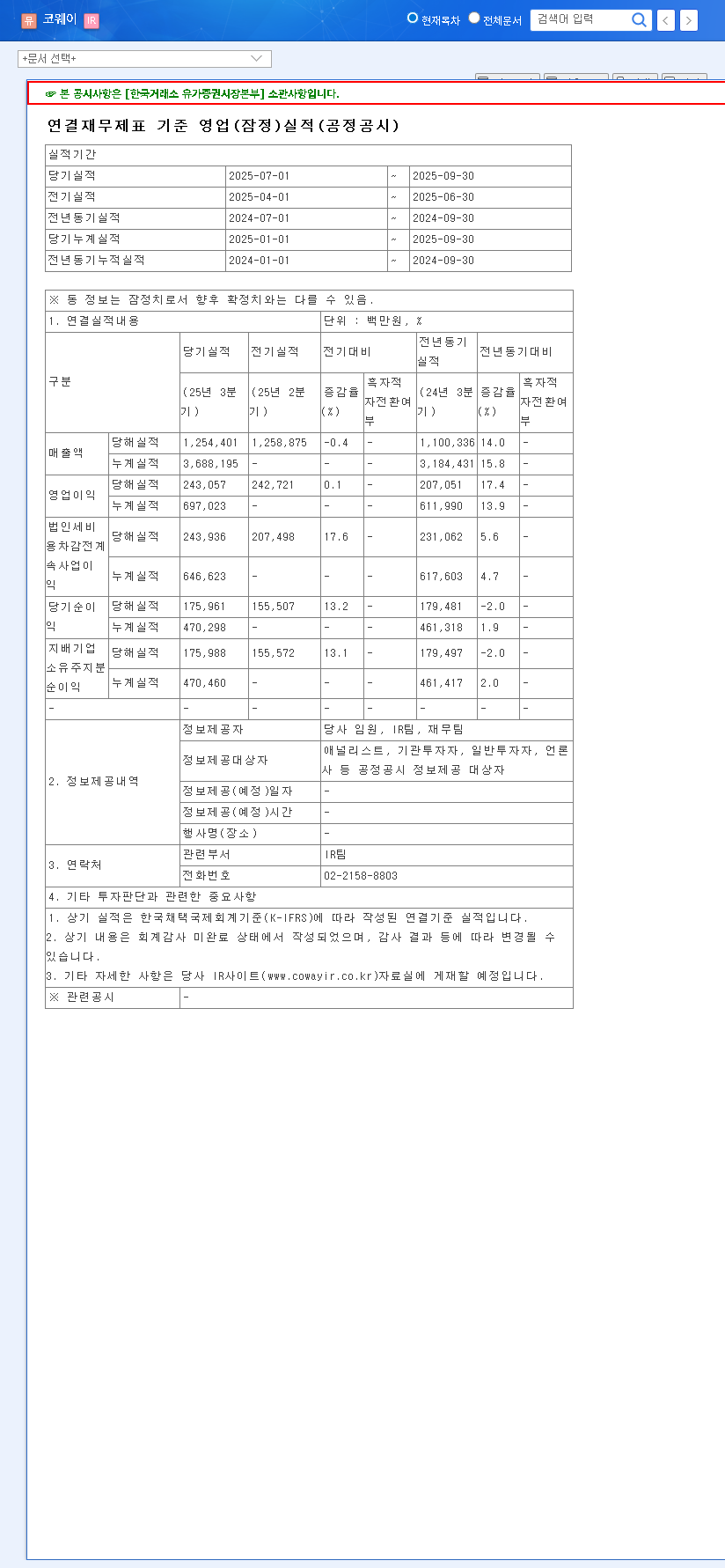
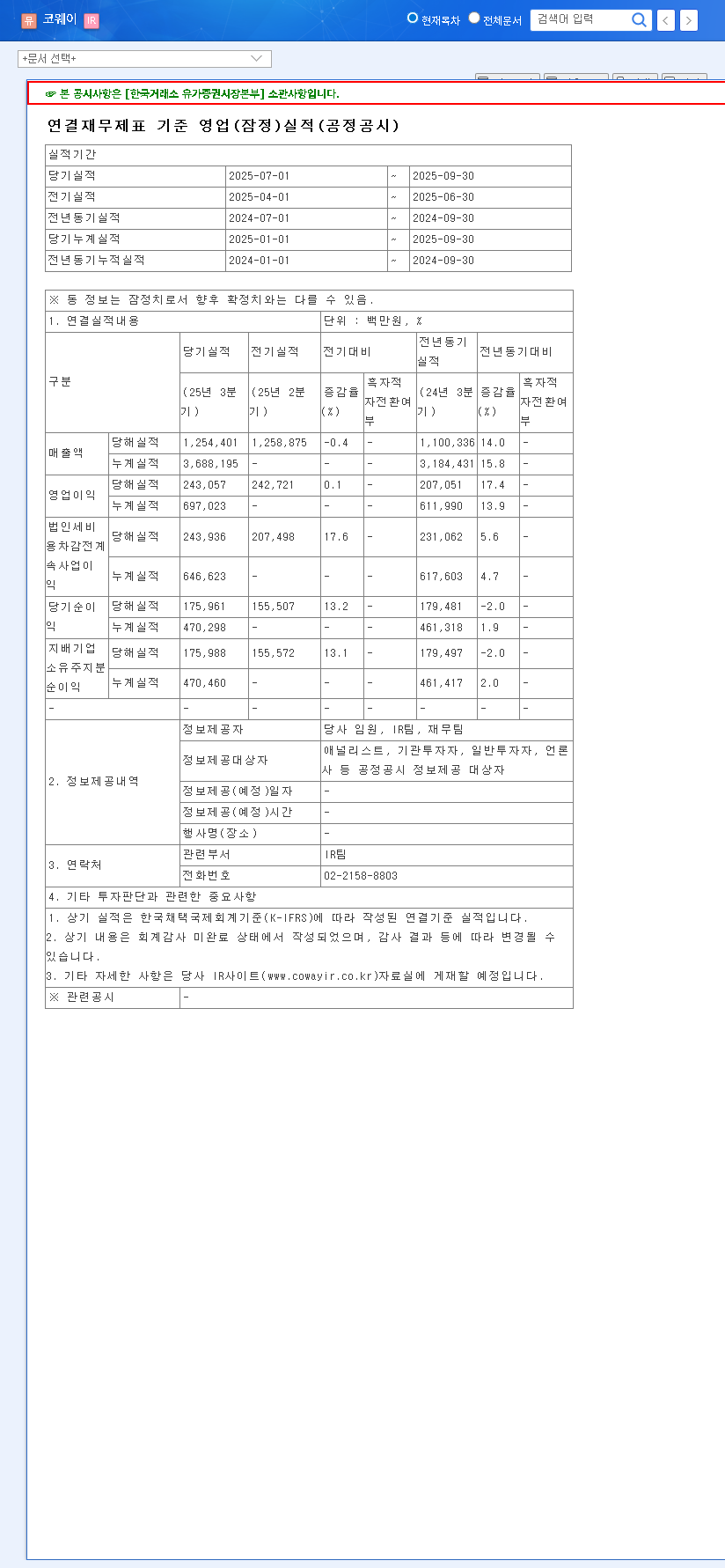
    On November 7, 2025, COWAY released its preliminary Q3 earnings, which immediately captured the market’s attention. The company managed to outperform expectations on revenue and operating profit, but a miss on net profit has raised important questions about operational efficiency. The official figures can be reviewed in the Official Disclosure on DART.

    Here is a summary of the key performance indicators from the 021240 earnings report:

    • Revenue: KRW 1,254.4 billion, a 1.0% beat against the market consensus of KRW 1,244.1 billion.
    • Operating Profit: KRW 243.1 billion, a 2.2% beat against the market consensus of KRW 237.9 billion.
    • Net Profit: KRW 176.0 billion, a significant 4.9% miss compared to the market expectation of KRW 185.2 billion.

    While revenue and operating profit grew slightly year-over-year, the decline in net profit signals that rising costs are beginning to weigh on the bottom line. This dynamic—strong sales but weakening profitability—is the central theme of the COWAY Q3 2025 earnings report.

    Deep Dive: Analyzing COWAY’s Financial Health

    To truly understand these results, we must look beyond the headline numbers and examine the fundamental drivers and pressures shaping COWAY’s performance.

    The Unwavering Strength of the Rental Business

    COWAY’s core strength remains its dominant rental business model. Accounting for over 90% of total sales, the recurring revenue from its massive installed base of environmental home appliances provides a highly stable and predictable income stream. This foundation allows the company to weather economic uncertainties better than competitors who rely on one-off sales. The continued expansion of its domestic and international rental accounts is a testament to the brand’s power and the sustained demand for its products.

    Despite macroeconomic headwinds, COWAY’s rental segment continues to be a fortress of stability, fueling its top-line growth and cementing its market leadership. However, the key challenge moving forward will be translating this revenue strength into proportional profit growth.

    Decoding the Profitability Squeeze

    The primary culprit behind the net profit miss is a noticeable increase in selling, general, and administrative (SG&A) expenses. This includes higher commission fees and sales-related costs. This spending surge could be a strategic investment in growth—such as entering new overseas markets or aggressive marketing campaigns to fend off rising competition—but it directly impacts profitability. For a detailed overview of market dynamics, investors often consult resources like Bloomberg’s market analysis. The market will be watching closely to see if this increased spending translates into sustainable, long-term market share gains.

    Financial Stability and Cash Flow Concerns

    From a balance sheet perspective, COWAY remains on solid ground. Its debt-to-equity and current ratios are within healthy ranges, indicating strong financial soundness. However, a significant point of concern is the sharp year-over-year decrease in operating cash flow, which turned negative this quarter. Management attributes this to temporary factors related to investment and financing activities. While potentially a one-off event, investors should monitor cash flow trends in subsequent quarters to ensure it’s not a sign of underlying operational issues. Understanding financial ratios is key, and our guide to investor metrics can help.

    Stock Outlook: What’s Next for COWAY (021240)?

    The mixed results from the COWAY Q3 2025 earnings report create a nuanced outlook for its stock price.

    • Short-Term Momentum: The positive surprise in revenue and operating profit may provide a short-term lift. However, the net profit miss could act as a ceiling, limiting significant upward movement until the company demonstrates better cost control.
    • Mid-to-Long-Term Potential: The long-term investment thesis remains intact. COWAY’s robust business model, international expansion strategy, and commitment to ESG and R&D are powerful drivers for future value creation. The key variables will be its ability to manage SG&A expenses and navigate currency fluctuations effectively.

    Investor FAQs: COWAY Q3 2025 Earnings

    Q1: Did COWAY’s Q3 2025 earnings meet expectations?

    A1: It was a mixed result. Revenue (KRW 1,254.4B) and operating profit (KRW 243.1B) beat market expectations, demonstrating solid growth. However, net profit (KRW 176.0B) fell short of estimates, indicating cost pressures.

    Q2: What was the main reason for COWAY’s net profit decline?

    A2: The decline is primarily attributed to an increase in selling and administrative (SG&A) expenses, including higher commission fees and sales commissions, which squeezed profit margins.

    Q3: What is the mid-to-long-term investment outlook for COWAY?

    A3: The outlook remains positive, supported by its stable rental business and overseas growth. However, successful management of rising operational costs and currency risks will be critical for future stock performance. Investors should monitor profitability trends closely.

    (021240) COWAY Q3 2025 Earnings Analysis: In-Depth Breakdown & Stock Outlook (021240) 관련 이미지
  • (203650) Dream Security Bonus Issue: A 2025 Investor’s Guide to Value & Risk

    (203650) Dream Security Bonus Issue: A 2025 Investor’s Guide to Value & Risk

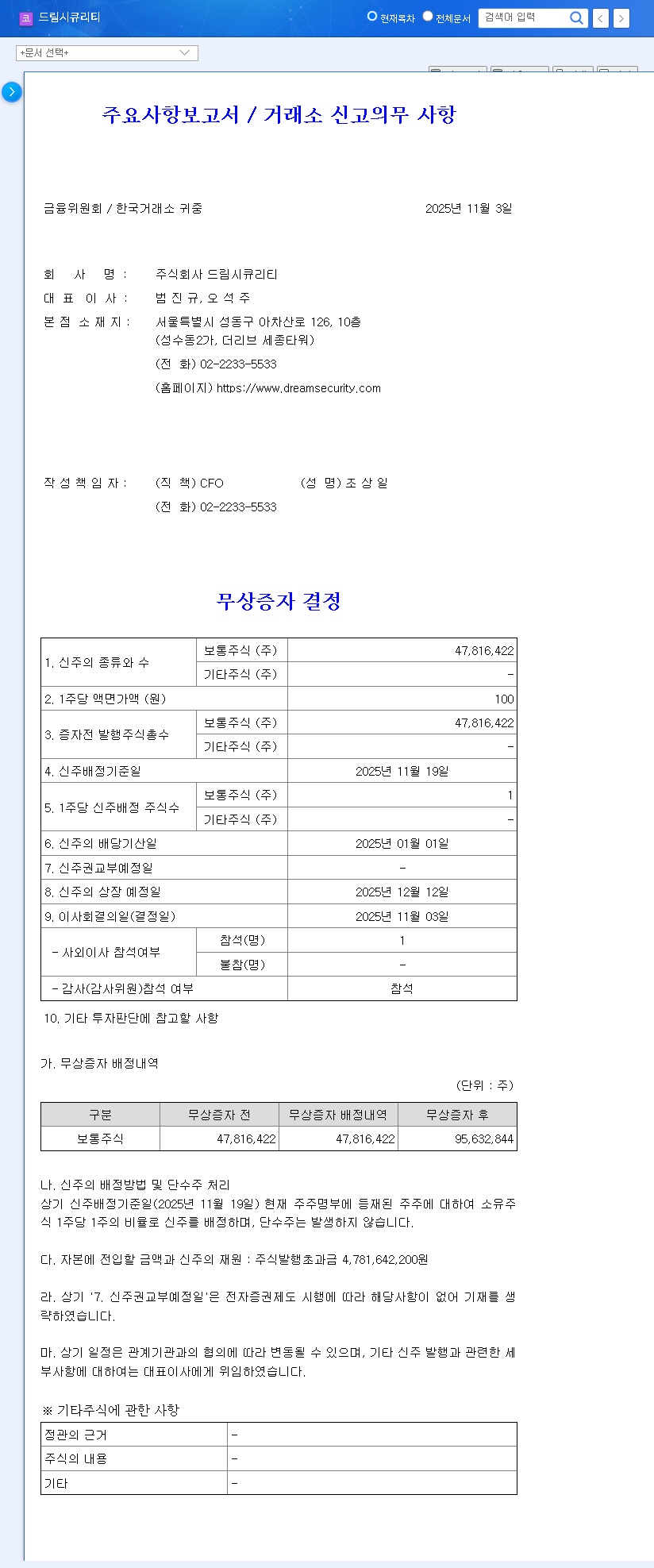
    The recent news of the Dream Security bonus issue has generated significant buzz in the investment community. The company’s decision to implement a 100% bonus issue means existing shareholders will receive one new share for every share they currently own, effectively doubling their holdings. But while the prospect of more shares is appealing, a sophisticated investor must look beyond the surface. This in-depth analysis will dissect the bonus issue, evaluate Dream Security’s underlying fundamentals, and provide a clear action plan for both short-term traders and long-term investors.

    Understanding a 100% Bonus Issue

    A bonus issue, sometimes called a capitalization issue, is a corporate action where a company distributes new, free shares to its existing shareholders. It’s crucial to understand that this does not change the company’s total market capitalization. The value is simply redistributed over a larger number of shares. For a 100% bonus issue, the number of shares doubles, so the price per share is theoretically halved on the ex-date. This is different from a rights issue, which involves raising new capital, or a stock dividend paid from profits. The primary goals are usually to increase retail participation by lowering the stock price and to improve trading liquidity. For more details on the mechanics, you can refer to authoritative sources like Investopedia’s guide on bonus shares.

    Dream Security Co., Ltd. officially announced this decision, which is scheduled to take effect with a new share listing date of December 12, 2025. You can view the complete filing here: Official Disclosure (DART).

    The Two Sides of the Dream Security Bonus Issue

    While often perceived as positive, a bonus issue presents both opportunities and potential pitfalls that investors must carefully weigh.

    Potential Positives for Investors

    • Enhanced Liquidity: With more shares in circulation, trading activity can increase, making it easier for investors to buy and sell shares without significantly impacting the price.
    • Positive Market Signaling: A bonus issue can be interpreted as a sign of management’s confidence in the company’s future earnings and ability to service a larger equity base.
    • Psychological Boost: Doubling the number of shares can create a positive psychological effect for shareholders, even though the total value of their investment remains the same initially.

    Risks and Considerations

    • No Fundamental Change: The bonus issue does not alter the company’s financial health, revenue streams, or profitability. Sustained stock growth must come from business performance, not corporate actions.
    • Price Adjustment Volatility: On the new listing date, the stock price will adjust downwards. This technical adjustment can sometimes cause short-term anxiety and volatility as the market recalibrates.
    • Potential EPS Dilution: If the company’s net profit does not grow, the increased number of shares will lead to a lower Earnings Per Share (EPS), a key metric for valuation.

    The success of the Dream Security bonus issue as an investment catalyst will not be determined by the action itself, but by the company’s ability to grow its core business and manage financial risks effectively.

    Beyond the Bonus: A Deep Dive into Dream Security’s Fundamentals

    Long-term investors should focus on the company’s underlying health. For a comprehensive guide, consider reviewing our article on how to analyze a tech company’s fundamentals.

    Growth Drivers

    Dream Security’s growth prospects are tied to two main areas. The rental segment provides a stable revenue base. However, the real potential lies in its information security segment. The company is investing in high-growth niches like PKI/authentication, Identity as a Service (IDaaS), and cutting-edge quantum cryptography. Success in these areas could provide significant long-term upside and justify a higher valuation.

    Financial Risks

    A significant red flag is the company’s high debt-to-equity ratio. This indicates that the company relies heavily on debt to finance its assets, which can be risky, especially in a rising interest rate environment. Investors must monitor the company’s efforts to improve its financial structure and reduce this leverage over time.

    Frequently Asked Questions (FAQ)

    Q1: What does the Dream Security 100% bonus issue mean for shareholders?

    It means you will receive one additional free share for every share you currently own. While your number of shares will double, the stock price will adjust downward, so the total value of your holding will remain the same immediately after the issue.

    Q2: Is a bonus issue a guaranteed positive for Dream Security stock?

    Not guaranteed. It can be positive in the short term by increasing liquidity and investor interest. However, the long-term performance of Dream Security stock will depend on its ability to grow profits and manage its debt, not the bonus issue itself.

    Q3: What should long-term investors focus on?

    Long-term investors should look past the bonus issue and focus on key performance indicators: revenue growth in the information security segment, progress in new technologies like IDaaS, and improvements in the company’s financial health, particularly its debt ratio.

    (203650) Dream Security Bonus Issue: A 2025 Investor's Guide to Value & Risk 관련 이미지
  • (095570) AJ Networks Stock Analysis: 2025 Shareholding Report & Investor Outlook

    (095570) AJ Networks Stock Analysis: 2025 Shareholding Report & Investor Outlook

    This comprehensive AJ Networks stock analysis delves into the recently disclosed major shareholding report, a key event capturing the attention of the investment community. While the increase in management’s stake seems minor on the surface, it warrants a closer look. We will explore what this move signifies for investor confidence, examine the current state of AJ Networks fundamentals, and assess the broader macroeconomic environment to provide a clear investor outlook and strategic insights.

    Deconstructing the AJ Networks Shareholding Report

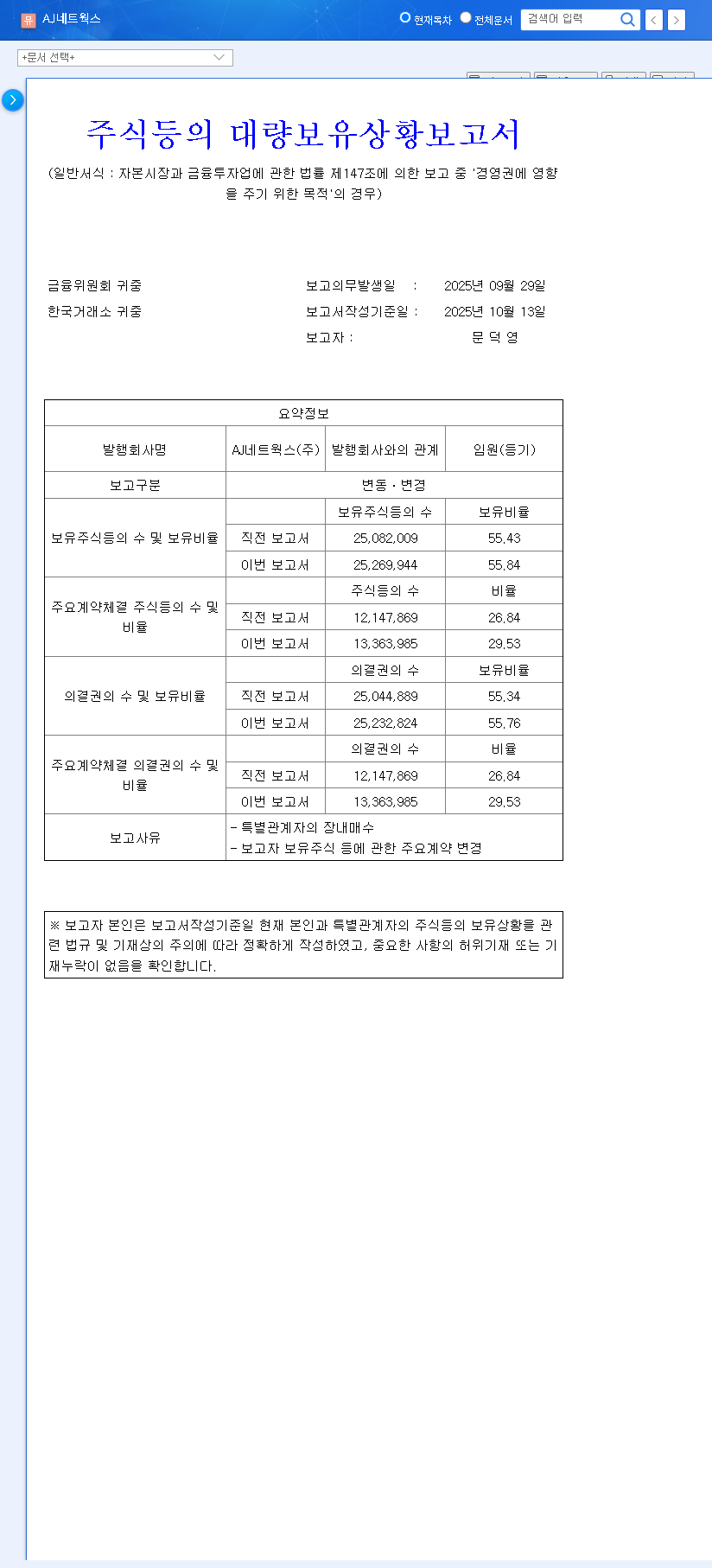
    On October 28, 2025, AJ Networks Co., Ltd. filed a Major Shareholding Status Report, revealing subtle but important shifts in ownership. The changes were driven by open-market purchases by special affiliate Shin Ki-yeon, acting in concert with representative reportee Moon Deok-young. You can view the complete filing in the Official Disclosure (DART). Here are the key takeaways:

    • Previous Shareholding: 55.84%
    • New Shareholding: 55.93%
    • Net Change: A modest increase of 0.09 percentage points (33,849 shares).
    • Stated Purpose: The shares are explicitly held for the purpose of influencing management, signaling a strong commitment to the company’s direction.

    An increase in the management stake, even a small one, is often interpreted as a bullish signal. It suggests that those with the most intimate knowledge of the company believe its shares are undervalued and have confidence in its future growth trajectory.

    Current State of AJ Networks Fundamentals

    A thorough AJ Networks stock analysis must look beyond shareholding changes and into the core health of the business. The company presents a mixed but compelling picture based on its 2025 half-year report.

    Positive Catalysts & Strengths

    • Diversified Rental Portfolio: AJ Networks is successfully expanding beyond its #1 position in aerial work platforms into high-growth areas like IT devices, industrial safety equipment, and even robotics. This diversification mitigates risk and opens new revenue streams.
    • Solid Financial Footing: With a consolidated debt-to-equity ratio of a healthy 93.2% and a return to positive operating cash flow, the company’s financial structure is stable and can support future growth initiatives.
    • Global Expansion: Strategic overseas expansion, particularly through its U.S. subsidiary (AJ Rental, Inc.), is a positive long-term driver for global competitiveness and revenue diversification.

    Negative Factors & Potential Headwinds

    • Profitability Squeeze: Despite sales growth, consolidated operating profit and net income have declined. This points to margin pressure, potentially from increased competition or operational inefficiencies that need to be addressed.
    • Underperforming Subsidiaries: The overseas subsidiaries in the U.S. and Vietnam are currently a drag on profitability. A clear turnaround strategy for these units is a critical challenge for management.
    • Competitive Landscape: The equipment rental market has low barriers to entry, leading to intense competition. AJ Networks must continuously innovate to differentiate its services and protect its market share.

    Macroeconomic Environment: The Broader Context

    No company operates in a vacuum. The following macroeconomic factors could significantly impact the investor outlook for AJ Networks:

    • Rising Interest Rates: With benchmark rates climbing globally (e.g., US Fed rate at 4.25-4.50%), borrowing costs for capital-intensive businesses like AJ Networks will increase, potentially impacting profitability and investment plans. For more on this, see analysis from sources like Bloomberg.
    • Currency Volatility: Fluctuations in the EUR/KRW and USD/KRW exchange rates directly affect the profitability of overseas operations and the cost of imported equipment.
    • Energy & Logistics Costs: Elevated crude oil prices can increase operational expenses, particularly for the company’s logistics and distribution segments.

    Investment Strategy and Final Recommendations

    The AJ Networks shareholding report is a vote of confidence from management. However, its immediate impact on stock price is likely to be muted. The market will be looking for tangible proof that the company can overcome its profitability challenges. For a deeper understanding of the sector, you might also read our guide on How to Analyze the Equipment Rental Market.

    Investors should adopt a strategy of cautious optimism. The core business is stable, but the headwinds are real. Long-term success will hinge on management’s ability to execute its growth and efficiency plans.

    • Monitor Key Metrics: Pay close attention to quarterly earnings reports, focusing on operating margins, the performance of overseas subsidiaries, and cash flow generation.
    • Track Insider Activity: Any further share acquisitions by management could serve as a powerful leading indicator of their confidence in the company’s turnaround efforts.
    • Assess Macro Trends: Keep an eye on the macroeconomic indicators discussed above, as they will create either tailwinds or headwinds for the company’s performance.

    Disclaimer: This analysis is for informational purposes only and does not constitute investment advice. The ultimate responsibility for investment decisions rests with the individual investor.

    (095570) AJ Networks Stock Analysis: 2025 Shareholding Report & Investor Outlook 관련 이미지
  • Coway H1 2025 Earnings Analysis: Solid Growth, Hidden Opportunities, and Risks

    1. Coway H1 2025 Earnings: Key Highlights

    Coway achieved consolidated revenue of KRW 2.4338 trillion and operating profit of KRW 453.96 billion in H1 2025, maintaining robust growth. With rental sales accounting for 90.7% of total revenue, the company boasts a stable revenue structure, and its expansion into overseas markets further enhances its growth potential.

    2. Positive Factors: Drivers of Continued Growth

    • Strong Rental Business: 7.36 million rental accounts generate consistent cash flow and provide resilience against economic fluctuations.
    • Overseas Expansion: Ventures into markets like Malaysia, the US, and China contribute to growth diversification.
    • Business Diversification: Establishing new subsidiaries secures future growth engines.

    3. Potential Risks: Investor Considerations

    • Subsidiary Risk: Potential losses from some subsidiaries and the volatility of their financial status require attention.
    • Virtual Asset Investment: Investments in virtual assets carry significant volatility and risk of value erosion.
    • Macroeconomic Factors: Responding to changes in exchange rates, interest rates, and raw material prices is crucial.

    4. Investment Strategy: How to Approach Coway Investments

    Coway presents an attractive investment opportunity with its stable business model and growth potential. However, before making investment decisions, it’s essential to carefully review the detailed H1 2025 earnings analysis, management’s future strategies, and their plans to address the risks mentioned above, all to be revealed at the IR meeting on August 25th. Continuous monitoring of macroeconomic indicators and market expectations is also crucial.

    Frequently Asked Questions

    What is Coway’s core business?

    Coway’s core business is its rental service, which includes water purifiers, air purifiers, and bidets. Rental sales accounted for 90.7% of total revenue in the first half of 2025.

    What is the status of Coway’s overseas expansion?

    Coway has expanded its business into overseas markets such as Malaysia, the US, and China. Growth in the North American market is particularly anticipated.

    What should investors be aware of when investing in Coway?

    Investors should consider the financial status of subsidiaries, risks associated with virtual asset investments, and macroeconomic factors. It’s also important to review the information presented at the IR meeting on August 25th.

  • KCT (089150) H1 2025 Earnings Analysis: Stable Revenue Structure, but Growth Engine is Key

    1. KCT H1 2025 Performance: What Happened?

    KCT’s revenue decreased year-over-year in H1 2025, but operating and net income actually improved. This is thanks to the expansion of the maintenance and rental business and cost optimization efforts, despite a decline in sales of financial terminals and ATMs, its core business.

    2. The Hidden Growth Engine: Why These Results?

    KCT is adjusting its business portfolio to adapt to changing market conditions. Instead of focusing on the maturing financial terminal market, it’s concentrating on maintenance and rental businesses that generate stable income, thereby diversifying its revenue streams. Furthermore, KCT continues to invest in R&D to secure future growth engines.

    3. KCT’s Future: What Lies Ahead?

    KCT’s future growth hinges on the successful establishment of new businesses, technological innovation, and efficient inventory management. Positive aspects include a stable revenue structure and robust financial health. However, the declining sales trend in the main business and the volatility of macroeconomic variables can act as risk factors.

    4. Action Plan for Investors: How to Invest?

    • Short-term investment: Continuously monitor trends in earnings improvement and improvement in inventory management efficiency.
    • Mid- to long-term investment: Pay attention to the growth potential of new businesses and the ability to secure a competitive edge, and evaluate investment value from a long-term perspective based on a stable business portfolio.

    Frequently Asked Questions

    What are KCT’s main businesses?

    KCT operates financial terminals and ATMs, maintenance services, and real estate leasing.

    What are the key takeaways from the H1 2025 earnings?

    While revenue decreased, operating and net income improved, and the proportion of maintenance and rental business expanded.

    What are KCT’s key investment points?

    Key investment points include a stable revenue structure, robust financial health, and growth potential of new businesses.

  • YW H1 2025 Earnings Analysis: Earnings Shock? Corporate Finance Shines Amid Rental Business Slump

    1. What Happened? YW’s H1 2025 Earnings Breakdown

    YW reported consolidated revenue of KRW 10.53 billion (8.3% YoY growth) for H1 2025. However, revenue from the rental business plummeted by 30.8% to KRW 8.64 billion. Operating income and net income also declined by 23.6% and 25.5%, respectively. If the preliminary earnings figures are confirmed, this represents a significant earnings shock, far below market forecasts.

    2. Why These Results? Segment-Specific Analysis

    • Rental Business: Intensified market competition, economic slowdown, and weakened product competitiveness significantly impacted both revenue and profitability.
    • Corporate Finance: Despite a slight decrease in revenue, this segment delivered a robust 84.8% operating profit margin, acting as a stable revenue stream.

    3. What’s Next? Future Outlook and Investment Strategies

    The struggles in the rental business are likely to negatively impact YW’s stock price. However, the strong corporate finance segment and stable financial structure are positive factors. Investors should closely monitor YW’s efforts to enhance competitiveness and improve profitability in the rental business, the sustainability of growth in the corporate finance segment, and changes in the macroeconomic environment.

    4. Investor Action Plan

    • Monitor the rental business recovery strategy and performance improvement trends.
    • Evaluate the sustainability of corporate finance growth and risk management capabilities.
    • Verify the preliminary earnings figures and analyze the company’s response to the performance downturn.

    Frequently Asked Questions

    What is the main reason for YW’s poor performance in H1 2025?

    The sharp decline in revenue and profitability in the rental business segment is the primary reason. A combination of intensified market competition, economic slowdown, and weakening product competitiveness is believed to have contributed to this downturn.

    How is YW’s corporate finance business performing?

    The corporate finance business is maintaining a high operating profit margin and generating stable revenue. It is one of YW’s core businesses and is partially offsetting the poor performance of the rental business.

    Should I invest in YW?

    The struggles in the rental business are concerning, but the growth in corporate finance and the stable financial structure are positive. Before making an investment decision, carefully consider the potential for recovery in the rental business and the sustainability of growth in the corporate finance segment.

  • LG HelloVision’s Surprise H1 2025 Earnings: A Turnaround Story?

    1. What Happened at LG HelloVision?

    LG HelloVision reported revenue of KRW 667.6 billion and operating profit of KRW 17.6 billion in H1 2025, achieving a return to profitability. The Q2 2025 preliminary results were particularly impressive, exceeding market expectations. Revenue reached KRW 354.1 billion, operating profit hit KRW 10.4 billion, and net profit came in at KRW 7.2 billion, all surpassing forecasts.

    2. Drivers of the Turnaround

    LG HelloVision’s return to profit can be attributed to its diversification strategy and operational efficiency improvements.

    • Rental Business Growth: Expanding its appliance lineup targeting Gen MZ and strengthening its direct sales channels fueled growth in the booming rental market.
    • MVNO Expansion: Growth in the MVNO market contributed positively to revenue.
    • Cost Optimization: Divesting the electric vehicle charging business allowed LG HelloVision to focus resources and optimize costs.

    3. The Future of LG HelloVision

    Despite the positive results, the structural decline in subscribers and intensifying competition in the broadcasting business remain challenges. However, the company’s efforts to explore new business areas and expand its presence in the online commerce market are viewed positively. Despite macroeconomic uncertainties, LG HelloVision is expected to pursue sustainable growth through diversification and operational efficiency.

    4. Investor Action Plan

    Analysts currently maintain a ‘Hold’ rating for LG HelloVision. While the company has shown positive signs of improvement, the structural weaknesses in its broadcasting business and macroeconomic uncertainties must be considered. Investors should closely monitor the performance of new businesses, strategies to strengthen competitiveness in the broadcasting segment, and the company’s response to macroeconomic variables before making investment decisions.

    Frequently Asked Questions

    What were LG HelloVision’s H1 2025 financial results?

    LG HelloVision reported revenue of KRW 667.6 billion and operating profit of KRW 17.6 billion in H1 2025, returning to profitability.

    What are LG HelloVision’s main business segments?

    LG HelloVision operates in broadcasting, internet services, rental/installment sales, advertising, and other businesses.

    What is the outlook for LG HelloVision?

    While the company shows positive signs of improvement, challenges remain in the broadcasting business due to increased competition and declining subscribers. The performance of new businesses and profitability improvements are key factors to watch.

  • Hanshin E&C Enters Real Estate Rental Business: Is it a Good Investment?

    1. What Happened?

    Hanshin E&C is acquiring 100% of JBWYSK No. 3 Corporate Restructuring Real Estate Investment Company for 277 billion KRW, marking its entry into the real estate rental business. The company plans to purchase and operate the ‘Yangsan Hanshin The Hue’ apartment complex in Yangsan City, Gyeongsangnam-do.

    2. Why This Decision?

    The construction industry is highly susceptible to economic fluctuations. Hanshin E&C aims to secure stable revenue streams through real estate rentals, mitigating the volatility of its construction business. The company also aims to enhance its brand value by leveraging its ‘Hanshin The Hue’ brand and establish a foundation for future expansion into similar businesses.

    3. What’s the Impact?

    • Positive Effects: Stable rental income, business diversification, enhanced brand value.
    • Negative Effects: Short-term financial burden due to the 277 billion KRW cash outflow, market volatility, and uncertainty in securing occupancy rates.

    4. What Should Investors Do?

    Investors should closely monitor the initial performance of the rental business, Hanshin E&C’s financial health management, changes in the macroeconomic environment, and future business plans. Currently maintaining a ‘Neutral’ investment opinion, it’s crucial to assess the actual performance of the rental business and the company’s ability to secure financial stability. Investors should seek further information, including the valuation of the acquired property, expected rental yields, and future funding plans.

    How significant is Hanshin E&C’s investment?

    The investment is worth 277 billion KRW, representing 3.5% of Hanshin E&C’s capital.

    What is the purpose of this investment?

    The primary purpose is to acquire and operate the ‘Yangsan Hanshin The Hue’ apartment complex for rental income and secure a stable revenue stream.

    What are the advantages and disadvantages of this investment?

    Advantages include stable income generation and business diversification, while disadvantages include short-term financial burden and market volatility.