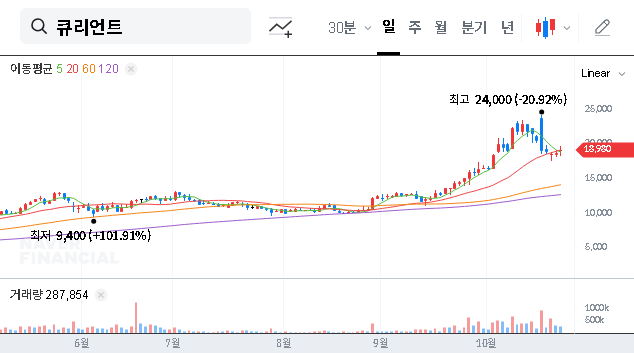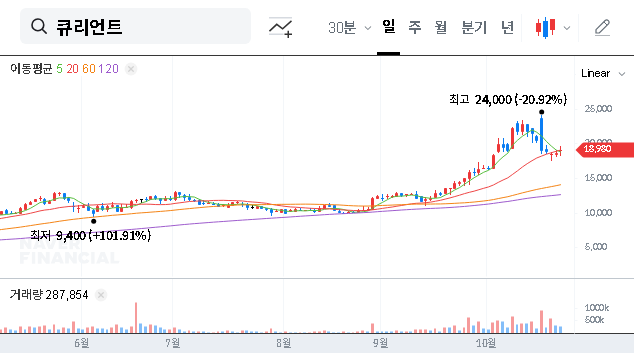
Qurient Co., Ltd. (큐리언트), a pioneering biopharmaceutical company, has just made a significant financial move by announcing a ₩9 billion Bond with Warrant issuance. This news has sent ripples through the investment community, raising a critical question: Is this a strategic masterstroke to fuel groundbreaking research, or a red flag for its financial health? This deep dive provides a comprehensive analysis of the Qurient Bond with Warrant deal, its potential impact on the company’s fundamentals, and a detailed Qurient stock outlook to help you formulate a sound investment strategy.
We’ll dissect the details, from the vast gap between the current stock price and the exercise price to the long-term potential of its core drug pipelines. Whether you’re a current shareholder or considering an investment, this analysis is essential reading.
The ₩9 Billion Qurient Bond with Warrant: Key Details
Qurient officially disclosed the issuance of Bonds with Warrants (BW) valued at ₩9 billion. For context, this represents approximately 1.30% of its current market capitalization. The issuance was conducted via a private placement, a method of raising capital by selling securities directly to a small number of chosen investors. The primary investor is Shinhan Mezzanine New Technology Investment Fund No. 4. You can view the complete details in the Official Disclosure (Source: DART).
A Bond with Warrant is a hybrid security that consists of two parts: a standard bond that pays interest and a warrant that gives the holder the right to purchase the company’s stock at a specific price (the exercise price) within a certain timeframe. This can be an attractive fundraising tool for growth-stage companies like Qurient.
- •Issuance Date: October 29, 2025
- •Payment Date: November 6, 2025
- •Exercise Price: ₩19,072
- •Current Stock Price (Approx.): ₩85
- •Exercise Period: November 6, 2026, to October 6, 2030
The Bull Case: Fueling Innovation and Growth
This capital injection could be a significant catalyst for Qurient’s long-term success. Here are the primary positive implications for the company’s Qurient stock outlook.
Securing Critical R&D Funding
The ₩9 billion infusion directly strengthens Qurient’s financial health and R&D capabilities. This funding is crucial for accelerating the clinical development of its most promising drug candidates, including Mocaciclilb (Q901) and Adrixetinib (Q702). For a clinical-stage biotech, a healthy cash runway is paramount to mitigating operational risks and achieving key milestones.
Enhancing Core Pipeline Value
Qurient’s value is intrinsically tied to its innovative pipeline. This funding helps de-risk and advance these assets:
- •Mocaciclilb (Q901): A next-generation CDK7 inhibitor showing promising synergy with TOP1i-ADCs, positioning it as a potential blockbuster anticancer treatment.
- •Adrixetinib (Q702): Its co-development agreement with global pharmaceutical giant MSD significantly enhances its potential in the highly competitive immuno-oncology market.
- •Telacebec (Q203): The successful technology transfer to the TB Alliance has reduced Qurient’s development burden and created a potential future revenue stream.
The Bear Case: Potential Risks and Headwinds
Despite the positives, a prudent Qurient investment strategy must acknowledge the significant risks highlighted by this fundraising event.
The Glaring Price Disparity
The most immediate concern is the massive gap between the BW exercise price (₩19,072) and the current stock price (around ₩85). This makes it highly unlikely that the warrants will be exercised anytime soon, meaning the potential for share dilution is minimal in the short term, but it also signals that this deal offers little immediate upside for equity investors. If the warrants expire unexercised, Qurient is still obligated to pay a 3.0% maturity interest rate, adding to its cost burden.
Persistent Financial and Clinical Risks
- •High R&D Burn Rate: Qurient continues to post significant operating losses (approx. ₩13.5 billion in H1 2025) due to high R&D costs. This funding provides a temporary lifeline, but profitability hinges on successful commercialization.
- •Clinical Trial Uncertainty: Drug development is inherently risky. As highlighted by numerous studies from organizations like the Biotechnology Innovation Organization (BIO), the success rate from Phase 1 to approval is low. Any clinical setbacks could severely impact the company’s valuation.
- •Macroeconomic Pressures: A strong US dollar increases the KRW-equivalent cost of R&D conducted in the US and Europe, putting additional pressure on the company’s finances.
While the ₩9 billion Qurient Bond with Warrant issuance secures vital short-term funding, the high exercise price suggests it’s a move for financial stability rather than an immediate catalyst for stock price growth.
Comprehensive Opinion & Investment Strategy
Based on our analysis, we maintain a “Neutral” investment opinion on Qurient. The company holds significant long-term growth potential thanks to its innovative drug pipeline. However, the combination of extreme stock volatility, ongoing financial losses, and the specific terms of this BW issuance limits its short-term appeal. This is a classic high-risk, high-reward scenario typical of the biopharmaceutical sector. For more on this, consider reading our guide on how to analyze biopharmaceutical stocks.
Actionable Strategy for Investors:
- •Adopt a Long-Term View: Focus on clinical milestones. Successful Phase 2/3 trial data, new technology transfers, or expanded partnerships are the real value drivers to watch for.
- •Monitor Financial Health: Track quarterly reports for changes in the R&D burn rate and any announcements of further fundraising.
- •Stay Informed: Keep a close watch on company disclosures and industry news. Any update on Mocaciclilb or Adrixetinib could be a major catalyst.
Frequently Asked Questions (FAQ)
Q1. What is the main purpose of Qurient’s Bond with Warrant issuance?
The primary goal is to secure ₩9 billion in capital to fund ongoing Research & Development (R&D). This will help accelerate clinical trials for key drug candidates like Mocaciclilb (Q901) and Adrixetinib (Q702) and improve the company’s overall financial stability.
Q2. Why is the BW exercise price so much higher than the current stock price?
The large disparity indicates that the immediate exercise of warrants is not anticipated. This structure suggests the issuance is more focused on securing long-term capital and strengthening the balance sheet rather than creating an immediate incentive for stock conversion, which would dilute existing shareholders.
Q3. What are Qurient’s most important long-term growth drivers?
The company’s future growth hinges on the successful clinical development and eventual commercialization of its core pipelines, particularly Mocaciclilb and Adrixetinib. Strategic partnerships with major pharmaceutical companies like MSD are also crucial validators and risk-reducers that can significantly enhance long-term corporate value.