Tag: Q3 Earnings

  • (010780) IS DONGSEO Q3 2025 Earnings Analysis: Unpacking Growth in Waste Battery & Environmental Sectors

    (010780) IS DONGSEO Q3 2025 Earnings Analysis: Unpacking Growth in Waste Battery & Environmental Sectors

    This comprehensive IS DONGSEO analysis unpacks the upcoming Q3 2025 earnings investor relations (IR) call, scheduled for November 18, 2025. In a complex economic climate marked by a persistent construction market downturn, IS DONGSEO has managed a surprising feat: improving operating profit despite a dip in overall revenue. This performance has captured the attention of investors, who are keen to understand the underlying drivers.

    The key to this resilience appears to be the company’s strategic diversification, with robust growth in its concrete and environmental business segments, including the high-potential waste battery recycling division. This report provides an in-depth examination of the IS DONGSEO Q3 2025 earnings, offering critical insights into the opportunities and risks that will shape investor sentiment following the IR event.

    Unpacking the IS DONGSEO Q3 2025 Earnings Performance

    IS DONGSEO reported consolidated revenue of KRW 905.3 billion and an operating profit of KRW 95.2 billion for the third quarter of 2025. While the revenue figure marks a year-over-year decline, the improved operating profit signals effective cost management and successful performance in high-margin sectors. This divergence highlights the success of the company’s diversification strategy amidst significant headwinds in its traditional construction business.

    Construction Segment: Navigating a Market Slump

    The construction division faced predictable challenges, with its revenue decline attributed to a perfect storm of macroeconomic factors. Persistently high interest rates, rising material costs, and reduced public construction investments have created a challenging environment. Investors will be closely watching the upcoming IS DONGSEO investor relations call for detailed strategies on mitigating project financing (PF) risks and navigating this prolonged slump. Understanding their approach to project selection and cost control will be vital. For more context on these economic pressures, reports from institutions like the World Bank offer valuable macroeconomic analysis.

    Growth Engines: Concrete and Environmental Services

    In stark contrast to the construction slump, the concrete and environmental businesses have emerged as powerful growth drivers. The concrete segment’s revenue growth was fueled by increased orders for specialized, high-margin products. However, the company must still navigate intense market competition.

    The environmental division, which includes waste treatment and the burgeoning IS DONGSEO waste battery recycling business, shows immense potential. As the global transition to electric vehicles (EVs) accelerates, the demand for sustainable battery recycling solutions is set to skyrocket. This positions IS DONGSEO to capitalize on a major secular trend. Nonetheless, this segment is not without its challenges, as operating profit can be sensitive to fluctuations in the prices of core recycled minerals like lithium and cobalt.

    The pivotal question for investors is whether the high-growth environmental and waste battery segments can scale quickly enough to not only offset the cyclical downturn in construction but also redefine the company’s long-term value proposition.

    Financial Health and Investor Outlook

    From a financial standpoint, IS DONGSEO maintains a solid foundation. With total assets of KRW 3,520.3 billion against liabilities of KRW 1,988.5 billion, the company’s debt-to-equity ratio stands at a very stable 44.48%. While operating cash flow has improved, a decrease in cash reserves reflects strategic investments and debt repayments—a healthy sign of capital allocation for future growth. The full details can be reviewed in the Official Disclosure from DART.

    Key Questions for the IR Call

    The upcoming IR event is a critical moment for management to build investor confidence. The market will be looking for clear, detailed answers to several key points. This IS DONGSEO analysis suggests focusing on the following areas:

    • Construction Risk Management: What specific strategies are in place to manage project financing exposure and improve profitability in the construction sector? Explore our guide on understanding real estate PF risks for deeper insight.
    • Waste Battery Vision: What is the long-term roadmap for the waste battery recycling business? How does the company plan to hedge against mineral price volatility and secure its position in the EV value chain?
    • Sustainable Growth & ESG: How will the growth of the environmental business contribute to the company’s ESG (Environmental, Social, and Governance) profile and long-term shareholder value?
    • Shareholder Returns: What are the company’s mid-to-long-term plans for dividends and other forms of shareholder returns, reflecting confidence in its future cash flow?

    Conclusion: A Pivotal Moment for IS DONGSEO Growth

    The IS DONGSEO Q3 2025 earnings demonstrate a successful strategic pivot towards new growth drivers. The company has proven its ability to generate profit even when its legacy business faces severe headwinds. The upcoming IR is management’s opportunity to articulate a clear and compelling vision for how its environmental and waste battery businesses will power future growth and create sustainable, long-term value for shareholders. A transparent and confident presentation could significantly bolster investor confidence, while any ambiguity could leave lingering doubts about the company’s ability to navigate the uncertain road ahead.

    (010780) IS DONGSEO Q3 2025 Earnings Analysis: Unpacking Growth in Waste Battery & Environmental Sectors 관련 이미지
  • (140430) CATIS INC. (140430) Stock Analysis: Navigating Q3 Losses & Shareholder Moves

    (140430) CATIS INC. (140430) Stock Analysis: Navigating Q3 Losses & Shareholder Moves

    An in-depth CATIS investor analysis reveals a company at a critical crossroads. Recent disclosures from CATIS INC. (140430) have sent ripples through the investment community, highlighting a confluence of worrying financial performance and significant shareholder movements. This comprehensive guide will dissect these events, offering a clear perspective on the potential risks and the path forward for current and prospective investors.

    We will explore the implications of a concerning Q3 2025 operating loss, coupled with a major shareholder report filed by CEO Kim Seung-soo. While the stake change itself was minimal, the stated purpose of ‘management influence’ raises important questions about the company’s future strategy and governance, especially during a period of financial instability.

    Two Critical Developments for CATIS INC. (140430)

    Two key events have recently placed CATIS INC. under the market’s microscope, painting a complex picture of its current state and future prospects.

    1. The Major Shareholder Report

    On November 14, 2025, CEO Kim Seung-soo filed a ‘Report on Status of Major Shareholder’. While his stake only decreased by a marginal 0.01 percentage point (from 50.19% to 50.18%), the details are what matter. The change was triggered by a related party’s sale of 2,500 shares. Crucially, the CEO’s stated purpose for holding the shares remains ‘management influence.’ This signals an active intent to steer the company’s direction, which can be a double-edged sword for investors. You can view the Official Disclosure (DART) for complete details.

    2. Disappointing Q3 2025 Financial Performance

    The CATIS Q3 performance report revealed significant headwinds. Revenue plummeted to KRW 4.463 billion, a staggering 42.9% decrease year-over-year. This led to a cumulative operating loss of KRW 2.107 billion. The company’s financial health is also under pressure, with its debt-to-equity ratio climbing to 73%. Despite these challenges, CATIS continues to invest heavily in future technologies like quantum security and Edge AI, allocating 8.5% of its revenue to R&D. This creates a difficult balancing act between long-term innovation and short-term financial stability.

    The combination of deteriorating fundamentals and uncertainty around management’s intent creates a volatile environment. The market often penalizes uncertainty, which could put significant downward pressure on the CATIS stock price in the near term.

    Why This Matters: Investor Impact Analysis

    For investors, these events are not isolated. The synergy between poor financial results and a public display of ‘management influence’ can amplify market anxiety. The sale by a related party, however small, can be interpreted as a lack of confidence, fueling speculation and increasing stock price volatility.

    The ‘Management Influence’ Dilemma

    A key shareholder’s intent to influence management could lead to positive, decisive changes aimed at a turnaround. However, it also carries the risk of internal power struggles or strategic shifts that may not align with minority shareholders’ interests. Investors must now watch for any signs of major changes in business direction, M&A activity, or corporate governance structure.

    Navigating the Macroeconomic Headwinds

    CATIS’s internal challenges are compounded by a tough macroeconomic environment. As noted by leading financial analysts at reputable sources like Bloomberg, sustained high interest rates in Korea increase borrowing costs, while currency volatility (KRW/USD, KRW/EUR) can impact international dealings and the cost of imported components. These external factors can further strain the company’s already fragile financial position.

    Action Plan & Outlook for CATIS INC. Investors

    Given the current circumstances, a cautious approach is warranted. The combination of weakening core business performance and management uncertainty suggests that downward pressure on the CATIS stock price is likely to persist.

    Key Factors to Monitor Going Forward:

    • Tangible Results from New Ventures: Look for concrete progress or early revenue generation from the investments in quantum security and Edge AI. To learn more, see our guide on how to evaluate high-tech R&D investments.
    • Core Business Recovery: Monitor the next quarterly report for any signs of stabilization or recovery in the company’s primary revenue streams.
    • Management Strategy Clarity: Pay close attention to official communications regarding strategic direction from the CEO and the board. Ambiguity will likely be punished by the market.
    • Financial Health Improvements: Watch for any efforts to deleverage the balance sheet or improve operational cash flow to reduce the debt-to-equity ratio.

    Recommendation

    For the time being, a ‘Hold’ or ‘Reduce’ rating for CATIS INC. (140430) seems prudent. The long-term potential of its new technology investments is intriguing, but the short-to-medium term risks associated with poor financial performance and management uncertainty are significant. Investors should implement thorough risk management and be prepared for continued volatility. A re-evaluation would be appropriate upon seeing a clear strategic plan and a return to profitability in its core operations.

    (140430) CATIS INC. (140430) Stock Analysis: Navigating Q3 Losses & Shareholder Moves 관련 이미지
  • (058970) EMRO Q3 Earnings Analysis (2025): AI Costs vs. Future SCM Growth

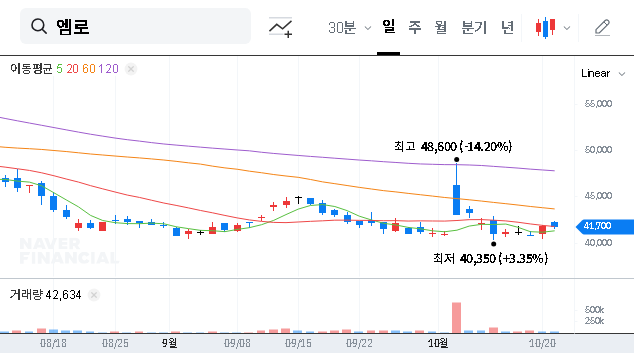
    (058970) EMRO Q3 Earnings Analysis (2025): AI Costs vs. Future SCM Growth

    The latest EMRO Q3 earnings report for 2025 has left many investors at a crossroads. EMRO., Incorporated (058970), a key innovator in the AI-based Supply Chain Management (SCM) software market, presented a perplexing financial picture: impressive revenue growth coupled with a startling drop in profitability. This comprehensive EMRO stock analysis, based on the recent Investor Relations (IR) conference, deciphers this paradox. We will explore whether the company’s heavy investments in AI are merely short-term ‘growing pains’ or the foundation of a powerful ‘future engine’ set to drive long-term value. For investors, understanding the strategy behind the numbers is more critical than ever.

    The Q3 2025 Financial Snapshot

    On November 17, 2025, EMRO’s management team detailed their performance, revealing two starkly different trends. While the top line showed healthy expansion, the bottom line told a story of heavy investment and margin compression. For the official data, investors can refer to the Official Disclosure on DART.

    Key Performance Paradox: Revenue climbed by 12.18% to KRW 63.97 billion, yet Operating Profit plummeted by a staggering 76.8% to just KRW 1.43 billion year-over-year.

    Despite the profit decline, the company’s financial health saw some improvement. The adjusted debt ratio was significantly reduced to 0.63%, and an increase in cash reserves bolstered its financial stability, signaling a deliberate strategy of leveraging a strong balance sheet to fund future growth.

    Dissecting the Profitability Paradox

    The core question from the EMRO Q3 earnings call is: where did the profits go? The answer lies in two key areas of strategic, increased spending aimed at capturing a larger market share in the future.

    1. Aggressive R&D Investment in AI & SaaS

    The primary driver of the profit decline was a massive 56% surge in R&D expenses. This capital is being funneled directly into developing next-generation AI SCM software and enhancing their Software-as-a-Service (SaaS) offerings. This is a classic long-term play: sacrificing today’s margins for tomorrow’s recurring revenue and technological dominance.

    2. Increased Operational & Talent Costs

    Selling, General & Administrative (SG&A) expenses also rose sharply by 29.5%. This includes higher labor costs to attract top AI talent and stock-based compensation to retain them. This reflects the competitive landscape for skilled engineers and a commitment to building a world-class team to execute their ambitious vision.

    EMRO’s Growth Engine: The ‘Caidentia’ Solution & Global Markets

    EMRO is betting its future on its proprietary technology and strategic partnerships. The market outlook for its core business remains exceptionally strong, as companies worldwide seek efficiency gains through smarter supply chains.

    The global SCM software market is projected to grow significantly in the coming years, with AI integration being a key demand driver. Solutions that offer predictive analytics and automation are no longer a luxury but a necessity for competitive enterprises. For more on this trend, see Gartner’s latest market analysis.

    The Samsung SDS Partnership

    A cornerstone of EMRO’s global strategy is the Caidentia solution, which is being deployed in partnership with Samsung SDS. This collaboration provides immense credibility and a powerful distribution channel into the global market. Success here is crucial for diversifying revenue away from a concentrated domestic client base. The progress of this partnership will be a key focus of future EMRO investor relations updates.

    Navigating the Headwinds: Key Risks for Investors

    While the long-term vision is compelling, investors must remain aware of the potential risks that could impact this EMRO stock analysis.

    • Customer Concentration: A high dependence on a single major client (‘Company A’) remains a significant risk. Successful diversification is essential for de-risking the revenue stream.
    • Execution Risk: Translating heavy R&D spending into profitable, market-leading products is not guaranteed. The company must demonstrate a clear return on its AI investments.
    • Macroeconomic Pressures: Global inflation, rising interest rates, and geopolitical uncertainty can impact corporate IT budgets and delay purchasing decisions, potentially slowing growth. For more context, you can read our analysis of the global SCM software market.

    Key Questions for EMRO’s Management

    For investors evaluating EMRO’s future, the answers to the following questions are paramount. These points should be the focus of any follow-up analysis from the IR call.

    What is the roadmap back to profitability?

    Investors need a clear, concrete timeline for when these R&D and SG&A investments are expected to level off and when margins are projected to improve as SaaS revenue scales.

    What are the tangible results from the ‘Caidentia’ solution’s global launch?

    The market needs to see specific metrics on client acquisition, revenue contribution, and the sales pipeline for the Caidentia solution. Vague promises are not enough.

    How is the company diversifying its customer base?

    What specific strategies are in place to reduce reliance on their main client and expand into new industries or geographical markets?

    In conclusion, the EMRO Q3 earnings report paints a picture of a company in a critical investment phase. The management’s ability to transparently communicate its strategy and demonstrate tangible progress on its AI and global expansion initiatives will be the deciding factor in regaining investor confidence. The short-term pain is clear; the long-term gain is the prize EMRO must now prove it can seize.

    (058970) EMRO Q3 Earnings Analysis (2025): AI Costs vs. Future SCM Growth 관련 이미지
  • (241520) DSC Investment Inc. Analysis: ₩50.5B HQ Acquisition & Q3 2025 Earnings Deep Dive

    This comprehensive DSC Investment Inc. analysis examines the company’s bold decision to acquire a new ₩50.5 billion headquarters and unpacks the details of its Q3 2025 earnings report. As a key player in the venture capital sphere, what does this monumental real estate move signal to investors? We will explore the strategic rationale, the immediate impact on the company’s financial health, and the long-term implications for its growth trajectory. In a landscape defined by macroeconomic uncertainty, this deep dive provides the critical insights needed for informed investment decisions.

    The Landmark Deal: A ₩50.5 Billion HQ Acquisition

    Event Overview and Financial Commitment

    On November 14, 2025, DSC Investment Inc. formally announced its agreement to acquire land and buildings in the prestigious Samsung-dong, Gangnam-gu, Seoul, for ₩50.5 billion. This investment represents a substantial 32.00% of the company’s total assets, signaling a major strategic pivot. According to the Official Disclosure, an initial deposit of ₩5.05 billion has been paid, with the significant remaining balance of ₩45.45 billion due on May 14, 2026. This move is positioned as a foundational step to secure a permanent headquarters, expand operational infrastructure, and boost overall efficiency.

    The Strategic Rationale Behind the Move

    For a venture capital firm, success hinges on collaboration, rapid information exchange, and a strong network. Acquiring a physical headquarters in Gangnam—Seoul’s primary business and tech hub—is more than a real estate play. It’s a strategic investment in corporate culture and brand image. Owning the building is expected to foster greater synergy among investment teams, attract top talent, and project an image of stability and long-term vision to both portfolio companies and limited partners. This contrasts with the flexible but less permanent nature of renting, marking a commitment to a lasting presence and operational excellence.

    In-Depth DSC Investment Inc. Analysis: Q3 2025 Earnings

    Concurrent with the acquisition news, the DSC Investment Q3 2025 earnings report revealed a mixed but resilient financial picture. While top-line numbers saw a contraction, the company’s underlying financial structure remains robust.

    • Profitability Dip: Operating revenue declined by 11.3% year-over-year, while operating profit and net income both fell by a more significant 33.7%. This was primarily attributed to a decrease in performance fees, a key revenue stream tied to successful investment exits.
    • Underlying Stability: Despite the dip, the company posted a net income of ₩4.61 billion. Furthermore, an increase in equity method gains from investment partnerships helped offset some of the performance fee shortfalls.
    • Strong Balance Sheet: Total equity stands at a healthy ₩1,184.8 billion. The consolidated debt-to-equity ratio is a low 30.64%, indicating a strong capital structure with minimal leverage and significant financial flexibility.

    The core challenge for DSC Investment Inc. will be balancing the long-term strategic benefits of the HQ acquisition with the immediate short-term pressure it places on cash flow and investment capacity.

    Impact Assessment: Opportunities and Risks

    The Upside: Building a Foundation for Future Growth

    The DSC Investment HQ acquisition is poised to deliver several long-term benefits. An optimized, centralized workspace is expected to enhance productivity and collaboration—critical factors in successful venture capital investment. The prestige of a Gangnam headquarters enhances brand value and corporate image, which can be pivotal in attracting institutional capital and high-quality deal flow. Over the long term, owning the property will also eliminate rental expenses, providing operational cost savings and stability against fluctuating real estate markets. For more on this topic, see our guide on Key Metrics for Evaluating VC Firms.

    The Downside: Navigating Financial Headwinds

    The most immediate risk is the short-term financial burden. The ₩45.45 billion balance payment is a massive capital outlay that will strain cash reserves. If financed with significant debt, rising interest expenses could erode profitability. This large expenditure might also temporarily constrain the firm’s ability to deploy capital into new funds or startups, potentially slowing its core investment activities. The macroeconomic environment, as reported by sources like Reuters Business, adds another layer of risk, with interest rate volatility being a key concern for financing the deal. Lastly, the new building will introduce a non-cash depreciation expense, which will directly reduce reported operating profits on future income statements.

    Investor Action Plan and Outlook

    Given the confluence of a major long-term strategic investment and short-term financial pressures, a ‘Neutral’ investment stance is prudent. Investors should adopt a two-tiered monitoring approach.

    • Short-Term Focus (3-6 Months): Closely monitor disclosures regarding the financing plan for the balance payment. Pay attention to changes in the company’s debt levels and cash position in the next quarterly report. The prevailing interest rate environment in mid-2026 will be a critical factor.
    • Long-Term Focus (1-3 Years): The key performance indicators will be the recovery of the IPO and M&A markets, the performance of DSC’s existing investment portfolio, and any tangible evidence of improved operational efficiency post-move. The firm’s ability to continue raising new funds will be the ultimate test of market confidence.

    In conclusion, while the HQ acquisition introduces near-term risks, DSC Investment’s strong fundamental financial health and established market position suggest it has the potential to manage these challenges and unlock significant long-term value from this strategic asset.

    Frequently Asked Questions (FAQ)

    Q1: Why is DSC Investment Inc.’s HQ acquisition a major event?

    It is significant because it represents a massive capital investment (32% of total assets) and signals a strategic shift towards long-term stability, operational synergy, and enhanced brand prestige in the competitive venture capital industry.

    Q2: What are the main financial risks of this acquisition?

    The primary risks are short-term cash flow strain from the ₩50.5 billion price tag, increased debt and interest expenses, potential volatility in financing rates, and a temporary reduction in capital available for new investments.

    Q3: How were DSC Investment Inc.’s Q3 2025 earnings?

    The Q3 2025 earnings showed a year-over-year decrease in revenue and profit, mainly due to lower performance fees from investment exits. However, the company maintained overall profitability and a very strong, low-debt balance sheet.

  • (458870) SEERS TECHNOLOGY (458870) Stock Analysis: Can 1060% Q3 Growth Spark a Reversal?

    (458870) SEERS TECHNOLOGY (458870) Stock Analysis: Can 1060% Q3 Growth Spark a Reversal?

    The story of SEERS TECHNOLOGY (458870) has become a focal point for investors, pitting staggering operational growth against a challenging stock performance. As the company prepares for a crucial Investor Relations (IR) event for domestic institutional investors, the market is buzzing with one question: can its explosive Q3 performance finally trigger a positive reversal for its stock? With revenue soaring by over 1,000% and a successful shift to operating profitability, the fundamentals appear robust. However, critical concerns loom. This comprehensive analysis dives into the company’s Q3 results, core growth drivers, the significant risks investors are monitoring, and a strategic outlook for SEERS TECHNOLOGY stock.

    A Financial Turning Point: Deconstructing Q3’s Remarkable Performance

    Ahead of its scheduled IR event on November 17, 2025, SEERS TECHNOLOGY released accumulated Q3 results that can only be described as extraordinary. These figures, which form the basis of their presentation to institutional investors, paint a picture of a company hitting a major inflection point. The official disclosure for this event can be viewed here: Official Disclosure.

    Key Q3 2025 Financial Highlights:

    • Explosive Revenue Growth: Accumulated revenue hit KRW 27.759 billion, a staggering 1,060% increase year-over-year, primarily driven by its flagship inpatient monitoring solution, thynC™.
    • Profitability Achieved: The company successfully transitioned from a loss to an accumulated operating profit of KRW 7.624 billion, showcasing significant operational leverage and cost management.
    • Strengthened Balance Sheet: Total assets grew by 45% to KRW 40.68 trillion, and total equity rose by 42% to KRW 30.39 trillion, indicating enhanced financial stability.
    • Commitment to Innovation: R&D investment remained strong at 14.65% of revenue, signaling a continued focus on securing future growth engines and maintaining a technological edge with 124 intellectual property rights.

    While the top-line growth is impressive, the 3.5x surge in accounts receivable is a critical point of concern that requires a transparent and convincing explanation during the upcoming IR event.

    Analyzing the Engines of Growth

    The phenomenal results from SEERS TECHNOLOGY are not accidental. They are rooted in powerful products aligned with major global healthcare trends. For more on market trends, you can read our analysis on the digital healthcare sector.

    Growth Driver 1: The IoMT Platform thynC™

    The star of the show is thynC™, an inpatient monitoring solution that generated KRW 23.991 billion in revenue. This platform perfectly captures the shift towards smart hospitals. As facilities seek to improve efficiency and patient outcomes, remote monitoring becomes essential. The global smart hospital market is projected by experts like Grand View Research to reach hundreds of billions of dollars, and the expansion of national health insurance coverage for such services provides a powerful tailwind for market penetration and adoption.

    Growth Driver 2: mobiCARE™ and the ECG Market

    While smaller, the mobiCARE™ ECG monitoring solution also contributed significantly with KRW 3.582 billion in revenue. The global ECG market is on a steady growth trajectory, with wearable patches—the company’s specialty—experiencing particularly high demand. This aligns SEERS TECHNOLOGY with another lucrative and expanding segment of the healthcare technology market.

    Investor Scrutiny: Risks and The IR Litmus Test

    Despite the stellar performance, investors are rightfully cautious. The upcoming IR event is a critical test of management’s transparency and ability to address lingering concerns that have weighed on the SEERS TECHNOLOGY stock price.

    • Surging Accounts Receivable: The massive jump in receivables is the biggest red flag. Management must provide a clear breakdown of their collection timeline and assure investors about cash flow health.
    • Addressing Past Issues: Past sanctions and equity method losses need to be addressed head-on, with concrete explanations of measures taken to prevent recurrence and rebuild trust.
    • Future Cost Management: Investors will want to understand the strategy for balancing aggressive R&D spending with sustainable SG&A expenses to protect future profitability.
    • Stock Price Disconnect: A compelling narrative is needed to explain how these strong fundamentals will translate into shareholder value and reverse the stock’s downward trend since its listing.

    Investment Outlook: A Positive but Cautious Stance

    The fundamental shift at SEERS TECHNOLOGY is undeniable. The Q3 earnings surprise and profit turnaround demonstrate a healthy, growing business. The IR event is an opportunity to amplify this positive message and build institutional confidence.

    Investment Thesis: “Positive Wait-and-See”

    Our outlook is cautiously optimistic. The growth potential, especially from thynC™, is significant. If management successfully allays investor fears during the IR, the stock could find a bottom and begin a new upward trend. However, the risks are real and require monitoring. Therefore, a prudent strategy is to observe the market’s reaction following the IR before making any investment decisions. Keep a close watch on institutional reports and trading volumes in the days following the event.

    Disclaimer: This article is for informational purposes only and does not constitute investment advice. Investors are solely responsible for their own investment decisions.

  • (425420) TFE Co., Ltd. Q3 2025 IR: A Deep-Dive Stock Analysis for Investors

    (425420) TFE Co., Ltd. Q3 2025 IR: A Deep-Dive Stock Analysis for Investors

    The upcoming TFE Co., Ltd. Q3 2025 IR is a pivotal event for investors navigating the dynamic semiconductor industry. As a key player with unique technological capabilities, TFE Co., Ltd. (KRX: 425420) is poised at the intersection of market recovery and next-generation tech demands. This conference is more than a simple earnings report; it’s a critical window into the company’s future growth trajectory, financial health, and overall investment appeal.

    In this comprehensive analysis, we will provide a detailed preview of the key IR topics, dissect TFE’s fundamental strengths, evaluate potential market impacts, and present an actionable strategy for making informed investment decisions. Join us as we explore the strategic positioning of TFE Co., Ltd. and its outlook for sustained growth.

    Event Snapshot: The TFE Co., Ltd. Q3 2025 Investor Conference

    TFE Co., Ltd. has officially scheduled its Investor Relations (IR) conference to discuss third-quarter performance. The event is set for November 18, 2025, at 09:00 AM KST. The primary objective is to enhance investor understanding by presenting a thorough review of the Q3 2025 management performance, followed by an interactive Q&A session. This forum provides direct access to management’s perspective on both recent achievements and future strategies. The official disclosure for this event can be viewed here: Official Disclosure.

    Fundamental Analysis: Why TFE Stands Out

    TFE Co., Ltd. has carved a unique niche as a total solution provider for essential semiconductor testing components. The company designs, develops, and sells Change Over Kits (COK), Test Boards, and Test Sockets. Crucially, it is the only domestic company in Korea capable of supplying all three core components, giving it a significant competitive advantage and a diversified client base across memory and system semiconductor markets.

    TFE’s ability to offer an integrated ‘total solution’ for the semiconductor test process is a key differentiator, reducing supply chain complexity for its clients and creating a strong economic moat.

    Key Business & Financial Highlights (Q3 2025 YTD)

    • Robust Revenue Growth: Cumulative revenue reached KRW 74,293 million, a noteworthy increase year-on-year. This growth is propelled by the broader semiconductor market recovery and, more specifically, by surging demand in high-performance memory (like HBM) and Advanced Package testing, driven by the AI revolution. The export ratio has also climbed to 27.5%, indicating successful global market penetration.
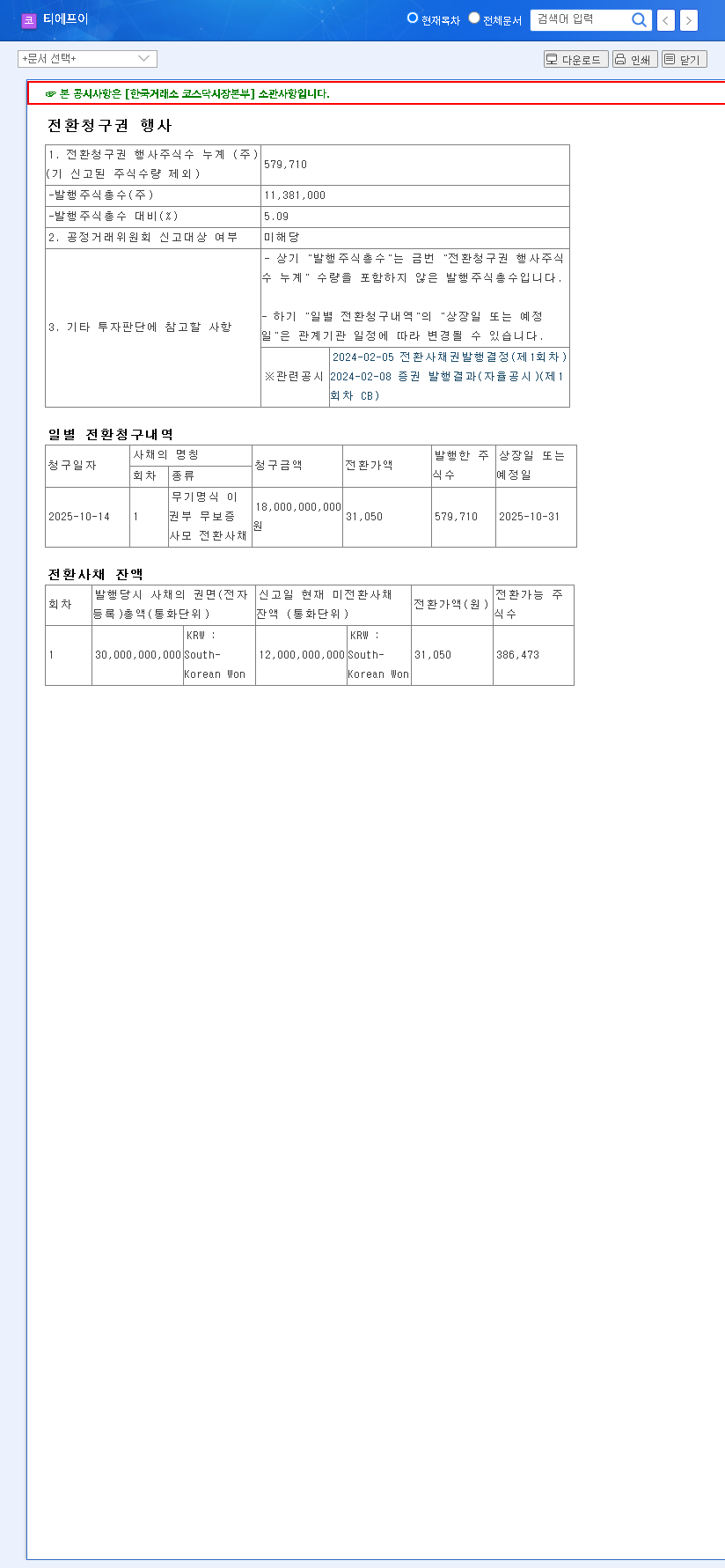
    • Sound Financial Structure: The company boasts a stable balance sheet with assets of KRW 148,211 million against liabilities of KRW 59,168 million. While the recent issuance of convertible bonds increased liabilities, it simultaneously bolstered the company’s capital, providing essential resources for future R&D and capacity expansion projects.
    • Commitment to Innovation: TFE maintains an impressive R&D investment ratio of 8.27% of sales. This capital is funneled into developing next-generation solutions for high-performance memory (DDR5, LPDDR6, GDDR7) and complex Advanced Packages, ensuring the company remains at the forefront of technological advancement.
    • Strategic Market Alignment: The company is perfectly aligned with macro trends. As AI, autonomous vehicles, and IoT devices demand more powerful and efficient chips, the need for sophisticated semiconductor test solutions escalates. TFE is directly capitalizing on this secular growth trend.

    Investment Impact: What to Expect from the IR Event

    The TFE Co., Ltd. Q3 2025 IR is expected to be a significant market catalyst. Investor sentiment and the company’s stock price could see short-term volatility based on the details revealed. Here are the potential scenarios:

    Potential Positive Catalysts

    If Q3 results outperform market consensus or if management announces major new client acquisitions or technological breakthroughs in the Advanced Package segment, it could trigger a strong upward movement in the stock price. A confident and clear roadmap from the leadership team regarding future growth and risk management will also bolster investor trust.

    Potential Negative Factors

    Conversely, if earnings fall short of expectations or if guidance for Q4 is conservative, it could lead to a temporary downturn. Inadequate answers regarding the management of exchange rate risks (USD/JPY fluctuations) or competitive pressures could also dampen investor enthusiasm.

    Investor Action Plan: Key Watch Points for the TFE IR

    To make a well-informed decision, investors should focus on the following key areas during the conference call. Consider reviewing broader semiconductor market trends from an authoritative source like Bloomberg Technology for context.

    • Detailed Earnings Breakdown: Look beyond the headline numbers. Analyze revenue and profit margins by segment.
    • Forward-Looking Guidance: Pay close attention to the outlook for Q4 2025 and the preliminary forecast for 2026.
    • Growth Segment Progress: Seek specific updates on high-performance memory and Advanced Package projects.
    • Risk Mitigation Plans: How is the company addressing currency volatility and competition?
    • R&D Roadmap: What are the next major technological milestones and commercialization timelines?

    Overall Investment Outlook: Cautiously Optimistic. TFE Co., Ltd. is a technologically robust company in a high-growth sector. Its consistent R&D spending and unique market position provide a solid foundation for future success. This IR is a crucial opportunity for the company to validate its growth narrative. A long-term investment perspective, based on a thorough analysis of the IR announcements, is the recommended approach for any TFE stock analysis.

    (425420) TFE Co., Ltd. Q3 2025 IR: A Deep-Dive Stock Analysis for Investors 관련 이미지
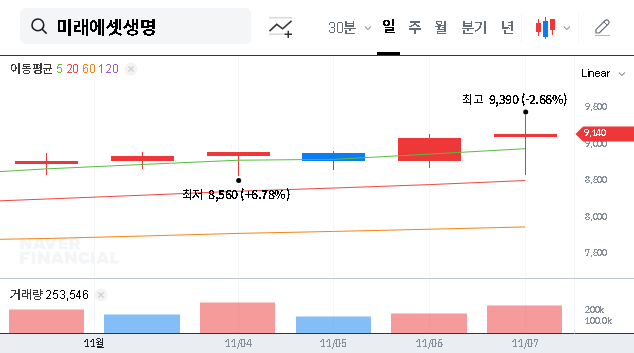
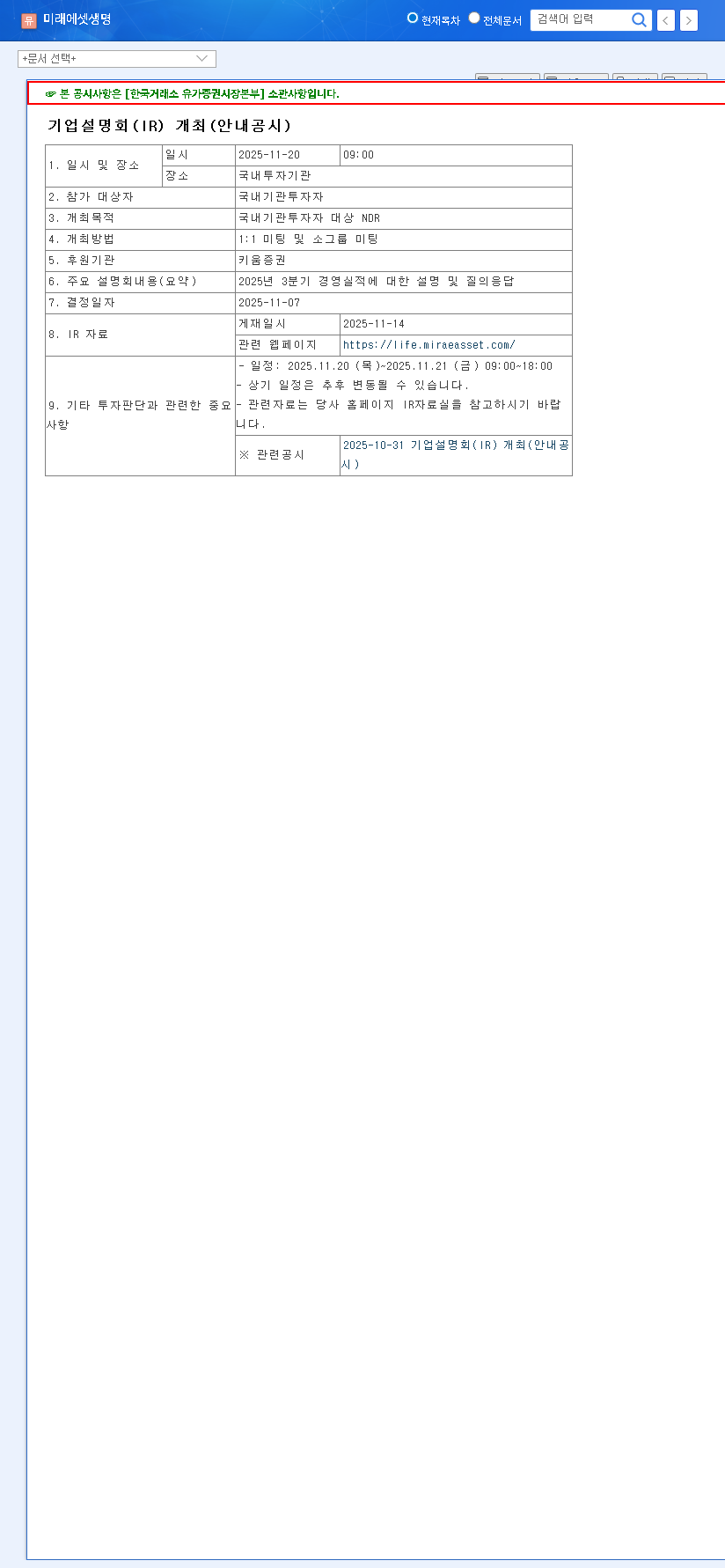
  • (085620) MIRAE ASSET Life Q3 2025 Earnings: K-ICS Ratio Dips, Expert Analysis

    (085620) MIRAE ASSET Life Q3 2025 Earnings: K-ICS Ratio Dips, Expert Analysis

    The latest MIRAE ASSET Life earnings report for Q3 2025 presents a mixed but compelling picture for investors. While the company posted strong year-over-year profit growth, a notable decline in its K-ICS solvency ratio and persistent macroeconomic headwinds have raised important questions about its future trajectory. This comprehensive analysis will unpack the numbers, explore the underlying challenges, and provide a clear investment perspective on MIRAE ASSET Life.

    We will delve into the critical financial metrics, the implications of the new Korean Insurance Capital Standard (K-ICS), and how global economic shifts are shaping the company’s performance and strategy.

    MIRAE ASSET Life Q3 2025 Earnings: The Core Figures

    MIRAE ASSET Life announced its provisional Q3 2025 earnings, showcasing significant year-over-year improvement. The key figures from the report are:

    • Revenue: 1,218.4 billion KRW
    • Operating Profit: 58.9 billion KRW
    • Net Profit: 46.5 billion KRW

    While these profits are robust compared to Q3 2024, revenue saw a decrease from the previous quarter (Q2 2025), signaling potential headwinds. For a detailed breakdown, investors can consult the Official Disclosure filed with DART (Source).

    The Declining K-ICS Solvency Ratio: A Cause for Concern?

    A critical metric under scrutiny is the K-ICS solvency ratio, which was restated to 183.5% as of June 30, 2025. This represents an 8.9 percentage point drop from the previous quarter’s 192.4%. The Korean Insurance Capital Standard (K-ICS) is a new regulatory framework that assesses an insurer’s capital adequacy by valuing assets and liabilities at market value, providing a more risk-sensitive measure than the previous system. The decline was primarily driven by an increase in required capital due to market fluctuations and the stringent new standard itself.

    While MIRAE ASSET Life’s K-ICS ratio remains well above the 100% regulatory floor, the downward trend underscores the growing capital management pressures facing all Korean insurers under the new standard. Generating sufficient eligible capital while managing increased capital requirements is now a core long-term challenge.

    Navigating a Turbulent Macroeconomic Landscape

    The performance of MIRAE ASSET Life is inextricably linked to the broader economic environment, which is currently characterized by high volatility. According to analysis from institutions like the International Monetary Fund (IMF), several factors are creating a complex operating landscape.

    The Double-Edged Sword of High Interest Rates

    Persistently high interest rates in major economies present both an opportunity and a threat. On one hand, they can boost investment yields on the company’s asset portfolio. On the other, they increase the burden of liability valuation and can raise funding costs, putting pressure on capital adequacy.

    Currency Volatility and Its Impact

    Sharp fluctuations in the EUR/KRW and USD/KRW exchange rates directly impact the value of foreign currency assets and liabilities. This can lead to translation gains or losses, causing volatility in the company’s eligible capital and, by extension, its K-ICS solvency ratio.

    Investment Outlook: A ‘Neutral’ Stance on MIRAE ASSET Life Stock

    Given the solid year-over-year profits balanced against the K-ICS pressure and macroeconomic uncertainty, our investment opinion on MIRAE ASSET Life stock remains ‘Neutral.’ The company shows fundamental soundness, but the external risks warrant a cautious approach. Investors should closely monitor several key areas before making a decision.

    Key Factors for Investors to Monitor

    • Solvency Ratio Trends: Continued monitoring of the K-ICS ratio is paramount. Look for stabilization or improvement as a sign of effective capital management.
    • Profitability and Product Strategy: Assess the company’s ability to maintain profitability. This includes its strategy for managing investment returns and its focus on high-margin insurance products. For more context, you can read our guide on Understanding the Korean Insurance Market.
    • Macroeconomic Response: The company’s agility in responding to changes in interest rates, exchange rates, and inflation will be a key determinant of future success.
    • Sustained Performance: It is crucial to see if the positive year-over-year profit trend continues into Q4 and beyond, especially concerning the recovery of quarter-over-quarter revenue growth.

    Disclaimer: This report is for informational purposes only and is based on publicly available data. The ultimate responsibility for investment decisions lies with the investor. This content should not be construed as financial advice.

    (085620) MIRAE ASSET Life Q3 2025 Earnings: K-ICS Ratio Dips, Expert Analysis 관련 이미지
  • (000370) Hanwha General Insurance: K-ICS Stability Analysis & Carrot Subsidiary Risk [2025 Investor Deep Dive]

    (000370) Hanwha General Insurance: K-ICS Stability Analysis & Carrot Subsidiary Risk [2025 Investor Deep Dive]

    For investors tracking Hanwha General Insurance, recent disclosures paint a complex picture of stability shadowed by significant risk. While the parent company demonstrates robust financial health, its digital subsidiary, Carrot General Insurance, is facing a solvency crisis that demands immediate attention. This deep-dive insurance investor analysis breaks down the latest K-ICS ratio data, quarterly earnings, and market factors to provide a clear outlook on the opportunities and threats facing the entire Hanwha General Insurance group.

    Understanding the Korean Insurance Capital Standard, or K-ICS ratio, is paramount. It’s the primary measure of an insurer’s ability to meet its obligations to policyholders, making it a critical indicator of financial soundness. A high ratio signals stability, while a low one is a major red flag.

    Unpacking Recent Disclosures: A Tale of Two Companies

    Two recent official filings provide the foundation for our analysis, revealing the stark contrast between Hanwha General Insurance and its subsidiary. This information is derived directly from the company’s H1 2025 report correction and its Q3 2025 provisional earnings announcement.

    Hanwha General Insurance: A Stable K-ICS Ratio

    The parent company confirmed a healthy solvency position, which is a positive signal for investors looking for stability.

    • Confirmed K-ICS Ratio: 214.3%, an improvement from 209.3% in the previous period, comfortably above regulatory minimums.
    • Underlying Risk Factor: The K-ICS ratio before applying transitional measures stands at 179.5%. While still acceptable, this lower figure highlights a potential vulnerability to future regulatory tightening or abrupt changes in the economic climate.
    • Q3 2025 Profitability: The company reported a net profit of KRW 71.6 billion, indicating sustained profitability despite a slight decrease in overall revenue.

    Hanwha General Insurance’s core operations appear resilient, with a solid solvency margin and consistent profitability. However, the true test lies in how it manages the severe financial distress of its subsidiary.

    Carrot General Insurance: A Solvency Crisis

    The situation at Carrot General Insurance is dire. The digital insurer’s K-ICS ratio has plummeted, signaling a critical threat to its viability and a significant risk for its parent company.

    • Critically Low K-ICS Ratio: A mere 67.08%. This is far below the regulatory minimum of 100% and the recommended level of 150%, indicating the company does not have sufficient capital to cover its risks.
    • Rapid Decline: The ratio has fallen sharply from 281.26% just a few quarters ago, highlighting severe operational or financial mismanagement.
    • Urgent Need for Action: This level of financial soundness failure will trigger regulatory intervention and requires an immediate and substantial capital injection or a complete business overhaul.

    Investor Outlook: Balancing Stability with Contagion Risk

    For investors, the central question is whether Hanwha General’s strength can absorb Carrot’s weakness. The subsidiary’s crisis is more than just a footnote; it’s a material risk that could impact the parent company’s consolidated financial statements, credit rating, and stock performance. Understanding the macroeconomic environment is also key. For more on this, see our Guide to Investing in the Korean Insurance Market.

    Key Risk Factors to Monitor

    • Carrot’s Financial Contagion: The most immediate risk. The cost of bailing out Carrot General Insurance could be a significant drain on Hanwha’s capital and management resources.
    • Interest Rate Volatility: Rising interest rates can negatively impact the valuation of an insurer’s bond portfolio and increase solvency capital requirements. A deep understanding of how interest rates affect insurers is critical.
    • Regulatory Scrutiny: Financial regulators will be closely watching both companies. Any tightening of K-ICS rules or forced corrective measures on Carrot could create further pressure.

    This analysis is based on data from the company’s official public disclosures. Official Disclosure: Click to view DART report.

    Frequently Asked Questions (FAQ)

    What is the current financial health of Hanwha General Insurance?

    Hanwha General Insurance recorded a K-ICS (solvency capital ratio) of 214.3% as of H1 2025, which stably meets regulatory standards. However, its K-ICS before transitional measures was 179.5%, indicating potential capital burden factors in response to future interest rate fluctuations.

    What does Carrot General Insurance’s low K-ICS ratio signify?

    Carrot General Insurance’s K-ICS of 67.08% is a critically low level, signifying insufficient capital to cover potential losses. This poses a severe threat to its business operations and signals an urgent need for capital injection or restructuring.

    How do Carrot’s financial issues impact Hanwha General Insurance?

    As Carrot is a subsidiary, its deteriorating financial health could negatively affect Hanwha General Insurance’s consolidated financial statements. This may lead to a decline in the parent company’s credit rating and require costly capital support, creating downward pressure on Hanwha’s corporate value.

    What should investors consider when investing in Hanwha General Insurance?

    Investors should closely monitor Carrot General Insurance’s capital injection plans, the impact of macroeconomic changes (like interest rates) on the group’s overall K-ICS ratio, and Hanwha’s strategic response to the competitive and digital landscape of the insurance industry.

    Conclusion: While Hanwha General Insurance maintains a relatively stable foundation, the severe financial challenges at Carrot General Insurance represent a group-wide risk that cannot be ignored. The success or failure of Carrot’s financial turnaround will be a critical variable in evaluating the future corporate value of Hanwha General Insurance.

    Disclaimer: This report is prepared based on the information provided, and actual investment decisions should be made by investors at their own discretion and responsibility.

    (000370) Hanwha General Insurance: K-ICS Stability Analysis & Carrot Subsidiary Risk [2025 Investor Deep Dive] 관련 이미지
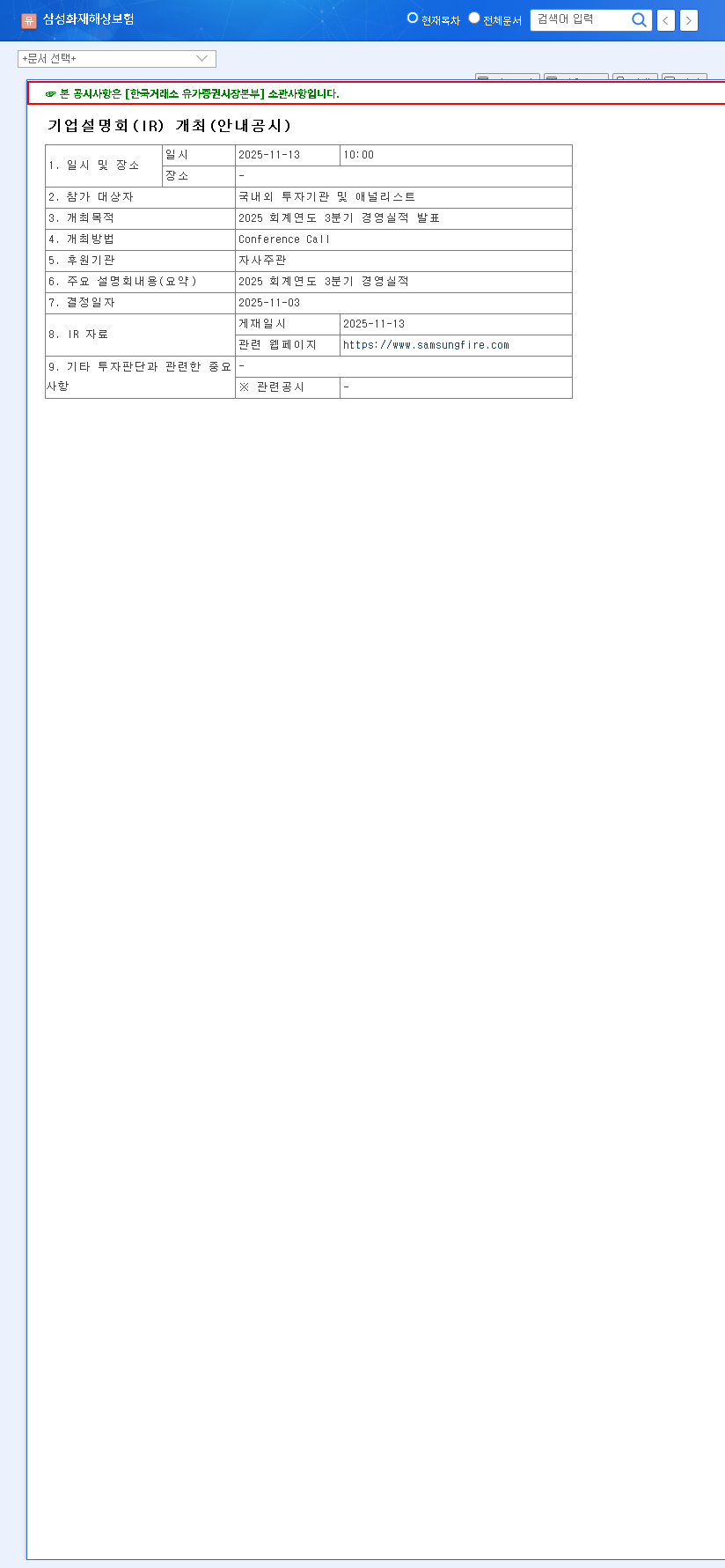
  • (000810) Samsung Fire & Marine Q3 2025 Earnings: Deep Dive Analysis for Investors

    (000810) Samsung Fire & Marine Q3 2025 Earnings: Deep Dive Analysis for Investors

    The latest SAMSUNG FIRE & MARINE INSURANCE CO.,LTD earnings report for Q3 2025 presents a mixed but ultimately compelling picture for investors. While the operating profit slightly missed market consensus, a stronger-than-expected net income suggests underlying resilience. This detailed analysis unpacks the numbers, evaluates the company’s robust fundamentals, and provides a clear outlook on what this means for your investment strategy.

    We will explore whether the operating profit dip is a temporary setback or a sign of deeper issues, and why the company’s long-term value proposition remains firmly intact amidst a volatile global economy.

    Q3 2025 Earnings Report: A Detailed Breakdown

    On November 13, 2025, SAMSUNG FIRE & MARINE INSURANCE CO.,LTD released its preliminary consolidated performance results, which can be verified in the Official Disclosure (DART). Here are the key figures investors need to know:

    • Revenue: KRW 5,732.3 billion. A stable figure demonstrating consistent business volume.
    • Operating Profit: KRW 664.1 billion. This was 5.6% below market expectations of KRW 704.0 billion, causing some initial concern.
    • Net Income: KRW 538.0 billion. In a positive turn, this figure beat expectations by 2.2%, thanks in part to an eased tax burden and efficient capital management.

    The key takeaway is a classic ‘miss on the top, beat on the bottom’ scenario. While the operating profit miss warrants attention, the strong net income performance showcases the company’s ability to protect profitability effectively.

    Beyond the Quarter: Unpacking Samsung Fire’s Strong Fundamentals

    Judging the long-term potential of the Samsung Fire stock based on a single quarter is shortsighted. The company’s value is anchored in deep, resilient fundamentals.

    Rock-Solid Financial Health

    Samsung Fire’s financial stability is a cornerstone of its investment appeal. With a high K-ICS ratio (a key measure of an insurer’s solvency) of 274.48%, it is exceptionally well-capitalized to withstand economic shocks. This is further validated by elite credit ratings from global agencies like S&P (‘AA-‘). For investors, this translates to lower risk and a more reliable business model. You can learn more about how solvency ratios work from authoritative sources like Investopedia.

    Market Dominance and Strategic Diversification

    As a leader in Korea’s non-life insurance sector, Samsung Fire commands significant brand power and customer loyalty. However, its strength isn’t just in traditional insurance. The company has a diversified portfolio that includes profitable segments like loss adjustment, customer service, and other insurance agencies. This diversification creates multiple revenue streams, making the overall business less susceptible to downturns in any single area. For more on this, check out our deep dive into the Korean insurance market.

    Navigating Macroeconomic Headwinds and Tailwinds

    The global economic landscape presents both challenges and opportunities for an insurer of Samsung Fire’s scale.

    • Interest Rates & Bond Yields: With major economies holding benchmark rates steady, Samsung Fire can anticipate a stable environment for its investment returns. Stable government bond yields are particularly beneficial for its large fixed-income portfolio.
    • Exchange Rate Volatility: A high USD/KRW exchange rate can be a double-edged sword. While it introduces risk, Samsung Fire’s sophisticated risk management, including the use of derivatives, effectively hedges against currency fluctuations, protecting asset values.
    • Competitive Pressures: The rise of agile digital insurers is intensifying competition. However, Samsung Fire’s brand recognition, vast data resources, and high customer loyalty provide a formidable moat that new entrants will find difficult to penetrate.

    Investment Outlook: Our ‘BUY’ Thesis on Samsung Fire Stock

    Considering all factors, the recent SAMSUNG FIRE & MARINE INSURANCE CO.,LTD earnings report does not alter our positive long-term outlook. The operating profit miss appears to be a short-term fluctuation rather than a fundamental flaw.

    Short-Term vs. Mid-to-Long-Term View

    In the short term, the stock price may face some downward pressure due to the headline operating profit miss. However, we believe the better-than-expected net income and the company’s strong fundamentals will provide a solid floor, limiting potential declines.

    From a mid-to-long-term perspective, Samsung Fire remains an exceptionally attractive investment. Its robust financial health, market leadership, and growing focus on ESG management are powerful drivers for sustainable growth and shareholder value.

    Therefore, we maintain our ‘BUY’ opinion on the Samsung Fire stock. We advise investors to look past the short-term noise and focus on the enduring strength and growth potential of the business. Continuous monitoring of macroeconomic trends and future earnings remains prudent.

    (000810) Samsung Fire & Marine Q3 2025 Earnings: Deep Dive Analysis for Investors 관련 이미지
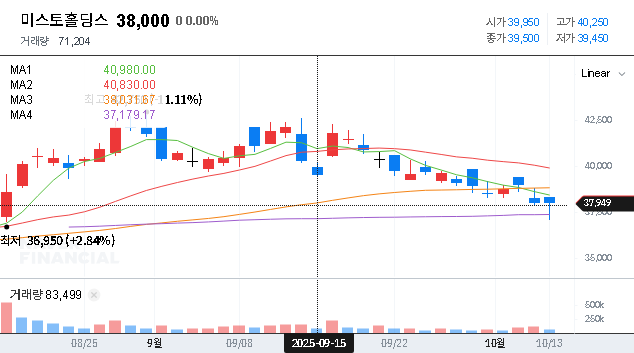
  • (081660) Misto Holdings (081660) Stock Analysis: A Deep Dive into the Q3 2025 IR Event

    (081660) Misto Holdings (081660) Stock Analysis: A Deep Dive into the Q3 2025 IR Event

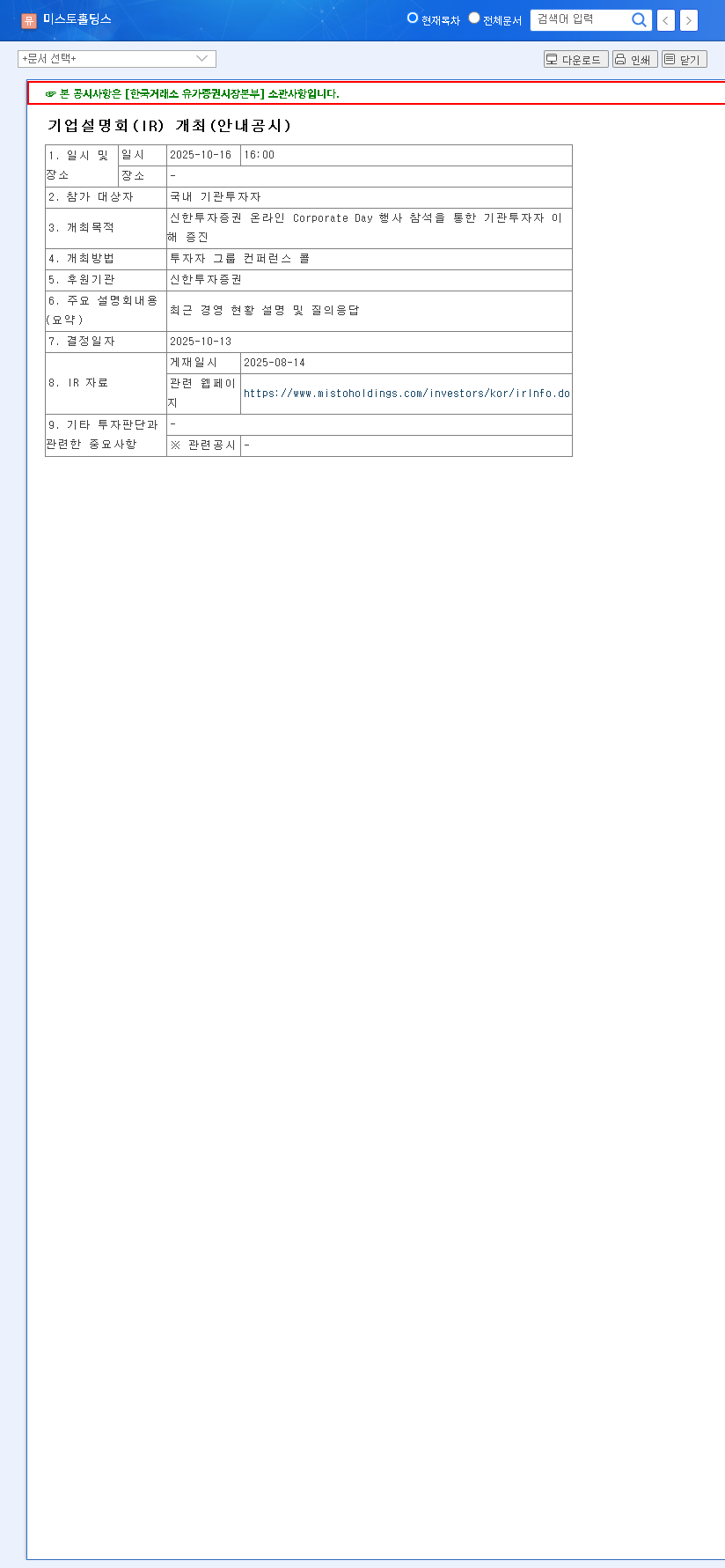
    Investors are closely watching Misto Holdings Corporation (081660) as it prepares to host a pivotal Corporate Investor Relations (IR) event on November 17, 2025. This event is far more than a routine earnings call; it represents a critical opportunity for the company to communicate its strategic direction, address investor concerns, and potentially trigger a re-evaluation of its market value. The agenda promises deep insights into the Q3 2025 operating performance, the continued powerhouse growth of the Acushnet segment, and the broader portfolio strategy. This analysis will break down the key factors at play, from robust fundamentals to macroeconomic risks, providing a comprehensive guide for anyone tracking Misto Holdings stock.

    The Core Agenda: What to Expect from the Misto Holdings IR

    The upcoming IR, structured as a Non-Deal Roadshow (NDR), is designed to foster a deeper understanding of the company among institutional investors. The primary focus will be a transparent presentation of the Q3 2025 financial results. This format allows for direct engagement and is a clear effort by Misto Holdings to build trust and articulate its long-term vision. The success of this event hinges on its ability to clearly communicate its growth trajectory and its strategies for navigating a complex economic landscape.

    Analyzing Misto Holdings’ Financial Health and Growth Engines

    Based on the H1 2025 reports, Misto Holdings is showing strong fundamental signals, underpinned by a strategic restructuring of its business portfolio and an expanding global footprint. Two core segments are driving this performance.

    1. The Acushnet Segment: A Golfer’s Powerhouse

    The Acushnet segment remains the crown jewel in Misto’s portfolio. Fueled by a resilient global golf industry, which has seen sustained interest post-pandemic, Acushnet is the primary driver of revenue growth. Its iconic brands, Titleist and FootJoy, continue to command significant market share and brand loyalty. The ongoing popularity of the sport, as tracked by organizations like the PGA Tour, provides a stable demand floor for Acushnet’s premium products, making its performance a key indicator for Misto Holdings’ overall health.

    2. The Misto Segment: Strategic Diversification in Action

    While the FILA brand has faced sales headwinds, the Misto segment is demonstrating a savvy pivot. The company is actively diversifying its portfolio by securing new licensing and distribution agreements with other external brands. This strategy is crucial as it mitigates dependency on a single brand and positions the segment to capture new market opportunities, effectively offsetting the decline in FILA sales and building a more resilient business model.

    For the first half of 2025, Misto Holdings reported a consolidated revenue increase of 4.5% year-over-year to KRW 2.46 trillion, with operating profit climbing an impressive 13.6% to KRW 344.5 billion. This highlights the company’s improving profitability, largely driven by Acushnet’s stellar performance.

    Navigating the Headwinds: Key Risks for Investors

    Despite the positive fundamentals, investors must consider the significant macroeconomic risks Misto Holdings faces. The IR will be a crucial test of management’s plans to mitigate these challenges.

    • Significant Debt Burden: The company’s consolidated balance sheet shows borrowings of KRW 1.6 trillion. In a volatile interest rate environment, this level of debt poses a material risk, with H1 2025 financial expenses already reaching KRW 119 billion.
    • Interest & Exchange Rate Volatility: The strong US dollar positively impacted the conversion of Acushnet’s overseas revenue. However, it also presents a risk by potentially increasing raw material costs for the Misto segment. Uncertainty around central bank policies adds another layer of complexity.
    • Macroeconomic Sensitivity: As a global consumer brand portfolio, Misto Holdings’ performance is inherently tied to global economic health. Any slowdown in consumer spending could impact sales across its segments.

    Unlocking Value: Shareholder Returns and Corporate Identity

    Misto Holdings is actively pursuing initiatives to enhance shareholder value and strengthen its corporate image. A proactive shareholder return policy, including a significant share repurchase program of up to KRW 500 billion over three years, is a strong positive signal. Furthermore, its recognition as a ‘2023 ESG Excellent Company’ by Sustainalytics and its inclusion in the FTSE4Good index boost its appeal to a broader base of socially conscious investors. The recent name change from ‘FILA Holdings’ to ‘Misto Holdings’ underscores its transformation into a global brand portfolio company, a strategic shift that the IR will likely reinforce. For official details, investors can refer to the Official Disclosure (DART).

    Investor Action Plan: Key Questions for the IR

    This IR event is a critical moment for Misto Holdings stock. For investors, the focus should be on how effectively management communicates its strategy for both growth and risk management. For those new to this type of analysis, our guide on How to Analyze Earnings Reports can be a valuable resource. Ultimately, the market’s reaction will depend on the clarity and confidence with which the company addresses these key areas:

    • What is the detailed strategy for managing the KRW 1.6 trillion debt in the face of potential rate hikes?
    • What are the specific growth projections for the Acushnet segment and the new brands within the Misto segment?
    • How does the company plan to navigate foreign exchange volatility and protect its margins?

    A successful IR that addresses these points could lead to enhanced investor trust and a positive re-evaluation of Misto Holdings’ corporate value. Investors are advised to analyze the outcomes carefully to make well-informed decisions.

    (081660) Misto Holdings (081660) Stock Analysis: A Deep Dive into the Q3 2025 IR Event 관련 이미지