Tag: Public Disclosure

  • (071320) KOREA DISTRICT HEATING CORPORATION Stock: Q3 Earnings Surprise Analysis & 2025 Forecast

    (071320) KOREA DISTRICT HEATING CORPORATION Stock: Q3 Earnings Surprise Analysis & 2025 Forecast

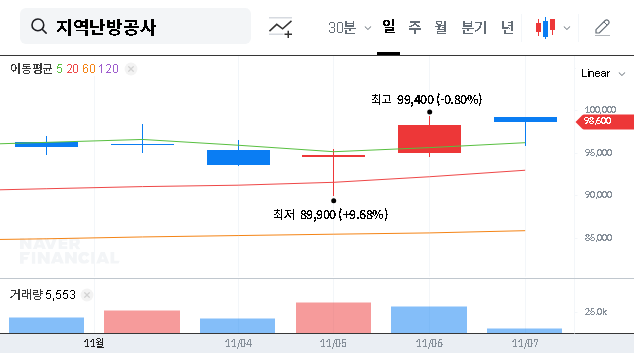
    On November 7, 2025, KOREA DISTRICT HEATING CORPORATION (KDHC, KRX: 071320) delivered a landmark ‘earnings surprise’ that shattered market forecasts and sent a clear signal to investors. With operating profits soaring an astonishing 627.6% above estimates, the critical question for anyone evaluating KOREA DISTRICT HEATING CORPORATION stock is whether this is a fleeting moment of success or the dawn of a sustained growth period. This comprehensive analysis will dissect the Q3 2025 results, explore the underlying fundamentals, and provide a strategic outlook for potential investors.

    We will delve into the strengths powering this performance, the significant risks that still loom, and the macroeconomic factors that could shape the future of KDHC. Join us for an in-depth look at the company’s trajectory and what it means for your investment portfolio.

    KDHC’s Stunning Q3 2025 Earnings by the Numbers

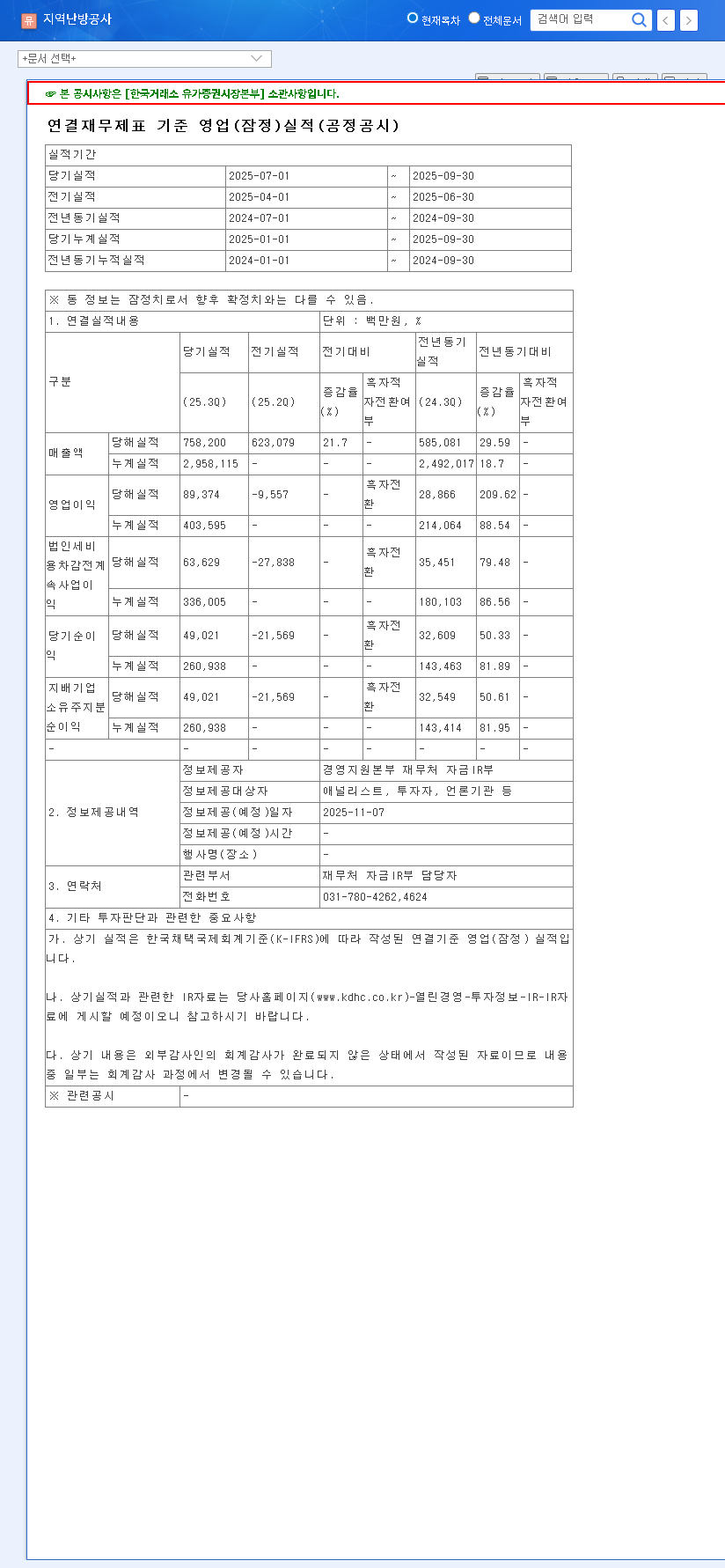
    The provisional earnings announced by KDHC for the third quarter of 2025, based on consolidated financial statements, were nothing short of spectacular. The company didn’t just beat expectations; it left them in the dust, showcasing robust top-line growth and explosive profitability. The full details can be found in the Official Disclosure on DART, but the key highlights are:

    • Revenue: KRW 758.2 billion, a 38.1% increase over the estimate of KRW 549.1 billion.
    • Operating Profit: KRW 89.4 billion, a massive 627.6% surge compared to the KRW 12.3 billion estimate.
    • Net Profit: KRW 49.0 billion, an incredible 581.1% higher than the KRW 7.2 billion forecast.

    This ‘earnings surprise’ significantly boosts investor confidence and provides powerful short-term momentum for the KOREA DISTRICT HEATING CORPORATION stock. The remarkable growth in operating and net profit suggests improved operational efficiency and favorable market conditions during the quarter.

    Fundamental Analysis: The Bull Case vs. The Bear Case

    To truly understand the investment thesis, we must look beyond a single quarter. KDHC possesses foundational strengths but also faces considerable structural challenges that any prudent investor must weigh.

    Strengths: Why KDHC Could Thrive

    • Dominant Market Position: As a key player in the district heating business, KDHC enjoys a stable, utility-like business model supplying essential energy, which provides a reliable revenue floor.
    • Future Growth Drivers: The company is not standing still. It is actively investing in high-potential areas like renewable energy and the innovative use of waste heat for powering data centers, tapping into modern industrial needs.
    • Stellar Creditworthiness: With ratings like AA3 from Moody’s and AAA domestically, KDHC can secure financing at favorable rates, a crucial advantage for a capital-intensive business.
    • ESG Commitment: A strong focus on ESG (Environmental, Social, and Governance) management is increasingly important for attracting institutional capital and enhancing long-term corporate value. You can learn more in our guide to ESG investing.

    The core dilemma for KDHC investors is balancing this quarter’s spectacular performance against persistent structural risks like high debt and commodity price exposure. The future value hinges on management’s ability to navigate these challenges.

    Risks: What Could Derail Growth

    • High Debt-to-Equity Ratio: A debt ratio of 236.5% is a significant concern. This high leverage makes the company vulnerable to interest rate hikes and increases financial expenses, which stood at KRW 56.9 billion.
    • Raw Material Volatility: The company’s profitability is highly sensitive to fluctuations in raw material prices, particularly Liquefied Natural Gas (LNG). With LNG accounting for over 80% of purchases, global energy market shifts, as tracked by sources like Reuters Energy, can drastically impact margins.
    • Investment Burden: While necessary for growth, large-scale investments in facility upgrades and new businesses (totaling KRW 262.2 billion) can strain financial resources in the short to medium term.
    • Regulatory and Legal Risks: Navigating carbon neutrality goals and climate change regulations could lead to increased compliance costs. Furthermore, ongoing litigation presents a potential financial risk depending on the outcomes.

    Outlook & Investment Strategy for KDHC Stock

    The powerful KDHC earnings report for Q3 is expected to act as a significant catalyst. In the short term, the positive news flow and improved sentiment will likely attract buying interest from institutional and foreign investors, potentially driving the stock price higher. Analyst ratings and price targets will almost certainly see upward revisions.

    However, the long-term re-evaluation of KOREA DISTRICT HEATING CORPORATION stock depends entirely on the company’s ability to prove this performance is sustainable. Investors should monitor subsequent quarters for continued momentum while keeping a close eye on management’s strategies for debt reduction and margin protection against commodity swings.

    Final Verdict & Action Plan

    Given the exceptional results and the immediate positive momentum, we are issuing a ‘Positive’ investment opinion at this time. However, this comes with a strong recommendation for active monitoring.

    • For Short-Term Traders: Consider leveraging the positive sentiment following the earnings release. A phased buying approach on any pullbacks could be a viable strategy to capture the upward momentum.
    • For Long-Term Investors: Look for tangible progress in de-risking the balance sheet. Key metrics to watch in future reports include the debt-to-equity ratio, operating margins in both the heat and electricity segments, and concrete returns from new business ventures.
    • Monitor Macro Indicators: Keep a close watch on LNG prices, the KRW/USD exchange rate, and national energy policy shifts, as these external factors will continue to have a profound impact on KDHC’s profitability.

    This analysis is based on publicly available information. All investment decisions should be made based on your own research and risk tolerance.
    (071320) KOREA DISTRICT HEATING CORPORATION Stock: Q3 Earnings Surprise Analysis & 2025 Forecast 관련 이미지
  • (000210) DL E&C’s ₩418.6B Project: A Deep Dive for DL Group Investors

    (000210) DL E&C’s ₩418.6B Project: A Deep Dive for DL Group Investors

    In a significant move that has captured market attention, DL E&C, a key subsidiary of the DL Group, has secured a massive ₩418.6 billion contract. This long-term DL E&C project involves the modernization and operation of the Uijeongbu Wastewater Treatment Plant, signaling a major win in the stable infrastructure sector. But beyond the headline figure, what does this contract truly signify for the broader DL Group investment landscape? This analysis delves into the financial implications, the substantial boost to the company’s ESG profile, and the key factors investors should monitor for sustainable growth.

    A Landmark Deal: Deconstructing the ₩418.6 Billion Project

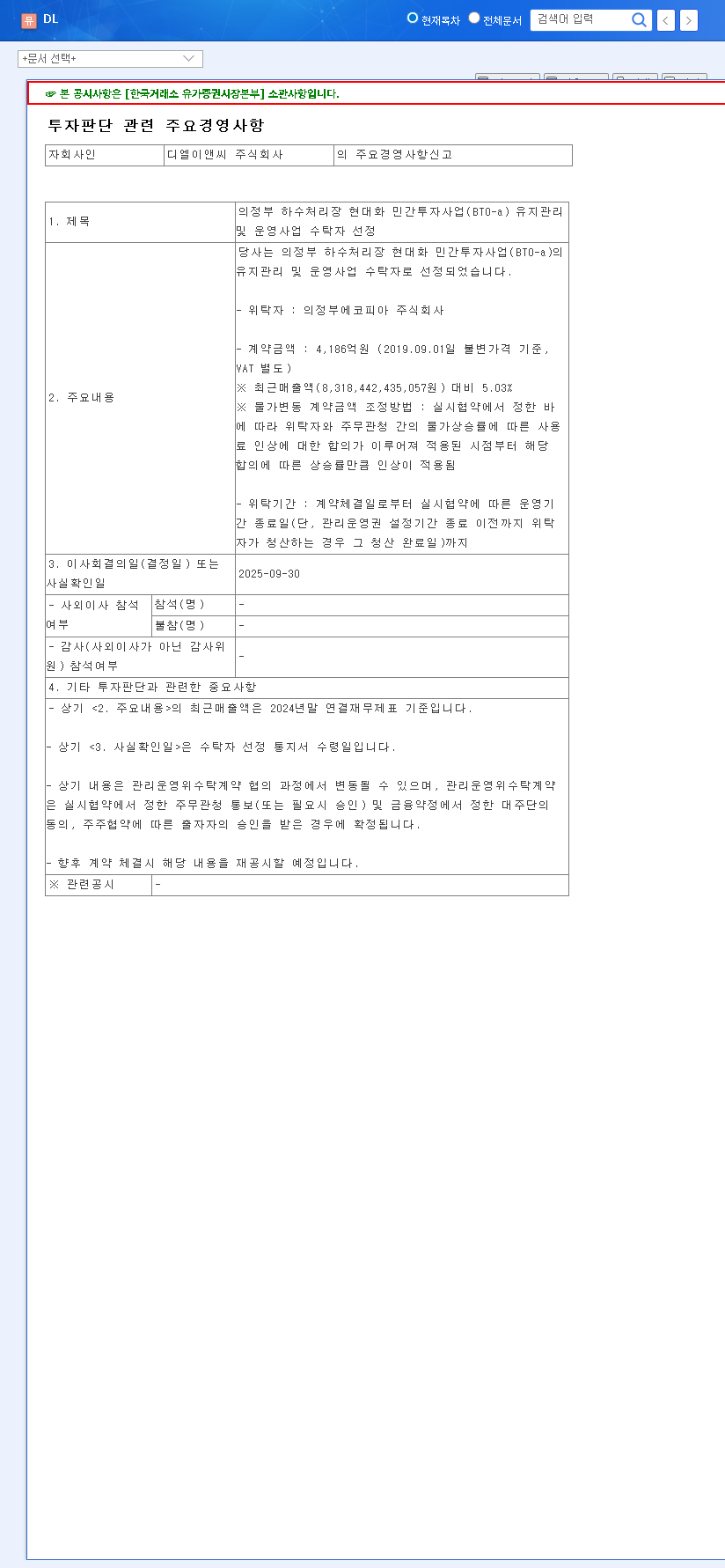
    On September 30, 2025, it was officially announced that DL E&C was selected as the designated operator for the Uijeongbu Wastewater Treatment Plant Modernization Private Investment Project (BTO-a). This isn’t just another construction contract; it’s a long-term operational agreement that underscores the company’s technical expertise and positions it as a leader in vital environmental infrastructure.

    Key Project Specifications

    • Contract Value: ₩418.6 billion (based on 2019 constant prices, VAT excluded).
    • Revenue Impact: Represents a significant 5.03% of DL E&C’s recent total revenue.
    • Contract Duration: A long-term entrustment period, ensuring a stable revenue stream for years to come.
    • Official Source: The details were confirmed via an Official Disclosure on the DART system.

    The BTO-a (Build-Transfer-Operate-adjusted) model is particularly noteworthy. It involves a private entity (DL E&C) building and modernizing a facility, transferring ownership to the government, and then operating it for a set period to recoup its investment and earn a profit. This structure mitigates risk and provides a highly predictable, government-backed revenue source, a welcome contrast to the cyclical nature of traditional construction projects.

    This project is more than just a number; it’s a strategic shift towards securing stable, long-term cash flows that strengthen the fundamental financial health of the entire DL Group.

    The Financial Ripple Effect on DL Group Investment

    For investors analyzing the DL E&C stock and the parent DL Group, the financial implications extend far beyond the initial contract value. The primary benefit lies in the diversification and de-risking of the company’s revenue portfolio. This long-term operational role provides a consistent cash flow, which is crucial for financial planning, dividend stability, and funding future growth initiatives.

    Furthermore, success in the Uijeongbu wastewater plant project solidifies DL E&C’s reputation in the high-value infrastructure and utilities sector. This enhances its competitiveness for future domestic and international bids, creating a potential pipeline of similar stable, high-margin projects. For the holding company, DL, this translates into more reliable subsidiary performance and potentially higher dividend income.

    The ESG Advantage: A Pillar for Sustainable Growth

    Aligning with Global Environmental Goals

    In today’s investment climate, a company’s Environmental, Social, and Governance (ESG) profile is paramount. This DL E&C project is a significant victory for the company’s ESG construction credentials. Modernizing a wastewater treatment plant directly contributes to public health and environmental protection, aligning with critical sustainability goals. Effective wastewater management is a key target for global initiatives, as noted by authorities like the World Health Organization, and DL E&C is now at the forefront of this movement in the region. This enhances DL Group’s corporate image, making it more attractive to a growing class of ESG-focused institutional investors.

    A Balanced View: Potential Risks and Market Headwinds

    While the outlook is overwhelmingly positive, a prudent DL Group investment analysis requires acknowledging potential risks. Long-term operational contracts carry their own set of challenges, including managing maintenance costs, adhering to evolving environmental regulations, and handling unforeseen technical issues. Stable and efficient management throughout the entire contract period is critical to realizing the projected profitability.

    Moreover, macroeconomic factors like inflation and interest rate fluctuations can impact operational profitability. Although the contract likely includes price adjustment clauses to mitigate inflation, the specifics of these mechanisms will be crucial. Investors should monitor how effectively the company manages these external pressures over the long term.

    Investor’s Playbook: Your Next Steps

    This landmark project provides a significant positive catalyst for DL Group. It secures a stable, long-term revenue source, diversifies the business portfolio, and provides a powerful boost to its ESG narrative. The consistent cash flow generated from this operation will fundamentally strengthen the company’s financial base.

    Key Monitoring Points for Investors

    • Operational Efficiency: Keep an eye on reports detailing the project’s operational performance and profitability margins over time.
    • Future Project Pipeline: Watch for announcements of similar infrastructure project wins, which would signal a successful strategic pivot.
    • Macroeconomic Response: Analyze how the company manages the impact of inflation and interest rates on its long-term contracts.
    • Capital Allocation: Observe DL Group’s strategy for using the increased cash flow, such as higher dividends, share buybacks, or reinvestment. Learn more about effective portfolio strategies.

    Ultimately, while this single event is a clear positive, investment decisions should be based on a holistic view of DL E&C’s long-term operational capabilities and the overall financial strategy of the entire DL Group.

    (000210) DL E&C's ₩418.6B Project: A Deep Dive for DL Group Investors 관련 이미지
    (000210) DL E&C's ₩418.6B Project: A Deep Dive for DL Group Investors 관련 이미지
  • Samsung SPAC 8 Liquidation Confirmed: Essential Investor Guide to Fund Recovery and Delisting

    Samsung SPAC 8 Liquidation Confirmed: Essential Investor Guide to Fund Recovery and Delisting 대표 차트 이미지

    Samsung SPAC 8 Liquidation Confirmed: Essential Investor Guide to Fund Recovery and Delisting

    After months of uncertainty, Samsung SPAC 8 has officially confirmed the initiation of its liquidation process, leading to delisting following a failed merger attempt. This news brings disappointment but demands immediate, informed action from investors. This comprehensive guide breaks down the liquidation details, clarifies the fund recovery process, and provides clear steps to navigate this complex financial situation.

    Crucial Takeaway:

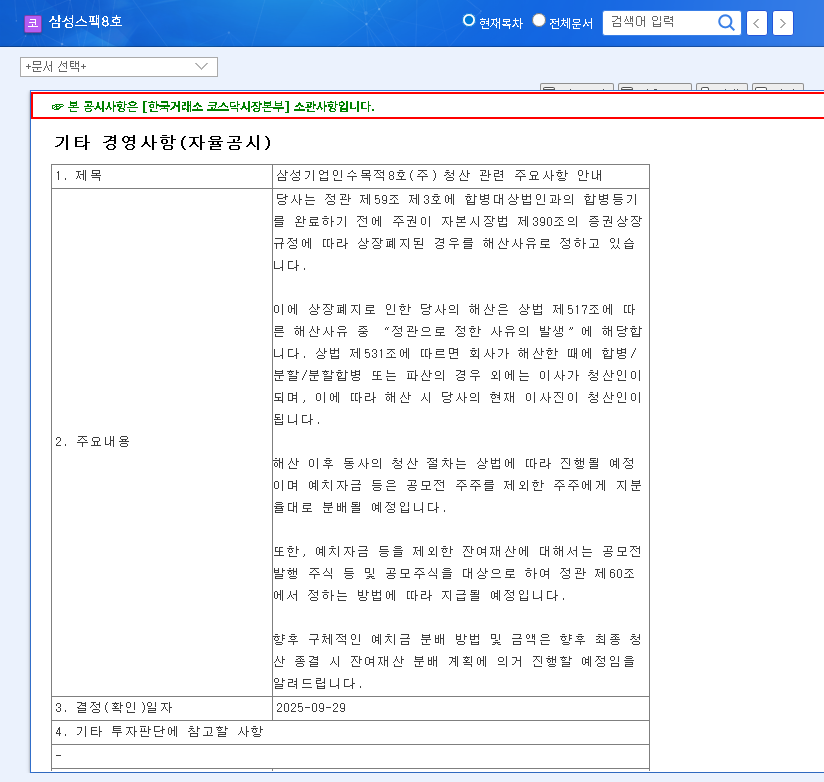
    On September 29, 2025, Samsung SPAC 8 announced liquidation due to a failed merger. Investors must shift focus from trading to verifying residual asset distribution procedures, as full principal recovery is not guaranteed.

    The Official Announcement: Details of Samsung SPAC 8 Liquidation

    The liquidation process was officially initiated via a public disclosure titled ‘Guidance on Key Matters Related to Liquidation.’ This action confirms the failure of Samsung SPAC 8 to achieve its primary mandate—to merge with a target company—and sets the stage for formal delisting.

    Key Reasons for Dissolution

    The dissolution occurred under specific terms outlined in the company’s articles of incorporation:

    • Failed Merger: The company could not secure or complete a merger registration with a target company within the specified timeline.
    • Mandatory Delisting: The failure to merge triggered automatic delisting under the Capital Markets Act, leading to immediate liquidation.

    Liquidation Management and Structure

    • Liquidators Appointed: The current Board of Directors will serve as liquidators, overseeing the process in accordance with Article 531 of the Commercial Act.
    • Asset Priority: Residual assets will be distributed based on share type (public shares vs. pre-IPO shares) and equity stake, following the procedures outlined in the articles of incorporation.

    Financial Implications: What Happens to My Investment?

    The most pressing concern for shareholders is the recovery of invested capital. Since the company is ceasing operations, the focus shifts entirely to the distribution of residual assets.

    Fund Recovery Process and Asset Distribution

    The distribution process generally follows these steps:

    1. Distribution Based on Equity: Deposited funds and similar assets will be distributed to public shareholders according to their equity stake.
    2. Residual Assets Allocation: Any remaining assets (excluding deposited funds) will be paid out based on the stipulations for pre-IPO shares and public shares as specified in the articles.
    3. Final Determination: The exact distribution amounts and methods will be finalized upon the closure of the liquidation process.

    Understanding the Risk of Principal Loss

    While SPACs typically aim to return invested capital upon failure, investors must be aware of inherent risks during liquidation:

    • Liquidation Expenses: Costs incurred during the wind-down process (legal, accounting, administrative) will be deducted from the assets, potentially reducing the final distribution per share.
    • Incomplete Recovery: Due to these expenses, there is a distinct risk that investors may not recover the full principal amount of their initial investment.
    • Trading Halt: Once delisting procedures begin, shares can no longer be traded on the public market.

    Investor Action Plan: Immediate Steps

    The time for passive waiting is over. Investors should immediately focus on tracking official procedures and estimating potential returns.

    What to Check and Act On

    • Monitor Official Disclosures: Regularly check announcements from Samsung SPAC 8 regarding the liquidation timeline, methodology, and distribution schedule.
    • Review Distribution Priority: Confirm which distribution method applies to your specific type of shareholding (public vs. pre-IPO).
    • Calculate Estimated Return: Use available financial data to conservatively estimate your expected residual asset distribution amount.
    • Assess Future Strategy: Utilize the lessons learned from this liquidation to inform a more cautious approach to future SPAC investments.

    Conclusion: Lessons for Future SPAC Investments

    The liquidation of Samsung SPAC 8 serves as a clear reminder of the inherent risks in the SPAC investment landscape. While the company exhibited sound financial health leading up to the failure (low debt ratio, high current ratio), this only mitigates the risk of financial instability; it does not guarantee the success of the core mission—the merger.

    Future SPAC investments require increased scrutiny. Investors must look beyond general market indicators and focus heavily on the quality and viability of the potential target company, the competence of the SPAC management, and the strength of the merger agreement timeline to accurately gauge the likelihood of a successful outcome.

    Frequently Asked Questions (FAQ)

    When was Samsung SPAC 8’s liquidation confirmed, and what triggered it?

    The liquidation was announced on September 29, 2025, via public disclosure. It was triggered by the company’s failure to find a suitable merger target within the required timeframe, leading to mandatory delisting under the Capital Markets Act.

    How will investors recover their funds?

    Once the liquidation process is complete, deposited funds and residual assets will be distributed to shareholders according to their equity stakes, following the distribution plan outlined in the company’s articles of incorporation.

    Is there a risk of losing principal investment?

    Yes. While SPACs hold funds in escrow, expenses incurred during the liquidation process will be deducted from the total assets, potentially leading to an incomplete recovery of the principal amount.

    Can I still trade Samsung SPAC 8 shares?

    No. Following this announcement, the company will proceed with delisting, meaning the shares will no longer be tradable on the stock market.

    Samsung SPAC 8 Liquidation Confirmed: Essential Investor Guide to Fund Recovery and Delisting 관련 이미지
    Samsung SPAC 8 Liquidation Confirmed: Essential Investor Guide to Fund Recovery and Delisting 관련 이미지
  • Samsung Engineering & Construction: Insider Stake Increase – What’s Next for the Stock?

    1. What Happened?

    On August 8, 2025, Samsung Engineering & Construction announced that insiders increased their stake from 6.13% to 7.09%. This stake change, achieved through open market purchases between July 9 and August 1, has led to various interpretations in the market.

    2. Why the Stake Increase?

    Samsung Engineering & Construction’s Q1 2025 earnings were disappointing. Revenue, operating profit, and net income all decreased year-over-year, with a significant decline in profitability within the chemical division. However, positive factors remain, including a robust order backlog, strengthening of the green solutions business, and a stable financial structure (consolidated basis). Insiders may have focused on these positive aspects and increased their stake based on the company’s long-term growth potential. The positive impact of the rising USD/KRW exchange rate in Q1 2025 on the company’s overseas sales should also be considered.

    3. What’s the Impact on the Stock Price?

    In the short term, the stake increase by insiders could positively influence the stock price. We can anticipate improved investor sentiment, potentially leading to a price increase and offsetting the negative impact of the Q1 earnings announcement. However, the medium to long-term stock price trend depends on the improvement of the company’s fundamentals. Earnings recovery and securing new orders will be key factors for sustained stock price growth.

    4. What Should Investors Do?

    The current investment recommendation is “Neutral.” While the stake increase is a positive signal, the weak Q1 earnings present a risk. Instead of rushing into an investment, it is prudent to closely monitor future earnings improvements, especially the recovery of profitability on a separate basis and the momentum of new orders. Making investment decisions after confirming the improvement of the company’s fundamentals is a wise approach.

    Q: Who are the insiders of Samsung Engineering & Construction?

    A: According to the disclosed information, the insiders involved in this stake increase are Samsung C&T Corporation and 11 others.

    Q: Does a stake increase always have a positive impact on the stock price?

    A: While generally interpreted as a positive signal, a stake increase does not guarantee a stock price increase. Various factors, such as the company’s fundamentals and market conditions, should be considered comprehensively.

    Q: How can I invest in Samsung Engineering & Construction?

    A: You can buy Samsung Engineering & Construction stock through a brokerage account using their HTS or MTS platforms. Before investing, please carefully read the investment prospectus and be fully aware of the investment risks.

  • SM Veccell: Major Shareholder Increases Stake – A Sign of Growth?

    What Happened?

    SM Veccell’s largest shareholder, SM High Plus, and related party Dong Ah Construction Industry, increased their stake from 87.47% to 87.50% through open market purchases. The total purchase amounted to 27,800 shares.

    Why the Increased Stake?

    The disclosed purpose of the increased stake is ‘influence over management’. This is generally interpreted as a positive signal, demonstrating commitment to management stability and strengthening control. The buyback can also be seen as a vote of confidence in the company’s intrinsic value.

    What Does This Mean for the Stock Price?

    In the short term, the increased stake could provide upward momentum for the stock price. However, it’s crucial to consider that the purchased volume is relatively small compared to the total outstanding shares. The impact may be more focused on positive investor sentiment rather than a dramatic price surge.

    • Positive Implications: Management stability, positive stock sentiment, commitment to increasing corporate value.
    • Potential Considerations: Limited purchase volume, actual impact on management.

    What Should Investors Do?

    Short-term investors might consider the potential for a price bump following the announcement. However, long-term investors should carefully monitor SM Veccell’s fundamentals, the success of its business strategies, and the development of new businesses like ampoule batteries. Key factors to watch include the company’s ability to enhance its competitiveness in auto parts, improve profitability in the battery business, and expand into new markets.

    Frequently Asked Questions

    Will this stake change significantly affect the stock price?

    The purchased volume is relatively small, so the impact may be more on investor sentiment than a drastic price change.

    What are SM Veccell’s future growth drivers?

    Key growth drivers include eco-friendly car parts, battery business (particularly ampoule batteries), and the development of secondary battery technology.

    What should investors be cautious about?

    Investors should consider not only short-term supply and demand factors but also the company’s fundamentals, business strategies, and market conditions.

  • GS Stock Forecast: Chairman Huh Chang-soo Strengthens Management Control with Increased Stake – Key Investment Insights

    1. What Happened? : Chairman Huh Chang-soo Increases Stake in GS

    On August 5, 2025, GS announced that Chairman Huh Chang-soo and a related party, Huh Jung-hyun, increased their stake in the company. Huh Jung-hyun purchased 18,000 shares, slightly increasing their combined stake from 53.48% to 53.50%.

    2. Why Does it Matter? : Reinforcing Management Control and Stability

    This stake increase is a significant signal of GS’s commitment to management stability. A stronger stake held by the chairman and related parties reduces the risk of external threats to management control and can positively impact the pursuit of long-term business strategies. Huh Jung-hyun’s purchase, in particular, suggests confidence in the company’s future value.

    3. What’s Next? : Short-Term Positive Sentiment, Long-Term Growth Potential

    This stake increase is expected to have a positive impact on investor sentiment in the short term. However, as it doesn’t directly change the company’s fundamentals, the long-term investment outlook will depend on various factors such as GS’s earnings, new business development, and the macroeconomic environment. GS maintains a stable business portfolio based on its strong energy business and the recovery of the hotel/leisure sector, but declining oil prices, sluggish petrochemical market conditions, and high debt levels remain factors to watch.

    4. What Should Investors Do? : Ongoing Monitoring and Prudent Investment Decisions

    Investors should continuously monitor GS’s future earnings announcements, new business developments, and changes in the macroeconomic environment to make informed investment decisions. Pay close attention to GS’s strategies in response to fluctuating oil prices, consumer sentiment, and changes in the financial environment.

    Q: Is it a good time to invest in GS stock?

    A: While this stake increase can be seen as a positive signal in the short term, investment decisions should be made carefully, considering GS’s fundamentals, the macroeconomic environment, and other relevant factors.

    Q: How will Chairman Huh’s increased stake affect GS stock price?

    A: Increased management stability generally has a positive impact on stock price, but it could be offset by other factors. Further observation of market trends is necessary.

    Q: What is the outlook for GS’s future business?

    A: GS holds a diverse business portfolio, including energy, retail, and construction. However, it can be affected by external factors such as oil price fluctuations and weakened consumer sentiment.

  • PlantiNet Stock Alert: Major Shareholder Shift and New Investor – What’s Next?

    1. Key Event: Shareholder Shift and New Investor

    Taejoo Kim, the largest shareholder, saw a slight decrease (0.34%) in his stake, while a new investor, Youngjoo Ryu, has emerged. Ryu’s stated purpose of ‘influencing management’ suggests a potential management dispute. His identity, relationship with PlantiNet, and investment goals are crucial variables for future stock movements.

    2. Fundamental Analysis: Opportunities and Threats

    PlantiNet’s Q3 2025 report showed a positive sign with increased operating profit despite a decrease in sales. However, the high debt-to-equity ratio remains a risk factor. The impact of macroeconomic changes, such as interest rate hikes and exchange rate fluctuations, should also be closely monitored.

    3. Action Plan for Investors

    • • Information on Youngjoo Ryu: Thoroughly investigate his identity, relationship with PlantiNet, and investment objectives.
    • • Potential Management Change: Anticipate and prepare for potential management change scenarios.
    • • Financial Health: Review PlantiNet’s debt management plans and assess its financial soundness.
    • • Long-term Growth Strategy: Evaluate PlantiNet’s future growth potential and reassess investment strategies.

    Frequently Asked Questions

    How will Youngjoo Ryu’s arrival impact PlantiNet?

    Depending on Ryu’s investment goals and management involvement, there could be a significant impact on PlantiNet’s management strategy and stock price. Consider various scenarios, including potential management disputes, financial restructuring, and new business ventures.

    Is PlantiNet’s high debt-to-equity ratio a concern?

    A high debt-to-equity ratio can lead to decreased profitability due to increased interest expenses, especially during times of rising interest rates. Carefully examine PlantiNet’s debt management plans and financial health.

    Should I invest in PlantiNet?

    Investment decisions should be based on individual judgment. Consider all factors, including Ryu’s arrival, the potential for management change, financial soundness, and the long-term growth strategy, before making a decision.

  • HNS Hightech’s Insider Stake Change: What Does it Mean for Investors?

    1. What Happened?

    HNS Hightech insiders, including CEO Kim Jung-hee, decreased their stake from 27.27% to 26.46%, a 0.81% reduction. This change resulted from insider buying and selling activities and has been clarified to have no impact on management control.

    2. Why the Change?

    The exact reason hasn’t been disclosed, but insider stake changes generally occur due to various reasons like personal financial circumstances or portfolio adjustments. As this change doesn’t affect management control, there’s no immediate cause for concern. However, increased stock volatility should be considered.

    3. What’s the Impact on Stock Price?

    In the short term, selling pressure from the stake decrease might lead to a price drop. However, the small decrease and lack of impact on management control are positive factors. Long-term stock performance will likely depend on fundamentals, particularly the growth of the quartz crystal unit segment and the success of new businesses. External factors like exchange rates, raw material prices, interest rate changes, and the LCD market downturn can also influence the stock price. Recent increases in the won/dollar and won/euro exchange rates are negative for HNS Hightech as an exporter. Rising raw material prices and interest rate hikes also increase the risk of profit decline. Conversely, the falling China Containerized Freight Index is positive for import/export costs.

    4. What Should Investors Do?

    Instead of reacting to short-term fluctuations, focus on HNS Hightech’s fundamentals and growth potential. Closely monitor the growth of the quartz crystal unit segment, the success of new businesses, and changes in the external environment. Developing an investment strategy based on competitor analysis and market demand forecasting is crucial.

    Q: What are HNS Hightech’s main businesses?

    A: HNS Hightech focuses on quartz crystal units and LCD materials. Growth in the quartz crystal unit segment is especially anticipated, and the company is actively pursuing new business ventures.

    Q: Will this stake change significantly impact the stock price?

    A: The stake decrease might cause a short-term price drop, but considering the small decrease and lack of management impact, it’s unlikely to cause a significant shift. Long-term stock performance will be determined by fundamentals and external factors.

    Q: What should investors be cautious of when investing in HNS Hightech?

    A: Investors should monitor external factors like the LCD market downturn, exchange rate and raw material price fluctuations, and interest rate changes. It’s also important to monitor the continued growth of the quartz crystal unit segment and the success of new businesses.